University of Windsor University of Windsor
Scholarship at UWindsor
Scholarship at UWindsor
Electronic Theses and Dissertations Theses, Dissertations, and Major Papers
2015
Physicochemical gradients, diffusive flux and biostabilization of
Physicochemical gradients, diffusive flux and biostabilization of
oil sands tailings material
oil sands tailings material
Thomas Reid
University of Windsor
Follow this and additional works at: https://scholar.uwindsor.ca/etd
Recommended Citation Recommended Citation
Reid, Thomas, "Physicochemical gradients, diffusive flux and biostabilization of oil sands tailings material" (2015). Electronic Theses and Dissertations. 5683.
https://scholar.uwindsor.ca/etd/5683
PHYSICOCHEMICAL GRADIENTS, DIFFUSIVE FLUX AND BIOSTABILIZATION OF OIL SANDS TAILINGS MATERIAL
By
Thomas C. Reid
A Thesis
Submitted to the Faculty of Graduate Studies
Through the Great Lakes Institute for Environmental Research In partial fulfillment of the requirements for
The Degree of Master of Science At the University of Windsor
Windsor, Ontario, Canada
2014
PHYSICOCHEMICAL GRADIENTS, DIFFUSIVE FLUX AND BIOSTABILIZATION OF OIL SANDS TAILINGS MATERIAL
By
Thomas C. Reid
APPROVED BY:
Dr. D. Haffner
Great Lakes Institute for Environmental Research Dr. I. Droppo
Environment Canada, National Water Research Institute
Dr. C. Weisener, Advisor
Great Lakes Institute for Environmental Research
DECLARATION OF CO-‐AUTHORSHIP AND PREVIOUS PUBLICATION
I. Co-‐Authorship Declaration
I hereby declare that this thesis incorporates material that is result of joint research, as follows:
This thesis incorporates the outcome of joint research undertaken in
collaboration with R. Boudens, D. VanMensel, S. Prakasan M.R., and J. Ciborowski under the supervision of C. Weisener. This collaboration is covered in Chapter 2 of this thesis. In all cases, primary contributions, experimental designs, data analysis and interpretation were performed by the author, and the contribution of the co-‐ authors was primarily through the provision of instrumentation, laboratory assistance, experimental guidance and manuscript commentary.
This thesis also incorporates the outcome of joint research undertaken in
collaboration with I. Droppo under the supervision of C. Weisener. This collaboration is covered in Chapter 3 of this thesis. In all cases, the key ideas,
primary contributions, experimental designs, data analysis and interpretation were performed by the author, and the contribution of the co-‐author was primarily through the provision of instrumentation, laboratory assistance, experimental guidance and manuscript commentary.
I am aware of the University of Windsor Senate Policy on Authorship and I
certify that I have properly acknowledged the contribution of the other researchers to my thesis, and have obtained written permission from the co-‐author to include the above material in my thesis.
I certify that, with the above qualification, this thesis, and the research to
II. Declaration of Previous Publication
This thesis includes 2 original papers that will be submitted for publication in peer-‐ reviewed journals, as follows:
Thesis Chapter Publication title/full citation Publication Status
Chapter 2 Reid, T., Boudens, R., VanMensel, D.,
Sabari Prakasan, M.R., Ciborowski, J.J.H., Weisener, C.G. 2015.
Physicochemical gradients, diffusive flux, and sediment oxygen demand within oil sands tailings materials from Alberta, Canada
Submitted to Applied Geochemistry
Chapter 3 Reid, T., Droppo, I., Weisener, C.G.
2015
Critical shear strength and
biostabilization effects of industrial tailings material
In preparation
I certify that I have obtained a written permission from the copyright
owner(s) to include the above-‐published materials(s) in my thesis. I certify that the above material describes work completed during my registration as a graduate student at the University of Windsor.
I declare that, to the best of my knowledge, my thesis does not infringe upon
anyone’s copyright nor violate any proprietary rights and that any ideas, techniques, quotations, or any other material from the work of other people included in my thesis, published or otherwise, are fully acknowledged in accordance with the standard referencing practices. Furthermore, to the extent that I have included copyrighted material that surpasses the bounds of fair dealing within the meaning of the Canada Copyright Act, I certify that I have obtained a written permission from the copyright owners(s) to include such material(s) in my thesis.
I declare that this is a true copy of my thesis, including any final revisions, as
ABSRACT
Extraction of raw bitumen from the Athabasca Oil Sands through open-‐pit
mining produces waste materials called tailings, which are housed in large settling
basins called tailings ponds. As consolidation of fines (sands, silts and clays) occurs,
biogeochemical cycling of nutrients and an overall REDOX environment establishes,
as with any natural wetland or lake sediment environment. These biogeochemical
processes play a role in the dynamic nature of these tailings ponds over time, and
directly implicate the future fate of these ponds as they are prepared for
reclamation to wetlands or End-‐Pit Lake environments. This thesis tracks general
chemistry and physico-‐chemical gradients within two different tailings materials
over the course of the study, providing measurements of O2 and HS-‐ diffusive flux
measurements at the tailings-‐water interface. Further, the effects of biota on the
stabilization of these tailings materials, when subjected to an applied shear stress at
the interface is studied, with implications on sediment/contaminant erosion and
transport.
ACKNOWLEDGEMENTS
I would like to thank my supervisor Dr. Chris Weisener and Dr. Ian Droppo
for their help and support during my research. I would also like to thank Dr. Doug
Haffner for his insight and thoughts as one of my committee members. Thank you to
Dr. Robert Pasuta for his logistical help and use of laboratory space in the
sterilization of my (many) samples, as well as Bill Middleton for the use of his
instrumentation and guidance with gas chromatography techniques. Many thanks
to Mary Lou Scratch and Vera Barker for their administrative assistance with all the
paperwork and material needed to complete my degree. Thanks to Dr. Rao Chaganti
who was always available to help with troubleshooting or simply discussing ideas
related to DNA/RNA isolation and preservation. Thank you to my GLIER friends and
lab mates, particularly Nadine Loick and Rachel Franzblau who helped get me
situated in the lab, as well as Ryan Boudens, Danielle VanMensel, Sabari Prakasan
M.R., Zach Diloretto and Nick Falk who always lent a helping hand. Finally, I would
like to give a big thanks to my wife for her unending support, my daughter Wynne,
and of my family and friends who have always supported and guided me in
whatever I have done.
TABLE OF CONTENTS
DECLARATION OF CO-‐AUTHORSHIP AND PREVIOUS PUBLICATION iii
ABSTRACT v
ACKNOWLEDGEMENTS vi
LIST OF TABLES x
LIST OF FIGURES xi
CHAPTER 1: INTRODUCTION
1.1. Athabasca Oil Sands 1
1.2. Biogeochemistry of Tailings Ponds 2
1.3. Sediment Shear Strength and Biostabilization of Tailings 8
1.4. Research Scope 9
1.5. Hypotheses 12
1.6. Objectives & Predictions 14
1.7. References 19
CHAPTER 2: PHYSICOCHEMICAL GRADIENTS, DIFFUSIVE FLUX, AND SEDIMENT
OXYGEN DEMAND WITHIN OIL SANDS TAILINGS MATERIAL FROM ALBERTA,
CANADA
2.1 Introduction 23
2.2 Methods 24
2.2.1 Laboratory Microcosms 24
2.2.3 Diffusivity Calculations & Chemical Flux 27
2.2.4 Gas Expression 28
2.3 Results and Discussion
2.3.1 Biogeochemical alteration of FFT materials 28
2.3.2 Dissolved Oxygen 30
2.3.3 HS-‐ Production 32
2.3.4 Oxygen & Hydrogen Sulfide Diffusivity and Flux
2.3.4.1 App. Diffusivity measurements for P1A and STP 33
2.3.4.2 Dissolved Oxygen Flux 34
2.3.4.3 Hydrogen Sulfide Flux 36
2.3.5 Headspace methane expression 38
2.4 Conclusions 41
2.5 References 49
CHAPTER 3: CRITICAL SHEAR STRENGTH AND BIOSTABILIZATION EFFECTS ON
INDUSTRIAL TAILINGS MATERIAL
3.1 Introduction 53
3.2 Methods
3.2.1 Experimental design – GUST microcosm 55
3.2.2 FFT Microcosm/Core set-‐up 56
3.2.3 Experimental Procedure
3.2.3.1 GUST Chamber 57
3.3 Results and Discussion
3.3.1 GUST microcosm shear strength 59
3.3.2 Cumulative Eroded Mass 63
3.3.3 Microbial Community Structure 64
3.4 Conclusions 66
3.5 Future Work and Improvements 68
3.6 References 85
CHAPTER 4: CONCLUSIONS, LIMITATIONS AND FUTURE DIRECTION
4.1 Summary and Conclusions 88
4.2 Limitations and Future Work 90
4.3 References 92
Appendix A 93
VITA AUCTORIS 98
LIST OF TABLES
CHAPTER 2:
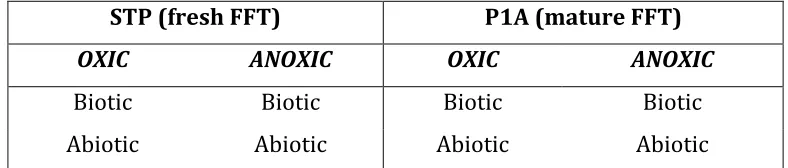
TABLE 2.1: Experimental design comparing 2 tailings 48
TABLE 2.2: Description of bulk FFT material 49
TABLE 2.3: Apparent Diffusivity measurements 50
TABLE 2.4: DO flux measurements 51
TABLE 2.5: DO flux comparison to natural systems 52
TABLE 2.6: HS-‐ flux measurements 53
TABLE 2.7: HS-‐ flux comparison to natural systems 54
CHAPTER 3:
TABLE 3.1: Microcosm/Core set-‐up for U-‐GEMS system 90
TABLE 3.2: Experimental applied shear stresses on FFT 91
TABLE 3.3: Comparison of critical shear strength measurements 92
LIST OF FIGURES
CHAPTER 1:
FIGURE 1.1: Map of the Athabasca Oil Sands region 17
FIGURE 1.2: Oil sands tailings pond schematic 18
FIGURE 1.3: Suncor Mining Operation 18
CHAPTER 2:
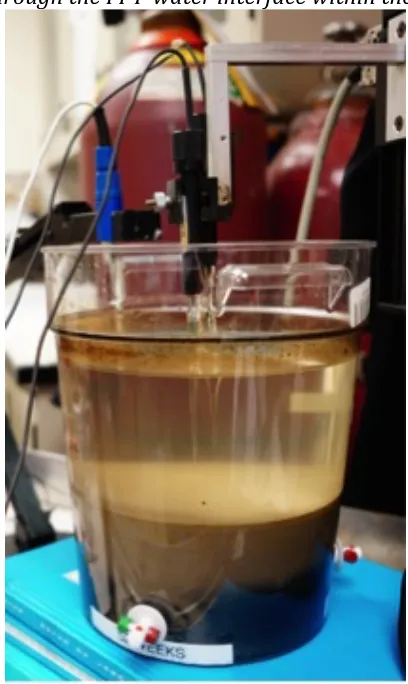
FIGURE 2.1: Microsensors attached to micromanipulator 44
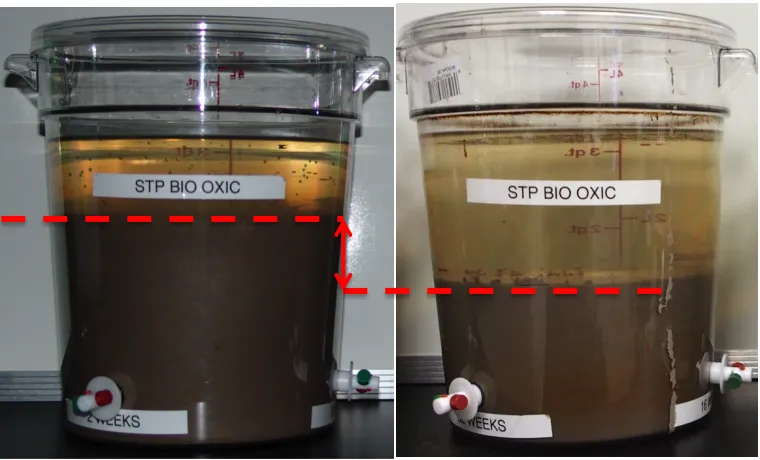
FIGURE 2.2: Visible physical alteration of FFT 45
FIGURE 2.3: Example of rapid initial consolidation 46
FIGURE 2.4: Headspace methane concentrations 47
CHAPTER 3:
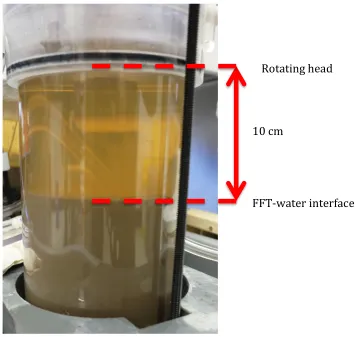
FIGURE 3.1: Experimental Design of U-‐GEMS System 75
FIGURE 3.2: Shear strength experimental set-‐up 76
FIGURE 3.3: GUST microcosm with 10cm water column 77
FIGURE 3.4: Turbidity vs. Shear stress plot for biotic Pond STP (Erosion#1) 78
FIGURE 3.5: Turbidity vs. Shear stress plot for abiotic Pond STP (Erosion#1) 79
FIGURE 3.6: Turbidity vs. Shear stress plot for biotic Pond 1A (Erosion#1) 80
FIGURE 3.7: Turbidity vs. Shear stress plot for abiotic Pond 1A (Erosion#1) 81
FIGURE 3.8: Turbidity vs. Shear stress plot for biotic Pond STP (Erosion#2) 82
FIGURE 3.9: Turbidity vs. Shear stress plot for abiotic Pond STP (Erosion#2) 83
FIGURE 3.11: Turbidity vs. Shear stress plot for biotic Pond 1A (Erosion#2) 85
FIGURE 3.12: Comparison of the cumulative eroded mass by shear stress
Pond 1A 86
FIGURE 3.13: Comparison of the cumulative eroded mass by shear stress
Pond STP 87
FIGURE 3.14: Microbial community hierarchy by phylum 88
FIGURE 3.15: Classes of Proteobacteria in Pond 1A and Pond STP 89
CHAPTER 1
INTRODUCTION
1.1. Athabasca Oil Sands
Producing approximately 1.9 million barrels of bitumen a day, the Athabasca
oil sands in Alberta, Canada (Figure 1.1) continues to increase production rates as
the conventional oil reservoirs decline globally and more efficient, less costly
extraction techniques are developed (Alberta Energy, 2013; Williams, 2003; CAPP,
2014). During open-‐pit mining of bitumen, separation of the bitumen from raw ore
through hot water extraction, results in large amounts of waste material known as
tailings (CAPP, 2014). These initial tailings consist of 55 wt.% solids (silts, clays and
sands), and contain ~1% residual bitumen, and alkaline processed waters
(Chalaturnyk et al. 2002), which are pumped into large settling basins known as
tailings ponds, where the solids are allowed to settle out, forming semi-‐consolidated
fluid fine tailings (FFT). Compliance with a zero-‐discharge policy is mandatory,
requiring oil companies to provide suitable containment for oil sands processed
materials (OSPM). The basins themselves allow for the recycling of process waters
to reduce consumption of fresh water sources (Alberta Energy, 2013). Part of the
rehabilitation plan involves two possible options 1) conversion to natural wetlands
or 2) the development of End-‐Pit Lake (EPLs) ecosystems. Given the scale of these
tailings environments, it is vital to understand the chemical and biological processes
at the FFT-‐water interface, and how these interactions dictate or influence the long-‐
1.2. Biogeochemistry of Tailings Ponds
The geochemical gradients and corresponding chemical diffusive fluxes
within the FFT, as with any aquatic or marine sediment, can change significantly
during the consolidation process, and are affected by the very material comprising
the FFT as well as the complex microbial consortia within each individual pond
(Fedorak et al., 2002; Penner an Foght, 2010; Chi Fru et al. 2013). Further this
biogeochemical activity within the FFT has direct impact on the quality and
composition of the cap water. Depletion of dissolved oxygen (DO), along with other
nutrient cycles such as iron cycling, denitrification and the production of both
hydrogen sulfide (H2S or HS-‐) and methane (CH4) are indicators of reducing
conditions that can directly or indirectly influence aquatic organisms inhabiting
these environments. These chemically reducing processes are commonly observed
not only in water logged tailings materials, but also can be observed in natural
marine and wetland settings where organic matter is prone to degradation, and
other terminal electron acceptors will dominate in the absence of O2 (Froelich et al.,
1979). An illustration of this is shown in equations 1-‐5, which show the succession
of reduction pathways in order from most to least favorable energy yield (Stumm
and Morgan, 1995). Only once O2 is fully depleted will denitrification begin, and
once this process has depleted the nitrogen pool, iron reduction takes hold and so
on.
Aerobic Respiration
1/4 O2(g) + H+ + e-‐ = 1/2 H2O pεº (W) =13.75 (1)
Denitrification
1/5 NO3-‐ + 6/5H+ + e-‐= 1/10 N2 (g) + 3/5 H2O pεº (W) =12.65 (2)
Iron Reduction
FeOOH (s) + HCO3-‐ + 2H+ + e-‐ = FeCO3 (s) + 2 H2O pεº (W) =-‐0.8 (3)
Sulfate Reduction
1/8 SO4-‐ + 5/4H+ + e-‐ = 1/10 H2S + 1/2 H2O pεº (W) =-‐3.75 (4)
Methanogenesis
1/8 CO2 (g) + H+ + e-‐ = 1/8 CH4 (g) + 1/4 H2O pεº (W) =-‐4.13 (5)
However, as is often the case in real world scenarios, this textbook
understanding of the thermodynamic REDOX ladder fails to stand true in many
study systems, indicated by Bethke et al., 2011. In this study, there was no fixed
thermodynamic hierarchy between iron reducers, sulfate reducers (SRBs) and
methanogens. Natural systems, for example, may allow for sulfate reducers to be
active alongside iron reducing processes (Bethke et al., 2008), indicating microbial
activity is not governed by usable energy levels alone. In addition, the prescribed
competition for electron donors was not observed in that study. Instead a co-‐
operative existence was observed, where, for example, Fe2+ and HS-‐ was produced in
a one-‐to-‐one relation forming precipitated FeS minerals (Bethke, et al., 2011). This
observation is also observed in Ramos-‐Padron et al. (2011), where large
concentrations of dissolved H2S reacts with iron in oil sands tailings material,
forming extensive FeS mineralization, trapping a large proportion of sulfides within
reducers have nearly indistinguishable usable energy levels in natural groundwater
systems, further disputing the notion of thermodynamically favored REDOX ladder.
Overall, this interrelated series of chemical reactions play a dominant role in the
evolution of these tailings ponds, and inevitably dictate the fate of EPLs and
remediated wetlands in the future. Such reactions therefore directly affect DO
concentrations within the water column due to oxidation pathways possible with
these reduced N2, Fe, and H2S compounds. Perhaps the most dominant of these
processes include the cycling of Fe and SO4, which form visible and distinct REDOX
zones in the upper-‐most fluid fine tailings layers as observed in several studies
(Stasik et al. 2014, Chen et al. 2013).
However, in addition to the cycling of Fe and S within these systems,
methanogenesis also plays a significant role in the carbon degradation processes,
and is perhaps more complex in nature. It is the end process of the microbial
metabolism of organic matter (assuming a thermodynamic hierarchy of redox
processes), and has become a concern due to increasing greenhouse gas (GHG)
emissions. As all other electron acceptors become depleted (O2, NO3, Fe, SO4), the
remaining carbon source (CO2) as well as H2 and residual organics are used in the
microbial production of CH4. There have been multiple studies on the production of
methane from various wetland and marine environments, landfills and even similar
tailings ponds to those described in this thesis, given it’s significance to the overall
GHG proportions. Further, within these oil sands tailings ponds, several studies
have given insight into the competition between sulfate reducing bacteria and
al., 2000; Fedorak et al., 2002). Though, as described earlier, perhaps this
competition for electron donors is more of a delicate balance between the sulfate
reducers and methanogens (Bethke et al., 2011), thus increasing our need for a
holistic understanding of these systems from a holistic biogeochemical framework.
Sediment oxygen demand (SOD) is an indicator used to evaluate the baseline
response of tailings materials for use in reclaimed wetlands or EPLs. The term
applies to both biological oxygen demand (BOD) and chemical oxygen demand
(COD) processes dominating sediments, and represents the consumption of DO by
the various chemically driven processes and decay of organic matter at the water-‐
sediment boundary via respiration by aerobic organisms (APHA. 1992). This
consumption of oxygen at the sediment-‐water interface can exceed the downward
flux of atmospheric O2 within the water column leading to hypoxia. It is generally
accepted that DO levels below ~2 mg L-‐1 are too low to sustain most fish species,
and at levels below even ~6 mg L-‐1 some cold water fish species (i.e. Salmon, trout
etc.) are unable to reproduce (Carter, 2005).
Chen et al. in 2013 investigated the DO behavior and sulfur cycling associated
with FFT collected from West-‐In Pit Lake (WIP) storage basin operated by Syncrude
Canada Ltd. The study identified an aforementioned sulfidic zone within biotic
systems, providing insight into the microbial role in the cycling of S within the FFT
materials. Further, in oxic systems, O2 consumption was enhanced in the biotic
systems compared to the abiotic controls, due in part to the biota forming reduced
reactants over time. However, both abiotic and biotic treatments reported
biologically and chemically driven processes contribute to overall SOD, though the
DO gradient of the biotic system indicated increased consumption, thus BOD > COD
(Chen et al. 2013). Hydrogen sulfide production correlated strongly with the biotic
systems, with HS-‐ concentrations in the FFT reaching 86 μmol L-‐1 after 5 weeks,
while the abiotic systems remained at a background of <10 μmol L-‐1 throughout
their study (Chen et al. 2013).
The diffusive chemical flux is a term used to describe the mobility of
molecules within a certain substance, transporting from an area of high
concentration to low concentration, directly correlating to the steepness of a
measured concentration gradient. Diffusive flux measurements across water-‐
sediment boundaries and has been studied extensively over several decades
(Boudreau and Guinasso 1982; Jørgensen and Revsbech 1985; Jørgensen and Marais
1990; Lorke et al. 2003). The so-‐called diffusive boundary layer (DBL), or benthic
boundary layer (BBL) creates distinct concentration gradients, and has direct
impact on the overlying water column (Brand et al. 2007). In this thin layer above
the sediment, the dominant transport mechanism is molecular diffusion (Gundersen
and Jorgensen 1990), therefore, it is highly advantageous to determine diffusive flux
values across this interface in accordance with both O2 and HS-‐ concentrations.
Diffusive flux across the DBL directly relates to the physical properties of the FFT,
and can correlate directly to the diffusive properties within its mineralogical matrix.
Furthermore, biofilm structure, be it thin and porous or tightknit and thick affect the
This study compares the biogeochemical development of FFT materials
collected from two different tailing pond sources Pond STP and Pond 1A from
Suncor Energy Inc. Pond 1A is a inactive water recycling pond containing aged FFT
approximately 38 years old while STP pond is an active tailings pond still in
operation which receives fresh mixed tailings on an ongoing basis. This study will
investigate the behavior of DO and S across the DBL associated with two different
FFT materials using a series of microcosms after Chen et al. 2013. In this
investigation, distinct biogeochemical gradients were observed based on FFT type,
and provide further insight into the processes being regulated by biotic and abiotic
activity influencing oxygen and sulfur dynamics. Tracking the DO concentrations in
the water column over the course of this study will give insight into the long-‐term
SOD, and whether or not DO increases or decreases over time. Further, a brief
summary of the distinct redox zonation will be presented, explaining influences on
the cycling of key elements such as Fe and S species within each respective pond.
Specific diffusive flux measurements will be presented in order to gain an
understanding of the diffusive nature of the materials with respect to O2 flux in, and
HS-‐ flux out of the FFT. Finally a brief comparison of methane concentration in
microcosm headspaces will be explained, giving insight into the unique nature of
these tailings systems. These results will be beneficial for future development of
conceptual and numerical models used to predict biogeochemical cycling and SOD
within tailings ponds as EPLs and natural wetland environments are developed.
1.3. Sediment Shear Strength and Biostabilization of Tailings Material
When characterizing any sediment either physically or chemically, erodibility
is an important consideration because it directly correlates to the transportation of
nutrients, metals and other contaminants. Erodibility is the sediments likeliness of
being resuspended in the water column, and is caused by hydrodynamic forces such
as wave action, tidal forces and biogeochemical activity (e.g. gas bubling/ebullition).
On a micro level, sediment grains will naturally bond by cohesive forces such as
water surface tension and atomic forces (Mehta, 1989), while gravity and microbial
processes will cause densification of sediment over time. However, once the shear
stresses caused by water column hydrodynamics exceeds the cohesive force of the
sediment, resuspension and ultimately transportation of sediment will occur
(Paterson 1997; Tolhurst et al. 1999). This cohesive threshold of the sediment is
referred to as the sediment shear strength, or the sediment’s resistance to
resuspension and erosion. In recent years, sediment shear strengths have become
an ever more intriguing subject due to implications on contaminant transport. One
research paper by Wang et al. (2000) studied the effects of storm events on the
sediment of an estuary. This study found that tidal cycles resuspended the loosely
consolidated materials, while storm events, with their higher bottom stresses, saw
resuspension and erosion of more consolidated materials. Another study by Droppo
et al. (2001) studied, in situ, the bed stability in Hamilton Harbour, Lake Ontario.
This study focused on the structure and stability of the top-‐most, “fluffy” layer of
sediment. It was concluded that this surface layer, referred to as lacustrine surface
formed a matrix throughout the sediment. This matrix is composed of extracellular
polymeric substances (EPS) (Decho, 1990; Donlan, 2002; Flemming, 2011), and has
been observed to significantly increase the shear strength of sediments. Further, in
earlier studies (Stone and Droppo, 1994; Levesque & De Boer, 2000), it was
observed that these SFGL are often associated with high metal concentrations, and
act as a short-‐term sink. Therefore, the resuspension of the SFGL is potentially
remobilizing the heavy metals into the water column, which is of obvious concern in
certain ecosystems. Another study by Droppo et al. in 2007 went on to examine the
effects of varying biofilm stage with sediment stability. This study found that
depending on biofilm development stage, sediment shear strength could be
increased, followed by periods of lower stabilization. However, it is clear that biotic
component in the sediment will always be more stable than abiotic sediments, due
to the cohesive properties of biological exudates such as microbial produced EPS,
unless there is an alternate means (e.g. heavy consolidation) by which the abiotic
system becomes less erodible. Overall, understanding the microbes ability to
stabilize these FFT materials will be beneficial to furthering the modeling and
predictive tools needed as these tailings ponds are developed into EPLs and
reclaimed wetlands. Furthermore, this biostabilization will be a vital characteristic
of the FFT as it is transferred into the EPL environments, in that any resistance to
disturbance upon mixing will cause rapid settling and flocculation once moved.
1.4. Research Scope
In order for tailings ponds to be reclaimed into End-‐Pit Lake environments
(EPLs) or natural wetlands, an understanding of the complex physical and
biogeochemical nature of these systems must be attained prior to development of
these reclaimed environments. Chapter 2 explains the first research topic in this
thesis, involving a static microcosm study comparing the biogeochemical
development of FFT materials collected from two different tailing pond sources
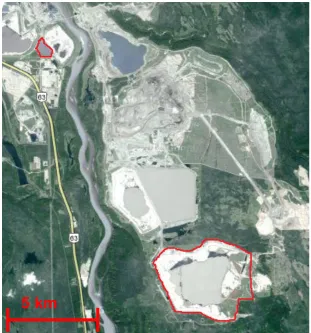
Pond STP (STP) and Pond 1A (P1A) from Suncor Energy Inc. (Figure 1.3). P1A is a
inactive water recycling pond containing aged FFT approximately 38 years old while
STP is an active tailings pond still in operation which receives fresh mixed tailings
on an ongoing basis. This study will investigate the behavior of DO and S across the
DBL associated with the two different FFT materials using a series of microcosms
after Chen et al 2013. In this investigation, distinct biogeochemical gradients were
observed based on FFT type, and provide further insight into the processes being
regulated by biotic and abiotic activity influencing oxygen and sulfur dynamics.
Tracking the DO concentrations in the water column over the course of this study
will give insight into the long-‐term SOD, and whether or not DO increases or
decreases over time. Further, a brief summary of the distinct redox zonation will be
presented, explaining influences on the cycling of key elements such as Fe and S
species within each respective pond. Specific diffusive flux measurements will be
presented in order to gain an understanding of the diffusive nature of the materials
with respect to O2 flux in, and HS-‐ flux out of the FFT. Finally a brief comparison of
insight into the unique nature of these tailings materials. These results will be
beneficial for future development of conceptual and numerical models used to
predict biogeochemical cycling and SOD within Alberta’s tailings ponds as the
industry moves towards development of EPLs and natural wetland environments.
Furthermore, this thesis will provide context for modeling dynamic
environments where sediment and/or tailings resuspension can be controlled
through water column turbulence (e.g. wave action, temperature, density
conversion such as salinity differences etc.). Chapter 3 investigates the physical
control on the sediment-‐water interface disturbed by simulated erosion forces, to
determine the shear strength of selected tailings material. Using a novel microcosm
system, P1A and STP tailings are compared not only to each other, but also in a
biotic vs. abiotic framework. Results on the critical shear strength of the FFT from
each pond are discussed, as well as variation between biologically active and
sterilized systems and their significance. Specifically, the biotic vs. abiotic
experiments are compared to see whether the established indigenous microbial
community directly influences the stability of the FFT at the sediment-‐water
interface. Using extracted DNA profiles, comparisons of the microbial community
hierarchy at each sediment interface for the Pond 1A and pond STP will be
discussed. This collective information can be used to understand FFT consolidation
and erosion properties leading to improved management methods to control FFT
resuspension.
1.5. Hypotheses
1.5.1. Hypotheses for Static Microcosm Research
Variation in tailings chemistry and native microbial community structure can
lead to differences in the evolution of the REDOX state within tailings pond
environments. Interactions between the various bacterial communities and
available nutrient sources can have direct implication on the cycling of key
elements, gas expression and overlying water quality over time. Therefore, research
is needed to characterize the tailings pond environments, particularly across the
FFT-‐water interface, in terms of overall chemical and biological contributors to
overall SOD. In particular, studies are needed to determine pond-‐to-‐pond variability
and a comparison to natural wetland or aquatic environments in the future to
determine baseline reference site characterization.
Based on the differing characteristics of STP and P1A (e.g. age of ponds and
tailings maturity), it is hypothesized that the juvenile STP FFT material will show a
delayed onset with respect to the establishment of specific redox qualifiers (e.g.
Sulfur and oxygen donors/acceptors) contributing to geophysicochemical gradients
observed, compared to the established (aged) P1A FFT material. In part this is due
to properties or components within the fresh FFT one of which could be indicative
of limited biodiversity (e.g. extremophiles) compared to the aged FFT. Comparing
the two systems will allow determination of the biological contributions to and or
temporally. In addition to the variation between pond materials, it is also
hypothesized that the biotic systems will show distinct biogeochemical alteration,
opposed to the abiotic systems lacking any microbial input, therefore acting as a
chemically driven representative sample. These hypotheses will be tested in a
microcosm-‐based laboratory study, in which the evolution of two pond materials
varying in maturity, will be studied with respect to biotic vs. abiotic drivers.
1.5.2. Hypotheses for Dynamic Shear Strength Research
Laboratory based experiments using constructed static SOD microcosm
enclosures have been shown to simulate field conditions with respect to redox
character. However, a greater understanding is needed with regards to the behavior
of FFT under hydrodynamic stress such as wave action and water turbulence,
causing resuspension and erosion, which affects settling patterns of FFT. The effects
of biofilms causing enhanced stability in natural systems, has been extensively
studied in recent years due to implication of contaminant transport. Quantifying
critical shear strengths of various FFT materials will provide greater insight into the
interaction of established biofilms with their physical environment. These
measured parameters with respect to resuspension and erosion of FFT will further
improve models and predictive tools for the development of EPL and natural
wetlands.
It is hypothesized that the biofilm present in the biotic tailings material will
polymeric substances (EPS), and therefore be more resistant to shearing forces
caused by wave action and laminar flow. Thus, biotic systems would measure
higher critical shear strength, causing erosion at shear stresses higher than those
causing resuspension in the abiotic (sterilized) systems. Secondly, the aged P1A FFT
will exhibit far higher critical shear strength than the fresh STP FFT, due to
considerable consolidation over time. This physical consolidation will inevitably
increase the critical shear strength, independent of the cohesive properties of
microbial biofilms.
1.6. Objectives and Predictions
1.6.1. Static Microcosm Research
The primary research objectives for the static microcosm research are to
compare the evolution of P1A and STP in terms of their physicochemical gradients
and diffusive flux measurements across the interface. Further, these diffusive flux
measurements will help to determine the overall sediment oxygen demand (SOD),
comprised of both the biological (BOD) and chemical (COD) oxygen demands.
Furthermore, the expression of methane gas into the headspace will be tracked
within the anoxic systems, to characterize the ebullition of CH4 from the FFT into the
overlying water column and headspace. Lastly, general physicochemical alterations
are observed and compared between ponds and atmospheric conditions to
determine settling/consolidation over time, and FFT coloration changes due to
It is predicted that the aged P1A will equilibrate sooner with respect to redox
order, than the fresh STP FFT. Further, P1A will likely have a higher flux of HS-‐, and
will express some quantity of methane in the biotic system, likely attributed to its
advanced state of consolidation, therefore more diverse microbial population. STP
on the other hand will likely exhibit redox characterization later into the
experiment, since it is freshly processed material, perhaps not yet containing a
diversified and specialized microbial population. In addition, the liquid nature of
the initial STP FFT will inevitably mean that there will be a significant amount of
settling over the course of the experiment.
The objectives for the dynamic microcosm experiments are to determine a
critical shear strength value for each pond FFT, and for each of the biotic and abiotic
treatments. In addition, the overall characterization of the biofilm, in terms of its
ability to stabilize the FFT will be studied, in comparison to the natural settling
effects of the abiotic system. Finally, subsampling during erosion experiments will
be used to determine the microbial community structure within each pond,
identifying similarities and differences between them. Any variation in observed
microbial consortia can lead to differences in observed FFT shear strength, due to
differences in biofilm matrix.
In the dynamic shear strength study, it is predicted, based on studies of
natural systems, that the presence of a biofilm will increase the critical shear
nature of P1A, in which extensive settling and consolidation has already occurred,
will inevitably create strengthened bonds between particles, therefore having
higher shear strength than STP FFT, which is freshly processed and not
consolidated. Finally, the molecular work will likely determine the complexity and
diversity of the P1A microbial community, again attributed to its age. The
community has had time to diversify and take hold within P1A unlike STP.
Figure 1.1: Map of the Athabasca Oil Sands region, from the Alberta Geological Survey (www.ags.gov.ab.ca)
Figure 1.2: Oil sands tailings pond schematic showing containment basin, fluid fine tailings, and recyclable cap water (oilsandstoday.ca)
Figure 1.3. Suncor mining operation, showing both Pond 1A (top left) and South Tailings Pond (STP) (bottom right). (taken from Google Maps)
1.7. References
Alberta Energy Government, 2013. <http://www.energy.gov.ab.ca/Oil/pdfs/ FSRefining.pdf>.
APHA. 1992. Standard methods for the examination of water and wastewater. 18th ed.
American Public Health Association, Washington, DC.
Bethke, C. M., Ding, D., Jin, Q. S., and Sanford, R. A. 2008. Origin of microbiological zoning in groundwater flows. Geology, 36, 739 –742.
Bethke, C.M., Sanford, R.A., Kirk, M.F., Jin, Q., Flynn. 2011. The thermodynamic ladder in geomicrobiology. American Journal of Science. 311:183-‐210.
Boudreau, B.P., Guinasso, N.L., 1982. The influence of a dissuasive sublayer on accretion, dissolution, and diagenesis at the sea floor. In K.A. Fanning and F.T. Manheim [eds.], The dynamic environment of the ocean floor. Lexington.
Brand, A., Muller, B., Wuest, A., Dinkel, C., Revsbech, N.P., Nielsen, L.P., Pedersen O., Damgaard, L.R., Larsen, L.H., Wehrli, B. 2007. Microsensor for in situ flow measurements in benthic boundary layers at submillimeter resolution with extremely slow flow. Limnol. And Oceanogr.: Meth., 5, 185 – 191.
Carter, K. (2005, August). The Effects of Dissolved Oxygen on Steelhead Trout, Coho Salmon, and Chinook Salmon Biology and Function by Life Stage . In California Regional Water Quality Control Board, North Coast Region. Retrieved from http://www.swrcb.ca.gov/northcoast/water_issues/programs/tmdls/shasta_ river/060707/29appendixbetheeffectsofdissolvedoxygenonsteelheadtroutcoh osalmonandchinooksalmonbiologyandfunction.pdf
Chalaturnyk, R.J., Scott, J.D., .züm, B., 2002. Management of oil sands tailings. Petrol. Sci. Technol. 20, 1025–1046.
Chen, M., Walshe, G., Chi Fru, E., Ciborowski, J.H., Weisener, C.G. 2013. Microcosm assessment of the biogeochemical development of sulfur and oxygen in oil sands fluid fine tailings. App. Geochem., 37, 1 – 11.
Chi Fru, E., Chen, M., Walshe, G., Penner, T., Weisener, C.G. 2013. Bioreactor studies predict whole microbial population dynamics in oil sands tailings ponds. Applied Microb. and Biotechnol., 97(7), 3215 – 3224.
Crude Oil: Forecast, Markets and Transportation. June 2014. Canadian Association of Petroleum Producers. www.capp.ca
Decho A.W., 1990. Microbial exopolymer secretions in ocean environments – their
role(s) in food webs and marine processes. Oceanography and Marine
Biology, 28, 73–153.
Donlan, R.M. 2002. Biofilms: microbial life on surfaces. Emerging Infectious Diseases
8, 881–890.
Droppo, I.G., Amos, C.L., 2001. Structure, stability and transformation of
contaminated lacustrine surface fine-‐grained laminae. J. Sediment. Res. 71,
717 -‐ 726.
Droppo, I.G., Ross, N., Skafel, M., Liss, S.N. 2007. Biostabilization of cohesive
sediment beds in a freshwater wave-‐dominated environment. Limnol.
Oceanogr., 52(2). 577 – 589.
Fedorak, P.M., Coy, D.L., Dudas, M.J., Simpson, M.J., Renneberg, A.J., MacKinnon, M.D., 2003. Microbially-‐mediated fugitive gas production from oil sands tailings and increased tailings densification rates. J. Environ. Eng. Sci. 2, 199– 211.
Fedorak, P.M., Coy, D.L., Salloum, M.J., Dudas, M.J. 2002. Methanogenic potential of
tailings samples from oil sands extraction plants. Can. J. of Microbiol. 48(1),
21 – 33.
Flemming, H.C. 2011. The perfect slime. Colloids and Surfaces. B-‐Biointerfaces, 86,
251 – 259.
Froelich, P.N., Klinkhammer, G.P., Bender, M.L., Luedtke, N.A., Heath, G.R., Cullen, D., Dauphinm P., Maynard, V. 1979. Early oxidation of organic matter in pelagic sediments of the eastern equatorial Atlantic: Suboxic diagenesis. Geochemica Cosmochimica Acta., 43, 1075 – 1090.
Gundersen, J.K., Jorgensen, B.B. 1990. Microstructure of diffusive boundary layers and the oxygen uptake of the sea floor. Nature. 345, 604–607.
Holowenko, F.M., MacKinnon, M.D., Fedorak, P.M., 2000. Meethanogens and
sulphate-‐reducing bacteria in oil sands fine tailings waste. Can J Microbiol.,
46(10), 927 – 937.
Jorgensen, B.B., Revsbech, N.P., 1985. Diffusive boundary layers and the oxygen uptake of sediments and detritus. Limnol. Oceanogr. 30(1), 111-‐122.
Jorgensen, B.B., Des Marais, D.J. 1990. The diffusive boundary layer of sediments: Oxygen microgradients over a microbial mat. Limnol. Oceanogr. 35(6), 1343 – 1355.
Lévesque, L.M.J. and De Boer, D.H., 2000. Trace element chemistry of surficial fine-‐
grained laminae in the South Saskatchewan River, Canada. International
Association of Hydrological Sciences Publication, 263, 183-‐190.
Lorke, A., B. Müller, M. Maerki, and A. Wüest (2003), Breathing sediments: The control of diffusive transport across the sediment-‐water interface by periodic boundary layer turbulence. Limnol. Oeanogr., 48, 2077 – 2085.
Mehta, A.J., 1989. On estuarine cohesive sediment suspension behaviour. J. Geophy.
Res. 94, 14303 -‐ 14314.
Paterson, D. M. 1997. Biological mediation of sediment erodibility: Ecology and physical dynamics. N. Burt, E. J. Prager, J. G. Southard, and E. R. Vivoni Gallart [eds.], Cohesive sediments. Wiley. 215 – 229.
Penner, T.J., Foght, J.M., 2010. Mature fine tailings from oil sands processing harbour diverse methanogenic communities. Can. J. Microbiol. 56, 459–470.
Ramos-‐Padron, E., Bordenave, S., Lin, S., Mani Bhaskar, I., Dong, X., Sensen, C.W., Fournier, J., Voordouw, G., Gieg, L.M. 2011. Carbon and Sulfur Cycling by Microbial Communities in a Gypsum-‐Treated Oil Sands Tailings Pond. Environ. Sci. Technol. 45:439-‐446.
Stasik S., Loick N., Knoller K., Weisener C.G., Wendt-‐Potthoff K., 2014. Understanding biogeochemical gradients of sulfur, iron and carbon in an oil sands tailings pond. Chem. Geology. 382, 44-‐53.
Stone, M., Droppo, I.G., 1994. In-‐channel surficial fine-‐grained sediment laminae (part II): chemical characteristics and implications for contaminant transport in fluvial systems. Hydrological Processes, 8(2), 113 – 124.
Stumm, W. and Morgan, J.J., 1996. Aquatic Chemistry, Chemical Equilibria and Rates in Natural Waters, 3rd ed. John Wiley & Sons, Inc., New York, 1022p.
Tijhuis, L, Rekswinkel, E., van Loosdrecht, M.C.M., Heijnen, J.J., 1994. Dynamics of population and biofilm structure in the biofilm airlift suspension reactor for
carbon and nitrogen removal. Water Science and Technol., 29(10-‐11), 377 –
384.
Tolhurst, T.J., Reithmueller, P., Paterson, D.M., 2000. In situ versus laboratory
analysis of sediment stability from intertidal mudflats. Continental Shelf Res.
20 (10/11), 1317 -‐ 1334.
Wang, Y. H., Bohlen, W. F., O’Donnell, J. 2000. Storm enhanced bottom shear stress and associated sediment entrainment in a moderate energetic estuary. Journal of Oceanography, Japan, 56, 311–317.
Williams, B., 2003. Heavy hydrocarbons playing key role in peak-‐oil debate, future energy supply. Oil Gas J. 101, 20–27.
www.ags.gov.ab.ca