MODELING PEDESTRIAN SAFETY AT ROUNDABOUTS
by
Elliott I. Levenson
B.A., University of Pittsburgh, 1984
J.D. University of Pittsburgh School of Law, 1988 B.S. Computer Science, University of Pittsburgh, 2002
M.S.I.S. (Expected) Information Science, University of Pittsburgh, 2017
Submitted to the Graduate Faculty of
The School of Information Science in partial fulfillment of the requirements for the degree of
Master of Science
University of Pittsburgh 2017
UNIVERSITY OF PITTSBURGH SCHOOL OF INFORMATION SCIENCE
This thesis was presented by
Elliott I. Levenson
It was defended on July 24, 2017 and approved by
Hassan Karimi, Professor, Graduate Program, Information Science and Technology Yu-Ru Lin, Associate Professor, Graduate Program, Information Science and Technology Thesis Advisor, Stephen C. Hirtle, Professor, Graduate Program, Information Science and
Copyright © by Elliott I. Levenson 2017
MODELING PEDESTRIAN SAFETY AT ROUNDABOUTS
Elliott I. Levenson, M.S.I.S. University of Pittsburgh, 2017
This study proposes a method for using a human participant in a field experiment to model pedestrian safety at roundabouts in the United States. Studies show that roundabouts are safer for vehicles, but are inconclusive as to whether pedestrians are at greater risk at roundabouts than at signalized intersections. Recent simulations, including virtual reality, can model pedestrian vehicle interaction, but the proposed technique could use real-world data to calibrate these models. Eight hours of video was made to gather data at a signalized intersection and a roundabout. A physical simulation was used to assess the pedestrian’s cross/don’t cross decision. Standard walking pace was simulated at 3.5 feet per second and a disabled pedestrian at half that pace. This study focused on factors such as signalization, approach streams, exit vs. entrance lanes, pace and direction to provide a realistic picture of the cross vs. don’t cross decision. Data showed that slow pedestrians had a significantly higher rate of don’t cross decisions at the roundabout. Roundabouts are thought to be safer for pedestrians than signalized intersections due to a lower number of conflict points, but the confusing multiple streams of roundabout traffic converging on exit lanes and the frames of approaching traffic at roundabout entrances may mean that another concept may be needed to fully capture pedestrian risks. The data on ‘relevant traffic’ showed that pedestrians had to be attentive to almost six times as many approach streams of traffic in the roundabout as in the signalized intersection. The value of this study is four-fold: 1) Future studies could revisit the conflict point at the core of Traffic Conflict Analysis and consider conflict streams as well; 2)
Future studies could consider the cross/don’t cross decision as an important data point with which to evaluate the safety of roundabout crossings; 3) Slow pedestrians fared worse in their ability to cross at the roundabout than at the signalized intersection; 4) The human participant in a field experiment method can be a valuable source of data for calibrating pedestrian safety simulation systems.
TABLE OF CONTENTS
PREFACE ... xi
1.0 INTRODUCTION ... 1
1.1 HISTORY OF SIGNALIZED INTERSECTIONS IN THE UNITED STATES ... 1
1.2 THE ROUNDABOUT ALTERNATIVE ... 2
1.3 ROUNDABOUT DESIGN ... 4
1.4 SAFETY STANDARDS IN ROUNDABOUT DESIGN ... 6
1.5 CONFLICT POINTS AS AN ALTERNATIVE DATA COLLECTION EVENT ... 7
1.6 A CASE FOR COMPREHENSIVE ANALYSIS OF PEDESTRIAN SAFETY AT ROUNDABOUTS ... 10
2.0 BACKGROUND AND RELATED WORK ... 13
2.1 PUBLIC DATASETS ON ROUNDABOUTS, ACCIDENTS AND INJURIES ... 13
2.2 RELATED WORK: THE EUROPEAN STUDIES ... 15
2.3 RELATED WORK: THE U.S. STUDIES ... 18
2.4 USE OF CONFLICT POINTS AND VIDEO FOR ANALYSIS ... 28
2.5 METHODS OF CONFLICT ANALYSIS ... 29
2.6 DISABLED, ELDERLY, VISUALLY IMPAIRED AND CHILD PEDESTRIANS ... 31
2.7 BICYCLE SAFETY AT ROUNDABOUTS ... 32
2.8 RELATED WORK: THE HUMAN PARTICIPANT SIMULATION... 35
3.0 HYPOTHESIS, METHODS AND ANALYSIS ... 38
3.1 HYPOTHESIS – RESEARCH QUESTION ... 38
3.1.1 Summary of Methods ... 38
3.1.2 Human Participant in the Field Environment ... 39
3.1.3 Accounting for Bias in the Experiment ... 39
3.1.4 Entrance and Exit Lane Data ... 40
3.1.5 Conflict Streams ... 41
3.2.1 Proof of Concept Data Collection Effort ... 44
3.3 DATA COLLECTION MEASURES ... 46
3.3.1 Video Camera Data Collection ... 46
3.3.2 Method: Contemporaneous Comparator Data ... 47
3.3.3 Data Scenarios ... 49
3.3.4 Data Coding: Roundabout ... 49
3.3.5 Data Coding: Signalized Intersection... 50
3.3.6 Data Extraction Technique ... 52
4.0 EMPIRICAL DATA ... 53
4.1 LIMITATIONS AND WEAKNESSES OF THIS STUDY ... 53
4.2 CASE STUDY: ROUNDABOUT AND SIGNALIZED INTERSECTION, UNITY TOWNSHIP, PENNSYLVANIA ... 54
4.2.1 The Roundabout ... 54
4.2.2 The Signalized Intersection ... 56
4.3 ANALYSIS ... 58
4.3.1 Case Study Experimental Design ... 59
4.3.2 Crossing Position ... 61
4.3.3 Traffic Volume ... 61
4.3.4 Roundabout Geometry ... 64
4.3.5 Signalized Intersection ... 64
4.3.6 Crossing Decisions ... 65
4.3.7 Roundabout Entrance Lane “Frame” ... 66
4.3.8 Observed Differences between the Signalized Intersection and the Roundabout ... 67
4.3.9 Direction of Travel ... 71
4.3.10 Speed of Pedestrian ... 73
4.3.11 Effect of Multiple Vehicles ... 75
4.3.12 Conflict Point Anomaly ... 76
5.0 SUMMARY AND CONCLUSIONS ... 81
APPENDIX A. GLOSSARY OF TERMS AND ACRONYMS ... 84
LIST OF TABLES
Table 2.1: Table of Comparison of U.S. Studies of Pedestrian Safety at Roundabouts ... 27
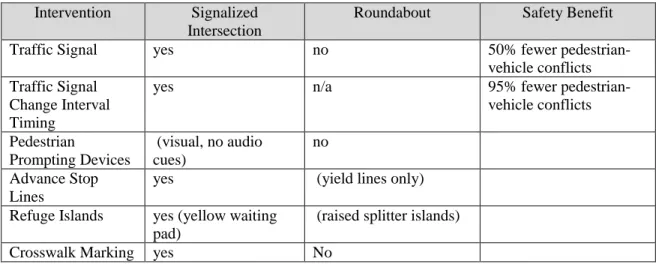
Table 3.1: Table of Intervention Techniques (Adapted from Retting, 2003) ... 45
LIST OF FIGURES
Figure 1.1: Basic Geometric Elements of a Roundabout ... 5
Figure 1.2: Key Roundabout Characteristics ... 5
Figure 2.1: Vehicle-pedestrian conflicts at signalized intersections (FHWA, 2000, Ex. 5-5) ... 30
Figure 2.2: Vehicle-pedestrian conflicts at single-lane roundabouts (FHWA, 2000, Ex. 5-6) ... 31
Figure 2.3: One-Lane vs. Two-Lane Roundabout Conflict Points (Cumming, 2011, at p.28) .... 34
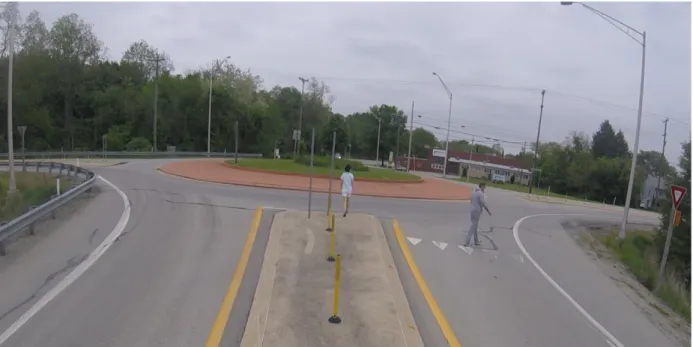
Figure 3.1: Still from Video of Roundabout Pedestrian Simulation ... 50
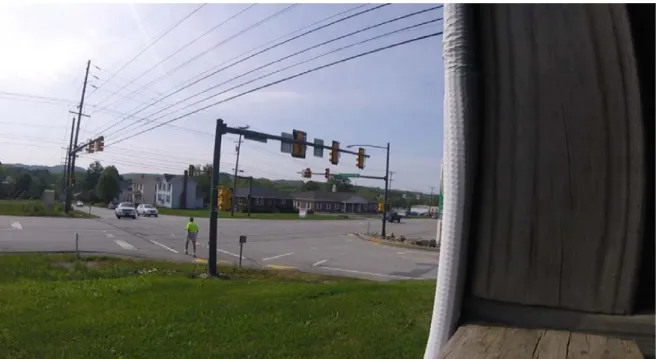
Figure 3.2: Still from Video of Signalized Intersection Pedestrian Simulation ... 51
Figure 4.1: Monastery Drive Roundabout (Glovis, EROS Center, USGS, 2017) ... 55
Figure 4.2: Pa. Route 981 Signalized Intersection (Glovis, EROS Center, USGS, 2017) ... 57
Figure 4.3: Chart of Total Vehicular Traffic ... 62
Figure 4.4: Chart of Percent of Relevant Traffic ... 63
Figure 4.5: Chart of Total Decisions per Intersection Type ... 66
Figure 4.6: Entrance Lane Percentage Crossing Decision ... 67
Figure 4.7: Exit Percentage Cross Decision... 68
Figure 4.8: Decision to Cross a Roundabout Entrance Lane Chart ... 69
Figure 4.9: Decision to Cross at a Roundabout Exit Lane Chart ... 70
Figure 4.10: Signalized Intersection Decision-making by Direction of Pedestrian Travel ... 73
PREFACE
I would like to thank Professor Hirtle, my Committee Chair for his guidance and Professor Hassan Karimi, who together opened my eyes to the world of Geospatial Analysis. My thanks to Professor Yu-Ru Lin, my Advisor for her instruction on Data Visualization and Data Mining. Thanks also to Senior Engineer Pete Jenior of Kittelson and Association, Inc. in Baltimore, Jeff Bucher, P.E. of the Pa. Department of Transportation, Jeff Shaw of the U.S. Department of transportation, the HSIS, NHTSA and the IIHS, HLDI for data and support for my efforts. Thanks also to my wife, Holly and daughter Margo for supporting me the past three years on this quest. Thanks also to my Father, the late Dr. Myron Herbert Levenson, PhD. and my Mother, the late Dr. Beverly L. Darwin. Thanks also to my brother, Barton Levenson, for his review of my Thesis and data and my classmates Katie Rogers, Qilu Cao and Eric Corrado for their assistance and to my videographer Jia Yin Tang. Thanks finally to the Professors, Students and Staff of the School of Information Science for letting me fulfill my dream to go back to school and get my Master’s Degree.
1.0INTRODUCTION
A review of past literature has shown that roundabouts are a safer alternative for motorized vehicles than traffic-light controlled intersection, but do roundabouts actually increase the risk to pedestrians and non-motorized vehicles? This paper will focus on whether a new method for assessing safety at roundabouts provides more accurate data to research answers to this question.
1.1HISTORY OF SIGNALIZED INTERSECTIONS IN THE UNITED STATES
The culture of urban and regional planning is in a constant state of change. In the last century, concerns about improving traffic circulation to support commerce, military-inspired road building projects and new ways of handling congestion came to the fore. As cities rapidly expanded, concerns about safely moving pedestrians and traffic created a need for complex intersections with traffic movement regulation.
One innovation was the electric traffic light. Osborne’s (2014) research indicated that the first electric traffic light system was installed in the United States in 1912. The modern red, yellow and green light system was implemented in Detroit, Michigan in 1920. The traffic light, in less than a century of sustained use, may now be perceived as costly to municipal governments, creating congestion and causing long idling times that create pollution. Palat and DelHomme
(2012), confirmed that drivers running yellow lights was a risk of signalized intersections that contributed to accidents.
1.2THE ROUNDABOUT ALTERNATIVE
A review of literature supports safer alternatives to traffic lights. The roundabout has been identified as a primary solution. A Pennsylvania Department of Transportation initiative to replace signalized intersections with roundabouts indicates the safety benefits for vehicles. (Lester, 2015)
"One of the most important benefits of a modern roundabout is the increased level of safety resulting from the reduction of vehicle-vehicle conflict points... On average, roundabouts in the United States have shown total crash reductions of 37 percent and injury crash reductions of 51 percent.” (PennDOT, 2001 p. 4.)
Headrick and Uddin, (2014) used geospatial data analysis to evaluate the conversion of signalized intersections to other methods. Their data evidenced more efficient traffic flow, faster average speed, reduced delay, less idling time, fewer crashes, lower pollutant emissions, and conservation of fuel. Wei, Grenard and Shah (2016) showed that capacity modeling could be used to assist planners in justifying conversions to roundabouts. But, these studies did not focus on pedestrians.
Mukai and Hayashi, (2015) were concerned that drivers may be unfamiliar with these new roundabouts as they become installed in greater numbers. This could pose additional danger to pedestrians. Allowing drivers to view instructional videos and use roundabout simulators may alleviate this unfamiliarity (Insurance Institute for Highway Safety, 2010; Forum8, 2016). Mukai
and Hayashi (2015) approached this problem by using geospatial analytics to study how to best train drivers unfamiliar with roundabouts.
Replacing traffic lights with roundabouts has been supported by initiatives at several levels of Government in the United States and has been a topic of research and priority for the Federal government since at least 2002, at the federal level (U.S. DOT, FHWA, 2015), state level (Lester, 2015; PennDOT, 2001), and municipal level. Most notable is the City of Carmel, Indiana (Brochure [n.d.]), which has been converting almost all traffic lights to roundabouts.
A survey of pertinent literature will show that other nations and some municipalities in the United States, such as Carmel, Indiana (Brochure, [n.d.]) have used roundabouts and traffic circles to replace traffic lights. While current literature has shown that these conversions resulted in a significant reduction in the severity of vehicular accidents anecdotal evidence may show a higher risk to bicycles and pedestrians.
The FHWA (2015) in “A Review of Fatal and Severe Injury Crashes at Roundabouts” used data on roundabouts from Washington State and Wisconsin. They specifically examined pedestrian accidents at roundabouts. They looked at geometry, noting that splitter islands separate entering and exiting traffic, deflect and slow entering traffic and provide a pedestrian refuge. They noted that fatal roundabout crashes were less likely to involve pedestrians or bicyclists when compared to fatal intersection crashes, but this may be due to the small number of roundabouts in general.
The FHWA (2015) actually observed no pedestrian fatalities at roundabouts. Although pedestrians and bicyclists were noted to be involved in only a small percentage of crashes, these crashes were more likely to be severe. Bicycles were noted to be more commonly involved in injury crashes at roundabouts than pedestrians; this could be due to bicycle sharing the traffic lanes
upon entering and traversing roundabouts. Accidents at roundabouts were only observed in Washington State and pedestrian accidents only accounted for only 2-3% of all accidents at roundabouts.
1.3ROUNDABOUT DESIGN
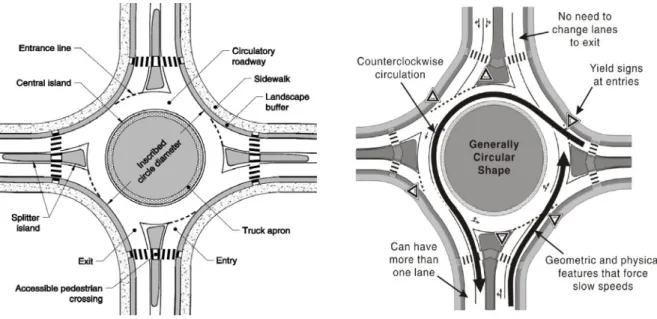
The PennDOT Guide to Roundabouts (PennDOT, 2001) on p.2, distinguishes roundabouts from traffic circles and rotaries. A roundabout has seven characteristics: 1) Yield control is used on all entries, 2) Approaching roadways do not enter the roundabout perpendicular to the circulating roadway, but, the traffic is deflected by splitter islands to enter at as small an angle as possible, 3) Circulating vehicles within the roundabout have right of- way, 4) Pedestrian access is only allowed across the legs of the roundabout behind the yield line, 5) Parking is not allowed within the circulatory roadway or at the entries, 6) Vehicles circulate counter-clockwise and pass to the right of the central island and 7) Raised Splitter Islands.
“Roundabout” is the term preferred by the United States and Pennsylvania governments. PennDot distinguishes rotaries and traffic circles as follows:
"Rotaries generally had large diameters that resulted in high speeds within the circulatory roadway. They typically provided little or no deflection of the through traffic paths, and some required the circulating traffic to yield to entering traffic. The latter caused congestion, and the intersection would often ‘lock-up.’ Neighborhood traffic circles are typically built to calm traffic and/or improve the aesthetics of local street intersections. The approaches may by uncontrolled or stop controlled." PennDOT (2001) p.3
What does a roundabout look like and how does it work? We may examine the graphic from PennDOT (2016b) at p.3-7. Note the entry and exit points, the circulatory roadway and the truck
apron. The PennDOT (2016b) diagram at p.3-8 shows the roundabout from the perspective of moving traffic.
Figure 1.1: Basic Geometric Elements of a Roundabout
(PennDOT, 2016b Figure 3.6 at p. 3-7)
Figure 1.2: Key Roundabout Characteristics
(PennDOT, 2016b Figure 3.1 at p. 3-8)
The PennDOT (2016b) diagrams show roundabout characteristics that will be referenced throughout this study. It is an optimal design, not necessarily reflective of all roundabouts. Number of lanes, direction of travel and marked pedestrian lanes all have an effect on safety as we will see in the review of the literature. While there are several categories for roundabout design, this study will only focus on a single-lane roundabout with a 15-mph entry speed and one entering lane approach.
1.4SAFETY STANDARDS IN ROUNDABOUT DESIGN
The Public Transport Authority of Western Australia (2016) (PTAWA) set forth comprehensive guidelines for roundabout design to make them safer for pedestrians. First, they noted two dangers for pedestrians: 1) Right of way for vehicles and 2) Waiting for gaps in traffic to cross. Item one would not hold true in Pennsylvania, as pedestrians proceeding legally in a marked crosswalk, always have the right of way over vehicles. Furthermore, Pennsylvania being the locus of the study, mandates right-of-way for the pedestrian once they enter the crosswalk:
Pa. Cons. Stat. 75 § 3542. "Right-of-way of pedestrians in crosswalks. (a) General rule.--When traffic-control signals are not in place or not in operation, the driver of a vehicle shall yield the right-of-way to a pedestrian crossing the roadway within any marked crosswalk or within any unmarked crosswalk at an intersection.")
Disadvantages noted by the PTAWA were that: 1) Turning vehicles have right of way over pedestrians crossing the carriageway and 2) Pedestrians need to select appropriate gaps in the traffic stream. The gaps are where the danger may arise for the elderly, the handicapped and children as they must make decisions about when to traverse the entering and exit lanes of the roundabout. (PTAWA, 2016 p. 172)
The PTAWA recommended several engineering countermeasures including: reducing vehicle approach speeds via entry curvature or deflection on approaches, ensuring unobstructed sight lines between pedestrians and motorists, ensuring crossings are located within pedestrian walk lines, splitter islands which are as large as the site allows and locating signs and vegetation so as not to obscure pedestrians, particularly children and people in wheelchairs. (PTAWA, 2016 pp. 173). These design issues, while not the focus of this study aided in site selection, evaluating
1.5CONFLICT POINTS AS AN ALTERNATIVE DATA COLLECTION EVENT
In the absence of the rare actual collision and injury observation, recent analysis presumes that it would be nearly impossible to observe enough accidents at intersections to draw valid conclusions about safety, unless one had unlimited automated traffic monitoring 24 hours a day for a year at multiple intersections. (Sadeq and Sayed, 2016). The strength of the 'Traffic Conflict Technique' for analyzing traffic safety as a proven solution to this lack of data was analyzed at length by Sadeq and Sayed (2016). Amundsen and Hydén (1977) viewed traffic conflicts as events where two or more road users approach one another in space and time such that there will be an imminent collision if their movements don’t change.
Roundabout geometry is important in understanding these ‘conflict points’. Gross (2013, p.235), defined conflict points as points in an intersection where traffic is “crossing, converging and diverging”, as illustrated in the graphic below. This definition is critical, because many studies used conflict points as criteria for assessing safety. Retting (2003) defined ‘conflicts’ as locations where a vehicle had to change direction to avoid a collision.
Possible data collection techniques may include:
• Before and after studies of pedestrian injury at converted roundabouts. (Gross,
2013)
• Review of comprehensive datasets on pedestrian injury at roundabouts. (Stone,
2002)
• Broad and continuous automated observation of intersections for accidents with
• Anecdotal evidence of roundabout safety issues from multiple sources. (Flannery,
2001)
• Manual observation of traffic and pedestrian flow through hypothetical conflict
points. (Ismail, 2009)
There are many possible measures for assessing safety risks that focus on conflict points. A brief survey of these methods proved instructive in determining which measures to select. Ismail (2009), selected (TTC) as it was the primary traffic conflict indicator in the literature. Ismail (2009) noted that accurate estimation of TTC required considerable field measurement of road user position, speed, and direction of movement. Other conflict indicators mentioned by Ismail (2009) were gap time (GT), post-encroachment time (PET), and deceleration rate (which are the primary measures for left-turn conflicts).
• Post encroachment time (PET) - time difference between the moment an offending
road user leaves an area of potential collision and the moment of arrival of a conflicted driver with right-of-way.
• Gap time (GT) – was calculated at each instant by projecting the movement of the
interacting road users in space and time.
• Deceleration-to-safety time (DST) - deceleration to reach a nonnegative PET value
if the movements of the conflicting road users remain unchanged. (DST captures greater details of the traffic event.)
Sadeq and Sayed (2016) mention that video (such as the University of British Columbia 'automated traffic safety tool') is the favored mechanism for recording traffic flow by use of various computerized and automated techniques due to rich detail accuracy and a permanent record allowing conflicts to be reviewed and analyzed at any later time.
What is it about the Traffic Conflict Technique (TCT) that would prove more helpful than observation of real accidents? TCT gathers real field data in contrast to hypothetical simulations, such as that of Saccomanno (2008), who presented a comprehensive analysis of traffic simulations. However, Sadeq and Sayed (2016) point out that the video technique allows analysts to proactively observe unsafe driving at the roundabout and investigate the relationship between maneuvers and road characteristics.
Sadeq and Sayed (2016) used five cameras mounted on buildings above a roundabout in Vancouver, British Columbia, Canada. The roundabout was similar in geometry to the Latrobe Roundabout used in this study, except that the Vancouver Roundabout is two-lane at all entry and exit points and it had marked pedestrian crossing across each lane and through the splitter islands.
Video recording is a proven technique, as manual data collection of conflict point activities is too difficult to record due to high traffic volume, but use of measures such as TTC, while valuable, might prove very complex for studying understand the pedestrian decision-making process.
1.6A CASE FOR COMPREHENSIVE ANALYSIS OF PEDESTRIAN SAFETY AT ROUNDABOUTS
Retting (2003) observed that roughly 100,000 pedestrians are injured and 4,500 pedestrians are killed every year by motorized vehicles. He observed that the problem is worse for vulnerable pedestrians. Retting (2001) in his earlier study, viewed the greatest danger as vehicle speed. He saw the solution to be in traffic engineering. His study concluded that regression to the mean among high samples sizes gave results that might not be conclusive about whether roundabouts really were effective countermeasures. Thus, the few European studies that directly addressed pedestrian safety at roundabouts may require further examination.
Ismail (2009) encouraged collection of more data and further analysis to understand the processes that cause pedestrian collisions. He also noted that pedestrian injuries and fatalities occur with unexpected frequency in traffic incidents, despite the fact that the volume of data on pedestrian exposure to collision risk was sparse, compared with data on vehicle collisions. He also mentioned a growing municipal sustainability movement, which encouraged improvement of pedestrian traffic conditions, with increasing public fund allocation for safety programs that focus on pedestrian injuries.
Harkey’s (2006) U.S. study noted that as roundabouts gained popularity in the U.S., there was concern that although roundabouts were safer for vehicles, they might not provide pedestrians greater safety benefits. Harkey (2006, p.2.) notes:
“Although available information suggests that Roundabouts are relatively safe, there is concern about the effects of different design configurations on the safety of bicycles and pedestrians, particularly pedestrians with disabilities. For example,
when to cross the roadway. The free-flowing traffic at a Roundabout can sometimes make this task extremely difficult.” p.2
Gross (2013) also noted the need for a substantially larger database than earlier U.S. studies provided. This lack of data led to inconsistent knowledge on the safety effects of conversion of signalized intersections to roundabouts. More data was needed to shore-up safety estimates and to better identify geometry and traffic conditions where conversion to roundabouts would provide safer conditions.
Gross (2013) did a ‘before and after’ analysis of converted roundabouts in eight states in the U.S. He claimed that his study accounted for the ‘Regression to the Mean’ problem noted by Retting (2014) which had been a possible concern about the European studies of pedestrian safety. Barnett, Pols and Dobson (2005, p.215) describe this phenomenon:
"Regression to the mean (RTM) is a statistical phenomenon that can make natural variation in repeated data look like real change. It happens when unusually large or small measurements tend to be followed by measurements that are closer to the mean...The effect of RTM in a sample becomes more noticeable with increasing measurement error and when follow-up measurements are only examined on a sub-sample selected using a baseline value... RTM is a ubiquitous phenomenon in repeated data and should always be considered as a possible cause of an observed change. Its effect can be alleviated through better study design and use of suitable statistical methods."
Gross (2013) argued that the studies of pedestrian safety at roundabouts are only now at the same starting point where studies of vehicular safety at roundabouts were at their inception. There is just not sufficient attention to pedestrian accidents to build a sufficient dataset worthy of statistical significance. This work hopes to build on Gross’ (2013) desire
for more data and provide a useful method for gathering pedestrian safety data at roundabouts.
2.0BACKGROUND AND RELATED WORK
This chapter will focus on two aspects: 1) a review of existing datasets to provide an overview of data on pedestrian injuries and Fatalities in the United States and 2) a discussion of related international and U.S. work on this topic. The datasets and literature will be reviewed to determine if accidents with serious injury or death are reduced by roundabouts for pedestrians and if the existing methods to gather data pedestrian roundabout safety may be augmented.
Data from PennDOT and the Fatality Analysis Reporting System (FARS) from the National Highway Traffic Safety Administration (NHTSA) was reviewed. FARS is a census of fatal motor vehicle crashes that occurred within the U.S. since 1975. The Highway Safety Information System (HSIS) is a multistate database published by the University of North Carolina Highway Research Center (HSRC) and sponsored by the Federal Highway Administration (FHWA) containing crash and safety data from a select group of states.
2.1 PUBLIC DATASETS ON ROUNDABOUTS, ACCIDENTS AND INJURIES
The Pennsylvania Department of Transportation embarked on an effort to transform signalized intersections to roundabouts. See PennDOT (2016a). As of this date, 29 of 60 contemplated conversions were completed. 10 of these converted signalized intersections were analyzed by PennDOT, using the ‘before-and-after’ technique to determine if they provided a higher level of
safety after conversion. The trends were similar to those seen in other studies. The study found that fatalities, major and moderate injuries were reduced, possibly by the 'calming effect' of roundabouts on vehicle traffic. Oddly, minor injury and property-damage-only accidents increased, possibly due to driver confusion about roundabout rules or geometry. (PennDOT 2017). However, pedestrian accidents were not examined.
The dataset PennDOT provided is sparse, as the 10 converted signalized intersections are in low-volume areas as opposed to urban centers like Philadelphia. The small dataset does s some trends supported by other research. At the 10 intersections studied, they noted 16% fewer crashes overall, 49% fewer accidents with significant injury or fatality, but 15% more accidents without injury
The NHTSA (2017) collects data on vehicle accidents and injuries across the United States. They tracked injuries from 2001-2015. Their data showed that roughly 70,000 pedestrians are injured from vehicles accidents out of approximately 2.5 million accidents per year. The number of accidents with injury has declined over this period, but the percentage of pedestrians injured relative to all vehicle accidents with injury has risen (NHTSA, 2017). As noted in the literature cited later in this study, it is unclear how many of these accidents occurred at roundabouts.
An NHTSA (2017b) breakdown from the Fatality Analysis Reporting System (FARS) does show many different categories of intersections where pedestrian injuries occurred, but there is not yet a specific category for roundabouts, making it a time-consuming task determine which accidents occurred at roundabouts.
A website created by Kittelson & Associates (2017a), one of America’s foremost experts on roundabout design engineering, visualizes an in-depth survey of roundabouts in the United
identifying approximately 3,800 existing and proposed roundabouts. While Kittelson’s (2017b) work is a good start to allow matching of accidents to roundabouts, much more data is needed to understand the safety effects of converting signalized intersections to roundabouts in the United States.
A first-hand exploration of the data confirmed what most of the U.S. studies note: that available data is too sparse. This requires a more comprehensive effort to get clearer data to determine whether roundabouts are safer for pedestrians than signalized intersections.
2.2 RELATED WORK: THE EUROPEAN STUDIES
The FHWA’s (2000) research relied on European countries due to a lack of United States research on the topic of pedestrian safety at roundabouts in the U.S. at that time. They examined the studies from the U.K. (Crown, 1998; Maycock, 1984), Holland (Schoon, 1993), France (Alphand (1991); CETUR (1992); SETRA (1998)) and Norway (Seim, 1991). Sixteen types of collisions were organized in the FHWA table “Comparison of Collision Types at Roundabouts” (FHWA, 2000) on p. 114, which examined roundabout accidents from France, the U.K. and Australia. They listed three types of pedestrian accidents by percentage of all accidents at roundabouts: Pedestrian on crosswalk (3.5-5.9%), pedestrian outside crosswalk (1%) and pedestrian in circulatory roadway (3.5%).
The FHWA (2000) noted that while roundabout safety was improved for motor vehicles, but less so for pedestrians, citing Maycock’s (1984) British study and Schoon’s (1993) Dutch study. The FHWA (2000) reasoned that the safety effects of roundabouts were due to lower vehicle
speeds, fewer conflict points and the splitter island which allows pedestrians to observe entering and exiting vehicles separately.
Seim’s (1991) Norway study of 59 roundabouts and 124 signalized intersections on crash data between 1985 and 1989 showed that only one of 33 crashes with injury recorded at the roundabouts involved a pedestrian, compared with the signalized intersections, where pedestrians were involved in 57 of 287 injury crashes. Maycock’s (1984) study broke down the types of roundabouts where accidents occurred, including mini, conventional, flared and signalized, while Schoon’s (1993) study compared vehicle types as well as pedestrian-involved crashes at roundabouts. Single-lane roundabouts were considered safer than multilane because of fewer conflicts between road users, and shorter pedestrian crossing distances. In general, the safety effects from roundabouts were due to: 1) roundabouts having fewer conflict points than signalized intersections reducing crash rate and severity, 2) lower absolute vehicle speeds, 3) consistent relative speeds among vehicles, 4) Pedestrians only having to observe one direction per lane, meaning fewer places to check for conflicting vehicles, 5) vehicles approaching from defined paths and 6) a lower magnitude of conflicting flows at each conflict point vs. the chaos of signalized intersections FHWA (2000, p. 103-104).
The U.S. Insurance Institute for Highway Safety (IIHS), also relying heavily on the earlier European studies, concluded that:
"Roundabouts generally are safer for pedestrians. Pedestrians walk on sidewalks around the perimeter and cross only one direction of traffic at a time. Crossing distances are relatively short, and traffic speeds are lower than at traditional intersections." (IIHS 2016)
The IIHS Highway Loss Data Institute (HLDI) stated on their site that "Two studies also have reported reductions in pedestrian crashes of about 75 percent after conversion to Roundabouts." But the articles and supporting data were not cited. (HLDI, 2004). Retting (2003 p. 1457), discussing Brilon’s (1993) German study and Schoon’s Dutch study (1994) addressed the issue directly:
“European studies indicate that, on average, converting conventional intersections to Roundabouts can reduce the rate of pedestrian crashes by about 75%. Single-lane Roundabouts, in particular, have been reported to involve substantially lower pedestrian crash rates than comparable intersections with traffic signals.”
Retting (2001) goes on to compare the three best known studies on the issue of pedestrian safety at roundabouts, albeit the most recent study is almost 25 years old: 1) Brilon (1993) – Germany: Before-and-after study on 25 intersections converted from traffic signals or stop signs to modern roundabouts: pedestrian crashes decreased 75%. 2) Schoon (1994) – Netherlands: Before-and-after study on 181 intersections converted from traffic signals or stop signs to modern roundabouts: pedestrian crashes decreased 73%. 3) Brude and Larsson (2001) – Sweden: Empirical data for 72 roundabouts compared with comparable intersections with signals: One lane roundabouts: pedestrian crashes were 3–4 times lower than predicted for comparable signalized intersections, but two lane roundabouts showed pedestrian crash risk comparable to signalized intersections.
It is striking that Brude and Larsson (2001) noted that single-lane roundabouts are safer for pedestrians than double-lane roundabouts. This could be due to a higher number of conflict points. In a previous study of pedestrian safety, Retting (2001) did a broad survey of before-and-after data on vehicle accidents after roundabout installation, but he noted that only four pedestrian and three
bicycle accidents were observed in all of the data. He stated: “However, these samples are too small to give conclusive evidence on the safety of these road-user groups at Roundabouts.” Retting (2001) at p.631.
The European studies were based on European installation of roundabouts preceding the American effort by at least 20 years, and it should be studied whether the culture and rules of European driving and pedestrian behaviors are significantly different from those of the U.S.
2.3 RELATED WORK: THE U.S. STUDIES
Recent U.S. efforts to evaluate safety at roundabouts were conducted by Hourdos (2012), Stone (2002), Rouphail (2005) and Harkey (2006). As discussed below, Stone (2002) noted the limited amount of U.S. pedestrian safety data, because pedestrian-vehicle crashes are rare when compared to vehicle-vehicle crashes. Thus conflict data, models and simulations are needed to gather adequate data to draw valid conclusions. Stone (2002) observed that a lack of data could be due to documented intersections being located where there is few pedestrians and that roundabouts lack identifiable categories in accident reports and thus are not easily identified in the U.S. accident databases.
Stone’s (2002) goal was to study the safety aspects of modern roundabouts for pedestrians. While roundabouts were common throughout the world, the U.S. only recently saw them as potentially safe. Stone’s (2002) team also sought to 1) identify useful methods to study the problem, 2) compare existing methods to synthesize a research methodology and 3) by case study, to understand the safety of a roundabout compared to a conventional signalized intersection.
Stone (2002) does touch on the issue of pedestrian safety as a matter of perception, finding that many pedestrians do not perceive roundabouts as safe even though approach speeds are lower and unexpected turning movements are precluded. He observed that both roundabouts and two-way stop-controlled intersections require pedestrians to judge ‘gaps’ in the major stream of traffic. He mentioned that while some literature concluded that pedestrian safety was worse at roundabouts vs. stop sign controlled intersections, there was a lack of studies to substantiate their opinions.
Stone (2002) learned that roundabouts may be difficult to traverse for pedestrians with physical impairments due to: 1) longer crossing distances, 2) traffic in constant motion, and 3) difficulty for visually impaired pedestrians to judge gaps from sound alone. He recommended that signalized intersections offered explicit guidance to pedestrians through visual and audible signals, so that the decision process for visually impaired pedestrians may be easier than at roundabouts. He noted that at signalized intersections, pedestrian signals protect pedestrians when traffic volumes are heavy. Walk signals consisting of illuminated words or symbols assigned right-of-way and guaranteed adequate crossing time.
First, Stone (2002) observed that as roundabouts were implemented in the U.S., pedestrians could be prone to unsafe crossings for reasons including new geometries and lack of signalization. He discussed European, Australian and U.S. studies that documented how slower speeds and (relying on the FHWA’s (2000) definition of ‘conflict point’) a reduction in conflict points from 32 at the signalized intersection to 8 at the roundabout, improved vehicular and pedestrian safety. But, Stone (2002) asserted that existing literature on U.S. roundabouts was unclear on pedestrian safety, especially for the disabled, due to scarcity of pedestrian accident data at roundabouts, especially at signalized intersections reconstructed as roundabouts.
In his research, Stone (2002) employed a case study, statistical analysis and simulation to compare pedestrian safety at a conventional signalized intersection to a modern roundabout. Pedestrian accident histories for the signalized intersection were examined with and without the proposed roundabout. The goal was to quantify the magnitude, frequency and severity of the pedestrian safety problem, conduct crash analyses for certain pedestrian accident cases at roundabouts and signalized intersections and identify factors that correlate with pedestrian accident causation and safety improvement.
Stone (2002) chose a location to collect data on traffic and pedestrian volumes, road geometry and accidents. Next, he performed forensic analysis on collected data to document causes of pedestrian accidents. The final step was to conduct accident analysis by hypothetically retrofitting the signalized intersection with the proposed roundabout design. Traffic Conflict Analysis was used to measure the comparative operation of roundabouts and conventional intersections.
In the end, Stone’s (2002) simulation analysis showed that 1) the planned roundabout would have equivalent pedestrian capacity and potentially better safety than the original signalized intersection 2) traffic diversion at roundabouts with fewer lanes than the intersection it replaced, would produce a reduction in pedestrian accidents, and 3) that a single-lane roundabout could handle more pedestrians safely than a four-lane signalized intersection.
Another issue explored in the U.S. studies was how to measure pedestrians’ judging of ‘gaps’ in traffic at crossings. Harkey (2006), used timings to understand the gaps, similar to Sadeq and Sayed’s (2016) ‘TTC’ measurement. Harkey’s (2006) objective was to develop methods of estimating the safety impacts of roundabouts. He collected observational data in multiple states
of an NHRCP (2006) project entitled: ‘Applying Roundabouts in the United States’ NCHRP 3-65 Final Report.
Harkey’s (2006) study used digital video to collect data. He applied site selection criteria which included a high number of pedestrians, adequate geometry and traffic. He collected data on 769 crossing events at 10 approaches. The measures he used were based on what happens when the pedestrian arrives at the cross walk and assesses the gap between approaching vehicles. But Harkey’s (2006) focus was on the pedestrian’s assessment of gaps and motorist yielding behavior, rather than pedestrian decision-making. He measured a ‘normal’ pace of crossing, but did not measure the slow gait of a physically disabled or elderly pedestrian. He did compare data on entry vs. exit legs. Harkey (2006) was disappointed to note that during 769 crossing events only 4 actual pedestrian-vehicle conflicts were observed.
Harkey (2006), observed five different pedestrian actions: 1) go around blocking vehicle, 2) run to avoid vehicle, 3) stop for a vehicle while crossing, 4) aborted crossing and 5) proceeded normally across. Harkey (2006) compared crossing pace, using 4.4-5.0 feet per second which is faster than the standard 3.5 fps, stated in the Manual on Uniform Traffic Control Devices. (FHWA, 2009):
“Except as provided in Paragraph 8, the pedestrian clearance time should be sufficient to allow a pedestrian crossing in the crosswalk who left the curb or shoulder at the end of the WALKING PERSON (symbolizing WALK) signal indication to travel at a walking speed of 3.5 feet per second to at least the far side of the traveled way or to a median of sufficient width for pedestrians to wait.” (FHWA, 2009 at p. 497)
Harkey (2006) concluded that safety problems with roundabouts included: 1) sight lines from vehicles to the pedestrian 2) exit legs being higher risks than entry legs for disabled
pedestrians and 3) two-lane approaches being riskier than one lane approaches. Harkey did note that vehicles not yielding to pedestrians occurred: 32% of the time at roundabouts, 15% of the time at signalized intersection and 4% of the time at stop signs.
Rouphail (2005) made the first attempt in a U.S. study to explicitly modeling pedestrian-vehicle interactions at roundabouts in a micro-simulation traffic environment. He sought to document visually impaired pedestrian crossing performance at roundabouts by using exploratory computer modeling. He sought then to use the model to examine impacts of alternative treatment by capturing ‘gap acceptance behavior’ into a simulation model of pedestrian and vehicular operation at roundabouts. He observed that pedestrian volumes were too low at roundabouts to provide statistical confidence regarding their performance.
Rouphail (2005) focused on the concept of ‘delay’, and pedestrian gap perception behavior. He observed higher delays for blind pedestrians at exits than at entrances. They noted that adding signals would make roundabouts safer but it defies the entire concept of a roundabout which is continuous motion with a yield to pedestrians in crosswalks and a yield to other vehicles in the circulatory roadway.
Rouphail’s (2005) process consisted of selection of a tool, selection and coding of a test roundabout, incorporating observational data of actual pedestrian gap perception behavior and conduct of modeling experiments related to the differential performance of sighted and blind pedestrians at roundabouts. Due to a lack of sample size, he assumed that pedestrian gap acceptance behavior was homogenous. One limitation he noted was that although he used real-world observation for calibration of pedestrian gap perception parameters, they had to use default values for others. Their volumes, turning movements, speed limits and geometry did in fact come
He used the VISSIM (2017) traffic simulation software package for coding and modeling pedestrian behavior. VISSIM uses a Windows-based interface, simulation processor for moving traffic and people and outputs a movie in a common software format. Rouphail (2005) used latency and crossing time to assess gaps, applied the concept of crossing points and he explored the situation where if the vehicle is behind the yield line, when the pedestrian is at the crossing point, the vehicle yields.
For site selection, he observed three different roundabouts to collect data. The preferred roundabout was a single lane ‘compact urban roundabout’. They simulated traffic for based on actual noon peak hour. They used a crossing pace of 1.22 m/s (equating to 4.0 fps, where the FHWA (2009) standard mentioned above is 3.5 fps.). He called the situation where a pedestrian confronted multiple vehicles ‘queuing’. Rouphail (2005) used sensitivity analysis to investigate the relationship between delay for blind and sighted pedestrians and vehicle volume. Empirical distribution was coded in as time went on. For visualizations, their model was able to create trendlines from the data.
Rouphail’s (2005) study is valuable for its understanding of the value of a simulation model where volumes of data are low and risk to human participants is high.
“The effective use of computer modeling in the present case suggests that modeling may represent a viable alternative to traditional field data collection methods where subjects are placed at risk for the sake of treatment evaluation. While modeling does not rule out the need for eventual evaluation of effects “in the field,” it does permit one to approach operational field evaluations with the knowledge (from the model) that the treatments being evaluated have been shown to have a high probability of success.” (Rouphail, 2005, p. 218).
In Retting’s (2001) first study, he noted that traffic signals were the primary devices to regulate traffic lights at intersections, roundabouts being seldom used in the U.S. at that time. In Retting’s (2001) study, he used before and after with empirical Bayes to account for regression to the mean as a way of accounting for differences in traffic volume. He reviewed data from eight different U.S. states. The data showed reductions in accidents. Retting (2001) concluded that there is significant accident reduction from conversion to roundabouts, due to elimination of certain vehicular conflict points that exist at signalized intersections.
In Retting’s (2003) next study, he cited the European studies which showed a 75% reduction in pedestrian crashes by conversion to roundabouts. Retting (2003) isolated the vulnerable populations: 1) pedestrians were 35% of motor vehicle deaths in urban areas, 2) children 5-9 had the highest population injury rate, 3) pedestrians older 80 had the highest population-based death rate, and 4) pedestrians older than 65 years were more likely than younger pedestrians to be struck at intersections.
Hourdos (2012), in a more recent study touching directly on this topic, examined data on pedestrian and bicycle safety at roundabouts in the State of Minnesota, United States. It was the intention of Hourdos’ study to attempt to. In the most direct sense, he collected data and analyzed both who yielded (vehicle or pedestrian) and also very specific pedestrian timings of pedestrian delay while waiting for traffic at the conflict point to pass.
Hourdos (2012) discussed results of research on accessibility of modern urban roundabouts for pedestrians and bicycles. Like the Pennsylvania law cited above, Minnesota law also requires all vehicles to yield to pedestrians already in the crossing. The primary focus was driver yielding behavior. He noted that:
1. A pedestrian crossing starting from the splitter island had a higher probability for driver yielding, due to ambiguity of pedestrian intent.
2. When vehicles exited the roundabout, there was a lower probability the driver would yield possibly due to increased pressure on the driver to clear the roundabout quickly. 3. The more vehicles in the roundabout the lower probability of yielding to pedestrians.
Hourdos (2012) collected long periods of video records and observed tens of thousands of pedestrians using the crossings at two different sites in order to capture near-accident events. But, there were no observations of such interactions with traffic and only three cases out of thousands of crossing events were even considered as close-calls. Hourdos (2012) study was also not able to observe the interaction of people with disabilities, making it inconclusive whether roundabout crossings are perfectly safe. Investigated conditions that could affect the yielding behavior of drivers.
Friction was however seen between pedestrians and drivers at roundabout crossings. The location where crossing starts and the direction of the vehicle were seen to be determinants of driver yielding behavior. The size of the pedestrian group, indicated a slight tendency for drivers to yield to larger groups. The focus was on the driver's perspective and not the pedestrian. Hourdos (2012) found that for multiple vehicles confronting the pedestrian, the more vehicles in the roundabout, thus the lower probability of a driver yielding to pedestrians.
Hourdos (2012) noted real problems with the safety and comfort of visually impaired individuals at roundabout crossings which were observed to be no better than signalized intersections. New roundabouts in Minnesota also generated a significant amount of complaints from pedestrians suggesting difficulties in crossing and reduced safety. Hourdos (2012) noted that
‘Roundabout Informational Guide’ states: “Roundabouts should never be planned for metering or signalization.” In other words, signalization would negate the benefits from constructing a roundabout instead of a traditional signalized intersection.
Hourdos (2012) used site selection criteria based on characteristics that permit evaluation of pedestrian experience in crossing a roundabout: modern urban roundabouts, adequate pedestrian traffic and geometry. Site visits for candidate study sites was conducted where information defining physical conditions was collected. At the beginning of the study, no specific attributes of pedestrian crossing events were identified, observation was intended to define them.
Hourdos (2012) used video to observe the entire scene of the roundabout during pedestrian crossing events. They collected 16 days of data, 15 hours per day and four videos per hour, for 960 hours of video in each roundabout for a total of 1,920 hours of video. Their statistical method involved quantitative analysis to identify trends and Logistic Regression was applied as a causal analysis tool to identify important influences on driver yielding behavior and the effect they have in the probability a vehicle yields to a pedestrian in a roundabout crossing, because the outcome variable was binary: Yield=1 vs. No-Yield=0. The question left unanswered by Hourdos (2012) is whether focusing on the driver’s reaction to the pedestrian is of more value to assess safety than the pedestrian’s reaction to the vehicle.
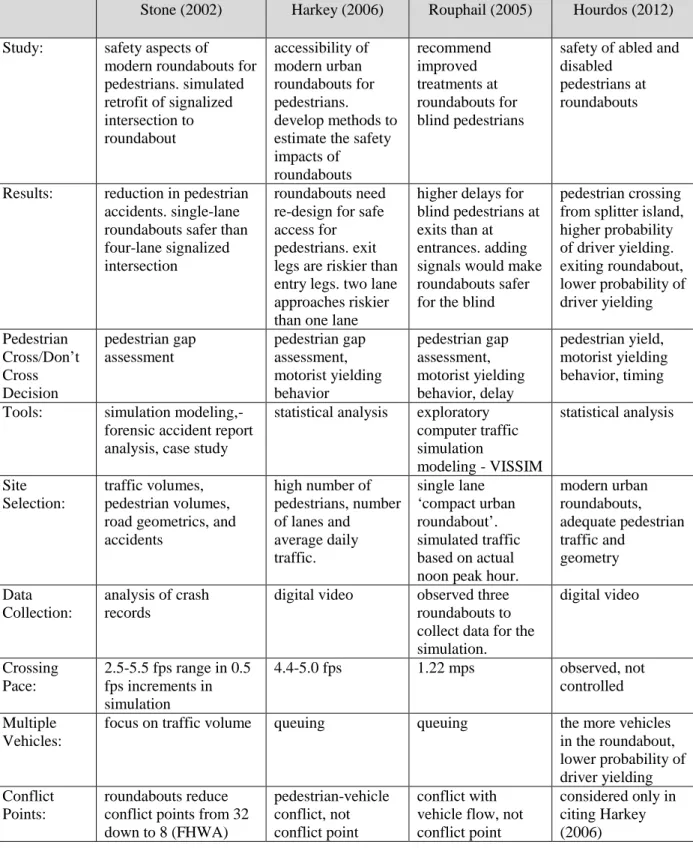
Table 2.1: Table of Comparison of U.S. Studies of Pedestrian Safety at Roundabouts
Stone (2002) Harkey (2006) Rouphail (2005) Hourdos (2012)
Study: safety aspects of
modern roundabouts for pedestrians. simulated retrofit of signalized intersection to roundabout accessibility of modern urban roundabouts for pedestrians. develop methods to estimate the safety impacts of roundabouts recommend improved treatments at roundabouts for blind pedestrians
safety of abled and disabled
pedestrians at roundabouts
Results: reduction in pedestrian
accidents. single-lane roundabouts safer than four-lane signalized intersection
roundabouts need re-design for safe access for pedestrians. exit legs are riskier than entry legs. two lane approaches riskier than one lane
higher delays for blind pedestrians at exits than at entrances. adding signals would make roundabouts safer for the blind
pedestrian crossing from splitter island, higher probability of driver yielding. exiting roundabout, lower probability of driver yielding Pedestrian Cross/Don’t Cross Decision pedestrian gap assessment pedestrian gap assessment, motorist yielding behavior pedestrian gap assessment, motorist yielding behavior, delay pedestrian yield, motorist yielding behavior, timing
Tools: simulation modeling,-
forensic accident report analysis, case study
statistical analysis exploratory
computer traffic simulation modeling - VISSIM statistical analysis Site Selection: traffic volumes, pedestrian volumes, road geometrics, and accidents high number of pedestrians, number of lanes and average daily traffic. single lane ‘compact urban roundabout’. simulated traffic based on actual noon peak hour.
modern urban roundabouts, adequate pedestrian traffic and geometry Data Collection: analysis of crash records
digital video observed three
roundabouts to collect data for the simulation. digital video Crossing Pace: 2.5-5.5 fps range in 0.5 fps increments in simulation 4.4-5.0 fps 1.22 mps observed, not controlled Multiple Vehicles:
focus on traffic volume queuing queuing the more vehicles
in the roundabout, lower probability of driver yielding Conflict Points: roundabouts reduce conflict points from 32 down to 8 (FHWA)
pedestrian-vehicle conflict, not conflict point
conflict with vehicle flow, not conflict point
considered only in citing Harkey (2006)
The U.S. studies examined the issue of pedestrian safety at roundabouts in depth. Stone (2002), Harkey (2006) and Rouphail (2005), considered pedestrian decision-making via gap assessment while Hourdos (2012) examined pedestrian yield behavior. This study seeks to more directly isolate the pedestrian’s cross/don’t cross decision. While accident histories for the signalized intersection were available for Stone's (2002) study, the principal investigator has no such available data for either intersection, requiring a different technique. Rouphail (2005) and Stone (2002) used simulation techniques to create models that could be enhanced by seeding with additional data gleaned form a live setting.
2.4 USE OF CONFLICT POINTS AND VIDEO FOR ANALYSIS
Ismail (2009) noted how recognized measures for analyzing traffic conflict data could be applied to pedestrian conflicts at intersections. He also recommended that video could be applied to analyze pedestrian safety at crosswalks. In line with those conclusions, this study, after encountering high traffic volume at various observed intersections, concurred that video was essential for accurate data collection.
Ismail (2009) recommended studying conflict points with video for several reasons: 1) collisions are rare and random, requiring years of study, over which time many factors can change, 2) collision-based safety analysis is reactive, requiring a significant number of collisions to be recorded and 3) collision data reporting is often incomplete and biased toward very severe collisions. In one study noted by Ismail (2009), over a decade, pedestrian-involved collisions accounted for only 3.6% of the all collisions in British Columbia, Canada, 4) pedestrian traffic is
Ismail (2009) thus recommended Traffic Conflict Techniques (TCT’s) for several reasons: 1) Traffic conflicts are more frequent than collisions, 2) TCT’s produce estimates of average accident frequency comparable with those of accident-based analysis. On the other hand, data collection is subject to observer variability, compromising reliability and repeatability of data collection. Employment of human observers can be expensive, including the effort to extract pedestrian data from videos. Ismail (2009) solved these problems with his unique advanced automated video analysis system to “(a) detect and track road users in a traffic scene and classify them as pedestrians or motorized road users, (b) identify important events that may lead to collisions, and (c) calculate several severity conflict indicators.”
Ismail (2009) collected video data over two days at an intersection in Vancouver, British Columbia. Four conflict indicators were automatically computed for all pedestrian–vehicle events and provided detailed insight into the conflict process. Simple detection rules on the indicators were tested to classify events. Ismail proved the value of video data collection and automated object analysis as a tool for collecting data on pedestrian safety at roundabouts.
2.5 METHODS OF CONFLICT ANALYSIS
Conflict point analysis or the ‘Traffic Conflict Techniques’ favored by Ismail (2009) should include the following factors: 1) existence of a conflict, 2) exposure to the conflict (measuring the product of the two conflicting stream volumes), 3) severity of the conflict (relative velocities of the conflicting streams and angle, 4) vulnerability of the pedestrian (survivability) (FHWA, 2000) at p. 104-105 and 5) additional lanes considerably increasing pedestrian conflict points.
The FHWA (2000) compared vehicle-pedestrian conflicts at signalized intersections and roundabouts. Signalized intersections reduce pedestrian-vehicle conflicts by signal phasing that allows only a few legal movements at any given time. In the diagram below, a pedestrian crossing at a signalized intersection with protected-permitted turns, right on red allowed, creates four vehicular conflicts, each from a different direction, for a total of 16 pedestrian-vehicle conflicts: 1) crossing movements on red (typically high-speed, illegal), 2) right turns on green, 3) left turns on green (legal for protected-permitted or permitted left turn phasing) and 4) right turns on red.
The FHWA (2000) noted that for pedestrians at roundabouts, there are two conflicting vehicular movements on each approach, as shown in their diagram: conflict with entering vehicles and conflict with exiting vehicles.
Figure 2.2: Vehicle-pedestrian conflicts at single-lane roundabouts (FHWA, 2000, Ex. 5-6)
With multiple approach lanes, additional conflicts are added with each additional lane that a pedestrian must cross. (FHWA, 2000) at p. 109.
2.6 DISABLED, ELDERLY, VISUALLY IMPAIRED AND CHILD PEDESTRIANS
The FHWA (2000) noted that crash data was non-existent on pedestrians with disabilities at roundabouts. Considerations for vulnerable pedestrians included: 1) roundabout crossing is difficult for disabled pedestrians without help, 2) roundabout legs could be equipped with a pedestrian-activated signal at crossings, 3) heavy vehicle volume leaving insufficient gaps in traffic to cross, may warrant audible signals.
Visually impaired pedestrians are obviously more vulnerable when there is no phasing of traffic and pedestrians. Some of the possible design remedies mentioned in the FHWA (2000) report included: raised speed tables with detectable warnings, treatments for the visually impaired to find crosswalks and raised pavement markers with flashing lights to alert drivers of pedestrians. They concluded that more research is required to develop the information that governments need to determine where installation of roundabouts may be appropriate and what design features are required for people with disabilities.
Rouphail’s (2005) work, discussed extensively above, focused on visually-impaired pedestrians and concluded that roundabouts would be safer for visually-impaired pedestrians with certain engineering modifications, but particularly, the installation of traffic signals which negates the entire concept of continuous traffic flow at roundabouts.
2.7 BICYCLE SAFETY AT ROUNDABOUTS
Bicycle traffic is fundamentally different than pedestrian traffic, but bicycles are relatively slow and vulnerable compared to motorized vehicles, like pedestrians. Cumming (2011) noted that bicycles have extra risk at roundabouts as they must enter the circulating lane of a roundabout and follow the flow of motorized vehicle traffic.
Cumming (2011) studied accidents and conflict points in Victoria, Australia from 2005-2009. He noted that at urban roundabouts there was more significant bicycle traffic than was observed at six high- speed rural roundabouts which had relatively no bicycle traffic. Cummings (2011) identifies a much higher number of conflict points or ‘conflict streams’ at roundabouts than
other studies. Cumming (2011) referred to conflict points as ‘Danger Points’ where the paths of two vehicles may coincide. He noted that due to roundabouts having fewer conflict points and the geometry of roundabouts deflecting traffic, it creates safer conditions for motorists than traditional intersections. Cumming (2011) did actually observe eight pedestrian accidents with vehicles at roundabouts over the four-year period of observation, but that was not the focus of his study. He noted greater danger from two-lane roundabouts where the number of bicycle conflict points increases dramatically from four to sixteen.
It is Cumming’s identification of the concept of ‘conflict streams’ that has the most relevance for the current study. It seems truer to the FHWA’s (2000) definition of ‘conflict point’ with converging and diverging traffic, in essence, a pedestrian or bicycle must be observant of streams or paths of vehicle traffic instead of a fixed point.
Figure 2.3: One-Lane vs. Two-Lane Roundabout Conflict Points (Cumming, 2011, at p.28)
2.8 RELATED WORK: THE HUMAN PARTICIPANT SIMULATION
The closest related work to this study is the remarkably similar effort by Wu (2009) to use virtual reality to have a human participant actually experience a computer-modeled roundabout environment. While Wu’s (2009) effort had exciting possibilities for training pedestrians on how to use roundabouts, his effort combined with the method I propose, could allow this study’s method to be used to more extensively model Wu’s (2009) simulation and virtual reality system.
Wu (2009) sought to use a virtual reality environment to assess how human participants acting as pedestrians tend to judge the ‘gap’ between approaching vehicles as they attempt to make a decision to cross a lane of a roundabout like Stone (2002), Harkey (2006) and Rouphail (2005) who also used the gap estimation as a measure. Wu’s (2009) simulation used validated models of vehicle behavior to add realism to the experiment. Wu (2009) mentioned the decision-making process, but did not approach the cross/don’t cross decision directly.
Wu (2009) focused on the roundabout exit lane crossing only but not the entrance lane as drivers were considered to be less likely to yield when exiting a roundabout, thus creating a more interesting conflict. He did allude to the conflict point conundrum: “The issue is likely to be more confusing in a roundabout, where vehicles can be entering the circulating pathway from several directions” (Wu, 2009, p. 35). He discusses this confusion in terms of ‘connecting points’, but he describes the ¼, ½ and ¾ approaches in similar terms as this study.
Wu (2009) used The Maya (Autodesk, 2017) and Vizard (Worldviz, 2017) tools to create the simulation model. The model created a variety of traffic scenarios at the virtual roundabout. These tools could model traffic volume, pedestrian volume and vehicle speeds. He programmed the traffic in streams, to allow for multiple vehicle scenarios to affect decision-making. The virtual
roundabout provided both visual and auditory cues. Images from the virtual reality roundabout may be seen in Figures 2 and 3 of Wu’s (2009) study on p.36.
Wu (2009) used twelve human participants ages 20-45, all able-bodied adults, who were trained on how to use the system. The system simulated speed, paths of approaching vehicles and duration of gaps to test the pedestrian’s decision-making. The experiment took place inside a large room. The participants could physically cross when they felt safe and comfortable crossing. In this instance, an unsafe crossing could be thrown out. In real life, the experiment ends with a collision. He simulated crossing in both directions, which allows for the study of facing or not facing circulating traffic.
Limitations included the horizontal field of view, which affects the realism of the experiment to a degree and that the pedestrians would likely be more conservative in their decisions in a real environment. Wu (2009) voiced a concern (shared by Hourdos (2012)) that visually-impaired pedestrians would have safety issues at roundabouts due to confusing auditory cues. Wu’s experiment is intriguing as it can safely model behavior of live pedestrians at roundabout crossings, but 1) it lacks some elements of realism, 2) it does not account for traversal of entrance lanes, 3) it doesn’t make a comparison to a signalized intersection and 4) while it does reflect pedestrian decision-making, it doesn’t focus on the binary cross/don’t cross decision. Wu’s (2009) model however could be enhanced in these regards with additional data from a live field setting.
The U.S. based studies of pedestrian safety at roundabouts since the year 2000, have used a variety of techniques to gather data. Datasets of actual accidents were reviewed, before and after studies conducted with real data, video software with automated capture of activities was
employed and an assortment of computer modeling techniques were used, ranging from statistical modeling tools to virtual reality.
The question is: how can we improve upon modeling given the difficulty and cost of long-term observation of numerous roundabouts? The method proposed in the study, could provide an answer: actual decision-making data from a live pedestrian to build a realistic simulation model.
3.0HYPOTHESIS, METHODS AND ANALYSIS
3.1 HYPOTHESIS – RESEARCH QUESTION
A review of past literature has shown that roundabouts are a safer alternative for motorized vehicles than signalized intersections, but do roundabouts actually increase risk to pedestrians and non-motorized vehicles? Does the roundabout give the vulnerable pedestrian the same ability to cross a lane of traffic safely as does the signalized intersection? Can a method using a human participant in a field experiment calibrate existing modeling and virtual reality techniques with real world data?
3.1.1 Summary of Methods
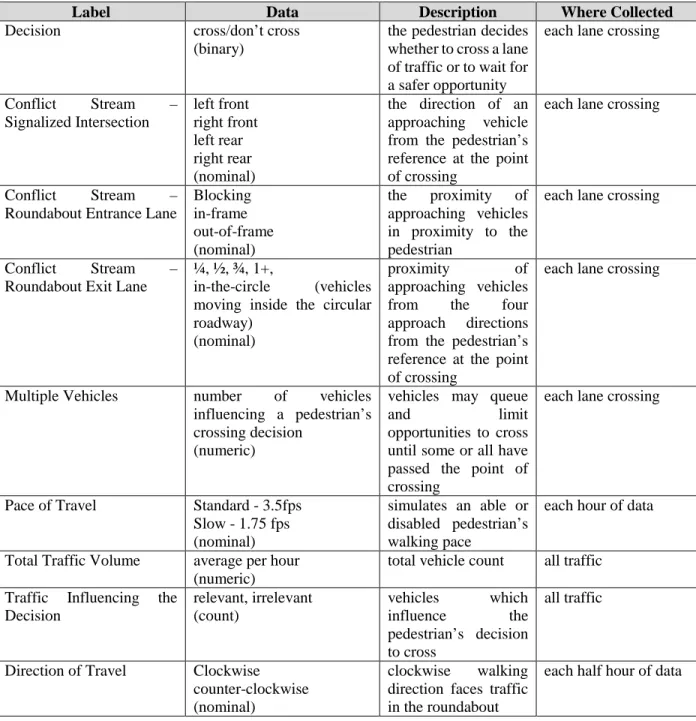
In order to answer these questions, this study collected and extracted data from several hours of video at two comparable intersections: The first, a one-lane, four-way roundabout and the other a traditional four-way signalized intersection. The data was manually extracted from the video by observation and recorded into a spreadsheet. Entrance and exit lanes were considered separately and slow pedestrians were simulated to get a better understanding of safety in the crosswalk for the elderly and disabled.
3.1.2 Human Participant in the Field Environment
The principal investigator of this study acted as a staged participant crossing at each lane around each intersection in either a clockwise or counter-clockwise direction in constant motion. At all times, the principal investigator obeyed traffic rules and exercised due caution. In the signalized intersections, cross buttons were always pressed and the principal investigator did not proceed until the walk sign was illuminated, however two of the eight walk sign activation buttons intermittently malfunctioned. This is not uncommon in literature to use oneself as human participant, but it avoids placing another participant at physical risk, albeit, a participant obeying traffic rules and taking due care would be at no more risk than any other pedestrian. Different protocols and participant training will have to be used in future studies attempting this technique if a human participant is involved in the field environment.
3.1.3 Accounting for Bias in the Experiment
Because the principal investigator of this study acted as pedestrian, informal controls were necessary to account for bias in the conduct if the experiment and in decision-making. The principal investigator obeyed all traffic rules at all times. The principal investigator only proceeded in the signalized intersection when the walk signal was illuminated. The principal investigator proceeded with caution where the walk light was malfunctioning. The principal investigator never proceeded into the traffic lane in either intersection when a converging vehicle would have already had right of way under Pennsylvania Law. (In Pennsylvania, as stated above a driver must yield right if way for a pedestrian already in the crosswalk). However, common sense presumes that a
driver obeying the traffic laws must be given reasonable time to react to a pedestrian, i.e. a pedestrian cannot enter the crosswalk and deliberately place themselves in imminent danger.
3.1.4 Entrance and Exit Lane Data
The exit lane data documented a pedestrian’s cross/don’t cross decision upon arrival at each exit lane of traffic at the roundabout. The data included the pedestrian’s consideration of vehicles already in the circulatory roadway plus vehicles entering from one of the four entrances at ¼, ½, ¾ and 1 complete revolution from the lane being crossed.
The entrance lane data documented the pedestrian’s cross/don’t cross decision upon arrival at each entrance lane of traffic at the roundabout, where the pedestrian must assess vehicles in three frames of view: 1) ‘Blocking’ (physically blocking the pedestrian’s path across the lane of traffic), 2) ‘In-Frame’ (visible to the horizon on the approaching road) 3) ‘Out-of-Frame’ (vehicle becomes relevant to the crossing decision from over the horizon only because of blocking or in-frame approaching vehicles). The ‘framing’ concept is presented as a unique innovation in evaluating the pedestrian crossing decision, indicating that the roundabout may be a much richer and riskier environment than the ‘one conflict point per lane’ concept proposed by the FHWA.
Hourdos (2012), used a similar labeling concept for the legs of a roundabout, with the ‘¼’ lane being at 90°, ‘½’ lane being at 180° and so forth. What this study labels as the ‘¼’ lane is the closest entrance lane to the pedestrian who is crossing the nearest roundabout exit (assuming counter-clockwise U.S. vehicle flow). The labels used in this study are relative positions based on the location of the pedestrian as they cross an exit lane. The ‘¼’ lane is nearest the pedestrian, the ‘½’ lane is across the roundabout, the ‘¾’ lane is opposite the ¼ lane (but ¼ more distant than the
½ lane) and ‘1’ is the entrance lane adjacent to the exit lane the pedestrian is crossing, where the vehicle does a full revolution and exit to conflict with the pedestrian.
The highest risk is from proximity, ‘¼’ away being the most imminent danger, but then, other vehicles may come into play, creating a much higher level of risk than is normally explainable by the ‘one conflict point per exit lane’ concept in the literature. A hypothesis being that