IDENTIFYING AND ASSESSING THE COGNITIVE INFLUENCES AND MEDICAL PRACTICES AMONG HEALTH CARE PROVIDERS OF ADULT SICKLE CELL ANEMIA PATIENTS WHERE COORDINATED COMPREHENSIVE
CARE IS LIMITED OR NON-EXISTENT
A Thesis by
RYAN A. JOHNSON
Submitted to the Office of Graduate and Professional Studies of Texas A&M University
in partial fulfillment of the requirements for the degree of MASTER OF SCIENCE
Chair of Committee, Jeffrey J. Guidry Co-Chair of Committee, E. Lisako J. McKyer Committee Member, Corliss Outley Head of Department, Richa rd Kreider
August 2015
Major Subject: Health Education
ii ABSTRACT
Sickle cell anemia patients face disproportionate disparities in health care. Treatment for adult sickle cell disease (SCD) patients is mainly palliative (alleviating pain symptoms) without addressing underlying causes. Cognitive influences (e.g., knowledge, belief, attitude, and intentions) and systematic barriers often determine healthcare practices and quality of care. Gaining the healthcare providers’ perspective on the social and systematic influences on the implementation of comprehensive
coordinated care, a highly regarded disease management model, might be key to
understanding stagnant health outcomes among adult sicklers. Caribbean Island nation’s providers’ treatment of SCD patients results in optimal health outcomes. Hence,
Caribbean treatment providers can provide insight into improving the delivery of healthcare in the USA.
The purpose of this study is to describe Trinidadian SCD healthcare providers’ cognitive influences and systematic barriers to implementing coordinated comprehensive care. A purposive sample of 5 male and female SCD practitioners in Trinidad were interviewed by UWI – St. Augustine researchers. Data saturation was achieved by the end of the third interview. Utilizing Colaizzi’s method of phenomenology to perform a secondary data analyses of informative research, rigor was established through the application of authentication, justification, and validity.
Eight themes arose from 91 significant statements. Cognitive influences included: knowledge and promotion of preventative care; emphasis on beliefs of effective patient-provider communication; and positive attitudes regarding patient
iii
autonomy, self-care management, and comprehensive care. Barriers included: lack of resources and support; lack of consensus on standards of care, including proper pain management; social stigma; and accessibility to quality care.
Understanding these social and structural influences and barriers to the implementation of coordinated comprehensive care from the perspective of the healthcare provider might help stakeholders identify viable solutions to improve adult sickle cell patients’ quality of life and provide efficient, yet effective, treatment.
iv DEDICATION
I would like to dedicate this thesis and everything I have done and will do to my creator, and the three people in my life who have always showered me with
unconditional love--my mother Kimberly Mahon, Great-Grandmother Dorothy Robertson, and Grandfather Hank Williams. I would not be who I am or where I am today without you. To my lovely grandmother, Lois Mahon, although we never had the chance to meet, your rich spirit lives abundantly through me. I would also like to
dedicate my work to my late Great-Great Grandfather, Marine Williams. I will continue to uphold the honor and integrity of our family, for it is because of you and your
tenacious efforts and achievements in building a strong family foundation, as well as promoting education and equality for all people, that I am able to reap the blessings bestowed.
I would also like to give a special thanks to my father, Everett Johnson;
immediate and extended family; friends; and loved ones. Their everlasting contributions to my life and words of encouragement allowed me to keep going amidst many of life’s obstacles and adverse circumstances. Last, but certainly not least, I would also like to dedicate my thesis to Dr. Queen Martin, Dr. Angela Branch-Vital, Dr. Patricia Smith, Dr. Kentya Ford, Dr. Michael Clay Hooper, Dr. Delinda Marzette, and the entire Prairie View A&M University faculty and staff. Each were extremely influential throughout my academic career. Thank you from the bottom of my heart for believing in me. To you all, and each individual affected by sickle cell anemia, I am forever indebted. This is only the beginning of greatness and innovation that is to come.
v
ACKNOWLEDGEMENTS
I would like to thank Dr. Jeffrey Guidry (my committee co-chair), Dr. E. Lisako J. McKyer (co-chair), and Drs. Corliss Outley and Isabella Granderson (committee members), as well as Drs. Idethia Harvey, John Singer and Akilah Carter-Francique for their guidance and support throughout the course of my educational and research experience.
A special thank you to Dr. Jeffrey Joseph Guidry. He has been instrumental throughout my graduate education experience. Thank you for pushing me to be the best I can be. I will never forget your words of advice. I do not know where I would be had you not provided the support needed to make it through this journey. Thank you for being who you are, for it is because of who you are and what you represent that I and many others will always look up to you and respect you dearly.
Thanks also go to my friends and colleagues and the entire Health and Kinesiology Department, faculty, and staff for making my time at Texas A&M University a great experience. I feel adequately prepared to be the best I can be, both personally and professionally. I also want to extend my gratitude to the each member of TAMU’s Transdisciplinary Center for Health Equity Research, the 2013 cohort,
administration faculty and staff of Morehouse College Public Health Science Institute’s Project Imhotep Public Health Training Program, and all of the healthcare providers who were willing to participate in this study.
vi
NOMENCLATURE
SCD Sickle Cell Disease
TAMU Texas A&M University
HLKN Health and Kinesiology Department
SCDAA Sickle Cell Disease Association of America NHLBI National Heart, Lung, and Blood Institute CDC Center for Disease Control and Prevention
COSCA Caribbean Organisation of Sickle Cell Associations
QOL Quality of life
SCT Sickle Cell Trait
USA United States of America
UWI University of West Indies – St. Augustine HRSA Health Resources and Services Administration NICHQ National Institute for Children’s Health Equality
vii TABLE OF CONTENTS Page ABSTRACT ...ii DEDICATION ... iv NOMENCLATURE ... vi
TABLE OF CONTENTS ...vii
LIST OF FIGURES ... ix LIST OF TABLES ... x CHAPTER I INTRODUCTION ... 1 Purpose ... 1 Significance ... 1 Research Questions ... 2 Background ... 2
CHAPTER II LITERATURE REVIEW ... 3
Current Medical Treatment ... 5
Benefits of Coordinated Comprehensive Care ... 6
Sickle Cell Disease and Health Disparities ... 8
Sickle Cell and the Caribbean Islands ... 9
Specific Aims ... 11
CHAPTER III RESEARCH DESIGN AND METHODS ... 13
Site and Sample Selections ... 15
Data Analysis ... 16
Data Management ... 20
Known Risks/Potential Benefits ... 20
Data and Safety Monitoring ... 21
Communication and Dissemination of Study Results ... 22
CHAPTER IV RESULTS ... 23
Best Practices ... 25
viii
Page
Recognition and Promotion of Cost/Benefit... 25
Effective Patient-Provider Communication ... 25
Emphasis on Patient Autonomy ... 26
Holistic Healthcare Approach... 26
Barriers to Implementation ... 27
Inadequate Resources and Funding ... 27
Consensus on Standard of Care and Proper Pain Management ... 28
Accessibility ... 29
Social Stigma ... 30
CHAPTER V DISCUSSION ... 32
Recommendations for Future Research ... 33
Recommendations for Future Practice ... 34
Study Limitations ... 35
CHAPTER VI CONCLUSION ... 37
REFERENCES ... 38
ix
LIST OF FIGURES
Page Figure 1 Phenomenology Process Model ... 18
x
LIST OF TABLES
Page
Table 1 Schematic Table ... 19 Table 2 Themes and Descriptions ... 24
1 CHAPTER I INTRODUCTION
Purpose
The purpose of this secondary data analysis of informative research is to identify, understand and describe the cognitive and social influences toward the implementation of medical and non-medical practices, including barriers to implementing
comprehensive coordinated care amongst sickle cell disease (SCD) adult healthcare providers in areas where comprehensive care is either limited or unavailable using phenomenological research methods. Particularly, this study will seek to illuminate the dynamic lived experience as an adult SCD healthcare provider in areas where utilization, quality of care, and access to coordinated comprehensive health services are heavily dependent on geographic proximity and socioeconomic status. This study will help healthcare professionals and stakeholders to understand healthcare providers’
experiences and how barriers to coordinated comprehensive care affect medical and non-medical practices, health outcomes, and quality of life (QOL) in adult SCD patients. This study will also suggest ways to develop strategies to meet the needs of the patient. Improving disease management strategies amongst healthcare providers can ultimately lead to achieving improved health outcomes and QOL for all adult SCD patients.
Significance
This research study’s findings will describe healthcare providers’ lived experiences in implementing coordinated comprehensive care within Trinidad and
2
Tobago. This study will also highlight providers’ perspectives on how the lack of coordinated comprehensive care for underserved, disadvantaged populations affects health outcomes, medical practices, and organizational processes.
Research Questions
Assuming that participants are aware of the benefits regarding the
implementation of comprehensive coordinated healthcare services, how do attitudes, beliefs, and knowledge capacity of adult SCD healthcare specialists influence the implementation of coordinated, comprehensive care?
How are standard of care practices reinforced in areas where coordinated, comprehensive care is limited or non-existent?
Background
Comprehensive coordinated care is an integrated model of multidisciplinary healthcare that includes the implementation and integration of the chronic care model and the concept of a medical home (Mvundura, 2009). The benefits of coordinated comprehensive care for individuals with sickle cell disease, the most common genetic disorder in the world, and other genetic disorders (e.g. cystic fibrosis, hemophilia) have been documented on both a national and global scale, with positive consensus regarding its implementation by healthcare practitioners (Serjeant, 2001; Okpala, 2002).
Comprehensive coordinated care specialty centers are the only facilities where coordinated, quality care for SCD adult patients is usually available, due to its
requirements of clinical experience and expertise (Grosse, 2009; AAP, 2002; NIH 2002; Okpala, 2002; Claster, 2003).
3 CHAPTER II LITERATURE REVIEW
Sickle cell disease is the most prevalent genetic disorder in the world and is composed of a group of inherited genetic blood disorders, also known as
hemoglobinopathies or dysfunctional red bloods. The abnormally shaped red blood cells in SCD patients have shortened lifespans, causing anemia. During what is known as a pain crisis, these abnormal red blood cells act as a blockade within the blood vessels, restricting the flow of necessary oxygen and other nutrients. Sickle cell disease has several variations (SS, SC, beta thalassemia etc.). Disease severity is heavily dependent upon the variation of SCD (Sergeant, 2013). Common manifestations of SCD are severe acute and chronic complications, as well as other multi-systemic health issues. These complications include the unpredictable occurrence of vas-occlusive pain crisis, an increased likelihood of stroke, ischemic organ damage, multisystem morbidity,
psychosocial stressors, and early death (Sergeant, 2012). Currently, there is no cure for SCD.
SCD affects millions of people around the globe, primarily people of African, Sub-Saharan, Mediterranean, Saudi Arabian, Indian, Southeast Asian, South/Central American, and Caribbean descent (CDC, 2014). Variation of the disease is a useful indicator of ancestry for Black SCD patients (Sergeant, 2013). Recent literature has reported that 5% of the human population and 7% of pregnant mothers carry a
4
(SCT) carrier, with 275,000 actually diagnosed with the disease (Modell, 2008). Today, the average life expectancy that has been accepted by the medical community for those affected by SCD is 42/48 years (men/women)—a sharp contrast to an average life expectancy of 20 years old and high rates of infant mortality reported in earlier years (Platt, 1994). Reports were significantly better in a Jamaican study, with average life expectancy for men of 53 years and of 58.5 years for women (Wierenga, 2001).
SCD occurs when the child has inherited one sickle cell gene from each parent. Those who only inherit one SCD gene and a normal gene can carry the sickle cell trait, which is not the same as carrying the disease. Trait carriers are asymptomatic, and usually live normal, healthy lives, but can pass the sickle cell trait on to their offspring. In the United States, SCD affects roughly 100,000 people, with nearly 2 million trait carriers (CDC, 2011). In the U.S., African-Americans comprise the racial majority of SCD populations (CDC, 2011). Annually, SCD occurs in one out of 500 African-American births, and one out of 36,000 Latino African-American births (CDC, 2014). Gene carriers, or those with the sickle cell trait is present in one out of every 12 persons of Black or African descent (CDC, 2014). SCD occurs in one out of every 2,474 births in the U.S. overall (Therrell, 2006; Oyeku, 2014).
Within the Caribbean islands, where the majority of the population are of West African descent, the homozygous haplotype SS is the most common variation of SCD. The most current incidence rates for SCD are 1:300 (HbSS), 1:500 (HbSC), 1:3000 (Sb+ thalassemia), and 1:7000 (Sb0 thalassemia) (Serjeant, 2001). The SCD carrier trait for haplotype SS is found in 10% of the population, 3.5% of the population for haplotype
5
SC (Serjeant, 2001). Similar rates were also found on the Caribbean island of Barbados (Quimby, 2014).
Current Medical Treatment
Much of the medical advances and improvements in health outcomes related to those affected by sickle cell anemia are due to the implementation of newborn screening programs, quality medical care, increased awareness and education, dissemination and publication of health care information from SCD specialty centers, and the use of prophylaxis penicillin and hydroxurea (Jeanerette, 2011; Oyeku, 2012; Koshy, 1996). However, longstanding treatment has been considered to be sedative, only relieving acute symptoms while neglecting the underlying cause of the adverse disease
manifestations (Claster, 2003). Clinical management of vas-occlusive crisis, the most common reason for hospitalization, includes a case specific treatment combination of increasingly unacceptable narcotics as pain medications (opiates), blood transfusions as needed, and constant hydration (Stinson, 2003). Although bone marrow transplants are costly, limited in donors, and not guaranteed, it is the only option currently available to reverse diagnosis (Nietert, 2002). QOL, mortality, and health outcomes of adult SCD patients vary across institutions and populations where affected individuals reside (Oyeku, 2012). Many high income and developing countries now have patients that are living longer than previously, demonstrating a need to understand the complete etiology of the disease, factors that influence increased morbidity as this population ages, and a more collaborative effort in using multidisciplinary approaches to improve health outcomes, including the QOL as the patient ages.
6
Benefits of Coordinated Comprehensive Care
The benefits of coordinated comprehensive care for individuals with sickle cell disease and other genetic disorders (i.e. cystic fibrosis, hemophilia) have been
documented on both a national and global scale, with positive consensus regarding its implementation by healthcare practitioners (Okpala, 2002). Comprehensive specialty centers are the only facilities where coordinated quality care for SCD patients is usually available, due to its requirements of clinical experience and expertise. Comprehensive coordinated care is an integrated model of multidisciplinary care that includes the implementation of the chronic care model and the concept of a medical home
(Mvundura, 2009). Model comprehensive coordinated care for SCD addresses each facet of health and should include a multidisciplinary team that functions based on the
interactions between medical and non-medical services and the patient (Mvundura, 2009; Okpala, 2002). The coordinated medical team includes a specialty physician (hematologist), physician’s assistant, health educator, social worker, access to laboratory and radiology services, as well as a 24-hour blood bank service (Mvundura, 2009). This type of coordinated care suggests that different facets of comprehensive care and other needed health services are cohesively delivered, essentially utilizing a more strategic, unified approach to improving health outcomes for SCD patients. If resources permit, this approach can be used in a medical home to its entirety; otherwise, collaboration with SCD specialty care centers and other subspecialty services is highly recommended (Grosse, 2009). It is important to note that US researchers have demonstrated the cost effectiveness of comprehensive coordinated care through economic comparison analysis
7
of utilization patterns and care expenditures between those registered with a local comprehensive center and those who only sought episodic treatment (Yang, 1995). The number of patients registered with the SCD comprehensive specialty care center
expenditures was considerably less than those that who received episodic treatment (Yang, 1995). Higher standards of care have been observed in specialty health care facilities that often only accept private insurance. Coordinated comprehensive care centers are often difficult for adult SCD patients to pay for due to public insurance limitations, and rarely is re-locating an option in areas where access is limited or non-existent for a vulnerable population (Mvundura, 2009). Like the U.S., Jamaica, and other countries abroad, many dissimilarities and health disparities exist in healthcare across the socio-demographic spectrum, particularly amongst those of low socioeconomic status, as well as those who live in rural areas with limited access to quality care (Haque & Telfair, 2000; Thomas & Lipps, 2011). Individuals affected by sickle cell disease in these areas where comprehensive care is limited or non-existent are significantly impacted by the burden of disease, including disproportionate rates of poor quality of life (McKlish, 2005; Thomas & Lips, 2011; Haque & Telfair, 2000).
As a result of the implementation and utilization of coordinative comprehensive care strategies, although limited in its availability, the positive programmatic, process, and health outcomes rendered demonstrate a need for further investigation, as well as its widespread adoption across the various health care institutions that serve the SCD and SCT populations. This particular model of care has been shown to produce positive health outcomes in the Caribbean, specifically Jamaica, as a collaborative partnership
8
between the University of West Indies Sickle Cell Unit, Education Centre, and COSCA. The collaborative efforts of these organizations and institutions, outlined by the Sickle Cell Trust of Jamaica, is supported by the British Medical Research Council and National Institutes of Health (NIH) (Serjeant, 2012). Examples of these cost-effective care models have been given considerable attention through initiatives such as the USA’s Hemaglobinopathy Learning Collaborative, whose main goal is to improve the health outcomes and quality of life experience for individuals affected by sickle cell disease and trait carriers, a collaborative effort supported by the National Heart, Lung, and Blood Institute (NHLBI), the Health Resources and Services Administration (HRSA), the National Institute for Children’s Health Equality (NICHQ), and the Sickle Cell Disease Association of America (SCDAA) (Oyeku, 2012).
Sickle Cell Disease and Health Disparities
Patients living with SCD also experience a plethora of challenges outside of the clinical manifestations of the disease. Many individuals affected by SCD have reported discriminatory practices and inadequate care in the healthcare system, school, and work, as well as in the socio-environmental realm, at disproportionate rates compared to the general population that ultimately negatively affect disease management, QOL, and health outcomes (Dorsey, 2001; Tanabe, 2012; Zempsky, 2009; Nelson 2013; Booker et al., 2006; Thomas & Taylor, 2002). Disproportionate rates of psychosocial issues— including depression, social isolation, stigmatization, and low quality of life—have been previously reported (Lattimer, 2010; Asnani, 2009; Parwez, 2003; Edwards, 2005; Edwards, 2009). Furthermore, individuals affected by sickle cell disease are also likely
9
to report being unemployed, have difficulties sustaining employment, and achieve lower rates of higher educational attainment than the general population due to SCD related issues, all of which are significantly negative determinants to health (Todd, 2006; Herron, 2003).
Inequitable practices, discrimination, and health disparities are significantly associated with negative psychological and physical health outcomes (e.g. pain, stress) (Williams, 2009). Worse outcomes have been observed when acts of micro-aggression during interaction with the health system recur over a period of time (Zempsky, 2009). The stigmatization of and discrimination towards SCD patients resulting from past efforts to implement a surveillance program that could potentially improve outcomes in various ways as it has for other hemoglobinopathies, continue to raise questions of privacy violations and ethical issues (Bowman, 1998). Consequently, efforts to develop national registries have become stagnant. For a variety of reasons, including the fear of further discrimination and marginalization, many individuals affected by sickle cell disease are reluctant to participate in clinical trials and often avoid hospitals until it is required (Shavers, 2002; Booker et al., 2006).
Sickle Cell and the Caribbean Islands
Regarding the history and success of the advancement in research and practice for those affected by sickle cell disease, the Caribbean islands (particularly Jamaica) are considered leaders in transforming the disease from debilitating and unpromising, into a condition that can be effectively managed and controlled (Serjeant, 2012). While
10
countries such as the USA, literature states that according to a Jamaican clinic based population study, survival estimate rates are similar if not better than those the USA (Wierenga, 2001). Participating sickle cell disease researchers in Jamaica have also been able to develop cost-effective models that can be replicated in poorer countries without compromising the quality of care (Sergeant, 2012). The achievements made by these researchers have been recognized globally. These researchers have been able to assist in the development of similar programs for countries across Africa, South America, and the Middle East (Seargent, 2012). Multi-site programs have assisted in the development of sickle cell services such as newborn screening programs, interventions using
pneumococcal prophylaxis, early detection of acute splenic sequestration education programs, and premarital genetic counseling prevention services. Given the proper dedication and commitment of healthcare systems and healthcare providers to the implementation of coordinated comprehensive care, along with dedicated efforts toward the expansion of sickle cell disease research capacity, improvements in practice, and strategic community health education and promotion, success stories have been extensively documented by countries abroad utilizing such models of care (Rahimy, 2003; Sadarangam, 2009).
Much of the research available for SCD that has been performed in the Caribbean has been population specific to Jamaica. The majority of available research is
quantitative, only concentrating on the quantifiable and genetic manifestations of the disease. Despite the need for more qualitative studies related to SCD, suggested by Thomas and Taylor (2002), to date there has only been one publication to this
11
researcher’s knowledge using qualitative research methods, a study performed in Jamaica, and none in the surrounding Caribbean islands (Anderson, 2013). Although there has been increased awareness and programs dedicated to sickle cell disease throughout the Caribbean islands, most notably the Caribbean Organisation of Sickle Cell Associations (COSCA), Jamaica is the only island within the Caribbean that
provides infrastructure dedicated specifically to the comprehensive care and treatment of individuals with sickle cell disease (Serjeant, 2012). This researcher has been unable to locate research literature, programs, and initiatives specific to the SCD population in Trinidad and Tobago, which more than likely do not exist. To illuminate the experiences of healthcare providers in the Trinidad and Tobago, where coordinated, comprehensive care for adult SCD patients is either limited or non-existent, researchers have employed qualitative research methods. Qualitative studies are able to capture the true essence of the experience of individuals affected by SCD and allow healthcare providers to develop strategic approaches to addressing apparent issues and disparities. The findings from this study will address the scarcity of Trinidad and Tobago-specific data, as well as the need for more qualitative reports to understand the lived experiences of individuals affected by sickle cell disease.
Specific Aims
1. To describe the components of coordinated comprehensive care used to improve health outcomes for chronically ill patients.
2. To assess the knowledge, beliefs, and attitudes towards disseminating coordinated comprehensive care strategies and their implementation amongst SCD healthcare
12
providers through secondary data analyses of key informant interview transcriptions collected by UWI researchers using qualitative methods of analyses.
3. Identify coordinated comprehensive care practices and strategies amongst adult SCD healthcare providers.
13 CHAPTER III
RESEARCH DESIGN AND METHODS
With Texas A&M University Institutional Review Board approval of data that had been previously collected, reference IRB2015-0252, the proposed cross-sectional study design will include a secondary data analyses of informative research provided by UWI researchers. Specifically, TAMU researchers will analyze the transcriptions of local adult sickle cell disease healthcare providers, a data set that is part of a study previously conducted in Trinidad and supported by the University of West Indies—St. Augustine. Although the following study is a secondary data analyses, two TAMU HLKN graduate students took part in the primary data collection process protocol, and provided research assistance to the Principal Investigators of the UWI- St. Augustine research team. The assistance provided by the graduate students was in fulfillment of partial requirements for the TAMU HLKN-sponsored study abroad course held in Trinidad and Tobago. The original intention of the data provided in this research study was for formative thesis development purposes only, and was not meant to be used for analytical reasons, but rather to guide the development of the questionnaire for the original thesis study proposal. For these reasons, IRB approval was not required for the graduate students to participate in the primary data collection process protocol of the research performed in Trinidad and Tobago.
A change in the study focus (which is common for mixed methods research and qualitative studies) led to the need to utilize the data that are being presented as
14
secondary analyses. As a result of the aforementioned change in study focus,
participating study researchers from both institutions came to the consensus that IRB approval was necessary before the data that is being presented could be utilized. IRB approval, reference IRB2015-0252, was then obtained from both Texas A&M University and the University of West Indies- St. Augustine for secondary data analyses utilization purposes.
The settings for the interviews were determined at the physicians’ discretion. Recruitment efforts garnered a total of five eligible participants. Out of the overall five interviews, three took place within the offices of their respective private practices, one was held in a private office at the Eric Williams Medical Services Complex, and the last interview took place on the campus of University of West Indies—St. Augustine.
According to the majority of the participants, there is a total of about 15 hematologist on the islands of Trinidad and Tobago who specifically treat adult individuals affected by SCD.
Interviewers utilized in-depth, semi-structured, open-ended, key-informant interviews as a qualitative method of data collection. Interview questions and socio-demographic survey information were guided by previous literature. The instrument was validated by experts in minority health issues and health disparities, nutrition, physical activity, and health education, and by non-participating adult healthcare professionals fluent in qualitative/quantitative research design and application.
15
Site and Sample Selections
As part of the original data collection protocol (from where the secondary data were derived), participating healthcare providers were recruited using the snowball sampling method. Recruitment efforts were geared towards sickle cell disease specialty clinics and general healthcare facilities. Participants were recruited using solicited advertisements that called for willing participants, particularly general and specialty care physicians with significant experience in dealing with adult patients with SCD. Ideal participants encouraged for inclusion were those who were licensed and practicing healthcare providers, including general physicians and hematologists with substantive experience in dealing with adult SCD patients. Those excluded from participating in the research study were non-practicing/unlicensed healthcare providers with little experience in dealing with patients with SCD.
The settings for the interviews were determined at the physicians’ discretion. Trinidad was selected to be the site of the research study. Recruitment efforts garnered a total of five eligible participants. Out of the overall five interviews, three took place within the offices of their respective private practices, one was held in a private office at the Eric Williams Medical Services Complex, and the last interview took place on the campus of University of West Indies—St. Augustine. According to the majority of the participants, there is a total of about 15 hematologist on the islands of Trinidad and Tobago who specifically treat adult individuals affected by SCD.
Finally, eligible participants voluntarily participated in an audiotaped, 30-minute to one-hour interview and asked a range of questions related to the aforementioned
16
research agenda (see Appendix A). For the participants’ protection, this study was completely anonymous and does not contain any identifiers. All materials and data deemed confidential were collected and stored by key personnel and used only within the guidelines provided by the Institutional Review Board and the research study’s Principal Investigator.
Data Analysis
In an attempt to understand how a given phenomenon is experienced, in this case the implementation (or lack thereof) of coordinated comprehensive specialty centers and programs for SCD patients, data was collected and analyzed using the phenomenological method. Phenomenology seeks to cognize meanings participants connect to a particular phenomenon through their lived experiences. Using phenomenology, the researcher transcends past knowledge to understand the phenomenon in further detail and consider the lived experience with new perspective in hopes of extracting prolific and descriptive data from the participant. As adult SCD patients often are cared for by healthcare providers, including hematologists and general practitioners, the eligible informants are assumed to have considerable knowledge of the healthcare profession, policies,
practices, and institutional culture that guide their institution. Researcher team members speculated that much of the perceived role formation would be developed by healthcare professional with direct experience in caring for adult SCD patients. Thus, the
phenomenological method was deemed appropriate for the analytical purposes of the study, as it is founded upon the belief that individuals will attach experiences to meaning
17
of those experiences through reflective memory recall, which are illuminated through an analysis of narratives shared by the sample population.
According to the information provided by the researchers team, study procedures included assessment of recruitment, enrollment and eligibility, informed consent, key informant interviews, data collection, and data analysis. All interviews were performed by one UWI researcher using the interview guide. Probing strategies were also utilized to answer study questions if the interviewee did not answer in a way that contributed to the research study’s questions. For secondary data analyses, two TAMU assigned study investigators meticulously performed line-by-line preparation of data transcriptions, categorized findings, and identified undeviating themes. After the themes were
identified, they were clustered and closely aligned with textual descriptions from each individual transcription. Once consensus regarding validity and final themes was
reached, each theme was then supported and articulated as narrative summaries. Through the process of bracketing, researchers then separated their attitudes, beliefs, and
perceptions from the narrative summaries to be more open to the given phenomenon (Figure 1). Table 1 outlines how the questions used in key informant interviews produced information to answer study questions related to the implementation of coordinated comprehensive care.
18
Figure 1: Phenomenology Process Model (Fortunado-Sanchez, 2002)
19 Table 1. Schematic Table
Components of Coordinated Comprehensive Care (CCC)
Cognitive Mechanisms That Influence CCC
Implementation
Interview Questions Utilized to Assess Mechanisms that Influence CCC
Implementation Multidisciplinary
medical team
Integrated medical and non-medical services Coordinated care Utilization of comprehensive care strategies Knowledge Knowledge of CCC Knowledge of CCC
benefits and cost effectiveness Attitude
Attitude toward implementation Social attitude toward
implementation Structural attitude toward implementation Behavior Consistency of CCC implementation
What are some of the common themes/issues of medical practices that affect the health outcomes of adult SCD patients? In an ideal scenario,
what does high-quality healthcare mean for adult SCD patients?
What are some of the challenges healthcare providers face in providing standardized quality healthcare to adult SCD patients? How do current health policies affect the experiences of the SCD patients (access to care, healthcare utilization, patient-provider communication)? Provide examples. What areas of improvement in healthcare and research do you feel are needed to improve health outcomes of SCD patients?
20
Data Management
Researchers vowed to respect and protect subject privacy during the secondary data analyses process by obtaining permission from the IRB established under federal law and HIPAA. Consent was obtained before any questions were asked or any study procedures performed. Participation in the research study depended solely on the consent of the participant. Each participant was able to decline participation at any moment in the study or interview process; in the event the participant opted to cease participation in the study, his/her information and responses were disposed of. The analysis was also aggregated with no identifiers to ensure confidentiality of the participants.
Known Risks/Potential Benefits
For this particular study, there were no known risks. As this is a secondary data analyses, there were no human subjects and no personal identifiers. The potential benefits of this study include the creation of a potential guidance tool and resource for the future development and implementation of effective, accurate, and appropriate coordinated, comprehensive care strategies, policies, and guidelines for patients living in areas where specialty clinics are not available; additionally, this study will influence the quality and effectiveness of medical practices of primary and specialty care physicians of SCD patients from a social and behavioral perspective. This study also seeks address disparity gaps in prevention and treatment efforts for patients living with SCD and carriers of the SCT, which, if improved, can potentially lead to better health outcomes and quality of life and reduce and/or eliminate rates of SCD. The findings from this study can also benefit society by potentially improving health outcomes from a social
21
and behavioral perspective for all persons living with both modifiable and
non-modifiable chronic illness, influence other issues related to prevention and intervention efforts for minority populations, and enhance the accuracy and effectiveness of medical practices amongst general and specialty care physicians who serve underrepresented and disadvantaged populations.
Data and Safety Monitoring
The data previously collected by the original researcher team, now being used for secondary analyses will be stored for 7 years and kept in a safe and secure location that is only accessible to its intended recipients, the Principal Investigator (Dr. Jeffrey
Guidry), and his Graduate Assistant (Ryan Johnson). Following completion of secondary data analyses, the data set given to TAMU researchers for secondary analyses will be disposed of by shredding and deleting all interview transcriptions used for study purposes.
Anticipated Outcomes
The anticipated outcomes of this study would be to highlight the different practices and theoretical approaches of SCD healthcare providers across nations, which could potentially lead to more effective, appropriate, culturally competent, and culturally sensitive theoretical approaches, medical practices, and healthcare policies, as well as SCD intervention and prevention programs. Researchers hope that the results will encourage the use of qualitative methodologies, such as the phenomenological method, to address health disparities and ultimately improve health outcomes and quality of life for individuals affected by SCD.
22
Communication and Dissemination of Study Results
Study results will be communicated to the study participants via aggregated analysis and format. Confidentiality of responses and specific study results will be upheld by all research personnel. Dissemination of results are to include presentation of results for local, state, federal, and international health disparities conferences and peer-reviewed manuscript development.
23 CHAPTER IV
RESULTS
The research study utilized a data set comprised of interview data from five eligible physicians, which included three hematologists and two primary care physicians. All participants were assigned pseudonyms. Out of the five total participants, three participants identified as East African Trinidadians, whereas the remaining two identified as being of Indian descent. Of the three participating hematologist, two possess private practices, while the other practices within the public healthcare system. The remaining two participants were general primary care physicians, with one working in the public sector, while the other practices privately. Of the five informants, three were male, and two were female. The interviews took place at the physicians’ discretion and with signed consent. Out of the five total interviews, four interviews took place within the offices of their respective private practices, and one interview was held in the Hematology Department at the Eric Williams Medical Services Complex. All of the participants cited having received British educations and held significant experience in treating persons affected with sickle cell disease, with one being an active an active researcher of the hemaglobinapathies.
For the analyses involved as part of the current (thesis) study, data saturation was reached at participant three. A total of eight themes arose from 91 significant
statements. Best health outcomes and practices were observed when cognitive influences included the knowledge and promotion of preventative care, emphasis on
patient-24
provider communication, patient autonomy, self-care management, and comprehensive care. Observations also revealed poor health outcomes as a result of systematic barriers to implementation that included the lack of resources and support, lack of consensus on standards of care (including proper pain management), accessibility to quality care, and sub-standardized medical practices as a result of cognitive biases influenced by
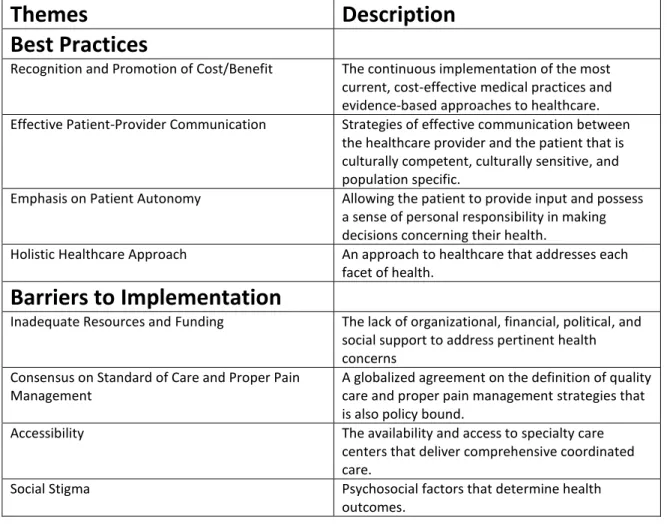
psychosocial factors that include social stigma. Table 2 describes the themes revealed in detail.
Table 2. Themes and Descriptions
Themes
Description
Best Practices
Recognition and Promotion of Cost/Benefit The continuous implementation of the most
current, cost-effective medical practices and evidence-based approaches to healthcare.
Effective Patient-Provider Communication Strategies of effective communication between
the healthcare provider and the patient that is culturally competent, culturally sensitive, and population specific.
Emphasis on Patient Autonomy Allowing the patient to provide input and possess
a sense of personal responsibility in making decisions concerning their health.
Holistic Healthcare Approach An approach to healthcare that addresses each
facet of health.
Barriers to Implementation
Inadequate Resources and Funding The lack of organizational, financial, political, and
social support to address pertinent health concerns
Consensus on Standard of Care and Proper Pain Management
A globalized agreement on the definition of quality care and proper pain management strategies that is also policy bound.
Accessibility The availability and access to specialty care
centers that deliver comprehensive coordinated care.
Social Stigma Psychosocial factors that determine health
25
Best Practices
Recognition and Promotion of Cost/Benefit
Participants indicated that recognizing cost-effectiveness in the implementation of comprehensive coordinated care and its benefits not only prevents frivolous and unnecessary expenditures, but also positively influences compliance in proper self-care disease management.
“My practicing guidelines really are to maintain the health of the patient as well as to prevent a crisis from taking place.” -- Interview #1
“One thing I do is to teach them of the things that could bring a crisis on and how to avoid them, how to recognize them and what actions should be taken.”-- Interview #2
“I think the cost that goes along with SCD can be understood anyway anywhere-most importantly, understanding that it could improve the economy by improving the healthcare of the sickle cell disease patient.”-- Interview #2
Participants stressed the importance of integrating coordinated, comprehensive health services as a means of managing SCD. By utilizing clinical and non-clinical strategies that address acute and chronic complications, as well as its subsequent psycho-social factors, data supports the idea that comprehensive coordinated care leads to both positive health outcomes and favorable economic conditions for program sustainability (Yang, 1995; Serjeant, 2012; Gross, 2009).
Effective Patient-Provider Communication
Participants indicated that recognizing and promoting effective patient-provider communication is an integral part of disease management and must not be compromised. Communication that is not overbearing and is both culturally sensitive and culturally competent produces significant, optimal results in compliance and patient autonomy.
26
“Every child that comes through my office, comes to me as my child, every person who comes to me in this office come to me as my mother or my father or my brother or my sister-- that is the way I practice.” – Interview #3
“Continuity, communication, and even from the point of view from the patient-- now this is the other part of it, one part of it, one part of communication is education. If the patient is not educated in terms of what they are to do or
whether they think he doctor knows what he is talking about, we then run into all sorts of problems with compliance.” – Interview #5
Participants noted that by utilizing appropriate language and communication strategies that are population specific, health messages and recommendations are retained and often lead to positive health outcomes.
Emphasis on Patient Autonomy
Informants indicated that particular emphasis regarding patients’ autonomy should be given considerable attention when delivering health messages. Patients should be made to feel that they have control of disease management decisions and given the option to consider alternative therapies without being given an ultimatum.
“I have to be very careful when I counsel because when I counsel, the patient must not believe that I am doing it because I want to have [data] or want to publish it. The patient must believe that I am doing it because I believe that it is best for them.” – Interview #4
Patients want to believe that they are making the best decisions without feeling isolated in making a decision influenced by ulterior motives of the healthcare provider.
Holistic Healthcare Approach
Participants described the coordinated comprehensive care model as a means to address all facets of health, including factors related to the physical, emotional, mental, social, occupational, and spiritual determinants of health.
27
“It is important that I communicate to the patient to engage one’s self in activities that would maintain good health and promote good health in all aspects—you see there are different things. You have the nutritional health component, the mental health component, sexual health component,
relationships, psychological and in all different aspects and spheres because we as humans have a social component—emotional, mental, physical, and spiritual--so it’s really to engage and live a well-balanced life.” Interview #1
Participants recognized that addressing the health of individuals affected by SCD from a holistic perspective allows both the provider and the patient to engage in effective communication to improve health outcomes and reduce disease-related morbidity.
Barriers to Implementation
Inadequate Resources and Funding
In response to the most challenging issues in research and practice that lead to poor health outcomes among individuals affected by sickle cell disease, participants noted that providers are not only oblivious to the need for improving practice, but are often ill-prepared to manage a disease that requires specific expertise and effort. Limited resources and inadequate compensation give health providers little incentive to
implement health services, such as coordinated comprehensive care deemed necessary for quality care.
“It is too many people in this country that we do not have. Institutions that are devoted to or adequately staffed by people who don’t believe that chronic ailment are things that we can ignore, and that what is happening.” – Interview #5 “Like anybody who is trained, including in Sub-Sahara Africa, nobody
particularly trains anybody in anything about SCD. Nobody cares about SCD, and I happen to know that that’s in the first world, too. They do not. And as such they get a lot of substandard care because nobody bothers to learn how to do that.” – Interview #4
28
Participants concluded that because of the lack of fiscal and operational support, healthcare providers are often uninterested in improving care strategies and
implementing comprehensive coordinated care. Few incentives have caused many researchers and healthcare providers to neglect taking the time out to expand the scope of prevention, treatment, and disease management.
Consensus on Standard of Care and Proper Pain Management
Lack of united consensus on standard of care guidelines and proper pain management lends to the various discrepancies in care across institutions that provide care for adult SCD patients. Currently, there are no set policies or guidelines that govern how health care should be delivered to such a vulnerable population, despite the
disease’s long history of discrimination towards and marginalization of affected individuals within the clinical setting.
“One of the biggest challenges in standardizing quality care is having a sense of standards, written standards--disseminated and agreed upon.” –Interview #2 “You have doctors managing SCD who do not know their gluteus maximus from their elbow or about how a crisis occurs in these conditions and why some patients do not get crisis. So you have excuses for hematologist working in the system--the whole system is a professional system all about how much money you can make out of it and how quick you can get your hospital work done.” -
Interview #3
“In addition to not speaking to them, not to find out anything about them; just give them folic acid and penicillin and send them off. If they are having a crisis, send them to the ward. There is no compassion--nothing is done to help the patient to this day!”-Interview #3
“We believe that one of the biggest things we need to do in the Caribbean is have proper pain management. People don’t understand that if I'm going to stop a vas-occlusive crisis-- I am going to stop it. And when I stop it I have given you enough narcotics to turn you into an addict and therefore all I do is ensure that I
29
reverse it by weaning you off the drug before I set you off. Now the big problem I think in the U.S.--too many rights.” Interviewer #4
Each patient is treated differently. No two sicklers are the same. No two SC’s are the same. So think I look at each patient totally individually, I make no
comparisons. Because they are different, their pain threshold is different, everything is different.” –Interview #3
Participants stressed the importance of the development and dissemination of written, viable solutions to quality care and treatment strategies that should also include policies related to accountability and adherence on behalf of the healthcare provider. Because patients are unique to the variant of the disease and a vulnerable population who are more likely to experience adverse socioeconomic and psychosocial
circumstances, establishing consensus regarding standard of care practices and proper pain management will aid in achieving optimal health outcomes and health equity across all institutions providing care.
Accessibility
Study informants also described limitations in accessibility to coordinated comprehensive care centers due to both geographical proximity and insurance coverage. Adult SCD patients are limited in what care they receive, depending on if nearby
specialty centers accept government-sponsored insurance coverage. Participants indicated that most patients frequently identify emergency rooms and hospitals as primary care facilities, which can be problematic in regards to receipt of sub-standardized care that is often delivered in such settings.
“The current practices are hit and miss. Utilization--there are enough
institutions that would be able to provide more than adequate care for people with SCD. That is a very complex issue whether the quality of that care that you are being provided is accessible . . . the access available to the medical fraternity
30
should, and I am saying that very carefully, should have more than enough practice and knowledge base on how to manage SCD.”–Interviewer #4 Informants indicate that although organizational structure allows the
implementation of coordinated comprehensive care, adult SCD patients are less likely to access such care due to apparent internal biases in providing quality care. Although many institutions are aware of effectiveness and cost/benefit of comprehensive care and are more than capable of providing such services, many simply choose not to for
apparent economic and social reasons.
Social Stigma
Lastly, researchers identified issues related to the social stigmatization of having SCD that often affects the level of care provided to the patient. Participants note that many issues are exacerbated in areas where socioeconomic status, race, and gender influence medical practices and quality of care.
“Many of the common themes or issues in SCD patients is that a lot of it is psychosocial. Psychosocial from the stigmatization of the disease. . . . People who hold the highest offices in the land you wouldn’t know because it is
stigmatized. If I am a serious high court judge I wouldn’t tell anyone because it might be used against me in one of my judgments.”–Interview #4
“If you want to ask me about sickle cell, it’s not just about sickle cell. It’s a lot more than that. It’s the extension into the society.”–Interview #5
Barriers to coordinated comprehensive care should be addressed across the healthcare spectrum, as well as its accompanying systematic limitations and extension into the greater society. Information provided by participants suggest that until healthcare providers consider serious action and gain full understanding of its effects on
31
adult sicklers will continue to report problematic experiences that will, sadly, equate to poor health outcomes, increased mortality, and disease-related morbidity.
32 CHAPTER V DISCUSSION
Such factors that influence the implementation of comprehensive care for adult individuals affected by SCD mean that patients are not only adversely affected by the disease and its complications, but also by other systematic issues within healthcare and deeply woven racial prejudices that ultimately widen the disparity gap between the current situation and improving future research, medical practices, and the health outcomes of SCD patients. The results of this study demonstrate how evaluation and assessment of cognitive influences and medical practices of healthcare providers of adult SCD patients in areas where comprehensive coordinated care is limited or non-existent is needed to improve organizational processes, patient health outcomes, and quality of life. Healthcare providers’ experience advises their reciprocal action with adult SCD patients, including prevention, intervention, management, treatment strategies, and patients’ health outcomes and quality of life, as well as the administrative and organizational processes and culture of the institutions that service this population. Therefore, the healthcare provider of adult SCD patients must be functionally capable and willing to implement coordinated comprehensive care, a strategy that has shown to be both efficient and effective (Grosse, 2009). As suggested by study participants, the implementation of coordinated comprehensive care is necessary to reduce morbidity and mortality rates of SCD, reduce incidence and prevalence rates, and, ultimately, improve health outcomes and quality of life for the existing adult SCD population.
33
Recommendations for Future Research
The results of this study indicate that further research is needed to illuminate the experience of adult SCD patients in areas where comprehensive coordinated care is limited or non-existent in order to document the differences in the care received. To do this, stakeholders, healthcare providers, and SCD philanthropic support groups must work collaboratively to build the funding and research capacity of the adult SCD population. The documentation of these experiences would describe the extent of improvement in health outcomes and quality of life for patients who are seen in
institutions that have allocated coordinated comprehensive care programs and facilities for the adult SCD population. The results of such documentation will build a case for the universal adoption of coordinated comprehensive care as a standard of care policy.
Furthermore, this study also illustrates the need to research the experiences of adult individuals affected by SCD and their healthcare providers in other countries throughout the West Indies and abroad through the use of both quantitative and qualitative research methods in clinical and non-clinical settings. Such studies should illuminate the health behaviors of adult SCD patients, particularly describing the residual effects that stem from the system’s outright neglect to address the need for
multidisciplinary healthcare across all institutions that serve the SCD populations, as well as its influence on health outcomes and health behavior. Similarly, further studies are needed to identify, describe, and address the residual effect of the continued reliance on heavy opioids and narcotics (i.e. morphine) that is used consistently to alleviate pain, particularly its influence on the health behavior and health outcomes (including QOL) of
34
at-risk individuals affected by SCD in areas where comprehensive coordinated care is limited or non-existent. Particular emphasis should be placed on documenting the lived experiences of the portion of the population with severe cases of disease manifestation and its greater dynamic extension into the individual’s environment and respective societal structure.
Recommendations for Future Practice
Additionally, this study demonstrates the need to perform a thorough evaluation assessment of the curriculum and training programs that are teaching the healthcare providers of this population in order to identify gaps in learning objectives and
instructional opportunities to better serve the adult SCD population. General consensus on adequate training and standard of care practices to improve the quality of care rendered should be obtained. The findings of such a study should also reflect how the identified gaps in curriculum and instruction of healthcare providers of individuals affected by SCD translate to research and practice, as well as to recommendations that address the identified emergent issues.
Furthermore, additional evaluation assessment studies that would describe in detail the expenditures and fiscal practices of healthcare providers of adult SCD patients are needed to document issues related to accountability and intention. Studies suggest that implementation of coordinated comprehensive care is, in fact, cost-effective in comparison to episodic treatment, and these studies have documented a complete cost-benefit analyses to support such claims (Yang, 1995). Healthcare providers are
35
deliver substandard care, despite the fact that it is considerably cheaper to implement the specialty care required in order to achieve optimal health outcomes and positive reports of quality of life among the adult SCD population. This should raise ethical concerns. Questions surrounding the way providers are rewarded or compensated in terms of patient health outcomes should be addressed to understand doctors’ incentives to implement coordinated comprehensive care. Such studies would also illuminate the experiences of healthcare providers and their respective perspectives in terms of
identifying and describing prevention efforts, social support and philanthropic initiatives, health promotion, and health advocacy in ways that would address negative determinants of health as well as the gaps in the services rendered. As a result, such suggestions may produce viable, efficient, and effective solutions to improving the overall health
outcomes and quality of life among adults affected by SCD.
Study Limitations
Because the research design included cross-sectional survey methods, only a glimpse or snapshot of the illuminated experiences of the healthcare provided is available for analyses. Researchers are unable to explore how such issues are
experienced over a period a time and can only infer how the information collected has come to be as a result of longstanding and continuing cognitive influences and practices.
Another limitation is that, by performing a secondary analyses, researchers were unable to capture both verbal and nonverbal nuances of the participants. Such nuances could possibly illuminate the emotional component of information shared that, in turn, would evoke the passion of the adult SCD healthcare providers in implementing
36
coordinated comprehensive care (or in expressing the lack thereof) and its effects on the patients for whom they care.
37 CHAPTER VI CONCLUSION
Individuals affected by sickle cell disease, specifically adults, receive variant healthcare services. Adult patients in areas where coordinated comprehensive care is limited or non-existent are more likely to be disengaged with the healthcare system and, as a result, often report adverse health outcomes and poor quality of life. Understanding the cognitive influences and medical practices of adult SCD providers can provide a resource tool for identifying quality care strategies to achieve optimal health outcomes, as well as to address structural, social, and cultural barriers in implementing efficient, yet effective, comprehensive coordinated care. Such findings can also lead to evidence-based policy development and the reorganization of institutional processes to better meet the needs of adult SCD patients. This study demonstrates that healthcare providers are the gatekeepers of knowledge and understanding how the residual effects of care
rendered affect adult SCD patients and play a pivotal role in improving health outcomes and quality of life of adult individuals affected by sickle cell disease.
38 REFERENCES
Anderson, M., & Asnani M. (2013). "You just have to live with it": Coping with sickle cell disease in jamaica. Qualitative Health Research, 23(5), 655-664.
doi:http://dx.doi.org/10.1177/1049732313480048 Retrieved December 13, 2013, from the Medline Ovid database.
American Academy of Pediatrics, Section on Hematology/Oncology, Committee on Genetics. (2002) Health supervision for children with sickle cell disease. Pediatrics, 109(3), 526-535.
Asnani, M. R. (2009). Patient-physician communication. The West Indian Medical Journal, 58(4), 357-361. Retrieved December 13, 2013 from Medline Ovid database.
Booker, M., Blethyn, K., Wright, C.J., Greenfield, S. (2006) Pain management in sickle cell disease. Journal of Chronic Illness, 2, 39-50. Retrieved December 13, 2013, from the Medline Ovid database.
Bowman, J. E. (1998). Minority health issues and genetics. Community Genetics, 1(3), 142-144. Retrieved December 13, 2013 from Medline Ovid database.
Center for Disease Control and Prevention (CDC). Facts About Sickle Cell Disease. (2014, January 16). Retrieved May 7, 2015, from
http://www.cdc.gov/ncbddd/sicklecell/facts.html
Center for Disease Control and Prevention (CDC). Data & Statistics. (2011, September 16). Retrieved May 7, 2015, from
39
Claster S, Vichinsky EP. Managing sickle cell disease. (2003). British Medical Journal 327(7424), 1151-1155.
Colaizzi, P. F. (1978). Psychological research as the phenomenologist views it. In Ronald S. Valle, & Mark King (Eds.), Existential-phenomenological alternatives for psychology (pp. 6) Oxford University Press. Retrieved December 13, 2013, from the Medline Ovid database.
Dorsey, C., Phillips, K.D., & Williams, C. (2001). Adult sickle cell patients’ perceptions of nurses’ caring behaviors. ABNF Journal, 12(5), 95-100. Retrieved December 13, 2013 from Medline Ovid database.
Edwards, C.L., Green, M., Wellington, C.C., Muhammad, M., Wood, M., Feliu, M., & McNeil, J. (2009). Depression, suicidal ideation, and attempts in black patients with sickle cell disease. Journal of the National Medical Association, 101(11), 1090-1095.
Edwards C.L., et al. (2005). A brief review of the pathophysiology, associated pain, and psychosocial issues in sickle cell disease. International Journal of Behavioral Medicine, 12(3), 171-179.
Fortunado-Sanchez, Esmerelda. (2002, June 20-23). The experiences of several members of El SHADDAI-DWXI-PPFI. University of St. Thomas Center for Studies on New Religions. CESNUR International Conference. Salt Lake City, UT.
Grosse, S., Schechter, M., Kulkarni, R., Lloyd Puryear, M., Strickland, B., & Trevathan, E. (2009). Models of comprehensive multidisciplinary care for individuals in the united states with genetic disorders. Pediatrics, 123(1), 407-12.
40
doi:10.1542/peds.2007-2875. Retrieved December 13, 2013, from the Medline Ovid database.
Haque, A., & Telfair, J. (2000). Socioeconomic distress and health status: The urban-rural dichotomy of services utilization for people with sickle cell disorder in North Carolina. Journal of Rural Health, 16(1), 43-55.
Herron S., Bacak, S., & King, A. (2003): Inadequate recognition of education resources for high-risk students with sickle cell disease. Journal of the American Medical Association 157, 104-105.
Jenerette, C.M., Leak, A.N., & Sandelowski, M. (2011). Life stories of older adults with sickle cell disease. ABNF Journal, 22(3), 58-63. Retrieved December 13, 2013 from Medline Ovid database.
Koshy, M., & Dorn, L. (1996). Continuing care for adult patients with sickle cell disease. Hematology--Oncology Clinics of North America, 10(6), 1265-1273. Retrieved December 13, 2013, from Medline Ovid database.
Lattimer, L., Haywood, C., Jr., Lanzkron, S., Ratanawongsa, N., Bediako, S. M., & Beach, M. C. (2010). Problematic hospital experiences among adult patients with sickle cell disease. Journal of Health Care for the Poor & Underserved, 21(4), 1114-1123.
Mvundura, M., Amendah, D., Kavanagh, P.L., Sprinz, P.G., & Grosse, S.D. (2009). Health care utilization and expenditures for privately and publicly insured children with sickle cell disease in the United States. Pediatric Blood & Cancer, 53(4), 642-646. doi:10.1002/pbc.22069
41
Modell, B., & Darlison, M. (2008). Global epidemiology of haemoglobin disorders and derived service indicators. Bulletin of the World Health Organization, 86(6), 480-487. Retrieved December 13, 2013, from the Medline Ovid database. National Institute of Health. (2002). The management of sickle cell disease (4th ed.).
Bethesda, MD: National Institutes of Health. NIH Publication. 02-2117. Available at: www.nhlbi.nih.gov/health/prof/sickle/sc_mngt.pdf. Accessed February 4, 2006.
Nelson, S. C., & Hackman, H. W. (2013). Race matters: Perceptions of race and racism in a sickle cell center. Pediatric Blood & Cancer, 60(3), 451-454.
Niertert P.J., Silverstein, M.D., & Abboud, M.R. Sickle cell anemia: Epidemiology and cost of illness. Pharmaeconomics, 20(6):357-366.
Okpala, I., Thomas, V., Westerdale, N., Jegede, T., Raj, K., Daley, S., & Abbs, I. (2002). The comprehensiveness care of sickle cell disease. European Journal of
Haematology, 68(3), 157-162. Retrieved December 13, 2013 from Medline Ovid database.
Oyeku, S. O., Wang, C. J., Scoville, R., Vanderkruik, R., Clermont, E., McPherson, Homer, C. J. (2012). Hemoglobinopathy learning collaborative: Using quality improvement (QI) to achieve equity in health care quality, coordination, and outcomes for sickle cell disease. Journal of Health Care for the Poor & Underserved, 23(3 Suppl.), 34-48.
Oyeku, S.O., Faro, E.Z., & Homer, C.J., (2014). Improving care of patients with sickle cell disease and sickle cell trait: the hemoglobinopathy learning collaborative.