MUSCLE GLYCOGEN METABOLISM IN HORSES:
INTERACTIONS BETWEEN SUBSTRATE AVAILABILITY, EXERCISE PERFORMANCE AND CARBOHYDRATE ADMINISTRATION
DISSERTATION
Presented in Partial Fulfillment of the Requirements for the Degree Doctor of Philosophy in the Graduate
School of The Ohio State University
By
Véronique A. Lacombe, D.V.M * * * *
The Ohio State University 2003
Dissertation Committee:
Kenneth W. Hinchcliff, BVSc, Ph.D., Adviser Approved by Stephen T. Devor, Ph.D.
ABSTRACT
Horses undertake recreational activities that decrease muscle glycogen stores. Similar to humans, muscle glycogen availability may influence exercise performance. In the first study, a model of glycogen depletion was developed and used to investigate the effect of muscle glycogen availability on the athletic capacity of horses. We
demonstrated that exercise-induced muscle glycogen depletion was associated with a 60% decrease in anaerobic capacity during subsequent exercise, without effect on aerobic capacity. To rule out any confounding effects of other exercise-induced changes, a
second study investigated the effects of muscle glycogen depletion and subsequent replenishment on athletic capacity. In a blinded crossover study, seven fit horses received either an intravenous glucose or saline infusion after exercise. Run time to fatigue,
accumulated oxygen deficit and blood lactate concentration during a subsequent high-speed exercise test were greater for the horses with normal muscle glycogen
concentration than for the horses with persistent muscle glycogen depletion. It was concluded that muscle glycogen availability influences anaerobic capacity and ability to perform high-intensity exercise in horses.
Given the critical role of adequate glycogen stores in enabling optimal
performance, the factors and mechanisms affecting muscle glycogen replenishment in horses were studied. We first demonstrated that intravenous glucose infusion (6g/kg) hastened muscle glycogen resynthesis compared to saline infusion. The effect of 3 isoenergetic diets of varying glycemic indices on the rates of muscle glycogen synthesis after exercise was evaluated in a crossover study. Seven horses received either a high soluble carbohydrate diet (grain, HCO), or a low soluble carbohydrate diet (hay, LCO), or a mixed diet (M) every 8 hours for 72 hours after exercise. We demonstrated that muscle glycogen resynthesis is slower in horses than in humans. Feeding high-glycemic index (HCO) meals hastened muscle glycogen replenishment compared to LCO and MCO diets by increasing blood glucose and insulin availability to skeletal muscle. Finally, insulin-sensitive glucose transporters (GLUT-4) were characterized in equine muscles by Western blotting. We demonstrated that exercise increased GLUT-4 protein content by 27%. Replenishment of muscle glycogen stores after carbohydrate
administration, either by glucose infusion or diet, attenuated the increase in GLUT-4 protein content of skeletal muscle.
To Claude,
ACKNOWLEDGMENTS
I wish to thank my adviser, Dr. Kenneth Hinchcliff, for his intellectual support, his scientific guidance and his patience throughout my graduate program at The Ohio State University. I would like also to thank Dr. Catherine Kohn and Dr. Stephen Reed for their advice and support throughout my residency and doctoral studies. A special thank you is extended to Dr. David Lamb and Dr. Stephen Devor for allowing me to use the biochemistry laboratory of the School of Physical Activity and Educational Services, and for their advice. I also thank to Dr. Lynn Taylor for her assistance in designing the experimental diets described in Chapter 5.
I also wish to acknowledge Dr. Stephen Devor, Dr. Lorraine Turcotte, and Dr. Jill McCutcheon for providing me the initial instructions for the Western blot analysis. I am indebted to Marc Todd, Dr. Kate Hayes, Dr. Wayne Buck and Dr. Nongnuch Inpanbutr for assistance in setting up the immunoblot technique to characterize GLUT-4 glucose transporters in horses. I am also grateful to all the graduate and undergraduate students from The Ohio State University who assisted me at the Equine Exercise Physiology Laboratory. In particular, the assistance of Dr. Carole Baskin, Dr. Ray Geor, Maggie Lauderdale, Monica Kuklielka, Leia Hill, Samantha Siclair and Anna Wiebe was always greatly appreciated. Thanks also to Judith Dutson for her technical assistance. I also wish
to thank Tim Vojt who helped me to make the figures in Chapter 1 and to handle some computer problems. My most sincere gratitude goes to all the horses, which were involved in the studies. This research was supported by 3 grants from the Equine Research Funds of the Ohio State University and the Grayson-Jockey Club Research Foundation.
My up most gratitude goes to my family and friends for the support they have given me throughout my studies, and in particular to my father. Finally, I would like to thank Claude for his love, patience and encouragement. Without his unfailing support, the completion of this work would have been neither possible nor worthwhile.
VITA
May 18, 1969 ……… Born – Limoges, France 1987 ……….. Baccalaureate, France
Major: Biological Sciences 1988 ……….. Baccalaureate, France
Major: Mathematics and Physics 1994 ……….. D.V.M (equivalent)
National Veterinary School of Alfort, France 1995……….. Dr. Med. Vet.
National Veterinary School of Alfort, France 1994-1996 ……… Internship, Equine Hospital
National Veterinary School of Alfort, France 1996-1999 ……… Resident in Equine Medicine
The Ohio State University
1999-2000 ……… Clinical Instructor in Equine Medicine The Ohio State University
2000-2002 ……… Graduate Research Associate The Ohio State University
PUBLICATIONS Research Publication
1. Lacombe, V.A., K.W. Hinchcliff, R.J. Geor, and C. Baskin. Muscle glycogen depletion and subsequent replenishment affect anaerobic capacity in Standardbred horses. J. Appl. Physiol. 91: 1782-1790, 2001.
2. Lacombe, V.A., M. Podell, M. Furr, S.M. Reed, M. Oglesbee, K.W. Hinchcliff, and C.W. Kohn. Diagnostic validity of electroencephalography in equine intracranial disorders. J. Vet. Int. Med. 15: 385-393, 2001.
3. Lacombe, V., K.W. Hinchcliff, R.J. Geor, and M.A. Lauderdale. Exercise that
induces substantial muscle glycogen depletion impairs subsequent anaerobic capacity. Equine Vet. J. Suppl. 30: 293-297, 1999.
4. Flaminio, M.J., V.A. Lacombe, C.W. Kohn, and D.F. Antczak. Common variable immunodeficiency in a mare. J.A.V.M.A. 221: 1296-302, 1267, 2002.
5. Denoix, J.M., and V. Lacombe. Ultrasound diagnosis of meniscal injuries in horses. Pferdeheilkunde. 12: 629-631, 1996.
6. Hinchcliff, K.W., M.A. Lauderdale, J. Dutson, R.J. Geor, V.A. Lacombe, and L.E. Taylor. High-intensity exercise conditioning increases accumulated oxygen deficit of horses. Equine Vet. J. 34: 9-16, 2002.
7. Lacombe, V.A, K.W. Hinchcliff, C.W. Kohn, and L.E. Taylor. Post-exercise feeding of meals of varying glycemic index affects muscle glycogen resynthesis in horses. J. Vet. Intern. Med. 16: 336, 2002.
8. Lacombe, V.A., K.W. Hinchcliff, R.J. Geor, and C. Baskin. Enhanced muscle glycogen replenishment restores anaerobic capacity during high-intensity exercise in horses. J. Vet. Intern. Med. 14: 330, 2000.
9. Lacombe, V, S.M. Reed, K.W. Hinchcliff, C.W. Kohn, and M. Podell. Diagnostic utility of electroencephalography in equine cerebral disorders: a retrospective study. J. Vet. Intern. Med. 12: 252, 1998.
10. Lauderdale, M.A., K.W. Hinchcliff, J. Dutson, R. Geor, V. Lacombe and R. Lehnhard. High-intensity training increases anaerobic capacity but not muscle buffering capacity of Standardbreds horses. J. Vet. Intern. Med. 11: 109, 1997.
FIELDS OF STUDY Major Field: Veterinary Clinical Sciences.
Minor Field: Equine Exercise Physiology. Equine Internal Medicine.
TABLE OF CONTENTS Page Abstract ... ii Dedication ... iv Acknowledgments ... v Vita ... vii
List of Tables ... xiii
List of Figures... xiv
Introduction ... 1
Chapters: 1. Literature review ... 6
1.1 Importance of muscle glycogen as a fuel during exercise ... 7
1.1.1 Importance of muscle glycogen depletion during exercise ... 7
1.1.1.1 In humans ... 7
1.1.1.2 In horses ... 8
1.1.2 Effect of muscle glycogen availability on endurance performance ... 13
1.1.2.1 In humans ... 13
1.1.2.2 In horses ... 14
1.1.3 Muscle glycogen depletion and muscular fatigue: metabolic, biochemical and cellular mechanisms ... 15
1.1.3.1 Interaction between muscle glycogen depletion and adenine nucleotides ... 16
1.1.3.2 Low muscle glycogen stores and impairment of muscular contraction ... 17
1.1.3.3 Influence of reduced glycogen stores on metabolic regulation ... 18
1.1.3.4 Other factors responsible for fatigue during high-intensity exercise. ... 19
1.1.4 Effect of muscle glycogen availability on performance during short-term high-intensity exercise ... 20
1.1.4.1 In humans ... 20
1.1.4.2 In horses ... 26
1.2.1 Muscle glycogen resynthesis in humans ... 28
1.2.1.1 Effect of carbohydrate administration on muscle glycogen resynthesis after exercise ... 29
1.2.1.2 Glycogen supercompensation ... 33
1.2.1.3 Training and glycogen resynthesis ... 35
1.2.1.4 Biochemical mechanisms for post-exercise muscle glycogen resynthesis ... 35
1.2.2 Muscle glycogen resynthesis in horses and dietary considerations ... 37
1.2.2.1 Rate of muscle glycogen resynthesis ... 37
1.2.2.2 Effect of carbohydrate administration on muscle glycogen stores ... 38
1.2.2.3 Effect of fat-supplemented diet on muscle glycogen stores ... 41
1.3 Regulation of skeletal muscle glucose uptake in the post-exercise state ... 44
1.3.1 Physiological background and local factors ... 44
1.3.2 Hormonal regulations ... 46
1.3.3 Substrate availability ... 47
1.3.4 Muscle glucose metabolism in the post-exercise state ... 49
1.4 References ... 53
2. Exercise that induces substantial muscle glycogen depletion impairs subsequent anaerobic capacity ..……….……….. 70
2.1 Summary ……….………..……….………. 71
2.2 Introduction ……….……….……… 72
2.3 Materials and Methods ……….………..……….. 74
2.4 Results ……….………..……….……….. 77
2.5 Discussion ……….………..……….……… 86
2.6 References ……….………..……….……… 90
3. Muscle glycogen depletion and subsequent replenishment affect anaerobic capacity of horses ..……….………..……….……… 93
3.1 Summary ……….………..……….………. 94
3.2 Introduction ……….………..……….………. 95
3.3 Materials and Methods ……….………..……….… 97
3.4 Results ……….………..……….……… 104
3.5 Discussion ……….………..……….……….. 115
3.6 References ……….………..……….……….. 124
4. Insulin-sensitive glucose-transporter (GLUT-4) protein content in equine skeletal muscle: characterization; effects of exercise and carbohydrate administration. 128 4.1 Summary……….………..……….……… 129
4.2 Introduction……….………..……….……… 130
4.4 Results ……….………..……….……… 136
4.5 Discussion ……….………..……….……….. 145
4.6 References ……….………..……….……….. 151
5. Post-exercise feeding of meals of varying glycemic indices affect muscle glycogen resynthesis in horses ..……….………..……….…… 154
5.1 Summary……….………..……….……… 155
5.2 Introduction……….………..……….……… 156
5.3 Materials and Methods……….………..……….… 158
5.4 Results……….………..……….………. 164
5.5 Discussion……….………..……….………... 182
5.6 References……….………..……….………... 192
Conclusions……….………..……….……… 197
LIST OF TABLES
Table Page
2.1 Bodyweight before the incremental exercise test (IET) and the single high-speed exercise test (SHSET), and hematocrit and total protein concentration during the IET and at the end of the sprint phase of the SHSET ………….…………. 85 3.1 VO2 max, hematocrit, and total protein concentration during the incremental
exercise test .……….... 109 3.2 Hematocrit, total protein, and glucose concentrations during the single
high-speed exercise test .……….. 110 4.1 Muscle glycogen concentration before and after exercise, and after glucose
or saline infusion .………...………..138 5.1 Composition of the experimental diets .………... 161
LIST OF FIGURES
Figure Page
1.1 Biochemical pathways of glycogenolysis and anaerobic ATP production
in the skeletal muscle .……… 51 1.2 Biochemical pathways of glycogen synthesis in the skeletal muscle
after a high carbohydrate diet .……… 52 2.1 Picture of a horse at the Alice L. Finley Memorial Farm ……….…. 80 2.2 Picture of a horse running on the treadmill during the incremental
exercise test ……… 80 2.3 Muscle glycogen concentration of 6 horses prior to an incremental exercise
test and a single high-speed exercise test for Trials 1-3 ……… 81 2.4 Relationship between run time to fatigue during the single high-speed
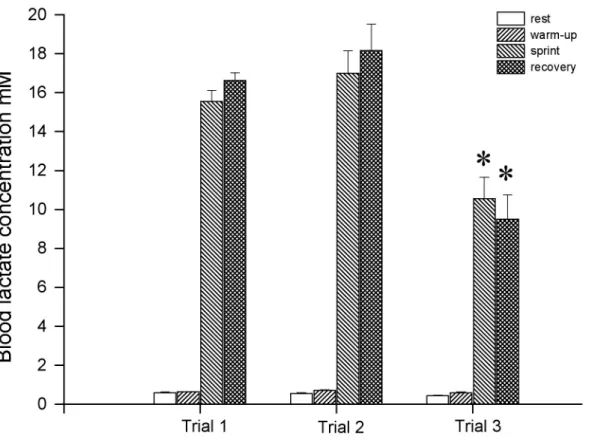
exercise test and muscle glycogen concentration …………..………. 82 2.5 Blood lactate concentration of 6 horses during each of the 3 incremental
exercise tests……….83 2.6 Blood lactate concentration at rest, at the end of the warm up, at the end of the
sprint and at the end of the recovery during each single high-speed
exercise test……… 84
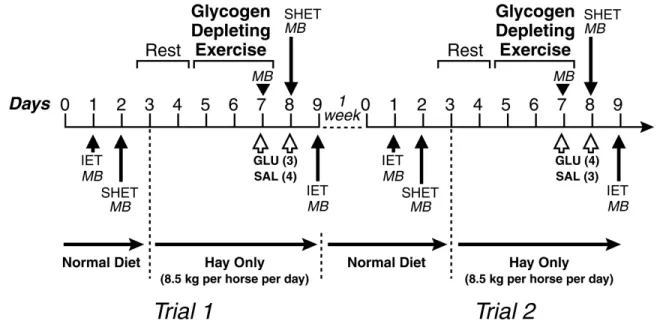
3.1 Time-line of the experimental protocol………. 108 3.2 Muscle glycogen concentration before, at the end of the glycogen-depleting
exercise, and after the intravenous glucose or saline infusion……….. 111 3.3 Plasma glucose during the incremental exercise test before, and after glucose
saline infusion……….……. 112 3.4 Blood lactate concentration during the incremental exercise test………113
3.5 Blood lactate concentration at rest, at the end of the warm up, at the end of the sprint and at the end of the recovery during each single-high speed
exercise test, and before and after glycogen-depleting exercise …….……… 114 4.1 Western blot identification of GLUT-4 protein from crude membrane
preparation in horses ………... 140 4.2 Western blot analysis of GLUT-4 protein in crude membrane of equine
skeletal muscle with different amount of protein ………...…..………….…. 141 4.3 Relationship between integrated density value and amount of total GLUT-4
protein content ………...……….. 141 4.4 Western blot analysis of GLUT-4 protein in crude membranes of equine
gluteal muscle ...………...……… 142 4.4 Plasma glucose concentration before exercise, immediately after exercise,
and after glucose or saline infusion …………....………..…… 143 4.5 Total GLUT-4 protein content before exercise, immediately after exercise,
and after glucose or saline infusion ………...……….. 144 4.6 Effect of exercise and carbohydrate administration on GLUT-4 protein content
of skeletal muscle. Representation of an immunoblot showing labeled
GLUT-4 protein from crude membranes of equine gluteal muscle ……..…. 144 5.1 Time-line of the experimental protocol ....……….….. 168 5.2 Plasma glucose concentration before and after exercise, and during the 72
hours of dietary interventions ....……….. 169 5.3 Serum insulin concentration before and after exercise, and during the 72 hours
of dietary interventions ...………. 170 5.4 Muscle glycogen concentration before and after exercise, and during the 72
hours of dietary interventions ....………. 171 5.5 Rate of muscle glycogen replenishment from 3 h to 72 h after exercise
(all groups included) .………. 172 5.6 Muscle glycogen synthase I activity and glycogen synthase activity ratio before
5.7 Relationship between muscle glycogen concentration and muscle glycogen synthase activity ratio after exercise, and during the 72 hours of dietary
interventions ………... 174 5.8 Relationship between the rate of glycogen resynthesis and muscle glycogen
synthase activity ratio from 3 h to 72 h after exercise ….……… 174 5.9 Total GLUT-4 protein content before and after exercise, and during the 72
hours of dietary interventions (B). Representative autoradiogram with
labeled GLUT-4 protein appears above each appropriate time point (A) ...… 175 5.10 Plasma lactate concentration before and after exercise, and during the 72
hours of dietary interventions ....……… 176 5.11 Plasma glycerol concentration before and after exercise, and during the 72
hours of dietary interventions …...……… 177 5.12 Plasma triglyceride concentration before and after exercise, and during the 72
hours of dietary interventions ...……… 178 5.13 Serum NEFA concentration before and after exercise, and during the 72 hours
of dietary interventions ………...……… 179 5.14 Total protein concentration (A) and hematocrit (B) before and after exercise,
and during the 72 hours of dietary interventions ….…….………….……… 180 5.15 Weight of the 7 horses before and after exercise, and during the 72 hours of
INTRODUCTION
As a performance animal, the utility of the horse depends on its ability to perform muscular work. While in the early 20th century the major use of the horse was in
agriculture, today the horse is used largely for recreation. Horses today frequently
perform a broad range of sporting activities such as endurance rides (up to 160 km), show jumping, racing (up to 3200 m), dressage, three-days events, rodeo, barrel racing, polo and conventional warm-up exercise. In all these activities, the principal factor limiting performance is the availability of energy substrate, namely glycogen in the skeletal muscle and liver, and triglycerides in the various fat reserves. In particular, glycogen is an important energy source for the muscle during both vigorous and prolonged exercise (Lindholm 1974; Essén-Gustavsson et al. 1984). For instance, repeated intense exercise or endurance exercise depletes muscle glycogen, up to 50%, in the muscle of humans and horses (Ahlborg et al. 1967; Harris et al. 1987; Snow and Harris 1991). Reduced muscle glycogen stores have been associated with impairment of performance during brief, intense exercise, and earlier onset of fatigue during endurance exercise in humans (Ahlborg et al. 1967; Casey et al. 1996). However, the conclusions drawn from human exercise physiology could not be applied to horses because of the physiological
rely heavily on carbohydrate metabolism during high-intensity exercise where glycogen and glucose are the obligate substrates to sustain anaerobic ATP production. However, horses have approximately two-fold greater muscle glycogen concentrations (Snow and Valberg 1994), and they have a greater capacity for energy production via aerobic and anaerobic metabolism compared to humans (Wagner 1995; Shuback and Essén-Gustavsson 1998). Furthermore, when compared to humans, the athletic capacity of horses may be limited to a greater extent by muscle glycogen stores because complete resynthesis of the muscle glycogen pool requires 48-72 hours after exercise (Snow and Harris 1991; Hyyppä et al. 1997). Because many horses undertake several competitions in a single day or on consecutive days, the interval between exercise bouts may be inadequate for complete or partial restoration of muscle glycogen stores. Therefore, it is possible that a reduction in muscle glycogen stores contributes to a decline in subsequent exercise performance in horses, although this important issue has received scarce
attention. No study has conclusively demonstrated that manipulation of endogenous energy stores from carbohydrate affects either aerobic or anaerobic capacity of horses. While the observation from Farris et al. (1995) that provision of supplemental glucose to horses performing endurance exercise increases the duration of exercise is interesting and provides evidence that energy supplies limit performance in endurance exercise of horses, most athletic events involving horses are brief and require repeated bouts of exercise in shorter periods of time. Therefore, the first main question is whether decreased muscle glycogen availability is a contributing factor to fatigue during high-intensity
effect of manipulation of muscle glycogen stores on exercise performance of horses. Therefore, the effect of depletion and replenishment of muscle glycogen concentration on indices of anaerobic and aerobic capacities was examined by developing a glycogen-depleting exercise appropriate for horses (Chapters 2 and 3). The manipulations of muscle glycogen concentration are intended to maximize our ability to detect an effect of depletion and restoration of muscle glycogen on athletic capacity. The hypothesis was that manipulation of muscle glycogen concentration would affect exercise
performance during high-intensity exercise in horses.
The equine industry uses an amount of feed each year equivalent to 40% of that of the broiler chick industry and 18% of that of the feedlot cattle industry (Stanton 1996). Horse owners in New Jersey, New York, Pennsylvania and Michigan spend between $35 and $91 million each year feeding horses undertaking various athletic events such as racing, endurance riding, and jumping (Stanton 1996). While most of these athletic activities decrease muscle glycogen stores, there are few scientific studies that investigate nutritional strategies to optimize muscle glycogen stores of horses in training and
competition. In contrast, the effects of diet composition on energy availability and
exercise capacity have been well investigated in human exercise physiology (Neufer et al. 1987). For instance, the rapid replenishment of body carbohydrate reserves immediately after exercise by carbohydrate supplementation is critical to the athlete undertaking multiple activities in a single day, or over several consecutive days, during intense training and for the daily restoration of these carbohydrate stores (Sherman 1995).
Given the number of horses involved (between 5-7 million in USA, Stanton 1996), and the fact that nutrition and feeding may markedly affect energy substrate, and the economic impact on the industry, we believe that studying the interaction between nutrition and muscle substrate availability, especially factors affecting replenishment of glycogen stores is clearly indicated in horses. In particular, if a detrimental effect of muscle glycogen depletion on exercise performance is demonstrated, then amelioration of replenishment of energy substrate stores after exercise might confer significant
advantages in the welfare and performance of horses competing on successive days or in several activities during the same day. Therefore, the second question was whether muscle glycogen replenishment could be enhanced by dietary manipulation. The effect of a fat supplemented diet on muscle glycogen stores remains controversial in horses, and no study has clearly demonstrated that providing glycogen precursors, either glucose or dietary carbohydrate, affects muscle glycogen synthesis (Davie et al. 1994; Hyyppä et al.1999; Pösö and Hyyppä 1999). Therefore, we investigated the effect of feeding isocaloric diets with different soluble carbohydrate content on muscle glycogen resynthesis after exercise (Chapter 5). The hypothesis was that feeding a high soluble carbohydrate diet would enhance muscle glycogen replenishment as compared to feeding a moderate or low soluble carbohydrate diet. Successful completion of this study will provide clear evidence of the effect, or lack thereof, of diet on muscle
glycogen stores in horses, and provide an enhanced understanding of the mechanisms of glycogen metabolism in horses. To investigate the mechanism underlying muscle glycogen and glucose metabolism, we characterized the insulin-sensitive
glucose-transporter GLUT-4 in equine muscle, and we studied the effect of exercise and carbohydrate administration on total GLUT-4 protein content (Chapters 4 and 5). Our hypothesis was that exercise and/or carbohydrate administration would increase total GLUT-4 protein content. Understanding the factors controlling muscle glycogen synthesis is pertinent not only to the nutrition of horses, but also to an understanding of diseases associated with abnormal muscle glycogen metabolism, such as polysaccharide storage myopathy. Furthermore, these results may also be of interest in comparative exercise physiology. After providing an overview of the literature related to muscle glycogen metabolism (Chapter 1), the studies designed to answer the questions raised in this section are described in detail (Chapters 2-5).
CHAPTER 1
LITERATURE REVIEW
Fatigue is a complex chain of events, including both central and peripheral contributions, and its mechanisms are incompletely understood. While factors including training, age and thermoregulation may contribute to the onset of fatigue, the principal factor limiting muscular performance is substrate availability, mainly glycogen in the skeletal muscle and liver, and triglycerides in the various fat reserves. For brief and intense exercise, anaerobic energy supplied by adenosine triphosphate (ATP) and phosphocreatine provides sufficient fuel for about 30 seconds (Soderlund et al. 1992). The factor limiting muscular performance for exercise of greater than 30 seconds is the availability of glucose to enter glycolytic flux in the case of anaerobic metabolism, and to enter the oxidative phosphorylation pathway, in the case of aerobic metabolism.
Carbohydrate in the form of muscle glycogen is the primary energy source for anaerobic glycolysis and oxidative phosphorylation during vigorous exercise in humans
(Hargreaves 1995). While intramuscular glycogen, with triglycerides, is also an important fuel during prolonged exercise by horses (Lindholm 1979; Essén-Gustavsson et al. 1984), the role of muscle glycogen as a critical fuel for contracting skeletal muscle during brief
and intense exercise has not been clearly demonstrated in horses. The purpose of this chapter is to review the interactions between muscle glycogen availability, exercise performance and nutrition in comparative exercise physiology with a special emphasis on horses. This chapter will first review the role of decreased muscle glycogen stores as a limiting factor for exercise both in humans and in horses. Secondly, it will review the effect of nutrition on muscle glycogen replenishment, in the context of nutritional strategies to optimize performance in humans and in horses. Finally, the regulation of glucose uptake in relation to muscle glycogenesis will be reviewed.
1.1. IMPORTANCE OF MUSCLE GLYCOGEN AS A FUEL DURING EXERCISE
1.1.1. Importance of muscle glycogen depletion during exercise
1.1.1.1In humans
Exercise decreases the muscle glycogen concentration in humans. In a classic study, Gollnick and coworkers (1974) demonstrated the pattern of muscle glycogen depletion of humans in response to cycling exercise of varying duration and intensity. Exercise of relatively low intensity (31% of maximal aerobic power, called VO2 max) to fatigue induced only mild depletion of muscle glycogen concentration, whereas the greatest decreases occurred with fatiguing exertion of 80 to 150% VO2 max. At an exercise intensity of 150% VO2 max, which was maintained for approximately 6 minutes, vastus
lateralis muscle glycogen concentration declined from 62 mmol/kg to 13 mmol/kg (Gollnick et al. 1974). The importance of this study is that it demonstrated that muscle glycogen concentration could be significantly decreased by relatively brief, but intense exercise. Furthermore, twenty five percent of the pre-exercise muscle glycogen can be depleted following a single 30 s cycle sprint (Boosbis et al. 1982). In conclusion, exercise reduces muscle glycogen concentration of humans. The magnitude of the depletion and the types of fibers (I, IIA, IIB) depleted depend upon the duration and intensity of fatiguing exercise (Piehl 1974; Gollnick et al. 1973, 1974).
1.1.1.2In horses
Athletic horses frequently perform endurance exercise and multiple bouts of moderate to intense fatiguing exercise during show jumping, racing, polo, but also during conventional warm-up exercise. Similar to humans, running reduces the muscle glycogen concentration of horses (Lindholm et al. 1974; Hodgson et al. 1983, 1984a,b; Essén-Gustavsson et al. 1984; Snow et al. 1985; Miller and Lawrence 1986; White and Snow 1987; Harris et al. 1987; Essén-Gustavsson et al. 1989; Foreman et al. 1990; Snow and Harris 1991; Davie et al. 1995). Decreases in muscle glycogen concentration induced by fatiguing exercise are similar for prolonged submaximal running or repeated bouts of galloping (White and Snow 1987; Harris et al. 1987; Farris et al. 1995). A single bout of galloping 800 to 2000 m by Thoroughbred racehorses, or trotting 1600 m by
Standardbred racehorses depleted muscle glycogen concentration by approximately 30% (Lindholm et al. 1974; Harris et al. 1987; Snow and Harris 1991), whereas four bouts of
shorter (620 m) galloping depleted muscle glycogen by 40% (Snow et al. 1985).
Participation in Day 2 (roads and tracks, the endurance test of the event) of a Three-day event resulted in a 60% decline in muscle glycogen concentration (Hodgson et al. 1984b). Muscle glycogen stores were depleted by 50 to 75% after an 80- or 160-km ride (Snow et al. 1981, 1982). Partial or complete depletion of the different fibers types of the gluteal muscle was noted after a 50 to 100 km endurance ride (Snow et al. 1981; Hodgson et al. 1983b; Essén–Gustavsson et al. 1984). Furthermore, hypoglycemia was observed when liver glycogen became depleted during 72 km of low-intensity exercise (Lindholm et al. 1974), suggesting that full muscle and liver glycogen stores are necessary for optimum performance during endurance rides (Snow et al. 1981; Essén-Gustavsson et al. 1984). More recently, laboratory studies have demonstrated substantial depletion of muscle glycogen (50% to 65% reduction) with incremental intensity exercise on a treadmill at speeds inducing 50%, 70%, 90% of VO2 max followed after a 30 min rest period by six 1
min sprints at 100% VO2 max (Davie 1995; Davie et al. 1996). In summary, exercise of a variety of durations and intensities can result in up to a 60% reduction of muscle glycogen concentration in horses.
Previous warm up and training also affect muscle glycogen stores. For instance, warm-up exercise decreased the rate of muscle glycogen degradation and the anaerobic contribution to energy production during subsequent sprint exercise (McCutcheon et al. 1999). Furthermore, training exercise decreased muscle glycogen stores by
approximately 25%, and this decrease persisted for 24-48 hours after exercise despite consumption of a normal diet (Snow and Harris 1991). Similarly, low muscle glycogen
concentrations have been reported in Standardbreds during the first months of intense exercise training due to the slow rate of glycogen resynthesis (Essén-Gustavsson et al. 1989). In contrast, many authors have reported an increase in resting muscle glycogen concentration, which resulted from an increased oxidative capacity of the muscle and a progressive decrease in the rate of glycogen utilization during submaximal exercise, in response to several weeks of exercise conditioning (Guy and Snow 1977; Hodgson et al. 1985; Essén-Gustavsson et al. 1989; Foreman et al. 1990; Gansen et al. 1999).
Glycogen utilization rate is related to work intensity: when trotting speed is increased from 5 m/s to 12.5 m/s during an incremental exercise test, the rate of
glycogenolysis increases from 0.3 to 14 mmol/kg/min wet weight (ww) (Lindholm and Saltin 1974; Hodgson 1984; Davie et al. 1999), and the rate of glycogen utilization decreased with a decrease in work intensity (Nimmo and Snow 1983). Similar glycogen depletion rates are measured after 1000 m and 1600 m gallops (Snow and Harris 1991), or four gallops of 620 m (Snow et al. 1985). For repeated, brief intense exercise (e.g., trotting six times 400 m at maximal speed, Lindholm and Saltin 1974) or for single bouts of exercise of varying duration (Hodgson et al. 1983a; Nimmo and Snow 1983; Harris et al. 1987) glycogen utilization was most pronounced during the initial stages, or during the first bouts of high-intensity exercise. Indeed, muscle glycogen utilization has been reported as high as 160 mmol/kg/min dry weight (dw), reflecting the intense anaerobiosis that occurs during maximal exercise (Harris et al. 1987). It should be noted that glycogen utilization could also be affected by previous feeding. When horses were fed a high soluble carbohydrate diet prior to exercise, glycogen utilization during an exercise test
was higher than when horses were fasted (Lawrence et al. 1993). However, these results are controversial (Lawrence et al. 1995).
As with humans, all equine muscle fibers at rest contain glycogen in higher concentrations in fast twitch (type IIA and IIB) fibers than in slow twitch (type I) fibers (Lindholm and Piehl 1974; Hodgson et al. 1984a; White and Snow 1987). The pattern of glycogen depletion of slow twitch and fast twitch fibers varies depending on the duration and intensity of exercise and reflects fiber type recruitment (Lindholm 1974; Hodgson et al. 1984; Snow et al. 1985; Snow and Valberg 1994). Prolonged submaximal exercise, such as competing in an endurance ride (40 to 160 km) depletes muscle glycogen concentration in slow twitch fibers to a greater extent than that of fast twitch fibers (Hodgson et al. 1983b; Essén-Gustavsson et al. 1984). As the exercise duration continues and slow twitch fibers become increasingly depleted of glycogen, depletion of fast twitch high oxidative fibers (type IIA) occurs (Lindholm 1974). Similar depletion patterns have been observed in Standardbreds pulling a weighted load at the walk with almost total depletion of glycogen in type I fibers (Gottlieb 1989). Conversely, galloping results in a greater depletion of muscle glycogen concentration of type IIB low oxidative fibers than of type I fibers (Lindholm 1974; Hodgson et al. 1984a; White and Snow 1987). Trotting at low speed depletes type I and a small portion of type IIA, while trotting at high speed (12.5 m/s) depletes all fiber types, with the least depletion seen in type II fibers (Valberg 1986). Glycogen utilization appears to be greater in type IIB fibers because the low oxidative capacity of these fibers makes them more dependent upon anaerobic glycolysis (Valberg et al. 1985). It should be noted that for both prolonged submaximal exercise and
brief, maximal exercise, muscle glycogen concentrations are reduced in all fiber types, it is just that some fiber types are depleted to a greater extent than others, depending on the type of exercise. The fact that at exhaustion during moderate to heavy workloads many muscle fibers are completely devoid of glycogen, indicates that endogenous carbohydrate stores make a significant contribution to total energy production (Hodgson et al. 1984a), and supports the theory that muscle fatigue could indeed be caused by a deficiency in this energy substrate (Snow et al. 1981). It should also be noted that total glycogen analysis from a biopsy sample after brief intense exercise might not reflect the true extent of glycogen depletion. Extensive glycogen use in some muscle fibers, as well as selective depletion of glycogen from specific cellular compartments may precipitate fatigue during brief intense exercise although the total depletion of glycogen from a mixture of muscle fibers may be quite modest (Rankin 2000).
As reviewed above, fatiguing exercise by horses or humans, whether of prolonged submaximal duration, repeated bouts of maximal intensity exertion, or a combination of prolonged running and repeated sprints, results in important declines in muscle glycogen concentration. Furthermore, many horses undertake several events in a single day or compete on successive days, and the interval between exercise bouts or training sessions may be inadequate for complete or partial restoration of the muscle glycogen pool (Snow et al. 1981; Essén-Gustavsson et al. 1989; Snow and Harris 1991; Hyyppä et al. 1997). Therefore, exercise causes muscle glycogen depletion that may persist at the time of subsequent exercise. It is possible that pre-exercise reductions in muscle glycogen stores contribute to a decline in performance during endurance and/or high-intensity exercise.
1.1.2 Effect of muscle glycogen availability on endurance performance
1.1.2.1In humans
Decreases of pre-exercise muscle glycogen reserves by exercise manipulation have served to establish a close relationship between muscle glycogen availability and performance during endurance exercise in humans. Furthermore, the importance of carbohydrate for athletic performance has been recognized since the early part of this century. For instance, sixty years ago, Christensen and Hansen (1939) reported that glucose infusion to two men late in an exercise bout alleviated subjective symptoms of hypoglycemia, and allowed the men to continue exercise for an additional hour.
Bergström et al. (1967) showed that time to exhaustion during cycling exercise at 75% of VO2 max was increased when glycogen concentrations before exercise were elevated by a high carbohydrate diet (“carbohydrate loading”), compared with results obtained when glycogen concentrations were either normal or low as a result of eating a mixed or low carbohydrate diet, respectively. Moreover, Karlsson and Saltin (1971) reported a
decreased time required by subjects to run 30 km when muscle glycogen levels were high as compared with when they were low. These studies demonstrated that pre-existing muscle glycogen depletion in humans decreases endurance time and increases the time required to cover a given distance during submaximal exercise. Consumption of a high carbohydrate diet before exercise can partially compensate for low pre-exercise muscle glycogen concentrations by enabling subjects to maintain an optimal pace during the later stages of prolonged self-paced exercise (Karlsson and Saltin 1971; Widrick et al. 1993;
Orestis-Konstantinos et al. 1996; Jacobs and Sherman 1999). Furthermore, consumption of carbohydrate during the later stages of endurance exercise appears to delay fatigue by 30 to 60 min and attenuate the fall in blood glucose by providing additional carbohydrate for oxidation (Coyle 1992).Additionally, ingestion of glucose polymer or intravenous infusion of glucose can delay fatigue (Coggan and Coyle 1987; Coyle et al. 1986). When studying carbohydrate ingestion and glycogen metabolism in single muscle fibers during prolonged running in man, Orestis-Konstantinos and colleagues (1996) concluded that higher glycogen content in type I fibers at the time of exhaustion in the carbohydrate group allowed the subjects to run for an additional 28 ± 8 min compared with the placebo trial. The temporal correlation between glycogen depletion in type I fibers and exhaustion in the placebo group (without carbohydrate ingestion) suggested that impairment of the contraction process during this type of exercise might be restricted to this population of fibers (Orestis-Konstantinos et al. 1996). From these studies, the concept of carbohydrate supplementation prior to, or during endurance exercise to optimize human performance became widely accepted by athletes, coaches and exercise scientists.
1.1.2.1In horses
Similar to humans, depletion of intramuscular glycogen stores has been frequently associated with fatigue during endurance rides (Snow et al. 1981) and endurance horses are often fed a high carbohydrate diet (grain, which is rich in starch) at rest stops to increase carbohydrate availability. While the observation that provision of supplemental glucose to horses performing endurance exercise on the treadmill increases the duration
of exercise, provides evidence that glucose availability limits performance in endurance exercise of horses (Farris et al. 1995; Farris et al. 1996), there are few studies, to our knowledge, that have investigated the role of muscle glycogen stores in limiting
endurance performance in horses. Muscle glycogen depletion in type I and II fibers (by 25%) had no effect on metabolic and hormonal responses during submaximal treadmill exercise (Davie et al. 1999), although the exercise test used induced severe hyperthermia (> 42oC) which could have contributed to fatigue to a greater extent than did glycogen
availability. Therefore, further research needs to be performed in this field. In conclusion, over 20 years of research in humans have led to a general agreement that the muscle glycogen availability is one of the most important limiting factors of performance during prolonged exercise, and some observations in equine exercise physiology suggest similar conclusions, raising the following question: Why is muscle glycogen availability a contributing factor to fatigue?
1.1.3 Muscle glycogen depletion and muscular fatigue: metabolic, biochemical and cellular mechanisms
The fact that at exhaustion during moderate to heavy workloads, many muscle fibers were completely devoid of glycogen and that the time to fatigue was directly proportional to the initial muscle glycogen concentration, supports the theory that muscle fatigue could indeed be induced by a deficiency in this substrate (Conlee 1987; Sahlin 1992). The mechanisms responsible for fatigue when muscle glycogen is low are
complex and remain uncertain (Sherman 1995). The most popular theory is that decreased muscle glycogen availability results in a reduction in the rate of ATP
regeneration and an inability to maintain energy supply during excitation and contraction of the muscle (Sahlin 1992).
1.1.3.1 Interaction between muscle glycogen depletion and adenine nucleotides
A common metabolic factor during fatigue is a decreased capacity to generate ATP coupled to high ATP turnover, which is expressed in the cell as an increased catabolism of the adenine nucleotide pool (Sahlin 1992). The observation that IMP (inosine monophosphate) concentration is inversely related to glycogen level suggested a relationship between muscle glycogen depletion and increased catabolism of the adenine nucleotide pool, when fatigue occurs during prolonged exercise (Norman et al. 1988; Sahlin 1992). For instance, glycogen-depleted fibers contain a greater IMP concentration than glycogen-filled fibers, which may reflect a decrease ATP production when glycogen concentration is low (Norman et al. 1988). It has been indeed suggested that the increase in IMP associated with low muscle glycogen reflects the increases in ADP and AMP concentrations at the enzymatic site, with secondary increased AMP deaminase activity (Spencer et al.1992). In support of this theory is the observation that low muscle
glycogen stores at the point of fatigue during prolonged exercise are associated with increased AMP deamination, as evidenced by the greater IMP and NH3 concentrations compared to exercise with normal muscle glycogen (Broberg and Sahlin 1989).
and the IMP formation is attenuated (Spencer et al. 1996). These studies demonstrated that exercise-induced depletion of muscle glycogen is associated with energetic deficiency at the adenine nucleotide level, which could contribute to muscular fatigue (Sahlin 1992). It has been speculated that a failure to maintain ADP homeostasis at the contractile site due to a relative impairment of ATP resynthesis may result in the decrease of power generation during prolonged exercise (Broberg and Sahlin 1989). Potential intracellular sites where ADP could limit the muscular contraction process are: 1) actin-myosin interaction; 2) the reuptake of calcium by the sarcoplasmic reticulum (SR), the maintenance of the Na+-K+ gradient possibility as a result of alteration in Na+-K+
ATPase pump activity; 3) the membrane potential over sarcolemma; and 4) the signal transduction between T-tubuli and SR (Sahlin 1992).
1.1.3.2 Low muscle glycogen stores and impairment of muscular contraction
Low muscle glycogen concentration, combined with prolonged exercise,
decreased the force-generating capacity of the muscle: maximal voluntary and electrically evoked isometric forces of the triceps surae were reduced in the low muscle glycogen group, when performance was measured 24 and 48 hours after exercise (Young and Davies 1984). The force impairment observed in this study could be, in theory, energy related (Green 1991). As previously mentioned, transient increases in ADP, associated with muscle glycogen depletion, could interfere with muscular function at various intracellular sites.
However, Green (1991) emphasized on the lack of scientific evidence that linked muscle glycogen depletion with energetic deficiency at the contractile site (ATP), and considered some other non-metabolic factors associated with muscle glycogen depletion that could potentially cause fatigue during prolonged exercise. For instance, impairment of the SR function has been implicated during the contractile process with a failure to maintain cytosolic Ca2+ homeostasis (Green 1991). A fraction of muscle glycogen and
glycogen phosphorylase appear also to be specifically associated with the SR in skeletal muscle. Glycogen and glycogen phosphorylase associated with the SR are reduced after fatiguing exercise (Lees et al. 2001). The tight association of glycogen with the SR suggests that glycogen depletion may lead to alterations in excitation-contraction
coupling. Decreases in muscle glycogen concentration contribute to the reduction in force and Ca2+ concentration observed during fatigue. These reductions can be explained by
impairment in Ca2+ release from the SR and inhibition of the myofibrillar proteins, associated with muscle glycogen depletion (Chin and Allen 1997).
1.1.3.3 Influence of reduced glycogen stores on metabolic regulation
Muscle glycogenolysis during exercise is regulated by a number of local and systemic factors, and some authors have demonstrated a direct relationship between muscle glycogen availability and the rate of glycogenolysis. It has been suggested that muscle glycogen level is an important regulator of phosphorylase activity in rat skeletal muscle (Hespel and Ritcher 1992). Reduced pre-exercise muscle glycogen availability results in lower rate of glycogenolysis during submaximal exercise and increases muscle
glycogen enhances glycogenolysis without affecting glucose uptake (Gollnick et al. 1972; Jansson and Kaijser 1982; Hargreaves et al. 1995). However, the rate of muscle glycogen breakdown is not affected by the initial glycogen level during short-term stimulation (Ren et al. 1990). Furthermore, muscle glycogen availability also influences glycolysis, as evidenced by the decreased phosphofructokinase and tricarboxylic acid cycle
intermediates in humans with muscle glycogen depletion (Spencer et al. 1996).
Decreased muscle glycogen stores influence glycogenolysis and glycolysis, but also affect lipid and amino acid metabolism. Low muscle glycogen content results in a decrease in respiratory exchange ratio (RER), and an increase in free fatty acids and fat oxidation both at rest and during submaximal exercise (Weltan et al. 1998). There is also an inverse correlation between pre-exercise glycogen content and the activity of the branched-chain 2-oxoacid dehydrogenase complex, which is the rate limiting enzyme in the degradation of the branched-amino acids (Wagenmakers et al. 1991). Therefore, fatigue during prolonged exercise could be related to deficiencies in energy metabolism.
1.1.3.4 Other factors responsible for fatigue during high-intensity exercise
Similar to prolonged exercise, a mismatch between ATP production and synthesis occurs during high-intensity exercise with secondary increase in by-products of the catabolism of the adenine nucleotide pool (AMP, ADP and IMP) (Green 1997). Since glycogen is the major energy substrate to sustain glycolysis and oxidative
phosphorylation during repeated bouts of high-intensity exercise, decreased glycogen stores have been proposed as a contributing factor to these metabolic disturbances (Green
1997). However, Hargreaves and coworkers (1998) demonstrated that the decline in performance with repeated bouts of exercise does not appear to be related to a reduction in muscle glycogen. Rather, they concluded that fatigue might be caused by reduced creatine phosphate availability, impairment in SR function or some other fatigue-inducing agent. Alternatively, it has been speculated that intramuscular acidosis, as a consequence of the increased glycolytic flux and electrolyte shifts that occur during intense exercise, could impair high-intensity exercise performance (Greenhaff et al. 1987; Hargreaves et al. 1998). However, other studies in humans have questioned the inhibitory effects of increased muscle acidity on muscle force production and intense exercise performance (Bangsbo et al. 1992a).
In conclusion, the mechanisms underlying muscular fatigue during glycogen depletion are complex and not completely understood.
1.1.4 Effect of muscle glycogen availability on performance during short-term high-intensity exercise
1.1.4.1 In humans
During high-intensity exercise, the major pathways for ATP production are the breakdown of phosphocreatine and the degradation of muscle glycogen to lactic acid (Fig. 1.1, Hargreaves et al. 1998). It has been demonstrated that the contribution of glycogen to anaerobic ATP production is 4-fold greater than that of phosphocreatine during 30 s of maximal isokinetic cycling exercise (Hultman et al. 1991). The decrease in
muscle glycogen concentration observed after high-intensity exercise could theoretically contribute to impaired exercise performance via a reduction in substrate for
phosphorylase and subsequent glycolytic flux (Hargreaves et al. 1998). However, the importance of muscle glycogen for short-term high-intensity exercise is less well
established than during endurance exercise, and results of different studies are somewhat controversial.
Pre-exercise muscle glycogen depletion contributes to the decline in athletic capacity: Several investigators have concluded that a substantial reduction of muscle glycogen availability may limit performance during high-intensity exercise (Hepburn and Maughan 1982; Casey et al. 1996). A decrease in maximal isokinetic force generation by the leg extensors was reported 1 hour following exercise designed to deplete
intramuscular glycogen (Jacobs et al. 1981, 1982). Moreover, glycogen exhaustion from slow twitch and fast twitch fiber types was associated with impaired maximal muscular strength by leg extensors, produced during a single dynamic contraction, 1 hour
following exercise (Jacobs et al. 1981). However this decrease in maximal isokinetic force generation cannot be attributed only to the lack of glycogen, as the previous
prolonged exercise (to deplete muscular glycogen) played a large role in the development of fatigue (Sherman et al.1984; Symons and Jacobs 1989). Other investigations have attempted to dissociate the effect of glycogen depletion from the effects of exercise used to deplete glycogen by evaluating performance after various time intervals and reported a decrease in isometric endurance of the leg extensors in the low glycogen condition
(Hepburn and Maughan 1982; Symons and Jacobs 1989). From this study, they concluded that glycogen availability might be a limiting factor in the performance of isometric exercise, and that the reduction in lactate formation was a direct result of low glycogen-induced decreased work time. The importance of muscle glycogen reserves to prevent fatigue is also highlighted by studies that manipulated muscle glycogen stores. Performance during supramaximal intermittent exercise was decreased in the low
carbohydrate diet group, while a moderate and high consumption of dietary carbohydrate can at least maintain supramaximal intermittent exercise performance (Jenkins et al. 1993).
Because the major pathways for anaerobic ATP resynthesis are the breakdown of creatine phosphate and the degradation of muscle glycogen to lactic acid, reduced glycogen availability may contribute to this decline in anaerobic energy production and exercise performance (Fig. 1.1; Klausen et al. 1973; Hargreaves et al. 1998). The exercise time during two intense exercise bouts separated by 1 h was maintained in a leg with elevated muscle glycogen, whereas it was reduced in the contralateral leg with reduced muscle glycogen (Bangsbo et al. 1992b). Comparing the effects of a glycogen-loading regimen on performance during maximal exercise, a decrease in time to fatigue during anaerobic exercise was noticed in the low carbohydrate diet group, although muscle glycogen concentrations were not reported (Maugan and Poole 1981).
Although muscle glycogen availability limit anaerobic capacity, the lack of an effect of glycogen depletion on aerobic capacity has been well documented. Similar oxygen consumptions during exercise were reported despite varying the initial muscle
glycogen concentration in humans (Hedman 1957; Bergström and Hultman 1967; Hermansen et al. 1967; Bangsbo et al. 1992b).
Pre-exercise muscle glycogen depletion does not interfere with athletic capacity: Several investigators reported controversial results regarding the role of muscle glycogen availability on high-intensity exercise performance. It has been reported that high-intensity exercise performance was not impaired by low intramuscular glycogen concentration (Symons and Jacobs 1988; Symons and Jacobs 1989; Housh et al. 1990 Hargreaves et al. 1997) and that the decline in exercise performance during high-intensity, intermittent exercise was not related to a reduction in muscle glycogen
(Hargreaves et al. 1998). Symons and Jacobs (1989) found no effect of lowering muscle glycogen on electrically evoked muscle force, maximal voluntary isometric force, or repeated maximal isokinetic leg extensions. Moreover, glycogenolytic and glycolytic rates were not influenced by pre-exercise availability of muscle glycogen (Bangsbo et al. 1992b). However in these studies, muscle glycogen stores were not severely depleted and it can be argued that a greater degree of glycogen depletion is required before
performance is affected during high-intensity exercise. Conversely, some authors maintain that variation in glycogen should have no effect upon short-term maximal exercise, because intramuscular levels remain high at the point at which fatigue develops (Hermansen 1981; Greenhaff et al. 1987; Symons and Jacobs 1989). However, as
previously mentioned, intramuscular glycogen is an important substrate during this specific type of exercise (Saltin and Karlsson 1971; Klausen et al. 1973; Jacobs 1981; Symons and Jacobs 1989). Furthermore, selective depletion of glycogen in individual
muscle fibers may contribute to hasten the onset of fatigue (Rankin 2000). In particular, selective depletion of muscle glycogen associated with SR may impair the contraction process by altering calcium flux (Chin and Allen 1997; Rankin 2000; Lees et al. 2001).
Effect of muscle glycogen availability on lactate production:
In humans, blood lactate concentration after high-intensity exercise was lower after a low carbohydrate diet when compared to a high carbohydrate diet (Greenhaff et al. 1987, 1988). One explanation for the decrease in lactate concentration would be a lack of substrate for glycogenolysis and glycolysis during anaerobic metabolism and/or a
reduction in work performed (Hepburn and Maughan 1982; Casey et al. 1996). The importance of glycogenolysis during short-term high-intensity exercise was illustrated by Saltin and Karlsson (1971) who observed that the rate of glycogen utilization by the quadriceps during cycling exercise increased in a positive exponential manner as a function of exercise intensity expressed relative to VO2 max. However, the existence of a direct relationship between muscle glycogen content and blood lactate accumulation has been questioned in humans (Jacobs 1981; Greenhaff et al. 1988) with similar post-exercise blood lactate concentrations being observed over a wide range of pre-post-exercise muscle glycogen levels. Moreover, it has been reported that the rate of muscle glycogen degradation and of lactate production during short, intense contraction is not affected by the initial glycogen concentration (Ren et al. 1990; Vandenberghe et al. 1995).
Why is it a controversial issue?
One explanation for these controversial results could be the diversity of exercise protocols and experimental designs. In some studies, intramuscular glycogen
concentrations were assumed to be low but were not measured, raising the speculation as to whether the respective protocols were indeed sufficient to alter glycogen levels
(Maughan and Poole 1981; Casey et al. 1996). Moreover, the challenge of such
investigations resides in the difficulty of controlling the extraneous factors. For instance, the role of muscle glycogen stores as a limiting factor for high-intensity exercise
performance has been questionable because the previous exercise may be a more potent determinant of fatigue than glycogen availability (Grisdale et al. 1990).
A key factor in the interpretation of these studies is the extent to which the pre-exercise muscle glycogen levels influenced performance under each experimental condition (Widrick et al. 1993). Because a muscle glycogen concentration of 150
mmol.kg-1 dw may give sufficient fuel to perform high-intensity exercise during 115 and
405 s (Casey et al. 1996), any study with an experimental design that does not
substantially deplete muscle glycogen stores may fail to demonstrate an effect of pre-existing reduction in muscle glycogen concentration on athletic performance. Therefore, it would appear that glycogen availability impairs performance when severely depleted (Casey et al. 1996).
1.1.4.2 Effect of muscle glycogen availability on high-intensity exercise performance in horses
Horses are among the greatest athletes because they have a much greater capacity for energy production via aerobic and anaerobic metabolism than might otherwise be predicted from normal body scaling (Snow et al. 1985; Harris et al. 1987). For instance, racehorses trotting a distance of 1600 to 2600 m rely heavily on anaerobic metabolism, evidenced by high plasma lactate and glucose-6-phosphate (G-6-P) concentrations, and low ATP and phosphocreatine concentrations after racing and maximal treadmill exercise (Valberg et al. 1987; Ronéus and Gustavsson 1997; Shuback and
Essén-Gustavsson 1998). Glycogenolysis and secondary lactate accumulation are greater during maximal exercise in horses than in humans over comparable running distance (Snow and Mackenzie 1977; Nimmo and Snow 1983; Snow et al. 1985; Harris et al. 1987).
Therefore, decreased availability of glycogen could contribute to a decline in high-intensity-exercise performance in horses although this issue has received scarce attention. Some authors argue that muscle glycogen is not a limiting factor during exercise because muscle glycogen was only partially depleted (25% of reduction) when fatigue occurred (Miller and Lawrence 1986; Harris et al. 1987). Moreover, Davie and colleague (1996) reported that a 22% decrease of muscle glycogen concentration did not have a
measurable effect on high-intensity exercise performance. A concern with these studies is that muscle glycogen concentration might not have been reduced sufficiently to produce detectable effects on athletic performance. In contrast, a 41% decrease in muscle
sled (Topliff et al. 1985), leading the authors to suggest a reduction in anaerobic capacity. Furthermore, blood lactate concentration at the end of exercise was lower for the
glycogen-depleted phase compared to the glycogen repletion phase (Topliff et al. 1983). One explanation for the decreased in lactate concentration would be a lack of substrate for glycogenolysis and glycolysis during anaerobic metabolism and/or by a reduction in work performed. However, a concern with Topliff’s study (1983, 1985) is the inadequate assessment of anaerobic capacity. In these studies, anaerobic capacity was assessed by measuring the work performed by horses dragging a sled, and it may be speculative to apply these results to high-intensity exercise. Overall, there is little evidence to support or refute a significant effect of low muscle glycogen concentration on aerobic and anaerobic capacity of horses. Although the effects of energy availability and dietary manipulation on exercise capacity have been well investigated in human exercise physiology, to our knowledge, no study conclusively demonstrates that manipulation of muscle glycogen stores affects athletic capacity of horses. Such demonstration would provide impetus to examine the methods and mechanisms underlying effects of dietary modifications on muscle glycogen replenishment and athletic capacity of horses.
1.2 MUSCLE GLYCOGEN SYNTHESIS AND NUTRITION
Because glycogen is a limiting fuel for the contracting muscle, the effect of dietary manipulations on post-exercise muscle glycogen resynthesis has been widely studied in humans and rats. Following exercise, carbohydrate supplementation hastens
glycogenesis by increasing glucose availability and insulin release. Raised concentrations of insulin activate protein phosphatase, which converts glycogen synthase from its
inactive form (D) to its active form (I) and inhibits glycogenolytic enzymes (phosphorylase a). Under physiological conditions, glycogen synthesis is largely
controlled by the glycogen synthase (I form), due to the inhibition of the D form by ATP, ADP and Pi. In humans, muscle glycogen content is closely correlated to glycogen synthase I activity (Bergström et al. 1972). Insulin release also activates the translocation of glucose transporter (type GLUT-4) at the plasma membrane (Kuo et al. 1999). Once the glucose is inside the muscle cell, it is transformed to G-6-P through the activation of hexokinase and becomes trapped in the muscle cell (Fig. 1.2).
1.2.1 Muscle glycogen resynthesis in humans
Because muscle glycogen stores limit performance, it is important for the athlete to ingest an adequate amount of carbohydrate to help to ensure the normalization of muscle glycogen on a daily basis. Early studies found that at least 48 hours were required to replenish muscle glycogen after exercise, but more recent studies have demonstrated that muscle glycogen stores can be normalized within 24 hours after glycogen-depleting exercise and high-intensity intermittent exercise, provided that adequate carbohydrate is consumed in the diet (Bergström et al. 1972; MacDougall et al. 1977; Costill et al. 1981; Sherman and Lamb 1988). In general, it is recommended that athletes eat diets that have
at least 60-70% and up to 65-85% of energy as carbohydrate to ensure normalization of muscle glycogen on a daily basis (Costill et al. 1981).
The rate of glycogen resynthesis varies based on fiber types: the initial muscle glycogen resynthesis occurs in type I fibers, where the rate is about 25% greater than in type II (Casey et al. 1995). The rate declined in type I fibers, while it is maintained in type II fibers. At 24 hours after exercise, no difference in the glycogenesis rate is noticed between fiber types (Casey et al. 1995). This difference has been attributed to the greater number of glucose transporters GLUT-4 at the membrane of type I fibers (Goodyear et al. 1991b). The rate of muscle glycogen resynthesis in man is also affected by the initial muscle glycogen concentration, the time of carbohydrate administration after exercise, and the amount and nature of carbohydrate supplementation (Ivy 1998).
1.2.1.1 Effect of carbohydrate administration on muscle glycogen resynthesis after exercise
The time of administration of carbohydrate after exercise critically affects muscle
glycogen restoration (Ivy et al. 1988a, 1998). A mean rate of muscle glycogen resynthesis of 6-7 µmol/g ww/hour has been reported when carbohydrate supplements are provided immediately after exercise (Yvy et al. 1988a, 1998; Reed et al. 1989). This rate declines by approximately 50% 2 hours after carbohydrate supplementation as blood glucose and insulin decline to values similar to those recorded before exercise (Yvy et al. 1988a). However, if a carbohydrate supplement is provided every 2 hours after exercise, the rate of muscle glycogen resynthesis remains constant (Blom et al. 1987). If carbohydrate
supplementation is withheld during the initial 2 hours after exercise, the rate of muscle glycogen resynthesis declines by about 50% (with a mean rate of 4 mmol/kg/h ww) despite significant increase in blood glucose and insulin concentrations (Ivy et al. 1988a). Some authors speculated that when carbohydrate intake is delayed for several hours, the muscle becomes insulin resistant, reducing the rate of muscle glucose uptake and glycogen resynthesis (Ivy 1998). Furthermore, little muscle glycogen resynthesis occurs during the time between the end of exercise and the consumption of carbohydrate. For instance, muscle glycogen synthesis occurs during recovery under fasting conditions despite low glucose concentrations at a rate of 1.8 mmol/kg/h wet weight for the first 4 hours after exercise (Maehlum and Hermansen 1978). In conclusion, it appears that carbohydrate should be ingested immediately after exercise to optimize muscle glycogen resynthesis.
Amount of carbohydrate administrated:
A critical amount of glucose administered after exercise is necessary for optimal muscle glycogen resynthesis (Ivy et al. 1988b). Blom and colleagues (1987) first found that when carbohydrate supplements of 0.35 g/kg of bw were provided at 2-hour intervals, the mean 6 h post-exercise rate of muscle glycogen resynthesis was 2.1
mmol/kg/h ww. When the glucose load was doubled (0.7 g glucose/kg of bw), the rate of muscle glycogen resynthesis increased by almost three-fold (5.8 mmol/kg/h ww). The rate of resynthesis increased in a curvilinear pattern with an increasing amount of carbohydrate ingested and then plateaued as the carbohydrate supplement approached 1
to 1.5 g/kg of bw (Ivy 1998). Doubling the amount of carbohydrate (3 g/kg) did not have additional effect on muscle glycogen replenishment (Ivy et al. 1988b). The observation of this plateau could be associated with the rate-limiting steps in muscle glycogen
resynthesis, which involves either glucose transport or the rate-limiting enzyme in the glycogen synthetic pathway, namely glycogen synthase.
Nature of diet and of carbohydrate supplementation:
Because insulin stimulates both muscle glucose transport and glycogen synthase activity, some authors have studied means of enhancing insulin secretion during muscle glycogen resynthesis.
Certain amino acids such as arginine have been found to synergistically increase the blood insulin response to a carbohydrate load when carbohydrate and amino acids are administered in combination (Ivy 1998). Moreover, protein meals and supplements have also been found to enhance the insulin response to a carbohydrate load. Zawadzki et al. (1992) found that administration of carbohydrate plus protein (ratio of 1 gram protein to 2.5 gram of carbohydrate) resulted in a synergistic insulin response in conjunction with lower blood glucose and a 40% faster rate of muscle glycogen storage compared with carbohydrate supplement alone. It was also found that the carbohydrate oxidation rates and blood lactate concentration for the carbohydrate-protein and carbohydrate treatment were similar. The authors concluded that the increased rate of muscle glycogen
resynthesis was the result of an increased clearance of glucose by the muscle due to an increased blood insulin response. However, the carbohydrate supplementation used in
this study induced only a moderate glycogen resynthesis. When carbohydrate was
ingested in sufficient amounts to produce optimal muscle glycogen resynthesis, ingestion of additional protein did not further increase the rate of muscle glycogen replenishment (Van Hall et al. 2000). Furthermore, when isocaloric diets were given, muscle glycogen restoration was not enhanced with the addition of proteins or amino acids to a eucaloric carbohydrate feeding after exhaustive cycling exercise (Carrithers et al. 2000). Therefore, more recent studies concluded that protein supplementation did not provide additional effects on muscle glycogen resynthesis.
Scientists also investigated the type of carbohydrate consumed after exercise to enhance muscle glycogen resynthesis. For instance, Costill and coworkers (1981) compared the effect of a simple and complex (starch) carbohydrate on muscle glycogen resynthesis. They found that complex or simple carbohydrate diets resulted in similar muscle glycogen concentration 24 hours after strenuous running (Costill et al. 1981). However, ingestion of a complex carbohydrate diet resulted in significantly greater glycogen resynthesis from 24 to 48 hour after exhaustive running, because complex carbohydrates induced a longer lasting elevation of blood glucose and insulin, compared to the simple carbohydrate (Costill et al. 1981). Furthermore, Blom et al. (1987) found that ingestion of glucose and sucrose was twice as effective as fructose for restoration of muscle glycogen after exhaustive bicycle exercise. They suggested that this response is due to the difference in sugar metabolism. Fructose metabolism takes place
predominantly in the liver whereas the majority of glucose appears to bypass the liver and is stored or oxidized by the muscle. Similar results were found by Van Den Bergh and
coworkers (1996), using 13C-nuclear magnetic resonance spectroscopy to measure muscle glycogen stores. When infused, fructose has been found to result in a four times greater liver glycogen storage than glucose (Nilsson and Hultman 1974). On the other hand, higher glycogen storage has been demonstrated in skeletal muscle after glucose than after fructose infusion. Because sucrose is a disaccharide of glucose and fructose, consumption of a glucose polymer promotes a more rapid storage of carbohydrate in the skeletal muscle than an isoenergetic sucrose drink (Bowtell et al. 2000).
Carbohydrate in solid or liquid form can be consumed immediately after exercise with similar results, and it appears that gastric emptying does not limit muscle glycogen resynthesis (Reed et al. 1989). However, liquids are recommended because they are easy to digest, and less filling, and they provide a source of fluid for rapid rehydration (Ivy 1998).
1.2.1.2Glycogen supercompensation
It has been demonstrated that a combination of glycogen depletion and dietary manipulation in humans has a dramatic effect on muscle glycogen storage and this observation led to the “classical” glycogen supercompensation regimen (Bergström et al. 1967): 6 subjects consumed a mixed diet for 3 days, exercised to exhaustion at 75% VO2
max, and consumed a low carbohydrate diet for 3 days. Muscle glycogen decreased from
106 mmol/kg to 11 mmol/kg after the glycogen-depleting exercise, and increased only to 40 mmol/kg 3 days later. The same experiment was repeated except that the subjects consumed a high carbohydrate diet for 3 days after the glycogen-depleting exercise. The
authors demonstrated that ingestion of a high carbohydrate diet following glycogen-depleting exercise markedly increased muscle glycogen stores by 1.9 fold (204 mmol/kg instead of 100 mmol/kg). The authors also demonstrated that muscle glycogen
resynthesis was more rapid during the first hours following the glycogen-depleting exercise and was attributed to the activation of glycogen synthase, although this
speculative


![Figure 3.2: Muscle glycogen concentration (mmol glucosyl units/kg, wet weight [ww]) before, at the end of the glycogen-depleting exercise (GDE), and after the intravenous glucose or saline infusion](https://thumb-us.123doks.com/thumbv2/123dok_us/1158983.2655262/128.918.164.812.114.652/glycogen-concentration-glucosyl-glycogen-depleting-exercise-intravenous-infusion.webp)