THE EFFECT OF INQUIRY-BASED, HANDS-ON LABS ON ACHIEVEMENT IN MIDDLE SCHOOL SCIENCE
by
Donna Kaye Green Miller
A Dissertation Presented in Partial Fulfillment Of the Requirements for the Degree
Doctor of Education
Liberty University June 20, 2014
THE EFFECT OF INQUIRY-BASED, HANDS-ON LABS ON ACHIEVEMENT IN MIDDLE SCHOOL SCIENCE
by Donna Kaye Green Miller
A Dissertation Presented in Partial Fulfillment Of the Requirements for the Degree
Doctor of Education
Liberty University, Lynchburg, VA June 20, 2014
APPROVED BY:
Scott B. Watson, Ph.D., Committee Chair
Linda Woolard, Ph.D., Committee Member
THE EFFECT OF INQUIRY-BASED, HANDS-ON LABS ON ACHIEVEMENT IN MIDDLE SCHOOL SCIENCE
ABSTRACT
The purpose of this quasi-experimental study was to measure the difference in science achievement between students who had been taught with an inquiry-based, hands-on
pedagogical approach and those who had not. Improving student academic achievement and standardized test scores is the major objective of teachers, parents, school administrators, government entities, and students themselves. One major barrier to this academic success in Georgia, and the entire United States, has been the paucity of success in middle level science classes. Many studies have been conducted to determine the learning approaches that will best enable students to not only acquire a deeper understanding of science concepts, but to equip them to apply that new knowledge in their daily activities. Inquiry-based, hands-on learning involves students participating in activities that reflect methods of scientific investigation. The effective utilization of the inquiry-based learning approach demands inclusion of learners in a self-directed learning environment, the ability to think critically, and an understanding of how to reflect and reason scientifically. The treatment group using an inquiry-based, hands-on program did score slightly higher on the CRCT. However, the results revealed that there was not a significant difference in student achievement. This study showed that the traditionally instructed control group had slightly higher interest in science than the inquiry-based treatment group. The findings of this research study indicated that the NCLB mandates might need to be altered if there are no significant academic gains that result from the use of inquiry-based strategies.
Dedication
First of all, I want to thank God for giving me perseverance to fulfil this dream that I had set for myself since I was very young. “Blessed is the man who perseveres under trial, because when he has stood the test, he will receive the crown of life that God has promised to those who love him” (James 1:12, NIV). I do feel like there were lots of trials through this process, which makes me even more thankful to have had God walking with me and even pushing at times.
The biggest trial that I faced was losing my mother, Janice Green. I want to dedicate this dissertation to her because she was there for me. She was always encouraging me to do my best and keep moving forward. The school districts that I used for this study were at least three hours away so my mother travelled with me so that I did not have to go by myself. She was my editor and enjoyed supporting me. I know she is proud of me and I will forever miss her and her support. I love you, MOM.
I do also want to dedicate this study to my husband, Donnie Miller, who kept telling me that I could finish this and to my son, Austin Blake Miller, who had to be willing to do without my attention and help on his homework. I hope that one day I will be attending your doctorate graduation because you know that if your mother could do this, then you can definitely finish and graduate from dental school. I love both of you very much and am proud to have you in my life.
I have to praise my father, David Green, who has been there to help with my son and never tells me ‘no’. I appreciate all the support and it really means a lot when you are bragging on how proud you are that I am continuing my education and moving up within my career. Thank you for loving me. I love you very much, too.
I have to include my dear sweet sister, Debra Hallford, and my caring brother, Richard Green. I appreciate the prayers and encouraging words. It means a lot to know that both of
you would drop everything to be there to help me if I needed you. Thank you and please always remember that I love each of you dearly.
I am also very thankful that I had some help from the Rats. Craig this is another one that you successfully pushed through because I know that there were a few times you would have liked just to tell me to go jump in a lake, but instead you forgave me and just kept pushing. I will forever owe you and I hope one day I can repay the help to all of the Rats. I am glad to have such prayer warriors and supporters.
I would also like to thank my family at SHMS. The support and encouragement whether through prayers or spoken words really meant a lot. I am so lucky to have a family at work instead of just colleagues.
Acknowledgements
The dissertation focuses on ways of improving students’ academic achievement in the science related fields of study, using an inquiry-based, hands-on learning approach to raise test scores in middle level classes. This is a topic that has not been fully addressed by research, so I required guidance from various individuals in order to bring this study to completion. I received significant support from professors, interviewees, participating schools, and family members. Therefore, I recognize and sincerely thank the following individuals for their unwavering support throughout the research period:
1. I would like to thank Scott Watson, PhD for serving as my dissertation committee chair and research consultant. I appreciate all your help and support. I also appreciate all your prayers as I worked through this journey in my life.
2. I would also like to thank Linda Woolard, PhD for serving as my second committee member. I appreciate all the time that you spent helping me through this process.
3. To all the administrators, teachers, and students that helped me out by completing surveys and allowing me to observe their classrooms. I hate that I have to keep these
individuals anonymous because you truly are the only reason that I could do have completed this dissertation. You all accepted a stranger into your schools and classrooms and I will be forever grateful. However, you all know who you are and I really appreciate you allowing a strange to come in and make them feel like they were part of your school.
Table of Contents
DEDICATION………..4-5
List of Tables………..10
List of Figures…...11
List of Abbreviations………..12
CHAPTER ONE: INTRODUCTION……….………...13
Background Information………...………...13
Problem Statement……….………..17
Purpose Statement………..………..18
Significance of the Study…...19
Research Questions and Hypothesis………..………..20
Null Hypotheses……….………..20
Operational Definition of Study Variables……….…………..21
Definition of Important Terms………...…………..21
CHAPTER TWO: LITERATURE REVIEW……….……….23
Introduction………..………23
Theoretical Framework………23
Constructivist Theory………...…………....23
Theory of Ego Development………...……….26
Sociocultural Theory………...…….27
Review of the Literature………...……27
The Relationship Between Hands-On Science and Student Achievement…..27
Hands-On, Inquiry Based Learning………..36
Inconclusiveness of Previous Research………41
Criterion-Referenced Competency Test………..46
Standards Based Classroom……….47
Students’ Course Interest……….49
Didactic Teaching Methods……….50
Summary………..51
CHAPTER THREE: METHODOLOGY………53
Research Design………...53
Research Questions………..54
Null Hypotheses………...54
Participants………...54
Setting………..56
Treatment and Control Groups………56
Instrumentation………58
Georgia Criterion Referenced Competency Test……….59
Surveys……….61
Procedures………....62
Data Gathering Procedures………..64
Data Analysis Procedures………65
Rationale for type of data analysis………...65
Analysis of Hypothesis 1………..65
Analysis of Hypothesis 2………..65
CHAPTER FOUR: RESULTS……….67
Research Questions and Null Hypotheses………...67
Assumptions Testing………68
Null Hypothesis 1……….70
Descriptive Statistics for Hypothesis 1………70
Results for Hypothesis 1………..70
Data Analysis for Hypothesis 2………71
Null Hypothesis 2……….71
Descriptive Statistics for Hypothesis 2………72
Results for Hypothesis 2………..72
Summary of Findings………...73
CHAPTER FIVE: DISCUSSION………75
Restatement of the Problem……….75
Summary of the Results………...76
Research Question 1 and Null Hypothesis 1………76
Research Question 2 and Null Hypothesis 2………77
Discussion………78
Limitations………...82
Implications………..83
Recommendations for Future Research………...85
Summary………..86 REFERENCES………88 APPENDIX A………111 APPENDIX B………112 APPENDIX C………113 APPENDIX D………114 APPENDIX E………118 APPENDIX F………119
List of Tables
Table 1: Demographic Comparison of the Target School Districts………..…...55
Table 2: Levene’s Test for Homogeneity of Variance………...70
Table 3: Descriptive Statistics for the CRCT Variable………..71
Table 4: T-test Results for Hypothesis 1………72
Table 5: Descriptive Statistics for the Interest Variable……….73
Table 6: T-test Results for Hypothesis 2………74
Table 7: Means, Standard Deviations, and t-tests (STUDENT ACHIEVEMENT)……..77
List of Figures
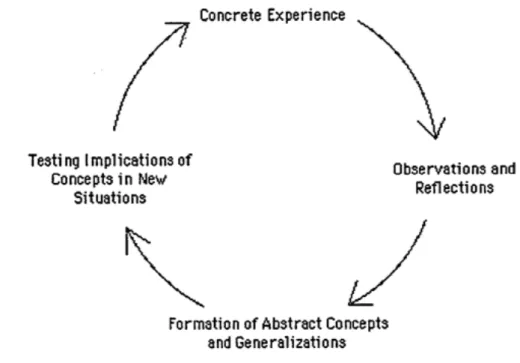
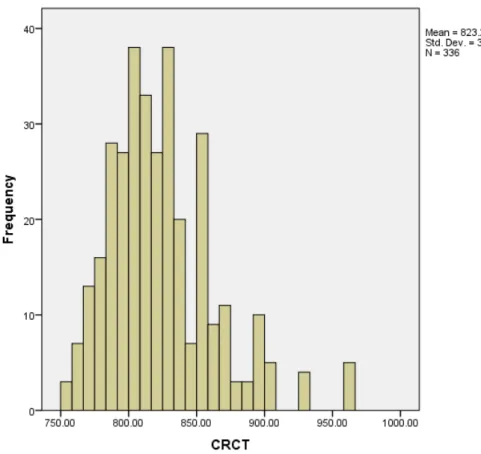
Figure 1: Experiential Learning Model ………..………...26 Figure 2: Normality Histogram for CRCT Science scores ………..………69 Figure 3: Normality Histogram Course Interest………...……69
List of Abbreviations AYP – Adequate Yearly Progress
CIS – Course Interest Survey
CRCT – Criterion-Referenced Competency Test GPS – Georgia Performance Standards
NCLB – No Child Left Behind Act SBC – Standards Based Classroom
CHAPTER ONE
This chapter provides an introduction to the study. This quasi-experimental research study examined the effects on student achievement when inquiry-based, hands-on labs were implemented into a standards-based life science classroom. It compared the grades and test scores of students in inquiry-based, hands-on science labs with the grades and test scores of students enrolled in classes with more traditional methods of teaching, such as lecture and demonstration. Hands-on labs included all hands-on activities carried out by students during their science classes. Inquiry-based instruction required that the students had analyzed the results gathered during the hands-on labs and drew conclusions supported by the data. This research study will utilize a quantitative approach to address the controversy between the effectiveness of using inquiry-based, hands-on labs and the effectiveness of using traditional methods of lectures and demonstrations to improve science test scores. It begins by giving background information on the research topic. Next, the research problem is stated and the purpose of the research is explained, followed by the significance of the study. The research questions that guide this study come next. The operational definitions of the variables of interest are supplied. Key terms that are used throughout the research study are defined so that the researcher’s communication is received as intended.
Background Information
Teaching middle school science is often unsuccessful in terms of knowledge transfer and instilling recognition of the function and significance of science in society. In order to change these trends, several learning approaches have been designed to ensure that students appreciate and understand the importance of raising their test scores. Inquiry-based learning is one approach that has been undertaken to improve the teaching of science by involving learners in authentic and practical investigations, as well as offering a more motivating and learner-centred environment (Lane, 2007). This active learning approach can also be
employed to teach and enhance the nature of science by encouraging students to develop a deeper learning of the material (Biggs 2003; Lemke 2001, Brew and Boud 1995; Prosser and Trigwell 1999). Since 2000, there has been an abundance of research published that
discusses the need to enact reform in science education, and there has also been an abundance of research published regarding the benefits of inquiry-based practices in science education; however, there is a scarcity of literature available on the use of inquiry-based learning to improve student achievement in science (Florian, 2000; Larkin, Seyforth, & Laskey, 2009). The inquiry based learning approach is still not predominant in classrooms and is reported as misused especially by primary teachers who lack confidence in teaching science (Goodrum & Rennie, 2007). The misuse of inquiry-based science instruction occurs for multiple reasons, such as the insufficient amount of time allocated to classroom lessons, inadequatemeans for learners to conduct autonomous investigations, the challenges involving the incorporation of practical concepts with inquiry, and lack of educator expertise to effectively handle inquiry topics in middle school science classes (Lane, 2007).
Computer technology has evolved and currently has the potential to greatly facilitate the use of inquiry-based learning at different school levels and to deliver new tools for presenting science concepts in the classroom. Teachers can use video imagery that has been described as a “tool of the mind” (Forman 1999, 1) because it allows the students to go back and examine the data collected. This provides the students with the information need for them to process and obtain a deeper understanding. The utilization of technology to
supplement teaching methodologies and objectives carries great potential to improve science education in the classroom, especially when the essential limitations of technology are
identified and technology is employed as a tool rather than as the ultimate goal of the learning endeavor.
debated for more than a century. In 1861, Herbert Spencer proposed the object-centered instruction strategy so that students would directly contact with nature by observing natural objects and then form their own conclusions. Another inquiry-like approach was introduced in 1898 by English educator Herbert Armstrong, it has been called the heuristic (step-by-step) method; this method requires neither books nor directions from the teacher. The students are using a trial and error method to explore solutions to proposed problems. Then came John Dewey (1929), who supported project learning and said that science learning must include the process aspect of science, not just the information aspect. Dewey believed that students should use inductive thinking and be free to interpret the their own learning without the pressure of others. After the launch of Sputnik by the Soviet Union in the late 1950s, inquiry instruction received renewed attention in curriculum design. As the new curricula extending into the 1960s were developed in the U.S., there was an inquiry focus introduced that had a positive effect on learners. Joseph Schwab (1962) said that science instruction is just a “rhetoric (talk) of conclusions” or “final form” science so learners never get to see the
processes of science, just the end products. The U.S. beats the Soviet Union to the moon and John F. Kennedy is assassinated and even though there was a positive effect on student learning, education seemed to change again. Now, we see the push again to compete with the other countries in the 1980s so research begins again and inquiry approaches are mentioned so studies begin. Shymansky et al. (1983) found “when the cumulative results of the research were considered, students in the new programs outperformed those in traditional, textbook-based classrooms on every criterion measured” (p. 398). There are big gaps in using these methods of teaching. It appears that about every 20 years there is a push to reform education because the U.S. is functioning below the other countries. Even though we see the results and conclusions are formed, the U.S. continues to switch back to the more traditional methods.
Mary Burgan's article "In Defense of Lecturing"points to the controversy that still surrounds the questionof whether or not to lecture (Burgan, 2006; Rehm, 2007; Bland et al., 2007). Some educators claim that lectures are passive and ineffective (Mazur,1996; Powell & Kalina, 2009), but research reveals that they are still used widely in many classrooms across the U.S. (Barr & Tagg, 1995; Kroll, 1997; Bain, 2004; Scholes, 2004; Feynman, 2005). Lectures can require less time and effort for the instructor and can be an efficient way to deliver the content (Marilla & McKeachie, 2011). Wilson and Korn report that “good lectures can be compelling, andthe suggestion that lectures are inherently ineffective because students stop learning after 15 minutes has recently been calledinto question” (2007, p. 86). This suggests that expecting teachers to change the instructional approach may present a problem. This research proposal will attempt to answer the question through a quantitative analysis of the relationship between using hands-on methods of teaching science and the more traditional methods of lecture and demonstration to determine if student outcomes are affected.
The inquiry-based learning approach reflects a mixture of developing strategies and practices for long-term teaching and how it might be applied in an actual classroom setting. In education, there is need to understand, carefully select, and employ combinations of inquiry and hands-on teaching practices that collectively increase the prospect of helping students learn because not all approaches work effectively in all classroom situations at all times.
The strongest likelihood of improving student achievement in science usually occurs when schools implement multiple techniques in the teaching and learning activities that influence the daily life of students. For example, if the objective is to improve the students’ scientific problem solving skills, then the school may consider developing teacher training programs that can equip them in (1) use of the learning cycle approach; (2) systemic
approaches to problem solving; and (3) use of computer simulations. It is noted, however, that planning to train teachers and providing the necessary supplies to implement and sustain these changes may be challenging, though they hold great potential for improving the
understanding and quality of students’ problem solving skills.
Even though the research indicates that there are numerous benefits of inquiry-based curricula, science teachers in the U.S. continue to use traditional methods of teaching in their classrooms (Larkin, Seyforth, & Laskey, 2009; Lotter, Harwood, & Bonner, 2007; Martin, et al., 2008; Wells, 1995). Therefore, it is important that schools and district administration institute a culture in which educators exercise their professional proficiency, explore effective practices, and share academic information in order to remain focused on the ultimate
objective of improving student achievement and test scores in science. Problem Statement
All students pursuing a Georgia high school diploma must successfully pass the Georgia High School Graduation Test (GHSGT) that covers four content specifications, as well as pass the Georgia High School Writing Assessment (Cox, 2010). These assessments help to confirm mastery of critical fundamental academic content. Data from the GHSGT indicates that the GHSGT science test has the lowest passing rate for the initial test out of the four content areas. This requirement from the state and the need to meet Adequate Yearly Progress (AYP) presents the problem: Does the use of inquiry-based, hands-on labs improve the test scores of 7th grade middle school Life Science students? This study will also address an additional question: How do the 7th grade middle school Life Science students and their teachers perceive the use of hands-on, inquiry-based labs?
In an effort to improve the performance of students on these science examinations, Georgia has developed new performance standards, which are designed to promote a scaffolded approach to the curriculum so that students are presented with key concepts at
each level of education (Cox, 2010). Middle school teachers must help ensure successful mastery of the standards so that students leave their classrooms prepared for high school academics. All teachers are expected to use standards-based teaching strategies. In the U.S. National Science Education Standards (NSES) (1996), stated “students will learn science by actively engaging in inquiries that are interesting and important to them” (Standards, p. 13). “Students at all grade levels in every domain of science should have the opportunity to use science injury and develop the ability to think and act in ways associated with inquiry” (Standards, p. 105). Inquiry-based, hands-on labs follow the guidelines presented for a standards-based classroom. This decision by the state to adopt the standards-based
instructional strategies, in addition to their need to meet Adequate Yearly Progress (AYP), fuels this research. The researcher sought to investigate two instructional science teaching methods: the use of an inquiry-based, hands-on lab approach versus the traditional lecture approach in an attempt to pinpoint the most effective method for teaching science at the middle school level in Georgia.
Purpose Statement
The purpose of this quasi-experimental study was to determine whether implementing an inquiry-based, hands-on lab instructional approach in seventh grade life science classes in Georgia schools resulted in improvement in students’ academic achievement, as measured by Criterion Referenced Competency Test (CRCT) scores. The No Child Left Behind Act (NCLB) (2001) supported standards-based training methods that utilize problem solving, inquiry, and asking questions that are open-ended to meliorate students’ achievement (Spring, 2008). It also mandated schools to enhance teachers’ content knowledge. This
recommendation was supported by research that indicates improving teachers’ content
knowledge positively affects teaching practices (Cohen & Hill, 2001; Kahle & Boone, 2000). For example, when teachers cover topics using inquiry-based, hands-on teaching techniques
and are themselves knowledgeable about the content, discussions can move in new directions based on students’ interests. This becomes a more effective way for students to learn the difficult content outlined in the standards. (Kahle & Rennie, 1993; Lederman, 2004; Williams, 1998). When teachers address topics that they know less about, they mostly discourage active contribution by students, strictly control class discussion, concentrate on the presentation rather than on learners’ discussions, and waste time on peripheral issues far from the main topic (Carlsen, 1991; Smith & Neale, 1991).
Significance of the Study
This study was meant to identify the most effective approach to teach life science in the state of Georgia. The study was conducted in order to fill the research gap regarding the effectiveness of the inquiry-based teaching using hands-on labs and activities daily when compared to the lecture teaching method that uses textbooks, demonstrations, and at least one lab per unit. According to Council of Ministers of Education (1997), the
improvement of scientific knowledge is enhanced by favorable instructional
environments that involve students in active inquiry learning activities. “Through such contexts the learners discover the significance of science to their daily lives and
appreciate the interrelated nature of science, society, technology, and the environment” (Lemke, 2001, p. 85).
Additionally, the gains associated with an inquiry-based approach to learning can be enhanced when learning activities employed are learner-directed and open-ended. For this reason, it is imperative that learners are allowed to independently choose their
specific research questions and be allowed to control the direction of their own inquiries. According to Hoffer and Moore (1996), “the demonstration of science is a procedure that follows step-by-step guidelines; filling in blank spaces on a worksheet only encourages inaccurate and impoverished impressions concerning the nature of science” (p. 98).
The researcher and other professionals should use this study results in order to justify the use of an inquiry-based, hands-on approach in their classrooms, since it proved to be an equally superior pedagogical approach for students when compared to traditional approaches to teaching science. The study provides information that can benefit other science educators in the target school, and also other schools within the target districts. For educators already using the inquiry approach, the researcher identifies an effective inquiry-based model that has the
potential to make their implementation more effective in the classroom.
Therefore, this study assists administrators and educators in the target Georgia schools in determining the effects of employing an inquiry-based, hands-on teaching approach on the science achievement of seventh grade students. It did this by comparing inquiry-based learning approaches and traditional learning approaches on measures of student achievement. Schools within the targeted Georgia district or in the neighboring areas that presently employ this method, or anticipate adopting the inquiry-based approach, are likely to benefit from this study.
Research Questions and Hypotheses This study examined the following research questions:
Research Question 1: Do seventh grade Life Science students who are taught using an inquiry-based, hands-on approach to science instruction score higher on the Criterion
Referenced Competency Test (CRCT) than those who receive traditional, lecture-based instruction?
Research Question 2: Are seventh grade Life Science students who are taught using an inquiry-based, hands-on approach to science instruction more interested in science class than those who receive traditional, lecture-based instruction?
Null Hypotheses The associated null hypotheses are as follows:
Null Hypothesis 1: Students who participate in daily inquiry-based, hands-on labs and activities during their seventh grade Life Science classes will not achieve statistically
significantly different standardized CRCT science scores from students who received traditional science instruction.
Null Hypothesis 2: Students who participate in daily inquiry-based, hands-on labs and activities during their seventh grade Life Science classes will not rate their classroom
experiences statistically differently than students who received traditional science instruction. Operational Definition of Study Variables
There were two variables of interest in this study. Each is operationally defined below: 1. Science Test Scores: Science test scores were operationally defined as the
results on the Georgia CRCT grade seven science assessment. The mean scaled score provided that number (Akhondi et. al., 2011; Brozo & Flynt, 2007; Bryce, 2011; Misulis, 2009).
2. Course Interest: Course interest was operationally defined as the score on the CIS. The mean score provided that number (Keller, 1984, 2010).
Definition of Important Terms
Adequate Yearly Progress (AYP): Adequate yearly progress or AYP was a part of the No-Child Left Behind Act (NCLB). The state of Georgia used the Criterion-Referenced Competency Test as one of the measures for the year-to-year student achievement. (Georgia Department of Education, 2012).
Constructivism: This is a learning theory that states humans can gain additional knowledge when allowed to complete real-life trial and error types of experiences (Esler W. & Esler M., 2001).
Course Interest Survey (CIS): This is a survey that is administered in order to define the level of motivation and interest the students have in a particular subject. This study
examined the level of interest that the student developed when the inquiry-based learning approach was adopted versus their level of interest when the traditional approaches were used (Keller, 1984).
Criterion Referenced Competency Test (CRCT): This is a standardized examination used in the state of Georgia to assess students’ learning (Gadoe.org, 2012).
Didactic Method or Direct Instruction: “This is a method of instruction where the educator presents similar content material all at once to a class, either through graphic aids such as whiteboards or through PowerPoint slides accompanied by a demonstration to clarify a concept” (Estes & Dettloff, 2008, p. 19).
Georgia High School Graduation Tests (GHSGT): This is graduation tests used to evaluate whether Georgia high school students have mastered the vital concepts and skills from the covered curriculum adopted by the state; passing this test is a graduation
requirement. Students graduating with Georgia diplomas are obligated to pass all the four sections of the GHSGT and the writing assessment, as well as meet the demands of other local and state graduation standards (Georgia Department of Education, 2012).
Hands-on Learning: Hands-on learning is a strategy used to provide instruction through tactile activities. It helps students to gain skills and knowledge beyond books and lectures by being an active learner that participates in experiments and carries out laboratory procedures in the classroom (Chang & Mao, 1998).
Inquiry-based Learning: This is a strategy used to promote active learning. Students are encouraged to develop experimental and analytical skills such as questioning, data analysis, and critical thinking. It is a learning methodology that engrosses learners in scientific investigation, where the delivered content is structured into an inquiry framework (National Research Council, 1996).
CHAPTER TWO: LITERATURE REVIEW Introduction
This review of literature synthesizes past research from the fields of inquiry-based science instruction and hands-on learning in order to create an argument for the significance of this study. The information presented covers topics like improving student achievement by using an inquiry-based, hands-on labs approach of learning science, the relationship between on science and student achievement, theoretical rationales for utilizing hands-on science to increase student achievement, and the interest level of students in regards to science courses. The chapter begins by presenting the theoretical frameworks upon which this study was built. Next is a discussion of literature related to the study. The chapter concludes with a summary of the literature review.
Theoretical Framework
There are three theoretical frameworks that guide this study. First is the Theory of Constructivism, first developed by John Dewey in the 1920s and 1930s, which proposed that learning occurs through experience. Second is the Theory of Ego Development, first
proposed by Erik Erikson in the 1950s and 1960s, which stated among other things that a child’s environment is crucial to his growth. Third is Vygotsky’s Sociocultural Theory (1986), which stated that children are drawn into cognitive activities when active participation in the learning is required.
Constructivist Theory
The constant interaction between humans and the physical environment improves students’ ability to construct knowledge. A major theme of the Theory of Constructivism is that learning is an active process in which learners construct new concepts and ideas that are based upon their past or current knowledge (Chi, 2009). One of the primary goals of using constructivist teaching is to make students own their own learning experiences by giving
them the freedom to make choices, like choosing between using inquiry-based, hands-on labs and learning by reading books. The learners choose information that allows them to
construct hypotheses and make decisions, which gives the needed cognitive structure. Cognitive structure provides meaning and organization for their learning experiences and allows the individual to gain more than just the basic knowledge or vocabulary for the test. Furthermore, in the constructivist classroom, students work primarily in groups so that learning the required knowledge is interactive and dynamic (Bruner, 2012). This type of classroom emphasizes social and communication skills because the students are expected to collaborate with one another and exchange ideas. This is different from the traditional classroom, which involves the teacher using direct instruction to deliver the content and where students spend most of their time working primarily alone, which promotes routine learning through repetition. The use of textbook in the traditional classroom strictly guides the instruction. In the constructivist classroom, the teacher is a facilitator, using prompts to guide open discussions.
In 2007, Noddings examined Dewey’s theory and found that an essential part of learning involves allowing students to use prior experiences and build on those experiences to gain true knowledge. Dewey (1929) stressed the importance of using scientific inquiry when he stated:
Science involves an intelligent and persistent endeavor to revise current beliefs so as to weed out what is erroneous, to add to their accuracy, and, above all, to give them such shape that the dependencies of the various facts upon one another may be as obvious as possible. (p. 210)
The constructivist theory supports inquiry-based learning because the students are encouraged to be actively involved in their learning by connecting prior experiences with new information (Ozmon & Craver, 2008). Montessori developed an educational approach
following the constructivist or “discovery” model in the 1920s (1967). This model allowed students to learn the content by working with materials, rather than through direct instruction (Lillard, 2011). Montessori’s teaching validated the need to implement inquiry learning by demonstrating that students learn in a different way, at their own pace, and by following the inner guidance of nature (Havis, 2006a). In the 1970s, David Kolb developed a learning model using the ideas from Dewey, Piaget, Lewin, and Williams that centered around experience, your own subjective experience. There are four elements: concrete experience, observation of and reflection on that experience, formation of abstract concepts based upon the reflection, and testing the new concepts (Kolb & Fry, 1975). It is a dynamic process that allows students to enter into the cycle at the level they are currently function (Figure 1). If the student is a concrete learner, then they can enter at that element and move into the other elements as they work through the content. Minner, Levy, and Century (2010) found that students who were involved in guided-inquiry lessons demonstrated greater science achievement than the students involved in traditional lecture classrooms. Minner et al. defined inquiry as a way to “motivate and engage students while concretizing science concepts through utilization of hands-on activities” (p. 475). The Lab-Aids program design was based on an acceptance of the constructivist approach and tended to favor a “guided inquiry” approach. Dr. Koker, director of the Lab-Aids Company, stated “this approach mixes activities that are very “open-ended”, with those featuring more direction for the student” (2007, p. 8). The National Science Education Standards states:
Guided inquiry can best focus learning on the development of particular science concepts. More open inquiry will afford the best opportunities for cognitive development and scientific reasonings. Students should have opportunities to participate in all types of inquiries (NRC, 2001, p. 30).
Figure 1: Experiential Learning Model (Kolb, 1985, p. 9). Theory of Ego Development
The Theory of Ego Development was proposed by Erik Erikson (1968). The Theory of Ego Development had eight stages, but Erikson’s belief that drives the need for teachers to use inquiry-based, hands-on labs is that if the students are allowed to explore, they will conclude their own identity. Erikson would say, "Ego identity, then, in its subjective aspect, is the awareness of the fact that there is a self-sameness and continuity to the ego's
synthesizing methods and a continuity of one's meaning for others" (1968). He indicated that middle school adolescent students usually demonstrate various attitudes that require a
teacher’s attention (Bonin, 2012). This prompts teachers to create favorable environments where students can explore dimensions of their identities. Erikson based his theory on eight strengths that a person goes through in their lifetime. Erikson (1988) explained “each
order, thus making it an epigenetic theory” (p. 74). Through Ego Development Theory, teachers better understand the need to view their students as more than scores on a standardized test.
Sociocultural Theory
Vygotsky’s Sociocultural Theory (1986) stated that learning should be a shared process rather than an individual one. The main emphasis of the theory is on the social and cultural context of children’s thinking. This theory also suggested that teachers need to take an active role in stimulating learning by creating those social and cultural experiences in the classroom. Vygotsky noted that students learn through participating and sharing another person’s frame of reference, so teachers who take a highly interactive role with students challenge them to exceed. The use of inquiry-based, hands-on labs allows a teacher to pair students in such a way that learning is promoted due to social interaction and active engagement and creates an environment where every student experiences deeper understanding of the concepts. As such, pedagogical knowledge used within the Lab-Aids program does require an understanding of cognitive, developmental, and social theories of learning and should be utilized within the classroom so that students can apply what they learn (Koehler & Mishra 2009).
Review of Literature
The Relationship Between Hands-on Science and Student Achievement
The relationship between hands-on learning and student achievement cannot be ignored. The hands-on lab approach has been suggested as a means to improve student achievement, especially in the science education (Guzman & Bartlett, 2012). Several principles, like think critically, analyze information, communicate scientific ideas, make logical arguments, work as part of a team, and acquire other desirable skills, have been developed that illuminate how the hands-on model of learning science benefits students more than the traditional
inquiry because they do not get to experience the benefits of a hands-on, inquiry-based
classroom (Adb-Hamid, Campbell, Der, & Wolf, 2012). Teachers can use inquiry to promote activity-oriented learning by allowing students to reflect after they complete scientific
investigations (Adams & Chiappetta, 2004). “It has been found that students using an inquiry based approach score higher on standardized assessments, improve their science process skills, and have more positive attitudes toward science” (Gibson and Chase, 2002 p. 694).
Hands-on science is one method that can be employed in the inquiry-based approach. The verification approach is another method that sets up demonstrations of a lab and follows a predetermined procedure instead of actually allowing the students to perform the lab
themselves, but it does allow the students to verify the information and discuss the outcomes. Contrary to the verification approach, inquiry-based, hands-on learning activities are not procedural in nature. The outcome of the study is not predetermined, but the student is expected to play an active role in designing, implementing, and interpreting the results. In practice, the inquiry-based approach is a demanding and time-consuming technique. It also requires abundant teacher skill and knowledge that may be challenging to package in a standardized curriculum.
There are diverse instructional approaches that can be classified as “hands-on science,” and educators can adopt and use them in any combination throughout the school year. Teachers, schools, and school districts vary in how vehement they are about the use of one particular hands-on approach to science. In this study, the inquiry-based approach is used to determine the relationship between the hands-on science and academic achievement.
The Council of Ministers of Education (1997) encouraged the adoption of an inquiry-based approach to teaching science. The framework states that
development of scientific literacy is supported by instructional environments that engage students in active inquiry, problem solving and decision making . . . set in
meaningful contexts. It is through these contexts that students discover the
significance of science to their lives and come to appreciate the interrelated nature of science, technology, society and the environment. (p. 8)
This means that the level of acquisition of scientific knowledge and skills is dependent on the type of instructional approach adopted by the educator.
Most educators agree that students differ in their learning styles and these differences need to be addressed (Felder & Brent, 2005). Classrooms that promote active learners, decision makers, and problem solvers are more effective than those in which students are served exclusively through a lecture method, which simply presents information to a passive audience (Adb-Hamid, Campbell, Der, & Wolf, 2012; Crawford, 2000; Keys & Bryan, 2001). Guild (2011) found that when the standards being taught were matched with instructional quality, learning occurred. The majority of teachers interviewed in several studies revealed that teachers did present the content effectively and efficiently, while adding some true appeal with the assignment choices provided to the students, but sometimes the retention and transfer seemed to disappear quickly (Kyriacou, 1998; Gay & Kirkland, 2003; Marzano, 2007; Stronge, Ward, & Grant, 2011; Killen, 2013). Additional research showed that learning does not always occur just because a specific response is received when elicited (Tulving & Thompson, 1973). Students need to be able to apply knowledge learned so that they can retain the information for future use in their lives. Tulving & Thompson (1973) showed that learners’ actions are strongly influenced by memory when they are forced to apply the information that they are learning (Aryes, Chandler & Sweller, 2003; Schwartz, 2009; Schwartz, Sadler, & Tai, 2008; Lamba, 2008). The No Child Left Behind Act of 2001 placed mandates on schools requiring the use of inquiry strategies to teach science (Spring, 2008).
Researchers have identified two expansive areas of scientific knowledge: content knowledge and process skills, which both contribute greatly to the mastery of science related subjects (Felder & Brent, 2005). Content knowledge involves facts, conceptual models, principles, theories and regulations that learners are expected to understand and memorize. Process skills, also known as procedural knowledge, are the techniques employed in learning science, such as measurement, observation, and formulation of hypotheses, which science students are required to master. Both domains are considered to be essential in order for learners to be able to completely comprehend science and apply the theories for solving problems (Eylon & Linn 1988). An inquiry-based, hands-on science learning approach is considered to be a means to intensify students’ understanding of both forms of knowledge.
Science education also involves the application of process skills. These are the techniques of learning science, such as measurement and observation. It is noted that these process skills and how they are taught impacts the use of hands-on activities in learning science. The major concerns involving teaching process skills include the type of process skills being taught, the age they are supposed to be taught, whether the process skills are required to be taught in a definite order, and whether the skills can be taught in isolation from content knowledge. Gagné (1985) identified eleven process skills, which he placed into two categories: basic and integrated. According to his findings, basic skills need to be learned before the integrated skills. On the other hand, Lowry (1992) identified seven process skills and tried to determine the age in which learners are developmentally prepared to learn each of them. Higher order process skills are utilized together with basic skills mostly when young learners learn. It is also important to note that the correct application of the content skills is dependent on the content knowledge. This means that the hierarchical set of process skills cannot be taught without linking them to the content knowledge.
Another concern regarding process skills is supporting the ability of students to use a combination of all the specific process skills for proper problem solving and conducting independent scientific investigations (Foster, 2011). This should not be left only to the most scientifically adept students, but should be geared towards benefiting all students in their daily life applications. Therefore, all teachers of science must utilize the hands-on approach to learning science. An example of a process skill that is hands-on by nature is the
measurement technique, which is best learned through hands-on activities. Other techniques, such as inferring, may be associated with hands-on learning activities, but is not actually hands-on by nature. This is because learners can practice and learn these skills using results collected from sources other than in-class activities. Therefore, the most important objective for inquiry-based, hands-on learning activities is collecting scientific information, either through measurement, experimentation, or observation.
Scientific content is typically abstract and complex. To improve understanding of scientific knowledge, there is need for students to examine and manipulate objects. This helps to make the increasingly abstract knowledge clearer and more concrete for learners (Guzman & Bartlett, 2012). Many students easily forget what they have learned and become unable to apply scientific knowledge when ordinary lecture methods are used (Friedlander &Tamir, 1990). Through hands-on approaches, learners are able to observe real life illustrations of the scientific knowledge they have learned and see the outcomes of experiments involving multiple variables. These illustrations, according to Shulman and Tamir (1973) and Friedlander and Tamir (1990), spur student discussion, since it is easier for students to remember illustrations than abstract content.
Students benefit from conducting experiments; it helps them to successfully move from a concrete way of thinking to a more abstract way of thinking, resulting in development of the brain. This improvement of the mind aids later retrieval of information from long-term
memory. This is because the real life illustrations helped to create greater relationships between fragments of knowledge, and helped in preventing or correcting disorganization of content knowledge. In terms of process knowledge, there are three primary benefits of hands-on science: most of the process skills are hands-on in nature, thus can simply be acquired through hands-on activities; some process skills connect abstract concepts to pragmatic reality, where students learn easily from concrete illustrations; and hands-on activities provide opportunities for comprehensive utilization of all the learned process skills while focusing on particular content knowledge.
The hands-on approach to learning science is consistent with the stages of human mental development (Bonin, 2012). The highest stage is the ability of the person to work with abstractions. Prior to the abstraction stage, human mental development first goes
through a stage in which thinking is restricted to concrete issues. The most relevant aspect of these stages to this study is that constant interactions between humans and their physical environment facilitate the mind’s transition through them (Piaget, 1973). An inquiry-based, hands-on approach to learning science assists learners as they pass through the stages of mental development by providing concrete illustrations of abstract concepts (Buxton & Provenzo, 2007).
Inquiry-based, hands-on learning is also in alignment with the Information-processing Model of Cognitive Theory. This model states that the mind has both a long-term memory used to store knowledge and a short-term memory that holds knowledge for immediate use (Emerson, Fretz, & Shaw 1995; Aryes, Chandler & Sweller, 2003; Schwartz, 2009; Schwartz, Sadler, & Tai, 2008; Lamba, 2008). The mind’s ability to utilize information that is stored in the long-term memory depends on how the knowledge has been structured in the long-term memory, as well as the strength of links made between specific pieces of knowledge (Bruner, 2012). Hands-on activities help to create additional links between existing pieces of
knowledge so information can be referenced by both physical illustration and its abstract meaning, thus improving retrieval of information (Gage & Berliner, 1984; Buxton & Provenzo, 2007). Akus et al. indicated that using a program that promotes inquiry-based learning activities allows students to develop deeper understanding of the big ideas or
concepts that must be taught in a science classroom (2007). This method of teaching helps to guide students through the phases required for them to solve problems, construct and test research questions, justify their claims with evidence, compare their ideas with those of others, and consider how their ideas have changed throughout this process. Learners are required to follow a continuous cycle of clarifying explanations with their peers and teachers.
Similarly, a hands-on approach can be employed to address errors in information processing. Cognitive Theory asserts that the discrete pieces of knowledge stored in the long-term memory are structured using schema. The schema is the unifying principle guiding understanding of the discrete bits of information, and is used to consolidate and assimilate new information (Harmon, 2002; Richey et. al., 2011). Occasionally, individuals can develop schema that do not conform to the real world. This may cause errors that inhibit learning because new information may be analyzed and assimilated in such a way that validates the error or overlooks contradictions to the error (Eylon & Linn, 1988). Conceptual change, which is one of the approaches for instruction, endeavors to identify student misconceptions. It helps the student to recognize that they do not correctly perceive an occurrence and support the student to adopt more accurate conceptions. Inquiry-based, hands-on science activities have been recommended as a technique to assist educators to identify these misconceptions and errors, and to provide favorable settings for learners to explore how their errors and misconceptions incorrectly forecast phenomena (Friedler & Tamir, 1990).
The influence of hands-on science on learners’ academic and nonacademic achievement has been questioned. Critics such as Hodson (1996) argue that hands-on activities may either
reduce or improve learners’ achievement. Some challengers argue that the approach has the ability to clarify as well as to confuse (Escalante, Montes, & Sucar, 2012; Javed, Babri, & Saeed, 2012). Proponents of hands-on learning reason that inquiry-based, hands-on science supports students in the visualization of abstract concepts (Ashton, 2007; Koc & Turan, 2012; Leung, 2011). Some research findings have also revealed that learners may not connect written activities with hands-on activities that concern the topic of study (Wellington, 1998).
Another practical criticism against the hands-on approach concerns the time taken and the cost. Hands-on learning substantially reduces the amount of knowledge content that can be handled in a course. A further criticism raises concern about equity between lower and higher ability students. Lower ability learners benefit both from the concrete illustrations and adequate time to conduct hands-on experiments, but may take longer to grasp a concept and actually get to the hands-on portion of the lesson (Leung, 2011; Mayer, 2004). Conversely, higher ability learners may be able to comprehend a topic within a shorter period, allowing for more inquiry-based, hands-on learning time.
Instructional Approaches for Hands-on Science
Different instructional methods can be adopted in order to implement hands-on science techniques. The approach that researchers have considered to be most suitable has varied over time, depending on the environments in which the studies were taking place and the subjects of studies. Even if one particular instructional approach dominants research, educators may still make use of other instructional methods in their classrooms. These different approaches and methods to hands-on learning make it necessary to consider the possible relationship between student achievement and the varying instructional approaches of hands-on science. The most frequently utilized teaching approaches for hands-on science include demonstration, exploration, discovery, inquiry, and the use of process skills (Buxton & Provenzo, 2007).
Traditionally, hands-on science has been predominantly applied to demonstrate or verify a phenomenon as a backup to direct teaching methods. Typically, the process is first described by the textbook or in a lecture; then the learners are engaged in carrying out a well-structured activity that permits them to identify and understand the phenomenon.
Another hands-on instructional method identifies the effectiveness of the verification approach in making an abstract model more concrete. However, verification learning technique is criticized on two fronts: its overuse can result in wasting time on repetitive activities, and its procedure only allows learners to merely follow directions and observe the outcomes without using their own capacities to comprehend what should transpire, how it is done, and what it means (AAAS, 1999).
The discovery method is another instructional technique used as a hands-on learning approach. It involves providing students with needed materials to work, but offers little guidance on what to do or what investigation is expected, as described by Mayer (2004). According to Seymour Papert, “The role of the teacher is to create the conditions for
invention rather than provide ready-made knowledge” (1980, p. 8). The premise of using the discovery method is to provide students an opportunity to explore a problem and formulate an answer to the problem. The teacher guides the learning by helping the students develop skills to solve problems and encourages their creativity. The necessity for educator guidance of students has so resulted in the change to a guided discovery method (Hodson, 1996). The assumption that students will retain knowledge if they discover it on their own is the basis for the discovery method, which fosters curiosity and creativity.
Hands-on learning can also take place via the exploratory method. The exploratory method may seem similar to the discovery approach, but is actually more closely connected to the verification approach. With the explanatory method, students are given the required materials, and then issued instructions on the expectations, with little direct guidance. The
purpose is to make students confident and comfortable with the topic under study, arouse their interest, and inspire them to raise questions.
Process skills are another approach to hands-on learning that attempts to instil specific processes used in science without consideration for any particular science discipline or topic. Hands-on learning activities are the primary technique employed in teaching processes such as measurement. However, the process skills approach has been criticized based on
reasoning that science content is inseparable from the process since content is vital to problem solving. Teachers that use process skills include the skills of prediction, observation, inference, and measurement (Bell, 2008). These skills could build a bridge connecting what is familiar and accessible to what is unfamiliar and abstract within the science curriculum (Bell, Mulvey, & Maeng, 2012). Based on Yockey (2001) study,
educators understand the importance of teaching these instructional models that can directly and purposefully utilize process skills to build the knowledge base needed by the student to master the standards, as well as perform better on standardized tests. However, research has not clearly articulated this method (i.e., Akerson & Hanuscin, 2007; Donnelly & Argyle, 2011). It is difficult to transfer process skills from one framework to another because the learners appeared unable to bring together the taught skills into an overall ability to problem-solve (Hodson, 1996). Teaching process skills is still an objective of science education. Process skills continue to be taught both separately, and when amalgamated with other content matter.
Hands-On, Inquiry Based Learning
The inquiry approach, just like the discovery approach, carries with it two objectives of learning: to understand particular science concepts, and to develop the capacity needed to conduct one’s own inquiries. Capacity in this case involves teaching students to combine thinking and performance skills with problem solving competence while addressing topics in
a student’s area of interest. The educator’s role is to provide guidance and support,
particularly through questioning, but not by authoritarian means. An inquiry-based approach differs from the discovery method since it supports the use of both deductive and inductive teaching (Lane, 2007). It also differs from the process skill method because it utilizes a general approach that integrates process skills instead of addressing them separately. In addition, the objective for an inquiry-based learning approach is to allow students to gather observations and analyze data collected during experiments to form conclusions that answer research questions (Bell, Smetana, Binns, 2005).
Inquiry-based learning is currently gaining support in science education, with a surging number of teachers becoming attracted to, and interested in, teaching mechanisms involving projects or inquiry (Polman & Miller, 2010). The surge in popularity is because teachers realize that inquiry-based learning absorbs students in activities that reflect methods of scientific investigation and are interwoven with content that is addressed in inquiry
context. For this method to be effective, students must master the basic skills of carrying out a scientific investigation and understanding how scientists perform their duties. The inquiry-based, hands-on learning approach should emphasize the significance of learning the process of science, such as developing empirically investigable queries and supporting the assertions with adequate evidence (Polman, 2000). The effective utilization of an inquiry-based learning approach engrosses learners in self-directed inquiry, in learning to ruminate and reason scientifically, and in helping students understand the relationship between proof and theory. The most important aspect of an inquiry-based approach is the process used, not the outcome; thus, it is imperative to provide adequate time for discussion and to urge students to make their ideas clear (Taylor & Watson, 2000). According to Byers and Fitzgerald (2001), an increased understanding of this approach has prompted research activities to empirically
support the effectiveness of inquiry-based learning as an instructional model, and has prompted the development and emergence of new curriculum guidelines.
This is the learning methodology that engrosses students in activities that encompass scientific investigation, where the delivered content is structured into an inquiry framework. To be able to meet the intended objectives outlined by the state of Georgia in the performance standards for 7th grade Life Science, inquiry-based learning needs to involve the basic skills of carrying out a scientific investigation and of instilling a deeper understanding in students regarding how scientists perform their duties (Lane, 2007). “This learning approach should stress the significance of learning the procedural framework of science, such as developing empirical questions that can be investigated, leading to claims that can be supported with evidence” (Polman & Pea, 2001, p.3). The effective utilization of an inquiry-based approach to learning engrosses learners in self-directed learning by ensuring that they think scientifically and allowing them to understand the connection between theory and evidence. What matters most is not the result of the investigation, but the learning process employed to gain the knowledge. Therefore, it is imperative to provide adequate time for discussion among the learners and to encourage students to reveal their ideas unequivocally (Buxton & Provenzo, 2007).
Research focused on inquiry-based learning prompted the development of new curriculum principles as seen in the presentation of the new Georgia Performance Standards and the new National Science Education Standards (NSES) (Palincsar et al., 2001; Cornelius & Herrenkohl, 2004; White & Frederiksen, 2005).
The American Association for the Advancement of Science (AAAS, 1999) and the National Research Council (NRC, 1996) recommended science curricula that keenly engaged learners in science activities using an inquiry-based learning approach. The adoption of this
learning approach has changed the direction of science education in the United States from the traditional style of memorization of the concepts and facts of different science disciplines, to the inquiry-based, hands-on learning style in which students search for answers to their own questions (Gibson & Chase, 2002).
A number of research studies involving middle level and high school students established that inquiry-based learning activities had a positive impact on student
achievement in science courses, laboratory skills, cognitive development, science process skills, and general understanding of science facts when compared to students trained using a traditional instructional approach (Chang & Mao, 1998). According to Hodson (1996), the inquiry-based, hands-on learning approach is a more effective method for students to learn science. Similarly, studies have indicated that students employing an inquiry approach to learning science manifest improved positive attitudes towards science and schooling, while the traditional didactic approach results in the development of negative attitudes towards science and school. Selim and Shrigley (1983) found that learners engaged in the discovery approach (also known as the inquiry-based, hands-on approach) for a 21 day class treatment period had a more positive attitude toward science courses when compared to the control group, who were instructed using traditional lecture methods.
The research collected by Akkus, Gunel, and Hand (2007) established that the quality of the implementation technique does have great impact on students’ posttest scores when they compared the effectiveness of inquiry-based science to traditional teaching practices. This means that using inquiry-based strategies can yield higher test scores that could aid in closing the achievement gap within science classrooms.
Inquiry-based learning focuses on the collaborative nature of scientific activities, that is, scientific argumentation. Scientific argumentation has three forms: analytical, dialectical, and rhetorical, which when used appropriately by teachers can effectively increase students’
understanding of science concepts (Osborne, Simon, & Erduran, 2002). Students can learn use the one-sided argumentative method to persuade others by presenting their point of view and convince them that the alternatives are not as good as their ideas by using rhetorical or didactic arguments (Driver, Newton, & Osborne, 2000; Yore et al., 2008). Debate and discussion can be used in the classroom to offer the students a way to examine differing perspectives in a more dialectical argumentative approach. For some students it seems to be better to offer an analytical argumentative method that follows the rules of logic (e.g.,
Toulmin, 1958) and may be inductive or deductive (Duschl & Osborne, 2002; Yore et al., 2008). Duschl stated “Inductive arguments include analogies and causal correlations, while deductive arguments include syllogisms and causal generalizations” (2008, p. 279). Scientific argumentation allows students to talk in terms of science concepts and ideas. Past science education reform have emphasized the use of dialectical and analytical arguments, which follow the guidelines for discussion in the Lab-Aids program (Driver et al., 2000).
Researchers have scrutinized middle and high school inquiry-based learning programs in relation to student achievement and the effectiveness of their process skills. In 2008, Duschl published statements that encouraged educators, policy makers, and any stakeholders to redesign learning constructs within the classroom and out-of-school learning environments so that there is a shift in educational research that examines the most effective learning strategies for future populations of students. Sawyer (2006) stated that the “goal of learning sciences is to better understand the cognitive and social processes that result in the most effective learning” (p. xi). Chang and Mao (1998) explored the long-term impact of the inquiry-based instructional method on students’ attitudes towards learning science. They found that learners taught by the inquiry-based teaching technique scored considerably higher on achievement tests than those taught using the traditional lecturing approach. Padilla,
Okey, and Garrand (1984) found that middle school students showed considerably higher scores in process skills than the control group when inquiry-based learning was employed.
The benefits of an inquiry-based, hands-on learning approach can be minimized when activities are not learner-directed and open-ended. It is imperative that learners choose their own problem or questions to investigate, and be encouraged to direct their inquiry programs in directions they choose (Laird, 2009). This not only increases their motivation and interest in the subject but also supports more genuine form of inquiry; hence, helps build improved and deeper understanding of science. When educators opt for traditional instructional methods, such as the textbook-based instruction, demonstration, worksheets with
predetermined results, or a combination of the traditional approaches with inquiry, students fail to develop a clear understanding of the nature of science (Lemke, 2001). Hoffer and Moore (1996) observed that the presentation of science as a progression that follows step-by-step instructions and involves filling in the blank spaces on worksheets encourages erroneous and misleading concepts concerning the nature of science.
Inconclusiveness of Previous Research
Several research studies looking at the relationship between hands-on science learning and test scores have been conducted since the beginning of the century (Klahr & Li, 2005; Klahr, Triona, & Williams, 2007; Strand & Klahr, 2008; Supalo, 2010). According to the findings of Ruby (2001), these researchers have been focused on three research
methodologies. The first involves small-scale experiments where very small clusters of educators are assigned a specific teaching technique, such as lecture, hands-on science, or text-based method, to use in their respective classrooms; then their students’ test scores are compared at the end of the course. A second approach involved comparing classroom test scores following implementation of dissimilar types of curricula. The test scores obtained from learners in two different classes with different curricula were compared, and
conclusions made. The third research approach involved using surveys to determine the quantity of hands-on activities in a classroom, gathering learners’ test scores, and then examining the results.
Experimental research has found positive correlations between hands-on activities and lab skills. Acquiring lab skills rests on the ability to effectively use lab equipment, which is partly dependent on the instructional techniques of the teacher. The majority of research has failed to confirm that inquiry-based, hands-on lab techniques are more effective at improving test scores when compared to other instructional techniques. According to Hofstein and Lunneta (1982), lab teaching did not show any substantial advantages over other techniques when matching scores on tests for critical thinking, achievement, and understanding the process skills of science. A review of teachers’ and students’ surveys found out that there was little agreement on the professed gains of the hands-on learning approach (Sawyer, 2006). However, reviews on the impact of curriculum with an abundance of hands-on activities generated more positive results (Duschl, 2008). When a meta-analysis combined studies on these beneficial curricula, substantial positive results regarding the relationship between learners’ test scores and the hands-on approach to learning were reported, both for knowledge content and analytical skills (Haynie, 2007; Shymansky, Kyle, & Alport, 1983).
A study conducted by Bredderman (1983), on the other hand, reported wide disparity in impacts of three elementary science curricula: (a) the Science-A Process Approach
(SAPA), which involves the process approach, (b) Elementary Science Study (ESS), which involves the discovery approach, and (c) Science Curriculum Improvement Study (SCIS), which involves the exploratory approach. However, there was reported sensitivity to the teaching approach employed. For example, learners using the SAPA recorded higher scores on process outcomes, while students using the SCIS approach scored higher marks on content outcomes. It was found that students’ scores under these process-oriented approaches were
greater than the outcomes of students who were taught using the traditional textbook approach. These findings suggest that it is academically beneficial to focus on hands-on activities that emphasize the scientific process.
Evaluation of Educational Achievement
Much of the current research on the relationship between an inquiry-based, hands-on learning approach and student achievement is based on data from national and international science studies. The two largest organizations that conduct independent international studies are the International Association for the Evaluation of Educational Achievement (IEA) and the International Assessment of Educational Progress (IAEP). The surveys carr