The impact of digital technologies on
teaching and learning
Philip Banyard
A thesis submitted to Nottingham Trent University for the
degree of Doctor of Philosophy
Acknowledgements
I would like to acknowledge the support of colleagues in the Division of Psychology at Nottingham Trent University who provide such a positive, productive and friendly working environment.
I especially wish to acknowledge the support of Professor Jean Underwood who has tried her best through excellent guidance and good-natured indulgence to shape me into a half decent researcher.
Abstract
This thesis explores the impact of new technologies on learning and teaching and draws on research work carried out over a ten-year period. The thesis looks at the facilitators and barriers to using digital technologies effectively and explores the challenges for educators as they respond to the changes brought about by these digital technologies. It presents eight published works that have investigated the impact of digital technologies and collected data using a range of qualitative and quantitative techniques.
The core paper provides a model by which the impact of digital technologies can be analysed and understood and the remaining papers populate that model. The model identifies a system of learning spaces that describe the ways that learners, teachers and managers respond to the challenges and opportunities that digital technologies bring to learning. The papers explore how the school space, the teaching space, the personal learning space and the living space have all been transformed by digital technologies.
These papers highlight the ongoing tension within education brought about by the conflicting ambitions of managers to control learning while at the same time encouraging personalisation. The papers consider the nature of digital divides and also the potential hazards presented to young people by digital technologies. Finally, the papers explore the relationship between the use of digital technologies and academic achievement.
The work presented here provides a coherent contribution to the field that offers new understandings of the impact of digital technologies on learning, and identifies key issues for further research.
Table of contents
Acknowledgements 2
Abstract 3
Overview and theoretical synopsis 6
1. Learning 6
2. Papers presented for the thesis 13
3. A model of learning 15
4. Populating the model 17
5. Challenges and opportunities for the use of digital technologies in learning
26
6. Conclusions 33
7. References 37
Paper 1
Banyard, P., & Underwood, J. (2008). Understanding the learning space. ELearning Papers, 9. 1-12. Retrieved from
http://www.openeducationeuropa.eu/en/article/Understanding-the-learning-space. (accessed 21.06.2014).
49
Paper 2
Underwood, J., & Banyard, P. (2006). Learning and technology: A happy conjunction? In K. Steffans, R. Carneiro & J. Underwood (Eds.), Self-regulated learning and technology enhanced learning environments (pp. 64-71). Aachen: Shaker Verlag.
63
Paper 3
Banyard, P., Underwood, J., Kerlin, L., & Stiller, J. (2011). Virtual learning environments: Personalising learning or managing learners?. In M. Thomas (Ed.), Digital education: Opportunities for social collaboration (pp. 123-141). London: Palgrave Macmillan.
73
Paper 4
Banyard, P. (2010). Teaching the personal science: From impeccable trivia to the blooming buzzing confusion. Psychology Teaching Review, 16(2), 38-44.
88
Paper 5
Banyard, P., Underwood, J., & Ault, A. (2006). Do enhanced communications technologies inhibit or facilitate self-regulated learning? European Journal of Education, 41(3/4), 473-90.
98
Paper 6
Underwood, J., & Banyard, P. (2008). Managers’, teachers’ and learners’
perceptions of personalised learning: Evidence from Impact 2007. Technology, Pedagogy & Education, 17(3), 233-46.
Paper 7
Banyard, P. & Underwood, J. (2012). E-learning: The dark side? Elearning Papers, 28. Retrieved from
http://www.openeducationeuropa.eu/en/article/E-learning%3A-The-Dark-Side%3F. (accessed 21.06.14).
142
Paper 8
Banyard, P. & Duffy, K. (2014). Student representations of psychology in the UK. Psychology Teaching Review, 20(2), 110-120
154 Statement of authorship 168 Appendix 1: Additional publications 169 Appendix 2:
Re-analysis of data from Impact 2007 and Impact 2008.
172
Appendix 3:
Banyard, P. & Murphy, J. (2009) ICT in FE Impact Study 2009. Report for Becta
183
Appendix 4:
The example of A-Level Psychology
204
Appendix 5:
Underwood, J., Baguley, T., Banyard, P., Dillon, G., Farrington-Flint, L., Hayes, M., Hick, P., Le Geyt, G., Murphy, J. Selwood, I. & Wright, M. (2009).
Personalising learning. Coventry: Final report for Becta.
Overview and theoretical synopsis
The development of any new technology provokes excitement and concern, often in equal measure. The opportunity for change and development is matched by a resistance to the loss of the old ways. Nowhere is this more evident than in the conservative world of education. Digital technologies are self evidently changing the ways that we communicate, access information and process that information to better understand the world and behave in it (Craig & Wilsdon, 2004). Learning appears to be transformed, but is it? Are we changing the way we deal with knowledge and gaining new understandings or are we just using new toys to do the same old tricks? Digital technologies allow us to revolutionise how we teach and how we learn but the early high expectations for academic improvement have not been fulfilled (Hokanson & Hooper, 2000; Tamin, et al., 2011) and concern remains about the negative impact on learners and learning (Banyard et al., 2011; Banyard & Underwood, 2012).
This thesis explores the impact of new technologies on learning and teaching and draws on research work carried out over a ten-year period. The thesis looks at the facilitators and barriers to using digital technologies effectively and explores the challenges for educators as they respond to the changes brought about by these digital technologies.
1. Learning
What do we mean by learning?
The exploration of how we learn and what we mean by learning has been a central concern for psychological research from the philosophies of Hobbes, Locke and Mill up to the present day. The general understanding of learning is of a change of state in an organism that is remembered and can lead to change in behaviour, and this change of state is brought about by experience. One view of learning sees leaners as passive recipients of experience and the behaviourist approach was an example of this. Similarly, cognitive approaches initially focused on a machine metaphor and looked at specific changes in memory, attention and information processing (Crook, 2007).
In contrast to this view, the constructivist approach of Piaget (1953) looks at how people learn by making sense of their experiences. One reading of the constructivist approach can see it as an argument for allowing learners to discover essential information and skills for themselves and to manage their own learning.
These contrasting views of learning and learners frame modern debates about education, especially around education policy. For example, the constructivist view is challenged by studies that suggest that within the context of formal learning guidance or direction is required by most learners (Kirschner, Sweller & Clark, 2006). The current dominant view focuses on learners’ active participation in acquiring knowledge and developing skills, much of which takes place without instruction. In parallel to this it argues that the highly organised knowledge systems, such as sciences, mathematics and literature, require formal training, commonly in schools (Bransford, Brown & Cocking, 1999).
The historical focus on experience has led philosophers to argue that learning comes from personal experience that is reflected on and then acted on. For example Rousseau writes “Give your scholar no verbal lessons: he should be taught by experience alone” (Rousseau, 1762:77). This approach to learning as a personal journey along with the view of teaching as being a process of guiding rather than instructing has been a recurrent theme over the years. When Papert (1993) commented on the introduction of computers to learning he wrote “I am convinced that the best learning takes place when the learner takes charge.” (1993:25). Although these ambitions still have currency today they are enacted within a state education system that has different aims for the mass education of the people.
The state education system in the UK provides a structured National Curriculum that has clear developmental stages and assessment targets. In their statements of aims the UK government refers to values for learning that relate to “ourselves, as individuals capable of spiritual, moral, social, intellectual and physical growth and development” (DfE, 2011) but the involvement of central institutions of government in provision of education extends into the design, content and delivery of individual subject syllabuses (see the example of A-Levels below).
This mixed ambition of aiming for individual personal growth by using set and restrictive curricula provides a difficult and maybe impossible challenge for educators. When A.S. Neill put the learner at the centre of their learning at Summerhill School he had the one aim to make the school fit the child instead of making the child fit the school (Vaughan, et al., 2006). A national curriculum does not allow this approach because it creates standard tasks for all learners and focuses on the average performance of learners in a school as the measure of quality.
The example of A-Levels
One of the practical implications that arise from the debates around learning can be seen in the design of syllabuses. For example, the key qualification for school matriculation and one that acts as
the entry qualification for university is the General Certificate of Education Advanced Level (A-Level). These examinations are commonly held to be the ‘gold standard’ of qualifications by politicians and education commentators (see for example, Judd & Ward, 1997, Paton, 2014). Their position within the school curriculum makes them subject to political attention and frequent reviews, most recently by Secretary of State Michael Gove with reformed courses commencing in 2015.
This recent reform has been informed by two key reports, the first is based on a survey of higher education, teachers and employers on the suitability of A-levels (Higton et al, 2012). This report suggests that there is general endorsement of A-levels by stakeholders but it also identifies gaps in skills and a mismatch between the subject content in A-level and that required by higher education institutions. The second report is an international comparison of equivalent qualifications to A-level (Ofqual, 2012). This report raises questions about demand and challenge of the current A-levels, the breadth and depth of particular courses and of the A-level programme as a whole, and design of assessments (see Appendix 4 for an illustration of the strengths and weaknesses of standardised assessments in the development of A-Level Psychology). These reports highlight the focus of the reform on academic achievement rather than the personal learning of the learner.
The impact of these reforms has been to remove coursework from most subjects including science, to remove modularity from courses and to base assessment on end of course examinations. These changes rebalance A-Levels away from student-centred learning and more towards a model of the passive learner. This conflicts with other national initiatives such as that for personalising learning. Personalising learning
The conflicting aims for learning presented above are that it should (a) provide a journey of individual discovery that is self-determined and (b) respond to the perceived need to train people to be successful in the modern world economy. This conflict creates a tension within the theory and practice of education. An example of this can be seen in the drive toward personalised learning. When the government started a national conversation on personalisation it defined it as “…the drive to tailor education to individual need, interest and aptitude so as to fulfil every young person’s potential” (DfES, 2004). The Gilbert Review of Teaching and Learning in 2020 (Gilbert et al., 2006) took this further arguing that there is a need to ensure that personalised learning is a reality in every classroom, and the report sets out a vision for how teaching and learning should develop in the decade up to 2020.
The drive to personalisation was accompanied by political and academic support (Miliband, 2004; Leadbeater, 2004, 2005) and contained an optimistic rhetoric about the benefits of personalisation for narrowing achievement gaps and driving up standards. The issue here is that the phrase ‘driving up standards’ refers to improvements in test scores. The conflict in the vision here concerns the role of the school as either a high performance learning organisation or a person-centred learning community (Fielding, 2006). The required judgements for a school to be defined as good or outstanding include “the achievement of pupils at the school” (Ofsted, 2012) but not the personal growth of individual leaners or the development of a community focused institution.
The view of personalisation put forward by the government defines the goal state that the learner should aim for. In other words, as a learner you must go from one set point (A) to another set point (B) but it doesn’t matter how you get there. That journey between A and B is what you are able to personalise, but not the goal of your learning. Fielding (2006) argues that this personalised learning agenda is disguising what is essentially another form of control. He argues that the focus on performance is demeaning and unlikely to produce the kinds of results intended.
There are many research questions that derive from the personalisation initiative. Some of these are pragmatic questions around teaching and learning such as what techniques promote personalised learning, what are the impacts of these techniques and what is the response of students who experience these personalised programmes of learning? Further questions can explore the factors within a learning environment that interacts with the personalisation agenda such as the e-maturity of the school (Underwood & Dillon, 2004). Furthermore, there is a question to ask about the conflicting demands of personalising learning and achieving success in examinations. Is it strategic to adopt a personalised learning strategy if a more focused and drilled technique will obtain higher results?
If personalisation is the route to better and more effective learning then it is important to consider what can be the drivers for this change. One answer may be to look to digital technologies.
Learning and technology
New technologies bring opportunities for change and the digital technologies have been seen as having great potential benefit for learning. For example the Secretary of State for Education said, “I see ICT and its potential to transform how we teach, learn and communicate as crucial to our drive to raise standards.” (Ruth Kelly, 2005).
The deployment of digital technologies in learning creates new potentialities but it also poses a challenge to the centralised model of learning promoted by governments. The communication theorist Harold Innis writes
new technologies alter the structure of our interests: the things we think about. They alter the character of our symbols and the things we think with. And they alter the nature of community: the arena in which thoughts develop. (1954:20).
Innis’ comment is derived from his work on ancient civilisations and at the time that he was writing, in the middle of the twentieth century, he argued that contemporary advances in communication had the effect of enlarging the range of reception while at the same time reducing the points of distribution (Carey, 1989); in other words – broadcasting. Innis argued that an oral tradition of knowledge transfer within a society (in contrast to a written tradition) challenges the development of monopolies and enhances the democratic processes within that society. In contrast, the digital technologies of the twenty first century create an opportunity for learners to take more control of their learning and to engage in sharing of personal understandings that is a new manifestation of the oral tradition.
Social media provide an opportunity for greater democratisation of our everyday lives. Although the role of Facebook and twitter in the Arab Spring of 2010 have been overstated, it is clear that social media have an impact on political events (Beaumont, 2011; Brym, et al., 2014). These social media take broadcasting out of the hands of powerful organisations and allow individuals to take part and follow their own agenda. In the area of education these facilities democratise learning by giving greater access to knowledge and ideas and greater opportunities to form communities of expertise and to disseminate information. They also take learning beyond the classroom into the living space of learners (Underwood, et al., 2009a).
Digital technologies provide a vehicle that can drive forward the personalisation agenda. In fact they can drive forward both of the contrasting approaches to personalisation. They can create structured learning programmes and central control of learning through resources such as a Virtual Learning Environment (VLE) and support the ambitions of the high performance learning institution. On the other hand they can also support the student-centred approach by offering learners greater opportunity to plan their own learning and explore the almost unlimited sources available. The question then concerns the impact of these two approaches. What does the learner experience of this personalisation and, for example, does the VLE promote student-centred learning or does it just manage the learners (Banyard, et al., 2011)?
As the rhetoric of learning has become more about personalisation and learner-centred teaching, digital technologies have arrived to facilitate this personalised agenda. Sharples (2000) points out that digital technologies are personal, user centred, networked, ubiquitous and durable, and that these are the key qualities (by different names) of lifelong, personalised learning.
There are clear benefits of digital technologies for learning. For example, they are motivating for learners (Cavendish et al., 1997), and their value is recognised in numerous reports (e.g. Rose, 2008; Johnson, 2005; Green & Hannon, 2007; Underwood et al., 2007). However, there is an argument that the optimistic rhetoric that supports educational use of digital technologies is overblown and short of evidence (Cuban, 2001; Oppenheimer, 2003; Reynolds et al., 2003). A further challenge comes from concerns about how digital technologies are used in learning. For example, Harris et al. (2009) argue that current use of technologies tends to be focussed on skills required by teachers to integrate them into their classroom, rather than students’ learning needs.
Most digital technologies in use in the classroom were not created as educational tools but have been adopted by educators for pedagogical purposes (Burden & Atkinson, 2008). The affordances of these facilities or devices are not defined by their features but by the way they are adapted and used (McLoughlin & Lee, 2007). McLoughlin and Lee give the example of blogging which involves the skills of typing and editing which are not affordances in themselves but allow other affordances of sharing and interaction. They go on to suggest that we observe the following affordances in social software; connectivity and social rapport, collaborative information discovery and sharing, content creation and knowledge information aggregation. This breadth of affordances that digital technologies offer brings new challenges for educators because they are not sufficient for effective learning to take place. To facilitate learning using digital technologies it is necessary for educators to develop an understanding of what these technologies can offer.
Research questions
The core question for educationalists was initially framed in terms of whether digital technologies have a positive impact on learning. This question has been answered in part by meta-analytic studies which show consistent but small gains in attainment associated with the use of digital technologies (e.g. Tamin, et al., 2011; Higgins, Xiao & Katsipataki, 2012). It can also be argued that this core question has been made redundant by events. Digital technologies are now part of how we learn and how we live. It is unthinkable in twenty-first century UK to imagine our lives without them. The question then becomes to discover how digital technologies are affecting learning and how they can be best utilised to boost this learning.
Further meta-analytic studies have focused on the barriers faced by institutions when they attempt to integrate digital technologies into learning, and then the strategies that they can employ to overcome these barriers (Hew & Brush, 2007). These barriers can be grouped around themes such as the structure of the institution, the learning environment, the assessment of learning and the attitudes of the learners.
The research questions then become, first, how can we best describe the learning environment that is experienced today by UK learners? Then, what are the features of this learning environment that are enhanced by digital technologies, and what impact are the digital technologies having on learning and learners?
These questions are explored in the papers submitted for this thesis and then discussed in the following sections.
2. Papers presented for the thesis
This thesis presents eight papers published between 2006 and 2014 concerning the impact of digital technologies on education. The thesis is based around a core paper (paper 1) which acts as a focus for discussion of the other seven papers presented here. For the papers where Banyard is not the first author, a statement is appended from the first author concerning contribution. A further 17 papers on learning and technology also contribute to the argument (see Appendix 1). The data for much of the argument is contained in 13 reports by Banyard and colleagues published by Becta and the British Psychological Society (see Appendix 1).
The total academic output of Philip Banyard has attracted over 1100 citations according to Google Scholar, including over 750 in the last 5 years The eight papers presented here have attracted 75 citations and the core paper (paper 1) has received over 120,000 viewings on the Open Education Europa website (http://openeducationeuropa.eu).
Core paper
1. Banyard, P. & Underwood, J. (2008). Understanding the learning space. ELearning Papers, 9. 1-12. Retrieved from http://www.openeducationeuropa.eu/en/article/Understanding-the-learning-space. (accessed 21.06.2014).
Further research outputs
2. Underwood, J. & Banyard, P. (2006). Learning and technology: A happy conjunction? In K. Steffans, R. Carneiro & J. Underwood (Eds.), Self-regulated learning and technology enhanced learning environments (pp. 64-71). Aachen: Shaker Verlag.
3. Banyard, P., Underwood, J., Kerlin, L., & Stiller, J. (2011). Virtual learning environments: Personalising learning or managing learners?. In M. Thomas (Ed.), Digital education: Opportunities for social collaboration (pp. 123-141). London: Palgrave Macmillan.
4. Banyard, P. (2010). Teaching the personal science: From impeccable trivia to the blooming buzzing confusion. Psychology Teaching Review, 16(2), 38-44.
5. Banyard, P., Underwood, J., & Ault, A. (2006). Do enhanced communications technologies inhibit or facilitate self-regulated learning? European Journal of Education, 41(3/4), 473-90.
6. Underwood, J. & Banyard, P. (2008). Managers’, teachers’ and learners’ perceptions of personalised learning: Evidence from Impact 2007. Technology, Pedagogy & Education, 17(3), 233-46.
7. Banyard, P. & Underwood, J. (2012). E-learning: The dark side? Elearning Papers, 28. Retrieved from http://www.openeducationeuropa.eu/en/article/E-learning%3A-The-Dark-Side%3F. (accessed 21.06.14).
8. Banyard, P. & Duffy, K. (2014). Student representations of psychology in the UK. Psychology Teaching Review, 20(2), 110-120
3. A model of learning
The model presented here was devised to represent the relationship between learners, the educational spaces they operate in and digital technologies (Banyard & Underwood, 2008). It provides a framework for exploring the questions raised by past research into the impact of digital technologies on learning. It recognises the changed way that we frame our world and our place in it. The model identifies four key spaces (personal learning space, teaching space, school space and living space) that have an impact on the educational experience of learners. These spaces are psychological rather than physical.
The first iteration of the nested model viewed the learners’ experience as being structured by the teachers who are themselves working with and contributing to the culture of the school. However, on reflection, it is more helpful to consider the personal learning space that the learner occupies rather than the learner himself or herself. Put simply, the personal learning space is the space in which learning takes place. This can have some obvious physical characteristics (such as the classroom or the technical facilities that are available) but crucially it also refers to the cognitive space in which the learner operates. This cognitive space includes the learners’ investment in learning, their sense of efficacy and their motivation to learn. In the same way, it is helpful to consider the teaching space rather than the teacher. The teaching space includes the physical environment of the classroom and the cognitive structures that generate the learning environment. In the case of teachers the additional cognitive features include their awareness of the potential of digital technologies and their own level of e-Maturity.
In the third iteration of the Model (Figure 1), and the one that is presented here the space beyond the school also becomes significant. This living space provides a further input to the learning space and teaching space. Teachers create some of their teaching materials outside the school using resources that might not be available within the school. They might also belong to networks of teachers from other schools who are sharing good practice. Similarly the learners’ personal learning space is not limited to the school. They might have access to other technical resources and social resources outside the school. Space in this model is partly defined by its physical characteristics and technical specifications. It is only fully understood by considering how people behave in that space and how they think about that space. A paved square can be a piazza if people are sitting at tables drinking coffee or it can be a parade ground if soldiers are marching on it.
The following sections of this thesis explore questions around the impact of digital technologies on learning using this model as a framework for these discussions.
4. Populating the model
This section uses the papers submitted for this thesis along with research reports to populate the model outlined in the previous section and to demonstrate the contribution that has been made to the arguments around the impact of digital technologies. It reviews each of the four learning spaces and considers how they contribute to learning and achievement.
The school space
It is well established that economic factors are key predictors of educational performance (e.g., Sharples, et al., 2011; Demos, 2013; Noden & West, 2009). A re-analysis of the data from Impact 2007 (Underwood et al., 2007) and Impact 2008 (Underwood et al., 2009a) for this thesis (see Appendix 2) shows the predictive value of key economic indicators. The proportion of children eligible for free school meals and the proportion of unauthorised absence are both powerful predictors of school performance at national tests in primary and secondary schools. When combined with the other school environment factors of ACORN data and the proportion of learners with a SEN (Special Educational Need) statement the variables were able to account for a substantial amount of the variance in the test scores in primary (56%) and secondary (41%) schools. The regression analyses confirm the impact of the school environment on Key Stage performance as shown in previous research (Gorard, 2012). In both primary and secondary sectors we observed correlations between indicators of deprivation and performance at Key Stage tests. Deprivation is therefore a key predictor of performance for a school in national academic tests. The gap in achievement between schools in areas of disadvantage and the rest of the sector has been resistant to interventions and remains a government priority (DfE, 2011).
Within the constraints of these economic variables schools are able to create a space that enhances learning and achievement. One way of exploring the impact of digital technologies has been to estimate the e-maturity of the school (Underwood & Dillon, 2004), and using this measure the Impact reports found mixed results (Underwood et al., 2004, 2007, 2009a). The Impact 2007 report found a weak relationship between the overall performance of the schools in terms of their Key Stage Test results and measures of e-Maturity. Within this data, however, there were some stronger relationships, for example at KS3 there was a measurable and significant relationship between e-Maturity and measures of school performances at Maths (r = +0.45, p < .01), and Science (r = +0.40, p < .01). Impact 2008 found that e-Maturity of the school was a weak positive predictor of performance though the importance of institutional maturity was dwarfed by the impact of the learner focused factors, such as engagement, which are discussed below.
An analysis of four years data from the Harnessing Technology surveys in Further Education colleges (Banyard & Murphy, 2009, see Appendix 3) also found only weak associations between e-maturity and performance indicators such as achievement and retention. The one indicator that did relate to e-maturity in a college was their Ofsted report. In 2 of the 3 years for which there was data available, the analyses showed moderate to strong relationships between the two variables. In other words the e-mature colleges received better Ofsted ratings on most of the criteria used in the reports.
As part of their e-maturity, schools create technological facilities to manage and promote learning. For example, we observed a secondary school in the east of England which cooperated with a software company to produce a system for monitoring conduct of learners across the school (Banyard, et al. 2011). The ibehave system (now marketed as IsisBehave) allows teachers to record and access the incidents of good and bad behaviour by the learners and the system also generates automatic feedback to parents about their children at the school. The ibehave system has been marketed to local schools and the income from these sales is helping to fund other IT initiatives in the school. This facility and similar systems are transforming the management of information in schools and offer the potential to transform the relationship between the teacher and the learner (Banyard, et al. 2011).
During the first decade of this century there was a drive to introduce virtual learning environments (VLEs) in UK schools (Becta, 2004), a policy outlined in the UK Government's 2005 Harnessing Technology strategy paper (DfES, 2005). There is, however, a gap between the perceived potential of technology and its actual use. Using interviews with teachers to devise an instrument to capture this gap Banyard et al. (2011) identified three main fields of use for the VLE: curriculum development, communication, and administration, and further identified some key functions under each of these headings. The list of key functions was then used as a stimulus for discussion with teachers, who were asked to identify the potential uses of a VLE with the help of the list but with the clear understanding they could add further functions should they wish to. Once they had identified the potential uses that their school’s VLE was able to support, they were asked to provide a statement of which of these functions they actually used. This instrument showed that the VLE was not being used to anything like its potential (Banyard et al., 2011; Underwood & Stiller, 2014) – like buying a Ferrari to get your shopping from Sainsbury’s.
The teaching space
The teaching space provides an environment for students that includes the cognitive structures that generate the learning environment as well as the facilities of the classroom. In the case of teachers
the additional cognitive features include their awareness of the potential of digital technologies and also their response to educational initiatives such as personalising learning and the drive to create independent learners.
In the research reported for this thesis, the teaching space was captured through a range of techniques including interviews and focus groups with teachers, surveys of teachers, observations of teaching sessions and learners’ self reports of their learning and how they were being taught. These data are reported in the papers submitted for this thesis, the data reanalysed for this thesis (see Appendix 2) and the reports submitted to Becta (see Appendix 1)
With regard to personalising learning, it is clear that the concept has different understandings for learners, teachers and school managers (Banyard & Underwood, 2008; Underwood & Banyard, 2008). Although teachers generally expressed support for the personalisation agenda, support was greater in primary schools than in secondary schools, and within secondary schools there were big differences between subject specialists (Underwood & Banyard, 2008).
Teachers’ perceptions of the strength of personalised learning in their school (example item, “In my school I am encouraged to agree targets with pupils”) was strongly related to measures of the IT resources available in the school (Underwood & Banyard, 2008). Counter-intuitively, the VLE which can be seen as a vehicle to deliver personalised learning was not highly valued by teachers. A survey of over 300 teachers (Banyard, et al., 2011) asked them to identify their most important pieces of technology. Over half identified their Interactive Whiteboard as their “must have” technology and a further quarter chose their laptop. There were mentions for Google, YouTube, and data-sticks but very few for the VLE.
More recently the political debate has moved on to consider the need to develop independent learners. One of the drivers for recent educational reforms in the UK has been the perception that students struggle to manage their own learning. For example Michael Gove (then Secretary of State for Education) said in an interview with The Times “Universities are reporting to me that students are arriving ill-prepared for independent learning.” (Isaby, 2011). This concern has been fuelled by reports such as Fit for Purpose (Ofqual, 2012) that raised concerns about the skills students develop during their secondary education. Doubts have been raised about whether current curricula can prepare students for the independent learning required in universities and in work (Kotecha, Inge & Leighton, 2010). It is argued that the modular basis of much of the secondary curriculum leads to students “learning the test” at the end of that module rather than learning the subject as a whole (e.g., Green, 2007; Hayward & McNicholl, 2007).
The concept of independent learning is associated with a number of similar concepts such as personalisation, student-centered learning, ownership of learning and self-regulated learning (Banyard, Underwood & Ault, 2006; Meyer, et al., 2008; Underwood & Banyard, 2006; Underwood & Banyard, 2011). A key part of all these is the sense of autonomy that a student can achieve over their learning. Perceptions of autonomy are positively associated with three key motivational variables; interest, goal orientation and self-efficacy (Lüftenegger et al., 2012). The competent learner is able to attain desired outcomes from optimally challenging tasks. Ideally these behaviours will be expressed in an environment that permits choice, a feeling of being the initiator of one’s own actions (autonomy) and facilitates social interaction (relatedness) (Baard, Deci, & Ryan, 2004).
Digital technologies potentially provide a vehicle for promoting self-regulated learning and independent learning. Evidence from the Impact studies showed examples of learners demonstrating a range of personal decision-making and organisational skills in completing their online tasks (Banyard, Underwood & Ault, 2006). These and other examples showed how learners were able to manage their own learning environment (Banyard, et al., 2006).
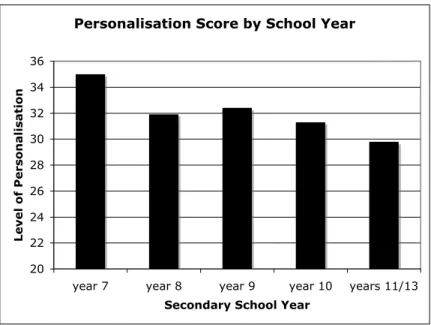
So, is independent learning promoted within the teaching space? The reanalysis of data prepared for this thesis (see Appendix 2) challenges this. Self-report measures across the school years show that learners perceive their learning as less challenging as they move through the school years and they also report less support to develop their sense of autonomy (see Appendix 2, figure 1). Similarly, their perceptions of self-efficacy and their persistence also decline. They also place less value on their own learning as they advance through the school system.
Corpus and her colleagues (2009) also note age-related declines in intrinsic motivation. However, they argue that these deleterious effects can be minimised by a school-wide focus on mastery goals. Such mastery learning is apparent in the UK, where the introduction of modular assessment with opportunities to re-sit modules in national examinations has resulted in improved scores and a dramatic rise in overall pass rates (Smithers, 2011). Here the focus has been to encourage students to repeat work until they master key performance criteria. The effect on schools and teaching has been amplified by the use of these examination results to evaluate schools and create league tables of school performance. It has therefore become strategic for schools to focus on students at the borderline of the league table criteria and ensure that they reach minimum standards.
The data presented here, however, question whether this mastery has been at the expense of student engagement. The decline here is indicative of a learning strategy in schools that does not provide sufficient challenge and does not encourage independent working and the growth of
autonomy. It is indicative of a strategy that lowers students’ self-evaluation of their abilities and performance. It is also indicative of a response by teachers to the perceived pressure to obtain good results on Key Stage tests that leads to strategies that do not promote personalised learning and do not promote independent learning.
In collecting data for these reports a school was observed that identified learners who were performing just above or just below the key criteria and resourced them with extra lessons and extra facilities (including a free laptop) in order that they could achieve on the national tests (Underwood et al., 2010). This illustrates the strategic approach taken by schools to achieve defined baseline criteria for results on national tests.
Indeed, the reanalysis of data conducted for this thesis shows a negative impact of teaching environment variables on academic performance (see Appendix 2). So when the teaching is rated as not promoting autonomy, test scores are higher. When the variables are added to the enhanced regression model they increase the power to predict academic performance (50% of the variance) and the picture that emerges is that schools improve their academic performance with less autonomy and less student focused support. These data provide some support for the suggestion that schools (Corpus et al., 2009) and pupils (Könings et al., 2011) are able to boost performance by limiting autonomy but this comes at the cost of a decline in learner perceptions of the quality of the learning experience.
The learning space
The personal learning space of a student includes cognitive factors such as their approach to learning, motivational factors such as their engagement with learning as well as the facilities that are available to them such as the learning platform. In the research reported for this thesis the personal learning space was captured through a range of techniques including classroom observations, focus groups, photo-elicitation and on-line surveys.
In the learning space it is clear that digital technologies enhance the motivation of learners. For example, in a rural ex-mining village with ongoing industrial decline and relatively low educational achievement and expectation a secondary Deputy Head commented on the unusual respect shown for the ICT facilities and equipment by the pupils. His measure of this was that there had been “no mouse balls nicked”. In a school where resistance to education was high this indicator of involvement
and respect for education is not trivial. Other schools also reported a decrease in unacceptable behaviour when pupils were using ICT equipment (Banyard, et al., 2006).
One reason for this increased motivation and respect comes from the activities that digital technologies afford. For example, a class was observed in an inner London primary school with a challenging catchment of children with 67% receiving free school meals (nationally 17%) and 57% with English as an additional language (nationally 8%). Learners were required to use information from a website and from their observation of science experiments in previous lessons to respond to a worksheet which was displayed on their screens. They were able to attempt a sophisticated task that would have been difficult to achieve using conventional resources (Banyard, et al., 2006). In the UK, secondary education for many children is a process of resistance and subversion (Corrigan, 1979). Some of these activities can have a positive benefit for the learner, so for example, secretly listening to music over the internet made the lesson more enjoyable but did not appear to interfere with the work (Banyard, et al., 2006). This resistance has also come to the fore in studies of learning in virtual space (Twining, 2010).
Across the focus groups a number of pupils identified their data stick as a ‘must have’ tool. Their reasons for this were generally pragmatic in that the stick allowed ease of transfer between home and school, so was great for homework, and file sharing between friends. One Year 9 learner, however, said that he favoured the data stick because “school can’t steal it” – ‘it’ in this case being his data. He could bring material to and from school without it being tracked, thus maintaining his privacy and independence. This made the data stick preferable to the VLE, which had echoes of Big Brother in this young man’s eyes (Banyard, et al., 2006). In these activities the learners are redefining the learning space (Banyard, et al,.) and becoming adept at using the digital toolkit to support both their internal mental space and thinking (Mayer, Dow, & Mayer, 2003)
With regard to the motivational aspects of the learning space, it is recognised that engagement is a problematic variable as there are many definitions and many measures (Appleton, Christenson & Furlong, 2008). Part of the issue is that engagement is commonly considered as having two dimensions, social and academic. Digital technologies provide the facility to boost social engagement though research indicates that this does not have a positive effect on academic engagement (Wise, et al., 2011). The research reported here focused just on academic engagement and coupled it with a measure of the value that learners put on their education.
The reanalysis of data produced for this thesis (Appendix 2) investigates what are the motivational patterns of learners across the school years and what are the perceptions that learners have of their
own learning and the way they are being taught. The measures of the student learning space show that their sense of efficacy and persistence decline during their school careers, indicating a reduction in confidence and a move away from independent learning (see Appendix 2, figure 2). Also, during their school career we observe a decline in the value the children place on their education though this does level out when they start studying for their GCSE examinations in years 10 and 11 (see Appendix 2, figure 3).
The sense of value that learners have for their learning will come from personal factors, from factors in their lives away from school but also from the teaching environment and the school environment. In the reanalysis in Appendix 2 we tested the relationship of this sense of value with the school space and teaching space variables. For both primary and secondary learners the bivariate correlations between value and these other factors are strong. The analyses of the regression models show that we can use the school and teaching space variables to predict the sense of value of primary learners (39% of the variance) and secondary learners (62% of the variance). This shows the inter-relatedness of the school and teaching spaces with the learners’ personal learning space.
Studies of the personal learning space show a conflicting picture of extended possibilities but restricted ambitions. One clear finding is that the learning space is developing a greater overlap with the living space, and this is a place where the learner has greater control.
The living space
The living space is where learning occurs outside of the school and which also impacts on the learning in school. The importance of this living space for learners has further eroded the boundaries between work and play. In the research reported for this thesis the living space was captured through focus groups and on-line surveys.
Learners in 21st century UK have developed new skills to deal with digital technologies, for example
children as young as five years of age have been observed happily working with digital cameras and editing photos to produce their own web pages, while in the secondary sector pupils are producing home movies and composing and recording music (Underwood, Dillon & Twining, 2007). In the research reported here (Banyard & Underwood, 2012) a class of 27 four and five year old children was observed logging on to their laptops and developing new versions of the song ‘Twinkle, twinkle little star’ for a full hour despite having very limited reading and writing skills.
Further, communication has been transformed through the internet giving rise to weblogs, YouTube, Facebook and Twitter. Mobile phones are seen by young people as ‘a vital tool for young people’s
social lives’ (Haste, 2005:2) as is illustrated by the fact that more than half of her national sample texted friends more than five times a day. This behaviour is in line with Dunbar’s (1998) social brain hypothesis concerning the importance of verbal grooming in humans as a means of strengthening bonds through verbal interchange that carries little meaningful content. As Green and Hannon (2007) point out, pupils are connecting, exchanging and creating in new ways; ways which their parents and teachers are certainly less adept and not always comfortable with (Banyard, et al., 2006).
Focus groups with learners at all four Key Stages revealed a snapshot of their digital worlds (Banyard & Underwood, 2008; Underwood, et al., 2008). For example, analyses of card sorts were used to populate visual representations of their digital worlds (see Underwood, et al., 2009a figure 4, see Appendix 5). The figures show how the learner’s digital world develops so that by Key Stage 4 the learner is immersed in a rich technological world. At the centre of this world are the communication facilities and devices which are used as expressions of identity. This rich digital world of the learner outstrips the digital facilities of schools (see Banyard & Underwood, 2008, figure 2) which further blurs the boundaries of the learning spaces.
The focus groups also highlighted a generational divide in the use of digital technologies. For example, one group of Year 2 learners seemed aware that their time with technology offered an avenue to independence, with an opportunity to develop their secret (or independent) lives. There were several comments about sites that their parents or teachers would not know about or maybe understand. The unknowingness of adults seemed to be amusing or embarrassing to them (Underwood, et al., 2009a).
The behaviour of young people in the digital world has created a number of moral panics including the negative impact of violent video games (Anderson & Bushman, 2001), the impact of digital technologies on conduct behaviour (Palmer, 2006), the opportunities for plaigiarism (Underwood & Szabo, 2004), pathological internet use (Niemz, Griffiths & Banyard, 2005) and the emergence of technological addictions (Griffiths, 2013). Opposing this dystopian view is the role that the internet plays for young people in mediating information on sensitive issues (Borzekowski & Rickert, 2001). This confirms research showing the disinhibiting effect of the internet and the increased willingness to seek out information on embarrassing issues on-line when compared with the telephone or face-to-face communication (Joinson & Banyard, 2002; 2003). Furthermore there is the potential for learners to experience a level of individualised learning and self-development at a level unknown to previous generations (Durkin & Barber, 2002; Gee, 2003). For a review see Underwood, Banyard and Davies (2007).
A recurrent metaphor concerns the ‘dark-side’ of the internet which draws on ancient and modern myths about the nature of good and evil. This can be viewed in the context of earlier moral panics about the young (e.g. Corrigan 1979; Cohen, 1973). A key feature for the development of this current panic is a knowledge divide between adults and youth that has developed concerning the use of digital technologies. Digital natives (see below) are able to change the power balance of our society: this threatens the status quo and therefore has created a moral panic (Banyard & Underwood, 2012). Digital technologies are an integral part of learning in the 21st century and, in fact, a major facilitator
for the smooth running of everyday life. For example, communication technologies are at the heart of many social interactions, from the trivial to the life changing (Selwyn & Facer, 2007). One issue that arises from this is whether people have equal access to these key technologies and whether there is a digital divide developing (DfES, 2005). This observation brings us full circle to the discussion of the school space where economic factors were identified as key to achievement in education. Digital technologies provide the opportunity to transcend this divide but also to enhance it.
The boundaries between the spaces
The people occupying the school, teaching and learning spaces have different experiences of digital technologies (Banyard & Underwood, 2008). For school managers, digital technologies offer opportunities for greater control and recording of information. For teachers they offer opportunities for classroom management and for personalising learning. For learners they offer learning tasks that are motivating and also opportunities for subversion. The digital divide between teachers and learners is a reality and matches a similar divide between learners and their parents.
The issue of assessment highlights the permeability of the spaces. The example of A-Level Psychology (see appendix 4) shows how the subject matter of assessment can be driven by the learners. The growth of A-Level Psychology over the last twenty years has been market driven and this has altered the secondary curriculum (Banyard & Duffy, 2014), and this has led to a growth in psychological literacy (Boneau, 1990) in the general population as upwards of 2 million people now hold a qualification in the subject (Banyard & Duffy, 2014). This growth in school psychology courses has inevitably led to the employment of many hundreds of psychologists in schools who then contribute to the general working of the school and have an effect on the core curriculum. In this way the choices of the learners have permeated upwards to influence the teaching and school spaces.
A further issue concerning the role of assessment in learning is whether it can capture the learning that is developed through the use of digital technologies. This is among the issues covered in the next section on the challenges and opportunities for digital technologies in learning.
5. Challenges and opportunities for the use of digital technologies in learning
This section draws together the issues raised by the research and considers them within the structure of the learning model.The school space
The structure of the school learning space is affected by government policy and performance targets. At government level there is concern in the UK about the results from national and international testing, and these results form part of the news agenda about education. One key national measure is performance at GCSE examinations. The UK government has set minimum standard performance targets for all schools (gov.uk, 2013). The data published in 2012 shows that around 200 secondary schools failed to meet these minimum standards, that is some 180,000 learners were in failing schools (Paton, 2013; Department for Education, 2011). The international data from PISA (OECD, 2010) show that the UK is ranked 25th, 28th and 16th in the world for reading, maths and science
respectively. For all three measures this is a poorer ranking than in 2006. These data contribute to the concern about schooling in the UK (Shepherd, 2010). Given the investment in education and digital technologies the challenge for research is to uncover what is happening in schools and explain this relatively poor performance.
There is evidence that learners and schools will act strategically to both maximise scores on standardised tests and also to gain greatest benefit from those scores. For example the impact of a new rule for college admissions in one US state, which gave preference to students who were placed in the top 10% of students in their school, had a profound impact on students’ school selection. The strategic choice was now to select a school with fewer high performing students to ensure being in the top ten percent. As a result there was a noticeable shift of good students to moderately performing schools (Cullen, Long & Reback, 2005). There was also evidence that schools were able to boost scores on standardised tests in the absence of general improvements in knowledge and ability in the subject areas associated with the tests (Cullen & Reback, 2006). Another change that indicates schools are attempting to boost their ranking in the national league tables has been the decrease in the number of students entered for the more academic GCSE examinations and an increase in those entered for vocational NVQs (National Vocational Qualifications) which can carry double and even quadruple weightings for those league tables (Richardson, 2012; Wolf, 2011). The evidence suggests, then, that a key driver for school is the outcome of national tests.
The research reported here that was carried out for Becta over a ten-year programme initially sought to measure the impact of digital technologies on pupil performance in schools (e.g. Banyard, et al., 2006; Banyard, et al., 2011; Underwood & Banyard, 2008). Although the research was able to show that practices of teaching and approaches to learning were changing they were unable to connect these innovations to improved academic performance. One explanation for this lack of a measurable effect centres on the measurement tools that are selected for the purpose. Traditional testing of academic performance is still largely based on techniques and types of learning that are independent of the new technologies. As a consequence they are not able to capture the impact of these technologies and so a lot of learning remains unassessed and unreported (Banyard, 2010).
Formal assessments in the UK are still largely conducted using traditional (i.e. pre-digital technologies) techniques, and focus on traditional (i.e. pre-digital technologies) academic skills. The origin of these techniques in UK education can be traced back through the University of Cambridge Local Examinations Syndicate (UCLES) to 1858 when a group of academics were invited by some Durham schools to develop assessment techniques for their pupils. The lessons were observed in order to capture how the pupils were being taught. Tests were devised to match the teaching and learning that was taking place (Banyard, 2010). The techniques for external examination are largely the same today even though the style of teaching and learning has moved on dramatically.
In many current learning programmes, when learners are doing coursework they are required to create their work digitally using the technology of the computer and the writing style of draft and edit. This in part mirrors their learning. In their examinations however, they are assessed using the technology of the Biro using a writing style that is unique to the assessment process. What validity can we claim for this process? The assessment does not match the learning and does not even relate to anything that they will be required to do when they leave school or university. It is indefensible but endlessly defended (Banyard, 2010). And to make matters worse, the latest reforms have abolished coursework for most subjects including STEM and require assessment by end of course examinations (Banyard, 2014).
The teaching space
Assessment provides a conflict for teachers because it fulfils two functions; first to provide feedback to the student of their progress and secondly to rank them against criteria of achievement. In addition, the results of the tests are used to assess the teacher. The strategic teacher, then, will focus on teaching to the test (Halonen et al., 2003) to the exclusion of tasks that will encourage independent learning (Banyard, 2010).
One of the potential hazards of a personalisation agenda is the possibility of using a style of personalised learning that is synthetic (Fairclough, 2001), for example using the affordances of digital technologies such as mail merge to personalise messages that are produced for a mass audience. In our everyday life we see through this and recognise the personalisation as synthetic and it would be reasonable to assume that learners can also see through this ‘personalised’ learning (Banyard, 2010). This concern about the teaching space stretches beyond the school sector into higher education. Writing about the teaching of psychology in the UK, Gale (1990) argued that
… we produce passive learners, respecters of authority, and students whose primary purpose in learning is negative reinforcement and the removal of anxiety … (1990:483) His solution was to suggest that we create teaching sessions in the style of the primary school classroom. Gale was writing before league tables and targets but the point is still sound as it asks us to focus on encouraging learning through play and discovery. This echoes Vygotsky’s (1978) idea that play is the main vehicle for children to develop their own learning and to develop their capacity for self-regulation.
To balance this negative view, the research reported here found numerous examples of teachers employing strategies that engaged students and developed their autonomy over their learning (see Underwood, et al., 2009a; Underwood, et al., 2009b). For example, on a personal learning and thinking day for Year 7, teams of learners were given a challenge to complete tasks such as ridding the school of litter. The teams researched the issue and created a five-minute PowerPoint to present their ideas in front of a panel of judges. Independent and personalised learning are still seen as important by schools and in the case of the litter example school managers argued that activities like these are important and exciting for learners, because learners get out there and do it for themselves (Underwood, et al., 2009b).
The VLE is a key tool of the teaching space but perhaps it is not the most effective way of promoting independent and personalised learning. The rise of social software (McLoughlin & Lee, 2007) means that learners are able to personalise their learning outside of the structures of their schools and colleges. The answer proposed and enacted by Holah and Davies (2009) is to use the range of opportunities provided by Web 2.0 digital applications. An example of the power of this approach is a community of practice (Wenger, 1998) facilitated by Holah and Davies for teachers of psychology (see Banyard et al., 2011). This approach creates an open system that encourages learners to explore in contrast to a closed system such as a VLE which encourages learners to work with only the given materials.
The living space
An issue about behaviour in the living space concerns digital natives and digital tourists (Prensky, 2001). Prensky argues that
The single biggest problem facing education today is that our Digital Immigrant instructors, who speak an outdated language …, are struggling to teach a population that speaks an entirely new language. (Prensky 2001:2).
The process of labelling a generation as being fundamentally different is not new, for example babyboomers and Generation X (Bennett & Maton, 2010). It is, however, too simplistic to suggest a typology that divides us into digital natives or digital immigrants (Saligan, et al. 2010) and the creation of additional types for example digital settlers (Palfrey & Gasser, 2010) and digital tourists (Toledo, 2007) has not added to the discussion. Moving beyond the issues with rigid typologies however, Prensky’ metaphor directs us to the technologically rich worlds of the young person (their living space) and to consider how this impacts their learning and everyday life. This rich world is evidence in the research presented here (Banyard & Underwood, 2012; Banyard et al., 2011).
One suggestion for the impact of digital technologies on these digital natives has been that they will develop different strategies of thinking and working. For example, bricolage may be strategic or even necessary for using digital technologies effectively (Turkle, 1995). Bricolage ‘‘can be taken to mean ‘trial-and-error,’ learning by poking around, trying this or that until you eventually figure it out” (Papert, 1996, cited in Kolikant, 2010:1384). It can be argued that digital technologies have created a shift in what we consider to be appropriate and effective reasoning from a linear and abstract style to bricolage (Brown, 2000). But if this is the case, where can we find evidence for it?
Some studies (for example, Margaryan, Littlejohn & Vojt, 2011) find no evidence to support suggestions that the current generation of students use very different learning styles, show new forms of literacies or use digital technologies in more sophisticated ways. The research reported for this thesis, however, did find numerous examples of learning activities that were facilitated by digital technologies. Also the recent Ofcom survey (Ofcom, 2014) claims that 12-15 years olds in the UK are developing different communication habits even compared to 16-24 year olds, and they are the most technologically savvy of all the age bands.
The behaviour of young people in the living space is always changing and driving the bottom-up development of new technologies. For example, texting was a biproduct of mobile phone technology but young people discovered it as a means of communicating cheaply and from the first message
being sent in 1992 it developed to the point where 7.4 trillion texts were sent in 2011 (Gayomali, 2012). Currently there appears to be a move away from Facebook especially by the young (Garside, 2013; YouGov, 2014) as new means of communicating become more popular. People find new uses for technologies and make them their own but then move on. Perhaps it is better to describe these technology users as digital nomads rather than digital natives.
The digital nomad metaphor encompasses the democratising nature of digital technologies. Although there are scares about privacy for example with Google (Fioretti, 2014), the manipulation of users such as the Facebook experiment (Booth, 2014) and attempts by, for example, the US Military to flood social media with false identities (Fielding & Cobain, 2011), the digital consumer retains control and can migrate to new areas of the internet. They can create new online communities, comment on things and events, and contribute to this new democratisation by seeing the comments of others (Banyard & Underwood, 2012). We are also witnessing a new relationship with property, so where we used to buy music and books and films we are now able to stream them. They are available to us but we don’t need to own them individually.
Alongside this democratising aspect of digital technologies, however, is potential to reinforce existing structures and power relationships. There are two dangers here, first as Paulo Freire points out technology can be used “to reduce the oppressed to the status of ‘things’.” (Freire, 1973: 133), and secondly by the creation of digital divides between those who have access to the technologies and those who don’t. The research reported here explored aspects of these digital divides (Underwood, et al., 2009b) and this is an important area for future research.
The learning space
What is happening in the learning space? Are we seeing changes in how people learn and how they organise their everyday life? One change that gets general agreement is the effect of digital technologies on motivation. Learners’ engagement with their learning is enhanced by digital technologies (Bolliger, Supanakorn & Boggs, 2010; Higgins, Xioa & Katsipataki, 2012). This was a consistent finding in the research projects reported here and in many other studies. What needs further explanation is the nature of this motivation. It may be, for example, that the use of digital technologies engenders a sense of flow (Csikszentmihalyi, 1997). Beyond the effect on motivation there is less general agreement about the impact of digital technologies on the learning space. There is a debate about the impact of digital technologies on cognitive abilities. The new skills of screen-based activities such as searching, information retrieval and social networking can be argued to bring enhancement or damage (Carr, 2010). The immersion in digital technologies can bring a new
set of competencies but does it also bring a companion set of incompetencies? Is Google, in fact, making us stupid? (Joint, 2011).
The concern about the use of digital technologies is, in part, that learners use them to manipulate information rather than consider and analyse it (Wood, 2003). If we look at the traditional learning and assessment process, however, we see the principal task as being to pass knowledge from a book or lecture notes to the brain and then repeat than knowledge in an essay based examination. There is not a sophisticated learning task. Digital technologies in contrast allow us to facilitate the learning through the widest range of tasks many of them driven by the learner and so encourage the learning by experience proposed by Rousseau (1762).
Furthermore people can use technology to extend themselves in a physical way, most recently for example using exo-skeletons in construction work, (Hodson, 2014) and also to extend their cognitions and sense of self. Digital technologies, and in particular mobile phones allow us to extend ourselves in relation to others (Gergen, 1994). The mobile phone becomes an important extension such that when parted from it we can feel lost or threatened (Dittmar, 1992). Humans appear to be ‘natural born cyborgs’ (Haraway, 1991) who can use technology as if it is part of them. Staying with the mobile phone, it is used to store data such as images, texts and songs along with apps and the connectivity that it affords us. As such it acts as our external hard drive.
The learner can extend their cognitions by using digital technologies. The extended mind thesis (Clark, 2003; Clark & Chalmers, 1998) questions the boundary between the mind and the environment and argues that mind can extend beyond the confines of the human brain. The use of a calculator, for example, couples that device to the thoughts around the calculation being attempted. The extended mind thesis argues that this coupled arrangement can be seen as a cognitive system. The ways that cognition will be extended will depend on the digital technologies that are available. Currently these te