Post Sandy Enhancement Plan
Consolidated Edison Co. of New York
Orange and Rockland Utilities
3
CONTENTS
INTRODUCTION ... 7
EXECUTIVE SUMMARY ... 8
I. FORTIFYING THE STEAM, GAS, AND ELECTRIC SYSTEMS AGAINST FUTURE STORMS ... 20
A. Establishing Common Post-Sandy Design Standards ... 21
i. Designing Substations and Generating Stations to Higher Elevations ... 23
ii. Protecting Underground Electric Distribution Equipment... 25
iii. Protecting Overhead Electric Distribution ... 25
iv. Steam Distribution ... 26
B. Conducting International Benchmarking ... 26
C. Embracing Third-Generation Design ... 27
D. Normalizing Our System ... 28
i. Inspection ... 28
ii. Interim Adjustments Completed by June 30, 2013 ... 30
iii. Medium-Term Normalization Projects Completed by December 2013 ... 31
E. Storm-Hardening Our Underground System ... 32
i. Installing Submersible Equipment in Flood-Prone Areas... 33
ii. Applying Sectionalizing Strategy to Keep More Customers in Service ... 34
F. Storm-Hardening Our Overhead System ... 36
i. Reducing Feeder Segment Size ... 37
ii. Isolating Open Wire Spurs from Feeder Main Runs ... 38
iii. Improving Auto-loop Reliability ... 38
iv. Selective Undergrounding of Overhead Infrastructure ... 40
v. Vegetation Management ... 41
G. Storm-Hardening Substations ... 43
i. Revising Substation Design Standards ... 43
ii. Mitigating the Impact of a Storm Similar to Sandy ... 43
iii. Preparing Substations for More Intense Future Storms ... 44
H. Storm-Hardening Generating Stations ... 46
i. Mitigating the Impact of a Storm Similar to Sandy ... 46
ii. Preparing Our Generating Stations for More Intense Future Storms ... 47
4
i. Combined Heat and Power Systems ... 48
ii. Dispatchable Back-Up Generation ... 48
iii. Emergency Residential Back-Up Generation ... 49
iv. Solar Generation ... 49
J. Storm-Hardening Our Gas System ... 49
i. Installing Valves to Prevent Water Infiltration ... 50
ii. Replacing Cast Iron and Bare Steel in Flood Zones ... 50
iii. Hardening of Low-Pressure Gas Systems within Coastal Flood Zones ... 51
iv. Evaluating Hardening Measures for Gas Communications Networks ... 52
v. Evaluating Hardening Measures for Remote Operated Valves ... 53
vi. Developing New Water Infiltration Mitigation Devices ... 54
vii. Evaluating Hardening Measures for Regulator Stations ... 54
K. Reinforcing Tunnels ... 55
i. Protecting the First Avenue Tunnel from Water Infiltration ... 55
ii. Protecting Tunnel Entrances from Water Infiltration ... 56
L. System-Hardening Operational Communications Systems ... 56
i. CCTN Fiber Loop ... 57
ii. Reinforcement of Antenna Systems ... 57
iii. Long-Term Communications Hardening Projects ... 57
SUMMARY ACTIONS ... 57
II. IMPROVING ESTIMATED TIMES OF RESTORATION AND ENHANCING STORM PLANNING AND RESTORATION PROCESSES ... 62
A. Building on Recent Storm Experiences ... 62
B. Assessing Internal Staffing and Assignments ... 64
C. Improving Mutual Assistance and Contractor Support ... 65
D. Expanding Partnerships in Facilitating Restoration ... 67
E. Managing Resources and Logistics ... 68
F. Updating Our Emergency Preparedness Plans ... 69
i. Electric Emergency Response Plan ... 72
ii. Corporate Coastal Storm Plan ... 72
iii. Identifying Potential for Extreme Events in Our Service Territory ... 73
5
H. Increase Material and Equipment Inventory ... 75
I. Joining Statewide Equipment-Sharing Efforts ... 76
J. Providing More Accurate Estimated Times of Restoration ... 77
i. Accelerating Damage Assessment Using Mobile Technology ... 78
ii. Building the Restoration Work Plan ... 80
iii. Automating ETR Calculation and Work Scheduling ... 80
iv. Forming a Dedicated ETR Storm Team ... 81
v. Re-examining the Role of Smart Meters in Restoration Planning ... 82
SUMMARY ACTIONS ... 82
III. IMPROVING THE FLOW OF INFORMATION TO CUSTOMERS AND OTHER STAKEHOLDERS ... 85
A. Consolidating Information with a Communications Checklist ... 85
B. Strengthening Community Relations ... 86
i. Post-Sandy Outreach ... 86
ii. Ongoing Outreach ... 86
C. Solidifying Municipal Partnerships ... 89
i. Sandy Experience ... 90
ii. New Information Tools ... 91
iii. Increasing Non-Emergency Interactions ... 92
D. Partnering with New York City Agencies... 92
E. Enhancing State Regulatory Relations ... 93
i. New York Public Service Commission ... 93
ii. State Emergency Management Office ... 93
iii. State Commission Recommendations ... 94
F. Improving Customer Communications ... 96
i. Event Notifications ... 96
ii. Blast E-mail Campaigns ... 97
iii. Text Notifications ... 98
iv. Outage Reporting for Residents of Master-Metered Buildings ... 98
v. Mobile Applications ... 99
vi. Additional Call Center Agents ... 100
vii. Meter Reading Information on Customer Central Webpage ... 100
6
ix. Explore Use of City and County Emergency Notification Systems ... 101
G. Improving Customer Interactions During Emergencies ... 102
i. Mutual Assistance Orientation Session ... 102
ii. Field Operations Centers ... 103
iii. Communication Through Wire Guards ... 103
SUMMARY ACTIONS ... 104
7
INTRODUCTION
On October 29, 2012, Superstorm Sandy hit our region. With impacts beyond what forecasters even imagined, Sandy devastated many of our communities, and our own energy systems. The storm brought both flood impacts from a storm surge beyond any historical experience and sustained high winds. Sandy was an unprecedented storm, one that is part of a new weather pattern that is changing the way Con Edison plans for and responds to storms and other natural disasters. While many of our systems performed well, the size and scope of Superstorm Sandy posed a significant challenge to our systems and processes.
Going forward, our storm planning is being driven by these changing weather patterns and by our mission to provide energy to our customers with outstanding reliability and superior service. We have embarked on a long-term plan to make sure that our system is less susceptible to similar storms and more responsive to customer needs. We are doing this in three distinct ways:
• Hardening our systems – making changes that provide greater protection from flooding and make our overhead systems more resistant to high winds and tree damage
• Improving the information we provide to customers – developing more effective processes and investing in new technologies to ensure that we provide more accurate and timely information to officials and our customers
• Strengthening our partnerships – implementing strategies to improve pre-planning and post-storm coordination with public officials, businesses and the media
Our efforts are described in detail in this Post-Sandy Enhancement Plan. We have developed this plan based on careful study of information garnered from our own experiences with storm preparation and response, our benchmarking efforts to learn from other utilities around the world, and — importantly — the input of our customers, governmental agencies and other stakeholders.
The Plan you are about to read provides greater detail on our initiatives, demonstrating a commitment to our customers to improve our ability to withstand and recover from whatever Mother Nature throws our way. We know that the millions of people who live and work in our service areas depend on us. We have committed our resources to provide our customers and communities with an improved
8
EXECUTIVE SUMMARY
In October 2012, Superstorm Sandy tested the resilience of our region, its people, and our systems. Sandy affected our entire service territory, from Staten Island’s Tottenville to Pennsylvania’s Milford. Nearly 1.4 million homes and businesses in our area lost power, including those affected by the nor’easter that struck days later. Sandy caused more than four times as many customer outages as Hurricane Irene, previously the worst storm in Company history.
Two hurricanes – Sandy and Irene – in as many years, and more frequent nor’easters, tornados, and heat waves, suggest a trend that we cannot ignore. We cannot just rebuild. We must rebuild smarter, stronger, and more sustainable systems. We must also develop new technologies to meet our customers’ need for better information.
To prepare for the likelihood of increasingly destructive storms, Con Edison has developed a plan that includes a broad array of measures to improve the resiliency of our energy systems in the face of future storms and other natural disasters. We are working with government and business leaders to enhance and protect our energy infrastructure. We are participating in a collaborative organized by the New York City Office of Long-Term Planning and Sustainability along with environmental organizations, climate scientists, urban planners, and other industry leaders to better understand the drivers for recent weather trends and the potential impacts of climate change on our region.
This plan details our current thinking on how best to safeguard our system and our region from violent weather events. The plan is not just a response to Superstorm Sandy, but to our cumulative experience with the increasing trend of extreme weather. This is part of our efforts to continually improve, a process that is ongoing in our business. For example, we modified our system design to install waterproof equipment in new installations based on the experiences of other coastal utilities during Hurricane Katrina. Our goal continues to be to minimize the hardships that weather events impose on the 10 million people who rely on us. To meet that goal, we are investing in and strengthening our energy systems, in many cases advancing projects that had been previously planned, and in other cases adopting new designs and strategies. We will continue to assess and improve, enhancing our storm response planning and restoration efforts every day, including expanding and diversifying both what and how we communicate with customers and stakeholders.
The plan focuses on three areas:
1. Fortifying the electric, gas, and steam systems against future storms;
2. Improving estimated times of restoration, and enhancing storm planning and restoration processes; and
3. Improving the flow of information to customers and other stakeholders.
To meet our goal of protecting our customers, the region, and our systems from future natural disasters, we have proposed and begun to invest $1 billion over the next four years in our energy systems. Some of these investments will prepare critical equipment and facilities for this year’s hurricane season, while others will strengthen systems incrementally over the next few years. Many of the upgrades will keep our systems more reliable and add flexibility into our operations not only when bad weather strikes, but every day.
9 Our plan is flexible and will continue to be adjusted. Importantly, while we have planned substantial projects, we will continue to evaluate what we’ve accomplished and what additional steps we may need to take. With every action we take, we must balance our infrastructure and storm response needs against customer costs. We are committed to managing our costs, and will prioritize future projects that substantially reduce the risk of damage from severe weather events and/or lead to faster restoration and better information after storms. This is not simply a plan in reaction to Sandy: it is a plan to meet the challenges expected from future storms, rising sea levels, and changes in weather patterns that could emerge as a result of climate change.
Finally, our plan takes into consideration not only our own experiences, but the findings,
recommendations, and input of our customers and a variety of government commissions and inquiries on the local, state, and federal levels. This feedback has focused on the need to improve our projections for customer restoration times and to develop a more collaborative process with local government on information flow and the use of resources. We have therefore placed special emphasis on improving our ability to provide accurate customer-specific estimated times of restoration (ETRs) and on our
communication with local governments and other stakeholders.
In the weeks following Superstorm Sandy the Company compiled a list of 87 action items that appear in this plan at the end of each major section. To date we have completed 28 items, and have plans to finish an additional 18 by the end of September and another 9 by the end of 2013. In the 2014-2016
timeframe, we will complete 21 additional projects that have longer lead times. Eleven of the action items — such as working with our municipal partners to maximize resources during restoration — are continuous in nature; we will continue to work on these “ongoing” action items in parallel with our other projects.
FORTIFYING THE ELECTRIC, GAS AND STEAM SYSTEMS AGAINST FUTURE STORMS
Protecting our systems from extreme weather has long been central to our investment plan. Over the past five years, we’ve spent roughly $600 million to recover from the damage caused by severe storms, including Superstorm Sandy. From work as basic as trimming trees around power lines to investments in sophisticated smart-grid technologies, these measures give our energy systems greater flexibility and reliability. New, state-of-the-art monitoring sensors and remotely operated switches and valves help system operators respond to problems during extreme weather — whether that’s flooding, downed wires, or heat waves.
We have completed substantial storm-hardening work in time for this year’s hurricane season. For example, we have already expedited installation of new smart switches on overhead lines. These switches will reduce the number of homes and businesses that lose power when a tree brings down an electric wire. They do this by automatically disconnecting certain segments of the electric grid that are experiencing problems, ensuring that power flow to other areas is not interrupted while repairs are made.
Additional protections in place in time for this year’s hurricane season include measures for the electric distribution system that will help protect 28,000 customers in Brooklyn in case of powerful storms. Substation flood walls and other measures will protect more than 200,000 customers in Lower
Manhattan that experienced outages during Superstorm Sandy. At our steam generating plants, similar projects will ensure that four of five plants remain online during storms and maintain steam service to
10 customers throughout Midtown Manhattan. Hardening measures at our fifth steam plant, which would be pre-emptively shut down to protect the steam system in Lower Manhattan, will allow that plant to come back online faster following a storm event. Both substations and generating plants will be designed to withstand at least Sandy flood levels, which means that these stations would not be at risk of severe impacts until a storm surge exceeded 14 feet. Furthermore, we have designed the new measures with enough flexibility to be modified should design standards change in the future.
Looking ahead, we will continue to invest in systems that are designed to withstand increasingly severe weather and floods. To fortify and protect our electric, steam, and gas systems, we plan to redesign portions of our energy-delivery systems, install higher and stronger flood barriers, introduce more submersible equipment, raise critical equipment, and selectively bury overhead power lines. We will also install additional switches and related smart-grid technologies to improve the flexibility and
resiliency of our electric system. With underground smart switches and submersible equipment, coastal networks will be restored in 24 hours after they are pre-emptively taken off-line to protect equipment, which translates to services being restored 75 percent faster than the Sandy experience.
Below we highlight the key fortification projects that are detailed in this plan. Redesigning underground networks
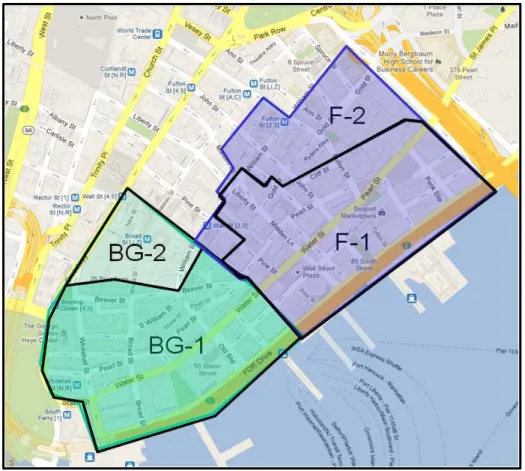
To protect underground networks vulnerable to corrosive salt-water flooding, and minimize power outages, we are reconfiguring our most vulnerable underground networks to form separate flood areas. When the region is threatened by floods, we will be able to pre-emptively isolate areas at risk, while keeping electricity flowing in the surrounding areas. Two of these vulnerable networks — Lower Manhattan’s Fulton and Bowling Green — will be permanently divided into smaller networks. Fifty percent of the customers in these networks that experienced outages during Sandy will be protected from outages in similar storms. Isolation switches will be utilized in other networks to allow us to de-energize high-tension customer equipment that poses a risk to the electric grid if flooded. We have already successfully applied this segmentation strategy in our smart-grid demonstration projects in Queens, and with that experience, will now advance that approach. To the extent that there are customer generation resources able to provide additional power during emergencies, we are ready to explore new configurations that further enhance grid resiliency. The result is a more flexible and dynamic grid that gives operators more control in all conditions, and reduces the likelihood and size of widespread outages.
Flood-proofing vulnerable facilities
We are continuing our work to flood-proof energy equipment, incorporating our experience during Superstorm Sandy as well as the latest flood-zone guidance from FEMA and the National Oceanic and Atmospheric Administration (NOAA). In the aftermath of Hurricane Katrina, we began deploying
submersible equipment, such as network protectors, in flood-prone networks and requiring commercial customers in those areas to install submersible or elevated equipment in their facilities.
Since Superstorm Sandy, we have developed additional flood-proofing measures that will better protect energy systems, including:
• Installing barriers and pumping equipment, or relocating critical equipment to higher elevations in customer buildings
11 • Installing new submersible network equipment, including field testing and deployment of newly
designed high-voltage equipment
• Constructing concrete moat walls and raising flood walls at our generating facilities, major flood-prone substations, and other critical facilities
• Installing remotely operated switches on our network feeders to isolate non-submersible components during a weather event
Investing in more smart-grid technologies
Smart-grid technologies give us tools that make the grid more flexible and responsive during extreme weather, which allows us to minimize power outages. Smart-grid measures such as sectionalizing switches allow system operators to identify and isolate problem areas and rapidly bring power back to the surrounding areas, keeping more customers in service. We will continue to advance the installation of smart-grid technologies, including sectionalizing switches in our underground and overhead electric systems.
Upgrading overhead systems
We will expand our efforts to upgrade our overhead distribution equipment, with the aim of making the system more resilient against damage from high winds and downed trees and limbs. Our expanded effort will include:
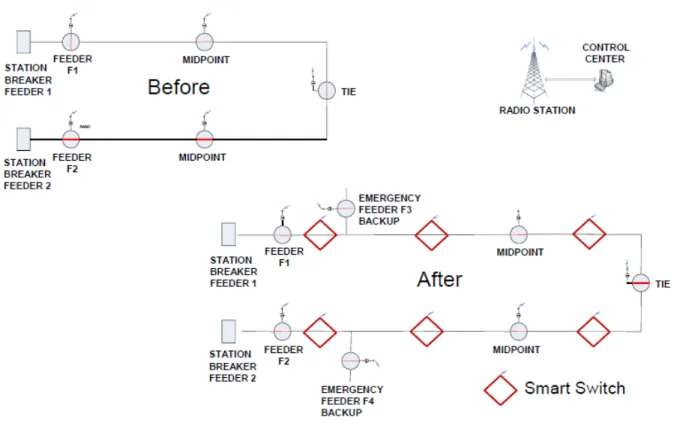
• Separating feeders into sections and installing remotely operated sectionalizing switches to isolate problems, so that damage does not cause outages for all customers on the feeder. • Redesigning feeders so that they can be supplied power from both ends, or potentially from
customer generation sources (e.g., combined heat and power/distributed generation) giving operators more options for restoring service.
• Installing stronger poles able to withstand wind gusts of up to 110 miles per hour in strategic locations.
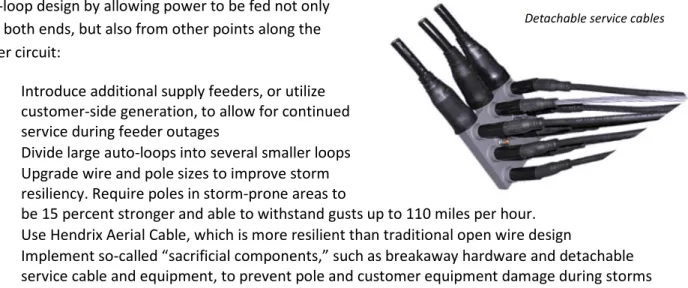
• Redesigning wires to provide better protection from falling tree limbs, and to detach more easily when force on the wire is more extreme to reduce the likelihood of damage to poles and other pole-top equipment.
• Expanding use of overhead cables for greater resistance to damage from high winds and tree branches.
• Creating greater tree clearances around our distribution facilities near substations and critical infrastructure.
These investments will reduce the customer outage impact by 15 to 20 percent and provide the ability to restore affected customers more quickly though additional supply points and remotely operated smart switches.
12 Burying select overhead lines
During the next four years, we anticipate selectively undergrounding portions of the overhead system based on our analysis of outage data and field surveys of tree density. While undergrounding is an appealing option from the perspective of storm resiliency, undergrounding the entire overhead electric distribution system could cost up to $60 billion – which would dramatically increase our electricity rates. As we confront the challenges of extreme weather, however, we are considering burying overhead lines in selected areas with a history of significant damage and outages, including those that serve critical customers. We will focus on areas where tree trimming alone may not be sufficient, and where the added costs can provide significant added value in terms of reducing future restoration costs. To better understand the value of selective undergrounding, we are revisiting Con Edison’s most recent
undergrounding study, completed in 2007, and updating it with the latest information. Protecting the gas systems from flooding
While our gas systems performed well throughout Superstorm Sandy, we are taking steps to protect all our energy systems from future natural disaster. The most critical threat to the gas system is the introduction of water into gas distribution equipment and tunnels, which can damage pipes and lead to service interruptions. Protecting our gas system means customers do not have to endure the long and laborious process of restoring gas, which must be done one customer at a time, ensuring that each and every pilot light is lit in the process. To fortify our gas system, we are accelerating and expanding plans to replace leak-prone cast iron and steel pipe and install valves that prevent water from entering high-pressure service vent lines. Installation of these valves will reduce the likelihood of flooding-related service interruptions for more than 22,000 gas customers.
In addition, we are taking the following steps to protect our gas system:
• Evaluating new methods to prevent damage to the distribution system caused by flooding of customer equipment.
• Considering strategic replacement of low-pressure cast iron distribution mains with high-pressure facilities that are more resistant to water intrusion and less likely to leak. • Developing backup solutions for the communications systems that remotely monitor and
control gas system pressures and flows.
• Employing flood-mitigation strategies around remotely operated gas valves and regulator stations.
Protecting our generating facilities
To protect our steam and electric generating plants from future storm surges, we are installing flood-control measures, including:
• Protective gates or barriers on intake tunnels to prevent water intrusion. • Sealing perimeter walls and doors.
13 • Introducing new mobile flood pumps.
• Backup generators for flood control equipment.
Flood-control measures at the generating plants will ensure that four of our five steam plants remain online throughout a storm surge. These measures will significantly reduce the number of customers for whom steam service is impacted following the storm and will reduce the number of days that service must be restricted while the full system is restored. These investments will minimize customer outages and allow for a faster recovery from flood surges. Our fifth steam plant will be pre-emptively shut down ahead of large storms to protect the steam distribution system in Lower Manhattan from contact with floodwater, but with the measures listed above it will return to service in half the time it previously took.
Reinforcing critical tunnels
Con Edison operates many underground tunnels that contain steam and gas mains as well as electrical feeders. Flooding results in interruption to services in the tunnels, including proactive isolation when water is expected to intrude, which leads to service outages for customers. In order to protect the tunnels against future storm surges and flooding, we will install hardened, reinforced concrete tunnel entrances that are designed to prevent or greatly reduce water intrusion. As an additional line of defense, we will install improved pumping equipment and back-up generators to remove any water that does intrude.
Hardening internal communications infrastructure
An extensive energy communications network allows us to remotely operate key pieces of
equipment. The operational flexibility of our delivery systems requires the uninterrupted use of this communications network. To achieve this goal, we are evaluating ways to shore up our information systems to withstand flooding.
We will focus on expanding the use of water-resistant fiber-optic communications and control systems, rather than copper wires, which will enable us to remotely operate equipment during flooding. Our recent experience, in which fiber-optic equipment provided uninterrupted communications in a flooded substation, validates this approach.
Benchmarking and evaluating new capabilities and technology solutions
Regional leaders are discussing a range of flood-mitigating proposals, from building natural barriers, such as dunes and wetlands, to the use of floodgates, barriers, and artificial islands in New York Harbor. Similarly, we are considering alternative approaches to system design that would reinforce the electric distribution system. For example, we are developing plans to create strategically placed sub-networks that can be isolated from the rest of the grid. This approach – part of our “third-generation” or “3G” solutions – would improve reliability while eliminating the need for additional capacity on our distribution system. We are also looking at how to incorporate customer-side distributed generation resources into our restoration plans, including the role that distributed generation can play in reducing localized customer impacts. Generators provide power to critical customers such as hospitals during outages, and they may also help reduce the need for grid upgrades in strained networks.
14 IMPROVING ESTIMATED TIMES OF RESTORATION AND ENHANCING STORM PLANNING AND
RESTORATION PROCESSES
Our Company has a long and proud history of preparing for and responding to emergencies. Our focus on preparedness and contingency planning is one of the reasons for our strong record of reliability. We rely upon long-standing storm preparation guidelines that we have updated and refined continuously, especially following major storms in our region and other areas. Our comprehensive preparations and pre-emptive actions are based on guidance from our Corporate Coastal Storm Plan, training, drills, and lessons learned from severe weather events like Hurricanes Katrina, Rita, and Irene, as well as severe nor’easters that have impacted our region.
In the spirit of continuous improvement, we are again focused on enhancing our storm readiness, planning, and restoration processes. We are working to find ways to improve our resource availability when storms hit and to assess damage more quickly. We are placing special emphasis on efforts to improve the accuracy of our estimated times of restoration (ETRs). We view our ability to provide timely and accurate information to our customers and stakeholders as equal in importance to our actual service-restoration efforts.
Storm planning
Comprehensive storm planning is key to responding to emergencies. We are building on our recent storm experiences — in Sandy as well as Irene and other large storms — to gain a better understanding of the range of extreme weather conditions that could affect our service area. We are also considering information about potential future impacts resulting from climate change, and in this regard, we are working with the City of New York’s climate adaptation task force. We are revising our emergency plans, and restoration procedures to address the broad range of conditions we may encounter. We have already implemented — and will continue to implement — extensive improvements to our storm-planning processes.
As part of this effort, we are analyzing and updating our employee storm assignments, with an eye toward maximizing the number of available workers with restoration skills. Our mission is clear: to improve our ability to ramp up and focus staffing as storm response demands in order to implement an effective restoration process that reduces outage time. One possibility we are considering is deploying more contractors and personnel to assist with cutting and clearing trees, power lines, and roads, so that personnel trained in overhead electric systems can be fully committed to restoring power.
We are also implementing a new logistics and resource management system, which will allow us to track and manage personnel, equipment, and lodging needs for mutual assistance crews and contractors before the storm and throughout the restoration effort.
Securing external workforce and resources
We will focus on improving our ability to quickly secure workers with overhead lineman skills, through mutual assistance crews (on loan from other utilities) or contractors. The lessons we learned from our experience in Sandy’s aftermath are invaluable in this effort. Securing skilled workers is especially challenging in storms with a broad reach, which can dramatically diminish recruitment opportunities during events that affect large heavily populated areas in our region. This is an industry-wide challenge, and we are actively participating in, and in many instances leading the efforts with mutual assistance
15 groups and the Edison Electric Institute (EEI) Executive Committee to find a more effective process for securing skilled resources quickly, particularly during events with broad regional or national impact. In the meantime, we will be more ambitious in securing mutual assistance and contractors as future storms approach.
Equally crucial to restoration work is securing the critical materials needed to support an increased workforce. We are updating stock levels and contracts for critical materials, fuel, food, and support for staging areas, and lining up personnel to oversee the logistical challenges associated with a significant increase in staffing, as happened when we doubled our workforce during Superstorm Sandy. At the same time, we are working with the other New York State utilities and state regulators to evaluate inventories and better prepare to share materials during major events.
More effective restoration and accurate Estimated Times of Restoration
We understand the importance of providing restoration estimates to our customers as accurately and as promptly as possible, especially when customers may need to plan for prolonged outages. To meet our customers’ need for more accurate and timely restoration information, we are re-examining our restoration planning process from start to finish. Our ETR initiatives are designed to provide customers and stakeholders with an accurate global ETR within 24 hours of a storm’s end; the global ETR specifies the date by which 90% of affected customers’ service will be restored. Within approximately another 24 hours of a storm’s end, we will provide each customer with a more specific individual estimate of the date when service will be restored. We will update customers as such estimates change, with a goal of minimizing the updates (which can occur, for example, when field conditions delay crews) and
maximizing timely delivery of restored service.
To improve our ability to establish detailed estimates for when customers’ power will be restored, we are working to improve the speed and accuracy of our systems for assessing damage. We are
implementing a program to automate and expedite damage assessment through the use of “smart” devices, such as wireless tablets, that will allow us to remotely capture and transmit detailed damage information to our Outage Management System. The devices will be provided to employees and contractors. Our Outage Management System will then integrate damage reports with data from
municipalities, including local police and fire departments. Deploying these devices will not only increase the amount of information gathered, but make the process of assessing damage more efficient.
Beyond data collection, we are also developing a computer model to better forecast the potential scope and magnitude of storm damage, and to add new predictive models that will allow us to develop restoration plans. These tools will allow us to provide customers with more accurate restoration times. We are working to create software applications capable of delivering these results. In fact, we are leading the industry in improving restoration processes and advancing the ability to calculate restoration times. We plan to complete an initial roll out of the new technology in September 2013, but we
recognize that these initial steps are the beginning of a longer-term process to improve and then refine our modeling capabilities. To make the most of these technological advances, the Company has created a team dedicated to specifying and monitoring ETRs, and established a new position in our incident command structure, the ETR Unit Leader. Having a dedicated ETR team will add accountability to the ETR process.
We have already completed a multi-part, full-scale corporate storm drill that enabled us to gain critical insight into, and experience with, our new restoration processes. By participating in these drills, our
16 employees became more familiar with our emergency preparedness plans, and established a practiced baseline for future storms.
Going forward, we will continue to prioritize restoring critical customers, such as schools, hospitals, and nursing homes. In the coming months, we will continue to review and update these priorities based on our experience with Superstorm Sandy as well as local community needs. To that end, we are meeting with community representatives to discuss prioritizing essential customers such as grocery stores, drug stores, gas stations, shopping centers, and shelters. These customers are integral to the livelihoods of communities, and we are working to strengthen the infrastructure that serves them.
Our plans further engage telecommunications companies. Specifically, we envision a telecom liaison on site in our restoration process, and perhaps a reciprocal liaison arrangement for their process, to improve coordination of restoration activities for both our services and the services of the
telecommunication companies, and also to better consider priorities in a joint manner. Moreover, we expect that advance planning would be another benefit of an enhanced relationship and more open dialogue with telecommunication providers, including joint drills and improved emergency planning. We are already participating in a PSC-sponsored effort to facilitate these enhancements.
As summarized below, we will also improve restoration planning and coordination by engaging more fully with local community leaders and key stakeholders from local municipalities and townships. We will work with these leaders to conduct emergency drills more consistently, improve how we share outage information, coordinate opening of closed or blocked roads, and communicate work plans to the community more clearly.
IMPROVING THE FLOW OF INFORMATION TO CUSTOMERS AND OTHER STAKEHOLDERS
In the event of destructive storms and other emergencies, open and ongoing communication is essential for customers, as it is for government at the federal, state, and municipal levels. We are working to enhance all aspects of our information-gathering and communications processes and tools in order to deliver comprehensive, up-to-date information to customers and all stakeholders during emergencies. We are also working with government at all levels to educate officials about our plans and maintain ongoing dialogues on important issues like emergency plans, restoration process improvements, and advances in information-sharing. These interactions will improve the flow of information and strengthen our collective response when an emergency arises.
Strengthening community relations
The Company is leading a broad campaign to educate the public about our post-Sandy initiatives to fortify our infrastructure, equipment, and other systems. We are publicizing our plans through traditional media, social media, elected officials, community groups, Company websites, and at public forums and industry conferences. These efforts began in the immediate aftermath of Hurricane Sandy and are continuing with ongoing initiatives and forward-looking outreach efforts.
Collaborating with government
The Company’s working relationships with government leaders and officials at all levels play a key role during extreme weather and emergencies. We plan to reinforce these relationships and make them more effective by enhancing and expanding the systems we use to collaborate with New York City
17 government, and the municipal governments in Westchester, Orange, Rockland, Sullivan, Pike, Passaic, Sussex, and Bergen counties.
These efforts include the following:
• An enhanced Municipal (Muni) Liaison Program will give public officials access to a new “Muni Dashboard” website. The site will include comprehensive information about our restoration activities during outages. Municipal officials will be able to view information on the number and location of local outages, daily work plans, crew dispatches, and estimated restoration times in their communities. By offering this data to our public sector partners, we will allow our muni liaisons to focus on facilitating critical restorations and responding to other needs within the municipality.
• New feeder maps for individual municipalities allow officials to better visualize where our systems are damaged, and the impact the damage is having at street level. An expanded role for the Company’s muni liaisons will enable them to better answer questions about restoration efforts. These liaisons, who are dispatched to municipal facilities to serve as on-site resources and coordinate Company efforts there, have received additional training and will now remain in communities as long as the municipalities want them there.
• Our municipal partners and liaisons are invited to participate in annual exercises to help them prepare for emergencies. In addition, we will spend at least one day each year with officials from each municipality, sharing information, providing officials with tours of Company facilities, and updating them on our energy systems and emergency-management procedures.
We have conducted extensive community outreach to local elected officials, community boards, and other community groups. We will continue this outreach going forward, and we will be part of the conversation about future infrastructure hardening plans, as well as possible revisions to building codes. We also communicate regularly with state and federal agencies during emergencies, and look for
opportunities for continuous improvement after each major outage. We work closely with officials at the State Emergency Management Office before and after major events, along with the Port Authority, Metropolitan Transit Authority, Department of Energy, Department of Homeland Security, and the U.S. Army Corps of Engineers. We will continue to maintain close contact with state and federal agencies and provide liaisons during emergencies. We also plan to continue to work with our state counterparts to keep them up-to-date on our emergency management plans and protocols, and to get their feedback on our plans.
As we move ahead with our plans, we will make adjustments where appropriate based on additional recommendations from government entities as well as any new laws and regulations. The Company will also continue to work with New York regulators to define storm performance metrics that reflect the on-the-ground realities of the restoration process.
We have begun discussions with every state and local elected official in our service territory about how we can improve the exchange of information and coordination during a significant power outage. That dialogue also encompasses how we can collaborate on long-term and sustainable infrastructure resiliency solutions for the future of our communities and our region.
We are also soliciting the support of various government entities in our efforts to find holistic approaches to disaster response and to define the roles and responsibilities of the public and private sectors. We are stressing the need to find a unified approach to new code and design changes that will
18 protect energy equipment on the customer side. We are also seeking a more streamlined process for quickly obtaining the certifications, permits, and approvals required to conduct our business — not just during emergencies, but every day. And finally, because our storm-hardening investments will ultimately benefit the livelihoods of the people and businesses in our entire region, we are seeking government funding and support for these efforts.
Expanding and enhancing customer information flow
We are developing new ways to connect with customers and deliver timely information, even as we enhance and expand our existing communication tools, such as our website, outbound telephone messages, and e-mail blasts. These changes will allow us to be responsive and open in our
communications and to provide customers with information when and where they need it. Our communication initiatives include the following items, many of which are designed to reach customers in ways that are most convenient to them:
• Apps for iPhone and Android phones, already available for download in the App Store and Google Play, include a “storm mode” to provide customers quick access to functions they need during outages, including the ability to report and check the status of an outage. Proactive alerts will update customers on estimated times of restoration.
• An opt-in text message service will allow customers to notify the Company that they are without power simply by texting “OUT” from a registered device. Text messages from the Company will notify customers of status updates.
• Additional call-center agents will be available via an outside vendor, providing access to a pool of 200 or more agents during emergencies.
• We plan to equip wire guards (workers trained to guard downed wires until repairs can be made) with internet-enabled devices or smart phone applications so they can deliver useful information from the field and access the latest details about restoration progress.
In addition, we have preemptively prepared storm communications, including messages about storm safety, generator safety, customers who rely on life-sustaining electronic equipment, downed wires, ETRs, and meter-reading cancelations, as well as a thank you to our customers for their patience while we restored power. We will send these messages via e-blasts before, during, and after storms.
SUMMARY
Since Superstorm Sandy, we have worked to bring our systems back to normal, to reinforce equipment before the next hurricane season, and to develop innovative strategies to provide timely,
comprehensive information to customers. This summer, reconfigured networks in flood zones will allow us to keep the power flowing to more customers in the event of a storm surge. Consider this measure of our efforts: a storm of Sandy’s magnitude would now result in about one-third fewer customers being affected by service interruptions. Our long-term efforts will further reduce the number of customers who lose power during extreme weather events. Every transformer that we raise or retrofit to be submersible, and each floodgate and barrier we install, will keep our systems resilient and our power flowing. Over the course of the next four years, we will continue to make our energy systems better able to handle the stress of extreme weather conditions. In addition to all of the measures described in our
19 Post Sandy Plan, the Company continues to make investments to upgrade its systems so they are more resistant to extreme heat storms.
We have also made significant advances in the information we provide to customers before, during and after storms. We are leading the utility industry in developing new tools that will allow us to calculate customer-level ETRs faster and more accurately. These tools will allow us to provide customers the detailed information they need to make informed decisions after a storm. In tandem with our work on ETRs, we are making improvements to our restoration process to improve information flow and restore service faster. Taken together, these two efforts will reduce the inconvenience felt by customers during prolonged power outages.
At the same time, we are collaborating with our municipal partners to improve our Muni Liaison Program, aimed at providing more accurate information about our storm response work. Critical to our interactions with local authorities, and ultimately our customers, is our ability to provide realistic and timely information on restoration activities and ETRs. Initial steps for the 2013 storm season include new educational materials on storm hardening and guidance for customers and stakeholders on what to expect in the event of a major storm. Storm-related information and faster, more accurate ETRs will be provided to our customers and stakeholders through new mobile outage applications and text
messages.
Keeping the power flowing in our region is a monumental responsibility that we take very seriously. Making our energy systems more reliable and resilient is a start, but it is not enough. We must join with other public works industry leaders, government agencies, elected officials, businesses, and other stakeholders to find a broad array of solutions to protect our region. We are working to identify solutions that make sense — in terms of costs, the broader social value of our investments, and the ability to keep our communities and economy moving even after extreme weather conditions.
20
I.
FORTIFYING THE STEAM, GAS, AND ELECTRIC SYSTEMS
AGAINST FUTURE STORMS
Our infrastructure systems have faced an unprecedented series of challenges in the past two years. In August 2011, Hurricane Irene caused damage that resulted in over 300,000 electric customer outages, making it the most damaging storm in Company history at that time. A little more than a year later, Superstorm Sandy caused four times the number of electric outages experienced during Irene. Sandy’s storm tide — a rare combination of surging storm waters and high tide — reached above 14 feet, breaking all existing flood records. Though we have seen winds of up to 90 mph in our service territory before, Sandy’s combination of sustained 64 mph winds with 90 mph gusts was unprecedented, bringing down wires, transformers, and utility poles at nearly 30,000 locations on our overhead electric
distribution system. By the time the Sandy restoration process was complete, we had replaced 1,500 utility poles and 1,380 transformers on our overhead system. We had also pumped water out of 2,126 structures, such as transformer vaults and manholes, on our underground network system in New York City (NYC). In the weeks that followed, we made over 20,000 repairs to the underground system on account of flood damage. All told, over the past five years, we’ve spent about $600 million to recover from the damage caused by severe storms, including Superstorm Sandy, Hurricane Irene, two major nor’easters and a tornado.
We have been planning for coastal storms for many years, and have also been working to plan for the potential long-term effects of climate change. Each year we invest in new upgrades to our electric system to make it more resistant to summer heat storms, and refine our long-term plans to accommodate growth in electricity needs on the hottest days. We have also been installing water-resistant underground network equipment since 2007 to reduce the impact of flooding on our electric distribution network. However, taken as a whole, our recent weather experiences demonstrate the need to accelerate our plans and to take further steps to fortify our energy infrastructure. In this section we describe in detail our plans to implement a wide range of storm-hardening projects that will make our energy systems more resilient, enhancing their capability of withstanding extreme weather events. Our plans also include deploying technology — some existing that was planned for deployment over longer periods of time, and some new — that will improve the flexibility and responsiveness of our systems during outage events. Ultimately, these technological upgrades will make our facilities less vulnerable to damage, minimize the impact on customers in areas not directly affected by a storm’s fury, and shorten the duration of outages.
As we move forward with storm-hardening measures, we are committed to maintaining a balance between infrastructure needs and customer cost impacts. To meet that goal, we will prioritize among an array of possible measures and implement first those that most substantially reduce the risk of damage from severe weather events. Our immediate work is aimed at hardening components so that they can withstand a storm similar to Sandy — in terms of the magnitude and location of the experience, but we are aware of the possible threat of even more severe storms with perhaps different impacts due to unpredictable and changing weather patterns. We have therefore built flexibility into our plans. For
21 example, all of our concrete floodwalls being installed have been designed with footings that will allow the walls to be built higher in the future.
A.
Establishing Common Post-Sandy Design Standards
As a coastal utility, Con Edison has historically recognized the need to design its energy systems to protect against storm surges and wind damage. Not only do we serve a coastal area, but many of our facilities are located near water, a vestige of an era when power plant operations required water access. In O&R service territory, freshwater flooding is a major concern in areas close to streams, rivers, and lakes.
We have long had measures in place to protect our system from weather damage. After Hurricane Katrina in 2005, Con Edison began installing submersible underground transformers when replacing transformers in flood-prone areas. Upgrading to submersible equipment prevents damage of critical components by corrosive saltwater. We began requiring new buildings in flood zones to install electrical equipment above the flood risk level outlined in Federal Emergency Management Agency (FEMA) Flood Insurance Rate maps. Our overhead systems have also been built to resist storm damage. Both Con Edison’s and O&R’s overhead systems are designed to National Electrical Safety Code (NESC) Rules, which require that our wires be able to withstand the stress of ice and strong winds. Con Edison substations, generating stations, and other work locations follow the NYC Building Code Section, which requires us to meet American Society of Civil Engineers (ASCE) standards for flood-resistant design and construction.
Despite rigorous adherence to these engineering standards, our designs were not enough to protect against the unprecedented impact of Superstorm Sandy, which has caused us and others in our industry — as well as those in related infrastructure businesses such as communications, transportation,
22 Figure 1: Observed Flooding from Superstorm Sandy in Con Edison Service Area
In terms of engineering, our challenge now is to develop new design standards that will prevent or mitigate damage in a storm similar to Sandy, and to prepare for even more severe storms that are anticipated as a result of changing weather patterns. In the immediate future, our goal is to prevent re-occurrence of the damage we witnessed during Sandy. Our plan will develop over time as we gather data on weather trends and work with government agencies and other stakeholders to refine predictive modeling of future weather patterns and achieve a coordinated level of resiliency across all industries and infrastructures.
In the weeks and months following Superstorm Sandy, the Company’s design approach has been to focus on flood levels experienced during Sandy as a guide for our immediate actions. In parallel, we are collaborating with outside stakeholders and government agencies to begin the longer-term process for a comprehensive approach to more extreme weather risks. We are working with representatives from the NYC Climate Change Adaption Task Force, NYC Building Resiliency Task Force, New York Building
Congress, New York Energy Consumer Council, FEMA, US Army Corps of Engineers, and the International Utility Working Group. We have taken an active role in this dialogue, helping to shape reasonable expectations for the severity of future storm damage, and to develop a comprehensive, holistic
approach to hardening our region’s infrastructure. We expect these efforts to continue for many years, as regulatory standards and building codes evolve over time. The changes to our design standards will also continue to evolve.
23
i. Designing Substations and Generating Stations to Higher Elevations
Each station that flooded during Sandy will be hardened to a new flood-level design, to be implemented immediately. The new design will be based upon the highest of the following elevations, explained below and listed in Table 1:
1. Base Flood Elevation (BFE) + two feet. The BFE is the flood elevation, including wave height, that has a 1% chance of being equaled or exceeded in any given year. The current BFE values in Table 1 below reflect the 2007 FEMA Flood Insurance Rate Maps for facility locations that fall within a special flood hazard area (typically zone AE for NYC).
2. Category 1 Hurricane flood inundation elevation. This value is based on the latest (2010) National Oceanic and Atmospheric Administration (NOAA) Sea, Lake, and Overland Surges from Hurricanes (SLOSH) model for the NYC area, as implemented by the NYC Office of Emergency Management.
3. The maximum elevation of water observed by Con Edison at the facility during Superstorm Sandy on October 29, 2012.
The highest elevation among these three sources will be the minimum height at which critical equipment and structures are designed and installed (see Table 1 below for highlighted results). A higher elevation may be chosen on a project-by-project basis based on factors such as feasibility, individual station needs, economics, and design requirements for higher flood inundation elevations.
24 Table 1: Design Flood Elevations for Sandy-Impacted Generating Stations and Substations
(Expressed in feet in local datum)
Borough Location Station
Local Datum 100-yr Flood (BFE) + 2 feet 2010 SLOSH Cat 1 Sandy 10/29/2012 Actual Water Level
Manhattan E 13th Street M&A 14.1 13.8 14.2 Manhattan East River SS M&A 14.1 13.8 14.1 Manhattan East River Generating Station M&A 14.1 13.8 14.1 Manhattan E 15th Street PURS M&A 14.1 13.8 14.0 Manhattan Trade Center NYC Tunnel Authority 309.3 310.1 307.3’ Manhattan Seaport Manhattan Highway 10.3 9.7 9.6 Manhattan 59Generating Station th Street Manhattan Highway 9.3 9.2 8.9 Manhattan 74Generating Station th Street 74th Street 10.5 8.4 9.3 Manhattan E 36th Street M&A 14.1 13.4 14.0
Manhattan Academy M&A 14.1 13.3 11.3
Manhattan Sherman Creek M&A 14.1 13.3 13.6 Manhattan 60Generating Station th Street Manhattan Highway 9.3 8.4 6.5 Queens
Ravenswood Steam Plant (A-House)
Queens
Borough 10.3 8.2 9.2
S. I. Goethals M&A 13.1 14.6 15.1
S. I. Fresh Kills M&A 13.1 14.5 14.7
Brooklyn Gowanus M&A 14.1 14.7 14.6
Legend:
M&A – Department of Marine and Aviation Datum
SLOSH – Sea, Lake, and Overland Surges from Hurricanes. Model used by NYC Office of Emergency Management.
BFE – Base Flood Elevation as specified on FEMA Flood Insurance Rate Maps
Going forward, we will continue to adjust design standards to incorporate new information that becomes available. For example, new FEMA maps released in late February 2013 identify new areas within NYC that could be impacted by floodwaters. We expect that the changes in these maps will be reflected in the NYC building code within two years. We also expect FEMA to issues further changes or refinements to its maps later this year. The SLOSH maps have also consistently been revised since the 1990s to reflect ever-increasing surge levels.
25 Ultimately, we need to establish a consistent design basis needs for all affected utilities, agencies and other organizations that have a direct impact on the steam and electric infrastructure. Because we cannot wait for these design standards to be established, we are using information from our Sandy experience in the near-term.
ii. Protecting Underground Electric Distribution Equipment
Severe flooding in our underground networks and at our substations causes customer outages. Outages also occur when we preemptively de-energize specific flood-prone networks when severe flooding is predicted, as was the case during Sandy, in order to prevent damage to our equipment and customer equipment, and to protect the public. This action reduces the risk that energized switchgear would come into contact with floodwaters in basements, which would result in even more extensive damage and potentially an even longer restoration process.
The objective of our new design criteria is to reduce the potential damage to our distribution equipment and thus reduce our customers’ outage times. Also, as customers upgrade their own equipment, our efforts will also protect their equipment, and could result in faster restoration if customer equipment is not damaged. To identify areas that would benefit from immediate hardening, we reviewed the 2010 SLOSH maps and layered on further information based on the damage we saw during Sandy. Based on this process, we have developed the following priorities:
• In NYC flood zones 1 and 2, all 120/208 Volt transformers will be replaced with off-the-shelf submersible equivalents.
• We will adapt a new submersible network protector for the 460 Volt services (which generally are used to supply larger buildings) to protect installations in zones 1 and 2 from saltwater damage.
• We will install isolation devices, such as sectionalizing switches, to de-energize specific equipment and sections of networks in flood zones 1 and 2, rather than preemptively taking a whole network out of service.
iii. Protecting Overhead Electric Distribution
Sandy’s winds were not higher than previously seen in our service area; however the storm did cause extensive damage to our overhead systems, primarily because the storm was large and our service area experienced sustained winds for a long period. As a result, we are looking into further hardening and resiliency designs for overhead systems.
Our objective for overhead design criteria is to lower the number of customers served by each segment of primary supply to fewer than 500 for Con Edison and fewer than 250 for O&R. The basic
26 Table 2 – Overhead Segment Statistics
Target # of Customers per Segment Segments Above Target Total Segments Largest Segment Con Edison <500 833 1,562 4,129 customers O&R <250 382 2,677 1,275 customers
We are investigating other changes to our specifications for hardening the overhead system. To date we have issued design standards for stronger equipment poles – capable of withstanding wind gusts of 110 miles per hour – to be used on main runs and/or heavy tree cover areas, as well as for feeders supplying critical customers. We will continue to make changes to our standards for hardening the overhead system.
iv. Steam Distribution
Prior to Sandy, Con Edison had already implemented our Corporate Coastal Storm Plan, which details protective measures to mitigate the impacts of flooding on Con Edison’s steam system. In particular, the Coastal Storm Plan calls for preemptive shut down of our East River Generating Station, which prevents damage to the steam system in Lower Manhattan. Going forward, we will keep in place the procedures for shutting down the flood-prone areas of the steam distribution system in case of a severe storm. We will also add new protections for our steam system; most notably we plan to protect our remote terminal units (RTUs), which are a critical part of our steam system’s Remote Monitoring System. We plan to use a watertight shrink-wrap cover that will enclose and protect the RTU box. The design will include features to allow access to open and close the door of the RTU. Con Edison is currently working with a vendor to determine the feasibility of developing a prototype for testing. Once the prototype is developed, tested, and proven to be watertight, Con Edison will install these covers at locations where RTUs are susceptible to flooding based on historical flood data.
B.
Conducting International Benchmarking
In completing our plans for storm-hardening measures, Con Edison is drawing on all useful resources, including the experience of other utilities through the U.S. and internationally. To that end, we have actively solicited input from colleagues around the globe.
Con Edison is a founding member of the International Utility Working Group (IUWG), a formal working group of electric utility companies that serve dense urban international cities. The IUWG is comprised of
27 representatives from utilities in China, Japan, Australia, France, the United States and the United
Kingdom. Following Superstorm Sandy, we developed a benchmarking survey on the topic of storm hardening and distributed the survey to IUWG members. The survey focused on two areas: hardening designs for transmission and distribution systems and emergency-response plans during storm events. Overall, the common themes identified included selectively undergrounding portions of the overhead system, raising critical equipment, and installing floodgates. The majority of the best practices identified by members are either currently installed on the Company’s systems or incorporated in its plans for future storm-hardening measures. There is one temporary flood-protection measure identified by UK companies, the Geodesign Flood Barrier, that the Company is now evaluating for use at its facilities that are prone to flooding. The barrier is a steel frame with a waterproof barrier that is adjustable in height and length and can be installed quickly prior to an anticipated flood event. The barrier can then be removed and stored for use in future incidents.
Additionally, Con Edison’s 3G Group, which specializes in third generation or “3G” electrical engineering and design, reached out to industry representatives from the Netherlands, a country known for its flood prevention and dispersion expertise, to learn about the industry’s measures for protecting its electric system. We spoke with Alliander, a Dutch utility company, and Deltares, an independent research institute co-funded by the public and private sectors. We learned that the hallmark of Dutch infrastructure protection is the “defense in depth” approach, which calls for multiple layers of protection that provide redundancy in the event that one or more of the measures fails. We are implementing this defense-in-depth approach at our East River Steam Generating Station on East 14th Street in Manhattan.
Our information exchange with Dutch industry leaders also broadened our focus to include long-term resiliency solutions that protect not just our energy systems, but the region’s infrastructure as a whole. The benchmarking discussions helped us to understand that the Netherlands’ expansive dike system, originally designed to protect inland areas from coastal flooding, inherently protects the electric system and eliminates the need for flood-protection technology designed specifically for the electric system. In our conversations with representatives of other infrastructure-based industries, we are exploring possibilities for large-scale regional storm-hardening systems that protect multiple layers of infrastructure.
C.
Embracing Third-Generation Design
Con Edison’s Regional Engineering department and 3G Group have developed an innovative sub-network design to reduce the impact of storm damage on its electric system. In a sub-sub-network design, a large network is split into sub-sections that can operate separately if needed – for example, if part of the network is flooded. The new design will increase operational flexibility and reduce customer outages throughout the distribution network in the event of a storm response or a heat wave.
We first piloted this design in our Flushing network in Queens, installing dozens of sectionalizing
28 would lead to broader network outages. The sub-network concept will next be applied to the Bowling Green and Fulton networks in Lower Manhattan. This concept is explained more fully below in the section on Underground System Storm Hardening.
D.
Normalizing Our System
After a storm we work around the clock to restore service to all customers that can safely re-connect to our distribution systems. During this process, we may implement temporary solutions, such as a mobile generator, to expedite restoration. While these solutions are fast and safe, they do not address the underlying damage that caused the system interruption.
System normalization is the process of inspecting damaged equipment, making repairs or replacements, and removing temporary solutions so the system can return to pre-storm operating status. All high-priority defects, temporary repairs, and reliability issues on the electric, gas and steam systems were inspected and repaired prior to June 1, 2013. Repairs that require equipment to be at lower capacity or offline are scheduled to take place throughout 2013 at times when the system can support the required outages. Lower-priority repairs will be placed into a work queue and scheduled along with other routine work.
Wherever possible, the Company is incorporating hardening solutions for future storms into the repair process, or deferring permanent repairs until a stronger solution is available. Some examples of this cross-cutting work include raising control panels during a 345 kV transformer replacement, replacing a failed transformer with a submersible design, and relocating emergency diesel generators to higher elevations. Additionally, at substations and generating stations where future installation of flood barriers and gates will protect equipment inside the facility’s perimeter, we replaced damaged equipment with an identical model, rather than an upgraded submersible model. This strategic approach to system normalization eliminates potential redundant work and minimizes costs for our customers.
i. Inspection
Electric Distribution
Immediately after Superstorm Sandy, we developed a detailed inspection program to ensure the electric distribution system is restored to pre-storm conditions before June 1, 2013, when our high-demand summer season starts. To meet this goal, we completed an assessment of the overhead and
underground distribution systems and made the necessary repairs in advance of the summer. The program is divided into five specific, separate inspection regimens as follows:
• Underground network transformers and protectors • Underground structures (manholes and service boxes)
• Flush of flood zone vaults (that contain submersible equipment) • Rapid assessments of overhead feeders
29
Substations
Restoration after Superstorm Sandy required a full inspection of the substations that were flooded during the storm tide. Based on the station inspections, we developed a detailed tracking matrix designed to return the system to its pre-Sandy operating conditions. In addition to making a number of
smaller repairs, we replaced two major pieces of equipment that could not be salvaged after suffering damage in the storm: in February, we completed replacement of the Gowanus phase angle regulator (PAR) R2, and in April we completed replacement of East 13th Street transformer 13, shown at left. Our electric transmission and substation facilities are all now operating within their respective design bases.
Steam Generating Stations
The East River, 59th Street, and 74th Street
Complex steam generating facilities and the steam distribution system incurred significant damage during the storm. We conducted assessments of each of the facilities to determine the extent of damage and identify required repairs. We then developed a detailed tracking matrix to drive the restoration process.
Our assessments of the generating stations are nearly complete, except for the following facilities, which can only be properly assessed after they are subject to another outage:
• East River dock and internals of the stacks
• 59th Street’s Pier 98 Dock Heat Trace System and the transformer FC-1 disconnect switch • 74th Street and 60th Street stack internals
Steam Distribution
After Sandy, we performed visual inspections of all aspects of the steam distribution system — including subsurface structures and customer locations — that were affected by flooding. Con Edison is in the process of repairing or replacing four customer meter stations and two telemetric stations.
On January 6, 2013, the final steam plant affected by the storm, the Brooklyn Navy Yard Cogeneration Plant, was returned to service. Shortly afterwards, metallic debris (iron oxide) was found in strainers at some steam traps located in our distribution system in Lower Manhattan. The traps are intended to remove such debris from the distribution system. Our steam distribution technicians performed
30 additional inspections in the areas where the debris was found and then further cleaned the nearby steam mains. In all, by the end of April 2013, we had completed 179 inspections for debris. The steam system has now returned to normal operations.
Gas System
Based on our assessments of the gas system, we determined that Sandy caused flood-related damage (salt water infiltration in the valve controls) at two remote-operated valve (ROV) locations in
Manhattan. Both recorded high-water-level alarms during the storm. One ROV malfunctioned during a regular monthly test in December 2012 and was subsequently repaired. Inspection, design and repairs for the second ROV are currently being coordinated with the Transco pipeline upgrades for the 134th Street Gate Station, which are scheduled to occur between May and October of 2013.
ii. Interim Adjustments Completed by June 30, 2013
Electric Distribution
The following critical repairs and upgrades to the electric distribution system were completed by June 1: • Underground network transformers and protectors: 627 repairs
• Underground structures (manholes & service boxes): 19,780 repairs
• Flush of flood zone vaults (transformer manholes and submersible vaults): 2,126 structures to flush
• Rapid assessments of overhead feeders: 959 repairs
• Overhead system pole by pole inspection for specification compliance: 961 feeders to inspect
Steam Operations
The following critical repairs and upgrades to the steam distribution system will be completed by June 30:
• Docks and facilities: Restoration of plant docks and facilities includes the removal of debris and silt from plant intakes and outflows and distribution trap assemblies; repairing damaged doors, gates and moats; replacing tools, equipment, meters and insulation; environmental cleanup; and waste removal.
• Security: Repair of generating stations guar