Dissertations (2009 -) Dissertations, Theses, and Professional Projects
Bioaugmentation and Correlating Anaerobic
Digester Microbial Community to Process
Function
Kaushik Venkiteshwaran Marquette University
Recommended Citation
Venkiteshwaran, Kaushik, "Bioaugmentation and Correlating Anaerobic Digester Microbial Community to Process Function" (2016).
Dissertations (2009 -).Paper 661.
BIOAUGMENTATION AND CORRELATING ANAEROBIC
DIGESTER MICROBIAL COMMUNITY TO PROCESS
FUNCTION
by
Kaushik Venkiteshwaran
A Dissertation Submitted to the Faculty of the Graduate School,
Marquette University, in Partial Fulfillment of the Requirements
for the Degree of Doctor of Philosophy
Milwaukee, Wisconsin
August 2016
Kaushik Venkiteshwaran Marquette University, 2016
This dissertation describes two research projects on anaerobic digestion (AD) that investigated the relationship between microbial community structure and digester function. Both archaeal and bacterial communities were characterized using high-throughput (Illumina) sequencing technology with universal 16S rRNA gene primers.
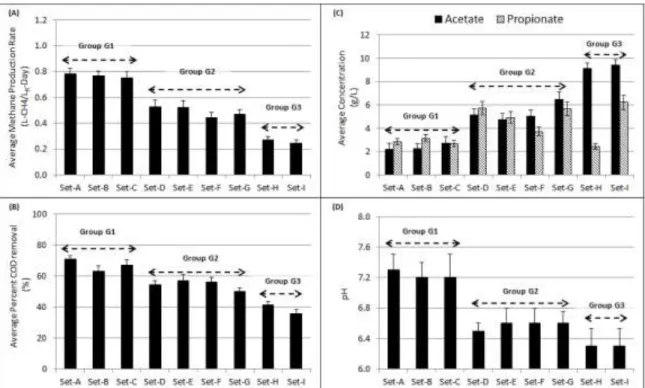
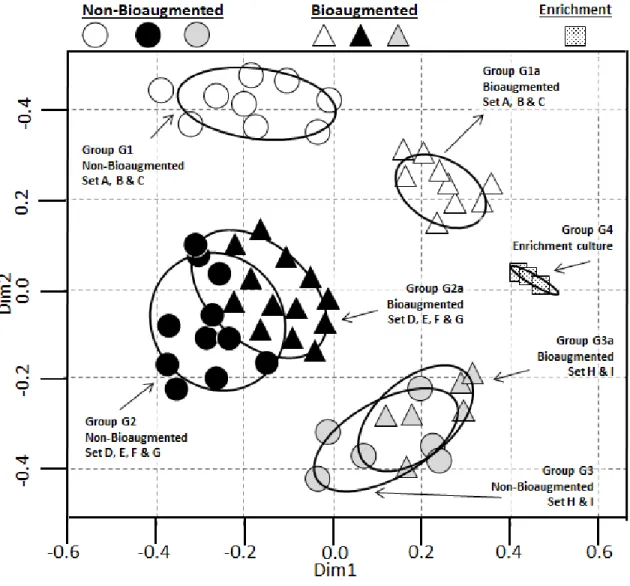
In the first project, bioaugmentation using a methanogenic, aerotolerant propionate enrichment culture was investigated as a possible method to increase digester methane production. Nine anaerobic digesters, seeded with different biomass, were operated identically and their quasi steady state function was compared. Before bioaugmentation, different seed biomass resulted in different quasi steady state function, with digesters clustering into high, medium or low methane (CH4) production groups. High CH4 production correlated with neutral pH and high Methanosarcina abundance, whereas low CH4 production correlated to low pH and high Methanobacterium and DHVEG-6 family abundance. After bioaugmentation, CH4 production from the high CH4 -producing digesters transiently increased by 11±3% relative to non-bioaugmented controls (p <0.05, n=3), whereas no functional changes were observed for medium and low CH4 producing digesters. The CH4 production increase after bioaugmentation was correlated to increased relative abundance of Methanosaeta and Methanospirillum originating from the bioaugment culture. In conclusion, different anaerobic digester seed biomass can result in different quasi steady state function. The bioaugmentation employed can result in a period of increased methane production.
In the second project, a quantitative structure activity relationship (QSAR) between anaerobic microorganism relative abundance values and digester methane production rate was developed using 150 lab-scale anaerobic digesters seeded with 50 biomass samples obtained from 49 US states. Although all digesters were operated identically for a minimum of 5 retention cycles, their quasi steady-state performance varied significantly, with the average daily methane production rate ranging from 0.09±0.004 to 0.98±0.05 L-CH4/LR-day (average ± standard deviation). Analysis of over 4.1 million-sequence reads revealed approximately 1300 operation taxonomical units (OTUs) at the genus level across all digesters, with each digester having 158±27 OTUs (mean ± standard deviation). Using Spearman’s rank correlation, 10 OTUs, which included one archaeal OTU, were found to correlate significantly to digester methane production rate. The relative abundance values of the 10 OTUs were used as descriptors to develop a multiple linear regression (MLR) equation, with good statistical prediction of the digester methane production rates. The results are encouraging and provide an initial step for further research to develop more robust QSAR models to predict the function of anaerobic and other bioprocesses using microbial community descriptors.
ACKNOWLEDGEMENTS
Kaushik Venkiteshwaran
I owe my deepest gratitude to my research advisor Dr. Daniel Zitomer for giving me an excellent opportunity to pursue my doctoral studies. My graduate experience has been one that I will cherish forever. I am greatly thankful for his guidance, care, patience, and providing me with an excellent atmosphere for doing research. He offered me a full-time research assistantship throughout my doctoral program that allowed me to focus on my research and not be concerned about my finance. His mentorship was a key in providing a well-rounded experience consistent with my long-term career goals. He encouraged me to not only grow as a scientist but also an independent thinker. I am confident that these professional qualities will help me in my future success. To my committee – Dr. Krassimira Hristova, Dr. James Maki, and Dr. Michael Switzenbaum– I thank you for your insights and willingness to participate in this project.
I thank Mike Dollhopf, (Lab Manager, Water Quality Center, Marquette University) for assisting me in lab experimental set-up, and keeping track of lab supplies which helped a lot in completing the research tasks on time without any interruptions. I found him a great person on professional and personal level.
I am also thankful to researchers Dr. Jean-Philippe Steyer, Dr. Kim Milferdest, Dr. Jerome Hamelin from the French National Agricultural Institute (INRA), Narbonne France, and Dr. Michael Johnson, Dr. Masanori Fujimoto from Marquette University for valuable inputs and expertise in the areas of bioinformatics and statistical analysis which were an essential part of this dissertation.
I would also like to thank the undergraduate research assistants Michael Syverson, Andrew Suesse and Michael Billings for their great contribution in assisting, monitoring and operating of my research experiments. Without them, it would have been a challenge for me to collect the huge amounts of data required for this dissertation.
I feel so fortunate to associate myself with all my past and present colleagues: Dr. Vaibhav Tale, Dr. Benjamin Bocher, Dr. Navaneethan Navaratnam, Dr. Ujjwal Bhattad, Dr. Rachel Morris, Dr. Daniel Carey, Dr. Matthew Seib, Dr. Prince Mathai, Dr. Zhongzhe Liu, Steve Graziano, Yiran Tong, Emily Gorsalitz, Carlan Johnson, Joseph Heffron, Nick Benn, Anna Avila, Saba Seyedi, Lee Kimbell and Dylan Friss. Thanks to all of them for being great friends and work colleagues.
I am so grateful to all donors of Matthews, Joseph A. and Dorothy C. Rutkauskas, Arthur J.Schmitt and Albert and Cecil Lue-Hing Engineering Graduate Scholarships for supporting my education and research. I would like to express my special thanks to Marquette University for giving me a great platform for excellence, leadership and service.
Last but not least, thank you as well to all my friends and family who have offered support, interest, and encouragement along the way.
TABLE OF CONTENTS
ACKNOWLEDGEMENTS ... i
LIST OF TABLES ... v
LIST OF FIGURES ... vi
1 Introduction ... 1
2. Relating Anaerobic Digestion Microbial Community and Process Function ... 5
2.1. Introduction ... 5
2.2 Phases in AD Process... 6
2.2.1 Hydrolysis... 6
2.2.2 Acidogenesis and Syntrophic Acetogenesis ... 7
2.2.3 Methanogenesis ... 9
2.2.4 Syntrophic Acetate-Oxidizing Bacteria ... 11
2.3 Environmental Parameters Affecting Digester Microbial Community ... 12
2.4 Relating Microbial Community Structure to Digester Stability and Function…. ... 14
2.4.1 Qualitative Structure-Function Relationships ... 14
2.4.2 Quantitative Structure Function Relation ... 16
2.4.3 Bioaugmentation as a Tool to Study Structure-Function Relationships….. ... 19
2.5 Conclusion ... 22
3. Anaerobic Digester Bioaugmentation Influences Quasi Steady State Performance and Microbial Community ... 34
3.1 Introduction ... 34
3.2 Material and Methods ... 36
3.2.1 Anaerobic Digesters... 36
3.2.2 Enrichment Culture for Bioaugmentation ... 37
3.2.3 Basal Nutrient Media... 38
3.2.4 Analytical Methods ... 38
3.2.5 Microbial Community Analysis ... 39
3.3 Results and Discussion ... 40
3.3.1 Non-Bioaugmented Digesters Grouped Based on Function... 40
3.3.2 Non-Bioaugmented Digesters Grouped Based on Archaeal Community… ... 44
3.3.3 Non-Bioaugmented Digesters Grouped Based on Bacterial
Community… ... 48
3.3.4 Enrichment Culture ... 51
3.3.5 Bioaugmentation, Digester Function and Microbial Community Changes...…….56
3.4 Conclusion ... 60
4. Predicting Anaerobic Digester Methane Production Using Microbial Community Descriptors ... 66
4.1 Introduction ... 66
4.2 Materials And Methods ... 68
4.2.1 Inocula ... 68
4.2.2 Laboratory Digesters ... 69
4.2.3 Microbial Community Analyses ... 70
4.2.4 Initial Screening to Select Significant OTUs ... 72
4.2.5 Linear Model Validation and QSAR Equation ... 72
4.2.6 Analytical Methods ... 73
4.3 Results and Discussion ... 74
4.3.1 Digester Function... 74
4.3.2 Microbial Community Analysis ... 76
4.3.3 Archaeal Community ... 79
4.3.4 Bacterial Community ... 80
4.3.5 Initial Screening and QSAR… ... 83
4.4 Conclusions ... 95
5. General Conclusions and Recommendations ...101
6. Appendices ...106
LIST OF TABLES
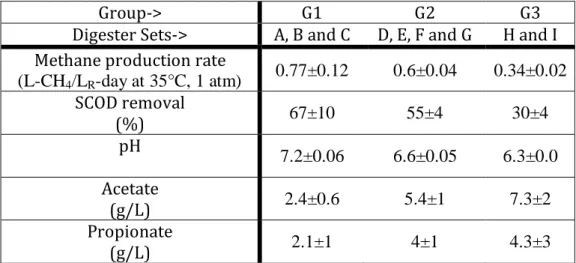
Table 1: Performance parameters of digester groups. ... 43
Table 2: Highly significant OTUs determined by initial screening. ... 84
Table 3: R square values from the cross correlation of the 10 highly significant OTUs. ... 87
Table 4: Test and training groups for the 10 validation tests. ... 88
Table 5: Summary table of the 10 validation tests with the results of the four
validation criteria tested... 89
Table 6: Highly significant OTU results. ... 92
LIST OF FIGURES
Figure 1: Difference between methanogen community structures in the augmented
and biomass samples. ... 21
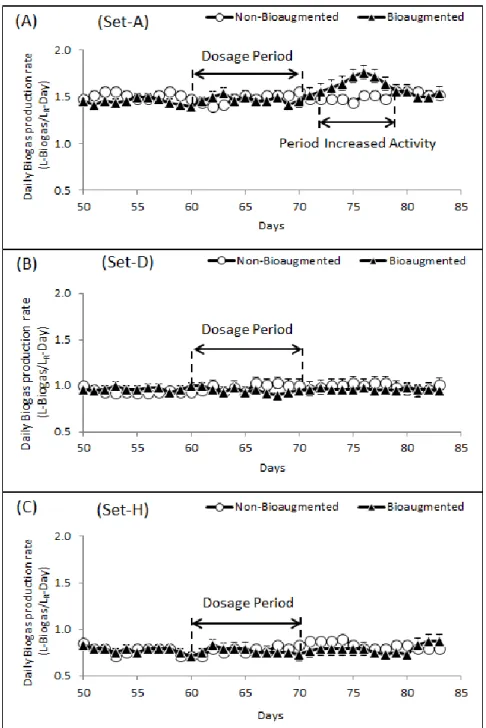
Figure 2: Daily biogas production rate observed from non-bioaugmented and bioaugmented digesters. ... 41
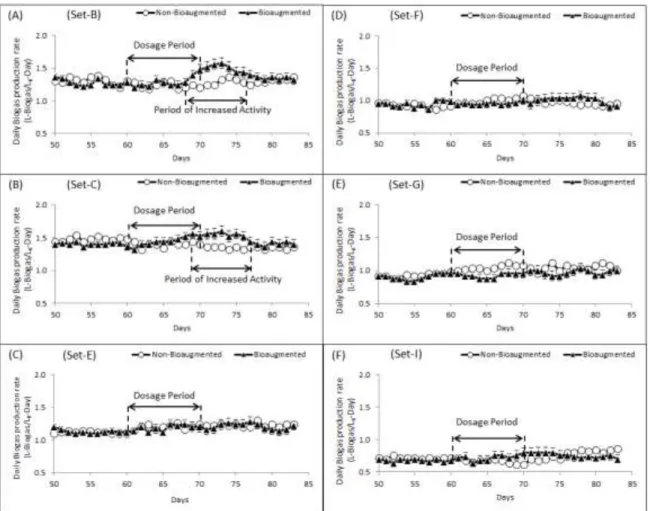
Figure 3: Daily biogas production rate for non-bioaugmented and bioaugmented digester ... 42
Figure 4: Digester group functional parameters. ... 44
Figure 5: Dual hierarchal clustering of the archaeal communities ... 46
Figure 6: Archaeal sequence nMDS scaling plot. ... 47
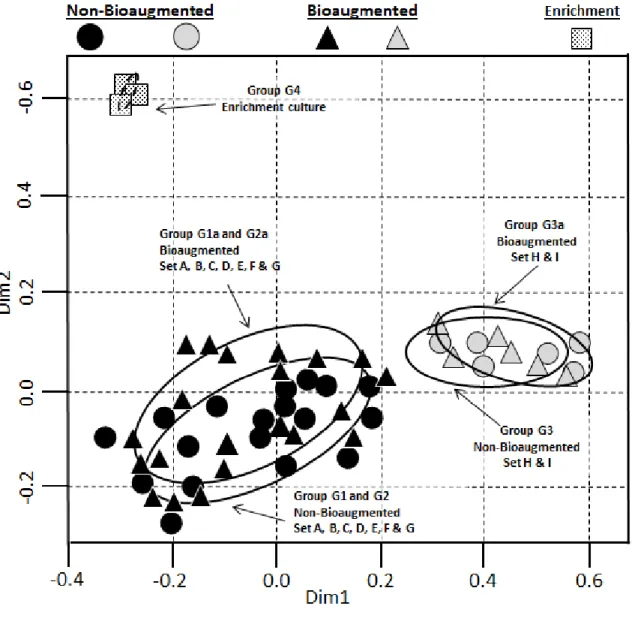
Figure 7: Nonmetric multidimensional scaling or nMDS of the bacterial sequence data. ... 49
Figure 8: Dual hierarchal clustering of the bacterial communities ... 50
Figure 9: Bacterial community composition of the enrichment culture based on percent relative abundance ... 53
Figure 10: Archaeal community composition of the enrichment culture based on percent relative abundance. ... 54
Figure 11: Cumulative CH4 produced between day 60-80. ... 57
Figure 12: Dual hierarchal clustering of the top seven archaeal OTUs observed in the enrichment culture and G1 digesters ... 58
Figure 13: Digester average daily biogas production rates... 75
Figure 14: Average daily methane production versus effluent parameters. ... 77
Figure 15: Average daily methane production versus individual VFA concentrations. ... 78
Figure 16: Percent relative abundance of dominant methanogens versus digester pH. ... 80
Figure 17: Average methane production (L-CH4/LR-day) versus microbial
community descriptors. ... 82
Figure 18: Microbial community principal component analysis (PCOA). ... 86
Figure 19: Summary plots of the 10 validation tests. ... 90
1
Introduction
Anaerobic digestion (AD) is a biological process that converts organic compounds in an oxygen free environment to methane (Pullammanappallil et al. 1998). Anaerobic digestion is an attractive method of wastewater treatment as it provides several advantages over the more widely used aerobic treatment processes. These advantages include low operational cost due to lack of aeration requirements and low sludge production as well as energy production from methane (Suryawanshi et al. 2010).
As AD is increasingly being implemented, microbiologist and engineers have been making great efforts to maximize stable and reliable digester operation. To a large extent, both the efficiency and stability of a specific digester depends on the microbial communities and the microbe activities within that digester. Digester microbial communities can be affected by a number of environmental factors, such as temperature, pH, availability and digestibility of substrates, organic loading and types of feedstocks. A better understanding of the composition and dynamics of microbial communities within anaerobic digesters is needed to improve efficiency and stability of AD processes. As a result, this dissertation describes two research projects to determine the relationship between microbial communities and digester function. For this, high-throughput Illumina sequencing technology with universal 16S rRNA gene primers was employed to characterize the microbial communities.
In the first project, the effects of adding a methanogenic, propionate degrading enrichment culture as a bioaugment to a quasi-steady state anaerobic digester was investigated. Bioaugmentation, which is defined as adding specialized or a mixed community of microorganisms to a system to improve process function (Herrero &
Stuckey 2014), has been demonstrated to be beneficial in reducing the impacts of toxic inhibitory substances which are either present in the feedstock or produced biologically in the digester (Schauer-Gimenez et al. 2010; Tale et al. 2011; Herrero & Stuckey 2014; Bocher et al. 2015; Tale et al. 2015). Nine groups of anaerobic digesters were seeded with different starting biomass to obtain different microbial communities and operated identically at an organic loading rate (OLR) of 3 g COD/L-day and 10 days hydraulic retention time (HRT). Upon attaining quasi-steady state, the digesters were then bioaugmented with the enrichment culture that previously had been shown to improve digester recovery after organic overload (Tale et al. 2011; Tale et al. 2015). Both digester functional and microbial community parameters were monitored to understand how bioaugmentation changed the activity and composition of the digester microbial community structure.
The objective of the second study was to investigate whether a quantitative model that uses microbial community structure descriptors could be developed to predict digester function, such as methane production rate. Current anaerobic digestion mathematical models, such as the Anaerobic Digestion Model 1 (ADM1), do not include microbial diversity information and they model the complex microbial interactions as trophic groups that each contain only one taxon with defined kinetic constants (Venkiteshwaran et. al, 2016). However, microbial communities actually differ greatly from one digester to the next and trophic groups often contain multiple, competing taxa having different substrate affinities and specific growth rates. In order to improve current models, it is essential to deepen our understanding of how microbial community structure relates to process function, such as methane generation.
Up to 50 distinct biomass samples from 49 US states were used to seed triplicate lab-scale digesters operated under identical, controlled conditions. The digesters were allowed to acclimate for a minimum of 5 hydraulic retention cycles before sampling, and subsequently the microbial community data were correlated to the digester quasi-steady state methane production rate using a multiple linear regression (MLR) model. The model was determined to have good predictability and results encourage future efforts to include microbial community data in ADM1 to improve modeling.
Following the general introduction in Chapter 1, Chapter 2 contains a literature review that describes AD microbiology along with topics regarding bioaugmentation of anaerobic digesters and qualitative/quantitative relationship between microbial communities and digester function. Subsequently, Chapters 3 and 4 describe project 1 and 2, respectively. Finally, Chapter 5 contains general conclusions and recommendations for future work.
References
Bocher, B.T.W., K. Cherukuri, J.S. Maki, M. Johnson, and D.H. Zitomer. 2015. “Relating Methanogen Community Structure and Anaerobic Digester Function.” Water Research 70. Elsevier Ltd: 425–35. doi:10.1016/j.watres.2014.12.018. Herrero, M., and D.C. Stuckey. 2014. “Bioaugmentation and Its Application in
Wastewater Treatment: A Review.” Chemosphere 44. Elsevier Ltd. doi:10.1016/j.chemosphere.2014.10.033.
Pullammanappallil, P.C., S.A. Svoronos, D.P. Chynoweth, and G. Lyberatos. 1998. “Expert System for Control of Anaerobic Digesters.” Biotechnology and
Bioengineering 58 (1): 13–22. http://www.ncbi.nlm.nih.gov/pubmed/10099257. Schauer-Gimenez, A. E., D.H. Zitomer, J. S. Maki, and C.A. Struble. 2010.
“Bioaugmentation for Improved Recovery of Anaerobic Digesters after Toxicant Exposure.” Water Research 44 (12). Elsevier Ltd: 3555–64.
Suryawanshi, P.C., A B. Chaudhari, and R.M. Kothari. 2010. “Mesophilic Anaerobic Digestion: First Option for Waste Treatment in Tropical Regions.” Critical Reviews in Biotechnology 30 (4). Informa Healthcare New York: 259–82.
doi:10.3109/07388551.2010.487047.
Tale, V.P., J.S. Maki, C.A. Struble, and D.H. Zitomer. 2011. “Methanogen Community Structure-Activity Relationship and Bioaugmentation of Overloaded Anaerobic Digesters.” Water Research 45 (16): 5249–56. doi:10.1016/j.watres.2011.07.035. Tale, V.P., J.S. Maki, and D.H. Zitomer. 2015. “Bioaugmentation of Overloaded
Anaerobic Digesters Restores Function and Archaeal Community.” Water Research 70. Elsevier Ltd: 138–47. doi:10.1016/j.watres.2014.11.037.
2.
Relating Anaerobic Digestion Microbial Community and
Process Function
This chapter has been published in the journal Microbiological Insights as:
Venkiteshwaran, K., B. Bocher, J. Maki, and D. Zitomer. 2016. Relating Anaerobic Digestion Microbial Community and Process Function. Microbiology Insights, 8(Suppl. 2), pp.37–44.
2.1.
Introduction
Anaerobic digestion (AD) is a microbial process that converts organic matter to biogas containing CH4 and CO2 in an anaerobic environment (Pullammanappallil et al. 1998). Although the technology has been employed for decades, it has received renewed attention as it provides a more sustainable alternative to waste treatment over energy intensive methods of the past (Angenent et al. 2004; Lettinga 2010). Compared to traditional aerobic treatment, AD has several potential advantages such as lower operational costs from lack of aeration requirements, energy production from biomethane, significantly less biomass production which reduces handling and disposal costs and ability to degrade certain pollutants which cannot be aerobically removed (Suryawanshi et al. 2010).
Anaerobic conversion of organics to biogas involves a multi-step process involving interactions among many different bacterial and archaeal species. With the increasing application of anaerobic digestion, there is a steady effort by both engineers and microbiologists working in this field to increase the existing knowledge of the complex, interacting microbial community that governs the overall AD process. New knowledge is crucial in order to develop better models and design improved AD systems.
One key area requiring new knowledge involves the quantitative relationship between microbial community structure and AD process function. The aim of this review is to provide insight into the microbiology of anaerobic digesters and recent studies describing both qualitative and quantitative relationships between microbial community and digester function.
2.2
Phases in AD Process
Conceptually, the microbial processes of AD can be described by the sequential steps of hydrolysis, acidogenesis, acetogenesis, and methanogenesis (Bitton 2005). Each of these steps is accomplished by a guild of microorganisms, and it is critical to maintain a “balanced” reaction rates among the steps or guilds to ensure rapid and stable digestion. As described above, “balanced” essentially means that acid- and H2-consuming reactions are as fast or potentially faster than acid and H2-producing steps. Buildup of H2 partial pressure to more than 10-4 atm inhibits the destruction of propionate and butyrate intermediates (McCarty & Smith 1986). Accumulation of these VFA intermediates can drop the pH of the digester and slow or stop methanogenesis. In addition, the rate of one of these steps limits the overall rate of methanogenesis, and the identity of the rate-limiting step can differ among systems based on substrate chemical structure and other parameters. Most importantly, increasing the rate of the rate-limiting step will increase methane production rates, whereas improving other steps will have a little impact.
2.2.1
Hydrolysis
Hydrolysis involves the breakdown of polymeric substrates, such as polysaccharides, lipids, proteins etc., to their respective monomers or oligomers using
extracellular enzymes. These enzymes generally include amylase, cellulase, lipase, pectinase and protease (Singh & Harvey 2010). Hydrolytic bacteria are phylogenetically diverse, however two phyla Bacteroidetes and Firmicutes include most of the known species.. Compared to methanogens; hydrolytic bacteria grow rapidly and have lower sensitivity to changes in environmental factors, like pH and temperature. For relatively recalcitrant substrates, such as lignin, hydrolysis is often the rate-limiting step for CH4 production. In addition to substrate chemical structure, hydrolysis rate depend on factors including particle size, pH, enzyme production, diffusion, and adsorption of enzymes on the substrate particles (Noike et al. 1985; Mata-Alvarez et al. 2000; Vidal 2000). Methods to increase hydrolysis rate using mechanical, chemical and biological processes have been developed (Ariunbaatar et al. 2014), but a thorough review is outside the scope of this document.
2.2.2
Acidogenesis and Syntrophic Acetogenesis
In acidogenesis products of hydrolysis are converted primarily to volatile fatty acids (VFAs), which include acetate, propionate, isobutyrate, butyrate, valerate and isovalerate. Besides VFAs, other products of acidogenesis include alcohols, lactate, formate, CO2 and H2. Bacteroidetes, Chloroflexi, Firmicutes and Proteobacteria, are phyla that contain most identified species of acidogenic bacteria (Stiles & Holzapfel 1997; Balk et al. 2002; Dong et al. 2000; Yamada et al. 2006). Acidogenesis is generally rapid, which can lead to accumulation of VFAs and a drop in pH when acid utilization is inhibited or too slow due to organic overload, toxicants or rapid temperature change. The pH drop can inhibit or stop methanogenesis completely.
compounds, other intermediates formed via acidogenesis, such as propionate, butyrate, isobutyrate, valerate, isovalerate, and ethanol, have to be further biodegraded by other microorganisms before methanogens can utilize them to produce methane. Syntrophic acetogenesis is the process in which these intermediates are further biotransformed to form acetate, H2 and CO2. Fermentation of propionate via syntrophic acetogenesis is critical because approximately 30% of complex substrates in municipal wastewater solids and other wastes can be shuttled through propionate to CH4 during AD under typical conditions (Speece et al. 2006). Most of the medium to long-chain fatty acids resulting from hydrolysis of lipids and lignocellulosic compounds are also biotransformed to acetate, H2 and CO2 through this process.
Under standard conditions, syntrophic acetogenesis is thermodynamically unfavorable and only proceeds if the partial pressure of H2 is lower than 10-4 atm (McCarty & Smith 1986; Lowe et al. 1993). Hydrogenotrophic methanogens and/or other H2 utilizers live in syntrophy with acetogens, consuming H2 released from the latter (Schink 1997). The syntrophic relationship makes acetogenesis thermodynamically feasible. Formic acid (HCOOH) and formate are similar to H2 since they are essentially H2 associated with CO2 (i.e, H2 + CO2 = HCOOH). Therefore, interspecies formate transfer has also been observed to play a critical syntrophic role. In addition, acetogenesis from other higher-molecular-weight organic acids also relies on syntrophy with H2 or formate utilizers. This syntrophy is based on H2/formate transfer from H2-producing to H2-consuming microorganisms, which is commonly referred to as interspecies H2 transfer (Stams & Plugge 2009).The H2 also can be thought of as protons (H+) with associated electrons, and interspecies hydrogen/formate transfer is also interspecies electron
transfer. Interestingly, a recent study has shown that some microorganisms perform direct interspecies electron transfer using electrically conductive pili and electrons can be shuttled in this way from, for example, Geobacter to Methanosaeta (Rotaru et al. 2014; Shrestha et al. 2013; Morita et al. 2011; Zhao et al. 2015). This interspecies electron transfer is rapid and may prove to be an important mechanism for stable AD in the future; more research is warranted to more fully understand direct interspecies electron transfer mechanisms and how it can be encouraged in engineered systems.
Most commonly observed syntrophic acetogens in anaerobic digesters involved in propionate degradation belong to the genera Pelotomaculum, Smithllela and Syntrophobacter (Liu et al. 1999; de Bok et al. 2001; Imachi et al. 2007).Oxidation of butyrate and other fatty acids are performed by acetogens belonging to genera Syntrophus and Syntrophomonas (Jackson et al. 1999; Imachi et al. 2007; Sousa et al. 2007). Syntrophic acetogenesis is a critical and, often, rate limiting step to maintain rapid, stable AD operation because some of the VFAs, particularly propionate, inhibit methanogenesis at high concentrations even at neutral pH (Pullammanappallil et al. 1998; Barredo & Evison 1991; Demirel & Yenigün 2002; Nielsen et al. 2007). Syntrophic acetogens play a critical role in the overall AD process, but have not been thoroughly studied, in part, due to difficulty maintaining pure cultures and lack of primers to identify them in mixed cultures using molecular techniques (Mathai et al. 2015).
2.2.3
Methanogenesis
The final step in biomethane production, methanogenesis, is performed by a specialized group of microorganisms belonging to the domain archaea, called methanogens. There are three known types of methanogens: acetoclastic,
hydrogenotrophic and methylotrophic. Acetoclastic methanogens convert acetate to CH4 and CO2, hydrogenotrophic methanogens use H2 or formate to reduce CO2 to CH4 and methylotrophic methanogens produce CH4 from methyl compounds, such as methanol, methylamines, methylsulfides etc. (Liu & Whitman 2008). In typical municipal anaerobic digesters, about 70% of the CH4 is produced from acetate, and the rest from H2 and CO2. Only a minimal amount of CH4 is produced via methylotrophic methanogenesis (Ferry 2012).
Hydrogenotrophic methanogens are critical for AD process owing to their ability to scavenge H2 and maintain the partial pressure low. Methanobacterium, Methanobrevibacter, Methanoculleus, Methanospirillum and Methanothermobacter are the most commonly observed hydrogenotrophic methanogens in anaerobic digesters (Cuzin et al. 2001; Savant et al. 2002; Leclerc et al. 2004; Hori et al. 2006).
Acetoclastic methanogens belong to two genera; Methanosaeta and Methanosarcina. Methanosaeta are obligate acetoclastic methanogens and are only known to use acetate or direct electron transport as the substrate or electron donor. Methanosaeta have a relatively slow growth rate but possess a high affinity for acetate, so dominate at low acetate concentration (Liu & Whitman 2008). Methanosarcina are facultative acetoclastic methanogens. Most Methanosarcina species can use H2/CO2, and C-1 compounds in addition to acetate (Liu & Whitman 2008; Westermann et al. 1989; Conklin et al. 2006). In addition to its wider range of substrates; Methanosarcina has a higher growth rate and lower affinity for acetate so it can dominate over Methanosaeta in digesters where the concentration of acetate is high (Hori et al. 2006; Westermann et al. 1989; Conklin et al. 2006). The filamentous morphology of Methanosaeta can play an
important role in granule formation since the filaments acts as binders to help hold the granule together. Many AD configurations, such as the upflow anaerobic sludge blanket (UASB), rely on formation of these microbial agglomerations, called granules that are 1 to 5 mm particles containing microbes that settle rapidly. When granulation does not occur in these bioreactors, the process is difficult to maintain and can fail.
2.2.4
Syntrophic Acetate-Oxidizing Bacteria
Under certain conditions, an alternative pathway for CH4 production from acetate has been observed in some anaerobic digesters. This pathway combines the conversion of acetate to H2 and CO2 by acetate-oxidizing bacteria that are subsequently converted to CH4 by hydrogenotrophic methanogens (Zinder & Koch 1984). Only few species of microorganisms have been identified that perform syntrophic acetate-oxidization in conjunction with H2 consuming methanogens, they include strain AOR (i.e., Reversibacter), Clostridium ultunense, Thermacetogenium phaeum, Tepidanaerobacter acetatoxydans, Thermotoga lettingae, syntrophaceticus schinkii (Hattori 2008; Fotidis et al. 2013; Westerholm et al. 2010; Westerholm et al. 2011). This pathway is not believed to be a typical AD pathway for CH4 production because acetoclastic methanogens outcompete syntrophic acetate-oxidizing bacteria in most digesters; however, more work is required to understand the importance of the process in AD systems (Rui et al. 2011). Under conditions that might be inhibitory to acetoclastic methanogens, such as high ammonia (>3g/L NH3-N) or sulphate concentration and/or high temperature, this pathway can be critical for biogas production (Hattori 2008; Rui et al. 2011; Schnurer et al. 1999; Schnürer & Nordberg 2008; Westerholm et al. 2012; Lü et al. 2013; Hao et al. 2011). Studies have also shown that a long hydraulic retention time along with a low abundance
of Methanosaeta can promote a shift towards syntrophic acetate-oxidizing pathway from acetoclastic methanogenesis (Shigematsu et al. 2004; Karakashev et al. 2006).
2.3
Environmental Parameters Affecting Digester Microbial
Community
Many studies have reported the influence of environmental parameters on the microbial community structure of a digester, primarily focusing on the methanogenesis pathway since it plays a direct role in reducing the pollutant load and producing CH4 as a renewable energy source (Yu et al. 2005). Compared to bacteria, methanogens have a lower growth rate and are sensitive to environmental disturbances, such as pH decline, high VFA or ammonia concentrations (Chen et al. 2008; Karakashev et al. 2005). Environmental parameters such as pH, temperature, substrate concentration, substrate composition and presence of toxic or inhibitory compounds can cause a shift in the methanogenic community structure and affect the overall digestion process (Chen et al. 2008).
Compared to thermophilic temperature (55 °C), the methanogenic community exhibits higher diversity at mesophilic temperature (37 °C) (Liu & Whitman 2008). Lowering the temperature further to psychrophilic values may shift the community from acetoclastic to hydrogenotrophic methanogens, but the relationship is currently unclear and requires additional research (Enright et al. 2009; Zhang et al. 2012). Substrate disturbances, which includes changes in the substrate concentration and composition can affect the methanogenic community and its activity (Boe 2006). Different substrates can lead to development of different methanogenic communities, for example; manure versus
wastewater sludge (Karakashev et al. 2005) and glucose versus whey permeate and sewage sludge (Lee et al. 2009). Higher acetate concentration can lead to Methanosarcina being selected as a dominant acetoclastic methanogen over Methanosaeta (Griffin et al. 1998; McMahon et al. 2001).
In most large-scale industrial or municipal anaerobic digesters, changes in substrate concentration or substrate overload due to the variability in wastewater streams are the most common causes of digester instability. Of the four trophic phases, hydrolysis and acidogenesis can proceed at a faster rate than acetogenesis and methanogenesis (Čater et al. 2013). During substrate overload, the rate of VFA intermediates formation is higher than that of their conversion to methane. Therefore, the VFAs accumulate to high concentrations in the digester, causing a pH decrease from the typical optimal values of pH 7-8 for efficient methanogenic activity (Čater et al. 2013). Apart from lowering the pH, VFAs can inhibit methanogenesis at high concentrations, and the inhibition is much stronger at lower pH values (Deublein & Steinhauser 2008). The pH influences the ratio of undissociated to dissociated forms of VFAs and the former is more toxic to microorganisms as the undissociated form can diffuse through cell membrane and cause damage by decreasing the intracellular pH (Kadam & Boone 1996).
Many studies have investigated a wide range of environmental and nutrient factors that might severely inhibit the methanogenic process. Comprehensive reviews published by Blum and Speece (1991) as well as Chen et al. (2008) provide detailed summaries of factors that might cause inhibition of anaerobic processes, which includes specific organic chemicals, ammonia, sulfate/sulfite, light metals ions (Na, K, Mg, Ca, and Al) and heavy metal ion (Fe, Zn, Ni, Co, Mo, Cu, etc.) toxicity. However, it is
important to note that metal ions are also essential trace elements for methanogenesis and are required at adequate concentrations, below inhibitory levels, for sustained methanogenesis (Speece 2008).
2.4
Relating Microbial Community Structure to Digester Stability and
Function
Despite numerous reports describing the effect of environmental parameters on the microbial community structure, the reverse approach describing the influence of microbial community structure on digester function and its stability has been studied less. Researchers have just begun to utilize the information pertaining to microbial community structure to understand or to predict its underlying influence on digester performance.
2.4.1
Qualitative Structure-Function Relationships
Microbial diversity, specifically quantified as species richness (number of species) and evenness (relative abundance of species), has been shown to play an important role in both natural and engineered ecosystem function (Fernandez et al. 2000; Hashsham et al. 2000; Briones & Raskin 2003; Allison & Martiny 2008; Wittebolle et al. 2009; Werner et al. 2011). Ecosystems containing more than one organism capable of performing a specific function (high richness) with a relatively equal abundance (high evenness) have a higher probability of functional redundancy or functional stability. It is a form of functional “insurance” for an ecosystem to have high richness and evenness based on compensatory growth. If the population of one species within a functional group is reduced or lost due to system perturbation, then another species from the same functional group, but higher resistance to the perturbation may rapidly take its place if
originally present in enough numbers (Fernandez et al. 2000; Hashsham et al. 2000; Briones & Raskin 2003; Naeem & Li 1997).
Engineered biological systems, such as anaerobic digesters, are often prone to and criticized for functional instability; therefore, studies involving functional resistance and resilience of biological treatment systems after perturbation have focused on relating species richness and evenness to overall functional stability. Although not a methanogenic system, Wittebolle et al. (2009) working on denitrifying bacteria reported that communities with higher evenness exhibited higher rates of denitrification when exposed to salt toxicity compared to communities with low evenness. In parallel papers, Fernandez et al. (2000) and Hashsham et al. (2000) studying perturbation of methanogenic digesters using glucose overload concluded that greater functional stability was observed in communities exhibiting multiple microorganisms within the same functional group.
Apart from qualitatively linking species richness and evenness to digester stability during perturbation, studies have shown the relationship between microbial community structure and digester activity under non-perturbed conditions. Clustering analysis performed by Carballa et al. (2011) using two molecular techniques, denaturing gradient gel electrophoresis (DGGE) and Terminal restriction fragment length polymorphism (T-RFLP), showed similar results, with a clear separation between the mesophilic and thermophilic communities. The bacterial and mesophilic communities were more diverse and even than the archaeal and thermophilic communities. The study also concluded that a digester with a higher evenness and diversity in its bacterial community resulted in a higher biogas/methane production (Carballa et al. 2011). Tale et al. (2011) measured
specific methanogenic activity (SMA) against propionate for 14 different biomass samples from full-scale anaerobic digesters. Microbial community analysis was performed to elucidate only the methanogenic community structure defined by DGGE banding pattern of a gene ubiquitous to methanogens, the methyl coenzyme M reductase (mcrA) gene. Using the band intensities as a quantitative measure and employing principal component analysis (PCA), Tale et al. (2011) showed that the digesters with high SMA values clustered together on the PCA plot and correlated linearly with the DGGE banding patterns. Upon excising and sequencing the gel bands, the presence of hydrogenotrophic methanogens, Methanospirillum hungatei and Methanobacterium beijingense, were prominent in digesters with high propionate SMA. In another study, Werner et al. (2011) in a multi year study looked at the bacterial communities of nine full-scale digesters treating brewery wastewater by employing 454 pyrosequencing to sequence the 16S rRNA gene. Using principal coordination analysis (PCoA), they observed that digesters with higher specific methanogenic activity (SMA) against acetate correlated with high community evenness.
2.4.2
Quantitative Structure Function Relation
Though general understanding of the relationship between digester function and microbial community structure is increasing rapidly, the relationship is still difficult to quantitatively model. Current AD mathematical models consider biomass to be one independent population that is viewed as a “black box” (Lawrence & McCarty 1970)or, as in the case of models such as AD Model 1 (ADM1) and others (Chen et al. 2015), as trophic groups containing one member. The lack of microbial community descriptors that may quantify, for example, functional redundancy in models is an obvious hurdle to
improving design and operation of anaerobic digesters. The very important, but underappreciated work of Ramirez et al. (2009) began to tackle this issue by including microbial diversity concepts into an extended ADM1 model. However, more work is required to improve AD models using microbial community descriptors.
A few studies have reported a direct correlation between methanogenic activity and microbial community descriptors. Although not a anaerobic digester, Freitag and Prosser (2009) observed a linear correlation between the methanogenic activities of peat soil samples and mcrA gene copy numbers quantified using qPCR. The mcrA gene copy number has also been shown to linearly correlate with SMA values against H2/CO2 in four biomass samples (Morris et al. 2014). Regueiro et al. (2012) reported higher hydrolytic and methanogenic activity was correlated with higher Bacteroidetes and Archaea abundances. The linear correlation observed in these studies is encouraging; however multiple linear regression (MLR) models when performed using a small sample size and a high number of independent variable (10 DGGE bands in the case for Tale et al (2011)) are over-fitted and not predictive (Tale 2010). Therefore, a great number (i.e., >30) of different microbial communities must be analyzed to develop statistically relevant empirical correlations, and this is one thing that has limited the development of structure-function relationships.
Building on the work done by Tale et al. (2011) and Morris et al. (2014), a study by Bocher et al. (2015) utilized MLR modeling and addressed the issue of over-fitting by increasing the sample size (49 samples) and reducing the number of independent variables (5 DGGE bands) to develop the MLR equations relating community and functional descriptors. Methanogenic microbial communities were assayed for
methanogenic activity against glucose and propionate and the methanogenic community structure was quantified using mcrA gene DGGE band intensities. Of the 49 microbial samples, 30 were randomly selected and used as a training set to develop MLR equations relating propionate and glucose SMA values to band intensities (Equation 1 and
Equation 2). The maximum correlation coefficient (R2) value was observed using a minimum of five bands. The MLR equations derived were then used to predict the activity of remaining 19 samples (the test set). In conclusion, the MLR equation described a regression with good quantitative predictability with the validation parameter (q2) value higher than threshold value of 0.5 for glucose (q2 = 0.53) and propionate (q2 = 0.52) relationships.
Equation 1
SMAp = -220(X4)-82(X8)+340(X10)-52(X14)+180(X15)+50 Equation 2
SMAg = -430(X4)-470(X7)-76(X11)+170(X15)+89
SMAp and SMAg are the specific methanogenic activity values against propionate and glucose, respectively (mL CH4/mg iATP-h), and Xn is the demeaned, normalized band intensity value for band “n” on a DGGE gel of amplified mcrA products (Bocher et al. 2015).
To the authors’ knowledge, this is the only study that has reported a quantitative, predictive model between methanogenic community structure and anaerobic biomass activity. The model as described by equations 1 and 2 shows, for example, that the presence of methanogens represented by DGGE bands X10, X15 for SMAp and X15 for
future to select or design microbial communities to seed or bioaugment anaerobic digesters for more rapid methane production. Similarly, methanogens represented by bands X4, X8, X14 for SMAp and bands X4, X7 and X11 for SMAg negatively correlate to
higher SMA.
This is a first step, and does not describe the many ways microbial community structure relates to digester function. In the future, however, these and other, more robust quantitative structure-activity relationships (QSARs) could be used to develop specific cultures that could increase process performance via digester seeding or bioaugmentation. The recently developed next-generation sequencing technologies may provide a breakthrough, as they allow sequencing of a large number of 16S rRNA gene PCR amplicon samples and have a rapid turnover time. At the same time, instead of analyzing for a specific functional or taxonomical group, next generation sequencing can be used to thoroughly describe the digester microbial community, either by using a metagenomic approach, employing universal 16S rRNA gene primers or by other approaches (Vanwonterghem et al. 2014).
2.4.3
Bioaugmentation as a Tool to Study Structure-Function
Relationships
Bioaugmentation is the practice of adding specialized or a mixed community of microorganisms to a system to obtain a desired process function. (Deflaun & Steffan 2003) A recent review published by Herrero and Stuckey (2014) broadly covers the application of bioaugmentation in wastewater treatment. Bioaugmentation of anaerobic digesters has now been demonstrated in studies for reactor startup (Saravanane et al. n.d.), odor reduction (Duran et al. 2006) and degradation of organic compounds,
including 3-chlorobenzoate (Ahring et al. 1992), pentachlorophenol (Guiot et al. 2002), tetrachloroethene (Horber et al. 1998), benzene (Kasai et al. 2007), selenate and nitrate (Lenz et al. 2009), phenol and cresol (Hajji et al. 2000), fat, oil and grease (Cirne et al. 2006), oleate (Cavaleiro et al. 2010) and to aid in the recovery of upset digesters (Schauer-Gimenez et al. 2010; Tale et al. 2011; Tale et al. 2015).
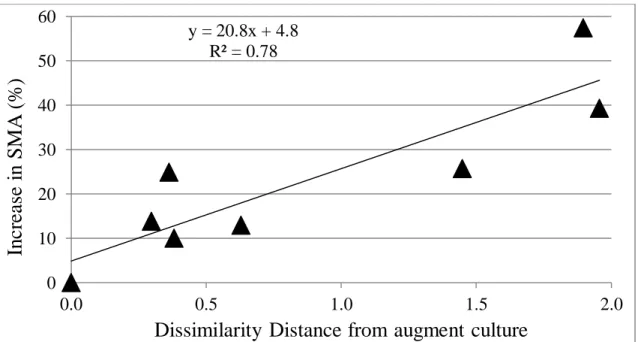
The relevance of bioaugmentation to study structure-function relationships comes from the underlying hypothesis that addition of an exogenous culture ostensibly alters the original microbial community that may, in turn, change digester function. Hence, if the microbial community structure of the augment culture, the original digester biomass and their mixture is well characterized, then their functional activities could be used to relate function and community structure. This concept was tested in a study performed by Bocher et al. (2013), who compared the rates of propionate conversion to CH4 before and after bioaugmentation with a propionate degrading, methanogenic augment. Nine different biomass samples, each with a different microbial community, were collected from different full-scale anaerobic reactors. Bioaugmentation was done by mixing the augment with each digester biomass sample at an iATP ratio of 1:5 (augment: biomass). Six of the nine-biomass samples assayed showed a statistically significant increase in the SMA after bioaugmentation. The bioaugmentation results were correlated with the dissimilarity (calculated as 1-pearson’s correlation coefficient) between the methanogenic community structure of the augment and original digester biomass cultures (Figure 1). The results of bioaugmentation were measured as the percentage increase in SMA against propionate, before and after bioaugmentation. The dissimilarity between the methanogenic community structure of the digester biomass and the augment culture was
quantified as the distance, calculated using one minus the Pearson’s correlation coefficient, of the mcrA DGGE banding patterns of each digester biomass sample and the augment culture.
A linear correlation was observed, and supported the argument that functional improvement (i.e. increased rate of propionate degradation) after bioaugmentation is not only a function of the augment culture community structure, but also the methanogenic community structure of the original biomass within a digester (i.e. how much different it is from the augment culture). This correlation provides a rationale to further study bioaugmentation as a tool to analyze structure-function relationship in AD process. Bioaugmentation will not improve every existing anaerobic biomass, but may improve some, and a method to quantify potential improvement based on microbial community descriptors should exist.
Figure 1: Difference between methanogen community structures in the augmented and biomass samples correlated with percent increase in SMA values (Bocher 2013).
y = 20.8x + 4.8 R² = 0.78 0 10 20 30 40 50 60 0.0 0.5 1.0 1.5 2.0
In
cr
ea
se
i
n
S
M
A
(
%
)
Although linear models have been successful, other structure-activity models may prove to be more appropriate. This is similar to the historical development of quantitative QSARs for drug activity and chemical physiochemical parameter estimation over the last 80 years; these QSARs initially relied on linear relationships, but were later refined using nonlinear relationships such as artificial neural networks (Dearden & Rowe 2015). In any event, the initial success using empirical, linear relationships encouraged development of more robust and accurate empirical and mechanistic models. It is probable that more robust models can be developed in the near future to predict the function of engineered microbial processes using microbial community descriptors as well as environmental parameter values. These new, robust models will be very helpful to improve engineered bioprocesses.
2.5
Conclusion
As a biological treatment process, both efficiency and stability of AD technology depends fundamentally on the complex microbial communities and their activities in digesters. Owing to this, over the years scientists and engineers working in this field have focused their attention to answering the central questions: 1) which microorganisms are present, 2) how many different types of microorganisms are present, 3) which microorganisms are active and growing, 4) how do microorganisms behave under certain environmental conditions and 5) how does the microbial community structure relate to digester function.
Considerable progress has been made in the last decade to identify the key groups of microorganisms that influence the trophic phases of AD as well as how various environmental conditions affect the microbial community structure and digester function.
Yet, more work is required to realize quantitative, predictive relationships between the complex microbial community structure and the digester functional output. A robust quantitative microbial structure-function relationship would be a “holy grail” for engineers and scientists who are looking to develop new predictive models that can be used to improve the design and operation of anaerobic digesters for waste treatment and renewable energy generation. However, for a valid quantitative relationship, it is essential to analyze the microbial community structure and monitor the functional and environmental parameters for a large sample of different anaerobic digester communities, and this has limited model development. Future experimental work can be envisioned in which a large number of different microbial communities from various, controlled anaerobic digesters are analyzed using next-generation sequencing technology. The community and functional data then could be used to determine predictive, empirical or mechanistic relationships between community structure and digester function descriptors, including CH4 production rate. It would be worthwhile endeavor and an important step forward in this field.
Other promising areas of research for improved AD processes may include (1) methods to increase hydrolysis rate, (2) direct interspecies electron transfer to methanogens via conductive pili or other mechanisms, (3) community structure and function relationships of methanogenic communities, (4) methanogenesis via acetate oxidizing bacteria, and (5) bioaugmentation to study microbial community-activity relationships or improve engineered bioprocesses.
References
Ahring, B.K., N. Christiansen, I. Mathrani, H.V. Hendriksen, A.J. Macario, and E.C. de Macario. 1992. “Introduction of a de Novo Bioremediation Ability, Aryl Reductive Dechlorination, into Anaerobic Granular Sludge by Inoculation of Sludge with Desulfomonile Tiedjei.” Appl. Envir. Microbiol. 58 (11): 3677–82.
Allison, S.D., and J.B.H. Martiny. 2008. “Resistance, Resilience, and Redundancy in Microbial Communities.” Proceedings of the National Academy of Sciences 105 (Supplement 1): 11512–19. doi:10.1073/pnas.0801925105.
Angenent, L.T., K. Karim, M.H. Al-Dahhan, B.A. Wrenn, and R. Domíguez-Espinosa. 2004. “Production of Bioenergy and Biochemicals from Industrial and Agricultural Wastewater.” Trends in Biotechnology 22 (9): 477–85. doi:10.1016/j.tibtech.2004.07.001.
Ariunbaatar, J., A. Panico, G. Esposito, F. Pirozzi, and P.N.L. Lens. 2014. “Pretreatment Methods to Enhance Anaerobic Digestion of Organic Solid Waste.” Applied Energy 123 (June): 143–56. doi:10.1016/j.apenergy.2014.02.035.
Balk, M., J. Weijma, and A.J.M. Stams. 2002. “Thermotoga Lettingae Sp. Nov., a Novel Thermophilic, Methanol-Degrading Bacterium Isolated from a Thermophilic Anaerobic Reactor.” International Journal of Systematic and Evolutionary Microbiology 52 (Pt 4): 1361–68. http://www.ncbi.nlm.nih.gov/pubmed/12148651.
Barredo, M.S., and L.M. Evison. 1991. “Effect of Propionate Toxicity on Methanogen-Enriched Sludge, Methanobrevibacter Smithii, and Methanospirillum Hungatii at Different pH Values.” Applied and Environmental Microbiology 57 (6): 1764–69. http://www.pubmedcentral.nih.gov/articlerender.fcgi?artid=183465&tool=pmcentrez&re ndertype=abstract.
Bitton, Gl. 2005. Wastewater Microbiology. 3rd ed., Hoboken, NJ, USA: John Wiley & Sons, Inc.
Blum, D.J.W., and R.E. Speece. 1991. “A Database of Chemical Toxicity to Environmental Bacteria and Its Use in Interspecies Comparisons and Correlations” 63 (3). doi:10.2307/25043983.
Bocher, B.T.W. 2013. “Relating Methanogen Community Structure and Anaerobic Digester Function.” Dissertation. Marquette University.
Bocher, B.T.W., K. Cherukuri, J.S. Maki, M. Johnson, and D.H. Zitomer. 2015. “Relating Methanogen Community Structure and Anaerobic Digester Function.” Water Research 70. Elsevier Ltd: 425–35. doi:10.1016/j.watres.2014.12.018.
University of Denmark.
Briones, A., and L. Raskin. 2003. “Diversity and Dynamics of Microbial Communities in Engineered Environments and Their Implications for Process Stability.” Current Opinion in Biotechnology 14 (3): 270–76. doi:10.1016/S0958-1669(03)00065-X.
Carballa, M., M. Smits, C. Etchebehere, N. Boon, and W. Verstraete. 2011. “Correlations between Molecular and Operational Parameters in Continuous Lab-Scale Anaerobic Reactors.” Applied Microbiology and Biotechnology 89 (2): 303–14. doi:10.1007/s00253-010-2858-y.
Čater, M., L. Fanedl, and R. M. Logar. 2013. “Microbial Community Analyses in Biogas Reactors by Molecular Methods.” Acta Chimica Slovenica 60 (2): 243–55.
Cavaleiro, A.J., D.Z. Sousa, and M.M. Alves. 2010. “Methane Production from Oleate: Assessing the Bioaugmentation Potential of Syntrophomonas Zehnderi.” Water Research 44 (17): 4940–47. doi:10.1016/j.watres.2010.07.039.
Chen, X., J. Guo, G.J. Xie, Y. L., Z. Yuan, and B.J. Ni. 2015. “A New Approach to Simultaneous Ammonium and Dissolved Methane Removal from Anaerobic Digestion Liquor: A Model-Based Investigation of Feasibility.” Water Research 85 (November): 295–303. doi:10.1016/j.watres.2015.08.046.
Chen, Y., J.J. Cheng, and K.S. Creamer. 2008. “Inhibition of Anaerobic Digestion Process: A Review.” Bioresource Technology 99 (10): 4044–64. doi:10.1016/j.biortech.2007.01.057. Cirne, D.G., L. Björnsson, M. Alves, and B. Mattiasson. 2006. “Effects of Bioaugmentation by an Anaerobic Lipolytic Bacterium on Anaerobic Digestion of Lipid-Rich Waste.” Journal of Chemical Technology & Biotechnology 81 (11): 1745–52. doi:10.1002/jctb.1597.
Conklin, A., H.D. Stensel, and J. Ferguson. 2006. “Growth Kinetics and Competition between Methanosarcina and Methanosaeta in Mesophilic Anaerobic Digestion.” Water Environment Research : A Research Publication of the Water Environment Federation 78 (5): 486–96. http://www.ncbi.nlm.nih.gov/pubmed/16752610.
Cuzin, N., A.S. Ouattara, M. Labat, and J.L. Garcia. 2001. “Methanobacterium Congolense Sp. Nov., from a Methanogenic Fermentation of Cassava Peel.” International Journal of Systematic and Evolutionary Microbiology 51 (Pt 2): 489–93. http://www.ncbi.nlm.nih.gov/pubmed/11321095.
de Bok, F.A., A.J. Stams, C. Dijkema, and D.R. Boone. 2001. “Pathway of Propionate Oxidation by a Syntrophic Culture of Smithella Propionica and Methanospirillum Hungatei.” Applied and Environmental Microbiology 67 (4): 1800–1804. doi:10.1128/AEM.67.4.1800-1804.2001.
of Physicochemical Properties and Toxicities for REACH Legislation.” Methods in Molecular Biology: 65–88. doi:10.1007/978-1-4939-2239-0_5.
Deflaun, M., and R. Steffan. 2003. Bioaugmentation. Encyclopedia of Environmental Microbiology. Edited by Gabriel Bitton. Hoboken, NJ, USA: John Wiley & Sons, Inc. doi:10.1002/0471263397.
Demirel, B., and O. Yenigün. 2002. “The Effects of Change in Volatile Fatty Acid (VFA) Composition on Methanogenic Upflow Filter Reactor (UFAF) Performance.” Environmental Technology 23 (10): 1179–87. doi:10.1080/09593332308618336.
Deublein, D., and A. Steinhauser. 2008. Biogas from Waste and Renewable Resources: An Introduction. Weinheim: Wiley-VCH Wiley.
Dong, X., Y. Xin, W. Jian, X. Liu, and D. Ling. 2000. “Bifidobacterium Thermacidophilum Sp. Nov., Isolated from an Anaerobic Digester.” International Journal of Systematic and Evolutionary Microbiology 50 Pt 1 (January): 119–25. http://www.ncbi.nlm.nih.gov/pubmed/10826794.
Duran, M., N. Tepe, D. Yurtsever, V. Punzi, C. Bruno, and R. Mehta. 2006. “Bioaugmenting Anaerobic Digestion of Biosolids with Selected Strains of Bacillus, Pseudomonas and Actinomycetes Species for Increased Methanogenesis and Odor Control.” Applied Microbiology and Biotechnology 73 (4): 960–66. doi:10.1007/s00253-006-0548-6.
Enright, A.M., V. McGrath, D. Gill, G. Collins, and V. O’Flaherty. 2009. “Effect of Seed Sludge and Operation Conditions on Performance and Archaeal Community Structure of Low-Temperature Anaerobic Solvent-Degrading Bioreactors.” Systematic and Applied Microbiology 32 (1): 65–79. doi:10.1016/j.syapm.2008.10.003.
Fernandez, A.S., S.A. Hashsham, S.L. Dollhopf, L. Raskin, O. Glagoleva, F.B. Dazzo, R.F. Hickey, C.S. Criddle, and J.M. Tiedje. 2000. “Flexible Community Structure Correlates with Stable Community Function in Methanogenic Bioreactor Communities Perturbed by Glucose.” Applied and Environmental Microbiology 66 (9): 4058–67. doi:10.1128/AEM.66.9.4058-4067.2000.
Ferry, J.G. 2012. Methanogenesis: Ecology, Physiology, Biochemistry & Genetics. New York City, NY: Springer Science & Business Media.
Fotidis, I.A., D. Karakashev, and I. Angelidaki. 2013. “Bioaugmentation with an Acetate-Oxidising Consortium as a Tool to Tackle Ammonia Inhibition of Anaerobic Digestion.” Bioresource Technology 146 (October): 57–62. doi:10.1016/j.biortech.2013.07.041. Freitag, T.E., and J.I. Prosser. 2009. “Correlation of Methane Production and Functional Gene
Transcriptional Activity in a Peat Soil.” Applied and Environmental Microbiology 75 (21): 6679–87. doi:10.1128/AEM.01021-09.
Dynamics during Start-up of Anaerobic Digesters.” Biotechnology and Bioengineering 57 (3): 342–55.
Guiot, S.R., B. Tartakovsky, M. Lanthier, M.J. Lévesque, M.F. Manuel, R. Beaudet, C.W. Greer, and R. Villemur. 2002. “Strategies for Augmenting the Pentachlorophenol Degradation Potential of UASB Anaerobic Granules.” Water Science and Technology : A Journal of the International Association on Water Pollution Research 45 (10): 35–41. http://www.ncbi.nlm.nih.gov/pubmed/12188570.
Hajji, K.T., F. Lépine, J.G. Bisaillon, R. Beaudet, J. Hawari, and S.R. Guiot. 2000. “Effects of Bioaugmentation Strategies in UASB Reactors with a Methanogenic Consortium for Removal of Phenolic Compounds.” Biotechnology and Bioengineering 67 (4): 417–23. doi:10.1002/(SICI)1097-0290(20000220)67:4<417::AID-BIT5>3.0.CO;2-#.
Hao, L.P., F. Lü, P.J. He, L. Li, and L.M. Shao. 2011. “Predominant Contribution of Syntrophic Acetate Oxidation to Thermophilic Methane Formation at High Acetate Concentrations.” Environmental Science & Technology 45 (2). American Chemical Society: 508–13. doi:10.1021/es102228v.
Hashsham, S.A., A.S. Fernandez, S.L. Dollhopf, F.B. Dazzo, R.F. Hickey, J.M. Tiedje, and C.S. Criddle. 2000. “Parallel Processing of Substrate Correlates with Greater Functional Stability in Methanogenic Bioreactor Communities Perturbed by Glucose.” Applied and Environmental Microbiology 66 (9): 4050–57. doi:10.1128/AEM.66.9.4050-4057.2000. Hattori, S. 2008. “Syntrophic Acetate-Oxidizing Microbes in Methanogenic Environments.”
Microbes and Environments / JSME 23 (2): 118–27. doi:10.1264/jsme2.23.118.
Herrero, M., and D.C. Stuckey. 2014. “Bioaugmentation and Its Application in Wastewater Treatment: A Review.” Chemosphere 44. Elsevier Ltd. doi:10.1016/j.chemosphere.2014.10.033.
Horber, C., N. Christiansen, E. Arvin, and B.K. Ahring. 1998. “Improved Dechlorinating Performance of Upflow Anaerobic Sludge Blanket Reactors by Incorporation of Dehalospirillum Multivorans into Granular Sludge.” Appl. Envir. Microbiol. 64 (5): 1860–63. http://aem.asm.org/content/64/5/1860.full.
Hori, T., S. Haruta, Y. Ueno, M. Ishii, and Y. Igarashi. 2006. “Dynamic Transition of a Methanogenic Population in Response to the Concentration of Volatile Fatty Acids in a Thermophilic Anaerobic Digester.” Applied and Environmental Microbiology 72 (2): 1623–30. doi:10.1128/AEM.72.2.1623-1630.2006.
Imachi, H., S. Sakai, A. Ohashi, H. Harada, S. Hanada, Y. Kamagata, and Y. Sekiguchi. 2007. “Pelotomaculum Propionicicum Sp. Nov., an Anaerobic, Mesophilic, Obligately Syntrophic, Propionate-Oxidizing Bacterium.” International Journal of Systematic and Evolutionary Microbiology 57 (Pt 7): 1487–92. doi:10.1099/ijs.0.64925-0.
“Syntrophus Aciditrophicus Sp. Nov., a New Anaerobic Bacterium That Degrades Fatty Acids and Benzoate in Syntrophic Association with Hydrogen-Using Microorganisms.”
Archives of Microbiology 171 (2): 107–14.
http://www.ncbi.nlm.nih.gov/pubmed/9914307.
Kadam, P.C., and D.R. Boone. 1996. “Influence of pH on Ammonia Accumulation and Toxicity in Halophilic, Methylotrophic Methanogens.” Applied and Environmental Microbiology 62 (12): 4486–92.
Karakashev, D., D.J. Batstone, and I. Angelidaki. 2005. “Influence of Environmental Conditions on Methanogenic Compositions in Anaerobic Biogas Reactors Influence of Environmental Conditions on Methanogenic Compositions in Anaerobic Biogas Reactors.” Applied and Environmental Microbiology 71 (1): 331–38. doi:10.1128/AEM.71.1.331.
Karakashev, D., D.J. Batstone, E. Trably, and I. Angelidaki. 2006. “Acetate Oxidation Is the Dominant Methanogenic Pathway from Acetate in the Absence of Methanosaetaceae.” Applied and Environmental Microbiology 72 (7): 5138–41. doi:10.1128/AEM.00489-06. Kasai, Y., Y. Kodama, Y. Takahata, T. Hoaki, and K. Watanabe. 2007. “Degradative Capacities
and Bioaugmentation Potential of an Anaerobic Benzene-Degrading Bacterium Strain DN11.” Environmental Science & Technology 41 (17): 6222–27. doi:10.1021/es062842p. Lawrence, A.W., and P.L. McCarty. 2015. “Unified Basis for Biological Treatment Design and
Operation.” Journal of the Sanitary Engineering Division 96 (3). ASCE: 757–78.
Leclerc, M., J.P. Delgènes, and J.J. Godon. 2004. “Diversity of the Archaeal Community in 44 Anaerobic Digesters as Determined by Single Strand Conformation Polymorphism Analysis and 16S rDNA Sequencing.” Environmental Microbiology 6 (8): 809–19. doi:10.1111/j.1462-2920.2004.00616.x.
Lee, C., J. Kim, K. Hwang, V. O’Flaherty, and S. Hwang. 2009. “Quantitative Analysis of Methanogenic Community Dynamics in Three Anaerobic Batch Digesters Treating Different Wastewaters.” Water Research 43 (1): 157–65. doi:10.1016/j.watres.2008.09.032.
Lenz, M., A. Enright, V. O’Flaherty, A. V. Aelst, and P. Lens. “Bioaugmentation of UASB Reactors with Immobilized Sulfurospirillum Barnesii for Simultaneous Selenate and Nitrate Removal.” Applied Microbiology and Biotechnology 83 (2): 377–88. doi:10.1007/s00253-009-1915-x.
Lettinga, G. 2010. “Challenges of a Feasible Route towards Sustainability in Environmental Protection.” Frontiers of Environmental Science & Engineering in China 4 (2): 123–34. doi:10.1007/s11783-010-0028-1.
Liu, Y., D.L. Balkwill, H.C. Aldrich, G.R. Drake, and D.R. Boone. 1999. “Characterization of the Anaerobic Propionate-Degrading Syntrophs Smithella Propionica Gen. Nov., Sp.
Nov. and Syntrophobacter Wolinii.” International Journal of Systematic Bacteriology 49 Pt 2: 545–56. http://www.ncbi.nlm.nih.gov/pubmed/10319475.
Liu, Y., and W.B. Whitman. 2008. “Metabolic, Phylogenetic, and Ecological Diversity of the Methanogenic Archaea.” Annals of the New York Academy of Sciences 1125: 171–89. doi:10.1196/annals.1419.019.
Lowe, S.E., M.K. Jain, and J.G. Zeikus. 1993. “Biology, Ecology, and Biotechnological Applications of Anaerobic Bacteria Adapted to Environmental Stresses in Temperature, pH, Salinity, or Substrates.” Microbiological Reviews 57 (2): 451–509.
Lü, F., L. Hao, D. Guan, Y. Qi, L. Shao, and P. He. 2013. “Synergetic Stress of Acids and Ammonium on the Shift in the Methanogenic Pathways during Thermophilic Anaerobic Digestion of Organics.” Water Research 47 (7): 2297–2306. doi:10.1016/j.watres.2013.01.049.
Mata-Alvarez, J., S. Macé, and P. Llabrés. 2000. “Anaerobic Digestion of Organic Solid Wastes. An Overview of Research Achievements and Perspectives.” Bioresource Technology 74 (1): 3–16. doi:10.1016/S0960-8524(00)00023-7.
Mathai, P.P., D.H. Zitomer, and J.S. Maki. 2015. “Quantitative Detection of Syntrophic Fatty Acid Degrading Bacterial Communities in Methanogenic Environments.” Microbiology 161 (6). doi:10.1099/mic.0.000085.
McCarty, P.L., and D.P. Smith. 1986. “Anaerobic Wastewater Treatment.” Environmental Science & Technology 20 (12). American Chemical Society: 1200–1206. doi:10.1021/es00154a002.
McMahon, K.D., P.G. Stroot, R.I. Mackie, and L. Raskin. 2001. “Anaerobic Codigestion of Municipal Solid Waste and Biosolids under Various Mixing Conditions--II: Microbial Population Dynamics.” Water Research 35 (7): 1817–27.
Morita, M., N..S. Malvankar, A.E. Franks, Z.M. Summers, L. Giloteaux, A.E. Rotaru, C. Rotaru, and D.R. Lovley. 2011. “Potential for Direct Interspecies Electron Transfer in Methanogenic Wastewater Digester Aggregates.” MBio 2 (4): 159–11. doi:10.1128/mBio.00159-11.
Morris, R., A. Schauer-Gimenez, U. Bhattad, C. Kearney, C.A. Struble, D. Zitomer, and J.S. Maki. 2014. “Methyl Coenzyme M Reductase (mcrA) Gene Abundance Correlates with Activity Measurements of Methanogenic H₂ /CO₂ -Enriched Anaerobic Biomass.” Microbial Biotechnology 7 (1): 77–84. doi:10.1111/1751-7915.12094.
Naeem, S., and S. Li. 1997. “Biodiversity Enhances Ecosystem Reliability” Nature 390 (6659): 507–9. doi:10.1038/37348.
Nielsen, H., H. Uellendahl, and B. Ahring. 2007. “Regulation and Optimization of the Biogas Process: Propionate as a Key Parameter.” Biomass and Bioenergy 31 (11-12): 820–30.
doi:10.1016/j.biombioe.2007.04.004.
Noike, T., G. Endo, J.E. Chang, J. Yaguchi, and J. Matsumoto. 1985. “Characteristics of Carbohydrate Degradation and the Rate-Limiting Step in Anaerobic Digestion.” Biotechnology and Bioengineering 27 (10): 1482–89. doi:10.1002/bit.260271013.
Pullammanappallil, P.C., S.A. Svoronos, D.P. Chynoweth, and G. Lyberatos. 1998. “Expert System for Control of Anaerobic Digesters.” Biotechnology and Bioengineering 58 (1): 13–22. http://www.ncbi.nlm.nih.gov/pubmed/10099257.
Ramirez, I., E.I.P. Volcke, R. Rajinikanth, and J.P. Steyer. 2009. “Modeling Microbial Diversity in Anaerobic Digestion through an Extended ADM1 Model.” Water Research 43 (11): 2787–2800. doi:10.1016/j.watres.2009.03.034.
Regueiro, L., P. Veiga, M. Figueroa, J. Alonso-Gutierrez, A.J.M Stams, J.M. Lema, and M. Carballa. 2012. “Relationship between Microbial Activity and Microbial Community Structure in Six Full-Scale Anaerobic Digesters.” Microbiological Research 167 (10). 581–89. doi:10.1016/j.micres.2012.06.002.
Ro