University of Denver University of Denver
Digital Commons @ DU
Digital Commons @ DU
Electronic Theses and Dissertations Graduate Studies
1-1-2019
Improving Beginning Teacher Effectiveness: The Most Important
Improving Beginning Teacher Effectiveness: The Most Important
and Difficult Competencies and How They Differ in Low-Income
and Difficult Competencies and How They Differ in Low-Income
Schools
Schools
Jessica Anne Lerner
University of Denver
Follow this and additional works at: https://digitalcommons.du.edu/etd
Part of the Curriculum and Instruction Commons, and the Teacher Education and Professional Development Commons
Recommended Citation Recommended Citation
Lerner, Jessica Anne, "Improving Beginning Teacher Effectiveness: The Most Important and Difficult Competencies and How They Differ in Low-Income Schools" (2019). Electronic Theses and Dissertations. 1549.
https://digitalcommons.du.edu/etd/1549
This Dissertation is brought to you for free and open access by the Graduate Studies at Digital Commons @ DU. It has been accepted for inclusion in Electronic Theses and Dissertations by an authorized administrator of Digital Commons @ DU. For more information, please contact [email protected],[email protected].
Improving Beginning Teacher Effectiveness: The Most Important and Difficult Competencies
and How They Differ in Low-Income Schools _____________
A Dissertation Presented to
the Faculty of the Morgridge College of Education University of Denver
_____________ In Partial Fulfillment of the Requirements for the Degree
Doctor of Philosophy _____________
by Jessica Lerner
March 2019 Advisor: Garrett Roberts
ii
Author: Jessica Lerner
Title: Improving Beginning Teacher Effectiveness: The Most Important and Difficult
Competencies and How They Differ in Low-Income Schools
Advisor: Garrett Roberts Degree Date: March 2019
Abstract
Research suggests teacher quality is a significant factor predicting student
achievement, especially for low-income students. However, there is insufficient research about which teaching competencies warrant emphasis during pre-service training. The purpose of this study was to investigate consensus among expert educators on the importance and difficulty of teaching competencies for beginning teachers, and whether the importance and difficulty of those competencies differ in low-income school settings. Thirty-one academic and practitioner experts in beginning teacher development
participated in the study. Participants rated 8 of 25 teaching competencies as very important and very difficult for beginning teachers. Results indicate broad consensus among experts. However, consensus was not reached on several items, mostly related to differences in competency difficulty. Finally, experts rated many of the competencies as more important and more difficult for beginning teachers in low-income schools.
iii
Table of Contents
Chapter One: Introduction ...1
Research Problem and Significance ... 1
The importance of teacher quality ... 2
Research problem #1: Defining effective teaching. ... 4
Research problem #2: Beginning teacher effectiveness. ... 9
Research problem #3: Teacher quality in low-income schools. ... 13
Theoretical Framework ... 17
Study Purpose ... 23
Research Questions ... 25
Data Analysis ... 25
Strengths and Limitations ... 26
Summary ... 27
Chapter Two: Review of the Literature ...29
Background ... 29
Student outcomes. ... 30
Relevant Prior Syntheses of Literature ... 31
Literature Review Purpose ... 40
Literature Search Procedures ... 41
Inclusion criteria and search procedure. ... 41
Results ... 42
Themes ... 47
Learning environment. ... 47
Instruction. ... 51
Conclusions ... 55
Areas of Future Research ... 56
Chapter Three: Method ...58
Overview ... 58
iv Participants ... 60 Selection procedures ... 60 Recruitment procedures. ... 62 Participant profile... 63 Research Design... 64 Pilot study. ... 64
Survey round one. ... 65
Survey round two. ... 65
Survey round three. ... 67
Data Analysis ... 68
Importance. ... 68
Difficulty. ... 69
Consensus. ... 69
Differences by school setting ... 71
Significance Testing and Type 1 Error ... 72
Chapter Four: Results ...73
Round One Results ... 73
Round Two Results ... 76
Round Three Results ... 82
Differences between participant panels. ... 90
Differences across school setting. ... 92
Stability across Rounds ... 95
Summary of Results ... 98
Chapter Five: Discussion ...100
The 25 Competencies ... 101
Competency Importance and Difficulty... 103
Consensus by Participant Panel ... 105
Differences across School Settings ... 106
Implications... 111
v
Building consensus. ... 113
Limitations ... 114
Directions for Future Research ... 115
Summary ... 116
Definitions of Terms ...117
References ...118
Appendix A: Hattie’s Influences on Student Achievement ...135
Appendix B: Denver Public Schools LEAP Framework ...136
Appendix C: Rating Criteria for Participant Selection ...137
Appendix D: Participant Recruitment Email ...138
Appendix E: Pilot Cognitive Interviews ...139
Appendix F: Participant Eligibility and Expertise ...141
Appendix G: Email to Participants: Round 1 ...144
Appendix H: Round 1 Survey Instrument ...146
Appendix I: Round 1 Participant Comments ...148
Appendix J: Round One Competency Selection ...154
Appendix K: Round One Competency Revisions ...156
Appendix L: Letter to Participants: Round 2 ...159
Appendix M: Rounds 2 and 3 Survey Instrument ...161
Appendix N: Round Two Outlier Comments ...165
vi
List of Tables
Chapter One
Table 1 Research Theory and Study Alignment ... 22
Chapter Two Table 2 Influences on Achievement (Hattie, 2012) ... 32
Table 3 Dynamic Model Factors (Kyriakides et al., 2013) ... 34
Table 4 Additional Teacher-Level Factors (Kyriakides et al., 2013) ... 35
Table 5 Instructional Strategies, Definitions, and Effect Sizes ... 36
Table 6 Synthesis of Meta-Analyses... 39
Table 7 Search Procedure ... 41
Table 8 Summary of Included Research ... 42
Chapter Three Table 9 Knowledge Resource Nomination Worksheet (KRNW) ... 61
Table 10 Summary of Participant Experience ... 63
Table 11 Summary of Procedures ... 67
Table 12 Summary of Data Analysis ... 71
Table 13 Revised Competencies and Codes ... 74
Chapter Four Table 14 Round 2 Results (n=31) ... 77
Table 15 Non-consensus Items in Rounds 2 and 3 ... 84
Table 16 Round 3 Results (n=30) ... 85
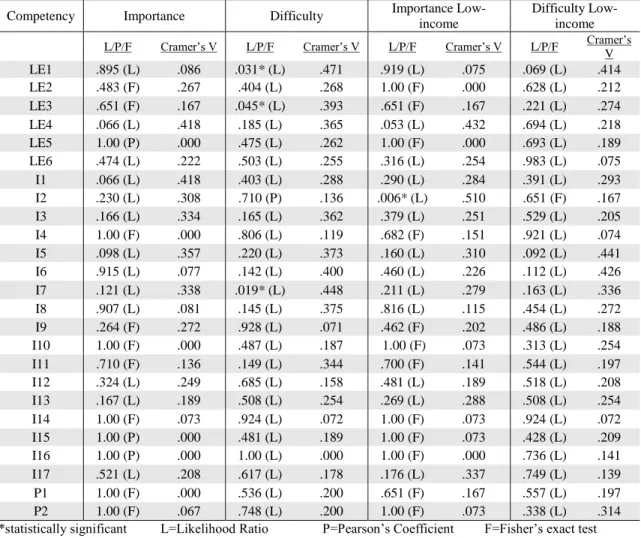
Table 17 Results of Chi-square Test for Differences between Academic and Practitioner Panels ... 91
Table 18 Differences across Panels: Expected and Observed Counts for Statistically Significant Items ... 92
Table 19 Results of Wilcoxon Signed Ranks Test for Differences across School Setting ... 94
Table 20 Mode and IQR Comparisons for Unstable Items from Round 2 to Round 3 ... 96
Table 21 Results of Wilcoxon Signed Ranks Test for Stability across Rounds ... 97
Chapter Five Table 22 Competencies Rated Very Important and Very Difficult for Beginning Teachers ... 104
Table 23 Non-Consensus Items ... 105
Table 24 Differences across Participant Panels: Statistically Significant Items ... 105
vii
List of Figures
Chapter One
Figure 1. Early-Career teacher levels of preparation (IES, 2018) ... 12 Figure 2. Early-Career Teacher Levels of Preparation by Poverty Level (IES, 2018) ... 14 Figure 3. Vygotsky's ZPD Applied to Beginning Teacher Development ... 19
Chapter Four
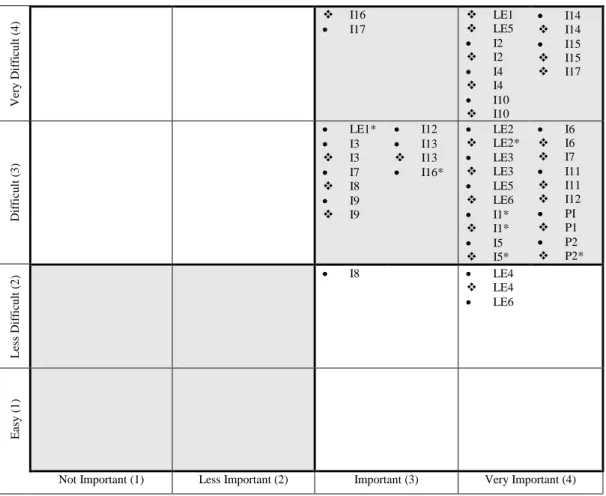
Figure 4. Competency Importance and Difficulty ... 83 Chapter Five
Figure 5. Theoretical Model: Possible Causes for Increased Difficulty Ratings in Low-Income Schools ... 110
1
Chapter One: Introduction
Research suggests teacher quality is vital for improving student achievement (Aaronson et al., 2007; Kane et al., 2005; Nye et al., 2004; Rivkin et al., 2005; Wright et al., 1997), especially in income schools (Nye et al., 2004). Unfortunately, low-income schools tend to have more beginning teachers, who tend to be less effective than more experienced teachers (Clotfelter, Ladd, & Vigdor, 2010). Teacher preparation programs need a better understanding of the practices most likely to produce effective beginning teachers. The purpose of this study was to investigate consensus among expert educators on the teaching competencies that warrant emphasis during teacher preparation and training.
Research Problem and Significance
International assessment data suggest students in the United States lag behind many industrialized nations in academic achievement. The most recent results of the Programme for International Student Assessment (PISA) placed the U.S. 38th out of 71 countries in math and science (Desilver, 2017). Moreover, differences in achievement among students from high- and low-poverty families are stark and pervasive (Sass, Hannaway, Xu, Figlio, & Feng, 2012). Standardized test scores show the achievement gap between high and low-income students has widened over the past twenty years (Reardon, 2011).
2
The importance of teacher quality. For more than two decades, scholars have attempted to isolate the factors most likely to increase student achievement and reduce educational disparities. Researchers began by investigating the variables most likely to predict student achievement on standardized tests. For example, Wright, Horn, and Sander (1997) conducted a longitudinal analysis of student achievement data from the Tennessee Value-Added Assessment system. They examined the relative magnitude of several factors on student achievement, including: teacher effects, class size, intra-classroom heterogeneity, and prior student achievement level. Each of the factors was statistically isolated to test its effect on student achievement. They found that teacher effects were the dominant factor affecting student achievement gains.
Similarly, Nye, Konstantopoulos, and Hedges (2004) examined data from the Tennessee Class Size Experiment, in which students and teachers were randomly assigned to small or large classes, to estimate teacher and class size effects on student achievement. Random assignment enabled researchers to ensure that systematic differences in student achievement was due to one of two sources: class size or teacher effectiveness. To isolate teacher effects, the researchers controlled for class size. They found “substantial differences among teachers in the ability to produce achievement gains in their students” (p. 253). The teachers who produced higher than average achievement gains were considered higher quality teachers. Subsequent studies provided more evidence that variation in teacher quality could be statistically isolated as a significant factor predicting student achievement (Aaronson, et al., 2007; Kane, et al., 2005; Rivkin,
3
et al., 2005; Wright, et al., 1997). Moreover, research suggested that the effect of quality teaching on student achievement persists over several years (Konstantopoulos, 2011).
While this influential research showed that some teachers affected student achievement more than others, at the time researchers were unable to predict which teachers were effective based on the characteristics included in their data sets. For
example, variation in teacher quality could not reliably be explained by traditional human capital variables, including level of teacher education (Aaronson et al., 2007; Kane et al., 2005; Rivkin et al., 2005). Researchers did find that beginning teachers were less
effective than those with more experience, but these effects leveled off after the first five years of experience (Clotfelter, Ladd, & Vigdor, 2010). In fact, research showed that teacher quality tended to improve significantly after the first year of teaching (Hanushek, Rivkin, & Kain, 2004). This research suggested that teacher quality was important, but it was unclear what made some teachers more effective than others, aside from having at least one year of teaching experience.
The elucidation that teachers were vital for student success prompted reform efforts aimed at defining, measuring, and improving teacher effectiveness, including teacher evaluation reform (Anderson, Butler, Palmiter, & Arcaira, 2016; Sawchuk, 2015) and improving teacher preparation (Worrell et al., 2014). However, there are conflicting conclusions among educational scholars about how to best define effective teaching and how to best prepare future teachers. Partee (2012) notes,
Research shows that an effective teacher is key to student success. But determining what evidence best reflects teacher effectiveness and how this information can be used to improve the quality of teaching are among the significant issues facing public education today. (p. 1)
4
Research problem #1: Defining effective teaching. To measure teaching quality, effective teaching must be accurately defined. Because traditional human capital variables like level of education fail to predict teacher effectiveness (Clotfelter, Ladd, & Vigdor, 2010; Rivkin et al., 2005), school districts and policy-makers have turned their attention to more comprehensive teacher evaluation systems as an important piece of the larger reform agenda. To ensure every student has an effective teacher, states and school districts need a reliable method to distinguish high- and low-quality instruction (Davis, 2013). The following section provides a brief summary of the history of teacher
evaluation reform and the two primary methods of measuring teacher quality: value-added models and classroom observation.
Teacher evaluation reform. In 2009, The New Teacher Project (TNTP) released a report titled, “The widget effect: Our national failure to acknowledge and act on differences in teacher effectiveness.” In this report, TNTP examined teacher evaluation
practices in twelve school districts across four states. The report concluded, “A teacher’s effectiveness – the most important factor for schools in improving student achievement – is not measured, recorded, or used to inform decision-making in any meaningful way” (p. 3). For example, at the time of the report, many of the school districts used binary
evaluation ratings (either “satisfactory” or “unsatisfactory”). In those systems, more than 99% of teachers received the “satisfactory” rating. With no meaningful distinction between high and low-performing teachers, the report contended, teaching excellence goes unrecognized and poor performance goes unaddressed. Teachers were being treated as interchangeable parts.
5
The TNTP report recommended districts “adopt a comprehensive performance evaluation and development system that fairly, accurately, and credibly differentiates teachers based on their effectiveness in promoting student achievement…” (p. 27). The report advocated for classroom observation as the primary measure of teacher quality. Isolating a teacher’s impact on growth in student test scores (also called the value-added model) was mentioned as a promising supplementary data point. The report was widely read and had a major influence on subsequent policy (Di Carlo, 2014). Randi Weingarten, President of the American Federation of Teachers (AFT), publicly supported the findings in an AFT online press release (AFT, 2009), asserting that the report “points the way to a credible, fair, accurate and effective teacher evaluation system that would improve teaching and learning” (p. 1).
Several grants and federal initiatives echoed the call-to-action in the TNTP report. Race to the Top, the School Improvement Grants Program, No Child Left Behind, and the Measures of Effective Teaching project all promoted similar changes to teacher evaluation policy (Institute of Education Sciences, 2014). Between 2009 and 2013, over two-thirds of the U.S. states made significant changes to their teacher evaluation
guidelines (Hull, 2013).
Building on the attention garnered by The Widget Effect, TNTP released a policy brief the following year (2010) titled Teacher Evaluation 2.0, in which it outlined several design standards for educator evaluation systems, including employing multiple measures of teacher performance. TNTP recommended using objective student growth measures whenever possible. However, the report was criticized by the National Education Policy
6
Center (Milner, 2010) for its emphasis on using standardized test scores as one of the measures of teacher effectiveness, noting that those models had been “repeatedly shown to be insufficient to overcome validity concerns” (p. 4). Nevertheless, by 2013, teacher evaluation policy in 35 states required the incorporation of student achievement gains as one measure of teacher effectiveness (National Council on Teacher Quality, 2013).
Value-added models. In 2011, the U.S. Department of Education announced that, under the Elementary and Secondary Education Act waiver process, states would be allowed to waive some reporting requirements if they developed and implemented educator evaluation systems that included student growth as a significant factor (Partee, 2012). Statistical models that attempt to isolate a particular teacher’s impact on student achievement growth are known as value-added models (VAM). According to analysis by the Institute of Education Science (IES) (2010), standard education production functions employ hierarchical linear models to estimate teacher value-added using longitudinal student test score data. However, IES cautions that value-added models are imprecise due to estimation error rates. Estimation error largely stems from two sources: (a) random student-level variation, including background and abilities, and (b) idiosyncratic events that affect all students in the class, such as disruption during testing. IES analysis of existing literature found that teacher average test score gains can be unstable over time, with only moderate year-to-year correlations.
Other researchers also caution against using value-added models due to validity concerns. For example, Darling-Hammond (2015) contends that several assumptions undergird VAM including (a) student learning is accurately measured by the included
7
assessments, (b) students are randomly assigned to teachers, and (c) teachers are the only contributor to student learning during the specified time period. Darling-Hammond asserts, “In the United States, at this moment in history, the violations of these assumptions are considerable” (p. 132).
First, Darling-Hammond disputes that the commonly-used standardized tests accurately measure student growth. She states that the purpose of these tests to measure grade-level skills. This narrow focus results in inaccuracy for students significantly below or above grade level competence. Second, racial and income segregation in schools results in nonrandom distribution of students in schools and classrooms. Finally, while she acknowledges that teachers are an important school-level factor, she notes that there are multitudes of other factors contributing to student outcomes. Similarly, Rothstein (2008) found the assumptions underlying common value-added models are incorrect. Rothstein concludes, “Estimates of teachers' effects based on these models cannot be interpreted as causal” (p. 210). Darling-Hammond and Rothstein advocate for incorporating multiple measures to assess teacher effectiveness, including classroom observation.
Classroom observation instruments. An alternative to value-added models, classroom observation instruments provide criteria for judging the quality of instruction. The criteria are typically organized into rubrics, which describe observable teacher behaviors and instructional strategies (Archer, et al., 2016). In 2009, classroom-based observations were the most widely-used measure of teacher effectiveness (Little, Goe, & Bell, 2009), and by 2013, all states required classroom evaluation as a component of the
8
state’s evaluation system (Hull, 2013). The 2011-12 Schools and Staffing survey showed that 99% of untenured teachers and 95% of tenured teachers are evaluated annually based on formal classroom observations (Cohen & Goldhaber, 2016).
Taken together, the teaching competencies presented in teacher evaluation rubrics present “a powerful statement by a community of educators about what signifies effective teaching” (Archer et al., 2016, p. 116). In practice, the content of the teacher evaluation rubrics represents a definition of effective teaching. Rubric content and resulting ratings are used to drive instructional coaching, professional development, job placement, and termination (Davis, 2013). Teacher education programs also rely on detailed definitions of effective teaching to set goals for candidate competency (Cochran-Smith & Zeichner, 2009).
While teacher evaluation rubrics may make expectations more transparent, some argue that a long list of competencies can be cumbersome or, worse, reduce teaching to a series of boxes to check. For example, Charlotte Danielson, the developer of the widely-used evaluation framework writes, “I am deeply troubled by the transformation of teaching from a complex profession requiring nuanced judgement to the performance of certain behaviors that can be ticked off on a checklist” (2016, p. 1).
Nevertheless, classroom observation-based evaluation is widely used, so it is important the rubrics used to measure teacher effectiveness accurately reflect the
complexities of high-quality instruction. However, a recent analysis of 45 current teacher evaluation rubrics by the American Institutes for Research (2016) found low levels of alignment between rubric content and research-based instructional practices aligned to
9
Common Core standards. Updating and extending research on the instructional strategies linked to student outcomes is needed to improve the content of teacher observation frameworks and, in turn, inform the curricular content of teacher preparation programs (Council of Chief State School Officers, 2013).
Research problem #2: Beginning teacher effectiveness. Beginning teachers, those who have been teaching for less than three complete school years (U.S. Department of Education, 2018), tend to be less effective than more experienced teachers (Clotfelter, Ladd, & Vigdor, 2010; Hanushek, Rivkin, & Kain, 2004; Xu, Ozek, & Hansen, 2015). Teacher preparation programs are tasked with producing effective teachers. However, there is insufficient research about the practices most likely to produce effective
beginning teachers (The National Research Council, 2010). Further, teacher preparation has been widely criticized for failing to produce high-quality teachers. For example, Arthur Levine’s (2006) report Educating School Teachers examines university-based teacher education programs. Levine concludes, “Many students seem to be graduating from teacher education programs without the skills and knowledge they need to be effective teachers” (p. 3). Levine concludes that teacher preparation programs have a “curriculum in disarray” which leads to a “chasm between theory and practice” (p. 4). To address this concern, Levine recommends focusing curriculum on the needs of the
practicing teacher. This would require teacher education programs to shift their goals. Instead of internal measures of competency (e.g., grades), Levine recommends that
10
This shift in teacher education to focus on the competencies of practicing teachers is reflected in the evolution of national teacher standards. In 1992, the Interstate New Teacher Assessment and Support Consortium (INTASC) published INTASC’s Model
Standards for Beginning Teacher Licensing and Development. These standards included general principles and a description of the corresponding knowledge, dispositions, and performance indicators for beginning teachers. In 2011, InTASC changed the scope of its work, dropping the word “new” from its organizational title. They published updated standards that were no longer intended for beginning teachers, but for all practicing teachers. InTASC explained that the new standards would:
set one standard for performance that will look different at different
developmental stages of the teacher’s career. What distinguishes the beginning from the advanced teacher is the degree of sophistication in the application of the knowledge and skills. (Council of Chief State School Officers, 2013, p. 6)
The new standards include rubrics of observable teacher behavior called Learning Progressions. InTASC recommends that teacher preparation programs use the
developmental progressions to inform curriculum. The InTASC standards have become a national benchmark for defining teacher quality and informing teacher preparation. In fact, the Council for the Accreditation of Educator Preparation (CAEP) requires
accredited teacher preparation programs to demonstrate candidate understanding of the InTASC standards.
However, CAEP acknowledges that, according to The National Research Council (2010), there is not sufficient research to inform teacher preparation programs about the practices most likely to result in effective beginning teachers. Moreover, there is
11
accomplish. Some argue that teacher education programs should prioritize the content and strategies most important for beginning teachers (Hammerness et al., 2005) and that beginning teachers should work on one or two teaching competencies at a time (Jackson, 2013). Others contend that beginning teachers should be held to the same teaching standards as all other teachers and should be expected to perform at or close to proficiency on all teaching competencies (Koch, 2013).
A recent IES (2018) study summarized data from the National Center for
Education Statistics on early-career teachers’ perceived levels of preparation in a variety of teaching competencies. The researchers found differences in perceived levels of preparation across instructional strategies (see Figure 1). Relative to other strategies, beginning teachers felt less prepared to use data to inform instruction, differentiate instruction, and handle classroom management issues.
12
Figure 1. Early-Career teacher levels of preparation (IES, 2018)
Because it is unclear from the literature which teaching competencies are most important for beginning teachers (The National Research Council, 2010), the implications of the IES (2018) study for teacher preparation are also unclear. Some instructional strategies may be more important than others for student outcomes. For example,
beginning teachers that are well-prepared in classroom management may produce greater student achievement gains even if they are less-prepared to differentiate instruction or use computers in the classroom. Moreover, some strategies may be more difficult to learn or challenging to implement during the first year of teaching. To improve beginning teacher preparedness, educator preparation programs need to understand the relative importance and difficulty of various instructional strategies for beginning teachers. Strategies that are
55 68 80 67 67 57 53 75 45 32 20 33 33 43 47 25 0% 10% 20% 30% 40% 50% 60% 70% 80% 90% 100% Handle a range of classroom management or
discipline issues
Use a variety of instructional methods Teach your subject matter Use computer in classroom instruction Assess students Differentiate instruction in the classroom Use data from student assessments to inform
instruction
Meet state content standards
Percent of early-career teachers reporting they were well prepared for instructional duties, School year 2011-2012.
13
both important and difficult warrant prioritization during teacher education (Goldman et al., 2008; Streveler, Olds, & Miller, 2003).
Research problem #3: Teacher quality in low-income schools. Research demonstrating the importance of teacher quality set teacher evaluation reform in motion. In addition to the primary finding that teachers mattered for student outcomes, the second important revelation was that teacher quality is particularly important for students in low-income schools (Nye et al., 2004), in which at least 75% of students are eligible for free or reduced-price lunch (Snyder & Musu-Gillette, 2015). Unfortunately, in the low-income schools where teacher quality matters most, average teacher effectiveness tends to be lower (Sass et al., 2012; Xu, Ozek, & Hansen, 2015). The following section describes the conflicting research about why teacher quality is lower in low-income schools and, consequently, a lack of consensus about how to address this issue.
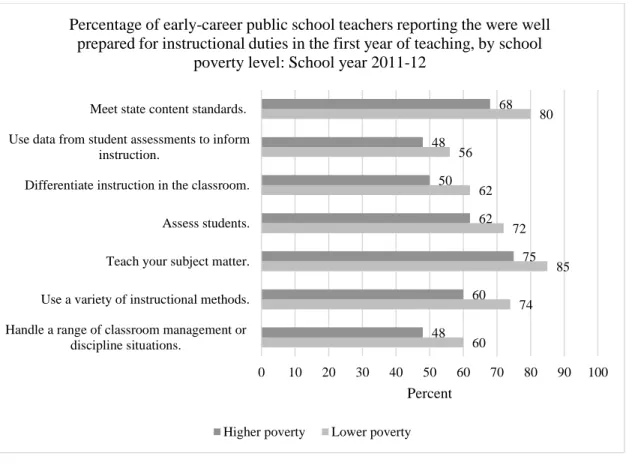
Data from the IES report on beginning teachers’ level of preparation (2018) shows that teachers in high-poverty schools reported significantly lower rates of
preparation than those in low-poverty schools (Figure 2). Early-career teachers reported the lowest levels of preparation in classroom management, using data to inform
14
Figure 2. Early-Career Teacher Levels of Preparation by Poverty Level (IES, 2018) Research suggests at least two possible reasons for lower teacher preparation and quality in low-income schools. First, low-income schools tend to have less-experienced teachers (Hanushek, Rivkin, & Kain, 2004; Xu, Ozek, & Hansen, 2015) and beginning teachers are generally less effective than more experienced teachers (Clotfelter, Ladd, & Vigdor, 2010; Hanushek, Rivkin, & Kain, 2004; Xu, Ozek, & Hansen, 2015). These findings support policies that induce more experienced teachers to work in low-income schools (Sass et al., 2012) and/or increase the general effectiveness of beginning teachers. However, this research does not explain why beginning teachers in low-income schools feel less-prepared than those in higher-income schools.
60 74 85 72 62 56 80 48 60 75 62 50 48 68 0 10 20 30 40 50 60 70 80 90 100
Handle a range of classroom management or discipline situations.
Use a variety of instructional methods. Teach your subject matter. Assess students. Differentiate instruction in the classroom. Use data from student assessments to inform
instruction.
Meet state content standards.
Percent
Percentage of early-career public school teachers reporting the were well prepared for instructional duties in the first year of teaching, by school
poverty level: School year 2011-12
15
Another possibility is that low-income school settings are different from higher income settings. Johnson, Kraft, and Papay (2011) examined working conditions and student achievement in low-income schools in Massachusetts. They found that a supportive school context contributed to improved student achievement. In their interpretation, the school context affected the teachers’ effectiveness; the low-income schools were often less-supportive environments. Another interpretation is that low-income schools require specialized teaching skills. Miller et al. (2005) assert that attempts to close the income achievement gap have failed because “such efforts have ignored another kind of gap--the gap between the skills that teachers must have to provide high – quality instruction for disadvantaged students and the preparation that teachers actually receive before they enter the profession” (p. 62). The authors suggest that teachers in low-income schools should, for example, be proficient in formative assessment and provide rigorous, authentic tasks for students.
Because school income gaps are closely related to racial achievement gaps (Center for Education Policy Analysis, 2016), research on low-income schools can be useful in investigating educational issues pertinent to culturally and linguistically diverse (CLD) students. For example, in 2012-13, about 24% of students in the United States attended a high-poverty school, in which at least 75% of students qualified for free or reduced priced lunch. However, 45% of Black and Latino students attended high-poverty schools compared to 8% of White students (Snyder & Musu-Gillette, 2015). In other words, high-poverty schools have higher proportions of Black and Latino students.
16
However, there are limitations in interpreting research in high-poverty schools and its implications for CLD students. For example, disparities in educational attainment between Black and White students persist for families with similar incomes (Chetty, Hendren, Jones, & Porter, 2018), suggesting that poverty does not fully explain disparities across racial groups. Further, while more Black and Latino students attend high-poverty schools than White students, most Black and Latino students (55%) do not attend high-poverty schools. Therefore strategies aimed at improving outcomes for CLD students cannot be solely targeted to high-poverty schools.
Despite these limitations, the body of scholarship related to culturally responsive teaching supports the notion that teachers working with CLD (and often low-income) students should have specialized skills. For example, scholars emphasize the importance of high academic expectations with scaffolding (Ladson-Billings, 2009), cultural
competence (Evans & Gunn, 2012; McGee Banks & Banks, 1995), culturally relevant curricula (Delpit, 2012; Ladson-Billings, 2009), and relationships with students and their families (Delpit, 2012; Ladson-Billings, 2009; McGee Banks & Banks, 1995).
Whether low teacher quality in low-income schools is caused by a
disproportionate number of beginning teachers or by a lack of the specialized skills required in these settings, there are implications for teacher education programs. It is vital to either: (a) improve the general quality of beginning teachers or (b) train teachers specifically for work in low-income schools. There is a lack of consensus among educational researchers about which approach is warranted. Some researchers argue “good teaching is good teaching regardless of the learning environment” (Berman, 2015,
17
p. 386) and others contend that teacher preparation should be specialized for work in low-income schools (National Partnership for Teaching in At-Risk Schools, 2005). Research on this topic is needed to inform teacher preparation programs tasked with preparing beginning teachers for a variety of school settings.
Theoretical Framework
In addition to clarity on what beginning teachers should learn, improving teacher education requires an understanding of how people learn. One of the most influential learning theorists of the past century has been Soviet psychologist Lev Vygotsky (1896-1934). Vygotsky reframed learning as social and cultural rather than an individual phenomenon. In the early 20th century most educational scholars viewed learners as passive vessels or as autonomous agents. Vygotsky proposed that learning resulted from interactions with one’s environment – either with another person or through an organized learning activity (Kozulin, 2003). According to Vygotsky’s sociocultural theory, the psychological tools that help people learn are symbolic artifacts, like texts and symbols. Each culture has its own set of psychological tools. In a multicultural context, there are many different psychological tools. Moreover, the nature of the interactions with one’s environment is largely culturally-specific and depends on the goals of the given
community. For example, some cultures focus on learning practical tasks while others emphasize more abstract skills (Kozulin, 2003).
In one component of his sociocultural theory, Vygotsky aimed to develop a theory of learning to help explain how intellectual capabilities are developed and what kind of instruction is optimal for a particular child (Chaiklin, 2003). Vygotsky describes two
18
developmental zones: the objective zone and the subjective zone. The objective zone does not refer to an individual, but rather reflects the sociocultural context in which the person lives. Chaiklin (2003) explains, “One can say that the [objective] zone for a given age period is normative, in that it reflects the institutionalized demands and expectations that developed historically in a particular societal tradition of practice” (p. 49). In
contrast, the subjective zone refers to an individual’s development in relation to that objective context.
The distinction between the objective and subjective zones of development is important to understand Vygotsky’s Zone of Proximal Development (ZPD). He describes ZPD as “the distance between the actual developmental level as determined by
independent problem solving and the level of potential development as determined through problem solving under adult guidance or in collaboration with more capable peers” (Vygotsky, 1978, p. 86). In this statement, “potential development” is not a property of the individual, but rather the presence of certain developmental functions (subjective zone) in relation to his or her sociocultural context (objective zone) (Chaiklin, 2003).
While Vygotsky’s theory was specific to child development, it has often been applied to adult learning. For example, Kilgore (2010) used ZPD to describe the interplay among individuals in a group in her theory of collective learning in social movements. Baumgartner (2001) lists sociocultural theory as one of four theories of adult learning. Baumgartner contends that sociocultural elements such as race, class, gender, ethnicity, and sexual orientation influence adult development. As such, individuals are “inextricable
19
from society in which they live; they develop in ways intrinsic to themselves but molded by the discriminatory forces of society within which they function” (p. 18).
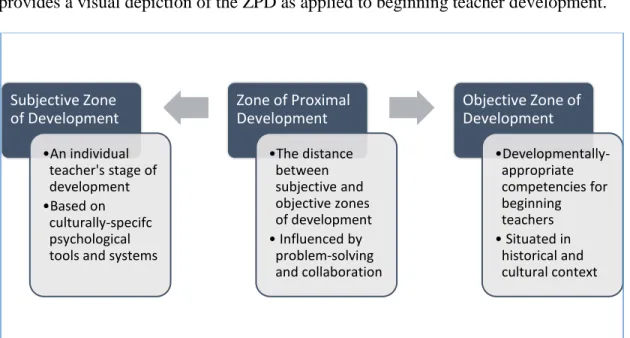
What can sociocultural theory and the ZPD tell us about teacher development? From a Vygotskian perspective, a teacher’s ZPD is based on his or her own development (subjective zone) in relation to the sociocultural context (objective zone). An education program must consider what content is appropriate for the present developmental stage and how an individual teacher relates to that content. The objective zone of development for beginning teachers may differ from that of more experienced teachers or for teachers in low-income schools. Further, the ZPD may vary between teachers. For example, developmentally appropriate content for new teachers in low-income schools may be culturally responsive teaching strategies. However, a Latina teacher may have different psychological tools than a White teacher based on her own cultural experiences. Figure 3 provides a visual depiction of the ZPD as applied to beginning teacher development.
Figure 3. Vygotsky's ZPD Applied to Beginning Teacher Development
Subjective Zone of Development •An individual teacher's stage of development •Based on culturally-specifc psychological tools and systems
Zone of Proximal Development •The distance between subjective and objective zones of development • Influenced by problem-solving and collaboration Objective Zone of Development •Developmentally-appropriate competencies for beginning teachers • Situated in historical and cultural context
20
What is the developmentally appropriate zone of objective development for beginning teachers? In other words, what do we expect beginning teachers to master? To help answer this question, several models of teacher development were developed in the 1970s and 1980s. Fuller (1969) proposed a pre-service model in which teacher candidates move through stages of concern, including: (a) identifying with the pupils in the class, to (b) concerns about professional survival, to (c) concern about their own teaching
performance, and finally to (d) concern about student learning.
Other models address the development of beginning in-service teachers. For example, Katz (1972) identified four developmental stages that teachers tend to experience in their first five years: (a) survival, (b) consolidation, (c) renewal, and (d) maturity. Katz contends that teachers in the survival stage often do not accept
responsibility for what occurs in the classroom. When they move to consolidation,
teachers begin to focus on instruction and the needs of their students. As teachers move to renewal, they have become competent in their instruction and are striving to continually improve. By the time the teacher reaches maturity, he or she is considering more abstract questions about their teaching philosophy and their impact on the school community.
While these teacher development models can help inform the type of support beginning teachers may need, they do not address what constitutes developmentally appropriate curricular content for teacher education programs or the competencies of well-prepared beginning teachers. Despite a lack of research in this area, policy groups and school districts have attempted to identify the most vital teaching competencies for beginning teachers. For example, TNTP published a report in 2014 titled Fast Start:
21
Training Better Teachers Faster, with Focus, Practice and Feedback. The report
summarized conclusions based on experiences with their own teacher education program. The authors advocated that teacher education focus on a narrow curriculum with only on the most essential teaching skills. The recommended skills included: (a) delivering lessons clearly, (b) maintaining high academic expectations, (c) maintaining high behavioral expectations, and (d) maximizing instructional time.
Similarly, Denver Public Schools recently adopted a coaching model for early-career teachers designed to quickly improve their effectiveness. The DPS Playbook for Early Career Teachers (2016) states,
Through a recent analysis of Denver Public Schools (DPS) data, national data, and interviews with Team Leads and district leaders, we learned that early career teachers tend to improve faster when they are coached on a narrow set of skills and receive direct, bite-sized feedback on those specific skills, rather than trying to develop in many areas at once. (p. 3)
This narrow set of skills, termed “Gateway Skills,” are a subset of the
competencies on the district’s teacher evaluation framework. Gateway Skills include: Implements high, clear expectations for students’ behavior and routines Clearly communicates standards-based content-language objective(s) for
the lesson
Intentionally uses instructional methods and pacing to teach the content-language objective
Checks for understanding of content-language objective(s)
There is some congruity between TNTP’s Fast Start skills and DPS’s Gateway Skills. Both emphasize behavior expectations and clear lesson delivery. However, there is
22
no empirical research to inform whether beginning teachers are more effective if they are trained on a subset of competencies. Despite decades of research on teacher development, it is unclear what constitutes the objective zone of development or the Zone of Proximal Development for beginning teachers.
This study addresses the research problems through a Vygotskian perspective (see Table 1). Specifically, the study investigates beginning teachers’ objective zone of
development. The objective zone is comprised of the teaching competencies that reflect current institutional demands and expectations for teachers. Investigating the objective zone helps answer the question: What is a high-quality beginning teacher? Because the objective zone of development is defined by social and cultural context (Chaiklin, 2003), the study also investigates whether the objective zone varies by school income level. This research question helps answer the question: Is high-quality beginning teaching different in low-income schools? Finally, understanding the typical Zone of Proximal
Development for beginning teachers requires an examination of the distance between actual and potential development. Better understanding the ZPD will help us answer the question: Which competencies merit prioritization in teacher education?
Table 1
Research Theory and Study Alignment
Research Problem Related Research Question Vygotsky Theory Connection
1. The field needs a research-based definition of effective teaching.
What are the observable teaching competencies associated with improved student outcomes?
The objective zone of development reflects societal and cultural expectations for effective teaching. These expectations should be continuously informed by educational research.
23
2. There is a lack of consensus on essential and
developmentally appropriate competencies for beginning teachers.
How important are various teaching competencies for beginning teacher effectiveness?
The objective zone of development for beginning teachers may differ from that of more experienced teachers. How difficult are various teacher
competencies for beginning teachers to implement?
To target the Zone of Proximal Development, education programs must consider the relative difficulty of various competencies for beginning teachers.
3. There is a lack of consensus
on the teaching
competencies important in low-income schools.
Do the importance and difficulty of various teaching
competencies for beginning teachers differ for those in low-income schools?
The objective zone of
development is context-specific. Relevant teaching competencies may vary in low-income school settings.
A better understanding of beginning teacher development can help teacher education programs matriculate more effective beginning teachers. Specifically, education programs need to better understand how important various competencies are for beginning teachers, the relative difficulty of learning those competencies, and whether those competencies vary by school setting.
Study Purpose
The purpose of this study was to investigate consensus among expert educators on the relative importance and difficulty of teaching competencies for beginning teachers. The study also investigated whether the importance and difficulty of teaching
competencies differs across school settings. The study did not aim to compare high and low poverty school settings, but rather to investigate whether “good teaching is good teaching” regardless of setting or if low-income schools require specialized teaching competencies. Therefore, experts rated competency importance and difficulty for unspecified school settings and again for low-income schools.
24
To meet this purpose, the Delphi method was used, in which a series of surveys are used to collect data from a panel of selected experts (Day & Bobeva, 2005; Hsu & Sandford, 2007). Previous studies have employed the Delphi method to determine which topics merit emphasis in education programs by asking experts to rank both importance and difficulty (e.g., Goldman et al., 2008; Streveler et al., 2003). In this study, expert consensus was used to help inform teacher education programs through a better understanding of beginning teacher development.
A panel of experts was selected from two skill classes: academic and practitioner. Academic experts included faculty and researchers in education and teacher preparation. Practitioners included those who work with new teachers in school, district, and
community settings. The study employed Okoli and Pawlowski’s (2004) five-step process for selecting participants, described in Chapter Three.
Teaching competencies were derived from two sources: the research synthesis presented in Chapter Two and open-ended survey responses provided by participants. Then, the expert panel rated each competency according to its importance and its difficulty for beginning teachers to implement. The panel was asked to separately rate importance and difficulty for beginning teachers and for beginning teachers in low-income schools. Beginning teachers were defined consistent with the U.S. Department of Education’s legal definition (2018): those who have been teaching for less than three complete school years.
25
Research Questions
The study addressed the following research questions:
1. How important are various teaching competencies for beginning teacher effectiveness?
2. How difficult are various teacher competencies for beginning teachers to implement?
3. To what extent do academics and practitioners exhibit consensus on competency importance and difficulty?
4. Do the importance and difficulty of various teaching competencies for beginning teachers differ for those in low-income school settings?
Data Analysis
To develop consensus among expert educators on the importance and difficulty of various observable teaching competencies for beginning teachers, I employed a multi-phase Delphi study. The Delphi technique is a method for consensus-building by using a series of surveys to collect data from a panel of selected experts (Hsu & Sandford, 2007).
The Delphi study included the following the three phases described by Hsu and Sandford, 2007: (a) respondents selected important observable teaching competencies from a pre-populated list; (b) respondents rated each competency from the synthesized list on a 4-point rating scale for both importance and difficulty; (c) respondents were provided summary data from the previous round and rated each competency on
importance and difficulty again. Results from each round were calculated for measures of central tendency and indicators of consensus.
26
Strengths and Limitations
The Delphi method was developed in the 1950s by the RAND Corporation as a technique to develop consensus among a group of experts (Hsu & Sandford, 2007; Okoli & Pawlowski, 2004). It is an inductive, data-driven approach, which is often used in areas in which little empirical evidence exists (Paré, Cameron, Poba-Nzaou, & Templier, 2013). The competencies necessary for beginning teachers is a topic of practical
importance for school districts and teacher preparation programs, however, no published studies were located that explicitly linked beginning teacher competencies to student outcomes study (see review of literature results in Chapter Two). Therefore, the Delphi technique is an appropriate method of study.
Delphi studies do not attempt to survey a sample statistically representative of a specific population. Rather, the careful selection of qualified experts is an important requirement of a Delphi study (Hsu & Sandford, 2007; Okoli & Pawlowski, 2004). An expert panel of teacher education faculty and district-based leaders of new teacher development is well-positioned to address the proposed research questions, as the panel has extensive collective experience training, coaching, and evaluating beginning teachers. However, it is possible that the expertise of panel members was unevenly distributed across topics (Hsu & Sandford, 2007). For example, some respondents may have lacked in-depth knowledge about teacher assessment practices and may have been unable to accurately rate the importance or difficulty of assessment-related competencies. To address this limitation, I followed Altschuld and Thomas’ (1991) recommendations by keeping items general rather than overly technical or complex. It is also possible that the
27
two panels (academics and practitioners) had differing views on what constitutes effective teaching. Therefore, I tested for differences between the two subgroups.
Because the relatively small sample size requirement is a strength of the Delphi method, response rate is extremely important (Hsu & Sandford, 2007). Panelists were asked to complete three rounds of questionnaires and the quality and completeness of each of their responses was crucial to the study’s findings. To maintain respondent motivation, I communicated continuously with the group and was attentive to individual panelists. All participants completed rounds one and two, however, one participant did not complete round three. While the total number of participants in round three (n=30) was still greater than the target participant number for the study (n=24), the missing data could have affected competency mode or IQR in round three.
Another strength of the Delphi method is that respondents are anonymous to other participants and, therefore, are less likely to be influenced by group dynamics like
dominant individuals or group pressure for conformity (Hsu & Sandford, 2007).
However, respondents are provided with feedback based on the group’s responses. This could lead to subtle pressure to conform to the group’s ratings (Hsu & Sandford, 2007). To address this limitation, I followed Hsu and Sandford’s (2007) recommendation by exercising caution when communicating with respondents to avoid transmitting pressure to conform to group averages.
Summary
Students in the United States lag behind many industrial nations in academic achievement (Desilver, 2017), with students from low-income families scoring lower
28
than their more affluent peers (Sass, Hannaway, Xu, Figlio, & Feng, 2012). Research suggests teacher quality is a significant factor predicting student achievement (Aaronson et al., 2007; Kane et al., 2005; Nye et al., 2004; Rivkin et al., 2005; Wright et al., 1997). To ensure high-quality teachers for every student, teaching must be accurately defined and teachers must be adequately trained. However, there is insufficient research about the practices most likely to produce effective beginning teachers (The National Research Council, 2010). A better understanding of beginning teacher development is needed to improve teacher preparation and teacher quality.
The purpose of this study was to investigate consensus among expert educators on the relative importance and difficulty of teaching competencies for beginning teachers, and whether the importance and difficult of those competencies differ in low-income school settings. Results of this Delphi study may help inform teacher preparation
programs about the competencies that warrant emphasis during training. Results may also contribute to a better understanding of beginning teacher development.
29
Chapter Two: Review of the Literature Background
Over the past thirty years, research has consistently suggested teachers are a significant factor predicting student achievement (Aaronson, et al., 2007; Kane, et al., 2005; Nye, et al., 2004; Rivkin, et al., 2005; Wright, et al., 1997). Studies have also shown that a large portion of the variance in teacher quality can be attributed to the teacher’s observable behaviors in the classroom rather than their personal characteristics, such as their beliefs (Creemers & Kyriakides, 2006; Muijs & Reynolds, 2010).
Researchers investigating which behaviors are most likely to result in improved student outcomes have identified specific teacher competencies associated with student test score gains (e.g., Beesley & Apthorp, 2010; Hattie, 2009; Kyriakides et al., 2013). Practitioners and policy-makers use this set of teaching competencies to develop frameworks for teacher evaluation, which, in turn, define effective teaching (Archer et al., 2016) and guide teacher preparation curriculum (Council of Chief State School Officers, 2013).
This set of competencies represents what Vygotsky called the Objective Zone of Development, in that it reflects the “institutionalized demands and expectations that
30
teaching directly informs what is expected of teachers in the classroom. This objective zone of development is not static; it is situated in the present historic and cultural context. It is influenced by the type of studies researchers choose to conduct and which studies are published in educational books and journals. Vygotsky asserted that optimal learning takes place within the Zone of Proximal Development (ZPD), or the space between an individual’s subjective zone and the developmentally-appropriate objective zone. To target the ZPD, teacher preparation programs must first define the objective zone.
Therefore, a comprehensive and accurate list of research-based, observable competencies is essential for effective teacher preparation.
Student outcomes. Studies on teacher effectiveness often rely on student
achievement, or cognitive outcomes, to measure student success (Kyriakides et al., 2013). However, as Jennings and DiPrete (2010) note, “Education is about more than academic achievement, and we know very little about schools’ or teachers’ effectiveness in
achieving other educational goals” (p. 138). Ultimately, the goal of teacher evaluation reform is to improve student outcomes (Davis, 2013). However, many researchers have called for a broader definition of student outcomes (Aronson & Laughter, 2016; Jennings and DiPrete, 2010; Kyriakides et al., 2013).
For example, in their synthesis of the theory and practice of Culturally Relevant Education (CRE), Aaronson and Laughter (2016) examined literature for studies that tied elements of CRE to a range of student outcomes, including student achievement, student engagement, and other measures of student success. In their discussion of Culturally Relevant Pedagogy, the authors note that CRE scholars “think in terms of long-term
31
academic achievement and not merely end-of-year tests” (p. 166). Examples of student outcomes included in Aaronson and Laughter’s synthesis include: student interest engagement in content (Adams & Laughter, 2012; Christianakis, 2011; Dimick, 2012; Ensign, 2003); student cultural competence (Milner, 2011); and student empowerment (Martell, 2013).
Relevant Prior Syntheses of Literature
Several systematic reviews of literature have attempted to synthesize the teacher-level factors most important for student achievement, including Hattie (2009 & 2012), Beesley and Apthorp (2010), and Kyriakides et al. (2013). In 2009, John Hattie published the book Visible Learning, a meta-analysis examining factors at the classroom, student, and school levels based on fifteen years of research analysis. He analyzed 800 prior meta-analyses, which included studies on about 240 million students. Based on his results, he ranked 138 “influences” related to student learning based on their effect size. He
calculated effect size (Cohen’s d) by dividing average test score gains (post-test minus pre-test) by spread (standard deviation). Hattie found the average effect size of all the factors he analyzed was 0.40. Therefore, he considered 0.40 a “hinge point.” Factors with effect sizes greater than this average hinge point were deemed effective. While Hattie considered school, classroom, and student-level effects, he found “The majority of effects above the average were attributable to success in teaching” (Hattie, 2012, p. 11).
In Hattie’s follow up book, Visible Learning for Teachers (2012), he updates the included research and provides detailed guidance about implementing the most effective strategies. An excerpt of Hattie’s findings, which reflect the top ten observable
teacher-32
level influences and their effect sizes, is shown in Table 2. A full list of Hattie’s observable teacher-level influences that reached the “hinge-point” is included in Appendix A.
Table 2
Influences on Achievement (Hattie, 2012)
Influence Description Effect Size
Self-reported grades/ Student expectations
Student expectations and assessment of their own performance
1.44
Teacher credibility Student perceptions of teacher trustworthiness, competence, dynamism, and immediacy
0.90
Providing formative evaluation
Assessment of learning progress before or during the learning process
0.90
Classroom discussion Whole class discussion 0.82
Reciprocal teaching Enabling students to use strategies such as summarizing, questioning, clarifying, and predicting
0.74
Teacher clarity Clearly communicating the intention of the lesson, organization and explanation of content, and success criteria
0.75
Feedback Information about task, process, and self-regulation – from teacher to student and from students to teacher
0.75
Acceleration Providing accelerated curricula for gifted or academically advanced students
0.68
Classroom behavior Enforcing specific and reasonable classroom rules
0.68
Self-verbalization and self-questioning
Students employ meta-cognition to set learning goals and monitor learning
33
While Hattie’s research considered school and student-level factors, other syntheses have focused specifically on teacher competencies. In 2006, Creemers and Kyriakides proposed the dynamic model of teaching, which refers to eight factors which “describe the teacher’s instructional role and were found to be consistently related with student outcomes” (p. 355). The authors based the model on their review of prior teacher effectiveness research. The eight factors in the dynamic model include: (a) orientation, (b) structuring, (c) modeling, (d) questioning, (e) application, (f) assessment, (g) time management, and (e) classroom as a learning environment. In 2013, Kyriakides, Christoforou, and Charalambous conducted a meta-analysis to determine the average effect size (Cohen’s d) of the dynamic model factors and several other teacher-level factors. Table 3 summarizes Kyriakides et al.’s definitions for each of the dynamic model factors and reported average effect size.
34
Table 3
Dynamic Model Factors (Kyriakides et al., 2013)
Dynamic Model Factor Operational Definition Effect Size
Classroom as a learning environment
Creating and sustaining a positive and effective learning environment
0.45
Modeling Presenting strategies for solving problems; guiding students to devise their own strategies
0.41
Orientation Providing a lesson or task objective; asking students to provide reason for lesson activity
0.36
Structuring Reviewing objectives; previewing content to be covered; calling attention to main ideas; reviewing main ideas at the end
0.36
Time management Efficiently organizing and managing the classroom environment; maximizing student engagement rates
0.35
Questioning Asking product and process questions; pausing after questioning; providing feedback on student
responses; sustaining interactions with students
0.34
Assessment Gathering information used to identify student needs
or evaluate the teacher’s own practice 0.34 Application Providing students opportunities to practice and apply
learning
0.18
The factors in Kyriakides et al.’s meta-analysis that were not a part of the
dynamic model included: (a) self-regulation, (b) concept-mapping, (c) computer use, (d) interpersonal behavior, and (e) classroom organization. The authors did not include definitions for these additional five factors. Therefore, Table 4 reflects factor definitions, source of definitions, and average effect size as reported by Kyriakides et al. (2013).
35
Table 4
Additional Teacher-Level Factors (Kyriakides et al., 2013)
Factor Operational Definition Effect
Size Concept-mapping It is a method to construct graphic representations of
information (Seel, 2012b).
0.75
Self-regulation Responsibility for learning outcomes assumed by the learner, including self-generated thoughts, feelings, and actions for attaining academic goals (Seel, 2012c).
0.47
Computer use In computer-based learning (CBL), the computer is used for instructional purposes (Seel, 2012a)
0.20
Interpersonal behavior Teacher-student communication in the learning process (Wubbels & Brekelmans, 1998).
0.16
Classroom organization A safe physical environment, including the strategic placement of furniture, learning centers, and
materials in order to optimize student learning and reduce distractions (Stronge, Tucker, & Hindman, 2004).
0.05
Researchers Marzano, Pickering, and Pollock conducted another influential meta-analysis in 2001. They presented their synthesis on the instructional strategies linked to student achievement in Classroom Instruction that Works. They identified nine
“high-yield” strategies. In 2010, Beesley and Apthorp extended and updated this work by generating updated effect size estimates using literature published after Marzano et al.’s work ended. Table 5 below reflects each of the nine strategies, its definition, and its effect size (Hedges’s g), as calculated by Beesley and Apthorp (2010).
36
Table 5
Instructional Strategies, Definitions, and Effect Sizes (Beesley & Apthorp, 2010)
Category Definition Mean Effect Size
Setting objectives and providing feedback
Provide students with a direction for learning and with information about how well they are performing relative to a particular learning objective so they can improve their performance
Feedback: 0.76 Objectives: 0.31
Cues, questions, and advance organizers
Enhance students’ ability to retrieve, use, and organize what they already know about a topic.
Advance organizers: 0.74 Cues and questioning: 0.20
Identifying similarities and differences
Enhance students’ understanding of and ability to use knowledge by engaging them in mental processes that involve ways in which items are alike and different.
0.65
Generating and testing hypotheses
Enhance students’ understanding of and ability to use knowledge by engaging them in mental processes that involve making and testing hypotheses.
0.58
Nonlinguistic representations
Enhance students’ ability to represent and elaborate on knowledge using mental images.
0.49
Cooperative learning
Provide students with opportunities to interact with one another in ways that enhance their learning.
0.44
Assigning homework and providing practice
Extend the learning opportunities for students to practice, review, and apply knowledge. Enhance students’ ability to reach the expected level of proficiency for a skill or process.
Practice: 0.42 Homework: 0.13
Summarizing and note taking
Enhance students’ ability to synthesize information and organize it in a way that captures the main ideas and supporting details.
0.32
Reinforcing effort and providing recognition
Enhance students’ understanding of the relationship between effort and achievement by addressing students’ attitudes and beliefs about learning. Provide students with abstract tokens of recognition or praise for their
accomplishments related to the attainment of a goal.
37
Examination of these three meta-analyses reveals inconsistencies in findings and definitions of terms. For example, Hattie includes the lesson objective as a component of “teacher clarity” (effect size 0.75), Kyriakides et al. include objective-setting as a
component of “orientation” (effect size 0.36), and Beesley and Apthorp calculate objective-setting separately (effect size 0.31). This inconsistency could be related to regional terminology differences, as Hattie is based in Australia, Kyriakides is based in Greece, and Beesely and Apthorp are based in the United States.
To synthesize these three meta-analyses, I grouped them into categories reflective of a model teacher evaluation framework. I chose Denver Public School’s LEAP
framework as a model because, in their analysis of 45 evaluation models, the American Institutes for Research (2016) rated Denver Public School’s LEAP as the most closely-aligned to Common Core research-based general instructional practices. The LEAP framework includes three broad domains with corresponding expectations and indicators. The Learning Environment and Instruction domains are assessed through classroom observation, while Professionalism is assessed through contributions outside of the classroom (LEAP Handbook, 2018). Therefore, for the purposes of this analysis, only Learning Environment and Instruction are included. The Learning Environment domain has two expectations: (a) positive classroom culture and climate and (b) effective
classroom management. The Instruction domain also has two expectations: (a) masterful content delivery and (b) high-impact instructional moves. The full list of LEAP domains, expectations, and indicators is included in Appendix B.
38
Table 6 reflects a synthesis of the three meta-analyses discussed above (Beesley & Apthorp, 2010; Hattie, 2012; Kyriakides et al., 2013) grouped by the categories in the LEAP framework. Effect sizes were removed due to inconsistencies across the meta-analyses. However, it is important to note that the teaching competencies are not assumed to have equal effects on student outcomes.