Supporting Wellbeing in school
Lisa Garforth
Doctorate in Applied Educational Psychology
School of Education, Communication and Language Sciences July 2015
Declaration
This piece of work was submitted in partial fulfilment of the requirements for the award of Doctorate in Applied Educational Psychology. It has not previously been submitted or assessed for
any other qualification and is the students own work.
Acknowledgements
Completion of this Doctoral course would not have been possible without the constant support from three very special people; my two children, Lola and Ronnie and my extremely understanding partner, Michael. You have all shown extreme resilience in dealing with the difficulties of me being busy with my written work or placement time. Thank you to Michael for the final year of this Doctorate in particular. It has been tough in many ways but the support you have continued to provide has enabled me to stay focused and get through it. Thank you for allowing me to fulfil my dream. You can have your partner back and the children, their Mum.
Thank you to my family, extended family and friends (you know who you are!) who have helped me out when I have needed you to keep the kids entertained or listen to me moaning about my work or had to deal with the stress of a hand-in week!! I truly could not have done it without the support I have received over the last 3 years.
The emotional, professional and personal voyage that this course has imparted would not have been anywhere near as enjoyable without the 10 other trainee EPs I have had the pleasure of working with. I can honestly and truly say that I have acquired 10 friends for life; you will always hold very special places in my heart. The support we have shown each other through a fascinatingly difficult 3 years has been highly appreciated. Thank you to each and every one of you, although a particular thank you to Rebecca for putting me up in Newcastle whenever I needed to focus!!
My research and personal tutor (for his sins), Dave Lumsdon, has provided me with very helpful professional and personal support, through what has been the most difficult, yet rewarding, journey of my life so far. Thank you Dave.
I would like to thank all of the EP colleagues that I have come into contact with over the last 3 years who have provided me with fabulous opportunities whilst working within their Educational Psychology Services. I hope that our contact might continue as I move forward in my career. I would like to offer a further, personal thank you to my placement supervisor, Carol Watterson who has encouraged, nurtured, challenged and inspired me over the last two years of placement. I am pleased to say that this is not the end of our relationship as I have secured a job within the service for September 2015. It has, and continues to be, an honour to work with you.
Finally, I would like to thank the staff and children within the schools I have been working within, for their patience and understanding throughout my training. I would particularly like to thank the participants of my research. I hope my written words capture the richness of the data you so helpfully supplied for me.
Over-arching Abstract
Resilience research suggests that supportive school environments can positively impact on
the ecological systems within which children and young people develop, with a particular
focus on their wellbeing. Taking this idea to a broader, systemic perspective, literature also
suggests for children and young people to enhance feelings of wellbeing, it is extremely
important that staff working within our schools are supported in meeting their own basic
needs. Self Determination Theory (SDT) emphasises the importance of satisfying three basic
psychological needs for life long psychological growth and wellbeing: Autonomy,
Relatedness and Competence.
The ideas presented within these three papers are relevant in today’s society where the
level of wellbeing experienced by individuals can impact on staff attrition rates within our
schools, as well as academic success and positive life opportunities for children and young
people.
Chapter 1 – The Systematic Review focuses on the impact of non-parental mentors used
within schools in building resilience and enhancing feelings of wellbeing for children and
young people. A quantitative approach was taken to synthesise the findings from six
papers. The papers suggest those who demonstrated greater gains in terms of their
resilience related outcomes had positively connected relationships with their mentors.
However, outcome measures used within these papers varied greatly.
Chapter 2 – The Bridging Document describes the journey from the systematic review to the
empirical research. My ontological and epistemological positions are considered in relation
to how they shaped my methodology and chosen methods. The importance of ethical
practice, including being a reflexive practitioner is also described within this chapter.
Chapter 3 – The Empirical Research follows on from the systematic review which highlighted
a gap in applying one theoretical perspective to an understanding of wellbeing within
schools. It indicated the wellbeing of children and young people can be influenced by the
wellbeing of those who care for them. Five participants from two schools, took part in
reflective discussions with a partner, over a six week period, before in depth reflective
interviews were conducted. A theory driven analysis was applied to identify how the
psychological needs suggested within SDT might be met through reflective discussion with a
relatively close and connected partner; their associated feelings of wellbeing were also
explored. Findings suggest that reflective discussions with a focus on the exploration of
psychological needs, detailed within SDT, can support positive feelings of wellbeing among
school staff. Implications for how this might be used in school, in addition to the role for
Educational Psychology are explored. As this was conducted on a small scale, it highlighted
the importance of conducting similar research with a wider range of staff in schools to allow
generalisations to be made.
Contents
Revisions ... Error! Bookmark not defined.
Chapter 1 ... 7
Non-parental mentors and their impact on resilience related outcomes for young people in schools 7 Abstract ... 8
Introduction ... 9
Definitions ... 9
Support Systems ... 10
Mentoring Model ... 11
Implications for Educational Psychology Practice ... 12
Method ... 13
Literature Search ... 13
Study Selection... 14
Data Extraction ... 16
General characteristics of my studies ... 17
Underlying Theory ... 18
Measures/interventions used ... 18
Experimental Design ... 19
Outcomes and Effectiveness ... 20
General Summary and Findings ... 21
Conclusion ... 23
Limitations ... 23
Future considerations ... 24
Chapter 2 ... 25
The voyage from a systematic review to empirical research: a bridging document ... 25
Abstract ... 26
How I arrived at my initial area of interest ... 26
The road to research ... 26
Research process ... 27
Ontology – Epistemology ... 27
Constructivist Realism ... 28
Methodology and Methods ... 29
Ethics ... 30
Chapter 3 ... 33
Primary school staff wellbeing and reflection: ... 33
a perspective based on Self Determination Theory ... 33
Abstract ... 34
Introduction ... 35
Self Determination Theory (SDT) ... 37
Reflection ... 38 Method ... 42 Participants... 42 Materials ... 42 Design ... 42 Procedure ... 43
Guided Reflection Framework ... 43
Semi-structured interview ... 45 Ethical Considerations ... 45 Analysis ... 45 Transcription ... 46 Findings ... 46 Themes ... 49 Being connected ... 49 Acceptance ... 51 Accomplishment ... 51
Freedom to express self ... 52
Suppressed emotions ... 53
Time constraints... 54
Wider restrictions ... 55
The process of reflection ... 56
Limitations of the study ... 57
Relevance to Educational Psychology ... 57
Conclusion ... 57
References ... 59
Appendix 1 – Possible Articles ... 65
List of figures
Figure 1 - Bronfenbrenner's Ecological Model... 10Figure 2 The Empty Cell Phenomenon ... 12
Figure 3 - Inclusion Criteria ... 15
Figure 4 - Interrelationship of key research concepts ... 27
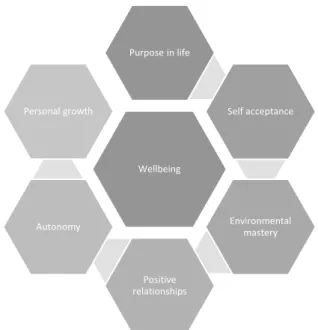
Figure 5 - Core dimensions of wellbeing - Ryff (1995) ... 36
Figure 6 - Rodgers view of Dewey's reflective philosophy ... 38
Figure 7 - Husu, Toom and Patrikainen (2008) Reflection Process ... 39
Figure 8 - Ash and Clayton (2004) Articulated Learning Model ... 39
Figure 9 - Process of the study ... 43
Figure 10 - Mapping of Wellbeing and SDT items ... 45
Figure 11 - How wellbeing was increased ... 48
Figure 12 - How wellbeing was hindered ... 49
Figure 13 - Bonding and Bridging Social Capital - Putman (1995) ... 50
List of tables
Table 1 - Search Terms ... 14Table 2 - Overall Weight of Evidence ... 16
Table 3 - Age of mentee/Description of mentor ... 17
Table 4 - Measure/Intervention used ... 19
Table 5 - Sources of Evidence and gains made ... 20
Table 6 - Phases of Thematic Analysis - Braun and Clarke (2006) ... 45
Table 7 - Phases of Thematic Analysis with addition ... 47
Appendices
Appendix 1 – Possible Articles ... 65Appendix 2 - Mapping ... 69
Appendix 3 - Weight of Evidence (WOE) - taken from the EPPI Centre Guidance ... 72
Appendix 4 - Initial Questions to staff ... 76
Appendix 5 - Participant Information Sheet ... 78
Appendix 6 - Participant Consent Form ... 80
Appendix 7 - Participant Data Sheet ... 81
Appendix 8 - Collated information from initial questionnaire ... 82
Appendix 9 - Guided reflection model ... 84
Appendix 10 - Weekly Guided Reflection ... 85
Appendix 11 - Interview Guidance Sheet ... 86
Appendix 12 - Follow up discussion with staff ... 88
Appendix 13 - Transcription System and Example ... 93
Appendix 14 - Areas of interest - Transcript 1 ... 98
Appendix 15 - Areas of interest - Transcript 2 ... 99
Appendix 16 - Areas of interest - Transcript 3 ... 100
Appendix 17 - Initial codes across the data set ... 101
Chapter 1
Non-parental mentors and their impact on resilience related
outcomes for young people in schools
A systematic review of the literature from 2003-2013
Abstract
Research around the concept of resilience has developed over the last 40 years from a deficit based model, with a focus on risk related outcomes to a strengths based approach. This includes the development of an ecological perspective, considering how support systems around a child/young person might contribute to resilience related outcomes, including positive aspects of wellbeing. Research suggests a regular, supportive, respectful relationship with a non-parental mentor may be helpful in supporting the development of children and young people. Following my interest within this area, I was keen to examine research that focused on the impact of non-parental mentors within schools on resilience related outcomes for children and young people.
Following a seven stage process for conducting a systematic review (Petticrew & Roberts, 2006), I was able to explore a range of studies, with particular focus on six quantitative papers. Findings highlighted some positive gains for the impact of non-parental mentors on resilience related outcomes, particularly when underpinned by Rhodes (2005) model of mentoring.
Introduction
In my career I have supported many children and young people experiencing difficult life situations. Initially, this included my work as a secondary school mentor, were I supported children and young people facing adversity, such as parental separation, exam stress, loss of a loved one among others. The way in which the children and young people I worked with dealt with this adversity was through self-harm behaviour, withdrawal behaviour or by displaying anxiety. This led to me developing training for older pupils to support younger pupils during their early stages at the school. My work also included group work, multi-agency working and wider, whole school initiatives. My belief was that the support enabled the children and young people I worked with to communicate their difficulties within a safe and comfortable environment and in turn, enabled them to cope with life better. I was interested to ‘test’ this hypothesis in some way; this became the motivation for my initial scoping.
I began by searching the literature around children, often referred to as ‘high risk’ (Pianta & Walsh, 2014), who had not yet developed helpful ways of coping, to consider the factors supporting positive development in this area. This led me to explore literature found within resilience research (Dent & Cameron, 2003; Friesen, 2007; Luthar, Cicchetti, & Becker, 2000; A. Masten, Nuechterlein, & Wright, 2011; A. S. Masten & Tellegen, 2012)
As Luthar et al. (2000) have argued, early thoughts of resilience in the 1970’s and 1980’s were mainly concerned with the personal qualities of ‘resilient children’, who were described as possessing attributes such as self-esteem and autonomy (Rutter, 1985). These so called resilient children were depicted within the literature to possess a sense of invincibility, leading to news headlines such as “The Invulnerables” (Masten, 2001). Thoughts of resilience of this kind appeared to be based on a deficit model. The focus was on the concept of risk, including ‘within child’ factors such as cognitive ability and social competence (Fonagy, Steele, Steele, Higgitt, & Target, 1994) and ‘within home’ factors, such as poverty, parental mental illness and abuse (Poulou, 2007), as predictors of resilience.
Once resilience research began to unfold it became evident there was an ordinariness to the phenomena, far more common than originally thought (Masten, 2001). Following an examination of many variable-focused and person-focused investigations, Masten (2001) concluded the greatest threats to human development were those that endanger the systems underlying adaptive processes, including brain development and cognition, caregiver-child relationships, regulation of emotion and behaviour, and the motivation for learning and engaging in the environment. I was keen to explore how the literature defined resilience when describing the term.
Definitions
As suggested above, throughout my initial scoping of what resilience meant, there were many different definitions within the literature (Dent & Cameron, 2003; Friesen, 2007; Luthar et al., 2000; A. Masten et al., 2011). This lack of consensus (Kaufman, Cook, Arny, Jones, & Pittinsky, 1994) and substantial variation in measuring the construct has led researchers to question whether resilience is in fact, a veridical construct or simply a mythical entity (Luthar et al., 2000). A constructionist perspective suggests our understanding of resilience should focus on the outcome of negotiations between individuals and their environments in maintaining a self-definition as ‘healthy’ (Ungar, 2004). Here, thoughts of resilience are based on context specific understandings that invite us to examine how race, gender, class, ability and other factors affect definitions of resilience.
The definitions of resilience closely associated with my own assertions about the term, included writing from Luthar et al. (2000) who refer to resilience as ‘a dynamic process encompassing adaptation within the context of significant adversity’ (p. 543) and Masten (2001) who suggests resilience might be described as ‘good outcomes in spite of serious threats to adaptation or development’ (p. 228). The literature referenced here appears to strongly suggest that resilience has long been a contested concept, used by a range of researchers. There is, however, some agreement in recent writings (Windle, 2011) for resilience to be viewed in terms of a healthy, strengths based approach to development where individuals use the resources available in their environment to bounce back from adversity.
Support Systems
I was interested in exploring my understanding of resilience further and began to examine how the development of resilience for children and young people was facilitated by the support systems around a young person. I was particularly interested in the support systems within schools and their impact on the development of resilience, competence and wellbeing outcomes (DuBois & Silverthorn, 2005; Griffin Jr, Holliday, Frazier, & Braithwaite, 2009; Karcher, 2008; Kuperminc, Thomason, DiMeo, & Broomfield-Massey, 2011; Southwick, Morgan III, Vythilingam, & Charney, 2007; Warren, 2005).
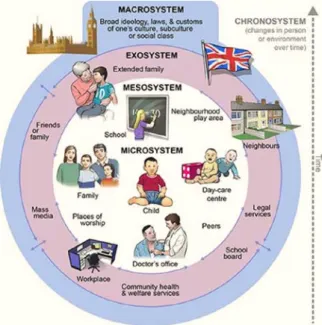
Although there appears to be a lack of consensus around what resilience is, there does appear to be some agreement within the literature, guided by some theoretical perspectives, which emphasise the multiple levels of influence on the development of children. I was keen to consider how the ideas proposed within these writings could be combined with the Ecological Theory of development suggested by Bronfenbrenner (1977), whereby an individual exists within formal and informal systems around them, interacting with one another in an ever changing process.
Figure 1 - Bronfenbrenner's Ecological Model
The ideas presented by Bronfenbrenner’s theory (Figure 1) (Bronfenbrenner ecological systems theory, Kings College London, Florence Nightingale School of Nursing and Midwifery) moves away
from the focus of within child factors to an understanding of development influenced by each of the systems surrounding the individual. The theory, in its original form (1977), argued for an understanding of the various contexts or ‘systems’ that surround an individual and how each of
these might interact to influence the development of the person. This included the introduction of four systems:
1. The Microsystem – the direct environment in our lives including family, friends, teachers and others we have direct contact.
2. The Mesosystem – which examines the relationship between Microsystems. For example, if a child develops positive relationship with his parents or carers, this may increase the chance of developing positive relationships with his teachers, which may in turn cause them to feel more accepted in school. Another example of this might include a parent teacher consultation at school. Separately, the parent and the teacher are part of the student’s microsystem; they are each examples of the student’s immediate relationships. When the two relationships interact with each other in a parent teacher consultation, this interaction is a mesosystem. This mesosystem influences the students’ development by, for example, ensuring that the child is getting the same interventions at home as at school.
3. The Exosystem includes systems where the child does not have an active role, but still affects them, for example, a parent getting a promotion or being fired.
4. The Macrosystem covers broader factors such as culture and social class.
Bronfenbrenner (1979) argued that this set of nested structures, much like a set of Russian dolls, can have a direct impact on the development of the person at the centre, leading to positive outcomes for the individual. The positive outcomes may range greatly, depending on the number and intensity of interactions occurring at that time; they may impact on the individual in a number of ways, including outcomes based on social, communication, academic, financial, relationship, psychological and health related outcomes.
Following on from the idea that interaction between the systems surrounding children and young people might lead to positive outcomes, I pursued my thinking further. This led me to consider particular research which attempted to link how the microsystems proposed in Bronfenbrenner’s model and systems within schools, could support the enhancement of resilience, competence and wellbeing outcomes (DuBois & Silverthorn, 2005; Griffin Jr et al., 2009; Karcher, 2008; Kuperminc et al., 2011; Southwick et al., 2007; Warren, 2005). This also included an exploration of the benefits of ‘non-parental’ support, in particular, mentors, in improving resilience outcomes for children (DuBois, Portillo, Rhodes, Silverthorn, & Valentine, 2011; J Rhodes, 1994; J. Rhodes & Lowe, 2008; Zimmerman, Bingenheimer, & Notaro, 2002).
Research suggests school environments are of great importance when considering the development of children, particularly the development of social and emotional wellbeing of their pupils (Aston, 2014; Organization, 2003; Patton et al., 2000). Schools that encourage a sense of connectedness, good communication and perceptions of adult caring have been shown to reduce health risk behaviours, particularly substance abuse (Patton et al., 2000). School environments that enhance social competence are those that foster warm relationships, encourage participation and provide clarity about boundaries, rules and expectations (Toland & Carrigan, 2011).
Mentoring Model
One of the findings to emerge from this reading was the application of a mentoring model proposed by Rhodes (2005), which demonstrates similarities with Masten’s (1999) notion of resilience. Here, it is suggested a mentoring relationship should be based on mutual trust and a sense that one is understood, liked and respected. From this perspective, mentors can influence youth in several ways: the relationship may provide children and young people with opportunities for fun and 11
escape from daily stresses; corrective emotional experiences that may generalise to and improve other social relationships; and assistance with emotional regulation. Rhodes (2005) cautions that progress will remain seriously constrained as long as studies remain largely empirically driven as opposed to theoretically based. Future research should give closer attention to definitions of adversity and competence and provide strong justification for choices made on conceptual and empirical grounds. This has led to greater emphasis on the role of relationships and systems beyond the family, and attempts to consider and integrate biological, social, and cultural processes into models and studies of resilience.
Implications for Educational Psychology Practice
Toland and Carrigan (2011) and Dent and Cameron (2003) suggest Educational Psychologists (EPs) are well placed to utilise the proposed levels of working suggested in the Farrell and Britain (2006) report to enhance the wellbeing of children and young people, including assessment; intervention; consultation; training and research.
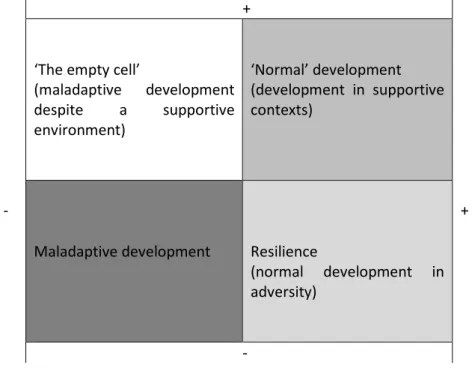
In an attempt to provide clarity to the concept of resilience and promote its use in Educational Psychology, Toland and Carrigan (2011) have applied some of Masten’s (2001) early work to illustrate the marriage of the child and their environment; this adds further support for an ecological model of resilience. Toland and Carrigan (2011) consider what A. Masten et al. (1999) refer to as the ‘empty cell phenomenon’ (see Figure 2). This bio-ecological model represents the biological within child attributes (shown horizontally) as well as the contextual variables (shown vertically) surrounding the child. The risk and protective factors, within each dimension, are suggested to impede or promote development and are conceptualised as a balance at any one time; this may change accordingly. Despite the unhelpful language used within this model, it illustrates the powerful effect of the interaction between an individuals’ environment and the development of inner resources in achieving a range of possible positive outcomes.
Figure 2 The Empty Cell Phenomenon
+
-
‘The empty cell’
(maladaptive development despite a supportive environment) ‘Normal’ development (development in supportive contexts) + Maladaptive development Resilience
(normal development in adversity)
-
Following my initial reading and interest within this area of research, I was ready to embark on the next stage of the systematic review.
Method
Literature Search
For my literature search, I followed the 7 stages outlined by Petticrew and Roberts (2006) for conducting systematic literature reviews shown below:
In formulating a question, I utilised my background reading and found discussion with my supervisors at university and on placement helpful. As a result, I was able to formulate the following research question:
‘What is the effect of non-parent mentors on resilience related outcomes for children and young people in school?’
I chose to use the phrase ‘resilience related outcomes’ due to the plethora of terms used to describe ‘resilience’ and/or ‘wellbeing’ within the studies I had already searched. The term ‘children’ was used to encompass those who could be considered a child (aged 10- 16) and ‘young person’ included those between the ages of 16-18 years, who may still be attending school, both of which were included in my criteria. In determining studies that demonstrated an impact, I chose those including data gathered at the beginning and end of the study, as minimum criteria.
Published studies were retrieved for the review by conducting a systematic search of the following electronic databases:
Scopus
Web of Knowledge
Proquest (including the British Education Index, Australian Education Index and ERIC) Ovid (including Psych articles and Psych info.).
1. Formulate the research question
2. Determine the types of studies that are relevant to
the question
3. Search for all
relevant studies 4. Screen relevant studies
5a. Map out the final studies 5b. Appraise the
studies for quality 6. Synthesize the
studies and assess heterogeneity 7. Disseminate the
findings
I carried out initial scoping of articles using broad terms such as ‘resilience’, ‘wellbeing’, ‘mentoring’ and ‘adolescent’ between September 2013 and October 2013. This provided me with a vast array of articles, many of which were irrelevant. To acquire the most appropriate studies, I defined specific search terms, attained through reading some of the relevant literature and searching thesauri for synonyms (see Table 1).
Table 1 - Search Terms
Target population Intervention Impact on Location
Child*/student/learner/
Pupil/adolescen*/ Mentor Resilien*/well-being/competen* School/secondary school/high school/middle school * was used to broaden my search to all terms, for example, resilien* displayed results to include resilience, resilient or resiliency.
Study Selection
I searched for relevant articles between October 2013 and December 2013. My strategy ensured there were clear inclusion criteria when searching for appropriate studies at different stages of my search. Firstly, this included ‘title and key words’. My inclusion criteria included:
Key words – one or more of those described in my search terms appeared in the title. Participants – any under 18 years.
Settings – all.
Intervention – Non-parental adult mentors – As cited in Hurd (2013), adolescents may seek out
non-parent adults because they may be able to meet youths’ attachment needs without threatening their sense of autonomy (Allen and Land, 1999; Zimmerman, Bingenheimer and Behendt, 2005).
Study Design – any.
Place, time, Language – worldwide, date of publication in the last 10 years (2003-2013), English
Language only.
Records were screened to exclude ineligible studies. Most exclusions were from studies of parent/peer mentors; counselling/social work; based solely on academic outcomes; and those where adults were mentees.
Following exclusion, I screened the remaining articles using abstracts. My criteria for this search included:
Key words – one or more of those described in my search terms appeared in the title. Participants – any under 18 years.
Settings – school/community based.
Intervention – as defined by empirical research investigating the impact of a non-parental adult
mentoring programmes on outcomes (as stated below), using quantitative data. Systematic literatures reviews and meta-analysis studies were excluded.
Studies of resilience outcomes – as defined by positive outcomes in spite of adverse threats to development (Masten, 2001).
Studies of wellbeing outcomes – as defined by positive outcomes that promote psychological and emotional well-being.
Studies of competence outcomes – as defined by outcomes related to feelings of effectiveness in exploring and interacting with the environment as a consequence of personal experiences of challenge (Deci and Ryan, 1985).
(It should be noted, that the three outcomes referred to above appeared to be used interchangeably, often meaning one and the same within the articles and making it difficult to distinguish between them).
Place, time, Language – worldwide, date of publication in the last 10 years (2003-2013), English
Language only.
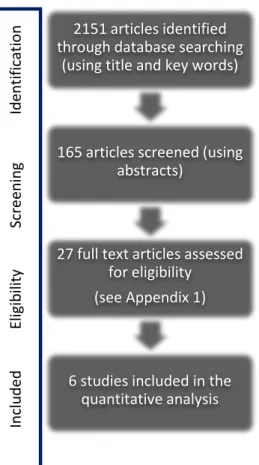
Using these search criteria, I was able to search a number of systematic review databases to ensure that my question had not already been explored. I conducted this search using: DARE database, Cochrane library, Campbell systematic review database, the EPPI centre database, Newcastle Library database and EThOS (a doctoral thesis database). I found no relevant completed systematic reviews. Once I began my systematic search there was a wealth of empirical studies and I had to filter using my inclusion criteria. Figure 3 shows the process of this filtering from initial identification through to the studies included in the final synthesis.
Figure 3 - Inclusion Criteria
In clu de d E lig ib ilit y S cre en in g Id en tific at io n 15 2151 articles identified
through database searching (using title and key words)
165 articles screened (using abstracts)
27 full text articles assessed for eligibility (see Appendix 1)
6 studies included in the quantitative analysis
1986 articles discarded as they did
not meet the first inclusion criteria
138 articles discarded as they did not meet the second inclusion
criteria
21 articles discarded as they did not meet rigourous exploration
Data Extraction
Data extraction was undertaken detailing the studies’ characteristics, as suggested by Cole (2008). This allowed me to map out the final studies and included the number and age of the participants; context; focus and duration of intervention; design; methods/sources of evidence; follow up; gains made; and effect size (see Appendix 2). The effect sizes were gathered for studies where possible. Cohen’s d is growing in popularity, making it the standard calculation for effect sizes (Cole, 2008). This is defined as the difference between two means, divided by the pooled standard deviation for those means. According to Cohen (1992), effect sizes have clearly defined benchmarks: .20 small, .50 medium, and .80 large. Some studies provided their own measure; for others I utilised the data available, and using an effect size calculator, I was able to report the effect size.
To appraise the studies for their quality I used a ‘Weight of Evidence’ (WoE) tool recommended by the EPPI Centre (see Appendix 3). The WoE was based on specific criteria and questions about the quality of each study:
Are there ethical concerns about the way the study was done?
Were the students and/or parents appropriately involved in the design or conduct of the study?
Is there sufficient justification for why the study was done the way it was?
Was the choice of research design appropriate for addressing the research questions posed? Have sufficient attempts been made to establish the repeatability or reliability of data
collection methods or tools?
Have sufficient attempts been made to establish the validity or trustworthiness of data collection tools and methods?
Have sufficient attempts been made to establish the repeatability or reliability of data analysis?
Have sufficient attempts been made to establish the validity or trustworthiness of data analysis?
To what extent are the research design and methods employed able to rule out any other sources of error/bias that would lead to alternative explanations for the findings of the study?
How generalisable are the results?
Have sufficient attempts been made to justify the conclusions drawn from the findings, so that the conclusions are trustworthy?
Table 2 shows the ‘overall weight’, based on the categorising of each question into a low, medium or high response (see Appendix 3 for details on how I arrived at such weighting).
Table 2 - Overall Weight of Evidence Hurd & Sellers
(2013) Komosa-Hawkins (2012) Leyton-Armakan et al (2012)
Simoes &
Alarcao (2013) Yadav, O’Reilly & Karim (2010) Zand et al (2009) Overall
weight of evidence
High Medium High High Medium Medium
For the three studies classified as ‘high’, they demonstrated particular strengths in three areas analysed by the tool:
All ensured that students/parents/carers were appropriately involved in the study by either consent, assent or information provided about the study;
All demonstrated good validity in terms of their scores of internal consistency;
They demonstrated the greatest generalisable results with numbers of participants ranging from 142-317 and number of schools from 3-6.
Although it may be presented from the use of this tool that this weighting was a straightforward process, I would like to note that this appeared to be a rather crude and tricky way of describing the data. It was based on my subjective interpretation and numerical quantification of each question, depending on whether I believed the questions could be answered with high, medium or low certainty. Thus, I acknowledge using this tool allowed some judgement to be made on my chosen articles, yet I was not wholly comfortable with the process it led me to follow. I will discuss this further within my limitations.
General characteristics of my studies
Four of my six studies were undertaken in the USA, one in Portugal (Simões & Alarcão, 2013) and one in the UK (Yadav, O'Reilly, & Karim, 2010). Two studies were carried out in middle schools, one during the transition from middle to high school (Komosa-Hawkins, 2012), one in the third level of education (Simões & Alarcão, 2013), one community based study (Zand et al., 2009) and one within the transition between primary and secondary education (Yadav et al., 2010). The sample sizes of my studies ranged from 25 to 317, with ages ranges falling between 9 and 18 years.
Five of the studies identified specific participant criteria describing the children/young people as ‘at risk’. One study defined this further as being at risk of substance abuse/academic failure/economically disadvantaged (Zand et al., 2009) and one as at risk of behavioural and academic difficulties (Simões & Alarcão, 2013). One of the studies used a strength-based approach looking at improving academic engagement via social and psychological wellbeing (Hurd & Sellers, 2013).
The ages of the children/young people and mentors involved varied between studies. The description of the non-parental mentor also showed some variation. See Table 3 below for details.
Table 3 - Age of mentee/Description of mentor
Study Age of mentees (children/young people being mentored)
Age of mentors Description of mentor
Hurd and Sellers
(2013) 12-16 years old Not stated Non parental, most familial, some natural mentors* (see below for description of this)
Komosa-Hawkins
(2012) Average age of 14 years 7 months. No range stated
Age 22-53 years. Average age of 30 years
Volunteer mentor
Leyton-Armakan, 11-14 years old 18-22 years old. College women 17
Lawrence, Deutsch, Lee Williams, and Henneberger (2012)
Average age of 21
years. mentors
Simões and Alarcão
(2013) 9-16 years old Not stated Teachers
Yadav et al. (2010) 10 and 11 years old Not stated School and community mentors, including teaching assistants, foster carers and nurses
Zand et al. (2009) 9-15 years old 21-80 years old.
Average age of 43 years
Paid mentor/advocate
*Natural mentors are described as ‘caring and supportive adults in adolescents’ pre-existing social networks, such as extended kin, neighbours, coaches or community members’ (Hurd & Sellers, 2013 p. 76)
Underlying Theory
Five studies drew on specific theory to underpin their work. Four of the five referenced theory proposed by J. Rhodes (2005), that meaningful and strong relationships are built on mutuality, trust and empathy and are the primary mechanism for supporting social and emotional development. Two of these studies suggest additions to this:
Within Komosa-Hawkins (2012) study there is a suggestion that Rhodes’ (2005) theory should be accompanied by explicit guidance and information;
Zand et al. (2009) acknowledge Keller’s (2005) expanded version (drawing on family systems theory) to include multiple supportive adults (i.e. mentor, youth, parent, caseworker)
One study (Simões & Alarcão, 2013), drew on Self Determination Theory (SDT) (Ryan & Deci, 2000), suggesting that satisfying three Basic Psychological Needs (BPN) (autonomy, relatedness and competence), through School Based Mentoring (SBM), would improve mentored students’ wellbeing. One study did not directly advocate the use of a particular theory (Yadav et al., 2010), although they appeared to demonstrate characteristics of Rhodes’s (2005) theory in establishing long term relationships between mentor and mentee, over a 10 month period.
Measures/interventions used
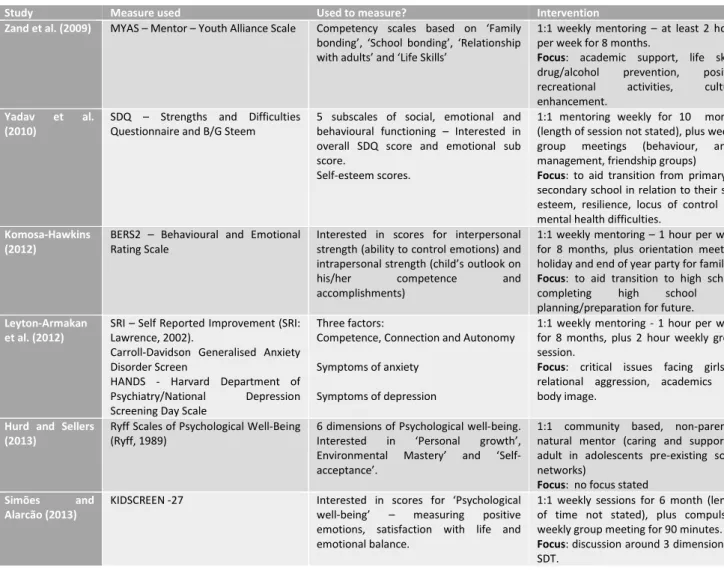
I found studies within the areas of ‘resilience’, ‘competence’ and ‘wellbeing’ used a multitude of different measures and varied interventions; my chosen studies were no exception (see Table 4). The variation in measures made it extremely difficult to draw comparisons between the findings and will be discussed within the limitations.
Table 4 - Measure/Intervention used
Study Measure used Used to measure? Intervention
Zand et al. (2009) MYAS – Mentor – Youth Alliance Scale Competency scales based on ‘Family bonding’, ‘School bonding’, ‘Relationship with adults’ and ‘Life Skills’
1:1 weekly mentoring – at least 2 hours per week for 8 months.
Focus: academic support, life skills,
drug/alcohol prevention, positive recreational activities, cultural enhancement.
Yadav et al.
(2010) SDQ – Strengths and Difficulties Questionnaire and B/G Steem 5 subscales of social, emotional and behavioural functioning – Interested in overall SDQ score and emotional sub score.
Self-esteem scores.
1:1 mentoring weekly for 10 months (length of session not stated), plus weekly group meetings (behaviour, anger management, friendship groups)
Focus: to aid transition from primary to
secondary school in relation to their self-esteem, resilience, locus of control and mental health difficulties.
Komosa-Hawkins
(2012) BERS2 – Behavioural and Emotional Rating Scale Interested in scores for interpersonal strength (ability to control emotions) and intrapersonal strength (child’s outlook on his/her competence and accomplishments)
1:1 weekly mentoring – 1 hour per week for 8 months, plus orientation meeting, holiday and end of year party for families.
Focus: to aid transition to high school,
completing high school and planning/preparation for future.
Leyton-Armakan
et al. (2012) SRI – Self Reported Improvement (SRI: Lawrence, 2002). Carroll-Davidson Generalised Anxiety Disorder Screen
HANDS - Harvard Department of Psychiatry/National Depression Screening Day Scale
Three factors:
Competence, Connection and Autonomy Symptoms of anxiety
Symptoms of depression
1:1 weekly mentoring - 1 hour per week for 8 months, plus 2 hour weekly group session.
Focus: critical issues facing girls –
relational aggression, academics and body image.
Hurd and Sellers
(2013) Ryff Scales of Psychological Well-Being (Ryff, 1989) 6 dimensions of Psychological well-being. Interested in ‘Personal growth’, Environmental Mastery’ and ‘Self-acceptance’.
1:1 community based, non-parental, natural mentor (caring and supportive adult in adolescents pre-existing social networks)
Focus: no focus stated
Simões and
Alarcão (2013) KIDSCREEN -27 Interested in scores for ‘Psychological well-being’ – measuring positive emotions, satisfaction with life and emotional balance.
1:1 weekly sessions for 6 month (length of time not stated), plus compulsory weekly group meeting for 90 minutes.
Focus: discussion around 3 dimensions of
SDT.
Experimental Design
Two of the studies used no control group (Yadav et al., 2010; Zand et al., 2009). Two of the remaining four randomly assigned participants to the control (Leyton-Armakan et al., 2012; Simões & Alarcão, 2013). The final two studies stated the focus of the comparison group; one study (Komosa-Hawkins, 2012) used the comparison group to look at school success and the other (Hurd & Sellers, 2013) used participants who did not have a mentor present in their lives as a comparison. As stated in my criteria, all studies used at least two time points to collect data. All studies reported weekly mentoring sessions; the duration of the mentoring varied. One study (Hurd & Sellers, 2013) stated the average time for having a mentor in their life was 3-4 years. This was the longest period of time from all six studies. Two of the studies lasted for 8 months (Komosa-Hawkins, 2012; Leyton-Armakan et al., 2012), one study lasted 10 months (Yadav et al., 2010), one study lasted for one school year (Simões & Alarcão, 2013) and one of the studies did not clarify the duration of the mentoring.
In addition to one to one mentoring, three of the studies offered group mentoring. One study offered a voluntary group in school (Yadav et al., 2010) focusing on behavioural/anger management and friendship groups. Another study (Leyton-Armakan et al., 2012) offered a weekly session for 6-8 pairs, where critical issues facing adolescent girls, such as relational aggression, academics and body image, were discussed. A third study (Simões & Alarcão, 2013) organised compulsory 90 minute 19
weekly group mentoring focused on the orientation of the mentees’ school work, promotion of social integration and a discussion of themes relevant to the group.
There was no follow up data reported for any of the studies.
All six studies ensured consent was sought by the participants, this included children/young people and their parents. Three of the studies reported involvement was sustained throughout the study (Hurd & Sellers, 2013; Komosa-Hawkins, 2012; Yadav et al., 2010). One of these also included details of recruitment flyers and parent meetings (Hurd & Sellers, 2013) and another (Komosa-Hawkins, 2012) reported a party and information written within a newspaper.
Outcomes and Effectiveness
Table 5 outlines the source of evidence, what was measured and any gains made. The range of success criteria and instruments/assessments/surveys used to measure the data was broad; this may be due to the range of research questions posed in each study. The studies utilised a range of interventions targeting an array of resilience related outcomes. Some studies did not provide effect sizes or the appropriate data to calculate effect sizes. All studies reported gains made. A summary and discussion of the studies can be found below the table.
Table 5 - Sources of Evidence and gains made
Study Source of evidence Significant gain Effect size
Hurd & Sellers
(2013) Survey Likert scale to determine relationship with nat. mentor. Psychological wellbeing – 24 item modified version of Ryff Scales of psychological well-being (1989) Purpose, Positive relations, personal growth, autonomy, environmental mastery, self-acceptance.
Interested in Personal Growth, Environmental Mastery and Self-Acceptance
Significant gains for those in ‘more connected’ mentee relationships compared to those in no mentoring relationship in relation to: Personal Growth = .59; Environmental Mastery = .58; and Self-acceptance = .78
0.27 of those in a more connected (MC) natural mentoring
relationship compared to those in no mentoring relationship on psychological well-being.
0.24 of those in a more connected natural mentoring relationship compared to those in a less connected (LC) relationship.
Komosa-Hawkins
(2012) Surveys completed by mentees in a group format. BERS2 (Behavioural and Emotional Rating Scale) measuring – interpersonal strength and intrapersonal strength
Non-significant gains: Interpersonal strength = 0.06 and Intrapersonal strength = 0.08
No significant main effect found between the intervention and comparison groups, or over time, and no sig interactions. Positive trends were reported.
Leyton-Armakan
et al. (2012) Lots of measures but interested in the mentees ‘Self-reported Improvements in Competence, Connection and Autonomy
Small gains reported Small effect sizes (0.2) found between the significant
relationship of initial low levels of depressive symptoms (p< 0.05) and higher levels of anxiety (p<0.01) felt by the mentors in relation to the mentees self-reported improvements in feeling competence after 1 year of mentoring.
Simões, Francisco Alarcão, Madalena (2013)
Wellbeing – looks at 3 dimensions i.e. personal wellbeing, social wellbeing and academic wellbeing.
Small gains reported Little to no effect – 0.01 shown between the mentored and non-mentored students in relation to
Interested in the findings for ‘personal wellbeing’ described as physical wellbeing, psychological well-being and hope.
Kidscreen-27 (27 items – 5 dimensions – physical wellbeing, psychological wellbeing, parent relations and autonomy, social support and peers, school environment
their psychological wellbeing. Small effect – 0.20 shown between whether students perceived satisfaction of BPN and psychological wellbeing. Small effect – 0.12 shown in the interaction of the type of group and the satisfaction of BPN on their psychological wellbeing. Np2 = partial eta squared
Yadav et al. (2010) Strengths and Difficulties
questionnaires (SDQ), and the B/G Steem self –esteem questionnaire.
Gains noted in
measured outcomes Overall SDQ - Wilks lambda = 0.477, F”2,73)=40.03, p<0.001, multivariate partial eta squared=0.52.
Emotional subscale – wilks’ lambda=0.610, F(2,73=23.351, p<0.001,
multivariate partial eta squared=0.39
Self-esteem – Wilks’
lambda=0.624, F(2,80)=34.088, P<0.001, multivariate partial eta squared=0.46
Zand et al. (2009) MYAS – Mentor – Youth Alliance Scale Competency scales based on ‘Family bonding’, ‘School bonding’, ‘Relationship with adults’ and ‘Life Skills’
The MYAS significantly predicted youths’ scores in four competency domains: Family Bonding, Relationships with Adults, School Bonding, and Life Skills
Relationship with adult – r2 = .09 Family Bonding – r2 = .05 School Bonding – r2 = .06 Life Skills – r2 = .09
General Summary and Findings
Findings from Hurd and Sellers (2013) suggest ‘more connected’ (MC) mentoring relationships, characterised by longer duration (5 or more years), more frequent contact (contact at least 2-5 times a week), greater levels of closeness (mentees reported feeling quite or very close to their mentor), and more mentee-mentor involvement (average of 11.62 on scale of 0-13 activities that mentor does with mentee), have potential to positively influence Black adolescents’ psychological outcomes. Those in a more connected, natural mentoring relationships demonstrated better overall scores on the Ryff Scale of Psychological Wellbeing, compared to those in less connected or no mentoring relationship, with effect sizes 0.24 and 0.27 respectively. As Table 5 shows, those in a more connected mentoring relationship also showed significant gains in relation to ‘personal growth’ - .59 (feeling like they have developed as a person over time), ‘environmental mastery’ - .58 (feeling like they were in charge of their life) and ‘self-acceptance’ - .78 (feeling confident and positive about themselves). This appears to support Rhodes’ (2005) theory, which suggests more effective outcomes will be gained for children and young people if the quality of mentoring relationships are stronger.
Findings from Komosa-Hawkins (2012) suggest mentoring interventions had a buffering effect in terms of adolescents’ social-emotional health, with regard to interpersonal strength i.e. the young person’s ability to control their emotions or behaviours in social situations; increases were not statistically significant. Mentoring showed a decline in adolescents’ intrapersonal strength i.e. the young person’s outlook on his/her competence and accomplishments, while the non-mentored students reported higher intrapersonal strength post-intervention. Authors suggest this could be due to the number of females in the intervention group. Work from Robins and Trzesniewski (2005)
suggest males and females follow essentially the same trajectory of self-esteem over their lifetime, although males exhibit a higher level during adolescence for reasons ranging from maturational changes associated with puberty to socio-contextual factors associated with the differential treatment of boys and girls in the classroom and gender differences in body ideals. No theoretical model exists. Komosa-Hawkins (2012) argues this may have contributed to a natural developmentally appropriate decline. Although some small trends were noticed in relation to the measures used, the small sample size (n= 25) may have contributed to a lack of further gains being noted.
Findings from Leyton-Armakan (2012) are similar to those of Hurd and Sellers (2013); they suggest mentoring relationship characteristics have an impact on the outcomes experienced by mentees, supporting Rhodes’s (2005) theory. Although a bulk of the study focuses on the outcomes for mentors, there are some reported outcomes for mentees that were of interest to me. The relationship between the initial mentor characteristics and the three dimensions of mentees’ self-reported improvement (competence, connection and autonomy), central to the idea of Self Determination Theory, demonstrated some small gains. This was only mentioned in passing however in the study. Youth with mentoring relationships, characterised by moderate levels of connectedness, did not differ from youth without relationships with natural mentors across any study outcomes. Relationships with strong levels of connectedness, however, may have the most potential to positively shape early adolescents’ social and emotional wellbeing. In the ‘more connected’ group, the mentors were older and there was a greater representation of familial and Black mentors.
Findings from Simeoes (2013) were the only study to explicitly report findings in relation to the basic needs suggested within Self Determination Theory (Autonomy, Relatedness and Competence). There was a small effect shown between the satisfaction of the basic psychological needs and psychological wellbeing, a finding that is supported by research carried out by Ryan and Deci (2000). There was little to no effect demonstrated between mentored and non-mentored students in relation to their psychological wellbeing. Little effect sizes were also shown in the interaction of the type of group (mentored or non-mentored) and their satisfaction of basic psychological needs on their psychological wellbeing.
Findings from Yadav et al. (2010), studying ‘at risk’ children receiving mentoring during primary to secondary transition, demonstrated improvements in all measured outcomes, although at different times throughout the study. Self-esteem ratings improved in the pre-transition phase within all measures of the Strengths and Difficulties Questionnaire. The improvement continued to increase post-transition, while the locus of control saw improvement in the post-transition phase only. It was hypothesised improvements in self-esteem are reflected in the improvements in the SDQ, leading to an improvement in the locus of control seen in the latter study period.
Yadav et al. (2010) provided an interesting reflection to studying children with a status of ‘at risk’. They suggested mentoring programmes would not stem the effects of inadequate social provisions and should be considered when analysing. Although results may seem positive, they highlight the small sample size and lack of a control group make it difficult to quantify the impact of mentoring as an intervention, as effect size may have been overestimated.
Zand et al’s (2009) study looked at the impact of mentoring on supporting or re-focusing a negative developmental pathway. They examined how groups displaying higher resilience/competency differed from those displaying lower resilience/competency. Results indicated that those who were deemed to be more competent were female and had a higher quality relationship with their mentor. 22
Conclusion
All of the studies within this review highlighted some gains or positive trends in relation to the impact of non-parental mentors on resilience related outcomes for children and young people. In light of my initial interest in this area, which followed on from my work carried out in secondary schools in a similar role, I was pleased to see that the research literature offered some support for the involvement of non-parental mentors.
One the interesting findings to have emerged from the review is the strength of support for Rhodes’ (2005) model of mentoring. Within this model, mentoring is conceptualised as a closely connected and supportive relationship between a youth and a non-parental adult. This suggests that mentoring relationships can help to support the positive development of social and emotional outcomes, if undertaken regularly (at least weekly) and the mentoring relationship lasts for at least 6 months. The findings from this review may be helpful to staff considering to set up mentoring support systems within the school. Furthermore, there is support for the use of Self Determination Theory and its application to research within this area. This was coupled, however, with some limitations as suggested by the authors of the studies as well as my own observations.
Limitations
As noted within section 5b of this review, the use of the ‘Weight of Evidence’ tool allowed judgements to be made on each study. These judgements were subjective decisions and could be described as a limitation of the tool. The overall weight of the study was classified as either ‘medium’ (Komosa-Hawkins, 2012; Yadav et al., 2010; Zand et al., 2009) or ‘high’ (Hurd & Sellers, 2013; Leyton-Armakan et al., 2012; Simões & Alarcão, 2013). This weighting was based on some helpful questions considering the ethical claims and design of the studies but did not reflect the claims made by the study findings. The weighting also did not allow an appreciation of the messiness involved in this process. The justifications presented within Appendix 3 highlight that for some of the questions, I was able to elicit a clear a straightforward answer to the question, yet for others, I felt that more justification was required. Again, this highlighted to me, the complexity and subjective nature of this process, which I believe to be a limitation of this tool.
As noted by Luthar et al. (2000), there is a lack of consistency around the use of the term resilience and what this might mean to different people. Throughout this review, there was also great inconsistency in the tools used to measure resilience; all studies used different measures. This caused difficulties when trying to compare one study with another. What did help to allow some heterogeneity, was the use of a theory to bring the studies together although, again, this was not the same throughout all of the studies.
The experimental designs varied in rigour. Two of the studies used no control group (Yadav et al., 2010; Zand et al., 2009), some had very small sample sizes (Komosa-Hawkins, 2012) and none of the studies included a follow up. The lack of rigour may be evident in the lack of significant results and small effect sizes.
Future considerations
Although the use of a guiding theory has been noted as a positive aspect of the studies, the use of this theory should be thorough to allow the best use of the concept. Unfortunately, within Simões and Alarcão (2013) study, the use of Self Determination Theory was not fully explored, leading to partial engagement with the area of competence but lacking the satisfaction of relatedness and autonomy. I certainly believe this would be something to consider for future research.
The decision was made to focus exclusively on quantitative studies; a mixed methods approach may have been useful to triangulate this data alongside behavioural observations and self-perceptions of those involved. This may have enhanced the rigour of the review, taking the findings beyond those that can be generated by a single method (Oliver, Venville, & Adey, 2012). The qualitative aspect of examining resilience related outcomes could help to resolve some of the difficulties of an arbitrary selection of outcome variables and the challenge brought by the sociocultural context in which resilience related outcomes might exist. Ungar (2003) suggests that qualitative research can alleviate some of the dilemmas faced by researchers in quantitative research. This might include: a lack of thick descriptions of the phenomenon; the difficulty in the transference of results and it may also allow researchers to account for their biased positions in conducting such a study.
Chapter 2
The voyage from a systematic review to empirical research: a bridging
document
Abstract
The purpose of this bridging document is to provide the reader with an overview of my Doctoral research journey. It offers a pathway of understanding from my systematic review to the empirical research and demonstrates my personal voyage as a researcher. It will document my ontological position and how this has shaped my epistemology, methodology and chosen methods for my research. Ethical considerations are discussed, including the impact of being a reflexive practitioner and how this shaped the way I conducted the research.
How I arrived at my initial area of interest
Within my professional career, before embarking on the course for the Doctorate in Applied Educational Psychology, I spent a number of years supporting young people within a secondary school. The support I provided ranged from whole school training packages and initiatives to smaller group work opportunities designed to enhance the wellbeing of the children and young people. My main focus, within this role, was supporting children and young people in one to one mentoring sessions and training older pupils to offer mentoring. Influenced by this background training, this led me to consider what the research might tell us about the impact of adult mentors on resilience and wellbeing related outcomes for children and young people. This became the focus for my systematic review where findings revealed:
• research on non-parental mentors demonstrates some positive trends for the impact on social and emotional outcomes for children and young people;
• a strength in the use of Rhodes’ (2005) model of mentoring within the research. This is conceptualised by a closely connected, supportive and respectful relationship lasting for at least 6 months;
• there is support for the use of Self Determination Theory (Ryan & Deci, 2000) and its application to research within this area.
The road to research
The systematic review allowed me to examine quantitative research in relation to the ways staff in a school might enhance and support the wellbeing of children/young people. I learnt there was little research informing me about enhancing the wellbeing of the staff.
Since I have been working within a number of schools within my placement work, I have engaged in conversations with staff regarding the findings from my systematic review research. Many of the staff I spoke to had concerns about the levels of staff wellbeing. Their concerns included the impact their wellbeing had on their role within an educational environment, particularly when carrying out roles such as, emotional support for pupils. I was keen, within my own research, to give a voice to staff and allow their views to be heard.
In addition to the teaching of academic skills, more often, schools can be the place where pupils develop rationally, emotionally and behaviourally (Willms, 2004). It can be through the creation of a psychologically positive environment that such health and wellbeing outcomes might be achieved (Saab & Klinger, 2010). As it is often the staff that create the psychological environment within which children are educated, I became interested in how these environments might be enhanced further and under what circumstances this would occur.
Rather than examine this through a cause and effect relationship as in the systematic review, I was interested to explore the thoughts of the staff in a richer way, applying a theory by Rhodes (2005) of relationships in a practical sense within my empirical research. I was interested to examine how relationships based on mutual respect, where one is understood might provide support for their feelings of wellbeing. I hoped to consider their interpretations of wellbeing and how it was enhanced by the psychological environment of the school in which they worked.
Research process
When considering how research this was to be approached, I wanted to be clear and transparent about what knowledge I was looking for. It is argued this should match the methodology, methods and sources of information chosen (Grix, 2002; Willig, 2013).
Based on my interests and motivations suggested so far, I would like to consider my ontological, epistemological and methodological positions, before going on to describe the methods and sources of information analysed. Adapting a model proposed by Grix (2002), Figure 4 shows a model, highlighting my thinking throughout this process.
Figure 4 - Interrelationship of key research concepts
Ontology – Epistemology
Ontology is said to be the starting point of all research with a directional relationship to epistemology, methodology, method and sources (Grix, 2002). In essence, your ontological position refers to what there is to know about the social world. Grix (2010) suggests this is implicit, even
•Constructivist Realist perspective
•Realist view that social world exists independent of either positivist or constructivist analysis •Meanings/interpreations of reality are constructed through continual and ever changing
interactions with individuals, cultures and times of the current social world
Ontology
•Positivist/Interpretivist Approach
•Positivist - Gaining knowldege from the social world using scientific methods of enquiry •Interpretevist -Ways of gaining knowledge about social phenomena should appreciate the
subjective meanings/interpretations that individuals experience within a diverse society of people and the structures that uphold it
Epistemology
•Quantitiative and Qualitative approaches • To gain a general insight to a small population and have a more precise
understanding of the phenomena, I will adopt a quantitative approach before using this data to explore in-depth interactions between people and structures within a given social context, using a qualitiative approach
Methodology
•
Surveys and InterviewsMethod
•
Survey data and Interview transcripts
•
Interpretations of between and within school
differences
Sources
before we choose our topic of study. It involves engaging with how we see the world and categorising this into a position, defining the nature of our reality.
I believed it was important to continue to apply an ecosystemic understanding of an individual’s development in the social world to my ontological position. Again, as with other parts of my thinking throughout this process, this is influenced by the work of Bronfenbrenner. I am taking the stance that such a position assumes meanings or interpretations of reality are constructed through continual and ever changing interactions with individuals and their surroundings, such as their family and cultural influences. Taking this alone, I might have assumed a constructivist ontological position with an interpretivist epistemology. I believe an alternative position may be more honest. On more careful consideration of the value I placed on some of the elements of my systematic review, I began to give this some further thought.
This journey has been challenging. It has taken me time to understand my ontological and epistemological stance and how to reflect this in the empirical research. I have valued taking the time to reflect on my own values and beliefs to determine how to carry out the research. As Shaw and Frost (2015) suggest, it can be a challenge for researchers to acknowledge the messiness of applying different approaches and have the confidence to present what is closer to the chaotic reality of human life. Relatedly, Parkhe (1993) suggests that researchers should embrace the messiness of social studies, arguing that only through the process of research can we bridge the gap between the known and unknown. Considering the values and principles I hold in relation to my role and how I perceive the world, I believe the alternative position offered by Cupchik (2001) allows my whole belief system to be appreciated, accommodating both an interpretivist and elements of a post positivist approach: Constructivist Realism.
Constructivist Realism
A constructivist realist ontological position holds two ideas in partnership. First, the critical realist view of the world; an acknowledgement that social phenomena exists prior to and independent of either positivist or interpretivist analysis (Cupchik, 2001), where knowledge of reality is imperfectly achievable. The second, parallel view, suggests both of these forms of analysis are faced with a level of ‘constructing’ the world from the social environment of which they are part. Similar again to the work of Bronfenbrenner, Cupchik (2001) suggests that the social world is multi-layered with many levels of interacting structures working simultaneously with one another. Within this paradigm, it is argued that these interacting structures should be examined using a range of methodologies in a complementary process. Precise investigation can be examined through quantitative methodologies, leading to clarification of concepts, whilst the rich and thick descriptions can be achieved through the use of qualitative methodologies (Cupchik, 2001).
Recently, literature has moved beyond the idea of methodological silos mentality, where human development is viewed through the lens of one particular method. There appears to be an alternative view emerging, where human experience is viewed in terms of a diversity of beliefs, opinions and practices. Here, the pluralism of mixing paradigms, data and analysis techniques is argued to be more acceptable (Shaw & Frost, 2015). Lin (1998) and Roth and Mehta (2002) also support the combination of positivist and interpretivist methodologies, rejecting claims for the use of one or the other approach, welcoming a fusion of approaches. Barkin (2003) examines the compatibility of a constructivist epistemology with classical realist theory, suggesting that whilst constructivism is not necessarily realist, constructivist research is as compatible with a realist worldview as with any other.
This philosophical journey led me to an understanding of my ontological, epistemological and methodological approaches to research. Willig (2013) suggests it can be very helpful for a researcher to distinguish between their methodology (the general approach) and the method (the specific technique) used, as this is often used interchangeably. She highlights the methodology should be informed by the epistemological approach used. As I have noted above, my epistemology can see the value in both positivist and interpretivisit approaches. This would suggest both quantitative and qualitative methodologies might be used within my empirical research. As Grix (2010) suggests, the methods a researcher chooses, should be based on the questions you wish to answer.
Methodology and Methods
Within my empirical research, I was concerned with exploring the thoughts of staff in relation to how they understood their own wellbeing, and what influence this had on their ability to carry out a range of roles expected of them within the school. As suggested within the literature (Briner & Dewberry, 2007; Dodge, Daly, Huyton, & Sanders, 2012; Roffey, 2012; Ryff, 1989, 1995), the concept of wellbeing is not a clearly defined term, meaning different things to different people, I was keen to establish what staff meant by wellbeing in order for me to define it within my research. I decided to begin this discovery by choosing a survey method by engaging all the staff willing to participate in 3 schools (Appendix 4 shows the questions asked). I considered this survey in terms of a ‘needs analysis’ (McKillip, 1998), using the recommended steps of carrying out such a procedure:
identifying the audience; define the target population;
generate descriptions of the ‘problem’; evaluate the most important needs.
From this analysis, I was able to illicit information (see Appendix 8) highlighting the elements of wellbeing most important to them. I was also able to uncover some responses to one particular question: ‘Do you feel that state of your wellbeing impacts on your practice in school?’ And ‘If so, in what way?’ The responses sit comfortably with findings from the literature suggesting staff wellbeing can impact on the wellbeing of the children in the school and also added a further rationale for why this was an important area of research.
The responses included comments, such as
• “high feeling of wellbeing brings positive energy to class”
• “low feelings of wellbeing = low moral”
• “positive attitude is infectious, helps pupils feel extra special and cared for”
• “stressed = difficult to concentrate”
• “good mood = better work performance”
• “try to get on but not as effective”
• “happy classroom = positive environment”.
It appeared from these initial findings that the emotional position of adults teaching and often mentoring children and young people, might be influenced by their own emotional needs. I was interested to explore this further to determine the validity of this initial finding and explore how school environments might enhance or hinder t