Change in Farm Production Structure Within
Different CAP Schemes – an LP Modelling
Approach
Jaka ŽGAJNAR
Emil ERJAVEC
Stane KAVČIČ
[email protected] University of Ljubljana,Biotechnical Faculty, Dept. of Animal Science Groblje 3, SI-1230 Domžale, Slovenia, B.Sc.
Abstract After accession to European Union in 2004 direct payments became very
important income source also for farmers in Slovenia. But agricultural policy in place at accession changed significantly in year 2007 as result of CAP reform implementation. The objective of this study was to evaluate decision making impacts of direct payments scheme implemented with the reform: regional or more likely hybrid scheme. The change in farm production structure was simulated with model, applying gross margin maximisation, based on static linear programming approach. The model has been developed in a spreadsheet framework in MS Excel platform. A hypothetical farm has been chosen to analyse different scenarios and specializations. Focus of the analysis was on cattle sector, since it is expected that decoupling is going to have significant influence on its optimal production structure. The reason is high level of direct payments that could in pre-reform scheme rise up to 70 % of total gross margin. Model results confirm that the reform should have unfavourable impacts on cattle farms with intensive production practice. The results show that hybrid scheme has minor negative impacts in all cattle specializations, while regional scheme would be better option for sheep specialized farm. Analysis has also shown growing importance of CAP pillar II payments, among them particularly agri-environmental measures. In all three schemes budgetary payments enable farmers to improve financial results and in both reform schemes they alleviate economic impacts of the CAP reform.
Key words: CAP reform, optimal farm structure, linear programming
1. Introduction
Direct payments are important element of Common agricultural policy (CAP) which could significantly influence decision making process at the farm level. After accession to European Union direct payments became one of the most important income sources for farmers also in Slovenia (Volk et al., 2006). Economic conditions are relatively similar with old member states, since in pre-accession period Slovenia introduced CAP like agricultural policy and consequently results of pre-accession negotiations allowed progressively providing funds from national budget to the level of old member states reached in 2007. After accession policy changed significantly in year 2007 as result of the implementation of 2003 CAP reform. An important element of this reform was besides market measures reform (market liberalization) and strengthening of the second pillar, the ‘decoupling’ approach. It is expected that decoupling in general will significantly influence production structure in Slovene agricultural.
Namely the agricultural enterprises will have to orient themselves more closely to the market. Another important factor, concerning policy, is also EU Commission’s interest by supporting the renewable energy strategy. As a result energy crop production has come to offer an alternative for agricultural enterprises as it opens new income sources for arable farmers besides food and feed production. Simultaneously, additional demand is going to lead to higher prices and consequentially better economic position of arable farmers is expected. But this non-food production and positive effect on prices is definitely going to cause significant issue for livestock sector, where in Slovene conditions cereals and some other crops are indispensable inputs.
This changing environment, which is significantly caused by CAP modification, gives farmers new challenges in terms of how their financial situation might be improved or even to stay at the initial economic position. Continuously they are forced to make new decisions about which sector to choose, what to produce and by which technology. There exist many techniques of decision making that could help farmers to solve such problems (Boehlje and Eidman, 1984). The most common approaches are mathematical programming models based on the optimization technique. On of them is linear program (LP) as classical optimization tool that could be applied to find optimal production plan. It chooses between farm enterprises (activities) on the bases of objective function with respect to a set of fixed farm constraints (for example, constraints on the maximum amount of resources available or minimum amount of certain item which need to be used). In other words, we get an constraint-optimization problem, where objective function represents the preferences of the farmer. There have been many applications of LP in the area of policy analysis, for example Majewski and Was (2005) exposed some analyses based on this method that had been created in connection with current CAP reform, focusing mainly on economic situation and production structure. Berg et al., (1999) have used the LP to assess the impact of implementing CAP in the new member state. Shrestha et al. (2007) have also used the LP approach to estimate the regional effects of decoupling on farming in Ireland. Multi period LP model has been used by Breen et al. (2005) to simulate the farmers’ response on the decoupling approach. However, in such analysis it has to be considered that LP is normative technique that projects the optimal outcome and not the actual one.
2. Material and Methods
The presented model has been developed in MS Excel Spreadsheet and has been solved with the solver function. The “free” bundled version of the Solver supports just up to 200 decision variables (Microsoft Excel…, 1999). This is the main reason why we have decided to focus only on those sectors in Slovene agriculture where one can expect significant impacts of actual CAP reform. Previous researches (Rednak et al., 2005) shown that this reform will have the most significant impact in cattle sector. The main part of model database, especially input-output coefficients, is taken from Gross Margin Catalogue (Jerič, 2001). Since this catalogue considers prices from the year 2001 they have been updated. We applied average prices and costs that are annually calculated for the needs of model-calculations (KIS, 2006). We have considered an simplification, assuming that the financial objective is the only and the most important one (one of the LP drawbacks). Namely, we optimized the production structure on the basis of total gross margin obtained. Included activities could be classified into four groups. In the first group all livestock activities are considered (dairy cows, suckler cows, beef and veal production and sheep). Production activities on grass and arable land, mainly used for forage production are merged into the second one. Even thought this is a common supply model, also some selling activities are considered for ‘crop’ surpluses selling, used to balance production at the farm level. In the last, most heterogeneous, group we can classify other activities (purchase activities, hiring of land and labour, transfers within farm household, storehouse balance, etc.) that connects and completes all other three groups at different stages. For the first and the second group of activities different technologies and intensity of
only one technology and intensity could be included at once. Namely, it is not meant to find the best technology or intensity, but to find the optimal solution within pre-selected activities, defined by the user. To obtain the solution that might imitate farmer decision, the model includes also some constraints that must be satisfied. They could also be separated into four major groups. First group of constraints belongs to zoo-technical constraints, including also animal nutrition requirements. While, all land constraints including crop rotation and mineral nutrition balance, are nested in the agro-technical group. Constraints regarding agricultural policy measures (milk quota, premium rights for suckler cows, premium rights for sheep headage payments; maximum livestock density allowed) are part of the next group. In the fourth group all the rest constraints occur (labour, harvesting technology, and ‘balance rows’). Developed LP is capable to analyze different types of agricultural holdings, i.e. specialized or those with mixed production plans. Model was tested on hypothetical farm, situated in the hilly part of Slovenia possessing 5 hectares arable land and 10 hectares grassland. Half of this area is located in less favoured areas (LFA). On the land available, farm produces forage mainly for own use and in the case of surplus also for sale. By searching the optimal crop production also the crop rotation was considered (maize up to 70 %, cereals 60 % and at list 20 % clovers). We assumed that farm was specialized in dairy and suckler cows. The farm owns 120 tones of milk quota and 20 premium rights for suckler cows. In searching for optimal production plan it is possible to include other livestock production activities (beef, calves and sheep). The family labour available equals to 1.6 annual working units, since if additional labour is necessary it is possible to hire it.
3. Scenario analysis
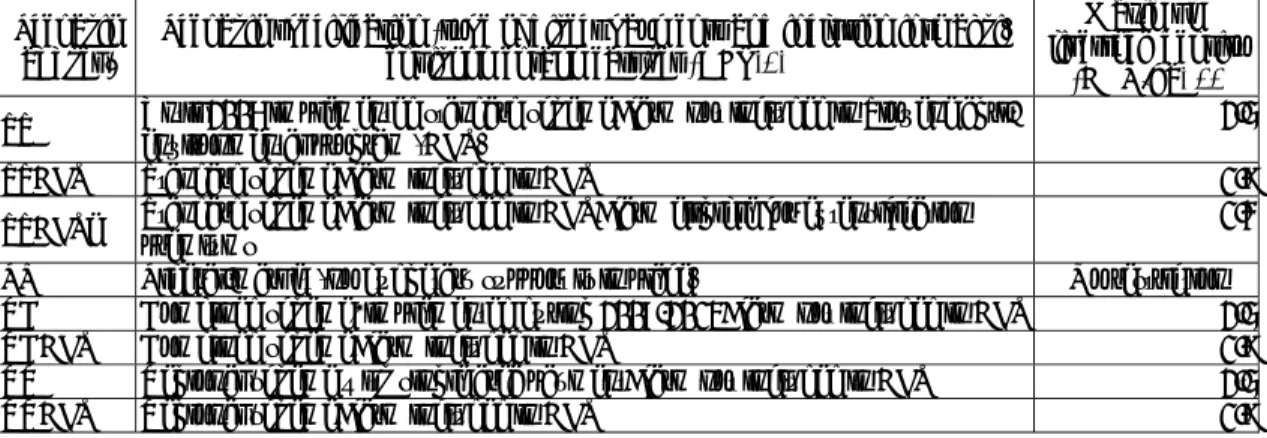
Developed model includes three different direct payments’ schemes: (i) until 2006 valid standard scheme assuming EU-15 pre-reform level of payments, (ii) combined scheme to be implemented in the period 2007 to 2013 and (iii) regional scheme that is likely to follow after 2013. According to given conditions and constraints of each scheme we analyzed their effects on optimal production plans. It was taken into consideration that within each scheme it is possible to combine different types of CAP measures dependent on livestock density. Except in the forth scenario (LM) where no budgetary support is in place, all other scenarios envisage payments for LFA and some of them also payments for implementing agri-environmental program (AEP). On the basis of these conditions (types of subsidies and livestock density) eight different policy scenarios were analyzed (Table 1).
Table 1. Scenarios analyzed
Scenario
abbrev. Scenario specification (type of direct payments and inclusion into agri-environmental measures (AEP)*)
Maximum livestock density
(GLU/ha) **
SS Until 2006 implemented standard scheme; farm not included in Slovene agri-environmental program (AEP) 2.5
SSAEP Standard scheme; farm included in AEP 1.9
SSAEPe Standard scheme; farm included in AEP; farm eligible for extensification premiums 1.4
LM Liberal-market (no budgetary support is in place) No restriction
RC Combined scheme, implemented during 2007-2013; farm not included in AEP 2.5
RCAEP Combined scheme; farm included in AEP 1.9
RR Regional scheme with single area payment; farm not included in AEP 2.5
RRAEP Regional scheme; farm included in AEP 1.9
*Model includes level of agri-environmental payments (AEP) from the period 2004-2006
** Maximal gross livestock units per hectare of agricultural land (for some payments utilized agricultural area, for the other agricultural land for forage production)
4. Results and discussion
Developed LP model was employed to find optimal production plan under different conditions (i.e. specializations) for analyzed hypothetical farm. The main results are presented in figure 1. The highest total gross margin is attainable with dairy farming. This seems logical since predominant part of utilized area is grassland where farm can produce only voluminous forage. Optimal solution under standard scheme (SS) includes 33 dairy cows, while their number is reduced proportionally with livestock density constraints in scenarios SSAEP and SSAEPe. Almost the same herd size and slight economic improvement in all reform scenarios show that economic interest for dairy production on the analyzed farm will not significantly change under the assumption of constant commodity and input prices. Stability of this solution is most dependent on achieved milk price. Significant improvement is noticed in all schemes if farm includes in agri-environmental measures (AEP) and just the opposite holds for farming without any subsidy (LM). 0 5 10 15 20 25 30 35 40 G M ( 1 ,000 E U R )
Dairy cows Bulls fattening Suckler cows
Calves fattening Sheep breeding - milk
0 10 20 30 40 50 60 SS SSAEP SSA EPe LM RC R C AEP RR R R AEP GL U
Figure 1: Achieved total gross margin and number of grazing livestock units at the farm in observed policy scenarios
Already on the basis of area available (low proportion of arable land) one can expect that bulls fattening is not competitive to dairy production on analyzed farm, except this is an additional activity on the holding (therefore farming does not represent the main source of income). For the optimal feed ration of animals essentially higher percentage of arable land would be necessary on the farm (current share only 33 %). Since this share on hypothetical farm is assumed to be fixed, it could be expected that herd size is more or less the same for all
scenarios. The number of fattened bulls is reduced only in the third scenario of standard scheme (SSAEPe), where the reduction is imposed by lower livestock density (1.4 GLU). In this case extensification premiums efficiently compensate deficit of revenue caused by lower livestock density.
Bulls fattening is one of those sectors, where CAP reform will have the most negative impacts on economic outcome. This is the consequence of total or partial reduction of production coupled direct payments. More than 4,000 EUR better economic outcome is obtained under combined scheme compared to regional one, since the former keep one part of direct payments coupled and another one in form of historical payments.
Suckler cows optimal herd size is more or less constant in all standard and combined scheme scenarios. Slight decrease in number of suckler cows is indicated in LM and both regional scheme scenarios, where no coupled payments are in place at all. Economic outcome in comparison with dairy and beef production is not stimulative, but it has to be taken into consideration that extensive organization in this case brings lower harvests and consequently also lower labour demand. Suckler cows seems interesting especially in part time farming, when farming represent only a supplementary source of farm household income. Under standard scheme farm could improve economic result with involvement into agri-environmental measures and managing under limits of 1.4 GLU per hectare to get additional payments (extensification premiums). From 2007 it is undoubtedly sensible to adapt agricultural practice in compliance with CAP rural development program conditions (LFA and agri-environmental payments). In the analyzed case this means up to 4,000 EUR increase of total gross margin. The importance of subsidies confirms also the fourth scenario (LM) where result is in general halved compared with actual policy environment.
Even though calves fattening is not very frequent specialization on Slovene farms, we simulate it. What is interesting in this sector is that breeding is actually not connected with land, because all forage is possible to purchase. Linkage to land is required through allowed livestock density. In all scenarios with exception of LM (where the main limited factor is forage), area is the most limiting factor. Except small amounts of hay all other farm harvests are sold. In standard scheme scenarios (SS and SSAEP) high level of direct payments are considered, especially slaughtered payments that are cancelled with CAP reform implementation. This fact will not have an important impact on the optimal herd size, but in worsening economic situation of the sector.
Sheep specialization was also tested with the model. If we focus on sheep for milk production with further milk processing and direct sale of dairy products at farm gate, it demands very high labour input. This leads to lack of household labour supply and consequently all scenarios include hired labour (more than half needs).
In all scenarios herd size is the same, except in the scenario with more restricted livestock density. Anyhow, adapting management to conditions of SSAEPe scenario would be irrational since no extra payments are on disposal for sheep. The optimal financial plan would be achieved with involvement into agri-environmental measures (SSAEP). Comparing with other livestock sectors this is the only one where regional scheme would lead to better outcome. Difference between combined and regional scheme is approximately 1,000 EUR and both results can be improved for 2.5 thousand EUR by inclusion into AEP.
Conclusions
Model results confirm the hypothesis that the reform will have negative economic impacts on farms with intensive production practice, especially those with high livestock density. But in
many cases it is possible to improve economic outcome of farming just with more efficient production plan.
In analyzed livestock sectors high importance of subsidies is shown, ranged between 23 % and 73 % of total farm gross margin. In both CAP reform schemes this percentage is reduced. In combined scheme it remains between 26 and 60 % depending on farm’ involvement in agri-environmental measures. Regional scheme would bring drastic change in achieved total gross margin compared with this year implemented combined scheme. Nevertheless, the share of subsidies in total gross margin remains comparable to those in combined scheme. Model results confirm that calves fattening specialization is most dependent on subsidies (in standard scheme) and consequently this sector experiences the highest shock. Just the opposite holds for dairy farming - both cows and sheep, where share of subsidies in farm gross margin will remain stable. The highest share of budgetary support is noticed in suckler cows (65 % - 82 % of gross margin).
Model results also confirm growing importance of CAP pillar II payments, among them particularly agri-environmental program (AEP). In all three schemes observed direct payments enable farmers to improve financial results and in both reform schemes they alleviate economic impacts of CAP reform.
References
1. Boehlje M.D., Eidman V.R. 1984. Farm management. Canada, New York, John Wiley & Sons: 806 p. 2. Berg E., Davies S., Majewski E., 1999; Einkommenswirkungen unterschiedlicher agrarpolitischer
Szenarien auf landwirtschaftliche Betriebe in ausgewählten MOE- und EU - Länder. Agrarwirtschaft 48;8/9; 331-337
3. Breen J. P., Hennesy T. C., Thorne F.S. 2005. The effect of decoupling on the decision to produce: An Irish case study. Food policy 30:129-144
4. Jerič D. 2001. Katalog kalkulacij za načrtovanje gospodarjenja na kmetijah v Sloveniji. Slovenj Gradec, Kmetijska založba: 169 p.
5. KIS. 2006. Data for model calculations (unpublished)
6. Majewski E., Was A. 2005. Optimal structure of farms in a region - a modeling approach. In: 99th seminar of the EAAE (European Association of Agricultural Economists), Copenhagen, Denmark, 24-27 avg. 2005 (unpublished)
7. Microsoft Excel 2000 step-by-step. 1999. Washington, Microsoft: 414 p.
8. Rednak M., Erjavec E., Volk T., Kožar M., Kavčič S. 2005a. CAP reform might lead to significant redistribution of funds between the farmers and sectors – the case of Slovenia. (Sevilla 2005)
9. Shrestha S., Hennessy T., Hynes S. 2007. The effect of decoupling on farming in Ireland: A regional analysis. Irish journal of Agricultural and Food Research 46: 1-13
10. Volk T., Cunder T., Štebe T., Pintar M., Bedrač M., Moljk B., Kuhar A. 2006. Ocena stanja v slovenskem kmetijstvu v letu 2005. Spomladansko poročilo. Ljubljana, Kmetijski inštitut Slovenije: 92 p.