Seton Hall University Seton Hall University
eRepository @ Seton Hall
eRepository @ Seton Hall
Seton Hall University Dissertations and Theses
(ETDs) Seton Hall University Dissertations and Theses
Winter 12-20-2020
New Jersey Superintendents’ Perceptions of the PSEL Standards
New Jersey Superintendents’ Perceptions of the PSEL Standards
and their Application to the Summative Evaluation Process of
and their Application to the Summative Evaluation Process of
School Principals
School Principals
Kevin HajdukFollow this and additional works at: https://scholarship.shu.edu/dissertations
Part of the Other Educational Administration and Supervision Commons
Recommended Citation Recommended Citation
Hajduk, Kevin, "New Jersey Superintendents’ Perceptions of the PSEL Standards and their Application to the Summative Evaluation Process of School Principals" (2020). Seton Hall University Dissertations and Theses (ETDs). 2836.
New Jersey Superintendents’ Perceptions of the PSEL Standards and their Application to the Summative Evaluation Process of School Principals
by
Kevin P. Hajduk
Dissertation Committee Martin Finkelstein, Ph.D., Mentor
Wendiann Sethi, Ph.D. Mario Barbiere, Ed.D.
A dissertation submitted in partial fulfillment of the requirements for the degree of Doctor of Education
Department of Education, Management, Leadership and Policy Seton Hall University
ii
iii
APPROVAL FOR SUCCESSFUL DEFENSE
Kevin P. Hajduk has successfully defended and made the required modifications to the text of the doctoral dissertation for the Ed.D.during this Fall Semester 2020.
DISSERTATION COMMITTEE (please sign and date beside your name)
Mentor: Dr. Martin Finkelstein_____________________________________________________ Date Committee Member: Dr. Wendiann Sethi_______________________________________________________ Date Committee Member: Dr. Mario Barbiere________________________________________________________ Date
The mentor and any other committee members who wish to review revisions will sign and date this document only when revisions have been completed. Please return this
form to the Office of Graduate Studies, where it will be placed in the candidate’s file and submit a copy with your final dissertation to be bound as page number two.
iv ABSTRACT
It is difficult to imagine a focus for research with greater social justification than research about successful educational leadership. Therefore, the purpose of this study is twofold. First, this study explores the “elements” of the Professional Standards of Educational Leaders (PSEL) from the perspective of New Jersey school superintendents to determine what they consider to be most important when formally evaluating New Jersey public school principals. Second, this study will also distinguish what are the essential, compared to important, leadership skills and responsibilities that a building principal must demonstrate as defined by the PSEL standards and determined by Chief School Administrators through the summative evaluation process.
The research design for this study is quantitative, utilizing a survey methodology as the primary data collection tool. The survey was developed using the Professional Standards for Educational Leaders (National Policy Board for Educational Administration, 2015) and subject to review by a panel of experts.
This study uses the literature on the original work by the Interstate School Leaders Licensure Consortium (ISLLC) in 1996 and revised in 2008 that developed national standards for school leaders. The Professional Standards for Educational Leaders (PSEL) replaced these standards in 2015 (Lindahl & Beach, 2009). The researcher used the framework created by Hallinger to investigate which of the Professional Standards for Educational Leaders (PSEL) are perceived to be the most important by New Jersey chief school administrators when they
evaluate building principals. Which of the responsibilities, roles, tasks, and skills embedded in the PSEL standards are most important to be effective as a building principal as perceived by New Jersey chief school administrators?
v
standards, as well as their elements within the study. The study found considerable variation in how Superintendents rated the Standards. Superintendents rated Standard 1 (Mission, Vision, and Core Values), Standard 2 (Ethics and Professional Norms), and Standard 8 (Engagement of Families and Communities) as clearly more important than others. The locality of
superintendents, as well as their prior teaching experienced clearly influences the perceptions of school superintendents’ evaluative practices of school principal evaluations.
vi
ACKNOWLEDGEMENTS
I want to acknowledge the continuous support and guidance of the late Dr. Gerard Babo. When I began this project four years ago, he constantly provided me with guidance, positive feedback, and steady encouragement. Without this support, I would not have been able to structure this project from the beginning. I would also like to acknowledge Dr. Martin
Finkelstein, who entered this process willingly and became my advisor at the time I absolutely needed him most. His encouragement to keep me moving “onward” motivated me and helped me to stay focused. His willingness to steer my research and keep me progressing came at a time that I felt like ending my studies. For this, I am truly grateful.
Also, I would like to acknowledge and thank Dr. Wendiann Sethi and Dr. Mario Barbiere for always answering my calls, emails, and text messages with a positive spirit. Dr. Sethi, I have the utmost respect for your knowledge and commitment to me throughout this process, especially the collection and analysis of the data in my research. Your intelligence relating to statistics is far beyond my scope, and your willingness to always answer my questions is admirable. Thank you for staying with me and keeping me focused. Dr. Barbiere, you have always been an
inspirational leader, and I sincerely have always looked up to your wisdom and guidance since I was a young student. You are an incredible educator whom I am so fortunate to have known for over thirty years. Thank you!
I would like to also acknowledge Ms. Kathy Reilly for assisting me through this process. Your late night meetings with me and always willingness to answer the phone when I called is simply amazing. I owe you the world and cannot thank you enough for pushing me to the end to finish this project. You were my inspiration and truly a big part of keeping me going. Thank you!
vii
Thank you to my Mom and Dad for sacrificing a lot for me when I was young. I realize that your happiness comes from my success. You taught me from an early age that education is the key to success. This degree proves that hard work and focus will always overcome tiredness and doubt. I love you.
Finally, I would like to acknowledge my best friend and girl of my dreams, Angela. As the mother of our four children, your continued motivation and encouragement helped me to complete this project. I realized a long time ago when we met that you would make me a better person every day and always keep me focused on my goals. I never imagined the sacrifices and time that you would have to provide so that I could complete this research. You are my rock, and a portion of my degree is yours for keeping me on track when I was ready to give up. I look forward to moving forward professionally so that our family can benefit together from this tremendous accomplishment. I love you more!
viii DEDICATION
Appreciation is expressed to all the individuals who have contributed in many ways to the development and completion of this dissertation. I want to dedicate this doctoral dissertation to my family, Angela, Joseph, Anthony, Lorenzo, and Giavanna. When I began this journey many years ago, I had hopes that I would one day finish this tremendous task and still be able to be the husband and father to these five individuals who are my world. There is no reservation in my mind that without their unwavering love, support, and patience that I could have completed this process. It was my family who carried the load throughout this process, and I am incalculably grateful for their full support. Thank you for sacrificing our time together so that I could complete this document for our family. I hope that throughout this process, you all realize that staying focused on something important requires a strong family and a willingness to sacrifice time for love. I also hope that your future is improved due to my time staying focused because that will sincerely be the reward for every minute of this process.
ix TABLE OF CONTENTS Abstract ... iv Acknowledgments... vi Dedication ... viii List of Tables ... xi
List of Figures ... xii
Chapter I INTRODUCTION ...1
Problem Statement ...2
Purpose of the Study ...3
Conceptual Framework ...4
Research Questions ...5
Significance of the Study ...6
Limitations of the Study...7
Assumptions ...8
Definitions of Terms ...8
Organization of Study ...9
II LITERATURE REVIEW ...10
Introduction to the Study ...10
Literature Search Procedure ...10
Methodological Issues in Studies...11
Inclusion Criteria ...11
Theoretical Framework ...12
Defining the School’s Vision and Mission ...13
Managing the Instructional Program ...13
ISLLC Standards evolve ...15
Professional Standards of Educational Leaders ...16
Principal Evaluation (Effectiveness) ...18
Superintendent and Principal Relationship ...18
Superintendent Perceptions ...19
Practical and Research Significance ...20
Summary ...21
III RESEARCH METHODOLOGY...23
x
Methodology ...24
Research Questions ...25
Instrumentation ...26
Research Design...27
Sample and Data Collection...28
Assumptions and the Role of the Researcher ...28
Summary ...29
IV FINDINGS ...30
Sample Characteristics ...32
School District Characteristics ...36
Results for Research Question 1 ...37
Results for Research Question 2 ...54
Summary ...58
V DISCUSSION AND CONCLUSION ...60
Research Questions ...61
Findings Summary Regarding Research Questions ...62
Research Question 1 ...62
Research Question 2 ...63
Delimitations of the Study ...64
Recommendations for Future Research ...64
References ...66
Appendix A: Solicitation Letter ...71
Appendix B: Survey Questions ...73
xi List of Tables
Table 1. Frequency and Percentage Summaries of Individual Respondent Characteristics Table 2. Frequency and Percentage Summaries of School District Characteristics
Table 3. Descriptive Statistics of the 1-10 rating of the PSEL Standards Table 4. Percentage Summaries of the PSEL Rankings
Table 5. Spearman’s Rho Correlation of the PSEL Standards and three of their elements Table 6. Non-parametric test of standards and demographic variables. (Gender)
Table 7. Analysis of PSEL and Elements
xii List of Figures
1
New Jersey Superintendents’ perceptions of the PSEL standards and their
application to the summative evaluation process of school principals
CHAPTER 1 INTRODUCTION
Although teachers, supervisors, and central office administrators all provide forms of leadership, school principals are the foundation for instructional leadership at the school level (Sergiovanni, 1998). School leadership is second only to teaching among school-related factors in its impact on student learning (Leithwood et al., 2004). Additionally, principals strongly shape the conditions for high-quality teaching and are the prime factor in determining whether teachers stay in high-needs schools. High-quality principals, therefore, are vital to the
effectiveness of our nation’s public schools, especially those serving the children with the fewest advantages in life (The Wallace Foundation, 2018).
The role of the principal in a school over the past twenty years has changed
dramatically. This transformation of the principal position was precipitated by school systems that grew more complex and less likely to be managed by one person. The job, with all its new demands—improving student performance, operationalizing bullying legislation, teacher evaluation, improving and maintaining school safety, etc.—is almost untenable (Darling-Hammond, 2000). Today’s school principals are asked to create equilibrium within the school while facing heightened accountability measures, lower school budgets, and increased safety concerns.
Logically, principal evaluation systems should measure individuals’ abilities to perform effectively (Stronge, 1991). In 1994, the Interstate School Leaders Licensure Consortium (ISLLC) began to take on this task by defining standards for effective school leadership. After further research into what roles and responsibilities define effective school leaders, the standards
2
were revised in 2008. The goal of this change was to allow the standards to be used more as a guide to help direct performance-based competency than as a checklist to determine if
administrators are engaged in a set of measurable activities (Sanders & Simpson, 2005).
These standards that defined effective educational leadership have again recently evolved into a new set of standards called the Professional Standards for Educational Leaders (PSEL), which were released in October 2015. The PSEL standards and their “elements” provide an overall framework for evaluating and developing school leaders. The PSEL standards were developed to respond to the new context of public education as well as to recent research studying the influence and impact of school principals on teaching and learning (NPBEA, 2015).
This study investigates the Professional Standards for Educational Leaders (PSEL), asking, “Which PSELs are perceived to be the most important by New Jersey chief school administrators when they evaluate building principals?” In other words, which of the
responsibilities, roles, tasks, and skills embedded in the PSEL standards are most important to be effective as a building principal as perceived and understood by New Jersey Chief School
Administrators?
Problem Statement
As the research on principal leadership, in general, has developed into a growing body of scholarly literature, the research on principal evaluation systems remains surprisingly thin. This lack of research is alarming since nearly 60% of a school’s total effect on student achievement is attributed to effective teacher and principal practices (Seashore-Louis et al., 2010). Although a set of national standards has been in place for approximately twenty years, the task of principal evaluation is still an emerging enterprise. Clearly, a systematic study of school administrators’
3
performance assessment is needed (Furtwengler & Furtwengler, 1998; Marcoulides & Heck, 1993). There is limited empirical research that examines the Professional Standards for Educational Leadership (PSEL) and their influence on principal evaluation since the standards have just recently replaced the ISLLC standards in 2015. Principals have increased safety and managerial expectations within their buildings; however, principals’ performance is most
directly related to increased student performance (Branch, Hanushek, & Rivkin, 2013; Marzano, Waters, & McNulty, 2005). Principals are second to teaching as an influence on the success of students (Leithwood, 2004), yet the focus of what components of the PSEL standards determine if a school principal is considered effective can be viewed inconsistently in the educational leadership community.
Purpose of the Study
It is difficult to imagine a focus for research with greater social justification than research about successful educational leadership. Therefore, the purpose of this study is twofold. First, this study explores “elements” of the Professional Standards of Educational Leaders (PSEL) from the perspective of New Jersey school superintendents to determine what they consider to be most important when formally evaluating New Jersey public school principals. Second, this study will also serve the purpose of distinguishing what are the essential, compared to important, leadership skills and responsibilities that a building principal must demonstrate as defined by the PSEL standards and determined by Chief School Administrators through the summative
4
Conceptual Framework
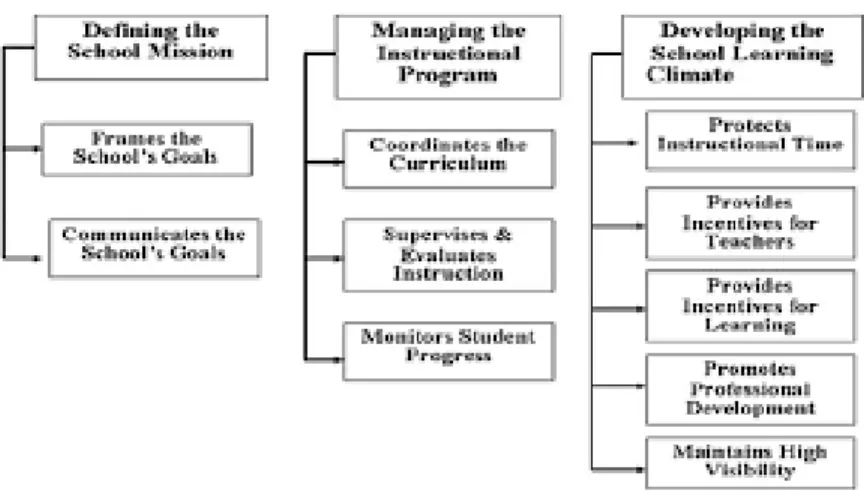
The scope of what defines a building principal as being effective can range from one evaluator to another. For decades, building principals have taken on increased responsibilities, and the focus of the position has evolved from managing a school to becoming an instructional leader. Throughout these changes, principal evaluation has not received attention, often because of conflicting standards of performance and inconsistent evaluation instruments. The researcher used the framework on effective principal leadership developed by Hallinger and Murphy (1985) to explore New Jersey chief school administrators’ experiences and perceptions of effective instructional leadership through their evaluative practices of building principals. This framework generalizes the actions of school principals and their alignment with effective school leadership. According to Hallinger and Murphy, expectations for school principals are often grounded in theoretical conceptions of leadership that compete with the day to day managerial functions associated with running a school. Logically, personnel evaluation systems should measure individuals’ abilities to perform effectively (Stronge, 2006). Unfortunately, according to Stronge (2013), there is little connection between principals’ evaluation results and the quality of their work. Hallinger and Murphy’s (1985) conceptual framework on principal leadership led to the development of the Principal Instructional Management Rating Scale (PIMRS). This scale consisted of three dimensions and ten principal behaviors and practices. Each of these
dimensions, behaviors, and practices are embedded in the PSEL standards investigated in this study.
The standards movement clearly has increased accountability for principals. This study uses the literature on the original work done by the Interstate School Leaders Licensure
5
leaders. The Professional Standards for Educational Leaders (PSEL) replaced these standards in 2015 (Lindahl & Beach, 2009). The researcher used the framework created by Hallinger to investigate which of the Professional Standards for Educational Leaders (PSEL) are perceived to be the most important by New Jersey chief school administrators when they evaluate building principals. Which of the responsibilities, roles, tasks, and skills embedded in the PSEL standards are most important to be effective as a building principal as perceived by New Jersey chief school administrators?
The research design for this study is quantitative, utilizing a survey methodology as the primary data collection tool. The survey was developed using the Professional Standards for Educational Leaders (National Policy Board for Educational Administration, 2015) and subject to review by a panel of experts.
The researcher wanted to explore the perceptions that New Jersey Chief School
administrators had concerning what are the most essential and important Professional Standards of Educational Leadership (PSEL) when they evaluated building principals. Subsequently, the following research questions were developed.
Research Questions
1. How, and to what extent, are New Jersey school superintendents applying the Professional Standards of Educational Leadership (PSEL) in principal evaluation?
a. To what extent are NJ school superintendents utilizing the PSEL standards to evaluate their current population of principals?
b. What components of the PSEL standards do superintendents feel are essential and important?
6
2. How do the perceptions and utilization of the PSEL standards differ by the personal and professional characteristics of school superintendents and by the nature of their districts? a. Do the perceptions of the PSEL standards by school superintendents differ based on
gender?
b. Do the perceptions of the PSEL standards by school superintendents differ based on district demographics?
c. Do the perceptions of the PSEL standards by school superintendents differ based on administrative experience?
d. Do the perceptions of the PSEL standards by school superintendents differ based on their teaching experiences before becoming a school superintendent?
Significance of the Study
This study is of interest because the literature examining the influence, or lack thereof, of the PSEL standards on principal evaluation is limited. The focus of this study specifically investigated which of the ten PSEL Standards’ “elements” New Jersey chief school
administrators deem to be essential to a principal’s summative evaluation. The survey data from this study will provide current and future principals, as well as principal preparation programs, with up-to-date knowledge about the perceptions chief school administrators have of the PSEL standards as they relate to principal evaluation. This is important to principals because they continue to be faced with systematic change in schools, focusing on school safety, increased student achievement on standardized tests, and countless accountability mandates that could affect their tenure. The perceptions of the chief school administrators will assist principals in narrowing the focus of what their evaluators deem to be essential to be a successful principal. This study is also important to chief school administrators who will gain a knowledge base to
7
reflect upon how they evaluate principals on the new standards compared to what daily expectations they have for principals.
Furthermore, if principals were provided with data on which of the PSEL “elements” are perceived to be most important, they might reflect on their daily routines, which may assist with improving the school and student achievement within the school.
Limitations of the study
The primary goal of this study was to investigate New Jersey Chief School
Administrators’ perceptions of the importance of the Professional Standards for Educational Leaders (PSEL) to gain a deeper understanding of the most essential “elements” to the evaluation process of building principals. The focus of perception is a limitation because perceptions are not always accurate because they can reflect individual bias. The participants for this study are all public-school CSAs located in New Jersey, therefore, limiting the representativeness of the study to private or parochial school districts. The size of this research study was also a limitation because it did not include the perceptions of Chief School Administrators outside of the state of New Jersey, nor other administrators’ perceptions of the PSEL standards within the school district. Also, the data used in this study are from current superintendents in New Jersey, not retired New Jersey superintendents. Finally, it was assumed that all CSAs had the ability to receive and use the computer-based software as a mechanism for the survey. Some district firewalls could have prevented some CSAs from participating in completing the survey for this study.
8 Assumptions
The following assumptions were made while conducting this study.
• It was assumed in this study that the chief school administrators answered the questions honestly and offered the requested information without bias to skew information about their evaluative practices or principals’ performance.
• It was assumed in this study that chief school administrators who were selected to participate responded to the survey and answered the questions.
• It was assumed that the PSEL survey instrument being used to conduct the research was reliable and appropriate for the research being conducted.
Definitions of Terms
21st Century Skills a broad set of knowledge, skills, work habits, and character traits that are believed—by educators, school reformers, college professors, employers, and others—to be critically important to success in today’s world, particularly in collegiate programs and contemporary careers and workplaces (The Glossary of Education Reform, 2016).
AchieveNJ – the improved educator evaluation and support system proposed to the State Board of Education on March 6, 2013, for implementation throughout New Jersey in 2013-14 (New
Jersey, 2014).
Principal Evaluation Instrument – The actual tool used by central office administration in order
to appraise the success of the principal in a given school year. The evaluation instrument may be
formative or summative, or both. Either the superintendent or his or her designee evaluates the
high school principal.
Professional Standards for Educational Leaders (PSEL) – educational standards that replaced the ISLLC standards in 2015.
9
Interstate Leaders Licensure Consortium Standards (ISLLC) – introduced in 1996 and revised in 2008 that defined effective educational leadership. These standards were replaced in 2015 by the PSEL Standards.
Chief School Administrator – the Superintendent of Schools or the Administrative Principal if there is no Superintendent.
Evaluation – means an appraisal of an individual’s professional performance in relation to his or her job description and professional standards and based on, when applicable, the individual’s evaluation rubric.
Evaluation rubric – means a set of criteria, measures, and processes used to evaluate a Principal in a specific school district or local education agency.
Organization of the Study
Chapter I provides a short background relating to the topic being studied.
Chapter II includes a review of the literature related to the research problem statement and guiding research questions.
Chapter III identifies the methodology that guides this study. Furthermore, the methods used to answer the research questions are explained.
Chapter IV presents the data and statistical findings of the study.
Chapter V discusses the important findings as they correspond to the research questions and the overall purpose of the study.
10 CHAPTER II LITERATURE REVIEW
Introduction to the study
Are there specific responsibilities, roles, tasks, and skills embedded in the Professional Standards for Educational Leaders (PSEL) that are most important to be effective as a building principal as perceived and understood by New Jersey Chief School Administrators? To validate this study within the current literature, empirical studies about principal evaluation, effective school leadership, and professional standards were examined. Principal and Chief School Administrator variables were also examined through empirical studies.
The purpose of this study was to investigate the Professional Standards for Educational Leadership (PSEL) from the perceptions of Chief School Administrators related to principal evaluation. The study surveyed current New Jersey Superintendents and their evaluative practices of building principals to gather pertinent data on what roles, tasks, and skills are most important to be effective as a building principal as perceived and understood by New Jersey Chief School Administrators.
This chapter serves the purpose of introducing the literature search process, the analysis of the issues in the studies examined, inclusion criteria for the studies, and the theoretical framework, as well as the review of literature topics.
Literature Search Procedure
The literature review accessed various online education, psychology, and business databases, including ERIC, EBSCOhost, JSTOR, ProQuest, and Academic Search Premier, as well as print editions of peer-reviewed educational journals, literature reviews, dissertations, and
11
educational books. In addition to the various online databases, the search engines Google and Google Scholar were used to find historical background information on the topics.
Methodological Issues in Studies
I encountered numerous methodological issues in studies examined in the literature review process. The most evident concern was the lack of quantitative research on the topic of evaluating building principals using the Professional Standards for Educational Leaders. One reason for the limited research is that the Professional Standards for Educational Leaders
replaced the ISLLC standards just four years prior to this study, and the PSEL Standards are still being disseminated across the country.
Inclusion Criteria
The research used in this literature review had to contain the following criteria to be included:
• Peer-reviewed research including dissertations and department of education reports • Published within the last 25 years
• Studies that included K-12 public schools
• Studies that focused on perceptions of building principals and chief school administrators
• Studies that examined principal evaluation tools
• I included the historical background on the emergence of professional standards for evaluating principals
• Text focused on educational leadership
• Text focused on the conceptual framework for this research study • Any literature found in educational reports that meets the above criteria
12
• Studies relating to changes in accountability standards such as Annual Yearly Progress (AYP) and AchieveNJ
Theoretical Framework
Decades ago, two views of instructional leadership were included in the literature. The first view was considered “narrow,” and the second was seen as “broad.” Instructional
leadership, in the narrow sense, was a separate responsibility for building principals. This
perception directly impacted staff development, supervision, instruction, and curriculum. School climate and mission were not included in the behaviors of principals. In 1985, Philip Hallinger and Joseph Murphy set forth a “broad” view of instructional leadership. Many researchers have found Hallinger and Murphy’s framework of instructional leadership to be accurate and
comprehensive (O’Donnell & White, 2005)
Hallinger and Murphy (1985) proposed a model of instructional leadership that focused on three dimensions for the instructional leadership role of building principals. It built on prior research. The three dimensions were defining the school’s mission, managing the instructional program, and promoting a positive school learning climate. Each of these dimensions is divided into ten instructional leadership functions, as outlined in Figure 1 below:
Figure 1. Conceptual Framework based on Hallinger and Murphy’s framework on principal leadership.
13 Defining the School’s Value and Mission
At the general level, vision is about moral purpose and possibilities, concepts forged from values and beliefs on which school improvement is scaffolded. At the center of school
improvement, values and missions are the “bedrock of school improvement” (Fullan, 2002). According to Fullan (2002), schools do not progress well without a defined school mission, and they rarely evolve without the guiding hand of leadership (p.14). Mission statements have traditionally been defined as a written declaration that communicates the purpose of an organization (Bart & Hupfer, 2004; Macedo, Pinho, & Silva, 2016). Student focus is at the center of effective school missions. Student-centered values hold significance in schools with clear mission statements and effective leadership. The spotlight is on the children and youth— what is in the best interests of students. It is imperative that effective leaders run child-centered schools and districts. To effectively implement this type of focus, progressive administrators create a means of developing structures, policies, and operating systems.
Effective leaders spend more energy than their peers in communicating the mission of the school. According to Murphy (2015), teachers in schools with robust school improvement leadership and clear direction from their principal are more aware of and can clearly
communicate the school’s mission and goals. Schools that have a clear direction have the ability to improve. Morrissey (2000) confirms that the mission influences the instructional program and the learning climate, which in turn shape the behaviors of teachers and students.
Managing the Instructional Program
Hallinger (2010) referred to instructional leadership as resilient leadership concentrated on curriculum and principal instruction. He defined instructional leadership as the act of principals influencing the culture of teaching and learning through their practices and
14
interactions with teachers and learners in efforts towards achieving effective curriculum delivery and coverage. Hallinger and Murphy (1985) contended that principals aspiring to be instructional leaders lacked the guidance to really know what is expected from this term.
Effective school leadership today must combine the traditional school leadership duties such as teacher evaluation, budgeting, scheduling, and facilities maintenance with a deep involvement with specific aspects of teaching and learning. Effective instructional leaders are intensely involved in curricular and instructional issues that directly affect student achievement (Cotton, 2003). Research conducted by King (2002), Elmore (2000), and Spillane, Halverson, and Diamond (2000) confirmed that this important role extends beyond the scope of the school principal to involve other leaders as well.
The key players in instructional leadership include the following:
1) Central office personnel (superintendent, curriculum coordinators, etc.) 2) Principals and assistant principals
3) Instructional coaches.
Some key elements of instructional leadership include the following:
1) Prioritization: Teaching and learning must be at the top of the priority list on a consistent basis. Leadership is a balance of management and vision (NAESP, 2001). While leaders cannot neglect other duties, teaching and learning should be the area where most of the leaders’
scheduled time is allocated.
2) Scientifically based reading research (SBRR): Instructional leaders must be well informed of SBRR and effective reading instruction to assist in the selection and implementation of
instructional materials and to monitor implementation. Leaders’ participation in professional development sessions will help them remain informed and will provide a focus for monitoring.
15
Henry Mintzberg critiqued the planning and the design schools of management in 1989.
According to Mintzberg, these roles or expectations for a manager’s behavior fall into three
categories: informational (managing by information), interpersonal (managing through people),
and decisional (managing through action)
ISLLC Standards evolve
National standards for school leaders developed in 1996 when the Council of Chief State School Officers (CCSSO) drafted the Interstate School Leaders Licensure Consortium (ISLLC) standards. These standards, as well as their “functions,” offered an overall context for the development and management of school leadership (CCSSO, 1999).
Murphy and Shipman’s (1998) study provided a summary as to the evolution of the ISLLC standards. In the study, it was reported that the ISLLC standards quickly began to influence the school administration profession, both directly and indirectly. When the standards were developed, there was a growing need for a major overhaul (Griffiths, 1988). The national standards also drew strength from a growing concern with the quality of leadership preparation throughout the profession. Interest was stimulated by the fact that the national standards captured a vision of school administration that was beginning to take hold across the various quadrants of the profession—research, development, policy, and practice.
By the early 2000s, the 1996 ISLLC Standards were the focus of political debate within the conversations of educational leaders who wished to extend the ownership beyond the original state and association participants who drafted the original standards (Murphy, 2015). The 1996 ISLLC Standards were incorporated into principal preparation programs and evaluation systems, so it was viewed as problematic to make major changes after the significant improvement in educational leadership since they were first introduced. In 2008, the ISLLC Standards were
16
revised. The original six standards were kept intact, while the sub-domains were expanded upon and made stronger. From quiet creation to an important document in the educational field, the ISLLC standards became directional in nature, not measurable for school administrators. Professional Standards of Educational Leaders
The American fixation with performance standards since the turn of the century has become a global trend (Leithwood, 2003; Murphy, 2002; Murphy & Shipman, 2003). Building principals find themselves at the crossroads of accountability and school improvement with an increased expectation to function as “instructional leaders.” Given the passage of formal government standards for education, principals who ignore their role in monitoring and
improving school performance do so at their own risk (Bolam, 2003, 2001; Jackson, 2000; Lam, 2003; Leithwood, 2003; Tomlinson, 2003).
The purpose of this section of the literature review is to describe the set of national standards currently used as a professional guide for any school leader. The Council of Chief State School Officers (CCSSO) authored the Professional Standards for Educational Leaders (PSEL) in 2015. These standards and their “elements” provide guideposts that are student-centric, outlining foundational principles of leadership to guide the practice of educational leaders (National Policy Board for Educational Administration, 2015). The PSEL Standards have been informed by an extraordinary amount of research into educational leadership over the past ten years (Murphy, 2017). More importantly, the substance of how the PSEL Standards are framed emphasizes what school leaders should be doing to create schools where the environment includes supports and care that all students can reach ambitious levels of academic learning (Murphy, 2017).
17
Standard 1: Effective educational leaders develop, advocate, and enact a shared mission, vision, and core values of high-quality education and academic success and well-being of each student.
Standard 2: Effective educational leaders act ethically and according to professional norms to promote each student’s academic success and well-being.
Standard 3: Effective educational leaders strive for equity of educational opportunity and culturally responsive practices to promote each student’s academic success and well-being.
Standard 4: Effective educational leaders develop and support intellectually rigorous and coherent systems of curriculum, instruction, and assessment to promote each student’s academic success and well-being.
Standard 5: Effective educational leaders cultivate an inclusive, caring, and supportive school community that promotes the academic success and well-being of each student.
Standard 6: Effective educational leaders develop the professional capacity and practice of school personnel to promote each student’s academic success and well-being.
Standard 7: Effective educational leaders foster a professional community of teachers and other professional staff to promote each student’s academic success and well-being.
Standard 8: Effective educational leaders engage families and the community in meaningful, reciprocal, and mutually beneficial ways to promote each student’s academic success and well-being.
Standard 9: Effective educational leaders manage school operations and resources to promote each student’s academic success and well-being.
Standard 10: Effective educational leaders act as agents of continuous improvement to promote each student’s academic success and well-being.
18 Principal Evaluation (Effectiveness)
Scholars over the last thirty-five years have found that effective principals are more likely than their less-effective colleagues to take responsibility for instruction (Robinson et al., 2008; Wellisch et al., 1978). In their study of effective schools, blame is not laid on others or on the failure within schools. Indeed, their review of effective schools determined that “schools where teachers attributed more responsibility to the principal in a greater number of areas were
significantly more likely to be successful” (Robinson et al., 2008).
The research on the impact teachers have on their students is clear. Teacher quality is the most critical factor in explaining student learning (Hughes, 2003; Lewis, 2008). Furthermore, the achievement of students is contingent on what the teacher does (Marzano et al., 2005) rather than the school that the child attends (Hattie, 2009).
If categorically teachers and teaching are at the center of the school improvement
discussion, it is critical to emphasize the impact that school administrators have, as leaders of the learning process, in effective schools. Robinson et al. (2008, p. 668) certify this conclusion in their study, finding “that a school’s leadership is likely to have more positive impacts on student achievement and well-being if it is able to focus on the quality of learning, teaching, and teacher learning.” In addition to the school administration’s impact on student learning, school leaders are leaders of the learning process (Hallinger, 2003). Principals impact student learning
indirectly through their interactions with staff, influence on teacher’s instructional strategies, and the overall satisfaction of the staff (Blase and Kirby, 2009).
Superintendent and Principal Relationship
Every school district includes a multitude of individuals who are rooted in the parameters and are expected to work as a team in the best interest of the school district. Effectively working
19
as a team can have its challenges, depending on the variables within the relationships of the team. According to LaFasto and Larson’s (2001) research on work teams, the most effective schools have the most effective administrative teams. Although a district has many teams, the group that includes the superintendent and principals is arguably the most powerful and important (Cameron, Dutton, & Quinn, 2003).
Waters and Marzano (2006) studied chief school administrators and presented convincing evidence of an important connection between superintendents and principals. At the top of their key findings was a report that emphasized the relationship between the leadership behaviors of the chief school administrator and the performance of the school principal as a significant
element in successful schools. Successful chief school administrators had a positive influence on the performance of principals, who, in turn, had a positive impact on instruction. It is through the principals, who are the school-level change agents, that the chief school administrator’s influence impacts the students and staff (Marzano et al., 2005). The importance of the school principal is unquestionable. Understanding how the leadership practices of chief school administrators influence school principals, however, may hold the key to improving career satisfaction, efficacy, and career longevity of principals.
As Waters and Marzano (2006) demonstrated in their study of chief school administrator leadership, the relationship between the chief school administrator and the principal is
significant. Chief school administrators should, therefore, examine the extent to which their leadership can influence the job satisfaction and performance of principals.
Superintendent Perceptions
Hallinger and Murphy (1987) implied that leadership must be defined through observable practices and behaviors that are implemented by principals (p. 55). Bossert et al. (1982)
20
concluded that principal leadership made a significant difference in school performance and that there was continued interest in understanding the relationship between school leadership and learning (Bossert et al., 1982).
Critical to the understanding of how and why superintendents evaluate the role of
instructional leader is the need for understanding how these leaders approach leadership practice and how this approach supports systems of evaluation and learning (Morgan et al., 2002;
Spillane et al., 2004) Prior to a focus on instructional leadership, school leaders were viewed as managers with duties that can primarily be described as managerial, clerical, and practical (Urban & Wagoner, 2009). However, with the growing challenges faced by current school principals, their duties are managerial, clerical, and practical in the evaluation process (Urban & Wagoner, 2009).
Practical and Research Significance
The literature review has several goals related to the research study in this dissertation.
1. Provide insights into outlining foundational principles of leadership to guide the practice of educational leaders.
2. Explore the Professional Standards of Educational Leaders (PSEL) Standards’ “elements”
from the perspective of New Jersey school superintendents to determine what they consider to be most important when formally evaluating New Jersey public school principals.
3. To provide data for superintendents in the construction of principal evaluations based on the
results of the study.
4. Use the data from the study to develop interview questions for superintendents to determine
21
5. Distinguish the essential, compared to important, leadership skills and responsibilities that a
building principal must obtain as defined by the PSEL standards and determined by Chief School Administrators through the summative evaluation process.
6. Based on principals’ perceptions of the PSEL standards, develop an evaluation tool that
incorporates their perceptions.
7. Provide professional development based on principals’ perceptions of what skills are
essential.
8. Use the data from the study to develop Principal’s Leadership Academies for school districts.
Conclusion
According to Hallinger (2008), “Among the educational trends that emerged during the past 20 years, few have been more significant or widespread than the continuing focus on principal effectiveness” (p. 2).
With accountability measures being increased in the past decade for principals, more knowledge is needed, especially from the chief school administrator’s perspective on the
standards most essential to principal effectiveness. Such knowledge is important on many levels because it will present information to principals on how to improve their practices and facilitate a school that improves instructional practice and improves student achievement. Collaborative efforts between the chief school administrators and the principal to improve the practices within the school will assist teachers and ultimately impact the academic performance levels of the students in the school.
Within the context of the Professional Standards of Educational Leaders (PSEL), recent research is embedded into each standard, which responds to the new context of public education
22
as well as to recent research studying the influence and impact of school principals on teaching and learning.
Chapter III provides an explanation of the design and methodology of the researcher’s study.
23 CHAPTER III
RESEARCH METHODOLOGY Introduction
The purpose of this study is to explore the Professional Standards of Educational Leaders (PSEL) and their “elements” from the perspective of New Jersey school superintendents to determine their level of utilization of these standards when they formally evaluate New Jersey public school principals. Also, this study distinguishes the most essential, compared to important, leadership skills and responsibilities that a building principal must demonstrate as defined by the PSEL standards and determined by Chief School Administrators through the summative evaluation process. No study related to the PSEL standards nor the perspectives of school superintendents’ use of the standards to evaluate school principals was located in the literature. This study aims to identify the components of a school principal’s professional responsibilities that are deemed essential, compared to important, according to school
superintendents, to assist principal effectiveness. The results of this study will provide current and future principals as well as principal preparation programs with up-to-date knowledge of the perceptions of chief school administrators on the new PSEL standards as they relate to principal evaluation.
As suggested in Chapter II, school principals continue to be faced with systematic change in schools that focus on school safety, increased student achievement on standardized tests, and countless accountability mandates that could affect their tenure. This study will provide a correlational perspective on these factors and their contribution to the perceived evaluative practices of New Jersey school superintendents.
24 Methodology
The research design used for this study was quantitative, using a survey methodology as the primary data collection tool. The survey was developed using the Professional Standards for Educational Leaders (National Policy Board for Educational Administration, 2015) as the construct model, specifically, the “elements” for each standard. The PSEL standards provide guideposts that are student-centric, outlining foundational principles of leadership to guide the practice of educational leaders (National Policy Board for Educational Administration, 2015). The results from the survey instrument relied primarily on descriptive statistics to determine the ranking of the PSEL standards and to summarize data. Survey content validity was obtained through expert review.
A solicitation letter with a link to an online survey instrument developed through Qualtrics was emailed to all 540 public-school chief school administrators in New Jersey. The list of current NJ chief school administrators was acquired from a database posted on the New Jersey Department of Education (NJDOE) website. The online survey consisted of three sections and took 20 minutes or less to complete. The first section asked school superintendents to rank the ten (10) PSEL standards in order of importance from least to most important based on their evaluation criteria when they evaluate principals in the district. The second part of the survey consisted of thirty (30) questions. Each question in this section was created using the “elements” of each PSEL standard. The number of elements for each standard varies to describe prominent aspects of the work involved. The first three “elements” were chosen for each standard to create 30 multiple choice questions for the second section of the survey. The third section was a set of eight (8) demographic questions developed to acquire information on the respondent sample, paying careful attention to ensure respondent anonymity. This section included information to
25
determine trends in the responses based on gender, geographic location of the school district, the experience of the superintendent, and evaluative theory used by the school district. This forced response survey allowed the participants to skip questions if they wished not to answer. The researcher used survey questions that required the respondents to provide an actual response. Research Questions
1. How, and to what extent, are New Jersey school superintendents applying the Professional Standards of Educational Leadership (PSEL) in principal evaluation.
a. To what extent are NJ school superintendents utilizing the PSEL standards to evaluate their current population of principals?
b. What components of the PSEL standards do superintendents feel are essential and important?
2. How do the perceptions and utilization of the PSEL standards differ by the personal and professional characteristics of school superintendents and by the nature of their districts? a. Do the perceptions of the PSEL standards by school superintendents differ based on
gender?
b. Do the perceptions of the PSEL standards by school superintendents differ based on district demographics?
c. Do the perceptions of the PSEL standards by school superintendents differ based on administrative experience?
d. Do the perceptions of the PSEL standards by school superintendents differ based on their teaching experiences before becoming a school superintendent?
26 Null Hypothesis
1. Null Hypothesis 1. No statistically significant relationship exists between New Jersey Superintendents and their utilization of the PSEL standards.
2. Null Hypothesis 2. No statistically significant relationship exists between superintendent perceptions of the PSEL standards and their gender.
3. Null Hypothesis 3. No statistically significant relationship exists between superintendent perceptions of the PSEL standards and their district demographics.
4. Null Hypothesis 4. No statistically significant relationship exists between superintendent perceptions of the PSEL standards and their administrative experience.
5. Null Hypothesis 5. No statistically significant relationship exists between superintendent perceptions of the PSEL standards and their experiences before becoming a school superintendent.
6. There will be a negative relationship between superintendent focus on school maintenance and staff evaluation.
Instrumentation
The Professional Standards for Educational Leaders, which replaced the Interstate School Leaders Licensure Consortium (ISLLC) standards in 2015, has been informed by an
extraordinary amount of research into educational leadership over the past ten years (Murphy, 2017). For this study, the PSEL standards and some of the 83 “elements” will be used to survey the current school superintendents and study the components of the standards that are most crucial to an administrator’s daily tasks. The forced response survey also eliminated the option of a “nonresponse” type choice, such as “I don't know” or “not applicable.”
27 Research Design
This research was conducted utilizing an on-line survey design. The survey used a data collection tool specifically designed for this study, accessed through Qualtrics Inc.
(https://www.qualtrics.com/). The concept model for the online survey was based on the current
Educational Leadership Policy Standards: PSEL 2015 (National Policy Board for Educational Administration, 2015). The PSEL 2015 Standards were designed to respond to the gradual changes in public education and to align the influence school leaders have on teaching and learning (National Policy Board for Educational Administration, 2015). Construct validity for the 48-item forced response multiple selection survey was acquired through expert review. A reliability alpha of .95 was obtained using the Cronbach’s Alpha function in SPSS. The results from the survey instrument relied primarily on descriptive statistics to determine the ranking of the PSEL standards and to summarize data.
Descriptive statistics were used to report the results for each of the ten Professional Standards for Educational Leadership (PSEL). To explore any differences in survey responses based on the demographic data collected, the following statistical analyses were employed: Spearman’s rho, the Mann-Whitney test, and the Kruskal-Wallis test.
A Spearman’s rho correlation was used to assess the nonparametric statistical dependence between the ten PSEL standards and their elements. The purpose of this correlation is to assess the strength of the relationship between each of the ten standards and three of its elements.
The Mann-Whitney U test was used as an equivalent of the two-sample t-test. The statistical data collected from the survey results contain no assumptions, unlike the t-test, relating to the perceptions of the superintendents’ answers to the survey questions. Testing investigated
28
significant differences between the perceptions New Jersey Superintendents have relating to the rankings of the ten standards in the survey.
The Kruskal-Wallis test was used to determine if perceptions of the superintendents’ use of the ten standards were significant. A significant Kruskal-Wallis test can help to determine if New Jersey Superintendents’ perceptions of the PSEL standards are influenced by multiple variables included in the survey.
Sample and Data Collection
All evidence explored in this study was from feedback from currently employed New Jersey school superintendents. New Jersey has 540 public school superintendents/chief school administrators. There are also eighty-eight charter school superintendents/chief school
administrators that the researcher did not survey in this study. I looked to determine whether school superintendents considered certain PSEL standards to be more important than others during the evaluative process of school principals. Subjects for this study were recruited from email addresses gathered from the New Jersey Department of Education website.
Assumptions and the Role of the Researcher
The researcher assumed that the participants for this study answered the survey questions honestly and willingly. Other assumptions include that New Jersey Superintendents who
completed the survey use the PSEL Standards to evaluate principals. Lastly, the researcher assumed that New Jersey Superintendents who participated by responding to the survey are the individuals who answered the questions.
Ethical considerations were addressed in various ways. First, the researcher sent the survey directly to the school superintendents, which eliminated the possibility of other parties within the district answering the questions. Second, a letter was sent to introduce the study,
29
explain the research, the data collection process, and the analysis of the findings. All data for this study were kept anonymous, and all printed documents that included the data results were shredded at the end of the study.
Summary
To determine the perceptions that Chief School Administrators have of the Professional Standards for Educational Leaders, a quantitative survey methodology was instituted to
determine descriptive and correlational data. The population studied included current New Jersey public school superintendents. This included surveying 540 superintendents who were emailed directly to limit the amount of delay in the process of collecting the data. In the email, a solicitation letter with a link to the online survey was included. The survey questions were created based on the Professional Standards of Educational Leaders (PSEL).
The quantitative data were collected from the online survey, which included questions relating to the PSEL Standards and the “elements.” Data such as gender, district configuration, administrative experience, and experience of the superintendents before becoming a
superintendent were all collected. These variables were then analyzed to determine the relationships to the perceptions of the superintendent’s evaluation of principals.
Chapter IV provides a thorough description of the analysis and results from all facets of the data collection.
30
CHAPTER IV FINDINGS
School leadership is second only to teaching among school-related factors in its impact on student learning (Leithwood et al., 2004). Logically, principal evaluation systems should measure individuals’ abilities to perform effectively (Stronge, 1991). To assist in the evaluation of building principals, national standards have been in place for approximately twenty years. Clearly, national standards and a systematic study of school administrators’ performance assessment is needed (Furtwengler & Furtwengler, 1998; Marcoulides & Heck, 1993.).
The purpose of this study was twofold. First, this study explored the Professional Standards of Educational Leaders (PSEL) Standards from the perspective of current New Jersey public school superintendents to determine what they considered to be most important when formally evaluating New Jersey public school principals. Second, this study served the purpose of distinguishing what are the essential, compared to important, leadership skills and
responsibilities that a building principal must demonstrate as defined by the PSEL standards and determined by Chief School Administrators through the summative evaluation process.
The following research questions guided this study:
1. How, and to what extent, are New Jersey school superintendents applying the Professional Standards of Educational Leadership (PSEL) in principal evaluation.
a. To what extent are NJ school superintendents utilizing the PSEL standards to evaluate their current population of principals?
b. What components of the PSEL standards do superintendents feel are essential as opposed to important?
31
2. How do the perceptions and utilization of the PSEL standards differ by the personal and professional characteristics of school superintendents and by the nature of their districts? a. Do the perceptions of the PSEL standards by school superintendents differ based on
gender?
b. Do the perceptions of the PSEL standards by school superintendents differ based on district demographics?
c. Do the perceptions of the PSEL standards by school superintendents differ based on administrative experience?
d. Do the perceptions of the PSEL standards by school superintendents differ based on their teaching experiences before becoming a school superintendent?
A letter of solicitation (see Appendix A) was distributed to a list of 540 New Jersey public school Superintendents through their district email addresses explaining the research being conducted and requesting the data from the link to the survey. As mentioned, the survey was housed online using Qualtrics Inc. The distribution of the survey was repeated three times during the months of December and January to increase the number of responses. The response rate after the three email attempts was 20.2%, which translated to 109 completed surveys returned.
The survey (see Appendix B) consisted of three sections. The first section of the survey asked school superintendents to rank the ten (10) PSEL standards in order of importance from least to most important based on their evaluation criteria when they evaluate principals in the district. The second part of the survey consisted of thirty (30) questions based on the PSEL standards, which required the Chief School Administrators to answer multiple selection questions relating to the ways they are using the standards in the summative evaluations of
32
school principals. The third section was a set of eight (8) demographic questions developed to acquire information on the respondent sample, paying careful attention to ensure respondent anonymity. This section included information to determine trends in the responses based on gender, the geographical location of the school district, the experience of the superintendent, and the evaluative theory used by the school district. This forced response survey allowed the
participants to skip questions if they wished not to answer. The researcher used survey questions that required the respondents to provide an actual response. The forced response survey also eliminated the option of a “nonresponse” type choice, such as “I don't know” or “not applicable.”
Findings from the survey are presented in this chapter. The participants’ experience in education, as well as their current demographic identity, is used to answer the research questions. Superintendents’ perceptions of the Professional Standards for Educational Leadership will be analyzed and discussed by providing their Likert scale responses. The importance that New Jersey Superintendents place on the Professional Standards when they evaluate principals is explained by analyzing the responses of the survey. The chapter concludes with the presentation of the results of the research questions for this study.
Sample Characteristics
The purpose of gathering demographic information from New Jersey Superintendents was to understand if these identifiable items influence their perception of the Professional Standards for Educational Leadership. There were eight background variables: gender, district demographics, district configuration, administrative experience, previous administrative
experience, evaluative tool used in the district, education level, and years as a superintendent. Demographics were separated into two categories. Individual Superintendent
33
work experience of the respondents, while Superintendent District characteristics (Table 2) includes the locality and type of district and the evaluation tool being used there.
Table 1 below shows the distribution of respondents by individual characteristics. Table 1
Frequency and Percentage Distribution of Individual Respondent Characteristics
N=109
Frequency Percent
Gender
Female 36 33.30
Male 72 66.70
Years of Administrative Experience
1-10 years 13 12.10
11-15 years 25 23.40
16-20 year 33 30.80
21 or more years 35 32.40
Prior Administrative Experience
Primary (PreK - 3) 37 33.94
Elementary (K-5) 62 56.88
Middle (6-8) 67 61.48
Secondary (9-12) 45 41.28
Districtwide 60 55.00
Prior Teaching Experience
Primary (PreK - 3) 8 7.10
Elementary (K-5) 49 45.00
Middle (6-8) 63 57.79
Secondary (9-12) 60 55.01
Districtwide 61 54.50
Highest Degree Earned
MA/MS 34 31.80
Ed.S 2 1.90
Ed.D or Ph.D. 67 62.60
Other 4 3.70
34
Gender. Superintendents were asked to identify their gender. Of the 109 respondents. 98.2% (n =107) of the superintendents responded to the item. 66.7% (n =72) reported male gender and 33.3% (n = 36) reported to be female. The number of males outnumbered female respondents by 2:1.
Education level. Ninety-sixpercent (n=107) of the respondents reported educational levels, with 62.6% (n = 67) reporting doctoral degrees, while 31.8% (n = 34) had master’s level education. Approximately six percent reported degrees other than a master’s or doctoral, with 1.9% (n = 2) holding educational specialist degrees and 3.7% (4) reporting other educational credentials.
In analyzing other degree types, not including master’s, educational specialists, or doctoral degrees, the data observed two superintendents holding Juris doctorates, one superintendent with an MBA degree and another one near completion of the Ed.D.
The educational levels of the respondents also varied by gender. Slightly more males (53%) held superintendent positions with only a master’s degree; only 47% of females with that educational degree held a superintendent position. Forty-four percent of the female respondents (n = 16) held master’s level degrees while 55% (n = 20) held doctoral-level educations. Twenty-five percent (n = 18) of the males held the superintendent position with a master’s degree, 2.8% (2) had educational specialist degrees, 66% (n = 67) held doctorates, and 5.6% (n = 4) held other credentials.
Prior teaching experience. While all the respondents reported being teachers in their prior career, more than half of the superintendents identified as former middle and secondary school teachers. Approximately fifty-five percent (n=60) were high school instructors and 58%
35
(n=63) taught grades 6-8. Forty-five percent (n = 49) taught in the K-5 elementary levels, and only 7% (n=8) taught in the pre-K environment.
Administrative experience. Superintendents were asked to report their years of administrative experience. In the sample of 109, 107 reported various levels of experience. Thirty-four percent n = (n = 35) reported having 21 or more years of experience, while 30.8% (n = 33) had 16-20 years in administration. 23.4% (n = 25) reported 11-15 years of administrative experience and 12.1% (n = 13) reported 6-10 years. Only .9% (n =1) of superintendents had less than five years’ experience. It appears that 63.2% (n = 68) of the respondents, almost two-thirds, had 16 or more years of administrative experience.
In analyzing the cross tabs of gender and experience, of the 31% (n = 33) of respondents claiming 16-20 years’ experience, 73% (n = 24) were males. Of the one-third (n = 22) reporting more than 21 years of experience, 63% of the superintendents were male.
Only 12% of the respondents had 6-10 years of experience, with 56% (n = 9) being male. The sample contained only one individual, a female respondent, with less than five years of experience.
Experience Prior to Current Position. Of the 109 superintendents identifying their level of administrative experience prior to their current position, thirty-seven (33.9%) reported having pre-kindergarten experience, while 62 (56.9%) had grade K-5 level. In addition, 67 (61.5%) superintendents had previously worked in a middle school setting, and 45 (41.3%) administrators had been employed at the secondary level. Overall, 60 respondents (55%) had districtwide experience (see Table 1).