NAVAL
POSTGRADUATE
SCHOOL
MONTEREY, CALIFORNIA
THESIS
Approved for public release; distribution is unlimited ANALYSIS OF NAVY FLIGHT SCHEDULING METHODS
USING FLYAWAKE
by
Ryan P. Beshany September 2009
Thesis Advisor: Nita Lewis Miller
i
REPORT DOCUMENTATION PAGE Form Approved OMB No. 0704-0188
Public reporting burden for this collection of information is estimated to average 1 hour per response, including the time for reviewing instruction, searching existing data sources, gathering and maintaining the data needed, and completing and reviewing the collection of information. Send comments regarding this burden estimate or any other aspect of this collection of information, including suggestions for reducing this burden, to Washington headquarters Services, Directorate for Information Operations and Reports, 1215 Jefferson Davis Highway, Suite 1204, Arlington, VA 22202-4302, and to the Office of Management and Budget, Paperwork Reduction Project (0704-0188) Washington DC 20503.
1. AGENCY USE ONLY (Leave blank) 2. REPORT DATE September 2009
3. REPORT TYPE AND DATES COVERED
Master’s Thesis
4. TITLE AND SUBTITLE
Analysis of Navy Flight Scheduling Methods Using FlyAwake
6. AUTHOR(S) Ryan P. Beshany
5. FUNDING NUMBERS
7. PERFORMING ORGANIZATION NAME(S) AND ADDRESS(ES)
Naval Postgraduate School Monterey, CA 93943-5000
8. PERFORMING ORGANIZATION REPORT NUMBER
9. SPONSORING /MONITORING AGENCY NAME(S) AND ADDRESS(ES)
N/A
10. SPONSORING/MONITORING AGENCY REPORT NUMBER
11. SUPPLEMENTARY NOTES The views expressed in this thesis are those of the author and do not reflect the official policy or position of the Department of Defense or the U.S. Government.
12a. DISTRIBUTION / AVAILABILITY STATEMENT Approved for public release; distribution unlimited.
12b. DISTRIBUTION CODE 13. ABSTRACT (maximum 200 words)
Sleep-related fatigue has negative effects on both human performance and decision making. Pilots are particularly vulnerable to these adverse effects due to the environment and operational requirements, which entails both long and irregular duty cycles.
The Air National Guard received funding from Office of the Secretary of Defense, Defense Safety Oversight Council to create FlyAwake, a software application that predicts aircrew fatigue based on circadian cycles. FlyAwake uses the Sleep, Activity, Fatigue, and Task Effectiveness (SAFTE) Model and calculates predicted effectiveness. Recently, contract modifications have permitted integration with U.S. Navy’s Sierra Hotel Aviation Readiness Program (SHARP) as an Operational Risk Management (ORM) tool. Naval Aviation does not currently use fatigue modeling as part of operational flight scheduling, and it is the intent of this thesis to provide a proof of concept analysis of FlyAwake for Commander, Navy Air Forces (CNAF).
In order to validate FlyAwake, flight schedules from February 2008 were collected from the Helicopter Antisubmarine Squadron Light Four Two (HSL-42) SHARP database. A statistical analysis compared fatigue levels of aircrew using conventional scheduling methods against those with fatigue modeling, and showed improved fatigue-based performance effectiveness with the utilization of FlyAwake.
15. NUMBER OF PAGES
85
14. SUBJECT TERMS
FlyAwake, SHARP, fatigue countermeasures, performance effectiveness, sleep, shift work, continuous operations, sustained operations, ORM.
16. PRICE CODE 17. SECURITY CLASSIFICATION OF REPORT Unclassified 18. SECURITY CLASSIFICATION OF THIS PAGE Unclassified 19. SECURITY CLASSIFICATION OF ABSTRACT Unclassified 20. LIMITATION OF ABSTRACT UU
NSN 7540-01-280-5500 Standard Form 298 (Rev. 2-89) Prescribed by ANSI Std. 239-18
iii
Approved for public release; distribution is unlimited
ANALYSIS OF NAVY FLIGHT SCHEDULING METHODS USING FLYAWAKE
Ryan P. Beshany
Lieutenant, United States Navy B.S., United States Naval Academy, 2001
Submitted in partial fulfillment of the requirements for the degree of
MASTER OF SCIENCE IN OPERATIONS RESEARCH
from the
NAVAL POSTGRADUATE SCHOOL September 2009
Author: Ryan P. Beshany
Approved by: Nita Lewis Miller Thesis Advisor
Matthew G. Boensel Second Reader
Robert Dell
v
ABSTRACT
Sleep-related fatigue has negative effects on both human performance and decision making. Pilots are particularly vulnerable to these adverse effects due to the environment and operational requirements, which entails both long and irregular duty cycles.
The Air National Guard received funding from Office of the Secretary of Defense, Defense Safety Oversight Council to create FlyAwake, a software application that predicts aircrew fatigue based on circadian cycles. FlyAwake uses the Sleep, Activity, Fatigue, and Task Effectiveness (SAFTE) Model and calculates predicted effectiveness. Recently, contract modifications have permitted integration with U.S. Navy’s Sierra Hotel Aviation Readiness Program (SHARP) as an Operational Risk Management (ORM) tool. Naval Aviation does not currently use fatigue modeling as part of operational flight scheduling, and it is the intent of this thesis to provide a proof of concept analysis of FlyAwake for Commander, Navy Air Forces (CNAF).
In order to validate FlyAwake, flight schedules from February 2008 were collected from the Helicopter Antisubmarine Squadron Light Four Two (HSL-42) SHARP database. A statistical analysis compared fatigue levels of aircrew using conventional scheduling methods against those with fatigue modeling, and showed improved fatigue-based performance effectiveness with the utilization of FlyAwake.
vii
TABLE OF CONTENTS
I. INTRODUCTION...1
A. PURPOSE AND OVERVIEW...1
B. BACKGROUND ...1
C. OBJECTIVES ...2
D. SCOPE, LIMITATIONS, AND ASSUMPTIONS ...3
E. THESIS ORGANIZATION...4
II. LITERATURE REVIEW ...5
A. SLEEP...5
1. Sleep Reservoir...6
2. Circadian and Homeostasis Factors...7
B. NAVAL AVIATION OPERATIONAL RISK MANAGEMENT ...8
C. AVIATION CREW REST/CREW DAY REGULATIONS ...9
1. United States Federal Aviation Administration...10
2. United States Navy and United States Marine Corps...12
3. United States Air Force ...14
D. DEPARTMENT OF DEFENSE AVIATION FATIGUE MANAGEMENT MODELS AND SOFTWARE ...17
1. Sleep Performance Model ...17
2. Sleep, Activity, Fatigue, and Task Effectiveness Model ...18
3. Fatigue Avoidance Scheduling Tool ...20
4. FlyAwake ...21
III. METHODS ...25
A. OVERVIEW...25
B. AIRCREW DATA COLLECTION ...25
C. PROCEDURES ...26
D. ANALYTICAL STRATEGY...32
IV. RESULTS ...35
A. OVERVIEW...35
B. USS BOONE (FFG-28) AIR DETACHMENT ...37
C. USS KAUFFMAN (FFG-59) AIR DETACHMENT ...42
V. ADDITIONAL THESIS EFFORTS...47
VI. DISCUSSION AND RECOMMENDATIONS...49
A. DISCUSSION ...49
B. RECOMMENDATIONS FOR FUTURE WORK...52
1. Squadron Usability Study ...52
2. Aircrew Fatigue Survey...53
3. FlyAwake Program Manager ...54
APPENDIX A. SUPPLEMENTAL STATISTICS ...55
B. USS KAUFFMAN AIR DETACHMENT ...56 LIST OF REFERENCES ...59 INITIAL DISTRIBUTION LIST ...61
ix
LIST OF FIGURES
Figure 1. SAFTE Model Schematic (Hursh, 2003)...19
Figure 2. Excel Spreadsheet Containing Detachment Executed Flights ...27
Figure 3. FlyAwake Aircraft Selection Screenshot...28
Figure 4. FlyAwake Schedule Builder Screenshot...28
Figure 5. FlyAwake Work Schedule Builder Screenshot...29
Figure 6. FlyAwake Graphical Output Screenshot ...29
Figure 7. FlyAwake Data Export Screenshot...30
Figure 8. FlyAwake Data Imported into Excel Spreadsheet ...31
Figure 9. Percentage of Total Preflight Time by Fatigue Category ...36
Figure 10. Percentage of Total In-flight Time by Fatigue Category...37
Figure 11. Percentage of Total Post-Flight Time by Fatigue Category ...37
Figure 12. FFG-28 Detachment Percentage of Total Schedule Flight Duty Time Below Green Category...39
Figure 13. FFG-28 Detachment Comparative Histogram of the Number of Flights with at least One Occurrence in Fatigue Category ...40
Figure 14. FFG-28 Detachment Breakdown of Flights with Occurrences in Black Category...42
Figure 15. FFG-59 Detachment Percentage of Total Schedule Flight Duty Time Below Green Category...44
Figure 16. FFG-59 Detachment Comparative Histogram of the Number of Flights With At Least One Occurrence in Fatigue Category ...45
xi
LIST OF TABLES
Table 1. Maximum Recommended Flight Time (OPNAVINST3710.7T, 2004) ...14
Table 2. United States Air Force Flight Duty Period Time Regulations ...16
Table 3. Categories of Predicted Effectiveness Ranges...32
Table 4. Overview of FFG-28 Detachment Changes...38
Table 5. FFG-28 Detachment Percentages of Flight Duty Period in Category ...39
Table 6. FFG-28 Total Number of Occurrences by Fatigue Category ...40
Table 7. FFG-28 Detachment Flight Phase Distribution of Occurrences in Black Category...41
Table 8. Overview of FFG-59 Detachment Changes...43
Table 9. FFG-59 Detachment Percentages of Flight Duty Period in Category ...43
Table 10. FFG-59 Total Number of Occurrences by Fatigue Category ...45
Table 11. FFG-59 Detachment Flight Phase Distribution of Occurrences in Black Category...46
Table 12. FFG-28 Detachment Descriptive Statistics Comparison ...56
xiii
LIST OF SYMBOLS, ACRONYMS, AND ABBREVIATIONS
AFB Air Force Base
AFI Air Force Instruction AFRL Air Force Research Laboratory
ANG Air National Guard
AMC Air Mobility Command
ATO Air Tasking Order
BAC Blood Alcohol Content
Capt Captain, United States Air Force CAPT Captain, United States Navy CFR Code of Federal Regulations
CNAF Commander, Naval Air Forces
CO Commanding Officer
CRM Crew Resource Management
CTC Concurrent Technologies Corporation
DoD Department of Defense
DSOC Defense Safety Oversight Council FAA Federal Aviation Administration
FAM Familiarization
FAST Fatigue Avoidance Scheduling Tool FCF Functional Check Flight
FDP Flight Duty Periods
GPO Government Printing Office GUI Graphical User Interface
HCI Human Computer Integration
HSI Human Systems Integration
HSL Helicopter Antisubmarine Squadron Light JALIS Joint Air Logistics Information System
JTF Joint Task Force
LT Lieutenant, United States Navy LtCol Lieutenant Colonel, United States Air Force
MAF Maintenance Action Form
MAJCOM Major Command
MGEN Major General, United States Air Force MOE Measure of Effectiveness
MPH Masters of Public Health
M-SHARP Marine Sierra Hotel Aviation Readiness Program
NATOPS Naval Air Training and Operating Procedures Standardization NMCI Navy Marine Corps Intranet
NPS Naval Postgraduate School
NSC Naval Safety Center
NUFEA Navy Unique Fleet Essential Aircraft
OPNAVINST Office of the Chief of Naval Operations Instruction OPTEMPO Operations Tempo
ORM Operational Risk Management OSAA Operational Support Airlift Agency OSD Office of the Secretary of Defense
xv
POC Proof of Concept
SAFTE Safety, Activity, Fatigue, and Task Effectiveness SAIC Scientific Applications International Corporation SAM Sleep and Activity Monitor
SBIR Small Business Innovation Research
SCN Suprachiasmatic Nucleus
SCUBA Self Contained Underwater Breathing Apparatus
SDR Sleep Dose-Response
SHARP Sierra Hotel Aviation Readiness Program
SIC Second in Command
SOP Standard Operating Procedures
SPM Sleep Performance Model
T/M/S Type/Model/Series
USAF United States Air Force USMC United States Marine Corps
USN United States Navy
USUHS Uniformed Services University of the Health Sciences VR Fleet Logistics Support Squadron
WFC Warfighter Fatigue Countermeasures WRAIR Walter Reed Army Institute of Research
xvii
EXECUTIVE SUMMARY
Naval Aviation has established strict scheduling guidelines aimed at mitigating aircrew fatigue and enhancing performance effectiveness. These governing publications mandate maximum and minimum lengths for crew day and crew rest, respectively, but fatigue is still a primary cause in aviation mishaps. Currently, aircrew fatigue information is not provided to the squadron operations and safety departments based on personal circadian cycles. Aircrew fatigue levels, referred to as “predicted effectiveness” in fatigue modeling, can be calculated based upon 72 hours of sleep history and recent flight schedules and provided to the scheduling decision makers. This information can be utilized to create safer flight schedules by optimizing crew compositions based on predicted effectiveness.
Aviation specific fatigue modeling is currently available through FlyAwake, which is a software application designed to implement the Department of Defense (DoD) approved Safety, Activity, Fatigue, and Task Effectiveness (SAFTE) Model. The FlyAwake application was designed by MarcoSystems under guidance from the 201st Air National Guard (ANG) and funded from the Office of the Secretary of Defense (OSD) Defense Safety Oversight Council (DSOC). A contract modification was made in spring of 2009 to include the United States Navy’s (USN) aviation database, Sierra Hotel Aviation Readiness Program (SHARP) created by Innova Systems, as a recipient for software integration. Currently, integration efforts are underway between the two software companies to make a seamless integration of SHARP and FlyAwake. Once this is accomplished, the USN’s Commander, Navy Air Forces (CNAF) will select candidate fleet squadrons to provide usability feedback.
The original intent of this thesis was to explore the utility of combining SHARP with FlyAwake. However, the software release of FlyAwake v2.0 and subsequent integration with SHARP were delayed, making this impossible given time constraints. Instead, we conducted a proof of concept (POC) analysis. Using a retrospective analysis of actual U.S. Naval Aviation missions and flight schedules, this thesis determined if the
FlyAwake algorithm identified aircrew at high risk of fatigue. Helicopter Antisubmarine Squadron Light Four Two (HSL-42) flight scheduling data were obtained through the SHARP database. The month of February 2008 was selected for the period of analysis in order to capture a time period within the year with typical operations tempo (OPTEMPO). Special scheduling requests (“snivels”), ground events, qualifications reports, currency reports, logbooks, and completed flight schedules were extracted from SHARP and focused on two distinct detachments for this research.
The focus on detachments was deliberate and intended to spotlight unique characteristics of Naval Aviation. Once an aviation detachment embarks on a warship, they are limited to their embarked crew resources. This scenario is an accurate example of how naval squadrons and detachments conduct flight operations while deployed. Historically, HSL detachments deploy with one or two helicopters and are limited to five or six pilots. Knowing this, we designed the POC to reflect these realistic restrictions which bound this thesis analysis.
Historical flight schedules were submitted to FlyAwake to calculate predicted effectiveness of individual pilots. The FlyAwake algorithm was able to identify specific occurrences in which pilots’ predicted effectiveness levels dropped below a critical threshold (77.5%) level. Only those occurrences below this threshold were considered candidates for potential flight schedule changes. Additionally, schedule changes were limited only to alterations in crew composition (i.e., switching pilots) rather than rescheduling mission times. This restriction from changing assigned flight times reflected the limited ability that detachment operations officers have when scheduling actual flight operations.
Those identified and feasible changes were made to historical flight schedules during instances in which FlyAwake identified a pilot dropping below the critical threshold during any portion of the flight profile (i.e., preflight, in-flight, post-flight). The altered flight schedules were re-submitted to FlyAwake and the results were collected and compared as measures of effectiveness (MOE). The MOEs of this retrospective analysis assessed whether predicted effectiveness improved after applying
xix
Maximum, minimum, and range of predicted effectiveness of each detachment were calculated and we found that these values remained fairly constant after executing schedule changes based on FlyAwake results. However, categorical data analysis revealed the added value of the FlyAwake fatigue modeling. One detachment experienced a 16.7% reduction of post-flight occurrences below the critical threshold, while the other showed a 25.0% reduction of in-flight occurrences coupled with a 12.5% reduction of post-flight occurrences below the critical threshold. Additionally, all occurrences observed in this study in the high-risk category occurred at night, which highlighted another current flight scheduling weakness regarding fatigue modeling (i.e., fatigue risk management).
In summary, this research provides a statistically valid proof of concept for the FlyAwake integration into SHARP by demonstrating the software’s capability of identifying aircrew susceptible to fatigue during naval flight operations. This study does not recommend any Naval Aviation policy changes, but advocates the consideration of FlyAwake fatigue feedback when Operations Departments create flight schedules. Recommendations included assigning a permanent program manager to oversee and coordinate future developments for integration and usability study suggestions.
xxi
ACKNOWLEDGMENTS
First, I would like to thank Dr. Nita L. Miller and Professor Matthew G. Boensel for their extensive efforts with this thesis. Without their guidance, I would not have been able to complete this research.
I would also like to extend personal thanks and professional gratitude to LT Matthew Williams, Greg Everett, Captain Lynn Lee, Stefan LaMotte, and Robert Carlson. Their assistance was paramount in matters ranging from the data collection to software integration.
Finally and most importantly, I could not have accomplished this work without the support of my beautiful wife, Amanda. Thank you for keeping me both focused and relaxed. I appreciate you extending me the patience and time necessary to complete this project.
1
I. INTRODUCTION
A. PURPOSE AND OVERVIEW
Fatigue was identified by the Naval Safety Center (NSC) as a cited cause of over 24% of mishaps in Naval Aviation from 1997–2002 (Davenport, 2005). Historical statistics such as these have been a driving factor for almost 30 years worth of research and development focused on fatigue management in the Department of Defense. These efforts have resulted in many advancements in the understanding of human fatigue and the development of fatigue management models and software. However, fatigue persists as a major contributor to mishaps in Naval Aviation.
Naval Aviation has published instructions that establish specific guidelines for crew day and crew rest requirements for Naval Aviators, Naval Flight Officers, and Naval Aircrewmen. These requirements have been implemented into the flight scheduling processes of all U.S. Navy squadron Operations and Safety Departments. Additionally, they are included as a guideline for flight schedule validation within the U.S. Navy’s Sierra Hotel Aviation Readiness Program (SHARP) scheduling software. However, are these requirements sufficient to manage fatigue in the operational aviation environment? Can the implementation of fatigue assessment software within SHARP result in safer flight scheduling? The purpose of this thesis is to conduct a systematic assessment of the advantages of utilizing the newly developed fatigue management software, FlyAwake, in the Navy flight scheduling and ORM processes.
B. BACKGROUND
The United States Department of Defense (DoD) has been heavily involved in research and development of fatigue assessment and mitigation models, and software for over 30 years. It has funded research in both military and civilian sectors to conduct studies that led to enhanced fatigue awareness and mitigation. While much of this research has resulted in broader awareness and safety regulations, there continues to be a
void in the incorporation of these advancements into user-friendly software that is capable of being easily integrated into current flight scheduling processes. However, recently, this void may have been filled by the development of a program called FlyAwake.
In 2007, the U.S. Air National Guard (ANG) was awarded funding through the Office of the Secretary of Defense (OSD) Defense Safety Oversight Counsel (DSOC) to contract with MacroSystems, a small business based in Seattle, to develop a new fatigue-assessment software application with a focus on usability: FlyAwake. This software package is web-based and has a graphical user interface (GUI) that was designed on principles of simplicity and efficiency. FlyAwake applies the already validated and DoD accepted Sleep, Activity, Fatigue, and Task Effectiveness (SAFTE) Model in a method that compliments current aviation databases and flight scheduling software (Capt Lynn Lee, personal communication, April 9, 2009).
FlyAwake was successfully incorporated into the flight scheduling process of ANG 201st Airlift Squadron stationed in Maryland. The ANG 201st used it as a safety validation method of proposed flight schedules, and saw direct effects of reduced aircrew fatigue levels and increased morale. As a result, DSOC funded a second revision of FlyAwake in 2008. In this current contract, funding is available for integrating the FlyAwake software into military aviation flight scheduling software. The U.S. Air Force Patriot Excalibur (PEX) is one the military software programs benefitting from this contract, and there is also an opportunity to integrate FlyAwake into the U.S. Navy’s SHARP scheduling software.
C. OBJECTIVES
This thesis is a comparative analysis of Naval Aviation fatigue management tools involved in U.S. Navy squadron flight scheduling. The current methods of flight scheduling are compared against flight scheduling using FlyAwake, a newly available software application. DSOC funding covers contract support for MacroSystems to integrate FlyAwake into the U.S. Navy’s aviation scheduling database, SHARP. The
3
intent of this study is to determine the benefit of integrating this software into the Navy’s flight scheduling process. The study analyzes whether the use of FlyAwake could potentially enhance safety in naval aviation by avoiding crew fatigue through more appropriate scheduling of the aircrew.
D. SCOPE, LIMITATIONS, AND ASSUMPTIONS
The military flight scheduling process is complicated and detailed, subject to many constraining factors. Schedules are generally drafted on multiple time scales, ranging from yearly to hourly intervals. This study focuses on the generation of daily and weekly flight schedules. A typical Navy squadron will draft a weekly flight schedule that is based on operations, training, and maintenance requirements and is subject to aircraft availability. The combination of these factors results in a dynamically changing schedule that is not usually finalized until just prior to execution. These dynamics are not captured in this study (i.e., logged flight times were not altered in the study). Instead, this study uses historical data from an actual squadron to analyze flight schedules over a time period representing an average operations tempo, comparing the two scheduling methods to determine if there are differences in the predicted effectiveness of aircrew using the two scheduling methods (i.e., with and without FlyAwake).
There is one other dynamic of the flight scheduling process this study does not consider. This study does not analyze the human computer integration (HCI) portion of software implementation with SHARP in a U.S. Navy squadron. This would require Command compliance and endorsement, and is beyond the scope of the current effort. However, FlyAwake usability tests have been conducted by the ANG in their flight scheduling process. These tests found the software to be user-friendly and the squadron experienced a decrease in fatigue related mishaps following its incorporation into their scheduling process. Due to the similarity in the flight scheduling processes, this study makes the assumption that the ANG HCI analysis is adequate for U.S. Navy purposes as well.
The final assumption in the comparative analysis pertains to the extent of deviation permitted after historical flight schedules are analyzed by FlyAwake. FlyAwake predicts when a crewmember will be below a certain threshold of predicted effectiveness. However, a squadron operations department always retains the ability to override any recommendations offered by the software. In this analysis, 77.5% predicted effectiveness was used as the indicator for considering alternative scheduling options. For the purposes of simulating the restrictive nature of scheduling flight operations while embarked on U.S. Navy warships, no alterations to takeoff or landing times were permitted. Realizing that these times are often rigid, the analysis only considers changes to crew assignments. The assumption that the scheduled flight times could not be altered focused the study on the aircrew vice the continuous nature of naval flight operations.
E. THESIS ORGANIZATION
Chapter I introduces the study by describing the background of fatigue assessment software, the objective, limitations, and assumptions of the study. Chapter II contains a review of literature that covers sleep, fatigue, aviation rest regulations, and aviation operational risk management for the different military services and a chronological history of fatigue assessment models and software developed through the Department of Defense (DoD). Chapter III explains the methods used in this thesis, while Chapter IV contains the results of this study. Chapter V concludes the study with a discussion of additional thesis efforts and Chapter VI provides conclusions and recommendations for future work.
5
II. LITERATURE
REVIEW
The purpose of this literature review is to provide scientific background to illustrate the dynamics and driving factors present in fatigue modeling. This discussion begins by focusing on sleep and the factors that affect its quality, the distinct phases of sleep, and effects of sleep deprivation on human performance. The focus then transitions to the effects of fatigue on performance and current measures employed to counter its negative effects. Current regulations governing aviation work cycles and rest requirements are discussed in addition to the risk matrices developed to mitigate fatigue-related risk. The ultimate objective of this literature review is to introduce and explain the terms and concepts that researchers and developers have incorporated into the fatigue assessment models and software that are introduced in Chapter III.
A. SLEEP
Sleep is one of several factors that can contribute to fatigue and performance degradation in aviation. It is arguably one of the most important factors in safe and sustained operations, and generally one that can be managed through proper planning. Research studies have shown that sleep has direct effects on overall health (National Sleep Foundation, 2009). It is a basic physiological human need that is essential for maintaining a strong immune and endocrine system, along with stabilizing moods, increasing memory, and maintaining cognitive performance levels (National Sleep Foundation, 2009). While sleep requirements vary from 6 to 10 hours per day between different individuals, optimal performance and alertness is achieved with an average of 8 to 8.25 hours of daily sleep (Neri, Dinges, & Rosekind, 1997). Thus, a daily sleep cycle is formed that includes 8 hours of sleep and 16 hours of wakefulness.
A scientific understanding of different sleep factors such as sleep reservoir, circadian rhythm, and sleep stages can assist an operator or scheduler successfully
manage daily schedules to reduce the risk of fatigue by providing conditions for quality sleep. The following sections will discuss these sleep factors and their affects of human performance.
1. Sleep Reservoir
Sleep reservoir is defined as a sleep-dependent process that governs the human capacity to perform cognitive work (Hursh et al., 2003). It is further described as either the replenishment (sleep accumulation) or depletion (sleep debt) of sleep that an individual obtains. Sleep accumulation is governed by both the quality and intensity of sleep while sleep debt refers to the current level of an individual’s sleep reservoir. Anytime a person is awake, their sleep reservoir is considered to be in a state of depletion. Conversely, as an individual enters sleep, they begin to replenish the depleted sleep reservoir. The rate at which this cycle of accumulation and depletion occurs depends on various environmental, circadian, and operational factors.
Sleep debt can be further described as either acute sleep loss or chronic cumulative sleep loss. Both circumstances refer to the condition where an individual obtains less than their required amount of sleep within a given 24 hour time period. Acute sleep loss occurs when a person misses or gets an abbreviated period of sleep. This form of sleep debt can be alleviated by obtaining a greater amount of sleep or an increased quality of sleep during the following sleep period (Lambert, 2005). Acute sleep loss is generally associated with a decreased ability to perform tasks and feelings of fatigue. Cumulative sleep loss encompasses chronic sleep loss over a greater range of time. The period of cumulative sleep loss can range from days and weeks to years. During these longer periods, smaller amounts of sleep deprivation exist than usually seen in an acute sleep loss scenario. However, this does not necessarily translate into the negative effects also being smaller. The effects of cumulative sleep loss may take longer to present, but also takes longer for recovery (Hursh et al., 2003).
Research has shown that cumulative sleep loss may result in degraded human performance including decreased abilities in decision-making skills, attention spans,
7
short-term memory retention, and problem-solving (Chapman, 2001). Another impact of sleep deprivation is an absence or reduction in the ability of an individual to assess their personal fatigue level. A study by Van Dongen et al. (2003) showed that individuals overestimated their personal level of alertness when subject to chronic sleep deprivation. This inability to assess one's state of restfulness can be especially dangerous to aviation operators. In addition to these examples of performance degrading effects, chronic sleep debt has also been linked to high blood pressure, obesity, and diabetes (Van Dongen, Rogers, & Dinges, 2003).
2. Circadian and Homeostasis Factors
The sleep/wake homeostasis and circadian biological clock are the two internally regulating factors in the human body (National Sleep Foundation, 2009). The sleep/wake homeostasis process, or restorative process, regulates the necessary sleep and wakefulness balance in the body. It is the driving force that identifies the need for sleep and then controls the quantity of sleep needed to properly account for time spent awake. If this process were the only governing factor of sleep, an individual would wake up fully rested and deplete energy at a steady rate until going to sleep in the evening. However, this is not the case. The circadian biological clock, more commonly referred to as circadian rhythm, governs the actual timing of feelings of sleepiness and wakefulness throughout the day. These feelings vary slightly between individuals, but the strongest sleep drives generally occur between 2:00am and 4:00am and again later with less intensity between 1:00pm and 3:00pm (National Sleep Foundation, 2009). The magnitude of these circadian sleep drives is dependent on whether a person is rested or experiencing sleep deprivation. A sleep-deprived individual will experience a more intense sleep drive during the periods noted than a rested person. The circadian rhythm has natural wakefulness peaks, generally occurring around 10 am and 8pm, to counter the sleep drives.
The circadian rhythm is controlled by cells in the brain called the suprachiasmatic nucleus (SCN) which responds to light and dark signals (National Sleep Foundation, 2009). When the human eye detects light, it sends signals to the SCN that indicate the start of a wakefulness period. The SCN then distributes signals to other portions of the brain initiating the release of hormones such as cortisol, a rise in body temperature, and other functions that control feelings of wakefulness. This signal from the SCN also results in the delay of the release of hormones such as melatonin, which is associated with sleepiness. Melatonin, a naturally occurring hormone produced by the pineal gland, is released when the optic nerve receives no light signals; it promotes sleep and reverses the alerting process.
Research shows that there is a biological drive for the human body to be awake during the day and asleep at night (National Sleep Foundation, 2009). The sleep debt concept further explains the importance of sleep regularity. Irregular sleep patterns are not only linked to increased fatigue and decreased performance effectiveness, but are also related to chronic illnesses. This poses serious challenges for aviation flight scheduling. Proper consideration of sleep debt and circadian processes when creating flight schedules is a necessary practice for reducing the unnecessary risk of scheduling fatigued aviators for missions. The current regulations regarding sleep with respect to aviation flight scheduling are discussed in Section C of this chapter.
B. NAVAL AVIATION OPERATIONAL RISK MANAGEMENT
Operational Risk Management (ORM) is defined in OPNAVINST 3710.7T as “a systematic, decision making process used to identify and manage hazards that endanger naval resources.” It is a decision-making methodology that allows personnel to manage risk by employing this five-step process:
1.) Identify hazards
2.) Assess hazards
9 4.) Implement controls
5.) Supervise
This process is further enhanced by providing four guiding principles that instruct decision makers to “accept risk when [the] benefits outweigh the costs, accept no unnecessary risk, anticipate and manage risk by planning, [and] make risk decisions at the right level.” These principles provide a clear cut framework in which to employ the five-step ORM process. The instruction recognizes that this process is dependent on time and asset availability, and provides three levels of implementation; time critical, deliberate, and in-depth. A time critical situation requires a quick mental review of the ORM steps when conducting time essential mission changes that do not permit a full discussion. A brief overview of the steps will allow the crew to recognize any risks involved and take mitigating action. The deliberate level is one that does provide time for brainstorming in groups to use collective experience in order to identify hazards and mitigate risk. Finally, an in-depth level is one that entails a high level of scrutiny that thoroughly studies hazards and risks in complex operations such as weapons detachments.
The ORM process is not unique to Naval Aviation, but is practiced by the entire U.S. Navy and has been designed for warfighter applicability across all naval communities. The general purpose of ORM is to allow warfighters to make informed risk decisions and increase operational readiness by using a combination of professional knowledge and experience to anticipate and mitigate risk. The resulting effect decreases the potential for loss in combat and ultimately gives naval forces an advantage. Type/Model/Series (T/M/S) NATOPS model managers are further directed by OPNAVINST 3710.7T to enhance this baseline ORM process to address specific risk management concepts that may be unique to each individual Naval Aviation community.
C. AVIATION CREW REST/CREW DAY REGULATIONS
Fatigue has been identified as a causal factor in countless mishap investigations; as a result, both military and civilian regulatory authorities have imposed strict guidelines
defining requirements for aircrew rest and work cycles. These terms are known within the aviation community as crew rest and crew day, respectively. The guidelines in both sectors are similar and provide well defined timelines that specify the maximum number of flight hours that can be scheduled. Mandated rest periods both before and after flight completion are always specified. While these regulations have succeeded at standardizing rest requirements and duty cycles, they have failed to address many of the other contributing factors to fatigue such as circadian rhythms.
This section will first specifically review the civil regulations regarding crew day and crew rest requirements of the Federal Aviation Administration (FAA) and then proceed to military instructions of the U.S. Navy, U.S. Marine Corps and the U.S. Air Force.
1. United States Federal Aviation Administration
The Federal Aviation Administration is tasked with the responsibility for the advancement, safety, and regulation of civil aviation, developing new aviation technology, and other duties within the United States (FAA, 2006). They are the primary oversight authority for regulating and enforcing crew rest for commercial aviation. The FAA has accomplished this by creating a document entitled the Code of Federal Regulations (CFR). The CFR contains four different sections pertaining to flight time regulations and crew rest requirements.
CFR Part 91.1057 first establishes a baseline of definitions for the terms used within the document regarding duty and rest requirements. The FAA considers pilot crew assignments as comprised of one pilot, two pilots, or an augmented flight crew, which is defined as “at least three pilots” (Government Printing Office [GPO] Access, 2009). Two other significant definitions are the duty period and rest period. Duty period is defined as:
The period of elapsed time between reporting for an assignment involving flight time and release from that assignment by the program manager. All time between these two points is part of the duty period, even if flight time
11
is interrupted by non flight-related duties. The time is calculated using either Coordinated Universal Time or local time to reflect the total elapsed time (GPO Access, 2009).
Rest period is defined as:
A period of time required pursuant to this subpart that is free of all responsibility for work or duty prior to the commencement of, or following completion of, a duty period, and during which the flight crewmember or flight attendant cannot be required to receive contact from the program manager. A rest period does not include any time during which the program manager imposes on a flight crewmember or flight attendant any duty or restraint, including any actual work or present responsibility for work should the occasion arise (GPO Access, 2009).
The CFR Part 91.1059 focuses on flight time limitation and rest requirements for one or two pilot crews and CFR Part 91.1061 discusses the same limitation and requirements as applicable to augmented flight crews of fractional ownership operations. In these sections, guidelines are set forth to minimize crew fatigue by establishing flight time regulations. For one or two pilot crews and augmented flight crews, no crewmember is permitted to exceed 500 flight hours in any calendar quarter, 800 hours in any two consecutive calendar quarters, or 1,400 hours in any calendar year. Additionally, in any 24-hour period, no flight crew is permitted to be assigned a flight that exceeds 8 hours for one pilot or 10 hours for two pilots. Any pilot assigned to an augmented flight crew is limited to no more than 8 hours of flight deck duty accrual in any 24 consecutive hour time period. The document also mandates sufficient pilot in command (PIC) and second in command (SIC) requirements to afford pilots in an augmented flight crew the ability to sleep (GPO Access, 2009).
CFR Part 121.471 governs flight time limitations and rest requirements of all flight crewmembers conducting domestic operations. This regulation is similar and applicable to military regulations and is the basis of comparison for this study. This regulation focuses on all flight crewmembers, which is also how the military handles flight scheduling. The FAA includes pilots and flight attendants under this categorical umbrella. The following sections reviewing USN, USMC, and USAF aviation
regulations illustrate how the U.S. military includes pilots, flight officers, and aircrewmen under a similar category. This regulation restricts any flight crewmember from exceeding 1,000 hours in any calendar year, 100 hours in any calendar month, and 30 hours in any seven consecutive day time periods. It further mandates that crewmembers have eight hours between required rest periods (GPO Access, 2009).
The document goes into further detail by establishing different rest criteria within any 24 consecutive hour time period prior to the scheduling completion of a flight. If the scheduled flight is less than eight hours in duration, the flight crewmember must be provided nine consecutive hours of rest. For scheduled flights of eight or more hours, but less than nine hours, the crewmembers must be afforded ten consecutive hours of rest. Finally, any flight with a scheduled duration greater than nine hours requires eleven consecutive hours of rest. The regulation includes a caveat that excludes certain circumstances that are beyond the control of the flight crewmembers (such as adverse weather conditions, unforeseen air traffic delays, or emergencies) (GPO Access, 2009).
2. United States Navy and United States Marine Corps
All personnel in the U.S. Navy and U.S. Marine Corps designated as either a Naval Aviator, Naval Flight Officer, or Naval Aircrewman are subject to regulations promulgated by OPNAVINST 3710.7T (2004), the Naval Air Training and Operating Procedures (NATOPS) specific to their Type/Model/Series (T/M/S) aircraft, and the specific Squadron Operating Procedures (SOP). These documents are listed in order of increasing restriction; that is, each successive document is permitted to add regulations, but is never allowed to undermine regulations mandated in the parent document. This allows a commanding officer (CO) of a squadron the ability to add a regulation in the SOP that pertains to his/her specific operating environment. However, the CO cannot remove a regulation that has been directed by higher authority in either the aircraft NATOPS or OPNAVINST 3710.7T.
13
OPNAVINST 3710.7T Chapter 8.3.2.1 Rest and Sleep establishes basic guidelines to “attain and monitor personnel performance.” The wording used in this document is very important in that it allows for deviation from the guidelines in cases where “operational necessity” dictates. Operational necessity is officially defined as “a mission associated with war and peacetime operations in which the consequences of an action justify accepting the risk of loss of aircraft and crew. The use of the word “shall” indicates mandatory compliance, the word “should” precedes a recommended procedure, “may” is used when a procedure is optional, while “will” indicates futurity and does not state any level of procedural requirement. Understanding these key terms is essential to implementation of USN and USMC guidelines.
Chapter 8.3.2.1 begins by stating guidelines for the work cycles of flight crew and flight support personnel. It states that eight hours of sleep “should” be provided for every 24 hour period with special consideration for collateral duties, watch standing, training, and off-duty activities. The instruction further extends to the flight crew specifically by stating that sufficient time “should” be provided to eat and allow eight hours of uninterrupted rest. The flight crew “should” not be scheduled to be on continuous alert status or flight duty over 18 hours. If this restriction is violated for any reason, OPNAVINST 3710.7T mandates 15 continuous hours of off-duty time “shall” be provided to the flight crew.
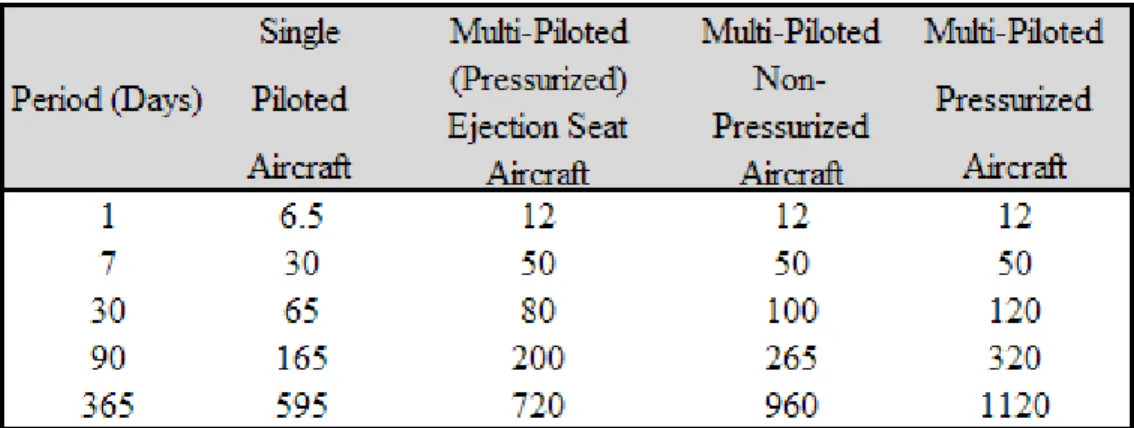
Flight time guidelines are provided to assist commanding officers with conducting flight operations. The instruction refers to the impractical nature of mandating strict requirements due to the varying constraints associated with different aircraft communities. It states that daily flight time “should” not normally exceed 6.5 hours or three flights for single-piloted aircraft and that individual flight time in other aircraft should not normally exceed 12 hours. These numbers are based on the assumption that the average time from brief to debrief totals four hours. Weekly maxima are recommended to not exceed 30 hours for single-piloted aircraft and 50 hours for others while neither “should” be assigned flight duties for more than six consecutive days. The remaining guidelines are provided in Table 1.
Table 1. Maximum Recommended Flight Time (OPNAVINST3710.7T, 2004) Each community within Naval Aviation must also comply with the NATOPS manual and SOP applicable to their specific T/M/S aircraft. For the scope of this research, it is not necessary to review the guidelines of each manual. However, a majority of communities observe a standard 12-hour crew day and 10 hour crew rest. A crew day begins when a crewmember enters the squadron spaces and terminates after completion of the last military obligation. Crew rest is considered the time after completion of the last military obligation until the next scheduled military obligation (e.g., duty, simulator, preflight briefing). Additionally, the workday following watch standing disqualifies crewmembers from participating in the following day’s flight operations. These rules are subject to operational requirements and deviation from the guidelines requires authorization by the CO. The interpretation and implementation of these rules may vary between different commands, but remain similar in application.
3. United States Air Force
The U.S. Air Force crew rest and flight duty limitations are governed by the Air Force Instruction (AFI) 11-202, Volume 3, Chapter 9 (2006) which defines maximum flight duty periods (FDP) and crew rest requirements for all USAF aircrew. The document is structured similar to the OPNAVINST in which it sets forth maximum and minimum requirements and delegates MAJCOM commanders to implement further restrictions at their discretion. It allows commanders to account for specific fatiguing
15
effects such as extreme weather, mission requirements, jet lag, impaired crew rest, mission delays, and type of aircraft flown. Chapter 9 also states that the T/M/S publications may have more restrictive requirements and therefore take precedence over the less restrictive standards.AFI 11-202 Volume 3 provides specific definitions for crew rest and flight duty limitation terminology. It defines a crew rest period as, “the non-duty period before the flight duty period begins. Its purpose is to allow the aircrew member the opportunity for adequate rest before performing in-flight duties. “Crew rest is free time, which includes time for meals, transportation, and rest.” (AFI 11-202V3.9.3.5, pg. 69) It further defines rest as “the condition which allows an individual the opportunity to sleep.” (AFI 11-202V3.9.3.5, pg. 69) Crew rest is normally 12 hours prior to the FDP and requires at least eight hours of uninterrupted rest within the specific time period. Any official business that results in crew rest interruptions (including telephone calls) results in eight additional hours of uninterrupted rest with additional time provided to dress, eat, travel, etc.
The AFI defines the Flight Duty Period as “a period that starts when an aircrew reports for a mission, briefing, or other official duty and ends when engines are shut down at the end of a mission, mission leg, or a series of missions.” (AFI 11-202V3.9.3.6.1, pg. 69) This definition is very similar to the Navy’s crew day and FAA’s duty period definitions and essential covers the same periods of duty. The Air Force also details the maximum FDP based on the aircraft type; a descriptive chart is provided below with the published guidelines.
Flight time regulations are established for all T/M/S aircraft on larger time scales. Total flight time is limited to 125 hours within any 30 consecutive day period and 330 hours within any 90-day period. The instruction has provided other scheduling restrictions that cover SCUBA diving, hypobaric chambers, blood donations, and alcohol consumption. The final portion of the instruction includes waiver authority, which permits MAJCOM/DO (or ANG/XO) to extend the maximum FDP up to two additional hours if the mission priority justifies the risk of fatigue. The pilot in command (PIC) is authorized this authority if circumstances arise that prohibit the ability to contact the
regular approval authority. This is a necessary delegation of authority due to the nature of military operations in which aircrew often operate under electronic emissions restrictions or outside of communication reception ranges.
Table 2. United States Air Force Flight Duty Period Time Regulations
In summary, there are strong similarities among the FAA, Navy, and Air Force regulations regarding aviation crew rest and length of crew day. While there are subtle differences in wording and structure that reflect the different nature of operations among the organizations, the underlying theme is a detailed framework of guidelines set forth to govern the flight scheduling process and enhance safety in operations. These instructions acknowledge the importance of mitigating fatigue and its physiological effects on human
17
performance. While they do not directly instruct schedulers and aviators on how best to mitigate these risks in flight scheduling, they leave a design opportunity for aviators, schedulers, and researchers to develop their own scheduling methods to best balance the operational needs of the organization with the physiological needs of the operators.
D. DEPARTMENT OF DEFENSE AVIATION FATIGUE MANAGEMENT
MODELS AND SOFTWARE
Over the past four decades, the U.S. Department of Defense (DoD) has been heavily involved in the research and development of fatigue management models. This section of the chapter reviews the chronological evolution of fatigue research and the major models developed in DoD. It also provides an overview of the capabilities and limitations of different software applications developed to manage and assess fatigue in flight scheduling.
1. Sleep Performance Model
In the early 1980s, the Department of Defense (DoD) funded joint research between Walter Reed Army Institute of Research (WRAIR) and Scientific Applications International Corporation (SAIC) to investigate the relationship between sleep levels and effectiveness with regard to artillery ordnance employment. WRAIR later augmented these studies by conducting a major study in the 1990s that used wrist-worn activity monitors or actigraphs. These wrist-worn actigraphs, originally called Sleep and Activity Monitors (SAM), allowed researchers to collect activity and estimation of sleep on 66 subjects over the course of one week. They provided the means to compare real-time assessment of cognitive performance based on sleep patterns. The subjects were permitted normal sleep, partial sleep deprivation, or total sleep deprivation and performed psychomotor vigilance tasks under these three conditions. This sleep dose-response (SDR) study provided data used to formulate numerical estimations of parameters, which became the foundation of the Sleep Performance Model (SPM). It also clarified several sleep-related performance measures that became baselines in further model and software development.
The SPM takes an individual's retrospective sleep data to produce an estimate of current predicted effectiveness. The estimation can be applied to a specific individual or unit of operation. The feedback provided by the SPM can be used to identify when an individual needs more sleep, or substituting crewmembers, to mitigate the risk of fatigue. It can even be applied on a macro level by providing a weighting function representing the effects of fatigue on larger scale operations.
2. Sleep, Activity, Fatigue, and Task Effectiveness Model
After the development of SPM, further research was conducted by the U.S. Air Force Research Laboratory (AFRL). The Warfighter Fatigue Countermeasures (WFC) Program of the AFRL supported Dr. Steven Hursh in efforts to develop the Sleep, Activity, Fatigue, and Task Effectiveness (SAFTE) Model. This model is based on sleep and circadian rhythm research conducted over many years. It was designed to consider a wide range of schedule and sleep conditions over any time period and produce valid performance predictions. Additionally, the circadian data were on subjects ranging from ages ranging from twenty to the mid-fifties to accurately model the demographics of the majority of operators.
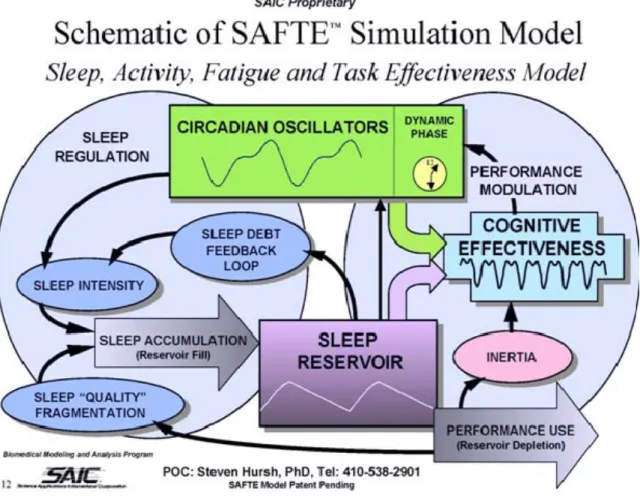
SAFTE models how the human circadian process affects both sleep regulation and performance. In the model, sleep regulation entails hours of sleep and awake, current sleep debt, sleep fragmentation, and the circadian process. All of these factors influence quality of sleep. Performance encompasses the current balance of sleep regulation, sleep inertia, and the circadian process. This homeostatic model takes data inputs of recent sleep history and creates predictions of future performance of an individual or group. SAFTE was also developed to easily be amended to incorporate fatigue effects that specific to different operator communities. This allowed widespread operational usage in the scheduling of operations ranging from the railroad industry to military aviation.
While this model was an advancement of the SPM, it also has shortcomings that had to be addressed before usage. The severity of the shortfalls depends of the specific application. The first limitation is that the model does not directly address individual
19
parameters such as age, time of day, or sleep requirements for maximum performance effectiveness. Additionally, it does not provide any form of group variance estimations about the average performance prediction. Essentially, these limitations may not affect large group scheduling or generic schedules. However, they have potentially consequential effects when dealing with individual performances. The DoD acknowledged these shortcomings and funded research for further development.
Figure 1. SAFTE Model Schematic (Hursh, 2003)
The Air Force awarded a contract to NTI, Inc. and Science Applications International Corporation (SAIC) to develop a software application of the fatigue modeling research under a Small Business Innovation Research (SBIR) grant. The end product was the Fatigue Avoidance Scheduling Tool (FAST).
3. Fatigue Avoidance Scheduling Tool
The objective of creating FAST was to apply the SAFTE Model in a computer-based tool for operational planning and scheduling. The user is afforded graphical output and quantitative estimates to evaluate and compare predicted effectiveness in alternative scheduling scenarios, a function of fatigue and circadian variation as calculated by the SAFTE Model.
FAST is an interactive tool that relies heavily on user inputs. It provides predicted effectiveness estimates based on user-defined sleep/wake schedules. The user can select a desired time period ranging from six hours to 30 days to view the fatigue effect on a proposed schedule. FAST generates a graphical display of performance effectiveness over the desired period of time. In addition to the graph curve, the software also includes interpretation tools to aid the user. The familiar Windows menu structure allows a dashboard feature to be enabled. The fatigue indicator dashboard is a movable window that corresponds to a single point in time along the curve of the graphical performance estimate. The dashboard was designed to provide the user a detailed snapshot of the predicted effectiveness at a given time. The dashboard provides detailed statistics to aid scheduling of critical events. The output is divided into two major categories of performance and fatigue factors. The performance category is further divided into sub-categories of effectiveness, mean cognitive, lapse index, reaction time, and reservoir. The fatigue factors category entails sub-categories of sleep (amount of sleep within last 24 hours), chronic sleep debt, hours awake, time of day, and circadian phase de-synchrony. Finally, the top display of the dashboard has these fatigue factors listed with red flags next to any sub-category that is negatively affecting the overall performance effectiveness. The driving force behind the implementation of this feature was to aid in the analysis of factors that cause decreased predicted performance.
Other features of FAST are the color-coded graphical background and vertical axis display options. The graphical output is colored to enhance the ability to visualize degradation. The upper portion (greater than 90% effectiveness) of the graph is shaded green to represent a safe zone. The middle portion (between <90% and 65%
21
effectiveness) is shaded yellow to represent a caution zone. Finally, the bottom portion (<65% effectiveness) is shaded red to depict a danger zone. This familiar color scheme aids the user in deciding which portions of the schedule need further analysis. The right-hand vertical axis display compliments this feature by allowing the user to select criteria such as blood alcohol content (BAC) equivalence, lapse index (likelihood of attention lapse due to microsleep), sleep reservoir, and acrophase (time at which the peak of the circadian rhythm occurs) as an overlay on the graph. This provides the user a quick and simple indication of the severity of degradation in predicted effectiveness.
There are assumptions and limitations incorporated into FAST. FAST requires the user to input past and future schedule times. It accounts for time as either on-duty, sleeping, or awake and off-duty. The program allows the user to rate the quality of sleep using four descriptive levels; excellent, good, fair, and poor, that directly correlate to performance effectiveness. This level of detail is essential in accurate fatigue modeling in harsh sleeping environments such as aboard naval vessels. Factors such as machinery noise and excess movement from heavy seas can have varying effects on sleep in individuals. However, FAST contains no method to factor the effects of fatigue countermeasures such as sleep aids and alerting drugs such as caffeine, which may play a significant role in sleep quality. The most significant limitation to this software is the time required to use it. FAST is very detailed and gives the user a high level of feedback, but is costly in terms of time resources. This factor was the leading cause for movement toward developing a software application that encompassed the key benefits of FAST but focused on ease of use seen in FlyAwake. The FlyAwake effort focused on the production of fatigue assessment software that is easy to use and immediately deployable to the military units at strategic, operational, and tactical levels.
4. FlyAwake
While FAST effectively applied the SAFTE algorithm in scheduling, it has been limited because of usable issues. It has been helpful in safety investigations and research, but its complex user interface has prevented it from being integrated into operational
squadrons. However, after two significant fatigue related mishaps in 2007, the Air National Guard (ANG) 201st Airlift Squadron began using FAST to model aircrew fatigue in their flight schedules. After six months of FAST utilization, Lt. Col. Edward Vaughn, of the USAF Air National Guard Safety Center, obtained funding from the Defense Safety Oversight Council (DSOC) of the Office of the Secretary of Defense (OSD) in order to contract development of an improved software program. The objective was to develop a web-based software program based on the SAFTE algorithm with a graphical user interface (GUI) that reduced workload requirements for schedulers and was deployable at the squadron level.
The Air National Guard and MacroSystems, Inc. began developing FlyAwake in late 2007. Air National Guard pilots from 20 wings were recruited to assist in the software development by providing user feedback in order to tailor the product specifically to scheduler needs. A major burden identified by FAST critics was data entry into the software program. In order to alleviate this burden, FlyAwake was developed with pre-populated data specific to a squadron's Type/Model/Series (T/M/S) aircraft such as missions and duties. This improved graphical user interface (GUI) significantly decreases laborious typing of data by schedulers and aircrew. It also has default settings for mission brief, launch, recovery, and debrief times in order to further reduce the workload. However, the user has the ability to customize the schedule as necessary to input an accurate depiction of a work cycle or flight schedule. FlyAwake takes the user inputs and performs a fatigue algorithm that accounts for the duty cycle and sleep history of an aircrew, and provides an accurate assessment of overall fatigue levels.
FlyAwake steadily gained support in the aviation safety community as a result of its success in fatigue modeling and assessment. Specifically, the U.S. Air Force Patriot Excalibur (PEX) program and the Air Mobility Command (AMC) Tactical Airlift Control Center (TACC) were interested in incorporating FlyAwake into their scheduling processes. As a result, the DSOC again funded the ANG, which contracted with MacroSystems to create a second version with the ability to communicate with other
23
software scheduling programs. FlyAwake v2.0 was released during the summer of 2009 and can now be integrated into existing flight scheduling. This capability provides the user with fatigue mitigation recommendations to provide flight-scheduling optimization for fatigue management.
The DSOC encouraged the software developers of FlyAwake to make it into a joint military application. In effort to support this requirement, the second contract with MacroSystems also included the incorporation of FlyAwake with the Joint Air Logistics Information System (JALIS). JALIS is multi-service coordinated air logistics scheduling program and decision support tool servicing Operational Support Airlift Agency (OSAA) and Navy Unique Fleet Essential Aircraft (NUFEA). However, due to compatibility issues and contract time constraints, the decision was made to replace the JALIS requirement with the U.S. Navy Sierra Hotel Aviation Readiness Program (SHARP). This modification allows the immediate incorporation of FlyAwake into a large aviation community of software users and may ultimately enhance safety in Naval Aviation.
Innova Systems, the software development company of SHARP, is currently working with MacroSystems under the guidance of Commander, Naval Air Forces (CNAF) to produce a version of SHARP with the built-in functionality of FlyAwake for the October 2009 version release. This version will be available for designated squadrons for usability testing in the fleet. Further dissemination of SHARP versions with FlyAwake integrated capabilities will depend on the CNAF evaluation of the feedback provided from test squadrons.
25
III. METHODS
A. OVERVIEW
The objective of this thesis is to conduct a comparative analysis of U.S. Navy flight schedules using current baseline fatigue-related scheduling against flight scheduling that uses FlyAwake software. Retrospective flight schedules were analyzed for aircrew fatigue levels using FlyAwake and then compared against alternative scheduling options with the aid of FlyAwake. Section B describes the method for the aircrew data collection and the selection process. Section C covers the data input procedures and data output that processes the flight scheduling data through FlyAwake. Finally, Section D describes the analytical strategy employed during the flight schedule comparison.
B. AIRCREW DATA COLLECTION
The retrospective aircrew data were obtained from the SHARP database of Helicopter Antisubmarine Squadron Light Four Two (HSL-42). Permissions and administrative rights were granted by Innova Systems for full access to all functions of SHARP within the HSL-42 squadron. Previously completed and executed flight schedules, scheduled ground events, special scheduling requests (referred to by aircrew as “snivels”), aircrew qualifications, pilot logbooks, and currency reports were all exported from SHARP into Excel spreadsheets for analysis.
After the access to SHARP data was granted, the process of selecting an appropriate date range for the analysis of data was necessary. The process of transferring data between SHARP and FlyAwake required extensive manual user input at this stage of development of the analysis. This limitation led to the selection of one month as an appropriate time frame for the analysis. February 2008 was selected for several reasons. to. It had a standard operations tempo (OPTEMPO), was sufficiently past the holiday season to minimize the number of aircrew on vacation. In addition, it was mid-quarter so
the operations department usually has a solid projection of flight hours remaining in the second quarter, and it was a month that is generally associated with detachment underway and deployment cycles.
The final challenge in the selection process was the isolation of a specific group of aircrew for analysis. February 2008 had two separate detachments with underway periods, which conducted workups for their upcoming deployments. These detachments were chosen in order to provide a glimpse into the benefits that FlyAwake affords while flight scheduling at homeguard with a large pool of pilots versus underway scheduling with a limited pool of only five (in the case of this analysis) which limits the options for a detachment operations officer. Additionally, the selection of detachment pilots conducting operations underway bounded the analysis by significantly reducing the flight scheduling variability that is present when analyzing schedules of an entire squadron. The detachments embarked on their respective ships and only had scheduling access to their five assigned pilots. This restriction assisted in the analysis by limiting certain aircrew dynamics that cannot be captured by a software database. Flight scheduling events and time frames are always approved and/or assigned by higher authority and disseminated through the Air Tasking Order (ATO), translating into reduced freedom and ability for detachments to build their own flight schedules. While the homeguard operations department also has some mandated time commitments to honor, overall they usually have much more freedom and flexibility in their flight schedules. In summary, February 2008 provided the ability to sufficient bound the analysis in order to provide a realistic and valid approach to conducting this comparison.
C. PROCEDURES
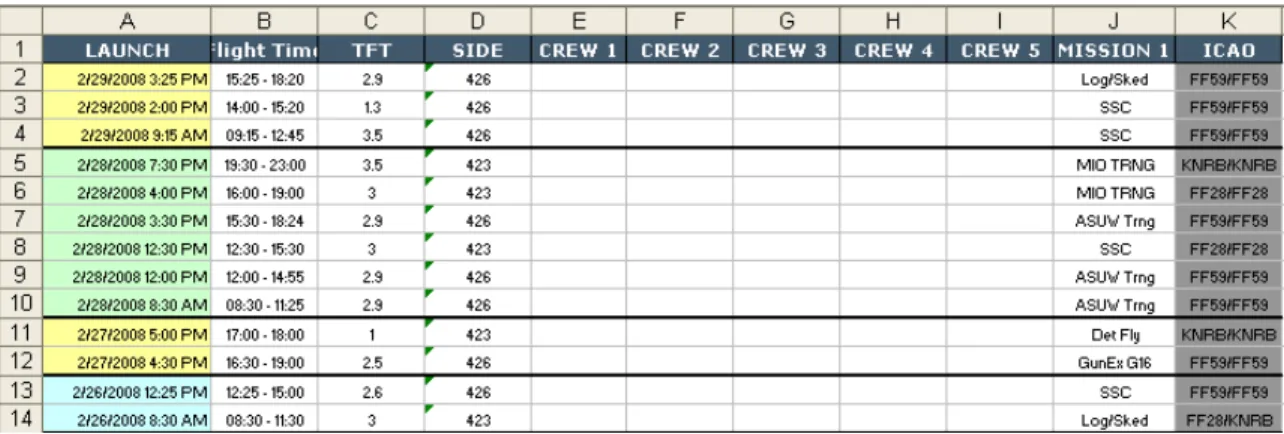
The first procedure following the completion of the collection and selection of the aircrew data set was filtering the data to extract only the desired aircrew members. The data set was contained in Excel spreadsheets and was filtered and organized chronologically for ease of processing through FlyAwake. An example of the data set is provided in Figure 2 with aircrew names removed.
27
Figure 2. Excel Spreadsheet Containing Detachment Executed Flights
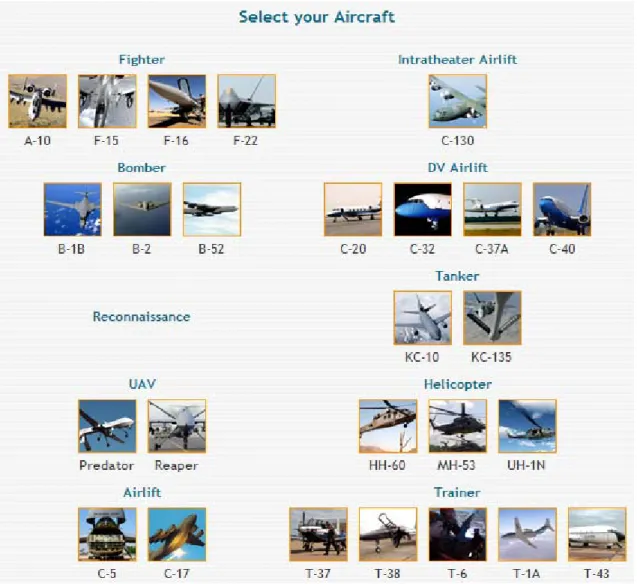
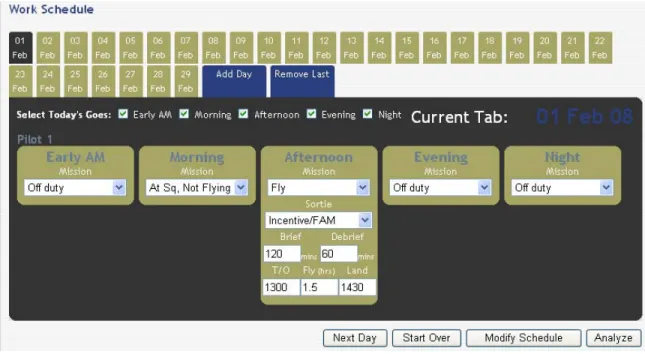
Logged flights for each pilot were processed through FlyAwake in order to calculate the predicted effectiveness. Access to FlyAwake is via the internet and the initial screen prompts the user to select the aircraft specific to the analysis. For the purposes of this study, the F-15 was selected because there was not a functional helicopter option in FlyAwake at the time of analysis. The selection of the F-15 option was primarily for ease of data input. The aircraft selection does not affect the fatigue algorithm, but only changes the preset options that are specific to each aviation community such as standard flight scheduling time frames, mission types, and number of aircrew. This study focused only on the scheduling of pilots, which was a similar setup as the F-15 option. Additionally, the F-15 option contained both FAM (Familiarization) and FCF (Functional Check Flight) flight options, which were appropriately complex for the current analysis. The type or difficulty of the flight event selected in this procedure also had no effect on the algorithm. Sample screenshots of the user interface are provided in Figure 3, Figure 4, and Figure 5.
Figure 3. FlyAwake Aircraft Selection Screenshot
29
Figure 5. FlyAwake Work Schedule Builder Screenshot
After the aircrew data set was input, FlyAwake generated a graphical display of the predicted effectiveness over time for each pilot. An example of this output is provided in Figure 6.