http://econ.geog.uu.nl/peeg/peeg.html
Complexity Thinking and Evolutionary Economic Geography
!" # $ % & '( ) ) * + ,'-'!. % & /).) ( ) ) *
Abstract
Thus far, most of the work towards the construction of an evolutionary economic geography has drawn upon a particular version of evolutionary economics, namely the Nelson-Winter framework, which blends Darwinian concepts and metaphors (especially variety, selection, novelty and inheritance) and elements of a behavioural theory of the firm. Much less attention has been directed to an alternative conception based on complexity theory, yet in recent years complexity theory has increasingly been concerned with the general attributes of evolutionary natural and social systems. In this paper we explore the idea of the economic landscape as a complex adaptive system. We identify several key notions of what is being called the new ‘complexity economics’, and examine whether and in what ways these can be used to help inform an evolutionary perspective for understanding the uneven development and adaptive transformation of the economic landscape.
0 1 *
2 1
) 2 1 *3 4+
! " # $ , 1 1 * 5 0 4 '66-7 ! 8 '66678 ! "99'7! ! "99#7! 3 * "99# "99:7 4 "99;7+ * "99<7 "99:=) > & ) ? 1 * 1 1 1 $ 2 1 & 1 5 = 5 =)' 2 & 1 1 @ )
But the neo-Darwinian framework is not the only possible one. Nor indeed, is evolutionary biology necessarily the most appropriate source of concepts, analogies and metaphors (Wimmer, 2006; Chattoe, 2006). In fact, there is debate within evolutionary economics itself about drawing on Darwinian concepts and the ideas of evolutionary biology.2 And this is not a new debate. On the one side, for example, Alfred Marshall once famously concluded that “the Mecca of the economist lies in economic biology rather than economic dynamics” (Marshall, 1930, p. xiv).3 Others, however, have urged caution about borrowing ideas from biology. Penrose (1952, p. 819) for instance, argued that
? * 0
1 1 * A B
1 1
)
More recently, even Hodgson (1993), a strong protagonist of an evolutionary approach to economics, has emphasised that while biological analogies are far more appropriate than the mechanistic ones that underpin mainstream economics, they have to be used cautiously. Further, as Lawson (2003) points out, there is the important question of whether it is ontologically meaningful to abduct notions from evolutionary biology into the socio-economic realm (see also Chattoe, 2006). In his view this question has yet to be adequately 'C $ &2 1 8 * 1 ) > * 0 * 1 1 & ) "$ 1 ) ? 0 * ) 2 ) ? 0 $ 1 $ 1 1 1 & ) # 1 * 1 1 + D 0 E5 ) 0 =)
answered. Others, however, are more optimistic. For example, Witt (2003) advances a so-called ontological ‘continuity hypothesis’ of evolutionary economics, the suggestion that while the Darwinian notion of natural selection is only one form in which evolution occurs in nature, it is that form which, “historically, has shaped the ground and still defines the constraints for man-made, or cultural evolution” (Witt, 2003, p.15). Somewhat between these two different viewpoints other authors have suggested that concepts such as variety, natural selection, inheritance and the like, do not have to carry over strict biological connotations when used as in economics, but can be used to identify ‘generic’ features of evolution that can be given specific meaningful economic interpretation (see Metcalfe, 1998; Witt, 1999). And so the discussion continues. All in all, it seems to us that the jury is still out on the question of whether a viable evolutionary economics - and thus by implication, a viable evolutionary economic geography - can be based solely on principles drawn from evolutionary biology.
It is not our intention to pursue this intriguing issue further here, however (for two such discussions, see Frenken and Boschma, 2007, in this journal issue; and Essletzbichler and Rigby, 2007, also this journal issue). Instead, our aim is to explore the potential scope – and limits – of a second approach to constructing an evolutionary perspective within economic geography, one based on what we shall call ‘complexity thinking’. Interest in complexity and complex systems goes back at least to the 1940s, but in the 1970s and 1980s work on the dynamical properties and structural transformation of non-linear, ‘far-from equilibrium’ systems in the natural and physical sciences led to the development of a new field that quickly became labelled as the ‘science of complexity’ or ‘complexity theory’ (Nicolis and Prigogine, 1977, 1989). Over the past two decades or so, this area of research has developed apace, focusing among other things on the evolutionary behaviour of ‘self-organising systems’, ‘self-regenerating (‘autopietic’) systems’, ‘complex adaptive systems’, and ‘complex evolutionary systems’ (for example, Holland, 1992, 1995; Kauffman, 1995; Bak, 1996; Schweitzer, 1997). At the same time, ‘complexity thinking’ and ‘complexity ideas’ have diffused into several areas of the social sciences (Byrne, 1998), including not only economics (Anderson, Arrow and Pines, 1988; Arthur, Durlauf and Lane, 1997; Metcalfe and Foster, 2004; Ramlogan and Metcalfe, 2006), but also economic and social history (Frenken and Nuvolari, 2004; McGlade, 2006), archaeology (Bentley, and Maschner, 2001, 2003), political theory (Rosenau, 1995), organisational and management theory (Stacey, Griffin and Shaw, 2000), and computing science (Bullock and Cliff, 2004)4. It has had less impact on human geography, although recently it has begun to receive attention there too (for example, Thrift, 1999; Gattrell, 2005; Harrison, Massey and Richards, 2006;Manson and O’Sullivan, 2006;Plummer and Sheppard, 2006).5 Such has been the growth of the field that some talk of a new episteme that challenges conventional epistemological and ontological assumptions about the nature and behaviour of natural and social phenomena (Wolfram, 2002).
This expanding interest and increased participation in the ‘discourse of complexity’ has not yet resulted in any clear, precise or generally agreed definition of the term, however; and to refer to complexity ‘theory’ is perhaps to exaggerate the degree of conceptual coherence and explanatory power associated with the notion. The main reason for this is that by its very nature as a holistic concept the notion of complexity resists easy reduction to a set of law-like statements or universal theoretical principles. As its two leading exponents put it, “complexity is one of those ideas whose definition is an integral part of the problems that it raises” (Nicolis and Prigogine, 1989, p. 36). Nevertheless, there are some apostles of complexity who believe there are general principles that apply to all complex systems and that eventually it should therefore prove possible to construct a sort of unified theory of complexity. This has been the central thinking behind the Santa Fe Institute programme of ; 1 5"99<= 0 1 ) C 1 1 ) <? + 5"99:= 0 0
research on the ‘science of complexity’. The aim of the Santa Fe studies has been to explore the possibility of a formal theory of complexity – or more precisely, a theory of ‘self-organisation’ - that applies equally to both natural and social systems. Notable examples have included the work of Allen (1982, 1985, 1992) and Arthur (1988, 1989, 1994; and Arthur, Daly and Lane, 1997) on social and economic-technological systems.
Interestingly, Arthur’s work in particular contained a number of applications to geographic phenomena, such as the development of urban and industrial location patterns. Subsequent to, and somewhat similarly to Arthur’s work, Krugman has used complexity theory as one of the conceptual strands of his so-called ‘new economic geography’ (Krugman, 1994, 1996, 1997). Following the Santa Fe Zeitgeist, Krugman has sought to show how
Models of self-organisation can be applied to many economic phenomena – how the principle of ‘order from instability’ which explains the growth of hurricanes and embryos, can also explain the formation of cities and business cycles; how the principles of ‘order from random growth ‘ can explain the rules that describe the sizes of earthquakes, meteorites and metropolitan areas (1996, p. vi).
The main argument underpinning Krugman’s thesis is that common principles of self-organisation can be shown to operate across all sorts of systems - physical, biological and socio-economic - and that these principles provide a new view of how the economy structures itself in space and time.6
We should emphasise immediately where we agree and where we disagree with Krugman. A survey of the literature on complexity thinking does indeed suggest that natural, physical and social systems display certain similarities in ‘complex behaviour’, that is the emergence, under certain conditions, of self-organised complexity at a macroscopic scale in the form of spatial patterns or temporal rhythms. But the actual processes involved in the emergence of self-organised complexity obviously differ as between, say, cellular biology, the human brain, societal organisation and economic systems. This implies that distinct limits are likely to exist to the construction of a single, unified ‘meta-theory’ of complexity that is equally applicable to such diverse phenomena. Such a theory would perhaps only be possible at a very high level of abstraction and generalisation, which presumably is why some adherents of complexity thinking – including the Santa Fe school, and many others (such as Krugman, 1996) - seek to establish formal mathematical principles of complex behaviour.7 However, it is our view that a formal (mathematical) modelling methodology is neither necessary nor of itself sufficient for understanding the complex behaviour of the economic landscape; evolutionary processes in the social-economic sphere are not easily reduced to, nor rarely can be adequately represented by, formal models.8 Thus while we might share Krugman’s view that the economic landscape can be viewed as a complex evolving system, we do not subscribe to the argument that this automatically requires the adoption of a model-based methodological strategy. Our task here, instead, is more ontological in purpose, namely to explore how far and in what ways some of the ‘generic’ aspects of evolutionary behaviour that are held to characterise complex systems can inform how we think about and conceptualise the economic landscape and its evolution. As in the case of borrowing ideas from evolutionary biology, so there are questions concerning the interpretation of metaphors and analogies transferred from ‘complexity theory’ to economic geography. The paper is intended to throw some light on this issue. We begin, then, in the next section, with identifying some of these generic principles or properties that are held to characterise complex systems. :? % F 0 G 0 F * * 1 ) 7 ? G 0 F & & ) H 1 1 *)
2. ‘Complexity Thinking’: Some Generic Concepts and Principles > 1 1 G 0 F G F) C G 0F 1 ) > * * * * I 0 ) , 01 & 1 ) >
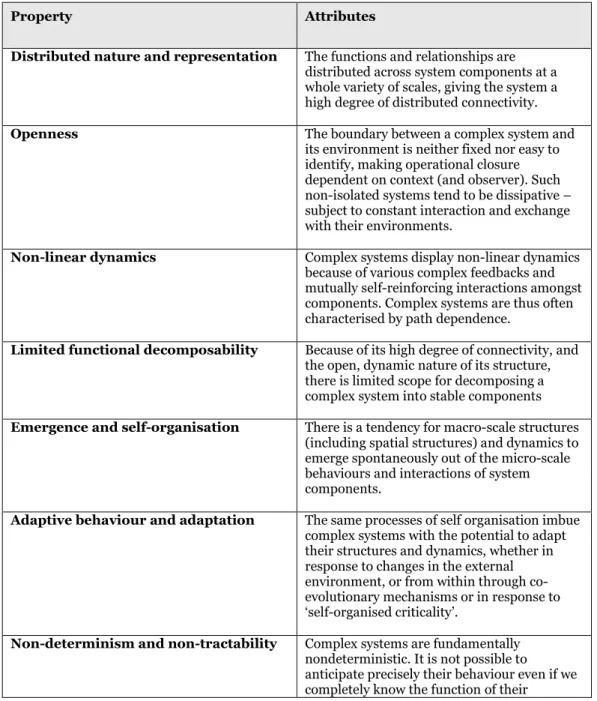
Table 1: Some Key Generic Properties of Complex Systems
% & ' & C 1 ) ( C 1 0 0 * 05 =) & I @ 0 1 ) ) * 0 & 0 * & ) 0 ) + # & ! 0 #* C & 5 = & ) & C 0 1 1 0 1 & G & F) ) * * & 0 ) ? 1 * 1
% & ) C 1 4 ) " ! + 5'66<= 5"999=> 5"99"= "99: 0 0 0 / 0 )
As mentioned above, while there is as yet no generally agreed set of well-defined ‘law-like’ statements that together constitute a universal theory of complexity, nevertheless what distinguishes complex systems is the way they exhibit emergent self-organizing behaviour, driven by co-evolutionary interactions, and an adaptive capacity that enables them to rearrange their internal structure spontaneously (Pavard and Dugdale, 2000). More specifically, seven generic properties can be identified as characteristic of complex systems (see Table 1).
3 0 1 F * 0 / 0 & ) 1 / G F) ? 0 / 1 0 0 ) ? 5 = 0 ) C 0 1 0 1 1 ) 2 1 & ! * 0 F ! 1 F @ ) > 1 0 1 ) ? 1 D 0 1 A @ B 1 ! A B E 5$ '6H6 ) -#7 =) ! & 0 !7 5 & = * 1 & )
J 5 & = 1 1 ) ? " " 0 )6 C & G F 1 1 1 0 0 & ) ? 0 G F & & G 0 F) C & 0 # !1 F 0 1 1 G & F 5! * '66:= 1 G F 1 @ F K 5 G L F =) 3 0 ) 1 & ) 0 ) ! 4 ) C 1 * 0 * & * 5 = 1 5 "99:=) > 0 G 0 F 5$ '6H678 * '666=) ? G 0 F 1 1 5 = 5 =) , G F 0 * 0 0 ) C 1 0 * 1 ) , 6 > 0 & ) > 0 1 & .
? 0 1 1 1 * 5 0 % '66:7> 8 '66-7 > '66H7 "999 "999 7 "9997 * "99#73 "99;7 "99;=)'9> D 0 F71 L E5 "999 ) #'=) ? 0 D & E 5! "99; ) #<=) ? 0 ! * 5"99:= G 0 F 1 * * 1 G 0 * F) 2 G 0 F * & 1 G F & * G 0 F G F 5C "=/ & 7 1 1 71 1 *71 & 7 1 1 ) C 1 G 0 F L 1 ) > 5"99;= 1 G 0 F /G F G F)''C G F '9? G 0 * F 1 * @ I 0 & G 0 F 5 "999 =) '' * 8 1 / ?? $ L L 1 1 1 58 1 "99# );=)
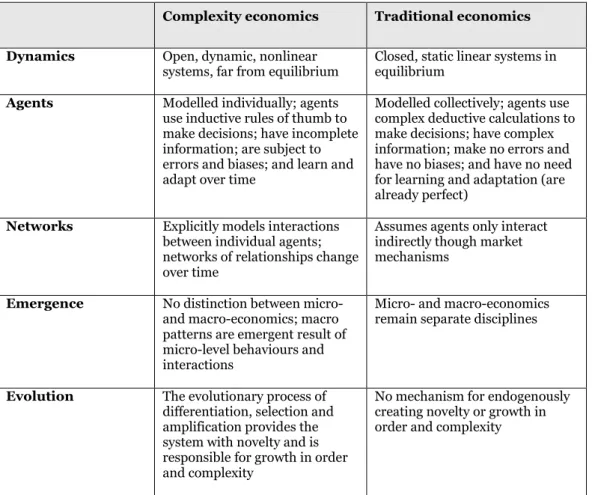
Table 2: Beinhocker’s Five ‘Big Ideas’ that Distinguish ‘Complexity Economics’ from Traditional Economics
' , L L 7 * 7 7 @ 7 7 0 * 7 0 7 * 7 5 = ) 0 1 7 1 * > * $ 1 & & 7 & & & C 1 1 0 $ 1 0 " ! * 5"99: ) 6-=) 0 & * L L ) G F 0 1 0 ) C 1 1 F G F 0 7 1 1 1 M2 8 1 5"99;= 1 1 G & F G & F 0 1 1 1 & 0 ) > * 1 5 = 0 ) ? 0 1 5 8 1 =) C
5 & = ) ? F 1 > 5 1 1 % = 0 & 5G F G & F=* ) C 1 1 1 1 1 & G F 5% '66; '66:7> '66;7> ) '66-= & L 1 1 *) ? F 5 = 1 F G F ) 0 1 & L 5 > '66;7> '66-7 % '66-7 "99;=) > N * 5"999= 0 5 0 G F > % = 1 $ 5 L L = 4 & 5 L 1 L G F G F =) ? 0 1 L ) C 1 0 5G F= ) , 5"999= 1 0 / C 1 0 @ 1 1 ) 2 L 0 G F 1 & * 0 0 0 1 ) C 1 0 * 5"999 ) 6'=) 3 1 % F 5'66#= G * F &
) > 0 & 1 0 & 1 & 0 /D 0 E5"999 ) 'H:=) 3 L 0 G F/ 1 L ) C 0 1 ) C 0 ) C 0 ) C 0 1 ? 5 "999 ) #=) * 1 ) 3 1 * 1 53 '66# '66; '66-7 '66-'66H73 "99;=) 3 0 & 1 * 1 / D & L L * 1 1 E53 '66- ) ;;;=) > * 1 * 1 I * & 1 * 1 * ) C I 0 & 1 *)'" + 1 1 3 G 0F 0 0 * 8 1 ) C * & 1 @ 0 / & 4 D 1 1 1 E5! "99' 6;=) C 1 * 1 1 L '"C 1 0 )
5 % '66;=)'#? 0 @ 0 & ) C 0 1 0 ) J * 1 0 / 0 ) > 3 5"99<= G &F G & F 0)'; ? G F * * 1 ) ? G F 0 5 = ) * K* 1 & ) C 1 0 G 1 F 0 1 ) + 1 ) 3 D & & E 5"999 ) "#<=) C 0 G 1 F * 1 53 "99; ) ''=) ? 0 4 1 0 * ) ? ! * F 5"99:= 0 0 1 * ) ? 1 & 1 ) + D 4 1 % E5 ) '"=) + D 1 & ) 2 4 0 E5 ) '"=) C 0 '#3 0 ! 1 DC 1 1 1 E5 ) 6:=) ';? 3 F 5"99<= G & F 0 1 G & F 0 * 1 L ) C 0 )
0 0 1 ) ! 0 L ) 0 1 1 1 0 ) + 1 0 1 1 0 M+ 1 0 0 0 0 M * L I I 1 0 1 0 ) > 0 1 1 ) ? 1 1 1 1 ) 0 ) > 0 & 4 1 5> '66;7% '66;7'66:7! "99;=) > G F G F 1 0 ) > 0 1 ) > & & & 5 > '66;7% '66:7 '66H7 "99:=) + 1 1 1 0 & 4 ) C 0 1 *) 1 ) ) & 1
5 "99<7 * "99<=) ? 0 G F 5C '666=) ,F 5"99:= 0 0 1 5 ,F "99:=) > ! * 5"99;= 1 0 ) 2 0 0 G & F 1 * G F ) ? 0 G 1 *F) 0 G F 1 1 *) C G F 5 "999=) ? * 1 1 1 * * 1 1 ) 0 * 1 1 ) C 0 1 1 ) ! 1 G F G F 1 0 ) > 5"99<= 1 1 & ) & 0 ) 8 1 ) & 0 1 1 G F 5! "99'=) 3 0 ! 5 = 1 1 * 1 1 * ) + 1 1 * 1 & & 4 ) 1 & 4 M2 1 1 * M
> 0 1 ) ! 5"99;= 0 L 0 0 ) ! 0 1 1 1 0 MC 0 & 1 5 "99<=) 0 & 0 @ 1 ) ) 0 ) 5"99'= 1 C 1 1 ) ! 1 ) & 1 0 & 1 1G 4 F) ? 5 = 0 5 1 * 1 =1 5 =) C 1 5 = 5 = G 0 1 0 F ) C L L 1 1 @ & 1 ) 1 M2 1 5 = 1 G F 0 ) ? * 1 G F M * & 1 * 1 1 1 ) 3 1 0 1 1
) 2 0 * 1 1 M'<> L 1 1 ) > ,F 5"99:=D 0 1 G 1 E5 ):';=) ? 1 -0 G 1 1 F 1 5 "99" G F =) C 1 * & @ % 5'66:= * 0 ) + 1 * * 1 ) , 1 5 ,F "99:=) 0 1 ) 1 3 F 5 =G F 0 1 0 @ ) > 1 ) D? 5 = * 0 E5"99< ":=) C 0 1 1 * 1 0 ) * 1 0 5 "9997 "99:=) ! * 1 1 L 1 ) . " #*( + > 1 * 0 & ) 2 0 & & 5 0 ! * "99:=) & 1 1 1 '< 5'666= & O & * 1 & ) J & )
0 L 5 = ) ? & 1 & L 1 ) > 1 1 ) 0 1 0 & / 5 = 5 * 1 *= * ) C 0 * 5 1 * =1 @0 0 ) ? 1 5 = * 1 1 ) J & ) 3 L 1 * ) / 1 1 7 1 * 1 7 F F 1 * 0 5 0 * = 1 ) ? 1 & L 1 ) ) ? 0 1 L 0 ) C @ 0 G F * 0 1 * 1) ? * * 1 1 ) C 1 I
& ':) 0 & 1 11 * 1 1 1 1 1 ) ! * 1 * 1 ) 3 1 * 1 & & 1 1 & ) '-3 L 1 & ) 0 & 1 5"999= * ) > 1 1 ) ? 1 1 / 1 ) ? 1 1 ) ? 0 1 1 1 1 ) 0 1 /D 1 1 1 0 11 1 1& & 1 E5 "999 ) 69=) > 0 1 $ 1 * 5 = 0 1 0 1 5 )69=) 2 M 1 / 7 07 ) J 1 1 1 ) ? ':C 1 5 "99"=) '-C & & 0 ) C 0 5 "99:=
1 G F 1 5 = 1 * ) J L *& 1 1 1 0 *& 0 I G1 * F 5 0 *& "99:=)'H? 1 & 1 L 0 & 0) > 1 5 4 "99- @ =) > + % 5"99; = & /D 4 0 & 4 E5 ':=) ? 1 0 & 4 0 0 1 ) C & 4 ) ! 1 * 5 & 4 = L ) C 0 4 58 "99'=) > 1 0 0 * ) C & G F 1 1 5 "999=) ? 0 1 1 0 1 ) * 1 * 5+ '666=) ? 0 0 0 58 "99<=) > 1 0 & 0 F 0 & * ) 3 5'66-= 0 1 * 18 0 * G *& F 1 5 = / ? * 5 = 5 )69=)
) + 0 G* 1 F ) > 1 0 & 4 1) C 0 * 0 ) ? G 0 F 1 ) % 5'666= * ! * 5"99:= * )'6 , 1 1 ) + 1 1 @ 1 0 1 0 M 2 1 0 0 M 0 1 * 1 1 1 G 0 F 1 1 * 1 ) / 0 > 0 ? 1 1 0 1 1 ) 2 0 4 1 53 '66-= 1 0 0 1 ) > 0 ) ? 1 @ 52 * "99"=) ! * 5"99:= 0 ) + 1 0 1 ) ! * 5"99:= 1 / 19 8 1 ! * 1 1 1 1 L * )
C 1 1 1 ) 2 *1 @ 1 ) ? 1 1 ) C * 1 * ) $ 1 1 @ 1 0 5 = 5 ) "'-=) ? L $> 1 ) ! 1 & M 0 1 1 G F) F G F ) C 0 1 ) 3 0 1 ) 3 & 0 G O F 5 & = 1 1 * L ) C 0 5 0 "99<7 * "99<=) C 0 & 1 ) ? & O 1 5 '66H=) C 1 0 0 ) , * ) C 0 1 1 1 1 1 @ * * ) $ 1 1 0 & 1 1 & )"9C * 0 0 ) C 1 & "93 5'66-= 0 1 )
* 5 % '6667 % '66#=) ? 1 1 * ) C * 1 ) > 1 * 1 1 1 1 ) 0 1 0 M 1 * 1 * 1 1 ) C * 1 & 1 1 1 * 1 1 * 1 5 "99:=) C /D 1 1 1 L 1 * 1 E5 "6=) 5"99; = 1 0 * 1 ) C F 4 1 & 1 & 1 5 "99;=) > )"' C 1 & 4 ) > 1 & 1 4 ) 5"99;= 4 G F 1 * ) D2 * * 1 & 1 * 1 1 * 21! * 5"99:= & 1 ) 1 ) C 1 ) + D 1 E5 ) "H#=) ? $ 2 F & 1 M
E5 ) ":H=)"" ? 1 1 * 1 4 ) 2 1 L ) C ) 3 & 0 1 * 5 0 "9997C "99#=) ? L 1 1 * ) * 1 1 1 5 8 "99'=) ! * 5"99:= * & 5?&C = 1 0 ) C 0 ) ? 1 & * ) > 1 1 * 1 ) > 5"99:= * 1 D? 1 * 1 * 1 ) C E5 ) '#9=) C 1 ) C * 1 & 0 ) ? * 1 4 0 ) 0 4 0 5+ % "99: =) ? F 1 D? 1 7 L E5"99: ) ''H=) C 1 L > 1 1 ""? ! 5"99<= * F ) C F L N F 1 * 1 G F G 0F ) C F @ 5 =)
1 1 1 * 1 M 3 0 * * 1 ) ? 0 * 1 0 4 ) ? 5 "99:=) + 1 0 * & * 1 * 1 ) C ) C 1 * 1 * * ) * * 1 ) * * 0 1 ) ? F 1 D * 0 * 1 / E5"99' ) ;""=) C 1 F G F 1 1 * 1 * ) ? 1 * 0 ) 3 1 * 1 1 1 ) 3 1 * 1 1 * 1 1 4 & ) L 1 ) > 5"99<= 1 1 1 * 1 0 1 * 1 ) > 1 0 1 * 1 ) 1 " $ # 0 2
, 0 G 0 * F ) ? * L 0 & @ ) 4 5"99- @ = ) ? 1 0 1 0 1 ) 1 0 0 ) C * & ) C & 1 L 1 7 1 7 1 * *7 1 7 1 1 * 1 ) ? 1 0 * * ) ! & 1 0 1 ) , 1 1 ) C * * 0 1 1 G 1 1 1 G F 7 0 1 * 5 = 0 1 * > % ) C 1 L & ) ? 0 ) , 1 * 1 0 5 & = & &
) 2 * 0 M? 1 0 1 0 * M 2 1 1 MC L ) C 0 @ 1 0 K 1 * G 0 F G F) $ * 0 1 * 1 1 & 0) 2 * 1 G F 0 0 ) ! 1 0 ) 2 5"99; = 0 ) C 5 = 5 1 = 5 =) C 0 ) C 5 = 0 1 1 / 1 1 ) C 1 * ) ! 0 1 M 3 0 I 1 * * I & 5 * =) > M , 05 = M, @ G F 1 1 0 M & * 0 & 1 5 =) ? & 0 G & F 5
& = G & F 51 &
I @ 1 &
G 1 1 1 F 5+ "99;= & 1 * 0 & ) 8*1 1 & 1 * 1 * 0 & ) > 1 0 * 1 * 0 ) ! 1 * 1 @ * 1 / L G* 1 F 58 '66H7 * "99'7 "99#=) ? 1* 1 I 1 I 1 5 "99:=) $ 1* 1 5 = 0 ) ! 1* 1 1 & ) * ) > 0 & * 1 ) C 1 ) 2 1 0 * L ) > 1 0 ) J 0 1 ) 2 * 1 0 / & ) C * 1 * )
References
- 5 "99" =2 0 M ! & ) '9H<&'96;) -%3 5'6H'=C . ) 5 ='$ ! ( ' ) * ! " " $! " ! ,/2 1 ) "<&-") -% 3 5'6H"= & 2) > ) ) 5 =+ " , + - $ $! + + > / C 0 ) '#"&'<H -%3 5'6H<=C 1 0 > ) 5 ='$ + . / . !C * / $ ) ":H& "6-) -%3 5'669=2 1 1 0 . K> ) <<<& <:6) -% 3 5'66"= 0 1 0 2& ) '9<&'"#) -% 3 5'66-=/ " + " " +! 3 / . ! / ! ) -% - - 4 % ) 5'6HH=5 )='$ ! '$ ! "/ .+! /> &2 )Arthur. W.B. (1988) Self-Reinforcing mechanisms in economics, in Anderson, P., Arrow, K. and Pines, D. (Eds) The Economy as an Evolving, Complex System, Reading, Mass: Addison-Wesley, pp. 9-31. - 5) 5'6H6= C ? G *& F + 4 55 ) '':&'#') - 5 5'66;=6 " $, $ ! / ) - 5 5'666= 0 + & ) '9-&'96) - 5 ' #-" + -' 5 =5'66-='$ ! / . "+! 66 >/ ! *) - " 5'66H=0 / .+! '$ ! "! + $! / 5 -) 5'66: =7 ) 8 1 % '$ + + " / !$ 1 J */ N )
5 -6 5 -4" 5"99#=C 1 4 /? 8 4 F 1 M 9 " $!:5 ) ":<&"6#) 5 -' $ 5"99'= 0 - " + 2 ) H'&''') 5 -3 -5 4 4 " 5"99;=/ / ! ' " 2 * -" > > 8 8 ) 5 3 -%3 5"99<= 01 0 2: ) -;<&-::) 5 - ') 5"99:='$ " 1 $ / . ! $ % " 8 / + ) 5 -0 3 -6 ' 5"99'= & / 0 4 - $ " 3 $ $ ) #<&::) 5 - 0 3 - 6 ' 5"99#=/ . +! - $ "! '$ - 8 * / ) 5 -0 4 + & 5'666= )4 ! 5& ) ;''&"6) 5 -0 $ 5"99#= ? 8 ) " $ 2 ) 'H#&"99) 5 -0 $ 5"99:=2 MC 1 4 9 " $!; ) "-#	") 5 -3 5"99;=?F 8 )+ ) #;&#-5 -" ##-' 5"99;=/ . ! " $ 6/' 3 , C + 1 * ) 5 -' "5'66H=/ . !'$ ! $ + + 8 / ) -$5"99:=> 1 / " 4 9 " $!2 ) H:'&HH9 -3 5"999='$ $ 8 ) %+ ! $ 6 -" ( ,0 /! *1 ) -) 5"99:= /1 2 >) %P ) 5 =5"99:=* " /$ " 3 3 $ " 3 $ ! */ ) H6&6<) - % 5'66H=/ . ! * " / . +! 8 / )
% 5"99'=! 1 * 0 6 4 6 3 " " ) '#<&';-) -% 5"99<= 0 '$ ! / + ! < ) "<<&":-) -%5"99<=% 1 0 2: ) :9<&:'#) -' 5 =5"999 ='$ / . !( $ ' $ " / 1 ) -' 5 =5"999 =/ . ! $ 7 ! '$ "$ 8 / ) - -% -' 3 7 - ) 5 =5'66;=/ . ! 3 $ 3 ! >/> 2 ) ' # - -$ -4 % -4 5"99;= & & 4 ! & ) ":#&"-6) ' # - % 4 5"99; = / 1 4 3 $ "! ) '6<&"'") ' # - % 4 5"99; = .) ) 3 .) 5 =5"99;= / . ! / 1 ) #&"#) ' #-" 5"99<= 0 4 ) 3""<&";#) 7& -4 0 & -' 5"99;= '< $ $ + 9 " 5; ) ;H&:") 7& -4 0 & -' 5 = 0 4 9 " $!) $ - 5"999=C 0 6 8 )' $ "! " ) '#-&'<<) $ - 5 - 0 5"99-= > C 3 1 * ) ? 1 ! 4 9 " $! ) $ - ) - 89::;<C /> 0 6 / /$ " 2" ) ;'6&;<9) $ -45'66#= 4 /> 4 2 ) 6-<&66') $ -45'66;=C ! ) 3 .) 5 =! /% 1 ) 'H#&"9")
$ -4 5'66-=C /3 4 + /$ " ,! ) ;"-;<') $ - 4 5"999= & . >) 4 ! ) #''&#"H) $ -45"99;=1$! . ! = ##: O ) $ -45"99<=3 0 / " 4 5 ) H-#&H6") - 5'66H=C /> 0 6 4 * " $ # ) #:'&#--) - 3 -4 5 =5"99:=/ . ! / / ! /$ " + +! / 1 ) - 5"99<= 0 / + + 3 ; ) "::'&":-') & -) 5"99"=N ) 6 -' + 0 -3 6) 5'66;=C 4 + !+! : ) #-'&;'') 6 -0 5"99<=+ 1 * M 3 8 8 "+ 2& ) <"'&<#<) 6 -$ 5'666=C & 4 8) )% 5 )=% 1 , 4 ? 8 0 '$ ! > + +! ,0 / ,8 ) 6 - ) 5'66#= " "> % / ) 6 - 8"99;='$ 6 -" !?+ , ) - 6 $ 1J */ ) 6 - - 5"99: =2 1 4 1 1 4 1 . ! , 4 :' ) '&'6) 6 - - 5"99: =! ? ? ? 0 4 6 @>" ) "H-&"6<)
6 -4 5'66"=- 8 - ! - 6 ! - ! ) $ - "! / - 6 " >/ ?C ) 6 -4 5'66<=7 7 ) - / . !$ 1J */ + 0 *) 6 - 4 5'66<=3 0 0 + - : ) '9;&'96 4 -5 5'666=C 0 0 / * , 8 % ## -"5'6HH=C 1 > ) 5 = '$ ! / . "+! $ 1J */> 2 ) ''-&';:) ## -" 5'66#='$ " + " + ,0 /,0 ) # -" 5'66<=- 7 $ * '$ + $ $ > ) + " / . !$ 1J */,0 ) # -"5"99'=6 " ,0 /,0 ) -% 5'66;= 0 ) & ) ;'"&;':) -%5'66:='$ + " " ! ?C ) -%5'66-=+ 1 / 1 > 2) 5 ='$ ! / . "+! 66 ) "#6&":") + & 4 - 5 -0 5"99'= - " + 2 ) ''#&'#') + - 5"99#=C 5 = L / 5 = 0 8 + 8 & $ 8 %) + -" 5'66H= 0 ! ) ;#'&;#:) + -=4 5"99<=C /> 0 4 6 $ 2 ) -'&6-) + -3 $ 5'666= 0 / 4 " ) ''9&'":)
+ & -5 5'66H=? * 1 ! ) 8F+ ) 5 =6 ! + / / 1 ) -9&H<) + & -5 5"99'=6 ,! 1$! / 3 ? 2 * $ ) 9'&96) 3 -"3 5"99'= 0 / 1 0 9 2 ) ;9<&;';) 3 -" (>" -' 5"99:= 0 "- 2 ) :--&:6") 3 -" 3 5"99<= 0 / * 0 '$ 4 ) 3'<6&'6") 3 - 5'6#9= 8 / ) 3 -0 + " -%45"99:= 4 9 " $!; ) #6<&;#<) 3 -%5"99'=C 1 * 1 & 6 / /$ " ) 6'6&6;') 3 -45"99:= > " , A/> & ) .) 5 = / . ! / / ! /$ " + +! / 1 ) --&'';) 3 -4 - ) 5"99:=? / 0 ) .) 5 =/ . ! / / ! /$ " + +! / 1 ) '&"') 3 -5 5'666=> 0 * / , 4 '9 # ) "6;&#"') 3 -3 5 -( 5"99<=N F & & 3 1 */C * > ? +' 6/-1 % " "99<&96&9< 8 ) 3 #-4 "5'66-= B * !, ;) 3 #-4 ") 5'66H= ! / , 8 / ) 3 #-4" $ -45 =5"99;= / . ! / 1 ) 3 #-4" 0 -0) 5"99<=8 * 1 * 1 0 2: ) :<<&:-;) 3 #-4"-$ -4 0 -0 5"99:=> 1 / " 4 2 ) -&#")
3 -45"99"= M> 8 F '$ + " ) ) "-H&"66) ) -0 0 -" 5'6H;=- !'$ ! /$ " ! * /+ ) ) - % -! 5'6--=+ " 8 # +! $ 1J */. 2 ) ) - % -!5'6H6= . "/ . ! $ 1 J */2)+) 3 ) (>" -' 5"99;= 0 ' 6 $9 " $!8+ 5 ) "H"&"6<) (>" -' -3 -%-3 -4% # - 5"99:= 0 "- 2 ) :''&:'-) % - 5'6<"=! ) @>66 ) H9;&H'6) % - 5"99;='$ / + / . ! - " . G 0 F ) % -5 ' -4 5"999=- 6 / . ! + + ?&??C C /KK111) ) K , ?K K 0 & K 0 & ) % - - - % -' 5 =5'6HH='$ ! " / .+! > &2 ) % -"-6 -) -4 -3 -" 5"99#=3 G? 7 GF* 1 F/ * 1 4 9 " $!2 ) #-#&#HH) % -% " - 5"99:= / 4 9 " $!; ) :'6&:#H) % -3 5'66H= / + ! /+ ) % -45"999='$ 8 ) !3 / . !/ - $ / 1 ) % -45"99'=% 1 * -4 ! ) ;'#&;#') 0 -0 3 #-" 5"99:= / 0 < ) .) 5 =/ . ! / / 1 ) ''<&';:)
0 -3 6 6 -' + 5'66"=C 1 / 0 4 $ '$ ! + $ ) #<:&#-6) 0 -3 6 6 -' + 5'66:= 0 % 8) ) ) 5 = C > > / ) "6<&#";) 0 & -' + 7& -45'66-= C @ C ) ) 9 " $!:2 ) ":6& "H#) 0 -4) 5'66<= "' 9 9 ) '#& ;;) 0 -455"99;=/ . ! / 1 ) 0 & - 4 5"99<= 0 O '$ 4 ''< 5. = ) 3"''&3"";) " - 0 5"99<=+ " + / . +! / ) " - 5"99#= 6 / . ! + 6 " / 1 ) " &-6 - - $ -4 - 5'666=> 1 /C O - 5 = ) :;&-H) " 7 -$ 5 = 5'66-=+ " / . + 0 6 / ,! > / ! ) " -0 ' - ## -' " -% 5"999=/ . ! 3 " 0 /$ " +! '$ % "=8 / ) -% 4 5"99#=1 / !8 ) % - 9 * - ! 8 / ) #-) 5'666=C 0 '$ !/ + ! ;# ) #'& :6) = ##- 5"999= 2 0 M -' 5 =/ . ! $ 7 ! '$ "$ 8 / ) '"6&'<;) - 5"99"= 1 GC $ 1 / 0 > ! F . 1 4 !$ "! 2 ) "-#&"H:) - 5"99:= 2 >) %P ) 5 =5"99:=* "/$ " 3 3 $ " 3 $ ! */ ) '&#:
- ? -0 5 =5"99:=* " /$ " 3 3 $ " 3 $ ! */ -@ 5'66-= I 1 1M+ /$ " ,! ) ;H6&<9-) -@ 5'666=! 1 4 ) '6&#;) -@ 5"99#='$ " ! ! $ !- $ / 1 ) -@ 5"99:= ! $ ) 9:9< 0 *? . ) # -"5"99"=-8 )C + 2 )