Model Energy Effi ciency
Program Impact
Evaluation Guide
A RESOURCE OF THE NATIONAL ACTION PLAN FOR
ENERGY EFFICIENCY
About This Document
This
Model Energy Effi ciency Program Impact Evaluation Guide
is
provided to assist gas and electric utilities, utility regulators, and
others in the implementation of the recommendations of the Na
tional Action Plan for Energy Effi ciency (Action Plan) and the pur
suit of its longer-term goals.
This Guide describes a structure and several model approaches
for calculating energy, demand, and emissions savings resulting
from facility (non-transportation) energy effi ciency programs that
are implemented by cities, states, utilities, companies, and similar
entities. By using best practices and consistent procedures, evalu
ations can support the adoption, continuation, and expansion of
effi ciency programs.
The primary audience for this Guide is energy effi ciency program
designers and evaluators looking for guidance on the evaluation
process and key issues relating to documenting energy and de
mand savings, documenting avoided emissions, and comparing
demand- and supply-side resources. Introductory portions and
Appendix C are also intended for policy-makers seeking informa
tion about the basic principles of effi ciency evaluation.
Model Energy Effi ciency
Program Impact
Evaluation Guide
A RESOURCE OF THE NATIONAL ACTION PLAN FOR
ENERGY EFFICIENCY
The Model Energy Effi ciency Program Impact Evaluation Guide is a product of the National Action Plan for Energy Effi ciency Leadership Group and does not refl ect the views, policies, or otherwise of the federal government. The role of the U.S. Department of Energy and U.S. Environmental Protection Agency is limited to facilitation of the Action Plan.
This document was fi nal as of December 2007 and incorporates minor modifi cations to the original release.
If this document is referenced, it should be cited as:
National Action Plan for Energy Effi ciency (2007). Model Energy Effi ciency Program Impact Evaluation Guide. Prepared by Steven R. Schiller, Schiller Consulting, Inc. <www.epa.gov/eeactionplan>
For More Information
Regarding the Model Energy Effi ciency Program Impact Evaluation Guide, please contact: Niko Dietsch
U.S. Environmental Protection Agency Offi ce of Air and Radiation Climate Protection Partnerships Division
Tel: (202) 343-9299 E-mail: [email protected]
Regarding the National Action Plan for Energy Effi ciency, please contact: Stacy Angel
U.S. Environmental Protection Agency Offi ce of Air and Radiation
Climate Protection Partnerships Division Tel: (202) 343-9606
Larry Mansueti
U.S. Department of Energy
Offi ce of Electricity Delivery and Energy Reliability Tel: (202) 586-2588
Table of Contents
List of Figures ... i
List of Tables ...ii
List of Sidebars...iii
List of Abbreviations and Acronyms...v
Acknowledgements ... vii
Executive Summary ... ES-1
Importance of Energy Effi ciency Evaluation ... ES-1 The Role of This Guide ... ES-2 Overview of the Program Impact Evaluation Process ... ES-3 Evaluation Characteristics and Evaluation Planning ... ES-5 Notes... ES-6
Chapter 1: Introduction ... 1-1
1.1 About the Guide... 1-1 1.2 Subjects Covered in This Guide ... 1-3 1.3 How to Use This Guide ... 1-4 1.4 Source Documents ... 1-4 1.5 Structure of the Guide ... 1-6 1.6 Development of the Guide... 1-6 1.7 Notes... 1-6
Chapter 2: Energy Efficiency Program Evaluation ... 2-1
2.1 Importance of Evaluation ... 2-1 2.2 Defi ning Program Versus Project Evaluation ... 2-2 2.3 Effi ciency Program Categories ... 2-2 2.4 Program Evaluation Categories ... 2-4 2.5 Notes... 2-5
Chapter 3: Impact Evaluation Basics... 3-1
3.1 Impact Evaluation Process ... 3-1 3.2 How Energy and Demand Savings Are Determined ... 3-1 3.3 Calculating Demand Savings ... 3-6 3.4 Co-Benefi ts ... 3-8
Table of Contents (continued)
3.5 Persistence... 3-10 3.6 Uncertainty ... 3-11 3.7 Appropriate Applications of Impact Evaluations ... 3-12 3.8 Evaluation Characteristics and Ethics ... 3-13 3.9 Calculating Avoided Emissions ... 3-14 3.10 Notes... 3-19
Chapter 4: Calculating Gross Energy and Demand Savings ... 4-1
4.1 Basics of Calculating Gross Savings ... 4-1 4.2 Measurement and Verifi cation Approach ... 4-2 4.3 Deemed Savings Approach ... 4-9 4.4 Large-Scale Data Analysis Approach ... 4-10 4.5 Selecting a Gross Savings Evaluation Approach ... 4-13 4.6 Notes... 4-17
Chapter 5: Calculating Net Energy and Demand Savings ... 5-1
5.1 Importance of Net Savings ... 5-1 5.2 Factors That Account for Differences Between Net and Gross Savings ... 5-1 5.3 Approaches for Determining Net Savings ... 5-3 5.4 Selecting a Net Savings Evaluation Approach ... 5-7 5.5 Notes... 5-7
Chapter 6: Calculating Avoided Air Emissions ... 6-1
6.1 General Approaches for Calculating Avoided Air Emissions ... 6-1 6.2 Direct Onsite Avoided Emissions ... 6-1 6.3 Emission Factors for Grid-Connected Electric Generating Units ... 6-2 6.4 Selecting an Approach for Calculating Avoided Emissions ... 6-7 6.5 Notes... 6-8
Chapter 7: Planning an Impact Evaluation... 7-1
7.1 Integration of Evaluation into the Program Cycle ... 7-1 7.2 Issues and Decisions That Determine the Scope of an Impact Evaluation... 7-4 7.3 Evaluation and M&V Plan Outlines ... 7-13 7.4 Notes... 7-20
Table of Contents (continued)
Appendix A: National Action Plan for Energy Efficiency Leadership Group ... A-1 Appendix B: Glossary...B-1 Appendix C: Other Evaluation Types ...C-1
C.1 Process, Market Effects, and Cost-Effectiveness Evaluations ...C-1 C.2 Evaluating Other Program Types ...C-4
Appendix D: Uncertainty... D-1
D.1 Sources of Uncertainty ...D-1 D.2 Energy Effi ciency Evaluation Uncertainty ...D-2 D.3 Statistical Terms ...D-3 D.4 Mitigating Random/Sampling Error ...D-5 D.5 Mitigating Systematic Error ...D-7 D.6 Addressing More Complex Uncertainty ...D-8 D.7 Monte Carlo Methods ...D-9 D.8 Notes ...D-11
Appendix E: Resources ... E-1
E.1 Background... E-1 E.2 Primary Impact Evaluation Resources ... E-1 E.3 Additional Resources ... E-3 E.4 Program and Organization Web Sites ... E-5 E.5 Notes ... E-6
Appendix F: Renewables and Combined Heat and Power Project Measurement and Verifi cation ... F-1
F.1 Renewables Project Electricity Savings ... F-1 F.2 Effi ciency Metrics for CHP Systems: Total System and Effective Electric Effi ciencies1 ... F-2 F.3 Notes... F-6
List of Figures
Figure 1-1. National Action Plan for Energy Effi ciency Recommendations and Options ... 1-2
Figure 3-1. The Impact Evaluation Process ... 3-3
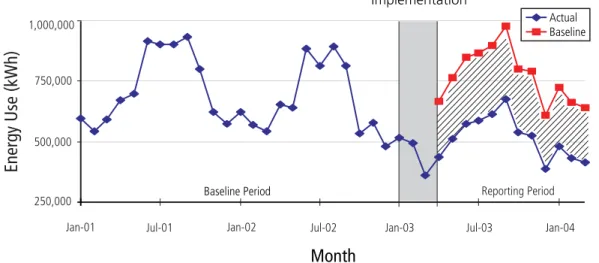
Figure 4-1. Comparison of Energy Use Before and After a Program Is Implemented ... 4-2
Figure 4-2. IPMVP M&V Option Selection... 4-16
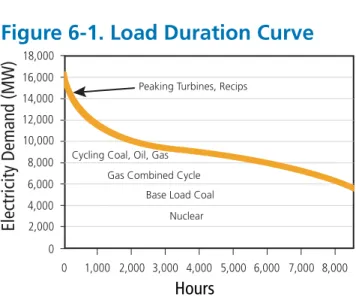
Figure 6-1. Load Duration Curve ... 6-3
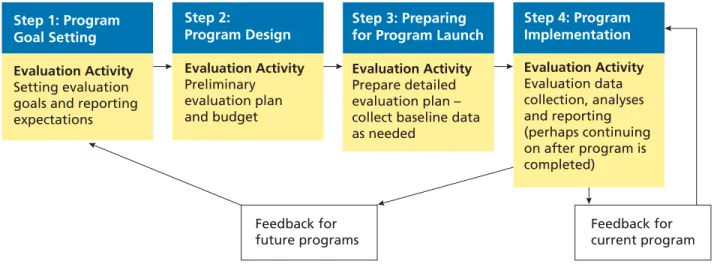
Figure 7-1. Program Implementation Cycle with High-Level Evaluation Activities ... 7-2
Figure D-1. Sample Size Selection for Different Levels of Confi dence and Precision ...D-6
Figure D-2. Hypothetical Analysis—Lighting Project...D-9
List of Tables
Table 3-1. Wisconsin Focus on Energy Value of Non-Energy Benefi ts by Program Area ... 3-9
Table 4-1. IPMVP Options (as Indicated in the 2007 IPMVP) ... 4-4
Table 4-2. Applications for Each IPMVP M&V Option ... 4-15
Table 5-1. Example Free Rider Probability Assessment ... 5-5
Table 7-1. Energy Effi ciency Project M&V Plan Content—General Components ... 7-16
Table 7-2. Energy Effi ciency Project-Specifi c M&V Plan Contents—Measure-Specifi c Components ... 7-17
Table 7-3. Checklist of Planning Decisions for Impact Evaluation... 7-18
Table C-1. Program Evaluation Types ...C-1
Table C-2. Elements of a Typical Process Evaluation ...C-2
List of Sidebars
Guide Objective... 1-1
Planning Issues ... 1-3
Using This Guide ... 1-4
Some Applications of Energy Effi ciency Evaluation ... 2-1
Why Conduct Evaluations? ... 2-2
NYSERDA Portfolio Evaluation Approach ... 2-3
Program Planning and Evaluation ... 2-4
Basic Impact Evaluation Concepts ... 3-1
Quality Assurance Guidelines ... 3-2
Evaluation Planning Issues... 3-3
Estimation of Gross Energy Savings ... 3-4
Estimation of Net Energy Savings ... 3-4
M&V vs. Deemed Savings... 3-4
National Grid Net Savings Example... 3-5
Regional Coincident Peak Demand... 3-6
Demand Response Evaluation ... 3-7
Evaluating Participant Non-Energy Benefi ts ... 3-8
Weather Adjustments ... 4-1
Field Inspections of Energy Effi ciency Measures ... 4-3
Interactive Factors... 4-6
Retrofit Isolation and Measurement Boundaries Example ... 4-7
EPA’s Portfolio Manager ... 4-8
Building Energy Simulation Programs ... 4-9
Free Riders ... 5-2
Net-to-Gross Ratio Calculation Using Equipment Sales Data ... 5-6
Avoided Emissions from Combined Heat and Power Projects ... 6-2
Existing vs. New Generating Units... 6-6
List of Sidebars (continued)
The Program Implementation Cycle ... 7-1
ISO-NE M&V Manual for Wholesale Forward Capacity Market (FCM) ... 7-3
Closing the Loop—Integration of Implementer and Evaluator... 7-4
New Construction Baselines... 7-9
Defining Data Collection Requirements ... 7-10
California Example of Risk Management Approach to Evaluation Budgeting ... 7-10
Evaluability ... 7-15
Potential Studies ...C-2
Theory-Based Evaluation: A Guiding Principle for MT Evaluation...C-5
List of Abbreviations and Acronyms
A
Action Plan National Action Plan for Energy Efficiency ASHRAE American Society of Heating, Refrigerating,
and Air Conditioning Engineers
B
BAU business as usual
BM build margin (for electricity generating units)
C
CDD cooling degree day
CFL compact fluorescent light bulb CHP combined heat and power
D
DEER Database for Energy Efficiency Resources (California)
DOE U.S. Department of Energy
DSM demand-side management
E
ECM energy conservation measure
EE energy efficiency
EEM energy efficiency measure
EM&V evaluation, measurement, and verification EPA U.S. Environmental Protection Agency
ER emission rate
EUL effective useful life
F
FEMP Federal Energy Management Program
G
GHG greenhouse gas
H
HDD heating degree day HHV high heating value
HVAC heating, ventilation, and air conditioning
I
IPMVP International Performance Measurement and Verifi cation Protocol
ISO independent system operator or Interna tional Organization for Standardization
K
kW kilowatt kWh kilowatt-hourL
lb poundM
M&V measurement and verification
MW megawatt
List of Abbreviations and Acronyms (continued)
N
Q
NEB non-energy benefits QAG quality assurance guideline NTGR net-to-gross ratio
T
O
TBE theory-based evaluationOM operating margin (for electricity generating T&D transmission and distribution units)
Acknowledgements
The Model Energy Effi ciency Program Impact Evaluation Guide is a key product of the Year Two Work Plan for the National Action Plan for Energy Effi ciency. This work plan was developed based on feedback received from the Action Plan Leadership Group members and observ ers during the fall of 2006. The work plan was further refi ned during the March 2007 Leadership Group meet ing in Washington, D.C.
In addition to direction and comment by the Leadership Group, this Guide was prepared with highly valuable input from the Advisory and Technical Groups. Steven R. Schiller of Schiller Consulting, Inc., served as project manager and primary author to the Guide, under con tract to the U.S. Environmental Protection Agency (EPA). The Advisory Group members are:
• Commissioner Dian Grueneich, California Public Utilities Commission, co-chair
• Diane Munns, Edison Electric Institute, co-chair
• Chris James (formerly with the Connecticut Depart ment of Environmental Protection)
• Rick Leuthauser, MidAmerican Energy Company
• Jan Schori, Sacramento Municipal Utility District
• Peter Smith (formerly with New York State Energy Research and Development Agency)
The Technical Group members are:
• Steve Schiller, Schiller Consulting (project manager and primary author)
• Derik Broekhoff, World Resources Institute
• Nick Hall, TecMarket Works
• M. Sami Khawaja, Quantec
• David Sumi, PA Consulting
• Laura Vimmerstedt, National Renewable Energy Laboratory
• Edward Vine, Lawrence Berkeley National Laboratory In addition, the following professionals provided review and comments on drafts of the Guide: Joel Bluestein (EEA/ICF), Marian Brown (Southern California Edison), Cherie Gregoire (NYSERDA), Glenn Cannon (Waverly Light and Power), Ollie Frazier III (Duke Energy), Wil son Gonzalez (Ohio OCC), Leonard Haynes (Southern Company), Debra Jacobson (DJ Consulting), Ruth Kisele wich (Baltimore Gas & Electric Company), Sam Louden slager (Arkansas PSC), Julie Michaels (Northeast Energy Effi ciency Partnership), David Nemtzow (consultant), Monica Nevius (Consortium For Energy Effi ciency), Anne Arquit Niederberger (Policy Solutions), Larry Pakenas (NYSERDA), Karen Penafi el (BOMA International), Alison Silverstein (consultant), Andrew Spahn (National Coun cil on Electricity Policy), Rick Tempchin (Edison Electric Institute), Carol White (National Grid), and Vicki Wood (Sacramento Municipal Utility District).
The U.S. Department of Energy (DOE) and EPA facilitate the National Action Plan for Energy Effi ciency, includ ing this Guide. Key staff include Larry Mansueti (DOE Offi ce of Electricity Delivery and Energy Reliability), Dan Beckley (DOE Offi ce of Energy Effi ciency and Renew able Energy), and Kathleen Hogan, Niko Dietsch, Stacy Angel, and Katrina Pielli (EPA Climate Protection Part nership Division).
Eastern Research Group, Inc., provided technical review, copy editing, graphics, and production services.
Executive Summary
This Model Energy Efficiency Program Impact Evaluation Guide provides guidance on model approaches for calculating energy, demand, and emissions savings resulting from energy efficiency programs. The Guide is provided to assist in the implementation of the National Action Plan for Energy Effi ciency’s five key policy recommendations for creating a sustainable, aggressive national commitment to energy effi ciency.
Importance of Energy Effi ciency
Evaluation
Improving energy effi ciency in our homes, businesses, schools, governments, and industries—which consume more than 70 percent of the natural gas and electricity used in the country—is one of the most constructive, cost-effective ways to address the challenges of high energy prices, energy security and independence, air pollution, and global climate change. Despite these benefi ts and the success of energy effi ciency programs in some regions of the country, energy effi ciency remains critically under utilized in the nation’s energy portfolio. It is time to take advantage of more than two decades of experience with successful energy effi ciency programs, broaden and expand these efforts, and cap ture the savings that energy effi ciency offers. Program evaluation that is based on credible and transparent model methods is a key component of the solution. Evaluation involves real time and/or retrospective as sessments of the performance and implementation of a program. There are two key objectives of evaluations: 1. To document and measure the effects of a program
and determine whether it met its goals with respect to being a reliable energy resource.
2. To help understand why those effects occurred and identify ways to improve current programs and select future programs.
Another objective can be to document compliance with regulatory requirements. Many energy effi ciency evaluations are oriented toward developing retro spective estimates of energy savings attributable to a program, in a manner that is defensible in regulatory proceedings that are conducted to ensure that public funds are properly and effectively spent. However, the role of evaluation can go well beyond simply docu menting savings to actually improving programs and providing a basis for future savings estimates. If applied concurrently with program implementation, evalua tions can provide information in real time to allow for as-needed course corrections. In summary, evaluation fosters more effective programs and justifi es increased levels of energy effi ciency investment. Perhaps the im perative for conducting evaluation is best described by John Kenneth Galbraith and William Edwards Deming: “Things that are measured tend to improve.”
There are three different types of evaluations: 1. Impact evaluations determine the impacts (e.g.,
energy and demand savings) and co-benefi ts (e.g., avoided emissions, health benefi ts, job creation, en ergy security, transmission/distribution benefi ts, and water savings) that directly result from a program. Impact evaluations also support cost-effectiveness analyses aimed at identifying relative program costs and benefi ts.
2. Process evaluations assess program delivery, from design to implementation, in order to identify bottle necks, effi ciencies, what worked, what did not work,
constraints, and potential improvements. Timeliness in identifying opportunities for improvement is essential to making corrections along the way.
3. Market effects evaluations estimate a program’s infl uence on encouraging future energy effi ciency projects because of changes in the energy market place. These evaluations are primarily, but not exclu sively, used for programs with market transformation elements and objectives.
The Role of This Guide
This Guide has been developed to assist parties in implementing the fi ve key policy recommendations of the National Action Plan for Energy Effi ciency. (See page 1-2 for a full list of options to consider under each Action Plan recommendation.) The Action Plan was released in July 2006 as a call to action to bring diverse stakeholders together at the national, regional, state, or utility level in order to foster the discussions, decision-making, and commitments necessary to take investment in energy effi ciency to a new level.
This Guide supports the Action Plan recommendation to “make a strong, long-term commitment to implement cost-effective energy effi ciency as a resource.” A key option to consider under this recommendation is devel oping robust evaluation, measurement, and verifi cation procedures. The model approaches described herein offer a set of options and an information resource for entities seeking to support the adoption, continuation, and expansion of energy effi ciency programs.
The specifi c types of evaluations conducted are de termined by the program goals and the objectives of those responsible for implementing and overseeing the programs. This Guide focuses on impact evaluations for programs designed to directly reduce energy consump tion, demand, and air emissions. These programs are typically called resource acquisition programs, although
other types of programs, such as market transformation programs, may also be assessed using impact evalua tions. The effi ciency programs considered here are those designed for facility or stationary (e.g., home, com mercial building, factory) improvements, as opposed to transportation sector improvements.
The objective of this Guide is to provide a framework that jurisdictions and organizations can use to defi ne their “institution-specifi c” or “program/portfolio specifi c” evaluation requirements. To this end, the Guide defi nes a standard evaluation planning and implementation process, describes several standard approaches that can be used for calculating savings, defi nes terms, provides advice on key evaluation issues, and lists effi ciency evaluation resources. While each jurisdiction, or entity, will need to defi ne its own policy requirements, this Guide provides a structure for applying consistent approaches and defi nitions. This can facilitate the implementation of “cross-border” programs to establish energy effi ciency as a priority resource or as a greenhouse gas mitigation option.
The audience for this Guide is energy effi ciency pro gram designers and evaluators looking for guidance, resources, and references on the evaluation process and key issues relating to (a) documenting energy and de mand savings and (b) documenting avoided emissions. Introductory portions of this Guide are also intended for policy-makers seeking information about the basic principles of impact evaluation. Readers looking only for basics may want to read only this executive sum mary and the fi rst few chapters, and perhaps refer to the appendices for overviews of other evaluation types, defi nitions, and references. Some readers who are new to evaluation assignments may read the entire docu ment, while others may benefi t from focusing on the evaluation planning chapter (Chapter 7) and using the rest of the document as a reference.
Overview of the Program Impact
Evaluation Process
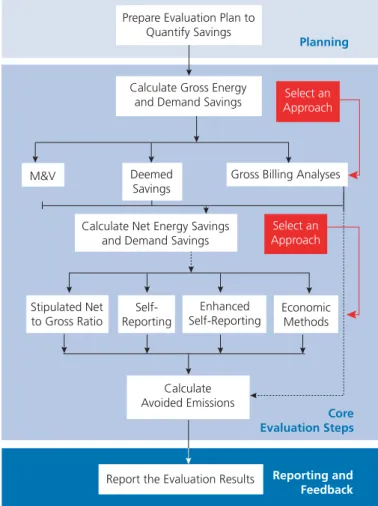
The basic steps in the impact evaluation process are:
• Setting the evaluation objectives in the context of the program policy objectives.
• Selecting an evaluation approach and preparing a program evaluation plan that takes into account the critical evaluation issues.
• Implementing the evaluation and determining pro gram impacts, such as energy and demand savings and avoided emissions.
• Reporting the evaluation results and, as appropriate, working with program administrators to implement recommendations for current or future program improvements.
This Guide is about program, versus project, evaluation. In this context, a project is a single activity at one loca tion (for example, an energy-effi cient lighting retrofi t in an offi ce building). A program is a group of projects with similar characteristics that are installed in similar applications, such as a utility program to install energy effi cient lighting in commercial buildings, a company’s program to install energy management system in all of its stores, or a state program to improve the effi ciency of its public buildings. Programs are typically evalu ated using a sample (versus a census) of projects, with the results systematically applied to the entire program “population” of projects. Sampling is one of the issues discussed in the Guide.
The three impact evaluation results that are typically reported are:
• Estimates of gross savings. Gross energy (or demand) savings are the change in energy consump tion or demand that results directly from program-promoted actions (e.g., installing energy-effi cient lighting) taken by program participants regardless of the extent or nature of program infl uence on their actions.
• Estimates of net savings. Net energy or demand savings refer to the portion of gross savings that is attributable to the program. This involves separating out the impacts that are a result of other infl uences, such as consumer self-motivation. Given the range of infl uences on consumers’ energy consumption, attributing changes to one cause (i.e., a particular program) or another can be quite complex.
• Estimates of co-benefi ts . A co-benefi t commonly documented and reported is avoided air emis sions— the air pollution or greenhouse gases that would have been emitted if more energy had been consumed in the absence of the energy effi ciency program. These emissions can be from combustion of fuels at an electrical power plant or from combus tion of heating fuels, such as natural gas and fuel oil, at a project site. Other co-benefi ts can be positive or negative; examples are comfort and productivity improvements, job creation, and increased mainte nance costs due to unfamiliarity with new energy effi cient equipment.
It is important to note that energy and demand savings, and avoided emissions, cannot be directly measured. Instead, savings are determined by comparing energy use and demand after a program is implemented (the reporting period) with what would have occurred had the program not been implemented (the baseline). The baseline and reporting period energy use and demand are compared using a common set of conditions (e.g., weather, operating hours, building occupancy). These are then adjusted so that only program effects are con sidered when determining savings. Avoided emissions and other co-benefi ts can then be calculated using the energy savings values and other relevant information. Note that each of the above bullets defi nes an “esti mate.” This is because the nature of effi ciency evalu ation involves measuring energy consumption. The difference between (a) actual energy consumption and (b) what energy consumption would have occurred during the same period had the effi ciency measures not been installed, is an estimate of energy (and demand) savings. The energy that would have been consumed
during that same time was not, and so must be esti mated rather than measured.
As indicated, a key objective of program evaluation is to produce an estimate of energy and demand savings (and, as desired, associated co-benefi ts). However, the value of the estimates as a basis for decision-making can be called into question if their sources and level of accuracy are not analyzed and described. Therefore, evaluation results, like any estimate, should be reported as “expected values” with an associated level of uncer tainty. Minimizing uncertainty and balancing evaluation costs with the value of the evaluation information are at the heart of the evaluation process.
Implementing the impact evaluation process for deter mining energy and demand savings, and avoided emis sions, involves:
1. Determining gross program savings using one of the following approaches:
a. One or more measurement and verifi cation (M&V) methods, from the IPMVP,1 are used to determine
the savings from a sample of projects. These sav ings are then applied to all of the projects in the program.
b. Deemed savings, based on historical and verifi ed data, are applied to conventional energy effi ciency measures implemented in the program.
c. Statistical analyses of large volumes of metered energy usage data are conducted.
In some cases these approaches are combined, par ticularly the deemed savings and M&V approaches. 2. Converting gross program savings to net energy
savings using a range of possible considerations. The primary, but not exclusive, considerations that account for the difference between net and gross savings are free riders (i.e., those who would have implemented the same or similar effi ciency projects without the program now or in the near future)
and participant and non-participant spillover. Non participant spillover is defi ned as savings from ef fi ciency projects implemented by those who did not directly participate in a program, but which nonethe less occurred due to the infl uence of the program. Participant spillover is defi ned as additional energy effi ciency actions taken by program participants as a result of program infl uence, but actions that go beyond those directly subsidized or required by the program. Net savings are determined using one of the following approaches:
a. Self-reporting surveys in which information is reported by participants and non-participants without independent verifi cation or review. b. Enhanced self-reporting surveys in which self-re
porting surveys are combined with interviews and documentation review and analysis.
c. Statistical models that compare participants’ and non-participants’ energy and demand patterns, their knowledge about effi ciency options, and/or the trade-offs they are willing to make between effi ciency options and the costs of purchasing and installing them.
d. Stipulated net-to-gross ratios (ratios that are mul tiplied by the gross savings to obtain an estimate of net savings) that are based on historic studies of similar programs.
3. Calculating avoided emissions by either (a) applying emission factors (e.g., pounds of CO2 per MWh) to net energy savings or (b) using emissions scenario analyses (e.g., using computer models to estimate the difference in emissions from grid-connected power plants with and without the reduced elec tricity consumption associated with an effi ciency program). Within these two categories, a variety of approaches can be used to calculate emission factors or prepare scenarios analyses ranging from using a simple annual average emission factor to prepare detailed hourly calculations of displaced energy
sources and their emissions. However, the question of whether emissions are actually avoided depends on whether the energy savings are truly additional to what would have occurred without the program’s infl uences, whether all signifi cant emissions sources associated with a program were taken into account, and the scheme under which any affected emission sources may be regulated.
Evaluation Characteristics and
Evaluation Planning
The following practices are commonly adopted as part of the evaluation process:
• The evaluation process is integral to a typical cyclic planning-implementation-evaluation process. There fore, evaluation planning is part of the program planning process so that the evaluation effort can support program implementation, including the alignment of implementation and evaluation budgets and schedules, and can provide evaluation results in a timely manner to support existing and future programs.
• Evaluation budgets and resources are adequate to support, over the entire evaluation time period, the evaluation goals and the level of quality (certainty) expected in the evaluation results.
• Evaluations use the planning and implementation structure described in this Guide, as well as the defi nitions provided for evaluation terms.
• Energy and demand savings calculations follow one or more of the approaches defi ned in this Guide for net and gross savings.
• Evaluations are complete, transparent, relevant, con sistent, and balanced in risk management between certainty of results and costs to achieve the results. They also follow the guiding principles defi ned by the American Evaluation Association, which are listed in this Guide (see Section 3.8).
With the above characteristics in mind, individual entities can defi ne their own policy-specifi c program evaluation requirements. These requirements are deter mined by the program objectives, regulatory mandates (if any), expectations for quality of the evaluation re sults, intended uses of the evaluation results, and other factors that can vary across jurisdictions and programs. In this Guide, seven key evaluation planning issues are defi ned and discussed to help defi ne policy-specifi c program evaluation requirements. These are:
1. Defi ning evaluation goals and scale, including decid ing which program benefi ts to evaluate.
2. Setting a time frame for evaluation and reporting expectations.
3. Setting a spatial boundary2 for evaluation (i.e., what
energy uses, emission sources, etc., the analyses will include).
4. Defi ning a program baseline, baseline adjustments, and data collection requirements.
5. Establishing a budget in the context of expectations for the quality of reported results.
6. Selecting impact evaluation approaches for calculat ing gross and net savings and avoided emissions. 7. Selecting the individual or organization that will con
duct the evaluation.
The issues above are listed in what can be considered a sequential process, however many are interrelated and the overall planning process is iterative. After each of these issues is addressed individually, the results can be compiled into a formal evaluation plan.
In conclusion, this Guide can be used at the onset of program planning to initiate a parallel evaluation planning effort. Doing so will help evaluators take an integral role in the program’s success and help those who are implementing the program understand the parameters under which they will be evaluated and what information they are expected to provide, and receive from, the evaluation.
Notes
1. Measurement and verifi cation is the process of using mea surements to reliably determine actual savings created within an individual facility. IPMVP is the International Performance Measurement and Verifi cation Protocol (available at <http://www. evo-world.org>). The IPMVP is a measurement and verifi cation protocol for projects, whereas this Guide focuses on programs, which are collections of similar projects.
2. Spatial boundary refers to “how big a circle is going to be drawn around” the energy effi ciency measures being evaluated. Is the analysis only going to be on the affected equipment, the whole facility, or perhaps even the entire generation, transmission, and distribution system?
1:
Introduction
Improving the energy effi ciency of homes, businesses, schools, governments, and industries—which together consume more than 70 percent of the natural gas and electricity used in the United States—is one of the most cost-effective ways to address the challenges of high energy prices, energy security and independence, air pollution, and global climate change. Mining this ef fi ciency could help us meet on the order of 50 percent or more of the expected growth in U.S. consumption of electricity and natural gas in the coming decades, yielding many billions of dollars in saved energy bills and avoiding signifi cant emissions of greenhouse gases and other air pollutants.1
Recognizing this large opportunity, more than 60 lead ing organizations representing diverse stakeholders from across the country joined together to develop the National Action Plan for Energy Effi ciency. The Action Plan identifi es many of the key barriers contributing to underinvestment in energy effi ciency; outlines fi ve key policy recommendations for achieving all cost-effective energy effi ciency, focusing largely on state-level energy effi ciency policies and programs; and provides a number of options to consider in pursuing these recommenda tions (Figure 1-1). As of November 2007, nearly 120 organizations have endorsed the Action Plan recommen dations and made public commitments to implement them in their areas. Effective energy effi ciency program evaluation is key to making the Action Plan a reality.
1.1 About the Guide
This Guide describes a structure and several model approaches for calculating energy, demand, and emis sions savings from energy effi ciency programs. By adhering to best practices and standard procedures, stakeholders can use program evaluation as an effective
Guide Objective
After reading this Guide, the reader will be able to defi ne the basic objectives, structure, and evalu ation approaches that can be used to conduct program-specifi c impact evaluation. Depending on experience level, the reader may be able to prepare a complete program impact evaluation plan. Ap pendix E provides a list of references that can also assist with this process.
tool to support the adoption, continuation, and expan sion of energy effi ciency programs.
The Action Plan’s Leadership Group (see Appendix A for a list of group members) identifi ed energy effi ciency program evaluation, measurement, and verifi cation (EM&V) as an area where additional guidance is needed to help parties pursue the recommendations and meet their commitments to energy effi ciency. Specifi cally, this Guide supports the Action Plan recommendation to “Make a strong, long-term commitment to implement cost-effective energy effi ciency as a resource.” A key option to consider under this recommendation is to de velop robust measurement and verifi cation procedures that support the adoption, continuation, and expansion of energy effi ciency programs.
Further, two recent surveys of the energy effi ciency industry indicated a need for guidance documents that foster best practices for evaluation and promote con sistent evaluations of energy effi ciency programs (NEEP, 2006; Schiller Consulting, 2007). This Guide fi lls the identifi ed gaps by providing:
• A model impact evaluation process that individual jurisdictions (e.g., states, utilities) can use to establish their own evaluation requirements.
• Policy-neutral2 descriptions and guidance for con ducting impact evaluations of resource acquisition programs.
Figure 1-1. National Action Plan for Energy Efficiency Recommendations and Options
Recognize energy efficiency as a high-priority
energy resource.
Options to consider:
Establishing policies to establish energy effi ciency as
•
a priority resource.
Integrating energy effi ciency into utility, state, and
•
regional resource planning activities.
Quantifying and establishing the value of energy ef
•
fi ciency, considering energy savings, capacity savings, and environmental benefi ts, as appropriate.
Make a strong, long-term commitment to
implement cost-effective energy effi ciency as
a resource.
Options to consider:
Establishing appropriate cost-effectiveness tests for
•
a portfolio of programs to refl ect the long-term benefi ts of energy effi ciency.
Establishing the potential for long-term, cost-ef
•
fective energy effi ciency savings by customer class through proven programs, innovative initiatives, and cutting-edge technologies.
Establishing funding requirements for delivering
•
long-term, cost-effective energy effi ciency.
Developing long-term energy saving goals as part of
•
energy planning processes.
Developing robust measurement and verifi cation
•
procedures.
Designating which organization(s) is responsible for
•
administering the energy effi ciency programs. Providing for frequent updates to energy resource plans
•
to accommodate new information and technology.
Broadly communicate the benefits of and op
portunities for energy effi ciency.
Options to consider:
Establishing and educating stakeholders on the
•
business case for energy effi ciency at the state, util ity, and other appropriate level, addressing relevant customer, utility, and societal perspectives.
Communicating the role of energy effi ciency in
•
lowering customer energy bills and system costs and risks over time.
Communicating the role of building codes, appli
•
ance standards, and tax and other incentives.
Provide sufficient, timely, and stable pro
gram funding to deliver energy effi ciency
where cost-effective.
Options to consider:
Deciding on and committing to a consistent way
•
for program administrators to recover energy ef fi ciency costs in a timely manner.
Establishing funding mechanisms for energy ef
•
fi ciency from among the available options, such as revenue requirement or resource procurement funding, system benefi ts charges, rate-basing, shared-savings, and incentive mechanisms. Establishing funding for multi-year periods.
•
Modify policies to align utility incentives
with the delivery of cost-effective energy
efficiency and modify ratemaking practices
to promote energy effi ciency investments.
Options to consider:
Addressing the typical utility throughput incen
•
tive and removing other regulatory and manage ment disincentives to energy effi ciency.
Providing utility incentives for the successful
•
management of energy effi ciency programs. Including the impact on adoption of energy
•
effi ciency as one of the goals of retail rate design, recognizing that it must be balanced with other objectives.
Eliminating rate designs that discourage energy
•
effi ciency by not increasing costs as customers consume more electricity or natural gas. Adopting rate designs that encourage energy
•
effi ciency by considering the unique charac teristics of each customer class and including partnering tariffs with other mechanisms that encourage energy effi ciency, such as benefi t-sharing programs and on-bill fi nancing.
• A list of other reference documents and resources on energy effi ciency evaluation.
• Information on calculating avoided emissions from energy effi ciency programs.
Jurisdictions and organizations can use this Guide as both a primer on effi ciency impact evaluation and a framework to defi ne their own institution-specifi c, program-specifi c, or portfolio-specifi c evaluation re quirements. While each jurisdiction or entity will need to defi ne its own policy requirements, this Guide pro vides a structure, evaluation approaches, and defi nitions that can be applied to a variety of policy requirements. If applied consistently, the approaches described in this Guide could ease the implementation of “cross-border” programs to establish energy effi ciency as a priority resource or as a greenhouse gas mitigation option.
1.2 Subjects Covered in This Guide
This Guide focuses on evaluating the impact—i.e., the energy, demand, and emissions savings—of energy ef fi ciency programs implemented in facilities.3 Therefore, the Guide helps determine the fuel oil, natural gas, and electricity savings from programs that encourage light ing, space conditioning, process approaches, and similar energy effi ciency strategies in residential, commercial, and industrial facilities. Also addressed are the avoided emissions associated with these energy savings. The Guide is intended to assist in the evaluation of programs for which energy and demand savings are the primary objectives (commonly referred to as “re source acquisition” programs), although other types of programs may be assessed using impact evaluations. Appendix C briefl y discusses evaluation approaches for market transformation, codes and standards, and edu cation programs. It also describes process, market, and cost-effectiveness evaluations.This Guide lays out a basic evaluation structure, high lighting issues that need to be addressed in order to prepare a jurisdiction-specifi c evaluation plan or
protocol for a single program or portfolio of programs.4 These issues include:
1. Defi ning evaluation goals and scale. (This includes deciding which program benefi ts to evaluate.) 2. Setting a time frame for evaluation and reporting
expectations.
3. Setting a spatial boundary for evaluation.
4. Defi ning a program baseline, baseline adjustments, and data collection requirements.
5. Establishing a budget in the context of expectations for the quality of reported results.
6. Selecting impact evaluation approaches for gross and net savings calculations, and avoided emissions calculations.
7. Selecting who (or which type of organization) will conduct the evaluation.
Planning Issues
While reading this Guide’s fi rst six chapters, the reader should keep in mind the seven “evaluation planning” issues listed in Section 1.2. Chapter 7 addresses these issues in more detail and describes how material from previous chapters can be used to prepare an evaluation plan.
It is also important to indicate what the Guide does not cover:
• The Guide is not suffi ciently detailed to be the only resource for planning or conducting evaluations of specifi c programs. Rather, it provides high-level guidance, identifi es issues, and direct users to resources for defi ning policy- and program-specifi c requirements and details. For example, it does not describe specifi c data collection and analysis op tions, although Appendix E does list documents where this information can be found for various program types and technologies.
• The Guide is not intended for use in assessing the savings and benefi ts from a future energy effi ciency program, but rather to inform on what has been, is being, or is projected to be accomplished with an existing program.
1.3 How to Use This Guide
In practical terms, evaluation planners can use this Guide to:• Defi ne the questions and hypotheses that the evalu ation effort is intended to answer.
• Identify appropriate evaluation approaches and methods that minimize uncertainty while meeting budget constraints.
• Set realistic expectations among the evaluation process stakeholders regarding the nature and practical value of results to be delivered, as well as the expected quality of quantitative estimates of program impacts.
• Set appropriate schedules and budgets that refl ect the level of certainty expected in the results.
In addition, introductory portions of this Guide are also intended for policy-makers seeking information about the basic principles of impact evaluation.
The intended audience is:
• Program and evaluation managers looking for basic guidance—or a “roadmap”—on process and key issues relating to:
– Documenting energy and demand savings.
– Documenting avoided emissions.
– Comparing demand- and supply-side resources.
• Program designers looking to understand how their programs will be evaluated.
• Policy-makers and regulators looking for a basic understanding of evaluation objectives, processes, and issues.
• Members of the energy effi ciency community looking for:
– Common terminology defi nitions.
– A central reference that provides guidance, but also lists publicly available best practices resources.
– An understanding of the mechanisms for deter mining the potential value of energy effi ciency as an emissions avoidance strategy.
Using This Guide
Policy-makers and those looking for the “basics”:
Read the Executive Summary and fi rst few chapters, and perhaps refer to the appendices for overviews of other evaluation types, defi nitions, and references.
Experienced evaluation planners: Go straight to the planning chapter (Chapter 7) and use the rest of the document as a reference.
Readers new to evaluation or energy effi ciency: Read the entire document.
Table 1-1 to the right also summarizes the contents and intended readers for each part of the Guide.
1.4 Source Documents
The information in this document is a summary of defi nitions, approaches, and best practices developed over the last 30 years of energy effi ciency program imple mentation and evaluation. This experience and expertise is documented in numerous guides, protocols, papers, and reports. The key documents that were used in the development of the Guide are:
• 2007 International Performance Measurement and Verifi cation Protocol (IPMVP).
• 2006 California Energy Effi ciency Evaluation Pro tocols: Technical, Methodological, and Reporting Requirements for Evaluation Professionals.
Table 1-1. Model Energy Efficiency Program Impact Evaluation Guide Overview
Document
Element Titles Contents and Intended Audience
Part 1
Executive Summary Summarizes importance and types of evaluations, the impact evaluation process, key issues, and evaluation planning.Intended for all readers.
Part 2
Chapter 1: IntroductionChapter 2: Energy Effi ciency Program Evaluation
Chapter 3: Impact Evaluation Basics
Provides basics of energy effi ciency evaluation.
Chapters 2 and 3 are intended for readers who want an overview of evaluation and the key aspects of impact evaluation.
Part 3
Chapter 4: Calculating Gross En ergy and Demand SavingsChapter 5: Calculating Net Energy and Demand Savings
Chapter 6: Calculating Avoided Air Emissions
Provides details on the process and approaches for quantifying energy and demand savings, and avoided emissions, from energy effi ciency programs.
Intended for readers whose programs are to be evaluated, evaluators, and managers/regulators of evaluation activities.
Part 4
Chapter 7: Planning an Impact EvaluationThis chapter “brings it all together” and describes how the information described in earlier Chapters can be utilized to plan an evaluation effort.
Also intended for readers whose programs are to be evaluated, evaluators, and managers/regu lators of evaluations. Some readers with back ground in evaluation may want to go directly to this chapter.
Part 5
Appendix A: National Action Plan for Energy Effi ciency Leadership GroupAppendix B: Glossary
Appendix C: Other Evaluation Types Appendix D: Uncertainty
Appendix E: Resources Appendix F: Renewables and Combined Heat and Power Project Measurement and Verifi cation
These Appendices provide resources and further back ground on evaluation issues.
Intended for readers interested in specialty sub jects or reference materials.
Appendix B, the glossary, and Appendix C may be of interest to policy-makers.
Appendix C summarizes the various types of efficiency programs and the ways these programs can be evaluated.
• 2004 California Public Utilities Commission (CPUC) Evaluation Framework.
• 2002 ASHRAE Guideline 14 Measurement of Energy and Demand Savings.
More information on these documents and other evalu ation resources is contained in Appendix E.
1.5 Structure of the Guide
This Guide primarily covers impact evaluations (i.e., determining the energy, demand, and emissions savings that directly result from a program) and is organized into fi ve parts:
• The Executive Summary, which briefl y describes the evaluation process outlined in this Guide.
• Chapters 1 through 3, which introduce this Guide, key energy effi ciency concepts, and program impact evaluation concepts and basics.
• Chapters 4 through 6, the core of the Guide, which describe approaches for determining gross and net energy/demand savings, and avoided emissions, from energy effi ciency programs.
• Chapter 7, which discusses the evaluation planning process and key evaluation planning issues as well as presenting some evaluation plan outlines that entities can use to prepare their own evaluation requirements.
• Appendices on terminology, references and re sources, other types of program evaluations (process and market), evaluation statistics, and evaluation of combined heat and power (CHP) and renewable energy programs.
1.6 Development of the Guide
This Guide is a product of the Year Two Work Plan for the National Action Plan for Energy Effi ciency. The Ac tion Plan’s Leadership Group formed an Advisory Group and a Technical Group to help develop the Guide. Stecontracted to serve as project manager and primary author. Commissioner Dian Grueneich (California Public Utilities Commission) and Dian Munns (Executive Direc tor of Retail Energy Services, Edison Electric Institute) co-chaired the Guide’s Advisory Group.
Additional Advisory Group members include:
• Chris James (formerly with the Connecticut Depart ment of Environmental Protection).
• Rick Leuthauser, MidAmerican Energy Company.
• Jan Schori, Sacramento Municipal Utility District.
• Peter Smith (formerly with New York State Energy Research and Development Agency).
The Technical Group members are:
• Steve Schiller, Schiller Consulting: project manager and primary author.
• Derik Broekhoff, World Resources Institute.
• Nick Hall, TecMarket Works.
• M. Sami Khawaja, Quantec: Appendix D author.
• David Sumi, PA Consulting.
• Laura Vimmerstedt, National Renewable Energy Laboratory.
• Edward Vine, Lawrence Berkeley National Laboratory.
1.7 Notes
1. See the National Action Plan for Energy Effi ciency (2006), available at <http://www.epa.gov/cleanenergy/actionplan/report.htm>. 2. The Guide is “policy neutral” in that it can be applied to energy
effi ciency and emission avoidance programs irrespective of the programs’ policy objectives or constraints.
3. The Guide does not cover transportation-related effi ciency programs. 4. Since the Guide is a policy-neutral document, following it will not necessarily ensure that a program evaluation plan will be in com pliance with regulatory or similar mandates. The entity-specifi c program plan must address any jurisdictional policy requirements.
Energy Effi ciency
2:
Program Evaluation
Chapter 2 provides a brief overview of the importance of energy efficiency evaluation and describes the context in which it is conducted. The chapter also makes the distinction between evaluations for indi vidual energy efficiency projects and multifaceted efficiency programs. Because this Guide focuses on program evaluation, additional background on program categories and related evaluation approaches is provided.
2.1 Importance of Evaluation
Evaluation is the process of determining and document ing the results, benefi ts, and lessons learned from an energy effi ciency program. Evaluation results can be used in planning future programs and determining the value and potential of a portfolio of energy effi ciency programs in an integrated resource planning process. It can also be used in retrospectively determining the performance (and resulting payments, incentives, or penalties) of contractors and administrators responsible for implementing effi ciency programs.Evaluation has two key objectives:
1. To document and measure the effects of a program and determine whether it met its goals with respect to being a reliable energy resource.
2. To help understand why those effects occurred and identify ways to improve current programs and select future programs.
Energy effi ciency evaluations are conducted to estimate retrospective or real-time energy savings (versus pre dicted estimates) attributable to a program in a manner that is defensible in regulatory proceedings. However, evaluation should be viewed as one part of a continu ous, and usually cyclic, process of program planning, implementation, and evaluation. Thus, the results of impact evaluation studies do not stand alone, but are used as inputs into planning and improving future programs.1 Furthermore, rigorous evaluations help
ensure that programs are cost-effective and savings are sustained over time.
There are several technical and policy barriers to the full use of cost-effective energy effi ciency, and to the incor poration of effi ciency programs into energy resource portfolios. One of these barriers is proving that energy effi ciency “can be counted on.” Consistent, complete, accurate, and transparent evaluation mechanisms for documenting energy savings and avoided emissions address this barrier. Indeed, having effective evaluation policies, processes, and trained personnel in place to document the energy and environmental benefi ts of energy effi ciency programs is critical to the success of energy effi ciency and climate mitigation programs that must prove their value and worthiness for continued investment.
Some Applications of Energy
Effi ciency Evaluation
Utility-administered energy effi ciency programs.
•
Government effi ciency programs, either for
•
their own facilities or for private-sector incentive programs.
Independent system operator (ISO) programs to
•
reduce demand (e.g., a forward capacity market). Air-pollution and greenhouse gas mitigation
•
programs that utilize effi ciency. Private company programs.
•
Energy service company contracts.
Why Conduct Evaluations?
The reasons to do an evaluation can be summarized in two words: improvement and accountability. Evalu ations provide information that can help improve programs and demonstrate internal and external accountability for the use of resources.
Program evaluations provide timely information to im prove program implementation, as well as the design of future programs and individual energy effi ciency projects. They can answer the following questions:
Are the program and the projects that make up the
•
program achieving their goals? If so, how and why? How well has the program/project worked?
•
What changes are needed to improve the pro
•
gram/project?
What is the program’s impact on actual projects
•
and future projects?
Should the program/project be replicated, adjust
•
ed, or cancelled?
An evaluation also indicates whether the “resource” can be relied upon. Knowing whether the effi ciency program will reliably generate savings (e.g., MWh) is critical to the ability of existing and future programs to serve as an important part of an energy resource portfolio.
An evaluation also provides an understanding of: Program approaches that are most and least effec
•
tive, and how to improve future programs. Where to focus for greater savings.
•
Actual values that can be used in future estimates
•
of benefi ts (e.g., estimates of energy savings per square foot of offi ce space).
2.2 Defining Program Versus
Project Evaluation
A program is a group of projects with similar technol ogy characteristics that are installed in similar applica tions, such as a utility program to install energy-effi cient lighting in commercial buildings, a company’s program to install energy management system in all of its stores, or a state program to improve the effi ciency of its public buildings. A portfolio is either (a) a collection of similar programs addressing the same market (e.g., a portfolio of residential programs), technology (e.g., motor effi ciency programs), or mechanisms (e.g., loan programs) or (b) the set of all programs conducted by a particular entity, which could include programs that cov er multiple markets, technologies, etc. This Guide covers program evaluation, though the basic concepts can be applied to a portfolio if the impacts of interactions between programs and savings estimates are consid ered. In this context, a project is a single activity at one location, such as an energy-effi cient lighting retrofi t in an offi ce building. Programs are often evaluated using
a sample (versus a census) of projects, with the results applied to the entire program “population” of projects.
2.3 Efficiency Program Categories
Energy effi ciency programs are planned and coordi nated actions designed for a specifi c purpose. These actions are usually made up of projects carried out at individual facilities, for example as part of a utility effi ciency incentive program. There are many types of energy effi ciency programs but no standard way of dif ferentiating them—this Guide differentiates programs by their primary objectives:• Resource acquisition —primary objective is to directly achieve energy and/or demand savings, and possibly avoid emissions, through specifi c actions.
• Market transformation—primary objective is to change the way in which energy effi ciency markets operate (how manufacturers, distributors, retailers, consumers, and others sell and buy energy-related products and services), which tends to result in
energy and demand savings in a more indirect man ner. To a large extent, all programs can be considered market transformation in that they involve chang ing how energy effi ciency activities take place in the marketplace.
• Codes and standards —primary objective is to defi ne and enforce mandated levels of effi ciency in buildings and products.
• Education and training—primary objective is to in form consumers and providers about energy effi ciency and encourage them to act on that information.
• Multiple objective—objectives can include some or all of the above listed objectives.
This Guide focuses on documenting the impacts of re source acquisition programs, including directly achieved energy and demand savings, and related emissions reductions. Appendix C briefl y discusses evaluation of the other program categories listed above. It should be noted that while a program may have one primary objective there are often secondary objectives that are integral to program’s overall success. This is fre quently the case when resource acquisition and market
transformation objectives are involved. With respect to evaluation, it is more important to focus on the per formance goals to be assessed than on categorizing individual program types.
Energy effi ciency is part of the general category of activities known as demand-side management (DSM). DSM programs are designed to encourage consum ers to modify their level and pattern of energy usage. Another category of DSM is demand response (DR), defi ned by DOE as “changes in electric usage by end-use customers from their normal patterns in response to changes in the price of electricity over time, or to incentive payments designed to induce lower electric ity use at times of high wholesale market prices or when system reliability is jeopardized” (DOE, 2006). DR programs employ rate design, customer incentives, and technology to enable customers to change their demand in response to system conditions or prices. Ef fective DR programs can improve system reliability and reduce capital costs associated with transmission and generation capacity investment by lowering overall peak demand. The Action Plan recognizes the value of using less energy at any time, including time of peak demand, through DR and peak shaving efforts. However, DR
NYSERDA Portfolio Evaluation Approach
The evaluation resources available for NYSERDA’s New York Energy $martSM Program are more limited thanis common across most programs. In the traditional approach, single programs are evaluated, using any or several of the primary types of evaluation—impact, process, market, etc.—by either a single contracted evaluator, a single evaluator using a team of subcon tractors, or a consulting fi rm. This can be effective when funds are suffi cient, programs are evaluated one at a time, and those programs are essentially independent from one another.
In NYSERDA’s case, there was concern that the tra ditional approach might be less useful given that its many programs are intended to work in tandem to meet the needs of multiple customers.
NYSERDA was also concerned that the traditional ap proach would not be suffi cient, given available resourc es, to determine whether public policy goals set for the New York Energy $mart Program were being met. To meet its unique needs, NYSERDA selected an evalua tion approach that departs from the traditional method of focusing on a single program. NYSERDA hires teams of contractors that specialize in one type of evaluation, and then each team analyzes a suite of programs. At the end of an evaluation cycle, NYSERDA combines and integrates the results from each of the program evaluations and “rolls them up” to the portfolio level to provide an estimate of the overall effects of the portfolio (i.e., the whole of New York Energy $mart) and its prog ress toward achieving the public policy goals.
programs (a) may have relatively short-term effects on energy consumption, (b) may shift use from a time of high energy costs to a lower-cost time, but not reduce overall electricity use, and (c) may reduce energy use at high-cost times by paying for a reduction in the level of service provided.
Energy effi ciency evaluation has a fairly long history, while DR evaluation is relatively new and appropriate methodologies are still under development.2 While this
Guide does not specifi cally address DR programs, the basic evaluation approaches and planning process ex plained here can be applied to DR with the understand ing that the emphasis for DR program evaluation is demand savings. Demand savings defi nitions and evalu ation techniques are highlighted in Section 3.2. Chapter 7 includes a sidebar on the ISO-New England demand resources program measurement and verifi cation Guide, and Appendix E includes additional DR references.
2.4 Program Evaluation Categories
Evaluation involves retrospectively assessing the perfor mance and implementation of a program. The follow ing bullets describe three basic types of evaluations, all considered “ex post” because they analyze what has already occurred. The Guide focuses primarily on impact evaluations that quantify direct energy and capacity sav ing benefi ts. The other two evaluation types are sum marized in more detail in Appendix C.1. Impact evaluations determine the impacts (usually energy and demand savings) and co-benefi ts (such as avoided emissions health benefi ts, job creation, and water savings) that directly result from a program. All categories of energy effi ciency programs can be assessed using impact evaluations, but they are most closely associated with resource acquisition programs. 2. Process evaluations assess how effi ciently a pro
gram was or is being implemented, with respect to its stated objectives and potential for future improve ment. All energy effi ciency program categories can be assessed using process evaluations.
Program Planning and Evaluation
Evaluation is a retrospective process for determining how a program performed over a specific period of time (e.g., month, season, year). The Latin term ex post (meaning after the fact) is used to describe the typical evaluation process. This is in contrast to a priori (before the activity—postulated or prospective) analy ses. Note though, that evaluations that produce results while the program is operating can be very useful. When possible, evaluations should be done within a program cycle so that feedback is frequent and sys tematic and benefits the existing program and informs the design of future programs and their evaluation. For planning a future program, historical evaluation results can help with program design. However, for estimating how a program will perform, potential studies and feasibility studies are the typical analyses performed. Both of these studies look at what levels of savings are possible from technical, economic and market-acceptance perspectives. Potential studies are typically conducted on a market sector basis (e.g., residential, commercial, industrial sectors) and feasi bility studies tend to be focused on specifi c custom ers that may be involved in a particular program. For more information on program planning, see National Action Plan for Energy Effi ciency, 2007a. For more information on energy effi ciency potential studies, see National Action Plan for Energy Effi ciency, 2007b.3. Market effects evaluations estimate a program’s infl uence on encouraging future energy effi ciency projects because of changes in the marketplace. While all categories of programs can be assessed using mar ket effects evaluations, they are primarily associated with market transformation programs that indirectly achieve impacts and resource acquisition programs that are intended to have long-term effects on the marketplace. For example, if the goal of the evalua tion is to assess cost-effectiveness for stakeholders or regulators, excluding the measurement of market ef fects in a resource acquisition program could result in under- or overestimating a program’s overall benefi ts or cost-effectiveness.
While this document focuses on impact evaluation, the three types of evaluation are not mutually exclusive and there are benefi ts to undertaking more than one type at a time. Process evaluation and market effects evaluation often end up explicitly or implicitly bundled with impact evaluation.
In addition, evaluations often include cost-effectiveness analyses that document the relationship between the val ue of program results (i.e., energy, demand, and emission savings) and the costs incurred to achieve those benefi ts. Cost-effectiveness (sometime called cost-benefi t) analy ses are typically seen as an extension of impact evalua tions, but may also take into account market evaluation results considering market penetration over the expected lifetime of the measures. Appendix C includes a brief discussion of cost-effectiveness analyses.
Measurement and verifi cation (M&V) is another term of ten used when discussing analyses of energy effi ciency activities. M&V refers to data collection, monitoring,
and analysis used to calculate gross energy and demand savings from individual sites or projects. M&V can be a subset of program impact evaluation. Generally speak ing, the differentiation between evaluation and project M&V is that evaluation is associated with programs and M&V with projects. The term “evaluation, measure ment, and verifi cation” (EM&V) is also frequently seen in evaluation literature. EM&V is a catchall acronym for determining both program and project impacts.
2.5 Notes
1. The Action Plan’s Guide to Resource Planning with Energy Ef fi ciency is a resource for program planning.
2. For a report presenting DR evaluation issues and options for ad dressing them, see Violette, D., and D. Hungerford (2007). Devel oping Protocols to Estimate Load Impacts from Demand Response Programs and Cost Effectiveness Methods—Rulemaking Work in California. Presented at International Energy Program Evaluation Conference. <http://www.iepec.org>
3:
Impact Evaluation Basics