PENSION ACCOUNTING: A STUDY OF VALUE RELEVANCE AND THE PERCEPTION OF DECISION USEFULNESS IN THE UK
ALAN KEITH KIRKPATRICK
A thesis submitted in partial fulfilment of the requirements of Bournemouth University for the Degree of Doctor of Philosophy
May 2012
ii
Copyright Statement
This copy of the thesis has been supplied on condition that anyone who consults it is understood to recognise that its copyright rests with its author and due acknowledgement must always be made of the use of any material contained in, or derived from, this thesis.
iii
Abstract Alan Kirkpatrick
Pension accounting: a study of value relevance and the perception of decision usefulness in the UK
This study provides new evidence of the value relevance and the perception of decision usefulness of pension accounting information. The research contributes to the academic literature by using a mixed methodology approach (believed to be the first to do so in value relevance research) involving quantitative analysis of the relationship between the reported financial numbers and the market values of a sample of UK listed FTSE 100 companies over five accounting years from 2006 to 2010 and qualitative analysis in the form of semi-structured interviews with analysts and investors. The research focuses on pension accounting information which for the purposes of this study refers to the accounting for defined benefit (DB) pension schemes and other post-retirement benefits in accordance with the international accounting standard IAS 19.
The research provides evidence that pension accounting information is value relevant and it is perceived to be decision useful. The research also provides evidence that pension accounting information is less value relevant than other accounting information and it is also perceived to be less decision useful than other accounting information. This is a pioneering study in terms of its use of a mixed methodology in value relevance while it is also one of the first pension accounting value relevance studies applied to UK listed companies and believed to be the first study of the perception of decision usefulness of pension accounting information. There is significant convergence in the quantitative and qualitative findings. The mixed methodology process of triangulation reveals very few cases of contradictions or differences between the outcomes of the quantitative and qualitative analysis. Caution needs to be exercised however, as results for pension components are not as robust as they are for core balance sheet or income statement items, specifically book value of capital per share and earnings per share. There is evidence that value relevance revealed by regression is significantly lower in times of equity market and economic turbulence. One of the most significant conclusions arising from the qualitative research and supported to a significant extent by the quantitative research is the importance to analysts and investors of specific pension cash flow information. It is believed that this PhD research is a basis for future research efforts that may help to identify areas that have possible future accounting policy implications.
iv
List of Contents
Copyright statement ii
Abstract iii
List of Figures and Tables vi
List of Abbreviations vii
List of Equations viii
Preface ix
Acknowledgement x
Chapter 1 Introduction and overview of the research
1.1 Introduction 1
1.2 Research aims and objectives 7
1.3 Research method and findings 8
1.4 Contribution of the research 12
1.5 Organisation of the research 13
Chapter 2 Literature review
2.1 Introduction 15
2.2 Relative association studies 17
2.3 Combined relative and incremental association studies 20
2.4 Incremental association studies 29
2.5 Marginal information content studies 51
2.6 Decision usefulness 67
2.7 The limitations of the literature and scope for contribution 90
2.8 Summary and conclusions 91
Chapter 3 Research methodology
3.1 Introduction 93
3.2 Epistemologies, paradigms or worldviews 94
3.3 Research design choice for this project 97
3.4 Mixed methods procedures 99
3.5 The quantitative research design and analysis 108
3.6 The qualitative research design and analysis 131
v
List of Contents
(continued)Chapter 4 Value relevance of pension accounting information
4.1 Introduction 136
4.2 Defined benefit pensions exposure of the sampled companies 136
4.3 Regression analysis results 137
4.4 Review of the empirical models used 140
4.5 Detailed regressions 147
4.6 Overall results of the regressions 170
4.7 Summary and conclusions 172
Chapter 5 Analysts’ perception of decision usefulness of pension accounting information
5.1 Introduction 173
5.2 Qualitative evidence – the use of semi-structured interviews 173
5.3 General themes 175
5.4 Specific pension accounting matters 184
5.5 Audit environment and auditors 195
5.6 Summary and conclusions 200
Chapter 6 Value relevance and the perception of decision usefulness of pension accounting information: A comparison of findings
6.1 Introduction 201
6.2 The findings 202
6.3 Summary and conclusions 208
Chapter 7 Summary, conclusions, limitations and further research
7.1 Summary 209
7.2 Contribution 210
7.3 Conclusions from the detailed analysis 211
7.4 Further outcomes and analysis beyond the research questions 211 7.5 Possible limitations of the research and conclusions 212 7.6 Relevance of research to the practical and professional world 214 7.7 Post-doctoral research possibilities – an overview 215 7.8 An outline of any ethical, health and safety or risk issues
associated with the research
216
Glossary 217
Reference list 221
Appendix 1: The Key Informants 233
Appendix 2: Value relevance models 234
Appendix 3: An outline of accounting practice under IAS 19 241
Appendix 4: Questionnaire – semi-structured interviews 256
Appendix 5: Exposure to DB Schemes – list of FTSE 100 firms 257
Appendix 6: Notes from semi-structured interviews 258
vi
List of Figures and Tables
Figures
Figure 1.1 Regressions Testing the Opaque Model p.10
Figure 3.1 Mixed Methods Strategies and Relevance to the Research
p.103
Figure 4.1 Pension Assets and Liabilities of FTSE 100 Sample Firms 2006-2010
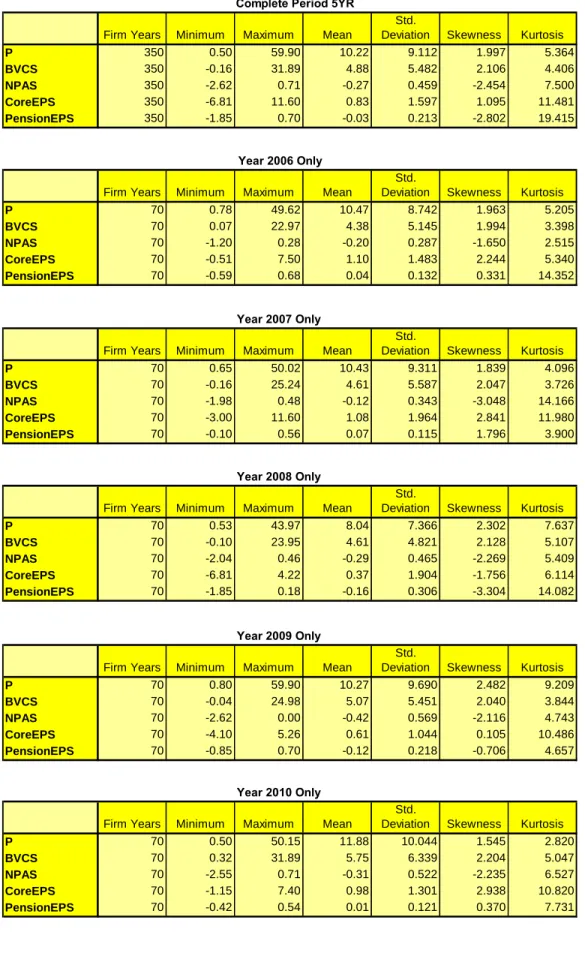
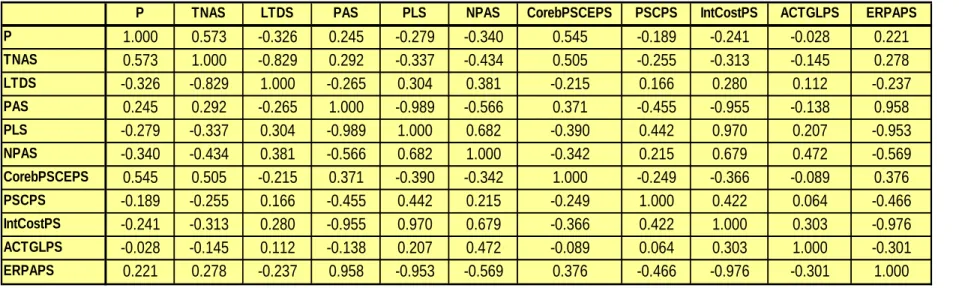
p.137 Figure 4.2 Descriptive Statistics for Regression Analysis 2006-2010 p.149 Figure 4.3 Correlation Matrix for Regressors used in the Principal
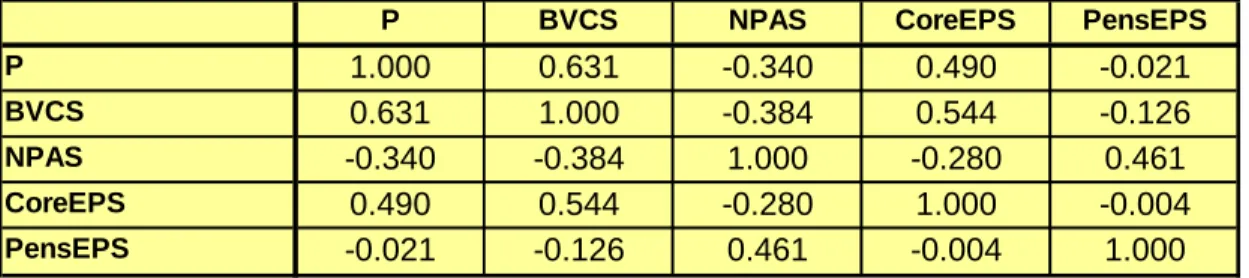
Models
p.152 Figure 4.4 Regressions testing the Transparent Model (2006-2010) p.154 Figure 4.5 Regressions testing the Opaque Model (2006-2010) p.155 Figure 4.6 Descriptive Statistics: Overall Sample and DB Pension
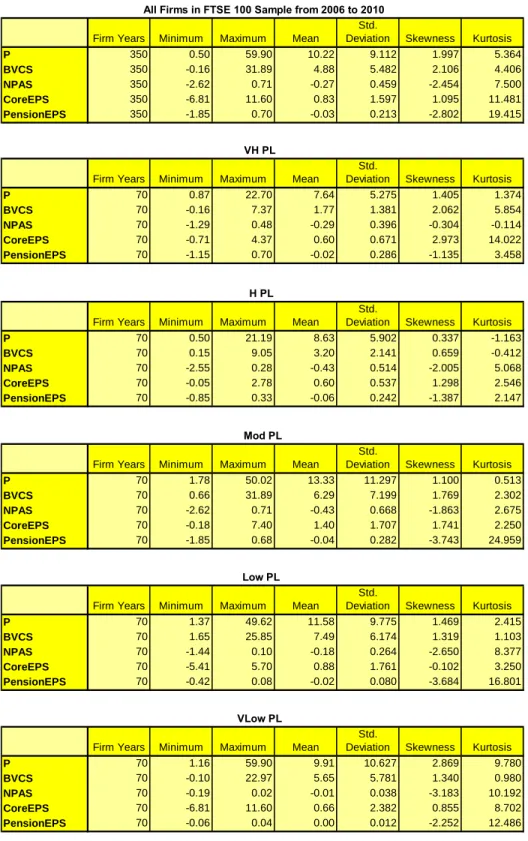
Exposure Categories
p.157 Figure 4.7 Regressions testing the Transparent Model (Pension
Exposures)
p.158 Figure 4.8 Regressions testing the Opaque Model (Pension
Exposures)
p.159 Figure 4.9 Descriptive Statistics: Analysis of Pension Components
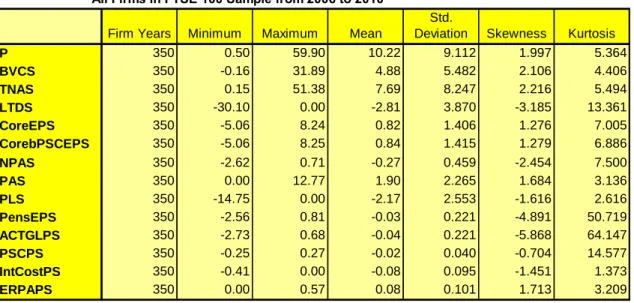
and Gearing
p.161 Figure 4.10 Correlation Matrix for Regressors used in the Models
with More Pension Components
p.162 Figure 4.11 Correlation Matrix for Regressors used in the Models
Analysing Gearing
p.162
Figure 4.12 Regressions with more pension components p.165
Figure 4.13 Regressions with gearing and pension components p.169 Figure 6.1 Regressions testing the Opaque Model (2006-2010) p.203
Tables
Table 2.1 Review of Value Relevance Articles p.54
Table 2.2 Review of Decision Usefulness Studies p.84
vii
List of Abbreviations
ASB TheAccounting Standards Board (United Kingdom)
ASC The Accounting Standards Commission
CAI The Institute of Chartered Accountants in Ireland
CICA The Canadian Institute of Chartered Accountants
DB Defined Benefit (pension scheme)
DC Defined Contribution (pension scheme)
EAT Extended Adapted Triangulation (Strategy)
ED Exposure Draft (number)
EFRAG European Financial Reporting Advisory Group
FASB Financial Accounting Standards Board (United States of America)
FRS Financial Reporting Standard (with number)
IAS International Accounting Standard (combined with number)
IASB The International Accounting Standards Board
ICAEW The Institute of Chartered Accountants In England and Wales
ICAS The Institute of Chartered Accountants of Scotland
IFRS International Financial Reporting Standard(s) – (or with number)
PAAinE Pro-active Accounting Activities in Europe
PPF Pension Protection Fund (United Kingdom)
SFAS Statement of Financial Accounting Standards (with number) TPR The Pensions Regulator (United Kingdom)
viii
List of Equations
Page
(1) Pti = β0 + β1BVCSti +β2CoreEPSti + β3NPASti + εti (p.121) (2) Pti = β0 + β1BVCSti + β2CoreEPSti + β3NPASti + β4PensionEPSti + εti
(p.121) (V1) Pti = β0 + β1BVCSti + β2CoreEPSti + β3NPASti + β4PensionEPSti +
ε
ti(p.123)
(V2) Pti = β0 + β1BVCSti + β2CorebPSCEPSti + β3NPASti + β4AACTGLPSti + β4BPSCPSti + β4CIntCostPSti + β4DERPAPSti +
ε
ti (p.123)(V3) Pti = β0 + β1BVCSti + β2CorebPSCEPSti + β3APASti + β3BPLSti + β4AACTGLPSti + β4BPSCPSti + β4CIntCostPSti + β4DERPAPSti +
ε
ti (p.124)(V4) Pti = β0 + β1BVCSti + β2CorebPSCEPSti + β3NPASti + β4AACTGLPSti +
β4BPSCPSti +
ε
ti (p.124)(V5) Pti = β0 + β1BVCSti + β2CoreEPSti + β3NPASti + β4AACTGLPSti +
ε
ti(p.125)
(V6) Pti = β0 + β1ABVCSti + β1BLTDSti + β2CorebPSCEPSti + β3NPASti + β4AACTGLPSti + β4BPSCPSti + β4CIntCostPSti + β4DERPAPSti +
ε
ti (p.126) (V7) Pti = β0 + β1ATNASti + β1BLTDSti + β2CorebPSCEPSti + β3NPASti + β4AACTGLPSti + β4BPSCPSti + β4CIntCostPSti + β4DERPAPSti +ε
ti (p.126) (V8) Pti = β0 + β1ATNASti + β1BLTDSti + β2CorebPSCEPSti + β3APASti + β3BPLSti + β4AACTGLPSti + β4BPSCPSti + β4CIntCostPSti + β4DERPAPSti +ε
ti (p.127) (V9) Pti = β0 + β1ATNASti + β1BLTDSti + β2CorebPSCEPSti + β3NPASti +β4AACTGLPSti + β4BPSCPSti +
ε
ti (p.127)(V10) Pti = β0 + β1ATNASti + β1BLTDSti + β2CoreEPSti + β3NPASti + β4AACTGLPSti +
ix
Preface
This PhD thesis is presented in seven chapters. In the first chapter the project scope and the research questions are outlined. The literature review in Chapter 2 provides the background and development of value relevance literature including the main categories of relative association studies, incremental association studies and marginal information content studies. Also in Chapter 2 particular attention is given to pension accounting value relevance studies as well as the decision usefulness literature. After introducing the discussion and analysis of the research methodology literature in Chapter 3 there is an explanation of the approach to the design of the mixed methods using quantitative and qualitative analysis.
Chapter 4 presents the quantitative evidence and analysis and explains the development of the regression models that are based on certain earlier studies in the literature that are then considerably developed into the unique models for this current specific study. Chapter 5 considers analysts’ perception of decision usefulness of pension accounting information by considering the qualitative evidence and analysis which is centred on semi-structured interviews with the key informants who bring very significant experience from their careers as analysts. Chapter 6 compares the findings from the value relevance research and the decision usefulness research. Chapter 6 also includes a critical analysis to determine the extent of convergence or differences in the findings by using the mixed methodology process of triangulation to reach a number of conclusions that may be generalised to wider matters in the way analysts and investors use information in financial reports to inform their decisions. Chapter 7 presents the summary, conclusions, limitations and scope for further research. Chapter 7 also summarises the relevance of the research to the practical and professional world. The contribution to academic literature forms the basis for further research and Chapter 7 also provides reflections and further thoughts about the practical aspects of building on the PhD research project so that further contributions may be made to the academic literature of pension accounting value relevance and the perception of decision usefulness. This academic research also has a strong professional relevance which is a key characteristic of output used to inform the ongoing accounting standard setting process.
x
Acknowledgement
I wish to record my thanks to the key informants (listed in Appendix 1) who gave freely of their time and in expressing their thoughts made an enormous contribution to the uniqueness and value of this research.
I also express my sincerest thanks to my PhD supervisors, Jonathan Edwards and Geoff Willcocks for their wisdom, loyalty, humour and excellent support throughout the lengthy and at times arduous expedition required in the undertaking of a PhD. I am grateful to a number of colleagues at Bournemouth University for their helpful comments and Venancio Tauringana deserves special mention for very valuable advice.
I thank my wife, Sharon for proof reading the thesis in its draft form and being extraordinarily tolerant of my necessary devotion to the PhD task over four years.
Any errors or omissions are of course mine alone. The PhD is dedicated to my family.
1
Chapter 1
Introduction and overview of the research
1.1 Introduction
Value relevance refers to the relationship between published accounting data and the market value of the reporting business entity. Value relevance studies aim to test the extent of correlation between share prices and financial statement information over certain periods (Barth et al, 2001; Holthausen and Watts, 2001). The term ‘value relevance’ is believed to have been used first by Amir (1993) although the literature on the value relevance concept extends back over forty years with early contributions by Ball and Brown (1968) and Beaver and Dukes (1972). In this research a link between value relevance and decision usefulness or more precisely ‘the perception of decision usefulness’ is identified. Decision usefulness when applied to accounting information refers to how useful such information is to users in making investment, credit and similar resource allocation decisions (IASB, 2006 and 2008). Decision usefulness is recognised as “the central objective” in the provision of published financial statements in an early study by Staubus (1959: p.4) and remains central in the joint IASB-FASB conceptual framework as it concerns the provision of information that is useful to “present and potential investors” as well as creditors and others in making resource allocation decisions (IASB, 2006: p.18; IASB, 2008 and IASB, 2010).
The link between value relevance and the perception of decision usefulness may arise if investors either (a) consider accounting information to be decision useful or (b) recognise value relevance based on the likely reaction of other investors to accounting information. The perception of decision usefulness may also be thought of as a necessary part of the behavioural link between accounting information and share prices within value relevance. Value relevance concerns the association between numbers whereas the perception of decision usefulness is the basis for investment behaviour such as the activity of analysing accounting numbers leading to actual investment activity that in turn is expected to have an impact on share prices.
2 An important limitation of value relevance research is that it can provide only indirect evidence of decision usefulness or the manner of use of the financial statement information (Holthausen and Watts, 2001; Glaum, 2009). Decision usefulness is an aspect of the value relevance discussion although testing for decision usefulness is probably more difficult in that it needs to go beyond a purely quantitative study by incorporating qualitative methods. This also raises the question of whether it is better to try to assess the ‘perception of decision usefulness’ since this may be explored using methods such as interviewing users of accounting information.
The value relevance studies that have been undertaken over the four decades from the early studies of Ball and Brown (1968) and Beaver and Dukes (1972) have on the whole concluded that there is evidence of value relevance of accounting numbers. Decision usefulness or ‘perception of decision usefulness’ studies have been undertaken to try to explain the view of the usefulness of published audited accounting information. These studies such as McNally et al (1982) and Barker (1998) have mostly provided evidence that users perceive audited accounting information to be decision useful. Most of the studies neither recognise nor acknowledge that there is a failure to link the quantitative and qualitative aspects of value relevance and decision usefulness. An exception is Alford et al (1993) who attempt to apply their value relevance conclusions to ‘usefulness’ or ‘decision usefulness’ but their study may be criticised for its lack of testing of the viewpoints or analytical approach of investors. Another exception is Rippington and Taffler (1995) who suggest that evidence relating to the ‘usefulness’ of the annual report and accounts to investors is sparse and yet their approach is to use a purely quantitative approach or more particularly an event study that has considerable limitations.
Developing the analytical theme of decision usefulness Barker (1998) considers the market for financial accounting information in a study that makes direct contact with users in the form of analysts and fund managers. Barker (1998) finds that ‘raw’ data in the form of financial reporting information received directly from companies is considerably more important to fund managers than processed data provided by analysts. Again this analysis
3 doesn’t go as far as providing a direct link to the effects of decisions on share prices. The apparent absence of research studies that test for a link between the perception of decision usefulness of accounting information and value relevance is the overall major shortcoming in the value relevance and decision usefulness research and remains a significant gap in the literature.
The apparent absence of studies that combine value relevance and the perception of decision usefulness is all the more important when there are conflicting results in research studies on either topics of value relevance or decision usefulness. There are significant examples of value relevance studies conflicting with each other even though they undertake research on very similar topics or use similar or the same data sources. One example is identified where the conclusions of Pope and Rees (1992) suggest far less value relevance than Harris and Muller (1999). Pope and Rees (1992) investigate differences in US GAAP and UK GAAP and returns based on movements in share prices of UK domiciled companies having ADRs listed in the US. Using regression analysis Pope and Rees (1992) conclude that GAAP earnings adjustments add only marginally to the ability of earnings to explain returns with the finding that the measure of incremental content results in an adjusted R2 of well below 0.10 and coefficients that are not significant in most cases. The study by Harris and Muller (1999) considers the value relevance of accounting measures based on IAS versus US GAAP using Form 20-F reconciliations. Using a return regression model the inclusion of reconciliation amounts between IAS and US GAAP results in the adjusted R2 rising from 0.0147 to 0.1728. Harris and Muller (1999) also use a market value regression model and find that the inclusion of reconciliation amounts between IAS and US-GAAP results in the adjusted R2 increasing from 0.8796 to 0.9062 and the estimated coefficient on the US GAAP earnings reconciliation adjustment amount is significantly positive at the 1% level. In conclusion the Harris and Muller (1999) study suggests that reconciliations between US GAAP and IAS accounting are significantly value relevant in contrast to the conclusions of Pope and Rees (1992) about similar earnings reconciliation adjustments.
4 Another case of an inconsistency between value relevance studies occurs when two studies use very similar data on the topic of post retirement benefits other than pensions that are referred to as ‘PRBs’. Amir (1996) uses US data drawn from sources including the Compustat files over the period 1990 to 1992 resulting in a sample providing 1,035 firm year observations. Amir (1996) finds that PRB disclosures are value relevant and not significantly less value relevant than pension disclosures. The conclusions of Amir (1996) are very different from those of Choi et al (1997) in a similar study using data for US firms drawn from sources including the Compustat files to run regressions with 336 firms in 1991 and 293 firms in 1992. Choi et al (1997) find that accumulated PRB obligations are marginally significant in explaining equity values but they are capitalised at a much lower rate than pension obligations. There are similar problems of inconsistent outcomes arising in decision usefulness studies with for example, studies by Arnold and Moizer (1984), Day (1986) and Barker (1998) finding that annual accounting information is decision useful but studies by Rippington and Taffler (1995) and Bartlett and Chandler (1997) questioning the perception of decision usefulness or evidence of actual use in practice.
The literature review reveals that value relevance studies are based on quantitative research methods whereas decision usefulness studies are based on qualitative research methods. There is considerable scope for using a mixed methods research approach to help to reduce the gap in the literature relating to value relevance and the perception of decision usefulness. Mixed methods research procedures have gained popularity as they utilise the strengths of both qualitative and quantitative research methods (Creswell, 2009). The mixed methods strategy employed in this thesis combines regression analysis similar to that used in most of the value relevance studies (particularly, Coronado and Sharpe, 2003) with qualitative methods such as interviews that are used in many decision usefulness studies (for example, Day 1986; Barker, 1998 and Glaum and Friedrich, 2006). Mixed methods research is now recognised as one of the three major ‘research paradigms’ adding to the quantitative and qualitative paradigms (Johnson et al, 2007). Once it is recognised that a mixed methodology approach is needed the advantage is that there is scope to borrow from the many research designs that have already been developed over recent years (Leech and Onwuegbuzie, 2009).
5 This research concentrates on pension accounting value relevance and decision usefulness. The reason for the particular interest in pension accounting value relevance is that for those companies that sponsor defined benefit (DB) pension schemes for their employees there can be major amounts relating to pensions that have a very significant impact on the results in the published financial statements. DB pension scheme liabilities are based on obligations to pay ‘final salary’ or ‘average salary’ pensions that are usually determined according to a formula based on each employee’s final salary or average salary (for example, the average of last three years’ salaries) and are dependent on the longevity of scheme members. DB schemes might be expected to have an impact on the market value of sponsoring companies – they have both assets and liabilities and even though the sponsoring company is separate from the ‘ring fenced’ pension fund, there is a contingent liability in relation to potential pension fund deficits. A DB scheme is therefore, very different from the other major type of pension scheme known as defined contribution scheme (or DC scheme) that as the name suggests features employer contributions to a pension fund but requires no further contributions by and hence no future liabilities for, the employing company. DB schemes can become a major burden on companies sponsoring them as large liabilities may arise from future pension obligations (and in some cases healthcare obligations) to DB scheme members. DB schemes have a fund of ‘pension assets’ that is dedicated to the payment of future scheme obligations but each employer company (as scheme ‘sponsor’) is liable to make a payment or series of payments, into the pension fund if there is a shortfall or ‘pension fund deficit’.
A high proportion of pension scheme assets are represented by equities. Equity valuations may be subject to volatility including severe reductions. The crash in share prices after 2007 therefore, resulted in severe falls in the overall value of pension fund assets of the schemes sponsored by UK listed companies yet the pension liabilities have continued on a largely upward path. Large pension deficits became quite common in the 2008 accounting year among established UK listed companies. BT Plc had a net pension deficit of about £4 billion and total pension liabilities of £33 billion equivalent to about eight times the book value of total net assets excluding net pension assets in 2008. In the same year of 2008
6 British Aerospace Plc had a net pension deficit of £3.3 billion and total pension liabilities of £17 billion that were equivalent to 163 per cent of the book value of total core net assets excluding pensions. Glaxo Smith Kline Plc had a net pension deficit of about £3 billion and total pension liabilities of £12 billion that was equivalent to 112 per cent of the book value of core net assets. Also in the same year of 2008 National Grid Plc had a net pension deficit of £3 billion and total pension liabilities of £18 billion that were equivalent to 270 per cent of the book value of total net assets excluding net pension assets.
Companies have been closing DB schemes to new members or future accrual so that by 2011 only 16 per cent of DB schemes in the UK were still open (The Pensions Regulator/PPF, 2011: p.32). Even when DB schemes are closed they are still quite likely to have a significant presence in the sponsoring company’s financial statements in the form of continuing liabilities to the ‘legacy schemes’ unless a sponsoring company takes the major step of paying perhaps a very considerable sum to transfer the scheme to an insurance company as part of a ‘pension buy-out’ (Kirkpatrick, 2007). If there are concerns about the extent of pension liabilities there is also considerable measurement uncertainty and one of the major reasons for this is that there are differing views over the appropriate discount rate for valuation purposes (PAAinE, 2008). Longevity estimates have increased over recent years based on research by actuaries and this has led to considerable expected liabilities even when pension deficits have reduced for example, between June 2010 and June 2011 (LCP, 2011). In the UK a male at retirement age at the accounts date for FTSE 100 companies could be expected to live to 86 years in 2008 but this had increased to longevity of 87 years only two years later in 2010 (LCP, 2011: p.67). DB pension liabilities have considerable sensitivity to increases in longevity and for example, BT reported that an increase of one year in life expectancy would add £1.3 billion to pension liabilities in 2008 while Glaxo SmithKline reported that one extra year of life expectancy would add £0.3 billion to its pension liabilities.
In view of the importance of the topic of pension accounting value relevance and decision usefulness it is surprising that the research literature is not more extensive particularly outside the USA. There are a number of pension accounting value relevance studies that
7 use US accounting data. These studies include earlier research such as Daley (1984), Landsman (1986) and Dhaliwal (1986) with later studies in the 1990s such as Barth et al (1992 and 1993) and Gopalakrishnan (1994) that all suggest value relevance but are also largely inconclusive due to a number of statistical shortcomings. Further studies use US data to extend the research to non-pension post retirement benefits such as Amir (1996) and Choi et al (1997) which are also inconclusive as they have conflicting results. More recent pension accounting value relevance studies have again used US data for example, Coronado and Sharpe (2003), Jin et al (2006), Hann et al (2007), Coronado et al (2008) and Werner (2011) and still suffer from the limitations of purely quantitative studies. The only significant study using UK data in relation to pension accounting value relevance is believed to be Klumpes and McMeeking (2007) that is an event study using purely quantitative methods. In none of the pension accounting value relevance studies is there a combination of value relevance analysis with research into the perception of decision usefulness. Furthermore, it appears that there are no separate studies about the decision usefulness or perception of decision usefulness of pension accounting information.
1.2 Research aims and objectives
The main aim of this research is to achieve a better understanding of the impact on the share prices of listed companies of accounting information about DB pension schemes recognised and disclosed in the audited financial statements. A further aim is to assess the perception of decision usefulness of pension accounting information as this is considered to be linked to the value relevance question. As part of this process of investigation it is intended to assess the relative value relevance and perception of decision usefulness of pension accounting information as compared to other accounting information.
The specific objectives of the research are to determine the value relevance and relative value relevance of pension accounting information and to assess the perception of decision usefulness of pension accounting information as well as how this information is perceived
8 relative to other accounting information. Specifically the following research questions are asked:
1. Is pension accounting information value relevant?
2. Is pension accounting information more or less value relevant than other accounting information?
3. Is pension accounting information perceived to be decision useful?
4. Is pension accounting information perceived to be more or less decision useful than other accounting information?
1.3 Research method and findings
1.3.1 Research Method
This research uses mixed methodology by analysing both quantitative and qualitative data. Quantitative data is obtained from published audited financial statements including the notes of UK listed companies and share price data obtained from Thomson Analytics over the period 2006 to 2010. A sample of 70 companies is selected from the FTSE 100. The Qualitative information is obtained from semi-structured interviews with a sample of 8 informed respondents.
On the one hand, the analysis of value relevance is quantitative – in that market value effects may be measured and compared to accounting information. On the other hand, the analysis of decision usefulness or ‘perceived decision-usefulness’ is a largely qualitative exercise as it requires an understanding of the viewpoints and insights of the decision takers. One of the ways in which this thesis contributes to the research literature is that it explores the drivers of decisions and their potential effect on market values. In this way the potential of the quantitative research using a multivariate regression analysis method is
9 enhanced. This is the basis of the choice of a mixed methodology approach, using both quantitative research using regression models and qualitative research in the form of semi structured interviews with users or more specifically financial analysts. For the value relevance analysis an Ohlson (1995) based market value regression model is used. Two main versions of the model described as the ‘Transparent Model’ and the ‘Opaque Model’ are developed in line with Coronado and Sharpe (2003).
The preferred model is the Opaque Model that is shown below:
Pti = β0 + β1BVCSti + β2CoreEPSti + β3NPASti + β4PensionEPSti +
ε
tiIt may be seen that the Opaque Model includes ‘share price’ (P) as the dependent variable and independent variables for ‘core book equity value per share’ (BVCS), the ‘book value of net pension assets per share’ (NPAS), ‘earnings per share generated by core operations’ (CoreEPS) as well as a separate independent variable for current period ‘pension earnings per share’ (PensionEPS). The Transparent Model has the same terms as the Opaque Model apart from the variable ‘PensionEPS’. The reasons for the preference for the Opaque Model is that the qualitative research suggests that analysts use both balance sheet and income information and the quantitative results using the Opaque Model are also stronger than for the Transparent Model which is consistent with Coronado and Sharpe (2003). The analysis is performed over the five years 2006 to 2010.
1.3.2 Results
The quantitative analysis using the model provides evidence that pension accounting information is value relevant but it appears that it is less value relevant than other accounting information. Looking at the results using data for the five year period it is found that the regression coefficients are significant at the 0.01 level for all independent variables except for the coefficient for PensionEPS which is significant at the 0.05 level and for the same period there is an adjusted R2 of 0.44.
10 There is a noticeable decline in the significance of the pension accounting components, NPAS and PensionEPS in the years from 2008 onwards even though there is a higher adjusted R2 of 0.542 and 0.593 in the years 2009 and 2010 respectively. There is a low adjusted R2 of 0.238 that coincides with the period of particular equity market volatility and the overall significant decline in the UK stock market. The quantitative research findings suggest that the answer to Research Question 1 is that pension accounting information is value relevant. The quantitative research findings also suggest that the answer to Research Question 2 is that pension accounting information is less value relevant than other accounting information.
The results are summarised in Figure 1.1 below.
Figure 1.1
Regressions Testing the Opaque Model Regression Outcomes
5YR 2006 2007 2008 2009 2010
Independent Variable Coefficients
BVCS (β1) 0.81*** -0.04 0.71*** 0.45** 1.20*** 0.90*** (0.08) (0.37) (0.18) (0.19) (0.17) (0.21) CoreEPS (β2) 1.03*** 3.13** 0.59 0.82* 2.46*** 1.89* (0.28) (1.27) (0.48) (0.45) (0.86) (1.01) NPAS (β3) -3.06*** -6.77** -8.83*** -4.03 2.31 -1.52 (0.97) (3.23) (2.78) (2.47) (2.04) (1.74) PensionEPS (β4) 4.82** 0.32 5.30 3.46 -2.40 5.82 (1.96) (6.99) (7.27) (3.43) (4.61) (7.51) Intercept (β0) 4.73*** 5.85*** 5.14*** 5.03*** 3.40*** 4.31*** (0.50) (1.24) (1.13) (1.10) (1.14) (1.17) Durbin-Watson 1.956 2.236 2.214 1.644 1.627 1.843 Adjusted R2 0.440 0.301 0.486 0.238 0.542 0.593
Notes: Standard errors are shown in brackets
*** Significant at the 0.01 level. ** Significant at the 0.05 level. * Significant at the 0.10 level.
11 The qualitative analysis based on semi-structured interviews with analysts provides evidence that pension accounting information is perceived to be decision useful but that it is considered to be less decision useful than other accounting information. The overall view expressed by the informants in the semi-structured interviews also provides evidence that published financial reports are considered to be very important and in all probability the most important source of information. The findings in this PhD research therefore support some of the previous views (Hines, 1982) and research findings (Barker, 1998; Glaum and Friedrich, 2006) that financial reports are the most important source of information for investors. It goes further than previous literature by undertaking a study that gives pension accounting information specific attention. In summary the qualitative research findings suggest that the answer to Research Question 3 is that pension accounting information is perceived to be decision useful. The qualitative research findings also suggest that the answer to Research Question 4 is that pension accounting information is perceived to be less decision useful than other accounting information.
The mixed methodology research strategy that is adopted relies very much on the concept of triangulation which involves comparing the quantitative and qualitative databases to determine whether there is convergence or evidence of contradictions. There is considerably more evidence of convergence than contradictions or conflicts in the findings of the quantitative and qualitative analysis. There is consistency in the findings in relation to the research questions. The quantitative research findings that support the answer to Research Question 1 – with the conclusion that pension accounting information is value relevant – are consistent with the findings that support the answer to Research Question 3 – with the conclusion that pension accounting information is perceived to be decision useful. Similarly, the qualitative research findings that support the answer to Research Question 2 – with the conclusion that pension accounting information is less value relevant than other accounting information – are consistent with the findings that support the answer to Research Question 4 – with the conclusion that pension accounting information is perceived to be less decision useful than other accounting information.
12
1.4 Contribution of the research
Existing literature on pension value relevance suffers from its inconclusive nature arising largely from a heavy reliance on quantitative research methods. There is also a gap in research literature arising from the lack of studies that investigate a link between value relevance and the perception of decision usefulness. This PhD seeks to address both of these issues and in so doing make a number of contributions to research literature. By using a mixed methodology approach with both quantitative and qualitative methods this research addresses the link between value relevance and decision usefulness. There is considerable scope for using a mixed methods research approach that is recognised as one of the three major ‘research paradigms’ (Johnson et al, 2007). This research is able to adapt some of the many research designs that have been developed over recent years (Leech and Onwuegbuzie, 2009). This research responds to the potential to add to research using methodological triangulation that may overcome the inadequacy of a single method (Morse, 1991). A single method may indeed be insufficient to address the complexity of a social science based research question (Creswell, 2009). By investigating and finding evidence of a link between pension accounting information value relevance and the perception of decision usefulness of such information this research also helps to overcome some of the problems of the excessive reliance on quantitative methods.
This study finds evidence of the perception of decision usefulness of pension accounting information of UK listed companies. This is particularly important as the literature review reveals that literature on pension accounting decision usefulness is sparse or even not researched. The study also finds evidence of value relevance of pension accounting information based on the study of UK listed companies. Again this is an important contribution to the research literature as although this is not the first UK oriented pensions accounting research as there is an earlier study by Klumpes and McMeeking (2007), it nevertheless represents much more recent research and comes at a time of increasing awareness in the accounting profession and among users of accounting information of the risks of deficiencies in financial reporting of pensions (PAAinE, 2008). The timing of this research is significant for a number of reasons: there has been increasing disclosure of pension information in annual reports of companies sponsoring DB schemes; the difficult
13 financial market conditions in recent years, particularly in the period since 2007 have severely tested the efficacy of relevant accepted accounting practice in the area of DB pensions; and, the importance of pension accounting has been recognised in the UK and in other jurisdictions. It is also worth commenting on the last point as this study provides evidence of reduced value relevance in a period of financial crisis which is at this time of writing an under-researched period in the UK and other affected markets.
This research provides evidence that pension accounting information is value relevant and is also perceived to be decision useful. Nevertheless the semi structured interviews with analysts also suggest that pension accounting disclosures are not considered to be sufficiently comprehensive or comprehensible. This research provides ideas for future research into the use by analysts of pension accounting information as well as potential comparative studies of pension accounting in different international jurisdictions. It is believed that there is scope for using a mixed methodology approach in these future post doctoral studies with a view to increasing our knowledge of value relevance and the perception of decision usefulness.
1.5 Organisation of the research
The structure of this thesis will now be outlined. The next chapter, Chapter 2 provides the context of the research by reviewing related academic literature with an exploration of the contributions made in value relevance and decision usefulness. The literature review involves a consideration of the objectives, findings and limitations such as inconclusive outcomes and methodological constraints. Chapter 3 discusses the research methodology by considering a number of epistemologies before discussing the precise design choice for this project. The research design choice entails a discussion of mixed methods strategies including a consideration of the importance of behavioural studies in accounting and the benefits of triangulation. Chapter 3 concludes by setting out the research proposal with an outline of the mixed methods approach to be used.
Chapter 4 is concerned with the quantitative analysis and includes a detailed consideration of the regression model and the results. A number of variants of the model are used in the
14 analysis that builds on previous studies in the literature. This research is not restricted to quantitative methods alone and so Chapter 5 provides evidence and analysis from the qualitative research undertaken in accordance with the chosen mixed-methodology research strategy. There is a discussion of the background and themes of the semi-structured interviews including a focus on specific pension accounting matters. Chapter 5 also outlines the relevance of the triangulation process and provides an overall summary of the findings. Chapter 6 is a record of the conclusions reached on the basis of the research. The mixed methodology approach has been helpful in the research process and has provided evidence that is pertinent to the research questions. Chapter 6 considers the outcomes of the analysis and the conclusions as well as the possible limitations of the research. Chapter 6 also identifies a number of ways in which this research has contributed to academic literature. Finally, Chapter 7 contains the reflections from the research undertaken and considers post-doctoral research possibilities on the basis of specific matters and external academic and professional developments.
15
Chapter 2
Literature review
2.1 Introduction
This chapter is intended to provide the context of the research and a review of related academic literature. The literature review should help to illustrate major issues and refine the focus of the research in a way that can ultimately lead to one or more research questions (Gray, 2009, p.53). In the process of reviewing the literature it is important to consider the objectives, findings and limitations such as inconclusive outcomes and methodological constraints. The literature for value relevance and decision usefulness is reviewed with the intention of revealing how adequately it explains the value relevance and perception of decision usefulness of pension accounting information. The limitations of the current literature are highlighted in the last section of this chapter.
It has been suggested that value relevance tests are concerned with two attributes of an accounting amount namely, ‘relevance’ and ‘reliability’ that are difficult to test separately (Barth et al, 2001: p.5). One important limitation of value relevance research is that it can provide only indirect evidence of decision usefulness or the manner of use of the financial statement information (Holthausen and Watts, 2001; Glaum, 2009). The concept of decision usefulness that could perhaps be termed ‘decision relevance’ is different from the concept of ‘value relevance’ (Barth et al, 2001: p.5). Reliability is an important attribute in the study of decision usefulness and value relevance of an accounting amount. However, it is suspected that it is the ‘perception of decision usefulness’ that provides the link to value relevance since it is such perception that influences investment decisions.
Value relevance studies aim to test the extent of correlation between share prices and financial statement information over certain periods (Barth et al, 2001; Holthausen and Watts, 2001). Value relevance literature extends back over forty years with early contributions by Ball and Brown (1968) and Beaver and Dukes (1972). These early studies
16 focus on the impact of earnings on firm value and they are influenced by earlier research evidence that the earnings term is the most important explanatory variable in predicting the value of the firm or the share price (Miller and Modigliani, 1966).
The first study to use the term ‘value relevance’ is believed to be that carried out by Amir (1993). Value relevance studies cover a number of different items such as financial assets and liabilities; intangibles; oil and gas properties; as well as pensions and other post retirement benefits. Three main categories of value relevance studies may be identified: relative association studies, incremental association studies and marginal information content studies (see Holthausen and Watts, 2001). Relative association studies compare the association between stock market values or changes in values and alternative bottom-line measures – for example, earnings based on US GAAP or ‘foreign GAAP’ and extent of association with stock market values or returns. They usually test for the differences in the R2 of regressions using the different bottom line numbers and the accounting number with the greater R2 is described as being more value-relevant. Incremental association studies investigate whether particular accounting numbers help to explain value or returns (over ‘long windows’) given other specified variables. An accounting number is deemed to be value-relevant if its regression coefficient is significantly different from zero. Some of the incremental association studies assess the relationship between the accounting numbers and inputs to a market valuation model to predict coefficient values and/or assess differences in error with which different accounting numbers measure a valuation input variable. Differences between the estimated and predicted values are often interpreted as evidence of measurement error in the accounting number. Marginal information content studies investigate whether an accounting number adds to the information set available to investors. These studies usually use ‘event studies’ or ‘short window return studies’ (in contrast to the ‘long window’ incremental association studies) to determine how the release of an accounting number (adding to and conditional on other accounting information released) is associated with value changes. Therefore, price reactions are considered evidence for value relevance.
17 Value relevance studies are reviewed in the following sections before reviewing studies related to decision usefulness.
2.2 Relative association studies
One of the earliest relative association studies is that carried out by Beaver and Dukes (1972) to consider the relative merit of alternative income measurement rules under US GAAP based on the issue of interperiod tax allocation. In order to investigate the association between share prices and the alternative income numbers arising from tax deferral and ‘non-deferral’ Beaver and Dukes (1972) develop the earlier research of Ball and Brown (1968) by looking at the relationship between unexpected earnings changes and unexpected price changes employing an Abnormal Price Index or ‘API’. Regression models are developed to provide estimates of the unexpected component of the returns. The sample that is used is based on 123 NYSE Compustat firms whose year end is 31 December and whose methods for depreciation for tax and reporting purposes may be identified for each of the years 1963 to 1967. The sampling process produces data from 576 firm years. Beaver and Dukes (1972) conclude that there is stronger evidence of an association between share prices (or share price returns) and accounting income numbers based on tax deferral than income that is not based on such interperiod tax allocation. There are some limitations in the research by Beaver and Dukes (1972) for the research is purely quantitative and relies on levels of statistical significance that are not conclusive – even though 48 out of 60 models are significant beyond the 0.01 level and another 5 of the 60 models are significant at the 0.05 level. Beaver and Dukes (1972) acknowledge that further research is likely to be needed for example, to investigate the value relevance of cash flow information in the financial reports.
Relative association studies are often employed in comparative studies of value relevance of accounting information in different countries. Alford et al (1993) use a relative association study to examine the ‘relative informativeness’ of accounting disclosures in different countries. The main objective is to investigate whether differences in accounting standards, disclosure practices and corporate governance leads to significant differences in
18 the usefulness of accounting earnings. At a practical level the research involves a comparison of the information content and timeliness of accounting disclosures in several countries using the United States as a benchmark. The research methods take the form of two approaches. The first form of analysis is based on the rank of unexpected earnings developed by Ball and Brown (1968); and the second approach estimates a regression model of 15 month returns on the contemporaneous level and change in earnings.
The sample in the Alford et al (1993) study is drawn from an extensive set of 17 countries including the US and the UK using the ‘Global Vantage Industrial/Commercial and Issue Files’ for the years 1983 to 1990. To control for differences in industry, market capitalisation and time Alford et al (1993) use matched US samples for each non-US sample and this results in a variety of non-US observations for example, the 2,878 observations in the UK make it the largest non-US sample compared to for example, 855 in Canada, 665 in France, 447 in Australia, 370 in Germany and 197 in Japan. The results of the analysis reveal significant differences in the timeliness and information content of accounting earnings across the sampled countries. The annual accounting earnings from Australia, France, the Netherlands and the UK are found to be more informative or more timely than US accounting earnings. The results for Belgium, Canada, Hong Kong, Ireland, Japan, Norway, South Africa and Switzerland are inconclusive. However, annual accounting earnings in certain countries are found to be less timely or less value relevant information than in the US – these countries are Denmark, Germany, Italy, Singapore and Sweden. The overall findings suggest that the income numbers have a significant association with share prices although this varies between countries. The analysis reveals that only in the UK and Ireland does the value relevant information in the form of earnings become more rapidly impounded into the share price than in the matched US sample. There are a number of limitations in the analysis and some aspects seem to be inadequately discussed for example, the very low adjusted R2 of less than 0.20 in a number of cases. In spite of the important contribution made to value relevance research by Alford et al (1993) their attempt to apply their conclusions to ‘usefulness’ or ‘decision usefulness’ may be criticised for its lack of testing of the viewpoints or analytical approach of investors.
19
Joos and Lang (1994) study the effects of differences in accounting measurement practice or ‘accounting diversity’ in different countries by taking samples of German, French and UK firms over the years 1982-90. The sample sizes are 172 in Germany, 228 firms in France and 675 firms in the UK. It is found that there are substantial accounting differences in the different jurisdictions and it is concluded that the EU directives have done little to reduce these accounting differences. The quantitative research involved regression analysis with results for returns on earnings levels and changes producing an adjusted R2 of 0.28 for France, 0.24 for the UK and 0.19 for Germany post EU directive. The results for regressions of price on net income and shareholders’ equity produced an adjusted R2 of 0.48 for France, 0.20 for the UK and 0.24 for Germany post EU directive. The post EU directive results were better than the position before the EU directive yet the adjusted R2 results are still quite low especially for the UK and Germany and the analysis is not very conclusive. It may also be pointed out that there are quite small samples for Germany and France although there is a bigger sample for the UK. It is purely a quantitative study and this limits the scope for understanding investor viewpoints.
Chan and Seow (1996) undertake a relative association study that considers the association between stock returns and ‘foreign’ GAAP earnings compared to earnings adjusted to US GAAP. The study examines the years 1987-92 for a sample of 45 firms from the Compustat files to provide data over 147 firm years. Regression models are developed to test the associations between stock returns and accounting earnings based on ‘foreign’ and US GAAP. It is found that earnings based on foreign GAAP are more closely associated with contemporaneous stock returns than earnings reconciled to US GAAP. Adjusted R2 is quite low in the range of 0.16 to 0.35 for several cases. A criticism is that there is a fairly small sample size. Even though the regression analysis is extended by comparing competing sets of independent variables it is ultimately not very conclusive.
Relative association studies may also be used to compare the association between share prices and different measures of income. Dhaliwal et al (1999) undertake a study to compare comprehensive income and net income as a measure of firm performance. Their
20 sample is drawn from Compustat firms over the period 1994-95 resulting in data from 11,425 firm years. Using regression analysis for stock return models it is found that differences in the results for adjusted R2 are statistically insignificant except in the case of financial sector firms. The overall conclusion is that the results do not support the claim that comprehensive income is a superior measure of firm performance than net income. Further quantitative analysis is undertaken by Dhaliwal et al (1999) but even this leaves a question mark over the true motives and responses of investors. The suggestion by Dhaliwal et al (1999) that the results of their study cast doubt on the appropriateness of the requirement for uniform comprehensive income disclosures for all industries leads to criticism from other researchers (Holthausen and Watts, 2001).
2.3 Combined relative and incremental association studies
A significant number of relative association studies are also incremental association studies. Harris and Ohlson (1987) investigate the ‘explanatory power’ or value relevance of reported valuations of oil and gas properties as included in the balance sheet and discussions in notes to the financial statements under the relevant US accounting standard, SFAS 19. The study uses a sample of oil and gas companies classified as ‘independents’ in a 1983 Arthur Andersen industry survey that also have data available on the Compustat file. The period of the research is the years 1979 to 1983 so that there is a total of 283 firm years in the study. A multivariate regression model is used to analyse the rich set of measures used in a valuation of a firm’s oil and gas properties – these include the ‘successful efforts’ basis and the ‘full costing’ basis and also forms of valuation based on discounted future cash flow. The approach used by Harris and Ohlson (1987) involves an attempt to impute the market value of oil and gas properties by an adjustment to the overall market value of equity. It is found that the net book values of oil and gas properties are highly significant or value relevant for the market values of the oil and gas properties (and ultimately the market values of the companies). Variations of the regression model are tested with results showing an adjusted R2 in the range of 0.48 to 0.80 for market values associated with book values determined on the successful efforts basis and considerably lower results for adjusted R2 in the range of 0.26 to 0.54 for market value associations with book values
21 determined on the full costing basis. The regression results suggest a much weaker association between the market values and present value measures on both a successful efforts or full costing basis – the adjusted R2 is in the range of around zero to 0.52 which may be considered to be inconclusive. This is a limitation of the analysis which in common with other purely quantitative studies provides no insight into behavioural aspects such as the use and interpretation of accounting information by investors.
Pope and Rees (1992) investigate differences in US GAAP and UK GAAP and returns based on movements in share prices of UK domiciled companies having ADRs listed in the US. The period examined is 1987-90 and there are 85 firm year observations drawn from a samples taken from the LBS database and Compustat. UK and US earnings are found to be strongly positively correlated and when the two sets of numbers are compared the variables for earnings levels and changes have correlation coefficients in excess of 0.70. It is found that the GAAP earnings adjustments add marginally to the ability of earnings to explain returns – it is suggested that the association is of a ‘transitory’ or ‘short window’ nature. The measure of incremental information content results in an adjusted R2 that is well below 0.10 in most cases. The limitations include the small sample and some caution is required in interpreting the conclusions. It is emphasised that adjustments only ‘add marginally’ to the ability of earnings to explain returns.
Harris et al (1994) consider the value relevance of accounting measures for US and German firms. The approach is to match firms in the two countries on the basis of industry and firm size with the objective of determining the incremental ‘informativeness’ of earnings. In the discussion of methodology Harris et al (1994) express a preference for the ‘long window’ approach to analysing the association between stock returns and accounting earnings as compared to the ‘short window’ of assessing market reaction to unexpected earnings. A returns model is used as well as a model that is based on Ohlson (1991) to test the association between share prices and the accounting measures of earnings and shareholders’ equity. A sample of 230 firms are selected for the year 1991 with data extracted from the Global Vantage Industrial / Commercial data base and directly from company annual reports. Harris et al (1994) conclude that accounting data for German
22 corporations are significantly associated with share price levels and returns – it is suggested that this conclusion is interesting particularly since it is contrary to the notion that accounting data are essentially meaningless for German corporations. Nevertheless, the conclusion may be a little strained in that the adjusted R2 is often less than 0.25 for the sample of companies analysed – and the association between returns and reported earnings has an adjusted R2 that is significantly less than 0.25 in certain cases, for example ‘domestic-only’ German groups and unconsolidated companies. A final matter of concern is that the results require considerable interpretation and the fact that they are purely based on a quantitative study reduces the insight given into investor use of the accounting information.
Biddle et al (1997) perform research to identify the evidence for associations between share prices and earnings as against the value relevance of a proprietary measure of shareholder value – this is the measure known as Economic Value Added or EVA ® by Stern Stewart and Company. It is a US study taking a sample of 219 companies in the Compustat files with fiscal years ending June 1983 to May 1994 to provide data from 2,271 firm years. EVA is tested against the earnings measures of ‘residual income’ (RI) and ‘earnings before extraordinary items’ (EBEI) and the cash flow measure, ‘cash from operations’ (CFO). The null hypothesis is that that CFO, EBEI, RI and EVA have equal relative information content. It is found that the earnings measure (or EBEI) generally outperforms the proprietary shareholder value measure in terms of value relevance (stock returns and firm values). Adjusted R2 is in the range of 0.11 to 0.30 – so all quite low – and the study concentrates on marginal effects as well. A problem is that the research may be regarded as rather inconclusive. As a purely quantitative study there are gaps in the analysis – for example, no behavioural considerations are included and interviews might provide a very helpful extension to the analysis.
Bodnar and Weintrop (1997) use a combined relative association and incremental association study to investigate the valuation of the foreign income of US multinational firms. The sample is constructed using the Compustat Expanded Annual Industrial File for firms with domestic and foreign (to US) pre-tax annual income over the years 1985 to
23 1993. This provides data for 2,570 firm years. The research method is to calculate the cumulative abnormal returns (based on the earlier research methodology of Ball and Brown (1968) for the sample firms over a twelve month period and perform regression analysis to determine the extent of the association between annual excess returns and changes in earnings. The association coefficients suggest that the value relevance for foreign (non-US) income is significantly greater than it is for domestic ((non-US) income. In common with many of the other purely quantitative studies there are limitations in the analysis when it is not possible to try to explain how investors actually undertake the financial analysis. For example it is very difficult to say what are the views or motivations of investors.
Balsam and Lipka (1998) perform a study of the association of share prices and alternative measures of EPS – primary earnings per share (PEPS), the measure that has replaced PEPS basic earnings per share, BEPS and fully diluted earnings per share (FDEPS). There are a number of research questions: first, Balsam and Lipka (1998) ask whether all three of the earnings measures are associated with and explain share prices; secondly, the closeness of the association of the three earnings measures and share prices or the ‘relative usefulness’ is examined; the third research question is whether each of the measures provides incrementally useful information; and the fourth research question seeks to determine whether the new reporting combination (BEPS and FDEPS) is more closely associated with share prices than the previous combination (with PEPS). The research study takes a sample of firms from the Compustat files over the years 1975 to 1993 to provide data for 3,646 firm years. The method employed is regression analysis using a valuation model based on the fundamental relationship assumed between the EPS and share prices. The different measures of EPS are found to be ‘incrementally informative’ – also the fully diluted EPS (FDEPS) is found to be even more informative than BEPS. The adjusted R2 for PEPS exceeds that for BEPS in 13 out of the 19 years in the period of the study but only two of the differences are significant. The results are unfortunately not very conclusive with a wide range of results producing an adjusted R2 in the range of 0.23 to 0.72 There is also a question mark over the applicability of this US study to other ‘foreign’ accounting jurisdictions. Furthermore this study might have benefitted from a qualitative approach yet no interviews or discussions with investors take place.
24 Fields et al (1998) undertake a study to try to assess the usefulness of Non-GAAP accounting measures in the real estate investment trust (REIT) industry. Fields et al (1998) use an Ohlson (1995) type price model for regression analysis to investigate the value relevance of funds from operations (FFO) compared to net income. The researchers use the Center for Research in Security Prices tapes and Moody’s manuals to identify an initial sample of 198 real estate firms and after eliminating land development firms, real estate brokers, firms with only equity holdings in real estate companies and after excluding firm years in which a change in fiscal year occurred, they arrive at a final sample of 77 firms and 201 firm years. The period 1991 to 1995 is used to estimate the share price regressions. It is found that net income has a stronger association with share price than FFO – the adjusted R2 is 0.613 for the ‘net income model’ and the adjusted R2 is 0.578 for the ‘FFO model’ and this is sufficient to lead the researchers to conclude that any claim by the REIT industry that the FFO measure is superior is at least ‘highly contextual’ (Fields et al, 1998: p. 103). The analysis may be hindered by a relatively small sample size and the outcome needs to be treated with some caution in view of the presence of rather large intercept terms in the regression results. The very specific subject of the FFO comparison with net income might have been usefully extended by undertaking some qualitative analysis through surveys or interviews.
Vincent (1999) investigates the information content and value releva