Chapter 11
Chapter 11: Social and Economic Considerations
CONTENTS
11.1 INTRODUCTION 11-1
11.2 ASSESSMENT METHOD OVERVIEW 11-1
11.2.1 Key Concepts 11-3
11.2.2 The Process 11-3
11.2.3 Cumulative Impacts 11-8
11.2.4 Monitoring and Review 11-9
11.2.5 Economic Assessment 11-9
11.3 POTENTIAL SOCIAL AND ECONOMIC IMPACTS 11-11
11.3.1 Maintaining the Regional Economy for the Alligator Rivers Region 11-11
11.3.1.1 Project Feasibility and Expenditure 11-11
11.3.1.2 Ranger Mine's Economic Contribution 11-12
11.3.1.3 Financial Payments Derived from Ranger Mine 11-13
11.3.1.4 Project Contribution 11-15
11.3.2 Employment and Industries 11-15
11.3.2.1 Existing Employment and Training 11-15
11.3.2.2 Project Contribution 11-17
11.3.2.3 Existing Industries 11-18
11.3.2.4 Project Contribution 11-19
11.3.3 Services and Infrastructure 11-20
11.3.3.1 Existing Services and Infrastructure 11-20
11.3.3.2 Project Contribution 11-22
11.3.4 Population and Communities 11-23
11.3.4.1 Demography 11-23
11.3.4.2 Social Amenity 11-25
11.3.4.3 Project Contribution 11-28
11.3.5 Health and Wellbeing 11-28
11.3.5.1 Project Contribution 11-29
11.3.6 Cumulative Impacts 11-30
11.3.6.1 Sustainable Community Benefits from Revenue and Royalties 11-30
11.3.6.2 A Planned Vision for the Future of Jabiru 11-31
11.3.6.3 Continuation or Exacerbation of Historic Issues 11-32
11.4 SUMMARY 11-32
Chapter 11: Social and Economic Considerations
FIGURES
Figure 11-1: Social impact assessment phases 11-3
TABLES
Table 11-1: Key stakeholder groups 11-5
Table 11-2: Definition and scope of the social aspects 11-7
Table 11-3: Ranger's annual contributions to the Jabiru, West Arnhem and NT economies 11-13 Table 11-4: Financial payments derived from Ranger operations over the last 5 years 11-14
Table 11-5: Key industries providing employment 11-16
Table 11-6: Socio-economic statistics 11-24
Chapter 11: Social and Economic Considerations
11
SOCIAL AND ECONOMIC CONSIDERATIONS
11.1
INTRODUCTION
This chapter assesses the risks and opportunities presented by the Project with respect to social and economic impacts. The existing controls and additional treatments that are proposed for implementation through project design, construction, operations and decommissioning to mitigate impacts on these aspects are also described.
This chapter is based on the findings of the independent social impact assessment (SIA) undertaken by Banarra Pty Ltd (refer Appendix 14), an independent economic study by ACIL Tasman Pty Ltd and information from the Project prefeasibility study. Assessment of potential impacts resulting from the Project was undertaken using the social impact assessment process described in Section 11.2. Specifically, this chapter discusses:
study methods and general findings of the SIA (Section 11.2);
study methods for the economic assessment (Section 11.2);
key social and economic impacts and their mitigation options (Section 11.3); and
summary (Section 11.4).
11.2
ASSESSMENT METHOD OVERVIEW
This section outlines the method that underpins the SIA. The results of the social impact assessment are provided in Section 11.3 and supporting Appendix 14. Community consultation to identify and explore social risks and opportunities was included as part of the SIA, and was carried out over a nine-month period, commencing June 2013.
In addition to the requirements for the risk assessment approach listed previously in Section 5.3, the Environmental Impact Statement (EIS) guidelines also require ERA to:
"Explicitly identify those members of the community expected to accept residual risks and their consequences providing better understanding of equity issues." (NT EPA & SEWPAC 2013; p 12)
ERA therefore engaged independent sustainability consultants Banarra Pty Ltd to undertake community consultation in relation to the proposed Project, with this being central to the assessment approach. Targeted participants in the consultation included:
Mirarr Traditional Owners;
other Aboriginal communities within the Alligator Rivers Region;
residents of Jabiru township;
local environmental organisations;
Chapter 11: Social and Economic Considerations
tourism organisations; and
users of the Arnhem and Kakadu highways.
Historically, ERA has engaged with many of these groups through various fora. Consultation with the Mirarr and community stakeholders is a key component of ERA's social performance standard. Company personnel are in frequent, regular contact with the Gundjeihmi Aboriginal Corporation (GAC), the Northern Land Council (NLC), the NT Department of Mines and Energy, the Commonwealth Supervising Scientist Division and Commonwealth Department of Industry, both informally and through the Minesite Technical Committee (MTC). ERA informs, and hears from, road users and tourism businesses through its membership of a transport working group, which is working with the NT government to consider improvements to the Arnhem and Kakadu highways. ERA also provides quarterly business updates to a range of Jabiru stakeholders including local, NT and Commonwealth government agencies, local businesses and organisations and West Arnhem Regional Council.
Community consultation was undertaken by Banarra over a nine-month period commencing in June 2013. The key objectives were to:
explain the Project to, and engage, the Mirarr Traditional Owners;
identify and engage other Aboriginal stakeholders;
identify and engage local and regional communities;
provide timely and regularly updated Project information to stakeholders;
determine potential risks and opportunities associated with the Project;
identify concerns that Traditional Owners and other stakeholders have about the Project;
provide feedback on how public input has influenced the EIS and its findings; and
identify appropriate strategies to realise potential opportunities and mitigate any concerns about the Project in the long term.
The SIA process involved Banarra consulting key individuals, organisations and groups affected by, or interested in, ERA's activities. Engagement in a SIA provides opportunity for representatives of community groups and other interested parties to provide input into the social impact assessment process for the Project.
The SIA method was peer reviewed by Professor Frank Vanclay, of the University of Groningen, Netherlands.
Chapter 11: Social and Economic Considerations
11.2.1
Key Concepts
Concepts that are particularly relevant to the Project context or have been identified within the EIS guidelines, and have been incorporated into the SIA process, include:
inclusive and appropriate engagement with affected communities that allows the voice of marginalised groups to be heard;
participatory engagement with key stakeholders in the early planning stages of the SIA to seek their input on the objectives, scope and provider selection process for the SIA. This participatory approach has continued throughout the SIA and is in accordance with international impact assessment principles;
assessing cumulative impacts and effects of the Project in the context of past, present and potential future ERA activities. Throughout the SIA process, cumulative effects were considered in relation to the significant impacts of the Project; and
assessing the significance of impacts (including environmental, social, and economic) throughout the SIA, starting from the early phases of impact identification until the final stage of the assessment.
11.2.2
The Process
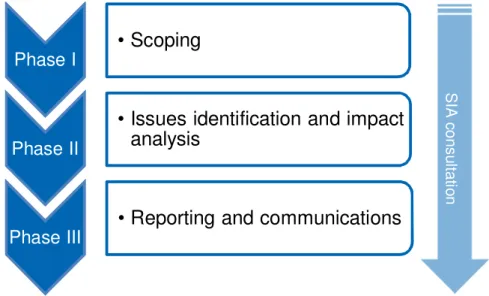
The SIA was undertaken in three phases which are illustrated in Figure 11-1. A summary of the elements of each phase is provided below. A full description of the SIA process and detail on each of the phases is described in the methodology report in Appendix 14.
Figure 11-1: Social impact assessment phases
Phase I
• Scoping
Phase II
• Issues identification and impact
analysis
Phase III
• Reporting and communications
S IA c o n s u lta tio n
Chapter 11: Social and Economic Considerations
Phase I: Scoping
Phase I of the SIA included the following:
Context research: gathering information and building understanding of the local context in which ERA operates, e.g. social, political, regulatory and operational;
Scope definition: initial understanding of the nature and extent of the Project and related management activities;
Consultation planning: identifying appropriate methods of stakeholder engagement and consultation that are inclusive, participatory and ethical.
Social baseline: compiling a description of the current social, cultural and economic environment surrounding the Project, supported by appropriate qualitative and quantitative data. The social baseline data was used in the analysis of potential social impacts to identify appropriate indicators in the social impact management plan (SIMP), and validated and supplemented with additional qualitative data collected through stakeholder interviews.
Phase II: Issues identification and impacts analysis
Consultation
The consultation process consisted of: stakeholder identification and classification; consultation planning; and extensive consultation fieldwork. The main consultation method used throughout the SIA was face-to-face, semi-structured interviews either in groups or individually. Other engagement methods included:
Telephone interviews.
An online staff survey to provide ERA employees an opportunity to participate in the SIA.
Written submissions from interested parties or organisations, sometimes in addition to a face-to-face interview.
Email communication to selected stakeholders who identified email as the preferred method of consultation.
Group meetings for indigenous community members jointly organised by the NLC and Banarra. A high level introduction of the proposed underground mine was presented, followed by a session seeking input from attendees.
Attendance at board meetings of representative organisations such as GAC and Kakadu National Park board.
Attendance at ERA organised events, such as an ERA information day at the Ranger mine (2013).
Chapter 11: Social and Economic Considerations
The key stakeholder groups consulted during the SIA are provided in Table 11-1. A full description of the consultation undertaken for the Project as part of the SIA is provided in Appendix 14.
Table 11-1: Key stakeholder groups
Stakeholder groups identified for the Project SIA
Businesses
ERA employees and contracting staff ERA management
ERA suppliers and contractors Families of ERA employees Environmental groups and activists Governance organisations
Industry bodies, political parties and lobby groups
Media organisations
Non-resident service users, including tourists Non-resident workers
Recreation/interest groups Residents of Jabiru Service providers
Traditional Owners and other affected Aboriginal communities/individuals
Preliminary issues analysis
A preliminary analysis was carried out to identify all known social issues of relevance to Ranger 3 Deeps prior to consulting with stakeholders. The issues were documented in a preliminary analysis matrix.
The known social issues were identified via the context research and interviews, as well as Banarra's understanding of social issues likely to be of concern to ERA's stakeholders. The list of issues was then updated by fieldwork teams to capture the key issues arising from stakeholder consultation. Transcripts from fieldwork interviews identified relevant social aspects, allowing creation of reports showing the frequency of issues raised across the different stakeholder groups.
Significance of potential social impacts
The significance of potential impacts has been determined through prioritisation of the social factors (originally called themes) identified in the impact maps. Each social factor was assessed against a set of criteria that incorporate consideration of the:
level of stakeholder interest or concern expressed during the SIA consultation (stakeholder interest);
extent to which ERA decisions and actions associated with Ranger 3 Deeps could affect social change (relevance);
relative size of the potential impacts experienced by people if the social changes were to occur (magnitude); and the
Chapter 11: Social and Economic Considerations
These criteria were applied at a number of key points in the SIA process to test and refine the team's understanding of the priority issues emerging through consultation and to identify and address any gaps in the data being collected.
Social changes connected with Ranger 3 Deeps
This step involved shifting the focus of analysis from a stakeholder-centric perspective of social issues of relevance to Ranger and the surrounding region, to determining the potential social impacts of the proposed Ranger 3 Deeps development. Potential social impacts were identified through an impact mapping process. This involved developing visual representations (or impact maps) of the connections (or causal pathways) between:
the social factors (originally called themes) which detailed initial and subsequent social changes that may result from the activity;
the potential risks and opportunities associated with the social impact factor;
the nature of the relationships between the risks and opportunities, and impacts, either direct or indirect; and
the social impacts that could potentially be experienced or felt by people if these social changes were to occur.
Risk and Opportunity Assessment
The EIS Guidelines required the use of a risk assessment approach to: identify and discuss the full range of risks, rank those risks, and identify uncertainties as well as those stakeholders who could be potentially affected.
Over 100 risks and opportunities related to the social factors identified through the SIA research and analysis were assessed.1
The process involved considering the likelihood of identified risks and opportunities arising and the consequence in terms of the potential impact on stakeholders. Participants assessed the risks and opportunities using a scorecard approach according to the following definitions and rankings for likelihood and consequence.
Consequence considers the potential impact on stakeholders of a risk or opportunity if it is realised. This takes into account the duration of the effect, the magnitude (or potential size) of the impact as felt by people, and the extent (or number) of people affected. Risks and opportunities were assigned a ranking based on a four-part scale comprising: Extreme, High, Medium, and Low.
1 In developing the approach for the 'SIA Risk and Opportunity Workshop', Banarra referred to formalised risk assessment
standards for Australia and New Zealand such as AS/NZS ISO 31000:2009; HB 436:2004; HB 158:2010; HB 203:2012, as well as Rio Tinto’s social risk analysis guidance note 2011. The overall process adopted by Banarra was influenced by a combination of these methodologies and tools.
Chapter 11: Social and Economic Considerations
Likelihood relates to the possibility or chance that the risk or opportunity will occur and the resulting impacts that could eventuate. Risks and opportunities were assigned a ranking based on a five-part scale comprising: Almost certain; Certain; Likely; Possible; and Unlikely.2
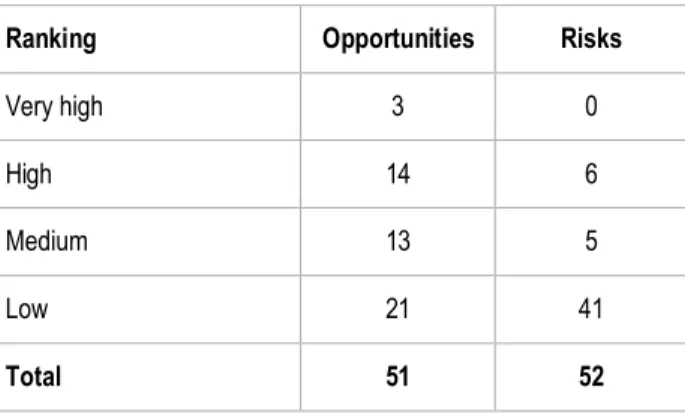
The outcome of the workshop was an overall ranking and prioritisation of all identified risks and opportunities for Ranger 3 Deeps to create social impacts (both positive and negative). The SIA identified 52 potential risks and 51 potential opportunities and categorised them into 10 inter-related aspects (Table 11-1). This enabled related social impacts to be grouped for purposes of analysis and communication.
Table 11-2: Definition and scope of the social aspects
Aspect Definition and Scope
Aboriginal cultural values and activities
Aboriginal peoples' ability to access, protect and develop indigenous land, language, sacred sites, cultural values, knowledge, practices and lifestyles.
Rights The ability of all people to exercise their human rights. This includes labour rights and rights specific to indigenous peoples.
National and cultural heritage
The ability of all people to enjoy and protect for future generations natural and cultural heritage including protected species, ecosystems, parks and landscapes, and cultural heritage sites. Political representation,
governance and administration
The existence, purpose, resources and capacity of governance bodies (including government) and organisations to represent the rights and interests of people and communities.
Population and communities
The characteristics, mobility and pace of change of populations including diversity, balance of community composition and rates of influx.
Health and well-being The ability of people to maintain their health and a lifestyle that is not detrimental to their well-being (including issues of nutrition and diet, physical and mental health, alcohol and substance abuse).
Services and infrastructure
The quality, availability and accessibility of social services and infrastructure (e.g. health and emergency services, aged and child care, utilities, roads network and infrastructure, public transport, housing and accommodation and recreational facilities).
Employment and industries
The availability and accessibility of employment and business development opportunities and the existence, resilience and role of particular industries.
Distribution of benefits and social equity
Equal access to education and resources and the fair distribution of the benefits from resource extraction. Equal opportunities to participate in political and cultural life and the ability of individuals and communities to control or self-determine their political, economic, social and cultural development.
Environmental quality and natural resources
The ability of people to access, manage and enjoy the environment and natural resources.
2 Note that unlikely was the lowest possible likelihood ranking. This equates to the ranking of 'rare' in other risk
Chapter 11: Social and Economic Considerations
A summary of the high level socio-economic impacts derived from the risks and opportunities identified from the SIA process, relevant to the EIS guidelines, has been provided in Section 11.3 under each of the relevant aspects outlined in Table 11-2. For discussion on the risks and opportunities associated with cultural heritage refer to Chapter 10. For detailed discussion on each of the risks and opportunities under each of these categories refer to Appendix 14.
Phase III: Reporting and communications
This phase involved documenting the SIA results in the SIA report (Appendix 14), a risk and opportunities register and developing a SIMP, which is provided as Appendix 15. A presentation of key findings has been prepared and will be distributed, by Banarra, to stakeholders engaged through the SIA process once the EIS has been submitted.
11.2.3
Cumulative Impacts
The EIS Guidelines require assessment of cumulative impacts as follows:
"Cumulative impacts can arise from compounding activities of a single operation or multiple mining and processing operations, as well as the aggregation and interaction of mining impacts with other past, current and future activities that may not be related to mining …" (NT EPA & SEWPAC 2013; p 13).
Assessing cumulative impacts is an ongoing challenge for SIA practitioners. While some are well known or more obvious than others, such as the impact on water quality from multiple nearby industrial and commercial developments, other activities may have a smaller effect. However, when considered together or over a certain period of time, these effects become important when the extent of changes (or impact) exceeds a certain threshold accepted by the community or government (Burdge & Vanclay 1996).
The SIA has considered the relationship between potential impacts relating to the Project, past and present impacts of Ranger, and other social changes occurring in the region. However, the assessment of cumulative impacts considers the compounding activities of the Project with the existing Ranger operations. A detailed discussion of these impacts is provided in Appendix 14.
The SIA identifies activities that could potentially contribute to cumulative impacts. These include past and present activities associated with the existing Ranger mine, such as royalty distribution (to Government and NT Aboriginal interests), and other activities contributing to social change within the region, for example, Kakadu management practices, government policies, and activities of Aboriginal corporations. Whilst assessing these activities was outside the SIA scope, the potential for them to affect the way people experience the impacts of the Project has been considered at key stages of the SIA process, including when:
defining the SIA scope (particularly the identification of the 10 social aspects);
undertaking consultation design and fieldwork;
conducting the impact mapping process and identification of social factors;
Chapter 11: Social and Economic Considerations
providing input to the SIMP.
11.2.4
Monitoring and Review
Management of social issues related to the Project is articulated in ERA's SIMP (Appendix 15). The SIMP contains ERA's commitments and management responses for mitigating the potential negative, and enhancing the positive, social impacts of the Project, along with associated performance indicators and monitoring activities.
As outlined in the SIMP, the key mechanisms for monitoring and review of social risks include (annual) progress reviews, including reassessing residual risk ratings, and collaborative reviews with key stakeholders through existing fora such as the Relationship Committee, the MTC and the Alligator Rivers Region Advisory Committee. These multi-stakeholder fora provide regular opportunities to review progress and identify additional risks or opportunities regarding social performance.
11.2.5
Economic Assessment
ACIL Tasman, an independent economic and public affairs and policy consultancy, was commissioned by ERA to analyse the current and potential future economic impact of the Ranger mine, including the Project. The ACIL Tasman report assessed the benefits of ERA's operations including:
the role of the Ranger mine in the Jabiru community, taking into account its influences on the township, including housing, education and employment, infrastructure and services, and other industries and local business;
the direct and indirect economic contributions to the Jabiru, West Arnhem, Alligator Rivers Region and NT economies; and
the potential economic benefits of the Project.
ERA data and input-output multipliers were used to analyse ERA's direct and indirect economic contribution to Jabiru, the wider West Arnhem Region and the NT economies in 2012.
ACIL Tasman worked with ERA to collect data about the operations at the Ranger mine in 2012.3 The data included major purchases and expenditures for the day-to-day operations of the mine, including workforce data. This also included expenditure and employment associated with the Ranger 3 Deeps exploration decline project that commenced in 2012. An input-output table is an accounting framework that provides a summary, or a 'snapshot', of the transactions occurring within an economy over a selected period. They show flows between industries, and imports and exports across the region's borders. By capturing all the linkages in the economy, the input-output tables provide a means of estimating the direct and indirect effects of a given economic stimulus.
Chapter 11: Social and Economic Considerations
Input-output multipliers can be derived from an input-output analysis. These multipliers provide a means of estimating the total economic impacts that arise from, in this case, the Ranger mine. Total impacts include the initial (or direct) effect of the stimulus and the indirect effects that arise as a result of the linkages between industries in an economy.
The total economic impact identified by use of input-output multipliers includes the direct effect of the initial increase in demand and the indirect (or 'flow-on') effects. The flow-on effects result from the linkages between industries in the economy.
Gross value added measures an industry's contribution to an economy by summing its payments to production, i.e. land, labour and capital. It is a standard measure used in Australia to represent an industry's contribution to an economy. At the state or territory level, the sum of gross value added across all industries, plus net taxes on products, is used to derive gross state product.
ACIL Tasman developed input-output tables for the Jabiru, West Arnhem Region and NT economies for the 2009 – 2010 financial year.4 These tables, and the input-output multipliers
developed from them, have been used to estimate ERA's overall contribution (direct and indirect contributions) to these three economies.
Data on Ranger mine capital spending for the 2012 calendar year, as well as data for projected 2012 production and associated production costs was used for the assessment. ACIL Tasman assumed a uranium price of US$52.50/pound at an exchange rate of A$1.00/US$.5
The requirements of the EIS Guidelines for the Project included a list of suggested economic inclusions but noted that the suggestions were not intended to result in inappropriate disclosure of confidential information. Where the information was unable to be disclosed this is to be noted in the EIS. Below is an outline of where the suggested information is available and discussed or if it is not able to be disclosed:
a summary of project feasibility (provided in Section 11.3.1.1);
estimated total project revenue for the duration of the project (unable to be disclosed until completion of the Ranger 3 Deeps prefeasibility study);
total contribution to Gross State Product (GSP) and Gross Domestic Product (GDP) over the economic life of the project (provided in Section 11.3.1.2);
opportunities available to regional centres based on the activity generated by the project (construction, rehabilitation and operation) (provided in Section 11.3.2 and Section 11.3.3);
estimated overall tax (unable to be disclosed until completion of the Ranger 3 Deeps prefeasibility study);
4 2009-10 financial year data was used for the input/output multipliers as this was the most recent national accounts data
available from the ABS at the time of the assessment.
5 The particular values used generated a particular outcome. While different assumptions would alter the output, the
Chapter 11: Social and Economic Considerations
estimated capital expenditure for the whole project (unable to be disclosed until completion of the Ranger 3 Deeps prefeasibility study);
expected annual operational expenditure (unable to be disclosed until completion of the Ranger 3 Deeps prefeasibility study);
estimated workforce and contractor numbers by occupational classification (provided in Section 11.3.2);
overall employment training proposed during commencement, construction and operations (provided in Section 11.3.2);
planned indigenous employment, training and other Project participation (provided in Section 11.3.2);
expected level of overseas recruitment (provided in Section 11.3.2);
availability of goods and services (provided in Section 11.3.3 and Section 11.3.4);
community and economic value of any residual infrastructure, such as roads, following the life of the Project (provided in Section 11.3.4); and
other contributions to local communities, including Traditional Owners (provided in Section 11.3.1.3 and Section 11.3.1.4).
11.3
POTENTIAL SOCIAL AND ECONOMIC IMPACTS
The Jabiru economy is underpinned by a narrow commercial base, with mining being the town's principal provider of jobs and the main driver of its economic development. While other sectors such as tourism, services and education are significant, they are also highly dependent on economic activity generated by the Ranger mine (Appendix 14).
The value of the Project, if progressed, extends beyond its financial contributions described below, as ERA's ongoing presence, contributions and support increases confidence in the region. Whilst ERA has an authorisation to operate until January 2021 regardless of the Project proceeding, the mine will only continue to operate whilst it is financially viable to do so.
11.3.1
Maintaining the Regional Economy for the Alligator Rivers
Region
11.3.1.1 Project Feasibility and Expenditure
ERA's long production history and strong relationship with its customer base creates a platform for continuity of supply and operations should the Project be developed as planned. ERA's average realised price in 2013 was US$53.926 per pound (2012: US$58.33), which
was higher than the spot price over the course of the year. This is due to ERA's strategy of
Chapter 11: Social and Economic Considerations
long-term contracting using a variety of pricing mechanisms so that the company is not overly dependent on the spot price, which historically has lagged long-term prices. The longer term outlook for uranium remains encouraging. Demand growth from 2015 – 2025 is forecast to be higher than at any period since the 1970s, mainly due to new reactor growth in China.
The Project is currently undergoing prefeasibility assessment. The study will determine the economic viability of the proposed Project, optimise mining methods and confirm metallurgical performance and production rates.
The Ranger 3 Deeps mineral resource is currently estimated to contain more than 32,000 tonnes of uranium oxide and is recognised as a significant resource by world standards. Underground exploration drilling in the decline began in May 2013. The initial underground drilling results show significant high grade intersections consistent with the expected continuity of mineralisation.
The Project will produce approximately 2,500 to 3,600 tonnes of uranium oxide per year over the life of the Project, including production derived from the currently stockpiled lower grade ore. This will sustain economic contributions to the levels discussed in Section 11.3.1.2 for the local, territory and national economies. An indicative annual production profile, produced directly from the Project is provided in Chapter 3.
11.3.1.2 Ranger Mine's Economic Contribution
The local economies of Jabiru and the wider West Arnhem Region7 are both highly dependent on the Ranger mine. ACIL Tasman estimated the gross value added from Ranger mine for the Jabiru, West Arnhem region and the NT economies. The direct, indirect and total contributions including capital expenditure are provided in Table 11-3 both dollar amounts (2010 – 2011 dollars) and percentage contributions.
For the equivalent period, the NT's gross value added was $16.17 billion,8 hence Ranger mine's contribution was 1.3% (Table 11-3).The direct contribution from Ranger mine alone is equivalent to the following industries' contributions to the NT economy:
Arts and recreation services (1.1%).
Electricity, gas, water and waste services (1.2%).
Information media and telecommunications (1.3%).
Because of the linkages between ERA and the wider economy, this direct contribution can be considered as a lower level estimate, with indirect contributions also evident. Input-output multipliers (refer to Section 11.2.5) are one way in which these linkages and the potential for the wider (indirect) contribution can be examined (ACIL Tasman 2013).
7 The definition of the Alligator River region used in the input-output analysis is the 2006 Australian Statistical Geography
Standard (ASGS) definition, whereas the 2011 Census results released in July 2012 used a different definition.
8 ABS (2011a). 2010-11 Australian National Account, State Accounts. Catalogue no. 5220.0
Chapter 11: Social and Economic Considerations
In addition, ERA is investing to sustain existing operations, for example, through ongoing exploration activities within the RPA. These activities indirectly generate gross value added. Capital expenditure undertaken in 2012 resulted in a further contribution of $41 million to Jabiru's economy increasing Rangers contribution to 87% of the gross value added. Capital expenditure added $192 million (2010 – 2011 dollars) to the NT's gross value added (Table 11-3), increasing the total contribution in 2012 to $580 million (3.6%). This is equivalent to the contribution from industries such as financial and insurance services (3.5%), retail trade (3.6%), and agriculture, forestry and fishing (3.7%).
Table 11-3: Ranger's annual contributions to the Jabiru, West Arnhem and NT economies
Ranger mining operations NT West Arnhem Jabiru
Direct contribution ($ million) 217 205 205 Indirect contribution ($ million) 171 22 19 Total contribution ($ million) 388 227 224 Gross value added (%) 1.3 43 67
Capital Investment
Capital expenditure contribution ($ million) 192 46 41 Total contribution - Ranger operations and capital expenditure ($ million) 580 273 265 Gross value added (%) 3.6 58 87
11.3.1.3 Financial Payments Derived from Ranger Mine
Royalty arrangements for Ranger mine are established in the Ranger Uranium Mining Project – Section 44 Agreement Amendment and Restatement Deed of 14 January 2013 (the 2013 Agreement). The 2013 Agreement supersedes the section 44 Agreement made under the then section 44 (2) of the Aboriginal Land Rights (Northern Territory) Act 1976. This Agreement was part of a suite of agreements between the Commonwealth Government, NLC and ERA which were finalised after extended negotiation.
The 2013 suite of agreements is confidential between the NLC, GAC, ERA and the Commonwealth Government. In general terms this suite of agreements contains:
detail of the proportion of Ranger production revenue to be paid to the Commonwealth for distribution to the NT Government and NT Aboriginal interests;
detail of rent payments by ERA to the NLC;
agreement to establish a Relationship Committee between ERA and the GAC to promote information sharing and collaboration, including on environmental matters;
Chapter 11: Social and Economic Considerations
various statements of commitment and intent in relation to sacred site management, promotion and preservation of traditional culture and language, employment and training, and business development; and
clarification of various roles and responsibilities, including clarification of the effect of the NT Emergency Response on the RPA and other areas (ERA 2014).9
An internal audit of annual contributions reported by ERA over the past 33 years indicates that Ranger mine has generated a total of $445 million in royalties. The distribution of these royalties over this time has been as follows: $100 million to the Commonwealth and NT Governments; and $345 million to NT Aboriginal interests. Payments made to both government and NT Aboriginal interests over the last 5 years are shown in Table 11-4.
Table 11-4: Financial payments derived from Ranger operations over the last 5 years
Year Total financial contribution ($ million)
Royalty payment (Commonwealth and NT Governments)
($ million)
Payments to Aboriginal interests ($ million) 2009 41.7 9.5 32.2 2010 25.9 5.9 20 2011 16.2 3.7 12.5 2012 20.4 4.7 16 2013 18.4 4.2 14.2 Total 122.9 28 94.9
Under the 2013 suite of agreements, the Mirarr receive a greater proportion of these payments than previously, providing a greater direct benefit for the Mirarr and the local indigenous population (and the region).
The GAC reported that financial payments derived from the Ranger mine are now used for investment, social programs and other projects to address indigenous disadvantage in the region. These payments totalled $27 million10 in the 2012 – 2013 financial years (GAC 2014a;
p.13). Under the 2013 Agreement, the GAC directs a considerable portion of ERA sourced payments to the Kakadu West Arnhem Social Trust.
9 In January 2013 a suite of agreements covering the RPA were executed by the Mirarr Traditional Owners, ERA, the
NLC, and the Commonwealth Government.
10 ERA paid $14.2 million to Aboriginal interests in the 2012 – 2013 financial year, GAC reported financial payments
derived from the Ranger mine to be $27 million. The discrepancy between the two values relate to an additional one off payment made to the GAC from government agencies and arrears adjustments by ERA as a result of the finalisation of the 2013 Mining Agreement.
Chapter 11: Social and Economic Considerations
Should the Project proceed, the Mirarr will continue to receive financial benefit from the mine estimated to range between $10 and $30 million per year. Additionally, under the 2013 agreement, ERA makes annual rental payments to the GAC.
Furthermore, ERA pays rates to the West Arnhem Regional Council for housing, totalling around $1,130,000 per annum.
11.3.1.4 Project Contribution
Whilst ERA has an authorisation to operate until January 2021, regardless of the Project proceeding, the mine will only continue to produce uranium whilst it is financially viable to do so. Progression of the Project will ensure Ranger's economic viability to January 2021 and therefore provides certainty to maintaining ERA's ongoing economic contribution to the local, NT and national economies both directly and indirectly. It enables the continued financial payments to governments and Aboriginal interests, most significantly the Mirarr Traditional Owners.
The Project also enables ERA to maintain its community investment program at current levels, which includes the supply and maintenance of housing for sub-lease to other organisations in the region, continued supply of the town's electricity and its operation and maintenance of power generation infrastructure, continued maintenance and operation of the Jabiru East Airport, and continued leasing of commercial buildings for other businesses and organisations to operate from, as well as financial and in-kind support to partnerships, community programs, events and sponsorships. Should the Project not proceed, community investment will reduce over time with the reduction in revenue associated with lower production of uranium oxide due to processing only the remaining stockpiled low grade ore.
11.3.2
Employment and Industries
11.3.2.1 Existing Employment and Training
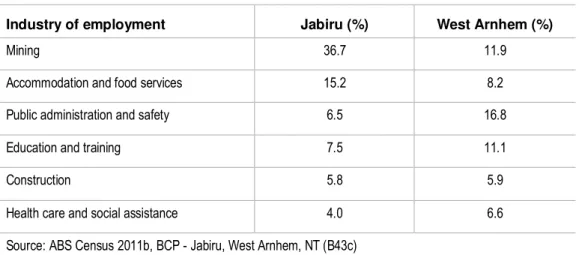
According to the 2011 ABS census, the key industries providing employment in the region are mining, accommodation and food services, public administration and safety, respectively (Table 11-5).
ACIL Tasman's 2013 economic impact assessment reports that Ranger mine generated 71% of all direct and indirect jobs in Jabiru, 47% of all jobs in the West Arnhem region and 2.6% of the NT's employment (ACIL Tasman 2013).
At 31 January 2014, Ranger mine employed 485 staff, of which 44% were residential, 38% were fly in fly out, 7% were drive in drive out, and 11% were Darwin based. The indigenous employment rate was 16%, and 19% of the workforce was female. In addition to these Company employees, ERA also engages contractors for ongoing services (catering, transport, contract processing) and short and longer term projects and activities. Numbers of such contractors range from 300 – 400 throughout a typical year.
Chapter 11: Social and Economic Considerations
Table 11-5: Key industries providing employment
Industry of employment Jabiru (%) West Arnhem (%)
Mining 36.7 11.9
Accommodation and food services 15.2 8.2 Public administration and safety 6.5 16.8 Education and training 7.5 11.1
Construction 5.8 5.9
Health care and social assistance 4.0 6.6 Source: ABS Census 2011b, BCP - Jabiru, West Arnhem, NT (B43c)
The West Arnhem College has partnerships and support programs with a range of industry and community groups such as the GAC, the Indigenous Land Corporation and ERA (West Arnhem College 2014a). Through this arrangement, ERA has the opportunity to demonstrate to students available career opportunities in the mining industry. ERA also conducted work ready programs and skills training (including certification) for high school students at both the Jabiru and Gunbalanya campuses. This close interaction may influence some students to undertake work experience at Ranger mine, or to complete their tertiary education to gain a professional role within the mining industry.
ERA's apprenticeship and trainee program targets local indigenous candidates, and provides both employment and training up to certificate 4 level.
The West Arnhem Regional Council (formerly named West Arnhem Shire Council) has responsibility for local government service provision to five towns and communities, including Jabiru and Gunbalanya. In its 2012 – 2013 annual report, the council reiterated its commitment to "…developing pathways to get local people into jobs" (West Arnhem Shire Council 2012, p.24). The council has secured Commonwealth operational funding to assist with programs such as jobs transition and jobs creation packages.
In July 2013, the Community Development Employment Program and other community services were replaced by the Remote Jobs and Communities Program. Jobfind Centres Australia is now the West Arnhem Remote Jobs and Communities Program provider, with Warnbi Aboriginal Association subcontracting (Department Social Services 2013). The intent behind these changes is to improve the Commonwealth Government's programs aimed at increasing workforce participation, in line with its stated policy aim of "... everyone who can work should work." (Department of Employment 2014).
Chapter 11: Social and Economic Considerations
11.3.2.2 Project Contribution
The expected workforce for the Project, combined with the existing workforce, will be greater than the current workforce, peaking at up to 750 staff, compared to the current level of 485 staff. The Project is estimated to create additional positions for between 180 – 280 staff. The Project will require specialist technical skills and positions, most of which will be filled through the creation of positions, in addition to those that will be retained in the existing operations such as those at the processing plant, which will remain unchanged. It is not envisaged that personnel will be recruited from overseas for these roles with local and national recruitment preferred.
A contract workforce will construct the new facilities over a one and a half year period, with completion anticipated early in 2017. The underground workforce will ramp up over a two-year period, peaking in 2017.
A full description of the estimated workforce and contractor numbers by occupational classification is provided in Section 3.9.2.
The regional workforce (both indigenous and non-indigenous) will be positively impacted by the Project by contributing to both continuity of and an improvement in access to employment and the capacity of the region's workforce. The Project will also build the capacity and skills of the local workforce to address employment gaps in the community.
The Project will enable local employees to gain and develop skills in underground mining and associated areas that are currently not available in the region. Many of these skills are transferable not only within the mining industry, but also across other associated industries. The SIA found that the Project will increase employment and opportunities for skills development. To maximise this, ERA has committed to the continuation of (Appendix 15):
existing community relations employment and training initiatives, including the community partnership fund, education partnership, indigenous traineeships, indigenous pre-employment program, indigenous mentoring program, mine tours for local students and employment agencies;
workforce management procedures, including employing locally, where possible;
human resources policies and initiatives, such as the diversity policy; and
pre-employment programs such as school-based apprenticeships, vocational education training and traineeships.
A more detailed discussion of potential social impacts associated with employment is available in the Employment and Industries section of Appendix 14.
Chapter 11: Social and Economic Considerations
11.3.2.3 Existing Industries
The NT has a high reliance on tourism, more so than any other state or territory in Australia. Hospitality, including food services and accommodation, and retail trade are the largest sectors that contribute to tourism employment in the Territory (Tourism NT 2013, p.2).
Tourism is a significant industry in the region, with Kakadu being a key attraction. Tourist visitors to Kakadu peaked in 1994 at 240,000 people. However, visitation appears to have declined as "Parks Australia figures estimate there were 165,000 leisure visitors to Kakadu in 2011 – 2012" (Tourism NT 2012), which has been attributed primarily to a decrease in international visitors (Tremblay 2007). SIA consultation supported these figures; tourism businesses and Kakadu staff noted that tourist numbers to Jabiru and the Park were declining. Access routes to Kakadu are via two major highways, the Arnhem Highway and Kakadu Highway, or via air to Jabiru. Jabiru provides services to many of the tourists who visit the region, with some choosing to stay in town at tourist accommodation, while others purchase goods and supplies from local businesses when passing through. Jabiru has evolved over time, from a mining service town to a regional centre, to meet this need.
Small scale local and regional businesses and organisations provide goods and services to locals and visitors in Jabiru and the region. These entities include:
tourist-related businesses, for example, hotel, tour operators and caravan parks;
businesses providing goods and/or services such as the local supermarket, a bank, and service station;
local, NT and Commonwealth government agencies and service providers including West Arnhem Regional Council, NT Police, and the Office of Supervising Scientist;
social and sporting clubs such as the Jabiru Golf Club and Jabiru Sports and Social Club;
Aboriginal organisations including the GAC and Warnbi; and
other service providers including the childcare centre and health centre.
When Jabiru was first established in the early 1980s, most shops and other businesses were owned and run by non-Aboriginal people. Over time, this situation has changed as Aboriginal organisations have actively invested in the town and region.
One of the most prominent indigenous organisations in Jabiru is the GAC, which has made investments in, and/or owns, the following businesses:
GAC office complex in Jabiru;
Kakadu Youth Centre in Jabiru;
Djidbidjidbi West Arnhem Residential College in Jabiru;
houses and associated buildings at Mudginberri, Whistle Duck and
three retail businesses: Two Rivers Newsagency, Marrawuddi Gallery and Anmak An-me cafe at Bowali Visitors Centre (GAC 2014a).
Chapter 11: Social and Economic Considerations
Indigenous tourism enterprises in the region include the Gagudju Association's Mecure Kakadu Crocodile Hotel, Gagudju Lodge Cooinda, and Yellow Water Cruises,11 as well as Injalak Arts in Gunbalanya.12
Operating locally, Warnbi is the subcontracted provider of Remote Job and Communities Program for the West Arnhem Region. As such, Warnbi is charged with assisting local indigenous and non-indigenous people into employment, and is also contracted to provide maintenance for Kakadu outstations (Department of Social Services 2013) .
11.3.2.4 Project Contribution
ERA provides both direct (through local contracts and the purchase of goods and services) and indirect (by employing people from Jabiru and within the region) support for local businesses. As described in Section 11.3.2, the Project will peak at around 750 staff (inclusive of the current workforce numbers). This will contribute to a stable population base for the region until 2021 and will support economic activity for local business and industry over that timeframe.
Other industries and businesses operating in Jabiru, and the region, will be positively impacted by the Project as the development will utilise local and regional businesses, provide employment opportunities and promote business diversity and resilience.
The Project has the potential to positively impact the region through sustaining businesses and industry such as retail, tourism and services, as well as investment in current community programs (Appendix 14). The Project presents a range of opportunities by contributing to the diversity and resilience of business and industry in Jabiru and the region. To maximise these opportunities, ERA has committed to the continuation of existing levels of (Appendix 15):
community relations activities, including with services providers and businesses, such as quarterly business updates and communications plan.
local and regional procurement; and
human resources policies, such as the diversity policy and procurement policy.
A more detailed discussion of potential social impacts associated with industries is available in the Employment and Industries section of Appendix 14.
11 Refer http://www.gagudju-dreaming.com. 12 Refer http://www.injalak.com/.
Chapter 11: Social and Economic Considerations
11.3.3
Services and Infrastructure
11.3.3.1 Existing Services and Infrastructure Health ServicesJabiru is the main centre in the region for health services, and the Jabiru Community Health Centre and Gunbalanya Community Health Centre service the West Arnhem region (Appendix 14). The Jabiru Community Health Centre is able to treat most illnesses and health issues, but if any specialist services such as major surgery, residential drug or alcohol rehabilitation is needed, patients are referred to Darwin or other locations for treatment. In emergency cases, patients are often transported by the Royal Flying Doctor Service (Appendix 14) which utilises ERA’s East Jabiru Airport. In 2013, the Jabiru Community Health Centre had over 17,000 patients contact or visit the centre (Appendix 14). The capacity and quality of health service delivery in Jabiru, Gunbalanya and across the Alligator Rivers Region is similar to other remote regional communities across the NT.
ERA provides basic medical services for its employees on site for the treatment of minor injuries, but ERA staff utilise the Jabiru Community Health Centre for all other health care. A recent initiative funded by the Kakadu West Arnhem Social Trust, but independently governed, is Children's Ground, which has been developed "as a real and practical reaction to barriers that prevent the improvement of the lives of Bininj13 children and their families" (Gundjeihmi Aboriginal Corporation 2014b). Children's Ground began in Jabiru in 2013 and focussed on building connection to country with intergenerational groups. While Children's Ground is still in its early days, it was acknowledged by a number of stakeholders as showing promise in its initial activities for improving the well-being and culture and educational prospects of local families (both Mirarr and the broader Aboriginal community). A youth inter-agency committee has also been recently established by Jabiru service providers and government agencies for collaboration on program development and delivery.
Childcare
Childcare services are provided by the West Arnhem Regional Council Jabiru Childcare Centre. The Centre has capacity for 60 children, with current enrolment being approximately 30 children per day. The centre is primarily used by the non-indigenous community, with Aboriginal children largely cared for by family. Children's Ground (see above) is seeking to provide early childhood services in Jabiru and Mudginberri, with outreach services to outstations (Children's Ground 2014).
Jabiru also has a pre-school operated by the West Arnhem College and a weekly playgroup run by volunteers. There is currently no after-school care service.
Chapter 11: Social and Economic Considerations
Education
Education services are primarily provided by the NT Government's West Arnhem College including the Jabiru Area School and Gunbalanya School, which cater for pre-school to year 12 (West Arnhem College 2014b). The Jabiru Area School caters for 300 students, of whom over 60% are Aboriginal and approximately one third are children of ERA staff (Appendix 14). The Jabiru Area School provides education for children residing in both Jabiru and outstations around Kakadu, although a number of outstations (such as Cannon Hill) are cut off in the wet season and, to remain in school, children need to relocate to other outstations or Jabiru town camp. Many stakeholders interviewed saw the education available in Jabiru as one of the town's greatest assets.
The GAC-funded Djidbidjidbi Residential College opened in 2012, with beds for 21 students attending the Jabiru Area School (GAC 2014a). The college "works in partnership with the school to improve attendance and well-being as well as support improved outcomes in literacy and numeracy" (West Arnhem College 2014c). It is one of a number of initiatives undertaken by the GAC and the Jabiru Area School to support and improve Aboriginal education.
Charles Darwin University provides vocational education and training for Jabiru and the surrounding areas of Arnhem Land and Kakadu (West Arnhem Shire Council 2012, p.41). Housing and other Infrastructure
ERA developed the town of Jabiru in its current location from 1979 to support the Ranger mine and other proposed mining operations in the region. Under lease arrangements with the Director of National Parks, residential accommodation is supplied by employer groups via a range of rental agreements. Approximately 61% of Jabiru accommodation tenancies are leased by ERA. The remainder is held by the NT Housing Commission (20%) and Environmental Research Institute of the Supervising Scientist (11%). Where excess housing is available, businesses lease accommodation through a process managed by West Arnhem Regional Council. As of January 2014, ERA owned 273 houses/units in Jabiru. Most of these were occupied by ERA employees with an occupancy rate of 89%, with 56 being leased to third parties.
Access to, and availability of, housing has long been a challenge for the Jabiru township (Aboriginal Project Committee 1997c). The SIA consultations confirmed that it remains an issue, particularly for businesses seeking to attract staff.
Electricity supply in Jabiru is currently provided by ERA from the Ranger power station. Power and Water Corporation collects charges from town users at the standard NT electricity tariff, and provides this back to ERA with an administration fee deducted. The net income from town electricity does not cover the costs incurred by ERA to provide the power.
Jabiru Airport is located on the Ranger Project Area (RPA) and managed by ERA at no cost to third party users (ACIL Tasman 2013). It is used on a daily basis with over 7,900 flights annually (ACIL Tasman 2013), comprising flights by tour operators, commercial and charter operators, ERA fly in fly out flights and emergency medical flights (76 in 2013).In the wet season, the airport is used to transport commuters, visitors and goods between Gunbalanya and Jabiru when the East Alligator River becomes impassable.
Chapter 11: Social and Economic Considerations
Other airstrips in the region are not considered potential substitutes for Jabiru Airport in the event that the latter is not operational (ACIL Tasman 2013).
11.3.3.2 Project Contribution
The influence of Ranger mine on the demand and viability of services is considerable. For example, in the case of education, approximately one third of Jabiru Area School enrolments are children of ERA employees. ACIL Tasman (2013) notes that if ERA was to cease Ranger operations or reduce the number of employees with children, resourcing and funding for the school would probably be reduced. The SIA (Appendix 14) found that the capacity of the GAC to fund the Djidbidjidbi Residential College at the same level may also be impacted if royalty payments from the Ranger mine were to reduce or cease.
The Project will generate additional revenue enabling continued investment or in-kind support for the local health service and education provider, as well as opportunities to continue working in partnership with key local and regional organisations with a view to improve health and education outcomes through such initiatives as the Education Partnership and the Kakadu West Arnhem Social Trust.
The service agencies that provide services to Jabiru rely heavily upon the mining community, as government funding for service providers such as the school and the health care centre is based on residential population which is predominately ERA employees and their families. Fee paying services such as the child care centre also rely heavily upon the mining community with approximately half its places taken by children of mining families.
However, as noted by the Jabiru Health Service, the Project presents potential challenges through additional employees creating further demand on Jabiru health services. The community health service is currently a free service with one full-time doctor with funding based on the size of the resident population. Fly-in fly-out workers are considered visitors and so funding is not provided for this group. An increase in the number of fly-in fly-out employees accessing this service will result in additional pressures.
Participants in the SIA consultation asserted that the services available in Jabiru are largely adequate for the needs of the current residential population, regional users and visitors. However, SIA participants were of the view that the Aboriginal population in particular would benefit from investment in additional services, such as a women's shelter (Appendix 14). A strong theme arising from stakeholder consultation was that if ERA were not to retain a significant presence in Jabiru the viability of a number of services would be in doubt (Appendix 14). Additionally, the Project presents opportunities to improve infrastructure quality and viability. To maximise these opportunities, ERA has committed to the continuation of existing levels of (Appendix 15):
community relations initiatives, including in-kind and discretionary funding;
maintenance of ERA infrastructure assets in Jabiru; and
Chapter 11: Social and Economic Considerations
A more detailed discussion of potential social impact associated with the Services and Infrastructure aspect can be found in Appendix 14.
11.3.4
Population and Communities
11.3.4.1 DemographyThe main permanent all-season population centres within the Alligator Rivers Region are Jabiru and Gunbalanya.14
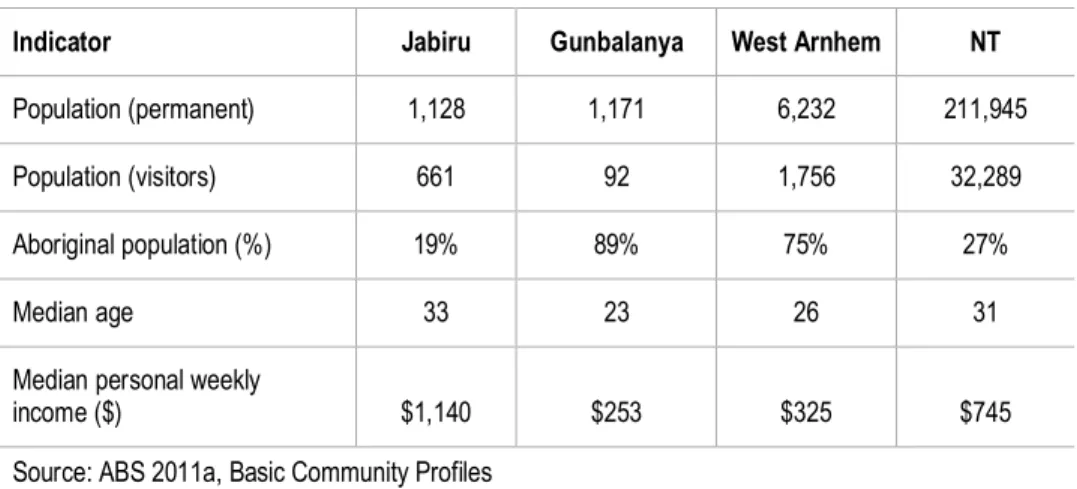
Jabiru was first established to service Ranger at what was then known as 'East Jabiru' from 1979/80 (Wilson 1997) and then, in 1982, was expanded to its present location (West Arnhem Regional Council 2013b). It remains foremost a mining town but has grown to become in recent years a key service centre for the tourist industry and the region. At the time of the last census, Jabiru's resident population was 1,128 (ABS 2011b). Jabiru's demography is characterised by its resident mining workforce, with a majority non-indigenous population, average income levels well above that of the region ($1,140/week15 compared to
$340/week across the West Arnhem Local Government Area)16 and an age structure reflecting a heavy proportion of working age males, with a male to female ratio of 55:45 (ABS 2011b).
2011 ABS data shows that the proportion of Jabiru and Gunbalanya's populations that were indigenous was 19% and 89%, respectively (ABS 2011b; c). Data also showed that Jabiru had just three indigenous residents aged 60 years or over, and 32% of indigenous residents were aged 15 years or under, compared to 21% for the Jabiru population as a whole (ABS 2011b). The median age of the indigenous population was 26, and 34 for the non-indigenous population (ABS 2011b).
Residential accommodation in Jabiru is almost solely contingent on employment.. This
means that the non-Aboriginal residential population of Jabiru is exclusively comprised of employees (and their families) employed at Ranger mine or at a local service, business, Aboriginal organisation or government department. Members of the broader Australian community have little ability to move to Jabiru as there is no rental/for sale housing for those without employment, as well as no social and retirement housing (excluding indigenous), nor temporary accommodation (other than tourist services). This has historically been, and remains, a key defining characteristic of the social environment of Jabiru.
The Aboriginal population of the region largely resides in outstations across Kakadu and West Arnhem Land, in Gunbalanya, and at Jabiru town camp. During the 2011 census, 19% of Jabiru's residents identified themselves as indigenous17 (214 persons), most of whom are understood to reside at Jabiru town camp. Generally, across Australia, there are high rates of mobility in the Aboriginal population (Taylor 1999) and according to stakeholders interviewed,
14 West Arnhem Regional Council’s other key population centres of Maningrida, Minjilang, Warruwi are located outside the
Alligator Rivers Region as defined by the SSD http://www.environment.gov.au/topics/science-and-research/supervising-scientist-division/about-ssd/alligator-rivers-region#alligator.
15 All values reported are in Australian dollars. 16 Median total personal income ($/weekly) (ABS 2011a) 17 Including both Aboriginal and Torres Strait Islanders.
Chapter 11: Social and Economic Considerations
the temporary Aboriginal population at Jabiru town camp in particular is known to fluctuate markedly, influenced by season, cultural events and times of royalty payments. Access to a number of outstations is restricted during the wet season and residents generally relocate to Gunbalanya, Jabiru town camp or other outstations.
The Oenpelli mission, now known as Gunbalanya, was established in the 1920s (West Arnhem Regional Council 2013) and remains primarily an Aboriginal settlement. Gunbalanya's total population is 1,171 (a similar size to Jabiru), and 89% of residents are indigenous (ABS 2011c). Situated approximately 60 km north east of Jabiru in Arnhem Land, Gunbalanya is accessible only by air in the wet season, as the East Alligator River becomes impassable and the access road east from the river is unsealed. Gunbalanya's socio-economic profile reflects its status as an Aboriginal settlement, with a low median age, few visitors and low income levels (see Table 11-6).
Table 11-6: Socio-economic statistics
Indicator Jabiru Gunbalanya West Arnhem NT
Population (permanent) 1,128 1,171 6,232 211,945 Population (visitors) 661 92 1,756 32,289 Aboriginal population (%) 19% 89% 75% 27%
Median age 33 23 26 31
Median personal weekly
income ($) $1,140 $253 $325 $745 Source: ABS 2011a, Basic Community Profiles
Outstations across the region range in size from individual, or small clusters of, dwellings to considerable communities, such as Mudginberri and Whistle Duck. Outstations include Buffalo Farm, Cannon Hill, Kurrajong Flats, Kapalga, Red Lily, Nourlangie Ranger Station, Patonga Airstrip, Patonga Homestead and Spring Peak.
Population growth
The establishment of Jabiru from 1979 onwards was one of the most significant factors in the increased population of the town area, with the resident numbers growing from 30 in 1976 to over 1,100 today (ABS 2011d).18
The Aboriginal population of the region is also believed to have increased since the 1980s (Press, et al. 1995), however this has not been reliably determined due to poor data reliability.
18 Note that the population of the Alligator Rivers Region is not monitored, so this report has used the West Arnhem Local
Chapter 11: Social and Economic Considerations
Ethnicity, ancestry and language
As noted above, the Jabiru population is primarily non-indigenous, which is an anomaly across West Arnhem where Aboriginal residents make up 75% of the total population (ABS 2011b).
The Mirarr are the Traditional Owners of the land that contains the RPA. Other groups with traditional lands in Kakadu and the nearby area include Bolmo, Bunitj, Wurrkbarbar, Manilikarr, Mandilarri, Mandjurlngunj, and Gamilkban. Languages that remain spoken widely are Kunwinjku, Gundjeihmi and Jawoyn (in the south) (ACME et. al. 2007).
Visitors
Visitor numbers to Jabiru, including tourists, Aboriginal people, and workers/professionals are significant and extremely variable by season.
On census night in August 2011, almost 40% of the total population of Jabiru were visitors, compared to 22% across West Arnhem Local Government Authority as a whole. Anecdotal evidence suggests these visitors and transients primarily comprise tourists, fly in fly out and drive in drive out employees of ERA, ERA contractors and suppliers, and Aboriginal people visiting family and friends in the region.
ACIL Tasman (ACIL Tasman (2013; p.20) notes that approximately 58% of Jabiru visitors on census night were there for "Ranger purposes". Occupancy rates at Ranger's Jabiru camps and temporary accommodation services19 in 2013 ranged from 345 to 548 personnel per day.20
11.3.4.2 Social Amenity
Violence, crime and alcohol
Crime rates and issues in Aboriginal communities across the region were noted by the Jabiru Police during the consultation process to be consistent with those across the NT, with key issues including alcohol and drug abuse, domestic violence, car accidents and "grog/kava running."21 In Jabiru itself, crime rates are low and a percentage of crimes that do occur in Jabiru are attributed to itinerant visitors22 (Appendix 14).
A number of SIA participants (including professionals working in relevant areas) stated that the Aboriginal communities of the region suffer from domestic violence, alcohol abuse and associated neglect. These assertions are consistent with social issues widely reported across Aboriginal communities of the NT, including endemic family violence and abuse (Appendix 14).
19 Comprising the Ranger mine village, fly-in fly-out camp, guesthouse and the Aurora Kakadu Lodge.
20 References directly provided by ERA in January 2014 by email. Peak occupancy by month. The range was from 548
rooms in January 2013, declining through the year to 345 rooms in December 2013.
21 Grog/kava running is the bringing of alcohol or kava into prescribed areas. It was reported during SIA consultation that
outstation and Manaburduma residents purchase alcohol from several regional liquor outlets.