Cells Tissues Organs 2002;171:8–26
Tissue Stem Cells: Definition, Plasticity,
Heterogeneity, Self-Organization and
Models – A Conceptual Approach
Markus Loeffler Ingo Roeder
Institute for Medical Informatics, Statistics and Epidemiology, University of Leipzig, Leipzig, Germany
Markus Loeffler
ABC
© 2002 S. Karger AG, BaselKey Words
Tissue stem cellsW DefinitionW Dynamic modelW
PlasticityW Self organizationW Simulation
Abstract
The classical definition of adult tissue stem cells (TSC) is fundamentally based on a functional perspective. A TSC is an undifferentiated cell, capable of proliferation, self-renewal, production of a large number of differentiated functional progeny, regenerating tissue after injury and a flexibility in the use of these options. Here, we discuss the necessity for amending this definition in the light of recent insight into stem cell biology regarding stem cell heterogeneity, lineage plasticity, clonal fluctuation and cell–environment interactions. We conclude that the defi-nition needs amendments. A decade ago the flexibility criterion has attracted little attention but recent findings have indicated its importance. Flexibility and reversibili-ty of tissue and lineage specification (tissue plasticireversibili-ty) and of properties within a tissue (within-tissue plasticity) have major implications with regard to concepts of stem cell function. We advocate to give up the view of TSC as being entities with a preprogrammed development and to replace it by a concept that makes the capabilities for flexible and regulated tissue self-organization based on cell–cell and cell–environment interactions the new
para-digm. This concept would permit to incorporate the con-text-dependent lineage plasticity, within-lineage plastici-ty and generation of stem cell heterogeneiplastici-ty as a result of a dynamically regulated process. Such concepts need a rigorous examination by formal modeling including sim-ulation studies. We provide some general ideas on how to proceed with such theories and illustrate this with worked models for tissue stem cells of the hematopoietic system and the intestinal epithelium.
Copyright © 2002 S. Karger AG, Basel
Introduction
We consider some of the problems involved in the defi-nition and understanding of stem cell systems in mamma-lian tissues. Over 10 years ago we have proposed a defini-tion of tissue stem cells (TSC) which has been widely used and cited [Potten and Loeffler, 1990]. The basic concept of a functional definition has proven valid. An ingredient of this definition, not always appreciated, was that it does not require stemness as an explicit attribute of cells but rather considers it as a functional endpoint. We review this ‘classical’ definition in the light of novel findings e.g. on plasticity, stem cell heterogeneity and cell–growth environment interactions and propose an amended and annotated definition. We also discuss the implications
with regard to basic concepts on functioning of tissue stem cell systems and attempts to characterize a molecu-lar profile of TSC. We further argue that some of the con-ceptual problems involved in understanding TSC could be overcome if more comprehensive and predictive theo-ries of stem cell systems were available. We provide a list of criteria such theories should fulfill. For illustration we report on models of the hematopoietic system and for the intestinal epithelium. Both models are fully consistent with the amended definition but do not imply explicit assumptions on stemness properties in the cells. They rather indicate that a concept of controlled within-tissue plasticity utilizing a spectrum of potentials might be a bas-ic component in such theories.
Several ideas and problems presented subsequently have been discussed on the Workshop ‘Tissue Stem Cells – Models and Concepts’ held in Leipzig on June 12– 13th, 2001 preceding the 24th Meeting of the European Study Group for Cell Proliferation. The authors thank the participants (see acknowledgement) for their contribu-tions and suggescontribu-tions.
Classical Definition of Tissue Stem Cells
We start by recapitulating our previous definition for tissue stem cells [Potten and Loeffler, 1990; Loeffler and Potten, 1997] in order to provide the basis for an amended and annotated version. For a detailed discus-sion of important notions such as differentiation, matura-tion, self-maintenance, self-renewal, or regeneration we refer to the already above cited articles.
The definition for tissue stem cells proposed by Potten and Loeffler, 1990 was:
Stem cells of a particular tissue are
E undifferentiated cells (relative to a functional tissue)
capable of
E proliferation;
E production of a large number of differentiated
func-tional progeny;
E self-maintenance of their population; E regeneration of the tissue after injury; E flexibility in the use of these options.
Comments on This Definition of Tissue Stem Cells
There are several key features in this definition. Firstly, stem cells are defined by virtue of their func-tional attributes and not by an explicit directly observable characteristic. The choice of a functional definition is inherently consistent with the biological role of a stem cell
particularly linked to the functional tissue regeneration feature. This kind of definition, however, imposes diffi-culties since in order to identify whether or not a cell is a stem cell, its function has to be tested. This inevitably demands that the cell must be manipulated experimen-tally, which may actually alter its properties. We will return to this circular problem later.
Secondly, tissue stem cells are assumed to be undiffer-entiated compared with the functional end cells of the particular tissue to which they give rise. This definition is essentially a relative one as it relates the stem cells to the functional end cells, or to cells at earlier stages of the development. Apparently, this definition is compatible with the existence of various stem cells of different tissues as well as of a hierarchy of stem cells for one particular tissue. It is possible that there are specific differentiation markers which would enable a distinction of stem cells in relation to each other and in relation to the functional cells they are eventually producing. The relativity of stem-ness is an essential feature to keep in mind and one has to be specific with respect to the particular experimental cir-cumstances.
Thirdly, cells originating from stem cells may loose some of the properties. This gives a possible way to classi-fy descendent transit and mature cells (see below).
Fourthly, not all of these criteria have the same weight-ing. The most important criteria certainly is the regenera-tion of the tissue after injury in conjuncregenera-tion with the self-maintenance criterion. The latter, however, needs some more careful consideration as will be discussed below.
Fifthly, there was no explicit assumption made in the definition on the kind of mechanisms involved in creating stem cell like behavior. In particular no mentioning was made, on the coupling of proliferation with differentia-tion (e.g. symmetric or asymmetric cell division).
Sixthly, an essential aspect of the definition is the flexi-bility criterion. It was primarily introduced to account for potential regulatory modulations in adjusting the func-tional operation of stem cells to some demands (e.g. injury or challenges) in order to assure tissue function. Further-more, there were reports on varying estimates of stem cell numbers in the same tissue depending on the measure-ment process. Introducing flexibility as a key aspect had the conceptual consequence that we include the definition of stem cells in different functional states. Cells or popula-tions of cells actually fulfilling all these criteria at a given instance are called actual stem cells, while those not actually expressing these capabilities at a particular mo-ment in time, although they possess these capabilities, will be termed potential stem cells. It may be possible for a
stem cell to cease proliferation, i.e. become quiescent, in which case it does not act as an actual stem cell, but since it can re-enter the cycle it has the potential to act as a stem cell. Likewise a transit cell (see below) may not normally self-maintain, but may do so under special circumstances, thereby representing a potential stem cell. We choose the word actual in preference to the term functional, which has been used previously [Cairnie et al., 1965; Steel, 1977; Wright and Alison, 1984].
Finally, in the stem cell definition given above, pluripo-tency was not requested as a prerequisite of stemness. The ability to produce progeny that differentiate down various lineages (pluripotency) is not necessarily a property of tis-sue stem cells per se, although it appears that stem cells in many tissues possess this capability as a feature of regen-eration of the tissue. However, we do not want to exclude the possibility that a stem cell system may only produce one type of cells.
Amended and Annotated Revised Definition
The above mentioned classical definition has been suc-cessful in many respects as was extensively discussed in the workshop on ‘Tissue Stem Cells’ in Leipzig in 2001. The participants agreed that the following features were essential and should be included in any revision of the definition:
E The functional definition of tissue stem cells represents
the gold standard. This is considered most appropriate to reflect the biological nature. At present this defini-tion cannot be replaced by definidefini-tions based on surro-gate criteria e.g. on phenotypic markers, gene expres-sion profiles or other molecular definition. All these definitions would miss the essential and complex func-tional aspects.
E The flexibility criterion is an essential one and it
should be given a more prominent role in the light of recent experimental findings.
E A change in perspective from a cellular view to a tissue
view is important and should be incorporated into the definition of tissue stem cells. Rather than to focus on cells alone it is important to consider the entire self-organizing system of cells and growth environment comprehensively.
In addition, over the past decade experimental evi-dence has accumulated that makes amending and shar-pening the definition desirable in several further respects. The main aspects we like to include subsequently relate to the following topics:
E consideration of the cell – growth environment
intertion in order to take the system character into ac-count;
E extension of the flexibility criterion to incorporate
lineage and within-tissue plasticity;
E consideration of stem cell heterogeneity and the
impli-cations for the self-maintenance criterion.
We suggest to amend the above list of criteria as fol-lows:
Amended Definition of Tissue Stem Cells
Stem cells of a particular tissue are:
(S1) a potentially heterogeneous population of function-ally undifferentiated cells, capable of:
(S2) homing to an appropriate growth environment; (S3) proliferation;
(S4) production of a large number of differentiated prog-eny;
(S5) self-renewing or self-maintaining their population; (S6) regenerating the functional tissue after injury with (S7) flexibility and reversibility in the use of these
op-tions.
Subsequently we discuss these amendments one by one:
(S1) ‘Stem cells of a particular tissue are a potentially heterogeneous population of functionally undifferentiated cells ...’
There are two closely linked modifications in this phrasing compared with the classical definition. We sug-gest to relate the definition to a population of cells rather than to individual cells for several reasons. Any determi-nation of self-maintenance or self-renewal (see below) requires measurements on populations of cells over a cer-tain period of time. The criterion of functionally undiffer-entiated cells practically implies that one negatively se-lects cells on a limited set of differentiation attributes (e.g. phenotypic or genotypic markers). Hence, the suspected stem cells under examination are always a population of remainder cells which may be heterogeneous with regard to the features not used for the selection process. The tis-sue regeneration criterion also requires the population view. Even if the tissue is regenerated from a single cell it implies regeneration of a population of stem cells. A pop-ulation view is furthermore required to account for the flexibility and reversibility criterion. It is basically linked to the phenomenon of a cellular and functional heteroge-neity which is the second addition to the criterion.
As an example for a heterogeneous population we can refer to the hematopoietic stem cells [Uchida et al., 1993; Lord, 1997]. Phenotypic heterogeneity has been described
with regard to various markers (e.g. CD34, CD38, c-kit, Sca1). They can be used in selection procedures but are probably only indirectly linked to stem cell functioning. While it has previously been thought that CD34 positivity selects stem cells it has become clear recently that also CD34-negative cells can be effective stem cells and that the cells can even alter this CD34 property [Sato et al., 1999].
(S2)–(S6) ‘... capable of ...’
We maintain and even extend the concept of capabili-ties. We consider stemness as an option to behave in one or more ways in the future rather than a property realized actually. This implies a prospective rather than a momen-tary view as one has to challenge the cells in particular ways to determine the capabilities. The following capabil-ities, (S2)–(S6), are independent of each other.
(S2) ‘... homing to an appropriate growth environ-ment.’
We introduce this criterion as a new one to reinforce the aspect of a system which is not only driven by char-acteristics fixed in the cells but requires a specific and adequate interaction of the cells with a growth environ-ment. The growth environment can have different func-tional and spatial architectures depending on the tissue. In the intestinal jejunal or colonic crypt e.g. stem cells are located at the bottom of the crypt from where the cell flow starts [Wright and Alison, 1984; Potten, 1998]. Ap-parently this location is a spatial niche difficult for other cells to occupy. For the hematopoietic system functional/ spatial niches have been suggested already many years ago [Trentin, 1971; Schofield, 1978, Lord and Wright, 1984]. The picture may, however, be more complicated as recent insight becomes available on the non-hemato-poietic stromal cells involved [Wineman et al., 1996; Gordon et al., 1997; Lemischka, 1997; Oostendorp and Dormer, 1997], about the interactions mediated by ad-hesion molecules [Vermeulen et al., 1998; Roy and Ver-faillie, 1999; Kapur et al., 2001], about the role of para-crine growth factor stimulation [Bodine et al., 1991; Neben et al., 1994; de Haan et al., 1995], about gap junc-tions between stem cells [Rosendaal et al., 1997; Cance-las et al., 2000], and pseudopod connections [Francis et al., 1998; Frimberger et al., 2001]. The difficulties to produce fully functional hematopoietic stem cells in cul-ture is another hint to this complexity. This indicates that in fact hematopoiesis is based on a complex func-tional and spatial arrangement of growth environments which may be less of a spatial but more of a functional architecture. E.g. in murine hematopoiesis both the bone marrow and the spleen can support granulocytopoiesis
and erythropoiesis. However, there is a clear bias to-wards erythropoiesis in the spleen [Wichmann and Loeffler, 1985].
The homing criterion is introduced to request some sign of a real interaction between the cells and the growth environment. In some stem cell systems we even know about the possibility of an active migration into the growth environment. In the bone marrow the present view is now that there is rather intensive migratory traffic with cells actively searching for adequate environments [Blau et al., 2001; Frimberger et al., 2001]. Similar find-ings hold for the epidermis where stem cells are able to migrate from the hair follicles to the basal epidermal layers [Miller et al., 1997]. Migration, however, is not deemed a universal feature. E.g. it seems very unlikely that tissue stem cells can migrate from one crypt to anoth-er in the intestinal system.
(S3) ‘... proliferation.’
Proliferation is apparently an active feature in actual stem cells. The criterion is redundant if tissue regenera-tion or clonal expansion of an active clone is considered. We prefer to maintain this capability in the definition, because it explicitly permits the status of silent tissue stem cells (e.g. in G0) from which they can be activated again
[Fleming et al., 1993; Cheshier et al., 1999; Goodell, 1999; Tajima et al., 2000].
(S4) ‘... production of a large number of differentiated progeny.’
This criterion places tissue stem cells at the root of a cellular amplification process connected with differentia-tion and producdifferentia-tion of funcdifferentia-tional end cells. Until recently this capability was assessed mostly by the use of colony formation studies in vivo or in vitro. More rigorous ways have become available by possibilities to examine clonal development in vivo in greater detail. Genetic marker studies based on chimerism of competing cell populations or based on the introduction of unique markers into single cells (e.g. random mutation or retroviral marking) permit to assay the clonal development. However, not all tissue stem cells may actually produce such a clone at the time of examination. Furthermore, there is evidence that the clonal composition of a tissue evolves with fluctuations in time and space. This has been observed in hematopoiesis and in epithelia [Winton et al., 1988; Jordan and Lem-ischka, 1990; Abkowitz et al., 1996; Bjerknes and Cheng, 1999].
(S5) ‘... self-renewing or self-maintaining their popula-tion.’
The classical definition of TSC requested the capabili-ty of self-maintenance as an indispensable feature. Please
note, self-maintenance implies only ‘keeping at an exist-ing state’ and it is often used to describe particularly the numerical maintenance. In homogenous stem cell popula-tions maintaining the population size is obviously identi-cal with maintaining the qualitative aspects of it. As we extend our definition to also encompass heterogeneous populations of tissue stem cells (criterion (S1)) numerical maintenance is not a sufficient requirement. A heteroge-neity in TSC composition may imply that some subpopu-lations behave more effective with regard to some assays than others. Hence, it is possible to have a bias in the com-position of TSC that is not revealed by the numerical cri-terion of maintaining the entire population. To sharpen the definition in this regard we propose to amend the cri-terion by the more rigid requirement of self-renewal. Self-renewal implies that any tissue stem cell taken from a het-erogeneous population should be capable of generating a heterogeneous population of TSC with the same (or simi-lar) number and composition as the initial population from which it originated.
Self-renewal in this sense is a population property again. This criterion is apparently closely linked to revers-ibility of some cellular developments.
(S6) ‘... regenerating the functional tissue after injury.’
This criterion describes the most important endpoint of tissue stem cell functioning. The cells must be capable of giving rise to cell populations which can generate a functional tissue. In the latter respect we have made the criterion more rigorous in demanding the functional com-position and competence of functional cells. As has been pointed out by others [e.g. Anderson et al., 2001] it is not sufficient to show that a tissue generated from some pre-sumptive tissue stem cells looks like a functional tissue but that the clonally derived cells in fact satisfy all func-tional criteria. This aspect of regenerating funcfunc-tional het-erogeneity also implies in our mind the possibility of lineage specification and encompasses the pluripotency aspect of a functional tissue. Hence, pluripotency is not considered as an independent but as a surrogate marker for functional capability related to criterion (S6). The cri-terion of functional tissue regeneration also implies the features of self-organization, homeostasis and of longevi-ty. Long-term tissue regeneration from a small pool of tis-sue stem cells also implies some kind of self-renewal, dynamically linking the criteria (S4) and (S5) in the long run.
(S7) ‘... with flexibility and reversibility in the use of these options.’
The flexibility criterion was already included in the classical definition as a conceptual implication and
pre-diction. Little direct experimental evidence was available at that time. We now see emerging and fascinating evi-dence that flexibility and in addition reversibility are fun-damental properties of tissue stem cells. In terms of this definition flexibility and reversibility are related to the criteria (S2)–(S6). This implies the possibility that tissue stem cells can leave and re-enter proliferation, that they can alter the degree of self-renewal in either direction, that the degree of clonal expansion and the functional compe-tence of a regenerated tissue may vary. These variations may affect functional competence or lineage specification in a tissue with several cell lineages. Reversibility has been added to this criterion. Again, reversibility is re-quested as a potential property which may not play a role in an actual biological situation. Whether flexibility and reversibility are actually utilized depends on the status of the tissue and on the regulatory processes that are in-volved. We speculate that this latter criterion plays an important role in tissue evolution. Tissues must be de-signed in such a way that they can respond to a large vari-ety of mechanical and chemical insults and to different metabolic circumstances. Hence, a capability to respond with some degree of flexibility, with regard to timing, cell production, cell functioning and cell–cell interaction should have been an important selection advantage. We therefore believe that it is one of the essential properties of tissue stem cells to be able to react to such a variety of demands.
There is an accumulating experimental evidence for flexibility and reversibility. We like to highlight a few of these preferably related to the hematopoietic system. Many authors have described the variability in the prolif-erative status of hematopoietic stem cells. Perhaps the most interesting findings are that some cells may leave the cell cycle for many days and even months, but that they re-enter almost all at some time as was shown by several long-term labeling studies [Bradford et al., 1997; Cheshier et al., 1999]. Quesenberry and colleagues provide evi-dence for reversible changes of the stem cell phenotypes involving differentiation profiles, adhesion protein ex-pression and engraftment/homing behavior associated with the cell cycle status or the point in the circadian rhythm [Habibian et al., 1998; Quesenberry et al., 1998]. There is increasing evidence that the expression of some surface markers like CD34 on hematopoietic stem cells is not constant but may fluctuate. The property can be gained and lost without affecting the stem cell quality [Goodell, 1999, Sato et al., 1999]. Mueller and his group investigated globin switching of hematopoietic stem cells in the blastocyste growth environment. They showed that
the switch from embryonic/fetal-type to adult-type globin is reversible [Geiger et al., 1998]. Furthermore there is a lot of indirect evidence for fluctuations in the stem cell population based on the clonal composition of functional cells. Chimerism induced by transplantation maneuvers in cats and mice has been shown to fluctuate with time [Van Zant et al., 1992; Abkowitz et al., 1996; Abkowitz et al., 2000] indicating variations in the composition of active and inactive tissue stem cells. Similar observations were made following retroviral marking [Jordan and Lemischka, 1990; Van Zant et al., 1991; Drize et al., 1997]. For the intestinal crypt there is good evidence for a competition process of tissue stem cells within the indi-vidual crypts. This competition leads to a fluctuation of the clonal composition with a dynamic instability [Win-ton and Ponder, 1990; Loeffler et al., 1993].
Another level of flexibility was found for lineage speci-fication within the hematopoietic tissue. It is possible to bias the degree of erythroid, granuloid and macrophage lineage commitment by several maneuvers altering the growth environment. The present concept to explain the fluctuations observed in lineage specification is based on a dynamic network of interacting transcription factors involving the PU-1 and GATA molecules [Zhang et al., 1999]. Cross and Enver put forward the concept of fluc-tuating levels of transcription factors with threshold de-pendent commitment [Cross and Enver, 1997].
There is now a rapidly growing literature that tissue stem cells specified for one type of tissue (e.g. hematopoie-sis) can be manipulated in such a way that they can act as tissue stem cells of another tissue (e.g. neuronal, myogen-ic) [Bjornson et al., 1999; Brazelton et al., 2000; Seale and Rudnicki, 2000; Goodell et al., 2001]. The major trigger that can redirect the tissue specification seems to be the growth environment into which the cells have to be placed. Very clearly this tissue plasticity represents a par-ticular degree of flexibility consistent with the above defi-nition. On the other hand this phenomenon makes it nec-essary to include into the above definition the growth environment by which the stem cell potential is restricted to a specific function. This supports the addition of the homing criterion into the amended definition. However, at present it is largely unclear whether tissue stem cells, reprogrammed for another tissue, are really fulfilling all criteria of our definition. It will be necessary in the future to carefully check all the requirements listed.
Whereas the term stem cell plasticity is often used to describe the potential of stem cells to alter tissue- or lineage characteristics, we introduce the term within-tis-sue plasticity to describe flexibility and reversibility of
cel-lular characteristics restricted to one tissue or cell lin-eage.
In summary the amended definition of tissue stem cells that we propose gives the following features a greater emphasis than previous definitions:
E a shift from the cellular view to a system view
includ-ing self-organizinclud-ing processes;
E emphasizing stemness as a capability rather than as a
cellular property;
E introducing the growth environment; E emphasizing within-tissue plasticity;
E upgrading the functionality of the tissue stem cells and
the tissue;
E extension of self-maintenance to self-renewing
capabil-ity.
Implications of the Definition
The amended definition has several implications which we like to discuss.
Definition of Maturing and Transit Cells
Maturing cells can be defined as cells with full expres-sion of functional differentiation markers, no capability of proliferation, no capability of self-renewal or self-main-tenance, and hence, no ability to regenerate tissue after injury. Maturing cells therefore represent cell stages which are close to completing their development and becoming functional end cells. In this context, for example, reticulo-cytes would be maturing cells, as would be segmented neutrophils in the bone marrow, villus cells in the intes-tine and stratified cells in epidermis.
Transit cells can be defined as a cell stage which is intermediate between stem cells and maturing cells. We define transit cells by the following criteria: they are char-acterized by the onset of differentiation marker expres-sion during their development which are, however, not mandatory, they are capable of proliferation, and they do not self-maintain or self-renew. This implies that transit cells may be able to operate as amplifying cell stages gen-erating many maturing cells from the few cells entering the transit cell stage. Therefore, transit cells would be capable of producing many progeny cells (criterion (S4)) which are temporarily capable of regenerating a tissue after injury (criterion (S6)). However, no long-term regen-eration and no functional re-establishment of the tissue would be possible.
Uncertainty Principle
A question frequently posed is: ‘Is this cell a stem cell?’ We refer to this as the ontology question. It implies the idea that one can decide about the capabilities of a given cell without relating it to other cells and without testing the capabilities functionally. We believe that this is a very dogmatic and unrealistic point of view.
As we have seen above, the main attributes of stem cells relate to their potential in the future. These can only be studied effectively by placing the population of cells in a situation where they have the opportunity to express their potential. Here, we find ourselves in a circular situa-tion. In order to answer the question whether a cell is a stem cell we have to alter its circumstances, and in doing so inevitably lose the original cell, and in addition we may only see a limited spectrum of responses. This situation has a marked analogy with Heisenberg’s uncertainty prin-ciple in quantum physics. In simple terms, this principle states that the very act of measuring the properties of a certain system inevitably alters the characteristics of that system, hence, giving rise to a degree of uncertainty in the evaluation of its properties. We believe that this analogy holds true for the functional tissue stem cells in a very fundamental sense. The system is made to react to pertur-bations. Therefore, it might be impossible to determine the status of a single stem cell without changing it. We hereby postulate the fundamental uncertainty property for tissue stem cells. This implies that one will not be able to make a definitive statement about whether or not a giv-en cell is a tissue stem cell. It implies that all statemgiv-ents that we can make will be necessarily probabilistic state-ments about the future behavior under particular condi-tions. Essentially this has two particular aspects. The first is that we can only make statements about cell popula-tions in the statistical sense of expected values under a given statistical model. This implies that measurements will necessarily be conducted on populations of cells. The second essential aspect is that we cannot disregard the experimental procedure by which the stem cell under con-sideration was challenged. Each assay procedure and each perturbation process may induce a different response in one or several of the characteristics of the tissue stem cell. This is constitutive to the stem cell property, as it is thought to be reactive and responsive to various types of perturbations. Hence, all statements about tissue stem cells and their reactions have to be given in the context of the perturbation of the measurement process under which they were obtained.
This type of uncertainty concept makes it obvious that the ontology question can be rather misleading.
Symmetric and Asymmetric Cell Division
A number of mechanistic models have been proposed in the past on stem cell growth and regeneration. Many of these, including some of our own work have introduced assumptions about symmetric and asymmetric stem cell divisions in the hematopoietic and intestinal tissue [Vogel et al., 1968; Loeffler and Wichmann, 1980; Loeffler and Grossmann, 1991; Loeffler et al., 1993; Loeffler et al., 1997]. All these concepts tightly link cell division with the decision on self-maintenance. We now consider that such concepts are too rigorous and potentially misleading. In one way or another they all require that the cells somehow explicitly ‘know’ how to behave. Furthermore, these cells need to inherit this knowledge to there daughter cells in either a symmetric or asymmetric way. Our definition does not imply any assumptions about the correlation of proliferation with self-maintenance or self-renewal. Hence, no implications about symmetric or asymmetric stem cell divisions enter.
Predictive Quantitative Stem Cell Models
The Need for Models
Although experimental research on tissue stem cells has attracted a lot of attention it is surprising how little theo-retical work has been done. We only give a subjective list of important references on mathematical modeling: Till et al., 1964; Mackey and Glass, 1977; Loeffler and Wich-mann, 1980; Ogawa and MosWich-mann, 1985; Grossman, 1986; Loeffler and Grossmann, 1991; Abkowitz et al., 1996. Most of these models (including many of our own) do not fulfill the complete criteria list mentioned above. We believe that there is a tremendous need for predictive quantitative theories and simulation model of tissue stem cells consistent with the above concepts. The lack of theory may be partly due to the expectation that one will be able to determine stem cells directly. The more we realize that this expectation is misleading we need concepts to cope with our lack of understanding. A theoretical basis of tis-sue stem cell functioning will have several advantages:
E Theories provide presumptive mechanisms to explain
and link a variety of observed phenomena and reveal how far data are consistent with one another and with the latent mechanisms.
E Theories help to direct experimentation due to
predic-tions that can be investigated.
E Theories help to anticipate the impact of manipulations
to a system and its response. A situation that might be relevant in designing treatment strategies.
E Theories adapted for different tissues may help to
understand the similarities of construction principles between tissues.
Subsequently we give a list of general requirements such models should fulfill in our mind.
General Model Requirements
Based on the preceding discussion we can deduce gen-eral requirement models of tissue stem cells must fulfill: (M1) The model cells must fulfill the criteria (S1)–(S7).
This has the following implications:
(M2) The models must be based on populations of indi-vidual cells to follow clonal development, to con-form with the uncertainty principle and to enable considerations of population fluctuations.
(M3) The models must consider growth environments and the interactions with the cells.
(M4) The system has to be dynamic in time and possibly space.
(M5) The system requires assumptions on mechanism to regulate proliferation, cellular differentiation and cell – growth environment interactions (e.g. hom-ing).
(M6) The model concept must be comprehensive in the sense of being applicable to the normal unperturbed in vivo homeostasis as well as to any in vivo or in vitro assay procedure. This criterion requests that system–measurement interactions must be consis-tently considered.
Some Ideas about Mechanisms
Any model on tissue stem cells has to specify assump-tions about the mechanisms that control the properties proliferation, differentiation, maturation, lineage specifi-cation and homing. We have developed a novel view on how to choose such assumptions. This view radically dif-fers from other concepts presented so far in the litera-ture.
Our approach strictly avoids assumptions that end up with direct or indirect labeling of particular cells as stem cells a priori. We rather attribute to all model cells only functional properties and request that the system behav-ior selects some of the cells by virtue of the properties such that they fulfill the criteria of the definition.
This approach attempts to completely avoid explicit stemness properties. Hence, the task is to design a dy-namic process that drives and controls the cellular attri-butes. The leitmotifs here are the aspect of capabilities (i.e. actual and potential expression of a property), of flex-ibility, and reversibility. Apparently these aspects are
con-trolled by the genetic and epigenetic status of a cell and by the activity of the signal transduction pathways including the transcription factor networks. Clearly, it is presently impossible to describe these processes in any reasonable detail. It will therefore be necessary to propose a simpli-fied basic scheme of cellular dynamics.
Let us consider activation of genes relevant for the behavior of TSC. There may be circumstances when acti-vation is not possible. In order to make actiacti-vation possi-ble a number of conditions must be met. This includes e.g. epigenetic constellations [Bonifer, 1999] and the avail-ability of molecular partners to form transcription factor complexes. We can therefore conceptually distinguish two levels of gene activity control. Level 1 is qualitative and decides whether a gene is accessible for activation or not (sensitive or insensitive). Level 2 is quantitative and describes the degree of gene expression in a sensitive gene. Active gene expression may be high or low but can also be zero. In this two level control concept a gene may not be expressed for two very different reasons. It may either not be sensitive (level 1 dynamics) or it may be sensitive but there is no activation due to lack of challenge (level 2 dynamics).
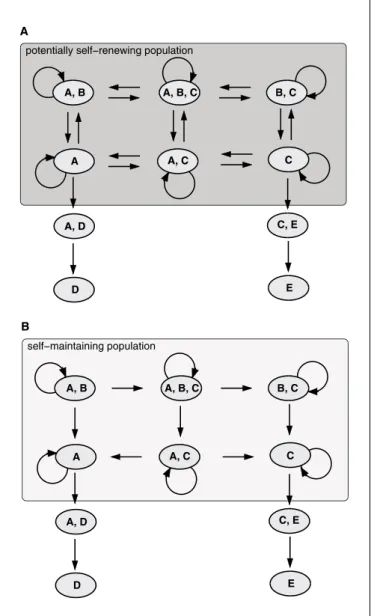
State-transition graphs can now be classified. If they contain only self-maintaining and irreversible acyclic transitions between states, a population can be self-main-taining but not self-renewing. Irreversible transitions are associated with a gradual drift of the population to some selected states. In figure 1B long-term development will eventually reach a composition of the population with very few cells having active gene B. In panel A the state transition graph is characterized by reversible transitions. This would imply the property of self-renewal.
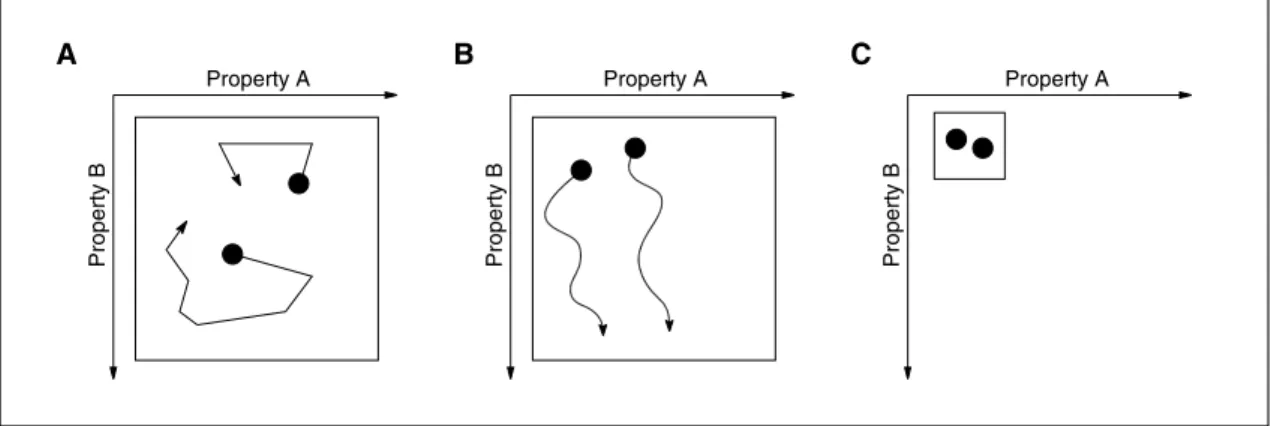
The second level of dynamics takes place in each of these states. Let us assume two genes (properties A and B) that can be activated. If we follow the pathway of activa-tion over time we can plot this in a state-space diagram (fig. 2).
Furthermore, we assume that the dynamic develop-ment of gene expression depends on the growth environ-ment a cell is homing to. Figure 3 illustrates how this can affect the preferred direction of development. If a cell could be shifted from one growth environment to another the drift can be changed. Hence, alternating homing to various growth environments would yield a rather fluc-tuating trajectory. In such a setting not only the influence of the environments would be considerable but in particu-lar the frequency of transitions between them.
Taken together such a general concept of two-layered property dynamics would be a possibility to build into
tis-Fig. 1. State transition graph for self-renewing and self-maintaining population. Provided is a diagrammatic sketch of a level 1 dynamic to illustrate the difference between the criteria of self-renewal (A) and self-maintenance (B). We assume that the genes A-E can be made accessible for activation (sensitive). Tuples of permitted combina-tions of sensitive genes define possible states. Possible transicombina-tions between some of these states are indicated by arrows. This leads to the description of a state-transition graph for the qualitative dynam-ics present on level 1. A transition involves loss or gain of a sensitive gene.
sue stem cell models. We subsequently indicate how this can be implemented giving two examples.
Modeling the Hematopoietic Stem Cell System
In the following paragraph we will describe the basic ideas of a model concept for the organization of the hema-topoietic stem cell system which we propose [Roeder and Loeffler, 2002].
In this new concept we suggest a separation of potential cellular properties and their actual use. Expression and usage of these properties develop according to a specific cellular propensity which itself depends on the growth environment. To formulate the model we make the fol-lowing minimal set of assumptions: (1) We assume two different growth environments inside the bone marrow (GE-A and GE-ø) where stem cells are either attached to (GE-A) or detached from (GE-ø) specific stroma
compo-nents. (2) Each cell is characterized by two properties, the cycling status c (position in cell cycle) and a property a, which describes the affinity of the cell to reside in GE-A. (3) Residing in GE-A a cell is assumed to be non-prolifer-ating (in G0). In contrast, cells in GE-ø proliferate with an
average turnover time. (4) Whereas cells in GE-A have the propensity to increase affinity a, cells in GE-ø tend to
decrease a. (5) Cells can change from GE-A to GE-ø and
vice versa with intensities (probabilities per time interval)
· and ˆ, which depend on the actual affinity a and the cell
numbers in the system. (6) Cellular development with respect to properties a and c is reversible (within-tissue plasticity). Only if the attachment affinity a has become critically small the cell is considered to have lost the potential to stick to GE-A. Such cells we call differen-tiated. Figure 4 gives a schematic representation of the model.
This stochastic, single cell-based model meets the re-quirements listed as (M1)–(M6), including all criteria of the amended stem cell definition, and is predictive for cell populations as well as for single cell and individual clone dynamics.
The model stem cells are individual members of a het-erogeneous (with respect to attachment affinity a and cycling status c) population of undifferentiated (a 1 0) cells (definition criteria (S1)). They are able to home to an appropriate growth environment (S2). Here, we assume two different growth environments, each one inducing different developmental options. The cycling activity in GE-ø ensures proliferation (S3). Repeated cycles of
(i) cell division in GE-ø, (ii) transition to GE-ø, (iii)
regain-ing a and (iv) back transition to the proliferative GE-ø
Fig. 2. Cellular development with respect to properties A and B. Shown are possible trajectories of two cells (P). In
panel A they would fluctuate in a reversible way and would span a wide range of options (large within-tissue plastici-ty). In panel B this process would not be reversible in property B and hence, the scope of potential developments would be restricted (reduced within-tissue plasticity). C represents a minimal developmental potential (no within-tissue plasticity).
Fig. 3. Dependency of cellular development
from growth environment. This figure illus-trated the position of a cell (P) and the
pre-ferred developmental directions (arrows) with respect to properties A and B depend-ing on the actual growth environment. Alter-nation between different growth environ-ments could induce fluctuating expression of cellular properties.
Fig. 4. Schematic representation of the
mod-el concept for hematopoietic stem cmod-ell orga-nization. The lower part represents growth environment (GE)-A and the upper part
GE-ø. The dashed trapezium illustrates cell am-plification due to proliferation. Depending on the assumed turnover times, different cell numbers will be produced (cell groups sepa-rated by vertical dots). Whereas attachment affinity a decreases by factor 1/d per time step in GE-ø, it increases by factor r per time step in GE-A. The actual quantity of a is sketched by different font sizes. If a has fall-en below amin the cell has lost its potential to switch to GE-A (represented by empty cells:
a = 0) and is called differentiated. Transition between GE-A and GE-ø occurs with inten-sities · and ˆ.
of the stem cell population in its original composition. This process guarantees the self-renewal of the stem cell population (S5) and, together with the release of cells from GE-ø (if a ! amin), the production of a large number of
differentiated, functional cells (S4). Furthermore, the model is able to fully re-establish the system from one cell and to compensate repeated damages dynamically (S6). The fact that all members of the stem cell population are able to perform different functionalities (e.g. prolifera-tion, regain of a, initiation of differentiating clones) clear-ly points out the requested flexibility (S7) of such cells.
Because the model is using single cell-based simulation procedures it is able to describe single cell as well as cell population behavior. This includes the possibility of tracking individually marked clones. The realization of the self-renewal and the cell production process is inevita-bly linked to the existence of two different growth envi-ronments. These, however, should not be interpreted in a spatial sense. More important is the existence of a differ-ent signaling context. The process of transition between the two growth environments is dependent on individual properties of the cells (attachment affinity a) and on the cell numbers in the system. Therefore, both, the composi-tion (with respect to a) and the size of the cell population act as feedback mechanisms for the dynamic regulation of the system. In our approach we assume that the attach-ment process of stem cells to stromal eleattach-ments is a central requirement for the induction of signaling processes which than enable the cells to activate different develop-mental programs. The model is able to produce qualita-tively different growth scenarios. As mentioned earlier, this includes the capacity to fully re-establish the system from one cell and to compensate repeated damages. Steady state situations are dynamically stable and robust against perturbations. Depending on the model parame-ters the system behavior differs qualitatively. Besides the steady state, situations of system exhaustion and cycling behavior are possible.
Using simulation studies we can show that the model is able to describe a huge variety of experimental settings and different kinds of in vivo and in vitro assays. This includes fluctuations in the contribution of differently marked but otherwise identical cell populations [Abko-witz et al., 1996] as well as the dis- and reappearance of kinetically different cell types in mouse chimeras [Van Zant et al., 1992]. But not only the description of fluctuat-ing behavior on the level of cell populations is possible. Our model also reproduces experimental results of indi-vidual clone tracking experiments. Strikingly, contradicto-ry observations [Jordan and Lemischka, 1990; Drize et
al., 1996] can be explained consistently assuming differ-ent sampling techniques and detection thresholds. The
dependency of stem cell development on the growth envi-ronment is also included in the model. So it is able to explain differences in engraftment potential of stem cells cultured on different kinds of stroma cell lines including the effect of direct stem cell–stroma contact [Wineman et al., 1996]. The variability with respect to clone size, clono-genic potential or time to clonal appearance, which has been reported for various colony growth assays [e.g.Till et al., 1964; Hao et al., 1996] can be explained by our con-cept without assuming a predefined heterogeneity of the stem cell population. As a last example of the variety of experimental results covered by the model, we mention the characteristics of continuous S-phase labeling with bromodeoxyuridine (BrdU). The model is consistent with the observation that, although the majority of stem cells is non-proliferating under steady state conditions, most of the primitive cells can be labeled in S-phase within a cou-ple of weeks [Bradford et al., 1997; Cheshier et al., 1999]. Similar to other stem cell models our approach is also based on a stochastic decision of individual cells. But in contrast to the assumption of different kinds of cell divi-sions (symmetric/asymmetric) which are chosen with predefined probabilities [Till et al., 1964; Vogel et al., 1969], in our model the stochastic nature of cell develop-ment relies on dynamically controlled switches between growth environments. The stochastic nature of this pro-cess seems to be appropriate because it is assumed to be influenced by a highly complex signaling network, which cannot be specified in detail. Other models, such as one previously proposed by our group [Loeffler and Wich-mann, 1980], allows a dynamic regulation of the self-renewing probability by tissue-specific feedback mecha-nisms. However, this model purely described populations of cells and was not able to investigate single cell fates and therefore clonal development. The same restriction ap-pears in the clonal succession model of Abkowitz et al., 1996 which suggests a stochastic model where a self-renewing stem cells pool successively releases clone-ini-tiating cells. Stem cell–environment interactions are also not included in this model. This is different in the con-cepts proposed e.g. by Schofield [1978], who introduced specific stem cell niches or by Muller-Sieburg and Deryu-gina [1995], who linked the binding of stem cells with stroma components to a differentiation arrest. Both con-cepts suggest mechanisms which regulate proliferation and self-maintenance, however, they explicitly exclude reversibility in the development of the stem cells. We think that this assumption has to be questioned in the
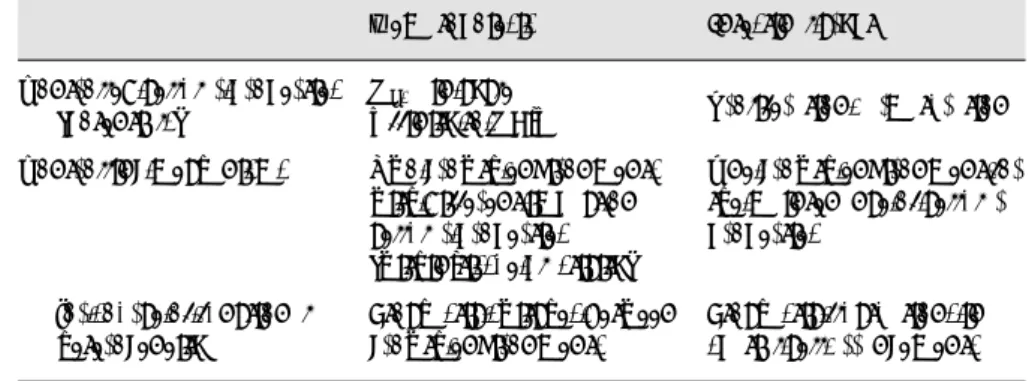
Table 1. Phenomena explained by
hematopoietic stem cell model Phenomena Assay/data
Clonal fluctuation Cell population level Individual clone level
Competition of different cell types Conversion to monoclonality
Competition assays1
(Retro-)viral marking experiments Competition assays2
model prediction, no experiment known
Microenvironmental dependence Co-culture on stroma cell lines/transwells Heterogeneity of stem cell population
Clonogenic potential Clone size
Time to clonal appearance
CFU-S assay CFU-C assay CAFC assay
Cycling activity Continuous BrdU labeling
1 Using differently marked but otherwise equal cell populations.
2 Using (cell kinetically) different cell populations, e.g. DBA2/C57BL6, mouse strains.
light of the recent experimental results on stem cell plas-ticity. The development of our model concept has been influenced by these and other ideas which cannot be listed here completely, however, it is extended to a microscopic mechanism explaining the dynamics of stem cell self-renewal, allowing for the tracking of individual clones and offering a explanation for reversibility and plasticity phe-nomena.
Modeling the Intestinal Epithelium
We and others have previously undertaken extensive modeling efforts to characterize the cellular program of cell proliferation and differentiation in the intestinal crypt system [Potten and Loeffler, 1987a; Paulus et al., 1993; Meineke et al., 2001]. These models used the con-cept of specialized stem cells undergoing mostly asym-metric self-maintaining cell divisions and a pedigree de-velopment of transit cells which undergo a predetermined number of cell cycles before they enter the status of non-proliferative maturation. They are very successful in ex-plaining spatial and cell kinetic data during steady state homeostasis. Data on positional mitotic and label indices, on the migration of cells to higher crypt positions, on the shape of clones of mutated cells, on cell turnover rates, on the generation of goblet cells in mid crypt positions and data on localizations of apoptotic cells can be explained by cellular automata models. They describe the behavior of single cells arranged on a 2-dimensional flask-shaped topology corresponding to a single-layered epithelium in a jejunal or colonic crypt.
Problems, however, arise with the concept of special-ized asymmetrically dividing stems cells, transit cells, and pedigree development in two situations deviating from homeostasis. One situation concerns the long-term behav-iour of intestinal crypts. There is increasing evidence that crypts duplicate by crypt fission, a process in which a spa-tial separation starts at the bottom of a crypt where the presumptive stem cells are located [Totafurno et al., 1987]. This implies that the stem cells of a crypt have to be shared by two daughter crypts. Obviously this implies a process of amplifying the number of tissue stem cells in crypts to enable colonization of the daughter crypts. Fur-thermore, there is evidence that the population of stem cells actually active in a crypt is undergoing fluctuations. These can be observed indirectly by mutagenesis experi-ments which permit to follow the occurrence of clones of cells carrying a mutation in a staining property. These clones can be followed over time and data show that in the long run all crypts convert to monoclonality [Winton and Ponder, 1990; Park et al., 1995]. Hence, either all cells in the crypt carry the mutation or the mutation is completely lost from the crypt. We have undertaken extensive mod-eling on this problem [Loeffler and Grossmann, 1991; Loeffler et al., 1993; Loeffler et al., 1997] and conclude that a certain fraction of actual stem cells in a crypt is lost every day and substituted by others which are recruited nearby. This process appears to be controlled. Hence, these results indicate that at least the population of actual stem cells in a crypt is not static but subject to continuous fluctuations. It is, however, not clear whether there is a pool of dormant potential stem cells which can be
re-cruited or whether transit cells can be recovered to act as actual stem cells. Indications for the latter come from a second piece of evidence. There are extensive investiga-tions on the regeneration of the intestinal crypt after a severe radiation injury [Wright and Alison, 1984; Potten, 1991]. Typically, after radiation cell production ceases for a few days and the cell number drops rapidly. After about 3 days regeneration starts and results in a very rapid expansion of crypts with overshooting cell numbers with-in one week. When we analysed these dynamics uswith-ing a model approach we had to conclude that this rapid and overshooting behaviour could only be explained if one assumed that transit cells would suddenly behave like tis-sue stem cells in order to increase cell production [Paulus et al., 1992]. The number of actual stem cells believed to exist from steady state growth is by far insufficient to gen-erate the huge cell production going on after this injury. Furthermore, data on clonogenicity experiments using split dose radiation also provided strong evidence that a crypt contains many more potential stem cells than are actually participating in a homeostatic situation [Roberts et al., 1995; Berger et al., 2001].
These findings lead us to seek for alternative stem cell models for the intestinal crypt. The basic idea is to give up the concept of explicitly programmed stem cells complete-ly and to consider oncomplete-ly a set of properties attributed to cells whose actual status is controlled by a growth environ-ment. The growth environment we introduced in the new model is a gradient of a stimulatory substance diffusing from the bottom of the crypt to the top. We were in fact inspired by observations of Bjerknes et al. [1985] about the existence of intraepithelial gap junctions that would permit the passage of molecules from columnar cell to columnar cell. We assume that the growth factor degrade with time. This leads to a gradient of growth factor con-centrations from the bottom of the crypt to the top. A first model investigating the potential of this concept in a one-dimensional chain of concatenated cells was very con-vincing [Gerike et al., 1998]. It proved that one can fully replace the old assumptions of a pedigree and dedicated stem cells if one introduces only one rule on the control of cell proliferation. We assume that cells in which the growth factor concentrations exceed a certain threshold continue to divide while a concentration below the thresh-old leads to a proliferation stop. As the previous models this concept provides a very simple and consistent expla-nation on all cell kinetic data, but in addition it provides an elegant explanation of the recovery after damages as e.g. radiation injury [Gerike et al., 1998]. The major nov-elty in this model is that all proliferative cells are alike and
all can potentially contribute to tissue regeneration. In particular there is no explicitly nominated stem cell in this system.
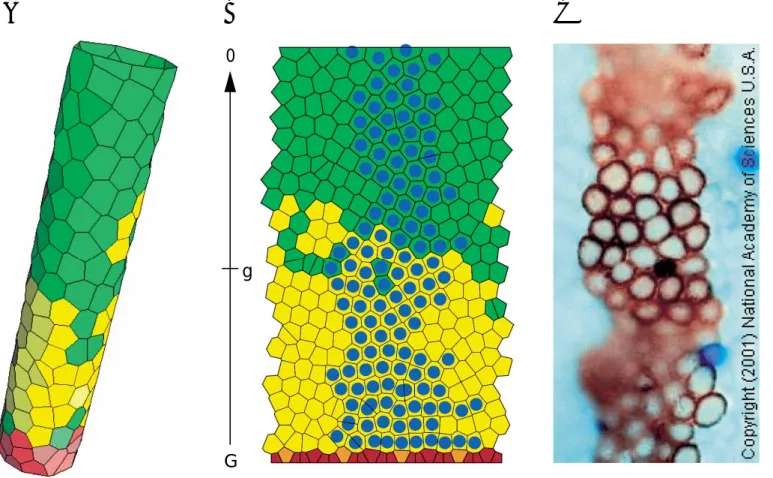
Two-dimensional modeling of this concept is under way (fig. 5). All results we have so far indicate that the novel concept permits a consistent explanation of several other phenomena. Even though all proliferative cells are considered to have the same potential to generate clones only few cells will actually be able to establish long living clones. These are cells which happen to be trapped in a spatial niche formed by the rough landscape of non-prolif-erative paneth cells at the bottom of the murine jejunal crypt. Although not rigidly fixed in these niches the cells find themselves in a place of little flow and hence they are not easily washed away. Therefore, they can give rise to clonal expansion of their progeny for a long time period. However, in the long run it happens that either the cells are eventually washed away by some neighbor cells or the niche itself changes spatially. As a consequence the clone-producing cell disappears and others are successful in finding such a niche. Clearly, if one eliminates prolifera-tive clone-producing cells from this tissue (e.g. by dam-age) other proliferative cells located near the crypt bottom can immediately take over. Thus we can show that this kind of model provides a straightforward and natural explanation of a wide range of phenomena as coexistence of several actual clone-producing cells at any point in time, long-term fluctuations in the clonal composition in each crypt, long-term conversion to monoclonality with regard to any marker introduced in the past or resistance of the crypts to damage (radioresistance) due to the large number of potential stem cells capable of starting regener-ation. It should be mentioned at this stage that similar model results would be obtained for any mechanism that produce a spatial cut off of factors stimulating prolifera-tion. It will be interesting to see whether the neuron-mediated GLP-2 growth factor-based control process re-cently unrevealed by Bjerknes and Cheng [2001] satisfies such properties.
Table 2 summarizes the phenomena explained by the novel class of model so far. Publications on these results are in preparation.
Model Comparison
Let us consider how these models of hematopoietic and epithelial stem cell systems relate to one another and how they correspond to the novel paradigm of tissue stem cells.
Both models prove that one can conceive regenerative tissue systems fully consistent with the criteria of the
A
B
0
G
g
C
Fig. 5. Two-dimensional crypt model. A Cylinder model,
repre-senting the crypt structure. B Unrolled cylinder. Paneth cells are shown in brown, proliferating cells in yellow and non-proliferating cells in green. A growth factor G is produced at the bottom of the crypt and diffuses through cells establishing a factor gradient. Only cells with growth factor concentration above threshold g proliferate.
Cells which are derived from one individually marked proliferating cell are indicated by blue dots. At a later timepoint this clone might disappear or populate the entire crypt. C Experimentally observed cell clone on crypt/villus tissue 3 weeks after applying a stainable genetical mutation to one cell [from Bjerknes and Cheng, 2001].
Table 2. Phenomena explained by crypt
stem cell model Phenomena Assays/data
Steady state regeneration Spatial arrangement Cell kinetics Cell production Pluripotency Coexisting of clones Conversion to monoclonality
Data on positional distribution of cell types Positional mitotic and label indices Migration velocity of columnar cells Production of goblet cells
Mutation experiments (short term) Mutation experiments (long term) Regeneration after damage
Decline of cell numbers Rapid start of regeneration Radioresistance
Post radiation cell kinetics Post radiation cell kinetics Tissue dose response curve
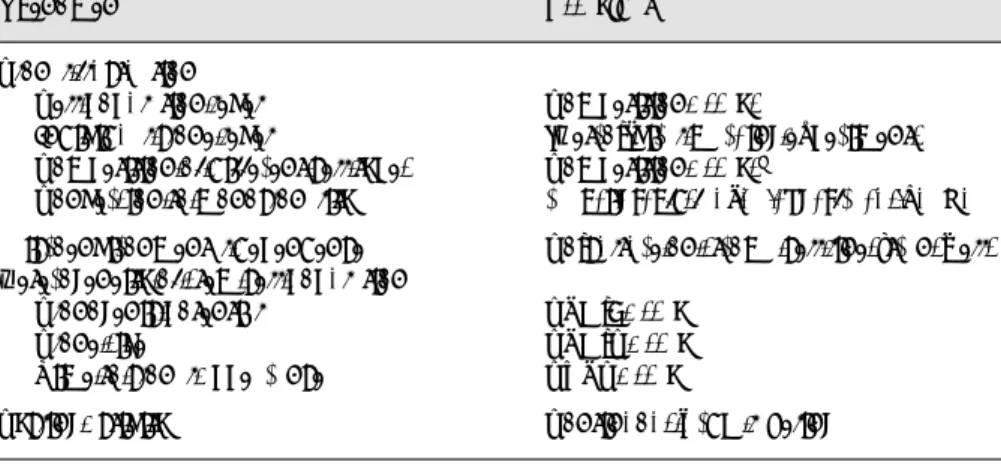
Table 3. Comparing tissue stem cell models
Hematopoiesis Intestinal crypt Controlled cellular properties
(potentials)
G0 } in cycle
Affinity to GE-A Proliferation → maturation Controlling mechanisms Two growth environments
with different impact on cellular properties (within-tissue plasticity)
One growth environment for the maintenance of cellular properties
Major source of functional heterogeneity
Stochastic switches between growth environments
Stochastic fluctuations in spatial cell arrangements
amended stem cell definition, leaving aside assumptions on pedigrees, preprogrammed asymmetric divisions or other assumptions implying a priori the entity of predeter-mined tissue stem cells. Both models are based on the idea of cells which have properties subject to regulation. It is then the interaction of the cells with one another (e.g. competition for growth environments or spatial niches) and with the growth environments which determine the actual development and whether a particular cell may act as an actual clone producing cell. Nevertheless the models differ in the specification of these assumptions. Table 3 gives a summary.
In the hematopoietic model two cellular properties are subject to control: (1) Whether a cell cycles actively or not and (2) whether it increases or decreases the affinity to growth environment GE-A. In the intestinal model we only assume one controlled property i.e. the decision of whether a cell continues proliferation or is converted to the non-proliferative maturing state. This decision is deemed to be eventually irreversible. There are also dif-ferences regarding the growth environments. Our hemato-poietic model is based on the idea of two growth environ-ments between whom cells can alternate. Thus fluctua-tions enter primarily due to the stochastic nature of this switching process. This basically generates a within-tissue plasticity in the model. The model provides an explana-tion for the continuous generaexplana-tion of a cellular heteroge-neity in the population of stem cells and links this with a process of self-renewal. The intestinal model so far re-quires only one growth environment hypothetically relat-ed to a growth factor gradient. The model assumes a homogenous population of proliferative cells all of which are capable to act as actual stem cells if they are placed into a spatial niche at the bottom of the crypt. Hence, in this model stem cell heterogeneity is not considered but the spatial restrictions only permit a small subset of
potential stem cells to contribute to tissue formation at any point in time. Fluctuations in the clonal composition would originate in this model not from a switch between growth environments but due to fluctuating spatial posi-tioning of cells within this growth environment.
Discussion
A major point in this conceptual paper was to provide a critical discussion of the definition of tissue stem cells. Only few papers deal with the conceptual aspects of this matter despite an expanding set of biological data. We have revised a definition put forward by Potten and Loeffler [1990] in the light of new conceptual consider-ations and experimental findings. The major conclusion is that a functional definition of tissue stem cells still is the baseline.
Tissue stem cells are conceived as cells capable of behaving in a variety of ways and hence, it is their poten-tial and the flexibility to use this potenpoten-tial that matters. We argue that it is conceptually misleading to consider stemness as a specific property that can be determined at one point in time without putting the cells to functional tests. The potential of stem cells rather relates to the com-plexity of the state transition graphs describing the poten-tial dynamics of gene activation than to the actual activity status in one of these states.
This has implications for attempts to define tissue stem cells e.g. by gene profiling [Phillips et al., 2000]. There are several problems that we envisage. First, gene profiles obtained by microarray technology are measured on cells obtained from negative selection procedures lead-ing to a heterogeneous mixture of cells. Second, the assays typically represent snapshots at one point in time. How-ever, such snapshots give little insight into the potentials
of a stem cell population. It would be essential to track the gene profiles over time in various experimental settings putting the tissue stem cell system under various modes of stress. This will be necessary to sketch the topology of the gene activity network and its reversibility. Thirdly, to conform with the functional definition it will be crucial to correlate the gene activity network to the functional capa-bilities of the cells in functional assays. Hence, all tech-niques based on snapshot measurements of some surface markers or gene activity patterns must be considered as surrogate techniques.
At present we cannot see the possibility for a molecular definition of tissue stem cells disregarding functional aspects as a reference point. Thus, we are reluctant to believe that tissue stem cells can be defined by a ‘tissue stem cell chip’. Such an approach would basically ignore the two basic aspects of stem cell potentiality and of cell– growth environment interaction. Furthermore, the uncer-tainty problem would still apply and all statements could only be made in a probabilistic sense. However, we expect from gene profiling possibilities to select cells with proper-ties required for stem cells and one can expect a more detailed insight into the mode of stem cell operation by investigating the underlying mechanisms. In particular one can hope for test procedures to screen functional capabilities of tissue stem cells.
The concept proposed above changes the paradigm in thinking about stem cells. Rather than to think about these cells as being specialized in the first place, we sug-gest that they are selected and modified due to interac-tions with the growth environment. Their properties are considered to permanently fluctuate so that some cells meet a situation of expansion and growth.
We are in fact able to demonstrate by computer simu-lations for at least for two tissues (hematopoiesis and intestinal epithelia) that this kind of tissue self-organiza-tion is consistent with the above stem cell definiself-organiza-tion. This modelling also shows that we must be careful with our statements about the way stem cells actually operate. The model mechanisms proposed by us have at least the same strength as pedigree models proposed previously. It must be admitted that our own group for many years has been a strong proponent of the classical stem cell and transit cell pedigree concept [Potten et al., 1982; Loeffler et al., 1987; Potten and Loeffler, 1987b; Wichmann et al., 1988; Loeff-ler et al., 1989; Paulus et al., 1992]. Several investigations are now underway to compare the two classes of theories but at present the novel theory appears superior in cover-ing a much broader range of phenomena.
Generally we believe that much more work needs to be done to develop a comprehensive quantitative and pre-dictive theory of tissue stem cells. Such theories in combi-nation with simulation models are required to better understand the process of dynamic self-organization. The criteria for such models are listed above. A major chal-lenge is to incorporate into these models mechanisms of lineage specification. Both, the hematopoietic and the intestinal cell systems, produce several cell lineages. If we follow the reasoning of Cross and Enver [1997], the basic idea to investigate is a fluctuation on the level of tran-scription factor concentrations which generate a kind of noisy ground state containing all options. Commitment into one lineage would then be a process of restricting the options (i.e. loss of some properties) and limiting revers-ibility. The gene activity network shown in figure 1 gives a sketch of how two lineages might originate. Thus we anti-cipate a straightforward generalization of our model class to include lineage specification within a given tissue envi-ronment.
There are a number of predictions arising from these models already. One basic prediction is that two twin cells originating from the same mother cell put into different growth environments will take different developments paths. This is, however, also predicted if they are placed into identical growth environments. The ongoing fluctua-tions will eventually lead to different fates.
Another prediction concerns clonal evolution. Our model simulations of hematopoiesis and the intestinal crypt are based on a simultaneous activity of several coex-isting tissue stem cells. They generate several clones and the situation is polyclonal at any given point in time. This should be evident always shortly after introducing some genetic markers (e.g. retro- or lentiviral marking). How-ever, there are fluctuations and some active stem cells become silent (or get lost) and others are activated. Thus the clones contributing to tissue formation change with time. Actually in the long run the pattern is predicted to change. If one could label all cells in a tissue with a unique marker our simulations would predict that coexistence is impossible in the long run and that decedents from one clone will eventually generate all active stem cells in the tissue (crypt, hematopoiesis). This conversion to long-term monoclonality is a consequence of fluctuations. It would, however, not be possible to know in advance which clone will be the winner. Hence, we predict that, depending on the time scale of measurement, it is equally valid to argue that stem cell systems are polyclonal (actual activity) and monoclonal (descendent status) at the same time. A detailed understanding of the long-term dynamic