i
Australia
Response surface methodology
Submitted by: Aziz Alawad
0061022459
Supervisor: Belal Yousif
In fulfilment of the requirements of
ENG-4111&4112 research project part 1&2
Towards the degree of
ii
Abstract
There has been a great interest throughout the past years, in using the natural fibres
to reinforcement the polymeric composites. A comprehensive study of the tribology
science of the fibre composites is essential to ensure its capability to stand any given
task. The main objective of the research is to obtain empirical equations for the
temperature and friction of the studied Kenaf fibre. Minitab software was
implemented in the research to conduct all the needed tests also to produce the
figures. The key findings of this research are that, the frictional behavior of
composites has a high frictional coefficient at the begging of the tribology test
because of the high shear force in the contact zone, friction coefficient and
temperature increases when the applied load is increased, friction coefficient
decreases with the increment of the rotating speed and the high influence of rotating
speed on temperature so that temperature increases when rotating speed increases, in
iii
University of Southern Queensland Faculty of Health, Engineering and Sciences
ENG4111/ENG4112 Research Project
Limitations of Use
The Council of the University of Southern Queensland, its Faculty of Health, Engineering & Sciences, and the staff of the University of Southern Queensland, do not accept any responsibility for the truth, accuracy or completeness of material contained within or associated with this dissertation.
Persons using all or any part of this material do so at their own risk, and not at the risk of the Council of the University of Southern Queensland, its Faculty of Health, Engineering & Sciences or the staff of the University of Southern Queensland.
iv
Certification of Dissertation
I certify that the ideas, designs and experimental work, results, analyses and conclusions set out in this dissertation are entirely my own effort, except where otherwise indicated and acknowledged.
I further certify that the work is original and has not been previously submitted for assessment in any other course or institution, except where specifically stated.
Alawad, Aziz
v
Acknowledgement
vi
TABLE OF CONTENTS
CONTENTS
Table of contents ... vi
List of tables ... viii
List of figures ... ix
Chapter 1 ... 1
Introduction ... 1
1.1 Introduction ... 1
1.2 OBJECTIVES ... 4
1.3 CONTRIBUTIONS AND SIGNIFICANCES... 5
1.4 THESIS LAYOUT ... 6
Chapter 2 ... 7
Literature Review ... 7
2.1 Applications of RSM ... 7
2.2 Formulation models ... 8
2.3 Tribology science ... 11
2.3.1 Importance of Tribology ... 11
2.3.2 Modelling of Tribological Behaviour of materials ... 14
2.4 Friction ... 16
2.4.1 Dry Friction ... 17
2.5 Adhesion wear of polynomial ... 22
2.5 Summary of the literature ... 28
Chapter 3 ... 29
Methodology ... 29
3.1 Material Selection and Experimental Procedure ... 29
3.1.1 Kenaf Fiber Selection and Preparation ... 30
3.1.2 Epoxy Composite Preparation ... 32
3.2 Experimental Procedure ... 33
3.3 Collected frictional data: ... 36
vii
3.4 Software used to analyse the data: ... 41
Chapter 4 ... 43
Result and discussion ... 43
4.1 Dry Adhesive Frictional Behaviour of Composites ... 43
4.2 Effects of applied loads on friction. ... 47
4.3 Effects of different applied loads on temperature. ... 50
4.4 Effect of rotating speed on friction ... 54
4.5 Effect of rotating speed on temperature ... 58
Chapter 5 ... 60
Conclusion ... 60
References ... 62
viii
LIST OF TABLES
Table 1 Friction and wear of sliding couples in 50% air, 20 degrees centigrade, and
10N load (Habig, 1990) ... 27
Table 2 collected data from tribology machine when speed was set at 2.8 m/s ... 38
Table 3 is showing the data for a rotating speed of 1.1m/s and 3.1m/s. ... 40
Table 4 Comparison between friction coefficients at different rotating speeds... 57
ix
LIST OF FIGURES
Figure 2. 1 Three-dimensional response surface and the corresponding contour. ... 10
Figure 2. 2 Dry friction diagram in various states (Olsson et al., 1998) ... 19
Figure 2. 3 Representation of schematic stribeck diagram: n-oil viscosity, V-sliding viscosity, W- normal load (Maru and Tanaka, 2007). ... 20
Figure 2. 4 Statistic friction ... 22
Figure 2. 5 Adhesive wear ... 24
Figure 2. 6 Mechanisms of adhesive wear (Rabinowicz, 1965) ... 25
Figure 3. 1 Untreated kenaf fibres: (a) Photo of the raw fibre; (b) Micrograph of cleaned fibres. ... 31
Figure 3. 2 Micrographs of the treated kenaf fibres ... 32
Figure 3. 3 SEM micrographs of cross-sections of KFRE composites: a) Photo of the composite; b) Untreated kenaf fibre; c) Treated kenaf fibres (Chin and Yousif, 2009) ... 33
Figure 3. 4 the BOD machine working under dry contact conditions (Yousif, 2013, Chin and Yousif, 2009) ... 34
Figure 3. 5 screenshot showing the Minitab software... 42
Figure 4. 1 Sample of the frictional data showing the coefficient versus sliding distance of KFRE in N-O at a sliding velocity of 2.8 m/s. ... 44
Figure 4. 2 Friction coefficient versus applied load for NE and KFRE at different orientations. ... 45
Figure 4. 3 Interface temperatures versus applied load ... 46
Figure 4. 4 Friction @ 30 N verses Sliding Distance (Km) ... 47
Figure 4. 5 Friction @ 50 N verses Sliding Distance (Km) ... 48
Figure 4. 6 Friction @ 70 N verses Sliding Distance (Km) ... 48
Figure 4. 7 Friction @ 100 N verses Sliding Distance (Km) ... 49
Figure 4. 8 Temperature @ 30 N verses Sliding Distance (Km) ... 51
x
Figure 4. 10 Temperature @ 70 N verses Sliding Distance (Km) ... 52
Figure 4. 11 Temperature @ 100 N verses Sliding Distance (Km) ... 53
Figure 4. 12 Friction coefficient at rotating speeds of 1.1m/s and 2.8m/s verses time55
Figure 4. 13 Friction coefficient at rotating speeds of 3.1m/s and 3.5m/s verses time56
1
CHAPTER 1
INTRODUCTION
1.1Introduction
In many cases, the researchers wish to improve the performance or the result of an
on-going system without stopping the system from working and just by changing the
values of the parameters that control the output of the system. To do so, an
exploration of the region where these parameters are varied is needed. This includes
two steps, first is to examine some of the points in the region and to achieve the
results. Secondly, is to make an estimation of the results that would be found in rest
of the points by relying on the reliability of this estimation. Now, the researchers
should know whether the system’s result can be improved or not. Furthermore, the
researchers will be able to know to what level the system can be improved and the
exact parameters that should be used to make this improvement, (Ortiz et al., 2009).
The response surface methodology (RSM) can be defined as a collection of
statistical and mathematical techniques that is used in the aim of developing an
2
and an output (response y). Generally, the relationship between the response and the variables is unknown however; it can be approximated using a low degree
polynomial, (Khuri and Mukhopadhyay, 2010). For instance, the growth of a plant is
relying on the amount of water the plant receives (x1) and the amount of sunshine the
plant exposes (x2). Under any combination of x1 and x2 the plant will grow.
If there is a continuous range of values for the variables as well as for the
response, respond surface methodology is very useful for optimizing the response
value. In this example, the independent variables are x1 and x2 and the response (y) is
the plant growth and the function is expressed as:
y=ƒ(x1, x2) + Ɛ
Where; y is the response variable which depends on x1 and x2 which are the
independent variables. The term Ɛ represents any other source of variability not
included in the function ƒ. Thus Ɛ includes the response measurement error,
vibration and the error in the independent variables. So, in the above equation Ɛ is
treated as a statistical error with zero mean,(Myers and Anderson-Cook, 2009).
Generally, the response function (ƒ) for the majority of RSM problems is unknown.
To come up with good approximation, the researchers often start with a low-order
polynomial under (Rabinowicz, 1965)a small region. The approximated function is
said to be a first-order polynomial if the response (y) can be defined by a linear
function in term of its independent variables (x1 and x2). The following expression
shows a first order-polynomial with three independent variables (a, b, c);
3
A second-degree polynomial is appropriate to be used for the approximation, if there
is a curvature in the response. A second-degree polynomial with three independent
variables (a, b, c) can be expressed as follows;
y= β0+ β1a+ β2b+ β3c+ β4ab+ β5ac+ β6bc+ β7a2+ β8b2+ β9c2+ Ɛ
All RSM problems generally use either the first degree polynomial or the second
degree polynomial or a combination of them both to establish a relationship between
the response (y) and regressions (x1, x2, x3….xn). An appropriate experimental
design must be used to collect data to get an efficient approximation of the
polynomial. There are three basic methods for collecting data which are ,(Myers and
Anderson-Cook, 2009)
A retrospective study based on historical data.
An observational study.
A designed experiment.
Good data collection will help in simplifying the analysis and presents more
applicable models. On the other hand, bad data collection can cause problems in the
analysis and its interpretation. After collecting the data the method of least square is
to be used to estimate the polynomial’s parameters. The Method of Least Squares is
a technique applied in the determination of the best line that fits to data, where its
4
Farber, 2006). However, the primary challenge is when finding the best fit straight
line.
In the current research, a literature review is conducted with a primary objective of
learning about three basic concepts of design optimization in the moving parts of
machinery with respect to their relation to response surface methodology; First,
Tribology Science conception is reviewed and its basic relation to the topic is
discussed. Second, the paper reviews about Friction in general and its relation to the
topic, and lastly, the science of Adhesion Wear in polynomials and design
experiments in machinery is also discussed. The purpose of the review on the above
areas will create more information about the approaches to minimization and
elimination of losses that result from friction and wearing of machinery or moving
parts at all levels of technology where surface interaction and rubbing are often
elaborate. The current research is aimed at leading to better performance, increased
systems efficiency, significant savings, and fewer breakdowns.
1.2 OBJECTIVES
The aims of the project are:
1. Search and learn about the background and applications of the response
5
2. Analyse the experimental data using the (RSM) to develop a relationship
(equation) between the response and the independent variables.
3. Form this research an empirical equation will be developed and used as a
base for the researchers.
1.3 CONTRIBUTIONS AND SIGNIFICANCES
The findings of the current study will contribute to:
The outcome of this research will contribute to the knowledge of tribology
since, there is lack of work in the responds surface area .
The outcome of the work will be published in an international journal related
to the area of study.
Using Minitab Software in this research will help the researchers in saving
6
1.4 THESIS LAYOUT
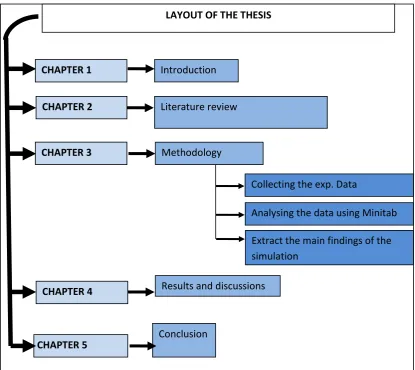
The figure 1 below shows the layout of the thesis. The thesis consists of 5 chapters;
introduction, background knowledge and literature review, methodology, results and
[image:16.595.113.529.236.606.2]discussion and conclusion and recommendations.
Fig.1. 1 The layout of thesis
CHAPTER 3
Results and discussions
CHAPTER 1 Introduction
CHAPTER 2 Literature review
Methodology
Collecting the exp. Data
Analysing the data using Minitab software
Extract the main findings of the simulation
CHAPTER 4
Conclusion
CHAPTER 5
7
CHAPTER 2
LITERATURE REVIEW
2.1 Applications of RSM
In statistics RSM is widely applied in defining a mathematical relationship between
one or more variables and a response or multiple responses. In today’s industrial
world RSM is used in many applications due to its cost effectiveness and time
effectiveness in analysing the scientific studies as it offers reduce in cost and time in
comparison with the other scientific analysis methods such as lab experiments. RSM
is used in many different scientific fields such as chemistry science, social science,
engineering science and formal science. The method of RSM was first introduced in
1951 by G.E.P. Box and K. B. Wilson. The idea is to make estimation for the
response using a low degree polynomial either first degree polynomial if there is a
linear relationship or second degree polynomial if the relationship is curvature.
Although the first estimation would not be accurate, however it will give an
overview of the relationship between the response and the variables and how the
response would vary or behave with the variables.
In statistics, there is an important aspect of RSM where it is used as a statistical
technique and as a mathematical approach to empirical model building, (Box and
8
obtain efficient machinery parts where the primary aim is to boost a given response
(output variable) for example increasing machinery efficiency and reduction in drag
force of friction, (Larson and Farber, 2006). Output variables are often affected by a
number of independent variables which are often adjusted through a series of
experimental data and the input variables subsequently regulated to identify how
they affect the output response, (Cornell, 2011).
2.2 Formulation models
Initially, the development of RSM was initiated with an aim of developing empirical
responses before being adopted later in numerical experiments to formulate models.
The variance is in the type of error produced by the anticipated response. For
instance, in designing physical experimentations, measurement errors may be the
cause of inaccuracy, while in computer trials incomplete convergence of discrete
representation, round-off-errors, or iterative processes, usually results in numerical
noises in a continuous physical activity, (Roux et al., 1999). In response surface
methodology, the assumption taken is that, all errors to be random. In this review,
the application of RSM to machinery design optimization is focused at decreasing
the costly analysis techniques, such as CFD analysis and finite element method, and
their concomitant numerical noise ,(Bigoni, 2012). The problems can be estimated as
described in the review with polynomial functions that can increase the convergence
of the optimization procedure because they decrease the outcome of noise and they
permit the application of derivative-based procedures. There are many benefits
9
For instance, when optimizing machinery in order to reduce friction and adhesion
between the interacting surfaces that are in relative motion, an engineer may be
compelled to search for the relationship between parameters that control the output
of the system such as the applied force (x1) and the sliding velocity (x2) that usually
accelerate the wearing rate (y=response outcome) of machine parts. The wearing of
machines (response) as a function of the amount of applied force and sliding velocity
(variables) can be represented as follows:
y = f (x1, x2) + ε Where ε represent the error or noise that is detected in response y. Therefore, the
interacting machinery planes where the wearing phenomenon is detected can be
represented by the function f(x1, x2) which is its proportional or direct response surface, (Wu and Hamada, 2000).
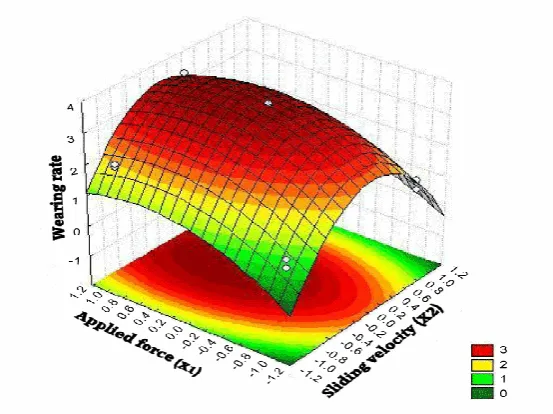
The above response can be symbolized graphically, either in a contour plot version
or in a three dimensional space. This approach helps in visualizing and easing the
perception on the shape of the achieved response surface. In most instances, contours
are curves that indicate a constant response that is drawn from x1, x2 planes while
holding other variables at constant, (Oehlert, 2000a). Moreover, each contour is
designed to correspond to a specific height of the response surface, as shown in
Figure 2.1.
10
Figure 2. 1 Three-dimensional response surface and the corresponding contour
(Poggie et al., 1994).
The figure is plot for the interacting machine surfaces; where x1 is the applied force
(N) and x2 is the sliding velocity (m/s) with respect to how they contribute to
wearing rate of machine.
Given the above elaborations, it is clear that RSM can be used in design analysis
making this review important in relation to machinery designs focused at reducing
friction and increasing efficiency. Therefore, it will be important to gain a
background understanding and what previous scholars have discussed concerning the
11
2.3 Tribology science
Tribology is a discipline and technology of friction, material wearing, and surface
lubrication of interacting surfaces in a relative motion, (Majumdar and Bhushan,
1990). Besides, tribology looks into aspects related to adhesion, mechanical
properties, and coating of engineered planes. This scope includes modelling of
statistic (adhesion and indentation), experimental investigation dynamic contacts
(rolling, scratching, oscillating, and sliding), and fracture or contact mechanics
throughout several length scales ranging from macroscopic to atomistic scopes,
(Ruan and Bhushan, 1994).
2.3.1 Importance of Tribology
Current contributions to advance mechanic and scientific comprehension of
mechanical response and tribology performance of engineered coatings and surface
have been reported to have a significant contribution in coating design and
establishment of precise applications with increased efficiency,(Stachowiak and
Batchelor, 2011) .Special attention has also been placed on characterization of
mechanical properties and tribology of structure versus property process and how
they relate to engineered surfaces and their coatings. All materials have also been a
centre of interest but more focus is based on multifunction materials (in terms of
their lubricious and hardness) and Nano composite features for extreme
12
Approaches noted above indicate that tribology has become a vital modern
technology as far as machinery design of rolling and sliding surfaces are concerned.
In tribology, some of the examples of productive wear include polishing, machining
and writing with a pencil. (Jin et al., 1997) On the other hand instances of productive
friction include application of driving wheels, nuts, bolts, clutches, and brakes.
However, unproductive wear that remain the centre of concern is mostly attributed to
cases such as seals, ball bearings cams, gears, and internal combustion. Estimates
that result from unawareness about tribology sum up to 6% or $200 billion in losses
per year,(Bhushan, 2001) .In addition, the world estimation in losses is about 1/3 in
energy resources that is lost to friction in various forms. Therefore, understanding
tribology subject is important in ensuring effective wear control and friction
reduction while at the same time prolonging the reliability of engineered designs.
(Kuhn et al., 2003) had argue that approximately 200 billion dollars can be saved
across the world per year if industries adopt appropriate tribology practices .With
this remark,(Jin et al., 1997) had earlier pointed out that better tribology designs will
contribute to enormous savings, and that this can be achieved without deploying
huge capital investments.
In engineered designs, three primary areas of importance of tribology focus are
attributed to adhesion, lubrication, and wear which are often documented with
reference to atomic focus on the moving sections. Adhesive concept, as later
discussed, is important in the success in various applications but currently there is no
13
(Box and Draper, 2007). Alternatively, engineers have found it appropriate to
employ electronic structure approach in examining adhesion between material
elements of curiosity, for instance, application of ceramic in determining factors that
catalyze friction between two moving surfaces or how adhesion is controlled,
(Cornell, 2011).
In addition, the used lubricants in friction control should comprise boundary
additives to join the surface and the lubricant more strongly in such a way that at
when higher pressure or stress is applied, the rate of wear between two opposite
surfaces is reduced, (Cornell, 2011). To date, little has been documented with regard
to how boundary additives adhere to surfaces of metals and how electronic models
are used to investigate this phenomenon in polynomial relations. Regarding surface
wearing, engineers mainly focus on the tribology of molecular dynamic simulation in
relation to indentation and erosion with regard to loading rate, temperature and
interaction effect, (Kuhn et al., 2003). In polynomial relations, tribology becomes
critical in developing engineering equations, methods and formulae in general
application of engineering design, (Bhushan and Gupta, 1991). Even so, a number of
useful equations and methods exist and mostly in contact stress calculations and in
14
2.3.2 Modelling of Tribological Behaviour of materials
Given that friction and temperature play an important role in defining and shaping of
models, various variables may be required in estimating the rise in temperature on
sliding surfaces. On the contrary, a greater number of variables are often needed in
designing of appropriate wear and friction properties of sliding surfaces,(Holmberg
et al., 1998). Shortage of appropriate design approaches for realizing anticipated
product quality and friction life practically always results in delaying these
contemplations in merchandise development until meagre days remain before
manufacture deadline ,(Jones and Scott, 1983).
At this point, tribology equations are formulated to ensure that first selections are
completed in terms of designing shapes, processes and materials. Therefore, the early
challenges are solved first including cost, method of production, features related to
vibration, strength and product weight. This approach becomes problematic because
the engineers rely on knowledge based on wearing and friction of the material
prompting designers to result in guesswork and subjective information from the
dealers of various products including materials and lubricants. Such randomly
adopted frameworks and accelerated trials are inappropriate benchmarks towards
realizing engineering design goals,(Roylance, 2003). Moreover, this approach has
profound effects on the warranty costs of friction problems and the anticipated life of
a design resulting in product failure in a number of mechanical, automobile, and
15
Ultimately, it is clear that tribology is a fundamental subject that requires a wide
allied background of various subjects. In academic relations and engineering of
product designs, primary engineering fields major on fluid mechanics elastics,
material science, dynamic designs, and heat transfer in mechanical models,(Wu and
Hamada, 2000).On the other hand, material engineering students tend to gravitate
towards this tribology challenge by studying viscosity of plastics in relation to
oxidation, adsorption, adhesion, surface chemistry, fracture strength, creep, lubricant
chemistry and layer coating. The approach indicates the diversity of tribology
science and technology in relation to engineered designs, (Diniz and Martin, 1996).
RSM is introduced in tribology to eliminate one factor after another deficit in
demonstrating tribology characteristics between variables and response. This implies
that by means of composite design model, there are few operating conditions
required to institute the polynomial functions of applied load and sliding speed. A
second degree polynomial can be applied to indicate how curved surfaces can fit in
the empirical data. In addition to the findings related to operating conditions, the rate
of wearing parameters and interaction temperatures gained from the polynomials are
associated with the practical results. Tribology in the activation energy in the rate of
wear is derived from a function of the applied load, sliding speed, and contact
temperature in line with the model assumed by (Lin and Chou, 2002). Lastly, the
data for the wearing rate constraint can be defined by smooth curves, in place of two
different straight lines in binary temperature partitions—discussed later under
16
2.4 Friction
There are two primary types of friction forces; fluid friction and dry friction also
called the coulomb friction. In fluid friction, the wearing force develops as a result of
two layers that are moving at different velocities,(Hoyt, 1972). In contrast, dry
friction occur as a result of rigid bodies that keep rotating on the surface of each
other along a non-lubricated surface for instance in case of belt friction, journal
bearing, thrust bearing, and squire-thread screws,(Goyal et al., 1991). In addition, the
other forms of friction include lubricated friction where a fluid segregates two
sliding surfaces, (Shaughnessy et al., 2005) another type is skin friction that takes
place as a component of drag force that resists the movement of a body through
fluid. Lastly, internal friction is a force that resists movement between the elements
that make up the solid material as it undergoes deformation, (Batist, 1972).
In all industries, friction is attributed to causing wear and excess energy
consumption. Globally, there is an estimated energy loss to friction thought to be
around 30% to 50% in energy inputs facilitated at replacing worn out components
and production costs. In RSM, formulas can be designed to improve structures
designs with a primary focus of reducing friction wear and optimizing material
output in system operations. Mechanical sliders, ball bearings, and corroding
particles all enforce potentially detrimental circumstances upon the surface of its
adjacent body on which it spins or rolls, whether the magnitude of events is
17
of chemical reactivity, each of which can act distinctly, however, each can also alter
the rate of adjustment of other factors during a continued contact between two
surfaces. The notion behind these observations argues that in the engineering
appliances, there are no interacting surfaces that are perfectly frictionless. Rather,
when two surfaces interact there is always a tangential force that will always develop
in one respect to change any type of friction force: fluid friction of dry
friction,(Oehlert, 2000b). The basic kinetic properties of sliding surfaces were
discovered between the 15th and the 18th century and they were summarized into three practical laws, (Daniel et al., 1994).
First is the Amonton’s 1st
law which states that friction force is directly
related to the load applied.
Amonton’s 2nd
law states that “the force of friction is independent of the
apparent area of contact.
The third law is Coulomb's Law of friction that states “Kinetic friction is
independent of the sliding velocity.
2.4.1 Dry Friction
In dry friction, the force between to surfaces in contact is restricted from lateral
motion with each other. In other words, the opposing surfaces are in static friction in
relation to kinetic friction (also called dynamic or sliding friction) and the
18
friction is suitable in calculating the dry friction force and it is governed by the
equation below:
Where: Ff, is the amount of exerted friction force by each opposite surfaces on each
other. In other words, it presents a directionally opposite force parallel to the net
force applied on the surface.
: represents the friction coefficient, which is also the empirical characteristic of the
materials in contact.
: represents the normal force that is exerted by the opposite surfaces on each other
as a result of the normal or perpendicular force to the surface. Therefore, the
Coulomb fraction which is Ff can take any value starting from zero up to the
maximum possible value of . Moreover, the direction of friction force against
the opposite surface is parallel to the friction that any contrasting surface would
experience, (Bigoni, 2012).
Dry friction defines the reaction between two solid surfaces in interaction with each
19
Figure 2. 2 Dry friction diagram in various states (Olsson et al., 1998)
Static and kinetic force and proportional to normal force between the interacting
bodies and friction will work against the moving object. In fig 1, when an object is
pushed it resists motion until the kinetic force is higher than that of friction force.
When the force of friction is increased the body starts to move as friction force
becomes kinetic friction and can either be constant with any velocity or can vary
with velocity.
In static events, the dry force of friction is related to the force that must be applied in
order to prevent the motion of two sliding surfaces; that it stabilizes the net power
tending to cause such motion. Rather than giving an estimate of the definite frictional
force, the Coulomb calculation offers a threshold assessment for this force, above
which sliding movement would begin. This maximum pressure is acknowledged as
traction force, (Simo and Laursen, 1992). The rubbing phenomenon can be explained
20
interactions. Friction coefficient linearly ascends for high values of η V/W because
of the fluid lubrication; that is, it is related to viscous dragging within the oil film. As
the viscosity and load increases, the η V/W factor falls. This makes the fluid to be
[image:30.595.163.477.266.467.2]thinner as the friction coefficient declines, up to a lowest value.
Figure 2. 3 Representation of schematic stribeck diagram: n-oil viscosity, V-sliding
viscosity, W- normal load (Coles et al., 2010) .
Friction force is always applied in the direction that opposes motion (in the case of
kinetic friction) while potential motion (in case of static friction) is applied to restrict
motion between two surfaces. For instance, a curling rock that is sliding along the ice
surface will experience a slow kinetic force that tends to drag the rock from motion.
21
car encounters a friction force that projects forwards, failure to which the wheels are
most likely to spin while the rubber would slide backward in the opposite direction
along the road surface. As such, the wheels do not oppose the direction of the vehicle
in motion but they oppose the potential direction of sliding surfaces between the road
and the tire (De Saxcé and Feng, 1998).
In summation, it can be pointed out that the force of friction acts in a course parallel
to the contact area, while at the same time opposing the movement or the tendency of
an opposite object to travel. The force friction is determined by two things:
The normal force (Rn)
The form of the surfaces involved (μ), therefore,
Friction = μ ⋅ Rn
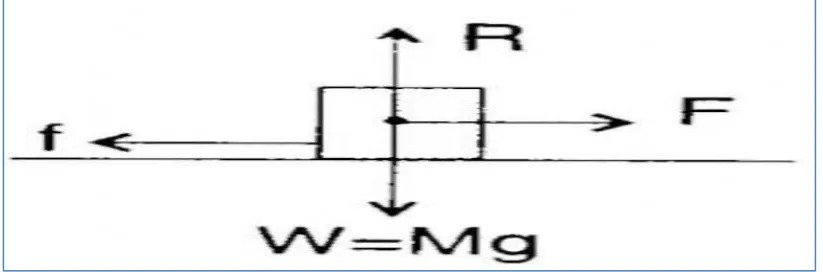
When the external force (F) is applied to propel a body initially the body fails to
move, in these regard frictional force (f) drags the external force and resists it in the
opposite direction and that is because the frictional force is equal to applied force or
F-f=0 . Therefore, the body continues to stay at rest and the force of friction is called
22
Figure 2. 4 Statistic friction(Poudel, 2013).
On the other hand, when external force (F) in increased further, the object draws
close to the verge of motion, because the friction force is at maximum and this is
called limiting friction with the equation:
Where is denoted as the coefficient of static friction.
When the external force is applied beyond the limiting friction the body will start to
move and the force limiting or opposing this motion is called sliding or kinetic
friction. Kinetic friction is usually less than limiting friction.
2.5 Adhesion wear of polynomial
Clumps, aggregates or any group of atoms are mainly attracted to each other by
23
electron structure. The bonding between different materials is facilitated by adhesive
forces. Where, the ultimate work of adhesion forces can be defined as the energy
required for reversible separation or interaction between one interfaces with another
surface, overlooking deformation. Though these dissipative processes command that
the force required in an authentic cleavage experimentation continuously will be
superior compared to the ideal force of adhesion (as a result of plastic distortion), the
greater the force of adhesion, the more the required work that must be done to
overcome the interface, (Lucas, 1994).
The adhesive force can be defined in terms of either the interfacial energies and the
surface (relative to the particular bulk materials) or the dissimilarity in total force
available between the interface and its isolated slabs. In engineering preparation,
portions gliding against each other are frequently different. For instance, steel sliding
on brass, without the presence of adsorbed layers, at times it may be speculated that
the bonding system may result from ionic bonding, covalent, van der Waals forces or
metallic bonds, (Watts, 1995). Adhesive wear results from breakdown of
micro-junctions between opposing asperities on the rubbing surface of the interacting
surfaces. The force of interaction applied becomes high and deforms the atomic
24
Figure 2. 5 Adhesive wear (Kopelivoich, 2012).
Past findings indicate that all forms of materials after cleaning can bond with other
materials in vacuum to form strong connections. This is possible in view of the fact
that the solubility of one material in another is likely to enhance adhesion which may
influence friction rate or wearing to some levels lower than the melting points of the
material in absolute units, (Montgomery, 1991). Moreover, empirical research on
ceramic materials has not documented high adhesive bond strength partially because
of the difficulty in finding equivalent lattice that match perfectly. Nevertheless, it has
been observed that when different ceramics are rubbed on each other, there is an
increased probability that some incidental and sufficient alignment of lattice occur to
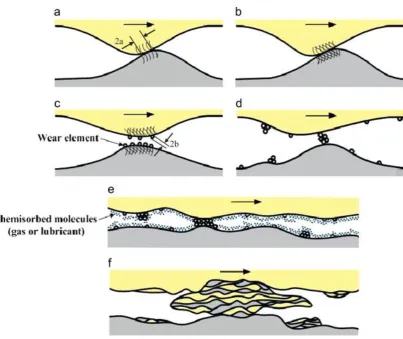
form strong adhesive bonding, (Kleis and Kulu, 2008). Figure2.6 elaborates on the
25
Figure 2. 6 Model of adhesive wear from the elementary process of generation of
wear elements (a) to (c) to the formation of wear particles from (d)→(e) for mild
wear, or (d)→(f) for severe wear. “a” and “b” in the figure mean a mean radius of
each junction and each wear element, respectively(Mishina and Hase).
Alternatively, adhesive wearing has also been attributed to material transfer due to
symbiotic relations or material overlap between relative movements by two bodies.
The observation is mainly defined as plastic deformation of minute surface
fragments within the superficial layers. The stringencies or microscopic wearing
26
oxide fragments are pulled off and added to the surface of another material, partially
as a result of strong adhesive forces between atomic structures or because of the
accumulation in plastic energy zone between the asperities throughout the process of
relative motion, (Rabinowicz and Mutis, 1965). The outcome of adhesive wear is
largely linked to growing roughness and creation of lumps or protrusions on the
original surface layer, and this outcome results in reaching of the oxidized layer on
material surfaces, resulting to direct communication with underlying bulk material
which may result in strong material bonding and increased plastic flow on the axial
of the lump, (Brobakken and Zachrisson, 1981).
In order to understand how the wearing material flows, accelerates and is transported
around the lump, trials are run to assess the nominal sliding velocity and the
geometry which remain paramount in defining the contact pressure of the materials,
and the emitted temperature during sliding, (Sınmazçelik and Taşkıran, 2007).
Therefore, lumps on the surface contour are used to define the mathematical
functions for the acceleration of the flowing material. As a result of these
prerequisites, in remains explicit that the developed temperature and contact pressure
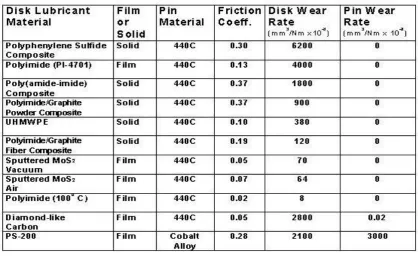
rely largely on the geometry of the lumps ,(Jones and Scott, 1983). The table below
indicates the friction and wear of sliding couples under experimental conditions in
27
Table 1 Friction and wear of sliding couples in 50% air, 20 degrees centigrade, and
10N load (Habig, 1990)
The table above indicates the adhesive wear and friction various sliding material
surface in contact illustrating that low wear and low friction do not always happen at
the same time. In traction drive low wear and high friction is often required and it
28
2.5 Summary of the literature
In statistics RSM is widely applied in defining a mathematical relationship between
one or more variables and a response or multiple responses. In statistics, there is an
important aspect of RSM where it is used as a statistical technique and as a
mathematical approach to empirical model building. Through careful design models,
it is possible to obtain efficient machinery sections with an efficient response (output
variable) for example increased machinery efficiency and reduction in friction’s drag
force.
When optimizing machinery to reduce friction and adhesion between the interacting
surfaces, an engineer may be compelled to search for the relationship between
parameters that control the output of the system such as the applied force (x1) and
the sliding velocity (x2) that usually accelerate the wearing rate (response y) of
machine parts. The wearing of machines (response) as a function of the amount of
applied force and sliding velocity (variables). Therefore, the interacting machinery
planes where the wearing phenomenon is detected can be represented by the function
29
CHAPTER 3
METHODOLOGY
3.1 Material Selection and Experimental Procedure
Currently, there is considerable interest in using natural fibres as reinforcements in
numerous applications. One of the best-known natural fibres is kenaf, which is
traditionally grown for the production of twine, rope and sackcloth (Nishimura et al.,
2012). In recent years there has been a high demand for, and interest in, the use of
kenaf fibres for composites, due to their good mechanical properties. Kenaf fibre has
thus found its way into industrial applications in a range of domains, including
automotive, housing, packaging and electrical products(De Rosa et al., 2009). In the
light of this, kenaf fibre was selected as the reinforcement in the current study.
Liquid epoxy (DER 331), a liquid reaction product of epichlorohydrin and disponol
A, was used as the resin in this study. It is widely used for general purposes and is
recognised as used in a standard form. It is suitable for applications such as casting
and tooling, composites and automotive parts. The curing agent used for this epoxy
was JOINTMINE 905-3S, a low viscosity aliphatic amine for room temperature
30
3.1.1 Kenaf Fiber Selection and Preparation
Raw kenaf fibres were supplied by the Malaysian Agricultural Research and
Development Institute. The fibres had been well extracted, since they did not contain
much dirt (Figure 3.1a). However, they were soaked in warm water for three hours until the fibres become yellow to indicate the cleaning process completed and then
cleaned with fresh water. To extract the undesired substances, the fibres were
combed and then dried for 24 hours in an oven at 40 oC. The oven contained a fan to aid the drying process. A micrograph of the cleaned fibres is shown in Figure 3.1b. Other natural fibres have a waxy outer layer that covers their inner structure. This
has been noted with oil palm (Ghali et al., 2011), coir (Saw et al., 2012), and banana
fibres (Merlini et al., 2011). NaOH treatment was necessary to clean these natural
fibres. For the current study, a preliminary investigation was performed to determine
the interfacial adhesion of the fibre before treatment, which showed that kenaf fibres
exhibit good interfacial adhesion with epoxy resin without treatment. Despite this,
treatments were performed on a portion of the cleaned fibres and an evaluation of the
interfacial adhesion and the tensile and flexural properties of the kenaf-epoxy
31
Figure 3. 1 Untreated kenaf fibres: (a) Photo of the raw fibre; (b) Micrograph of
cleaned fibres (Chin and Yousif, 2010).
In the treatment process, a portion of the cleaned kenaf fibres were cut into an
average length of 100 mm. A NaOH solution was prepared with a 6 weight per cent
concentration. The selected fibres were immersed in this aqueous NaOH solution for
24 hours at room temperature. After treatment, the fibres were washed with tap water
and then dried for 24 hours in an oven at a temperature of 40 oC.
Samples of the micrographs of the treated kenaf fibres are shown in Figure 3.2. Comparing Figure 3.1b and Figure 3.2, it was evident that the NaOH treatment had thoroughly cleaned the surfaces of the fibres, the inner bundles of the fibres were
exposed and any undesired substances had been removed. This may result in better
interfacial adhesion of the kenaf fibres and the epoxy matrix, a hypothesis that was
32
Figure 3. 2 Micrographs of the treated kenaf fibres(Chin and Yousif, 2010).
3.1.2 Epoxy Composite Preparation
The fabrication process was the same for the mechanical and tribological samples,
except for the dimension of the sample, which was controlled by the mould used in
the fabrication process. The epoxy resin and the hardener were uniformly mixed at a
2:1 ratio using an electric stirrer and then poured into the desired mould. The mould
was placed in a vacuum chamber (MCP 004PLC) at a pressure of 0.5 bar to remove
any air bubbles trapped in between the fibres. The vacuum extracted blocks were
kept for curing at room temperature for 24 hours. The volume fraction of the fibre in
the matrix was controlled to be approximately 48 per cent vol. A sample of the
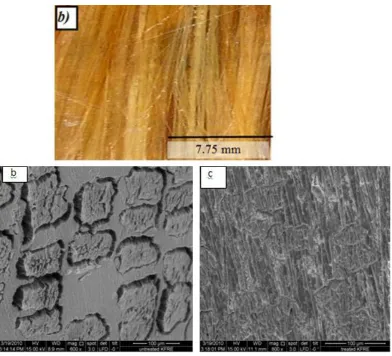
prepared composite is shown in Figure 3.3, a–c. Comparing Figure 3.3 b and c
clearly shows that the NaOH treatment enhanced the bonding regions of the fibre
33
Figure 3. 3 SEM micrographs of cross-sections of KFRE composites: a) Photo of the
composite; b) Untreated kenaf fibre; c) Treated kenaf fibres (Chin and Yousif, 2009)
3.2 Experimental Procedure
A BOD machine was used for these experiments, and is shown in Figure 3.11. The composite surface specimens (10 mm × 10 mm × 20 mm) were rubbed against a
stainless steel (AISI 304, hardness=1,250 HB, Ra=0.1 µm) counterface under
dry/wet contact conditions. For intimate contact between the specimen and the
34
paper (Sic G2000) and then cleaned with a dry soft brush. The roughness of the
composite surface varied in each orientation. In the parallel and anti-parallel
orientations, the average roughness of five measurements in different regions was
around 0.30 µm (Figure 3.12a). Meanwhile, in the N-O, the composite roughness values were an average of approximately 0.70 µm (Figure 3.12b).
Material
Holder
Load
adjuster
Load cell
Infrared
thermometer
Weight indicator
[image:44.595.118.515.255.551.2]Counterface
Figure 3. 4 the BOD machine working under dry contact conditions (Yousif, 2013,
Chin and Yousif, 2009)
35
specific wear rate (Ws) at each operating condition was determined using the
following equation:
D
L
W
/
Ws
Where:
Ws: Specific wear rate (mm3/Nm)
∆W: Weight loss (mg)
p:Density (kg/m3)
L: Applied load (N)
D: Sliding distance (m)
During the tests, frictional force was measured by a load cell, which was fixed at the
middle of the lever that applied the loads.
For the wet adhesive wear test, tap water was supplied to the interface via a pump
with flow rate of 0.2 l/min. After each test, the worn surface was coated with a thin
layer of gold using an ion sputtering device (JEOL, JFC-1600) and a scanning
electron microscope (JEOL, JSM 840) was used to observe the surface. Each
tribological test was repeated three times and the average of the measurements were
36
During the dry adhesive wear tests, an infrared thermometer (Extech 42580) was
used to measure the initial interface temperature and calibration was performed to
determine the interface temperature. In the calibration process, the infrared
thermometer was pointed at the midpoint of interface between the specimen and the
stainless steel counterface during the tests. The calibration of the temperature was
carried out under stationary conditions. The counterface was heated using an external
heat source. While the counterface was heated, a thermocouple was placed between
the specimen and the counterface. The temperatures measured by both thermometers
(infrared and thermocouple) were recorded simultaneously until the interface
temperature reached approximately 80 Co. This process was repeated three times and the averages were determined. The measured temperatures (thermocouple) were
plotted against each other and the fit line was determined using the calibration
equation.
3.3 Collected frictional data:
The credibility of data is very essential for the experiment to produce a highly
reliable result that can be trusted and can be relied on. Collecting data can fall into
two main categories, which are quantitative and qualitative research methods. The
procedure, which was used to collect data in this report, was the quantitative method
of collecting data. The quantitative research method usually calculate the
37
experiences into a well-defined response categories which result in a set of data that
is easy to compare, summarize and generalize (Creswell and Clark, 2007).
3.3.1Machine used to conduct tribology test
The tribology machine was used to conduct a tribology test on a sample of Kenaf
fibre which was brought from a Malaysian agriculture to measure the temperature
and the friction coefficient for different applied loads and with variety of different
speeds. Below is a table showing the produced excel sheet from the tribology
38
39
The above sample table is showing the data that was collected from the tribology
machine. The first column on the left is representing the time in sec that is relative to
the recoded data for the temperature and friction. The second column is showing the
sliding distance in Km and it measures the data up to a distance of 5 Km. the
40
Table 3 is showing the data for a rotating speed of 1.1m/s and 3.1m/s.
The above table is another example of the excel sheet that was produced by the
tribology machine and it is showing the conducted tribology test results for the
Kenaf fibre. The test was conducted according to these speeds (1.1m/s and 3.1m/s);
the first column on the left is again showing the time in (sec). On the second column
from the left the (SD) column is representing the sliding distance for the rotor which
is rotating up to a distance of 5 Km. the third column represents the friction
coefficient at an applied load of 50N and the fourth column represents the
41
3.4 Software used to analyse the data:
There is a long variety and a wide range of different statistical software in today’s
world; as a result it was challenging to choose the software that would be used to do
the analysis of the data. After a long time of research and a recommendation of the
supervisor Minitab statistical software was chosen to be the program to perform all
the statistical analysis needed because of its simplicity and its ease of use. Minitab is
very powerful statistical software that is able to do all the statistical analysis needed
for this study. On figure 4.5 below is a screenshot showing the layout of the Minitab
program. Minitab is mainly consists of two windows an upper window and the down
window, the upper window is called the session window and its purpose to show the
result of the analysed statistical data also it shows the commands or tasks that
Minitab was asked to perform. The down window is the worksheet window which is
a spread sheet where the data is inputted and it can be easily manipulated. In the
worksheet window the inputted data can be inputted as a text, numerical or date and
this depends on the type of data that the experimenter has. The data can be entered
manually in the worksheet or it can be copied and pasted directly from an excel
spread sheet. Many different designs of experiments (DOE) can be conducted using
Minitab program such as factorial, response surface, mixture and taguchi. The main
objective for using the response surface methodology in this research paper is for
42
43
CHAPTER 4
RESULT AND DISCUSSION
4.1 Dry Adhesive Frictional Behaviour of Composites
The frictional force was captured during each experiment for all operating
parameters. Due to the large volume of data collected, it was summarised and is
presented in this section. The friction coefficients versus the sliding distances at
different applied loads and velocities for the NE and the KFRE composites were
developed and a sample of the frictional data is given in Figure 4.4. The figure displays the friction coefficient against the sliding distance for the KFRE composite
at N-O under different applied loads at a sliding velocity of 2.8 m/s. All materials
showed similar frictional behaviour at all the operating parameters tested; i.e., the
frictional coefficient was high at the start of the sliding (running-in) and then reached
a steady state after a sliding distance of approximately 4 km. This behaviour is
common in both natural fibre-polymer and synthetic fibre-polymer composites, since
there is a high shear force in the contact zone in the first stage of the adoption
process between the asperities in contact. After this stage, a steady state friction
coefficient is achieved if there is no change in the contacted surfaces. For synthetic
fibre-polymer composites, stability of the friction coefficient has been reported in
studies of carbon-epoxy(Zhou et al., 2009), glass or a carbon-aramid hybrid
weave-epoxy and three-dimensional braided carbon fibre-weave-epoxy (Ahmed and Vijayaragan,
44
composites is mainly due to the modifications that occur on the track surface of the
[image:54.595.112.525.171.433.2]counterface (Salih et al., 2013).
Figure 4. 1 Sample of the frictional data showing the coefficient versus sliding
distance of KFRE in N-O at a sliding velocity of 2.8 m/s.
To examine the influence of the applied load on the friction coefficient and frictional
behaviour of the composites, the average of the friction coefficient after a 5 km
sliding distance was determined for all materials under different applied loads and is
presented in Figure 4.5. NE and KFRE in N-O exhibited higher friction coefficients (0.5–0.75) than the other composites. KFRE in AP-O exhibited a relatively low
friction coefficient (0.32–0.42). From the wear behaviour (see Section 4.2.1), the 0 0.1 0.2 0.3 0.4 0.5 0.6 0.7 0.8 0.9 1
0 1 2 3 4 5 6
F ric ti on C oe ffic ient
Sliding Distance, km
30 N 50 N
45
wear resistance in the KFRE composite in N-O is higher than that of other
composites, which indicates high resistance at the interface and reflects the high
friction coefficient at this fibre orientation. In the case of the NE, the wear property
was much lower than its composites and hence the frictional behaviour of NE is
relatively poor compared to its composites. It appears that the film transfer on the
counterface has high adhesion characteristics, which causes stickiness between the
asperities and leads to a high friction coefficient. This is followed by detachment of
the film, resulting in high levels of material removal. This is illustrated in Figure 4.6
[image:55.595.128.489.341.583.2]and will be discussed further in a later section.
Figure 4. 2 Friction coefficient versus applied load for NE and KFRE at different
orientations.
As a result of dry sliding, heat is generated at the interface, which can play an
important factor in determining the wear mechanism of the materials. Figure 4.7
0 0.1 0.2 0.3 0.4 0.5 0.6 0.7 0.8 0.9
0 20 40 60 80 100 120
Applied load, N
46
delineates the maximum interface temperature that was measured during the rubbing
at the longest sliding distance of 5 km at different applied loads. Due to the high
friction coefficient of the NE and the KFRE composite in N-O, higher interface
temperatures were produced compared to KFRE composites in P-O and AP-O.
Despite the high interface temperatures, the maximum temperature did not reach the
Tg of the epoxy (approximately 125 Co). However, the presence of the heat associated with the shear loading at the interface may combine with the load at the
interface to become thermo-mechanical and then cause deterioration of the soft
surface. A plastic deformation and/or softening process may be expected to take
[image:56.595.129.507.359.587.2]place in the resinous regions of the composites during sliding.
Figure 4. 3 Interface temperatures versus applied load
0 10 20 30 40 50 60 70 80
30 50 70 100
Applied load, N
47 4.2 Effects of applied loads on friction.
The test of the Kenaf fiber sample was conducted using different applied loads. The
first experiment was conducted with an applied load of 30N then the load was
increased to 50N. Furthermore, the experiment was performed for a load of 70N and
lastly for a load of 100 N. The figures below are showing the Sliding distance
plotted against friction for different applied loads, and the results will be compared
between the different applied loads to see the effect of increasing or changing the
[image:57.595.121.525.365.593.2]applied load.
48
Figure 4. 5 Friction @ 50 N verses Sliding Distance (Km)
[image:58.595.114.523.400.676.2]49
Figure 4. 7 Friction @ 100 N verses Sliding Distance (Km)
Generally the effect of increasing the applied load can be explained as, it has a
proportional effect on increasing the friction coefficient. On other words when the
load increases the friction coefficient increases as well. On fig (4.4) the friction
coefficient starts at about 0.92 and then it was rapidly decreasing until it reaches 2.5
Km sliding distance then the line has flatten out and start to slowly slide until it
reaches 3.5 Km at a friction coefficient of nearly 0.45 after that the line starts to
oscillate from 0.4 and 0.5 until it reaches the final sliding distance of 5 Km and 0.41
frictional coefficient. Fig (4.5) shows the sliding distance verses friction at an
applied load of 50 N. the friction coefficient initially starts at 0.9 and the heavily
50
of 3 Km the friction line starts oscillating until it was at 4.2 Km sliding distance then
the friction coefficient start slowly increasing until it stops at 0.55 friction
coefficient. Fig (4.6) shows the sliding distance verses friction at 70N applied load.
The friction coefficient starts at about 0.86 then it was slightly declining until about
0.5 Km sliding distance the it was slowly increasing until 1.1 Km then again it was
gradually falling until it reaches sliding distance of 2.2 Km. the friction coefficient
continued descending slowly until it came to stationary at friction coefficient of
about 0.54. Lastly on fig (4.7) is the sliding distance verses friction at an applied
load of 100N. The friction coefficient start at a value of 0.98 and at first it had a
heavy drop until it reaches 0.79 at a sliding distance of 1.2 Km then the friction
coefficient line slowly was decreasing until it reaches 0.58 at a sliding distance of 3.2
Km where the friction coefficient line level off until it stops at a friction value of
0.55. From all the above it can be concluded that, the load has a direct effect on the
friction value. When the load increases it produces more friction on the Kenaf fibre
sample because it pushes the rotor disk more tightly on the Kenaf sample and thus
the value of friction increases when the applied load increases.
4.3 Effects of different applied loads on temperature.
As it is widely known wherever there is friction there will be temperature as well.
Also whenever, the value of friction increases temperature value increases as
51
temperature will be conducted and discussed. The following graphs show the
[image:61.595.115.511.136.403.2]behaviour of temperature at different applied loads.
52
Figure 4. 9 Temperature @ 50 N verses Sliding Distance (Km)
[image:62.595.135.503.392.642.2]53
Figure 4. 11 Temperature @ 100 N verses Sliding Distance (Km)
In fig (4.8) where temperature is plotted verses sliding distance at an applied load of
30 N, it can be noticed that, the temperature starts at about 24 Co and the
temperature line was held steady until it reaches 0.16 Km sliding distance then
temperature increases rapidly until it reaches 33 Co then temperature levelled off and
continued going steady until it reaches 1.8 Km. after that the temperature starts rising
until it reaches 45.5 Co. fig (4.9) is showing the temperature at an applied load of 50
N verses the sliding distance. The temperature starts at about 23 Co then gradually it was increasing until it reaches 32 Co at a sliding distance of 1.8 Km then the temperature line has flatten out until it reaches sliding distance of 2 Km the it was
54
an applied load of 70 N plotted against the sliding distance. At the start temperature
was 23 Co then the temperature was slightly increasing until it comes to 26 Co at a sliding distance of 0.86 Km it levelled off until it reaches 1 Km sliding distance then
it starts climbing again until it reaches 36 Co at a sliding distance of 1.8 Km then the temperature stabilised until sliding distance of 2.2 Km then the temperature was
steadily rising until it reaches 58 Co. finally in fig (4.11) is the temperature at an applied load of 100N plotted against the sliding distance. The temperature starts at
24 Co then it was steadily increasing until 1.4 Km sliding distance then it had a rapid increasing where it reaches 34 Co then it was gradually increasing again until it reaches 50 Co. after the temperature reaches 50 Co at about 3.6 Km sliding distance there was a rapid rising again from 50 to 60 Co the temperature was steadily increasing until it reaches a final value of 70 Co. from all the above it can be concluded that load differences is a key factor in changing the temperature. When
the load increases the temperature value increases as well, due to the increment of
the friction factor and this has a direct effect on the temperature.
4.4 Effect of rotating speed on friction
As it was mentioned earlier, the conducted tribology test was done for four different
rotating speeds. The test was conducted at running speed of 1.1m/s, 2.8m/s, 3.1m/s
and 3.5m/s. in the following we will investigate the effect of changing the rotating
speed on friction and temperature. The below graph is illustrating the behaviour of
55
Figure 4. 12 Friction coefficient at rotating speeds of 1.1m/s and 2.8m/s verses time
From the above figure, generally it can be said that the friction coefficient decreases
when the rotating speed increases as it can be clearly seen from the figure. At time
0.5 sec the rotating speed of 1.1m/s had a higher friction coefficient than the rotating
speed of 2.8 m/s then they all start decreasing. After 4 seconds of time had pass the
rotating speed of 1.1 m/s start to get higher readings for friction than the founded
readings for friction at rotating speed 2.8m/s. The gap between the two different
rotating speeds starts to widen up after passing 11 sec where the friction coefficient
for the rotating speed of 1.1m/s was 0.74 and the friction coefficient for the rotating
speed of 2.8 m/s was 0.65. The test ended at time 30 sec and the final reading for
friction at the rotating speed of 1.1 m/s was 0.7 and the final friction reading at the
56
Figure 4. 13 Friction coefficient at rotating speeds of 3.1m/s and 3.5m/s verses time
From the above figure it can be clearly seen that the difference between the friction
coefficients for the two rotating speeds (3.1m/s & 3.5m/s) does not have a noticeable
change, which is might be the cause of not making a big difference between the two
rotating speeds. At the start and at a time of 1 sec the two frictional coefficients were
almost at the same point then they start varying a little bit up and downs until they