This is the Submitted Version of a paper published in the
journal of Higher Education Research and Development:
Mills, Jane, Felton-Busch, Catrina, Park, Tanya, Maza, Karen, Mills, Frances, Ghee, McCauley, Hitchins, Marnie, Chamberlain-Salaun, Jennifer, and Neuendorf, Nalisa (2014) Supporting Australian and Torres Strait Islander
nursing students using mentoring circles: an action research study. Higher Education Research & Development, 33 (6). pp. 1136-1143.
http://dx.doi.org/ 10.1080/07294360.2014.911262
Supporting Australian Torres Strait Islander and Aboriginal nursing students
using mentoring circles: an action research study
Authors
Jane Mills RN, PhD, MN, MEd, BN, GradCertEdu, ACN
Associate Professor, Director, Centre for Nursing and Midwifery Research
School of Nursing, Midwifery and Nutrition
PO Box 6811, Cairns, QLD, Australia, 4870
Catrina Felton-Busch, BA, MPH, GradCert PHCR
Director, Indigenous Health Unit
Faculty of Medicine, Health and Molecular Science
James Cook University, Townsville, QLD, Australia, 4811
Tanya Park RN, RM, PhD, BNSc, GDipMHN, MMid, GCTT,
Deputy Head of School / Senior Lecturer
School of Nursing, Midwifery and Nutrition
PO Box 6811, Cairns, QLD, Australia, 4870
Karen Maza
Manager, Indigenous Student Support,
Faculty of Medicine, Health and Molecular Science
James Cook University – Townsville, QLD, Australia, 4811
Administration Support Officer
James Cook University - Thursday Island Campus
Courthouse, Thursday Island, QLD, Australia, 4875
McCauley Ghee RN BNSc
c/o James Cook University - Thursday Island Campus
Courthouse, Thursday Island, QLD, Australia, 4875
Marnie Hitchins BA GradDipEd
Research Assistant School of Nursing, Midwifery and Nutrition
James Cook University – Cairns Campus
PO Box 6811, Cairns, QLD, Australia, 4870
Jennifer Chamberlain-Salaun, BA, CertBus, GradCertRes, PhD Cand
Research Assistant School of Nursing, Midwifery and Nutrition
James Cook University – Cairns Campus
PO Box 6811, Cairns, QLD, Australia, 4870
Nalisa Neuendorf
Research officer, School of Medicine and Dentistry
James Cook University - Cairns Campus
PO Box 6811 CAIRNS Q 4870
p. +61 (7) 4042 1227 (Cairns)
Supporting Australian Torres Strait Islander and Aboriginal nursing students
using mentoring circles: an action research study
Abstract
Attempts to recruit Aboriginal and Torres Strait Islander students into nursing degrees
have made minimal impact on the number of registered nurses working in Australia’s
health care sector. Yet increasing the number of Indigenous nurses remains one of the
most important objectives in strategies to close the health gap between Indigenous and
non-Indigenous people. Poor retention of Aboriginal and Torres Strait Islander students
in a Bachelor of Nursing Science degree offered in far north Queensland, Australia,
indicates the need for a different approach to support and retain Indigenous students.
This action research study used a decolonizing methodology and was conducted at a
satellite university campus in a remote Torres Strait Island community. Researchers
trialled the use of a mentoring circle to support and retain nursing students and
interviewed mentors and mentees about their experiences. Grounded theory methods
were used to analyse the data. Findings indicated a growth in participant students’
emotional intelligence as a result of participating in a mentoring circle. Students
developed confidence, formed a group identity, better-negotiated the university
environment, became more effective communicators and supported one another
through difficulties. The mentoring circle model improved students’ university
experience and its use should be considered by tertiary educators working with
Indigenous students.
Keywords
Introduction
Improving the health of Indigenous populations requires greater representation of
Indigenous people in health service industries (Felton-Busch, Solomon, McBain, &
De La Rue, 2009; Goold, 2006; West, Usher, & Foster, 2010). Identifying and
implementing anticipatory and tailored strategies for under-represented student
groups supports student retention and success rates (Crosling, Heagney, & Thomas,
2009). The authors report findings from an action research study undertaken with
Aboriginal and Torres Strait Islander students enrolled in a Bachelor of Nursing
Science (BNSc) at the remote satellite site of a main university campus. The aim of
the study was to identify, describe, implement and evaluate contextually-relevant
student learning support strategies using a mentoring circle model.
The model consisted of two skilled mentors facilitating regular group meetings,
activities and discussions with study participants. Using an action research design
informed by decolonizing methodology, researchers aimed to achieve four objectives:
1) for students to describe and define success in the context of higher degree study at
a very remote site; 2) to collaboratively-design a suite of student-driven and evaluated
support strategies specific to a very remote site; 3) to identify and describe contextual
enablers for student success; 4) to identify and describe contextual barriers to student
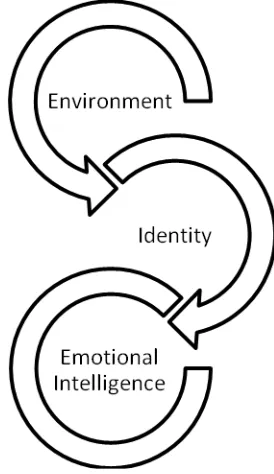
success. Throughout the course of the study three action research cycles occurred
relating to environment, identity and emotional intelligence. Data sources included
artefacts generated from mentoring circle meetings, semi-structured face-to-face
interviews with Aboriginal and Torres Strait Islander nursing students and
semi-structured telephone interviews with mentoring circle facilitators. Analysis of the
study findings was guided by the emotional intelligence framework formulated by
mentoring circles and initiatives to develop emotional intelligence that would benefit
all students within undergraduate nursing education programs.
Background
This study centred on a project undertaken at a satellite campus in the Torres Strait
in far north Queensland, Australia. The Torres Strait is a culturally and
geographically-diverse region which stretches to Australia’s north-eastern
international border (Torres Strait Regional Authority, 2012). The region takes in
several Aboriginal communities on Australia’s Northern Peninsula and more than 100
islands, 18 of which are home to most of the Torres Strait Islander population. There
are five traditional island groupings, and English and three main Creole languages are
spoken there (Torres Strait Regional Authority, 2012). Approximately 7500 people
live on the islands and 2300 people live on the mainland of the Northern Peninsula
(Australian Bureau of Statistics, 2011).
In 2003 the university commenced delivery of a Bachelor of Nursing Science
degree (BNSc) at a newly-established, very remote satellite campus on Thursday
Island, which is the administrative hub of the Torres Strait. At its inception the
nursing program was described as a “novel and robust” (Usher, Lindsay, & Mackay,
2005, p. 440) way to increase the number of Indigenous nurses caring for and
working with their community members. It was believed the on-site approach “would
provide a more supportive environment and lead to better Indigenous retention
outcomes” (Usher, Lindsay, & Mackay, 2005, p. 439). Improved training and
retention of Indigenous nursing students has long been recognized in Australia and
internationally as one part of a multi-faceted approach to lift the health and well-being
representation of Indigenous nurses in the healthcare system and Goold’s (2002)
recommendations to achieve this ends, little progress has been made in Australia to
redress the balance (West, et al., 2010).
The substantial gap between the health of Indigenous and non-Indigenous
Australians has been documented extensively (Australian Indigenous Health InfoNet,
2012) with the Council of Australian Governments signing an agreement in 2007 to
‘Close the Gap’ in six key areas. (Coalition of Australian Governments, living
document). In 2011, figures showed some improvements had been made to
Indigenous health statistics but that Aboriginal and Torres Strait Islander people were
still more likely than non-Indigenous people to die younger, have diabetes, develop
diseases of the heart, lungs and kidney, and require treatment for a communicable
disease. For this group of Australians, infant mortality is higher; average birth weights
are lower (Australian Indigenous Health InfoNet, 2012).
Aboriginal and Torres Strait Islander people represent 2.5 per cent of Australia’s
general population (Australian Bureau of Statistics, 2011) but remain
under-represented in health service industries, accounting for 0.2 per cent of the health
workforce. Just 9 per cent of those workers hold a bachelor or higher degree
(Australian Institute of Health and Welfare, 2012). Statistics from the Torres
Strait-based BNSc initiative reflect this struggle to increase numbers of Indigenous health
professionals. In the past decade the university has enrolled 68 students in the BNSc
program in the Torres Strait. There have been four graduates (Leete, 2013). It is a
statistic that indicates a need for more intensive, context-specific support strategies
tailored for this group of students. Rigby et al (2010-2011) found “processes which
promote resilience and well-being are critical to improving Indigenous higher
The support strategy identified for trial in this study was mentoring circles – a
model which combines the psychosocial and professional benefits of hierarchical,
one-on-one mentoring with those gained from group work (Huizing, 2012). Palermo
et al (2011) list some benefits of group work as the development of trusting
relationships, reflective practice, and gains in professional competency. The
mentoring circle developed for this study fits a one-to-many model, as described by
Huizing (2012) in which an experienced and skilled mentor is grouped with several
less-experienced participants to facilitate regular meetings, activities and discussion.
The mentoring circle aimed to enable the participants – mostly Aboriginal and
Torres Strait Islander students - to identify tailored strategies in a safe,
culturally-appropriate and supportive environment which would make a difference to their lives
as nursing students. As there is little information about these types of learning and
teaching strategies being used with Torres Strait Islander students in tertiary
education, this study will make a substantial contribution to the body of knowledge
about this issue.
Theoretical Framework
Emotional intelligence is described by Goleman (1998) as “the capacity for
recognizing our own feelings and those of others, for monitoring ourselves and for
managing emotions in ourselves and in our relationships” (p. 317). Emotional
intelligence is an important concept in nursing work and is closely-linked to the
nurse-patient interpersonal relationship. It is also important for nursing students
because scholarly success and persistence with university studies is linked to
well-developed social management, emotional skills and resilience (Keefer, Parker, &
requires the student nurse to develop a range of strategies that can be described using
domains and competencies from the Emotional Intelligence Framework (Goleman,
2001). These domains include self-awareness, social awareness, self-management and
social/relationship management (Goleman, 2001). Each domain has identified skills
and competencies. For example, the self-awareness domain requires the person to
recognize their own emotions and their effect on others, while also recognizing their
personal strengths and limits (Kooker, et al., 2007).
Methodology and methods
This study used an action research design underpinned by decolonizing methodology.
Tuhiwai Smith (2012) states that
Indigenous methodologies tend to approach cultural protocols, values and
behaviours as an integral part of methodology. They are ‘factors’ to be built into
research explicitly, to be thought about reflectively, to be declared openly as part of the
research design, to be discussed as part of the final results of a study and to be
disseminated back to the people in culturally appropriate ways and in a language that
can be understood. (p.16)
The team of researchers responsible for designing and implementing this study is a
mix of non-Indigenous and Indigenous academics, student support workers and
alumni. The study was conceived by non-Indigenous academics in response to
indicators of poor student retention but Indigenous and Torres Strait Island team
members finessed the research design and were responsible for its eventual
implementation. Student participants interacted exclusively with the Torres
Strait-based and Indigenous researchers, who were alumni and student support officers. The
remainder of the research team, Indigenous and non-Indigenous academics, provided
data on-site at the campus. This support included regular video conferenced team
meetings. In these meetings, researchers conducted an iterative process of concurrent
data generation and analysis to refine the structure and conduct of the mentoring
circle meetings. On-the-ground researchers recounted and reflected on the stories
shared by student nurses about their university lives, and reflected on their personal
experiences of conducting research in the Torres Strait with Indigenous students with
the rest of the team. This process ensured the study continued to progress in a
supportive and culturally-appropriate way.
Evidence presented in the findings section of this study provides examples of how
the students’ cultural heritage and values provided a platform for their actions. It
would have been easy for academic members of the research team to fly in and ‘take
over’ the mentoring circle with helpful suggestions and ideas based on pedagogical
‘evidence’ for practice. This was never the intent of the study design and the research
team established agreed-upon principles that safe-guarded against such an eventuality.
The notion of having ‘hands-off’ members of the research team was, therefore,
implicit in the research design and allowed the student group to dictate the direction
of the research with mentors who were culturally sensitive to their needs. Artefacts
were generated as a result of strategies which students and local researchers decided
were appropriate in the context of the Torres Strait. An action research design was
chosen to meet the research aims because the experts in this study were the student
participants.
Action research was developed in the 1940s by social psychologist Kurt Lewin to
link social action to social problems. Lewin developed a cycle of planning, acting,
observing and reflecting on action that forms the basis of action research today
and used mentoring circles as a vehicle to drive the action research cycles. Student
participants identified common issues, discussed these within the group, devised
strategies for action, implemented these strategies and reflected on the outcomes.
They also considered how actions and outcomes from previous mentoring circle
meetings impacted on their student experience.
The student cohort was informed of the planned action research study at the
commencement of semester one. The Indigenous Student Support Officer held a
face-to-face information session about the study on campus. Written information sheets
and consent forms were provided to students at the information session. Students’
questions about the study were answered at this point. Of a total of 12 students
attending classes on campus, 11 provided written consent to participate in the study,
which included permission for their images to be used as part of the reported data set.
The University Ethics Committee granted approval for this study (H4469).
The BNSc is taught over two semesters. During the 12 weeks of semester one
student participants met four times. Additionally, students were accompanied by the
remote site facilitator to a residential block at the main university campus where extra
activities were undertaken as part of the mentoring circle study. During the 10 weeks
of semester two, students again met four times. Each mentoring circle meeting lasted
between one and one-and-a-half hours. The mentors planned activities for each
mentoring circle meeting with the aim of stimulating discussion within the group and
developing a shared identity as university students. Overall, the meetings were
loosely-structured and included sharing food. The format of each mentoring circle
included feedback on actions from the previous meeting and activities to build on
A data set was generated with participants that consisted of 68 artefacts. Included in
the data set were facilitator notes from the mentoring circle meetings, outcomes of
activities, worksheets, posters, graphic designs for a student shirt, interview
transcripts, and minutes from the research team meetings. Artefacts were numbered
and imported into NVivo, a computer software program for qualitative data analysis.
Grounded theory methods of data analysis (Birks & Mills, 2011) were used to code
and categorise the data set. Each artefact was open-coded by a research assistant. The
research team conducted intermediate coding during a data analysis workshop
conducted via video-conference between Cairns and the Torres Strait. Initial open
codes were discussed by the team and recoded if agreed upon by the group. Codes
were grouped into action research cycles with the assistance of diagramming.
Following this workshop, a storyline was developed by the chief investigator and
circulated to the research team for their input. From the storyline the theoretical code
of emotional intelligence was identified and data analysis progressed to advanced
coding where the theorization of each action research cycle was further refined.
Findings
The mentoring circle was a safe place in which students could network, talk and
solve problems. When students began the degree program they were ill equipped –
practically and emotionally – to deal with the foreign university environment, describing their degree program as a ‘frustration’ or ‘a struggle’. Through mentoring
circles, students formed a group identity and, through these supportive relationships, students’ emotional intelligence developed, as did their abilities to manage the physical and environmental difficulties they encountered. Mentoring circle
study to be a struggle to overcome or a burden to bear, mentoring circles helped
students to better negotiate their surroundings and frame the experience as a challenge
[image:13.595.232.369.190.427.2]to meet or a worthwhile goal to achieve.Three action research cycles, illustrated in
Figure 1, occurred during two semesters.
Figure 1: action research cycles
As recorded in the minutes of the first three mentoring circle meetings, students
identified a number of pragmatic environmental issues impacting on their ability to function effectively in the university setting. Environmental issues had two aspects:
physical and cognitive. Physical issues included access to the computer laboratory,
building facilities, textbooks, scholarships, tutors, printing and photocopying. As well
as access problems, students were having difficulty finding study spaces and coping
with air-conditioning breakdowns. These physical issues were resolved through
discussion during the mentoring circle, resulting in actions to remove barriers and
solve problems. For example: keys were allocated to allow for easier access to
Staff and students also identified cognitive skills required to function in the
university environment. These skills included time management, prioritizing tasks,
learning how to use a computer, accessing and navigating the online learning platform
and finding ways to communicate effectively with other students. One-on-one
coaching was used to support students to learn how to navigate the online learning
platform. Students developed posters for their shared study space to remind everyone
to be respectful of each other and not “…have your social discussions in the computer
room” (Artefact 41, line 319) As well, the mentoring circle facilitator developed a
computer basics booklet with students, which was placed next to each terminal in the
laboratory. The group also introduced a feedback box. Peer-to-peer communication
skills developed strongly during this cycle of action. In many ways, the first cycle of
resolving environmental issues was akin to ‘clearing the decks’ before the students
began to face up to the emotional demands of becoming a university student.
At the final meeting of Semester 1, there was a noticeable turn in the topics
discussed in the mentoring circle meetings. Students began to share their experiences
of balancing paid employment, study and family.
“(We are)…trying to bring some ideas together of having work support the staff that
are studying. I think that’s something that came up in these mentoring groups, because
we all work and we’re all trying to [do] both at the same time… the mentoring circle
brings out… the ideas and the opinions of everybody else.” (Artefact 32, Line 76)
Just prior to this meeting, the majority of students participating in the mentoring
circle, along with their local facilitator, had visited the main campus for a residential.
Here they connected with the Indigenous Student Support Officer who led the first
three meetings on the island. It was at this point that the mentoring circle group
of travelling away from the island. Together they caught public transport, shared
accommodation, experienced specialized teaching sessions and were guests for lunch
at the Indigenous Health Unit.
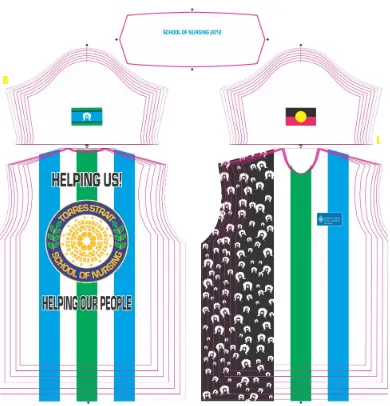
The consolidation of the mentoring circle group’s identity was also assisted by an
activity instigated by facilitators in earlier meetings. Students designed a polo shirt as
a physical expression of group identity. Early sketches of the design drew upon the
cultural heritage of the students and the history of the university on the island. Old
and new elements were incorporated into the final design (Figure 2), which was an
expression of student solidarity and their sense of belonging. The polo shirt was more
than a tangible representation of the group’s identity; it demonstrated that, by working
together, students could achieve results and produce something useful. Membership in
the group became a source of pride and differentiated nursing students as part of an
‘elite group’ (Artefact 41, line 375). The students began inviting other students to
[image:15.595.206.401.482.685.2]meetings.
The third cycle was increasing emotional intelligence. Having formed a group
identity, students began to take more responsibility to ensure relationships remained
harmonious and productive. Students examined their motivations to study nursing,
questioned the effectiveness of their study strategies, looked at their strengths and
weaknesses and considered alternative ways to achieve their goals. They began
speaking to each other about more personal issues and sought out peers in their
mentoring circle when they needed help to solve a problem. The data from the third
cycle was analysed using the emotional intelligence framework cited by Kooker et al
(2007) which divides emotional intelligence into four domains of self awareness, self
management, social awareness and social/relationship management. In this study,
students’ emotional intelligence growth was noted predominantly in the areas of self
awareness, social awareness and relationship management.
Self Awareness
A person with well-developed self-awareness has an accurate picture of their
own strengths and weaknesses, strong self confidence and can recognise their
emotions and the effect these emotions have on others (Kooker, et al., 2007).
Self-awareness was put in the spotlight by the mentor when she invited participants in the
fifth mentoring circle meeting to ‘map’ their lives. In developing the resource
(artefact 47) the mentor put ‘me’ firmly in the middle in an effort to help students
better conceptualise the pressures, stresses, joys and practicalities of their lives. She
described the resulting conversations as ‘a very open discussion on the challenges of
being a student, and the balances between work commitments, home commitments
“Part of it is simply acknowledging that these issues are true and real and have an effect
on your ability to study ... and in amongst that awareness, not necessarily have that
family commitment and business as a scapegoat.” (Artefact 41, line157-159)
The supportive environment of mentoring circles gave students a more realistic view
of what they could expect from themselves when it came to study. Students began to
identify and address gaps in their knowledge and skills. One student acknowledged
her limits, saying she found it difficult to explain aspects of her life (Artefact 25, line
24). Another spoke of one of her strengths as a willingness to speak up and express
opinions, and help others to do the same (Artefact 21, line 20). As students became
better at practical skills like time management and researching, and at articulating
their ideas and feelings, self-confidence grew. The confidence evident when students
spoke with their peers, however, was not so noticeable when they spoke to people
outside the island or to lecturers during video-conferencing. “I can’t ask questions
(on) video conferencing cos everyone will be looking at me.” (Artefact 64). Students
decided to stop embarrassment and fear from getting in the way of their learning.
Some students wanted to build their confidence to stand up tall and others wanted to
look at alternative ways they might use to have their questions answered. Together,
they designed a series of posters with the catchcry, ‘Don’t be Shame!”, which were
put up in the lecture rooms. (Artefacts 14, 15, 16, 17, 18)]
Social awareness
Social awareness is the ability to empathise with people and take an interest in
their concerns. It also covers one’s ability to meet the needs of customers and fit into
organizational settings (Kooker, et al., 2007). By sharing their stories in mentoring
circles, students came to understand each other better, and to see how pooling
awareness produced both practical and emotional benefits. Students knew where and
to whom they could turn for help (and often, that was to each other) and they felt less
isolated and alone. Empathy and understanding grew. “It’s nice to know that you’re
in a group with people doing the same thing and everybody’s at the same place and
you’re not the only one struggling.” (Artefact 27, line 12)
Early in the research study, mentors noticed some students were unwilling to
or unaware of how to seek help or make needed changes. As meetings progressed,
students realized they could help themselves and others. As one mentor explained,
students with concerns would “whisper that they did not want to say anything bad
but…” (Artefact 31, line 128) then explain their problem. As time passed and
organizational awareness grew, students would “come and tell them what to do or
what they want.” (Artefact 41, line 309)
Self management
Self management is made up of a number of traits consisting of emotional self
control, trustworthiness, conscientiousness, adaptability, initiative and internal drive
(Kooker, et al., 2007). This was the area in which there was the least evidence of
students’ emotional growth. Some students said they were feeling less stressed
because they had decided to make their studies a higher priority, thereby
demonstrating emotional self control. “Stress is, I think, when you think about a lot of
things, but if you’re more focussed and you know what you’re doing, you don’t stress
yourself as much ... I prioritise my stuff like the top of the list is my, my, my, my
Social/Relationship management
Students’ growth was strongest in the area of social/relationship management.
Social/relationship management includes leadership skills, networking, conflict
resolution, wielding interpersonal influence, teamwork, collaboration, developing
others’ abilities, being a ‘change catalyst’ and sending clear and convincing messages
(Kooker, et al., 2007). The most tangible example of this growth can be seen in
students’ comments about stressing to family and friends how important their study
was to them.Students placed a high priority on study and sufficiently developed their
influence tactics to make their wishes known to other people around them. This
involved sending clear and convincing messages to family and friends about their
decision to focus on study.
Students also began to develop leadership skills and act as a ‘change catalyst’,
expressing a desire to invite local councilors to their mentoring circle meetings to talk
about changes around campus and to tell the wider community about the activities in
which they were involved. On a practical level, students also came to the realisation
they could work together to solve many of their problems – a ‘bolstering and
development’ skill. They used the mentoring circle as a forum in which to obtain
advice. “…we can voice our opinion, then as a group, we discuss it together and come
to a conclusion and we support and help each other in our mentoring circle group”
(Artefact 22, line 27)
Throughout the study, the mentoring circles group became a ‘halfway place’ where
students, who had felt helpless at times in the university environment, could develop
emotional intelligence and competencies which allowed them to better cope and apply
learn skills and see other viewpoints and apply their existing skills in new and
unfamiliar settings.
Discussion
In recent years there has been a renewed interest in the use of group mentoring
models to support people working in the health and medicine sectors (Caldwell,
Dodd, & Wilkes, 2008; Palermo, et al., 2011) and as a teaching and learning tool for
nursing students (Kostovich & Thurn, 2013). Researchers have found it to be a
promising way to increase communication and cooperation skills, and to decrease the
stress levels of students and clinicians alike (Fletcher, Leadbetter, Curran, &
O'Sullivan, 2009; Slaski & Cartwright, 2003). The benefits described in these group
mentoring studies equate to the growth of emotional intelligence. Similarly, this study
found mentoring circles did support the growth of some aspects of participants’
emotional intelligence. This, in turn, made students’ university experience less
stressful and more socially-satisfying. It will take time, however, to discover whether
these outcomes will translate into improved student retention - one of the aims of this
project.
The supportive learning environment of group mentoring has been recognised
in the higher education sector as an effective way to improve student retention,
particularly for minority groups and poorly-prepared university students (Haring,
1999; Shields et al., 2012). For example, in Alaska, a psychology professor noted
Native students started to participate more in class and improve their academic results
after she initiated an informal weekly ‘catch-up’ class which functioned in much the
same way as a mentoring circle. She subsequently researched the preferred learning
students than the ‘passive’ learning style of lecturing (Wilson, 1997). Similarly,
researchers in New Zealand changed their teaching practices after studying
experiential group learning styles for Maori students in an economics course
(Zapalska, Brozic, Dabb, & Keiha, 2002). The study is part of a bundle of New
Zealand-based literature which seeks to solve the ‘retention and achievement puzzle’
in universities, particularly in relation to Maori students (Zepke & Leach, 2005).
In Australia, researchers have noted a clash which can occur when Indigenous
Australian students enter the ‘foreign’ university culture (Usher, Lindsay, Miller, &
Miller, 2005). This has serious impacts on student retention and participation in
higher education (DiGregorio, Farrington, & Page, 2000; Rigby, et al., 2010-2011;
Sonn, Bishop, & Humphries, 2000). A number of Australian studies into improving
Indigenous student outcomes and retention have focused on two main issues: what is
being taught and who is teaching. Researchers have been asking if the content is
culturally-relevant, and if teachers are themselves Indigenous, or have sufficient
cultural understanding and knowledge to relate well to Indigenous students (Rigby, et
al., 2010-2011; Usher, Miller, Turale, & Goold, 2005). There has been less literature
looking into how students are being taught. There is little documentation, for
example, about group mentoring models being used with Aboriginal and Torres Strait
Islander students in Australia to improve retention, as has been the case in places like
Alaska and New Zealand (Wilson, 1997; Zapalska, et al., 2002). Working in a circle,
however, is a learning method historically used in Indigenous Australian cultures
which continues to be relevant today (Begoray & Bannister, 2008).
Mentoring circles encourage participants to develop and maintain useful
relationships and to engage in reflective thinking. Meetings provide participants with
2011). Researchers in this study noted the emotional skills and competencies which
students developed by participating in group mentoring did not extend to
competencies in all four domains of emotional intelligence. Emotional growth was
more concentrated in three of the four domains. There was clear evidence of students’
growth in self awareness, social awareness and social management – more
specifically, in their abilities to understand their own strengths and limitations, to
manage the systems and processes of the university, to empathise with others and to
work together effectively. In the fourth domain of self-management, however,
researchers could find less evidence of participants’ growth. The question needs to be
asked, ‘Do mentoring circles develop the ‘right’ emotional traits and intelligences
needed to encourage persistence and success in study?’
Low emotional intelligence scores are common to many people who drop out
of university. Students with high general emotional intelligence are more likely to
succeed or stay at university (Parker, Hogan, Eastabrook, Oke, & Wood, 2006;
Qualter, Whitely, Morley, & Dudiak, 2009). Certain emotional traits and specific
emotional skills can be used to predict which students are more likely to persist with
their studies. If students deal well with stress and/or have a supportive network of
friends, they are more likely to stay at university (Keefer, et al., 2012). These
particular traits were developed within the group learning framework of mentoring
circles which was employed in this study. Parker (2006) also identified adaptability
and self-awareness as traits common to students who persist at university. In this
study, self-awareness was a skill where much development was noted. Limited
evidence could be seen, however, that students became more adaptable in their
important emotional skill for university students, this skill may need to be honed or
explicitly taught to increase students’ ability to successfully complete their degree.
On considering the literature about mentoring groups and about emotional
intelligence in nursing and higher education, there are a number of directions further
studies or initiatives may take. Turning the group mentoring into a subject in its own
right is one such direction, an approach documented in Kostovich & Thurn (2013).
Incorporating such a subject into the degree program might mitigate some of the time
restrictions which prevented some students from participating fully in the mentoring
circle program. Alternatively, group mentoring may be considered as a teaching
strategy to be used in tutorial sessions. Another direction future initiatives may take
could be to include specific emotional intelligence training in the mentoring circle
activities. Fletcher et al (2007) assert that some aspects of emotional intelligence can
be taught and existing emotional intelligence can be developed. This may lead to a
more purposeful and directed development of emotional skills and intelligences.
Conclusion
A mentoring circle is one way forward for universities to support Indigenous
students to achieve their academic goals and graduate. Students who participated in
this action research study perceived many benefits in the model, particularly in
relation to the collegial and supportive networks students formed by joining the
mentoring circle. Mentors noted students’ increased confidence and communication
skills and the way participants built their abilities to study and manage their time in
the foreign university culture. Many of the practical and emotional barriers which
were making study difficult – family, community and work pressures - were brought
into the open in the mentoring circle and addressed by students. To improve
teaching and how it is being taught. Mentoring circles falls into the latter category. By
offering culturally-appropriate support to Indigenous students, universities may
succeed in creating an environment which is less foreign for Aboriginal and Torres
Strait Islander students.
Acknowledgment
A James Cook University, Learning and Teaching Grant funded this study. The
authors would like to acknowledge the traditional owners of the land on which the
study was conducted, the Kaurareg. Thanks also to Mr Matt Mason, lecturer, School
of Nursing, Midwifery and Nutrition, Thursday Island Campus, Mrs Fay Acklin
academic,and Romina Fujii, president of the Port Kennedy Association.
References
Australian Bureau of Statistics. (2011). 2011 Census Community Profiles: Torres Strait Indigenous Region. Retrieved 12 March 2013, from
http://www.censusdata.abs.gov.au/census_services/getproduct/census/2011/co mmunityprofile/IREG307?opendocument&navpos=230
Australian Indigenous Health InfoNet. (2012). Summary of Australian Indigenous health. Retrieved 12 March 2013, from
http://www.healthinfonet.ecu.edu.au/health-facts/summary
Australian Institute of Health and Welfare. (2012). Australia's health 2012. Canberra: Australian Institute of Health and Welfare.
Begoray, D., & Bannister, E. (2008). Learning about Aboriginal contexts: the reading circle approach. Journal of Nursing Education, 47(4), 324-326.
Birks, M., & Mills, J. (2011). Grounded Theory: A practical guide. London: Sage. Caldwell, J., Dodd, K., & Wilkes, C. (2008). Developing a team mentoring model.
Nursing Standard, 23(7), 35-39.
Coalition of Australian Governments. (living document). National Indigenous Reform
document (Closing the Gap). Retrieved from
http://www.federalfinancialrelations.gov.au/content/npa/health_indigenous/ind igenous-reform/national-agreement_sept_12.pdf.
Commonwealth of Australia. (2007). National Strategic Framework for Aboriginal and Torres Strait Islander Health 2003-2013, Australian Government
http://www.health.gov.au/internet/main/publishing.nsf/Content/6CA5DC4BF0 4D8F6ACA25735300807403/$File/nsfatsih2013.pdf.
Crosling, G., Heagney, M., & Thomas, L. (2009). Improving student retention in higher education. Australian Universities Review, 51(2), 9-18.
DiGregorio, K., Farrington, S., & Page, S. (2000). Listening to our students: understanding the factors that affect Aboriginal and Torres Strait Islander students' academic success. Higher Education Research and Development, 19(3), 297-309.
Felton-Busch, C., Solomon, S., McBain, K., & De La Rue, S. (2009). Barriers to advanced education for Indigenous Australian health workers: An exploratory study. Education for Health, 22(2).
Fletcher, I., Leadbetter, P., Curran, A., & O'Sullivan, H. (2009). A pilot study assessing emotional intelligence training and communication skills with 3rd year medical students. Patient Education and Counselling, 76(3), 376-379. Goleman, D. (2001). An Emotional Intelligence-based theory of performance. In C.
Cherniss & D. Goleman (Eds.), The Emotionally-Intelligent Workplace (pp. 27-44): Jossey-Bass.
Goold, S. (2006). 'gettin em n keepin em: Indigenous issues in nursing education.
Australian Aboriginal Studies, 2, 57-61.
Goold, S., Turale, S., Miller, M., & Usher, K. (2002). 'gettin em n keepin em': Report
of the Indigenous Nursing Education Working Group. Canberra.
Haring, M. (1999). The case for a conceptual base for minority mentoring programs.
Peabody Journal of Education, 74(2), 5-14.
Huizing, R. (2012). Mentoring together: a literature review of group mentoring.
Mentoring & Tutoring: Partnership in Learning, 20(1), 27-55.
Keefer, K., Parker, J., & Wood, L. (2012). Trait: emotional intelligence and university graduation outcomes using latent profile analysis to identify students at risk for degree non-completion. Journal of Psychoeducational Assessment, 30(4), 402-413.
Kooker, B., Schoultz, J., & Codier, E. (2007). Identifying emotional intelligence in professional nursing practice. Professional Nursing, 23(1), 30-36.
Kostovich, C., & Thurn, K. (2013). Group mentoring: a story of transition for undergraduate baccalaureate nursing students. Nurse Education Today. Leete, M. (2013). Personal communication of spreadsheet report. Enrolment in
Bachelor of Nursing Science: Thursday Island and Cultural. In M. Hitchins (Ed.) (personal communication ed.).
Palermo, C., Hughes, R., & McCall, L. (2011). A qualitative evaluation of an Austrlaian public health nutrition workforce development intervention involving mentoring circles. Public Health Nutrition, 14(8), 1458-1465. Parker, J., Hogan, M., Eastabrook, J., Oke, A., & Wood, L. (2006). Emotional
intelligence and student retention: predicting the successful transition from high school to university. Personality and Individual Differences, 41(7), 1329-1336.
Qualter, P., Whitely, H., Morley, A., & Dudiak, H. (2009). The role of emotional intelligence in the decision to persist with academic studies in higher education. Reseaerch in Post-Compulsory Education, 14(3), 219-231.
Rigby, W., Duffy, E., Manners, J., Latham, H., & Lyons, L. (2010-2011). Closing the gap: cultural safety in indigenous health education. Contemporary Nurse: A
Schwandt, T. (2007). The Sage Dictionary of Qualitative Inquiry (3rd ed.). Thousand Oaks: SAGE Publications.
Shields, S., Hogreb, M., Spees, W., Handlin, L., Noelken, G., Riley, J., et al. (2012). A transition program for underprepared students in general chemistry: diagnosis, implementation and evaluation. Journal of Chemical Education, 89(8), 995-1000.
Slaski, M., & Cartwright, S. (2003). Emotional intelligence training and its
implication for stress, health and performance. Stress and Health, 19, 233-239. Sonn, C., Bishop, B., & Humphries, R. (2000). Encounters with the dominant culture:
voices of Indigenous students in mainstream higher education. Australian
Psychologist, 35(2), 128-135.
Torres Strait Regional Authority. (2012). Torres Strait Regional Authority annual
report 2011-2012.
Tuhiwai Smith, L. (2012). Decolonizing Methodologies: Research and Indigenous
People (2nd ed.). London: Zed Books Ltd.
Usher, K., Lindsay, D., & Mackay, W. (2005). An innovative nurse education program in the Torres Strait islands. Nurse Education Today, 25(6), 437-441. Usher, K., Lindsay, D., Miller, M., & Miller, A. (2005). Challenges faced by
Indigenous nursing students and strategies that aided their progress in the course: A descriptive study. Contemporary Nurse, 19, 17-31.
Usher, K., Miller, M., Turale, S., & Goold, S. (2005). Meeting the challenge of recruitment and retention of Indigenous people into nursing: outcomes of the Indigenous Nurse Education Working Group. Collegian, 12(13), 27-31. West, R., Usher, K., & Foster, K. (2010). Increased numbers of Australian Indigenous
nurses would make a significant contribution to 'closing the gap' in Indigenous health: what is getting in the way? Contemporary Nurse, 36(1-2), 121-130. Wilson, P. (1997). Key factors in the performance and achievment of minority
students at Fiarbanks University, Alaska. American Indian Quarterly, 21(3), 535.
Zapalska, A., Brozic, D., Dabb, H., & Keiha, P. (2002). Teaching Maori students business issues: an experiential approach. Education and Training, 44(2-3), 138-143.
Zepke, N., & Leach, L. (2005). Integration and Adaptation: approaches to the student retention and achievement puzzle. Active Learning in Higher Education, 6(1), 46-59.