Tropical Coastal Fish
Philip L. Munday
1,2, Alistair J. Cheal
3, Nicholas A. J. Graham
1, Mark
Meekan
4, Morgan S Pratchett
1, Marcus Sheaves
2, Hugh Sweatman
3, Shaun
K. Wilson
51
ARC Centre of Excellence for Coral Reef Studies, James Cook University, Townsville, QLD, Australia. [email protected]
2
School of Marine and Tropical Biology, James Cook University, Townsville, QLD 3
Australian Institute of Marine Science, Townsville, QLD 4
Australian Institute of Marine Science, Perth, WA 5
Marine Science Program, Department of Environment and Conservation, Perth, WA
Munday, P.L. et al. (2012) Tropical Coastal Fish. In A Marine Climate Change Impacts and Adaptation Report Card for Australia 2012 (Eds. E.S. Poloczanska, A.J. Hobday and A.J. Richardson).
<http://www.oceanclimatechange.org.au>. ISBN: 978-0-643-10928-5
What is happening
New research suggests that some species have a greater capacity to acclimate to rising temperatures than previously thought; however whether such acclimation capacity is widespread in tropical marine fishes, and whether some critical processes (e.g. reproduction) remain significantly impaired, is unknown.
What is expected
In addition to effects of habitat degradation, warmer ocean temperatures will cause distribution shifts in some tropical fishes, increasing the geographic ranges of some species and decreasing the ranges of others, including some commercially important species.
What we are doing about it
Summary
Climate change is expected to affect populations and communities of tropical marine fishes in many ways, ranging from indirect effects associated with habitat degradation and altered resource availability to direct effects of rapidly changing environmental conditions. In the short-term (up to 2030), the projected impact of climate change on Australia’s tropical coastal and demersal fishes is largely tied to the fate of critical benthic habitats, especially for coral reef environments, which are highly vulnerable to elevated temperature, ocean acidification and more intense storms. There is good evidence and strong consensus that climate-induced coral bleaching affects the community structure and abundance of reef-associated fishes, especially when it leads to the structural collapse of reef habitat. In the longer-term (after 2030), sea level rise and altered rainfall patterns are expected to also significantly alter coastal wetlands that are important nursery areas for estuarine and nearshore species. In addition to the effects of habitat degradation, warmer ocean temperatures are projected to cause distributional shifts in some tropical fishes, increasing the geographic ranges of some species and decreasing the ranges of others, including some commercially important species. Life history traits and population dynamics will be affected by warmer temperatures, with potential implications for fisheries yields. Altered oceanic circulation and ocean acidification could also have very significant effects on populations and communities of coastal fishes in the longer term. There are a many critical knowledge gaps in our understanding of the effect of climate change on tropical marine fish, including how predicted effects on individuals and populations will scale-up to influence community structure and function, and the degree to which fish will acclimate or adapt to the expected rapid climate change. Non-reefal environments and commercially important species are especially understudied in relation to climate change impacts. Key strategies in mitigating effects of climate change on coastal marine fishes are to maintain and restore habitat quality, incorporate climate uncertainty into fisheries management plans, and limit impacts of other human activities likely to reduce the sustainability of fish populations.
Introduction
Australia has over 1.5 million km2 of tropical coastal waters (territorial area within the continental shelf) extending from Queensland and the Great Barrier Reef (GBR) on the east coast, across the Northern Territory and Arafura Sea region, to Western Australia and Ningaloo Reef on the west coast. These waters are inhabited by approximately 2000 species of marine fishes (Allen and Swainston 1988). The vast majority of species live on or around coral reefs (Randall et al. 1997, Choat and Russell 2009), with a smaller number of species inhabiting inter-reefal areas, inshore and estuarine water, or the pelagic zone above the continental shelf.
Climate change is expected to affect individuals, populations and communities of coastal and demersal fishes through a range of impacts on the larval, juvenile or adult phases (Munday et al. 2008a, 2009a, Pratchett et al. 2011a). Changes to sea surface temperature (SST), ocean pH, and circulation patterns are expected to influence a suite of biological and ecological characteristics of marine fishes, including: physiological condition, life history traits, the timing of spawning, reproductive output, larval development, population connectivity and geographic distributions (Table 1). The effects of climate change on food supply and habitat quality are projected to have further significant effects on marine fishes (Table 1). In the short-term, the greatest effects of climate change on coastal fishes is expected to be caused by degradation of shallow marine habitats, especially for coral reef environments (Munday et al. 2007, 2008a, Pratchett et al. 2008, 2011b) which are particularly sensitive to increasing temperatures and declining ocean pH (Hoegh-Guldberg et al. 2007). In the longer-term sea level rise and altered rainfall patterns are also expected to alter the distribution and quality of coastal wetlands that are important nursery areas for many estuarine and nearshore species.
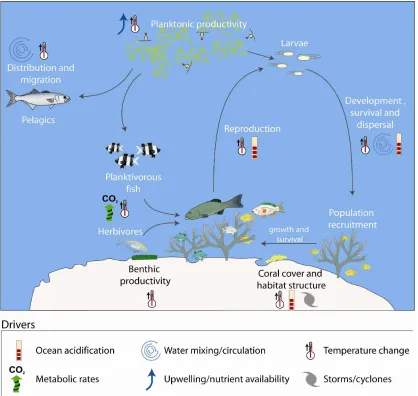
Figure 1. The potential impacts of climate change on populations and communities of tropical
coastal fishes will depend on complex interactions between changes in the physical environment (e.g. changes in SST, currents and upwelling, storms, ocean pH), physiological and behavioural responses of fishes at different life history stages, energy transfer between trophic levels, and the effect of altered habitat structure on ecological processes and interactions. From Munday et al. (2007).
Observed Impacts
Loss of live coral cover has the greatest effect on those species of fish that rely on live coral for their diet, habitat or settlement (Wilson et al. 2006, Pratchett et al. 2008, Emslie et al. 2011). Declines in population abundance in these species can occur rapidly following coral loss, and are greatest for more specialised species, such as those that live or feed on just 1-2 species of coral (Munday 2004, Pratchett et al. 2006, Wilson et al. 2008b). Importantly, many reef fish that specialise on live coral are dependent on coral species that are susceptible to coral bleaching (e.g. Acroporidae and Pocilloporidae; Marshall and Baird 2000). If coral does not recover in the longer-term (after 5-10 years), impacts can be more substantial with up to 75% of fish species declining in abundance, including many species with no apparent reliance on live coral (Jones et al. 2004, Cheal et al. 2008). Skeletons of dead corals ultimately erode and collapse thereby reducing topographic and habitat complexity. This leads to further changes to the fish community, including reductions in species richness, taxonomic distinctness and abundance (Graham et al. 2006). Declines are often greatest for smaller-bodied species <20cm (Graham et al. 2008). However, smaller size classes of larger species also decline in some instances, suggesting that the contribution of these species to ecosystem function and fisheries could be undermined in the future (Graham et al. 2007).
Australia’s coral reefs have suffered several significant episodes of coral bleaching since the mid 1990’s. During the 1998 global mass bleaching event sea surface temperatures in the GBR reached the highest ever recorded. Approximately 42% of GBR reefs bleached to some extent in 1998, although the 2002 bleaching event was more extensive (Berkelmans et al. 2004). In 2002, approximately 54% of GBR reefs suffered bleaching, with more bleaching on inshore reefs compared with mid-shelf and offshore reefs. Inshore reefs also suffered the highest coral mortality rates. Overall, about 5% of reefs were severely damaged. Scott Reef in Western Australia suffered severe bleaching in 1998, with an 80% reduction in coral cover recorded (Smith et al. 2008). A localised severe bleaching event in the southern GBR in 2006 caused 40% coral mortality in the Keppel Islands (Great Barrier Reef Marine Park Authority 2007), but little impact elsewhere. Although severe bleaching events have occurred on Australia’s coral reefs, there has also been significant post-bleaching recovery (Smith et al. 2008; Osborne et al. 2011; Pratchett et al. 2011b).
The long-term monitoring program (LTMP) conducted by the Australian Institute of Marine Science (AIMS) (http://www.aims.gov.au/reef-monitoring) provides the best available data set to assess the broad-scale impacts of ecological disturbances on the GBR. Since the mid 1990’s outbreaks of crown-of-thorns starfish and severe storms appear to have caused most of the coral mortality on the GBR and climate-induced coral bleaching has so far contributed relatively little to observed coral loss (Osborne et al. 2011; Pratchett et al. 2011b). Nevertheless, sustained and ongoing climate change will have increasing impacts in coming years, including increases in the intensity and frequency of coral bleaching (Hoegh-Guldberg 1999, Donner et al. 2005). Aside from causing declines in coral abundance, selective effects of bleaching and stronger storms are likely to cause changes in the structure of coral assemblages, which in turn will affect fish assemblages (e.g., Berumen and Pratchett 2006).
important changes in fish abundance and community structure at specific reefs where coral cover had declined significantly (Halford et al. 2004, Cheal et al. 2008). In the most comprehensive study to date, Cheal et al. (2008) found that although fish diversity was not affected on seven reefs that suffered over 75% coral loss from a variety of disturbances between 1995-2005, there were major changes in fish community structure. Changes included increases in abundance of large herbivores and decreases in abundance of both coral-dependent fishes and also some species with no obvious dependence on coral. The proportion of species that increased or decreased in abundance varied among reefs, but 45 to 71% of fish species decreased in abundance on some reefs. The magnitude of change in species abundances increased linearly with the magnitude of coral decline. Bellwood et al. (2006) and Wilson et al. (2009) also reported significant changes in fish community structure on GBR reefs affected by major disturbances (including coral bleaching), with decreases in coral-dependent species and increases in small generalist species, epilithic algal feeders and rubble dwellers. Finally, Booth and Beretta (2002) observed significant declines in the recruitment of 3 species of damselfishes at One Tree Island immediately following the 1997-1998 bleaching event. Together these studies indicate that coral bleaching in conjunction with other major agents of disturbance has already had a significant effect on the abundances and community structure of fishes on some reefs on the Great Barrier Reef. They also suggest that significant changes to fish communities will become more widespread if mass coral bleaching occurs more frequently in the future (Table 2).
The structure of fish communities at Scott Reef in Western Australia also changed substantially following the mass coral bleaching in 1998 (Halford and Caley 2009). Species richness declined in 4 fish families following the bleaching, but had recovered in 2 of them (surgeonfishes and parrotfishes) within 5 years. In the other 2 families (butteflyfishes and damselfishes ), both species richness and total abundance declined and remained lower than pre-bleaching after 5 years, especially on the reef slope. Changes in fish community structure tended to lag behind changes in the benthic habitat by 12-18 months. Recovery of fish communities was observed as coral cover returned, but was still incomplete after 5 years. Recent surveys indicate further recovery to coral and fish communities at Scott Reef (Anon 2010; Smith pers. com.), although fish communities are now characterised by species with more generalist diet and habitat requirements than those before the bleaching, and abundances of mid-sized fishes have increased substantially, possibly due to overfishing of sharks and other top predators (Travers pers. com.; Meekan pers. com.).
into higher latitudes (Pearce et al. 2011). These observations indicate that range shifts by tropical species are already underway.
Many tropical marine fishes have large latitudinal ranges that extend across temperature gradients of 3-4oC. Life history traits of some species covary in a predictable way with these latitudinal and temperature gradients (Choat and Robertson 2002, Robertson et al. 2005). Reef fish species tend to be shorter lived and reach smaller maximum sizes at higher temperatures (Munday et al. 2008a). Juveniles are also expected to reach their asymptotic size at a faster rate at higher temperatures. Recently, Meekan et al. (unpublished data) found that early growth of the Western Gregory, Stegastes obreptus, had increased significantly in the sub-tropical Abrolhos Islands in association with a 1.6oC increase in average SST at this location over the past 25 years. This is the first evidence that life history traits of tropical marine fishes may be altering in response to climate change.
Finally, small increases in SST are expected to increase larval survival of marine species by reducing the duration of the pelagic phase (O’Connor et al. 2007). Consistent with this projection, Cheal et al. (2007) found that large population increases of damselfishes on the GBR often followed elevated SST associated with El Niño events. However, higher temperatures have not been beneficial to larval supply in other locations. In a long-term study in French Polynesia, larval supply of coral reef fishes declined by >50% below average during the 1997-98 El Niño, when average SST was 3.5°C above the mean, and increased nearly 250% during La Niña years, when temperatures were almost 2°C below the mean (Lo-Yat et al. 2012). Increased larval supply during La Niña years was correlated with increased ocean productivity (chlorophyll-a). These results suggest that increased temperatures can have negative effects on affect both the reproductive output by adults and the survival of larvae in the plankton, leading to a reduced supply of larvae to replenish benthic populations.
Potential impacts by the 2030s and 2100s
Sea Surface Temperature
Increased SST is predicted to have a range of impacts on tropical fish populations and communities (Table 1). Fishes are ectotherms and temperature changes of a few degrees Celsius can influence their physiological condition, developmental rate, growth rate, reproductive performance and behaviour. Consequently, the projected 1-2oC increase in SST by 2030 and 2-3oC increase by 2100 are expected to have significant impacts on coastal marine fishes.
reduced at 1.5oC above the average summer temperatures and further declines evident at 3oC above summer temperatures (Donelson et al. 2010). Pathways for synthesis of reproductive hormones are temperature sensitive in fish (Pankhurst and Munday 2011) and it is possible that reproduction may be severely curtailed by rising water temperature, even in species that exhibit some capacity for acclimation to higher temperatures over a number of generations (Donelson et al. 2011, 2012). Furthermore, there is good evidence that some species from predominantly temperate water fish families (eg Pagrus auratus: Sparidae) are already at their thermal limit for reproduction in tropical waters (Sheaves 2006). Together these results suggest that reproductive performance of some species will be affected as early as 2030 and many species could be impacted by 2100 (Table 2).
The spawning season is thought to be cued by temperature in many tropical fish species (Hilder and Pankhurst 2003, Pankhurst and Porter 2003). Consequently, the effects of increasing temperature on reproductive performance could potentially be ameliorated to some extent by shifts in the seasonal timing of spawning (Munday et al. 2008a), however this could lead to a mismatch in the optimal time for reproduction compared with the optimal time for larval survival (Edwards and Richardson 2004). The greatest problems are expected for fish that use photoperiod to cue reproduction, because these species may not shift their spawning cycle as SST increases.
Early developmental stages of reef fishes are particularly sensitive to temperature changes. Small temperature increases may accelerate larval development, increase larval growth rate, and reduce pelagic larval duration (PLD; McCormick and Molony 1995, Wilson and Meekan 2002, Meekan et al. 2003, Green and Fisher 2004, Sponaugle et al 2006), provided temperatures do not exceed thermal optima. Such changes could improve larval survival and recruitment if larvae can consume sufficient additional food to support the increased energetic demand of developing at a higher temperature. However, recruitment may fail at times and places where food is limited because larvae will be more susceptible to starvation at higher temperatures (Munday et al. 2008a, Lo-Yat et al. 2011).
The limited evidence available suggests that a 3oC increase in SST would reduce the PLD of larval reef fishes between 12-25% (Munday et al. 2009a). Simulations using coupled biological-physical models indicate that this will tend to reduce the spatial scale of pelagic dispersal. A 20% reduction in PLD for a common reef fish in the Caribbean changed the modal dispersal distance predicted by simulations from ~50km to mostly self-recruitment (10’s km) and also reduced the number of larvae dispersing long distances (Munday et al. 2009a). This suggests that reduced PLDs at higher temperatures could reduce population connectivity. However, the effect of reduced PLD on connectivity was also strongly affected by the dispersion of habitat patches. In areas of high reef density, simulations predicted that local connectivity networks would strengthen with decreased PLD because more larvae would be exchanged between nearby reefs. In contrast, connections between reefs weakened in areas of low reef density. Therefore, projecting the effect of reduced PLD on connectivity patterns is challenging, and the outcome is likely to differ between locations with contiguous tracts of reef, such as barrier reefs or fringing reefs, and locations with a more fragmented distribution of reefs (Munday et al. 2009a).
widespread, but some species have restricted distributions within Australia’s tropical zone. At least 90 species of fishes from the northern half of the GBR do not currently occur, or are relatively uncommon, in the southern or far-southern regions of the GBR (Munday et al. 2007). Some of these species will expand their southern limits as temperature increases. The region around 18oS appears to be an important biogeographic boundary for many fish in the northern GBR (M Emslie pers comm), Consequently, most range extensions are likely to be south of this region. The speed and extent of range expansions will depend on: (1) thermal sensitivity, being faster for more sensitive species (Nilsson et al. 2009), (2) the capacity for dispersal outside the existing geographic range (Booth et al. 2007, Munday et al. 2009a) and (3) ecological interactions with different competitors and predators at more southerly locations.
At least 30 species of fish are restricted to the southern GBR (Munday et al. 2007). The northern range limits of some of these species will shift south as SST increases. One important commercial and recreational species, Lethrinus miniatus (sweetlip or redthroat emperor) has an apparent upper thermal limit of about 28ºC and is expected to become significantly less abundant in tropical coastal waters (Munday et al. 2007). Some species will expand into current-day sub-tropical or temperate locations as temperatures become more favourable at these locations in the future. Some other southern GBR species, however, are confined to coral reefs and are unlikely to persist in non-reef areas, even if temperature become favourable in these locations. Consequently, the geographic ranges of these species will contract towards the far southern GBR. For these species, smaller ranges would ultimately increase the risk of extinction from other impacts.
Species of tropical reef fishes living at the same location on the GBR differ greatly in their sensitivity to temperature increases. Some species are highly sensitive to a 2-4oC increase in average summer temperature, whereas others appear to be much more tolerant (Nilsson et al. 2009). These results suggest that range shifts to cooler southern locations will occur rapidly for some species, but more slowly for others species. As a result, local fish communities will change, not just due to the selective effects of habitat loss on different species, but also due to difference in thermal tolerances among species. There is also evidence that populations on the southern GBR have greater capacity to cope with elevated temperatures than populations of the same species on the northern GBR (Gardiner et al. 2010). Therefore, northern populations are at greatest risk of decline, even if they experience a smaller increase in SST compared with southern populations.
Finally, nearshore and estuarine fishes show consistent assemblage composition across large latitudinal gradients, indicating they are adapted to highly variable environments, and so are likely to be less affected by physical changes such as rising SST than fish with more restricted physical tolerances.
Ocean currents and mixing
It is more certain that there will be greater vertical stratification of the water column, which will tend to reduce nutrient enrichment of surface waters. This may reduce the productivity of plankton communities that are an important food source for many tropical marine fishes, or are the food source for invertebrates that the fish prey on. Planktonic food chains will also be less productive at higher temperatures (McKinnon et al. 2007). At the same time consumers will have increased metabolic demands due to higher metabolic rates at higher temperatures. Consequently, there might be a general decline in the productivity of fish assemblages in tropical waters (Brander 2007, Cheung et al. 2010). However, changes in productivity will be highly variable and unpredictable. Productivity will probably increase at some locations where local changes to current and upwelling improve nutrient supplies to surface waters.
Extreme weather events and terrestrial runoff
Stronger tropical storms will compound reef degradation caused by coral bleaching and ocean acidification and cause increased disturbances in other habitats beside coral reefs. Such changes affect local fish communities in a range of coastal environments. Changes in rainfall and terrestrial runoff are expected to have greatest effects on nearshore and estuarine species. The ability of fishes to access wetland habitat is influenced by flooding from storms (Sheaves et al. 2006), as well as by tides. A decrease in the frequency of flooding will lead to less regular connectivity (Sheaves 2005). This could impair the viability of wetland habitats in many areas of the dry tropics, and move some wet tropics wetlands towards the intermittent connectivity currently a feature of the dry tropics. Beyond direct effects on the ability to access wetlands, any reduction in the amount or regularity of rainfall would reduce the viability of wetland pools as fish habitats and nurseries. Extended drought allows freshwater pools to dry and saline pools to develop extremely hypersaline conditions (Sheaves et al. 2006). In either case their function as fish habitats is significantly altered, exacerbating the reduction already occurring through the construction of weirs and pasture ponding (Hyland 2002).
Sea level
Nearshore species will be exposed to coastal inundation and associated habitat changes as a result of the projected 0.6-0.74 m rise in sea level by 2100. Many coastal environments such as mangroves and seagrass beds, provide juvenile fish with protection or food resources (Sheaves and Molony 2000). Changes in the extent and proximity of the various habitat types would affect their function as nursery grounds for a range of commercially valuable fish species.. The direction and magnitude of this impact is likely to vary spatially, determined by the details of specific habitat change, and is likely to depending on the specific requirements of different species. Sea level rise will influence connectivity among estuaries, estuarine wetlands and freshwater habitats (Sheaves et al. 2006), changing the ability of fish like barramundi, Lates calcarifer, to access crucial juvenile habitats. Sea level rise is expected to enhance connectivity between habitats that are normally isolated at low tide. However, human responses to prevent inundation of urban areas and farmland as sea level rises could also cause compression of coastal habitats, reducing connectivity and the habitable area for some nearshore fish species.
Ocean acidification
habitat for fishes is expected. A further concern is that increased levels of dissolved CO2 could affect the physiological performance and behaviour of some marine fishes (Ishimatsu et al. 2008, Munday et al. 2009c,d, Nilsson et al. 2012), especially at projected higher water temperatures (Pörtner et al. 2005).Studies in Australia have found no evidence that elevated CO2 levels have a direct negative effect on the growth, survival or swimming performance of larval or juvenile reef fish (Munday et al. 2009b, 2011a).. Similarly the development of otoliths (ear bones made of aragonite) appears to unaffected by CO2 levels likely to be experienced in surface-ocean waters over the next 50-100 years (Munday et al. 2011a,b) However, nearly all the research to date has concerned small demersal-spawning reef fishes, which might be adapted to variable CO2 levels, especially during early development. It is possible that pelagic species and broadcast spawners are more susceptible to higher CO2 levels during early development (Munday et al. 2008a, 2011a,b).
Of greater concern is that CO2 levels projected to occur by 2100 can impair sensory functions and alter a broad suite of behaviours in larval, juvenile and adult fishes. Changes include increased boldness and activity (Munday et al. 2010), loss of behavioural lateralization (Domenici et al. 2012), altered auditory preferences (Simpson et al. 2011), inability to learn (Ferrari et al. 2012), and impaired olfactory function (Munday et al. 2009d), the latter making larval fish attracted to odours they normally avoid, including smells from predators and unfavourable habitats (Munday et al. 2009d, 2010, Dixson et al. 2010). These behavioural alterations significantly increase mortality of fish in natural reef habitat, with potentially far-reaching implications for population replenishment, community structure and ecosystem function (Munday et al. 2010, Ferrari et al. 2011a,b). New research has found that these diverse behavioural and sensory effects are caused by interference with neurotransmitter function by changed ion concentrations in the tissues of fish exposed to high CO2, (Nilsson et al. 2012). Importantly, effects are manifest in both larval and adult reef fishes at the CO2 levels (600-700 µatm CO2) that are projected to occur by 2100 on the IS92a emissions scenario (Munday et al. 2010, Simpson et al. 2011, Devine et al. 2012), thus increased CO2 concentrations could be a serious threat to marine fishes in the later part of the century.
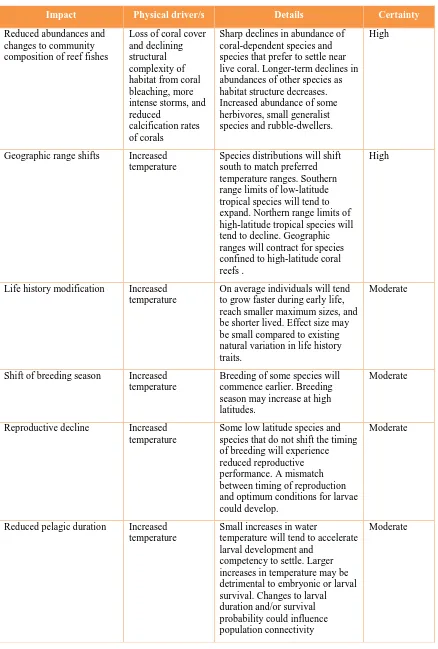
Table 1. Projected impacts of climate change on populations and communities of tropical
coastal fishes in Australia and the level of certainty associated with these predictions for 2100. Confidence levels were assigned using the IPCC framework for considering available evidence and expert judgements.
Impact Physical driver/s Details Certainty
Reduced abundances and changes to community composition of reef fishes
Loss of coral cover and declining structural complexity of habitat from coral bleaching, more intense storms, and reduced
calcification rates of corals
Sharp declines in abundance of coral-dependent species and species that prefer to settle near live coral. Longer-term declines in abundances of other species as habitat structure decreases. Increased abundance of some herbivores, small generalist species and rubble-dwellers.
High
Geographic range shifts Increased temperature
Species distributions will shift south to match preferred temperature ranges. Southern range limits of low-latitude tropical species will tend to expand. Northern range limits of high-latitude tropical species will tend to decline. Geographic ranges will contract for species confined to high-latitude coral reefs .
High
Life history modification Increased temperature
On average individuals will tend to grow faster during early life, reach smaller maximum sizes, and be shorter lived. Effect size may be small compared to existing natural variation in life history traits.
Moderate
Shift of breeding season Increased temperature
Breeding of some species will commence earlier. Breeding season may increase at high latitudes.
Moderate
Reproductive decline Increased temperature
Some low latitude species and species that do not shift the timing of breeding will experience reduced reproductive performance. A mismatch between timing of reproduction and optimum conditions for larvae could develop.
Moderate
Reduced pelagic duration Increased temperature
Small increases in water
temperature will tend to accelerate larval development and
competency to settle. Larger increases in temperature may be detrimental to embryonic or larval survival. Changes to larval duration and/or survival probability could influence population connectivity
Impact Physical driver/s Details Certainty
Reduced abundances and changes to community composition of reef fishes
Loss of coral cover and declining structural complexity of habitat from coral bleaching, more intense storms, and reduced
calcification rates of corals
Sharp declines in abundance of coral-dependent species and species that prefer to settle near live coral. Longer-term declines in abundances of other species as habitat structure decreases. Increased abundance of some herbivores, small generalist species and rubble-dwellers.
High
Behavioural and sensory impairment
Ocean acidification Elevated CO2 levels could affect
homing ability, habitat selection and predator avoidance of larval, juvenile and adult fish.
High
More extremes in recruitment
Increased temperature and changes in primary productivity and ocean circulation
Shorter pelagic durations and faster larval growth will tend to reduce larval mortality. However, higher metabolic rates will increase the risk of starvation where food supply is limited. Highly variable and unpredictable – some locations may tend to have better recruitment and others poorer recruitment.
Moderate
Productivity change Increased temperature and changes in ocean circulation
Less nutrient enrichment due to greater stratification of surface waters in combination with increased metabolic demands of consumers could reduce productivity at higher trophic levels. Planktonic food chains will be less productive at higher temperatures. Highly variable and unpredictable - productivity may increase at some locations.
Moderate Reduced population connectivity Increased temperature and habitat loss
Reduced pelagic larval durations and earlier reef seeking behaviour might reduce the average scale of larval dispersal. Increased habitat fragmentation and smaller population sizes will reduce population connectivity.
Low
Reduced population genetic diversity
Increased temperature and habitat loss
Strong selection favouring genotypes with tolerance to elevated temperatures and reduced populations sizes from habitat degradation will reduce local genetic diversity.
Table 2. Observed and projected impacts of climate change on tropical coastal and demersal
marine fishes in Australia. MLD = mixed layer depth
Physical
variables Observed changes
Projected changes
2030’s 2100’s
Temperature Changes in community structure and declines in abundance of fishes on some coral reefs due to habitat degradation from coral bleaching. Impacts confined to a few reefs or locations that have suffered severe bleaching.
Changes in community structure and declines in abundance of fishes on coral reefs will become more widespread as habitat degrades from coral bleaching, more intense storms and ocean acidification.
Widespread and significant shifts in fish community structure and population declines due to habitat degradation. Loss of diversity (coral-dependent species) and taxonomic distinctness. Some herbivores, small generalist species and rubble-dwellers will increase in abundance.
Increasing occurrence and persistence of recruits from tropical species in sub-tropical and temperate locations. Increased reports of tropical species in temperate locations
Range shift towards higher latitudes evident in the most thermally sensitive and mobile species.
Range shifts towards higher latitudes evident for many species. Range area will expand for some species and contract for others. Range contractions will increase the risk of extinction for southern coral-reef endemics.
Increased growth rate of juvenile Western Gregory at Abrolhos Islands associated with increase in SST over past 25 years
Life history traits of some high latitude populations will shift towards those of the same species in populations at lower latitudes. However changes will be difficult to distinguish from natural variation
Life history traits will shift toward those in populations at low latitudes - smaller maximum size, reduced longevity, faster juvenile growth.
Reduced reproductive performance in thermally sensitive species. Earlier start to breeding season for some species.
Shifts in the breeding season to match preferred temperature for many species. Significant declines in reproductive performance for thermally sensitive species that do not shift timing of reproduction. Some populations will become unviable at higher latitudes.
Reduced pelagic duration, possibly leading to greater extremes in recruitment success (more good years and more bad years).
Reduced population genetic diversity due to strong selection for thermally tolerant
genotypes.
Winds, ocean currents, MLD & ocean stratification
variable and difficult to predict.
Reduced productivity of fish populations due to combined effects of increasing vertical stratification of surface waters, less productive plankton communities (↑ SST and ↓
nutrients). Highly unpredictable – productivity may increase at some locations.
Precipitation, extreme events, and terrestrial runoff
Greater variation in abundances of nearshore and estuarine species due to reduced function of coastal wetlands as food sources and nursery areas.
Sea level Shifts in community structure
of nearshore species due to inundation of mangroves and seagrass beds. Loss of juvenile habitat for some species. Impact will be spatially variable and differ greatly among species.
Acidification (elevated
pCO2)
Impairment of sensory ability and changed behaviour of larval fishes will affect population replenishment and could lead to population declines in many species. Cognitive function of fish is impaired at CO2 levels
predicted to occur by 2100
Elevated dissolved CO2 levels
will exacerbate population declines in thermally sensitive species
Observed Impacts: Confidence Assessments
Potential impacts by the 2030s and 2100s: Confidence Assessments
There is ample evidence and strong consensus that substantial and sustained loss of coral cover, changes in coral composition, and erosion of structural complexity on coral reefs will affect the structure of reef fish communities and lead to reductions in the abundances of some species. Consequently the confidence level is HIGH that such changes will be evident by 2100. Whether such impact will be widespread by 2030 depends on the accuracy of predictions about the level of degradation on coral reefs by this date, which are still debated. Therefore the certainty of this impact for 2030 is only MODERATE. Potential effects of habitat degradation in non-reef areas are largely unknown.
Geographic range shifts towards higher latitudes have been observed in many terrestrial and aquatic species and there is high agreement they will occur in most ecosystems as temperatures increase. Range shifts have already been observed in Australia’s temperate marine environment and there is some evidence that such shifts may already be underway for tropical species. Consequently the confidence level is HIGH for this predicted impact by 2100. It is uncertain how quickly range shifts will occur for most species, therefore the certainty of this impact for 2030 is only MODERATE.
There is reasonable empirical and experimental evidence to support projections about changes in life histories, shifts in the spawning season, reproductive declines, and reduced pelagic durations in coastal fishes with a 2-3oC increase in SST and consensus in these projections is moderate. Therefore the confidence for these projections is MODERATE for 2100. There is less evidence and less consensus that similar trends will be observed with a 1-2oC increase in SST. Thus, the confidence for these predictions is LOW for 2030. Similarly, there is now sufficient empirical and theoretical evidence to support projections about increased variability in recruitment patterns and an overall reduction in productivity by 2100. Therefore the confidence for these projections is MODERATE for 2100. It is unlikely that any trends in these variable could be distinguished from natural variation by 2030. Therefore the confidence for these projections is LOW for 2030.
There is now strong experimental evidence that CO2 levels projected to occur by 2100 under the IS92a/A2 emissions scenario (>600 ppm CO2) impair cognitive function in reef fishes, leading to maladaptive behaviour. Therefore, the confidence level is HIGH for this impact by 2100. CO2 levels will not be sufficiently high (e.g. >600 ppm CO2) by 2030 to cause behavioural problems in marine fish.
The confidence levels for other predicted impacts (Table 1) are LOW, both for 2030 and 2100 because there is either limited evidence available to support the projections, limited agreement, or both.
Adaptation Responses
southern populations that are currently living at lower temperatures than northern populations of the same species (Gardiner et al. 2010). There is evidence for strong genetic connectivity among populations of some fish species on the GBR (Doherty et al. 1995, Bay et al. 2006), which means that southern populations might already have some tolerance to higher temperatures due to regular genetic input from northern populations. Furthermore, as sea temperature increases, gene flow from northern populations might assist southern populations adapt to the new conditions.
Despite the potential for acclimation and adaptation, populations of some species on the GBR appear to be living close to their thermal optimums. For example, a 1.5°C increase in average summer temperatures causes significant declines in growth and reproductive output of the spiny damselfish A. polyacanthus from Orpheus Island (Munday et al. 2008b, Donelson et als. 2010). Similarly, the aerobic performance of two species of cardinalfishes from Lizard Island (northern GBR) declined by 50% with a 2oC increase in SST above the summer average (Nilsson et al. 2009). Whether these species will be able to adapt quickly enough to rapidly increasing temperatures will depend on their generation times and genetic connectivity with other populations. A more likely scenario for these thermally sensitive species is that northern populations will decline as SST increases, but the species might become more abundant further south (i.e. rapid shift in geographical distribution and abundance).
Some small-bodied species, such as most gobies, have short generation times that should favour local adaptation over the next 50-100 years. Other species are both long lived and late maturing (e.g. 9-10 years in some groupers and snappers), which would greatly reduce the potential for local adaptation, unless there is considerable genetic input from populations that are already adapted to warmer waters (Munday et al. 2008a).
It has recently been discovered that some reef fishes may have more capacity for thermal acclimation than previously thought. Aerobic performance of juvenile A. polyacanthus was significantly reduced in warmer water, but not if the parental generation had also been exposed to higher temperatures their whole life (Donelson et al. 2012). This indicates that acclimation of some physiological traits to higher temperatures may occur in some species as the climate warms over coming decades.
There is little prospect of adaptation to habitat loss and degradation. Habitat degradation will also retard adaptation to other climate change impacts by reducing genetic variability within populations and by reducing genetic connectivity between populations (Munday et al. 2008a, 2009). Maintaining and restoring habitat quality for coastal marine fishes should be a major focus for climate change mitigation responses in the coastal environment (Pratchet et al. 2011a).
exploited and the most practical mitigation response for these species (apart from reducing greenhouse gas emissions) is to maintain population resilience by reducing other stresses. Reducing terrestrial runoff, improving water quality, limiting the extent of destructive fishing practices (e.g. benthic trawling), removing barriers to dispersal (e.g. weirs) and considering the impacts that coastal mitigation responses will have on marine fishes are important measures that will assist tropical coastal and benthic fish populations deal with a rapidly changing climate.
Knowledge Gaps
More research is required before we can predict the full ramifications of climate change on tropical coastal fishes and develop better strategies for minimising the impacts (Wilson et al. 2010). A range of additional information is needed, including:
• More information on the effects that changes in the physical environment have on the performance, function, and behaviour of marine fishes. Much of the available data comes from temperate species and these results might not be directly applicable to tropical marine fishes.
• Improved projections of how ocean currents and primary productivity are likely to change at regional and local scales for a range of climate change scenarios. The projections are critical for understanding how population dynamics and connectivity patterns may change over the coming century.
• More information on the habitat requirements of fishes, especially around the time of settlement. Understanding the habitat requirements of fishes throughout their life will enable more precise predictions to be made about the long term consequences of declining habitat quality.
• A better understanding of how increased temperature is expected to affect adult reproduction and the development, survival and behaviour of larvae, because relatively little data are available and extrapolations from temperate water species are likely to be unreliable. Moreover, most research on climate impacts for tropical fishes has focussed on small coral reef species and there is an obvious need to consider larger species important to fisheries.
• There are insufficient data on the biology and ecology of fishes in most non-reefal environments. A greater understanding of spatial and temporal variation in distributions and abundances is required to assess potential climate change impacts in these environments.
• Investigations of how ocean acidification affects the development, survival and behaviour of broadcast spawning and pelagic fishes. Elevated CO2 levels do not appear to directly affect the growth and survival of small demersal fishes, but larger pelagic species might be more sensitive to future rises in CO2. There is now ample evidence that high CO2 levels could be a serious threat to marine fishes because they affect cognitive function and behaviour of marine fish. However, very little is known about how increased SST and CO2 might interact to affect marine fishes.
previously though possible; however if such acclimation capacity is widespread in tropical marine fishes, and whether some critical processes (e.g. reproduction) remain significantly impaired, is unknown. The potential for adaptation will ultimately determine the consequences of climate change for all ecological communities. Our rudimentary understanding of the potential for acclimation and adaptation by marine fishes to novel environmental variation is one of the most serious gaps in our knowledge.
Observation Programs
The AIMS Long Term Monitoring Program (LTMP) has surveyed 47 reefs in the Great Barrier Reef (GBR) annually since 1993. A team of trained divers surveys fishes by underwater visual census and records corals and other benthic organisms along the same sections of reef at each visit. Fishes from a list of 191 species, representing 10 families, are counted at three sites on each reef. Fish surveys are conducted in 6 sectors, from Cooktown/Lizard Island in the north to the Capricorn Bunkers in the south. Information is available on the internet and is updated after each visit (http://www.aims.gov.au/docs/research/monitoring/reef/latest-surveys.html).
Status reports are produced approximately every two years (http://www.aims.gov.au/docs/research/monitoring/reef/status-reports.html). The LTMP also provides situational awareness on threats, such as coral bleaching and crown of thorns starfish outbreaks. AIMS has been monitoring fish and coral communities on Scott Reef in Western Australia on a semi-regular basis since 1994. Summary information is presented in occasional reports.
University researchers have monitored fish populations at specific locations in tropical Australia for various periods of time. James Cook University has surveyed fish populations on 3 reefs in the Townsville region on a biannual basis since 2002, and Western Australian researchers are also active from Rottnest island north.
Fisheries Queensland has conducted fishery independent surveys since 2005/6 to determine annual trends in abundance, length and age structure of two commercially important reef fishes on the GBR. Data are available in annual status reports.
Observation Programs for Climate Change
Although reef fishes on the GBR are monitored annually by the AIMS LTMP, and to a limited extent by some other programs, there is little monitoring of non-reef and inshore fishes. A monitoring program for key species would be beneficial. Similarly, there is currently insufficient monitoring of fish populations throughout NW Australia. In all areas, more robust estimates of annual catch and effort trends for demersal fish species from all sectors (commercial and recreational) are necessary.
Greater resolution of spatial and temporal variation of key physical parameters, including sea surface temperature, pH, pCO2, productivity, and surface currents is required.
Further Information
Suggested further reading:
Munday, P.L., Jones, G.P., Sheaves, M., Williams A.J. and Goby, G. (2007). Vulnerability of fishes of the Great Barrier Reef to climate change. In: Climate Change and the Great Barrier Reef. Johnson, J.E. and Marshall, P.A. (eds). Great Barrier Reef Marine Park Authority and Australian Greenhouse Office. Pp 357-391. Munday, P.L., Jones, G.P., Pratchett, M.S. and Williams, A.J. (2008). Climate change
and the future for coral reef fishes. Fish and Fisheries 9: 261-285.
Munday, P.L., Leis, J.M., Lough, J.M., Paris, C.B., Kingsford M.J., Berumen, M.L. and Lambrechts, J. (2009). Climate change and coral reef connectivity. Coral Reefs 28: 379-395.
Pratchett, M.S., Munday, P.L., Wilson, S.K., Graham, N.A.J., Cinner, J.E., Bellwood, D.R., Jones, G.P., Polunin, N.V.C. and McClanahan, T.R. (2008). Effects of climate-induced coral bleaching on coral-reef fishes: ecological and economic consequences. Oceanography and Marine Biology Annual Review 46: 251-296. Pratchett, M.S., Munday, P.L., Graham, N.A.J., Kroner, M., Pinca, S., Friedman, K.,
Brewer, T., Bell, J.D., Wilson, S.K., Cinner, J.E., Kinch, J.P., Lawton R.J.,
Williams, A.J., Chapman, L., Magron, F., Webb, A. (2011). Vulnerability of coastal fisheries in the Pacific to climate change. In: Vulnerability of Tropical Pacific Fisheries and Aquaculture to Climate Change (Bell, J.D. et al. eds). Secretariat of the Pacific
Pratchett, M.S., Bay, L.K., Gehrke, P.C., Koehn, J., Osborne, K., Pressey, R.L., Sweatman, H.P.A., and Wachenfeld, D. (2011) Contribution of climate change to degradation and loss of critical fish habitats in Australian aquatic environments. Marine and Freshwater Research 62:1062-1081.
Cheal, A.J., Wilson, S.K., Emslie, M.J., Dolman A.M. and Sweatman, H. (2008). Responses of reef fish communities to coral declines on the Great Barrier Reef. Marine Ecology Progress Series 372: 211-223.
Delean, S. and De’ath, G. (2008). Spatial and temporal patterns of indicators of reef health on the Great Barrier Reef. Report to the Marine and Tropical Sciences Research Facility. Reef and Rainforest Research Centre Limited, Cairns (116pp.). Wilson, S.K., Graham, N.A.J., Pratchett, M.S., Jones, G.P. and Polunin, N.V.C. (2006).
Multiple disturbances and the global degradation of coral reefs: are reef fishes at risk or resilient? Global Change Biology 12: 2220-2234.
References
Anon (2010) Scott Reef Status Report 2010. Joint publication of Australian Institute of Marine Science, Western Australian Museum and Woodside Energy.
Allen, G.R. and Swainston R. (1988) The Marine Fishes of North-Western Australia. Western Australian Museum.
Bay, L.K., Crozier, R.H. and Caley, M.J. (2006) The relationship between population and genetic structure and pelagic larval duration in coral reef fishes on the Great Barrier Reef. Marine Biology 149: 1247-1256.
Baumman, H., Talmage, S.C., and Gobler, C.J. (2012) Reduced early life growth and survival in a fish in direct response to increased carbon dioxide. Nature Climate Change, doi: 10.1038/nclimate1291.
Bellwood, D.R., Hoey, A.S., Ackerman, J.L. and Depczyinski, M. (2006) Coral
Change Biology 12: 1587-1594
Berkelmans R., De’ath, G., Kininmonth, S. and Skirving, W.J. (2004) A comparison of the 1998 and 2002 coral bleaching events on the Great Barrier Reef: spatial
correlation, patterns, and predictions. Coral Reefs 23: 74-83.
Berumen M.L., and Pratchett, M.S. (2006) Recovery without resilience: Persistent disturbance and long-term shifts in the structure of fish and coral communities at Tiahura Reef, Moorea. Coral Reefs. 25: 647-653.
Booth, D.J. and Beretta, G.A. (2002) Changes in a fish assemblage after a coral bleaching event. Marine Ecology Progress Series 245: 205-212.
Booth, D.J. and Wellington, G, (1998) Settlement preferences in coral-reef fishes: Effects on patterns of adult and juvenile distributions, individual fitness and population structure. Australian Journal of Ecology 23: 274-279.
Booth, D.J., Figueira, W.F., Gregson, M.A., Brown, L. and Beretta, G. (2007)
Occurrence of tropical fishes in temperate southeastern Australia: Role of the East Australian Current. Estuarine Coastal and Shelf Science 72: 102-114.
Brander, K. (2007) Global fish production and climate change. Proceedings of the National Academy of Sciences USA 104: 19709–19714.
Cheal, A.J., Delean, S., Sweatman, H. and Thompson, A.A. (2007) Spatial synchrony in coral reef fish populations and the influence of climate. Ecology 88: 158-169. Cheal, A.J., Wilson, S.K., Emslie, M.J., Dolman A.M. and Sweatman, H. (2008)
Responses of reef fish communities to coral declines on the Great Barrier Reef. Marine Ecology Progress Series 372: 211-223.
Cheung W.W.L., Lam V.W.Y., Sarmiento J.L., Kearney K., Watson R., Zeller D. and Pauly D. (2010) Large-scale redistribution of maximum fisheries catch potential in the global ocean under climate change. Global Change Biology, 16: 24-35.
Choat, J.H. and Robertson, D.R. (2002) Age-Based Studies. In: Coral Reef Fishes. Dynamics and Diversity in a Complex Ecosystem (ed P.F. Sale) Academic Press, San Diego, pp. 57-80.
Choat, J.H. and Russell, B.C. (2009) The fish assemblages of the Great Barrier Reef: their diversity and origin. In: The Great Barrier Reef; Biology, Environment and Management (eds. Hutchings, P, Kingsford, M., Hoegh-Guldberg, O.) Springer and CSIRO Publishing, Dordrecht and Collingwood, pp. 327-342.
Delean, S. and De’ath, G. (2008) Spatial and temporal patterns of indicators of reef health on the Great Barrier Reef. Report to the Marine and Tropical Sciences Research Facility. Reef and Rainforest Research Centre Limited, Cairns (116pp.) Devine, B, Munday, P.L., Jones, G.P. (2012) Homing ability of adult cardinalfish is
affected by elevated carbon dioxide. Oecologia, 168: 269-276.
Dixson D.L., Munday P.L., Jones G.P. (2010) Ocean acidification disrupts the innate ability of fish to detect predator olfactory cues. Ecology Letters, 13: 68-75.
Doherty, P.J., Planes, S. and Mather, P. (1995) Gene flow and larval duration in seven species of fish from the Great Barrier Reef. Ecology 76: 2373-2391.
Domenici, P., Allan, B., McCormick, M.I., Munday, P.L. (2012) Elevated CO2 affects behavioural lateralization in a coral reef fish. Biology Letters, 8: 78-81.
Donelson, J.M., Munday, P.L., McCormick M.I., Pankhurst N.W. and Pankhurst P.M. (2010) Effects of elevated water temperature and food availability on the
reproductive performance of a coral reef fish. Marine Ecology Progress Series, in press.
Donelson, J.M., Munday, P.L., McCormick, M.I., Pitcher R.C. (2012) Rapid transgenerational acclimation of a tropical reef fish to climate change. Nature Climate Change 2: 30-32.
Donner, S.D., Skirving, W.J., Little, C.M., Oppenheimer, M. and Hoegh-Guldberg, O. (2005) Global assessment of coral bleaching and required rates of adaptation under climate change. Global Change Biology 11: 2251-2265.
Edwards, M. and Richardson, A.J. (2004) Impact of climate change on marine pelagic phenology and trophic mismatch. Nature 430: 881-884.
Emslie, M., Pratchett, M.S. amd Cheal A. J. (2011) Effects of different disturbance types on butterflyfish communities of Australia’s Great Barrier Reef. Coral Reefs 30: 461-471.
Ferrari, M.C.O., McCormick, M.I., Munday, P.L., Meekan, M., Dixson, D.L.,
Lonnstedt, O., Chivers, D. (2011a) Putting prey and predator into the CO2 equation: qualitative and quantitative effects of ocean acidification on predator-prey
interactions. Ecology Letters, 14: 1143-1148.
Ferrari, M.C.O., Dixson, D.L., Munday, P.L., McCormick, M.I., Meekan, M.G., Sih, A., Chivers, D.P. (2011b) Intrageneric variation in antipredator responses of coral reef fishes affected by ocean acidification: implications for climate change projections on marine communities. Global Change Biology, 17: 2980-2986.
Ferrari, M.C.O., Manassa, R.P., Dixson, D.L., Munday, P.L., McCormick, M.I., Meekan, M., Sih, A., Chivers, D. (2012) Effects of ocean acidification on learning in coral reef fishes. PLoS One, 7: e31478.
Figueira, W.F. and Booth, D.J. (2009) Increasing ocean temperatures allow tropical fishes to survive over winter in temperate waters. Global Change Biology, in press. Gagliano, M., McCormick, M.I. and Meekan, M.G. (2007) Temperature-induced shifts in selective pressure at a critical developmental transition. Oecologia 152: 219-225. Gardiner N.M., Munday P.L., Nilsson G.E. (2010) Counter-gradient variation in
respiratory performance of coral reef fishes at elevated temperatures. PLoS ONE, 5: e13299.
Graham, N.A.J., Wilson, S.K., Jennings, S., Polunin, N.V.C., Bijoux, J.P. and Robinson, J. (2006) Dynamic fragility of oceanic coral reef ecosystems. Proceedings of the National Academy of Sciences USA 103: 8425-8429.
Graham, N.A.J., Wilson, S.K., Jennings, S. Polunin, N.V.C., Robinson, J., Bijoux, J.P., and Daw, T.M. (2007) Lag effects in the impacts of mass coral bleaching on coral reef fish, fisheries, and ecosystems. Conservation Biology 21: 1291-1300
Graham, N.A.J., McClanahan, T.R., MacNeil, M.A. Wilson, S.K., Polunin, N.V.C, Jennings, S., Chabanet, P., Clark, S., Spalding, M.D., Letourneur, Y., Bigot, L., Galzin, R., Öhman, M.C., Garpe, K.C., Edwards, A.J. and Sheppard C.R.C. (2008) Climate warming, marine protected areas and the ocean-scale integrity of coral reef ecosystems. PLoS ONE 3, e3039.
Graham N.A.J., Chabanet P., Evans R.D., Jennings S., Letourneur Y., MacNeil M.A., McClanahan T.R., Ohman M.C., Polunin N.V.C. and Wilson S.K. (2011) Extinction vulnerability of coral reef fishes. Ecology Letters, 14: 341-348.
Great Barrier Reef Marine Park Authority (2007) Great Barrier Reef coral bleaching surveys 2006 : undertaken as a part of the climate change coral bleaching response plan, March-April 2006. Research publication No. 87. Great Barrier Reef Marine Park Authority, Townsville.
Guinotte, J.M., Buddemeier, R.W. and Kleypass, J.A. (2003) Future coral reef habitat marginality: temporal and spatial effects of climate change in the Pacific basin. Coral Reefs 22: 551-558.
Halford A.R. and Caley, M.J. (2009) Towards an understanding of resilience in isolated coral reefs. Global Change Biology, doi: 10.1111/j.1365-2486.2009.01972.x
Halford, A., Cheal, A.J., Ryan, D. and Williams, D.M. (2004) Resilience to large-scale disturbance in coral and fish assemblages on the Great Barrier Reef. Ecology 85: 1892-1905.
Hickling, R., Roy, D.B., Hill, J.K., Fox, R. and Thomas, C.D. (2006) The distributions of a wide range of taxonomic groups are expanding polewards. Global Change Biology 12: 450-455.
Hilder, M.L. and Pankhurst, N.W. (2003) Evidence that temperature change cues reproductive development in the spiny damselfish, Acanthochromis polyacanthus. Environmental Biology of Fishes 66: 187-196.
Hoegh-Guldberg, O. (1999) Climate change, coral bleaching and the future of the world's coral reefs. Marine and Freshwater Research 50: 839-866.
Hoegh-Guldberg, O., Mumby, P.J., Hooten, A.J., Steneck, R.S., Greenfield, P., Gomez, E., Harvell, C.D., Sale, P.F., Edwards, A.J., Caldeira, K., Knowlton, N., Eakin, C.M., Iglesias-Prieto, R., Muthiga, N., Bradbury, R.H., Dubi, A. & Hatziolos, M.E. (2007) Coral reefs under rapid climate change and ocean acidification. Science 318: 1737-1742.
Hyland, S.J. (2002) An investigation of the impacts of ponded pastures on barramundi and other finfish populations in tropical coastal wetlands, Final report, Department of Primary Industries, Brisbane.
Ishimatsu, A. Hayashi, M. and Kikkawa, T. (2008) Fishes in high-CO2, acidified oceans. Marine Ecology Progress Series 373: 295-302.
Jones, G.P., McCormick, M.I., Srinivasan, M. and Eagle, J.V. (2004) Coral decline threatens fish biodiversity in marine reserves. Proceedings of the National Academy of Sciences of the United States of America 101: 8251-8253.
Leis, J.M. (1991) The pelagic stage of reef fishes: The larval biology of coral reef fishes. In: The Ecology of Fishes on Coral Reefs (ed P.F. Sale) Academic Press, San Diego, pp. 183-230.
Lo-Yat A., Simpson S.D., Meekan M., Lecchini D.D., Martinez E. and Galzin R.(2011) Extreme climatic events reduce ocean productivity and larval supply in a tropical reef ecosystem. Global Change Biology, 17: 1695-1702.
Marshall, P.A. and Baird, A.H. (2000) Bleaching of corals on the Great Barrier Reef: differential susceptibilities among taxa. Coral Reefs 19: 155-163.
Meekan, M.G., Carleton, J.H., McKinnon, A.D., Flynn, K. and Furnas, M. (2003) What determines the growth of tropical reef fish larvae in the plankton: Food or
temperature? Marine Ecology Progress Series 256: 193-204.
McCormick, M.I. and Molony, B.W. (1995) Influence of water temperature during the larval stage on size, age and body condition of a tropical reef fish at settlement. Marine Ecology Progress Series 118: 59-68.
McKinnon, A.D., Richardson, A.J., Burford, M.E. and Furnas, M.J. (2007)
Vulnerability of Great Barrier Reef plankton to climate change. In: Climate Change and the Great Barrier Reef (eds J.E. Johnson and P.A. Marshall) Great Barrier Reef Marine Park Authority and Australian Greenhouse Office, Townsville, pp. 121-152. Munday, P.L. (2004) Habitat loss, resource specialization, and extinction on coral reefs.
Munday, P.L., Jones, G.P., Sheaves, M., Williams A.J. and Goby, G. (2007) Vulnerability of fishes of the Great Barrier Reef to climate change. In: Climate Change and the Great Barrier Reef. Johnson, J.E. and Marshall, P.A. (eds) Great Barrier Reef Marine Park Authority and Australian Greenhouse Office. Pp 357-391. Munday, P.L., Jones, G.P., Pratchett, M.S. and Williams, A.J. (2008a) Climate change
and the future for coral reef fishes. Fish and Fisheries 9, 261-285.
Munday, P.L., Kingsford, M., O’Callaghan, M. and Donelson, J.M. (2008b) Elevated temperature restricts growth potential of the coral reef fish Acanthochromis polyacanthus. Coral Reefs 27: 927-931.
Munday, P.L., Leis, J.M., Lough, J.M., Paris, C.B., Kingsford M.J., Berumen, M.L. and Lambrechts, J. (2009a) Climate change and coral reef connectivity. Coral Reefs 28: 379-395.
Munday, P.L., Donelson, J.M., Dixson, D.L. and Endo, G.G. K. (2009b) Effects of ocean acidification on the early life history of a tropical marine fish. Proceedings of the Royal Society London B 276: 3275-3283.
Munday, P.L., Crawley, N. and Nilsson, G.E. (2009c) Interacting effects of elevated temperature and ocean acidification on the aerobic performance of coral reef fishes. Marine Ecology Progress Series 388: 235-242.
Munday, P.L., Dixson, D.L., Donelson, J.M., Jones, G.P., Pratchett, M.S., Devitsina, G.V. and Døving, K.B. (2009d) Ocean acidification impairs olfactory discrimination and homing ability of a marine fish. Proceedings of the National Academy of
Sciences USA 106: 1848-1852.
Munday P.L., Dixson D.L., McCormick M.I., Meekan M., Ferrari M.C.O., Chivers D.P. (2010) Replenishment of fish populations is threatened by ocean acidification. Proceedings of the National Academy of Sciences USA, 107: 12930-12934. Munday, P.L., Gagliano, M., Donelson, J. M., Dixson, D.L., Thorrold, S.R. (2011a)
Ocean acidification does not affect the early life history development of a tropical marine fish. Marine Ecology Progress Series, 423: 211-221.
Munday, P.L., Hernaman, V., Dixson, D.L., Thorrold, S.R. (2011b) Effect of ocean acidification on otolith development in larvae of a tropical marine fish.
Biogeosciences, 8: 1631-1641.
Nilsson, G.E., Crawley N., Lunde I.G. and Munday P.L. (2009) Elevated temperature reduces the respiratory scope of coral reef fishes. Global Change Biology 15: 1405-1412.
Nilsson, G.E, Dixson, D.L., Domenici, P., McCormick, M.I., Sørensen, C., Watson, S-A., and Munday, P.L. (2012) Near-future CO2 levels alter fish behaviour by interference with neurotransmitter function. Nature Climate Change, 2: 201-204. Osborne K., Dolman A.M., Burgess S.C., Johns K.A. (2011) Disturbance and the
dynamics of coral cover on the Great Barrier Reef (1995–2009). PLoS ONE, 6: e17516.
O'Connor, M.I., Bruno, J.F., Gaines, S.D., Halpern, B.S., Lester, S.E., Kinlan, B.P. and Weiss, J.M. (2007) Temperature control of larval dispersal and the implications for marine ecology, evolution, and conservation. Proceedings of the National Academy of Sciences USA 104: 1266-1271.
Pankhurst, N.W. and Porter, M.J.R. (2003) Cold and dark or warm and light: variations on the theme of environmental control of reproduction. Fish Physiology and
Biochemistry 28: 385-389.
Annual Review of Ecology Evolution and Systematics 37: 637-669.
Pearce, A., Lenanton, R., Jackson, G., Moore, J., Feng, M. and Gaughan, D. (2011) The ‘‘marine heat wave’’off Western Australia during the summer of 2010/11. Fisheries Research Report No. 222. Department of Fisheries Western Australia, Perth
Portner, H.O., Langenbuch, M., Michaelidis, B. (2005) Synergistic effects of
temperature extremes, hypoxia, and increases in CO2 on marine animals: From Earth history to global change. Journal of Geophysical Research-Oceans 110: C09S10 doi:10.1029/2004JC002561.
Pratchett, M.S., Wilson, S.K., Baird, A.H. (2006) Declines in the abundance of Chaetodon butterflyfishes following extensive coral depletion. Journal of Fish Biology 69: 1269-1280.
Pratchett, M.S., Munday, P.L., Wilson, S.K., Graham, N.A.J., Cinner, J.E., Bellwood, D.R., Jones, G.P., Polunin, N.V.C. and McClanahan, T.R. (2008) Effects of climate-induced coral bleaching on coral-reef fishes: ecological and economic
consequences. Oceanography and Marine Biology Annual Review 46: 251-296. Pratchett, M.S., Munday, P.L., Graham, N.A.J., Kroner, M., Pinca, S., Friedman, K.,
Brewer, T., Bell, J.D., Wilson, S.K., Cinner, J.E., Kinch, J.P., Lawton R.J.,
Williams, A.J., Chapman, L., Magron, F., Webb, A. (2011a) Vulnerability of coastal fisheries in the Pacific to climate change. In: Pacific Fisheries and Climate Change: A Vulnerability Assessment (Bell, J.D. et al. eds). South Pacific Commission. Pp 493-576. ISBN-978-982-00-0471-9.
Pratchett, M.S., Bay, L.K., Gehrke, P.C., Koehn, J., Osborne, K., Pressey, R.L., Sweatman, H.P.A., and Wachenfeld, D. (2011b) Contribution of climate change to degradation and loss of critical fish habitats in Australian aquatic environments. Marine and Freshwater Research 62:1062-1081
Randall, J.E., Allen, G.R. and Steene, R.C. (1997) Fishes of the Great Barrier Reef and Coral Sea. University of Hawaii Press, USA.
Robertson, D.R., Ackerman, J.L., Choat, J.H., Posada, J.M. and Pitt, J. (2005) Ocean surgeonfish Acanthurus bahianus. I. The geography of demography. Marine Ecology Progress Series 295: 229-244.
Sheaves, M.J. (2005) Nature and consequences of biological connectivity in mangrove systems. Marine Ecology Progress Series 302: 293-305.
Sheaves, M.J. (2006) Is the timing of spawning in sparid fishes a response to sea temperature regimes? Coral Reefs 25: 655-669.
Sheaves, M. and Molony, B. (2000) Short-circuit in the mangrove food chain. Marine Ecology Progress Series 199: 97-109.
Sheaves, M.J., Collins, W., Houston, P., Dale, A., Revill, R., Johnston, W.A. and Abrantes, K. (2006) Contribution of floodplain wetland pools to the ecological functioning of the Fitzroy River estuary, Cooperative Research Center for Coastal Zone, Estuarine and Waterway Management, Brisbane.
Simpson, S.D., Munday, P.L., Wittenrich, M.L., Manassa, R., Dixson, D.L., Gagliano, M., Yan, H.Y. (2011) Ocean acidification erodes crucial auditory behaviour in a marine fish. Biology Letters, 7: 917-920.
Smith L.D., Gilmour J.P., Heyward A.J. (2008) Resilience of coral communities on an isolated system of reefs following catastrophic mass-bleaching. Coral Reefs 27:197– 205
Wilkinson, C. (2004) The Status of Coral Reefs of the World: 2004. Australian Institute of Marine Science.
Wilson, D.T. and Meekan, M.G. (2002) Growth-related advantages for survival to the point of replenishment in the coral reef fish Stegastes partitus (Pomacentridae) Marine Ecology Progress Series 231: 247-260.
Wilson, S.K., Fisher, R., Pratchett, M.S., Graham, N.A.J., Dulvy, N.K., Turner, R., Cakacaka, A., Polunin, N.V.C. and Rushton S.P. (2008a) Exploitation and habitat degradation as agents of change within coral reef fish communities. Global Change Biology 14: 2796-2809.
Wilson, S.K., Burgess, S.C., Cheal, A.J., Emslie, M., Fisher, R., Miller, I., Polunin, N.V.C. and Sweatman, H.P.A. (2008b) Habitat utilization by coral reef fish: implications for specialists vs. generalists in a changing environment. Journal of Animal Ecology 77: 220-228.
Wilson, S.K., Dolman, A.M., Cheal, A.J., Emslie, M., Pratchett, M.S. and Sweatman, H.P.A. (2009) Maintenance of fish diversity on disturbed coral reefs. Coral Reefs 28: 3-14.
Wilson, S.K., Graham, N.A.J., Pratchett, M.S., Jones, G.P. and Polunin, N.V.C. (2006) Multiple disturbances and the global degradation of coral reefs: are reef fishes at risk or resilient? Global Change Biology 12: 2220-2234.
Wilson, S.K., Adjeroud, M., Bellwood, D.R., Berumen, M.L., Booth, D., Bozec, Y-M., Chabanet, P., Cheal, A., Cinner, J., Depczynski, M., Feary, D.A., Gagliano, M, Graham, N.A.J., Halford, A.R., Halpern, B.S., Harborne, A.R., Hoey, A.S.,