This is a repository copy of Multivalent glycoconjugates as anti-pathogenic agents.
White Rose Research Online URL for this paper:
http://eprints.whiterose.ac.uk/79773/
Version: Published Version
Article:
Bernardi, A, Jiménez-Barbero, J, Casnati, A et al. (30 more authors) (2013) Multivalent
glycoconjugates as anti-pathogenic agents. Chemical Society Reviews, 42 (11). 4709 -
4727. ISSN 0306-0012
https://doi.org/10.1039/c2cs35408j
[email protected]
https://eprints.whiterose.ac.uk/
Reuse
Unless indicated otherwise, fulltext items are protected by copyright with all rights reserved. The copyright
exception in section 29 of the Copyright, Designs and Patents Act 1988 allows the making of a single copy
solely for the purpose of non-commercial research or private study within the limits of fair dealing. The
publisher or other rights-holder may allow further reproduction and re-use of this version - refer to the White
Rose Research Online record for this item. Where records identify the publisher as the copyright holder,
users can verify any specific terms of use on the publisher’s website.
Takedown
If you consider content in White Rose Research Online to be in breach of UK law, please notify us by
Cite this:Chem. Soc. Rev.,2013, 42, 4709
Multivalent glycoconjugates as anti-pathogenic agents
†
Anna Bernardi,aJesus Jime´nez-Barbero,bAlessandro Casnati,cCristina De Castro,d Tamis Darbre,eFranck Fieschi,fJukka Finne,gHorst Funken,hKarl-Erich Jaeger,h Martina Lahmann,iThisbe K. Lindhorst,jMarco Marradi,kPaul Messner,l Antonio Molinaro,dPaul V. Murphy,mCristina Nativi,nStefan Oscarson,o Soledad Penade´s,kFrancesco Peri,pRoland J. Pieters,qOlivier Renaudet,r Jean-Louis Reymond,eBarbara Richichi,nJavier Rojo,sFrancesco Sansone,c
Christina Scha¨ffer,lW. Bruce Turnbull,tTrinidad Velasco-Torrijos,uSe´bastien Vidal,v Ste´phane Vincent,wTom Wennekes,xHan Zuilhofxyand Anne Imberty*z
Multivalency plays a major role in biological processes and particularly in the relationship between pathogenic microorganisms and their host that involves protein–glycan recognition. These interactions occur during the first steps of infection, for specific recognition between host and bacteria, but also at different stages of the immune response. The search for high-affinity ligands for studying such interactions involves the combination of carbohydrate head groups with different scaffolds and linkers generating multivalent glycocompounds with controlled spatial and topology parameters. By interfering with pathogen adhesion, such glycocompounds including glycopolymers, glycoclusters, glycodendrimers and glyconanoparticles have the potential to improve or replace antibiotic treatments that are now subverted by resistance. Multivalent glycoconjugates have also been used for stimulating the innate and adaptive immune systems, for example with carbohydrate-based vaccines. Bacteria present on their surfaces natural multivalent glycoconjugates such as lipopolysaccharides and S-layers that can also be exploited or targeted in anti-infectious strategies.
aUniversita` di Milano, Dipartimento di Chimica Organica e Industriale and Centro di Eccellenza CISI, via Venezian 21, 20133 Milano, Italy bCentro de Investigaciones Biolo´gicas, CSIC, 28040 Madrid, Spain
cUniversita` degli Studi di Parma, Dipartimento di Chimica, Parco Area delle Scienze 17/a, 43100 Parma, Italy
dDepartment of Chemical Sciences, Universita` di Napoli Federico II, Complesso Universitario Monte Santangelo, Via Cintia 4, I-80126 Napoli, Italy eDepartment of Chemistry and Biochemistry, University of Berne, Freiestrasse 3, CH-3012, Berne, Switzerland
fInstitut de Biologie Structurale, 41 rue Jules Horowitz, 38027 Grenoble Cedex 1, France gDepartment of Biosciences, University of Helsinki, P. O. Box 56, FI-00014 Helsinki, Finland
hInstitute of Molecular Enzyme Technology, Heinrich-Heine-University Du¨sseldorf, Forschungszentrum Ju¨lich, D-42425 Ju¨lich, Germany iSchool of Chemistry, Bangor University, Deiniol Road Bangor, Gwynedd LL57 2UW, UK
jOtto Diels Institute of Organic Chemistry, Christiana Albertina University of Kiel, Otto-Hahn-Platz 3-4, D-24098 Kiel, Germany kLaboratory of GlycoNanotechnology, CIC biomaGUNE and CIBER-BBN, P1de Miramo´n 182, 20009 San Sebastia´n, Spain
lDepartment of NanoBiotechnology, NanoGlycobiology Unit, University of Natural Resources and Life Sciences, Muthgasse 11, A-1190 Vienna, Austria m
School of Chemistry, National University of Ireland, Galway, University Road, Galway, Ireland
n
Dipartimento di Chimica, Universita´ degli Studi di Firenze, Via della Lastruccia, 13, I-50019 Sesto Fiorentino – Firenze, Italy
oCentre for Synthesis and Chemical Biology, UCD School of Chemistry and Chemical Biology, University College Dublin, Belfield, Dublin 4, Ireland pOrganic and Medicinal Chemistry, University of Milano-Bicocca, Piazza della Scienza, 2, 20126 Milano, Italy
qDepartment of Medicinal Chemistry and Chemical Biology, Utrecht Institute for Pharmaceutical Sciences, Utrecht University, P.O. Box 80082, 3508 TB Utrecht, The Netherlands rDe´partement de Chimie Mole´culaire, UMR-CNRS 5250 & ICMG FR 2607, Universite´ Joseph Fourier, BP53, 38041 Grenoble Cedex 9, France
sGlycosystems Laboratory, Instituto de Investigaciones Quı´micas, CSIC – Universidad de Sevilla, Av. Ame´rico Vespucio, 49, Seville 41092, Spain tSchool of Chemistry and Astbury Centre for Structural Molecular Biology, University of Leeds, Leeds, LS2 9JT, UK
uDepartment of Chemistry, National University of Ireland, Maynooth, Maynooth Co. Kildare, Ireland
vInstitut de Chimie et Biochimie Mole´culaires et Supramole´culaires UMR 5246, CNRS, Universite´ Claude Bernard Lyon 1, 43 Boulevard du 11 Novembre 1918,
F-69622 Villeurbanne, France
wUniversity of Namur (FUNDP), De´partement de Chimie, Laboratoire de Chimie Bio-Organique, rue de Bruxelles 61, B-5000 Namur, Belgium xLaboratory of Organic Chemistry, Wageningen University, Dreijenplein 8, 6703 HB Wageningen, The Netherlands
yDepartment of Chemical and Materials Engineering, King Abdulaziz University, Jeddah, Saudi Arabia
zCentre de Recherche sur les Macromole´cules Ve´ge´tales (CERMAV – CNRS), affiliated with Grenoble-Universite´ and ICMG, F-38041 Grenoble, France.
E-mail: [email protected]
† Part of the Multivalent Scaffolds in Glycosciences themed issue.
Received 4th October 2012 DOI: 10.1039/c2cs35408j
www.rsc.org/csr
REVIEW ARTICLE
Downloaded on 13/05/2013 19:08:26. Open Access Article.
Published on 19 December 2012 on http://pubs.rsc.org | doi:10.1039/C2CS35408J
1. Introduction
Carbohydrates constitute the most abundant class of bio-molecules on Earth. They play roles in the natural world as diverse as energy storage, molecular recognition for intra-cellular trafficking or interactions between pathogenic
micro-organisms and viruses and the surfaces of mammalian cells.1
The carbohydrates present inside and at the surface of cells mediate many biological processes that are fundamentally important for both the healthy and diseased states of living
organisms.2,3 Usually carbohydrates are covalently linked to
other biomolecules such as proteins or lipids. The molecular and supramolecular scaffolds of such glycoconjugates provide
them with a very important property: multivalency.4–7
Indi-vidual interactions between sugars and proteins are very weak, however, multiple simultaneous interactions between carbo-hydrate ligands and their receptors reinforce one-another like molecular velcro to achieve functionally useful avidities. Recent
advances in carbohydrate microarray technologies8–14
com-bined with the utilization of freely accessible resources of the Consortium for Functional Glycomics (http://www.functional glycomics.org/) have greatly expanded our knowledge of carbohydrate-binding proteins, and reinforced the importance
of multivalent interactions.15–21 It has become apparent that
the avidities and selectivities of specific interactions are very dependent on the density of the sugar groups and also the chemical structure of the linker group to the underlying multi-valent scaffold. Translating this knowledge for the design and preparation of multivalent glycoconjugates remains a
signifi-cant challenge to diagnose and treat diseases.22–25
Protein–carbohydrate interactions frequently mediate the first step of the infection process for many pathogens including viruses,
fungi, bacteria, and bacterial toxins.26–29Therefore, a vast array of unnatural glycoconjugates (neoglycoconjugates) with various valencies and spatial arrangement of the ligands have been constructed to prevent or treat diseases caused by pathogens. Scaffolds based on proteins,30–32polymers,33–36calixarenes,37–40
dendrimers,41–45 cyclodextrins,46,47 cyclopeptides,48–50
fullerenes,51,52gold nanoparticles,53,54and quantum dots55–57
provide nanoscale materials with anti-adhesive and cell targeting properties. Such structures that can competitively interfere with the recognition processes between host cells and pathogens have the potential to prevent colonisation or even reverse the for-mation of biofilms. Another alternative to fight pathogens relies on the utilization of glycoconjugates that can act as vaccines and immunomodulators. Vaccines have long relied on attenuated strains of microorganisms as a means of delivering the extra-cellular carbohydrate antigens. As the cell surface of pathogenic bacteria and viruses is often covered with unusual carbohydrates, structurally defined glycoconjugates displaying these structures
are starting to emerge as the vaccines for the future.58,59
Following a lectin-mediated cellular uptake mechanism, such carbohydrate-based vaccines can prepare the immune defense mechanisms in advance of an infection, or to stimulate the body to protect itself against an existing chronic infection.
This review will give an overview of synthetic or natural multivalent glycoconjugates that can be used to inhibit the adhesion of viruses, bacterial toxins, and bacteria to host cells or to stimulate the innate and adaptive immune systems against these pathogens. In addition to the pioneering work
of several groups mainly from North America,7,17,25,60,61 this
field is currently flourishing in Europe, and this review is aimed at giving an overview of this very active domain.
2. Multivalent glycoconjugates against
viral infection
2.1 Targeting DC-SIGN uptake by dendritic cells
Among pathogens, human immunodeficiency virus (HIV) repre-sents one of the big challenges of current basic and medical research. Attempts to generate effective microbicides have failed, so that integrated systems and new strategies are needed in order to prevent or block the viral infection. Multivalent glycoconjugates can be utilized in novel vaccine approaches (see Section 6.2.1) or as inhibitors of first step of infection. One of the main pathways of HIV infection is mediated by antigen-presenting cells (APC) at the mucosal endothelium. The high-mannose glycans of envelope glycoprotein gp120 promote HIV infection by interaction with the C-type lectin DC-SIGN (dendritic cell-specific ICAM 3-grabbing
non-integrin) expressed on dendritic cells.62 Dendritic cells,
a main group of APC, migrate to the lymph nodes where
they efficiently transfer the virus by so-called trans-infection
to T lymphocytes where viral replication occurs. Mimicking the surface of the virus is a strategy for designing carbohydrate-based antiviral agents against HIV and Ebola infections.
Glycodendritic compounds have been used as tools to study and to interfere with infectious processes in which DC-SIGN is
Anne Imberty
Dr. Imberty is Research Director at the Centre de Recherches sur les Macromole´cules Ve´ge´tales (CERMAV), affiliated to the Centre National de la Recherche Scientifique (CNRS) based at Grenoble,France. She graduated in biology from Ecole Normale Supe´rieure in Paris. In1984,she joined the CNRS in Grenoble and did her PhD on starch structure. She started studying protein-carbohydrate interaction during her post-doc in Toronto. Since
1999she has a senior research position in CNRS-Grenoble and is the head of the Molecular Glycobiology group. Her research interests are in the field of structural glycobiology, with main interest on biologically active oligosaccharides and their interaction with lectins and glycosyltransferases. She now focuses on characterization of the molecular basis of recognition between lectins from pathogens and human glycoconjugates and design of glycocompounds with anti-infectious properties.
Review Article Chem Soc Rev
Downloaded on 13/05/2013 19:08:26. Open Access Article.
Published on 19 December 2012 on http://pubs.rsc.org | doi:10.1039/C2CS35408J
involved with the aim to develop new antiviral drugs and
immune modulators.63 The conjugation of glycomimetics to
dendritic compounds has provided multivalent compounds
with interesting antiviral activity. IC50s in the low nanomolar
range have been obtained in biological assays using
pseudo-typed Ebola viral particles.64 Also, these compounds present
very good activity as inhibitors of HIV trans-infection of T-cells, a more relevant infection model where DC-SIGN is implicated.65,66
Glycodendritic structures have also been prepared recently
using a convergent approach with extensive use of the Cu(I)
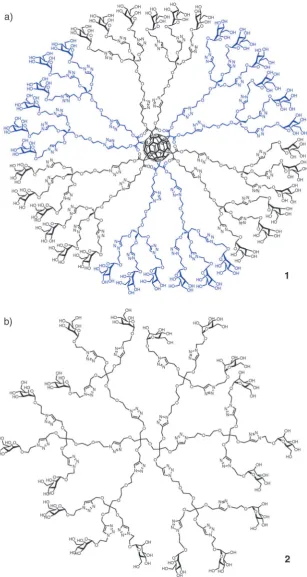
catalyzed azide–alkyne cycloaddition (CuAAC) reaction also known as ‘‘click’’ chemistry (Fig. 1). In this new strategy, first and second generation glycodendrons have been prepared conveniently functionalized for further conjugation on different scaffolds including a fullerene molecule or a virus-like particle protein.52,67
The new glycodendritic compounds display a wide variety of valencies and spatial presentation of carbohydrate ligands. The
glycodendrofullerenes (e.g.,1) prepared using this strategy are
soluble under physiological conditions and present a very low cellular toxicity. The globular disposition of carbohydrates on this spherical scaffold provides an interesting multivalent system which allows the carbohydrates to be recognized by lectins in a multivalent manner. Antiviral activity of these compounds using pseudotyped Ebola viral particles is in the
micromolar range.52,67
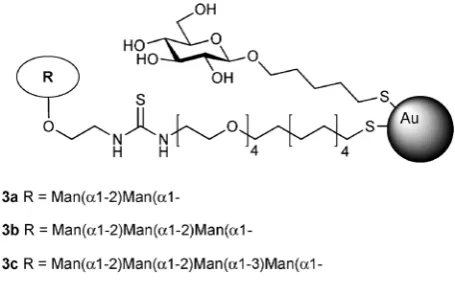
In another attempt to mimic the cluster presentation of high-mannose-type glycans on the HIV envelope, gold
nano-particles biofunctionalized with oligomannosides (manno
-GNPs,3a–3d, Fig. 2) of gp120 high-mannose type glycans have
been prepared and tested as anti-HIV agents. These manno
-GNPs inhibited the DC-SIGN/gp120 binding in the micro- to nanomolar range, while the corresponding monovalent oligo-mannosides required millimolar concentrations, as measured
by surface plasmon resonance (SPR) experiments.68
Further-more,manno-GNPs were able to inhibit the DC-SIGN-mediated
HIVtrans-infection of human activated peripheral blood mono-nuclear cells at nanomolar concentrations in an experimental setting, which mimics the natural route of virus transmission
from dendritic cells to T lymphocytes.69
2.2 Interfering with galectin attachment in lymph nodes
Galectins are lectins with affinity for b-galactosides which
are involved in self/nonself recognition. Galectins from both invertebrates and vertebrates recognize a variety of viral and
bacterial pathogens and protozoan parasites.70 Galectin-1 is
abundant in thymus and lymph nodes and promotes HIV-1 infection by facilitating virus attachment to the host cell surface
glycan.71Given that this lectin is directly involved in pathogen
recognition, it could provide a strategy for disrupting the galectins in virus–host invasion. Host galectins also recognize endogenous glycans on the host cell surface, which are impor-tant for certain necessary developmental and immunological processes.
Structurally defined bivalent lactose-containing clusters
have been designed for optimal binding to galectins.41,72–74
These compounds were evaluated for binding to the entire set of adhesion/growth-regulatory galectins from chicken. Differen-tial sensitivities were detected between distinct galectin forms within the chicken series. Two of the bivalent glycoclusters,
4and5(Fig. 3), were identified as sensors for different galectin
subtypes. Most pronounced were the selectivities of these two glycoclusters for the chimera-type galectin (galectin-3).
3. Multivalent glycoconjugates against
bacterial toxins
Cholera, still a life-threatening disease in many parts of the
world, is caused by the cholera toxin (CT) produced byVibrio
cholerae.This toxin consists of a single disease-causing A-subunit that is surrounded by five lectin-like B-subunits (CTB). The B-subunits are responsible for attachment of the toxin to the intestinal surface by binding to exposed GM1-oligosaccharide
(GM1os) moieties.75 The five B-subunits represent a
well-defined multivalent protein target with binding sites for the
GM1os units spaced ca. 30 Å apart. Polyvalent CT inhibitors
were developed starting from weak ligands, such as galactose.
Huge potency increases (up to 106-fold with IC
50 = 40 nM)
compared to that of D-galactose were reported by Fan and
co-workers, who prepared and screened a series of penta- and
decavalent ligands with linkers of various lengths.76
The advent of ‘click’ chemistry in combination with chemo-enzymatic synthesis of the complex oligosaccharide enabled
the assembly of multivalent versions of the GM1os77 into
glycodendrimers (Fig. 4).78Divalent compound
7awas almost
10 000 times more potent as an inhibitor of CTB binding to
GM1os than monovalent compound 6. This enhancement in
inhibitory potency is related to the multivalent interactions
between CTB and the divalent compound7a, as the latter does
not show an enhancement in binding to antibodies that do not
allow multiple interactions.79
An additional increase was observed for tetravalent 8a
(83 000 fold). The most complex glycodendrimer in this study,
octavalent9a, was 380 000 fold more potent (IC50= 50 pM and
relative inhibitory potency of 47 500 per GM1os).78 A detailed
study of the mode of action revealed that complex aggregates between the inhibitor and toxin are formed. These are possible because of the mismatch between the valencies of the toxin (five)versusthose of the inhibitors (two, four, eight).80
The galactose dendrimers7b, 8band9bare a simplified
glyco-mimetic version of the multivalent GM1 derivatives. The inhibi-tory potency did suffer due to this modification since the relatively large binding site of the B-subunit remains partly unoccupied resulting in a lower binding affinity. Nevertheless, multivalency effects were able to counteract the lower binding affinity of
galactose and the inhibitory potencies of compounds8band9b
were shown to be competitive with the natural GM1os ligand.81
A series of ganglioside mimics, in which the non-interacting oligosaccharide backbone of GM1os was replaced by an
Downloaded on 13/05/2013 19:08:26. Open Access Article.
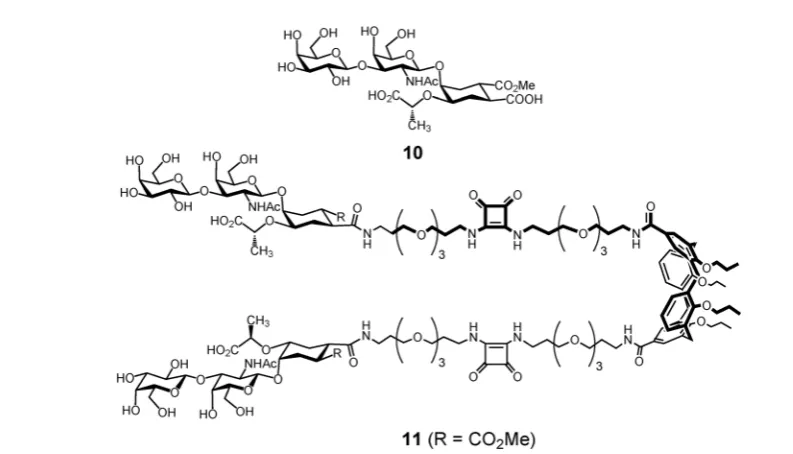
appropriate cyclohexanediol, was chosen to reproduce the topological features of the 3,4-disubstituted galactose residue (Gal-II) in GM1os.82,83The divalent presentation of a structurally
simplified second generation mimic 10 on a functionalized
calix[4]arene scaffold (Fig. 5) led to a 3800-fold (1900-fold per sugar mimic) enhancement of CTB affinity, thus reaching the
potency of GM1os itself.84 Although computational studies
show that the divalent ligand11could easily span two binding
Fig. 1 (a) Glycodendrofullerene1with 36 mannoses; (b) glycodendrimer2with 18 mannoses prepared using a CuAAC click reaction.
Review Article Chem Soc Rev
Downloaded on 13/05/2013 19:08:26. Open Access Article.
Published on 19 December 2012 on http://pubs.rsc.org | doi:10.1039/C2CS35408J
[image:5.595.146.454.48.626.2]sites on cholera toxin, NMR data indicate that the action of this divalent ligand is likely to involve additional interactions between the linker and the protein.
4. Multivalent glycoconjugates against
bacterial adhesion to human cells
4.1 UropathogenicE. coli
4.1.1 FimH.Type 1 fimbriae, or pili, are the most abundant
surface structures both in pathogenic and non-pathogenic Gram-negative bacteria. Type 1 fimbriae are widely expressed byE. coli and are used by uropathogenic strains to mediate
attachment to specific niches in the urinary tract.85 Type 1
fimbriae mediate attachment to glycosylated surfaces through FimH, a mannose-specific lectin located at the tip of pili. FimH is a two-domain lectin, whose crystal structure has been
solved.85Since the FimH binding site can accommodate only
one a-mannoside, multivalency effects which have been
observed in the inhibition of type 1 fimbriae-mediated bacterial
adhesion42,86–90cannot be explained on the basis of the
struc-ture of mannose-specific lectin FimH.
Nevertheless, avidity effects have been frequently observed with a variety of multivalent mannose-containing glycomimetics, like12–14(Fig. 6a–c). Such avidity can originate from statistical effects arising from (i) a higher concentration of mannose in the proximity of the carbohydrate binding site, (ii) existence of additional carbohydrate binding sites on the lectin FimH, or (iii) occurrence of the natural multivalent process, since fimbriae occur on the bacterial surface in several hundreds of copies. Thus, mannose-terminated multivalent glycocompounds have become important to test mannose-specific bacterial
adhesion in a supramolecular context.88,91Meanwhile, testing
of type 1 fimbriae-mediated bacterial adhesion has been greatly
facilitated by employing GFP-transfected strains.92
Interest-ingly, adhesion on multivalent glycomaterials can be utilized
for aggregatingE. coliand removing them from solution with
the use of appropriate filters. Glyconanodiamonds decorated with mannose (Fig. 6d) have been shown to be able to clean
bacteria-polluted water.93
Fullerene hexakis-adducts bearing 12 peripheral mannose
moieties (15–20) have been prepared by grafting sugar
deriva-tives onto the fullerene core52 and assayed as inhibitors of
FimH (Fig. 7).88 Dissociation constants in the range of 12 to
95 nM were measured using isothermal titration calorimetry (ITC), surface plasmon resonance (SPR) and hemagglutina-tion assays. Most importantly, the number of possible inter-actions between the multimers and the lectin and the average binding strength per functional mannose unit could be measured. Thus, this study demonstrated for the first time that
a globular C60 structure can accommodate up to seven FimH
molecules.
4.1.2 PapG. While type 1 fimbriae terminated with
man-nose specific FimH are involved in lower urinary tract infection,
E. colipresenting P-fimbriae cause bladder infections resulting
in acute pyelonephritis.94 P-fimbriae are terminated by PapG,
a tip-associated adhesin that recognizes the Gala(1-4)Gal
(galabiose) moiety of the globo-series of glycolipids.95For the
study of the inhibition of this adhesion by oligovalent galabiose derivatives, a live bacteria-SPR assay was established, in order
to mimic the flow conditions of natural infections.96
Fig. 3 Bivalent glycoclusters4(acyclic) and5(macrocyclic), identified as sensors for different galectin subtypes.
Fig. 2 Gold nanoparticles 3a–3d bearing high-mannose type glycans (manno-GNPs) present on HIV envelope glycoprotein gp120 as anti-HIV synthetic glycoconjugates.
Downloaded on 13/05/2013 19:08:26. Open Access Article.
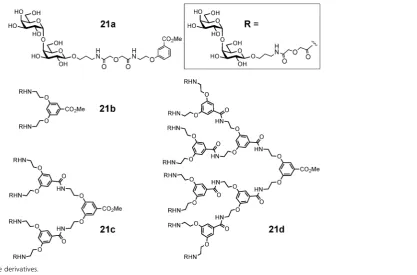
[image:6.595.53.281.49.192.2] [image:6.595.96.541.535.702.2]Synthetic mono- and multivalent galabiose derivatives21a–d
(Fig. 8) inhibited bacterial adhesion to the coated chip surfaces in a dose-dependent manner (Table 1). An octavalent galabiose
compound21dwas superior to the tetravalent derivative21c,
which in turn was a better inhibitor than the monovalent
galabiose derivative21a. However, the multivalency effect was
Fig. 4 Structures of GM1os- (7a, 8aand9a) and galactose (7b, 8band9b)-based inhibitors of cholera toxin binding.
Fig. 5 Structurally simplified GM1os mimic10grafted onto a functionalized calix[4]arene scaffold to give divalent ligand11.
Review Article Chem Soc Rev
Downloaded on 13/05/2013 19:08:26. Open Access Article.
Published on 19 December 2012 on http://pubs.rsc.org | doi:10.1039/C2CS35408J
[image:7.595.144.475.45.390.2] [image:7.595.83.480.420.647.2]much more pronounced in the case of theStreptococcus suis
adhesion when compared toE. coli PapG. On the other hand, a
more significant multivalency effect was observed in the
inhi-bition of the mannose-specific type-1-fimbriated E. coli with
similar multivalent mannose molecules.97It would appear that
multivalent inhibitors do not reach multiple E. coli adhesin
molecules as effectively as in the case of other bacteria such as
S. suis(Table 1), and therefore the spacing of the binding sites in the adhesins may differ.
4.2 Lung pathogens
4.2.1 Pseudomonas aeruginosasoluble lectins. Pseudomo-nas aeruginosa is an opportunistic pathogen associated with
chronic airway infections, especially in cystic fibrosis patients.
This strain synthesizes two lectins, LecA and LecB,98which play
a prominent role in human infections. It was demonstrated that solutions of galactose and fucose, that bind to LecA and
LecB, respectively, have a therapeutic effect againstP. aeruginosa
pneumonia in mice models99 and cystic fibrosis patients.100
Recently, glycomimetic peptides were identified that had a high affinity for binding to both LecA and LecB and could inhibit their ciliotoxic activity.101
LecA (also called PA-IL) is a tetrameric cytotoxic lectin
con-sisting of four subunits of 121 amino acids (12.75 kDa)98,102with
specificity fora-D-galactose and binding preferentially to Gala
-(1-4)Gal containing globotriaosylceramide Gb3 sphingolipid. The LecA crystal structure demonstrated the structural basis of the affinity for galactose monosaccharides with the participation of a calcium ion in the binding site.103In addition to its cytotoxicity, it has been suggested that this lectin contributes to the formation
of bacterial microcolonies and the formation of biofilms.104
Many of multivalent glycoconjugates have been synthesized for inhibiting the binding of LecA to galactosylated surfaces (Table 2 and Fig. 9). High-valency compounds such as
galacto-sylated helical poly(phenylacetylene) polymer 29,34 fullerenes
23,51 glyconanoparticles 31,105 or glycodendrimers 32106 are
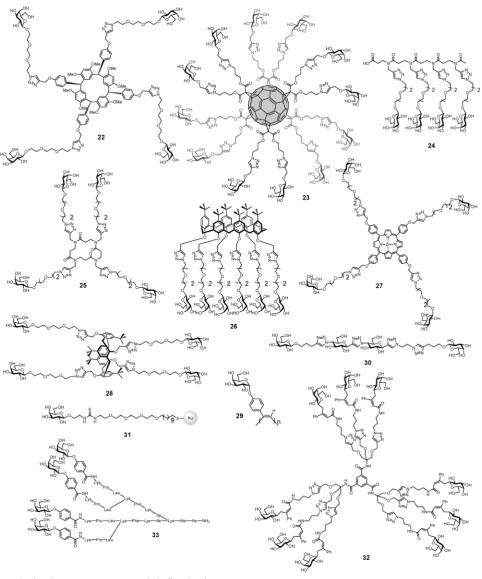
efficient ligands for inhibition, but their aggregative properties and the strong resulting precipitation create difficulties for measuring affinity constants. Excellent results were obtained with calix[4]arenes 28,38,107 calix[6]arenes 26, b-peptoids 25,
porphyrins 27108 and resorcin[4]arenes 22.109 Among these
molecules, the 1,3-alternate conformer of calix[4]arene demon-strated the most efficient and dramatic increase in affinity. A chelate-binding mode with two galactose residues interacting with two neighbouring binding sites in a single LecA tetramer could be confirmed by the observation of well-defined nano-metric fibers of lectin–glycocluster complexes through atomic
force microscopy (AFM) study.110
A recent study demonstrated that a divalent ligand30with
an appropriate linker was sufficient to induce a chelation effect
Fig. 6 Examples of various multivalent glycoconjugates inhibiting type 1 fimbriae-mediated bacterial adhesion. (a) Octopus glycosides12; (b) glycodendrimer13; (c) bifunctional ligand14to test multiple binding sites on FimH; (d) glyconanodiamonds to remove pathogenic bacteria from polluted water sources, a sandwich assay is displayed, utilizing two different bacterial strains.
Fig. 7 Dodecavalent mannofullerenes15–20as FimH inhibitors.
Downloaded on 13/05/2013 19:08:26. Open Access Article.
[image:8.595.64.539.52.210.2] [image:8.595.55.280.265.529.2]with LecA.111A rigid spacer was designed based on the alter-nation of glucose moieties linked at the 1 and 4 positions by a
1,2,3-triazole unit via‘‘click’’ chemistry. The resulting spacer
was relatively rigid and straight and was linked to galactose units at both ends. The number of building blocks was varied,
as well as the linker between the spacer and galactose ligand. This linker was shown to be of great importance and only
compound 30 (Fig. 9) has the appropriate linker-length for
achieving an inhibitory potency increase of 545-fold over a relevant reference compound.
Potent ligands for lectin LecA have been also obtained by
synthesis of glycopeptide dendrimersGalAG2 33andGalBG2 34
(Fig. 10).112Multivalency strongly influenced binding, with the
monovalent and divalent analogs showing much weaker inter-actions with the lectin. The much stronger binding of the phenyl galactosides to LecA compared to the thiopropyl-galactosides was explained by crystallographic analysis of the lectin– glycopeptide complexes, which revealed a specific interaction between a histidine residue on the lectin and the phenyl group
[image:9.595.133.551.47.322.2]Fig. 8 Oligovalent galabiose derivatives.
Table 1 Relative potencies per sugar unit of galabiose derivatives (Fig. 8) in surface plasmon resonance (SPR) or hemagglutination inhibition (HAI) assays of
E. coliandS. suisadhesion
E. coli(SPR) E. coli(HAI) S. suis(SPR)
Monovalent (21a) 1.0 1.0 1.0
Divalent (21b) 1.3 1.1 6.7
Tetravalent (21c) 1.9 2.0 63
Octavalent (21d) 5.3 4.4 39
Table 2 Multivalent compounds targeted against LecA.bvalues are calculatedversusthe monomeric compounds with linkers, unless otherwise stated
Comp. Valency HIA (MIC) ELLA (IC50) SPR (Kd) ITC (Kd) Ref.
aMeGal 1 150mM 50mM 106
bMeGal 1 190mM 94mM 106
22 4 Haemolysis 0.7mM,b= 315 Not soluble —/— 109
23 12 0.78mM,b= 12820 0.040mM,b= 458 0.367mM,b= 173 —/— 51
24 4 > 2000mM —/— 3.5mM,b= 18 1.8mM,b= 83 108
25 4 > 2000mM —/— 2.5mM,b= 25 0.3mM,b= 500 108
26 6 63mM,b= 159 —/— 0.8mM,b= 80 0.14mM,b= 1071 108
27 4 63mM,b= 159 —/— 1.4mM,b= 45 0.33mM,b= 454 108
28 4 500mM,b= 20 —/— 0.5mM,b= 144 0.176mM,b= 852 38
29 Polymer 9mM —/— —/— 4.12mM 34
30 2 —/— 0.22mM,b= 545 —/— —/— 111
31 67 0.45mM,b= 100 —/— 33mM 0.05mM,b= 2824 105
32 9 —/— —/— —/— 230 nM,b= 409 106
33 4 0.78mM,b= 4000a —/— —/— 0.1mM,b= 875 112
abvalue calculated with galactose as reference.
Review Article Chem Soc Rev
Downloaded on 13/05/2013 19:08:26. Open Access Article.
Published on 19 December 2012 on http://pubs.rsc.org | doi:10.1039/C2CS35408J
[image:9.595.42.292.380.442.2] [image:9.595.46.553.553.705.2]in the ligands, while the thiopropyl side-chain was more disordered.112
LecB (also called PA-IIL) is a tetramer consisting of four
11.73 kDa subunits with high specificity for L-fucose and a
weaker one for D-mannose.98,102 The LecB crystal structure
revealed the occurrence of two bridging calcium ions in the binding site. This unique mode of binding is not observed in
other lectins,113but explains the very high affinity for fucosides
and Lewis a. Although most of the LecB is cytoplasmic, it could also be detected in the outer membrane, including on the
Fig. 9 Multivalent glycoconjugates22–33as LecA high affinity ligands.
Downloaded on 13/05/2013 19:08:26. Open Access Article.
[image:10.595.57.540.44.624.2]surface of biofilm cells, from which it can be released by
application of L-fucose.114 It has recently been hypothesized
that LecB undergoes transientN-glycosylation that could play a
role in the secretion mechanism.115The search for a putative
binding partner led to the proposal of outer membrane protein OprF which is a nonspecific, weakly cation-selective porin channel protein. LecB may mediate the adhesion of
P. aeruginosacells to receptors that are located on its surface and facilitate biofilm formation, thereby promoting coloniza-tion of host tissues.
The search for high affinity ligands for LecB initiated the synthesis of several classes of fucose-containing compounds
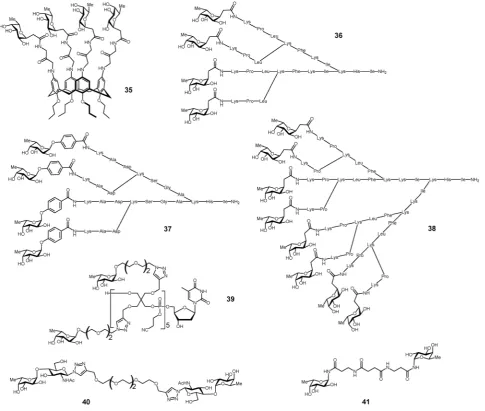
(Table 3 and Fig. 11) based on calixarene35,116pentaerythritol
39117or peptide dendrimer36–38scaffolds. Compounds have
also been designed for bivalent presentation ofaFuc(1-4)GlcNAc
40,118andN-fucosyl amides41.119
Glycopeptide dendrimer ligands for LecB were identified by
screening combinatorial libraries of peptide dendrimers120–122
functionalized withN-terminalC-fucoside residues at the end
of the dendrimer branches.FD2 36andPA8 37(Fig. 11) turned
out to be potent ligands for LecB.123,124
Structure–activity relationship studies showed that multi-valency was important for activity, in particular divalent and linear peptide analogs of the dendrimers showed strongly reduced binding at the level of monosaccharides (Table 4).
These studies led to the identification of dendrimer 2G3 38
with 8 fucosyl endgroups as the most potent glycopeptide
dendrimer ligand to LecB. The diastereoisomerD-36prepared
from D-amino acids was also demonstrated to be a similarly
potent ligand to LecB.125
4.2.2 Inhibition of P. aeruginosabiofilms.One of the key
factors responsible for the virulence and antibiotic resistance of this pathogen is the formation of biofilms. The development of therapeutic agents acting on the bacterial biofilm is of utmost
importance. The C-fucosylpeptide dendrimers 36 and D-36
inhibit biofilm formation and efficiently disperse established
biofilms of wild type and hospital strains of P. aeruginosa
(Table 4).125,126 Control experiments with LecB-deletion
mutants and dendrimers that are not ligands of LecB showed that biofilm inhibition required both a potent ligand and LecB expression, suggesting that the effect was indeed caused by binding of the ligand to the lectin. The galactosylated peptide
dendrimer such asGalAG0/1/2 33andGalBG0/1/2 34(Fig. 10
and Table 4) had strong affinity for LecA and demonstrated
biofilm inhibition and dispersion activity.112This anti-biofilm
effect mediated by glycopeptide dendrimers was unprecedented
and suggests a new therapeutic approach to controlP. aeruginosa
infections.
4.2.3 Burkholderia cenocepaciasoluble lectins.Burkholderia cenocepaciais another opportunistic bacterium causing infec-tions in patients suffering from chronic granulomatous disease and cystic fibrosis with significant morbidity and mortality. A family of four soluble lectins has been identified in
B. cenocepacia, each containing at least one domain with strong
sequence similarity with LecB from P. aeruginosa described
above.127BC2L-A is a small lectin consisting of one dimer of
LecB-like domain that binds mannose and oligomannose-type
N-glycans.127,128
BC2L-A has a strong affinity fora-D-mannosides (Kdof 2mM
for methyla-D-mannopyranoside) and mannobioses. Bridging
interaction with the branched trimannoside Mana1-3(Mana
1-6)-Man resulted in the formation of molecular strings as detected by protein crystallography and AFM. Oligomannose analogs
presenting two mannosides separated by either rigid (42) or
flexible (43) spacer arms were also tested (Fig. 12). Only the
rigid linker yielded high affinity with a fast kinetics of clustering, while the flexible analog and the trimannoside displayed
moderate affinities and no clustering.128
Micelles formed from mannosylated poly(ethylene
oxide)-b-poly(e-caprolactone) (PEO-b-PCL) diblock copolymer and
nanoparticles of poly(D,L-lactic acid) functionalized with the
same copolymer have also been demonstrated to bind effi-ciently to BC2L-A.36,129
4.3 Zoonotic bacteria
Streptococcus suis is an important emerging worldwide pig pathogen and zoonotic agent, which causes meningitis,
pneu-monia and sepsis in pigs and also meningitis in humans.130An
adhesion activity based on the recognition of glycoconjugates
containing the disaccharide galabiose (i.e. Gala(1-4)Gal) has
been characterized inS. suis. The hydroxyl groups identified to
be involved in the interaction indicate thatS. suisadhesin has a
different binding mode to galabiose than PapG from
uropatho-genic E. coli. These two adhesins do not display sequence
similarity neither, indicating that they have evolved through
[image:11.595.53.281.51.176.2]convergent evolution.131
Fig. 10 Structure of glycopeptide dendrimer inhibitors ofP. aeruginosabiofilms.
Table 3 Multivalent compounds targeted to LecB.bvalues are calculatedversus
fucose
Comp. Val. ELLA ITC Ref.
aMeFuc 1
0.47mM 167
35 4 Test biofilm 80% inhibition at 200mM 116
36 4 0.14mM,b= 79 —/— 125
37 4 0.11mM,b= 100 —/— 126
38 8 0.025mM,b= 440 —/— 168
39 10 0.25mM,b= 22 —/— 117
40 2 —/— 0.09mM 118
41 2 —/— 0.62mM,b= 3 119
Review Article Chem Soc Rev
Downloaded on 13/05/2013 19:08:26. Open Access Article.
Published on 19 December 2012 on http://pubs.rsc.org | doi:10.1039/C2CS35408J
[image:11.595.41.293.616.720.2]Synthetic derivatives of the receptor disaccharide galabiose on one hand, or polyvalent dendrimers of galabiose on the other hand (Fig. 8), have turned out to be exceptionally efficient
inhibitors of S. suis adhesion, both at nanomolar
concentra-tions.132,133 Inhibitors of the adhesion of S. suisto cells have
also been found in natural sources, berries and juices, but their
chemical nature has not yet been identified.134In the
charac-terization of the adhesion specificities and comparison of various mono- or oligovalent inhibitors, a live-bacteria applica-tion of surface plasmon resonance has turned out to be very useful.96
Due to phase variation, the expression of bacterial adhesins is not uniform even within a single bacterial strain. Therefore it may become important to be able to detect specifically bacteria that express a specific adhesin of potential clinical impact. Magnetic glyconanoparticles may represent ideal tools for this purpose. Magnetic beads containing derivatives of galabiose (Fig. 13) were capable of selecting bacteria in a mixture and
determining their amounts in a luminescence assay.135
Optimisation of the carbohydrate ligand and its multivalent presentation in appropriate carriers are predicted to further improve the efficiency of the ligand in bacterial adhesion inhibition and detection.
5. Bacterial cell surface as a target for
anti-infectious agents
5.1 Bacterial LPS: a natural multivalent glycoconjugate
In the cell wall of Gram-negative bacteria, carbohyrates are mostly conjugated to lipids in the outer membrane, where they are present in a very high concentration. The bacterial outer
membrane is asymmetric.136 Its external leaflet is almost
[image:12.595.58.544.49.460.2]entirely constituted of lipopolysaccharides (LPSs) which cover approximately 75% of the surface giving rise to a multivalent glycoconjugate surface with very low fluidity and a highly ordered structure. LPSs are necessary for bacterial viability and this natural multivalent assembly plays many roles in
Fig. 11 Multivalent glycoconjugates35–41as LecB high affinity ligands.
Downloaded on 13/05/2013 19:08:26. Open Access Article.
host–bacterium interactions.136LPSs are classified as MAMPs (Microbe-Associated Molecular Patterns) because they are recognized by the innate immune system. This recognition takes place through the involvement of specific PRRs (Pathogen Related Receptors) finely tuned on a MAMP motif, the lipid A domain.
LPSs isolated or extracted from their natural environment aggregate in solution due to their amphiphilic nature, resulting in a supramolecular aggregate which still displays multivalent features that can be of direct use. Indeed, it has recently been shown that the HIV protective antibody 2G12 is able to
recognize the LPS produced from Rhizobium radiobacter
Rv3.137This particular LPS possesses a carbohydrate structure
(Fig. 14) which resembles the epitope on the surface of HIV for which the antibody is specific. It has been observed that 2G12 interacted with lipooligosaccharides (LOS) only when the lipid moiety was present, so as to allow formation of a supramolecular aggregate in water (C. De Castro, personal communication).
[image:13.595.44.551.61.219.2]Another interesting example of LPS multivalency relates to the stabilizing effect on the protein conformation embedded in
Table 4 P. aeruginosalectin binding and biofilm inhibition by glycopeptide dendrimers
No Structurea Lectin IC50,mM (ELLA)b KD,mM (ITC)c r.p./nd Biofilm inhibitione
a-NPF a-(p-Nitrophenyl)-L-fucoside LecB 5.270.55 2.1 —
T1 (cFuc-RL)2BRIFV LecB 50.45 1.7 n.d.
KT1 37 (cFuc)4(KRL)2BRIFV LecB 0.590.059 7.2 n.d.
2G0 cFuc-KPL LecB 5.941.24 1.9 n.d.
2G1 (cFuc-KPL)2KFKI LecB 2.70.56 2.0 n.d.
37 (cFuc-KPL)4(KFKI)2KHI LecB 0.140.035 20 ++++
D-36 (cFuc-kpl)4(Kfkl)2Khl LecB 0.660.12 4.2 +++
2G3 (cFuc-KP)8(KLF)4(KKI)2KHI LecB 0.0250.005 55 n.d.
NPG p-Nitrophenylb-D-galactopyranoside LecA 14.10.2 6.2 —
GalAG0 GalA-KPL LecA 4.20.9 21 +
GalAG1 (GalA-KPL)2KFKI LecA 0.50.2 91 ++
GalAG2 33 (GalA-KPL)4(KFKI)2KHI LecA 0.10.01 220 +++
GalBG0 GalB-KPL LecA 51.56.7 1.7 +
GalBG1 (GalB-KPL)2KFKI LecA 2.11.0 21 ++
GalBG2 34 (GalB-KPL)4(KFKI)2KHI LecA 0.40.1 60 +++
aStandard peptide notation with N-terminus at left and C-terminus at right. Amino acids are given in one-letter codes, italics indicate branching diaminoacids,BisL-2,3-diaminopropionic acid, the C-terminus (at right) is carboxamide (CONH2) in all cases. See also Fig. 10 for exemplification
of the topology and the structure of the glycoside groupsC-Fuc, GalA and GalB.bEnzyme-linked lectin assay.cIsothermal titration calorimetry. dr.p./
nis the relative potency compared to the free sugar (L-fucose orD-galactose) per glycoside group.eBiofilm inhibition measured with the steel
[image:13.595.321.531.297.578.2]coupon assay at 50mM. n.d. = not determined, — = no inhibition, + = less than 20% inhibition, ++ = 30 to 50% inhibition, +++ = up to 90% inhibition, ++++ = 100% inhibition.
Fig. 12 Divalent mannosylated compounds as ligands of BC2L.
Fig. 13 Use of galabiose-functionalized magnetic beads for identifying and isolatingS. suisbacteria.
Fig. 14 Structure of the LPS fromRhizobium radiobacterRv3. The area in the box displays strong structural similarity with the epitope recognized from the mAb 2G12. LA stands for lipid A.
Review Article Chem Soc Rev
Downloaded on 13/05/2013 19:08:26. Open Access Article.
Published on 19 December 2012 on http://pubs.rsc.org | doi:10.1039/C2CS35408J
[image:13.595.61.281.307.432.2] [image:13.595.307.551.607.684.2]the membrane. This concept guided the formulation of the
new generation vaccine for Neisseria meningitidis group B
(MenB),138 which is the causative agent of meningitis. The
strain belonging to group B is the only member within its species for which the synthesis of a synthetic glycoprotein vaccine has not been successful so far as its capsular poly-saccharide is not immunogenic. The current MenB vaccine is a vesicle prepared from fragments of the bacterial membrane;
the antigenicity mainly arises from a selected pool ofNeisseria
proteins embedded in this artificial membrane, in which LPSs are thought to work as a multivalent glycoconjugate that stabilises the vesicle.
Given the high biological importance of LPSs as natural multivalent glycoconjugates in the elicitation/suppression of eukaryotic immunity, the structural and supramolecular study of such molecules plays an important role. In an attempt to create a ‘‘non-natural’’ LPS multivalent surface, these mole-cules have been extracted from different microbial sources and reconstituted in liposomes. The physico-chemical investi-gation of these systems has been performed by a combined experimental strategy, which has allowed characterisation at different observation scales, from the morphological to the
micro-structural level.139,140The next step will be the study of
the elicitation of eukaryotic immunity of such an ‘‘artificial’’ bacterial surface.
5.2 Inhibition of LPS synthesis by multivalent glycoconjugates
L-Heptosides (L-glycero-D-manno-heptopyranoses) are
compo-nents of the core region of LPS. Since LPS is essential for bacterial viability, its biosynthesis can be targeted for the development of novel antibacterial agents. A series of fullerene
hexakis-adducts bearing twelve copies of peripheral sugars
displaying the mannopyranose core structure of bacterial
L-heptosides have been synthesized (Fig. 15). The multimers
were assembled through an efficient CuAAC reaction as the final step. The final fullerene sugar balls were assayed as inhibitors of heptosyltransferase WaaC, the glycosyltransferase
catalyzing the incorporation of the first L-heptose into LPS.
Interestingly, the inhibition of the final molecules was found in
the low micromolar range (IC50value of 7 to 45mM) while the
corresponding monomeric glycosides displayed high
micro-molar to low millimicro-molar inhibition levels (IC50 always above
400mM). When evaluated on a ‘‘per-sugar’’ basis, these
inhi-bition data showed that, in each case, the average affinity of a single glycoside of the fullerenes towards WaaC was signifi-cantly enhanced when displayed as a multimer, thus
demon-strating an unexpected multivalent effect.141To date, such a
multivalent mode of inhibition had never been evidenced with glycosyltransferases.
5.3 Exploitation of bacterial S-layers as a natural multivalent glycan display system
Natural molecular self-assembly systems are prime candidates for use in nanobiotechnology. Crystalline-cell surface (S-) layers of prokaryotic organisms are very potent self-assembly systems, which can be used in bottom-up processes as a patterning element for the multivalent display of biofunctional epitopes
such as glycans.142
The S-layer system is being exploited for multivalent glycan display based on the groundbreaking demonstrations that proteins can be recombinantly equipped with tailor-made glycosylation in an easily tractable bacterial system such as
Escherichia coli143and that glycosylation modules from different bacterial sources, including glycoproteins, lipopolysaccharides or exopolysaccharides, can be combined to achieve functional glycosylation.144Using a combination of protein- and glycosylation-engineering approaches to produce self-assembling S-layer
neoglycoconjugates, the feasibility of this system could be
proven in vitro as well as in vivo, with the latter approach
presenting interesting possibilities for live glycoconjugate delivery
in future antipathogenic therapy.145
In a proof-of-concept study, the S-layer protein SgsE from
Geobacillus stearothermophilus NRS 2004/3a (AF328862) was used as a matrix for the display of a branched heptasaccharide
from the Campylobacter jejuniprotein AcrA as well as for the
E. coliO7 antigen.146SgsE is a 903-amino acid protein which aligns in a 2D lattice with oblique (p2) symmetry and which is
naturallyO-glycosylated at multiple sites. The SgsE protein was
engineered by including the signal peptide of PelB (pectate
lyase from Erwinia carotovora) for periplasmic targeting.
Furthermore, one of the natural proteinO-glycosylation sites
was engineered into anN-glycosylation site to be recognized by
the heterologous oligosaccharyltransferase PglB. In this way,
S-layerneo-glycoproteins could be produced based on
plasmid-encoded glycosylation information for either of the model glycan structures. The degree of glycosylation of the S-layer
neoglycoproteins after purification from the periplasmic
frac-tion of the E. coli cell factory reached up to 100%. Electron
[image:14.595.47.289.541.691.2]microscopy revealed that recombinant glycosylation is fully compatible with the S-layer protein self-assembly system (Fig. 16). Thus, the S-layer system is a promising strategy for multivalent glycan display approaches, where strict (‘‘nanometer-scale’’) control over position and orientation of the glycan epitopes is desired.
Fig. 15 Multivalent glycosylated fullerenes for inhibition of LPS heptosyltrans-ferase WaaC.
Downloaded on 13/05/2013 19:08:26. Open Access Article.
6. Glycoconjugate analogs and multivalent
glycoconjugates for immune system
stimulation and vaccine approach
6.1 Glycoconjugate analogs to trigger the innate immunity
Early recognition of invading bacteria by the innate immune system has a crucial function in antibacterial defense by triggering inflammatory responses that prevent the spread of infection and suppress bacterial growth. Toll-like receptor 4 (TLR4), the innate immunity receptor of bacterial endotoxins, plays a pivotal role in the induction of inflammatory responses. TLR4 activation by bacterial lipopolysaccharide (LPS) is achieved by the coordinate and sequential action of three other proteins, LBP, CD14 and MD-2 receptors, that bind lipopolysaccharide (LPS) and present it to TLR4 by forming the activated
(TLR4-MD-2-LPS)2complex (Fig. 17).147
TLR4 trigger can be remarkably sensitive and robust, stimu-lating prompt and powerful host defence responses to different species of invading bacteria. However, an excessively potent host response generates life-threatening syndromes such as acute sepsis and septic shock. Non-toxic LPSs or lipid A
obtained from non-pathogenic bacteria such as Rhodobacter
capsulatusandRhodobacter sphaeroidesare potent LPS
antago-nists in vitro148although no molecules usable for
pharmaco-logical treatment for sepsis are not available yet.
Several synthetic molecules capable of modulating TLR4
activity have been developed.149,150 IAXO compounds
47–52,
which include lipidated monosaccharides with an amino group
on the C-6 position of the pyranose ring of D-glucose, were
[image:15.595.312.545.48.395.2]active in blocking the TLR4 signal in cells andin vivomodels
(Fig. 17).151 Their antagonist effect was due to the capacity
of these molecules to displace from CD14 and TLR4-MD-2
complexes.152These molecules are now commercially available
with the proprietary name of IAXO (Innaxon) as selective small-molecule inhibitors of the TLR4 signal pathway, and lead
compound IAXO-102 48 is in a preclinical phase as an
anti-sepsis agent. More recently, lipid A analogues such as53were
developed with a structure composed of two glucoside units connected by a linker both units bearing on C-4 an anionic
sulfate group (Fig. 17).153These compounds have an antagonist
effect if administered together with endotoxin, and a mild agonist effect if administered alone. In the context of vaccine adjuvants acting on innate immunity receptors, natural LPS immobilized on nanoparticles was also demonstrated to have
interesting TLR4 activating properties.154
6.2 Multivalent glycoconjugates in vaccine development
6.2.1 HIV vaccine. An important aspect of HIV glycans is
their role in protecting the underlying protein epitopes from exposure to the immune response of the host. Nevertheless, the broadly neutralizing monoclonal antibody 2G12 can target a
cluster of high-mannose oligosaccharides of HIV gp120.155
Moreover, new broadly neutralizing antibodies that are also carbohydrate-directed have been isolated recently from
patients.156Mimicking the cluster presentation of
oligomanno-sides expressed at the HIV-1 surface is a strategy for eliciting a
vaccine response. Several groups, including those of Wang,157,158
Wong,159,160 Danishefsky,48,161 and Rappuoli,162 have
[image:15.595.79.257.49.209.2]multi-merized high mannose-type oligosaccharides on synthetic
Fig. 16 Model of a self-assembled SgsE-neoglycoprotein monolayer periodically displaying recombinant E. coli O7 antigens with nanometer-scale precision. Image reconstruction using Cinema 4 is based on a negatively stained prepara-tion of the S-layer protein self-assembled in soluprepara-tion and on the pdb data of the glycans generated with Sweet at http://www.glycosciences.de/ (adapted from ref. 146, Wiley-VCH Weinheim).
Fig. 17 Synthetic lipids with TLR4-modulating activity.
Review Article Chem Soc Rev
Downloaded on 13/05/2013 19:08:26. Open Access Article.
Published on 19 December 2012 on http://pubs.rsc.org | doi:10.1039/C2CS35408J
scaffolds in order to mimic the carbohydrate epitope of 2G12. Although most of these systems were able to induce a carbohydrate-specific immune response in animals, the IgG antibodies were unable to bind to gp120 or neutralize the virus. The difficulty of eliciting high titers of antibodies against the 2G12 epitope remains a still open challenge in search for synthetic carbohydrate-based vaccines against HIV.
Together with new studies on the molecular basis of the interactions between glycans and anti-HIV antibodies, gold
nanoparticles functionalized with oligomannosides (manno
-GNPs, Fig. 2) can offer an alternative in this direction. In order to gain deeper insights into the interactions between 2G12 and selected oligomannosides at the molecular level, the structural and affinity details of the 2G12/oligomannosides interactions have been studied by saturation transfer difference NMR spectroscopy (STD-NMR) and transferred NOE in isotropic
solution.163It was found that linear oligomannosides show a
single binding mode to 2G12, with the non-reducing terminal
disaccharide Man(a1-2)Man(a1-, making the closest antibody/
oligosaccharide contacts in the bound state. In contrast, a branched pentamannoside showed two alternate binding modes involving both ligand arms, contrary to previous X-ray
studies.164Among the analysed series of ligands, the strongest
2G12 binders were the linear tri- and tetramannosides. This information is of key importance for the design of synthetic multivalent gp120 high-mannose mimics for HIV vaccine
develop-ment. Indeedmanno-GNPs were able to bind with high affinity
and to interfere with the 2G12/gp120 binding as determined by
SPR-based biosensors and STD-NMR.165 Cellular neutralization
assays with manno-GNPs also demonstrated that GNPs coated
with a linear tetramannoside could block the 2G12-mediated neutralization of a replication-competent HIV-1 under conditions that resemble those in which normal serum prevents infection of
the target cell. All these results prove that selectedmanno-GNPs
could function as an anti-adhesive barrier at an early stage of HIV infection, but also as synthetic mimics of the 2G12 epitope in the route of a carbohydrate-based vaccine against HIV.
6.2.2 Streptococcus pneumoniaevaccine.The feasibility of using gold nanoparticles as carriers has been tested for the production of a carbohydrate-based vaccine candidate. Gold
GNP54coated with a conjugate of the synthetic tetrasaccharide
Galb(1-4)Glcb(1-6)[Galb(1-4)]GlcNAcb(1-, the repeating units of
Streptococcus pneumoniae capsular polysaccharide, and a T-helper peptide (Fig. 18) were able to induce a carbohydrate-specific immune response in mice, which resulted in the
genera-tion of funcgenera-tional IgG antibodies against this bacterium.166
7. Conclusions
The recent advances in the synthesis of complex glycomolecules with controlled topology and valency coupled with the progress in understanding the importance of protein–carbohydrate interactions have driven forward the domain of multivalent glycomolecules. Indeed, these molecules have proven to be very potent frameworks for binding to a range of glycan receptors, and therefore have the ability to stimulate, mediate or inhibit a variety of biological or pathological processes. The different applications of glycocompounds in anti-infectious strategies should be further developed in the future, with knowledge-based approaches that take into account the structure of the protein receptors. Designing multivalent glycoconjugates that perfectly fit the topology of binding sites will increase their affinity toward the target, and help in fine-tuning their speci-ficity. Based on the reports summarized in this review, it appears that multivalent glycoconjugates are close to be utilised in anti-adhesive therapies against viral and bacterial infection, but can are be used to mimic bacterial cell surfaces in order to stimulate the immune systems.
Acknowledgements
The authors acknowledge the support from EU COST Actions CM1102 and COST BM1003. In addition, the work reviewed has been supported by the sources listed in the original publica-tions cited and by institupublica-tions mentioned in the affiliation list.
References
1 A. Varki, R. D. Cummings, J. D. Esko, H. H. Freeze, P. Stanley, C. R. Bertozzi, G. W. Hart and M. E. Etzler,
Essentials of Glycobiology, Cold Spring Harbour, New York, 2nd edn, 2009.
2 H. J. Gabius, S. Andre, J. Jimenez-Barbero, A. Romero and
[image:16.595.143.455.54.165.2]D. Solis,Trends Biochem. Sci., 2012,36, 298–313.
Fig. 18 Gold nanoparticles bearing Galb(1-4)Glcb(1-6)[Galb(1-4)]GlcNAcb(1- (repeating units ofS. pneumoniaetype 14 capsular polysaccharide), T-helper ovalbumin (OVA) peptide OVA323–239andD-glucose as carriers for synthetic carbohydrate-based vaccines.
Downloaded on 13/05/2013 19:08:26. Open Access Article.
3 H. Lis and N. Sharon,Chem. Rev., 1998,98, 637–674.
4 L. L. Kiessling, J. E. Gestwicki and L. E. Strong,Curr. Opin.
Chem. Biol., 2000,4, 696–703.
5 Y. C. Lee and R. T. Lee,Acc. Chem. Res., 1995,28, 321–327.
6 J. J. Lundquist and E. J. Toone, Chem. Rev., 2002, 102,
555–578.
7 M. Mammen, S.-K. Choi and G. M. Whitesides, Angew.
Chem., Int. Ed., 1998,37, 2754–2794.
8 V. I. Dyukova, N. V. Shilova, O. E. Galanina, A. Y. Rubina
and N. V. Bovin, Biochim. Biophys. Acta, 2006, 1760,
603–609.
9 T. Feizi, F. Fazio, W. Chai and C. H. Wong, Curr. Opin.
Struct. Biol., 2003,13, 637–645.
10 T. Horlacher and P. H. Seeberger,Chem. Soc. Rev., 2008,37,
1414–1422.
11 O. Oyelaran and J. C. Gildersleeve,Curr. Opin. Chem. Biol.,
2009,13, 406–413.
12 J. C. Paulson, O. Blixt and B. E. Collins,Nat. Chem. Biol.,
2006,2, 238–248.
13 E. H. Song and N. L. Pohl,Curr. Opin. Chem. Biol., 2009,13,
626–632.
14 C. D. Rillahan and J. C. Paulson,Annu. Rev. Biochem., 2011,
80, 797–823.
15 T. K. Dam and C. F. Brewer, Adv. Carbohydr. Chem.
Biochem., 2010,63, 139–164.
16 T. K. Dam, T. A. Gerken and C. F. Brewer,Biochemistry,
2009,48, 3822–3827.
17 J. E. Gestwicki, C. W. Cairo, L. E. Strong, K. A. Oetjen and
L. L. Kiessling,J. Am. Chem. Soc., 2002,124, 14922–14933.
18 M. Reynolds and S. Perez,C. R. Chim., 2011,14, 74–95.
19 Y. M. Chabre and R. Roy,Adv. Carbohydr. Chem. Biochem.,
2010,63, 165–393.
20 D. Deniaud, K. Julienne and S. G. Gouin, Org. Biomol.
Chem., 2011,9, 966–979.
21 R. J. Pieters,Org. Biomol. Chem., 2009,7, 2013–2025.
22 T. Darbre and J. L. Reymond,Curr. Top. Med. Chem., 2008,
8, 1286–1293.
23 K. J. Doores, D. P. Gamblin and B. G. Davis,Chem.–Eur. J.,
2006,12, 656–665.
24 A. Imberty, Y. M. Chabre and R. Roy,Chem.–Eur. J., 2008,
14, 7490–7499.
25 P. I. Kitov, J. M. Sadowska, G. Mulvey, G. D. Armstrong,
H. Ling, N. S. Pannu, R. J. Read and D. R. Bundle,Nature,
2000,403, 669–672.
26 A. Imberty and A. Varrot,Curr. Opin. Struct. Biol., 2008,18,
567–576.
27 K. A. Karlsson,Adv. Exp. Med. Biol., 2001,491, 431–443.
28 R. J. Pieters,Adv. Exp. Med. Biol., 2011,715, 227–240.
29 N. Sharon,Adv. Exp. Med. Biol., 1996,408, 1–8.
30 B. G. Davis,Chem. Rev., 2002,102, 579–602.
31 R. J. Payne and C. H. Wong,Chem. Commun., 2010,46, 21–43.
32 P. M. Rendle, A. Seger, J. Rodrigues, N. J. Oldham, R. R. Bott, J. B. Jones, M. M. Cowan and B. G. Davis,
J. Am. Chem. Soc., 2004,126, 4750–4751.
33 L. Bes, S. Angot, A. Limer and D. M. Haddleton,
Macro-molecules, 2003,36, 2493–2499.
34 I. Otsuka, B. Blanchard, R. Borsali, A. Imberty and
T. Kakuchi,ChemBioChem, 2010,11, 2399–2408.
35 D. Ponader, F. Wojcik, F. Beceren-Braun, J. Dernedde and
L. Hartmann,Biomacromolecules, 2012,13, 1845–1852.
36 J. Rieger, F. Stoffelbach, D. Cui, A. Imberty, E. Lameignere, J. L. Putaux, R. Je´roˆme, C. Je´roˆme and R. Auze´ly-Velty,
Biomacromolecules, 2007,8, 2717–2725.
37 L. Baldini, A. Casnati, F. Sansone and R. Ungaro,Chem.
Soc. Rev., 2007,36, 254–266.
38 S. Cecioni, R. Lalor, B. Blanchard, J.-P. Praly, A. Imberty,
S. E. Matthews and S. Vidal, Chem.–Eur. J., 2009, 15,
13232–13240.
39 A. Dondoni and A. Marra, Chem. Rev., 2010, 110,
4949–4977.
40 S. Andre, C. Grandjean, F. M. Gautier, S. Bernardi,
F. Sansone, H. J. Gabius and R. Ungaro,Chem. Commun.,
2011,47, 6126–6128.
41 S. Andre, R. J. Pieters, I. Vrasidas, H. Kaltner, I. Kuwabara,
F. T. Liu, R. M. Liskamp and H. J. Gabius,ChemBioChem,
2001,2, 822–830.
42 C. Heidecke and T. K. Lindhorst,Chem.–Eur. J., 2007,13,
9056–9067.
43 M. A. Mintzer, E. L. Dane, G. A. O’Toole and
M. W. Grinstaff,Mol. Pharm., 2012,9, 342–354.
44 M. Touaibia and R. Roy, Mini–Rev. Med. Chem., 2007, 7,
1270–1283.
45 W. B. Turnbull and J. F. Stoddart,J. Biotechnol., 2002,90,
231–255.
46 D. A. Fulton and J. F. Stoddart,Bioconjugate Chem., 2001,
12, 655–672.
47 M. Gomez-Garcia, J. M. Benito, A. P. Butera, C. Ortiz Mellet,
J. M. Garcia Fernandez and J. L. Jimenez Blanco, J. Org.
Chem., 2012,77, 1273–1288.
48 I. J. Krauss, J. G. Joyce, A. C. Finnefrock, H. C. Song, V. Y. Dudkin, X. Geng, J. D. Warren, M. Chastain,
J. W. Shiver and S. J. Danishefsky, J. Am. Chem. Soc.,
2007,129, 11042–11044.
49 T. Ohta, N. Miura, N. Fujitani, F. Nakajima, K. Niikura, R. Sadamoto, C. T. Guo, T. Suzuki, Y. Suzuki, K. Monde
and S. Nishimura, Angew. Chem., Int. Ed., 2003, 42,
5186–5189.
50 A. M. Pujol, M. Cuillel, O. Renaudet, C. Lebrun, P. Charbonnier, D. Cassio, C. Gateau, P. Dumy, E. Mintz
and P. Delangle,J. Am. Chem. Soc., 2011,133, 286–296.
51 S. Cecioni, V. Oerthel, J. Iehl, M. Holler, D. Goyard, J.-P. Praly, A. Imberty, J.-F. Nierengarten and S. Vidal,
Chem.–Eur. J., 2011,17, 3252–3261.
52 J.-F. Nierengarten, J. Iehl, V. Oerthel, M. Holler, B. M. Illescas, A. Munoz, N. Martin, J. Rojo, M. Sanchez-Navarro, S. Cecioni, S. Vidal, K. Buffet, M. Durka and
S. P. Vincent,Chem. Commun., 2010,46, 3860–3862.
53 M. Marradi, M. Martin-Lomas and S. Penades,Adv.
Carbo-hydr. Chem. Biochem., 2010,64, 211–290.
54 X. Wang, E. Matei, L. Deng, O. Ramstrom,
A. M. Gronenborn and M. Yan, Chem. Commun., 2011,
47, 8620–8622.
Review Article Chem Soc Rev
Downloaded on 13/05/2013 19:08:26. Open Access Article.
Published on 19 December 2012 on http://pubs.rsc.org | doi:10.1039/C2CS35408J
55 R. Kikkeri, P. Laurino, A. Odedra and P. H. Seeberger,
Angew. Chem., Int. Ed., 2010,49, 2054–2057.
56 A. Robinson, J. M. Fang, P. T. Chou, K. W. Liao, R. M. Chu
and S. J. Lee,ChemBioChem, 2005,6, 1899–1905.
57 Y. Yang, M. Yu, T. T. Yan, Z. H. Zhao, Y. L. Sha and Z. J. Li,
Bioorg. Med. Chem., 2010,18, 5234–5240.
58 R. D. Astronomo and D. R. Burton,Nat. Rev. Drug Discovery,
2010,9, 308–324.
59 V. Verez-Bencomo, V. Fernandez-Santana, E. Hardy, M. E. Toledo, M. C. Rodriguez, L. Heynngnezz, A. Rodriguez, A. Baly, L. Herrera, M. Izquierdo, A. Villar, Y. Valdes, K. Cosme, M. L. Deler, M. Montane, E. Garcia, A. Ramos, A. Aguilar, E. Medina, G. Torano, I. Sosa, I. Hernandez, R. Martinez, A. Muzachio, A. Carmenates, L. Costa, F. Cardoso, C. Campa, M. Diaz and R. Roy,
Science, 2004,305, 522–525.
60 N. Nagahori, R. T. Lee, S. Nishimura, D. Page, R. Roy and
Y. C. Lee,ChemBioChem, 2002,3, 836–844.
61 A. Nelson, J. M. Belitsky, S. Vidal, C. S. Joiner, L. G. Baum
and J. F. Stoddart, J. Am. Chem. Soc., 2004, 126,
11914–11922.
62 Y. van Kooyk and T. B. Geijtenbeek, Nat. Rev. Immunol.,
2003,3, 697–709.
63 M. Sa´nchez-Navarro and J. Rojo,Drug News Perspect., 2010,
23, 557–572.
64 J. Luczkowiak, S. Sattin, I. Sitkeviciute, J. Reina, M. Sa´nchez-Navarro, M. The´paut, L. Martı´nez-Prats, A. Daghetti, F. Fieschi, R. Delgado, A. Bernardi and
J. Rojo,Bioconjugate Chem., 2011,22, 1354–1365.
65 A. Berzi, J. Reina, R. Ottria, I. Sutkeviciute, P. Antonazzo,
M. Sa´nchez-Navarro, E. M. Chabrol, M. Biasin,
D. Trabattoni, I. Cetin, J. Rojo, F. Fieschi, A. Bernardi
and M. Clerici,AIDS, 2012,26, 127–137.
66 S. Sattin, A. Daghetti, M. The´paut, A. Berzi, M. Sa´nchez-Navarro, G. Tabarani, J. Rojo, F. Fieschi, M. Clerici and
A. Bernardi,ACS Chem. Biol., 2010, 301–312.
67 M. Sa´nchez-Navarro, A. Mun˜oz, B. Illescas, J. Rojo and
N. Martı´n,Chem.–Eur. J., 2011,17, 766–769.
68 O. Martinez-Avila, K. Hijazi, M. Marradi, C. Clavel,
C. Campion, C. Kelly and S. Penades,Chem.–Eur. J., 2009,
15, 9874–9888.
69 O. Martinez-Avila, L. M. Bedoya, M. Marradi, C. Clavel,
J. Alcami and S. Penades, ChemBioChem, 2009, 10,
1806–1809.
70 G. R. Vasta,Nat. Rev. Microbiol., 2009,7, 424–438.
71 M. Ouellet, S. Mercier, I. Pelletier, S. Bounou, J. Roy,
J. Hirabayashi, S. Sato and M. J. Tremblay, J. Immunol.,
2005,174, 4120–4126.
72 S. Andre, D. V. Jarikote, D. Yan, L. Vincenz, G. N. Wang,
H. Kaltner, P. V. Murphy and H. J. Gabius, Bioorg. Med.
Chem. Lett., 2012,22, 313–318.
73 R. Leyden, T. Velasco-Torrijos, S. Andre, S. Gouin,
H. J. Gabius and P. V. Murphy, J. Org. Chem., 2009, 74,
9010–9026.
74 G. N. Wang, S. Andre, H. J. Gabius and P. V. Murphy,Org.
Biomol. Chem., 2012,10, 6893–6907.
75 E. Fan, E. A. Merritt, C. L. Verlinde and W. G. Hol,Curr.
Opin. Struct. Biol., 2000,10, 680–686.
76 Z. Zhang, E. A. Merritt, M. Ahn, C. Roach, Z. Hou,
C. L. Verlinde, W. G. Hol and E. Fan, J. Am. Chem. Soc.,
2002,124, 12991–12998.
77 A. V. Pukin, C. A. Weijers, B. van Lagen, R. Wechselberger, B. Sun, M. Gilbert, M. F. Karwaski, D. E. Florack, B. C. Jacobs, A. P. Tio-Gillen, A. van Belkum, H. P. Endtz, G. M.
Visser and H. Zuilhof,Carbohydr. Res., 2008,343, 636–650.
78 A. V. Pukin, H. M. Branderhorst, C. Sisu, C. A. Weijers, M. Gilbert, R. M. Liskamp, G. M. Visser, H. Zuilhof and
R. J. Pieters,ChemBioChem, 2007,8, 1500–1503.
79 A. V. Pukin, B. C. Jacobs, A. P. Tio-Gillen, M. Gilbert, H. P. Endtz, A. van Belkum, G. M. Visser and H. Zuilhof,
Glycobiology, 2011,21, 1642–1650.
80 C. Sisu, A. J. Baron, H. M. Branderhorst, S. D. Connell, C. A. Weijers, R. de Vries, E. D. Hayes, A. V. Pukin, M. Gilbert, R. J. Pieters, H. Zuilhof, G. M. Visser and
W. B. Turnbull,ChemBioChem, 2009,10, 329–337.
81 H. M. Branderhorst, R. M. Liskamp, G. M. Visser and
R. J. Pieters,Chem. Commun., 2007, 5043–5045.
82 A. Bernardi, A. Checchia, P. Brocca, S. Sonnino and
F. Zuccotto,J. Am. Chem. Soc., 1999,121, 2032–2036.
83 A. Bernardi and P. Cheshev, Chem.–Eur. J., 2008, 14,
7434–7441.
84 D. Arosio, M. Fontanella, L. Baldini, L. Mauri, A. Bernardi,
A. Casnati, F. Sansone and R. Ungaro,J. Am. Chem. Soc.,
2005,127, 3660–3661.
85 S. D. Knight and J. Bouckaert,Top. Curr. Chem., 2009,288,
67–107.
86 M. Almant, V. Moreau, J. Kovensky, J. Bouckaert and
S. G. Gouin,Chem.–Eur. J., 2011,17, 10029–10038.
87 M. Dubber, O. Sperling and T. K. Lindhorst,Org. Biomol.
Chem., 2006,4, 3901–3912.
88 M. Durka, K. Buffet, J. Iehl, M. Holler, J. F. Nierengarten,
J. Taganna, J. Bouckaert and S. P. Vincent,Chem. Commun.,
2011,47, 1321–1323.
89 M. Hartmann and T. K. Lindhorst,Eur. J. Org. Chem., 2011,
3583–3609.
90 M. Touaibia, A. Wellens, T. C. Shiao, Q. Wang, S. Sirois,
J. Bouckaert and R. Roy,ChemMedChem, 2007,2, 1190–1201.
91 M. J. Weissenborn, R. Castangia, J. W. Wehner, R. Sardzik,
T. K. Lindhorst and S. L. Flitsch,Chem. Commun., 2012,48,
4444–4446.
92 M. Hartmann, A. K. Horst, P. Klemm and T. K. Lindhorst,
Chem. Commun., 2010,46, 330–332.
93 M. Hartmann, P. Betz, Y. Sun, S. N. Gorb, T. K. Lindhorst
and A. Krueger,Chem.–Eur. J., 2012,18, 6485–6492.
94 J. R. Johnson,Clin. Microbiol. Rev., 1991,4, 80–128.
95 M. C. Lane and H. L. Mobley,Kidney Int., 2007,72, 19–25.
96 A. Salminen, V. Loimaranta, J. A. Joosten, A. S. Khan, J. Hacker, R. J. Pieters and J. Finne,J. Antimicrob. Chemother., 2007,60, 495–501.
97 C. Appeldoorn, J. Joosten, F. el Maate, U. Dobrindt,
J. Hacker, R. Liskamp, A. Khan and R. Pieters,Tetrahedron:
Asymmetry, 2005,16, 361–372.
Downloaded on 13/05/2013 19:08:26. Open Access Article.