White Rose Research Online URL for this paper:
http://eprints.whiterose.ac.uk/135421/
Version: Accepted Version
Article:
Burg, S. and Parnell, A. orcid.org/0000-0001-8606-8644 (2018) Self-assembling structural
colour in nature. Journal of Physics: Condensed Matter.
https://doi.org/10.1088/1361-648X/aadc95
[email protected] https://eprints.whiterose.ac.uk/
Reuse
This article is distributed under the terms of the Creative Commons Attribution (CC BY) licence. This licence allows you to distribute, remix, tweak, and build upon the work, even commercially, as long as you credit the authors for the original work. More information and the full terms of the licence here:
https://creativecommons.org/licenses/
Takedown
If you consider content in White Rose Research Online to be in breach of UK law, please notify us by
ACCEPTED MANUSCRIPT • OPEN ACCESS
Self-assembling structural colour in nature
To cite this article before publication: Stephanie Burg et al 2018 J. Phys.: Condens. Matter in press https://doi.org/10.1088/1361-648X/aadc95
Manuscript version: Accepted Manuscript
Accepted Manuscript is “the version of the article accepted for publication including all changes made as a result of the peer review process, and which may also include the addition to the article by IOP Publishing of a header, an article ID, a cover sheet and/or an ‘Accepted Manuscript’ watermark, but excluding any other editing, typesetting or other changes made by IOP Publishing and/or its licensors”
This Accepted Manuscript is © 2018 IOP Publishing Ltd.
As the Version of Record of this article is going to be / has been published on a gold open access basis under a CC BY 3.0 licence, this Accepted Manuscript is available for reuse under a CC BY 3.0 licence immediately.
Everyone is permitted to use all or part of the original content in this article, provided that they adhere to all the terms of the licence
https://creativecommons.org/licences/by/3.0
Although reasonable endeavours have been taken to obtain all necessary permissions from third parties to include their copyrighted content within this article, their full citation and copyright line may not be present in this Accepted Manuscript version. Before using any content from this article, please refer to the Version of Record on IOPscience once published for full citation and copyright details, as permissions may be required. All third party content is fully copyright protected and is not published on a gold open access basis under a CC BY licence, unless that is specifically stated in the figure caption in the Version of Record.
View the article online for updates and enhancements.
1
Self-assembling structural colour in nature
(Topical Review)
Stephanie L. Burg and Andrew J. Parnell
The Department of Physics and Astronomy, The University of Sheffield, Hicks Building,
Western Bank, Sheffield, S3 7RH, UK.
Abstract
The diversity and vividness of structural colour in the natural world has been recognised as far back as William Hooke in the 17th century. Whilst it is only recently that advances in the field have revealed the elegance and finesse of the physics used to create these effects. In this topical review we will highlight some of the structures and effects responsible for colour in butterfly scales, bird feathers, plants, insects and beetle elytra that have been studied to date. We will discuss the structures responsible and look at similarities and differences in these structures between species. This will be alongside our current understanding of how these are created biologically, how they develop structurally and what control mechanisms nature has at its disposal to control structure formation.
Introduction
The world around us is highly colourful, and it is somewhat awe inspiring that a large fraction of the colour of everyday animals, insects and plants is produced using structures that are in fact small nanoscale assemblies which selectively reflect certain wavelengths of light [1]. Seminal works [2-5] by a number of researchers have emphasised the importance of structural colour Ð that is, colour that arises not primarily from dyes or pigments, but via diffraction effects from structures with periodic features structured on length scales commensurate with the wavelength of visible light. We are now beginning to understand the structural colour diversity present in the natural world and this review will summarise a small selection of some of these studies. It must be stressed that nature is able to produce structural colour without a high tech factory or a clean room using a series of multi-stage processing steps, as is currently required to produce modern cutting edge man made photonic structures and devices. One of the goals of this research area is to use the knowledge and understanding of evolutionary optimised natural structural colour, and incorporate either all or part of existing biological designs into new devices and novel structures, this is often called biomimetic research.
In order to create biomimetic equivalent materials, the crucial question of how these optical nanostructures arise must be comprehensively understood, so that similar assembly mechanisms may be employed industrially. Nature produces these structures via the use of phase separation, minimising free energy, a process we call self-assembly. These structuring and formation
mechanisms rely on minimising free energy as well as chemical potentials to drive matter from some initial state to another state based on the interaction of the constituent biological chemical components and molecules. These interactions could be hydrophobic hydrophilic interactions that are used by lipid like molecules to tune morphology by altering the amphiphillic nature of the templating molecule, depletion attraction forces, or solvent non-solvent effects in the case of spinodal phase separation.
The animal kingdom provides us with some of the most stunning and relatively long-lived eye-catching materials, many of which are still in display in museums and collections around the world. Animals observed in everyday life provide strong variation in the types of structural colour, such as shimmering bright blue of a Bluebottle fly, the ornate pattern of a Starling, or the subtlety in colour of a Eurasian Blue tits crown feathers [6]. More often than not the structural colour discussion begins with the flamboyant feather display of the male Peacock (Pavo cristatus) [7] (which can be seen in figure 1 and figure 2a). This has historically been seen as the archetypal example of 1
2 3 4 5 6 7 8 9 10 11 12 13 14 15 16 17 18 19 20 21 22 23 24 25 26 27 28 29 30 31 32 33 34 35 36 37 38 39 40 41 42 43 44 45 46 47 48 49 50 51 52 53 54 55 56 57 58 59 60
2 structural colour throughout history, as can be seen from figure 1, and has intrigued and mystified numerous generations [8].
Figure 1. The peacock stage as a symbol of one of the steps in alchemy when the contents of the vessel turn from an oily black colour to vividly iridescent, taken from a medieval text on alchemy [8].
Structural colour in Peacocks and Pheasants was, observed and studied by a number of scientific luminaries; Robert Hooke [9], Sir Isaac Newton [10] and Sir Chandrasekhara Raman [11].
To be clear, there are many other examples beyond these particular animals. However, this work will examine a carefully selected range of morphologies used to produce structural colour, which span many different animal species [12] and living systems including plants, with great variety in the possible colours [13]. We will see that there are indeed some general trends in the kinds of morphologies and structures. It is worth noting that more often than not the structures are used in concert with pigmentary absorbing materials [14-17] as either a basal layer to enhance contrast or to absorb a particular part of the optical spectrum.
1 2 3 4 5 6 7 8 9 10 11 12 13 14 15 16 17 18 19 20 21 22 23 24 25 26 27 28 29 30 31 32 33 34 35 36 37 38 39 40 41 42 43 44 45 46 47 48 49 50 51 52 53 54 55 56 57 58 59 60
3
Figure 2 a.) Male Peacock (Pavo cristatus), image by Jatin Sindhu (available under the CC 4.0) b.) A Japanese Jewel beetle (Chrysochroa fulgidissima) By Brian Adler (BrianAdler) (Own work) [Public domain], via Wikimedia Commons. c.) Cabot's tragopan (Tragopan caboti) By A,Ocram (Own work) [Public domain], via Wikimedia Commons d.) Buttercup (Ranunculus repens) By Kristian Peters - Fabelfroh 11:46, 2 August 2006 (UTC) (Self-photographed) [GFDL
(http://www.gnu.org/copyleft/fdl.html) or CC-BY-SA-3.0 (http://creativecommons.org/licenses/by-sa/3.0/)], via Wikimedia Commons, e.) Cyphochilus insulans f.) Green hairstreak (Callophrys rubi), Aston Upthorpe, Oxfordshire, Charles J Sharp (Own work, from Sharp Photography, Sharp
photography) [CC BY-SA 4.0 (https://creativecommons.org/licenses/by-sa/4.0)], via Wikimedia Commons.
1.) The physical mechanisms and optical effects by which colour can be produced.
Biological photonic nanostructures depend on the presence of a refractive index contrast between materials, however nature does not commonly use high refractive inorganic materials, as is the case for man made photonic materials such as Tantalum pentoxide (Ta2O5), which has a refractive
index, n of 2.275. Instead nature has at its disposal biological polymers, like beta-keratin, chitin and collagen. Chitin is a common organic polymer that is structurally similar to cellulose. All of these are essentially low refractive index materials with values close to ~ 1.5 [18], the key to making biological photonic structures is that nature uses air voids as the other phase giving a relatively large refractive index difference (Δn ~0.5). An alternative approach to this is to use melanin with a refractive index ~2 and beta-keratin ~ 1.5 again giving a similar difference in the refractive index. A review of some of the many ways in which it is possible to characterise biologically structurally coloured materials (SEM, FIBSEM, TEM, AFM) and also measure their optical properties (spectrophotometry, integrating sphere, imaging scatterometry [19] and
reflectometry) is detailed in the review by Vukusic et al [20]. These experimental techniques have been used to elucidate the structures and effects that will be discussed in this review article. The following sections will detail the types of optical structures that have been achieved in nature, which are diverse [21]. These range from being strongly viewing angle dependent, highly iridescent structures through to isotropic colour, which can be observed independently of viewing angle, i.e. constant hue.
1 2 3 4 5 6 7 8 9 10 11 12 13 14 15 16 17 18 19 20 21 22 23 24 25 26 27 28 29 30 31 32 33 34 35 36 37 38 39 40 41 42 43 44 45 46 47 48 49 50 51 52 53 54 55 56 57 58 59 60
4 An in-depth discussion and summary of the reflection of light via thin film interference [22], multi layer interference, chirped multilayers, coherent reflectors and the concepts of photonic crystals are discussed elsewhere [23]. But it is worth briefly highlighting the underlying physics of these materials, mainly that they use constructive interference and often multiple interfaces structured on lengthscales comparable to the wavelength of light [24].
One of the simplest examples of an assembly, which will produce a structural colour, is a thin-film. A thin film causes what is known as thin film interference. Incident light strikes the thin-film, which has some thickness d, at an angle θa and the light is both reflected and refracted at the top
interface of the film. The light is refracted at an angle of θb and when the refracted light encounters
the bottom interface the light is again reflected and refracted. The primary m=1 order refleactnce can be calculated using equation 1.
!!
!!"#$
!
!! !!
Equation 1The refracted light from the bottom interface exits the film and the reflected light will again encounter the top interface of the film to be again reflected and refracted. If the thin film is highly reflective then this process can continue as the light bounces back and forth inside the film. The reflected light waves coming off the top of the film will interfere through the principle of
superposition. A simulation for a series of different thin films of chitin is shown in figure 3a, showing how subtle changes in the film thickness can allow the peak reflectance to be moved across the visible spectrum. One of the most striking features of thin-film diffraction is the dependence of the overall reflectance on angle of incidence.
Figure 3 a.) The reflected intensity from normally illuminated chitin thin film layers having thickness in the range 180 nmÐ260 nm (taken from figure 5a in Stavenga et al [25] CC-BY-4.0 b.) simulation of the Male butterfly Eurema lisa optical multilayerwith a periodic stack of 55 nm chitin and 83 nm for the air space [26], simulation performed using the python package written by Steven Byrnes [27]. c.) and d.) is the reflectance intensity for a 1D photonic crystal with 50 layers (n of 1.5 and 1.4, both layers are 100 nm thick), with c having perfect layer repeat thicknesses and d having a 1
2 3 4 5 6 7 8 9 10 11 12 13 14 15 16 17 18 19 20 21 22 23 24 25 26 27 28 29 30 31 32 33 34 35 36 37 38 39 40 41 42 43 44 45 46 47 48 49 50 51 52 53 54 55 56 57 58 59 60
5 degree of disorder in the thickness.
Examples of thin film interference are found in numerous butterflies such as the Aglais io [28] and recently in the palm borer moth Paysandisia archon [25] showing this is generic across butterflies and moths.
To increase the reflected intensity from a structure without increasing the refractive index involves stacking multiple alternating layers together. Then the light that exits the very top surface of the multilayer stack will then again interfere with one another to give the final reflectance. The optical path difference (OPD) of the light exciting the stack will be the sum of the OPD from layer a and layer b and the condition for constructive inference from single a-b pair is given by Equation 2, where m is again an integer. The reflectivity of a multilayer structure was first derived in 1917 by Lord Rayleigh. Since then many numerical methods have been developed such as the transfer matrix method, which is the method implemented in the TMM Python package [27] and was used to simulate figure 3 c, d and e.
! !
!!
!!"#
!
!! !
!!
!!"#
!
!! !!
Equation 2The first thing immediately obvious from multilayer interference is the strong sharpening in the reflectance peak with respect to increasing the number of layers. This means that multilayer microstructures are strongly vivid in colour and exhibit strong iridescence. Additionally, as the number of layers increases from 1, to 2, to 3 layers there is a steep increase in the maximum reflectance. However, after 5 layers the gain in reflectance for each added layer begins to drop off and by 9 layers the maximum reflectance reaches unity with the intensity of the incident light at 1. This means that by using just a few layers a biopolymer such as chitin or beta-keratin with a relatively low refractive index, it is possible to achieve highly reflective and strongly coloured materials.
Photonic crystals refer to a material in which the refractive index varies periodically under the condition that the period over-which the refractive changes must be on the order of the wavelengths of visible light. In a sense photonic crystals have already been introduced as the multilayer stacks of thin films that are often referred to as 1-D photonic crystals. However, photonic crystals are not constrained to stacks of thin films and can also be made from periodic structures of rods or spheres. The way that light interferes when it encounters a photonic crystal causes what is known as a photonic band gap, these are wavelengths of light that cannot propagate in the
material and are reflected out. In the reflectance plots for the multilayer film stacks in Figure 3b the photonic band gap is the centre of the reflectance peak.
Typically, phonic crystals exhibit well-defined long-range order. However, it is possible to recover some of the reflectance properties of a photonic crystal even when the long-range order has been disrupted. To demonstrate this the multilayer film is revisited and figure 3c and 3d shows the reflected intensity for a stack of 50 layers of a material with a refractive index of 1.5 embedded in a material with a refractive index of 1.4. The thickness of both layers was fixed at 100 nm and the incident light was normal to the surface. Disorder was introduced into this system by allowing the layer with the refractive index of 1.4 to vary a randomly by 100 nm± delta were delta is a randomly selected percent change between -35% and 35% of the layer thickness.
For the perfect uniform structure in the reflectance shows a clear band gap at 580 nm highlighted by the dashed line in figure 3c. The reflectance of the 1D photonic crystal in (d) is much less uniform, as a degree of disorder has been added by varying the thickness of the layers. The reflectance no longer shows evidence of a band gap, but does have a notional peak in reflectance near the band gap of 3c marked again by a dashed line.
The topic of coherent quasi-periodic reflectors will be covered in detail in later sections; 3c, 4b and 4c.
1 2 3 4 5 6 7 8 9 10 11 12 13 14 15 16 17 18 19 20 21 22 23 24 25 26 27 28 29 30 31 32 33 34 35 36 37 38 39 40 41 42 43 44 45 46 47 48 49 50 51 52 53 54 55 56 57 58 59 60
6 2.) Butterfly structural colour
2a.) Surface structures Ð Bragg mirrors
The different optical structures found in the numerous species of butterflies range from ridge reflectors like those found in the Morpho didius shown in figure 4, to structures which are located internally inside the individual butterfly scales.
A detailed description of the state of the art in terms of our understanding of Morpho type ridge reflectors can be found elsewhere [13,29]. These are highly regular structures, which reflect nearly 75 % of the incident blue light. An example of a Morpho is shown in figure 4, along with one of the original sketches from Dr Clyde Mason [30], and a vertical rendering showing the offsetting of the ridges. It has been shown that the top layer of cover scales and the lower ground scales work in a cooperative manner, with the cover scale acting as an optical diffuser. This is important as the vivid blue colour effect can be seen over a wider angular range [31].
Figure 4. A diagram showing the optical nanostructure found on the surface of the scales of a Morpho butterfly, a.) Photograph of a Blue Morpho Butterfly, Morpho menalaus By Gregory Phillips (Own work) [GFDL (http://www.gnu.org/copyleft/fdl.html) or CC-BY-SA-3.0
(http://creativecommons.org/licenses/by-sa/3.0/)], via Wikimedia Commons b.) Is the original drawing by Dr Clyde Mason of the Morpho surface scale features taken from [30] where B is the basal layer, A are the longitudinal veins. The surface is made up of inclined multiple thin films Ð and the origin of the structural colour b.) is a schematic showing the Christmas tree like shape with tapered and off-set lamellae composed of alternating chitin and air, adapted from [32].
Whilst human vision makes us aware of the eye-catching iridescent colour found in the Morpho family of butterflies, there are more inconspicuous examples to be found in other butterfly families, like Pieridae [26]. Male and female butterflies of (Eurema lisa) have been shown to exhibit sexual dimorphism in colouration, which is cryptic to human vision but not to each other, as some insects are readily able to see in the UV. Male Eurema lisa possess a surface decoration of structured lamellae, very much like that seen in Morpho butterflies, but with a reflection in the UV peaked near ~ 350 nm, having an alternating lamellar structure of 55 nm of chitin and 83 nm for the air space. When the component refractive index is accounted for they exhibit a comparable optical thickness, chitin 88 nm and air 83 nm, this multilayer structure is simulated in figure 3b for increasing number of repeat pairs. Ghiradella highlighted that even though there are strong differences in the phylogeny between Morpho and Pieridae they have both converged on a 1
2 3 4 5 6 7 8 9 10 11 12 13 14 15 16 17 18 19 20 21 22 23 24 25 26 27 28 29 30 31 32 33 34 35 36 37 38 39 40 41 42 43 44 45 46 47 48 49 50 51 52 53 54 55 56 57 58 59 60
7 strikingly similar solution to generate structural colour. Showing that there is great flexibility and plasticity in the arthropod integument, and convergence to an optimal design is possible.
Colour mixing, most often using a combination of pigment and structural colour is a recurring theme and will be mentioned numerous times in this review, this approach gives great flexibility and variability. Colour mixing has been effectively used by the green butterfly Papillio palinurus
where spatial arrangement of different wavelength reflecting multilayers (yellow and blue) allows averaging by vision to produce a green colour [2]. This understanding has been confirmed by the production of an analogous synthetic concave multilayer structure, using the Papilio blumei as the design structure [33]. Production of a synthetic version required a number of stages, which include; colloidal self-assembly, electro-plating, sputtering of a multilayer stack, this was using inorganic materials Al2O3 and TiO2 to create the multilayer. This shows how optical design from nature can
be used to create photonic devices and technologies with comparable optical effects.
2b.) Lower lamina reflectors
Another way in which it is possible to create structural colour is from thin films at the base of the butterfly scale, commonly termed lower lamina reflectors (highlighted earlier in section 1, see figure 3a). One such example of a structure can be found in the eyespot region of the Peacock butterfly (Aglais io) [28]. Measurements on a single scale gave reflectance peaked at ~ 430 nm, optically modelling a selection of thin film reflectors of varying thicknesses showed the lower lamina was around 200 nm thick. When the layer was reflecting blue there was little or no pigment present. The situation becomes more complex with the addition of pigment, the colour becomes a composite of the colour reflected from the lower lamina and the selective absorption from the pigment. Also scale stacking and arrangement becomes important when trying to understand the total interaction of the different components.
3.) Beetle structural colour
Beetles (Coleoptera) show a diverse range of structural colours; to date only a very small fraction of the near 400,000 species of beetle have been studied optically and structurally. This is a huge resource that will certainly contain new and interesting optical phenomena that can be
investigated, optically modelled and understood. A more complete review of some of the existing beetle optical structures can be found elsewhere [34]. We will however show a few examples of the possible ways in which beetles use structural colour in the elytra, surface hairs/features and other parts of their body.
3a.) Multilayer reflectors
There are many different types of insect, a large fraction of which contain one dimensional photonic crystals, often termed Bragg stacks, this is responsible for the colour effect observed in case of the Japanese Jewel beetle Chrysochroa fulgidissima Ð shown in figure 2b. These are structures in which there is a repeating alteration of the refractive index, in the beetle case these do not have the air space like butterflies, but instead tend to be solid layers.
3b.) Three dimensional photonic crystal structures
There are numerous examples of fully three dimensional crystalline domain structures in insects and beetles that extend over large volumes. We will focus our attention on a particular well studied photonic crystal structure [35] that gives rise to a green with a strikingly wide viewing angle. This kind of structure has been found in a number of species and is presumably used as either a warning signal to avian predators or a sexual display of mate fitness. We are now beginning to understand how this structure forms (see later 6c). In one of the earliest works to study the green scales of the emerald-patched cattleheart butterfly (Parides sesostris Ð shown in figure 5a)
Ghiradella [36] observed that the inner space of the butterfly scale is occupied by micron sized photonic crystal grains. In subsequent work Ghiradella studied the Green Hairstreak (Callophys rubi) which possesses similar green internally structured scales. The nano-optical structure fills the volume normally occupied by the trabeculae and pigments granules, Ghiradella concluded that the structure was a series of closed packed spheres [37], where self-assembly drives the ordering due to the requirement to minimise the free surface area. The structure observed has been
1 2 3 4 5 6 7 8 9 10 11 12 13 14 15 16 17 18 19 20 21 22 23 24 25 26 27 28 29 30 31 32 33 34 35 36 37 38 39 40 41 42 43 44 45 46 47 48 49 50 51 52 53 54 55 56 57 58 59 60
8 characterized as a Gyroid morphology, Gyroid structures are termed minimal surfaces as
mathematically they represent a structure with minimal area whilst still providing full
interconnectivity. They are well known structures found in surfactant science and in polymer block copolymer morphologies.
On top of this distinctive nano-structure are long ridges (see figure 5d), which Vukusic et al [21] mentioned that this as an elegant way of incorporating a wide viewing angle, by enclosing the structure within the scale and orienting the small crystal domains at different orientations to one another. Poladian et al [38] went further in analysing these structures and noted that the ridge structure on top of the gyroid domains is of a similar thickness for Parides sesostris. By examining the optical reflectance from above and below and altering the angle of incidence, they saw that the reflectance from above had a reflectance maximum that varies gradually from 550 nm to 525 nm upon changing viewing angle. Whereas from below and without the benefit of the thick ridge layer, the gyroid structure has abrupt and rapid changes in the reflectance maximum down to ~ 500 nm, showing that this ridge layer lessens the angular viewing dependence. The strong iridescence exhibited from the underside, can be seen clearly in figure 5b, where there is a large difference in the reflected light intensity, with the gyroid crystal surface giving ~ 3x more reflected intensity than the gyroid surface with the ridge structure. They used adhesive tape to remove the ridge layer and saw by optical microscopy the striking difference in colour with and without the ridge layer.
Possible explanations for how these ridge structures achieve a broadening of the angular colour are by acting as a collimating structure or by helping to scatter and randomise the angles for the incoming and reflected light.
Wilts et al [39] also performed studies on the scales of Parides sesostris with optical
characterization of the reflectance from above and below, using imaging scatterometry [19] to examine the scattering as a function of angle. Using fluorescence microscopy, they were able to ascertain that the upper ridge layer contains an absorbing pigment, which absorbs below 450 nm. By constructing the photonic band structure for the gyroid and overplotting the range of the pigment absorption they were able to explain how the Parides sesostris is able to produce angle independent structural green, by damping the reflected colour (by absorption) and restricting the range of reflected wavelength from 450 nm to 600 nm.
Figure 5. Structural and optical characterisation of an emerald-patched cattleheart butterfly (Parides sessostris). a.) is a photograph of a Parides sesostris by Didier Descouens (Own work) [CC BY-SA 4.0 (https://creativecommons.org/licenses/by-sa/4.0)], via Wikimedia Commons. b.) optical reflectance measurements taken at normal incidence of the top surface (green) and bottom surface, showing the big difference in the reflected intensity. In c.) the reflectance peaks have been 1
2 3 4 5 6 7 8 9 10 11 12 13 14 15 16 17 18 19 20 21 22 23 24 25 26 27 28 29 30 31 32 33 34 35 36 37 38 39 40 41 42 43 44 45 46 47 48 49 50 51 52 53 54 55 56 57 58 59 60
9 scaled to enable comparison of the spectral shape. d.) is an SEM cross section of a Parides sesostris scale, (the scale is upside down i.e. light would normally be incident from below). e.) and f.) are SAXS data taken in transmission e.) is the two dimensional scattering pattern and
reflections that are indexed showing that this structure corresponds to a gyroid structure and f.) the radial integration showing the peak positions in reciprocal q space.
Michielsen et al [40] performed a comprehensive survey for a number of Papilionidae, butterflies (including Parides sesostris) as well as Lycaenidae (Collophrys rubi - see figure 2f), Mitoura gryneus amongst others. Using a series of existing electron microscopy images they were able to use analytical modelling and simulations to generate 3d virtual structures. They concluded, based on comparison of modelling that the measured butterfly scale 3d structures in the butterfly inner scale are filled with gyroid structures. They were also able to show that a number of other specimens can all be categorised as a family of gyroid structures of varying lattice structure and filling fraction.
Saranathan et al [41] used SAXS and indexing of the strong reflection peaks to determine the lattice parameter, a, for the green butterfly regions of the Parides sesostris (amongst a number of other Papilionidae and Lycaenidae butterflies) as 329 nm. This confirmed unambiguously using crystallography that they are indeed three dimensional gyroid structures, based on the position of the crystal reflections in q space. They were also able to estimate the average domain size of the gyroid crystal grains at 4.5 µm, using a Scherrer type peak analysis. Our own SAXS data showing the two dimensional scattering pattern and a radial integration for a Parides sesostris are shown in figure 5 parts e and f. Performing the same calculation we measure a very similar lattice parameter value to that measured in [41], ours being 327 ± 2 nm, showing the robustness of scattering as a means to determine structure.
3c.) White structural colour
Gadow was amongst the first [42] to correctly articulate the many ways in which it is possible to create white using structure, Mason [43] also correctly identified that the majority of structural whites rely on multi-lengthscale scattering systems. These are predominantly two-phase porous materials in which the pores or voided spaces contain air, whilst the other phase is a solid material comprised of a stable biopolymer such as chitin or beta-keratin. Dyck also found evidence for a structural white in the feathers of Ptarmigans and postulated that it may help improve heat retention, particularly important for artic animals [44].
One of the most studied classes of structural white materials in nature has been that of the ultra-white insects, primarily due to their impressive ultra-whiteness and opacifying ability. This class of beetles contains amongst them the Lepidiota stigma and the Cyphochilus. The first scientific paper examining the origin of the supreme whiteness of these beetles was published over 10 years ago by Vukusic et al [45] who studied the internal structure of these white scales using electron microscopy. They were able to show how the scales of the Cyphochilus beetle at just 5 µm in thickness (although later studies it put this thickness nearer 10 µm), possess a similar whiteness
and optical brightness to those of synthetic systems two orders of magnitude thicker. Figure 6. A cross sectional scanning electron microscopy (SEM) image of the internal structure of an ultra white
Cyphochilus beetle scale. The regular spike features on the top surface of the scale are either an antireflective coating type structure or a structure that makes the beetle displace water by being strongly hydrophobic, or possibly serves both purposes.
The internal structure of a sectioned scale in cross section can be seen in figure 6, it clearly shows that the scales are composed 1
2 3 4 5 6 7 8 9 10 11 12 13 14 15 16 17 18 19 20 21 22 23 24 25 26 27 28 29 30 31 32 33 34 35 36 37 38 39 40 41 42 43 44 45 46 47 48 49 50 51 52 53 54 55 56 57 58 59 60
10 of a network of chitin filaments with air spaces. The top surface contains some features
reminiscent of anti reflection coatings, but this has yet to be confirmed via optical modelling. Two-dimensional fast Fourier transform analysis of the TEM images revealed no evidence of periodicity. A comparison of the optical diffraction pattern for a single scale with those of the Fourier
transforms of the TEM images confirmed that the internal disordered network is the source of the scales impressive optical scattering. The Cyphochilus scales immediately gained further attention and in Hallam et al [46] they took inspiration from the internal scale structure to show how the light scattering ability of paper coatings could be improved. This work emphasized that the key
variables that allow the Cyphochilus to scatter light so effectively are the filament width, the spacing between filaments, and the packing density or the volume fraction chitin to air within the scales. Based on the analysis of the TEM scale
sections
they reported chitin filaments with a thickness of 250 ± 50 nm and a mean spacing between them of 600 ± 260 nm.
In 2011, a paper by Luke et al [47] attempted to further quantify the structural parameters which dominate and control the optical scattering. It also introduced the Lepidiota stigma and Calothyrza margaritifera as further examples of beetles with ultra white scales, using a two-phase network of chitin and air. Again, through detailed analysis of SEM and TEM images the authors also reported filling fractions for the scales of Cyphochilus (0.68 ± 0.07), C. margaritifera (0.48 ± 0.03) and L. stigma scales (0.56 ± 0.08). The study also converted the TEM images of the scales to two-dimensional slices and imported them directly into a commercial optical modelling package allowing the authors to investigate how varying the structural parameters (scattering centre size, spacing, and volume fraction) of the scales affected their ability to scatter light. Their conclusion was that broadband whites tread a fine line in parameter space to provide efficient white light scattering whilst resisting optical crowding. The Cyphochilus was most effective broadband
scattering structure per unit thickness, due to it having a more optimized filament thickness. These white scattering scale structures must therefore be optimised presumably via evolution to perform this function.
Burresi et al [48] used time resolved optical measurements to study the confinement and
propagation of light in the ultra-white scales of Cyphochilus and Lepidiota stigma. Using a pump probe type ultrafast optical spectroscopy setup they were able to measure the residence lifetime of the transmitted light in the scales, this gave values of 140 fs and 210 fs respectively, for
Cyphochilus and Lepidiota stigma. This is much greater than would be expected for single site scattering in the scales which would produce delays on the timescale of a few ~ fs. Their
conclusion was that the scales act as strongly scattering optical systems where the mechanism is dominated significantly by multiple scattering. Their values of scale filling fraction, extracted from their optical modelling simulations, gave values for Cyphochilus of (0.61 ± 0.02) and Lepidiota stigma (0.50 ± 0.03), which are in reasonable agreement with the values from previous work [47]. What was strongly distinct in this work was that they concluded that the white beetles scales use a dense air chitin network to create a strongly anisotropic disordered medium. From the SEM images of their sectioned scales data the authors stated that, Òthe elongated chitin elements that constitute the network are mainly oriented parallel to the scale surfaceÓ. This conclusion was expanded on with further optical experiments in Cortese et al. [49] where they examined the shape of the light transmission profile through the scale, this enabled information on the light transport through the scale to be retrieved, principally the mean free transport of the scale internal structure. Using a diffusion model they found it possible to calculate the transport mean free path lt, this is a measure
of the average distance light travels before being scattered, so smaller values mean the structure is much more effective at randomising the impinging light.
Comparing the values of lt, they saw a large difference in light transport between the different
orientations of the scale; principally light scattering was much stronger in the direction normal to the scale surface (lt ~ 1.2 µm). This is at the expense of scattering in the plane of the scale (lt ~ 4.6
µm), so reducing the omnidirectional reflectivity of the scales.
Wilts et al [50] realised that one of the problems with electron microscopy investigations of biological structures is that it can create distortion or bring about a volume change in the material under investigation. The resin used to embed materials has a volume change on curing and there 1
2 3 4 5 6 7 8 9 10 11 12 13 14 15 16 17 18 19 20 21 22 23 24 25 26 27 28 29 30 31 32 33 34 35 36 37 38 39 40 41 42 43 44 45 46 47 48 49 50 51 52 53 54 55 56 57 58 59 60
11 are also complications when sectioning thin tens of nanometre thick slices. To overcome these problem their recent study used the relatively new technique of X-ray tomography to measure a ~ 350 µm3 cube (7 µm x 7 µm x 7 µm) of a Cyphochilus scale with a resolution of 28 nm. This is a very powerful technique as it can give a full 3d volume of a material on the nanoscale. Figure 7 shows the various stages in preparation of the sample from excavation of the scale from within an individual scale and mounting on a suitable substrate. The measurement process involves
collecting x-ray patterns at numerous rotations and focal distances. This is all reconstructed to produces full 3D scale measure volume, shown in fig. 6f. This is made up of individual slices like the one in figure 6e, with 28 nm resolution.
This optical probe cube of Cyphochilus scale has a chitin volume fraction of 0.45 ± 0.06, so
somewhat lower than the values measured using conventional TEM image slices, approaching ~30 % lower filling fraction than the values measured previously. This sample cube was modelled to simulate itÕs optical properties using finite difference time domain (FDTD) simulations, having the cube as a 3d matrix in silico allowed the filling fraction, refractive index, scaling, stretch and
compression to be manipulated to model the light transport from the probe volume. They were able to show that there is a difference in the reflection from the scale structure parallel to the surface of the scale (0.5) and perpendicular (0.65), so again observing the anisotropy described in the previous studies. Interestingly they saw an increase in the reflectance (0.69) perpendicular to the scale surface upon stretching the scale, and thereby making it more isotropic. Their conclusion was that the white beetle scale had been optimised to create a lightweight broadband reflector using the minimal amount of material, the authors speculated that the scale is grown in a very similar way to the butterfly scale structures mentioned earlier, but that this requires further study to understand this process and so understand the developmental stages leading to this ultrawhite structure.
Figure 7 An X-ray nano-tomography study of the ultra white scales of the beetle Cyphochilus. a) An optical image of a Cyphochilus specimen b) a light microscopy image of the scale decoration on the surface of the beetleÕs elytra. c) A focussed ion beam (FIB) prepared region from the centre of an individual Cyphochilus scale, imaged using scanning electron microscopy, d) Shows a schematic representation of the X-ray nanotomography setup used to image the internal nanostructure of the region in c. briefly the sample is scanned and rotated through the beam (indicated by arrows) while recording the diffraction pattern. e) An individual high-resolution tomographic slice used to reconstruct the full 3d volume and f) a three dimensional volume reconstruction of the inner structure of a beetle wing scale of sides 7µm acquired using cryo-tomography. [Images taken from [50] CC BY 4.0]
4.) Avian structural colour 1
2 3 4 5 6 7 8 9 10 11 12 13 14 15 16 17 18 19 20 21 22 23 24 25 26 27 28 29 30 31 32 33 34 35 36 37 38 39 40 41 42 43 44 45 46 47 48 49 50 51 52 53 54 55 56 57 58 59 60
12 The study of structural colour from bird feathers has been a remarkably rich area of structural colour research and has provided insight about many possible ways in which nature is able to produce biological photonic structures. The fact that feathers maintain their colour long after animal death makes them suitable for a number of different types of investigation; from optical
spectroscopy to examine the absorption spectra of pigmentary carotenoids [15], through Raman chemical fingerprinting of the carotenoids [51], also structural determination from electron microscopy [52] and increasingly using small angle X-ray scattering [53].
4a.) Iridescent Peacock and Pigeon feathers
The work of Mason [54] rightly focused in on the most striking characteristic of this class of feathers, that is their iridescence. These structures exhibit a visually stunning metallic like lustre and some for example appear purple at normal incidence and proceed through to red, yellow and then green as the angle is reduced to near grazing incidence. Mason correctly identified that the colour is located in the barbules of feathers and he performed analysis on cross-sections of
Peacock feather barbules. Figure 8a shows a macroscopic image of a Peacock feather and a TEM cross section showing the square optical lattice responsible for the iridescence in figure 8b. Again it is important to take into account the macroscopic curvature and architecture, which helps to achieve a wide angular viewing range [55].
Figure 8. Male Peacock a.) macroscopic photo of one of the tail feathers and b.) a TEM cross section of a barbule (adapted from [56] CC BY 4.0).
Nakamura et al [57] examined pigeon feathers from the Rock Dove (Columba livia) and found that for the iridescent barbules the colour was determined by the thickness of the cortex which caused the effect via thin-film interference. This gives rise to higher order interference peaks that are situated close to one another in the optical spectrum. For instance a green reflecting patch has reflection peaks near 437 nm, 554 nm and a further higher order peak near 740 nm (outside the visual spectrum). The thickness of the green cortex layer was measured using cross sectional SEM to be between 600 nm - 700 nm in thickness. A purple feather coloured was found to be slightly thinner with a cortex thickness between 480 nm -580 nm.
Eliason et al [58] studied in detail the structure of a number of iridescent duck wing patches from dabbling ducks, and focussed their attention on the colourful speculum patch present on the secondary flight feathers. Analysis of the barbule nanostructure via TEM showed that the colour was produced using a hexagonally close packed two dimensional array of melanosome rods which is protected beneath a thin keratin cortex outer layer. What is interesting about this approach to create colour is that there is great variability in the reflected colour by variation of the melanosome rod diameter and the cortex thickness. The arrangement is also different to that mentioned earlier for the case of peacock, which have a square lattice arrangement in contrast to the hexagonal case for ducks and rather than having keratin between the melanosomes Peacocks instead have air spaces. Subsequent work [59] looking at similar 2D photonic hexagonally close packed melanosome arrays from wild turkeys (Meleagris gallopavo) and violet-backed starlings
(Cinnyricinclus leucogaster) showed that a further variation on this approach was to use hollow 1
2 3 4 5 6 7 8 9 10 11 12 13 14 15 16 17 18 19 20 21 22 23 24 25 26 27 28 29 30 31 32 33 34 35 36 37 38 39 40 41 42 43 44 45 46 47 48 49 50 51 52 53 54 55 56 57 58 59 60
13 melanosomes. Therefore, rather than there being one scattering interface for the light there are now two as the hollow melanosomes behave as hollow cores with a thin shell.
4b.) Nucleation and growth type photonic structures (Sphere structures)
A truly omnidirectional structural colour requires that the photonic structure be isotropic to give a wide viewing angle. To achieve this nature shifts to structures, which are far from perfect single crystal photonic structures, they exhibit some relative amount of disorder.
For simplicity we begin with an examination of the sphere type structures found in turquoise blue Cotinga feathers. Whilst unable to visualise the size of the nano-features in a blue Cotinga feather [60] Mason was able to effectively extinguish the blue colour using the solvent ortho-cresol (n ~ 1.54) and so concluded one of the components was close to the solvent in refractive index, and the other is air. We now know these other domains were made from beta-keratin. Cutting edge TEM studies of the day were used to study the nanostructure of the Purple-breasted Cotinga (Cotinga cotinga) [61] feather barbs. One of these TEM images from this work is shown in figure 9a along with a similar morphology found in the turquoise coloured Plum-throated Cotinga (Cotinga maynana).
Figure 9. a.) TEM of the sphere structure found in the feather barbs of a Purple-breasted Cotinga (Cotinga cotinga) [61] b.) Plum-throated Cotinga (Cotinga maynana) By Emőke DŽnes (Natural History Museum in London) [CC BY-SA 4.0 via Wikimedia Commons c.) Sphere categorised optical nanostructure measured using TEM for Cotinga maynana taken from [62].
Dyck examined the Plum-throated Cotinga (Cotinga maynana), like the one shown in Figure 9b, and observed that the structure was one of spheroidal cavities distributed in a beta-keratin matrix [52]. The feather barbs do also contain a number of optically absorbing red carotenoids. Dyck goes on to summarise the literature in regards the formation of these structures and argues that
aggregation, like that seen for surfactants polymer mixtures, is somehow responsible for their formation. At later stages the coalescence of the sphere structure may possibly be the origin of the interconnected channel (spinodal) structures, however based on the volume fraction of air in the spongy spinodal structures, which must be conserved, he later rules out the possibility of crossing from one morphology (sphere to spongy), and so these two structures must be distinct and have separate structure formation routes.
The observation by Prum et al [5] that feathers from the Plum-throated Cotingacould be analysed as coherent Bragg reflectors altered the way in which we think of structural colour in many natural organisms such as birds, insects, beetles and butterflies. For a long time the origin of large number of blue structures found in the natural world had been thought to be due to Tyndall scattering structures or often called Tyndall blues. This was after the Irish physicist John Tyndall and the effect, which bears his name, and relates to the scattering of light from fine suspensions, smoke and colloidal particles. Prum et al [5] studied the optical nanostructure using electron microscopy of the feather barbs and observed that it was possible to use fast Fourier transform (FFT) image 1
2 3 4 5 6 7 8 9 10 11 12 13 14 15 16 17 18 19 20 21 22 23 24 25 26 27 28 29 30 31 32 33 34 35 36 37 38 39 40 41 42 43 44 45 46 47 48 49 50 51 52 53 54 55 56 57 58 59 60
14 analysis to extract a dominant spatial lengthscale . This helped to pinpoint the light scattering mechanism as a kind of coherent reflection from an isotropic but nano-structured system, similar to the theory put forward by Benedek to understand the optical transparency of the eye [63]. As correlations in the structural arrangement of proteins in the lens and the cornea act to reduce the scattering as they do not occur independently [63]. These are then coherent reflectors.
A comprehensive study of caruncle tissue using Fourier analysis (FFT) of TEM images showed that there are many examples of animal tissue that are structurally coloured using the spherical structuring approach, with colours ranging from blue, green, orange and red [64]. An example of this type of optically structured collagen being the skin of the Tragopan caboti, like the specimen shown in figure 2c. Other instances of the spherical morphology of structured collagen can be found in the world of mammals, with well known examples being the striking features of the male Mandrill (Mandrillus sphinx), which has a blue coloured face and a blue posterior [65].
We find this structural colour morphology consisting of spheroidal voids in a solid matrix in birds, odonata, mammals, and many other structurally coloured animals. It is this kind of universality highlights the great utility offered by this approach which we will discuss this more in the following sections.
4c.) Spinodal (spongy) photonic structures
The elegance of spinodal type structures comes from the mathematical appreciation of them; they are what are called self-similar structures. They are ubiquitous in nature from the cosmic scale down to the nanoscale and can readily be seen in phase separating mixtures. The location of spinodal quasi-ordered colour is in the barbs of feathers and not in the barbules. Gower examined in detail feather barbs in cross section for the Bluebird (Sialia sialis) and the Blue Jay (Cyanocitta cristata) [66] finding that the blue colour region exists only the dorsal side. He also observed that a basal pigment layer was providing a way to maximise the colour, his light microscopy observations were obviously not able to measure or characterise the optical nanostructure. Some of the earliest work looking at feathers of the Blue and Yellow macaw (Ara ararauna) [61] used TEM imaging and saw a channel like morphology (we will use channel and spinodal interchangeably). Dyck also examined the blue feathers [52] of the Peach-faced lovebird (Agapornis roseicollis) and using TEM and remarked that the optical structure is an irregular interconnected three-dimensional network consisting of air and beta-keratin. This morphology Dyck described as comprising keratin rods ~ 100 nm wide, and where they meet they leave an air void also ~ 100 nm in diameter, importantly no preferential orientation to the rods was observed in these measurements.
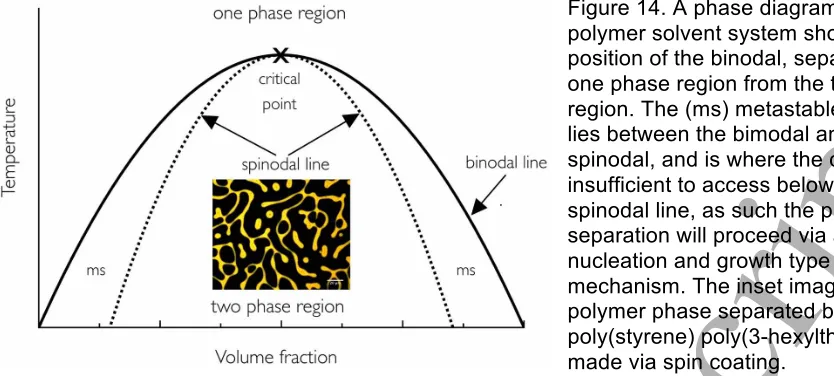
In 2009 Noh et al [67] put forward the hypothesis that birds were using the physics of phase separation and kinetic arrest to freeze in a particular domain spacing within a photonic structure. This enables birds to have the fine control over the structural colour of their feathers needed to give a range of structural colours. Their evidence was the striking similarity to the morphologies seen for binary blends of immiscible polymer mixtures [68]. This hypothesis is advantageous for birds as it allows them the possibility of tuning colour from the ultra-violet (UV) through the visible colour and into the Infra red (IR), simply by controlling the time phase separation is allowed to proceed, shorter time after the onset of phase separation gives smaller structures, whilst at later times the structure will have grown and the reflected light from these structures will be shifted to longer wavelengths.
Using small angle x-ray scattering (SAXS) to characterise the optical nanostructure Noh et al [69] compared the SAXS signal for the Purple breasted Cotinga (Cotinga cotinga) and the Asian-fairy bluebird (Irena puella). These were categorised morphologically as sphere type and channel type structures respectively. Two examples of channel / spinodal nano-morphology can be seen in figure 10. The main difference structurally being that the sphere type (shown in figure 9) has much longer lengthscale correlations than the channel type, meaning that the spongy structure is more disordered. Their conclusion for both structures was that the isotropic arrangement of these structures makes their colour non-iridescent under natural light, i.e. they have no preferred orientation.
1 2 3 4 5 6 7 8 9 10 11 12 13 14 15 16 17 18 19 20 21 22 23 24 25 26 27 28 29 30 31 32 33 34 35 36 37 38 39 40 41 42 43 44 45 46 47 48 49 50 51 52 53 54 55 56 57 58 59 60
15 Figure 10. Transmission electron microscopy images for two spinodal/spongy isotropic optical scattering nanostructures found in numerous bird feather barbs a.) from the blue barb of a Blue and Yellow macaw (Ara ararauna) and b.) from the barbs of a Eurasian Jay feather (Garrulus glandarius) and c.) a small angle X-ray scattering (SAXS) pattern from the light blue feathers of a Budgerigar (Melopsittacus undulates).
A comprehensive study of 230 bird species was performed by Saranathan et al [53] who again used the non-destructive technique of SAXS to compare the structures against their optical reflectance. By combining the two measurements they were able to infer the effective refractive index for the structure, naverage, by treating the system as a binary two phase system of air and beta
keratin. They found good agreement between the shape and position of the SAXS scattering peak on predicting the reflected optical hue and saturation. They were able to use SAXS to sort
structures into sphere type or spongy/spinodal solely on the SAXS scattering pattern. Based on the large sample size studied they were able to conclude that non-iridescent structural colour from barb structuring with isotropic three-dimensional nanostructure, has evolved at least 44 times within 41 families across Birds. This is important as it shows that the route chosen by nature to create these structures has converged on a solution that helps to give birds diversity in colour, but also uses a self-assembly route that is a minimal yet efficient solution to providing colour.
A paper from 2012 [70] by Yin et al studied in detail the non-iridescent blue of the scarlet macaw
Ara macao and concluded that the structure could be modelled as a rod connected amorphous diamond like structure. They categorised it as a pseudo photonic bandgap, as there is not a complete photonic bandgap. With a mathematically simulated structure and using finite difference time domain (FDTD) they saw strong agreement between with the micro-spectrometry measured reflectance. Importantly they were able to show that this structure only has long-range order, using other simulated volume filling fractions they could simulate reflectance. They saw that the 38% filling fraction is very close to the maximum from their optical modelling calculations.
5.) Plant structural colour
We will mention a small number of structurally coloured plant systems, which have been increasingly studied in the last few years. A more thorough review can be found here [71]. An early study examining the self-assembly mechanism for colloidal like systems in Selaginella helped to explain the mechanism of depletion attraction as a process by which colloids accrete and order into closely packed regular structures. Where the depletion attraction process also requires the presence of a long chained macromolecule, like a polymer to become excluded from between the approaching colloids, osmosis withdraws the liquid from this space, helping to bting the particles closer together [72].
A study examining Chondrus crispus (Irish Moss), a marine algae, concluded the mechanism responsible for producing the colour in the cuticles is due to a multilayer reflector structure. Interestingly this structure is highly porous, with water playing a vital role in the presentation and effectiveness of this reflected colour effect [73].
1 2 3 4 5 6 7 8 9 10 11 12 13 14 15 16 17 18 19 20 21 22 23 24 25 26 27 28 29 30 31 32 33 34 35 36 37 38 39 40 41 42 43 44 45 46 47 48 49 50 51 52 53 54 55 56 57 58 59 60
16 The interaction between plants and animals is an important part of a plants lifecycle in attracting pollinating insects. This was recently shown to be the case for a number of plants and in their relative attractiveness to bees [74] via the use the use of wrinkled like surfaces that result in scattered light with a strong angular dependence. It is possible to use self-assembly to create wrinkle and fold like surfaces in the laboratory, technologically these can improve the light harvesting in optical devices such as solar cells [75].
6.) The Physics of Structural colour development
6a.) Current understanding of the mechanisms by which ridge reflectors develop in butterflies. The question of how complex ridge reflector structures form and then what are the developmental differences between butterfly species is as yet not fully understood. Existing work has
demonstrated that the ridges form between longitudinal actin filaments, these are situated just below the scale surface and that they are in place prior to and maintained during optical ridge reflector development [76]. Presumably these provide the nascent scale with mechanical integrity and enable formation of the ridges whereby the cytoplasm protrudes outwards to form the ridge structures.
A study by Ghiradella [77] examined the very early stages of scale formation of a couple of butterfly species; the aim was to better understand how they produce the complex scale
architecture. For this study the green Olive Hairstreak Mitoura grynea (Lycaenidae: Theclinae) and the blue Spring Azure (Celastrina laden) were used and their pupae were collected at certain narrowly spaced periods throughout the pupal period. They were fixed and subsequently stained using osmium tetroxide. Both species have similar surface morphology, having a small slender stalk (petiole) that is retained in place by the scale socket on the wing and the much larger featured blade. This is just essentially a flattened sac, comprised of a lower lamina, which faces the wing, and an exposed upper lamina, this is the surface that is shaped into a grid and comprises raised longitudinal ridges connected by thin crossribs. The pattern of ridges and ribs make a series of windows through which the interior lumen of the scale can be viewed. The development of the scale proceeds from a sheet structure where the ridges and the ridge spacing are just noticeable but they are in a highly contracted and collapsed form and have not achieved their spacing as yet. Later on (day 5) the ridges and cross ribs are much clearer and distinct with noticeable ridge lamellae, these are not straight and have strong curvature. In the following 2-3 days the scales straighten with the ridges and crossribs becoming much more distinct. Internally the structure of the developing photonic material has membrane-cuticle units that have regular diameter, these appear to be aggregating together. Membrane systems seem to be acting as guides for the developing structure.
Considerably less is known about what causes the folding of the ridges in order to produce the ridge lamellae optical elements. Ghiradella has suggested that they could be created by buckling of the nascent scale envelope by an outward applied mechanical stress and that the actin
filaments may also be responsible for producing this stress. This would be in agreement with ther very recent observations from Dinwiddle et al [78] who used fluorescence labelling of actin fibrils to show that they play a vital role in the process of cell elongation.
Ghiradella [36] suggested that the differences in architectural diversity must come about from comparatively small or slight modifications to the general basic non-specialised form. Each butterfly wing scale is made by a single cell, and results in a complex cuticular architecture, this structure is able to interact with light via structurally coloured features using lamellae ridge reflectors and also internal photonic scale crystal structuring to make components like the gyroid green reflecting structure.
A recent study demonstrated successful cell culture experiments of Morpho peleides cells, this approach may be a viable way in which to understand the very early stages of development of ridge reflectors [79]. Another technique which may prove important in future studies to understand this process may be the application of the gene editing technique of CRISPR/Cas9. This has 1
2 3 4 5 6 7 8 9 10 11 12 13 14 15 16 17 18 19 20 21 22 23 24 25 26 27 28 29 30 31 32 33 34 35 36 37 38 39 40 41 42 43 44 45 46 47 48 49 50 51 52 53 54 55 56 57 58 59 60
17 already been used to switch off the presence of ommochrome pigment within certain regions of the wing for Junonia coenia, effectively altering the reflected colour, this was done by editing the optix gene, essentially a knockout of this gene [80].
6d.) The process of amphiphilic nano-templating of the inner scale crystal like structures in butterflies and beetle scales.
A ground breaking study by Ghiradella ([77] showed that the bicontinuous, colour-producing, airÐ chitin nanostructures in the green wing scales of the butterfly Mitoura gryneus. This optical nanostructure develops from an initial template or pre-pattern, put in place by the smooth
endoplasmic reticulum and cellular membrane into the central body of each indicidual wing-scale cell. Following the organization of the membrane pre-pattern, extra-cellular chitin is deposited into the lumen of this complex structure. After cell death, the remaining cytoplasmic spaces between the chitin become filled with air to create the strong refractive index difference that results in effective light scattering. This internal nanostructure within butterfly scales illustrates some of the subtle distinctions between nanostructural self-assembly and cellular physiological assembly.
These themes were further drawn on in the work by Saranatahn et al [81] where they
characterised a large number of integumentary scales and setae. They saw a diversity in the kinds of structures which represents the richness of the phase diagram in volume fraction and domain sizes, which can be principally explained by the well known phase diagrams of amphiphilic molecules and block copolymers.
Wilts et al [82] examined the green scales of Thecla opisena, interestingly this has a gradient in the gyroid crystal size along the length of an individual scale. Using x-ray tomography they were able to ascertain that of the gyroid crystals they surveyed, the majority were single crystal domains. Importantly they do not share the same orientation, as would be required If a gyroid templating smooth endoplasmic reticulum was responsible for the patterning, it would need to itself be polycrystalline from the outset.
6c.) Spinodal structure growth and development
In this section we will try to understand the development and maturation of keratinocytes and how this leads to the fixed non-iridescent structural colour in the feather barbs. We shall begin by reviewing a study examining the early stages in development of the cells responsible for non-iridescent structural colour in bird feathers from Auber [83]. Developing feather germs were removed from an Indian Pitta (Pitta brachyuran), see figure 11a. In terms of the general
morphology, the nascent Òcloudy cellsÓ (responsible for the structural colour) have a polyhedral shape whereas cells not exhibiting this colour have a more spherical shape. A detailed
examination of a transverse section of a turquoise Pitta brachyuran feather barb revealed the progression in vacuolization as the vacuole in the centre becomes more mature and the regions coalesce into a single vacuole. The perimeter region enclosing the vacuole is where the spongy nanostructure is located. The same progression in cell morphology was seen for a male Blue Dacnis (Dacnis cayana). This study did not have the necessary resolution to study the morphology of the photonic structure, a technique like TEM or high resolution SEM is needed to actually visualize this structure.
Figure 11. A photograph of an Indian Pitta (Pitta brachyuran) by Shantanu Kuveskar (Own work) [CC BY-SA 4.0
(https://creativecommons.org/licenses/by-sa/4.0)], via Wikimedia Commons. images b,c and d are hand drawn images of developing 1
2 3 4 5 6 7 8 9 10 11 12 13 14 15 16 17 18 19 20 21 22 23 24 25 26 27 28 29 30 31 32 33 34 35 36 37 38 39 40 41 42 43 44 45 46 47 48 49 50 51 52 53 54 55 56 57 58 59 60
18 polyhedral cells going towards the final mature state in d, with a fully developed vacuole (taken from [83] with permission).
A variant on TEM called Intermediate voltage TEM Ð IVTEM, capable of studying much thicker sample sections (250 nm - 300 nm) was used to study the spongy layer optical nanostructure of the Eastern bluebird (Sialia sialis
)
[84].
This technique made it possible to probe the amorphous nanostructure and for the first time enable a full three-dimensional rendering of an amorphous photonic structure. Although the authors underscore that cross validation and comparison is needed with conventional SEM to corroborate the structure. The advantage of having a full 3d dataset is that it is possible to overcome some of the errors associated with 2d Fourier analysis by having successive slices in registry with one another, enabling a clearer understanding and allowing optical modelling of the reflected colour.As mentioned before the Blue and yellow macaw exhibit a spinodal like channel structure. Prum et al [85] used feathers of the Ara ararauna to examine the very early stages of newly growing feather germs and were able to begin to understand this process in much more detail. Using the spatial development and differences in maturation along a developing feather germ allowed them to use TEM to follow the different stages of cellular development. Sections were taken at distances from the base of the feather germ, in the range from 1 mm to 8.25 mm, where the feather germ was mature at 10 mm. Their first conclusion is that the colour develops within the medullary
keratinocytes. They examined a number of different species confirmed as channel type and sphere type. At around a distance of 7 mm from the base of the feather germ they began to observe regions of patchy grey structure, these are regions having sufficient electron contrast and appear at the boundary of the medullary cell and the internal void. They found very few cells undergoing the intermediate stages, so this process must take place quite rapidly, possibly with a couple of hours. What they are definitive about is that during the formation of the spongy channel layer termed keratinogenesis, they could find no evidence for any intermediate cellular filaments, structuring proteins such microtubules, the endoplasmic reticulum, or cell membrane, that would enable pre-patterning of the optical structure.
To understand further this process, they performed structural analysis of the spongy keratin layer using Fourier analysis of the optical nanostructure measured using TEM. This enabled comparison with an evolving phase separating system validated to be undergoing spinodal decomposition. The model system was a phase separating mixture of polystyrene and polybutadiene temperature quenched and undergoing spinodal phase separation verified using light scattering to follow the evolution [86]. By normalizing the data in x and y they were able to compare the shapes of the phase separated structures for both, the polymer blend and the spongy keratin. They saw good agreement in the shape of the peaks at higher spatial frequency, at lower frequency they are hindered by artefacts from the TEM images. However poor agreement was observed between the spinodally phase separating blend and the sphere morphology. The sphere feather data showed a secondary scattering peak in the region ~ 1.5 Ð 2 times that of the dominant peak kmax, making it
possible to clearly differentiate between the two different morphology development processes of spinodal like structuring and nucleation and growth. From the electron microscopy images of the evolving medullary region it was possible to imply that a mechanism of a pinned surface at the vacuole interface, followed by capillary flow of material and liquid. It was clear that these cells are essentially cut off from the dermal pulp of the feather germ. Whilst they are able to show a clear structural correlation between the spongy keratin structure in the medullary region of bird feather barbs and the spinodally decomposing polymer blend, they were not definitive about what causes the cessation of the phase separation process. This process must be precise and easily
reproducible for it to freeze in the structure at a particular length scale needed to produce a certain colour, which is often highly conserved across species and is often a defining trait of the
phenotype. They suggest that control of this process may be due to the irreversible polymerization of beta-keratin, which arrests the phase separation process.
Parnell et al [87] also used the technique of SAXS to study the distinctive alternating blue-white wing feathers from the Eurasian Jay (Garrulus glandarius), previously studied using TEM by Schmidt and Ruska [61]. The SAXS beam used in this work had an X-ray beam size of 20 µm by 1
2 3 4 5 6 7 8 9 10 11 12 13 14 15 16 17 18 19 20 21 22 23 24 25 26 27 28 29 30 31 32 33 34 35 36 37 38 39 40 41 42 43 44 45 46 47 48 49 50 51 52 53 54 55 56 57 58 59 60
19 20 µm, which enabled sampling of the feathers at specific points to pinpoint the colour. They also used SAXS to study a number of geographically diverse (Europe, South America and the Indian subcontinent) structurally coloured bird feathers. The analysis of the SAXS data and the resultant lengthscales are shown in figure 12. What they found was that the transitions in the optical structure are spatially well controlled along feathers and that the biological control mechanisms, which are as yet unknown, are able to reliably provide subtle, but measurable, changes in the structure and resulting structural colour with a small transition region. To ascertain more specific information about the transition between colours required the study of an individual feather barb.
Figure 12. A geographical selection of bird feathers whose structural colour has been measured using SAXS and analysed using one dimensional correlation function analysis (ODCF). These include (a) the Plum-throated Cotinga (Cotinga maynana), (d) the Indian Roller (Coracias
benghalensis) and (g) the British Kingfisher (Alcedo atthis) along with the correlation functions (b,e and h) using one dimensional correlation analysis, the y scale in (b,e and h) is arbitrary, it is merely the extent of the correlation length in x that is important. In the right hand column is the ODCF derived long period and beta-keratin domain width for each species as a function of position (c,f and i).
This was performed using a single Jay feather barb and is shown in figure 13. Here a point like X-ray beam was scanned along the single barb providing SAXS patterns which were analysed using correlation analysis to give the long period and the beta-keratin domain width as a function of barb position. In excellent agreement with the colour change along the barb they saw an oscillatory change in the optical nanostructure of beta-keratin and air, enabling the colour to be modulated from blue through to white in the periodic pattern that is seen on the wing feathers. The gaps correspond to the reduced X-ray contrast black regions where the colour is dominated by melanin pigment. What is clear is that the barb possesses lengthscales that span the complete range from 140 nm Ð 210 nm and the only observable colours are blue and white respectively. This nicely showed the limitation on this structural colour production route and why the incorporation of optically absorbing pigments is important to give a diverse colour palette [15].
1 2 3 4 5 6 7 8 9 10 11 12 13 14 15 16 17 18 19 20 21 22 23 24 25 26 27 28 29 30 31 32 33 34 35 36 37 38 39 40 41 42 43 44 45 46 47 48 49 50 51 52 53 54 55 56 57 58 59 60