R E S E A R C H A R T I C L E
Open Access
Assessing the implementation of a patient
navigation intervention for colonoscopy
screening
Amy DeGroff
1*, Lindsay Gressard
2, Rebecca Glover-Kudon
1, Ketra Rice
1, Felicia Solomon Tharpe
1,
Cam Escoffery
1,3, Joanne Gersten
4,5and Lynn Butterly
4,5,6Abstract
Background:A recent study demonstrated the effectiveness of the New Hampshire Colorectal Cancer Screening Program’s (NHCRCSP) patient navigation (PN) program. The PN intervention was delivered by telephone with navigators following a rigorous, six-topic protocol to support low-income patients to complete colonoscopy screening. We applied the RE-AIM (reach, effectiveness, adoption, implementation, maintenance) framework to examine implementation processes and consider potential scalability of this intervention.
Methods:A mixed-methods evaluation study was conducted including 1) a quasi-experimental, retrospective, comparison group study examining program effectiveness, 2) secondary analysis of NHCRCSP program data, and 3) a case study. Data for all navigated patients scheduled and notified of their colonoscopy test date between July 1, 2012 and September 30, 2013 (N= 443) were analyzed. Researchers were provided in-depth call details for 50 patients randomly selected from the group of 443. The case study included review of program documents, observations of navigators, and interviews with 27 individuals including staff, patients, and other stakeholders. Results:Program reach was state-wide, with navigators serving patients from across the state. The program successfully recruited patients from the intended priority population who met the established age, income, and insurance eligibility guidelines. Analysis of the 443 NHCRCSP patients navigated during the study period
demonstrated effectiveness with 97.3% completing colonoscopy, zero missed appointments (no-shows), and 0.7% late cancellations. Trained and supervised nurse navigators spent an average of 124.3 min delivering the six-topic PN protocol to patients. Navigators benefited from a real-time data system that allowed for patient tracking, communication across team members, and documentation of service delivery. Evaluators identified several factors supporting program maintenance including consistent funding support from CDC, a strong program infrastructure, and partnerships.
Conclusions:Factors supporting implementation included funding for colonoscopies, use of registered nurses, a clinical champion, strong partnerships with primary care and endoscopy sites, fidelity to the PN protocol, significant intervention dose, and a real-time data system. Further study is needed to assess scalability to other locations.
Keywords:Cancer screening, Colonoscopy, Patient navigation, Disparate populations, Public health
© The Author(s). 2019Open AccessThis article is distributed under the terms of the Creative Commons Attribution 4.0 International License (http://creativecommons.org/licenses/by/4.0/), which permits unrestricted use, distribution, and reproduction in any medium, provided you give appropriate credit to the original author(s) and the source, provide a link to the Creative Commons license, and indicate if changes were made. The Creative Commons Public Domain Dedication waiver (http://creativecommons.org/publicdomain/zero/1.0/) applies to the data made available in this article, unless otherwise stated.
* Correspondence:[email protected]
1
Centers for Disease Control and Prevention, National Center for Chronic Disease Prevention and Health Promotion, Division of Cancer Prevention and Control, Program Services Branch, 4770 Buford Hwy, NE, MS K-76, Atlanta, GA 30341, USA
Background
The effectiveness of patient navigation (PN) in increasing breast, cervical, and colorectal cancer (CRC) screening among disparate populations has been empirically studied since the mid-1990s [1]. For increasing colorectal cancer screening, the focus of this paper, results of randomized and quasi-experimental trials of PN have largely been fa-vorable [2–5].
The New Hampshire Colorectal Cancer Screening Pro-gram’s (NHCRCSP) was funded by the Centers for Disease Control and Prevention (CDC) from 2009 to 2015 to pro-vide CRC screening and related support services, including PN. The NHCRCSP served a low income and ethnically di-verse population. A recently completed effectiveness study of the NHCRCSP PN program demonstrated a significantly higher rate of colonoscopy completion among navigated patients compared to a similar group receiving usual care (96.2% vs. 69.3%, p< 0.001) [6]. Navigated patients were more than 11 times more likely to complete colonoscopy than those receiving usual care. Navigated patients also had no missed appointments (0.0% vs. 13.3%, p < 0.001), fewer cancellations within 24 h of the scheduled appointment (0.8% vs. 16.0%,p< 0.115), and more adequate bowel prep-aration compared to the usual care group (97.6% vs. 87.5%, p< 0.010) [6].
While these results are promising, decisions to repli-cate the intervention should be informed by looking be-yond effectiveness to examine more practical aspects of implementation. Implementation refers to the content and conduct of a program, both what and how activities are delivered [7]. The “what”, the activities comprising the intervention, are detailed elsewhere [8,9]. Examining the “how” of implementation is aided by applying RE-AIM, a multi-level framework for evaluating public health interventions in real-world settings [10, 11]. The purpose of this paper is to examine implementation pro-cesses (the “how”) by applying the RE-AIM framework and consider potential scalability of the intervention.
Methods
A mixed-methods evaluation study was conducted includ-ing 1) a quasi-experimental, retrospective, comparison group study examining program effectiveness, 2) secondary analysis of NHCRCSP program data, and 3) a case study. This paper presents the methods and results for the second and third evaluation components only; the comparison group study methods and results are presented elsewhere [5]. This study was approved by CDC’s institutional review board and appropriate Dartmouth-Hitchcock committees approved the study protocol and methods.
Program description
The NHCRCSP staff team included a program director, a medical director (gastroenterologist providing clinical
oversight), two navigators, a secretary responsible for assisting in enrolling patients, and a data manager tasked with collecting and reporting program data to CDC. Two registered nurse navigators, one full-time and one quarter-time, delivered PN services telephonically to sev-eral hundred patients across the state annually whose screening costs were compensated by NHCRCSP with CDC funding. Patients were New Hampshire (NH) resi-dents at average or increased risk for CRC, ages 50–64, < 250% federal poverty level, and uninsured or under-insured. NHCRCSP patients received their colonoscopy at one of 12 endoscopy sites throughout the state with which NHCRCSP contracted. Given limited resources, the most northern area of NH was not targeted given its small population. The CDC grant supported payment of relevant clinical costs, including colonoscopy. Navigators followed a prescribed protocol addressing six specified topics: (1) patient engagement, CRC screening educa-tion, and barrier assessment (e.g., transportaeduca-tion, fear); (2) bowel preparation (prep) education and barrier reso-lution; (3) prep review and readdressing barriers; (4) as-sessment of prep and confirmation of test day details; (5) day of colonoscopy check-in; and (6) follow-up and as-surance of patients’understanding of results and recom-mended follow-up [7]. The navigators documented interactions with patients in a real-time database system that also supported patient tracking and follow-up.
Data sources
Data used in the evaluation included a de-identified, patient-level analytic dataset provided by the NHCRCSP and navi-gator call notes on a subset of patients. Case study data included program documents, results of a patient satisfac-tion survey, navigator observasatisfac-tions, and interviews. All data sources and related analysis are described in detail below.
NHCRCSP patient-level program data
reach for this time period, patient zip codes were mapped using geographic software.
Navigator call notes
To examine time spent delivering PN and fidelity with the six-topic PN protocol, CDC researchers were provided de-identified, in-depth call details for 50 patients randomly selected from the larger group of 443. The call notes in-cluded the date of the call, length of time per navigation call, call topic, and whether the navigator successfully reached and spoke with the patient. A total of eight pa-tients were excluded from these analyses. Three were ex-cluded because their data inex-cluded PN calls for additional colonoscopies performed outside of the study time period, thus differentiating them from the other patients. One was excluded because the patient moved out of state prior to completing the screening cycle. And four were ex-cluded because they reported they were not interested in completing colonoscopy after learning more about the procedure, therefore, did not have the opportunity to re-ceive all six call topics. This left a sample of 42 patients for analysis of delivery time and protocol fidelity.
Total PN delivery time was calculated based on the mi-nutes allocated to any call related to the six-topic navigation protocol. PN delivery time includes time spent by naviga-tors preparing for each call and time spent entering data following the call. To assess fidelity to the six-topic PN protocol, two CDC researchers independently reviewed the PN call details to determine whether the navigator success-fully addressed each of the six topics. Researchers then identified any discrepancies in calculations. These differ-ences were reviewed and discussed with a third researcher until agreements were achieved.
Program documents
The NHCRCSP team provided CDC researchers with multiple program documents (e.g., CDC grant applica-tion, NHCRCSP policy manual, PN protocol and related materials, data system specifications, zip codes for en-doscopy sites). For analysis, documents were reviewed carefully and used to develop a logic model depicting the relationship between programmatic activities and outcomes and a patient flow diagram representing steps to completing colonoscopy including areas of interface with program staff and partners [9]. The logic model and patient flow diagram were reviewed and verified by NHCRCSP staff. Zip codes for the 12 endoscopy sites contracted by the program were mapped using geo-graphic software.
Patient satisfaction survey results
CDC researchers were provided a summary report of satisfaction surveys completed by patients served by NHCRCSP from July 1, 2012 to June 30, 2013. A total of
405 patients were mailed a brief survey following pro-gram participation and were encouraged to voluntarily complete and return it. The survey was anonymous and completed by 235 patients (58% response rate). The pa-tient satisfaction survey results were reviewed by the re-search team.
Navigator observations
Four CDC researchers each conducted 4 h (16 person-hours) of in-person observations of the navigators on May 13, 2014. Two researchers observed one navigator and two other researchers observed the second naviga-tor. During the observation period, the navigators pro-vided telephonic navigation to patients and made calls needed to facilitate service delivery (e.g., confirming ap-pointment details with endoscopy staff). Researchers used a standardized, pilot-tested template [12] to record field notes, including navigator techniques. The template included a matrix for notating the type of PN activity (e.g., spoke directly with patient, spoke on behalf of pa-tient) and the person or entity with whom the PN inter-acted (e.g., patient, family member, pharmacy staff). Researchers observed a variety of call types and were able to ask the navigator questions following each call to gain further insight on her approach. For confidentiality purposes, calls were one-way whereby researchers could only hear the navigator speaking.
To analyze observation data, field notes were more fully transcribed by observers into electronic format. The team of observers met to review field notes and the call matrices developed during the observations. Re-searchers focused on defining navigator characteristics (e.g., empathic, encouraging) and identifying techniques (e.g., active listening).
Stakeholder interviews
To conduct the interviews, the four CDC researchers split into two teams, each with a trained qualitative re-searcher with extensive interviewing experience. Within each team, one researcher led the interview and the sec-ond served as note taker. Interviewers followed open-ended interview guides specific to the interviewee role. Questions addressed the following topics: aspects of the PN model, experiences related to program implementa-tion including reach, perceived challenges and facilita-tors to implementation, navigator characteristics and skills, perceptions of program effectiveness, partnerships, sustainability, and patient experiences.
CDC researchers conducted additional interviews by telephone with nine NHCRCSP patients from September 12–25, 2014. Patients were asked about their experience with the program and the navigator and interviews lasted, on average, 11 min. Across all interviews, satur-ation was achieved suggesting an adequate number of interview participants.
For analysis of interviews, a professional transcription service transcribed verbatim the digitally audio-recorded data. Researchers verified the accuracy of the transcription by re-listening to the interview audio and making needed corrections in a revised, final transcript. Immediately fol-lowing vetting, the team created an analytic summary of each interview. Analysis of transcripts involved several it-erative steps, consistent with inductive analytic techniques and constant comparative methods. Evaluators conducted initial, focused, and theoretical coding [14], in progression, each refined by memoing and testing for confirming or
disconfirming evidence. To develop an analytic codebook, codes were developed and defined, then tested and refined on a data sample before being applied across all inter-views. Once data were coded, data for individual codes were reviewed by stakeholder role. Analysis advanced through the development of matrices and inductive out-lines to inform interpretation [15].
RE-AIM analysis framework
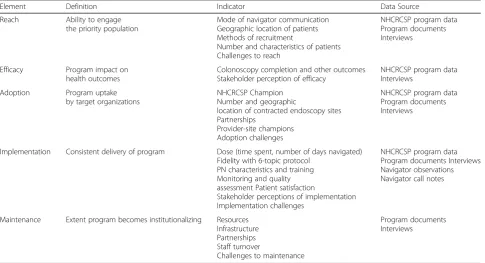
The RE-AIM framework has five dimensions -- reach, efficacy, adoption, implementation, and maintenance [10, 11]. Reach measures the ability of the program to engage the priority population, while efficacy assesses the impact of the program on health outcomes. Adop-tion refers to uptake of the program by target organiza-tions. Implementation reflects the consistent delivery of the program, and maintenance is the extent to which a program becomes institutionalized. Table 1 below pro-vides the RE-AIM elements, their definitions, indicators, and data sources used for this study.
Results Reach
[image:4.595.57.543.468.731.2]Two navigators (1.25 FTE) delivered the PN intervention to 443 patients during the 14-month study period. By delivering PN via telephone, navigators were able to reach patients across the state, aside from a small geo-graphic area representing the least populated area in the state. Patients had access to a cell phone or landline. Pa-tients were offered call cards with pre-paid minutes for
Table 1RE-AIM Framework for Evaluating NHCRCSP Patient Navigation Program
Element Definition Indicator Data Source
Reach Ability to engage
the priority population
Mode of navigator communication Geographic location of patients Methods of recruitment
Number and characteristics of patients Challenges to reach
NHCRCSP program data Program documents Interviews
Efficacy Program impact on
health outcomes
Colonoscopy completion and other outcomes Stakeholder perception of efficacy
NHCRCSP program data Interviews
Adoption Program uptake
by target organizations
NHCRCSP Champion Number and geographic
location of contracted endoscopy sites Partnerships
Provider-site champions Adoption challenges
NHCRCSP program data Program documents Interviews
Implementation Consistent delivery of program Dose (time spent, number of days navigated) Fidelity with 6-topic protocol
PN characteristics and training Monitoring and quality assessment Patient satisfaction
Stakeholder perceptions of implementation Implementation challenges
NHCRCSP program data Program documents Interviews Navigator observations Navigator call notes
Maintenance Extent program becomes institutionalizing Resources Infrastructure Partnerships Staff turnover
Challenges to maintenance
their cell phones if needed. Patients received colonos-copy at one of 12 contracted endoscolonos-copy sites across the state.
Patients were recruited through provider referral (91.2%), self-referral (4.7%), and referral through another CDC-funded screening program, the National Breast and Cervical Cancer Early Detection Program (4.1%). Pa-tients who self-referred included those who heard about the program through an outside source (e.g., family member, program website). NHCRCSP engaged federally qualified health clinics (FQHCs) as an important referral source given many FQHC patients are un- or under-insured.
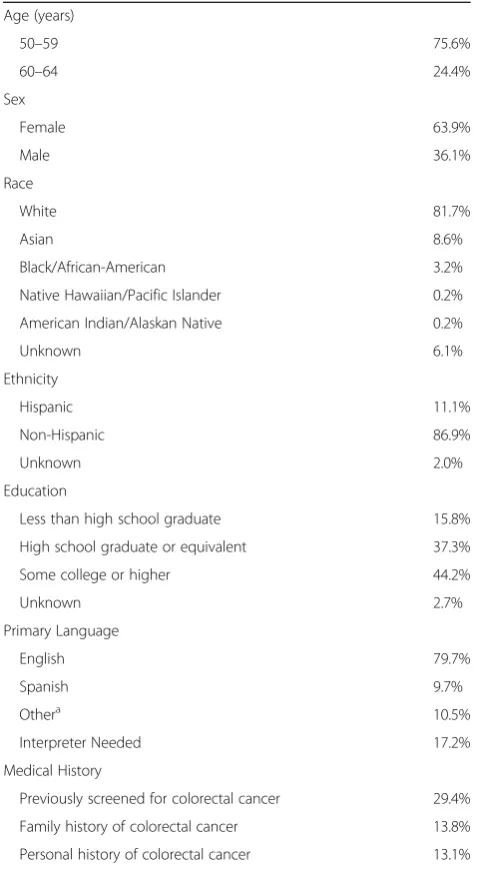
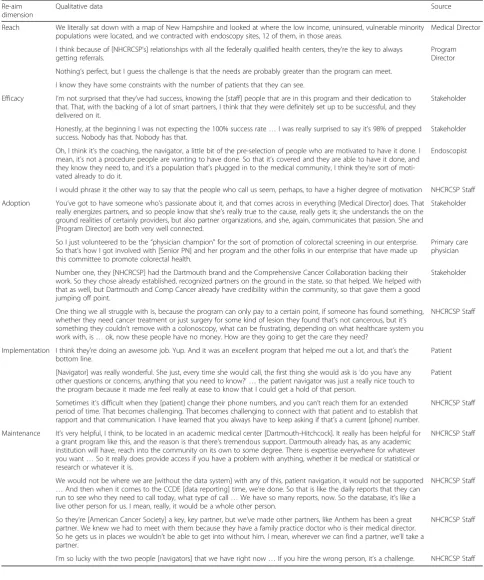
The program successfully recruited patients from the intended priority population who met the established age, income, and insurance eligibility guidelines (Table2). Among those served, 11.1% were Hispanic and 12.2% were non-White. Patients reported 21 different lan-guages as their primary language, and nearly a fifth re-quired translation services. NHCRCSP contracted with a language line with staff that could translate all PN calls. Additional details about the study population are re-ported elsewhere [6]. Table 3 provides qualitative data reflecting strategies and constraints around the pro-gram’s reach. These interview quotes reflect the efforts of the program to serve populations in high need geo-graphic areas, but also that limited program resources constrained reach.
Efficacy
Results of a comparison group study examining out-comes among NHCRCSP patients and a control group of similar patients at one of the 12 endoscopy sites have been reported elsewhere [6]. Analysis of the 443 NHCR CSP patients navigated during the study period show that 97.3% completed colonoscopy. Additionally, there were zero missed appointments (no-shows) and 0.7% late cancellations (Table 4). Finally, 99.1% of patients had adequate bowel preparation quality, 100% had their results communicated to them and their primary care providers, and 100% had a recommended screening interval consistent with clinical guidelines. Qualitative data with stakeholder perceptions of efficacy are in-cluded in Table3.
Adoption
The medical director, a well-respected gastroenterologist in New Hampshire, acted as the program champion, promoting the program among fellow endoscopists, and was a key component to this successful program. The medical director was viewed as a strong advocate for in-creasing high quality colonoscopy screening and had credibility with colleagues throughout the state. As a re-sult, twelve endoscopy sites, geographically dispersed
across the state, adopted the program and were contracted by NHCRCSP. Navigators also recruited local champions working within endoscopic and primary care practices who adopted the program as their own and promoted it within their settings.
[image:5.595.303.543.98.533.2]Partnerships were critical to program adoption and the medical and program directors had extensive rela-tionships in the cancer community, drawing on them to engage primary care practices and other stakeholders such as the American Cancer Society. In addition, a pharmaceutical chain with locations throughout the state and accessible to NHCRCSP patients was enlisted to provide patients bowel prep materials that were Table 2NHCRCSP patient characteristics (N= 443)
Age (years)
50–59 75.6%
60–64 24.4%
Sex
Female 63.9%
Male 36.1%
Race
White 81.7%
Asian 8.6%
Black/African-American 3.2%
Native Hawaiian/Pacific Islander 0.2%
American Indian/Alaskan Native 0.2%
Unknown 6.1%
Ethnicity
Hispanic 11.1%
Non-Hispanic 86.9%
Unknown 2.0%
Education
Less than high school graduate 15.8%
High school graduate or equivalent 37.3%
Some college or higher 44.2%
Unknown 2.7%
Primary Language
English 79.7%
Spanish 9.7%
Othera 10.5%
Interpreter Needed 17.2%
Medical History
Previously screened for colorectal cancer 29.4%
Family history of colorectal cancer 13.8%
Personal history of colorectal cancer 13.1%
a
reimbursed by NHCRCSP. A potential challenge for adoption was the lack of resources to pay for cancer treatment among persons diagnosed through NHCR CSP, given the population was uninsured and CDC
[image:6.595.55.540.99.680.2]resources could not be used to pay for cancer treatment. However, prior to implementation, program staff ob-tained commitments from directors of health systems as-sociated with all the endoscopy sites for free cancer care Table 3Selected Quotes Representing the Five RE-AIM Elements
Re-aim dimension
Qualitative data Source
Reach We literally sat down with a map of New Hampshire and looked at where the low income, uninsured, vulnerable minority populations were located, and we contracted with endoscopy sites, 12 of them, in those areas.
Medical Director
I think because of [NHCRCSP’s] relationships with all the federally qualified health centers, they’re the key to always getting referrals.
Program Director
Nothing’s perfect, but I guess the challenge is that the needs are probably greater than the program can meet.
I know they have some constraints with the number of patients that they can see.
Efficacy I’m not surprised that they’ve had success, knowing the [staff] people that are in this program and their dedication to that. That, with the backing of a lot of smart partners, I think that they were definitely set up to be successful, and they delivered on it.
Stakeholder
Honestly, at the beginning I was not expecting the 100% success rate…I was really surprised to say it’s 98% of prepped success. Nobody has that. Nobody has that.
Stakeholder
Oh, I think it’s the coaching, the navigator, a little bit of the pre-selection of people who are motivated to have it done. I mean, it’s not a procedure people are wanting to have done. So that it’s covered and they are able to have it done, and they know they need to, and it’s a population that’s plugged in to the medical community, I think they’re sort of moti-vated already to do it.
Endoscopist
I would phrase it the other way to say that the people who call us seem, perhaps, to have a higher degree of motivation NHCRCSP Staff
Adoption You’ve got to have someone who’s passionate about it, and that comes across in everything [Medical Director] does. That really energizes partners, and so people know that she’s really true to the cause, really gets it; she understands the on the ground realities of certainly providers, but also partner organizations, and she, again, communicates that passion. She and [Program Director] are both very well connected.
Stakeholder
So I just volunteered to be the“physician champion”for the sort of promotion of colorectal screening in our enterprise. So that’s how I got involved with [Senior PN] and her program and the other folks in our enterprise that have made up this committee to promote colorectal health.
Primary care physician
Number one, they [NHCRCSP] had the Dartmouth brand and the Comprehensive Cancer Collaboration backing their work. So they chose already established, recognized partners on the ground in the state, so that helped. We helped with that as well, but Dartmouth and Comp Cancer already have credibility within the community, so that gave them a good jumping off point.
Stakeholder
One thing we all struggle with is, because the program can only pay to a certain point, if someone has found something, whether they need cancer treatment or just surgery for some kind of lesion they found that’s not cancerous, but it’s something they couldn’t remove with a colonoscopy, what can be frustrating, depending on what healthcare system you work with, is…ok, now these people have no money. How are they going to get the care they need?
NHCRCSP Staff
Implementation I think they’re doing an awesome job. Yup. And it was an excellent program that helped me out a lot, and that’s the bottom line.
Patient
[Navigator] was really wonderful. She just, every time she would call, the first thing she would ask is‘do you have any other questions or concerns, anything that you need to know?’ …the patient navigator was just a really nice touch to the program because it made me feel really at ease to know that I could get a hold of that person.
Patient
Sometimes it’s difficult when they [patient] change their phone numbers, and you can’t reach them for an extended period of time. That becomes challenging. That becomes challenging to connect with that patient and to establish that rapport and that communication. I have learned that you always have to keep asking if that’s a current [phone] number.
NHCRCSP Staff
Maintenance It’s very helpful, I think, to be located in an academic medical center [Dartmouth-Hitchcock]. It really has been helpful for a grant program like this, and the reason is that there’s tremendous support. Dartmouth already has, as any academic institution will have, reach into the community on its own to some degree. There is expertise everywhere for whatever you want…So it really does provide access if you have a problem with anything, whether it be medical or statistical or research or whatever it is.
NHCRCSP Staff
We would not be where we are [without the data system] with any of this, patient navigation, it would not be supported …And then when it comes to the CCDE [data reporting] time, we’re done. So that is like the daily reports that they can run to see who they need to call today, what type of call…We have so many reports, now. So the database, it’s like a live other person for us. I mean, really, it would be a whole other person.
NHCRCSP Staff
So they’re [American Cancer Society] a key, key partner, but we’ve made other partners, like Anthem has been a great partner. We knew we had to meet with them because they have a family practice doctor who is their medical director. So he gets us in places we wouldn’t be able to get into without him. I mean, wherever we can find a partner, we’ll take a partner.
NHCRCSP Staff
for the few colorectal cancers anticipated to be diag-nosed through the screening program. This commitment was readily given and adhered to for patients requiring cancer care. While the issue of the cost of cancer care was mentioned in interviews, interviewees may have been unaware of commitments made by their leadership, and researchers did not find strong evidence suggesting it was a significant barrier. Table 3 includes qualitative data addressing program adoption.
Implementation
Navigators spent an average of 124.3 min delivering the six-topic PN protocol to patients (range: 40–240 min). Protocol fidelity with four of the six topics was 95% or greater adherence (Fig. 1). The lowest level of fidelity (74% adherence) was observed for topic 3, prep review and readdressing barriers.
Based on observations of navigators, delivery of naviga-tion was of high quality and in accordance with written protocols. Because navigators were nurses, they had the clinical expertise and capacity needed to understand and address medical issues related to colonoscopy and psycho-social assessment skills to effectively address patient bar-riers. Navigators received eight weeks of training that included instruction, coaching, and supervised practice.
Training addressed CRC screening and surveillance, col-onoscopy, other CRC screening tests, the PN protocol, cultural issues, and motivational interviewing, among other topics. Additionally, navigators received ongoing mentoring from senior clinicians throughout the program. Observations revealed navigators who were profes-sional, respectful, empathic, knowledgeable, and encour-aging. One implementation challenge navigators faced was tracking patients who were sometimes transient. When possible, navigators gathered numerous phone numbers for patients so that if they could not be reached at their own cell or land lines, the navigator could con-tact relatives or friends to help reach the patients.
Navigators benefited from a real-time data system that allowed for patient tracking, communication across team members, and documentation of service delivery. Naviga-tors used the system to closely track patients and monitor patient care, including colonoscopy completion. The med-ical director and program director regularly monitored PN service delivery and patient outcomes. Managers met weekly with navigators to review monitoring reports, dis-cuss individual patient cases, and provide mentoring and support. This system of data collection and review was in-tegral to NHCRCSP’s quality assurance efforts.
Based on survey data, patients had high satisfaction with the program and their navigation experience (Table 5). In addition, stakeholders perceived the pro-gram as of high quality, as evidenced by selected quotes in Table3.
Maintenance
[image:7.595.58.291.109.240.2]Evaluators identified several factors supporting program maintenance including consistent funding support from CDC, a strong program infrastructure (e.g., based in an aca-demic medical center, Dartmouth-Hitchcock, contracts in place with endoscopy sites and primary care providers, ef-fective data system, program manual), and partnerships (e.g., primary care providers, endoscopists, pharmacies, laborator-ies, transportation services, translation services). Staff Table 4Outcomes for NHCRCSP navigated patients, July 1,
2012 to September 30, 2013 (N= 443)
Outcome Percent
Colonoscopy completed 97.3%
Adequate bowel preparation quality 99.1%
Missed appointment/no-show 0.0%
Cancellation < 24 h prior to appointment 0.7%
Results communicated to patient 100.0%
Results communicated to primary care provider
100.0%
Recommended rescreening interval consistent with clinical guidelines
100.0%
[image:7.595.58.542.570.712.2]turnover was also low. The medical director and program director were constant for the full CDC grant period. The data manager and secretary exhibited deep understanding and passion for the program. Navigators originally hired for NHCRCSP were replaced with different nurse navigators prior to our study. Those two navigators remained with the program through the study’s end (Table3).
Discussion
This study applied the RE-AIM framework to examine im-plementation processes of a PN intervention found effective in improving outcomes, including colonoscopy completion.
Results identified multiple implementation factors that likely contributed to intervention effectiveness including using telephonic navigation to extend reach and provid-ing payment for colonoscopy in order to serve a low-income population. A gastroenterologist serving as a program champion, strong partnerships with primary care clinics and endoscopic sites, and a commitment of charity care for those diagnosed with cancer all sup-ported program adoption. Implementation was aided by fidelity to a rigorous protocol, significant intervention dose, use of well-trained registered nurses with regular clinical supervision, and a real time data system for pa-tient tracking and program monitoring. Maintenance of the intervention was possible given consistent program resources, a strong infrastructure, and low staff turnover. We also found that applying the RE-AIM framework allowed examination of dimensions of implementation often ignored but essential to inform potential transfer-ability and scaltransfer-ability. While calls for comprehensive evaluations addressing dimensions beyond effectiveness and efficacy have increased [16, 17], comprehensive as-sessments such as the mixed methods study presented here remain rare. Below, we consider the transferability of the NHCRCSP PN intervention based on each RE-AIM element.
Important considerations of reach for adopting this intervention in new settings include the ability to recruit the identified priority population and contact them by phone, as well as the availability of a payment source for colonoscopy and, if necessary, cancer treatment. For programs without a ready source of patients, partner-ships with health systems serving the priority population will be needed. Also, in this study, while NH is largely rural, limited resources led NHCRCSP to prioritize more populated areas and, therefore, the program was unable to include those in the least populated parts of the state. Others have identified challenges in recruiting rural pop-ulations for cancer screening programs and recommend targeted outreach strategies [18,19]. Next, replication of the intervention demands that the priority population has adequate phone access. Other navigation studies have documented significant challenges in reaching low-income populations by phone [20], including persons not answering calls, not having a phone, or not being able to afford adequate ‘minutes’ to respond to calls. The NHCRCSP successfully addressed these issues by confirming times that patients would be available for calls, collecting secondary phone numbers of friends or family, and providing paid phone minutes when needed. Finally, lack of insurance has repeatedly been identified as a barrier to colorectal cancer screening [21, 22]. In this study, CDC grant resources were available to pay for colonoscopy for an otherwise under- and uninsured population. Future adopters of the intervention may need to focus on insured populations if resources for colonoscopy are not otherwise available.
Along with results of the comparison study previously reported [6], data from this study provide additional evi-dence of a highly effective intervention, with over 97% of low-income patients completing colonoscopy. Further, this particular PN intervention positively affected several additional outcomes, some well-known and others that rarely or never have been reported in the literature (i.e., adequate bowel preparation, missed appointments, late cancellations, communication of results to patients and primary care providers, and the consistency of recom-mended rescreening interval with clinical guidelines). Some of these, such as missed appointments and late can-cellations, have important financial implications for en-doscopy sites. Additionally, good bowel prep quality reduces cost and discomfort for patients who avoid repeat screenings. Improved guidelines for re-screening can also reduce medical costs and patient risks associated with over-screening. Of note, a recently published analysis found the NHCRCSP PN intervention to be cost-effective in increasing colonoscopy screening, providing further evi-dence of this intervention’s value to public health [23].
[image:8.595.56.289.108.275.2]While a few stakeholders suggested NHCRCSP pa-tients may have been especially motivated to complete Table 5NHCRCSP patient satisfaction survey results, July 1,
2012 through June 30, 2013 (N= 235)
Survey Item % Yes % Unsure % No
The NHCRCSP intake and enrollment staff was helpful and courteous during the enrollment process.
100% 0% 0%
My Patient Navigator (nurse who called me several times) explained the colonoscopy so that I could understand the test.
100% 0% 0%
My Patient Navigator explained the instructions for drinking the prep for the colonoscopy so that I could understand them.
99.5% 0.5% 0%
I would recommend this
program to a friend or family member.
99.5% 0.5% 0%
colonoscopy, data assessing patient motivation were not collected, and, therefore, this hypothesis is speculative. In our study, colonoscopy costs were covered for both the NHCRCSP patients and the comparison patients, eliminating cost as a distinguishing factor. Results might be different if patients for whom the cost of colonoscopy is not covered are compared to patients for whom it is; it is reasonable to assume the latter group might be more motivated. At the time of enrollment, patients did agree to participate in a colonoscopy, suggesting that they were amenable to the procedure. Given the com-plexity of colonoscopy [24], programs may benefit from assessing patient readiness and commitment to following through on colonoscopy early in the process, as was done early in the NHCRCSP protocol. Studies indicate that patients have preferences for particular CRC screen-ing test types [25,26]; therefore, colonoscopy is not ne-cessarily the best choice for all average-risk patients, for whom screening test options are appropriate.
Adoption of the NHCRCSP PN intervention was facili-tated by program champions and multiple, strong partner-ships. There is evidence that champions contribute to the effectiveness of public health programs [27]. The primary champion for the NHCRCSP was a gastroenterologist who had the respect and credibility to recruit endoscopy and pri-mary care sites. In another analysis, we found that a strong program champion with clinical expertise was an important component of this PN intervention [9]. Champions at the facility-level (e.g., primary care offices, endoscopy sites) also were recognized by interviewees as important to program adoption. In regard to partnerships, public health recognizes their importance to achieving public health outcomes [28], and previous research identified them as an important facili-tator of CRC screening programs [29]. Scaling of this inter-vention, then, requires identification of strong program champions and appropriate partnerships.
A potential barrier to adoption if serving an under- or uninsured population is the availability of treatment re-sources for patients diagnosed with cancer. Other CDC-funded cancer screening programs have identified this as a significant challenge [30]. In such instances, programs can follow NHCRCSP’s example and try and secure resources or commitments (e.g., charity care) for cancer treatment in advance. Fortunately, a compelling business case can be made to encourage healthcare organizations to provide free cancer care in support of CRC screening programs, since increased screening will decrease incidence of CRC and correspondingly decrease the number of patients re-quiring free colorectal cancer care, which is extremely ex-pensive, from those healthcare organizations.
In regard to implementation, results suggest that the PN intervention was delivered with fidelity to the PN protocol and with significant dose (i.e., minutes of deliv-ery time). These factors have been shown to contribute
to positive health outcomes [27]. Use of registered nurses as navigators who were given extensive training, clinical supervision, and management support also con-tributed to strong implementation. The program was found also to be data-driven, with staff committed to data monitoring and use based on a real-time data sys-tem. Program monitoring has previously been identified as an independent predictor for effectiveness [27] and is an important tool to improve clinical quality. These fac-tors (i.e., fidelity, dose, training, supervision, manage-ment, data monitoring and use) can be explicitly addressed in any replication and/or scale up of the inter-vention. One implementation challenge experienced by navigators involved tracking some patients given their transience and/or lack of access to a consistent phone number. Collecting multiple contact numbers for pa-tients as was done by NHCRCSP navigators and persist-ence in patient tracking efforts is therefore indicated in future replications of the intervention.
Maintenance of the PN intervention was enhanced through availability of consistent program resources, a strong infrastructure, and limited staff turnover. This sug-gests that replication of the intervention will benefit from well documented program materials and a carefully vetted and selected staff. CDC, in collaboration with NHCRCSP, has recently produced a replication manual of the PN inter-vention [8]. The National Cancer Institute has also recog-nized the PN intervention as a Research Tested Intervention Program (RTIPs) and the replication manual is available through their RTIPs website ( https://rtips.can-cer.gov/rtips/index.do). The manual details all facets of the intervention including the 6-topic protocol. Appendices in-clude sample job descriptions for the navigators, the train-ing curriculum, referral forms, and other needed resources to adopt the intervention. This resource is intended to aid future adoption and maintenance of the intervention. The sustainability of the intervention was not evaluated, and, therefore, it is not clear whether the intervention could be maintained without CDC or other resources.
Overall, evaluation results, based on the RE-AIM frame-work, are positive and support further study of the NHCR CSP PN intervention in new settings. Given that this was a relatively small program in a single state (the program served about 2000 patients throughout the state over 5–6 years), additional research is needed to examine scalability and ex-plore generalizability. Scalability is defined as“the ability of a health intervention shown to be efficacious on a small scale and or under controlled conditions to be expanded under real world conditions to reach a greater proportion of the eli-gible population, while retaining effectiveness” [31]. Future evaluations of the NHCRCSP model in new settings will in-form scalability of the intervention.
render results that are not generalizable. Second, evalua-tors had limited data (i.e., sample of cases) for calculat-ing some process measures, includcalculat-ing time spent delivering the intervention and fidelity with the six-topic PN protocol. Third, patient satisfaction surveys were not completed by all participants and it may be that those patients more satisfied chose to complete and return them. However, nearly 60% of patients completed the survey, which is a relatively high response rate.
Conclusions
This evaluation of NHCRCSP PN intervention provides robust evidence supporting further investigation to ex-plore scalability. Factors supporting implementation in-cluded funding for colonoscopies, use of registered nurses, a clinical champion, strong partnerships with pri-mary care and endoscopy sites, fidelity to the PN proto-col, significant intervention dose, and a real-time data system. For public health practitioners considering use of the NHCRCSP PN model, results presented here offer rich information to help assess whether the intervention is a good fit for their unique context and whether they have the capacity to adopt and adapt it. A replication manual for the intervention has been developed and evaluations are underway to assess the intervention in new settings to examine adaptation.
Supplementary information
Supplementary informationaccompanies this paper athttps://doi.org/10. 1186/s12913-019-4601-4.
Additional file 1.Interview guide used with NHCRCSP non-navigator staff.
Additional file 2.Interview guide used with NHCRCSP navigators.
Additional file 3.Interview guide used with endoscopists involved in the NHCRCSP.
Additional file 4.Interview guide used with practice administrators at endoscopy sites involved in the NHCRCSP.
Additional file 5.Interview guides used with primary care providers involved in the NHCRCSP.
Additional file 6.Interview guides used with partner organization staff involved in the NHCRCSP.
Abbreviations
CDC:Centers for Disease Control and Prevention; CRC: colorectal cancer; FQHC: Federally qualified health clinic; NH: New Hampshire; NHCRCSP: New Hampshire Colorectal Cancer Screening Program; PN: patient navigation; RE-AIM: reach, efficacy, adoption, implementation, maintenance
Acknowledgements
None to report.
Disclaimer
The findings and conclusions in this report are those of the authors and do not necessarily represent the official position of the Centers for Disease Control and Prevention.
Authors’contributions
ADG - Assisted in evaluation sdesign, data collection and analysis, and manuscript development. LG–Assisted in evaluation design, data collection and analysis, and manuscript development. RGK- Assisted in evaluation design, data collection and analysis, and manuscript development. KR -Assisted in evaluation design, data collection and analysis, and manuscript development. FST - Assisted in evaluation design, data analysis, and manuscript development. CE - Assisted in data analysis and manuscript development. JG - Assisted in evaluation design, data collection and analysis, and manuscript development. LB - Assisted in evaluation design, data collection and analysis, and manuscript development. All authors read and approved the final manuscript.
Funding
None to report.
Availability of data and materials
The data generated and analyzed during the study are not publicly available (no public access) but are available from the corresponding author on reasonable request.
Ethics approval and consent to participate
The study was approved by Centers for Disease Control and Prevention institutional review board and appropriate Dartmouth-Hitchcock committees approved the study protocol and methods. Patient-level clinical data used to assess program effectiveness included no personal identifying information, therefore, consent was not required. Participants in case study interviews provided written signed consent. Interview data do not include personal identifying information. Darmouth-Hitchcock provided de-identified patient-level clinical data and de-identified patient navigation service delivery data to Centers for Disease Control and Prevention for analysis.
Consent for publication
Not applicable.
Competing interests
The authors declare that they have no competing interests.
Author details
1Centers for Disease Control and Prevention, National Center for Chronic
Disease Prevention and Health Promotion, Division of Cancer Prevention and Control, Program Services Branch, 4770 Buford Hwy, NE, MS K-76, Atlanta, GA 30341, USA.2Washington D.C., USA.3Department of Behavioral Sciences and Health Education Rollins School of Public Health, Emory University, 1518 Clifton Road, NE, 5th Floor, Atlanta, GA 30322, USA.4New Hampshire Colorectal Cancer Screening Program, Mary Hitchcock Memorial Hospital, Lebanon, NH, USA.5Dartmouth-Hitchcock Medical Center, One Medical Center Drive, Lebanon, NH 03756, USA.6Department of Medicine, Geisel
School of Medicine at Dartmouth, Lebanon, NH, USA.
Received: 26 September 2018 Accepted: 4 October 2019
References
1. Paskett ED, Harrop JP, Wells KJ. Patient navigation: an update on the state of the science. CA Cancer J Clin. 2011;61(4):237–49.
2. Honeycutt S, Green R, Ballard D, Hermstad A, Brueder A, Haardorfer R, et al. Evaluation of a patient navigation program to promote colorectal cancer screening in rural Georgia. Cancer. 2013;119(16):3059–66.
3. Lasser KE, Murlillo J, Lisboa S, Casimir N, Valley-Shah L, Emmons KM, et al. Colorectal cancer screening among ethnically diverse, low-income patients: a randomized controlled trial. Arch Intern Med. 2011;171(10):906–12. 4. Percac-Lima S, Grant RW, Green AR, Ashburner JM, Gamba G, Oo S, et al. A
culturally tailored navigator program for colorectal cancer screening in a community health center: a randomized, controlled trial. J Gen Intern Med. 2009.https://doi.org/10.1007/s11606-013-2491-4.
6. Rice K, Gressard L, DeGroff A, Gersten J, Robie J, Leadbetter S, Glover-Kudon R, Butterly L. Increasing colonoscopy adherence: results of a patient navigation study in New Hampshire. Cancer. 2017.https://doi.org/10.1002/cncr.30761. 7. Bartholomew LK, Parcel GS, Kok G, Gottlieb NH. Planning health promotion
programs: an intervention mapping approach. Chicago: John Wiley & Sons; 2011. 8. Division of Cancer Prevention and Control. New Hampshire Colorectal
Cancer Screening Program, Patient Navigation Model for Increasing Colonoscopy Quality and Screening, A Replication Manual. 2016.https:// www.cdc.gov/cancer/crccp/pn-replication-manual.htm?s_cid=govD_ CancerManual_03. Accessed 27 July 2018.
9. Gressard L, DeGroff A, Glover-Kudon R, Rice K, Gersten J, Robie J, Butterly L. A closer look at a highly effective patient navigation intervention for colorectal cancer screening. Denver: APHA Annual Conference; 2016. 10. Glasgow RE, Vogt TM, Boles SM. Evaluating the public health impact of
health promotion interventions: the RE-AIM framework. Am J Public Health. 1999;89(9):1322–7.
11. Glasgow RE. Evaluation of theory-based interventions: the RE-AIM model. In: Glanz K, Lewis FM, Rimer BK, editors. Health behavior and health education. 3rded. San Francisco: Wiley; 2002. p. 531–44.
12. Clark J, Parker VA, Battaglia TA, Freund KM. Patters of task and network actions performed by navigators to facilitate cancer care. Health Care Manag Rev. 2014.https://doi.org/10.1097/HMR.0b013e31828da41e. 13. Stake R. Multiple case study analysis. New York: Guilford Press; 2006. 14. Charmaz K. Constructing grounded theory: a practical guide through
qualitative analysis. Thousand Oaks: Sage; 2006.
15. Miles MB, Huberman AM, Saldana J. Qualitative data analysis: a methods sourcebook. 3rd ed. Thousand Oaks: Sage; 2013.
16. Chen HT, Garbe P. Assessing program outcomes from the bottom-up approach: an innovative perspective to outcome evaluation. N Dir Eval. 2011;130:93–106.
17. Spencer LM, Schooley MW, Anderson LA, Kochtitzky CS, DeGroff AS, Devlin HM, et al. Seeking best practices: a conceptual framework for planning and improving evidence-based practices. Prev Chronic Dis. 2013.https://doi.org/ 10.5888/pcd10.130186.
18. Charlton M, Schlichting J, Chioreso C, Ward M, Vikas P. Challenges of rural cancer care in the United States. Oncology. 2015;29(9):633–40. 19. Cole AM, Jackson JE, Doescher M. Urban-rural disparities in colorectal
cancer screening: cross-sectional analysis of 1998-2005 data from the centers for disease Control’s behavioral risk factor surveillance study. Cancer Med. 2012.https://doi.org/10.1002/cam4.40.
20. Rohan E, Slotman B, DeGroff A, Morrissey KG, Schroy P. Refining the patient navigation role in a colorectal cancer screening program: selected results from a randomized control trial. J Natl Compr Cancer Netw. 2016;14(11):1371–8. 21. White A, Thompson TD, White MC, Sabatino SA, de Moor J, Doria-Rose PV,
et al. Cancer screening test use–United States 2015. MMWR. 2017;66(8):201–6. 22. Steele CB, Rim SH, Joseph DA, King JB, Seeff LC. Colorectal cancer incidence
and screening-United States, 2008 and 2010. MMWR. 2013;62(Suppl 3):53–60. 23. Rice K, Sharma K, Chunyu L, Gersten J, Butterly L, DeGroff A.
Cost-Effectiveness of a Patient Navigation Intervention to Increase Colonoscopy Screening among Low-Income Adults in New Hampshire. Cancer. 2018.
https://doi.org/10.1002/cncr.31864.
24. Rohan E, Boehm J, DeGroff A, Glover-Kudon R, Preissle J. Implementing the Center for Disease Control and Prevention’s colorectal Cancer screening demonstration program: wisdom from the field. Cancer. 2013; 119(15):2870–83.
25. Shokar NK, Carlson CA, Weller SC. Informed decision making changes test preferences for colorectal cancer screening in a diverse population. Ann Fam Med. 2010;8:141–50.
26. DeBourcy AC, Lichtenberger S, Felton S, Butterfield KT, Ahnen DJ, Denberg TD. Community-based preferences for stool cards versus colonoscopy in colorectal cancer screening. J Gen Intern Med. 2008;23:169–74. 27. Durlak JA, DuPre EP. Implementation matters: a review of research on the
influence of implementation on program outcomes and the factors affecting implementation. Am J Community Psychol. 2008.https://doi.org/ 10.1007/s10464-008-9165-0.
28. Frieden TR. Six components necessary for effective public health program implementation. Am J Public Health. 2014;104(1):17–22.
29. DeGroff A, Boehm J, Green SG, Holden D, Seeff LC. Facilitators and challenges to start-up of the colorectal cancer screening demonstration program. Prev Chronic Dis. 2008;5(2)http://www.cdc.gov/pcd/issues/2008/ apr/07_0205.htm. Accessed 30 July 2018.
30. Lantz PM, Richardson LC, Sever LE, Macklem DJ, Hare ML, Orians CE, et al. Mass screening in low-income populations: the challenges of securing diagnostic and treatment services in a national cancer screening program. J Health Polit Policy Law. 2000;25(3):451–71.
31. Milat AJ, King L, Bauman AE, Redman S. The concept of scalability: increasing the scale and potential adoption of health promotion interventions into policy and practice. Health Promot Int. 2013;28(3):285–98 https://doi.org/10.1093/heapro/dar097. Accessed 30 July 2018.
Publisher’s Note