R E S E A R C H A R T I C L E
Open Access
Experiences and lessons learned from 29
HPV vaccination programs implemented
in 19 low and middle-income countries,
2009-2014
Joël Ladner
1*, Marie-Hélène Besson
2, Etienne Audureau
3, Mariana Rodrigues
2and Joseph Saba
2Abstract
Background:Cervical cancer is the greatest cause of age-weighted years of life lost in the developing world. Human papillomavirus (HPV) infection is associated with a high proportion of cervical cancers, and HPV vaccination may help to reduce the incidence of cancer. The aim of the study was to identify barriers, obstacles, and strategies and to analyze key concerns and lessons learned with respect to the implementation of HPV vaccination program in low- and middle-income countries.
Methods:The Gardasil Access Program (GAP) is a donation program established to enable organizations and
institutions in eligible low-resource countries to gain operational experience designing and implementing HPV vaccination programs. This study used an online survey to capture the experiences and insights of program managers participating in the GAP. Different factors related to HPV vaccination program management were collected. A mixed-method approach enabled the presentation of both quantitative measurements and qualitative insights.
Results:Twenty-nine programs implemented by 23 institutions in 19 low- and middle-income countries were
included. Twenty programs managers (97.7 %) reported that their institution implemented sensitization strategies about vaccination prior to the launch of vaccination campaign. The most frequently reported obstacles to HPV vaccination by the program managers were erroneous perceptions of population related to the vaccine’s safety and efficacy. Reaching and maintaining follow-up with target populations were identified as challenges. Insufficient infrastructure and human resources financing and the vaccine delivery method were identified as significant health system barriers. Coupling HPV vaccination with other health interventions for mothers of targeted girls helped to increase vaccination and cervical cancer screening. The majority of program managers reported that their programs had a positive impact on national HPV vaccination policy. The majority of institutions had national and international partners that provided support for human resources, technical assistance, and training and financial support for health professionals.
Conclusion:Local organizations and institutions can implement successful HPV vaccination campaigns. Adequate and adapted planning and resources that support information sharing, sensitization, and mobilization are essential for such success. These results can inform the development of programs and policies related to HPV vaccination in low- and middle-income countries.
Keywords:Human papillomavirus vaccine, type 16 L1, 18, Vaccination, Preventive health services, Immunization uterine cervical neoplasms, Developing countries, Vaccines, Program evaluation
* Correspondence:[email protected];[email protected] 1Epidemiology and Health Promotion Department, Rouen University
Hospital, Hôpital Charles Nicolle. 1, rue de Germont, 76 031 Cedex Rouen, France
Full list of author information is available at the end of the article
Background
Cervical cancer, the third most common cause of cancer in women around the world, is a significant global health challenge, and is the greatest cause of age-weighted years of life lost in the developing world due to its high inci-dence [1–3]. Cervical cancer is the second major cause of cancer-related deaths among women in low and middle-income countries (LMICs) [4, 5]. Human Papil-loma Virus (HPV) infection is the most common sexu-ally transmitted infection (STI), with a global prevalence of 12 % of women [3, 6, 7]. Two HPV serotypes, HPV-16 and HPV-18, are found in nearly 70 % of high-grade cervical cancers [2, 8]. Approximately 291 million women worldwide are estimated to have human papillo-mavirus (HPV) infection of the cervix [6, 7] and the prevalence is higher in women younger than 25 years of age (16.9 %) [2, 9].
Since 2006, two prophylactic HPV vaccines have been available, and each has shown 90 % efficacy in prevent-ing HPV type 16- and 18-associated high-grade cervical lesions [10–12]. While both vaccines are being deployed in developed countries, their use in LMICs has been lim-ited due to cost and a variety of other factors [13, 14]. Recognizing that these factors were impeding the broad use of HPV vaccination in LMICs, Merck & Co., Inc. pledged to donate Gardasil® [Human Papillomavirus Quadrivalent (Types 6, 11, 16 and 18) Vaccine, Recom-binant] to eligible LMICs through the Gardasil Access Program (GAP). Axios Healthcare Development is the recipient of this donation and is responsible for man-aging the GAP. The program was established to enable organizations and institutions in eligible LMICs to gain operational experience designing and implementing HPV vaccination programs, with the goal of supporting the development of successful child and adolescent immunization models [15, 16].
Concerns about the limited use of HPV vaccine in LMICs led to the implementation of a variety of HPV vaccine demonstration projects designed to generate evi-dence about effective ways to reach young adolescent girls [15, 16]. While these demonstration programs have provided important insights into factors that impact the uptake of HPV vaccine in specific countries and commu-nities, the lessons learned may also be relevant to the implementation of HPV vaccination campaigns in general [17, 18].
Despite the proven safety, efficacy and cost-effectiveness of HPV vaccine, there remain a number of unidentified is-sues that impede its routine use in LMICs. While a num-ber of HPV vaccination pilot programs have been undertaken in lowest-income countries, published results from these programs do not typically include information related to program management. As more countries con-sider introducing HPV vaccine, a review of the lessons
learned from vaccination programs conducted in LMICs was undertaken in order to identify barriers and difficul-ties to implementation and sustainability of HPV vaccin-ation programs [17–19]. The experiences of programs participating in the GAP provide additional opportunities to further document and understand the factors related to launching new vaccination interventions in LMICs.
Review of the lessons learned from pilot programs undertaken in LMICs is essential for advancing our knowledge of barriers and solutions to implementing sustainable HPV vaccine programs. The aim of this study was to identify barriers, obstacles, and strategies and to analyze key concerns and lessons learned with re-spect to the implementation of HPV vaccination in insti-tutions that managed HPV vaccination programs in LMICs through the GAP.
Methods
Donations through the Gardasil Access Program were available to interested government Ministries of Health (MoH) and national and international non-governmental organizations (NGOs), with the approval of national health authorities. Axios Healthcare Development has been responsible for managing, monitoring, and distrib-uting HPV vaccine for the GAP.
Organizations and institutions participating in the GAP are responsible for covering all other costs associ-ated with their vaccination campaigns, including import-ation, storage, cold chain management, distribution of vaccine, data collection, and management of the vaccin-ation campaigns. Program managers were independent from Axios and were employees of the organization at which they helped to manage the GAP. The GAP en-courages participating organizations to adhere to WHO guidelines for HPV vaccination, which recommends a target age range of 9 or 10 years of age through 13 years of age [20]. The vaccination programs used three models for vaccine delivery: school-based models administered vaccine at local school facilities; health facility-based models administered vaccine at health facilities, hospi-tals, and mobile clinics; and mixed models used both schools and clinics to deliver vaccine [15, 16]. This study was conducted at the end of the vaccination programs and used a mixed-method approach to provide a de-scriptive impact evaluation from the perspective of par-ticipating GAP institutions. This approach enables the presentation of both quantitative measurements and qualitative insights.
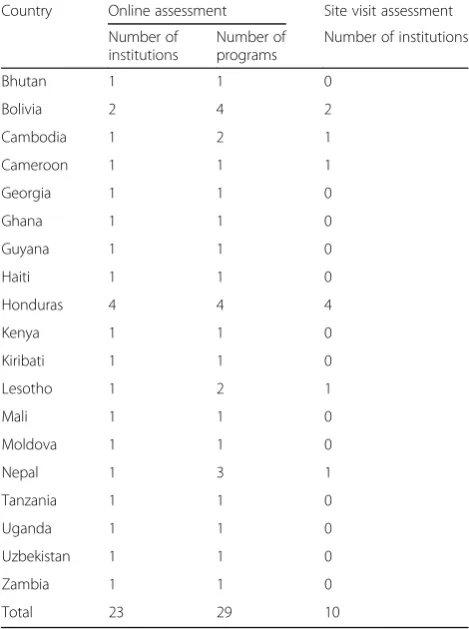
in-country site visits to 10 institutions representing 15 pro-grams in 6 countries (Table 1). To ensure representation of countries in Latin America, Asia, and Africa, the pro-grams were randomized and then stratified by continent (Table 1). Structured qualitative interviews were con-ducted with the program managers, and a variety of rele-vant topics were explored regarding recruitment, implementation, follow-up, and management of the vac-cination programs. The aim was to develop a question-naire capable of accurately assessing the key challenges related to the implementation of an HPV vaccination program. During the first step of the study, face-to-face interviews were conducted with the program managers in the different sites. The semi-structured interview proach was believed to be the most informative and ap-propriate for high-level participants, as opposed to a highly- structured questionnaire. This format facilitated the free expression of opinions and ideas among pro-grams managers, and allowed for probing and clarifica-tion of responses, and for the identificaclarifica-tion of new issues and topics relevant in the implementation of an HPV-vaccination program.
The results of these interviews were used to develop the final questionnaire, which was administered online
to the program managers of the institutions included in the GAP that completed at least vaccination of the first targeted cohort. The GAP managers at these institutions received a link by email to complete the online standard-ized questionnaire, which included structured, closed questions, and open-ended questions, in English, Spanish, and French.
Factors related to program management were assessed in the following areas: vaccination sensitization strategies and obstacles reported by parents, identification of ob-stacles to follow up and strategies to reach girls lost to follow-up, and difficulties related to supply chain man-agement and data manman-agement. The number and type of national and international partners that supported the vaccination programs were also collected with respect to technical assistance, logistics, human resources and their training, financial support, and in-kind donations.
Statistical analyses were descriptive, with variables expressed in percentages. Verbatim and qualitative data were collected during the site visits to the 10 institu-tions, and open-ended questions were included in the final online questionnaire. Qualitative data were system-atically analyzed. A directed content analysis approach was used to analyze the data and to identify the key themes. Two authors (JL, MHB) reviewed all qualitative comments extracted from the questionnaires and placed them into broader categories based on content and the-matic saturation. Illustrative quotes have been included in this report along with information about the role that each survey participant played in the vaccination pro-gram. Key findings and quotes were compiled in a Microsoft Excel table and coded according to topic or theme. Responses were reported if at least two people gave a similar response. Final decisions on comments categories were discussed with a third author (EA).
Results
[image:3.595.56.291.417.732.2]A total of 29 programs implemented by 23 institutions in 19 countries are included in this study (Table 1); one program manager (in one institution) has not responded to the survey. In Bolivia, two different institutions im-plemented four programs; in Honduras, four different institutions managed four programs; in Nepal, one in-stitution managed three programs, and in Cambodia and Lesotho one institution managed two programs in each country (Table 1). Fourteen institutions (60.9 %) were national health institutions of the MoH and nine institutions were international or national NGOs. As specified in the Methods section, 10 institutions in six countries were previously visited as part of the final survey development effort (Table 1). Regarding vaccin-ation delivery models, 18 programs were school-based models, five were health facility-based models, and six were mixed models.
Table 1Countries and number of institutions and programs included in the Gardasil Access Program 2009-2014
Country Online assessment Site visit assessment Number of
institutions
Number of programs
Number of institutions
Bhutan 1 1 0
Bolivia 2 4 2
Cambodia 1 2 1
Cameroon 1 1 1
Georgia 1 1 0
Ghana 1 1 0
Guyana 1 1 0
Haiti 1 1 0
Honduras 4 4 4
Kenya 1 1 0
Kiribati 1 1 0
Lesotho 1 2 1
Mali 1 1 0
Moldova 1 1 0
Nepal 1 3 1
Tanzania 1 1 0
Uganda 1 1 0
Uzbekistan 1 1 0
Zambia 1 1 0
Sensitization strategies for HPV vaccination
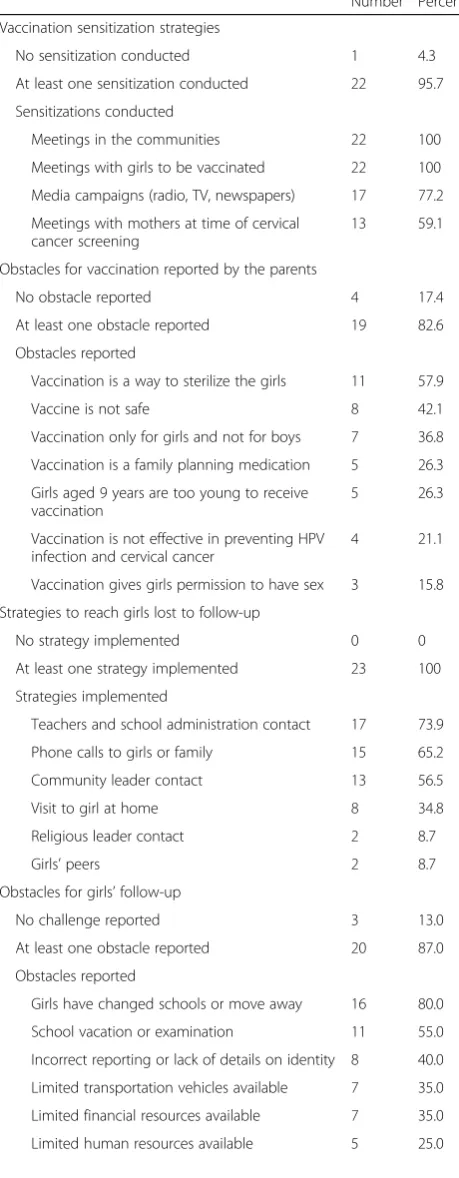
Twenty-two program managers (95.7 %) reported that their institution implemented at least one sensitization strategy about the vaccination program prior to the launch of the campaign; all of the 22 institutions responding implemented sensitization meetings in the communities and organize meetings with the girls (Table 2). The most commonly reported challenges re-lated to vaccination sensitization were misinformation (52.2 %) and a lack of understanding of information (26.1 %) about HPV vaccination.
Identified obstacles
Nineteen program managers (82.6 %) reported that par-ents had objections to the HPV vaccine, the most com-mon of which were the misconceptions that HPV vaccination is a method for sterilizing girls (Table 2). Program managers underlined the importance of provid-ing effective messages to parents: “It is important to have good one-on-one education with parents to over-come misinformation.” The integration of the HPV vac-cine into the Expanded Program of Immunization (EPI) was also found to be an effective message: “In general parents were open to the HPV vaccine because children received routine immunizations - this helped with accept-ance of Gardasil because it was integrated within EPI”.
The most frequently reported misinformation was re-lated to the reproductive health of girls receiving HPV vaccination, as specified by two program managers: “Another myth that we had to fight against was that the vaccine was seen as ‘authorization to have sexual rela-tions’”. Information strategies designed to address these misperceptions remained a crucial point for the pro-grams managers: “In rural areas we encountered more lack of information, while in urban areas it was more about misinformation”; “Understanding myths and knowledge gaps within the communities provided us with the right information to create appropriate messages for education”; “The best strategy is to work directly with parents and provide information directly to girls.”
A total of 21 institutions (91.3 %) required informed consent, including written informed consent (17 insti-tutions, 81.0 %), oral informed consent (2, 9.5 %), and informed consent for the parents to refuse vaccination (2, 9.5 %). Three program managers highlighted socio-cultural barriers related to the utilization of informed consent: “Asking for written consent was taken as a negative sign by parents who became suspicious”; “The best strategy is to work directly with parents, especially for explaining the process and getting consent and mak-ing sure they understood the process”; “Providing vac-cines free of charge led to parents being more suspicious and less concerned about girls returning for the subse-quent doses.”
Follow-up strategies
All the institutions were challenged with girls lost to follow-up during the vaccination campaigns. The most frequent obstacles to follow-up were girls changing schools or moving away, and school vacation or examin-ation. One third of the institutions also reported logis-tical obstacles to follow-up, such as challenges with transportation, and the availability of human and finan-cial resources needed to bring girls to vaccination sites (Table 2). Reaching adolescent girls to deliver vaccines was also reported as a significant challenge, and individ-ual programs used a variety of strategies to address this obstacle. The most frequent strategies were to contact teachers and school administration, and phone calls to girls or her family members. Multiple institutions also used the support of contacts in their communities (Table 2): “The staff implemented an innovative method of ‘peer tracking’ of girls who needed second and third doses in small communities, some of which did not have cell phone coverage”; “Once the team found one girl who needed a second or third dose, they would ask her to help them locate other girls who needed second or third doses”; “The process of follow up was costly in terms of time, finances, and human resources”.
Management of supply chain and data monitoring systems
Because most of the institutions participating in the GAP have a history of experience delivering other vac-cines that are included in the national immunization program or the EPI, management of vaccine supply chain did not pose new challenges, and 43.5 % of pro-gram managers reported no difficulties with this aspect of their vaccine campaigns: “Logistics and cold chain management was apparently not a challenge or issue for any of the projects, apart from some isolated and unex-pected events”; “Providing supplies and the vaccines in advance (around five days) guarantees the success of the vaccination campaign”; “The main challenge appears to be with the storage capacity at some health facilities.”
However, it should be noted that 13 institutions (56.5 %) did report difficulties with HPV vaccine supply chain management, including expiration of vaccine date (46.2 %) and difficulties transporting vaccine to adminis-tration sites (38.5 %) (Table 2).
the data management of vaccination programs, with late or incomplete vaccination reports listed as two of the most common challenges (Table 2).
Interventions coupled with HPV vaccination
A total of 13 institutions (56.5 %) coupled HPV vaccin-ation with other health interventions for mothers of tar-geted girls, including screening of cervical cancer in 12 institutions, tetanus vaccination in one institution, and both cervical cancer screening and tetanus vaccination in one institution. The program managers found this ap-proach to be effective: “Some of the women participating in these campaigns had their girls vaccinated for HPV, and some of the mothers of the girls who received vacci-nations at school ended up receiving screening for cer-vical cancer”; “The mother-daughter approach was effective in reaching out-of-school girls in rural areas.”
[image:5.595.57.287.116.706.2] [image:5.595.305.536.122.395.2]Lessons learned and impact on public health system Sixteen institutions (69.6 %) reported that their pro-grams had a positive impact on national HPV vaccin-ation policy: “The program confirmed that the vaccine was highly acceptable; HPV vaccination was built into the national cervical cancer control strategy”; “The most important result of implementing GAP projects in our country is that we now have the experience of imple-menting HPV vaccination projects”; “The country
Table 2Strategies used, obstacles, and difficulties reported by the institutions, Gardasil Access Program 2009-2014 (N= 23)
Number Percent Vaccination sensitization strategies
No sensitization conducted 1 4.3
At least one sensitization conducted 22 95.7 Sensitizations conducted
Meetings in the communities 22 100
Meetings with girls to be vaccinated 22 100 Media campaigns (radio, TV, newspapers) 17 77.2 Meetings with mothers at time of cervical
cancer screening
13 59.1
Obstacles for vaccination reported by the parents
No obstacle reported 4 17.4
At least one obstacle reported 19 82.6
Obstacles reported
Vaccination is a way to sterilize the girls 11 57.9
Vaccine is not safe 8 42.1
Vaccination only for girls and not for boys 7 36.8 Vaccination is a family planning medication 5 26.3 Girls aged 9 years are too young to receive
vaccination
5 26.3
Vaccination is not effective in preventing HPV infection and cervical cancer
4 21.1
Vaccination gives girls permission to have sex 3 15.8 Strategies to reach girls lost to follow-up
No strategy implemented 0 0
At least one strategy implemented 23 100
Strategies implemented
Teachers and school administration contact 17 73.9
Phone calls to girls or family 15 65.2
Community leader contact 13 56.5
Visit to girl at home 8 34.8
Religious leader contact 2 8.7
Girls’peers 2 8.7
Obstacles for girls’follow-up
No challenge reported 3 13.0
At least one obstacle reported 20 87.0
Obstacles reported
Girls have changed schools or move away 16 80.0
School vacation or examination 11 55.0
Incorrect reporting or lack of details on identity 8 40.0 Limited transportation vehicles available 7 35.0 Limited financial resources available 7 35.0
Limited human resources available 5 25.0
Table 2Strategies used, obstacles, and difficulties reported by the institutions, Gardasil Access Program 2009-2014 (N= 23)
(Continued)
Difficulties of supply chain management
No difficulty reported 10 43.5
At least one difficulty reported 13 56.5
Difficulties reported
Vaccines reached expiration date 6 46.2
Difficulties in transporting unused vaccines from sites
5 38.5
Projections of vaccine needed on site did not match number of girls in the field
3 23.1
Insufficient storage capacity at site level 1 7.7 Vaccines damaged during transportation to site 1 7.7 Difficulty of data management
No difficulty reported 7 30.4
At least one difficulty reported 16 69.6
Difficulties reported
Reports from vaccination sites were not received in time
14 87.5
Reports from vaccination sites were incomplete or incorrect
7 43.8
The system in place was time-intensive and cumbersome
benefited from the program: we are now approaching cer-vical cancer in a comprehensive way, and the GAP led to the establishment of cervical cancer screening centers”;
“We had to include Gardasil vaccine issues in the Sexual Reproductive Policy and National Adolescent Health Policy.”
A positive impact on health policy for cervical cancer screening was also reported: “After the GAP project, cer-vical cancer screening projects started in our country”;
“Not exactly a change in national policy, but the National Commission on Immunization Program has recommended undertaking a study on HPV Vaccination activities. The findings from the GAP program will help to inform decision-making related to the vaccination pro-gram”; “The start of HPV projects put the issue of cer-vical cancer on the table for discussion. Because of these discussions and significant political pressure from differ-ent groups, a National Prevdiffer-ention Plan against Cervical Cancer was created in the years following the GAP pro-ject. This plan included the use of HPV vaccination as an important strategy for cervical cancer management.”
At the end of the GAP, ten institutions applied for GAVI Vaccine Alliance Program funding: “The MoH used our experience to apply for GAVI funding.”
Five institutions (21.7 %) also reported a direct impact on cervical cancer awareness:“The level of knowledge re-lated to cervical cancer has increased, in particular in those populations where the vaccination took place”; “It has increased the number of women that do their PAP smears.”
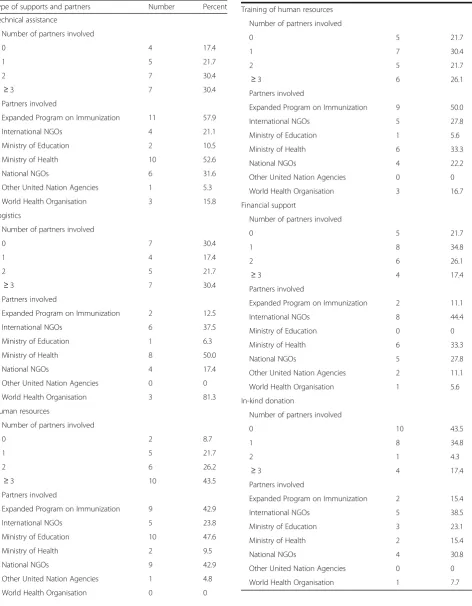
Table 3 presents the number and type of national and international partners that supported the HPV vaccin-ation programs. The most frequent support areas were for human resources (21 institutions; 91.3 %), technical assistance (19; 82.6 %) and training for health profes-sionals and financial supports (18; 78.3 %). Regarding the partners that supported the programs, national Ex-panded Programs for Immunization were frequently in-volved in technical assistance, human resources, and training; MoH supported technical assistance and logis-tics; and Ministries of Education were primarily involved in human resources. International NGOs supported eight institutions (44.4 %).
Discussion
This study of 23 key programs managers who were ac-tively involved in the implementation of a variety of HPV programs combines qualitative and quantitative research on the challenges and opportunities associ-ated with implementing the HPV vaccine in LMICs. Our findings document the experiences of various strategies and approaches related to HPV vaccination implementation in LMICs and provide lessons learned and best practices that may be applied to the
implementation of other HPV vaccine programs. The most frequently reported obstacles to HPV vaccination were erroneous perceptions that the GAP was using HPV vaccine in the context of a clinical trial, that the HPV vaccine was unsafe, and that the vaccine was be-ing used to sterilize young girls. These misperceptions among parents [20], in concert with rumors and socio-cultural barriers, underscore the need for effective and accurate communication about the vaccine’s prevent-ive health benefits, as well as appropriate sensitization and advocacy building among parents and key com-munity stakeholders [21–26]. Education related to HPV as an STI and as a primary cause of cervical cancer is important for mitigating these sociocultural issues [17]. Previously, we demonstrated that the inclusion of key messages regarding the safety and efficacy of the vaccine had a positive impact on vaccination coverage. Key sensitization messages that address safety and efficacy at the launch of a vaccine campaign may help to increase acceptance of HPV vaccination [16].
Table 3Number and type of national and international partners supporting HPV vaccination programs, Gardasil Access Program 2009-2014 (N= 23)
Type of supports and partners Number Percent
Technical assistance
Number of partners involved
0 4 17.4
1 5 21.7
2 7 30.4
≥3 7 30.4
Partners involved
Expanded Program on Immunization 11 57.9
International NGOs 4 21.1
Ministry of Education 2 10.5
Ministry of Health 10 52.6
National NGOs 6 31.6
Other United Nation Agencies 1 5.3
World Health Organisation 3 15.8
Logistics
Number of partners involved
0 7 30.4
1 4 17.4
2 5 21.7
≥3 7 30.4
Partners involved
Expanded Program on Immunization 2 12.5
International NGOs 6 37.5
Ministry of Education 1 6.3
Ministry of Health 8 50.0
National NGOs 4 17.4
Other United Nation Agencies 0 0
World Health Organisation 3 81.3
Human resources
Number of partners involved
0 2 8.7
1 5 21.7
2 6 26.2
≥3 10 43.5
Partners involved
Expanded Program on Immunization 9 42.9
International NGOs 5 23.8
Ministry of Education 10 47.6
Ministry of Health 2 9.5
National NGOs 9 42.9
Other United Nation Agencies 1 4.8
World Health Organisation 0 0
Table 3Number and type of national and international partners supporting HPV vaccination programs, Gardasil Access Program 2009-2014 (N= 23)(Continued)
Training of human resources Number of partners involved
0 5 21.7
1 7 30.4
2 5 21.7
≥3 6 26.1
Partners involved
Expanded Program on Immunization 9 50.0
International NGOs 5 27.8
Ministry of Education 1 5.6
Ministry of Health 6 33.3
National NGOs 4 22.2
Other United Nation Agencies 0 0
World Health Organisation 3 16.7
Financial support
Number of partners involved
0 5 21.7
1 8 34.8
2 6 26.1
≥3 4 17.4
Partners involved
Expanded Program on Immunization 2 11.1
International NGOs 8 44.4
Ministry of Education 0 0
Ministry of Health 6 33.3
National NGOs 5 27.8
Other United Nation Agencies 2 11.1
World Health Organisation 1 5.6
In-kind donation
Number of partners involved
0 10 43.5
1 8 34.8
2 1 4.3
≥3 4 17.4
Partners involved
Expanded Program on Immunization 2 15.4
International NGOs 5 38.5
Ministry of Education 3 23.1
Ministry of Health 2 15.4
National NGOs 4 30.8
Other United Nation Agencies 0 0
Community involvement actions appeared to impact the programs with respect to both sensitization strat-egies before launch of the HPV vaccination campaign as well as reaching girls lost of follow-up once the cam-paign was underway [16, 24, 26]. The program managers recognized that it was important for key stakeholders to understand, accept, and approve of the benefits associ-ated with HPV vaccination. Understanding which as-pects of an HPV vaccine campaign are most influenced by community standards, morals, and expectations may help in developing community engagement actions that impact coverage and adherence to vaccination [16]. Community sensitization about the availability and value of vaccinating school-aged girls against HPV may impact vaccine uptake. A study in Brazil found that the initial method used to notify parents about the vaccine had a significant impact on vaccine indicators [28].
Insufficient infrastructure and human resources finan-cing and the delivery method were identified as signifi-cant health system barriers: assistance programs helped to address these factors and support national and national vaccine programs [17–19]. National or inter-national partners supported all the GAP programs included in this study. Given the high proportion of pro-grams in our study sample that used school-based deliv-ery models, Ministries of Education played an important role in supporting the availability of human resources. The most frequent partners were national (MoH and EPI). Eighteen programs were financially supported by and had significant involvement with international NGOs. Our findings suggest that successful implementa-tion of HPV vaccinaimplementa-tion programs may be feasible in low-resource settings, provided that the health system structure for immunization and national and inter-national financing options are well understood. Delivery strategies built on the strengths of existing national EPI programs that have strong partnerships across multiple healthcare delivery sectors may also enable successful HPV vaccination programs in low-resource settings. Programs such as the GAP were established to donate limited amounts of the vaccine to countries for demon-stration programs designed to test HPV vaccine delivery strategies [15, 16]. Such pilot programs suggest that in-country ownership and development capacity may con-tribute to the long-term success and sustainability of vaccine delivery [16, 17].
The data reported here provide lessons for develop-ment of public health programs and policies as countries go forward in national decision-making related to HPV vaccination. These results suggest that local organiza-tions and instituorganiza-tions can implement successful HPV vaccination campaigns. Our results also demonstrate that private initiatives to increase access to novel health interventions can have a significant impact on public
health issues and foster diverse partnerships among gov-ernment agencies, NGOs, and private organizations. The diverse HPV vaccine programs included in this study pro-vide concrete examples of how such programs can be adapted to address local and regional issues and concerns, and provide a useful framework in which countries can consider how best to expand their own HPV vaccination programs based on their individual epidemiological, eco-nomic, and health system challenges [22].
The results of HPV vaccine experiences so far in LMICs are encouraging, and the continued sharing of outcomes data, successes, and challenges is critical to the reproducibility of successful HPV vaccine interven-tions. Considerable progress has been made in several LMICs and it is important to identify and understand those factors that are transferable to other settings. Demonstration and pilot projects in several LMICs have shown that a variety of delivery methods, including the use of schools, special campaigns, health centers or combined strategies, can reach a large proportion of eli-gible girls, and that advocacy and sensitization are essen-tial elements for success [17, 19, 32].
and national levels. While the current study does not focus on vaccine delivery models, we previously reported that school and health clinic-based models appeared as predictive factors for vaccination coverage and that HPV vaccine campaigns tailored to meet the needs of com-munities can be effective [15, 16]. The implementation of the GAP appears to have triggered changes at the national level that may have long-term positive effects.
For LMICs, it is a challenge to accelerate HPV vaccin-ation programs and also to conduct impact analyses around such programs. Considerable progress has been made in several LMICs and it is important to identify and understand lessons that may be transferable to other settings worldwide [17, 18]. School-based programs have been successful [15, 28, 29, 32], but innovative imple-mentation approaches will be necessary to reach broader populations. The suspension of a demonstration HPV-vaccination program, in India following opposition and activism within the community underscores the import-ance of ensuring that new research approaches engage with the members of the community in which they are undertaken and incorporate societal concerns, public emotions, and local politics. This type of engagement is essential to understand and address the societal chal-lenges of implementing HPV vaccination programs [33]. Developing new alternatives that expand access to HPV and cervical cancer prevention resources will require in-put from multiple stakeholders, including governments, NGOs, the scientific community, drugs companies, and communities [33]. More research is needed on several practical issues, such as how to increase access to HPV vaccines and to develop the implementation of HPV vac-cination programs in LMICs. This study could provide insight into strategies that could be used to determine best practices related to sensitization strategies, stigma avoidance, engaging with the community, and follow-up with young girls during the vaccination campaign in par-ticular socio-cultural contexts.
Conclusion
Routine vaccination in adolescents remains challenging. The data reported here from programs focused on vaccin-ating adolescent girls provides lessons that may be applied to the development of public health programs and policies as countries go forward in national decision-making for HPV vaccination. Our findings in a large sample of HPV vaccination programs demonstrate that continued sharing of evidence, successes, and challenges is critical to the suc-cessful scale-up of HPV vaccine interventions worldwide. These findings underscore the need for adequate and adapted planning and resources that support information sharing, sensitization, and mobilization. The GAP provides a model for how private initiatives can have a significant impact on public health issues.
The diverse HPV vaccine programs included in this study provide concrete examples of how such programs can be adapted to address local and regional issues and concerns, and provide a useful framework in which countries can consider how to best expand their own HPV vaccination programs based on their individual epi-demiological, economic, and health system challenges.
Abbreviations
EPI:Expanded programme on immunization; GAP: Gardasil access program; HPV: Human papilloma virus; LMICs: Low and middle-income countries; MoH: Ministry of Health; NGO: Non-Governmental Organization; STI: Sexually Transmitted Infections; UN: United Nations; WHO: World Health Organisation
Acknowledgements
The authors would like to acknowledge the contributions of the GAP Program Managers in the different institutions and their respective teams and partners. The authors acknowledge the contributions made by the members of the Gardasil Access Program Advisory Board. Special thanks to Dr. Stephanie Seiler for editing and revision of the manuscript.
Funding
Merck & Co had no role in study design, data collection, data analysis, data interpretation, or writing of the paper. The authors had full access to all data in the study and had final responsibility for the decision to submit for publication. Data were completely managed by Axios Healthcare Development. Although Axios Healthcare Development received financial compensation for managing the GAP, Axios Healthcare Development entirely and independently managed the research. The results presented here are a complete and accurate representation of the data collected through the study.
Availability of data and materials
The data supporting the conclusions of this article are available upon request from the corresponding author or Axios Healthcare Development.
Authors’contribution
JL conceived the study, wrote the manuscript, and performed the analysis. MHB conceived the study, managed data, and helped to analyze qualitative data. MR conceived the study and helped with qualitative data collection. EA helped to analyze qualitative data and to draft the manuscript. JS conceived the study and revised the manuscript. All authors read and approved the final manuscript.
Competing interests
Although Axios Healthcare Development received financial compensation from Merck & Co. for the routine management of the Gardasil Access Program (GAP), the results of the 29 programs presented here are a complete and accurate representation of the data collected through the program’s pre-specified follow-up process. Financial support from Merck & Co. did not influence the collection of data because the routine reports and final assessments were pre-defined at the time that institutions agreed to participate in the GAP. Data analysis was not influenced by financial support from Merck & Co. because the two primary authors, JL (corresponding author) and EA, who had the primary roles in developing the concept and design of the study, are not Axios employees. JL performed the analysis and wrote the manuscript. Both of these authors declare that they have no competing interests.
Consent for publication Not applicable.
Ethics approval and consent to participate
Author details
1Epidemiology and Health Promotion Department, Rouen University
Hospital, Hôpital Charles Nicolle. 1, rue de Germont, 76 031 Cedex Rouen, France.2Axios International, Paris, France.3Hôpital Henri Mondor Hospital, Public Health, Assistance Publique Hôpitaux de Paris, Paris Est University, Créteil, France.
Received: 19 August 2015 Accepted: 6 October 2016
References
1. Ferlay J, Shin H, Baray F, Forman D, Mathers C, Parkin DM. Estimate of worldwide burden of in 2008. Globocan 2008. Int J Cancer. 2010;127:2893–917.
2. Oh JK, Weiderpass E. Incfection and cancer: global distribution and burden of diseases. Ann Glob Health. 2014;80:384–92.
3. Forman D, de Martel C, Lacey CJ, Soerjomataram I, Lortet-Tieulent J, Bruni L, et al. Global burden of human papillomavirus and related diseases. Vaccine. 2012;30(S5):F12–23.
4. Broker TR. Global prevention and management of human papillomavirus related diseases: the pressing challenges and the compelling opportunities. Vaccine. 2012;30(S5):7–10.
5. Arbyn M, Castellsagué X, de Sanjosé S, Bruni L, Saraiya M, Bray F, et al. Worldwide burden of cervical cancer in 2008. Ann Oncol. 2011;22:2675–86. 6. Yang BH, Bray FI, Parkin DM, Sellors JW, Zhang ZF. Cervical cancer as a
priority for prevention in different world regions: an evaluation using years of life lost. Int J Cancer. 2004;109:418–24.
7. Bosch FX, Brokerb TR, Formanc D, Moscickid AB, Gillisone ML, Doorbarf J, et al. Comprehensive control of human papilloma infections and related diseases. Vaccine. 2013;31S:F1–F31.
8. Crosbie EJ, Einstein MH, Franceschi S, Kitchener HC. Human papillomavirus and cervical cancer. Lancet. 2013;382:889–99.
9. Munoz N, Bosch FX, de Sanjose S, Herrero R, Castellsague X, Shah KV, Snijders PJ, Meijer CJ, International Agency for Research on Cancer Multicenter Cervical Cancer Study Group. Epidemiologic classification of human papillomavirus types associated with cervical cancer. N Engl J Med. 2003;348:518–27.
10. Paavonen J, Jenkins D, Bosch FX, Naud P, Salmeron J, Wheeler CM, et al. Efficacy of a prophylactic adjuvanted bivalent L1 virus-like-particle vaccine against infection with human papillomavirus types 16 and 18 in young women: an interim analysis of a phase III double-blind, randomised controlled trial. Lancet. 2007;369:2161–70.
11. Paavonen J, Naud P, Salmeron J, Wheeler CM, Chow SN, Apter D, et al. Efficacy of human papillomavirus (HPV)-16/18 AS04-adjuvanted vaccine against cervical infection and precancer caused by oncogenic HPV types (PATRICIA): final analysis of a double-blind, randomised study in young women. Lancet. 2009;374:301–31.
12. Villa LL, Costa RL, Petta CA, Andrade RP, Paavonen J, Iversen OE, et al. High sustained efficacy of a prophylactic quadrivalent human papillomavirus types 6/11/16/18 L1 virus-like particle vaccine through 5 years of follow-up. Brit J Cancer. 2006;95:1459–66.
13. Harries J, Moodley J, Barone MA, Mall S, Sinanovic E. Preparing for HPV vaccination in South Africa: key challenges and opinions. Vaccine. 2009;27:38–44.
14. Becker-Dreps S, Otieno WA, Brewer NT, Agot K, Smith JS. HPV vaccine acceptability among Kenyan women. Vaccine. 2012;28:4864–67.
15. Ladner J, Besson MH, Hampshire R, Tapert L, Chirenje M, Saba J. Assessment of eight HPV vaccination programs implemented in lowest income countries. BMC Public Health. 2012;12:370.
16. Ladner J, Besson MH, Rodrigues M, Audureau E, Saba J. Performance of 21 HPV vaccination programs implemented in low and middle-income countries, 2009-2013. BMC Public Health. 2014;14:670.
17. Wigle J, Coast D, Watson-Jones D. Human papillomavirus (HPV) vaccine implementation in low and middle-income countries (LMICs): health system experiences and prospects. Vaccine. 2013;31(37):3811–7.
18. Steben M, Jeronimo J, Wittet S, LaMontagne SD, Ogilvie G, Jensen C, et al. Upgrading public health programs for Human Papilloamvirus Prevention and Control is possible in low–and middle-income countries. Vaccine. 2012;30S:F183–91.
19. Kane MA, Serrano B, Sanjosé S, Wittet S. Implementation of human papillomavirus immunization in the developing world. Vaccine. 2012;30S:F192–200.
20. WHO. Human papillomavirus vaccines: WHO position paper. WHO Weekly Epidemiol Record. 2009;84:117–32.
21. Blume S. Anti-vaccination movements and their interpretations. Soc Sci Med. 2006;62:628–42.
22. Becker-Dreps S, Otieno WA, Brewer NT, Agot K, Smith JS. HPV vaccine acceptability among Kenyan women. Vaccine. 2010;28(31):4864–7. 23. Coleman MA, Levison J, Sangi-Haghpeykar H. HPV vaccine acceptability in
Ghana, West Africa. Vaccine. 2011;29(23):3945–50.
24. Woo YL, Omar SZ. Human papillomavirus vaccination in the resourced and resource-constrained world. Best Pract Res Clin Obstet Gynaecol. 2011;25(5):597–603.
25. Agosti JM, Goldie SJ. Introducing HPV vaccine in developing countries–key challenges and issues. N Engl J Med. 2007;356:1908–10.
26. Binagwaho A, Wagner CM, Gatera M, Karema C, Nutt CT, Ngabo F. Achieving high coverage in Rwanda’s national human papillomavirus vaccination programme. J Bull World Health Organ. 2012;90:623–8. 27. Fregnani JH, Carvalho AL, Eluf-Neto J, Ribeiro KC, Kuil LM, Da Silva TA, et al.
A school-based human papillomavirus vaccination program in Barretos, Brazil: final results of a demonstrative study. PLoS One. 2013;8:e62647. 28. Watson-Jones D, Baisley K, Ponsiano R, Lemme F, Remes P, Ross D, Kapiga S,
Mayaud P, de Sanjosé S, Wight D, Changalucha J, Hayes R. Human papillomavirus vaccination in Tanzanian schoolgirls: cluster-randomized trial comparing 2 vaccine-delivery strategies. J Inf Dis. 2012;206:678–86. 29. LaMontagne DS, Barge S, Le NT, Mugisha E, Penny ME, Gandhi S, et al.
Human papillomavirus vaccine delivery strategies that achieved high coverage in low- and middle-income countries. J Bull World Health Organ. 2011;89:821–830B.
30. Friedman AL, Oruko KO, Habel MA, Kinsey FJ, Odhiambo F, Phlips-Howards PA, et al. Preaparing for human papillomavirus vaccine introduction in Kenya: implications from focus-group and interview discussions with caregivers and opinion leaders in Western Kenya. BMC Public Heath. 2014;14:855.
31. Paul P, Fabio A. Literature review of HPV vaccine delivery strategies: considerations for school and non-school based immunization program. Vaccine. 2014;32(3):320–6.
32. Sankaranarayanan R. Screening for cancer in low- and middle-income countries. Ann Glob Health. 2014;80(5):412–7.
33. Larson HJ, Brocard P, Garnett G. The India HPV-vaccine suspension. Lancet. 2010;376:572–3.
• We accept pre-submission inquiries
• Our selector tool helps you to find the most relevant journal
• We provide round the clock customer support
• Convenient online submission
• Thorough peer review
• Inclusion in PubMed and all major indexing services
• Maximum visibility for your research
Submit your manuscript at www.biomedcentral.com/submit