UNIVERSITI TEKNIKAL MALAYSIA MELAKA
PROCESSING AND CHARACTERIZATION OF
POLYCAPROLACTONE (PCL) / SAGO STARCH BLENDS AS
BIODEGRADABLE POLYMERS
This report submitted in accordance with requirement of the Universiti Teknikal Malaysia Melaka (UTeM) for the Bachelor Degree of Engineering Technology
(Automotive Technology) (Hons.)
by
NUR HAZWANI BT TAHIR B071310531
930920-14-6506
UNIVERSITI TEKNIKAL MALAYSIA MELAKA
BORANG PENGESAHAN STATUS LAPORAN PROJEK SARJANA MUDA
TAJUK: Processing and Characterization of Polycaprolactone (PCL) / Sago Starch Blends as Biodegradable Polymers
SESI PENGAJIAN: Semester 1 2016/17
Saya NUR HAZWANI BT TAHIR
mengaku membenarkan Laporan PSM ini disimpan di Perpustakaan Universiti Teknikal Malaysia Melaka (UTeM) dengan syarat-syarat kegunaan seperti berikut: 1. Laporan PSM adalah hak milik Universiti Teknikal Malaysia Melaka dan penulis. 2. Perpustakaan Universiti Teknikal Malaysia Melaka dibenarkan membuat salinan
untuk tujuan pengajian sahaja dengan izin penulis.
3. Perpustakaan dibenarkan membuat salinan laporan PSM ini sebagai bahan pertukaran antara institusi pengajian tinggi.
4. **Sila tandakan ( )
SULIT
TERHAD
TIDAK TERHAD
(Mengandungi maklumat yang berdarjah keselamatan atau kepentingan Malaysia sebagaimana yang termaktub dalam AKTA RAHSIA RASMI 1972)
(Mengandungi maklumat TERHAD yang telah ditentukan oleh organisasi/badan di mana penyelidikan dijalankan)
Alamat Tetap:
LOT 1016, Batu 21 1/2,
Jalan Pengkalan Balak, 78300 Masjid Tanah, Melaka.
Tarikh: ________________________
Disahkan oleh:
Cop Rasmi:
Tarikh: _______________________
iv
DECLARATION
I hereby, declared this report entitled “Processing and Characterization of Polycaprolactone (PCL) / Sago Starch Blends as Biodegradable Polymers” is the
results of my own research except as cited in references.
Signature : ………
Author’s Name : ………
xi
APPROVAL
This report is submitted to the Faculty of Engineering Technology of UTeM as a partial fulfillment of the requirements for the degree of Bachelor of Mechanical Engineering Technology (Automotive Technology) with Honours. The member of the supervisory is as follow:
xii
ABSTRACT
xiii
ABSTRAK
xiv
DEDICATION
xv
ACKNOWLEDGEMENT
I am using this opportunity to express my special appreciation and thanks to my supervisor Encik Aludin Bin Mohd Serah for his immense knowledge, aspiring guidance, invaluably constructive criticism and friendly advice in process of completing this project work. His motivation helped me a lot in all the time of research and writing this thesis. I could not have imagined having a better advisor and mentor for my study.
xvi
TABLE OF CONTENTS
Declaration…..………...iv
Approval.………..……...v
Abstract..………...vi
Abstrak..……….……….……...vii
Dedication……….…….…...viii
Acknowledgements..………...…….………...ix
Table of Contents…..…………...…...………...x
List of Table…...………...………...…….…...xix
List of Figures…...……….…...……….……...……...xx
List of Symbols and Abbreviations…………...…………...v
CHAPTER 1: INTRODUCTION………...………..1
1.0 Introduction………..……...1
1.1 Project Background...………...….…..1
1.2 Problem Statement...………..………....5
1.3 Objective of Research...………...6
1.3.1 General Objective...6
1.3.2 Specific Objectives………...………....6
1.4 Scope of Research.………...………...7
CHAPTER 2: LITERATURE REVIEW………...…………..…...…...8
2.0 Introduction.….………...……...8
2.1 Polymer...8
2.2 Polymer and Environment Issues………...9
2.3 Domestic Waste and Recycling………...10
2.4 Biodegradable Polymers...11
2.4.1 Types of Biodegradable Polymers...12
2.4.2 Commercial Biodegradable Polymer...12
xvii
2.6 Polycaprolactone...………...………....16
2.7 Sago Starch...………...………18
2.7.1 Properties of Sago Starch..………...18
2.7.2 Extraction Processes of Sago Starch……...…...………...……..19
2.7.3 SagoPalm Distribution Areas in Malaysia...………...20
CHAPTER 3: METHODOLOGY…………....………..…………....…22
3.0 Introduction………...……...…...22
3.1 Preparation of Polycaprolactone (PCL)/ Sago Starch Blends……...…...22
3.1.1 Dissolution of PCL and Sago Starch in Chloroform...24
3.1.2 Solvent Evaporation…...………....25
3.2 Characterization of PCL/Sago Starch Blends...…...26
3.2.1 Thermal Analysis by Differential Scanning Calorimeter...26
3.2.2 Mechanical Testing by Tensile Test...;..…...29
3.2.2.1 Preparation of Tensile Test Sample...29
3.2.2.2 Tensile Test...31
3.3 Biodegradation Test...…..………....33
3.3.1 Preparation of Test Samples...33
3.3.1.1 Dissolution of Dried Film in Chloroform...34
3.3.1.2 Solvent Evaporation...35
3.3.2 Soil Burial Biodegradation Test....…….………..………….36
CHAPTER 4: RESULT AND DISSCUSSION……...………..………...38
4.0 Introduction..………...……...…..38
4.1 Preparation of Polycaprolactone (PCL)/ Sago Starch Blends……...38
4.1.1 Physical Appearance in Chloroform Solution...…...38
4.1.2 Yield Percentage...…...40
4.3 Thermal Properties of PCL / Sago Starch Blends……...…...42
4.4 Mechanical Properties of PCL / Sago Starch Blends…...…...44
4.4.1 Tensile Test Results...…..…....………..…...44
xviii
4.5 Biodegradability of PCL / Sago Starch Blends...49
CHAPTER 5: CONCLUSION……...………..…….…....…52
5.0 Introduction………...……...…...52
5.1 Summary of Research………...……...…...52
5.2 Achievement of Research Objectives………...……....…...54
5.3 Significance of Research.………...……...…..55
5.4 Suggestion for Future Work………...……...…...55
REFERENCES………...……..57-61
xix
LIST OF TABLES
2.1 Common examples of polymers and their applications..………...9
2.2 Properties of sago and other starches………..………....19
2.3 Distribution of sago palms areas…….……….………...21
3.1 Composition of PCL / sago starch blends ……...…………...24
3.2 Sample dimension for tensile test ...…………...30
4.1 Physical appearances of PCL / sago starch blends in chloroform solution...39
4.2 Yield percentage (%) of PCL / sago starch blends...41
4.3 Thermal properties of PCL / sago starch blends...43
4.4 Tensile properties of PCL / sago starch blends...44
4.5 Percentage of mass loss of PCL / sago starch blends after 10 days...50
xx
LIST OF FIGURES
1.1 Garbage disposal dumpsite………...1
1.2 Locating recycling bins as part of recycling campaign……...…...2
1.3 Chemical structure of polycaprolactone (PCL)...………...3
1.4 Chemical structure of starch...………...4
1.5 Sago starch...………...4
2.1 Conversion of monomers to polymer……….8
2.2 Recycling truck...………..10
2.3 Biodegradable plastic bottle...11
2.4 Classification of biodegradable polymers...………..12
2.5 Biodegradable plastic bags in Melaka...13
2.6 Banana starch granule……….………. 14
2.7 Physical appearance of montmorillonite...15
2.8 Ring opening polymerization of ɛ-caprolactone...16
2.9 Schematic diagram of biodegradable DDS...17
2.10 Mechanisms of DDS……….17
2.11 Two common sago species in Malaysia...18
2.12 Sago starch...………..19
2.13 Processing steps of sago starch...20
3.1 Dissolution of PCL and sago starch...23
3.2 Solvent evaporation process... 23
3.3 Solution casting in a petri dish... 25
3.4 Dried film of PCL 50 wt % / sago starch 50 wt %...25
3.5 Differential scanning calorimeter (DSC)...26
3.6 DSC sample puncher...27
3.7 A compressed DSC sample... 27
3.8 Sample arrangement inside DSC... 28
xxi
3.10 Dimensions of a sample for tensile test...30
3.11 Lever-controlled tensile test sample cutter... .31
3.12 Tensile test samples...31
3.13 Upper grip...32
3.14 Dissolution of dried film...33
3.15 Solvent evaporation process...34
3.16 Film casting in aluminium foil...35
3.17 Multilayer substrate biodegradation set-up...36
3.18 Test samples on the soil...37
4.1 PCL / sago starch solution of different mass compositions...39
4.2 DSC curves of PCL / sago starch blends...42
4.3 Effect of starch content on thermal properties of PCL / sago starch blends...43
4.4 Engineering stress-strain curve...45
4.5 The beginning part of engineering stress-strain curve...46
4.6 Mechanical properties of PCL / sago starch blends...47
4.7 Physical appearances of fracture tensile test samples...48
4.8 SEM micrograph of PCL 50 wt % / sago starch 50 wt % after tensile test...49
4.9 Soil burial biodegradation test set-up...49
4.10 PCL / sago starch samples before and after 10 days of degradation…………51
5.1 Effect of sago starch contents on biodegradability ...53
5.2 SEM micrograph of PCL 50 wt % / sago starch 50 wt % film after 10 days of biodegradation test...53
5.3 Effect of sago starch contents on tensile test results...54
5.4 Biodegradable polybag for plant...56
v
LIST OF ABBREVIATIONS, SYMBOLS AND
NOMENCLATURE
APES - Aliphatic Polyester
ASTM - American Society For Testing And Materials ATR - Attenuated Total Reflectance
BPA - Bisphenol A CH - Chitosan cm - centimetre CO2 - Carbon Dioxide CS - Corn Starch
DEHP - di-(2-ethylhxyl) phthalate DDS - Drug Delivery System DNA - Deoxyribonucleic Acid
DSC - Differential Scanning Calorimeter E - Young’s Modulus
g - gram ha - Hectare kg - Kilogram
kJ/kg - Kilojoules per Kilogram HDPE - High Density Polyethylene H2O - Water
LCDA - Land Custody and Development Authority LCD - Liquid Crystal Display
LED - Light-emitting Diode LDPE - Low Density Polyethylene LLDPE - Linear Low Density Polyethylene m - metre
vi MPa - Megapascal
N2 - Nitrogen
PCL - Polycaprolactone
PET - Polyethylene Terephthalate PE - Polyethylene
PP - Polypropylene PS - Polystyrene PUR - Polyurethane PVA - Polyvinyl Acetate PVC - Polyvinyl Chloride RM - Ringgit Malaysia
SEM - Scanning Electron Microscopy SiO2 - Silicon Dioxide
SS - Sago Starch
Td - Decomposition Temperature Tg - Glass Transition Temperature Tm - Melting Temperature
TPS - Thermoplastic Starch TS - Tensile Strength
WVPc - Water Vapour Permeability Coefficient °C - Degree Celsius
wt% - Weight Percentage % - Percentage
1
CHAPTER 1
INTRODUCTION
1.0 Introduction
This chapter discusses the background of this research in order to define its main focus. The problem statement is then defined in order to identify the real problems that are being focused in this study. General and specific objectives of the research are stated clearly as a guideline for the research. The specific focus and limitation of the research are also introduced in the scope of research.
1.1 Project Background
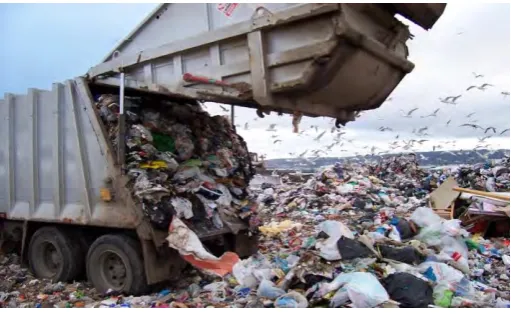
Awareness towards environmental threat had arisen from the uncontrollable usage of conventional non-biodegradable synthetic polymers which are made from petroleum by-products. These synthetic polymers have been discarded in vast amount through short period of time. The garbage disposal of domestic waste dumpsite, as shown in Figure 1.1, led to the generation of excessive amount of pollutant in the environment.
[image:17.595.202.458.496.653.2]
Figure 1.1 A garbage disposal dumpsite
2
into new products thus preventing the waste of potentially useful materials (M Spilka et al., 2008). Although recycling domestic waste can be helpful in reducing garbage disposal, it is not economically feasible because it consumes a huge amount of time and effort. Recycling tons of garbage will require separate factories that will result in more pollution and energy consumption for cleaning, sorting, storing and transporting waste materials.
[image:18.595.177.468.286.497.2]The government also must set a firm and consistent recycling policy. The policy should be committed on reducing landfill waste to the maximum. Each residential area and state agency should facilitate practicable means to separate plastics, paper, metals and other recyclable items. The processes of separating waste into different types of bins, as shown in Figure 1.2, at every recycling centre needs high cost.
Figure 1.2 Locating recycling bins as part of recycling campaign
The awareness among the society also extremely important to ensure this recycling policy successfully implemented. The step of creating awareness through campaign will not only cost money but also take time for the society to practice recycling in a long run.
3
Biodegradable polymers are polymers that can undergo a degradation process known as biodegradation. It is defined as polymers with similar properties of conventional polymer but can be decomposed after being disposed to the environment by the activity of microorganism (Tharanathan, 2003).
The “No Plastic Bag Day’ was launched by the Ministry of Domestic Trade Cooperative and Consumerism (MDTCC) in January 2011 (I. S. Zen et al., 2013). Recently, ban on plastic bags in Malaysia had been enforced more strictly by conducting periodical checks on all premises to ensure its effectiveness. Consumers need to bring along their own shopping bags after the declaration of total ban on plastic bags which are made from petroleum by-products at all supermarkets and shopping malls. Although, the total ban of using plastic bags from petroleum by-products had been implemented strictly, government still allow consumer to use plastic bags but only limited to the bags that are made from biodegradable polymers.
In this study, polycaprolactone (PCL) was used as a biodegradable polymer. Polycaprolactone (PCL) is an aliphatic polyester that is very well known for its biodegradability ; low melting point (60°C) and glass transition temperature (-60°C). Another unusual property of PCL is its high thermal stability with decomposition temperature, Td of 350°C which is higher as compared to that of other aliphatic
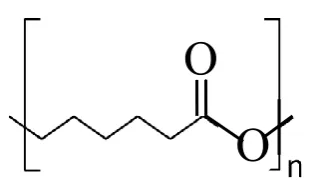
polyesters that in between 235 and 255°C (Pachence et al., 2007). Their hydrolysable ester linkages, of which the chemical structure is shown in Figure 1.3, make them biodegradable.
[image:19.595.244.401.515.610.2]
Figure 1.3 Chemical structure of PCL
PCL is hydrophobic and partially crystalline types of polyester with high biodegradability. PCL can completely degraded by the action of aerobic and anaerobic microorganisms in various environments. However, PCL is expensive and limited in resources as it is made from non-renewable sources. It needs to be blended
4
with natural polymers such as starch to lower the cost and increase its biodegradability.
Starch is a natural polymer regenerated from carbon dioxide and water by photosynthesis in plants. It mainly composed of amylase and amylopectin. Figure 1.4 shows their chemical structures.
[image:20.595.185.458.168.339.2]
Figure 1.4 Chemical structure of starch
The use of starch in this study is especially important since Malaysia have abundant resources of sago starch majorly in Sarawak. For many centuries the people that inhabiting swamp forest of Oya, Mukah, Igan, Balingian and Dalat districts in Sarawak have live off the sago palm as their main resources (Morris, 1977).
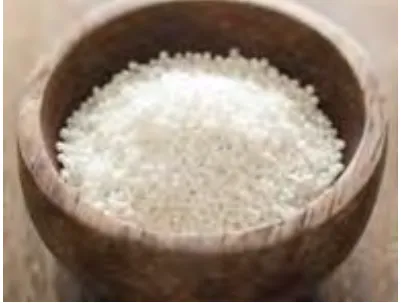
Sago starch, as shown in Figure 1.5, is white and slightly pinkish in colour extracted from spongy centre of palm stems that have low solubility in water and alcohol. Sago starch is not only has unlimited renewable recourses but also exhibits complete biodegradability with inexpensive price.
[image:20.595.221.422.563.714.2]5
Processing of PCL with starch blends in past research used various methods such as extrusion and melt blending method. In this study, PCL was blended with sago starch by using solvent casting method.
1.2 Problem Statement
Nowadays, environmental issues such as global warming and greenhouse effect have become greatest threat faced by the earth. The environment has taken its tolls because of irresponsible human activity. One of the major causes of the problems is poor waste management. The astounding amount of landfill waste produced each year is growing rapidly. Despite efforts by many of us to practice 4R (Refuse, Reduce, Reuse, Recycle), unfortunately we are still generating more garbage and it is unlikely to decrease.
Toxic gases that released from landfills undoubtly produce harmful greenhouse gases that will change the climate of its surroundings. Water pollution could also happens when toxic waste leaches from the landfills into soil and groundwater seeping through nearby river therefore, poisoning not only animal and plant but also human itself. Thus, the development of biodegradable polymers is extensively being studied as one alternative solution to overcome overloaded landfills waste problem. It is not only reduce the amount of waste but also promote cost saving.
Polycaprolactone (PCL) is well known biodegradable polymer. However, it is expensive and limited in resources. In order to reduce the cost of production, PCL usually blended with low cost natural polymer from renewable resources such as starch and cellulose. This study used sago starch to minimize the production cost of biodegradable polymers. Besides that, sago starch is easy to obtain locally due to it plenty resources.
6
1.3 Objective of Research
The research objectives were divided into two; general and specific objectives. These objectives clearly articulate its purpose as a main guide in conducting this research and describe aim of it.
1.3.1 General Objective
To process and characterize the polycaprolactone (PCL)/sago starch blend as biodegradable polymers at varied mass compositions to lower its cost and increase the biodegradability.
1.3.2 Specific Objectives
i. To prepare PCL/sago starch blends as biodegradable polymers at varied mass compositions by using solvent casting method.
ii. To determine the thermal and mechanical properties of PCL/sago starch by using Differential Scanning Calorimeter (DSC) and tensile machine, respectively.
7
1.4 Scope of Research
8
CHAPTER 2
LITERATURE REVIEW
2.0 Introduction
This chapter first discusses the classification of biodegradable polymers. The properties and applications of biodegradable polymers are also highlighted. This review then introduces several researches findings on biodegradable polymers particular related to polycaprolactone (PCL) and sago starch. The mechanism of biodegradation has also been reviewed.
2.1 Polymer
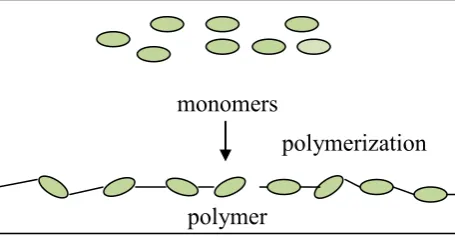
The word ‘polymer’ was originated from Greek word: poly means many and mer means unit or parts. A polymer is a large molecule or macromolecule that composed of many repeated structural units joined by covalent bonds. Figure 2.1 illustrates that polymers, both natural and synthetic, which are created via polymerization of many small molecules, known as monomers.
monomers
[image:24.595.205.433.471.591.2]
polymer
Figure 2.1 Conversion of monomers to polymer
R. Ebewele (2000) stated that polymers can be classified as addition or condensation polymers depending on the type of polymerization reaction involved in their synthesis. Other classifications are based on polymer structure, polymerization mechanism and thermal behaviour which serve as fundamental components to biological structures and functions.