The Impact of Problem-based Learning on
Pre-service Teachers’
Development and Application of Their
Mathematics Pedagogical Content Knowledge
A Thesis submitted by
David A. Martin
B.Ed., Dip. T., M.Ed. Technology, M.Ed. Leadership
For the award of
Doctor of Philosophy
i
Abstract
The main aim of this study was to investigate the effectiveness of problem-based learning (PBL) compared to a traditional teacher-led instructional approach on pre-service teachers’ mathematics pedagogical content knowledge (PCK) and their ability to apply that knowledge.
Predictors of teacher effectiveness in relation to student achievement are based on defined attributes, for example: (a) the ability to use a range of evidence-based teaching strategies (Dean, Hubbell, Pitler, & Stone, 2012; Hattie, 2009), such as those encompassed in the PBL framework as described by Hmelo-Silver and Barrows (2015) and Savery (2015); (b) the ability of a teacher to enact the PCK he or she possesses (Hattie, 2009; Hill, Ball, & Schilling, 2008; Hill, Rowan, & Ball, 2005; Shulman, 1986; Tatto & Senk, 2011) and (c) the level of confidence, and/or self-efficacy, a teacher maintains in his or her ability to teach (Bandura, 1977; Schunk, 1991; Tschannen-Moran & Hoy, 2001). Teachers who have high self-efficacy may also maintain the expectation that they can influence positive academic outcomes for their students (Bandura, 1986; Enochs, Smith, & Huinker, 2000). This type of cognitive belief is identified by Bandura (1977) as outcome expectancy.
ii
additional data to be collected from pre-service teachers’ end-of-semester exam questions (N=37) to measure specifically their ability to enact their mathematics PCK. Qualitative data were also collected in the form of semi-structured interview responses. The interviews, which were conducted at the end of the intervention, asked questions of the treatment group participants (n=17) relating to the impact PBL had on the development of their mathematics PCK, the ability to enact their PCK and their teaching beliefs.
The analysis of the results of the MPCKI, which was designed as a multiple-choice survey instrument, did not demonstrate a significant difference between the two groups’ mathematics PCK. However, the analysis of the pre-service teachers’ constructed responses to the end-of-semester exam mathematics PCK-specific questions did demonstrate a significant difference between the two groups ability to enact their mathematics PCK. Furthermore, the qualitative data collected from the interview responses from the PBL treatment group indicated a unanimous satisfaction with being taught by the PBL method and a unanimous affirmative response when asked if they felt the closed loop PBL teaching method was more effective than traditional instruction in developing their mathematics PCK and their ability to enact their PCK. The results of the MTEBI analysis did not demonstrate a significant difference between the two groups’ self-efficacy for teaching and teaching outcome expectancy. However, an analysis of the interview transcripts from the PBL group of pre-service teachers revealed a new sense of confidence and teacher effectiveness, which, they felt will positively impact on their students’ academic success.
iii
Certification of Thesis
This thesis is entirely the work of David A Martin except where otherwise acknowledged. The work is original and has not been previously submitted for any other award, except where acknowledged.
Student and supervisors’ signatures of endorsement are held at USQ.
Professor Romina Jamieson-Proctor Principal PhD Supervisor
Professor Peter Albion Associate PhD Supervisor
iv
Acknowledgements
The depths I have travelled to where a PhD candidate is taken has been made possible by both my supervisors and a number of colleagues. Firstly, I offer sincere gratitude to my Principal Supervisor, Professor Romina Jamieson-Proctor, for her continued support, advice and feedback. Her years of mentorship have enriched my ability to conduct quality research. I am obliged also to my Associate Supervisor, Professor Peter Albion, for his comprehensive reviews of my work and thesis. His expertise with PBL and high expectations for scholarly writing served my thesis well.
I would like to thank Associate Professor Rosemary Callingham from the University of Tasmania and Dr Peter Grimbeek of Griffith University for sharing their specialised knowledge in using SPSS and Winsteps to conduct factor and Rasch item analyses. The professional development they provided enabled me to demonstrate an extra dimension of rigour and validity of the study’s quantitative instruments for measuring mathematics PCK in pre-service teachers.
In terms of a support network I am grateful to two colleagues, Dr Trevor Black and Dr Sharon Louth, for the copious number of think tank sessions we engaged in over the years. During the sessions we discussed each other’s ideas, clarified concepts, cleared up misconceptions, and supported each other during the writing of our respective theses. I thank the School of Education professional and academic staff members at the University of Southern Queensland who supported my research endeavours and recognised my work as a sound contribution to the research of teaching and learning at the tertiary level.
v
Table of Contents
Abstract ... i
Certification of Thesis ... iii
Acknowledgements ... iv
List of Figures ... viii
List of Tables ... ix
Chapter 1 Introduction ... 1
1.1 Overview ... 1
1.2 The Research Problem and Aim of the Study ... 1
1.3 Addressing the Research Problem ... 3
1.4 Background to the Conceptualisation of the Study ... 6
1.5 Chapter Summary ... 8
1.6 Structure of the Thesis ... 9
1.7 Glossary of Terms and Acronyms used throughout ... 10
Chapter 2 Literature Review ... 13
2.1 Overview ... 13
2.2 Attributes of Effective Teachers ... 13
2.3 Content Knowledge ... 16
2.4 Pedagogical Knowledge ... 18
2.5 Pedagogical Content Knowledge ... 21
2.6 Self-efficacy and Outcome Expectancy ... 26
2.6.1 Self-efficacy and Outcome Expectancy for Teaching ... 27
2.7 Assessing PCK and the Ability to Enact PCK ... 31
2.8 Problem-based Learning ... 34
2.8.1 The Effectiveness of PBL in Higher Education ... 37
2.8.2 Barrows’ (1986) Taxonomy of PBL ... 39
2.8.3 The Problems - a Key Feature of a PBL Program ... 42
2.9 Research Problem and Research Questions ... 46
2.10 Chapter Summary ... 47
Chapter 3The Pilot Study ... 50
3.1 Overview ... 50
3.2 The Underpinning Conceptual Framework for the Research ... 50
3.3 The PBL Intervention used in the Pilot Study ... 52
vi
3.4 The Pilot Study: Aims 1 and 2 ... 58
3.5 The Pilot Study: Aim 3 ... 65
3.5.1 Development of the Mathematics Pedagogical Content Knowledge Instrument (MPCKI) ... 65
3.5.1.1 Judgements Regarding Face Validity of the MPCKI ... 69
3.5.1.2 Measuring Inter-rater Agreement ... 69
3.5.1.3 Testing for Construct Validity of the MPCKI ... 71
3.5.2 Measuring Self-efficacy for Teaching and Outcome Expectancy ... 79
3.6 Outcomes of the Pilot Study: Modifications made for the Main Study ... 81
3.7 Chapter Summary ... 84
Chapter 4 The Main Study ... 86
4.1 Overview ... 86
4.2 Research Design ... 86
4.3 Participants and Setting ... 89
4.4 Data Collection Method ... 90
4.5 Data Analysis ... 93
4.5.1 Qualitative Data Analysis ... 93
4.5.2 Quantitative Data Analysis ... 97
4.6 Quality of the Research ... 102
4.7 Ethical Considerations ... 103
4.8 Chapter Summary ... 104
Chapter 5 Results ... 105
5.1 Demographic Data ... 105
5.2 Research Findings for Research Question 1 (RQ1): ... 106
5.2.1 Results of the MPCKI – Measuring the Level of PCK ... 107
5.2.2 Results of the Semester Exam – Measuring Enacting PCK ... 109
5.2.3 Results from the Interview Questions ... 110
5.3 Research Findings for Research Question 2 (RQ2): ... 112
5.3.1 Results of the MTEBI Self-efficacy Subscale ... 112
5.3.2 Results from the Interview Questions ... 115
5.4 Research Findings for Research Question 3 (RQ3): ... 115
5.4.1 Results of the MTEBI Outcome Expectancy Subscale ... 116
vii
Chapter 6 Discussion and Conclusion ... 119
6.1 Overview ... 119
6.2 Interpretation of Findings for RQ1 ... 123
6.2.1 Discussion of the results for RQ1 ... 124
6.2.1.1 Reflecting on the Semi-structured Interview Responses ... 126
6.3 Interpretation of the Findings for RQ2 and RQ3 ... 128
6.3.1 Discussion of the results for RQ2 ... 129
6.3.2 Discussion of the results for RQ3 ... 130
6.4 Synthesis of the Findings ... 133
6.5 Limitations of the Study ... 136
6.6 Directions for Further Research ... 137
6.7 Reflexive Account of the Research ... 139
References ... 143
Appendix A: Real-world, Open-ended, Decision-making Problems ... 157
Appendix B: Treatment Group Reflection Forms ... 168
Appendix C: Full Set of the Mathematics Pedagogical Content Knowledge Instrument Items ... 171
Appendix D: Mathematics Teaching Efficacy Beliefs Instrument ... 185
Appendix E: Pre-intervention MTEBI & MPCKI ... 189
Appendix F: Post-intervention MTEBI & MPCKI ... 207
Appendix G: End-of-semester Exam PCK Questions ... 224
Appendix H: Ethics Approval ... 227
viii
List of Figures
Figure 1: Facets of Pedagogical Knowledge ... 19
Figure 2: Two Models of Teacher Knowledge ... 23
Figure 3: A Model of Relationships among the Domains of Teacher Knowledge ... 24
Figure 4: Distinction between Self-efficacy and Outcome Expectations ... 26
Figure 5: TEDS-M Example Item Measuring Mathematics PCK in the Sub-domain of Enacting ... 32
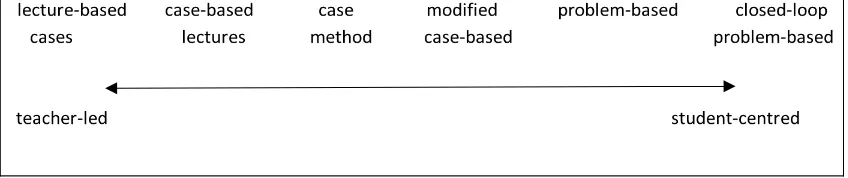
Figure 6: Taxonomy of Problem-based Learning ... 39
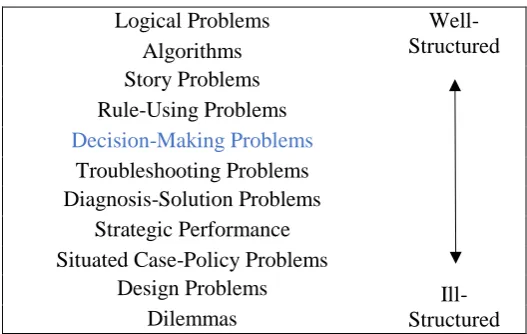
Figure 7: Typology of Problem Types ... 43
Figure 8: Example of one of the Real-world, Open-ended Measurement Problems Posed to both the Treatment and Control Groups in Week 4 ... 56
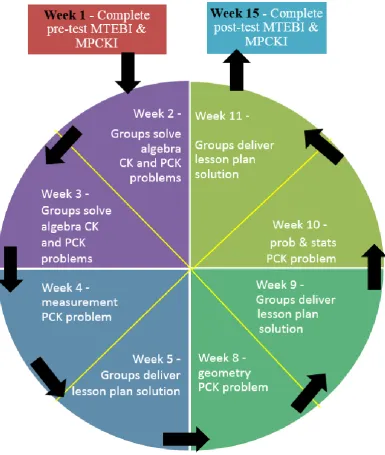
Figure 9: Outline of Semester’s Weekly Schedule for Treatment Group ... 63
Figure 10: Example Measurement Items in the MPCKI ... 68
Figure 11: Fleiss’ Kappa Value for the Inter-rater Agreement of the 54 MPCKI Items ... 70
Figure 12: Bubble Chart Showing how each of the 54 Items Fit the Scale Measured by the MPCKI ... 73
Figure 13: Person-Item Map for the MPCKI Pilot Data (N=238) ... 76
Figure 14: Mixed Methods Design with Data Collection Points ... 89
Figure 15: MPCKI Results of the Mean PCK Scores from the Treatment and Control Group over Time 1 and Time 2... 108
Figure 16: Box Plot of the Mean Exam PCK Scores for the Treatment Group and Control Group ... 110
Figure 17: MPCKI Results of the Mean Self-efficacy for Teaching Scores from the Treatment and Control Group over Time 1 and Time 2 ... 114
Figure 18: MPCKI Results of the Mean Teaching Outcome Expectancy Scores from the Treatment and Control Group over Time 1 and Time 2 ... 117
ix
List of Tables
Table 1: Sources of Variance on Student Achievement ... 14 Table2:Categories of Instructional Strategies that affect Student Achievement ... 15 Table 3: Outline of the Teacher-directed Approach used with the Control Group during the Pilot Study ... 61 Table 4: Outline of the PBL Approach used with the Treatment Group in the Pilot Study ... 62 Table 5: Items in the MPCKI Identifying the Original Instruments they were drawn from ... 67 Table 6: Item (N=54) Fit Statistics and Separation and Reliability Indices ... 74 Table 7: Participant (N=231) Separation and Reliability Indices ... 77 Table 8: Cronbach’s Alpha Measures for the 13 Self-efficacy and 8 Outcome
Expectancy Questions ... 80 Table 9: Data Collection Points and Instruments used to address each Research
Question ... 91 Table 10: Interview Questions Posed to the Treatment Group of Pre-service Teachers in the Main Study ... 92 Table 11: Demonstration of Alignment between RQs, Data Collection Instruments and Data Analysis Method ... 93 Table 12: QUAGOL Method for Analysing, Interpreting and Summarising
Qualitative Data ... 94 Table 13: Pearson Correlations among the Dependent Variables ... 100 Table 14: Demographic Data for the Treatment and Control Group Cohorts of
Pre-service Teachers ... 105 Table 15: Mathematics PCK Scores for the Treatment Group and Control Group at two Points in Time ... 107 Table 16: Paired-samples t-test Mathematics PCK Results (Treatment Group of
Pre-service Teachers) ... 107 Table 17: Paired-samples t-test Mathematics PCK Results (Control Group of
Pre-service Teachers) ... 108 Table 18: Group Statistics for the Independent Samples t-test for Mathematics
PCK ... 109 Table 19: Independent Samples t-test Statistics for Mathematics PCK ... 109 Table 20: Self-efficacy for Teaching Scores for the Treatment Group and Control Group at two Points in Time ... 113 Table 21: Paired-samples t-test Self-efficacy Results (Treatment Group of
x
Table 23: Teaching Outcome Expectancy Scores for the Treatment Group and
1
Introduction
1.1
Overview
The main aim of this study was to investigate the effectiveness of problem-based learning when compared to a traditional teaching approach in a tertiary mathematics teacher education subject. Specifically, the study investigated the closed loop problem-based teaching method’s impact on pre-service teachers’ mathematics pedagogical content knowledge (PCK), their ability to enact their PCK, self-efficacy for teaching mathematics and their mathematics teaching outcome expectancy. This chapter presents the background to the research problem, followed by the researcher’s strategy to address the research problem. Background is provided by description of the researcher’s experiences and prior studies which were influential in the conceptualisation of this study. Concluding the chapter is the structure of the thesis and a glossary of key terminology used throughout.
1.2
The Research Problem and Aim of the Study
2
Recognising the importance of mathematics, the Council of Australian Governments (2008) commissioned a report which states the quality and commitment of Australia’s mathematics teaching workforce, at all levels of education, are critical if its citizens expect to improve the nation’s workforce participation and productivity. Under a $550 million funding initiative, the five-year (2009-2013) Improving Teacher Quality National Partnership agreement provided incentives for Australian state governments. The funding supported a range of reforms including initiatives aimed at maintaining the quality of Australia’s teaching workforce and improving students’ overall levels of numeracy (Australian Curriculum, Assessment and Reporting Authority, 2011). Funding these initiatives was justified since research suggests that being taught by effective teachers is one of the main factors impacting student achievement (Darling-Hammond & Rothman, 2011; Hattie, 2009, 2012).
Subsequently, one of the key findings of the Teacher Education Ministerial Advisory Group (TEMAG) (2014) was evidence of poor practice in a number of initial teacher education programs. An area of concern is that higher education providers working with pre-service teachers were using pedagogical practices which were not informed by research and not “based on evidence linked to impact on student learning outcomes” (Teacher Education Ministerial Advisory Group, 2014, p. 15).
Many researchers point to the depth of understanding of, and interaction between, content knowledge, pedagogical knowledge and pedagogical content knowledge as being positively linked with teaching performance. Highly effective teachers possess strong pedagogical content knowledge that enables them to improvise and alter teaching strategies in response to different classroom situations. (Teacher Education Ministerial Advisory Group, 2014, p. 18)
3 suggestion proposed by the Advisory Group is that possessing strong PCK is viewed as being linked with high teacher performance. Thus, higher education providers should use and model evidence-based practices which will effectively develop pre-service teachers’ PCK and their ability to enact their PCK. The Advisory Group presented 38 recommendations which they believe will provide the structural change needed to strengthen initial teacher education in Australia. Recommendation 6 of the TEMAG report requires initial accreditation of teacher education programs to be linked to tertiary providers demonstrating that their programs use evidence-based pedagogical approaches (Teacher Education Ministerial Advisory Group, 2014). Recommendation 14 to the Education Minister requires that “higher education providers deliver…a range of pedagogical approaches that enable pre-service teachers to make a positive impact on the learning of all students” (2014, p. xiii).
Thus, the research problem that this study addresses is the inference from several recent studies that not all pre-service teachers are graduating with the mathematics PCK necessary to teach effectively. This research study aims therefore to identify evidence-based pedagogical practices which are more effective in developing the mathematics PCK of pre-service teachers and their ability to enact their PCK. In the context of teaching mathematics, enacting would be defined as analysing or evaluating a student’s mathematical solutions or arguments as well as providing appropriate feedback, and the ability to guide classroom discourse as well as to explain or represent mathematical discourse or procedures (Döhrmann, Kaiser, & Blömeke, 2012).
1.3
Addressing the Research Problem
4
Firstly, Marzano, an international leader in research on effective teaching, proposes that one mark of effective teachers is the ability to use an array of evidence-based instructional strategies and, by integrating these strategies into their instruction, teachers are better equipped to enhance student learning (Dean et al., 2012; Marzano, 2001). Marzano identified 22 instructional strategies used by effective teachers (Marzano, 2001; Marzano Research Laboratory, 2015). The results of the examination revealed that five of the evidence-based teaching strategies studied by Marzano’s research team align closely with the principles and characteristics of PBL: cooperative learning, cues and questions, complex cognitive tasks, providing feedback, and setting goals and objectives (Hmelo-Silver & Barrows, 2006; Marzano, 2001; Marzano Research Laboratory, 2015; Savery, 2015).
5 Additionally, meta-analyses, meta-syntheses and reviews of PBL studies concluded that traditional instruction, which is the predominant pedagogical approach used in tertiary education, may not be the most effective instructional approach in developing practical application and critical thinking skills (see for example, Albanese & Dast, 2014; Strobel & van Barneveld, 2009; Walker & Leary, 2009). In this regard, these studies and reviews of studies have reported PBL may be a more effective pedagogical practice at the tertiary level. According to the findings from a meta-analysis of PBL studies, PBL leads to favourable outcomes “when assessment is at the application level” and when the intervention uses the full closed loop approach” (Walker and Leary, 2009, p. 28). Although the finding was based on a small sample size of closed loop PBL studies conducted in medical education, Walker and Leary concluded that similar learning outcomes would be expected based on the type of PBL implementation used in other disciplines. It is for these reasons that I elected to investigate PBL and its effectiveness as a pedagogical approach in teacher education.
6
identify any learning difficulties and misconceptions they exhibit as a result of engaging in the task. Lastly, the pre-service teachers should be able to appropriately respond to the misconceptions and learning difficulties by formulating responses into representations which make it comprehensible to the students (Shulman, 1986; Tatto et al., 2008).
Based on the research presented, a closer look into the effectiveness of closed loop PBL to effectively enhance PCK seemed warranted. Specifically, the purpose of this research was to compare how closed loop PBL and traditional teacher-led instruction impact pre-service teachers’ mathematics PCK and their ability to enact their PCK throughout a semester-long undergraduate mathematics education subject. The research may also contribute a response to TEMAG regarding Recommendation 6 and Recommendation 14 (Teacher Education Ministerial Advisory Group, 2014). Nevertheless, the Education Minister’s concerns did not provide the initial stimulus for this study. Prior to commencing this study, the researcher conducted two smaller studies using a PBL approach in two separate mathematics teacher education subjects to test its impact on pre-service teachers’ content knowledge and their conceptual understanding of place value. These two prior experimental studies (Martin, 2012; Martin & Jamieson-Proctor, 2010), which were influential in the conceptualisation of this study, are described in the following section.
1.4
Background to the Conceptualisation of the Study
Observations from my past experiences as an educator in the United States (USA) influenced the conceptualisation of the two prior studies as well as this study. Two positions I held, in particular, provided these experiences: a middle school mathematics teacher in the public school system and a casual mathematics curriculum and pedagogy lecturer at a regional university in Florida.
teacher-7 led traditional pedagogies. Increased academic success and a decrease in the number of discipline reports written that school year provided anecdotal evidence of the positive impact of this social constructivist teaching approach.
When my casual lecturing career commenced in a Florida university, I found that some students entering the initial teacher education program did not possess an adequate level of mathematics content knowledge (MCK) and the university which employed me was aware of this inadequacy. Consequently, part of my teaching duties as a lecturer was to assist the pre-service teachers to enhance their MCK, in addition to developing their mathematics PCK. To meet both obligations within the time frame allotted, I delivered my instruction using a traditional teacher-led didactic approach. Based on my observations and the results of the pre-service teachers’ assessments, I recognised that the students were not reaching a deep level of understanding in many content areas of mathematics nor in their mathematics PCK. I concluded that to assist pre-service teachers to achieve deeper understanding in these areas a different pedagogical approach was required. Subsequently, I actively sought to enhance the pre-service teachers’ learning and engagement in their mathematics education subject through the use of a constructivist, problem-based learning approach. For example, the first assignment was redesigned so that the pre-service teachers were required to develop and present a representative lesson plan, based on their favoured teaching grade-level, to their peers. Feedback from the pre-service teachers confirmed that they believed designing and presenting a lesson plan was a valuable assignment in terms of developing that specific content, practising their teaching skills and building teacher self-confidence. These observations, experiences and outcomes as an educator in America, while not formally researched, cemented this researcher’s conviction that constructing one’s own knowledge through the use of meaningful, real-world problems as the stimulus for learning was a more effective pedagogical approach than using a didactic, teacher-led instructional approach.
8
on the difficulties pre-service teachers had in developing their content knowledge, particularly with respect to place value, but also with other concepts that underpin number and algebra (Copeland, 2010; MacDonald, 2008; Stacey et al., 2001). Based on my earlier successes, rather than using traditional instruction I chose to use PBL as the pedagogical approach to assist pre-service teachers to achieve a greater understanding of place value, as well as to assist them to develop the PCK required to effectively teach the concepts, skills and strategies related to place value. The findings suggest the PBL pedagogical approach adopted may have contributed to an increase in the number of pre-service teachers who appeared to have achieved a multi-structural understanding of the place value concept.
The conclusion reached is that a social constructivist, PBL approach may be more effective than a traditional teacher-led instructional approach to assist pre-service teachers to develop the PCK required to effectively teach the concepts, skills and strategies related to place value. I also theorised, based on the pre-service teachers’ higher level of engagement while working collaboratively on their tutorial tasks, that PBL shows promise in assisting them to develop the PCK required to effectively teach. On reflection, the outcomes of the two studies served as a reminder of the responsibility of initial teacher preparation programs, which is to use evidence-based pedagogies to assist pre-service teachers to develop their content knowledge and then progress onto the critical dimension of learning how to teach the content (Ball & McDiarmid, 1990; Ball, Thames, & Phelps, 2008; Shulman, 1987).
To review, my teaching experiences and early research contributed to my deeper understanding of the PBL teaching method. My observations, findings and commitment to using the PBL method were the catalyst for the present study. However, the study was also informed by my subsequent exploration of the literature with respect to the impact of closed loop PBL on the development of pre-service teachers’ mathematics PCK.
1.5
Chapter Summary
9 Group, 2014). Moreover, effective teaching begins with effective teacher preparation (National Research Council, 2010; Office for Standards in Education, 2005; Tatto & Senk, 2011; Teacher Education Ministerial Advisory Group, 2014). However, static results in Australian students’ performance is now pointing to evidence of poor practice in a number of Australian initial teacher education programs (Teacher Education Ministerial Advisory Group, 2014). PBL appears to be a promising pedagogy for (a) addressing the research problem that pre-service teachers are not graduating with adequate mathematics PCK to teach effectively and (b) responding to the Education Ministerial Advisory Group’s recommendations on how “initial teacher education in Australia could be improved to better prepare new teachers with the practical skills needed for the classroom” (2014, p. v). Consequently, when considering using PBL for developing sound PCK in pre-service teachers, “it is of considerable importance that questions about what forms of PBL produce which outcomes for which students in what circumstances are rigorously investigated” (Newman, 2003, p. 5).
The following chapter reports on examination of the literature about the essential elements of effective teaching, the importance PCK holds as an essential element of effective teaching, the construct of PCK, and the gap in the literature regarding closed loop PBL’s impact on developing mathematics PCK in pre-service teachers and their ability to enact their PCK.
1.6
Structure of the Thesis
The thesis is presented in six chapters according to the following outline. Chapter 1 introduces the background to the research problem. Chapter 1 also describes the importance of two earlier studies which were influential in the conceptualisation of this study.
10
Chapter 3 describes the researcher’s epistemological stance and conceptual framework for the research. Next, the pilot study is described which was designed to formulate and refine the PBL teaching intervention program and validate the Mathematics Pedagogical Content Knowledge Instrument (MPCKI) and the Mathematics Teaching Efficacy Belief Instrument (MTEBI) that were used to collect data to answer the research questions in the main study.
Chapter 4 describes the main study’s methodology. It describes the mixed methods approach and the data collection and analysis methods used to answer the research questions. Lastly, the quality of the research and the study’s ethical considerations are addressed.
Chapter 5 presents the results derived from the analysis of both the quantitative and qualitative data sets to answer each of the research questions.
In the context of the research questions, Chapter 6 presents the discussion and the limitations of the research undertaken, along with conclusions drawn from the study and recommendations for further research.
1.7
Glossary of Terms and Acronyms used throughout
Content Knowledge - refers to the number and organisation of concepts, skills, strategies, and subject matter - related to the content being taught that resides within the teacher (Shulman, 1986).
Pedagogical Knowledge - is the knowledge of teaching practice. It represents the teacher’s deep knowledge about the “broad principles and strategies of classroom management and organisation that appear to transcend subject matter” (Shulman, 1987, p. 8).
It includes knowledge about techniques or methods used in the classroom; the nature of the target audience; and strategies for evaluating student
11 Pedagogical Content Knowledge (PCK) – is a teacher’s special form of professional understanding used to formulate the content knowledge and his or her concepts into the most powerful representations, analogies, illustrations, explanations and demonstrations which make them comprehensible to students (Shulman, 1986). A year later, Shulman defined PCK as “the blending of content and pedagogy into an understanding of how particular topics, problems, or issues are organised, represented, and adapted to the diverse interests and abilities of learners, and presented for instruction” (Shulman, 1987, p. 8).
Mathematics Pedagogical Content Knowledge – primarily refers to the interaction of mathematical content knowledge and pedagogical content knowledge necessary for effective mathematics instruction.
Mathematics Pedagogical Content Knowledge Instrument (MPCKI) – is a survey instrument developed by this researcher for this study, based on existing instruments, to measure pre-service teachers’ mathematics pedagogical content knowledge.
Self-efficacy – refers to Albert Bandura’s theory that those who believe they can perform well will be more likely to attempt and persist at tasks (Bandura, 1989).
Outcome Expectancy – is the belief that specific behaviours result in desired outcomes.
Teaching Outcome Expectancy – is the belief that effective teaching will have a positive effect on student achievement (Enochs et al., 2000).
Self-efficacy for Teaching – is defined as a belief in one’s ability to teach effectively (Enochs et al., 2000).
12
Personal Mathematics Teaching Efficacy – is one of the two constructs measured by the MTEBI and refers to the belief in one’s ability to effectively teach mathematics.
Mathematics Teaching Outcome Expectancy – is the second of the two constructs measured by the MTEBI and refers to the belief that effective mathematics teaching will have a positive effect on students’ mathematical achievement (Enochs et al., 2000).
Evidence-based Teaching Practice – “Teaching practices or strategies that are based on research and data that are considered reliable and valid, and that can be used to support a particular idea, conclusion or decision” (Teacher Education Ministerial Advisory Group, 2014, p. 95).
Problem-based Learning (PBL) – is a student-centred instructional method in which students work in small groups to solve real-world problems they are likely to face in their future careers. Of particular interest to education,
PBL is an educational approach in which complex problems serve as the context and the stimulus for learning. In PBL classes, students work in teams to solve one or more complex and compelling “real world” problems. They develop skills in collecting, evaluating, and synthesising resources as they first define and then propose a solution to a multi-faceted problem. (Major & Palmer, 2001, p. 1)
Closed loop PBL – is the most student-centred variation of PBL in Barrows (1986) taxonomy of problem-based learning methods. Closed loop PBL is an extension of Barrows’ problem-based variation from his taxonomy but also contains a reiterative component.
13
2 Literature Review
2.1
Overview
As outlined in Chapter 1, the main aim of this study is to evaluate closed loop PBL as an evidence-based pedagogical practice successful in more effectively developing pre-service teachers’ mathematics PCK and their ability to enact that PCK compared to a traditional teacher-led instructional approach. Chapter 2 presents the literature relevant to PBL as an evidenced-based pedagogical practice. Its role in improving practising teachers’ PCK, their ability to enact their PCK and their resultant self-efficacy for teaching and teaching outcome expectancy is reviewed. Subsequently, the paucity of the literature related to studies using the closed loop variation of PBL for developing these same attributes in pre-service teachers is highlighted.
This chapter is organised into four main sections. The literature review begins by describing several attributes which are integral to educators considered to be effective teachers, and, how those attributes contribute to this study’s investigation. Next, categories of knowledge which underpin teachers’ PCK are unpacked and discussed. The second section of the chapter describes self-efficacy (Bandura, 1994) and its applicable categories regarding a teacher’s self-efficacy and teaching outcome expectancy. The third section of Chapter 2 introduces and defines PBL, and describes its impact on tertiary educational outcomes, justifying its use as the teaching intervention in this study. The chapter concludes with a synthesis of the literature which reveals a gap in the research regarding the impact of closed loop PBL on pre-service teachers’ (a) knowledge of mathematics PCK and/or ability to enact their PCK, (b) self-efficacy for teaching mathematics and (c) mathematics teaching outcome expectancy.
2.2
Attributes of Effective Teachers
14
on student achievement (Hattie, 2003, 2012). What the students themselves bring to the learning context was identified as the number one source of influence on their achievement, accounting for 50% of the variance. The variable ‘teacher’ accounts for approximately 30% of the variance (2003, 2012). Although the influences students bring to the classroom are greater than what the teacher brings, it was the effect-sizes of these influences which determined that it was the effective teacher who has the greatest recognisable and meaningful effect on student learning.
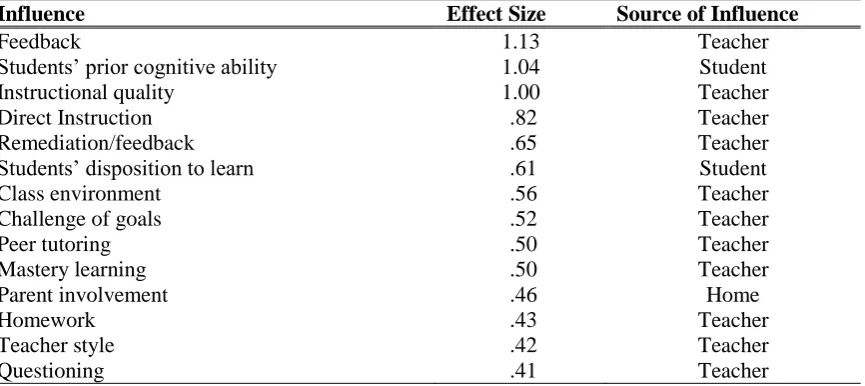
[image:26.595.64.497.557.750.2]An effect size is the difference between two means (e.g., treatment minus control) divided by the pooled standard deviation. The result of this formula describes the relative increase or decrease in achievement of the experimental group (Marzano, 2001). Basically, it is a measure of the magnitude of the experimental effect (Thalheimer & Cook, 2002) as conceptualised by Cohen (1992). In terms of educational outcomes, d = 0.20 is considered a small effect size, d = 0.40, a medium effect size and d = 0.60 a large effect when measuring student achievement related to the major contributors to learning (Hattie, 2009). Thus, an effect size of 0.40 sets a level where the effects of the treatment enhance achievement in such a way that an observable difference can be made (Hattie, 2009, 2012). Table 1 identifies 11 of the 14 highest sources of influence on student learning which were not only above the effect-size mean of .40, but also were directly related to the teacher. Hattie concludes from these data that “the greatest source of variance… relates to teachers” (2012, p. 15).
Table 1
Sources of Variance on Student Achievement(modified from Hattie, 2003, p.4)
Influence Effect Size Source of Influence
Feedback 1.13 Teacher
Students’ prior cognitive ability 1.04 Student
Instructional quality 1.00 Teacher
Direct Instruction .82 Teacher
Remediation/feedback .65 Teacher
Students’ disposition to learn .61 Student
Class environment .56 Teacher
Challenge of goals .52 Teacher
Peer tutoring .50 Teacher
Mastery learning .50 Teacher
Parent involvement .46 Home
Homework .43 Teacher
Teacher style .42 Teacher
15 Another meta-analysis of 38 independent studies which involved over 300 teachers identified nine categories of instructional strategies which have the highest probability of improving student achievement (Haystead & Marzano, 2009). The findings revealed that, on average, when particular instructional strategies were used, there was a 16% learning gain between students’ pre-test and post-test scores. Table 2 identifies the nine instructional strategies. Based on the findings, Marzano reported that all nine categories of instructional strategies have mean effect sizes ranging from .59 to 1.61. Translating the effect sizes into percentile gains, Marzano reported gains ranging from +22 to +45, respectively. Of considerable interest to this study is that four of the “notable nine” strategies (summarising, cooperative learning, setting objectives and providing feedback) (Dean et al., 2012) each align with the principles and characteristics of the social constructivist PBL teaching method (Hmelo-Silver & Barrows, 2006; Savery & Duffy, 1995). This is an important point which will be discussed in a later section as a rationale for using closed loop PBL as the intervention with the treatment group in this study.
Table2
Categories of Instructional Strategies that affect Student Achievement (Marzano, 2001, p. 7)
Category Mean Effect
Size
Percentile Gain
No. of Effect Sizes
Standard Deviation
Identifying similarities and differences
1.61 45 31 .31
Summarising and note taking 1.00 34 179 .50
Reinforcing effort and providing recognition
.80 29 21 .35
Homework and practice .77 28 134 .36
Non-linguistic recommendations
.75 27 246 .40
Cooperative learning .73 27 122 .40
Setting objectives and providing feedback
.61 23 408 .28
Generating and testing hypotheses
.61 23 63 .79
Cues, questions, and advance organisers
[image:27.595.111.533.416.713.2]16
Other attributes of effective teachers were identified in Shulman’s (1986) seminal work. These include possessing content knowledge specific to the subject being taught and the ability to organise and deliver that content knowledge to their students in an age appropriate, comprehensive manner using their pedagogical knowledge. When used in unison, content knowledge and pedagogical knowledge form the domain of pedagogical content knowledge (PCK); with PCK arguably the most influential on student achievement (Ball et al., 2008; Shulman, 1986). This unique form of teacher professional knowledge is described as recognising how to organise curriculum, content, pedagogy, and knowledge of students’ understanding in a form which can be used for decision-making in the classroom in specific situations (Weizman et al., 2008).
Since pre-service teachers’ mathematics PCK and their ability to enact their PCK will both be measured in this study, establishing the critical elements which transform into PCK is essential if a valid measure of the construct is to be achieved (Hill et al., 2008). Therefore, it is warranted that PCK’s conceptual formation and structure be explored. The research should begin by “taking care to elaborate the theoretical or empirical basis for the construct, delineate the boundaries of the construct, and specify how it relates to other similar constructs” (2008, p. 378). The next section reviews the literature and unpacks content knowledge and pedagogical knowledge in terms of their relationship to PCK. The domain of PCK will be examined alongside the researchers who progressed the field of study beginning with Shulman (1986). As a result of the literature reviewed, the researcher’s model for representing and then measuring mathematics PCK for use in this study is presented.
2.3
Content Knowledge
17 proposition breaks the rules. To clarify these ideas, consider the following example. The context is that of a teacher following a primary mathematics curriculum designed to be taught as a set of facts and algorithms to be memorised. The teacher is guiding a revision lesson about negative and positive numbers and then asks the students to calculate negative 4 by negative 2. A student raises her hand and correctly answers “positive 8.” The student then asks, “I know what the rule is, but can you tell me why a negative by a negative is positive?” In this situation, the teacher should be able to demonstrate a multi-structural understanding of the principle, and provide an explanation or deliver a conceptual representation, possibly using concrete materials. The underlying belief being that a teacher of mathematics must not only possess the ability to answer a student’s question and know that it is so, “the teacher must further understand why it is so, on what grounds its warrant can be asserted, and under what circumstances our belief in its justification can be weakened and even denied” (Shulman, 1986, p. 9). It is a distinction between knowing mathematics content and using it in the context of teaching mathematics (Chick, 2003).
The distinction between teachers possessing content knowledge and using it in ways which make it comprehensible to students was progressed by Ball (2000). Ball used an example by which students are asked to, “write down a string of 8s. Insert some plus signs at various places so that the resulting sum is 1,000” (2000, p. 242). In this situation, teachers should be able to address the problem’s worthiness and reach considerations such as: Is this assessment task appropriate for my students in terms of the learning objective? Are there other important concepts or processes involved in the problem? Are the solutions provided by the students correct? If the problem is too easy, how can it be adapted to make it more challenging? Ball suggests this type of knowledge, reasoning and planning reveals how much one core task involves intertwining content knowledge and pedagogy in teaching. It requires possessing a deep understanding of the content, but also significant mathematical reasoning in the context of teaching and how, as a result, this knowledge base can affect student learning.
18
mathematical content knowledge for teaching positively predicted gains in mathematical achievement in primary school students. To clarify the distinction, consider the work of chefs who need to be able to double fractions when following a recipe which requires twice the amount of ingredients the recipe calls for. However, they are not required to explain the reason why when you add 1/3 and 1/3 you do not add the denominators. Based on that premise, it is possible for a teacher to possess content knowledge but lack the content knowledge for teaching that enables them to come up with mathematical representations that clarify meaning and guide thinking. Ball et al. (2008) found two discernible subdomains of content knowledge within mathematics PCK; common content knowledge and specialised content knowledge. This multi-dimensional view of teachers’ content knowledge in relation to their PCK suggests that: (a) together, they transform into “topic-specific knowledge for teaching a particular subject” (Abell, 2008, p. 1413) and (b) teachers’ content knowledge and their knowledge for teaching appear to interact in determining teacher effectiveness (Darling-Hammond, 2006; Hill et al., 2008).
These are important distinctions when characterising PCK because effective instruction begins with possessing both the content knowledge and the ability to contextually teach it (Hill et al., 2008). This researcher adopts the same view. Both influence, and are interconnected with, PCK (Buschang, Chung, Delacruz, & Baker, 2012; Chick & Beswick, 2013; Friedrichsen et al., 2009; Kleickmann et al., 2013). Instruction then progresses from that point using pedagogical knowledge (Shulman, 1986, 1987), another critical attribute of a teacher’s knowledge base. Generally, this pedagogical and organisational teacher skill is used to effectively deliver content in a well-managed classroom. Again following a chronological order, beginning with Lee Shulman’s 1986 work, the following section reviews the conceptualisations of pedagogical knowledge and its status as a critical element to a teacher’s PCK.
2.4
Pedagogical Knowledge
19 transcend subject matter” (Shulman, 1987, p. 8), and the organisation and delivery of the content knowledge, during instruction, in ways that allow it to be developed by students.
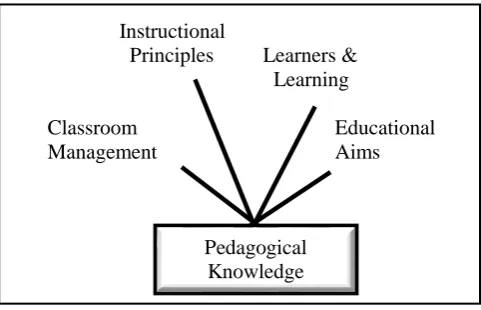
Conceptualisations of pedagogical knowledge by other researchers followed with several elements consistent across descriptions. For instance, pedagogical knowledge was conceptualised as encompassing “knowledge of theories of learning and general principles of instruction, an understanding of the various philosophies of education, general knowledge about learners, and knowledge of the principles and techniques of classroom management” (Grossman & Richert, 1988, p. 54). Building on the work of Grossman and Richert (1988), and Grossman (1995), Magnusson, Krajcik, and Borko (1999), conceptualised pedagogical knowledge with four main components (Figure 1).
Instructional
Principles Learners & Learning
Classroom Educational
[image:31.595.192.433.311.466.2]Management Aims
Figure 1: Facets of Pedagogical Knowledge (modified from Magnusson et al., 1999, p. 98)
In the same year, Carlsen (1999), structured pedagogical knowledge into three components namely, learners and learning, classroom management, and general curriculum and instruction. In summary, each of these conceptualisations constituted a general agreement on the basic nature of pedagogical knowledge. In each description, pedagogical knowledge is generally comprised of a combination of (a) classroom management, (b) knowledge of teaching practice and (c) knowledge of the learner and learning. In terms of classroom management, teachers manage classrooms effectively through the ability to address more than one classroom event at a time or by demonstrating withitness in identifyingand resolving problems in a timely manner, and by setting clear expectations for behaviour, academic work standards and classroom procedures (Morine-Dershimer & Kent, 1999). Knowledge of teaching practice and knowledge of the learner and learning was identified as knowledge of how to represent ideas to students that
20
bridges their prior and current knowledge and the content they are to learn (Ball & Wilson, 1990).
Following the work on conceptualising and describing pedagogical knowledge this century, pedagogical knowledge continued to be mentioned mostly as references to Shulman’s (1986, 1987) work by researchers as a prelude to their studies. Eventually, while not enduring a similar amount of scrutiny and debate as the domain of content knowledge, a comparable development in the province of pedagogical knowledge did emerge. König, Blömeke, Paine, Schmidt, and Hsieh (2011) conceptualised pedagogical knowledge into four dimensions in the context of pre-service teachers who are preparing to graduate. Firstly, these pre-service teachers should be able to prepare, structure and evaluate lessons. Secondly, they should be able to motivate and support students as well as manage the classroom. Thirdly, the pre-service teachers should be able to deal with mixed ability learning groups in the classroom. Lastly, they should be able to effectively assess students. The first three of these dimensions align with the previously presented consensus. Assessment was added “because assessing students is an essential teacher task and particularly relevant with respect to student achievement” (2011, p. 190).
Synthesising the literature presented, pedagogical knowledge is considered methods of classroom management as well as teaching practice which: (a) enables teachers to prepare, structure and evaluate lessons; (b) design differentiated instruction for heterogeneous classroom groups; (c) motivate and support students and (d) assess students. Encompassing such teacher attributes, pedagogical knowledge has been accepted in the literature and educational documents as a core element of PCK (Australian Institute for Teaching and School Leadership [AITSL], 2014; Department for Education, 2012; Grossman, 1995; König et al., 2011; National Commission on Teaching and America’s Future, 2010; Tatto et al., 2008).
21 who participated in the testing. The items of the TEDS-M contribute to one of two dimensions, MCK or mathematics PCK (Beswick & Goos, 2012). It should be noted that three of the participating countries, the United States, Germany and Taiwan participated in the option for measuring pre-service teachers’ general pedagogical knowledge (König et al., 2011). The decision to measure the constructs in this manner was based on the need to categorise, using cross-national comparisons of initial teacher education programs, what knowledge for mathematics teaching is required of pre-service teachers once they are considered ‘ready to teach’. The judgement reached by the international members of the TEDS-M project was that MCK be categorised as part of general education and mathematics PCK and pedagogical knowledge categorised together as part of professional training. As a result, most pedagogical knowledge testing was conducted in conjunction with testing mathematics PCK. Hence, many test items that were considered mathematics PCK were set in a pedagogical context (teaching and learning). Essentially, the TEDS-M test measured pre-service teachers’ mathematics pedagogical knowledge as a component of teachers’ PCK (Döhrmann et al., 2012). Likewise, many MCK items have a pedagogical aspect set in a teaching context since the content must be communicated by the teacher to make it comprehensible to students. Such a structure in the TEDS-M test questions indicates that if mathematics PCK is to be measured accurately in this study, the survey items used to measure PCK and the ability to enact PCK would need to consist of content knowledge questions written in a pedagogical context and pedagogical knowledge questions written in a content context (Chick, Baker, Pham, & Cheng, 2006). This integration of content knowledge, pedagogical knowledge and contextual knowledge which transforms to create PCK forms the foundation of this researcher’s theoretical framework for PCK, the context for the following section and also the basis for developing the questions for assessing PCK in this study.
2.5
Pedagogical Content Knowledge
22
domain of teacher knowledge formed from the amalgamation of content and teachers’ special form of professional understanding which they use to formulate concepts and content into representations which make it comprehensible to students. Shulman (1987) also characterised PCK as one of seven categories of teachers’ knowledge base. The other six categories were: content knowledge, general pedagogical knowledge, curriculum knowledge, knowledge of learners and their characteristics, knowledge of educational contexts, and knowledge of educational ends, purposes and values. However, he considered PCK to be of special interest because:
It represents the blending of content and pedagogy into an understanding of how particular topics, problems, or issues are organised, represented, and adapted to the diverse interests and abilities of learners, and presented for instruction. Pedagogical content knowledge is the category most likely to distinguish the understanding of the content specialist from that of the pedagogue. (Shulman, 1987, p. 8)
23 his or her knowledge of them. Marks identified this step as the “appropriate instantiation of a broadly applicable idea in a particular context” (1990, p. 7). Ultimately, Marks (1990, 1991) characterised PCK as a synthesis of a balance of varying degrees of content knowledge and pedagogical knowledge which are dependent on contextual knowledge demands placed on the teacher such as the grade level, the objective and the level of student ability.
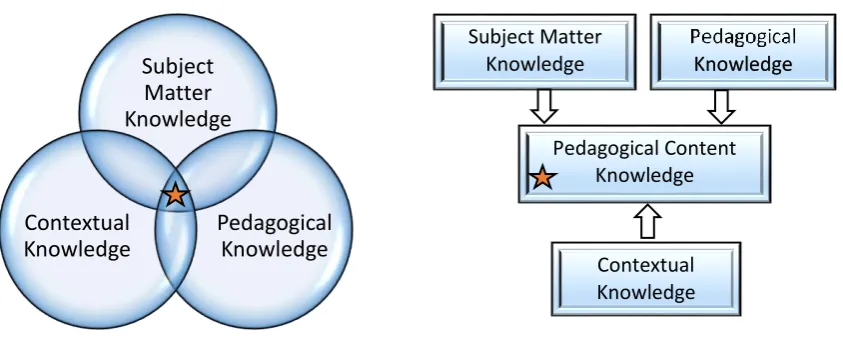
[image:35.595.111.533.422.592.2]Synthesising the literature regarding PCK as being either an integration of or transformation from teachers’ content knowledge and their pedagogical knowledge, PCK was categorised in two distinct models (Figure 2) - the Integrative model (circular Venn diagram) and the Transformative model (Gess-Newsome, 1999). Under the Integrative model PCK does not exist as a separate category of knowledge, but encompasses the intersection of content knowledge, pedagogical knowledge and contextual knowledge that are combined by the teacher during the course of instruction. In the Transformative model, these three knowledge categories are synthesised and transformed into PCK to form a new knowledge category.
Figure 2 : Two Models of Teacher Knowledge (Gess-Newsome, 1999, p. 12) = PCK - knowledge needed for classroom teaching
Gess-Newsome (1999) used an analogy from chemistry and the difference between mixtures and compounds to illustrate the difference between the two models. When two substances are mixed (integrated), the parent ingredients retain their physical and chemical properties and can be separated by physical means. The integrative model can be likened to a teacher who draws upon the three categories of knowledge during his/her
Subject Matter Knowledge
Pedagogical Knowledge Contextual
Knowledge
Subject Matter
Knowledge Knowledge
Pedagogical Content Knowledge
24
[image:36.595.107.444.317.724.2]classroom practise, but during that process the three categories of knowledge do not lose their distinct characteristics. In contrast, the parent ingredients in a compound do lose their chemical properties. Their initial properties can no longer be detected because they are transformed into a new substance. Likewise, in the Transformative model, content knowledge, pedagogical knowledge and contextual knowledge “are inextricably combined into a new form of knowledge” (Gess-Newsome, 1999, p. 11), “such that it is a transformation of the bodies of knowledge arising from their interaction” (Lee & Tan, 2010, p. 6). Magnusson et al. (1999) conceptualised PCK similarly. However, as Figure 3 illustrates, their conceptualisation shows the influences on PCK are not only the domains of content knowledge, pedagogical knowledge and contextual knowledge, but each is intertwined with teachers’ beliefs.
25 Research that followed endorses Magnusson et al.’s (1999) conceptualisation of PCK (Ball et al., 2008; Beswick & Callingham, 2011; Hill et al., 2005; Tatto et al., 2008; Verloop, Van Driel, & Meijer, 2001; Zeidler, 2002). In support of the Transformative model, Zeidler (2002) concluded that it does not take a stretch of the imagination to accept that the ability to transform complex ideas into concepts that students can grasp requires a level of both content knowledge and pedagogical knowledge. However, Zeidler (2002) did accept that it is still necessary to establish a common reference point. In her view, content knowledge refers to the teacher’s quantity, quality, and organisation of information, conceptualisations, and underlying constructs in their area of expertise. Pedagogical knowledge relates to a teacher’s general knowledge of instructional pedagogy such as classroom management, pacing, questioning strategies, handling of routines and transitions. PCK pertains to a teacher’s ability to convey the underlying content and its constructs, in their area of expertise, in a manner that makes it comprehensible. Zeidler (2002) also emphasised that the influence of teachers’ instructional belief systems drives their decisions.
26
knowledge, when used in different contexts, each influence PCK and cannot be separated from teachers’ beliefs (Fennema & Franke, 1992).
Much of the research on beliefs and motivation stems from Bandura’s self-efficacy (1977) and social cognitive (1986) theory. Bandura’s work has provided a framework for studying self-efficacy for teaching and teaching outcome expectancy (Coladarci, 1992). Both are constructs identified as having an impact on pre-service teachers’ effectiveness as a result of their university coursework and practicum placements (for example, Huinker & Madison, 1997; Moody & DuCloux, 2015; Swars, Smith, Smith, & Hart, 2009). Other studies link pre-service teachers’ levels of self-efficacy for teaching with teaching effectiveness when instructed using PBL (Dunlap, 2005; Schmude, Serow, & Tobias, 2011; Shin et al., 2010). Therefore, prior to ascertaining a theoretical framework for PCK to be used in this PBL study, Bandura’s two classes of expectations, efficacyexpectations and outcome expectations (Bandura, 1977) and the literature on efficacy and outcome expectations of teachers will be explored.
2.6
Self-efficacy and Outcome Expectancy
Although self-efficacy and outcome expectancy are fundamentally linked, Bandura (1977) separated the two constructs when he conceptualised his self-efficacy theory. “An outcome expectation is defined as a person’s estimate that a given behaviour will lead to certain outcomes. An efficacy expectation is the conviction that one can successfully execute the behaviour required to produce the outcomes” (Bandura, 1977, p. 193). Bandura’s argument was that individuals can believe that certain actions or behaviours will lead to certain outcomes. However, if they do not have faith in their own abilities to perform the necessary activities to produce those outcomes, they will not persist or even possess the motivation to execute the behaviours (Bandura, 1994, 2006b). Figure 4 illustrates the link and distinction.
[image:38.595.65.486.653.743.2]PERSON BEHAVIOUR OUTCOME
Figure 4: Distinction between Self-efficacy and Outcome Expectations (Bandura, 1977, p. 193) EFFICACY
EXPECTATIONS
27 The social and cognitive elements of Bandura’s social cognitive theory work in concert with his self-efficacy theory and together they collectively influence human action, adaption and change (Bandura, 1989, 2001) “In other words, the social part acknowledges the social origins of much of human thought and action…whereas the cognitive portion
recognises the influential contribution of thought processes to human motivation,
attitudes, and action” (Stajkovic & Luthans, 1998, p. 63). Bandura posits that individuals strengthen, or lose, their sense of efficacy based on information they receive cognitively from four sources (a) their performance accomplishments, (b) vicarious experiences, (c) verbal persuasions they receive and (d) physiological states (Bandura, 1977, 1986). Bandura hypothesised these four influences on personal efficacy determine whether a particular behaviour or task will be initiated, how much effort will be expended on that behaviour or task, and how long the effort will be sustained. In essence, successful achievements, witnessing others perform necessarily threatening activities (vicarious experiences) with positive consequences, and motivational encouragement raise efficacy levels. Individuals also cognitively obtain efficacy information from physiological indicators, for example, increased heart rate or sweating caused from nervousness. These types of physical symptoms might be self-construed as skills that are lacking (Schunk, 1991) and therefore may increase avoidance behaviour (Bandura, 1977). Self-efficacy is not the only influence on behaviour. “Outcome expectations… are important because individuals are not motivated to act in ways they believe will result in negative outcomes” (Schunk, 1991, p. 209). They will give up trying, or not even attempt a task, “because they expect their behaviour to have no effect on an unresponsive environment…” (Bandura, 1977, p. 205).
28
student academic achievement (Burroughs & Schmidt, 2014; Gibson & Dembo, 1984; Iyer & Wang, 2013; Woolfolk & Hoy, 1990).
Gibson and Dembo (1984) reported that practising teachers who possess a high perception of self-efficacy for teaching devoted more instructional time to academic learning and provided their students with more sustained assistance, believing that student learning can be positively influenced. Woolfolk and Hoy (1990) found that teachers with a high sense of instructional efficacy are more likely to utilise self-directed learning techniques with their students. Relevant to this study, the development of effective self-directed learning skills is also one of the core goals of PBL (Barrows, 1986; Hmelo-Silver & Barrows, 2015; Savery, 2015).
29 A more recent review of 39 empirical studies measured factors shown to affect the self-efficacy of higher education students (van Dinther et al., 2011). These 39 studies were divided into three categories. Five measured self-efficacy at one moment in time during the experiment. Twelve studies were categorised based on whether the researchers used an intervention program with underlying theories different from Bandura’s self-efficacy theory. The other 22 were classified by whether the researchers investigated the effects of intervention programs on students’ self-efficacy, whether the studies did or did not use a control group and which were based on Bandura’s social cognitive theory. The findings revealed that 85% of the intervention programs which were based on Bandura’s social cognitive theory, and used a control group, were effective in raising self-efficacy. Of further interest to this study is that mastery experiences from performance accomplishments were stated as the most powerful source in creating a strong sense of efficacy. “With regard to this source nearly every study stresses the relevance of providing students with practical experiences, i.e. students performing a task while applying knowledge and skills within demanding situations” (van Dinther et al., 2011, p. 104). In the context of this study, the aim of teacher education is to graduate pre-service teachers who are able to demonstrate their ability to enact their mathematics PCK, which is the objective of the mathematics subject but also of PBL. Taking into account PBL’s characteristics of using practical experiences when designing the PBL problems which drive students’ learning, consideration should be given to the notion that using a PBL instructional approach may also positively impact a teachers’ self-efficacy for teaching and teaching outcome expectancy. Hence, self-efficacy and teaching outcome expectancy are considered additional dependent variables which may affect the dependent variable PCK and should be controlled or considered factors to be measured in an investigation of the impact of PBL on pre-service teachers’ mathematics PCK.
30
those specific lessons (Albanese & Mitchell, 1993; Dunlap, 2005). In terms of vicarious experiences, a PBL intervention can provide pre-service teachers with the opportunities to strengthen their sense of teaching efficacy by observing how their colleagues design and deliver lessons in a safe and supportive environment. According to Bandura’s theory, engaging individuals in these types of vicarious experiences develops a ‘can do’ attitude and that they too can meet the challenge of the task if they intensify and/or persist in their efforts (Bandura, 1977). As Bandura has suggested, the most effective way of creating a strong sense of efficacy is through performance accomplishments, vicarious experiences and, verbal encouragement or persuasion (Bandura, 1994), such as those which a well-constructed PBL intervention can provide (Dunlap, 2005).
31 The descriptions presented of PCK by Shulman (1986, 1987), Grossman (1990), Marks (1990) and Gess-Newsome (1999) provided the initial sources for this researcher’s conceptualisation of PCK as its own domain - a transformation from teachers’ content knowledge and their pedagogical knowledge. However, holding the view that teachers’ beliefs are intertwined in the context of practice, Magnusson et al.’s (1999) framework of PCK (Figure 3), shown as transformed knowledge for teaching drawn from content knowledge, pedagogical knowledge and knowledge and beliefs about context, will be used as the theoretical framework for PCK in this study. Having identified the theoretical framework for PCK, the next section of the chapter examines the literature which led to the process of developing the survey questions used in this study for measuring pre-service teachers’ mathematics PCK and their ability to enact their PCK.
2.7
Assessing PCK and the Ability to Enact PCK
Most relevant to this study is the TEDS-M project. It was the first cross-national study to bring together international experts in mathematics education, research, curriculum, instruction and assessment to develop assessment items for measuring pre-service teachers’ mathematics PCK and the enacting of PCK (Tatto et al., 2008). Therefore, the test items from the TEDS-M will be examined for use as a model for the items to be used for measuring mathematics PCK and enacting PCK in this study.
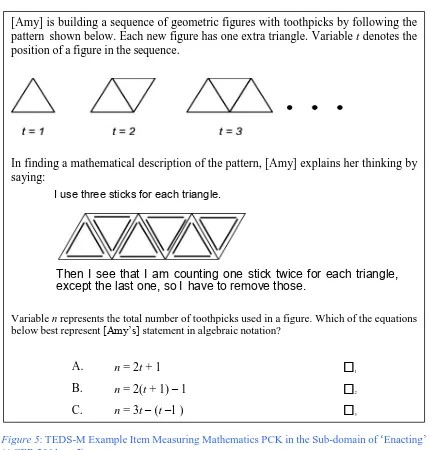
32
Figure 5: TEDS-M Example Item Measuring Mathematics PCK in the Sub-domain of ‘Enacting’ (ACER 2011, p. 5)
Instruments from other studies using different formats for measuring pre-service teachers’ mathematics PCK for teaching and learning have emerged, such as short answer questionnaires (Cheang, Yeo, Chan, & Lim-Teo, 2007), observations and interviews (Chick, 2007; McCray & Chen, 2012) and testing pre-service teachers’ content knowledge and PCK using multiple-choice formats (Callingham et al., 2011). The above studies, as well as the TEDS-M, were examined by the researcher and several have laid the foundation for this study’s research design which aims to investigate both pre-service teachers’ PCK and their ability to enact their PCK. These studies have also been the source of specific items for measuring mathematics PCK (Callingham et al., 2011;
[Amy] is building a sequence of geometric figures with toothpicks by following the pattern shown below. Each new figure has one extra triangle. Variable t denotes the position of a figure in the sequence.
In finding a mathematical description of the pattern, [Amy] explains her thinking by saying:
I use three sticks for each triangle.
Then I see that I am counting one stick twice for each triangle, except the last one, so I have to remove those.
Variable n represents the total number of toothpicks used in a figure. Which of the equations below best represent [Amy’s] statement in algebraic notation?
A. n = 2t + 1
1B. n = 2(t + 1) – 1
2C. n = 3t – (t –1 )
333 Cheang et al., 2007; Tatto et al., 2012), and as such will be described in detail in the methodology chapter.
Summarising the chapter thus far, the majority of researchers who have progressed Shulman’s (1986) work agree that PCK is the transformation from teachers’ content knowledge and pedagogical knowledge, with the ability to use content knowledge in a pedagogical context and pedagogical knowledge in a content context (Chick et al., 2006; Grossman, 1990; Loughran, Berry, & Mulhall, 2012).
The combination of the rich knowledge of pedagogy and content together, each shaping and interacting with the other so that what is taught, and how it is constructed is purposefully created to ensure that particular content is better understood by students in a given context, because of the way the teaching has been organised, planned, analysed and presented. (Loughran et al., 2012, pp. 7-8)
Effective teaching, through sound PCK, requires knowing and understanding the subject matter, knowing students as learners and skilfully being able to choose from, and use, a variety of evidence-based pedagogical strategies (National Council of Teachers of Mathematics, 2014). Thus, in the context