FORMULATION AND EVALUATION OF
HYDRODYNAMICALLY BALANCED SYSTEM OF
BACLOFEN
.
Dissertation Submitted to
THE TAMILNADU Dr. M. G. R. MEDICAL UNIVERSITY
In partial fulfillment for the award of degree of
MASTER OF PHARMACY
IN
PHARMACEUTICS
Submitted by
M. MATHIVANAN
(REG. NO: 26119206)
Under the Guidance of
Mr. D. SAKTHIVEL M. Pharm.,
Ph.D.,
Assistant Professor, Department of Pharmaceutics.
DEPARTMENT OF PHARMACEUTICS
PGP COLLEGE OF PHARMACEUTICAL SCIENCE AND RESEARCH INSTITUTE
NH-7, Karur Main Road, NAMAKKAL - 637207
Prof. Dr. G. ARUNACHALAM. M. Pharm., Ph.D. FIC.,
Principal
PGP College of Pharmaceutical Science and
Research Institute, Namakkal-637207.
CERTIFICATE
This is to certify that the dissertation entitled
“FORMULATION AND EVALUATION
OF HYDRODYNAMICALLY BALANCED SYSTEM OF BACLOFEN”
was carried out by
Mathivanan
.
M
(Reg. No: 26119206), under the guidance of
Mr. D. Sakthivel
M.Pharm., Ph.D., Assistant Professor
in the Department of Pharmaceutics, PGP College
of Pharmaceutical Science and Research Institute, Namakkal, Affiliated to The Tamilnadu
Dr. M.G.R Medical University, Chennai - 32.
Prof. Dr. G. ARUNACHALAM
Place: Namakkal
Mr. D.Sakthivel, M.Pharm., Ph.D.,
Assistant Professor
Department of Pharmaceutics
PGP College of Pharmaceutical Science and
Research Institute, Namakkal-637207.
CERTIFICATE
This is to certify that the dissertation entitled
“FORMULATION AND EVALUATION
OF HYDRODYNAMICALLY BALANCED SYSTEM OF BACLOFEN”
was carried out by
Mathivanan. M (Reg. No: 26119206)
in the
Department of Pharmaceutics, PGP
College of Pharmaceutical Science and Research Institute, Namakkal, Affiliated to
The Tamilnadu Dr. M.G.R Medical University, Chennai - 32
under my direct
supervision and guidance to my fullest satisfaction.
Mr. D. SAKTHIVEL
Place: Namakkal
DECLARATION
I hereby declare that the matter embodied in the dissertation entitled
“FORMULATION AND EVALUATION OF HYDRODYNAMICALLY BALANCED SYSTEM OF
BACLOFEN”
is a bonafide and genuine research work carried by us under the guidance of
Mr. D.SAKTHIVEL, M.Pharm., Ph.D.,
Assistant Professor, Department of
Pharmaceutics, PGP College of Pharmaceutical Science & Research Institute, NH-7, Karur
Main Road, Namakkal.
M. MATHIVANAN
REG.NO:(26119206)_____________
Place: Namakkal
ACKNOWLEDGEMENTS
On the occasion of presenting this dissertation, I would like to thank the almighty for
providing strength and power by his enormous blessings to overcome all the hurdles and
hindrances during this project work.
I am equally thankful to my
grandparents
, who have struggled their present days for the
wealth of my future, who showed their blessings, love and encouragement in every
activity of mine, which given me strength and power to achieve goals even in hard times.
I am very thankful to
Mr.R. Prasanna M. pharm.,
Freedom Bio Pharma Pvt.,Ltd., for
providing all the necessary facilities to carry out this project work.
I owe my deep sense of gratitude, great pleasure and sincere whole hearted thanks to my
esteemed master
Mr. D. Sakthivel, M.Pharm., Ph.D.,
for his valuable suggestions and
encouragement from time to time for the completion of my project work.
My respective gratitude to
Dr.G.Arunachalam, Ph.D
, for inspiring me in every aspect,
kind advise, imparting dedication and developing commitment towards work.
I express my sincere thanks to our honorable chairman
Dr. PALANI
G. PERIASAMY,
M.A., M.A., Ph.D., (USA), Vice Chairman
Mrs.VISALAKSHI
PERIASAMY.,
B.B.A., and
Mr.M.GANAPATHI
, IFS
®Correspondent, PGP Group of
Educational Institutions, Namakkal – 637 207 for providing the all necessary facilities.
I highly oblige to my respected Assistant professors,
Mr. R. SIVAKUMAR
,
M.Pharm., PhD, Assistant Professor,
Mr. D.JAYARAMAN,
M.Pharm., Ph.D., Assistant
Professor, Department of Pharmacognosy,
Mrs. A. YASODHA,
M.Pharm., Ph.D.,
It is my privilege to express my sincere thanks to
Mr. S. SEKAR,
MA.,MLIS.,
Librarian PGP College of Pharmaceutical Science and Research Institute, Namakkal – 637
207 for providing the library facilities and co-operation to complete this work.
Also express my sincere thanks to Lab Assistants
Mr.J. RAMESH,MA.,B.Ed.,
Mrs. K. NIRMALA, DECE.,
and
S. Maheswari, MA.,
PGP College of Pharmaceutical
Science and Research Institute, Namakkal – 637 207 for their timely help.
I find myself lacking in words to express my deepest sense of gratitude towards our
beloved parents for their unconditional support, encouragement and motivation. It’s all
because of their belief and the optimism that they instilled in me that I have been able to
complete this work successfully.
MATHIVANAN. M
ABSTRACT
Spasticity is a feature of altered skeletal muscle performance in muscle tone involving
hypertonia; it is also referred to as an unusual "tightness", stiffness, or "pull" of muscles
palsy and spinal. Spasticity, a condition in which certain muscles are continuously
contracted, affects over 12 million worldwide. Baclofen is the largest prescribed drug
for this indication, worldwide. Even though once-daily extended release GRS is available
in the market, it is very expensive as it is a coated multi-layer gas generating floating tablet.
The main objective is to develop once-daily sustained release gastro-retentive floating
system of Baclofen in an economical way by using HPMC and natural gums. Fourteen
formulations of floating matrix tablets of Baclofen (F1 – F14) were prepared by using
different polymers and additives (HPMC K100M, HPMC K15M, HPMC K4M, Guar gum
Xanthan gum PEO WSR301,- 303, sodium bicarbonate, Avicel PH-102, Talc, Magnesium
stearate) at different concentrations by direct compression method. The formula 11 was
found to be optimum and released 98.47% of Baclofen in 24hrs. . Hence, it was selected as
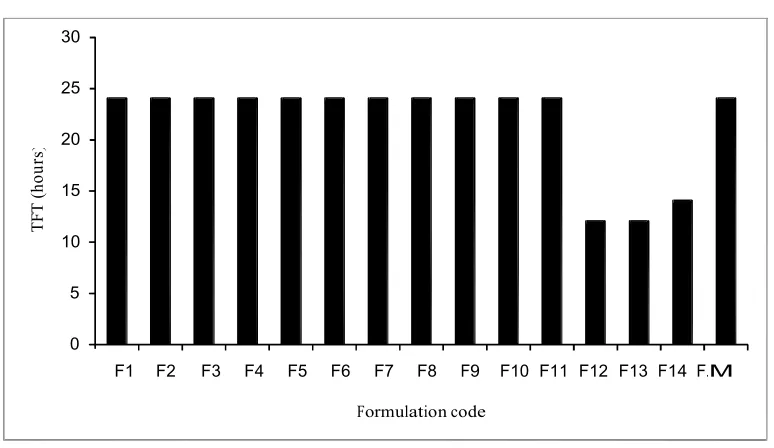
the optimized formulation. Marketed formulation exhibited FLT of 63.67±4.01 seconds,
TFT of 24 hours and released 95.07±0.41% drug in 24 hours. Finally, once-daily
sustained release gastro-retentive floating tablets of Baclofen were successfully
formulated in a relatively economical way when compared to the marketed formulation
LIST OF ABBREVIATIONS
AVICEL
Micro crystalline cellulose
BCF
Baclofen
CO
2Carbon dioxide
FDDS
Floating drug delivery systems
FLT
Floating lag time
FT-IR spectroscopy
Fourier transform infrared spectroscopy
GRS
Gastro-retentive system
GRT
Gastric retention time
GIT
Gastrointestinal tract
HBS
Hydrodynamically balanced system
HCl
Hydrochloric acid
HPLC
High performance liquid chromatography
HPMC
Hydroxy propyl methyl cellulose
MMC
Migrating myoelectric cycle
NaHCO
3Sodium bicarbonate
PEO
Poly ethylene oxide
RPM
Rotations per minute
S.D
Standard deviation
SR
Sustained release
TFT
Total floating time
USP
United States pharmacopoeia
UV
Ultra violet
CONTENTS
Chapter
No.
Title
Page No
1
Introduction
1-20
2
Review of literature
21-23
3
Drug profile
24-27
4
Objectives
28
5
Plan of work
30
6
Materials and Methods
31-47
7
Results and Discussion
48-101
8
Summary and Conclusion
102-107
INTRODUCTION
MODIFIED RELEASE ORAL DRUG DELIVERY SYSTEMS:
The oral route represents nowadays the predominant and most preferable route for drug delivery. Unlike the majority of parenteral dosage forms, it allows ease of administration by the patient and it’s the natural, and therefore a highly convenient way for substances to be introduced into the human body.
Oral drug delivery systems (DDS) are mainly immediate release (conventional) drug delivery systems which are intended to disintegrate rapidly, and exhibit instant drug release. They are associated with a fast increase and decrease, and hence fluctuations in drug plasma levels, which leads to reduction or loss in drug effectiveness or increased incidence of side effects. Administration of the DDS several times per day is therefore necessary to compensate the decrease in drug plasma concentration due to metabolism and excretion leading to poor patient compliance.
In order to overcome the drawbacks associated with conventional drug delivery systems, several technical advancements have led to the development of Modified release systems that could revolutionize method of medication and provide a number of therapeutic benefits.
Modified release systems, have been developed to improve the pharmacokinetic profiles of active pharmaceutical ingredients (APIs) and patient compliance(reducing the frequency of dosing), as well as reducing the side effects[1-3].Oral modified release delivery systems are most commonly used for 1) delayed release (e.g., by using an enteric coating); 2) extended release (e.g., zero-order, first-order, biphasic release, etc.); 3) programmed release (e.g., pulsatile, triggered, etc.) and 4) site specific or timed release (e.g., for colonic delivery or gastric retention). Extended, sustained or prolonged release drug delivery systems are terms used synonymously to describe this group of controlled drug delivery devices, with predictability and reproducibility in the drug release
kinetics[4]. Delayed release dosage forms are distinguished from the ones mentioned above as they exhibit a pronounced lag time before the drug is released. Oral extended release dosage forms offer the opportunity to provide constant or nearly constant drug plasma levels over an extended period of time following administration[5]. Two basic types of extended release dosage forms are designed to generate temporal input profile for drug delivery[6].
INTRODUCTION
Matrix systems: It consists of rate controlling polymer, which is uniformly dissolved or dispersed with drug.
Reservoir system: This type of system separates drug compartment from polymer membrane that permits a diffusion barrier to yield drug flux of either zero order or first order.
Extended release DDS offer several advantages compared to conventional DDS including[7]:
i. Avoiding drug level fluctuations by maintenance of optimal therapeutic plasma and tissue concentrations over prolonged time periods, avoiding sub-therapeutic as well as toxic concentrations, thus minimizing the risk of failure of the medical treatment and undesirable side effects;
ii. Reducing the administered dose while achieving comparable effects;
iii. Reduced frequency of administration leading to improved patient compliance and subsequently improved efficacy of the therapy and cost effectiveness;
iv. Targeting or timing of the drug action. Hence, it is highly desirable to develop sustained DDS releasing the drug at predetermined rates to achieve optimal drug levels at the site of action.
On the other hand, drugs administered as sustained or extended release oral dosage form should comply with the following parameters:
i. Maintain a constant plasma level over prolonged time periods;
ii. Have a broad therapeutic window to avoid health hazard to the patient in case of undesirable burst release of the nominal dose[8].
INTRODUCTION
the drug to the gut contents, as well as to the degradation of the drug by the microorganisms present in the colon[9-12]. Therefore, in instances where the drug is not absorbed uniformly over the G.I tract, the rate of drug absorption may not be constant inspite of the drug delivery system delivering the drugs at a constant rate into the G.I fluids. More particularly, in instances where a drug has a clear cut absorption window (the drug is absorbed only from specific regions of the GIT like the stomach or upper parts of the small intestine), it may not be completely absorbed leading to unpredictable bioavailability and times to achieve peak plasma levels when administered in the form of a typical oral controlled drug delivery system. It is due to the relatively brief gastric emptying in humans, which normally averages 2-3 hrs through the major absorption zone. It may cause incomplete drug release from the dosage form at absorption sites leading to diminished efficacy of the administered dose. It is apparent that for a drug having such an absorption window, an effective oral controlled drug delivery system should be designed not only to deliver the drug at a controlled rate, but also to retain the drug in the stomach for a long period of time. For this drug, increased or more predictable availability would result if controlled release systems could be retained in the stomach for extended periods of time.
GASTRO-RETENTIVE DRUG DELIVERY SYSTEMS:
Dosage forms that can be retained in the stomach for prolonged and predictable period of time are called gastro-retentive drug delivery systems (GRDDS).The retention of oral dosage forms in the upper GIT causes prolonged contact time of drug with the GI mucosa, leading to higher bioavailability, and hence therapeutic efficacy, reduced time intervals for drug administration, potentially reduced dose size and thus improved patient compliance[13]. Therefore, extended / sustained release DDS possessing gastric retention Properties may be potentially useful[14].
Basic Gastrointestinal Tract Physiology:
To comprehend the considerations taken in the design of gastric retention dosage forms and to evaluate their performance the relevant anatomy and physiology of the G.I tract must be fully understood.
INTRODUCTION
[image:14.612.190.440.169.392.2]Anatomically the stomach is divided into 3 regions: fundus, body, and antrum (pylorus)(Fig.1.1). The proximal part made of fundus and body acts as a reservoir for undigested material, whereas the antrum is the main site for mixing motions and act as a pump for gastric emptying by propelling actions[15].
Fig 1.1: Anatomy of the stomach
INTRODUCTION
Fig 1.2: Inter-digestive myoelectric cycle (MMC)
Phase I (basal phase) lasts from 40 to 60 minutes with rare contractions.
Phase II (pre-burst phase) lasts for 40 to 60 minutes with intermittent action potential and contractions. As the phase progresses the intensity and frequency also increases gradually.
Phase III (burst phase) lasts for 4 to 6 minutes. It includes intense and regular contractions for short period. It is due to this wave that all the undigested material is swept out of the stomach down to the small intestine. It is also known as the housekeeper wave.
Phase IV lasts for 0 to 5 minutes and occurs between phases III and I of 2 consecutive cycles. After the ingestion of a mixed meal, the pattern of contractions changes from fasted to that of fed state. This is also known as digestive motility pattern and comprises continuous contractions as in phase II of fasted state. These contractions result in reducing the size of food particles (to less than 1 mm), which are propelled toward the pylorus in a suspension form. During the fed state onset of MMC is delayed resulting in slowdown of gastric emptying rate[18].
Requirements for Gastro-retention:
From the discussion of the physiology of the stomach, to achieve gastro-retention, the dosage form must satisfy some requirements. One of the key issues is that the dosage form must be able to withstand the forces caused by peristaltic waves in the stomach and constant grinding and churning mechanisms (phase III). It must resist premature gastric
INTRODUCTION
emptying and once the purpose has been served, it should be removed from the stomach with ease.
Factors controlling gastric retention of dosage forms
The gastric retention time (GRT) of dosage forms is controlled by several factors such as:
Density of dosage form:
Dosage forms having a density lower than that of gastric fluid experience floating behavior and hence gastric retention. A density of <1.0 gm/cm3 is required to exhibit floating property. However, the floating tendency of the dosage form usually decreases as a function of time, as the dosage form gets immersed into the fluid, as a result of the development of hydrodynamic equilibrium[19].
Size of dosage form:
The size of the dosage form is another factor that influences gastric retention. The mean gastric residence times of non-floating dosage forms are highly variable and greatly dependent on their size, which may be small, medium, and large units. In fed conditions, the smaller units get emptied from the stomach during the digestive phase and the larger units during the housekeeping waves. In most cases, the larger the size of the dosage form, the greater will be the gastric retention time[20] because the larger size would not allow the dosage form to quickly pass through the pyloric antrum into the intestine. Thus the size of the dosage form appears to be an important factor affecting gastric retention.
Food intake and nature of food:
INTRODUCTION
which show an increase in the relative heights of the floating units after meal consumption.
Effect of gender, posture and age:
A study by Mojaverian et.al.[23] found that females showed comparatively shorter mean ambulatory GRT than males, and the gastric emptying in women was slower than in men. The authors also studied the effect of posture on GRT, and found no significant difference in the mean GRT for individuals in upright, ambulatory and supine state. On the other hand, in a comparative study in humans by Gansbeke et.al.[24] the floating and non-floating systems behaved differently. In the upright position, the non-floating systems floated to the top of the gastric contents and remained for a longer time, showing prolonged GRT. But the non-floating units settled to the lower part of the stomach and underwent faster emptying as a result of peristaltic contractions, and the floating units remained away from the pylorus.
Since many factors could lead to alterations in gastric emptying process, which may seriously affect the release of a drug from its delivery system, it is therefore, desirable to develop a DDS that exhibits an extended GI residence and a drug release profile independent of patient related variables.
APPROACHES TO GASTRO- RETENTION
Various approaches have been pursued to increase the retention of an oral dosage form in the stomach. These systems mainly include: Floating/Buoyant systems, Bio-adhesive systems, Swelling and expanding systems, High density systems(Fig.1.3).
INTRODUCTION
Fig 1.3: Approaches to gastro-retention
Bio/Muco-adhesive Systems:
Bio/muco-adhesive systems are those which bind to the gastric epithelial cell surface or mucin and serve as a potential means of extending the GRT of drug delivery system in the stomach, by increasing the intimacy and duration of contact of drug with the biological membrane.
The surface epithelial adhesive properties of mucin have been well recognized and applied to the development of GRDDS based on bio/muco-adhesive polymers.
Limitation of these systems is the gastric epithelial mucin turnover, which effects the reproducibility of these systems.
Swelling and Expanding Systems :
These are the dosage forms, which after swallowing; swell to an extent(12-18 mm in their expanded state) that prevents their exit from the pylorus. As a result, the dosage form is retained in the stomach for a long period of time. These systems may be named as “plug
type system”, since they exhibit the tendency to remain logged at the pyloric sphincter.
INTRODUCTION
by the degree of linking between the polymeric chains. A high degree of cross-linking retards the swelling ability of the system maintaining its physical integrity for prolonged period.
Limitation of this system is, it requires certain period of time for swelling of these systems during which they can be emptied from the stomach.
High Density Systems:
These systems with a density of about 3g/cm3 are retained in the rugae of the stomach and are capable of withstanding its peristaltic movements. A density of 2.6-2.8 g/cm3acts as a threshold value after which such systems can be retained in the lower part of the stomach. High-density formulations include coated pellets. Coating is done by heavy inert material such as barium sulphate, zinc oxide, titanium dioxide, iron powder etc.
Limitation: These systems remain close to the pyloric splincter, which may result in gastric emptying of these systems.
Floating Drug Delivery/ Hydrodynamically balanced Systems (FDDS/ HBS):
Floating systems, first described byDavisin 1968[25], are low-density systems that have a density of less than 1 g/ml, to float over the gastric contents and remain in the stomach for a prolonged period. While the system floats over the gastric contents, the drug is released slowly at the desired rate, which results in increased GRT and reduces fluctuation in plasma drug concentration. This system is shown inFig.1.4.
Fig 1.4: Graphic of Buoyant tablet, which is less dense than the stomach fluid and therefore remains in the fundus.
INTRODUCTION
Advantages of FDDS[26]:
Sustained Drug Delivery: Sustained drug absorption from oral controlled release dosage form is often limited due to short gastric retention time. However, FDDS remain in the stomach for several hours to increase their GRT. Thus, prolongation in the GRT results in sustained drug release at the absorption site.
Absorption or Bioavailability Enhancement: FDDS enhances the bioavailability of active agent by, beneficially altering its absorption.
Site Specific Drug Delivery: FDDS greatly improve stomach pharmacotherapy through local drug release, which leads to high drug concentrations at the gastric mucosa making it possible to treat duodenal ulcers, gastritis and oesophagitis, and reduce the risk of gastric carcinoma.
Carriers: FDDS can be used as carriers for drugs such as antiviral, antifungal and antibacterial agents which are taken up only from very specific site of gastrointestinal tract (GIT). These drugs are said to have absorption window.
Patient Compliance: FDDS have been recommended to improve patient compliance and convenience due to less frequent drug administration and the nature of the drug's release kinetics.
Fewer side effects: FDDS show a decrease in total adverse effects with improved absolute bioavailability of the drug due to reduction of fluctuation in drug blood concentration and maximum utilization of the drug.
Improved plasma levels: An increased safety margin of highly potent drugs can be achieved by formulating them as FDDS, due to better control of plasma concentration and expulsion of the floating system from the stomach after complete release of the drug which reduced suppression of the drug's activity by the body (i.e. counter activity) and minimized adverse activity at the colon.
INTRODUCTION
upper small intestine, such as furosemide and riboflavin can be typically formulated using this system.
Limitations of FDDS[26]:
The major disadvantage of floating systems is requirement of a sufficiently high level of fluids in the stomach for the drug delivery i.e. upto 400ml of gastric fluids should be present for optimum buoyancy In order to keep these tablets floating
in-vivo, intermittent administration of water is beneficial, as the ability to float
relies on the hydration state of the dosage form.
The drugs that have solubility or stability problems in the gastric fluid and may cause irritation to gastric mucosa cannot be formulated as FDDS.
Drugs which are well absorbed along the entire GIT and which undergo significant first pass metabolism, may not be formulated as FDDS since the slow gastric emptying may lead to reduced systemic bioavailability.
Suitable Drug Candidates for FDDS include[26]:
Drugs acting locally in the stomach. Ex: Antacids, misoprostol and drugs used eradication of H.pylori, (the causative organism for chronic gastritis and peptic ulcer) Ex:Tetracycline.
Drugs with a narrow window of absorption from the stomach and upper part of the GIT. Ex: Riboflavin and Levodopa.
Drugs having stability at the acidic environment of the stomach and non-irritant to the gastric mucosa.
Drugs that have low solubility at high pH values. Ex:Verapamil
Drugs that are unstable in the intestine or colonic environment. Ex: Ranitidine.
Drugs that disturb normal colonic bacteria. Ex: Amoxicillin trihydrate.
Drugs that are unsuitable for FDDS[26]:
Drugs that have very limited acid solubility (e.g. phenytoin).
Drugs that suffer instability in the gastric environment (e.g. erythromycin).
Drugs intended for selective release in the colon [e.g. 5-amino salicylic acid,
INTRODUCTION
corticosteroids]
1.1 Types of floating drug delivery systems (FDDS)[26]:
Based on the mechanism of buoyancy, two distinctly different technologies have been
utilized in development of FDDS which are:
1.1.1. Effervescent System, and 1.1.2. Non- Effervescent System.
1.1.1 Effervescent System:
These effervescent systems further classified into two types.
1.1.1.1.Gas Generating systems
1.1.1.2.Volatile Liquid Containing Systems.
1.1.1.1. Gas – Generating Systems:
INTRODUCTION
Fig1.5: Mechanism of floating systems(GF= Gastric fluid)
F = Fbuoyancy- Fgravity
= (Df- Ds) gv--- (1)
where, F= total vertical force, Df = fluid density,Ds = object density, v = volume and g=acceleration due to gravity.
Types of gas generating systems include:
1.1.1.1.1. Intragastric Single Layer Floating Tablets or Hydrodynamically Balanced
System (HBS)[27]:
The system is shown in Fig.1.6and formulated by intimately mixing the CO2 generating agents, drug and the polymer within the matrix tablet. These have a bulk density lower than gastric fluids and therefore remain floating in the stomach unflattering the gastric emptying rate for a prolonged period. The drug is slowly released at a desired rate from the floating system and after the complete release the residual system is expelled from the stomach. This leads to an increase in the GRT and a better control over fluctuations in plasma drug concentration.
INTRODUCTION
Fig 1.6:Intragastric Single Layer Buoyant Tablet.
1.1.1.1.2. Intragastric Bilayer Floating Tablets[28]:
These are compressed bi-layer tablets containing two layers(Fig.1.7), the gas generating mechanism in one hydrocolloid containing layer and the drug in the other layer(containing a release controlling polymer) formulated for a SR effect. After contact with acidic aqueous media, CO2 is generated and entrapped within the gelling hydrocolloid, causing the system to float; meanwhile the drug was released in a sustained manner from the SR layer.
Effervescent layer
INTRODUCTION
1.1.1.1.3. Intragastric triple layer Floating Tablets:
A floating dosage form of triple drug regimen was developed by Yang et al. [29] to prolong the gastric residence time of triple drug regimen (tetracycline, metronidazole, and clarithromycin) for the treatment of Helicobacter pylori–associated peptic ulcers. The design of the delivery system was based on the swellable asymmetric triple-layer tablet approach (Fig.1.8). Two drugs were incorporated into the core layer of the triple-layer matrix for controlled delivery, while third drug was included in one of the outer layers for instant release. The floatation was accomplished by incorporating a gas-generating layer consisting of sodium bicarbonate: calcium carbonate (1:2 ratios) along with the polymers.
Figure1.8: Schematic presentation of working of a triple-layer system. (A) Initial configuration of triple-layer tablet. (B) On contact with the dissolution medium the bismuth layer rapidly dissolves and matrix starts swelling. (C) Tablet swells and erodes. (D) and (E) Tablet erodes completely.
1.1.1.1.4. Multiple Unit type floating pills:
This system was developed by Ichikawa et al.[30] The system consisted of sustained
release pills as seeds surrounded by double layers (Fig.1.9). The inner layer was a double effervescent layer containing both NaHCO3 and tartaric acid to avoid direct contact between sodium bicarbonate and tartaric acid. The outer layer was a swellable membrane layer containing mainly PVA and purified shellac. Following contact with aqueous media, it formed swollen balloon like pills, with a density much lower than 1 g/ ml, due to
INTRODUCTION
the carbon dioxide generated by the neutralization reaction in the inner effervescent layers with the diffusion of water through the outer swellable membrane layer. The system was found to float completely within 10 minutes and approximately 80% remained floating over a period of 5 h irrespective of pH and viscosity of the test medium. Meanwhile, the drug was released.
Fig 1.9: A multi-unit oral buoyant dosage system. Stages of floating mechanism: (A) penetration of water; (B) generation of CO2 and floating; (C) dissolution of drug.
Key: (a) conventional SR pills; (b) effervescent layer; (c) swellable layer; (d) expanded swellable membrane layer; (e) surface of water in the beaker (370C)
1.1.1.2. Volatile Liquid containing Systems:
Intragastric Osmotically Controlled Drug Delivery System[31,32]:
The system comprises of an osmotic pressure controlled drug delivery device and an inflatable floating support in a biodegradable capsule. In the stomach, the capsule quickly disintegrates to release the intragastric osmotically controlled drug delivery device. The inflatable support inside contains gases with a boiling point < 37°C (e.g., cyclopentane, diethyl ether) incorporated in solidified or liquefied form. At physiological temperatures, the liquid that gasifies at body temperature to inflate the bag. The osmotic pressure controlled drug delivery device consists of two components; drug reservoir compartment and an osmotically active compartment.
INTRODUCTION
a semipermeable housing. In the stomach, the water in the GI fluid is continuously absorbed through the semi permeable membrane into osmotically active compartment to dissolve the osmotically active salt. An osmotic pressure is thus created which acts on the collapsible bag and in turn forces the drug reservoir compartment to reduce its volume and activate the drug release through the delivery orifice.
The floating support is also made to contain a bioerodible plug that erodes after a predetermined time to deflate the support. The deflated drug delivery system is then emptied from the stomach. This system is shown inFig 1.10.
Fig1.10: Intragastric Osmotically Controlled Drug Delivery System
1.1.2 Non-Effervescent systems:[33]
The approach involved in the formulation of floating dosage forms is intimate mixing of drug with a gel forming hydrocolloid, which swells in contact with gastric fluid after oral administration and maintains a relative integrity of shape and a bulk density of less than unity within the outer gelatinous barrier. The air entrapped by the swollen polymer confers buoyancy to these dosage forms. The gel structure acts as a reservoir for sustained drug release since the drug is slowly released by a controlled diffusion through the gelatinous barrier. Commonly used excipients, here are gel-forming or highly swellable cellulose type hydrocolloids, polysaccharides and matrix forming polymers such as polycarbonate, polyacrylate, polymethacrylate and polystyrene.
INTRODUCTION
The limitation of this approach is that floating concept in an HBS is rather passive, i.e., it mainly depends on the air captured into the dry mass inside the hydrating gelatinous surface layer. Because of this passivity, the buoyancy of an HBS largely depends on the characteristics and amount of hydrophilic polymers used.
This system can be further divided into four sub-types:
1.1.2.1 Colloidal gel barrier system:
Sheth and Toussounian[34] developed a HBS capsule containing a mixture of a drug and hydrocolloids. Upon contact with gastric fluids, the capsule shell dissolves and the mixture swells and forms a gelatinous barrier thereby remaining buoyant in the gastric juice for an extended period of time. Pharmaceutical products, using the same principle, containing APIs have been developed, containing L-DOPA, combined with a decarboxylase inhibitor. This system is shown inFig.1.11.
Fig 1.11: Colloidal gel barrier system
1.1.2.2 Microporous compartment system:
INTRODUCTION
calcium alginate/ polyvinyl acetate (PVA). In the stomach, the floatation chamber containing entrapped air causes the delivery system to float over the gastric content. Gastric fluid enters through the aperture, dissolves the drug and carries the dissolved drug for continuous transport across the intestine for absorption.
1.1.2.3 Alginate Beads:
Whitehead et al.[36] developed multiple unit floating freeze dried calcium alginate beads of approximately 2.5 mm diameter by dropping a sodium alginate solution into aqueous solution of calcium chloride, causing precipitation of calcium alginate leading to formation of porous system. These beads maintained a positive floating force for over 12 hrs.
1.1.2.4 Hollow Microspheres:
Hollow microspheres (micro balloons) (Fig.1.12), loaded with drug in their outer polymer shells were prepared by a novel emulsion-solvent diffusion method [37]. The ethanol: dichloromethane solution of the drug and an enteric acrylic polymer was poured into an agitated aqueous solution of PVA that was thermally controlled at 400C. The gas phase generated in dispersed polymer droplet by evaporation of dichloromethane formed an internal cavity in microsphere of polymer with drug. The micro balloons floated continuously over the surface of acidic dissolution media containing surfactant for more than 12 hours in-vitro.
Fig 1.12: Hollow microspheres
INTRODUCTION
Table1.2: Marketed Products of FDDS[26]:
S.NO. BRAND
NAME DRUG (DOSE)
COMPANY,
COUNTRY DOSAGE FORM
1. Modular®
Levodopa (100 mg), Benserazide
(25 mg)
Roche Products, USA Floating CR
capsule
2. Val release® Diazepam (15 mg) Hoffmann-Larches,
USA Floating capsule
3. Liquid
Gavison®
Al hydroxide (95 mg), Mg carbonate (358 mg) GlaxoSmith Kline, India Effervescent floating liquid alginate preparation
4. Topalkan® Al-Mg antacid Pierre Fabre Drug,
France
Floating liquid alginate preparation
5. Conviron Ferrous sulphate Ranbaxy, India Colloidal gel
forming FDDS
6. Cifran OD® Ciprofloxacin (500
mg, 1 gm) Ranbaxy, India
Gas-generating floating tablet
7. Cytotec® Misoprostol (100
mcg/200 mcg) Pharmacia, USA
Bilayer floating capsule
8. Oflin OD® Ofloxacin (400mg) Ranbaxy, India Gas generating
floating tablet
9. Baclof OD Baclofen (20 mg) Intas
Pharmaceuticals,India
Coated multi-layer gas generating
CHAPTER 2
LITERATURE REVIEW
Past work on Baclofen sustained releasedrug delivery system:
Very few findings were published/ carried out on BCF sustained release drug delivery system.
• Rishad R. Jivani et al. (2009) [43] developed a self correcting monolithic gastro-retentive tablet of Baclofen. PEO WSR-303 was used as the polymer and sodium bicarbonate was used as the effervescent agent in the formulation. Tablets were prepared by direct compression technique. The in-vitro dissolution studies were carried out using USP XXI type II (Paddle method) Dissolution Rate Test Apparatus at 37 + 0.5°C and 50 rpm speed. 900 mL of 0.1N HCl was used as the dissolution medium. The tablets successfully sustained the drug release upto 12 hours. The optimized formulation exhibited a floating lag time of 120 seconds and a total floating time of 12 hours. Kinetics of drug release from the tablet followed Korsmeyer – Peppas model by anamolous non-fickian diffusion.
• Rishad R. Jivani et al. (2010) [44] developed a novel floating In-situ gelling system for stomach specific drug delivery of the narrow absorption window drug Baclofen. Sodium alginate-based in-situ gelling systems were prepared by dissolving various concentrations of sodium alginate in deionized water, to which varying concentrations of drug and calcium bicarbonate were added. The in-vitro dissolution studies were carried out using USP XXI type II (Paddle method) Dissolution Rate Test Apparatus at 37 + 0.5°C and 50 rpm speed. 500 mL of 0.1N HCl was used as the dissolution medium. The tablets successfully sustained the drug release upto 12 hours. The floating lag time and floating time of the optimized formulation were found to be 120 seconds and 12 hrs respectively. The drug release from the in-situ gel followed Higuchi model, which indicates a diffusion-controlled release.
LITERATURE REVIEW
release of Baclofen upto 12hrs. Model fitting analysis for the final formulation fitted in the zero order model and Korsemeyer- Peppas model. The ‘n’ values obtained from the Korsemeyer- Peppas equation suggested that, drug release was non-Fickian diffusion mechanism. It was concluded that sustained release matrix tablets of Baclofen containing 25% of HPMC K4M and HPMC K100M provide a better option for sustained release of drug.
• Stephen Rathinaraj B et al. (2010) [46] developed sustained release matrix tablets of Baclofen. The matrix tablets were prepared using using hydrophilic swellable polymers (HPMC K15M & guargum) and water insoluble polymer like ethyl cellulose by employing wet granulation method. The in-vitro release studies were performed in 0.1 N HCl for first two hours and in 7.4 pH phosphate buffer upto 12 hours. The final formulation containing 10 % guargum showed better release i.e, 80 – 90 % drug release within l0 -11 hours and successfully sustained the release of drug upto 12 hours.
• Gande S et al. (2011) [47] developed sustained release effervescent floating matrix tablets of Baclofen. Polymers Methocel K100M, Methocel K15M, HPMC E6-LV and effervescent agent sodium bicarbonate were used in the formulation. Tablets were prepared by wet granulation technique. The in-vitro dissolution studies were carried out using USP XXI type II (Paddle method) Dissolution Rate Test Apparatus at 37 + 0.5°C and 50 rpm speed. 900mL of 0.1N HCl was used as the dissolution medium. The tablets successfully sustained the drug release upto 12 hours. The optimized formulation exhibited a floating lag time of 180 seconds and a total floating time of 12 hours. For all formulations, kinetics of drug release from tablet followed Higuchi’s square root of time kinetic treatment heralding diffusion as predominant mechanism of drug release. There was no significant change in the selected formulations, when subjected to accelerated stability conditions over a period of three months. X-ray studies were investigated. X-ray imaging in six healthy human volunteers revealed a mean gastric retention period of 5.50±0.7 hrs for the selected formulation.
• Upendra Kulkarni et al. (2011) [48] fabricated bi-layer matrix tablets of Baclofen using ethylcellulose consisting of two layers such as fast releasing layer and sustaining layer. Fast releasing layer was prepared by using super disintegrant like
LITERATURE REVIEW
sodium starch glycolate and sustained release layer was prepared by using synthetic polymer like ethyl cellulose by wet granulation method. The In vitro release studies were performed in 0.1 N HCl for first two hr and in 7.4 pH phosphate buffer upto 24 hrs. It was observed that final formulation containing 50% ethyl cellulose successfully
CHAPTER 3
DRUG PROFILE
BACLOFEN[39-42]:
Category: Synthetic Antispastic agent or muscle Relaxant.
Chemical Name: 4-amino-3-(4-chlorophenyl)-butanoic acid
Molecular Formula:C10H12Cl NO2
Description:
Baclofen is a white powder to off- white, virtually odorless, crystalline powder with slightly bitter taste. It has a molecular weight of 213.66. It is slightly soluble in water, very slightly soluble in ethanol (96 per cent), practically insoluble in acetone. It dissolves in dilute mineral acids and in dilute solutions of alkali hydroxides.
Chemical Structure:
Dissociation Constant:pKa 3.87
Partition Co-efficient :Log P (octanol/water), 1.3
Clinical Pharmacology
:Indication: For the alleviation of signs and symptoms of spasticity resulting from multiple sclerosis, particularly for the relief of flexor spasms and concomitant pain, clonus, and muscular rigidity.
Mechanism of Action:
DRUG PROFILE
inhibitory neurotransmitter gamma-amino-butyric acid (GABA), there is no conclusive evidence that actions on GABA systems are involved in the production of its clinical effects. In studies with animals, Baclofen has been shown to have general CNS depressant properties as indicated by the production of sedation with tolerance, somnolence, ataxia, and respiratory and cardiovascular depression.
Pharmacokinetics
:
Absorption: Baclofen is rapidly and extensively absorbed in the upper GIT. Absorption may be dose-dependent, being reduced with increasing doses. Following a single 20 mg oral dose, the peak plasma concentration(178 ng/mL) was reached about 0.5-3 hours after administration.
Distribution: The apparent volume of distribution is 59 liters. Baclofen does not readily cross the blood-brain barrier. Plasma protein binding is approximately 30%.
Metabolism: In a study using radiolabeled Baclofen, approximately 85% of the dose was excreted unchanged in the urine and feces. About 15% of the dose was metabolized, primarily by deamination. The γ-hydroxy metabolite, 3-(p-chlorophenyl)-4-hydroxybutyric acid, is formed after deamination of Baclofen.
Excretion: About 70 to 80% of a dose is excreted in the urine mainly as unchanged drug.
The remainder is excreted as unchanged drug in the feces or as metabolites in the urine and faeces. The elimination half-life of Baclofen is approximately 2.5-4 hours. Total systemic clearance is 180 mL/min and renal clearance is 103 mL/min.
Pharmacodynamics:
Baclofen is a muscle relaxant and antispastic agent. Baclofen is useful for the alleviation of signs and symptoms of spasticity resulting from multiple sclerosis, particularly for the relief of flexor spasms and concomitant pain, clonus, and muscular rigidity. Although Baclofen is an analog of the putative inhibitory neurotransmitter gamma-aminobutyric acid (GABA), there is no conclusive evidence that actions on GABA systems are involved in the production of its clinical effects. In studies with animals, Baclofen has been shown to have general CNS depressant properties as indicated by the production of sedation with tolerance, somnolence, ataxia, and respiratory and cardiovascular depression. Baclofen is rapidly and extensively absorbed and eliminated. Absorption may
DRUG PROFILE
be dose-dependent, being reduced with increasing doses. Baclofen is excreted primarily by the kidney in unchanged form and there is relatively large intersubject variation in absorption and/or elimination.
Dosage: Oral: Severe chronic spasticity:
Adult:Initially, 5mg t.i.d for three days followed by 10mg t.i.d three days until 20mg t.i.d or desired effect is obtained.
Maximum Daily dose:100 mg
Child: 0.75-2 mg/kg daily.May initiate with 2.5 mg 4 times daily, increased gradually every 3 days until desired effect is obtained.
Maintenance: 6-10 yr:30-60mg daily;2-6 yr:20-30 mg daily;12 months-2 yr:10-20 mg daily.
Elderly:Initiate with lower doses.
Contraindications: Baclofen should not be administered to patients with a history of Hypersensitivity and Active peptic ulcer disease.
Drug Interactions:
Alcohol and other CNS depressants may exacerbate the CNS effects of Baclofen and should be avoided; severe aggravation of hyperkinetic symptoms may possibly occur in patients taking lithium. There may be increased weakness if Baclofen is given to patients taking a tricyclic antidepressant and there may be an increased hypotensive effect if it is given to patients receiving antihypertensive therapy. Ibuprofen and other drugs that produce renal insufficiency may reduce Baclofen excretion leading to toxicity.
Dopaminergics: For reports of patients with Parkinson’s disease taking levodopa who have had adverse effects when given Baclofen.
DRUG PROFILE
Adverse Drug Reactions:
Adverse effects associated with Baclofen are often transient and dose-related. They may be minimised by increasing doses gradually or controlled by a reduction in dosage.
The most common adverse effects include drowsiness, nausea, dizziness, lassitude, lightheadedness, confusion, fatigue, muscular pain and weakness, and hypotension. Other adverse effects include euphoria,hallucinations, depression, headache, tinnitus, convulsions, paraesthesias, slurred speech, dry mouth, taste alterations, vomiting, diarrhoea or constipation, ataxia, nystagmus, tremors, insomnia, visual disturbances, skinrashes, pruritus, increased sweating, urinary disturbances, respiratory or cardiovascular depression, blood sugar changes, alterations in liver function values, and a paradoxical increase in spasticity. Problems with erection and ejaculation have also been reported with intrathecal Baclofen; these are usually reversible on withdrawal of therapy.
Overdosage
:-Over dosage may lead to muscular hypotonia, hypothermia, drowsiness, respiratory depression, coma, and convulsions. Stopping Baclofen abruptly may result in a withdrawal syndrome.
Treatment of Baclofen overdosage is symptomatic. Consideration should be given to the use of activated charcoal in adults who have ingested more than 100 mg, and children who have taken more than 5 mg/kg, within an hour of presentation. Alternatively, gastric lavage may be considered in adults within an hour of ingesting a life-threatening overdose. Haemodialysis should be considered in severe cases. Observation should continue for at least 6 hours after ingestion.
CHAPTER 4
OBJECTIVES
AIM AND OBJECTIVE:
Spasticity, a condition in which certain muscles are continuously contracted, affects over 12 million worldwide. Generally, spasticity is associated with common neurological disorders like multiple sclerosis, stroke, cerebral palsy and spinal cord injury. Baclofen and Tizanidine are the drugs of choice. Baclofen is the largest prescribed drug for this indication, world wide.
In the market, Baclofen is available as conventional tablets, orally disintegrating tablets and once-daily GRS tablets. The conventional and orally disintegrating tablets need to be administered 3-4 times a day (for several days) leading to poor patient compliance and there is also increased incidence of side effects with these formulations. The patient compliance can be improved and the side effects can be minimized with the once-daily formulation. Even though once-daily extended release GRS is available in the market (Baclof OD, INTAS pharmaceuticals), it is very expensive as it is a coated multi-layer gas generating floating tablet.
Rationale for Drug Selection[38]:
• Baclofen has a biological half-life of 2.5-4 hours. Hence, the conventional tablets need to be administered 3-4 times a day (for several days) leading to poor patient compliance. Therefore, Baclofen is suitable candidate for the development of once-daily formulation.
• Adverse events associated with Baclofen can be minimised when administered as once-daily formulation.
• Absorption of the Baclofen is limited to stomach or upper part of the GI tract i.e, its absorption on arrival to colon (or even before) is low or nonexistent and therefore its bioavailability is incomplete when administered as a normal sustained release formulation. The bioavailability of the drug can be increased by making the drug completely absorbed in the stomach by sustained release gastro-retentive drug delivery system considering the fact that Baclofen is stable under gastric condition.
CHAPTER 5
Preformulation Studies
• Determination of solubility of BCF in 0.1N HCl.
• To characterize the in-situ interactions between the drug and other excipients, if any by FT-IR examination.
• Determination of pre-compression parameters of the powder blends of various formulations.
Formulation
• To develop suitable formulae and procedure for the manufacture of BCF sustained release floating tablets in a relatively economical way.
• To formulate BCF SR floating matrix tablets using polymers HPMC K4M ,HPMC K15M, HPMC K100M, Polyethylene oxide WSR-301, Polyethylene oxide WSR-303 (synthetic polymers) and Xanthan, guar gum (natural polymers) and sodium bicarbonate as the effervescent agent by direct compression technique.
Evaluation
• To evaluate the post-compression parameters of the prepared tablets.
• In-vitro evaluation of the gastro-retentive tablets for the buoyancy and drug release characteristics.
• To analyze the rate and mechanism of release of Baclofen from the prepared floating tablets and the marketed formulation.
• Selection of the optimized formulation.
• Comparison of the optimized formulation with the marketed product. • Determination of similarity factor.
In view of these objectives, an extensive literature search was done and the important aspects were highlighted in the chapter, “Literature Review”.
CHAPTER 6
MATERIALS
AND
MATERIALS AND METHODS
Table 5.1: Materials used for the formulation development
S.No. Materials Source
1 Baclofen Gift sample from Natco pharma Ltd.,Hyderabad
2 HPMC K4M Colorcon Asia Pvt Ltd.,Goa
3 HPMC K15M Colorcon Asia Pvt Ltd.,Goa
4 HPMC K100M Colorcon Asia Pvt Ltd.,Goa
5 Xanthan gum Loba Chemie Pvt. Ltd., Mumbai
6 Guar gum Loba Chemie Pvt. Ltd., Mumbai
7 PEO WSR-301 Colorcon Asia Pvt Ltd.,Goa
8 PEO WSR-303 Colorcon Asia Pvt Ltd.,Goa
9 Sodium bicarbonate S.D. Fine chemicals Ltd., Mumbai
10 Avicel PH-102 Signet chemical corporation, Mumbai
11 Talc S.D. Fine chemicals Ltd., Mumbai
12 Magnesium stearate S.D. Fine chemicals Ltd., Mumbai
13 Hydrochloric acid Loba Chemie Pvt. Ltd., Mumbai
MATERIALS AND METHODS
Table 5.2: Instruments and Equipment used for the investigation
S.No. Name of the Instrument/ Equipment Manufacturers name
1 Electronic weighing balance Dhona-200D
2 Micropipettes S.D. Fine chemicals Ltd., Mumbai
3 Double beam UV-VISspectrophotometer Shimadzu UV-1800
4 Single beam UV-VIS Spectrophotometer Elico SL-150
5 Rotary shaker Remi Rotary Shaker
6 FT-IR Spectrophotometer Perkin-Elmer, Spectrum 100 FTIR
7 Tablet compression machine Cadmach Machinery, Ahmedabad
8 PH meter Elico LI 120
9 Dissolution test apparatus eight stage LABINDIA, DS 8000
10 Monsanto Hardness tester Campbell Electronics, model EIC-66, India
11 Sonicator Loba Life
MATERIALS AND METHODS
The following methodology was employed for the investigation:
5.1. PRE-FORMULATION STUDIES:
Pre-formulation may be described as a stage of development during which the physicochemical and biopharmaceutical properties of a drug substance are characterized. It is an important part of the drug development process. The information relating to drug development acquired during this phase is used for making critical decisions in subsequent stages of development. A wide variety of information must be generated to develop formulations rationally. Characterization of the drug is a very important step at the pre-formulation phase of product development followed by studying the properties of the excipients and their compatibility.
Pre-formulation testing is the first step in the rational development of dosage forms. It can be defined as an investigation of physical and chemical properties of a drug substance alone and when combined with excipients.
The objective of pre-formulation testing is to generate information useful to the formulator in developing stable and bioavailable dosage forms that can be mass produced.
The use of pre-formulation parameters maximizes the chances in formulating an acceptable, safe, efficacious and stable product and at the same time provides the basis for optimization of the drug product quality.
5.1.1. ORGANOLEPTIC EVALUATION:
Organoleptic characters like color, odor, and taste of drug were observed and recorded using descriptive terminology.
5.1.2. DEVELOPMENT OF ANALYTICAL METHOD:
A survey of literature reveals that few analytical methods such as HPLC, UV/VIS spectrophotometric methods were reported for the estimation of Baclofen in formulations.
A simple, economic, convenient, reproducible and precise UV spectrophotometric method was employed for the assay as well as for the in-vitro dissolution studies.
MATERIALS AND METHODS
UV Spectroscopy:
Preparation of Stock solution:
50mg of the drug (BCF) was accurately weighed and transferred to the 50mL volumetric flask. It was dissolved in sufficient quantity of 0.1N HCl and volume was made upto the mark with 0.1N HCl to obtain a stock solution of 1000µg/mL.
Determination of UV Absorption Maxima (λmax) of Baclofen in 0.1N HCl :
From the stock solution, 50µ L was transferred to a 5mL volumetric flask and the volume was made upto the mark with 0.1N HCl. The resulting solution containing 10µ g/mL BCF in 0.1N HCl was scanned from 200-400 nm in 0.1N HCl as a blank using double beam UV/VIS spectrophotometer. The wavelength maximum was found to be at 220 nm.
Construction of the calibration curve:
An accurately weighed quantity of BCF (50mg) was dissolved in 50mL of 0.1N HCl to generate a stock solution having concentration of 1000µ g/mL. From the stock solution, appropriate aliquots (10,20,30,40,50µL) were transferred to different volumetric flasks of 5ml capacity and made upto the volume with 0.1N HCl to obtain solutions with concentrations 2,4,6,8,10µ g/mL respectively. The absorbance of the solutions were measured at 220nm against blank (0.1N HCl) using UV-visible spectrophotometer. The procedure was performed in triplicate to validate the calibration curve.
The absorbance values relating to different concentrations of BCF are given in Table 6.1. The absorbance was plotted against concentration of BCF as shown inFig. 6.1.
5.1.3. DETERMINATION OF SOLUBILITY:
The following procedure was employed to determine the solubility of BCF in 0.1N HCl.
MATERIALS AND METHODS
5.1.4. DRUG–EXCIPIENT COMPATIBILITY STUDY:
In the preparation of the tablets, drug and other excipients may interact as they are in contact with each other, which could lead to the instability of dosage form. Pre-formulation studies regarding the drug-excipient interaction are therefore very crucial in selecting appropriate excipients. FT-IR spectroscopy was employed to ascertain the compatibility between the drug and the selected excipents. The drug alone and physical mixtures of drug with excipients (1:1 ratio) were scanned separately in the range of 4000-500 cm-1using KBr disc method.
Procedure: 1-2mg of the sample to be examined was triturated with 300-400 mg specified quantity of finely powered and dried potassium bromide. These quantities are usually sufficient to give a disc of 10-15mm diameter and pellet of suitable intensity by a hydraulic press. The Infrared spectrum was recorded by using FT-IR spectrophotometer and observed for characteristic peaks of the drug.
5.1.5. DETERMINATION OF MICROMERITIC PROPERTIES OF THE
POWDER BLENDS:
The following tests were performed in-order to determine the flow properties of the powder blends.
Bulk Density[49]:
Bulk density is of great importance when one considers the size of a high-dose drug product or homogeneity of a low-dose formulation. The homogeneity of a low-dose formulation in which there are large differences in drug and excipient could lead to segregation.
Apparent Bulk density (g/mL) was determined by pouring (pre-sieved 18-mesh) gently 10g of the sample through a glass funnel into a 50mL graduated cylinder. Then after pouring the powder bed was made uniform without disturbing. Then the volume was measured directly from the graduation marks on the cylinder as mL. The volume measure was called as the bulk volume and the bulk density was calculated by following formula.
Bulk density = Weight of powder / Bulk volume
MATERIALS AND METHODS
Tapped Density[49]:
Tapped density (g/mL) was determined by pouring gently 10g of sample through a glass funnel into a 50mL graduated cylinder. The cylinder was tapped from height of 2 inches until a constant volume was obtained (100 taps).Volume occupied by the sample after tapping was recorded as the tapped volume (mL) and tapped density was calculated from the formula.
Tapped density = Weight of powder / Tapped volume
Carr’s Compressibility Index(%)[49]:
Compressibility is the ability of powder to decrease in volume under pressure. Compressibility is a measure that is obtained from density determinations. It is also one of the simple methods to evaluate flow property of powder by comparing the bulk density and tapped density.
High density powders tend to possess free flowing properties. A useful empirical guide is given by the Carr’s index or compressibility index calculated from bulk density and tapped density.
Compressibility index =
1
100
Where,
V = volume of powder blend before tapping
V0 = volume of powder blend after 100 tappings
Hausner’s ratio[49]:
Hausner’s ratio provides an indication of the degree of densification which could result from vibration of the feed hopper. A lower value indicates better flow and vice versa.
Hausner’s ratio = Tapped density /Bulk density
Angle of repose[49]:
n−
MATERIALS AND METHODS
plane. It is usually determined by Fixed funnel method and is the measure of the flowability of powder/granules.
A funnel with 10mm inner diameter of stem was fixed at a height of 2cm over the platform. The sample was slowly passed along the wall of funnel, till the cone of the powder formed. Angle of repose was determined by measuring the height of the cone of powder and radius of the heap of the powder. Angle of repose was calculated using the following formula
θ= ta −1(h/r)
where,
θ = Angle of repose
h = Height of the powder cone
r = Radius of the powder cone
The specifications for flow characteristics of powders are given inTable 5.3.
Table 5.3: Specifications for flow characteristics of powders
S.NO TYPE OF FLOW ANGLE OF REPOSE(°) COMPRESSIBILITY INDEX (%) HAUSNER’S RATIO
1. Excellent 25-30 <10 1.00-1.11
2. Good 31-35 11-15 1.12-1.18
3. Fair (aid notneeded) 36-40 16-20 1.19-1.25
4.
Passable (may hang
up)
41-45 21-25 1.26-1.34
5.
Poor (must agitate, vibrate)
46-55 26-31 1.35-1.45
6. Very poor 56-65 32-37 1.46-1.59
7. Very very poor >66 >38 >1.6
MATERIALS AND METHODS
5.2. FORMULATION OF BACLOFEN SR FLOATING MATRIX TABLETS:
FORMULATION PLANNING:
Dose calculations involved in sustained drug delivery:
The amount of drug required in a sustained release dosage form, to provide a sustained drug level in the body is determined by the pharmacokinetics of the drug, the desired therapeutic level of the drug and the intended duration of action.
Pharmacokinetic parameters of Baclofen: Elimination half life (t1/2) = 4 hrs
Time to reach peak plasma concentration (tp) = 3 hrs
Calculations involved in the preparation of BCF sustained release floating tablets: Conventional dose of Baclofen was found to be 5mg. This was considered as Initial dose (DI).
Calculation of elimination rate constant: Elimination rate constant (Kel) =0.693/t1/2
=0.693/4 = 0.173/ hr
Calculation of zero order release rate constant:
Desired release rate from maintenance dose (k0) = DIx Kel = 5 x 0.173
= 0.866 mg/hr
Calculation of maintenance dose:
Maintenance dose (DM) = DIx Kel x T [T= Time over which sustained dose is released] = 5 x 0.173 x 24
= 20.79 mg
Calculation involved in correcting the initial dose: Corrected DI= DI– [tp x DIx Kel]
MATERIALS AND METHODS
Calculation of total dose: Total dose = DM + corrected DI =20.79 +2.40
=23.19 mg
From the above calculations total dose for the sustained release of Baclofen for 24 hrs is 23.19 mg. The total dose was rounded to 23 mg for the convenience.
Tablets containing 23 mg of BCF were prepared with a total tablet weight of 200 mg. Considering the Pre-formulation studies carried out, direct compression technique has been employed to produce cost effective sustained release floating matrix tablets by effervescent approach.
Selection of polymers:
Hydrophilic swellable matrix polymers were selected as they were reported to have positive effect on floating behavior. Polymers are selected according to their drug retarding ability inorder to sustain the drug release for 24 hours. HPMC K4M, HPMC K15M, HPMC K100M, PEO WSR-301, PEO WSR-303 (Synthetic polymers) and xanthan gum, guar gum (natural polymers) were selected for the present investigation.
Selection of Effervescent agent:
Sodium bicarbonate (25-50%) is used in pharmaceutical formulations as a source of carbon dioxide in effervescent tablets and granules. When the tablet or granules come in contact with gastric acid (0.1N HCl), a chemical reaction occurs, CO2 is evolved which gets entrapped in the swellable hydrophilic polymer matrix, which is responsible for the buoyancy of the formulation. Hence, sodium bicarbonate was selected as the effervescent agent in the formulation.
Selection of diluents:
Since Direct compression technique was employed, the choice of directly compressible diluents was important. Microcrystalline cellulose was selected as the filler or diluent owing to its multiple functionality as binder, disintegrant, compressibility and flowability. Microcrystalline cellulose also acts as wicking agent, that promotes the influx of water into the system and thereby improves the floating lag time of the FDDS. Moreover, it was proved[50] that microcrystalline cellulose is capable of swelling in contact with aqueous
MATERIALS AND METHODS
fluids as simulated gastric fluid leading to an increase in the water uptake capacity, porosity of the matrix and consequently would enhance floating abilities. Of the various grades available, Avicel PH-102 was selected as it had been already reported to provide lower crushing strengths.
Selection of other ingredients:
To further improve the flow property of the blend, talc and magnesium stearate were used as lubricant and glidant respectively.
MATERIALS AND METHODS
Table 5.4: Formulae of floating matrix tablets of BCF:
Ingredients
(%w/w of 200 mg tablet) F1 F2 F3 F4 F5 F6 F7 F8 F9 BCF 11.5 11.5 11.5 11.5 11.5 11.5 11.5 11.5 11.5
HPMC K100M 30 40 20 25 30 40 40 — —
HPMC K15M — — — — — — — 40 —
HPMC K4M — — — — — — — — 40
Sodium bicarbonate 25 25 10 10 10 10 12.5 12.5 12.5
Avicel PH -102 31.5 21.5 56.5 51.5 46.5 36.5 34 34 34
Talc 1 1 1 1 1 1 1 1 1
Magnesium stearate 1 1 1 1 1 1 1 1 1
Total 100 100 100 100 100 100 100 100 100
Table5.5: Formulae of floating matrix tablets of BCF:
Ingredients
(%w/w of 200 mg tablet) F10 F11 F12 F13 F14
BCF 11.5 11.5 11.5 11.5 11.5
Guar gum 40 — — — —
Xanthan gum — 40 — — —
PEO WSR-301 — — 40 — —
PEO-301+HPMC K100M(4:1) — — — 40 —
PEO WSR-303 — — — — 40
Sodium bicarbonate 12.5 12.5 12.5 12.5 12.5
Avicel PH-102 34 34 34 34 34
Talc 1 1 1 1 1
Magnesium stearate 1 1 1 1 1
Total 100 100 100 100 100
MATERIALS AND METHODS
Procedure for the preparation of tablets:
BCF and all other ingredients were individually passed through sieve no≠60. Accurately weighed quantities of drug, polymer, sodium bicarbonate, MCC were transferred to a polythene bag and mixed homogenously for 15 minutes. The powder mix was then lubricated with talc and magnesium stearate. The powder blend was compressed into tablets on a single punch tablet machine using 8 mm flat round punches.
5.3. EVALUATION OF FLOATING TABLETS:
All the prepared tablets were evaluated for the following parameters:
5.3.1. Post-compression parameters:
Hardness[51]:
The hardness of the tablets was measured with a Monsanto hardness tester. The results reported were mean and standard deviation of 3 tablets for each formulation and
expressed in kg/cm2. Oral compressed tablets normally have a hardness of 4-9 kg/cm2.
Friability (%F)[51]:
20 tablets from each batch were selected randomly and weighed. These pre-weighed tablets were subjected to friability testing using Roche friabilator for 100 revolutions. The tablets were subjected to the combined effect of abrasion and shock in a plastic chamber revolving at 25 rpm and dropping a tablet at height of 6 inches in each revolution. Tablets were removed, de-dusted and weighed again. Following formula was used to calculate the %friability
%F = 1 – (Final weight / Initial weight ) 100
A maximum weight loss of not more than 1% of the tablet weight during the friability test is generally considered acceptable.
Weight variation[51]:
MATERIALS AND METHODS
Table 5.6: Weight variation allowed for uncoated tablets
Average weight of tablet (mg) Percentage difference allowed
≤130 10
130-324 7.5
>324 5
Drug content uniformity[51]:
Five tablets were weighed individually, then placed in a mortar and powdered with a pestle. Accurately weighed powder sample (200mg) equivalent to 23mg of BCF was transferred to a 100mL volumetric flask, and made upto volume 0.1N HCl. The contents of the volumetric flask were sonicated for 15 minutes inorder to extract the drug into 0.1N HCl. The solution was then filtered, suitably diluted with 0.1N HCl and the absorbance was measured at 220nm.Th