
Adjustment to separation and divorce: evaluation of a community group intervention program
233
0
0
Full text
(2) i. Adjustment to Separation and Divorce: Evaluation of a Community Group Intervention Program. Dragica Vukalovich James Cook University. Thesis submitted by Dragica Vukalovich for the Degree of Master of Social Sciences in the School of Psychology, James Cook University – Cairns Campus, Australia..
(3) ii. DECLARATION. I declare that this thesis is my own work and has not been submitted in any form for another degree or diploma at any university or other institution of tertiary education. Information derived from the published or unpublished work of others has been acknowledged in the text and a list of references is given.. October 2004 ……………… ………………………………. (Dragica Vukalovich).
(4) iii. STATEMENT OF ACCESS. I, the undersigned, the author of this thesis, understand that James Cook University, Cairns Campus will make it available for use within the University Library and by microfilm or other photographic means, allow access to users in other approved libraries. All users consulting this thesis will have to sign the following statement:. “In consulting this thesis I agree not to copy or closely paraphrase it in whole or in part without the written consent of the author; and to make proper written acknowledgement for any assistance which I have obtained from it.”. Beyond this I do not wish to place any restriction on access to this thesis.. ……………………………………. Signature. ………………… Date.
(5) iv. ACKNOWLEDGEMENTS. The writer wishes to express her heart-felt appreciation to her supervisor, Dr. Nerina Caltabiano, for her continued support, encouragement, guidance, patience and assistance throughout this masters research program. The assistance of Dr. Shirley Morrissey during the beginning phase of the research is gratefully acknowledged. Thank you to the School of Psychology for supporting this research project.. Gratitude is expressed to the co-facilitators of the Rebuilding After Separation and Divorce Program, whose assistance was immensely appreciated. Also, appreciation is given to the research assistants, whose help during the information sessions was valued.. A special thank-you is extended to Lifeline Cairns Region for supporting this research, specifically during the data collection phase.. Additionally, special appreciation is given to all my family, particularly my parents and my sister. , whose love and. encouragement was invaluable. A special thank-you is expressed to. ,. whose feedback was immensely helpful.. Last but not least, special appreciation is given to. whose love,. patience and emotional support has enabled the completion of this research..
(6) v. ABSTRACT This study evaluated the effectiveness of a group intervention program offered by a community organization to people adjusting to separation and divorce. Adjustment outcomes were examined longitudinally using a pre-, post- and six-months postintervention follow-up. The research sample comprised permanent and temporary residents of the Cairns region. Due to a high transient population, a high attrition rate was experienced post- and six-months post-intervention. Two studies were conducted. For study one, 29 participants were randomly assigned to the intervention or delayed intervention groups. Both groups participated in a six-week intervention program. The aim of this study was to investigate gender and group differences in adjustment to separation and divorce following group intervention. For study two, 15 participants were randomly assigned to the six-week intervention group, the two-day intervention group and the wait-list control group. The aim of this study was to use a clinically oriented applied investigation of psychological intervention to assess adjustment outcomes. The adjustment measures used to explore gender and group differences for both studies were Rosenberg’s Self-Esteem scale, Social Support Appraisal scale, Levenson’s Locus of Control scale and Fisher’s Divorce Adjustment scale. Relationship status, relationship number and decider of separation and divorce helped to determine additional group differences. The social context variables: emotional, psychological, social, financial adjustment, property division and satisfaction provided an opportunity to address other aspects of adjustment. Most participants indicated some adjustment differences following intervention with reduced adjustment gains sixmonths post-intervention. The results indicate some benefits of group intervention. Furthermore, implications for future group intervention programs, gender and group specific information for the enhancement of future programs are discussed..
(7) vi. TABLE OF CONTENTS Declaration ……………………………………………………………………………. ii Statement of Access ………………………………………………………………….. iii Acknowledgements …………………………………………………………………… iv Abstract ………………………………………………………………………………... v Table of Content ……………………………………………………………………… vi List of Tables …………………………………………………………………………. xi List of Figures ………………………………………………………………………. xiii CHAPTER 1. INTRODUCTION ………………………………………………………………… 1 1.1 Historical Overview of Separation and Divorce …………………………... 1 1.2 Intervention and Adjustment to Separation and Divorce ……………….… 4 CHAPTER 2. LITERATURE REVIEW - INTERVENTION GROUPS ……………………….... 9 2.1 Group Intervention Facilitating Separation and Divorce Adjustment …….. 9 2.1.1. Differences in Group Intervention Models …………………... 11. 2.1.2. Group Intervention using the Educational Format …………... 20. 2.1.3. Group Intervention – The Support Group Element ………….. 21. CHAPTER 3. LITERATURE REVIEW - PERSONALITY VARIABLES …………………….. 25 3.1 Personality Variables in Relation to the Separation and Divorce Experience ………………………………………………………………. 25 3.1.1. Self Esteem ………………………………………………….. 25. 3.1.2. Social Support ………………………………………………. 29. 3.1.3. Locus of Control …………………………………………….. 36.
(8) vii. 3.2 Separation and Divorce Adjustment …………………………………….. 41 3.3 Gender Differences and Adjustment ……………………………………. 45 3.4 Hypotheses ……………………………………………………………… 48 CHAPTER 4. METHODOLOGY ……………………………………………………………… 51 4.1 Research Design ………………………………………………………… 51 4.2 Subjects …………………………………………………………………. 55 4.2.1. Brochures ……………………………………………………. 57. 4.2.2. Newspaper Articles, Media Interviews and Advertising ….… 57. 4.3 Instruments ……………………………………………………………… 58 4.3.1. Demographic Questionnaire (Part A) ……………………….. 59. 4.3.2. Rosenberg Self-esteem Scale (Part B) ………………………. 59. 4.3.3. Social Support Appraisal Scale (Part C) …………………….. 61. 4.3.4. Internality, Powerful Others and Chance (IPC) Levenson’s Locus of Control Scale (Part D) ………………… 62. 4.3.5. Fisher Divorce Adjustment Scale (Part E) ………………...…. 64. 4.4 Procedure ……………………………………………………………….. 65 4.4.1. Pre-Intervention Assessment ………………………………… 67. 4.4.2. Post-Intervention Assessment ……………………………….. 68. 4.4.3. Group Intervention Program and Structure ………………….. 69. 4.4.4. Participant Evaluation ……………………………………….. 73. CHAPTER 5. RESULTS OF STUDY ONE …………………………………………………….. 74 5.1. Analysis of Data for Study One ……………………………………... 74 5.1.1. Analysis of Rosenberg’s Self-Esteem Data ………………….. 76.
(9) viii. 5.1.2. Analysis of Social Support Appraisal Data …………………. 77. 5.1.3. Analysis of Locus of Control Data .…………………………. 83. 5.1.4. Analysis of Fisher Divorce Adjustment Data .…...………….. 85. 5.2. Social Context Variables for Study One ………………….………….. 91. 5.3. Relationship Status, Relationship Number and Decider ………….….. 93. CHAPTER 6. RESULTS OF STUDY TWO ……………………………………………………. 97 6.1. Analysis of Data for Study Two …………………………………….. 97 6.1.1. Analysis of Rosenberg’s Self-Esteem Data .………………... 104. 6.1.2. Analysis of Social Support Appraisal Data ………………… 106. 6.1.3. Analysis of Locus of Control Data …………………………. 107. 6.1.4. Analysis of Fisher Divorce Adjustment Data ………………. 109. 6.2. Social Context Variables for Study Two …………………………… 115. 6.3. Relationship Status, Relationship Number and Decider ……………. 117. CHAPTER 7. DISCUSSION …………………………………………………………………… 122 7.1. Discussion of Results for Study One ……………………………….. 122 7.1.1. Gender Differences and Adjustment Outcomes ……….…… 122. 7.1.2. Comparison of Treatment Times for Intervention Groups …. 126. 7.1.3. Relationship Factors and Adjustment Outcomes …………… 131. 7.1.4. Social Context Variables Influence on Adjustment Outcomes …………………………………………………… 135. 7.2. Discussion of Results for Study Two ………………………………. 138 7.2.1. Gender Differences and Adjustment Outcomes .…………… 139. 7.2.2. Differences in Intervention Groups ………………………… 144.
(10) ix. 7.2.3. Relationship Factors and Adjustment Outcomes ……………147. 7.2.4. Social Context Variables Influence on Adjustment Outcomes…………………………………………………… 148. 7.3. Limitations of Study One and Two …………………………………149. 7.4. Future Recommendations .………………………………………….. 151. 7.5. Conclusion ………………………………………………………….. 155. REFERENCES ……………………………………………………………………. 157 APPENDICES Appendix A. Advertising Brochure ………………………………………………. 177. Appendix B. Advertising in Print Media …………………………………………. 179. Appendix C. Letter to Service Providers to Recruit Participants ………………… 180. Appendix D. Participant Information for Group Intervention Program ………….. 181. Appendix E. Participant Change of Address Form ……………………………… 182. Appendix F. Group Rules for Intervention Group Participants …………………. 183. Appendix G. Pre-Adjustment Questionnaire – Part A …………………………… 184 Part B – Rosenberg Self-Esteem Scale .……………………………. 187 Part C – Social Support Appraisal Scale …………………………... 188 Part D – Levenson Locus of Control Scale ………………………... 189 Part E – Fisher Divorce Adjustment Scale ………………………… 190. Appendix H. Post-Adjustment Questionnaire – Part A ………………………….. 193. Appendix I. Participant Follow-up Letter ……………………………………….. 196. Appendix J. Study One Figures for the Six-Week Intervention Group …………. 197. Appendix K. Study One Figures for the Delayed Intervention Group …………… 200. Appendix L. Study One Figures for Comparison of Intervention Groups ………. 203. Appendix M Study Two Figures for the Six-Week Intervention Group ………… 206.
(11) x. Appendix N. Study Two Figures for Wait-List Control Group ………………….. 209. Appendix O. Study Two Figures for Comparison of Three Groups, the Six-Week Group, the Two-Day Group and the Wait-List Control Group ……………………………………….……………... 212.
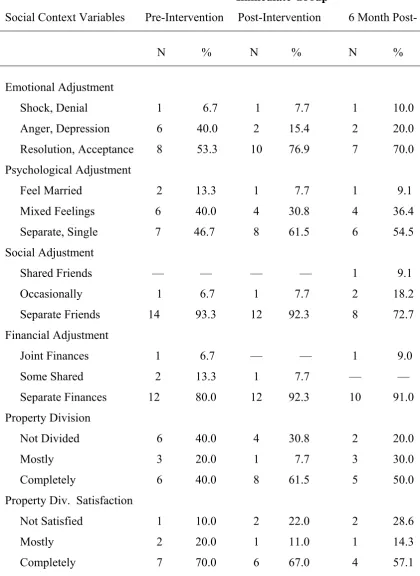
(12) xi. LIST OF TABLES Table Title 5.1. Page. Study One: T-tests, Means and Standard Deviations Pre-, Post- and Six-Months Post-Intervention for Adjustment to Separation Measures for the Six-week Intervention Group by Gender ……………………………. 78. 5.2. Study One: T-tests, Means and Standard Deviations Pre-, Post- and Six-Months Post-Intervention for Adjustment to Separation Measures for the Delayed Intervention Group by Gender ………………………………79. 5.3. Study One: T-tests, Means and Standard Deviations for Adjustment to Separation Measures by Treatment Times: Pre-, Post- and Six-Months Post-Intervention for the Six-Week Intervention Group ..….……………….. 80. 5.4. Study One: T-tests, Means and Standard Deviations for Adjustment to Separation Measures by Treatment Times: Pre-, Post- and Six-Months Post-Intervention for the Delayed Intervention Group ……………………… 81. 5.5. Study One: Percentage Distributions of Social Context Variables for the Six-Week Intervention Group .………………………………………………. 88. 5.6. Study One: Percentage Distributions of Social Context Variables for the Delayed Intervention Group ………………………………………………… 89. 6.1. Study Two: Means and Standard Deviations Pre-, Post- and Six-Months Post-Intervention for Adjustment to Separation Measures for the SixWeek Intervention Group by Gender ………………………………………. 99. 6.2. Study Two: Adjustment to Separation Measures Means and Standard Deviations Pre-, Post- and Six-Months Post-Intervention for the SixWeek Intervention Group …………………………………………………... 100. 6.3. Study Two: Means for the Adjustment to Separation Measures Pre-1,.
(13) xii. Pre-2, Post- and Six-Months Post-Intervention for Females and Males of the Wait-list Control Group ……………………………………………... 101 6.4. Study Two: Adjustment to Separation Measures, Means and Standard Deviations Pre-1, Pre-2, Post- and Six-Months Post-Intervention for the Wait-List Control Group ……………………………………………….. 102. 6.5. Study Two: Adjustment to Separation Measures Means and Standard Deviations Pre-, Post-1, Post-2 and Six-Months Post-Intervention for the Two-Day Intervention Group ………………………………………….. 103. 6.6. Study Two: Percentage Distributions of Social Context Variables for the Six-Week Intervention Group …………………………………………. 106. 6.7. Study Two: Percentage Distributions of Social Context Variables for the Two-Day Intervention Group ………………………………………….. 107. 6.8. Study Two: Percentage Distributions of Social Context Variables for the Wait-List Control Group ……………………………………………….. 108.
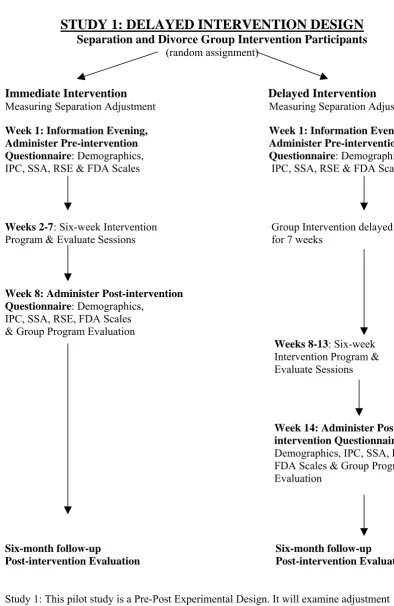
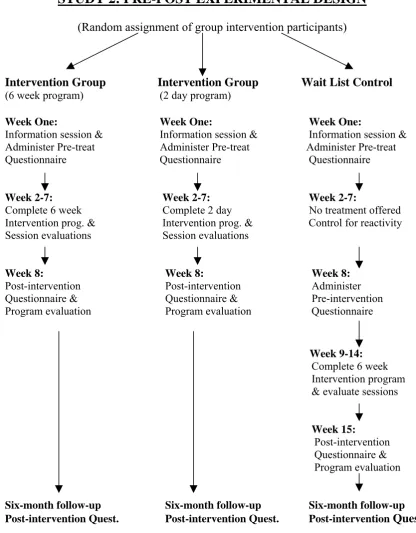
(14) xiii. LIST OF FIGURES 3.1. Research Design of Study One ……………………………………………… 53. 3.2. Research Design of Study Two ……………………………………………… 54. Appendix J - Study One Figures: Six-Week Intervention Group ……………… 197 Figure J1.. Mean locus of control internality subscale scores by treatment times for gender ………………………………….. 197. Figure J2.. Mean locus of control powerful others subscale scores by treatment times for gender ………………………………. 197. Figure J3.. Mean locus of control chance subscale scores by treatment times for gender ………………………………….. 197. Figure J4.. Mean Fisher divorce adjustment social self-worth subscale scores by treatment times for gender ……………… 198. Figure J5.. Mean Fisher divorce adjustment social trust subscale scores by treatment times for gender ……………………….. 198. Figure J6.. Mean Fisher divorce adjustment grief subscale scores by treatment times for gender ………………………………. 198. Figure J7.. Mean Fisher divorce adjustment anger subscale scores by treatment times for gender ………………………………. 199. Figure J8.. Mean Fisher divorce adjustment disentanglement subscale scores by treatment times for gender ……………… 199. Figure J9.. Mean Fisher divorce adjustment self-worth subscale scores by treatment times for gender ……………………….. 199. Appendix K - Study One Figures: Delayed Intervention Group Figure K1.. Mean locus of control internality subscale scores by treatment times for gender ………………………………….. 200.
(15) xiv. Figure K2.. Mean locus of control powerful others subscale scores by treatment times for gender ……………………….. 200. Figure K3.. Mean locus of control chance subscale scores by treatment times for gender ………………………………….. 200. Figure K4.. Mean Fisher divorce adjustment social self-worth subscale scores by treatment times for gender ……………… 201. Figure K5.. Mean Fisher divorce adjustment social trust subscale scores by treatment times for gender ……………… 201. Figure K6.. Mean Fisher divorce adjustment grief subscale scores by treatment times for gender ……………………….. 201. Figure K7.. Mean Fisher divorce adjustment anger subscale scores by treatment times for gender ……………………….. 202. Figure K8.. Mean Fisher divorce adjustment disentanglement subscale scores by treatment times for gender ……………... 202. Figure K9.. Mean Fisher divorce adjustment self-worth subscale scores by treatment times for gender ……………………….. 202. Appendix L - Study One Figures: Comparison of Six-Week Intervention and Delayed Intervention Groups Figure L1.. Mean locus of control internality subscale scores by treatment times for intervention and delayed intervention groups ………………………………………………………. 203. Figure L2.. Mean locus of control powerful others subscale scores by treatment times for intervention and delayed intervention groups …………………………………………. 203. Figure L3.. Mean locus of control chance subscale scores by.
(16) xv. treatment times for intervention and delayed intervention groups ………………………………………………………. 203 Figure L4.. Mean Fisher divorce adjustment social self-worth subscale scores by treatment times for the intervention and delayed intervention groups ………………………………… 204. Figure L5.. Mean Fisher divorce adjustment social trust subscale scores by treatment times for the intervention and delayed intervention groups …………………………………………. 204. Figure L6.. Mean Fisher divorce adjustment grief subscale scores by treatment times for the intervention and delayed intervention groups …………………………………………. 204. Figure L7.. Mean Fisher divorce adjustment anger subscale scores by treatment times for the intervention and delayed intervention groups …………………………………………. 205. Figure L8.. Mean Fisher divorce adjustment disentanglement subscale scores by treatment times for the intervention and delayed intervention groups …………………………………………. 205. Figure L9.. Mean Fisher divorce adjustment self-worth subscale scores by treatment times for the intervention and delayed intervention groups …………………………………………. 205. Appendix M - Study Two Figures: Six-week Intervention Group Figure M1.. Mean locus of control internality subscale scores by treatment times for gender ………………………………. 206. Figure M2.. Mean locus of control powerful others subscale scores by treatment times for gender ……………………….. 206.
(17) xvi. Figure M3.. Mean locus of control chance subscale scores by treatment times for gender ………………………………….. 206. Figure M4.. Mean Fisher divorce adjustment social self-worth subscale scores by treatment times for gender ……………… 207. Figure M5.. Mean Fisher divorce adjustment social trust subscale scores by treatment times for gender ……………………….. 207. Figure M6.. Mean Fisher divorce adjustment grief subscale scores by treatment times for gender ………………………………. 207. Figure M7.. Mean Fisher divorce adjustment anger subscale scores by treatment times for gender ………………………………. 208. Figure M8.. Mean Fisher divorce adjustment disentanglement subscale scores by treatment times for gender ……………… 208. Figure M9.. Mean Fisher divorce adjustment self-worth subscale scores by treatment times for gender ……………………….. 208. Appendix N - Study Two Figures: Wait-List Control Group Figure N1.. Mean locus of control internality subscale scores by treatment times for gender ………………………………. 209. Figure N2.. Mean locus of control powerful others subscale scores by treatment times for gender ………………………………. 209. Figure N3.. Mean locus of control chance subscale scores by treatment times for gender ………………………………….. 209. Figure N4.. Mean Fisher divorce adjustment social self-worth subscale scores by treatment times for gender ……………… 210. Figure N5.. Mean Fisher divorce adjustment social trust subscale scores by treatment times for gender ……………………….. 210.
(18) xvii. Figure N6.. Mean Fisher divorce adjustment grief subscale scores by treatment times for gender ………………………………. 210. Figure N7.. Mean Fisher divorce adjustment anger subscale scores by treatment times for gender ………………………………. 211. Figure N8.. Mean Fisher divorce adjustment disentanglement subscale scores by treatment times for gender ……………… 211. Figure N9.. Mean Fisher divorce adjustment self-worth subscale scores by treatment times for gender ………………………………. 211. Appendix O - Study Two Figures: Comparison of Three Groups Figure O1.. Mean locus of control internality subscale scores by treatment times for the six-week, the two-day and the wait-list control group ……………………………………… 212. Figure O2.. Mean locus of control powerful others subscale scores by treatment times for the six-week, the two-day and the wait-list control group …………………………………. 212. Figure O3.. Mean locus of control chance subscale scores by treatment times for the six-week, the two-day and the wait-list control group ……………………………………… 212. Figure O4.. Mean Fisher divorce adjustment social self-worth subscale scores by treatment times for the six-week, the two-day and the wait-list control group ………………… 213. Figure O5.. Mean Fisher divorce adjustment social trust subscale scores by treatment times for the six-week, the two-day and the wait-list control group ……………………………… 213. Figure O6.. Mean Fisher divorce adjustment grief subscale scores.
(19) xviii. by treatment times for the six-week, the two-day and the wait-list control group ………………………………….. 213 Figure O7.. Mean Fisher divorce adjustment anger subscale scores by treatment times for the six-week, the two-day and the wait-list control group ………………………………….. 214. Figure O8.. Mean Fisher divorce adjustment disentanglement subscale scores by treatment times for the six-week, the two-day and the wait-list control group ………………… 214. Figure O9.. Mean Fisher divorce adjustment self-worth subscale scores by treatment times for the six-week, the two-day and the wait-list control group ……………………………… 214.
(20) 1. CHAPTER ONE INTRODUCTION “Few events in life are more traumatic than divorce. Families are torn apart, lives are disrupted, and wounds linger long after the final papers are signed. The future that once appeared so bright now looms like a dark cloud. You wonder if you’ll ever get over the hurt, the grief, the anger. You wonder if you can ever love again. You can.” - Pat Hudson, 1998. This chapter provides an overview of divorce rates in Australia, cohabitation trends and the stressors of separation and divorce. Also, this chapter briefly reports on the impact of separation and divorce on men and women in relation to the social, psychological, emotional and financial aspects of relationship dissolution. There are many aspects to separation and divorce. Specifically, the focus of this research is to explore the usefulness of a community-based program to separated and divorced individuals seeking better adjustment outcomes. 1.1 Historical Overview of Separation and Divorce From 1900 to 1970 divorce rates in Australia remained at a low level. For example, in the mid 1960s, 10% of marriages ended in divorce. Since the 1970s there has been a dramatic increase in divorce rates. Once the Family Law Act of 1975 was introduced, the divorce rates increased by threefold (Australian Bureau of Statistics, 2002). Divorce was finally out of the arena of criminal law which allowed divorce if there were irretrievable differences between spouses (Weston, Stanton, Qu & Soriano,.
(21) 2. 2001). In the first year of the Family Law Act of 1975, a dramatic increase in divorce occurred and peaked by the end of the 1970s. Due to economic recessions, other peaks in divorce rates occurred in 1982-83 and again in 1991 (Family Matters, 1993). By the late 1990s, 40% of marriages ended in divorce. Overall, the divorce rate had varied marginally over two decades. The divorce rate in 1978 was 2.8 per 1000 population. This declined to 2.4 in 1987, increased to 2.9 in 1996 and declined to 2.7 in 1998 (Australian Bureau of Statistics, 1999). In addition to marriage dissolution rates, the statistics show that there has been a significant increase in the number of people cohabiting prior to marriage. In 1978 only 22% of couples had cohabited prior to marriage whereas in 1998 this had increased to 67%. Although there is no register to identify specifically the number of people who had cohabited for a significant period and separated, the 1996 Census of Population and Housing reported 55% of people lived in couple relationships. Of these, 5.3% lived in de facto relationships and 49% in registered marriages. With an increase in cohabitation rates, there has been some speculation about the advantages of cohabitation. Some researchers have argued that cohabitation tends to be more of a temporary arrangement (Qu & Weston, 2001) and not considered as an alternative to marriage (Sappington, 1989). Others claim that cohabitation may act as a premarriage filter or a preventative measure of divorce (Hill, Rubin & Peplau, 1979) and also increases the risk of marriage instability (Teachman & Polonko, 1990). Historically, divorce trends and marriage patterns in Australia have been similar to other countries in the Western world during the twentieth century. Divorce has been an option for European society for centuries (Scanzoni, 1979). Prior to the sixteenth century, the Roman Catholic courts granted divorce only when adultery,.
(22) 3. cruelty or heresy was cited. The legal dissolution of marriage was difficult to obtain and the consequences of divorce for either spouse was that remarriage was forbidden. Then, during the eighteenth century, divorce was dealt with in the civil courts, but the continuing difficulties and stringent laws motivated people (mainly women) to resort to desertion, hence affecting the notion of marital stability. The difficulties of obtaining a divorce were encountered by both sexes until the latter part of the eighteenth century when women more so than men started petitioning and citing adultery as their main grounds for divorce. With the emergence of feminism, changes in social norms shifted dramatically during the nineteenth century and women’s bargaining power in a marriage was strengthened. As a result of women’s improved positioning in society during the latter part of the nineteenth century, divorce rates increased steadily (Scanzoni, 1979). It is evident from the literature that divorce trends continued to rise in Western society and reached a peak in the last quarter of the twentieth century. Undoubtedly, due to the continual rise in divorce rates over the centuries it appears that Australian cohabitation and divorce trends are not likely to reduce significantly during the early part of the twenty-first century. As a direct consequence of the increasing rates of relationship dissolution over time, research has contributed significantly to separation and divorce adjustment outcomes. If divorce trends continue at the present rate of 2.8 per 1000 population in Australia this suggests that approximately 40% of all marriage will dissolve (Australian Bureau of Statistics, 1999). Similarly, if defacto relationships prior to marriage keep increasing significantly, it is likely that society will become more accustomed to these social changes and become more experienced at adjusting.
(23) 4. physically, emotionally and socially. Although considerable distress may be experienced as a result of ending a relationship, if the current trend continues, people will gain more experience at dealing with the consequences, and society more accepting of separation and divorce as a common occurrence. This was evident in the research conducted by Burns and Dunlop (2000) where they suggest intergenerational transmission of divorce in some cases. Such results further highlight the need for effective intervention. To assist with the adjustment process, community based programs and services have been available. Future programs would need to modify interventions according to the present social norms. As society becomes more experienced at dealing with the consequences of separation and divorce, adjustment to the changed circumstances may not be hampered by so many problems in the future. 1.2 Interventions and Adjustment to Separation and Divorce Whether married or living in a de facto relationship, couples may experience similar difficulties of uncoupling (Mastekaasa, 1994; Levinger, 1979) and adjusting to separation (Mika & Bloom, 1980). Although considerable attention has been devoted to the consequences of marital dissolution (Kitson & Morgan, 1990; White, 1990), the end of a marriage or de facto relationship involves significant change that results in various disruptions, difficulties (Kitson, 1992), loss (Harvey, 1982), decline in physical and mental health (Wu & Hart, 2002) and negative consequences for the former partners and children (Fenell & Weinhold, 2003; McNamara & Morrison, 1982). The pre-separation (Federico, 1979), post-separation, post-divorce periods are quite traumatic (Avery & Thiessen, 1982), stressful (Bloom, Asher & White, 1978; Bloom, White & Asher, 1979; Chiriboga & Pierce, 1981; Chiriboga, Roberts & Stein, 1978; Counts & Sacks, 1985; Wallerstein & Kelly, 1980; Weiss, 1976; Wertlieb,.
(24) 5. Budman, Demby & Randall, 1984) and may have an impact on the person’s identity (Gold, 1988). In 1967, Holmes and Rahe’s research rated the divorce experience as the second most stressful life event and marital separation as the third most stressful life event on the social readjustment rating scale. In considering the separation stressors, whether an individual was in a heterosexual or homosexual relationship (Kurdek, 1997), the relationship dissolution process is considered by some researchers as the most stressful and disruptive life event (Counts & Sacks, 1985; Ladbrook, 1982). It has been suggested that there is the possibility of long-term post-separation effects continuing for a period of up to 10 years for some individuals (Wallerstein, 1986). Specifically, the post-divorce period has been described as distressing where postseparation attachment between some former spouses has continued for a seemingly endless amount of time (Berman, 1988). Thus, the post-separation, post-divorce period is a time of change, confusion and transition (Bonkowski & Wanner-Westly, 1979; Chiriboga, 1982). Numerous losses are experienced (Weiss, 1976; Kessler, 1976) while trying to adapt to the social, financial, emotional and psychological changes as a newly separated person (Brown, Felton, Whiteman & Manela, 1980; Spanier & Casto, 1979). Although the social costs have decreased in recent years due to less stigmatization of people choosing separation and divorce, both parties experience changes in self-concept and both are economically disadvantaged. According to Myers (1989), the standard of living decreases more so for women than for men, but the psychological costs of separation seem to be greater for men as the morbidity and mortality rates are higher. Women tend to be more financially disadvantaged because they are more likely to.
(25) 6. compromise and make more concessions, whereas men tend to be more coercive and insensitive to the interpersonal and emotional dynamics during negotiations. Overall, men seem to be more bewildered and stressed by the dissolution of the relationship and have a higher rate of admissions to psychiatric hospitals, whereas women attempt suicide more often during the separation period (Bloom, White & Asher, 1979). It is evident that individuals experience the various components of separation and divorce differently (Hartin, 1982). Because the long-term consequences of separation and divorce are high (Amato & Keith, 1991; Williams, 1988), a considerable body of research has been devoted to exploring adjustment outcomes for individuals and groups. Emotional adaptation is part of the course of experiencing a significant life change (Healy, 1988), and developing an understanding of the stressful circumstances can influence coping and new levels of functioning (Wiseman, 1975). Specifically, achieving some resolution regarding the emotional impact is important (Funder, 1992). Community agencies offer individual, couple, family and group counselling, support programs and psycho-educational sessions. Specifically, the psycho-educational programs are designed to provide participants with information about the separation and divorce process and to encourage participants to make use of the information in order to gain a greater understanding of their resolution process (Elliott, 1997; Nicholson Callahan, 1979). To facilitate adjustment, most intervention programs aim to provide participants with a number of opportunities: (1) to normalize the stressors of separation and divorce, (2) to provide information about the grief and loss process, (3) to encourage the creation of support networks, and (4) to develop greater self awareness, and explore ways of progressing through the adjustment process..
(26) 7. Generally, participants are motivated to attend group intervention programs because of adjustment difficulties, coming to terms with changed circumstances and to resolve some of the emotional aspects of separation (Huppert, 1982). A number of intervention programs have been evaluated to determine the benefits for participants’ adjustment to separation and divorce (Byrne, 1990; Byrne & Overline, 1991). Some of these include: the Beginning Experience (Stewart, Lay & Gau, 1984); the Treatment Seminars (Granvold & Welch, 1977); Communication Skills Training (Avery & Thiessen, 1982); Building Skills in Divorce Adjustment Groups (Kessler, 1978); and the Fisher Divorce Adjustment Seminars (Fisher, 1976). Although there is a body of research that has evaluated separation and divorce adjustment outcomes following group intervention, research has not investigated the adjustment differences for married and de facto attendees of an intervention program for the separated and divorced in a remote region. Therefore, this study intends to evaluate the effectiveness of the Lifeline Cairns Region six-week Rebuilding After Separation and Divorce psycho-educational intervention program in addressing adjustment to separation for married and de facto participants. Specifically, the Rebuilding After Separation and Divorce intervention program seeks to assist participants increase their awareness, knowledge and coping skills during the post-separation period. The adjustment process involves the disruption of roles, patterns and social interactions (Raschke, 1977) that were an integral part of the person’s life during their relationship. The group intervention sessions focus on assisting participants’ deal with the emotional, physical and psychological aspects of relationship breakdown and separation. The emotional levels individuals experience has been described as being akin to the stages of grief and loss.
(27) 8. (Fisher, 1981). Therefore, the aims of the intervention program are: (1) to assist participants integrate their experience; (2) support their quest for personal growth; (3) foster awareness and personal responsibility; and (4) to assist individuals explore ways of progressing through the adjustment process in a supportive environment. In conclusion, the purpose of this study will be to determine the effectiveness of the group treatment program in facilitating adjustment in the short-term and in a six-month follow-up. The study intends to examine a number of personality variables such as self-esteem, social support and locus of control to evaluate post-separation adjustment. Also an adjustment measure will be utilized to examine the emotional and social aspects of post-separation such as: social self-worth, grief and loss, separation anger, disentanglement, self-worth and social trust. A range of demographic variables including situational variables will be examined to ascertain their influence on the degree of adjustment to separation and divorce..
(28) 9. CHAPTER 2 LITERATURE REVIEW – INTERVENTION GROUPS In the previous chapter, divorce rates and the impact of separation were briefly discussed. In this chapter, particular attention will be on research focusing on adjustment outcomes post-separation. Specifically, short- and long-term intervention programs, their usefulness and limitations in assisting adjustment will be considered. 2.1 Group Intervention Facilitating Separation and Divorce Adjustment Individuals experiencing the difficulties of separation and divorce often seek professional support. Various interventions are available for separated and divorced people trying to adjust to their new circumstances. These can range from individual, couple and family counseling to group intervention. The response to group intervention programs that has been offered over time has been mostly positive. According to Bonkowski and Wanner-Westly (1979) the important elements of separation and divorce group-intervention programs are group support, psychoeducational and psychotherapeutic input. Some group intervention programs may focus mainly on only one of these elements whereas others may include all three elements. Other important elements of group intervention are interpersonal learning, group cohesiveness, universality (Ǿygard,Thuen & Solvang, 2000) and the group size. Yalom (1995) claims that small groups comprising five to eight individuals provide the greatest opportunity for group members to participate fully and work through personal issues. Attending a smaller group allows more time for interaction and expression. Often participants are able to build rapport quickly and feel more comfortable in expressing their concerns about separation and adjustment. In larger.
(29) 10. groups, the opportunities for getting to know each other and share personal experiences and coping strategies are reduced. Although most intervention programs are designed to facilitate adjustment, there is a large variation amongst them. Some focus on a range of aspects regarding the relationship termination (Byrne, 1990; Byrne & Overline, 1991) while others concern themselves with the process of adaptation to a single life (Fisher, 1995). The aim of most group intervention programs is to provide participants with a number of opportunities: (1) to normalize the stressors of separation and divorce; (2) to provide information about the grief and loss process; (3) to encourage the creation of support networks; (4) to develop greater self awareness, express feelings and explore ways of progressing through the adjustment process; and, (5) to maximize the adjustment benefits. Often short-term benefits are reported. However, whether various intervention programs improve adjustment outcomes in the long-term still remains a contentious issue to date. Several studies have explored the effectiveness of specific group intervention programs in facilitating adjustment to separation and divorce. Some of these group intervention programs are: the group marathon design of the Beginning Experience (BE) workshop (Stewart, 1976); the group process model of the Fisher Seminars (Fisher, 1976); group therapy model (Huppert, 1982; Morris & Prescott, 1975); divorce adjustment and transition groups (Bonkowski & Wanner-Westly, 1979; Kessler, 1976; Prescott & Morris, 1979; Salts & Zongker, 1983); the communications training model (Kessler, 1978; Thiessen, Avery & Joanning, 1980); the crisisintervention model (Davidoff & Schiller, 1983); seminars for the separated, a shortterm psycho-educational group intervention (Wertlieb, Budman, Demby & Randall,.
(30) 11. 1984); and, the cognitive-behavioural model (Granvold & Welch, 1977). Despite the limited number of sessions offered by each model, all claim to be effective in facilitating better adjustment outcomes for some participants in the short-term. Most of these studies did not focus on group size, group cohesion or previous experience of separation as a contributor to adjustment, although most of the intervention models were of similar length and were conducted weekly (from five to ten weeks) for a number of hours per session. Only one intervention model offered weekly sessions for six months and the BE workshop was conducted over a single weekend. 2.1.1 Differences in Group Intervention Models There has been substantial research that has contributed to addressing the variations in intervention models for separated and divorced groups (Addington, 1992; Bloom, Hodges, Kern & McFaddin, 1985; Byrne, 1990; Davidoff & Schiller, 1983; Fisher, 1978; Graff, Whitehead 111 & LeCompte, 1986; Kessler, 1978; Kaslow, 1981; Salts & Zongker, 1983; Thiessen, Avery & Joanning, 1980; Vera, 1990). This research has contributed to the comparison of a multitude of design differences such as: the effectiveness of a therapy model to an information and support group model; a structured to a semi-structured and an unstructured group intervention format; intervention groups to control groups; variations in length of treatment; pre- and post-group comparisons; single-case designs and qualitative observations. Quite clearly, it is difficult to say anything meaningful regarding the efficacy of the individual intervention models while there continues to be such variations within models and outcome measures. However, some research effort has been directed at addressing this issue and this will be presented next..
(31) 12. One model, the Beginning Experience (BE) two-day workshop, was examined to measure the effectiveness of treatment in facilitating adjustment. Byrne (1990) compared the outcomes of the BE group marathon design to a support group and an information group. All workshops were conducted over a single weekend to compare the difference in intervention outcomes over time. The BE workshop consisted of a series of discussion subjects (encounter with self; spiritual death; trust in self, others and God; and, guilt), personal experience presentations, journal writing and smallgroup meetings. The format for the support group workshop consisted of lectures, a group session, small group meetings and encouragement to participate in the social activities. The main topic of discussion in this group was ‘forgiveness’. The format for the information group workshop comprised of two information sessions focusing on the stages of grief and divorce recovery. In comparing these group formats, the results showed that greater adjustment was evidenced ten weeks after pre-test for the BE group than the support or information groups. All groups showed some adjustment during the pre to post-test period with the BE group showing the greatest adjustment. The adjustment measures used in this study were the Personal Information Form, the Fisher Divorce Adjustment scale, the Engebretson Interpersonal Distance Measure and a self-report form indicating energy in a new relationship. The results showed that gains at the tenweek follow-up period continued for the BE group and the support group while a significant decline in adjustment was evident for the information group (Byrne, 1990). Although the results were not significant for the support group it appeared that encouragement of social interaction and support in a group can facilitate better separation and divorce adjustment outcomes..
(32) 13. In contrast, research conducted by Addington (1992) examined the value of an eight-week psycho-educational and support group program on fifty men and women over four years in six separate groups. The aim of this group program was to assist outpatients who presented at a general hospital with post-divorce adjustment difficulties in the short-term. Group members met once a week for 90 minutes to focus on the emotional impact and emotional response to separation and to share their problems with others experiencing the same stressors. The main objective of this program was to assist group-participants increase their coping strategies and reduce the stress of separation. Session one focused on the group rules and an overview of the topics for the eight-week program. The topics covered were: the grief process and the stages of grief; anger; loneliness; review of the relationship; self-concept and selfesteem; sexuality and intimacy pre- and post-separation; and, self-evaluation of progress. An evaluation of the program by participants revealed that the topics covering the grief process and the emotional stages of grief, anger and self-esteem were most helpful. Although this study reported participants’ statements of the benefits of participating in the group program no comparisons were made between groups. However, a measure to assess between-groups comparisons would provide additional information about the effectiveness of the group process. Using a post-test design, Graff, Whitehead 111 and LeCompte (1986) compared the effectiveness of a cognitive behavioral therapy group to a supportive insight-oriented group for women. Twelve women were assigned to each treatment group and compared to two control groups each comprising eleven women. The cognitive-behavioural group met for three hours in the initial session and two and a half hours for the second session held a week later. During the second phase, group.
(33) 14. meetings were held for 30 to 40 minutes four days per week for two and a half weeks. Overall, approximately twelve hours of treatment were offered. On the other hand, the format for the supportive insight group was to meet for two and a half hours twice a week for four weeks. In order to gain a better understanding of divorce and an insight into their circumstances, group discussions and self-disclosures were encouraged. The overall results of this study indicated that the cognitive behavioural therapy group was the most effective treatment in assisting divorced women. The supportive insight oriented group was also reported to be useful as an effective treatment for divorced women. Therefore, both therapeutic and support elements were considered helpful. Davidoff and Schiller’s (1983) research involved a 30-month post-program follow-up design to assess the value of a community-based divorce program using a crisis intervention model of group work. A series of six weekly two-hour sessions with a lecture/discussion format were offered on the realities of divorce to five hundred women over a five-year period. The first two sessions dealt with the emotional impact of separation and relationship breakdown, loss, mourning the loss, and grief reactions. The topics for subsequent sessions included: coping as a single person, single parenting, divorce law and overcoming the crisis of divorce to dream a new future. A follow-up telephone research study of eighty of the 500 original participants two and a half years later showed that sixty participants were satisfied with the group work program (Davidoff & Schiller, 1983). Considering the lack of information provided for the follow-up sampling procedure, it is evident that this does not contribute to a clear indication of the benefits of the crisis intervention model. However, this study claimed that the participants that responded to the follow-up.
(34) 15. survey acknowledged an improvement in personal feelings, which facilitated better adjustment outcomes. Three different treatment modalities utilized by Kessler (1978), Salts and Zongker (1983) for divorce adjustment were: the structured group, the unstructured group and the control group. The purpose of the eight-week structured format was to provide divorced individuals with opportunities to build their personal and social skills and deal with divorce-related feelings. The aim of the eight-week unstructured group program was to provide a supportive environment so that participants could share and explore their concerns. On the other hand, the control group was on a waitlist for treatment for eight weeks. The Salts and Zongker (1983) study and the Kessler (1978) study obtained similar results, whereby the structured group had greater adjustment outcomes than the unstructured group and the unstructured group showed greater adjustment outcomes than the control group. Kessler (1978) argued that the successful outcome of the structured group may be attributed to participants being actively engaged in theme-based sessions aimed at skill building and attaining goals. In comparison, the reduced adjustment gains for the unstructured group may have resulted from a less active approach of sharing of concerns and strengths rather than goal attainment. It is evident from comparing the structured and unstructured groups to the control group results that the passive approach of waiting for involvement does not enhance adjustment outcomes in the short-term. The intervention strategy utilised by Thiessen, Avery and Joanning (1980) to measure adjustment outcomes was a communication skills training approach. The experimental group completed a five-week treatment program comprising fifteen hours in total while the control group received no treatment or contact during that.
(35) 16. time. Both groups were assessed pre- and post-treatment on their communication skills and measures of self-esteem, social support and divorce adjustment (Thiessen et. al., 1980). Although it seemed as though the communication training intervention program had a positive effect on adjustment outcomes, participants’ levels of social support remained unaffected post-intervention. Hence, it is suggested that the intervention program may have enhanced participants’ basic communication skills but did not encourage the development of new social support systems due to the lack of time. Shelton and Nix (1979) provided an account of the development and implementation of a group-counselling program for separated and divorced individuals offered by a social service agency. Six weekly sessions of two hours in length were offered. Seven groups involving 58 men and women participated. The group counselling program objectives were: (1) to provide information, resources and a supportive environment; (2) to encourage the integration of new coping skills, the attainment of an independent identity; and, (3) opportunities to discuss issues specific to the separation and divorce experience. Participants were encouraged to discuss the stages of emotional divorce and explore feelings of grief and loss, helplessness, guilt, anger and ambivalence associated with separation and divorce. The group-counselling program incorporated concepts of rational emotive therapy. The format included crisis intervention in the beginning stage to relieve negative feelings and focus on the grief process. Communication training and problem solving techniques were introduced in the middle stage to offer participants an opportunity to develop new skills. In the final stages of the program, participants were provided with information on how to challenge their negative thinking and deal with their issues. Although no qualitative.
(36) 17. or quantitative evaluation of adjustment outcomes was provided, the researchers concluded that intervention programs were valuable in the provision of support during adjustment to divorce. To monitor treatment effects for individuals participating in a ten-week semistructured treatment program with an educational, supportive and therapeutic component, Vera (1990) used a combination of pre- and post-group comparisons, single-case design and qualitative observations. The treatment program was an adaptation of the Fisher Divorce and Personal Growth Seminar (Fisher, 1978). A total of eleven subjects participated in two adjustment groups. Following group comparisons and considering single case variations in adjustment this study claimed that eight participants’ well being improved following treatment. This result was achieved through the comparison of baseline and treatment outcome scores. Vera (1990) claimed that the adjustment process of individual participants seemed to be affected by the following factors: the passage of time, social support, life events, stressors and who initiated the separation. According to Vera (1990), the benefit of conducting a multi-methodological approach was that it provided a rich source of information about individual variations following intervention. Vera conducted a similar study in 1993 to assess treatment outcomes for twenty-five separated and divorced individuals who participated in five adjustment groups. Pre- and post-intervention comparisons showed that twenty-three participants reported improved adjustment scores and four of the five groups had improved adjustment outcomes. Although Vera (1993) acknowledged the methodological shortcomings of these studies it was argued that the results provided a rich source of information regarding individual adjustment to separation and divorce..
(37) 18. Utilising a different intervention format, Fisher (1976) claimed the ten-week divorce adjustment seminar was effective in assisting people work through the difficulties of separation and divorce. This study measured divorce adjustment outcomes by dividing 60 participants into two groups, an experimental and control group. The experimental group attended a three-hour divorce adjustment seminar weekly for ten weeks. The control group was not offered the adjustment seminars during the research period. A pre-test was administered to the experimental and control groups, the experimental group was administered a post-test in week ten of the seminars and experimental and control groups were administered a three-month posttest. The results showed that individuals with good self-concept had better divorce adjustment outcomes. Also, improvement was noted in the following areas: total divorce adjustment; self-acceptance of divorce; disentanglement from the relationship; and, rebuilding social relationships. In contrast to short-term intervention, Bloom, Hodges, Kern and McFaddin (1985) developed a six-month community-based preventive intervention program with an aim to provide participants with social support and confidence building. The topics covered over that period were legal and financial issues; child rearing and single parenting; career planning and employment; housing and homemaking; and, socialization. Outcomes for the intervention group were compared to an untreated control group at six-months, eighteen-months and thirty-months. Results showed that all participants from both the intervention and control groups showed improvement during the six to eighteen month period. In particular, the intervention group showed superior adjustment when interviewed eighteen-months post-treatment. Interestingly, women showed greater scores in personal growth dimensions throughout the four-.
(38) 19. year study. Although multiple benefits were reported for participants of this study, Bloom et al. (1985) state that one of the limitations of the intervention was that the program appeared to have less impact for men than women. To improve adjustment outcomes for men perhaps community-based intervention programs could develop and offer more specific intervention sessions on confidence building and support. In conclusion, most of the research that was reviewed on the effectiveness of intervention programs showed that intervention improved adjustment outcomes for separated and divorce individuals. Both short- and long-term intervention programs seemed to contribute to beneficial adjustment outcomes for some participants (Addington, 1992; Bloom, Hodges, Kern & McFaddin, 1985; Davidoff & Schiller, 1983). Specifically, it seems that programs providing social support (Bloom et al., 1985; Vera, 1990; Vera, 1993; Byrne, 1990), information on social and emotional adjustment (Fisher, 1976), coping strategies and how to reduce the stress of separation (Addington, 1992) are helpful during the separation and divorce period. Interestingly, it appears that individuals that do not participate in any intervention program also adjusted to their circumstances but at a slower rate (Bloom et al., 1985; Spivey & Sherman, 1980). Overall, it appeared that all intervention programs were helpful in improving adjustment outcomes although some researchers state that there were greater adjustment outcomes for some participants attending specific group interventions. The three main group intervention models are the educational group, the therapy group and the support group. Some researchers have utilized one group model only while others have utilized a component of each model in one intervention program and claimed success. Although there have been numerous comparisons between different.
(39) 20. group intervention models, this study intends to utilize an existing intervention program which includes the educational and support components. For the last five years, Lifeline Cairns Region has offered the community their structured psychoeducational group format program entitled the Rebuilding after Separation and Divorce course. Given that anecdotal evidence seems to suggest that it is a successful program, it is timely to empirically test such assertions. 2.1.2 Group Intervention using the Educational Format Intervention group programs have been developed to assist individuals seeking treatment during the separation and divorce adjustment process. One of these is the structured educational format. The aim of an educational group format is “to educate those facing a potential threat or a developmental life event” (Brown, 1998, p.1). The most important element is to provide the opportunity for new learning. The Rebuilding after Separation and Divorce course has a significant educational component. The primary focus for participants is on the presentation of specific information regarding the relationship decline process and adjustment to separation and divorce. The focus moves from the past to the present and then onto the future (Prescott & Morris, 1979). All sessions are topic driven and given that participants choose to attend such a group their motivation to learn tends to be high (Jacobs, Masson & Harvill, 1997). The group dynamics in an intervention group can often be challenging when participants are at different stages (Scott & Mitchell, 1976) or at different levels of understanding (Jacobs, Masson & Harvill, 1997) of the separation process. In other words, if participants join an educational group program a couple of weeks following separation their extreme distress may interfere with their ability to focus on the.
(40) 21. information presented. Whereas, participants who have been separated for at least two months have usually passed the stage of extreme bewilderment and are at a different level of understanding of their circumstances. Although interaction between participants is considered secondary, as the group progresses, participants tend to become more comfortable, hence, during the middle stage of the group program, they are invited to interact more and discuss the material presented in dyads or triads. Considering that the aim is to increase participants’ knowledge and awareness of their circumstances and the discussion of ideas becomes paramount (Brown, 1998), educational groups aimed at adjustment for separated and divorced individuals appear to be helpful (Sprenkle & Storm, 1983). In essence, an educational component of a group intervention program offers participants information about the separation and divorce process and coping strategies in dealing with their separated status and in relating as a separated person. An important component of the adult learning model is to invite participants to share information about their circumstances and personal resources. Information dissemination is the most important element (Brown, 1998). Specifically, the information that is offered is designed to increase the individual’s understanding of stressors and emotions, improve problem solving skills, self-esteem and communication. According to Jacobs et al. (1997) the advantages of the group learning process are in the sharing of ideas and discovering new ways of dealing with difficulties to improve personal circumstances. 2.1.3 Group Intervention - the Support Group Element Although the main component of the Rebuilding after Separation and Divorce course is educational, the support process remains as an important key element of the.
(41) 22. group program. Characteristics of support are defined by the: “emphasis on similarities of members around a common concern; interaction with other members who have similar conditions and have benefited; an underlying theme that unites members; and support for accomplishing personal goals” (Brown, 1998, p. 238). The support group process may involve professionals facilitating the group process by providing participants with information and skills training (Helgeson & Gottlieb, 2000). In addition to the expectation of mutual support between members, the group facilitator’s focus is to create an environment where participants will have the opportunity to express their experiences, concerns and feel safe to share these with group members (Brown, 1998; Jacobs, Masson & Harvill, 1997). The most important dynamics during the beginning stages of a group are to assist participants in creating a common bond and encourage the development of trust, genuineness, commitment and caring between group members (Brown, 1998). Generally, during the middle stage of the group, support is extended through encouragement and participants get to know each other better with sharing becoming more intimate (Huppert, 1982). Often, when strong support networks have developed in a group, the closing stage where group reliance is about to cease tends to be an emotional time for participants (Jacobs et al., 1997). Consequently, in closing the group, it is paramount that the group facilitator takes the opportunity to address group needs to allow members the opportunity to process the loss of the intervention group, identify existing support systems and ways of developing new support systems. Similar to other intervention programs the support component of the Rebuilding after Separation and Divorce course is seen as an integral part of the program. The common themes help unite members in forming supportive.
Figure


+7



Related documents