EFFECTIVENESS OF BREAST FEEDING TRAINING
PROGRAMME ON KNOWLEDGE AND PRACTICE
AMONG PRIMIPARA MOTHERS
Dissertation Submitted To
THE TAMILNADU DR. M.G.R. MEDICAL UNIVERSITY
CHENNAI
IN PARTIAL FULFILMENT OF REQUIREMENT FOR THE AWARD OF DEGREE OF
AND PRACTICE AMONG PRIMIPARA MOTHERS
IN SAIDAPET EMERGENCY OBSTETRIC
CARE UNIT AT CHENNAI 2013-2014.
Certified that this is the bonafide work of
Mrs. M. RAMADEVI
MADHA COLLEGE OF NURSING,
KUNDRATHUR, CHENNAI – 600 069.
COLLEGE SEAL:
SIGNATURE :
Dr. Mrs. TAMILARASI. B
R.N., R.M., M.Sc.(N)., M.Phil., Ph.D., Principal,
Madha College of Nursing, Kundrathur,
Chennai - 600 069, Tamil Nadu.
Dissertation Submitted To
THE TAMILNADU DR. M.G.R. MEDICAL UNIVERSITY
CHENNAI
IN PARTIAL FULFILMENT OF REQUIREMENT FOR THE AWARD OF DEGREE OF
A STUDY TO ASSESS THE EFFECTIVENESS OF BREAST
FEEDING TRAINING PROGRAMME ON KNOWLEDGE
AND PRACTICE AMONG PRIMIPARA MOTHERS
IN SAIDAPET EMERGENCY OBSTETRIC
CARE UNIT AT CHENNAI 2013-2014.
Approved by the dissertation committee on : 15.03.2013
Research Guide : __________________________ Dr. Mrs. TAMILARASI. B R.N., R.M., M.Sc.(N)., M.Phil., Ph.D.,
Principal,
Madha College of Nursing, Kundrathur,
Chennai - 600 069, Tamil Nadu.
Clinical Guide : __________________________ Mrs. KANAGAVALLI. P.
R.N., R.M., M.Sc.(N).,
Head of the Department of Obstetrics and Gynecological Nursing ,
Madha College of Nursing, Kundrathur,
Chennai – 600 069, Tamil Nadu.
Medical Guide : __________________________ Dr. AGILA IYYAPPAN.
Medical Officer,
Emergency Obstetric Care Unit, Family Welfare Department, Chennai Corporation,
Saidapet, Chennai.
Dissertation Submitted To
THE TAMILNADU DR. M.G.R. MEDICAL UNIVERSITY CHENNAI
IN PARTIAL FULFILMENT OF REQUIREMENT FOR THE AWARD OF DEGREE OF
I thank the God almighty for his constant blessings and guidance on me throughout my study in my hour of need.
My beautiful thanks to the founder Dr. S. Peter, Chairman, Madha Group of Academic Institutions for giving me an opportunity to carry out this study successfully.
I owe my deep sense of whole hearted gratitude to Dr. Mrs. Tamilarasi. B, R.N., R.M., M.Sc.(N)., M.Phil., Ph.D., Principal, Madha College of Nursing for her elegant direction, expert guidance, innovative suggestion, constant motivation and extreme patience without which I would not have completed the dissertation successfully.
I express my sincere gratitude to Prof. Grace Samuel, R.N., R.M., M.Sc.(N)., Vice Principal, Madha College of Nursing for her splendid guidance and perusal for the study.
I am especially grateful to my research guide Mrs. Kanagavalli. P,R.N., R.M., M.Sc.(N)., Head of the Department of Obstetrics and Gynecology, Madha College of Nursing for her untiring intellectual guidance, concern patience, kind support, enlightening ideas and willingness to help at all times for the successful completion of the research work.
I am indeed grateful to Mrs. V. Vathana, R.N., R.M., M.Sc.(N)., M.Phil., Associate Professor, Class Co-ordinator, Madha College of Nursing for her tremendous support, loving concern, timely help and constructive efforts.
I express my sincere gratitude to Dr. Agila Iyyappan, Medical Officer, Saidapet Emergency Obstetric Care Unit, Family Welfare Department, Corporation of Chennai for her kind support and suggestion.
With special references, I thank the Zonal Officer, Saidapet Emergency Obstetric Care Unit, Chennai for her support, to conduct the study and successful completion of research work.
I extended my gratitude to the statistician Mr. Venkatesan, M.Sc., MBA., Ph.D., for his expert support in statistical analysis amidst his hectic schedule.
I wish to acknowledge my heartfelt gratitude to all the Faculty members of Madha College of Nursing. I extend my special thanks to the Librarian, Madha College of Nursing and the Tamil Nadu Dr. M.G.R. Medical University.
I express my deep sense of gratitude to all the Primipara mothers in this study for their tremendous co-operation without whom this study would have been impossible.
Above all, I am deeply thankful to my parents Mr. R. Muthusamy and
Mrs. Parvathiand my husband Mr. E. Ravindar for their constant support and encouragement throughout my research work.
I extend my heartfelt thanks to my brothers and sister who helped for completing this project work.
CHAPTER No CONTENTS PAGE No
I INTRODUCTION 1-11
Need for the study Statement of the problem Objectives Operational definitions Hypothesis Delimitations 6 10 10 10 11 11
II REVIEW OF LITERATURE 12-31
Review of related literature Conceptual framework
13 27
III METHODOLOGY 32-40
Research approach Research design Research variables Setting of the study Population
Sample Sample size
Sampling technique
Criteria for sample selection Description of the instrument Validity
Reliability
Ethical consideration Pilot study
Data collection procedure Data analysis 32 32 32 33 33 33 33 34 34 34 37 37 37 37 38 39
IV DATA ANALYSIS AND INTERPRETATION 41-80
V DISCUSSION 81- 86
VI
SUMMARY, CONCLUSION, NURSING IMPLICATIONS, RECOMMENDATIONS AND LIMITATIONS
87- 92
REFERENCES 93-96
LIST OF TABLES
TABLE No TITLE PAGE No
1 Frequency and percentage distribution of demographic
variables among primipara mothers. 43
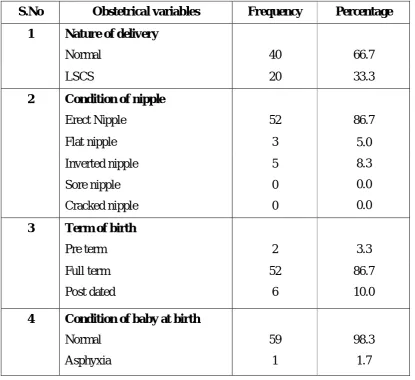
2 Frequency and percentage distribution of obstetric
variables among primipara mothers. 51
3
Frequency and percentage distribution of pretest level of knowledge regarding breast feeding among primipara mothers.
56
4
Frequency and percentage distribution of pretest level of practice regarding breast feeding among primipara mothers.
58
5
Frequency and percentage distribution of posttest level of knowledge regarding breast feeding among primipara mothers.
60
6
Frequency and percentage distribution of posttest level of practice regarding breast feeding among primipara mothers.
62
7
Comparison of frequency and percentage of pretest and posttest level of knowledge regarding breast feeding among primipara mothers
64
8
Comparison of frequency and percentage of pretest and posttest level of practice regarding breast feeding among primipara mothers
66
9
Comparison of mean and standard deviation of pretest and posttest level of knowledge regarding breast feeding among primipara mothers.
68
10
Comparison of mean and standard deviation of pretest and posttest level of practice regarding breast feeding among primipara mothers.
mothers
12
Association of pretest level of knowledge and practice regarding breast feeding among primipara mothers with their selected demographic variables.
73
13
Association of pretest level of practice regarding breast feeding among primipara mothers with their selected demographic variables
74
14
Association of pretest level of knowledge and practice regarding breast feeding among primipara mothers with their selected obstetrical variables.
75
15
Association of pretest level of practice regarding breast feeding among primipara mothers with their selected obstetrical variables.
76
16
Association of posttest level of knowledge and practice regarding breast feeding among primipara mothers with their selected demographic variables.
77
17
Association of posttest level of practice regarding breast feeding among primipara mothers with their selected demographic variables
78
18
Association of posttest level of knowledge regarding breast feeding among primipara mothers with their selected obstetrical variables.
79
19
Association of posttest level of practice regarding breast feeding among primipara mothers with their selected obstetrical variables
LIST OF FIGURES
FIGURE No TITLE PAGE No
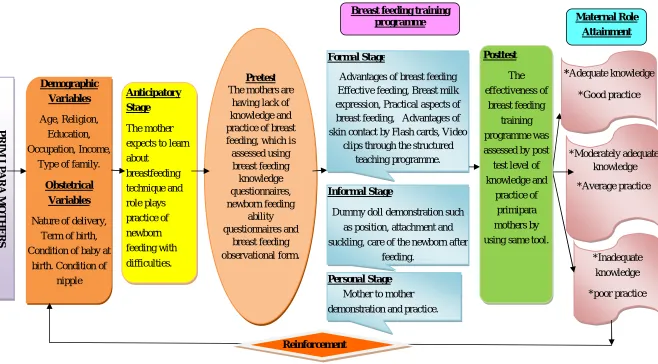
1 Conceptual framework 31
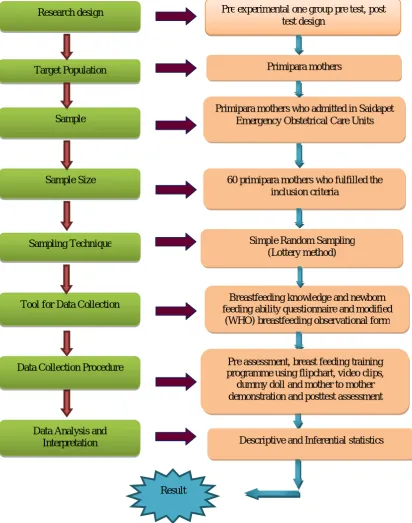
2 Schematic representation of research methodology 40
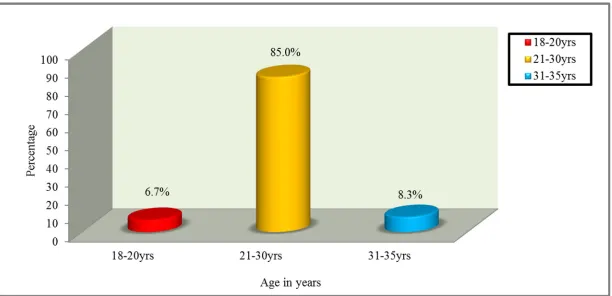
3 Percentage distribution of age among primipara mothers 45
4 Percentage distribution of religion among primipara
mothers 46
5 Percentage distribution of education among primipara
mothers 47
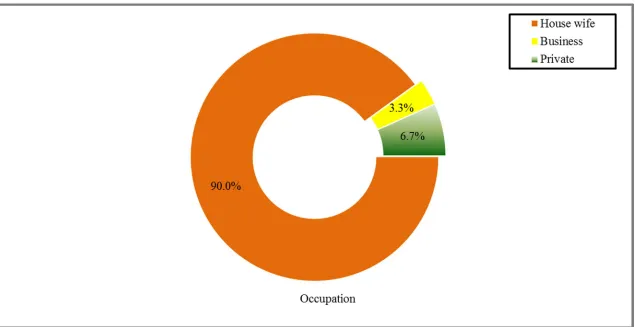
6 Percentage distribution of occupation among primipara
mothers 48
7 Percentage distribution of family income among
primipara mothers 49
8 Percentage distribution of type of family among
primipara mothers 50
9 Percentage distribution of nature of delivery among
primipara mothers 52
10 Percentage distribution of condition of nipple among
primipara mothers 53
11 Percentage distribution of term of birth among primipara
mothers 54
12
Percentage distribution of condition of baby at birth
among primipara mothers 55
13
Percentage distribution of pretest level of knowledge
regarding breast feeding among primipara mothers 57
14
Percentage distribution of pretest level of practice
regarding breast feeding among primipara mothers 59
15
Percentage distribution of posttest level of knowledge
17
Comparison of percentage distribution of pretest and posttest level of knowledge regarding breast feeding among primipara mothers
65
18
Comparison of percentage distribution of pretest and posttest level of practice regarding breast feeding among primipara mothers
67
19
Comparison of mean and standard deviation of pretest and posttest level of knowledge regarding breast feeding among primipara mothers
69
20
Comparison of mean and standard deviation of pretest and posttest level of practice regarding breast feeding among primipara mothers
LIST OF APPENDICES
APPENDIX No TITLE PAGE No
A Instruments i
B Certificate of ethical clearance ii
C Certificate for content validity iii
D Permission letter iv
E Consent letter v
F Certificate for editing vi
Breast feeding becomes part of a woman's identity as she enters the journey into motherhood. Throughout their journey into motherhood women weigh up information about breast feeding in relation to this as they decide what to do. There are certain dangers associated during breast feeding which can result in health complications for the newborn.
The study aimed to assess the effectiveness of breast feeding training programme on knowledge and practice among primipara mothers in Saidapet Emergency Obstetric care unit at Chennai. The hypothesis formulated was that there was significant association between the breast feeding training programme and the level of knowledge and practices among primipara mothers. The investigator collects the review of literature the relevant information and support the study. The conceptual framework for this study was based on Reva Rubin’s maternal role attainment theory.
The study was conducted by adopting a pre experimental one group pretest and post test design among 60 primipara mothers who fulfilled the inclusion criteria. Simple random sampling technique (lottery method) was used to select the primipara mothers. A pretest was conducted to assess the existing level of knowledge and practice regarding breast feeding. The investigator has conducted the post test by using the same standardized tools provided in pretest, for primipara mother on the 3rd day.
Analysis revealed that the pretest level of knowledge mean score was 152.37 with the standard deviation of 26.09 and the posttest level of knowledge mean score was 214.42 with the standard deviation of 11.82. The paired‘t’ test value was 16.90 at the level of p<0.001which shows very high significant. The pretest level of practice mean score was 7.32 with the standard deviation of 1.75 and the posttest level of practice mean score was 12.60 with the standard deviation of 1.96. The paired‘t’ test value was 16.90 at the level of p<0.001 which shows very high significant. Thus, it indicated that there was effectiveness of training programme regarding breast feeding among primipara mothers.
1
CHAPTER I
INTRODUCTION
Just as there is no substitute for mother’s love,
There is no substitute for mother’s milk.
- Meharbansingh (2006).
Motherhood is the kinship relation between an offspring and the mother. Breast feeding provides a unique bounding experience for mother and child. It stimulates most of the senses and close body contact allows the baby to recognize its mothers smell. The baby can feel and hear the sound of her heart beats which is similar to the intrauterine environment. Breast milk is the best food for the babies as breast feed babies are healthier than formula fed babies. Child birth and breast feeding are to be cherished and nurtured by the health care workers in the baby friendly way. There is a growing body of evidence that suggests that early skin to skin contact called kangaroo care of mother and baby stimulates breast feeding behavior in the baby. Newborn infants who are immediately placed on their mother’s skin have a natural instinct to latch on to the breast and start nursing, typically within one hour of being born. It is thought that immediate skin to skin contact provides a form of imprinting that makes subsequent feeding significantly easier. The World Health Organization reports that in addition to more successful breastfeeding, skin to skin contact between a mother and her newborn baby immediately after delivery also reduces crying, improves mother to infant interaction and keeps baby warm.
feeding, babies should continue to breastfeed for a year and for as long as is mutually desired by the mother and baby.
Human milk is a remarkable and renewable resource. It cannot be duplicated. Human milk has no substitute and the breast is nature’s apparatus for feeding the baby. Breast feeding is an art. Breast milk is made from nutrients in the mother’s blood stream and bodily stores. Breast milk has just the right amount of fat, sugar, water, and protein that is needed for a baby's growth and development. Because breast feeding uses an average of 500 calories a day, it helps the mother lose weight after giving birth.
Currently there are 9 million infant deaths per year. Breast feeding saves an estimated 6 million additional deaths from infectious disease alone. Breast milk, especially the first milk (colostrum), contains antibacterial and anti viral agents that protect the infant against disease, especially diarrhea. These are not present in animal milk or formula. Breast milk also aids the development of the infant's own immune system. Diarrhea is the leading cause of death among infants in developing countries. Infants under two months of age who are not breastfed are 25 times more likely to die of diarrhea than infants exclusively breastfed. Continued breast feeding during diarrhea reduces dehydration, severity, duration, and negative nutritional consequences of diarrhea. It is more easily digested than any substitute, and it actually alters in composition to meet the changing nutritional needs of the growing infant. It provides all the nutrient is and water needed by a healthy infant during the first 6 months of life and maximizes the child's physical and intellectual potential.
3
and fosters catch up growth following illness. Breast milk provides total food security for an infant's first six months. Extremely malnourished mothers have a reduced capacity to breastfeed.
Breast feeding immediately after delivery encourages the "bonding" of the mother to her infant, which has important emotional benefits for both and helps to secure the child's place within the family. Breast feeding provides physiological and psychological benefits for both mother and child. It creates emotional bonds, and has been known to reduce rates of infant abandonment. In developing countries, exclusive breast feeding reduces total potential fertility as much as all other modern contraceptive methods. Mothers, who breast feed, usually have a longer period of infertility after giving birth than do mothers who do not breast feed.
Breast feeding reduces the mother's risk of fatal postpartum hemorrhage, the risk of breast concern, ovarian cancer, and anemia. By spacing births, breast feeding allows the mother to recuperate before she conceives again. Breast feeding is among the most cost effective of child survival interventions. Households save money and institutions economize by reducing the need for bottles and formulas. By shortening mothers' hospital stay, nations save foreign exchange. There are none of the expenses associated with feeding breast milk substitutes. Breast feeding does not waste scarce resources or create pollution.
celebrated around the world with support from UNICEF, WHO and other partners during 1st week of August globally.
Exclusive breast feeding is the single most effective intervention for preventing child deaths, yet only less than 40 percent of infants under 6 months old receive the benefits of exclusive breast feeding. Diarrhea and pneumonia are the leading causes of death among infants in developing countries. Infants less than 2 months old who are not breast fed are six times more likely to die from diarrhea or acute respiratory infections than those who are breastfed. Approximately 1.3 million deaths could be prevented each year. Studies show that healthy, exclusively breast fed infants under 6 months old do not need additional fluids, even in countries with extremely high temperatures and low humidity. Offering water before 6 months of age reduces breast milk intake, interferes with full absorption of breast milk nutrients, and increases the risk of illness from contaminated water and feeding bottles.
A new cost analysis published in the journal Pediatrics (2010), has found that if 90% of women in the United States would breastfeed their babies for the first six months of life, billions of dollars could be saved in healthcare costs each year. Current estimates suggest that about 43% of US mothers breast feed at least part time during the first six months, but only 12% do so exclusively breast feeding their babies,
5
include both direct and indirect costs of medical care for those afflicted and costs of missed time away from work for the mother.
Optimal breast feeding of infants less than two years of age has the greatest potential impact on child survival of all preventive interventions, with the potential to prevent 1.4 million deaths in children under five in the developing world (2008). The results of a study conducted in Ghana show that breast feeding babies within the first hour of birth can prevent 22 per cent of neonatal deaths.
The World Health Organization estimates that malnutrition was associated with over 55% childhood deaths in developing countries including India. Malnutrition particularly among children and women directly or indirectly causes high morbidity and mortality. The impaired immune function in these children leads to more severe enteric infections and other infections than those who are not malnourished. Malnourished children have delayed milestones and impaired cognitive development, and are likely to be handicapped for life if an innovative approach is not adopted. Thus, malnutrition impairs intelligence, strength, energy and productivity. A recent study by the Government of India (2012) has established that the annual loss of productivity on account of malnutrition is of the order of more than Rs.33.000 Crores.
United Nation International Childhood Emergency Fund is working with partners to achieve the 2010 goal of reducing malnutrition among children under five years old by at least one third, with special attention to children under two years. In addition, the activity to address proper feeding also contributes to the 2010 goal of reducing child mortality by two thirds.
allowed to accumulate, it will decrease the secretion of the breast milk. If the breast milk is frequently removed, this inhibitory peptide does not accumulate and the milk synthesis will increase. Mothers are therefore encouraged to breast feed 8 to 12 times a day during postpartum period. Infrequent breast feeding not only causes the breast milk production to be delayed, it may be associated with neonatal jaundice.
Another factor relating the inadequate milk supply has to do with infant's growth spurt. During period of growth spurt, the infant may be more irritable and seek the breast more often. The mothers should therefore be counseled and understand the situation fully to avoid any undue stress. During this period, the infant will have a higher breast milk intake the mother should be patient and allow the breast to be emptied fully in order for the transfer of hind milk which has a higher energy content. Hind milk is only released after several minutes of nursing. Higher energy content of hind milk will help to satisfy the child's demand for milk and make him or her relaxed. Stress and fatigue in mothers also have an impact on the mother's breast milk production. It is therefore important for mothers to rest well. If there is someone else that can help to take care of the infant for some time, mother should take the opportunity to have some sleep or rest.
The U.S. Department of Health and Human Services Office on Women's Health 2004 to 2006 was funded to carry out the recommendations of the Health and Human Services, Blueprint for Action on Breast feeding in a National Breast feeding Awareness Campaign to promote breast feeding among first time parents who would not normally breast feed. The campaign aimed to empower women to commit to breast feeding and to highlight new research that shows that babies who are exclusively breast fed for six months are less likely to develop ear infections, diarrhea, and respiratory illnesses and may be less likely to develop childhood obesity.
NEED FOR THE STUDY
7
feeding pattern is on the decline, despite efforts at various levels. In India exclusive breast feeding rate at 6 months is only 40%. So it is important that midwives should attempt to promote enthusiasm and interest in breast feeding pattern.
World health organization recommends exclusive breast feeding for infants
till they are six month old. About 1.4 million deaths of children of aged below 2 years in setting worldwide especially in low income countries are due to suboptimal breast feeding practices. One fifth of neonatal deaths can be prevented by initiating exclusive breast feeding as early as possible.
In India rate of malnutrition or wasting are twice as high as the average in Sub Saharan African and 10 times higher than Latin American. Currently an estimated 25 million children are wasted in India. 53 million are underweight and 61 million chronically malnourished. Much of this happens in the prenatal and two years of a child’s life damaging growth, brain development, eventual school performance and adult productivity.
The Centre for Disease Control (2004) reported that most of the mothers didn't exclusively breast feed their babies, about 31% exclusively breast fed their babies until the babies were 3 months old and 11% exclusively breast fed their babies until the babies were 6 months old. That's far below the U.S. government's goal to have 60% of moms exclusively breast feed their babies aged 0-3 months and for 25% to exclusively breast feed their babies aged 6 months.
Infant Mortality and Malnutrition (2008) that was published nearly 77 % (1.06 million) child deaths attributable to suboptimal breast feeding are due to
non exclusive breast feeding during 0-6 months of life. Breast feeding promotion alone contributes to 11.6 per cent reduction in IMR if coverage of promotion is 99% through one to one and group counseling, and can avert 21.9 million Disability Adjusted Life Years at 3 years. With such staggering statistics lined up, the country needs to give breast feeding an impetus.
Promotion of early initiation of breast feeding has the potential to make a major contribution to the achievement of the child survival millennium development goal, 16% of neonatal deaths could be saved if all infants were breast fed from day 1 and 22% if breast feeding started within the first hour. Breast feeding promotion programs should emphasize early initiation as well as exclusive breast feeding.
According to Centre for Disease Control and Prevention (CDC), (2008) a nationwide survey conducted. The result shows that infants who were 19 -35 months of age, 74% were breast fed at birth, 43% were breast fed at 6 months, 21% were breast fed 12 months, 32% were exclusively breast fed at 3 months, and 12% were exclusively breast fed at 6 months.
Shah. et al., (2011) has conducted study to assess the knowledge and actual
practices of mothers regarding breast feeding. All mothers knew that they had to
breast feed their babies, but they did not have adequate knowledge about the
appropriate way of breast feeding. 10% knew that they have to initiate breast feeding
within ½ hour of birth, 10% had idea on prelacteal feed, 25% had idea on
importance of colostrum, 15% knew the meaning of exclusive breast feeding, and
15% of the mothers had idea on importance of night feeding. 41.5% mothers
initiated breast feeding within ½ hour of birth, 33% mothers gave prelacteal feed,
colostrum was fed by 95%, 15% were practicing exclusive breast feeding,
90% mothers were practicing night feeds, 15% mothers practiced feeding one side at
a time, 60% mothers were practicing inappropriate attachment and positioning,
9
The world breast feeding week 2013 also laid emphasis on the 10 successful steps of breast feeding technique. Researchers also proved that video assisted teaching programme will improve the knowledge of the participants of the study. As a result of the observations and related literature review the researcher realized that, giving a video assisted teaching programme to primipara mothers regarding the breast feeding technique will be beneficial for the improvement of the breast feeding practice, prevention of breast complications as well as for the health of the baby.
Thus knowledge and awareness about breast feeding techniques and newborn wellbeing among primipara mothers can definitely help to reduce the neonatal mortality and morbidity. During the clinical posting in the postnatal ward, the investigator has found the many primipara mother had lack of breast feeding practice and unaware of importance of proper breast feeding technique. So the researcher decided to assess the effectiveness of breast feeding programme on knowledge and practice among primipara mothers.
Most problems in feeding the baby are related to the insufficient knowledge
inappropriate routines and lack of confidence of mothers and it can be easily
managed or prevented by prenatal education, anticipatory guidance and adequate
support. Many women decide the mode of infant feeding early in the antenatal
period. Hence mothers need to be motivated to attend prenatal breast feeding
classes.
During the observation with primipara mothers, the investigator has found that the mothers have inadequate knowledge and practice regarding the breast feeding. So the investigator decided to conduct the study to assess the effectiveness of breast feeding training programme on knowledge and practice among primipara mothers.
The nurse being one among the member of the health team can act as a
facillator and developing the potential abilities of the primipara mothers. Hence, the
breast feeding, which will help the primipara mothers to have adequate knowledge
and practice regarding breast feeding.
STATEMENT OF THE PROBLEM
A study to assess the effectiveness of breast feeding training programme on knowledge and practice among primipara mothers in Saidapet Emergency Obstetric Care Unit at Chennai.
OBJECTIVES
1. To assess the pretest level of knowledge and practice regarding breast feeding among primipara mothers.
2. To assess the post test level of knowledge and practice regarding breast feeding among primipara mothers.
3. To evaluate the effectiveness of breast feeding training programme on level of knowledge and practice regarding breast feeding among primipara mothers.
4. To determine the relationship between posttest level of knowledge and practice regarding breast feeding among primipara mothers.
5. To associate the pretest and posttest level of knowledge and practice regarding breast feeding with their selected demographic variables and obstetrical variables.
OPERATIONAL DEFINITIONS
Effectiveness
:
Refers to the desired outcome in improving the knowledge and practice regarding breast feeding training programme among primipara mothers.11
Knowledge
:
Refers to the information given to the primipara mothers regarding the breast feeding.Practice: Refers to the action that the mother follows before feeding, while feeding such as position, attachment, suckling of newborn, stimulation, after feeding and burping.
Primipara mothers: Refers to the mother who has delivered the first viable child.
HYPOTHESIS
There is a significant association between the breast feeding training programme and the level of knowledge and practice among primipara mothers.
DELIMITATIONS
The sample size was delimited to 60 primipara mothers.
CHAPTER II
REVIEW OF LITERATURE
A literature review is a body of text that aims to review the critical points of knowledge on a research and evaluative report of information found in the literature to evaluate and clarifies. It gives a theoretical base of the research and help to determine the nature of research. Review of literature is one of the most important steps in the research process. It is an account of what is already known about a particular phenomenon. The main purpose of the literature review is to convey the readers about the work already done and knowledge and ideas that have been already established on particular topic of the research. This chapter was designed to include the reviews of related literature and the conceptual framework adopted for the study.
PART I - REVIEW OF RELATED LITERATURE
In India, ‘Low Birth Weight’ constitutes about 30% of all live births. The babies are considered to be ‘at risk’ for poor child survival. Many studies have shown that they have higher risk of diarrhoea and longer duration of suffering than their normal birth weight counterparts. It is well documented that exclusive breast feeding for the first 4-6 months of life, protects infants from diarrhoea whereas, non breastfed infants have 30 times greater risk of attacks of severe diarrhoea. According to World Health Organization is simple as it is natural. Early initiation of breast feeding, it says, within an hour after birth could bring the Infant Mortality Rate down by 22 percent. A January 2008 series on Infant Mortality and Malnutrition that was published in medical journal Lancet said nearly 77 per cent child deaths attributable to suboptimal breast feeding are due to non exclusive breast feeding during 0-6 months of life.
Review of literature of the present study is arranged in the following heading.
Literature related to knowledge regarding breast feeding.
Literature related to knowledge regarding newborn feeding ability. Literature related to practice of breast feeding technique.
Literature related to breast feeding training programme.
13
PART I
REVIEW OF RELATED LITERATURE
Breast feeding is a cost effective way of feeding an infant, providing nourishment for a child at a small cost to the mother. Frequent and exclusive breast feeding usually delays the return of fertility through lactation amenorrhea, though breast feeding is an imperfect means of birth control. During breast feeding beneficial hormones are released into the mother's body and the maternal bond can be strengthened. Breast feeding is possible throughout pregnancy, but generally milk production will be reduced at some point. Children who are not breast fed are almost six times more likely to die by the age of one month than children who receive at least some breast milk. In most of the serious cases the infant develops if they are not breast feed. This can threaten the life of babies due to mother’s lack of knowledge and practice regarding breast feeding.
Literature related to knowledge regarding breast feeding
Seidel. A. K., et al., (2013) has conducted a comparative study to evaluate the breast feeding knowledge, attitudes, and beliefs before and after educational intervention among rural feeding mothers at Nigeria. The study was conducted among 300 mothers among them 150 mothers were trained and 150 mothers were
untrained. A convenient sampling technique was used to select the mothers. A pretest structure questionnaire was used for data collection. The structure teaching
covers the breast feeding education. This results revealed that the trained mothers has significantly better results than the untrained feeding mothers significantly improved knowledge of breast feeding.
Hackett. K. M., et al., (2012) has conducted a comparative study to assess the knowledge, attitude and perception regarding infant and young child nutrition and feeding among adolescent girls and young women 15-23 years in West
sampling technique was used to select the adolescent girls and young women. A pre test structured questionnaire was used for data collection. The structure
teaching covers the young child nutrition and feeding. The results revealed that an adolescent girl has significantly better results than the untrained young women regarding infant and young child nutrition and feeding. The study concluded that adolescents’ girl has increased safe and effective strategy to promote and support improved infant feeding.
Manhire. K. M., et al., (2012) has conducted a cross sectional study to assess the breast feeding knowledge, attitudes beliefs and education needs among supervisor and staff at 32 early childhood centres in Newzland.. This study was conducted among 200 mothers who breast feed. The interview questionnaire methods were used regarding breast feeding techniques and benefits, complications. The result revealed that the mothers were having more knowledge, attitudes beliefs regarding breast feeding. The study concluded that the all centers recognized a need for breast feeding education sessions and greater support for breast feeding mothers.
Venancio. S. I., et al., (2012) has conducted a study to assess the influence of the Baby Friendly Hospitals Initiative on breast feeding indicators in Brazil. Data were analyzed 65,936 infants under the age of 1 year of age. The researcher used interview method to select the breast feeding infant. The study analyzed by means of Poisson regression with robust variance for complex samples. The result revealed that infants born in Baby Friendly Hospitals were 9% more likely to be breast fed in the first hour of life and 6% more likely to be breast fed on the first day at home. Exclusive breast feeding was 13%, 8% and 6% more likely in infants under the ages of 2, 3 and 6 months, respectively, born in Baby Friendly Hospitals. Birth in a Baby Friendly Hospitals also correlated with significant less pacifier use. The study concluded that breast feeding indicator should be introduced at hospital and community.
15
among 19 women. The interview designed that ten themes emerged, these involved practical and emotional support provided by fathers, especially during times of unexpected breast feeding challenges. The result revealed that the mothers’ experience of support received from father has significantly improved influence of breast feeding. The study concluded that the father and mother need more breast feeding education.
Matias. S. L., et al., (2011) has conducted cohort study to identify factors associated with exclusive breast feeding among 117 mothers planning to breast feed exclusively at United Kingdom. The data were collected and exclusive breast feeding status was evaluated with a 24 hours recall of infant diet, respectively. The result revealed that more educated and working mothers and infants with lower birth weight should be targeted in interventions to promote Exclusive Breast Feeding in urban mothers. The researcher was also warranted to explore the factors linking depot medroxy progesterone acetate use and breast pain with Exclusive Breast Feeding duration.
Mellin. P. S., et al., (2011) has conducted quasi experimental study to impact on knowledge, comfort level, and attitudes toward breast feeding among healthcare providers, and on amount of exclusive breast feeding at memorial hospital, at Morristown. This study has surveyed breast feeding mothers to determine the impact on the nurse observation of breast feeding, exclusive breast feeding. The result revealed that healthcare providers showed increased levels of knowledge and comfort dealing with breast feeding issues after the education program. Knowledge scores were significantly improved. Comfort level scores were also significantly improved. There was no statistically significant change in attitude toward breast feeding.
associated with a significant increase in the percentage of exclusively breastfed infants both at 2 weeks and 6 weeks, and at 6 months, and was also associated with a significant increase in exclusive breast feeding and in total breast feeding duration.
Kishore. M., et al., (2010) has conducted the study to assess the knowledge
of breast feeding among 590 primigravida mothers attending ante natal clinic,
Krishna Hospital and Medical Research Centre at Karat district. The data collected
by utilizing personal interview method. The result revealed that out of
590 primigravida mothers, 59.66% showed fair quality of knowledge about breast
feeding. Knowledge about rooming in, family support for breast feeding & burping
after breast feeding was 97.7%, there was significantly increased knowledge of
breast feeding.
Bosco. J., et al., (2010) has conducted a quasi experimental study to evaluate the effectiveness of the Breast feeding Self Care Program, on early postpartum among 117 primiparous at Japan. A convenience sample used to collect data from intervention group and control group who gave birth in three even numbered months and received standard breast feeding care. The result revealed that the intervention group rose significantly from 34.8 at early postpartum to 49.9 at one month after birth. The control group, the score rose from 39.5 at early postpartum to 46.5 at one month after birth. The early postpartum fully breast feeding rate was 90% for the intervention group and 89% for the control group. At one month postpartum, the fully breast feeding rate declined significantly to 65% for the control group compared to 90% for the intervention group positive effect on the continuation of breast feeding.
Raja. S., et al., (2010) has conducted a cross sectional study to assess the knowledge and actual practices of mothers regarding breast feeding in well baby
clinic at Dhahran. The study was carried out among 200 mothers. The data were
obtained by interviewed using pre designed questionnaire regarding breast feeding.
These questionnaires help to assess the breast feeding knowledge and practice. The
result revealed that all mothers knew that they had to breast feed their babies, but
17
None of the mothers got any advice regarding breast feeding during antenatal visits.
The study concluded that the maternal knowledge towards breast feeding was
inadequate and there was a big gap between actual and desired practices.
Nicholas. M., et al., (2010) has conducted a retrospective study to assess the knowledge regarding breast feeding technique among antenatal mothers at Kenya. This study was carried out among 100 antenatal mothers. The simple random sampling techniques were used to select the antenatal mothers. The researcher used a standardized questionnaire regarding the breast feeding. The researcher concluded that the antenatal mothers had low level of knowledge regarding breast feeding technique.
Literature related to knowledge regarding new born feeding ability
Crenshaw. J. T., et al., (2012) has conducted a pilot study to improve skin to skin care and exclusive breast feeding rates in United Kingdom. This study was conducted among 100 mothers. Among them 50 mothers were used descriptive observational design with video ethnography and interaction. 50 mothers they were used electronic health record review test for differences in monthly rates of skin to skin care and exclusive breast milk feeding. The result revealed that mother has significant better improvement in the video ethnography and interact analysis mothers. The electronic health reviewed mothers rates of exclusive breast feeding showed no significant change. The study concluded that practice, reflection education and training, combined with ethnography for sustainable success immersion method might help to rapidly improve skin to skin care.
(61%) and latch (52%). In the unadjusted analysis, only sucking and milk transfer were associated with breast feeding duration. In the adjusted analysis, ineffective technique was significantly associated with mothers reporting early breast feeding problems, which there by influence breast feeding duration.
Singh. S., et al., (2008) has conducted on the feasibility of Integrated Management of Neonatal Childhood Illness guidelines on effective breast feeding in a rural area of North India. The study was conducted among 32 mothers who breast feed. The purposive sampling techniques were used to select the mother. A pre intervention observation related to position and attachment of the baby while feeding, a demonstration of correct breast feeding practices was made to mothers as per Integrated Management of Neonatal Childhood Illness guidelines. The result revealed that a significant number of mothers (82.8%) were keeping the baby close to them, correct attachment 41.4% and correct position for feeding 42.5%. The study concluded that knowledge about the positioning and attachment of infant can improve and the breast feeding technique of mothers.
Ayari. I., et al., (2005) has conducted to the influence of breast feeding technique on the frequency of exclusive breast feeding and nipple trauma in the first month of lactation in Brazil. The study was conducted among 211mother baby pair in the maternity ward who was searched for unfavorable parameters of breast feeding. The simple random sampling techniques were used to select the mother. A pretest structure questionnaire was used for data collection. The structure teaching questionnaires cover by the breast feeding education and problems. The result revealed that the women with trauma presented a higher number of unfavorable parameters related of positioning. And mothers were found significant association between a better technique at day 30 and the practice of exclusive breast feeding.
19
such as the baby’s face position, the baby’s body position, the breast feeding dynamic and the latching process of the baby. The result revealed that more optimal latching process behaviour has significant association and no significance found lower level of pain in breast feeding mothers. The study concluded that the assessment of breast feeding should be comprehensive and should begin before the infant is at the breast.
Cookie. M., et al., (2004) has conducted an experimental study to the assessing midwives' breast feeding knowledge, properties of the newborn feeding ability questionnaire and breast feeding initiation practices scale in Australia. The study was conducted among 3500 midwives were analyzed and revealed that
five factors on the New born Feeding Ability questionnaire. The Breast feeding Initiation Practice revealed three factors related to observing pre feeding behavior, mother baby care and attachment and positioning practices. The result revealed that the predictive validity of knowledge was moderate and contributed to 31.5% of variance in reported practice. Midwives were highly significant association found between the knowledge scores and more likely to report best practice when assisting mothers to initiate breast feeding.
Literature related to practice of breast feeding technique
Harison. R. S., et al., (2012) has reviewed a cross sectional study to evaluate knowledge, attitude and practice about breast feeding among 1450 post natal mothers at California. The interview questionnaire method was used regarding breast feeding technique, advantages and data were obtained from postnatal mothers. This study result showed that the mothers with increased age, higher education and high socio economic status were having more knowledge, attitude and practice regarding breast feeding among postnatal mothers.
Zakarija. I., et al., (2012) has conducted a cohort study to evaluate the impact of breast feeding hospital initiative training on hospital practices and breast feeding rates during the first 12 months of life at Croatia. The study was conducted among 773 mothers. The data were collected by interview to evaluate hospital practices and infant feeding. Six out of 10 baby friendly practices were assessed using standardized forms. The results revealed that three months after training was completed, 3 of the baby friendly practices assessed had significantly improved. The proportion of newborns exclusively breast fed during the first 48 hours increased from 6.0% to 11.7%. There was no difference in breast feeding rates at discharge or at 3, 6, or 12 months between the pre and post training groups.
Abdulfadl. A. M., et al., (2012) has conducted a study to assess the breast feeding knowledge, attitudes, and practice among 150 feeding mothers at Egypt. A simple random sampling method was used. The interview questionnaires were used to collect the data among breast feeding mothers. The result revealed that the 73% feeding mother had significantly improved their knowledge, attitude, practice regarding breast feeding.
21
Taylor. E. C., et al., (2012) has conducted a descriptive and non parametric study to assess the ten steps for successful breast feeding in hospital serving among
100 low wealth patients in United Kingdom. Used baseline data collected for 10 steps of breast feeding questionnaires. Result revealed that some steps policy,
training, skin to skin, no supplements, and no artificial nipples, followed by parenteral counseling, rooming in reflected differences in relative baseline breast feeding rates between settings and informant interviews revealed misunderstanding of some steps. The study concluded that limited exposure and understanding lead to self appraisal errors and errors in actual practices.
Elsvie. D. K., et al., (2012) has conducted a cross sectional study to assess the knowledge, attitude and practices regarding breast feeding on selected hospital at Taiwan. This study was conducted among 250 feeding mothers. The cluster randomized sampling was used to select the data and used pretest questionnaires to assess the knowledge and attitude. The study result showed that the 83% breast
feeding mothers were knew how to correctly perform breast feeding and 94% feeding mothers were did not know how to perform breast feeding. The
researcher concluded that the feeding mothers have moderate level of knowledge, attitude and practice regarding breast feeding.
Sandoval. N., et al., (2011) has conducted cluster randomized study to assess the effectiveness of an implementation strategy for a breast feeding guideline in Primary health Care centres in Leganesat Spain. The study was conducted among 240 mothers, 120 exclusively breast feeding mothers and 120 mothers were predominant breast feeding. A pre test structure questionnaire was used to collect the data about the breast feeding guidelines. The results revealed that the exclusively breast feeding mothers had significantly improved breast feeding and the predominant mothers had no association in breast feeding. The study concluded that the guide's recommendations, clinical variability could be reduced and the cares received by mothers could be improved.
Anambah State, Nigeria. The researcher used systematic random sampling method as they visited the maternal and child welfare clinics. The data were collected by four sessions of focus group discussions. The result revealed that the main source of breast feeding education was government health facilities (80.5%). Only 85 (37.3%) nursing mothers were exclusively breast feeding. The Exclusive breast feeding was significantly associated with maternal older age, parity, delivery at government facility, positive family attitude towards exclusive breast feeding and breast feeding education from government health facility.
Ram. C., et al., (2010) has conducted a cross sectional study to assess the correct position, attachment and effective suckling in the breast feeding of infants as practiced by among 192 mothers attending hospitals at Benghazi. The data were collected from mothers and baby's position, attachment and effective suckling using Breast Feed observation form. The result revealed that 15% of the infants were about a week old and 85% were in the late neonatal period. There was poorer positioning among primipara (24.0%) than Multipara (8.9 to12.5%) mothers. Poorer attachment was also more evident among primipara (30.0%) compared to Multipara (20.9%) mothers. Parity was significantly associated with poor position and attachment. Poor attachment was related to cracked nipples and mastitis. Preterm and low birth weights were significantly associated with poor attachment and poor effective suckling. Poor suckling was more (42.8%) in the early neonatal period than late neonatal period (32.9%).
Literature related to breast feeding training programme
23
Intervention group mothers had a significantly longer duration of exclusive breast feeding, even if the initial breastfeeding session did not occur within 2 hours after birth, than the corresponding group of Control group A and Control group B mothers.
Chapman. D. J., et al.,(2013) has conducted a study to evaluate the specialized breast feeding peer counselling among 206 pregnant overweight or obese, low income women at Luknow. The researcher used randomized sampling technique to receive specialized breast feeding peer counselling or standard care at a Baby Friendly Hospital. The datas were obtained by including in hospital interview, medical record review, and monthly telephone calls through 6 months postpartum. The result showed the intervention had no impact on EBF or breast feeding continuation at 1, 3, or 6 months postpartum. In analyses, at 2 weeks postpartum the intervention group had significantly greater odds of continuing interval and giving at least 50% of feeding as breast milk.
Meyer. N., et al., (2012) has conducted cohort study to promote breast feeding in maternity clinics by improving the surrounding conditions. A clinic based and community related intervention trial was carried out in Lower Bavaria. The training programme was based on the world health organization criteria of the "Ten Steps to Successful Breast feeding" to deepen the breast feeding knowledge and to improve the breast feeding management. The results revealed that approximately 85% of the staff of the 10 maternity clinics attended the training course. The survey after the training programme indicated that more than 80% of the participants stated to have learned something new and to be able to use the knowledge acquired for their own practice. Results of the clinic interviews showed a transfer of training contents into clinical work routines
Pulipakkam. The data was collected by using the pretested, structured questionnaires to obtain the information on the breast feeding and the hygienic feeding practices among mothers by using the statistical package. The result revealed that the mothers had significant association to information on breast feeding and hygienic feeding practices.
Arikan. D., et al., (2012) has conducted a randomized design study to determine the effect of training administrated to working mothers and its duration on maternal anxiety level and breast feeding habits, in Turkey. The study was conducted among 60 working mother. Data collection of pre test a personal information form, a questionnaire and a state trait anxiety inventory were administered to the mothers in the experimental and control groups. The results revealed that the rate of lateral feeding among trained mothers was greater than untrained mothers. The frequency of breast feeding effects, maternal anxiety level and the anxiety level of mothers decreased with increasing frequency of breast feeding.
Kylberg. E., et al., (2012) has conducted a randomized study to evaluate the effects of process oriented training in supportive breast feeding counselling for midwives and post natal nurses on the time lapse between the initial breast feeding sessions in Sweden. The 540 samples primipara living in either and intervention or control group A 162, control group B 172 were collected simultaneously with the intervention group 206. The results revealed that the process oriented training programme for midwives and postnatal nurses. The intervention group mothers had a significantly longer duration of exclusive breast feeding. Fewer infants in the intervention group received breast milk substitutes without medical reasons compared with control groups. The intervention group infants were significantly older when breast milk with the infants in the control group.
25
methods such as individualization, skills training with guided practice, reattribution, planning coping responses, and mobilizing social support were built into a health visitor delivered program. The result revealed that 62% of feeding mothers had significant association in development of postnatal program. The study concluded that support of the breast feeding mother in community settings should address the psychosocial and practical aspects of breast feeding to prevent premature cessation.
Ingram. J., et al., (2011) has conducted a study to evaluate the effects of Baby Friendly Initiative community training on breast feeding rates, staff and mothers in a large Primary Care Trust. United Kingdom. A total of 141 health visitors and nursery nurses were trained on mandatory three days Baby Friendly Initiative courses. Evaluation Breast feeding attitudes, knowledge and staff confidence in helping mothers to breast feed were measured using a validated Breast feeding Questionnaire and a self efficacy tool at three time points before and after training. The result revealed that the response to the course was overwhelmingly positive and felt to be extremely worthwhile. Health visitors felt confident about enabling nursery nurses to take a greater role in breast feeding support.
Osband. Y. B., et al., (2011) has conducted a randomized study to investigate breast feeding training offered during 3 years pediatric residency programs and to describe residency programs' policies and services for residents who breast feed, Medical College at New York. The study was conducted among
150 mothers. Structure teaching programme was administered for mothers. The result revealed that the 77.3% of respondents the amount of breast feeding
Linda. K, etal.,(2011)has conducted a study to assess the level of effectiveness of breast feeding training programme among 125 mothers in selected hospital at Philippines. The purposive sampling was used. The data was collected from mothers with breast feeding practice standardized stool. The result revealed that the 85% of mothers were gained effective practice and 15% of mothers gained moderate practice through direct training programme regarding effectiveness of breast feeding practice.
Khresheh. R., et al., (2011) has conducted a randomized controlled trial to assess the effect of a postnatal education and support program on breast feeding among primiparous women, Mutah university hospital, Jordan. The study was conducted in 90 primiparous, 45 were intervention group, 45 were control group. The data collected with postnatal educational session and follow up phone calls at two months and four months postpartum, the control group in which they received routine postnatal care. The result revealed that the postnatal education and support program significantly improved breast feeding knowledge measured by differences between mean pre and post test scores. There was significant association for the intervention group and no significant association for the control group.
27
PART II
CONCEPTUAL FRAMEWORK
Conceptual framework represents a less formal attempt at organizing a phenomenon. Conceptual model deal with concepts that are used as building blocks and provide a conceptual perspective regarding interrelated phenomena which are closely structured.
The central focus of Reva Rubin’s frameworks is maternal role attainment (Rubin, 1967). She described the maternal role as a complex cognitive and social process which is learned, reciprocal, and interactive. Maternal identity is considered the culmination or end point of Maternal Role Attainment, characterized by the woman’s comfort in her role. Rubin’s work focused on mothers and dealt with maternal role attainment from the point of acceptance of the pregnancy to one month postpartum.
Primary Concept is a developmental and interactional process occurs over a period of time. Mother bonds with infant, acquires competence in caretaking tasks, enjoys and expresses joy and pleasure in the role. Maternal role attainment is the process by which the mother becomes emotionally involved with her child, becomes a capable caregiver and finds satisfaction in her role. A positive self concept includes self esteem and acceptance of self. Attachment is the process of forming emotional commitment and fondness for another individual.
The micro system
Micro system is the immediate environment where maternal role attainment occurs. This indicated the family and factors such as family functioning, mother, father relations ships, social support and stress. The infant is an individual embedded within the family system. This system is the most influential on maternal role attainment and attainment is achieved within the micro system through the interactions of father, mother and child.
Thus the researcher included the demographic variables of the primipara mothers like age, religion, education, occupation, income, type of the family and obstetrical variables like nature of delivery, term of birth, condition of baby at birth, condition of the nipple. This helps the researcher to consider the factors influencing breast feeding knowledge and practice among primipara mothers.
The mesosystem
The mesosystem encompass influences and delimits the mesosystem. The mother and infant units is not contained within the mesosystem, but the mesosystem may determine in part what happens to the developing maternal role and the child, so the researcher observes the primipara mothers, family care givers and neighbor’s entities within the mother’s more immediate community. The primipara mothers are developing her own style of breast feeding to improve their newborn health status.
The macrosystem
29
MATERNAL ROLE ATTAINMENT Anticipatory stage
Anticipatory begins on the pregnancy and includes initial social and psychological adjustments to pregnancy. The mother expects to learn about breast feeding technique and role plays practice of newborn and feeding with difficulties.
Formal stage
Formal stage is the mothers begins to learn with the birth of infants and learning and taking of the role formally regarding advantages of breast feeding, breast milk expression, practical aspects of breast feeding, problems with breast feeding, advantage of skin contact by flash cards, video clips through structured teaching programme.
In formal stage
In formal stage, mother makes her new role to fit within the existing lifestyle based on past experiences and future goals. The primipara mothers develop breastfeeding practice through breast feeding training programme by dummy doll demonstration. Position, attachment and suckling, care of the newborn after feeding is taught to the primipara mother. The mother makes her new role fit within breast feeding practice based on experience of demonstration.
Personal stage
Positive outcome is adequate knowledge and good practice which has to be enhanced further. Negative outcome is inadequate knowledge and poor practice of breast feeding which needs to be reassessed for further learning.
3
[image:43.842.122.780.97.461.2]1
Fig. 1: MODIFIED REVA RUBIN’S MATERNAL ROLE ATTAINMENT THEORY (1960)
Demographic Variables
Age, Religion, Education, Occupation, Income,
Type of family.
Obstetrical Variables
Nature of delivery, Term of birth, Condition of baby at
birth. Condition of nipple P R IM I P A R A M O T H E R S Anticipatory Stage The mother expects to learn about breastfeeding technique and role plays practice of newborn feeding with difficulties. Pretest
The mothers are having lack of knowledge and practice of breast feeding, which is assessed using breast feeding knowledge questionnaires, newborn feeding ability questionnaires and breast feeding observational form.
*Adequate knowledge
*Good practice *Moderately adequate knowledge *Average practice *Inadequate knowledge *poor practice Formal Stage
Advantages of breast feeding Effective feeding, Breast milk expression, Practical aspects of breast feeding, Advantages of skin contact by Flash cards, Video
clips through the structured teaching programme.
Informal Stage
Dummy doll demonstration such as position, attachment and suckling, care of the newborn after
feeding.
Personal Stage
Mother to mother demonstration and practice.
Reinforcement Posttest The effectiveness of breast feeding training programme was assessed by post test level of knowledge and
practice of primipara mothers by using same tool.
Breast feeding training
programme Maternal Role
CHAPTER III
METHODOLOGY
Research methodology is a system of model procedures and techniques used for the result of research problems. The success of any research depends largely upon their suitability of the tools and technique that the researcher follows to gather adequate data. Research methodology involves systematic procedure which the research starts from initial identification of the problem to its final condition.
This chapter deals with the description of the methodology adopted by the researcher. The chapter includes research approach, research design, and research variables, setting of the study, population, sample, and sample size, sampling technique, criteria for sample collection, data collection procedure and plan for data analysis.
RESEARCH APPROACH
Quantitative research approach was used in this study to assess the effectiveness of breast feeding training programme on knowledge and practice among primipara mothers in Saidapet Emergency Obstetric Care Unit, Chennai.
RESEARCH DESIGN
The research design used for this study was pre experimental one group pretest post test design. This design was used to assess the effectiveness of breast feeding training programme on knowledge and practice among primipara mothers.
RESEARCH VARIABLES
Independent variables: Refers to the breast feeding training programme.
33
SETTING OF THE STUDY
The study was conducted in Saidapet Emergency Obstetrical Care Unit, Chennai. This has a provision of 50 beds. The centre is well equipped with modern modalities and it has adequate facilities like separate antenatal clinics, postnatal ward, delivery room, operation theatre, neonatal ward, and 24 hours emergency obstetrical care unit. Antenatal clinics were conducted every day and Friday registrations of high risk antenatal mothers, new mothers were done.
Deliveries are conducted any time within 24 hours by specialist obstetricians and gynecologists, staff nurses, Axillaries nurse midwives. Postnatal ward and other facilities like laboratory, HIV/VCTC counseling centre, pharmacy, immunization and ultrasound facilities. The average number of postnatal mother is 15 to 20 per day. Out of them the average of 5 to 7 primipara mothers are including spontaneous vaginal delivery and LSCS mothers. This hospital is also providing all the government monetary benefits to the antenatal and postnatal mothers. Duration of hospital stay for normal vaginal delivery mothers are 3 days and LSCS mothers are up to 7 days.
POPULATION
The population consists of all primipara mothers, who were admitted in the postnatal ward in Saidapet Emergency Obstetrical Care Unit at Chennai.
SAMPLE
The sample consists of all primipara mothers, who fulfilled the inclusion criteria.
SAMPLE SIZE
SAMPLING TECHNIQUE
Simple random sampling technique (lottery method) was used to select the primipara mothers.
CRITERIA FOR SAMPLE SELECTION Inclusion criteria
Primipara mothers between the age of 18 – 35 years.
Primipara mothers who can understands Tamil and English.
Primipara mothers who under gone normal vaginal delivery, LSCS and outlet forceps delivery.
Exclusion criteria
Mothers who were not willing to participate.
Multipara mothers
Primipara mothers who delivered twins.
Primipara mothers were having communicable disease, STD and other systemic diseases.
Primipara mothers who have new born with congenital anomalies, low birth weight babies, less than 36weeks gestational ages.
DESCRIPTION OF THE INSTRUMENT
The instrument was developed after the literature review and guidance from the experts. It consists of three parts.
Part I
35
Part II
It consists of assessment of knowledge regarding breast feeding. The knowledge is measured with two standardized tool such as breast feeding knowledge questionnaire and new born feeding ability questionnaire.
a. Breast feeding knowledge questionnaire - It is a standardized tool developed by the international journal of breast feeding in the year 2008. This is a 5 point likert scale. The mothers are asked to mark their responses against their likert scale.
The components of breast feeding knowledge questionnaire are as follows
Advantages 1 - 8
Effective feeding 9 - 13
Breast milk expression 14 - 18
Practical aspects of breast feeding 19 - 26
Problems with breast feeding 27 - 30
b. New born feeding ability questionnaire – It is a standardized tool developed by the Research center for clinical and Community Practice innovation, Singapore. This is a 5 point likert scale. The mothers are asked to mark their responses against the likert scale. The items 16, 17, 18 are reverse scored as they are negative statements.
The components of newborn feeding ability questionnaire are as follows
Knowledge on skin contact effects 1 - 11
Innate ability 12 - 15
Work practice 16 - 18
The responses are scored as follows
1 strongly disagree
2 disagree
3 not sure
4 agree
5 strongly agree
The score were interpreted as follows
76 – 100% Adequate knowledge
51 – 75% Moderately adequate knowledge
50% Inadequate knowledge
Part III
Assessment of practice regarding breast feeding it consists of observational form developed by World Health Organization, 2008. The investigator has marked the observation form while mother performs the breast feeding act.
The components are as follows
Criteria
Correct body position - 7
Correctness of attachment - 4
Correctness of effective suckling - 3
The score will be interpreted as follows Grade Score
Good - 0 - 4
Average - 5 - 8
37
Part IV
Module consists of planned teaching programme on knowledge and practice regarding breast feeding, using demonstration with dummy doll, mother to mother demonstration, flash cards and video clips.
VALIDITY
The content validity of the instrument was obtained from the experts in the field of obstetrical and gynecology. Simplification of the language and reorganization of certain items were made as per the expert’s suggestions.
RELIABILITY
Reliability of the tool was tested by test re test method. Reliability value of breast feeding knowledge questionnaire is 0.84, r value of newborn feeding ability questionnaire is 0.68 and the r value of breast feeding observation form (WHO) is 0.86. So the tool was considered highly reliable to conduct this study.
ETHICAL CONSIDERATION
The study was conducted after the approval of dissertation committee. Formal written permission was obtained from the Deputy Project Coordinator, District Family Welfare Bureau, Corporation of Chennai and study in Saidapet Emergency Obstetric Care Unit at Chennai. The primipara mothers were explained about the study purpose. The formal written consent was taken from the primipara mothers. The usual assurance of anonymity and confidential