City, University of London Institutional Repository
Citation
: Elliott, Georgina F. (2015). Coming to understand. (Unpublished Doctoral thesis,
City University London)
This is the accepted version of the paper.
This version of the publication may differ from the final published
version.
Permanent repository link:
http://openaccess.city.ac.uk/14554/Link to published version
:
Copyright and reuse:
City Research Online aims to make research
outputs of City, University of London available to a wider audience.
Copyright and Moral Rights remain with the author(s) and/or copyright
holders. URLs from City Research Online may be freely distributed and
linked to.
Coming to understand
Georgina F. Elliott
Professional Doctorate in Counselling Psychology (DPsych)
City University London
Department of Psychology
THE FOLLOWING PART
S
OF THIS THESIS HAVE BEEN
REDACTED FOR DATA PROTECTION/CONFIDENTIALITY
REASONS:
pp 264-295: Chapter 6: Section D. Professional practice case study. “Stop talking about my mother”.
Table of Contents
Acknowledgements 7
City University Declaration 9
Section A: Preface 10
Section B: Research Study: “Reaching female orgasm: An interpretative phenomenological analysis”
18
Abstract 19
Chapter 1: Introduction 21
1.1 Chapter overview 21
1.2 Prehistoric Ages 22
1.3 Middle Ages 25
1.4 Modern Age 27
1.5 Postmodern and Contemporary Ages 34
1.5.1 Biological perspective 35
1.5.2 Quantitative psychological research 44 1.5.3 Qualitative psychological research 48
1.6 Pornography 58
1.7 Cross cultural review of female orgasm 60 1.8 Homosexual relationships and female orgasm 66 1.9 Summary and limitations of existing research 68 1.10 The purpose of the current study 69
1.11 Research question 69
1.12 Research aim 69
1.13 Research objectives 70
1.14 Researcher reflexivity 71
Chapter 2: Methodology 74
2.1 Chapter overview 74
2.2 A qualitative approach 74
2.3 Phenomenology 76
2.4 Interpretative phenomenological analysis 79
2.5 Why IPA? 81
2.6 Counselling psychology and beyond 82
2.7 Recruitment 83
2.8 Sample 84
2.9 Inclusion criteria 84
2.10 Exclusion criteria 85
3
2.12 Procedure 87
2.13 Transcription 88
2.14 Analytic Procedure 89
2.15 Ethics and permissions 91
2.16 Confidentiality and anonymity 93
2.17 Research credibility 94
2.18 Researcher reflexivity 98
Chapter 3: Analysis 100
3.1 Chapter overview 100
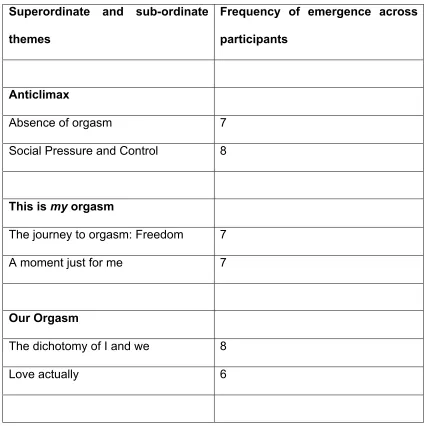
3.2 Overview of themes 102
3.3 Anticlimax 103
3.3.1 Anticlimax: Absence of orgasm 104
3.3.2 Anticlimax: Social pressure and control 110
3.4 This is my orgasm 117
3.4.1 This is my orgasm: My journey to orgasm – freedom 117 3.4.2 This is my orgasm: A moment just for me 124
3.5 The challenge of our orgasm 128
3.5.1 The challenge of our orgasm: The dichotomy of I and we 129 3.5.2 The challenge of our orgasm: Love actually 138
3.6 Summary of findings 142
3.7 Researcher reflexivity 143
Chapter 4: Discussion 145
4.1 Chapter overview 145
4.2 Superordinate theme one: Anticlimax 146
4.2.1 Anticlimax: Absence of orgasm 146
4.2.2 Anticlimax: Social pressure and control 159 4.3 Superordinate theme two: This is my orgasm 167 4.3.1 This is my orgasm: My journey to orgasm – freedom 168 4.3.2 This is my orgasm: A moment just for me 175 4.4 Superordinate theme three: The challenge of our orgasm 180 4.4.1 The challenge of our orgasm: The dichotomy of I and we 181 4.4.2 The challenge of our orgasm: Love actually 188
4.5 Conclusion 192
4.6 Limitations and implications 194
4.7 Researcher reflexivity 196
4.8 References 197
Chapter 5: Section C: Article for “Psychology & Health” 233
5.1 Reaching female orgasm: An interpretative phenomenological analysis
234
5.2 Introduction 234
5.3 Methodology 239
5.4 Method 239
5.5 Findings 240
5.5.2 The challenge of our orgasm: Love actually 245
5.6 Discussion 248
5.6.1 The challenge of our orgasm: The dichotomy of I and we 248 5.6.2 The challenge of our orgasm: Love actually 251
5.7 Conclusion 253
5.8 Limitations and implications 254
5.9 References 255
Chapter 6: Section D: Professional Practice Case Study 263
6.1 Rationale for work 264
6.2 Theoretical orientation 265
6.2.1 Transference 265
6.2.2 Countertransference 267
6.2.3 Projective Identification 269
6.3 Profile of client 271
6.4 Referral 272
6.5 Risk 272
6.6 Formulation 273
6.6.1 The current life situation 273
6.6.2 Familial relationships (also see Appendix A for Genogram) 275
6.6.3 Character organization 278
6.6.4 Point of maximum pain 279
6.7 The development of therapy and formulation 280
6.7.1 Sessions 1-4 280
6.7.2 Sessions 5-8 283
6.7.3 Sessions 9-12 284
6.7.4 Sessions 13-16 286
6.7.5 Sessions 17-20 289
6.7.6 Sessions 21-24 290
6.8 Conclusion 291
5 Table of Figures
Section B: Research Study
Figure 1: Categories for Female Genital Mutilation (FGM): Adapted
from the World Health Organization (WHO, 2014) 62
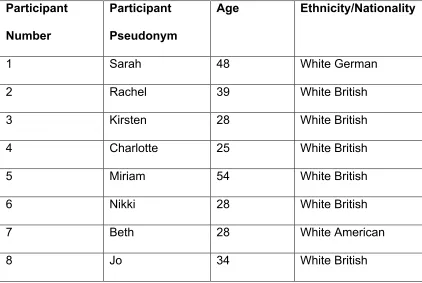
Figure 2: Participant pseudonyms and demographics 94
Figure 3: Overview of themes and frequency of emergence across eight participants
103
Section C: Article for “Psychology & Health”
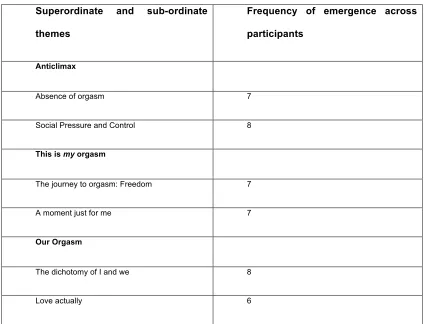
Figure 4: Overview of themes and frequency of emergence across eight participants
Table of Appendices
Section B: Research
Appendix A: Flyer 217
Appendix B: Participant information sheet 218
Appendix C: Interview schedule 220
Appendix D: Participant consent form 221
Appendix E: Debrief schedule 223
Appendix F: Ethics form 224
Appendix G: Example transcript extract 230
Section D: Professional practice case study
7
Acknowledgements
When I made the decision to engage in this research I felt pretty confident
that I knew what to expect after decades of continuous academic study: I
was wrong! It has been a long hard journey and now I am reaching the end I
take considerable pleasure in thanking those who have advised, inspired and
supported me along the way.
It is with sincere appreciation that I thank my supervisor Dr Julianna
Challenor for stimulating my mind with her wisdom and supporting me with
both her wealth of academic experience and her kind words. In
chronological order I would also like to thank those who have inspired me
and given me their time and energy, in chronological order: Dr Jonathan
Pointer, Dr Simon Christopherson, Dr Olga Tsatalou, Dr Peter Sergeant,
Elaine Davies, Dr Khadj Rouf, Dr Pavlos Philippopoulous, Professor Marina
Gulina, Dr David Cochrane, Dr Richard Gipps, Dr Melanie Bowden, Anna
Motz, Dr Jason Jones, Dr Charlotte Couldrey and Dr Lynda Meina.
I would like to give thanks to: my mother Mrs Nevi Elliott who taught me to
“Never Give Up”; my father Mr Alan Elliott for his enduring consistency; my
twin sister Miss Josephine Elliott for her unconditional love; Maureen
Macmillan for her faith in me, my dearest friends; and of course Mr Damion
James Faircloth: From this moment on I will live freely with and for you in
my heart – rest in peace beautiful dearest friend.
9
City University Declaration
I grant powers of discretion to the University Librarian to allow this thesis to
be copied in whole or in part without further reference to me. This
permission covers only single copies made for study purposes, subject to
Section A:
Preface
This portfolio consists of three separate pieces of academic work that are
bound by a central theme – pluralism. The first piece is an Interpretative
Phenomenological Analysis” (IPA) (Smith et al., 2009) research study that
asks: What is the lived experience of reaching female orgasm in the context
of a sexual relationship? The second piece is an academic article written on
the research above for the journal of “Psychology and Health”. The final
piece is a professional practice psychodynamic case study report, written as
part of the assessment criteria for the “Professional Doctorate in Counselling
Psychology” at City University London.
The discipline of psychology and psychological research has firm quantitative
roots. Empirical study was thought to be the most appropriate method for
investigating psychological phenomena when the discipline started to
develop in the late nineteenth century. It was not until the 1940s that
qualitative research methodologies gained momentum, and have since
become increasingly accepted by the discipline, despite a distinctive
quantitative-qualitative divide remaining highly apparent (Biggerstaff, 2014).
It must not be forgotten however that alongside much empirical work
psychoanalysts such as Freud (1856 – 1939) used extensive case studies
from psychoanalytic practice to develop psychological theories from as early
as 1889: Freud published the case of “Anna O” in relation to the concept of
11
practitioners, researchers and theorists used qualitative methodologies for
understanding human psychology despite it not being invested in and
acknowledged for its utility as it is in 2015.
From a philosophical perspective pluralism refers to “A theory or system that
recognizes more than one ultimate principle”. This can be helpfully
compared to monism “A theory or doctrine that denies the existence of a
distinction or duality in a particular sphere…” (Oxford Dictionaries, 2014).
Around the same time that Freud published his earlier works (as above)
William James; philosopher, psychologist and physician wrote about the
concept of pluralism (1909, pp. 321 – 323):
“The pluralistic world is thus more like a federal republic than like an
empire or a kingdom. However much may be collected, however
much may report itself as present at any effective centre of
consciousness or action, something else is self-governed and absent
and unreduced to unity…Briefly it is this, that nothing real is absolutely
simple, that every smallest bit of experience is a multum in parvo
plurally related, that each relation is one aspect, character, or function,
way of its being taken, or way of its taking something else; and that a
bit of reality when actively engaged in one of these relations
simultaneously. The relations are not all what the French call
Thus, the concept of pluralism aligns with a qualitative epistemological and
ontological standpoint that does not assume the possibility of reducing
psychological phenomena to one “truth” through observation, rather multiple
subjective “realities” exist and the meaning of these cannot ever be
objectively understood.
The concept of pluralism has quite recently been applied to counselling
psychology practice in response to perceived limitations with integrative and
eclectic approaches. Cooper and McLeod (2007, pp. 7 - 11) developed a
pluralistic framework for counselling and psychotherapy. This framework
breaks down therapeutic practice into three main areas, “goals”, “task” and
“methods”. The model does not favour one model of therapy over another,
and in collaboration with the client the therapist deems which “method” is
most appropriate to meet the individual needs of a client at a particular point
in time. Beyond the therapy room Cooper and McLeod highlight the utility of
their framework for facilitating both quantitative and qualitative counselling
and psychotherapy practice-based research: For example, they used
in-depth qualitative interviews to obtain data which enabled the development of
a process map. This map highlighted the factors clients thought were the
most helpful therapist – client “activities” and therapist “methods” for meeting
specific therapeutic “tasks”. This framework is highly important because it
affirms and advances a counselling psychology perspective that assumes
the importance of the therapeutic relationship for understanding the
13
approaches that aim to “meet” these essential qualities of humanity, i.e.
complexity and diversity. Cooper and McLeod (2007, p. 6)discuss this
perspective as follows:
“With respect to counselling and psychotherapy, the pluralistic
standpoint holds that a multiplicity of different models of psychological
distress and change may be ‘true’ and that there is no need to try and
reduce these into one, unified mode…In this respect a pluralistic
approach opens up possibilities for working creatively in ways that
most closely reflect the needs of individual clients.”
The use of mixed methods designs has also become increasingly popular in
psychological research, whereby quantitative and qualitative methods are
used in the same research study. This suggests acknowledgement that
human experience is complex and multi-layered, and this can be better
understood through different approaches that access different types of
knowledge or “truth”, representing parts or aspects of phenomena. Beyond
this Frost and Nolas (2011 p. 116) very recently advocated for the use of two
different qualitative methods in the same piece of qualitative psychological
research for accessing phenomenological meaning as follows:
“Yet heeding the calls for both theoretical and methodological
experiences are multidimensional. The worlds that we inhabit are
much more ‘multiontological’ (Mark, 2006, as cited in Frost and Nolas,
2011) than a single theory and method allow us to appreciate.”
This portfolio presents pieces of academic work that assume very different
epistemological and ontological positions. However, I do not regard this as a
problem, rather I firmly embrace it as an opportunity to highlight the utility of
applying varying perspectives both to research and clinical practice. This
perspective falls in line with a counselling psychology framework which
bravely “holds” multiple perspectives for understanding human psychology,
e.g. counselling psychologists in training learn to practise from cognitive
behavioural and/or psychodynamic and humanistic models, which hold very
different theories of change: For example a cognitive behavioural therapist
might actively seek to challenge a patient’s negative automatic thoughts to
evoke a change in emotional state, whereas a psychodynamic therapist
might interpret unconscious relational dynamics, assuming the patient cannot
access that which is evoking emotional distress.
Section B: Research study
The research study asks: What is the lived experience of reaching female
orgasm in the context of a sexual relationship? The study includes a
15
of reaching orgasm in the context of a sexual relationship. The data are
analysed through an Interpretative Phenomenological Analysis (Smith et al.,
2009). Three superordinate themes emerged and are presented alongside
verbatim extracts from interviews in Chapter 3: “Anticlimax”, “This is my
orgasm”, and “The challenge of our orgasm”. These themes are
discussed in relation to existing literature and psychological theory in
Chapter 4. Limitations of the research are discussed including limited ethnic
diversity and sexual orientation of participants, as well as the study being
limited to a female population. Implications for counselling psychology
practice are discussed and recommendations are made for future research.
Section C: Journal article for “Psychology and Health”
The journal article summarises the research above in a format that
corresponds with the publishable guidelines for the journal of “Psychology
and Health”. It focuses specifically on the analysis and discussion of the
third superordinate theme, “The challenge of our orgasm”. It also
discusses the limitations and implications of this study and makes
recommendations for future research.
The case study is an example of my professional practice with a client who
was referred by his GP to the outpatient psychotherapy department where I
worked. The theme for the case study is the psychodynamic concept of
transference, as well as countertransference and projective identification. It
discusses the client's attachment style, and the serious implications for his
romantic relationships with women, as well as his individual psychology. It
highlights the client’s understandable resistance and defences against even
thinking about his mother, and the difficulties experienced by me (the
therapist) in holding the therapeutic frame whilst working with very powerful
projections. It also discusses a therapeutic moment whereby I felt “as if” I
was the client’s mother, so much so that I experienced physiological
sensations associated with the unconscious communication of anger. This
experience enabled me to a) understand the concept of projective
identification, and how it differs from countertransference (discussed further
in the case study) and b) use the experience to make a highly therapeutic
interpretation.
The case study takes a different epistemological and ontological position to
that of the research study. However, Chapter 4 of the research study
discusses the limitations of an IPA analysis and suggests (in line with the
concept of pluralism) that a psychosocial analysis of the research data would
be fruitful, and is being considered as a future research project. This is
supported by the work of Frost and Nolas (2011) described above. The case
17
methodologically sound piece of qualitative research from an IPA
perspective, whilst holding very different theories of knowledge and
counselling psychology practice in mind. I was able to bracket these
different theories effectively whilst conducting the research, and return to
them in a professional manner during clinical work. The capacity to do this is
of course affirmed by the pluralistic framework of Cooper and McLeod (2007)
who embrace the idea that a therapist is able to adopt different philosophical
and theoretical positions interchangeably and flexibly across an episode of
therapy and/or research. I propose the field of psychology would benefit
from acknowledging its lack of capacity for understanding human
phenomena in their beautiful complexity, particularly if it anxiously holds onto
empirical frameworks that suggest human phenomena can be tested,
measured and generalised.
Section B: Research
“
Reaching female orgasm: An interpretative
phenomenological analysis
” (2015)
19
Abstract
One might presume that human beings would benefit in psychological and
indeed relational terms from studying sexual behaviour. Yet research on the
female orgasm only gained momentum in the mid – late twentieth century
(Kinsey, 1953; Krantz, 1958; Masters and Johnson, 1966). The latter piece
of research was conducted at the time of the second-wave feminist
movement, which “took up arms” in the clitoral vs. vaginal orgasm debate
(Freud, 1931, as cited in Rieff, 1997). It was advocated by feminist writers
that female orgasm resulted from clitoral stimulation, which controversially
challenged the notion that it occurred in the context of heterosexual
penile-vaginal stimulation, through sexual intercourse for reproductive purposes.
Since this time the body of research on female orgasm has grown, but it is
still limited, and has primarily taken a quantitative approach. This research
was conducted in part, and in response to the paucity of qualitative research
in this area, as well as the more recent medicalization of female sexual
“problems”, and the continued oppression and abuse of female sexuality
through pornography and practices such as female genital mutilation (FGM).
A non-clinical sample of eight women were recruited and semi-structured
interviews were conducted in order to answer the following research question:
“What is the lived experience of reaching female orgasm in the context of a
sexual relationship?” An interpretative phenomenological analysis was carried
my orgasm”, and “The challenge of our orgasm”. The women experience
this phenomenon through a sense of control and restriction related to painful
emotions including anxiety, anger and shame; through a developed sense of
freedom in understanding and learning how to satisfy their own sexual needs;
and through a contradictory experience of personal freedom versus a female –
male relational power dynamic experienced as dominated - dominant
respectively. The phenomenon is also made sense of through the concept of
romantic love.
This study has been successful in answering the research question and
highlighting the need for further qualitative research on the female orgasm.
The research is applicable and important for the field of counselling
psychology because it highlights this complex phenomenon as both an
intra-psychic and inter-intra-psychic experience, which can be made sense of through
the “lens” of multiple psychological theories. It has implications for
psychotherapeutic practice, e.g. sex and relationship therapy, and will also
be of interest to other sub-disciplines such as evolutionary psychology and
feminist psychology. Limitations of the research are discussed as well as
21
Chapter 1
Introduction
1.1 Chapter overview
This chapter will begin with a review of literature that takes the reader on a
journey of female sexuality from prehistoric to contemporary age. There is a
deficit of objective and particularly subjective accounts of female orgasm in
the context of a sexual relationship up until the early twentieth century.
Therefore literature is taken from various academic sources including history,
medicine, anthropology, feminist writers from various disciplines and literary
and art history, in order to present the most diverse and full account. When
discussing literature before the twentieth century I suggest how sociocultural
factors may have impacted on the lived experience of reaching female
orgasm in the context of a sexual relationship. The data cannot of course be
interpreted with any methodological rigour from an IPA perspective.
However, the epistemological and ontological position of this research does
not adhere to the idea of a universal truth. It acknowledges multiple
subjective realities including the influence of the sociocultural historic
context. It is therefore deemed appropriate and useful to interpret in relation
to other historical literature in the absence of subjective psychological
accounts. This approach also runs parallel with the assertion noted in the
“Preface” (p. 10) regarding the concept of Pluralism; that different
epistemological and ontological perspectives can run in parallel to help make
considered in the context of academic research and/or psychological
practice.
The second part of the chapter positions this thesis in relation to gaps in
existing literature and suggests it is applicable to both counselling
psychology practice and research. The third and final part of the chapter
discusses researcher reflexivity and is concerned with the self-awareness
required to ensure the literature review is not biased or disproportionate.
1.2 Prehistoric Age
Wolf (2012, p. 134) reminds us that “The Vagina Began as Sacred”
evidenced by sculpture and carvings from the Old Stone Age, representing
the vagina as worshipped for its power and beauty in creating and delivering
life. It appears that female sexuality in prehistoric times was defined and
embraced as that which is implicit in the creativity and survival of humanity.
Marler (2006, p. 164) describes this perspective as follows; “… matriarchal
prehistory posits, in its simplest terms, that women were honoured at the
center of early non-patriarchal, non-warlike, egalitarian societies and the
powers of nature were originally venerated primarily in female forms…”
Blackledge (2004) presents ana-suromai (a Greek gesture of lifting up the
skirt) art including drawings and sculptures of women exposing their genitalia
for the purpose of averting evil or enhancing fertility. In this sociocultural
23
one hand protect humanity from evil, and on the other hand create new life.
“This, to my mind, is the vagina as icon, sacred, inviolable, worshipped. The
site and source from which all human life spring. The font of all new life.
The origin of the world” (Blackledge, 2004, p. 39). Despite this beautiful and
sacred representation of female sexuality Eller (2006, p. 286) controversially
challenges the existence of matriarchal prehistory and states:
“…And it was not long before matriarchal theory was turned to
political ends to argue for feminism, communism, anarchy, sexual
liberation and a variety of other causes to which, on the face of it,
theories of prehistoric matriarchy seem only peripherally linked.” Eller
(2006, p. 286)
Dr Heide Goettner-Abendroth has spent decades researching matriarchal
societies, and is the founder of the “Academy for Matriarchal Studies and
Matriarchal Spirituality’” in Germany. When she talks about matriarchal
societies she is not referring to groups of people where women rule over
men, she is referring to egalitarian states that are free from hierarchy, class
and domination of one group over another. She asserts that indigenous
people form countries worldwide currently exhibit patterns of behaving and
relating representative of matriarchal societies, including the Mosuo culture
in Southwest China; the Khasi and Garo culture in Meghalaya, India, and the
Iroquoian culture in North America (Goettner-Abendroth, 2008). She groups
these patterns of behaving and relating into four categories, political,
societies are based on motherhood and care of children is considered as
paramount for the benefit of the clan and future generations. Interestingly,
and in relation to this research, women have the freedom to choose whether
they become biological mothers. One sister may have children, and another
may not; but take on a mothering function within the clan. Importantly
however, this role is deemed equally as important as being a biological
mother. Such cultural practice in matriarchal societies challenges the
religious notion asserted by Christianity in the Middle Ages (discussed later
in this chapter) that female sexuality is only purposeful in the context of
sexual intercourse in heterosexual relationships, with the goal of
reproduction (Studd, 2007).
In the absence of personal diaries or transcripts from qualitative interviews
with prehistoric women, it is impossible to grasp the essence of reaching
female orgasm in the context of a sexual relationship. However, if we argue
in support of Blackledge’s (2004) interpretation of ana-suromi, it can be
suggested that worship of the vagina by society might be internalized on an
individual psychological level as a beautiful sacred part of the body to be
embraced. Research described later in this chapter highlights a correlation
between self-esteem and body image, and female orgasm. It is suggested
therefore that the experience of reaching female orgasm in the context of a
sexual relationship may have been embraced and cherished in the
prehistoric age as something sacred and life affirming, for women and
between partners.
25
However, Wolf (2012, p. 139) identifies a shift in attitudes to sexuality
whereby “…women’s subordinated status was complete with the
establishment of the first Greek city states…sexual perfection was seen as
the union between a man and a boy; Greek wives were strictly for
reproduction…” The Greeks also hypothesized that women’s physical health
problems were caused by disturbance of the uterus; which turbulently
“floated” throughout the body. The idea that womens’ sexuality is a cause of
physical and mental illness was endorsed up until the early twentieth century
(discussed later in this chapter). Despite the shift from a prehistoric worship
of female sexuality to an ideology that privileges male sexuality in a
patriarchal context “…for the first fifteen hundred years AD, Western women
were still seen as needing sexual satisfaction if reproduction was to take
place.” (Wolf, 2012, p. 142) Therefore, it could be suggested that women did
reach orgasm in the context of sexual relationships, because it was deemed
a “necessary” component for procreation. This does not mean of course that
female orgasm was considered as important outside of procreative sexual
intercourse. In fact the focus on reproduction suggests the social
representation of female orgasm far from endorsed a woman’s right to sexual
pleasure and satisfaction.
1.3 Middle Ages
The Middle Ages did not see a return to the worship of the vagina apparent
in prehistoric times. Rather, the fear of female sexuality gained significant
Studd (2007, p. 673) notes that, “In Medieval times people feared three
things: the devil, Jews, and women. Female sexuality was a particular source
of anxiety for men, an anxiety which continued until the beginning of the 20th
century.” Religion and specifically the Christian church powerfully asserted
the notion that sex was for reproduction and not pleasure. Sex was illegal on
Sundays, Wednesdays and Fridays, in addition to 40 days before Easter and
Christmas (Blackledge, 2004). Interestingly, female sexuality at this time
represented the work of the devil: In the fifteenth to seventeenth centuries
women’s vaginas were searched for the “devil’s mark” which confirmed that a
witch had been detected (Wolf, 2012). Maybe Studd (2007) merely needed
to include two feared items in his list above, Jews and woman – as it appears
women, their vaginas and the devil were considered one and the same.
Blackledge (2004, p. 51) points to the powerful influence of Christian
ideology on female sexuality: “Later Christian authorities of the Middle Ages
likened women’s genitalia as the “yawning mouth of hell”…the emphasis in
the Western world post the advent of Christianity has mainly been on hiding
or veiling the vagina, rather than revelling or celebrating it…” In order to
support her argument, she raises and links the emotional concept of shame
to female sexuality. Blackledge presents an extract from the Old Testament
shown below:
“I will also pull your skirts up as high as your face
and let your shame be seen
27 Your vile prostitution!”
(Jerusalem 13: 26 – 27)
At this point it is crucial to compare the above extract with arguments made
by writers such as Maler (2006) above. The latter argues that prehistoric
exposure of female genitalia represents a celebration of female sexual power
for protecting and creating humanity, whereas the former suggests that
female genitalia and indeed female sexual pleasure and orgasm is shameful.
If women and men were indoctrinated by religious beliefs asserting that the
vagina and enjoyment of it is a sinful and shameful act, how did this impact
on lived experience of reaching female orgasm? It is suggested that women
in this historical context may have endured conflict on a cognitive, emotional,
and indeed relational level; conflict between their natural sexual desire for
their partner, and a social representation of the vagina and sexual desire as
shameful, sinful, and the source of evil. If cognitive, emotional and relational
factors constitute the essence of reaching orgasm in the context of a sexual
relationship, then this would have impacted highly on women’s experience.
Of course, it is impossible to know, but these are important questions raised
by the deficit of research in existing literature for this time period.
1.4 Modern Age
The rise and prominence of the Church of England during the Renaissance
attitudes to female sexuality at all. Any sculptures (often located
architecturally on the exterior or interior of Christian churches) representing
female genitalia were destroyed in the seventeenth century. During this
period however, there was a re-birth in the study of anatomy and indeed a
re-discovery of the clitoris. The “discovery” of the clitoris (by men in
academic literature) is often attributed to an Italian anatomist Realdo
Columbus in 1559. Although Stringer (2010) points out that Columbus may
have described it as the primary seat of female sexual pleasure, but the
Greeks wrote about the clitoris centuries before. However, the Greeks did
not understand and regard the clitoris as the primary organ for female sexual
pleasure. Interestingly though, the Greeks used a treatment for various
female mental and physical health concerns whereby the clitoris was
stimulated until orgasm. One might question why Realdo’s “discovery” took
so long to come to fruition. However, if we refer to the writings of Blackledge
(2004) and Wolf (2013) described above, it might be credible to suggest that
female orgasm occurring outside of penile-vaginal intercourse was beyond
consideration in 200 AD (death of Galen). Of course, what is crucial to
remember about the Renaissance period is that despite the re-birth of
knowledge it was indeed the knowledge of men that was powerfully
disseminated in society. Ferguson (1986) discusses the sex-gender system
of the Renaissance period, and highlights the patriarchal structure that it was
built upon. She suggests female sexual identity at this time was constructed
through ideological and patriarchal discourse; placing women in a
subordinate role.
29
Studd (2007) reviews literature and art from the modern age. He suggests
that art represented a different perspective of female sexuality (despite
literary pieces following the medical line, ensuring that any women with a
sexual past must indeed die before the end of a play). Studd provides an
example of a painting by Titan, “Venus of Urbino” (1538) where a woman lies
naked with her hand and fingers curled into her vagina. He interprets this as
follows, “At first sight it may be unclear whether she is being modest or
having fun. But to judge from her fingers, curled into her pubis, and the look
on her beautiful face, she is clearly teasing her lover, the Duke of Urbino.”
(Studd, 2007, p. 675). Is it possible that these pictures reflected more
closely the lived experience of female sexuality? Could it be that in private
sexual relations between partners in love something more intimate, playful
and enjoyable occurred on an emotional level, despite the oppressive
ideology that permeated society and privileged male sexual pleasure? The
reader might think at this point that I have departed from a social sciences
orientation. However, is it not credible to suggest that art represented a
celebration of the female body as had ana-suromai in pre-historic times, and
might art represent the layperson experience of sexual relationships and
orgasm during this time period?
Throughout the Victorian period female sexual desire continued to be
perceived as a force that needed to be controlled in the context of
Christianity. Sexual intercourse was only considered as appropriate within
the confines of marriage and for the purpose of reproduction. Michel
Studd (2007) highlights that in the second half of the nineteenth century this
medical focus resulted in the most horrific procedures being carried out on
women, based on what appears to be an underlying and enduring fear of
female sexuality; “…female disorders of nymphomania, masturbation, moral
insanity, hysteria and neurasthenia were universally believed to be a serious
threat to health and life, and were considered to be the result of reading
inappropriate novels or playing romantic music…” He writes about female
masturbation and lists an array of problems that might occur as a result of
this behavior including insomnia, exhaustion, epilepsy, neurasthenia,
blindness, insanity, moral insanity, convulsions, melancholia and paralysis,
coma and ultimately death. Studd (2007) highlights that clitoridectomy and
cauterization of the clitoris were standard medical procedures in England and
across Europe at this time, for “curing” “illnesses” such a nymphomania and
masturbation.
Again, we might wonder how women enjoyed their bodies and indeed
reached orgasm in the context of a sexual relationship, when a sense of
shame and fear prevailed regarding the “unhealthy” fulfilment of sexual
desire. It is important to question how nymphomania and masturbation were
assessed and what constituted a diagnosis of “illness”? Unfortunately it has
not been possible to locate this information, but it might be credible to
suggest given the sociocultural context of female sexuality at this time that
diagnosis was not made in relation to subjective distress – as in current
psychiatric practice where subjective distress is considered when diagnosing
31
Disorder (DSM-5). In addition to this, research discussed later in this chapter
highlights a correlation between orgasm through masturbation and reaching
orgasm in the context of a sexual relationship. It is suggested therefore that
the pathologisation of masturbation in this period may have impacted
considerably on the lived experience of reaching (or not reaching) female
orgasm in the context of a sexual relationship. It is also important to
question the attitudes of men at this time and ask whether a fear of female
sexual desire played out in intimate sexual relationships?
It is important at this point to introduce Sigmund Freud (1931, as cited in
Rieff, 1997) and his ideas regarding female sexuality and female orgasm.
Freud located “normal” and “healthy” female sexual development in the
resolution of conflict at the Oedipal stage. In his later writings however he
extended this stage for girls, considering the pre-Oedipal years as highly
instrumental. He suggested that a “healthy” female must successfully
transfer libido from the female love-object (mother) to the male love-object
(father). Gerhard (2000, p. 452) explains this as follows: “Freud defined part
of normal female sexual development as the erotic transfer of libidinal energy
from the immature clitoris to the mature vagina during puberty.” This is of
course dependent upon successful detachment from the mother which is
facilitated by, 1) rage with mother on realisation that she is a female, and
does not have a penis, 2) rage with mother who forbids masturbation, 3) rage
that mother has not provided enough milk through breastfeeding. Turning
The female needs to work through her castration anxiety and accept her
inferiority to men (who have a penises). This is the “optimum” course of
development, but Freud noted two alternative routes that might be pursued if
the female is not successful in overcoming these hurdles: The female is
unable to accept her castration which evokes fear over her inferiority to men,
as well as dissatisfaction with her clitoris and she gives up on her femininity
and sexuality altogether. Another possibility is that she holds on desperately
to the notion of being a man and having a penis, “…the hope of getting a
penis sometime is cherished to an incredibly late age and becomes the aim
of her life, whilst the phantasy of really being a man, in spite of everything,
often dominates long periods of her life…” (Freud, 1931, as cited in Rieff,
1997, p. 189). Freud believed that this course of development is that which
leads to homosexual love-object choice.
Therefore “mature” women who could not orgasm through penetrative sex
were considered to be frigid. This supports the idea that women’s sexual
pleasure is achieved through penile-vaginal sex in the context of a
heterosexual relationship. It could be suggested that the vaginal-clitoral
orgasm debate discussed later in this review had its origins in misguided
psychoanalytic ideology. Although Freud’s formulation of female sexuality is
based on intrapsychic dynamics, it very much supported and/or fuelled the
scientific understanding of female sexuality at the time, i.e. the vagina being
the primary organ for female sexual pleasure and the clitoris serving no
33 nymphomania.
The early twentieth century saw the sociocultural representation of female
sexuality start to change. A medical doctor and highly accomplished
academic, Marie Stopes, wrote a book called “Married Love” (1918) in which
she wrote about sex in the context of marriage from a highly controversial
perspective. She discusses sexual intercourse as an activity that can be
pleasurable for both partners and represents this as something to be
explored and embraced, as opposed to a shameful act that must be
concealed. Essentially she asserts that good sex is crucial for a successful
marriage, and falls back on her personal experience of failed marriage as an
example.
The sexual revolution in the late twentieth century saw attitudes towards
female sexuality change in the media but also in everyday society. The
contraceptive pill was made available to the general public in 1961 (Bitzer,
2010). This had tremendous implications for women, as the risk of becoming
pregnant was significantly reduced, making the concept of sex for pleasure
more viable. This gave women more sexual freedom and power and it was a
symbol of the growing strength of science and medicalization, as well as a
reduction in support for religion. Brown (2011, p. 189) describes this as
follows “Christian culture restrained single women from pre-marital sexual
intercourse, but that from the early 1960s changing attitudes led to rising
attitudes and Christian churchgoing, thus constituting a significant instigator
of the religious crisis.”
The female orgasm was of particular interest to feminist writers during the
second wave feminist movement in the 1960s – 1980s. Koedt (1970, as
cited in Gerhard, 2000) wrote “The Myth of the Female Orgasm”, which “set
out what would become major concerns of the emerging movement – the
meaning of sexual freedom, the political significance of sexual pleasure, and
the psychological roots of male domination and female subordination
(Gerhard, 2000, p. 449). Koedt argued against the long standing “myth” that
female sexual pleasure came from vaginal stimulation through sexual
intercourse, and instead advocated that the clitoris is the source of female
sexual pleasure and orgasm. This claim challenged the traditional view of
heterosexuality and “normal” female sexual health as understood by medical
and psychoanalytic writers (discussed above).
1.5 Post-Modern and Contemporary Ages
The following section will provide a synopsis of post-modern and
contemporary literature on the female orgasm from various academic
disciplines including psychology and sociology. The literature represents a
shift in attitudes towards female sexuality in relation to the Renaissance
period for example. However, the literature continues to highlight
35 throughout history.
1.5.1 Biological Perspective
There is considerable variability in the occurrence of human female orgasm
in comparison to human male orgasm. It is estimated that between 5 and
15% of sexually active women report to be inorgasmic (Spector and Carey,
1990). A study by West, Rosen, Taylor, Leiblum, and Bechmann (1993) also
found that 57% of 329 healthy women, who did not meet the criteria for
sexual dysfunction experienced dissatisfaction during sexual activity. The
problems included anxiety and associated inhibition (38.1%), lack of pleasure
(16.3%), problems with lubrication (13.6%), painful intercourse (11.3%) and
difficulty in reaching orgasm (15.4%). More recently West, Vinikoor and
Zolnoun (2004) carried out a systematic review of research on Female
Sexual Dysfunction. Thirty-four of these studies were concerned with
inorgasmia. The studies were conducted between 1938 and 2003. They
found that rates of inorgasmia across all studies were typically below 20%,
but reached as high as 50% in a study conducted by Goldmeier (2000, as
cited in West at al., 2004). As a result, there has been much debate over the
function of female orgasm from an evolutionary and biological perspective,
as women who do not orgasm are still able to successfully reproduce.
Donald Symons (1979, as cited in Bosley, 2010, p. 468) describes the male
orgasm as having a “monotonous regularity” and therefore considers the
as a result worthy of further study. There are two main schools of thought
regarding the evolutionary function of the female orgasm. The adaptationist
perspective (Baker and Bellis, 1993a, 1993b; Thomhill et al., 1995, as cited
in King, Belsky, Mah and Blinik, 2011) advocates that female orgasm is an
adaptation selected for evolutionary fitness. Fox et al., (1970, as cited in
King et al., 2011) identified a peristaltic-related insuck effect in some female
orgasms, which may be instrumental in selecting sperm during intercourse.
However, the research for the adaptationist theory is by no means
substantial. An alternative perspective (Lloyd, 2005) assumes that the
female orgasm is a by-product of the male orgasm, and is not a result of a
distinct evolutionary adaptation specific to females. Put simply, this
approach postulates that females only have orgasms because men are
selected to. This challenges the historic notion that female sexual pleasure
optimally occurs in the context of heterosexual intercourse and vaginal
orgasms.
It has been proposed that, “women compared to men, have a lower
biological urge to be sexual for release of sexual tension” (Basson, 2000, p.
52), and that women are motivated to engage in sexual activity more so by
intimacy as opposed to sexual gratification (Leiblum, 1998, as cited in Both
and Everaerd, 2002, p. 12). Basson (2000) also suggests that in long-term
relationships the human sexual response cycle: arousal – desire – orgasm –
resolution (Kaplan, 1976) changes for women. She postulates that desire,
37
response to external or internal stimuli as the relationship progresses. It
could be suggested that women place less importance on sexual pleasure,
and this difference between men and women accounts for the variability in
female orgasm, i.e. less motivation to achieve sexual pleasure results in
lower rates of orgasm. It could also be suggested that the tendency for
females to seek intimacy over sexual pleasure is represented in the
relationship between man and woman, e.g. the goal of sexual activity for a
male and female couple is less focused on female orgasm.
Kinsey (1943), published extensive and ground-breaking research on male
sexuality, followed by his volume on female sexuality (1953). It will not
surprise the reader that the latter works evoked public outcry decibels above
that which the former induced. Kinsey was an empiricist and produced
statistical data about human sexual attitudes and practice. However, the
interviews conducted by his team were in-depth and required 5300 white
males and 5940 white females to answer on average 300 items regarding
practices such as masturbation, heterosexual petting, heterosexual
intercourse, homosexual relations, and intercourse with animals of other
species. He was interested in factors that might account for variation such
as age, religion occupation, and education amongst others (The Kinsey
Institute, online, 2014). What was interesting about Kinsey was his passion
and drive for communicating the idea that sex is natural; it is what mammals
do. Despite his scientific training he did not consider any sexual behaviour
as abnormal, and certainly did not want to categorize sexual behaviours as
some: his analysis in “Sexual Behavior in the Female” (1953) suggested,
“nearly fifty percent of all women had premarital affairs and twenty six
percent had extramarital affairs…” (as cited in Winkler, 2005, p. 287) It is
very important to note that Kinsey was inundated with responses, questions
and requests for more information from the general public post publication,
from both men and women. This suggests that despite the religious and
political agenda at the time, people wanted to understand and enjoy their
sexuality. An assertion put forward by Marie Stopes (1918) twenty-five years
earlier (discussed above).
With regard to female orgasm specifically Kinsey (1953) showed that 40% of
all females in the sample experienced their first orgasms through
masturbation. 27% through coitus, 24% through premarital petting, 5%
through nocturnal dreams, 3% through homosexual relationships and 1%
from other sources. Of particular interest to this research is that 50% had
experienced orgasm in coitus by age twenty; 90% by the age of thirty-five,
and 10% never reached orgasm through coitus (The Kinsey Institute, online,
2014). What is most striking about this research is Kinsey’s attempt to
understand “real” human sexuality, which had been hidden behind closed
doors for so long. It is important to raise the question here as to what female
orgasm through coitus actually means? Does it refer to vaginal–penile
stimulation through intercourse with no clitoral stimulation, or would Kinsey
have included women who gave additional stimulation to the clitoris to reach
orgasm during intercourse? Seymour Fisher (1973) dedicated an entire book
39
specific in his analysis. He found that 30% of the time women required
additional stimulation of the clitoris during vaginal-penile intercourse “to give
them the final push necessary to reach orgasm” (1973, p. 193). 35% said
they needed direct clitoral stimulation 50% or more of the time during the act
of intercourse in order to reach orgasm. 20% of the women said they never
required direct stimulation of the clitoris in order to reach orgasm during
vaginal-penile intercourse. Despite centuries of clitoral “negligence” it
appears that when academic researchers started engaging in female
sexuality they very quickly discovered the function of the clitoris for female
sexual pleasure and orgasm.
Masters and Johnson (1966) published “The Human Sexual Response”, a
presentation of their sex research with men and women. As opposed to
carrying out structured interviews along the lines of Kinsey (1953) they
carried out laboratory experiments whereby they observed and measured
anatomical and physiological responses to orgasm. From the data they
described human sexual response in four stages: Excitement phase –
plateau phase – orgasm – resolution phase, and suggest this applies for both
men and women. They also claim there is no anatomical variation in female
orgasm regardless of stimulation point, thus providing evidence against the
hypothesis that female orgasm can be categorised as clitoral or vaginal.
This also supports an adaptionist evolutionary perspective because if
penile-vaginal intercourse does not result in an anatomical variation that supports
reproduction, then it would not have been selected on evolutionary grounds.
of Masters and Johnson. Komisaruk & Sansone (2003) found a variation in
the production of Oxytocin during vaginal stimulation, which induces a
euphoric sensation and peristaltic action. This may suggest that an
increased level of Oxytocin in some women as a result of vaginal stimulation
improves the likelihood of reproduction through the strength of peristaltic
waves. Thus more effectively facilitating the journey of sperm to the egg.
Very recent research supports Komisaruk & Sansone (2003) arguing more
convincingly for an evolutionary bias for vaginal orgasm. Costa, Miller and
Brody (2012, p. 3079) tested the hypothesis that “vaginal orgasm frequency
is associated with women’s reporting that a longer than average penis is
more likely to provoke their penile-vaginal orgasm.” Three hundred and
twenty three women were asked using an online survey about their sexual
activity and orgasm over the past month. The results showed that “Women
who prefer deeper penile–vaginal stimulation are more likely to have vaginal
orgasm, consistent with vaginal orgasm evolving as part of a female mate
choice system favouring somewhat larger than average penises.” (Costa et
al., 2012, p. 3079)
Research by Krantz (1958) suggests that a greater number of nerve endings
exist in and around the clitoral gland, than over other areas of the vagina.
Krantz (1958) carried out a microscopic analysis of female participants of
varying ages, and found that although this tends to be the case, one of his
participants had a greater accumulation of nerve endings in the “labia
minora” over the clitoris. He also found that the patterns of nerves internally
41
is also dependent on age, finding that the number of nerve endings appeared
to decrease with age. This research suggests two things; it supports
Masters and Johnson (1966) by suggesting sexual pleasure can be achieved
through stimulation of various parts of female genitalia, not just the clitoris or
the vagina. It also suggests the neural system of the vagina is complex and
variable across female participants; an “accumulation of twisted fibres
connected through a central terminal core resulting in an increase in surface
area for sensory response…forming a continuous sensory pattern.” (Krantz,
1958, p. 384)
Sayin (2012) carried out neurological research on female genitalia, which
supports the research by Krantz (1958) above by suggesting that female
sexuality from a biological perspective is both complex and variable. In
addition to supporting the notion of differentiating between vaginal and
clitoral orgasms he describes other types of orgasm that can be achieved; a
“Blended Orgasm” (p. 692) whereby a vaginal and clitoral orgasm occur
simultaneously. He also defines an orgasm of longer duration as an
“Expanded Sexual Response” (ESR, p. 692), known as a multiple orgasm.
An ESR can be achieved though a clitoral orgasm, a vaginal orgasm, or a
blended orgasm. He identified that “six pathway-orgasmic reflex arch
systems” (p.709) work during the development of female orgasms: Pudental,
Pelvic, Hypogastric, and Vagus nerves constitute the main nerve network
system, and there are also two Oxytocin pathway systems. This is important
because it highlights the possible variation in reaching female orgasm for
Regardless of whether an anatomical difference can be found when the
female human body reaches orgasm and whether the structuralist
evolutionary perspective can be proven, there does appear to be a
behavioural difference in how the orgasm is reached. The behavioural
variation can be separated into three main approaches: either through direct
clitoral stimulation alone; penile-vaginal stimulation alone; or a combination
of penile-vaginal stimulation and clitoral stimulation. It is interesting to note
that biological and scientific research continues to pursue the vaginal vs.
clitoral orgasm debate despite objective data, and subjective accounts
(discussed later in this chapter) that clearly highlight either a preference or
need for clitoral stimulation to reach orgasm. Why is it that the
vaginal-clitoral orgasm debate continues? Given the variation in human physiology is
it not more sensible to suggest that the vagina is a complex neural system
that varies from woman to woman, leading to variation in points of sensitivity;
as a result women have different sexual needs in order to reach orgasm
whether through deep penetration of the vagina or direct clitoral stimulation?
Arguably it is one connected system for arousal, and an orgasm is the
experience of heightened arousal. It is suggested that categorisation only
serves to suggest what is normal female sexuality, and what is not, which
has led to the pathologisation of female sexual behaviour.
Over the last twenty years “problems” with human sexual behaviour have
been of increasing interest to the medical profession. The first edition of the
Diagnostic and Statistical Manual of Mental Disorders (DSM) (1953, p. 125)
43
Edition (DSM - IV) (1994, p. 429) revised this label to “Female Orgasmic
Disorder”, categorized under “Sexual Dysfunctions”. The label for this
diagnosis remains the same for the recently published DSM – 5 (2013).
However, in addition to the criteria for diagnosis the latter requires the
clinician to specify more information, including whether the disturbance is
“Lifelong or Acquired”, “Generalized or Situational” or “Never experienced an
orgasm under any situation” (DSM – 5, 2013, p. 430). These evolving
definitions appear to reflect changing attitudes in the medical profession.
Interestingly the additional specifications listed in DSM – 5 provide the
clinician with information that might be useful for a longitudinal psychological
formulation, which suggests a move away from a strict
physiological/anatomical understanding of female orgasm.
Despite this however, categorization of female sexual behaviour including
orgasm immediately suggests that some behaviour is normal and other
behaviour is abnormal, dependent upon the extent to which an individual fits
with diagnostic criteria. Human sexual behaviour is arguably one of the most
natural behaviours human beings can engage in but it appears there is a
need for medicalization and pathologisation. Of course scientists engaging
in quantitative research view the world differently to interpretative
phenomenological analysts, and to say there is no benefit in understanding
the cause of disease is nonsensical. Therefore the question is this: Can a
normal and abnormal female orgasm be defined and if so can the latter be
treated by general and/or psychiatric medicine? Moynihan (1993, p. 45)
companies in order to create a market for drugs: “The corporate sponsored
creation of a disease is not a new phenomenon, but the making of female
sexual dysfunction is the freshest, clearest example we have… drug
companies are working with colleagues in the pharmaceutical industry to
develop and define a new category of human illness…”
Angel (2013) asserts her concern about the formulation of female sexual
desire, and how this was represented in the DSM - IV. Interestingly she
supports the notion that I raise in this thesis about the similarity between the
current psychiatric conceptualisation of female sexual dysfunction, and early
twentieth century understanding of female sexuality. However, she argues
that it is psychodynamic thinking, which has, and continues to fuel this
perspective: “…It (psychodynamic thinking) is the fault line running
throughout contemporary debate about sexual problems, giving it its
acrimonious energy. And unless we engage with it— unless we dare to
touch it— we will have no way of either understanding or moving out of the
entrenched recriminations that prevail about forms of suffering, sexual and
otherwise.” (p. 215)
1.5.2 Quantitative psychological research
Quantitative psychological research has provided models for understanding
dimensions of the female orgasm, but has also highlighted variability in
individual experience across these dimensions. Mah and Blinik (2002)
45
specific orgasm-related words matched their orgasmic experience. This was
based on a two-dimensional model of human orgasm, which comprised a
physical dimension and a cognitive-affective dimension, and included a total
of ten descriptors. For female participants, the descriptors were rated as
follows for sex with a partner, “emotional intimacy”, “pleasurable satisfaction”,
“ecstasy”, “general spasms”, “relaxation”, “throbbing sensations”, “flushing
sensations”, “flooding sensations”, “building sensations”, and “shooting
sensations” respectively. The research concluded that the two-dimensional
model “…lends itself to both experimental and correlational paradigms…and
its application will help further knowledge about the psychology of human
orgasm” (p. 112). This research does indeed provide a framework for
understanding how females experience orgasm, as the descriptors were
developed on the basis of similar research, and a pilot phase contributed to a
revision of the list based on highest mean ratings. However, participants
were required to choose from a predetermined list of orgasm-related
descriptors. It is argued therefore, that a quantitative methodology
considerably limits the participants’ scope to communicate their experience
of orgasm, which in turn limits the findings.
King et al. (2011) identified four types of female partner orgasms through
conducting a typological analysis on Mah and Blinik’s (2002) data (above) on
the dimensional phenomenology of female orgasm: They defined two broad
categories of orgasm, “good sex orgasms”, and “not so good sex orgasms”,
research is useful in that it provides further evidence to suggest there is
considerable variability in the subjective experience of orgasm. However, it
is still limited by its methodological stance for understanding a complex and
highly subjective human phenomenon as described above.
Nobre and Pinto-Gouveia (2008) investigated the role of cognitive and
emotional variables with regard to female sexual dysfunction disorders.
They asked 207 female participants (160 with no diagnosable sexual
dysfunction and 47 with a DSM-IV diagnosis of sexual dysfunction) to fill in
questionnaires regarding sexual beliefs, automatic thoughts and emotions
experienced during sexual intercourse, the interaction of thoughts, emotions
and sexual response during sexual activity, and sexual functioning in relation
to sexual arousal, orgasm, satisfaction, and pain. They found that “…body
image beliefs and automatic thoughts focusing on self-body appearance
seem to be strongly associated with orgasmic disorder” (p. 325). With regard
to affect, they found that sadness and guilt are strongly associated with
hypoactive sexual desire. This research is useful in the context of this study
because it shows that specific types of cognition and affect are associated
with not reaching orgasm, suggesting that reaching orgasm is likely to
constitute these elements.
Cohen and Belsky (2008, p. 6) conducted research that considers the role of
emotion regulation and associated attachment style for reaching female
47
predict lower levels of female orgasmic frequency”. Given that problems with
emotion regulation are linked to insecure attachment styles (Cassidy, 1994),
this is further evidence to highlight the role of affect and/or avoidance of
affect in facilitating female orgasm.
The vaginal vs. clitoral orgasm debate is apparent through the recent
research conducted by Brody and Costa (2008). They use psychodynamic
theory in quantitative psychological research to test Freud’s hypothesis
regarding the use of immature and mature defences in relation to clitoral and
vaginal orgasms respectively. They asked 94 women about their sexual
behaviours and associated orgasm over the previous month, and also had
them complete the Defense Style Questionnaire (DSQ-40). They found that
vaginal-penile orgasm was associated with lower use of immature defences,
thus supporting Freud’s hypothesis. It is possible to suggest therefore that
developmental problems leading to a propensity to operate using “primitive
defences” (Lemma, 2003, p. 112) may be linked to clitoral orgasms. This is
controversial given the modern and contemporary literature that suggests the
clitoris is highly significant for female sexual pleasure and orgasm, e.g.
Kinsey (1953) discussed above. However, as noted previously the
quantitative psychological literature although useful, appears to restrict the
expression of subjective sexual experience due to the use of methods such
as questionnaires. The research described so far is also limited by a very
specific focus in that it primarily considers the point of climax. In some cases