City, University of London Institutional Repository
Citation: Michie, S., Wood, C. E., Johnston, M., Abraham, C., Francis, J. and Hardeman,
W. (2015). Behaviour change techniques: the development and evaluation of a taxonomic method for reporting and describing behaviour change interventions (a suite of five studies involving consensus methods, randomised controlled trials and analysis of qualitative data). Health Technology Assessment, 19(99), doi: 10.3310/hta19990This is the published version of the paper.
This version of the publication may differ from the final published
version.
Permanent repository link: http://openaccess.city.ac.uk/13435/
Link to published version: http://dx.doi.org/10.3310/hta19990
Copyright and reuse: City Research Online aims to make research
outputs of City, University of London available to a wider audience.
Copyright and Moral Rights remain with the author(s) and/or copyright
holders. URLs from City Research Online may be freely distributed and
linked to.
City Research Online: http://openaccess.city.ac.uk/ [email protected]
VOLUME 19 ISSUE 99 NOVEMBER 2015 ISSN 1366-5278
Behaviour change techniques: the development and
evaluation of a taxonomic method for reporting
and describing behaviour change interventions
(a suite of five studies involving consensus methods,
randomised controlled trials and analysis of
qualitative data)
development and evaluation of a
taxonomic method for reporting and
describing behaviour change interventions
(a suite of five studies involving consensus
methods, randomised controlled trials and
analysis of qualitative data)
Susan Michie,
1
*
Caroline E Wood,
1
Marie Johnston,
1,2
Charles Abraham,
3
Jill J Francis
4
and Wendy Hardeman
5
1
Research Department of Clinical, Educational and Health Psychology,
University College London, London, UK
2
Institute of Applied Health Sciences, College of Life Science and Medicine,
University of Aberdeen, Aberdeen, UK
3
University of Exeter Medical School, University of Exeter, St Luke
’
s Campus,
Exeter, UK
4
School of Health Sciences, City University London, London, UK
5
Primary Care Unit, Cambridge Institute of Public Health, University of Cambridge,
Cambridge, UK
*Corresponding author
Declared competing interests of authors:Charles Abraham acknowledges funding from the UK National Institute for Health Research and the Peninsula Collaboration for Leadership in Applied Health Research and Care.
Published November 2015
DOI: 10.3310/hta19990This report should be referenced as follows:
Michie S, Wood CE, Johnston M, Abraham C, Francis JJ, Hardeman W. Behaviour change techniques: the development and evaluation of a taxonomic method for reporting and describing behaviour change interventions (a suite of five studies involving consensus methods, randomised controlled trials and analysis of qualitative data).Health Technol Assess2015;19(99).
Health Technology Assessmentis indexed and abstracted inIndex Medicus/MEDLINE,Excerpta
Medica/EMBASE,Science Citation Index Expanded(SciSearch®) andCurrent Contents®/
ISSN 1366-5278 (Print) ISSN 2046-4924 (Online) Impact factor: 5.116
Health Technology Assessmentis indexed in MEDLINE, CINAHL, EMBASE, The Cochrane Library and the ISI Science Citation Index. This journal is a member of and subscribes to the principles of the Committee on Publication Ethics (COPE) (www.publicationethics.org/). Editorial contact: [email protected]
The full HTA archive is freely available to view online at www.journalslibrary.nihr.ac.uk/hta. Print-on-demand copies can be purchased from the report pages of the NIHR Journals Library website: www.journalslibrary.nihr.ac.uk
Criteria for inclusion in theHealth Technology Assessmentjournal
Reports are published inHealth Technology Assessment(HTA) if (1) they have resulted from work for the HTA programme or,
commissioned/managed through the Methodology research programme (MRP), and (2) they are of a sufficiently high scientific quality as assessed by the reviewers and editors.
Reviews inHealth Technology Assessmentare termed‘systematic’when the account of the search, appraisal and synthesis methods (to
minimise biases and random errors) would, in theory, permit the replication of the review by others.
HTA programme
The HTA programme, part of the National Institute for Health Research (NIHR), was set up in 1993. It produces high-quality research information on the effectiveness, costs and broader impact of health technologies for those who use, manage and provide care in the NHS.
‘Health technologies’are broadly defined as all interventions used to promote health, prevent and treat disease, and improve rehabilitation
and long-term care.
The journal is indexed in NHS Evidence via its abstracts included in MEDLINE and its Technology Assessment Reports inform National Institute for Health and Care Excellence (NICE) guidance. HTA research is also an important source of evidence for National Screening Committee (NSC) policy decisions.
For more information about the HTA programme please visit the website: http://www.nets.nihr.ac.uk/programmes/hta
This report
This issue of the Health Technology Assessment journal series contains a project commissioned/managed by the Methodology research programme (MRP). The Medical Research Council (MRC) is working with NIHR to deliver the single joint health strategy and the MRP was
launched in 2008 as part of the delivery model. MRC is lead funding partner for MRP and part of this programme is the joint MRC–NIHR
funding panel‘The Methodology Research Programme Panel’.
To strengthen the evidence base for health research, the MRP oversees and implements the evolving strategy for high-quality methodological research. In addition to the MRC and NIHR funding partners, the MRP takes into account the needs of other stakeholders including the devolved administrations, industry R&D, and regulatory/advisory agencies and other public bodies. The MRP funds investigator-led and needs-led research proposals from across the UK. In addition to the standard MRC and RCUK terms and conditions, projects commissioned/managed by the MRP are expected to provide a detailed report on the research findings and may publish the findings in the HTA journal, if supported by NIHR funds.
The authors have been wholly responsible for all data collection, analysis and interpretation, and for writing up their work. The HTA editors
and publisher have tried to ensure the accuracy of the authors’report and would like to thank the reviewers for their constructive comments
on the draft document. However, they do not accept liability for damages or losses arising from material published in this report.
This report presents independent research funded under a MRC–NIHR partnership. The views and opinions expressed by authors in this
publication are those of the authors and do not necessarily reflect those of the NHS, the NIHR, the MRC, NETSCC, the HTA programme or the Department of Health. If there are verbatim quotations included in this publication the views and opinions expressed by the interviewees are those of the interviewees and do not necessarily reflect those of the authors, those of the NHS, the NIHR, the MRC, NETSCC, the HTA programme or the Department of Health.
© Queen’s Printer and Controller of HMSO 2015. This work was produced by Michieet al.under the terms of a commissioning contract issued by the Secretary of State for Health. This issue may be freely reproduced for the purposes of private research and study and extracts (or indeed, the full report) may be included in professional journals provided that suitable acknowledgement is made and the reproduction is not associated with any form of advertising. Applications for commercial reproduction should be addressed to: NIHR Journals Library, National Institute for Health Research, Evaluation, Trials and Studies Coordinating Centre, Alpha House, University of Southampton Science Park, Southampton SO16 7NS, UK.
Professor Tom Walley Director, NIHR Evaluation, Trials and Studies and Director of the HTA Programme, UK
NIHR Journals Library Editors
Professor Ken Stein Chair of HTA Editorial Board and Professor of Public Health, University of Exeter Medical
School, UK
Professor Andree Le May Chair of NIHR Journals Library Editorial Group (EME, HS&DR, PGfAR, PHR journals)
Dr Martin Ashton-Key Consultant in Public Health Medicine/Consultant Advisor, NETSCC, UK
Professor Matthias Beck Chair in Public Sector Management and Subject Leader (Management Group),
Queen’s University Management School, Queen’s University Belfast, UK
Professor Aileen Clarke Professor of Public Health and Health Services Research, Warwick Medical School,
University of Warwick, UK
Dr Tessa Crilly Director, Crystal Blue Consulting Ltd, UK
Dr Peter Davidson Director of NETSCC, HTA, UK
Ms Tara Lamont Scientific Advisor, NETSCC, UK
Professor Elaine McColl Director, Newcastle Clinical Trials Unit, Institute of Health and Society,
Newcastle University, UK
Professor William McGuire Professor of Child Health, Hull York Medical School, University of York, UK
Professor Geoffrey Meads Professor of Health Sciences Research, Health and Wellbeing Research and
Professor John Norrie Health Services Research Unit, University of Aberdeen, UK
Professor John Powell Consultant Clinical Adviser, National Institute for Health and Care Excellence (NICE), UK
Professor James Raftery Professor of Health Technology Assessment, Wessex Institute, Faculty of Medicine,
University of Southampton, UK
Dr Rob Riemsma Reviews Manager, Kleijnen Systematic Reviews Ltd, UK
Professor Helen Roberts Professor of Child Health Research, UCL Institute of Child Health, UK
Professor Helen Snooks Professor of Health Services Research, Institute of Life Science, College of Medicine,
Swansea University, UK
Professor Jim Thornton Professor of Obstetrics and Gynaecology, Faculty of Medicine and Health Sciences,
University of Nottingham, UK
Please visit the website for a list of members of the NIHR Journals Library Board: www.journalslibrary.nihr.ac.uk/about/editors
Editorial contact: [email protected]
Abstract
Behaviour change techniques: the development and
evaluation of a taxonomic method for reporting and
describing behaviour change interventions (a suite of five
studies involving consensus methods, randomised controlled
trials and analysis of qualitative data)
Susan Michie,
1*Caroline E Wood,
1Marie Johnston,
1,2Charles Abraham,
3Jill J Francis
4and Wendy Hardeman
51Research Department of Clinical, Educational and Health Psychology, University College London,
London, UK
2Institute of Applied Health Sciences, College of Life Science and Medicine, University of Aberdeen,
Aberdeen, UK
3University of Exeter Medical School, University of Exeter, St Luke’s Campus, Exeter, UK 4School of Health Sciences, City University London, London, UK
5Primary Care Unit, Cambridge Institute of Public Health, University of Cambridge, Cambridge, UK
*Corresponding author [email protected]
Background:Meeting global health challenges requires effective behaviour change interventions (BCIs). This depends on advancing the science of behaviour change which, in turn, depends on accurate intervention reporting. Current reporting often lacks detail, preventing accurate replication and implementation. Recent developments have specified intervention content into behaviour change techniques (BCTs)–the‘active ingredients’, for example goal-setting, self-monitoring of behaviour. BCTs are‘the smallest components compatible with retaining the postulated active ingredients, i.e. the proposed mechanisms of change. They can be used alone or in combination with other BCTs’(Michie S, Johnston M. Theories and techniques of behaviour change: developing a cumulative science of behaviour change.Health Psychol Rev2012;6:1–6). Domain-specific taxonomies of BCTs have been developed, for example healthy eating and physical activity, smoking cessation and alcohol consumption. We need to build on these to develop an internationally shared language for specifying and developing interventions. This technology can be used for synthesising evidence, implementing effective interventions and testing theory. It has enormous potential added value for science and global health.
Design and participants:Four hundred participants (systematic reviewers, researchers, practitioners, policy-makers) from 12 countries engaged in investigating, designing and/or delivering BCIs.Development
of the taxonomyinvolved a Delphi procedure, an iterative process of revisions and consultation with
41 international experts;hierarchical structureof the list was developed using inductive‘bottom-up’and theory-driven‘top-down’open-sort procedures (n=36);trainingin use of the taxonomy (1-day workshops and distance group tutorials) (n=161) wasevaluatedby changes in intercoder reliability and validity (agreement with expert consensus);evaluatingthe taxonomy for coding interventions was assessed by reliability (intercoder; test–retest) and validity (n=40 trained coders); andevaluatingthe taxonomy for writing descriptions was assessed by reliability (intercoder; test–retest) and by experimentally testing its value (n=190).
Results:Ninety-three distinct, non-overlapping BCTs with clear labels and definitions formed Behaviour Change Technique Taxonomy version 1 (BCTTv1). BCTs clustered into 16 groupings using a‘bottom-up’ open-sort procedure; there was overlap between these and groupings produced by a theory-driven,
‘top-down’procedure. Both training methods improved validity (bothp<0.05), doubled the proportion of coders achieving competence and improved confidence in identifying BCTs in workshops (bothp<0.001) but did not improve intercoder reliability. Good intercoder reliability was observed for 80 of the 93 BCTs. Good within-coder agreement was observed after 1 month (p<0.001). Validity was good for 14 of 15 BCTs in the descriptions. The usefulness of BCTTv1 to report descriptions of observed interventions had mixed results.
Conclusions:The developed taxonomy (BCTTv1) provides a methodology for identifying content of complex BCIs and a foundation for international cross-disciplinary collaboration for developing more effective interventions to improve health. Further work is needed to examine its usefulness for reporting interventions.
Contents
List of tables xi
List of figures xiii
List of abbreviations xv
Plain English Summary xvii
Scientific summary xix
Chapter 1General introduction 1
Behaviour change interventions: purpose and reporting 1
Behaviour change techniques 2
Behaviour change technique taxonomies 2
Phase 1: development 5
Chapter 2Developing a comprehensive list of behaviour change techniques
(study 1) 7
Abstract 7
Introduction 7
Method 8
Participants 8
Procedure 9
Results 11
Step 1: developing the prototype classification system 11
Step 2: Delphi exercise first round 11
Step 3: Delphi exercise second round 11
Step 4: feedback from the International Advisory Board 11
Step 5: feedback from study team members 11
Discussion 12
Chapter 3Behaviour Change Technique Taxonomy version 1 with hierarchical
structure (study 2) 15
Abstract 15
Introduction 15
Method 16
Participants 16
Procedure 17
Analysis 18
Results 19
Developing a basic hierarchical structure within Behaviour Change Technique
Taxonomy version 1 using an open-sort task (‘bottom-up’method) 19
Identifying whether or not behaviour change techniques can reliably be linked to
theoretical domains using a closed-sort task (‘top-down’, theoretically driven method) 20
Identifying overlap between the‘bottom-up’and‘top-down’groupings 23
Discussion 27
Phase 2: evaluation 29
Chapter 4Training to code intervention descriptions using Behaviour Change
Technique Taxonomy version 1 (study 3) 31
Abstract 31
Introduction 31
Developing user training for applying Behaviour Change Technique Taxonomy version 1 32
One-day workshops 33
Method 33
Distance group tutorials 37
Method 37
Analysis 39
Results 40
Evaluating effect of training in increasing trainee competence 40
Discussion 44
Chapter 5Reliability of identification of behaviour change techniques in
interventions using Behaviour Change Technique Taxonomy version 1 (study 4) 47
Abstract 47
Introduction 47
Replicability of coding 49
Concurrent validity of coding 50
Confidence of coding 50
Feedback on using Behaviour Change Technique Taxonomy version 1 50
Method 50
Materials 50
Participants 50
Procedure 54
Analysis 54
Results 55
Reliability of behaviour change technique identification by trained coders 55
Number of behaviour change techniques identified 61
Replicability of coding 61
Validity of coding 62
Confidence of coding 64
Feedback on use of Behaviour Change Technique Taxonomy version 1 64
Discussion 66
Chapter 6Reporting observed interventions using Behaviour Change Technique Taxonomy version 1: clarity and distinctiveness of intervention descriptions
(studies 5a, 5b and 5c) 69
Abstract 69
Introduction 69
Method 70
Design 70
Participants 70
Materials 72
Procedure 72
Training 73
Measures 73
Study 5a: randomised controlled trial evaluating the effect of provision of Behaviour
Change Technique Taxonomy version 1 on the writing of descriptions 76
Analysis 76
Study 5b: randomised controlled trial evaluating the effect training in, and provision of,
Behaviour Change Technique Taxonomy version 1 on the writing of descriptions 79
Analysis 79
Results 79
Study 5c: within-person study of the effect of training in, and provision of, Behaviour
Change Technique Taxonomy version 1 on the writing of descriptions 80
Analysis 80
Results 80
Discussion 81
Phase 3: supporting use of the taxonomy 85
Chapter 7Facilitating application and usability of the Behaviour Change
Technique Taxonomy version 1 87
Disseminating Behaviour Change Technique Taxonomy version 1 development and
project progress 87
Providing training in use of Behaviour Change Technique Taxonomy version 1 87 Increasing accessibility and usability of Behaviour Change Technique Taxonomy version 1 87 Informing future development of Behaviour Change Technique Taxonomy version 1 88
Chapter 8General discussion and conclusions 89
Creating a structure for Behaviour Change Technique Taxonomy version 1 90 Coding of behaviour change techniques as a trainable competence 90
Reporting interventions 91
Strengths and limitations 91
Implications for using Behaviour Change Technique Taxonomy version 1 in evidence
synthesis and primary studies 92
Investigating behaviour change technique combinations in evidence synthesis and
experimental studies 93
Behaviour change techniques and theory 93
Behaviour change techniques, replication and implementation 94 Behaviour change techniques and designing interventions 94
Need for maintenance and updating 95
Final conclusion 96
Recommendations 96
Acknowledgements 97
References 99
Appendix 1Changes to protocol 113
List of tables
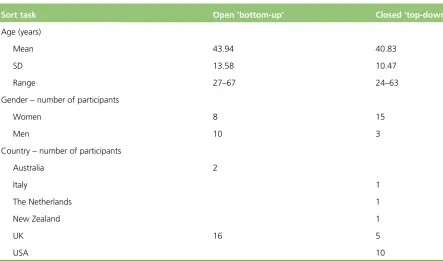
TABLE 1 Demographic information for open and closed-sort tasks 17
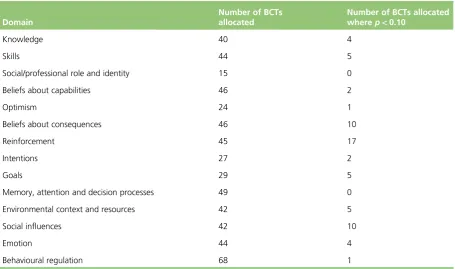
TABLE 2 Total number of BCT allocations per domain in the closed-sort
‘top-down’task 20
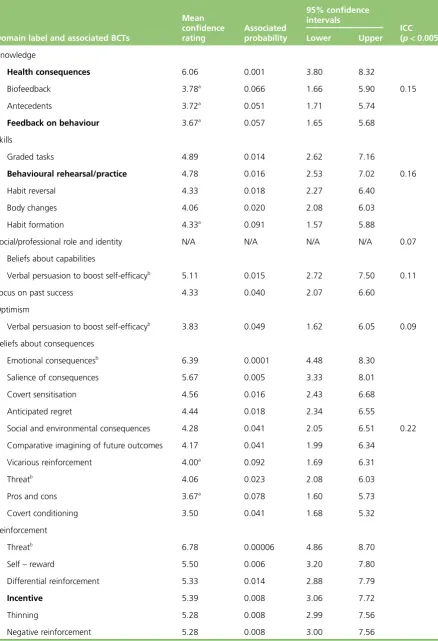
TABLE 3 Assignment of BCTs to the TDF domains in the closed-sort‘top-down’task 21
TABLE 4 Taxonomy grouping (‘bottom-up’) and TDF domain (‘top-down’) combinations achieving positive Pearson’s residual values for similarities in the
assignment of BCTs 25
TABLE 5 Demographic information for one-day workshop and distance group
tutorial trainees 34
TABLE 6 Summary of 1-day workshop content and learning objectives 35
TABLE 7 Summary of learning principles and objectives for group tutorials 38
TABLE 8 One-day workshops: before and after training agreement between
coders, coder agreement with expert consensus and confidence in BCT identification 41
TABLE 9 Distance group tutorials: before and after training intercoder
agreement, trainee agreement with expert consensus and confidence ratings 43
TABLE 10 List of 40 protocols from which intervention descriptions were extracted: sampled acrossBMC Public Health,Implementation ScienceandBMC
Health Services Research 51
TABLE 11 Demographic information for trained coders (study 4) 53
TABLE 12 Mean agreement between trained coder pairs and confidence about
the presence or absence of 93 BCTs in 40 intervention descriptions, time 1 56
TABLE 13 Trained coder agreement with consensus of experienced coders about
BCTs present in 40 intervention descriptions 63
TABLE 14 Summary of participants in studies 5a, 5b and 5c 71
TABLE 15 Summary of workshops to provide training in the use of BCTTv1 to
code and write descriptions of BCIs 74
TABLE 16 Means for all measured variables across studies 5a, 5b and 5c
(SDs given in brackets) 77
TABLE 17 Summary of results from studies 5a, 5b and 5c 81
TABLE 19 Behaviour Change Technique Taxonomy v1: 93 hierarchically
clustered techniques 116
List of figures
FIGURE 1 Preferred Reporting Items for Systematic Reviews and Meta-Analyses flow diagram to show evolution of the taxonomy: labels and definitions of
BCTs modified 12
FIGURE 2 Pearson’s residual values for the association between BCT allocation to
‘top-down’theoretical domain groupings and the‘bottom-up’higher-order
hierarchical split groupings 24
FIGURE 3 Pearson’s residual values for the association between BCT allocation in
List of abbreviations
AC1 alternative chance–corrected
statistic to kappa
ANOVA analysis of variance
BCI behaviour change intervention
BCT behaviour change technique
BCTTv1 Behaviour Change Technique
Taxonomy version 1
BMC BioMed Central
CART classification and regression tree
DCV discriminant content validity
IAB International Advisory Board
ICC intraclass correlation coefficient
MRC Medical Research Council
NCSCT National Centre for Smoking
Cessation and Training
NICE National Institute for Health and
Care Excellence
PABAK prevalence- and bias-adjusted
kappa
RCT randomised controlled trial
RQ research question
SD standard deviation
TDF theoretical domains framework
TIDieR Template for Intervention
Plain English Summary
P
eople’s health can be improved by changing their behaviour, for example by supporting them to stop smoking and become more active, and by supporting health professionals to change their behaviour to improve the quality of care they provide.There are a variety of ways to help people to change their behaviour, but these are often ineffective and need to be strengthened and adapted for different settings. Improving interventions depends on having accurate descriptions, especially of the‘active ingredients’that are responsible for bringing about change. In our previous work, we have developed a method for reporting interventions in terms of what are termed‘behaviour change techniques’. This has been useful both for those implementing interventions and for researchers. However, different methods have been developed for different behaviours and there was a need to bring these together in a single method that was useable by a wide range of people.
We report a 3-year project involving 400 researchers, practitioners and policy-makers from several countries that produced a‘taxonomy’of 93 behaviour change techniques with clear labels, definitions and examples. We also developed training in how to use it and evaluated its usefulness for reporting interventions. It was found to be reliable for 80 out of the 93 techniques and trainees achieved agreement with experts for frequently used techniques.
Scientific summary
Background
Interventions to change behaviour are‘co-ordinated sets of activities designed to change specified behaviour patterns’(Michie S, van Stralen MM, West R. The behaviour change wheel: a new method for characterising and designing behaviour change interventions.Implement Sci2011;6:42). They are often complex and involve multiple, interacting components. Lack of a methodology for unpacking this‘black box’prevents progress in developing more effective interventions and in reliably implementing effective ones. Detailed specification of interventions is important for basic and applied behavioural science. A methodology for achieving this is to specify intervention content in terms of their‘active ingredients’, that is, behaviour change techniques (BCTs). The UK Medical Research Council (MRC) guidance for developing and evaluating complex interventions advocates this approach (Craig P, Dieppe O, MacIntyre S, Michie S, Nazareth I, Petticrew M. Developing and evaluating complex interventions: the new Medical Research Council guidance.BMJ2008;337:a1655).
Structured lists, otherwise known as‘taxonomies’, of BCTs have been developed to enable the clear specification of intervention content in terms of BCTs. The first cross-domain BCT taxonomy consisted of 22 BCTs and four BCT packages. Taxonomies have been developed for different behavioural domains: physical activity, healthy eating, smoking, alcohol consumption and condom use. Using taxonomies with standardised labels, clear definitions and examples will improve current practice in that any given BCT will be described by the same label and that label will be used to describe the same BCT. There is a need for consensus about labels and definitions that can be understood across disciplines, behavioural domains and countries. A key objective of the programme of research reported here was to develop such a consensus and to facilitate the use of a shared language to describe BCTs.
Objectives
The aim was to develop a method for specifying interventions to change behaviour in terms of component BCTs. Objectives were as follows.
Phase 1: development
Develop a taxonomy made up of BCTs that:
i. are applicable to an extensive range of behaviour change interventions (BCIs) ii. are agreed by an international consensus to be potential active components of BCIs
iii. are clearly labelled and well defined to promote reliable application by researchers and intervention developers from a range of disciplines and countries
iv. are distinct (non-overlapping, non-redundant) and precise, and can be used with confidence to describe interventions
Phase 2: evaluation
i. Assess the effectiveness of two programmes of taxonomy user training in improving reliable identification of BCTs.
ii. Assess and report the reliability and validity of using the developed taxonomy to code intervention descriptions into BCTs.
iii. Assess whether or not use of the taxonomy leads to clearer and more replicable written intervention descriptions.
Phase 3: supporting use of the developed taxonomy (Behaviour Change Technique Taxonomy version 1)
Develop accessible resources to facilitate reliable, valid and confident use of the developed taxonomy including:
i. a website providing regular updates on progress of the Behaviour Change Technique Taxonomy version 1 (BCTTv1) project
ii. an online, interactive training resource for users of BCTTv1
iii. a smartphone application version of BCTTv1 available across mobile platforms.
Cross-phase: implementation and dissemination
Ensure that development of the taxonomy:
i. is supported by a range of multidisciplinary and international researchers, practitioners, funders, journal editors and policymakers, and
ii. lays foundations for co-ordinated advances in behavioural science.
Empirical studies included in the project
Phase 1: development
Study 1: developing a comprehensive list of behaviour change techniques
Study 1 developed an extensive, consensually agreed list of BCTs used in BCIs. First, a list of distinct BCT labels and definitions was systematically developed using Delphi methods, building on a preliminary list integrating six published taxonomies (Abraham C, Michie S. A taxonomy of behavior change techniques used in interventions.Health Psychol2008;27:379–87; Michie S, Abraham C, Whittington C, McAteer J, Gupta S. Effective techniques in healthy eating and physical activity interventions: a meta-regression.
Health Psychol2009;28:690–701; Michie S, Hyder N, Walia A, West R. Development of a taxonomy of
behavior change techniques used in individual behavioral support for smoking cessation.Addict Behav
2011;36:315–19; Michie S, Whittington C, Hamoudi Z, Zarnani F, Tober G, West R. Identification of behavior change techniques to reduce excessive alcohol consumption.Addiction2012;107:1431–40; Dixon D, Johnston M.Health Behavior Change Competency Framework: Competences to Deliver
Interventions to Change Lifestyle Behaviors that Affect Health. Edinburgh: Scottish Government; 2012;
Abraham C. Mapping Change Mechanisms and Behaviour Change Techniques: A Systematic Approach to Promoting Behaviour Change Through Text. In Abraham C and Kools M (editors)Writing Health
Communication: An Evidence-Based Guide for Professionals. London: SAGE Publications; 2012). The list
Study 2: Behaviour Change Technique Taxonomy version 1 with hierarchical structure
The 93-item BCT list poses problems for easy recall of, and ready access to, the BCTs and thus its speed and accuracy of use. Study 2 aimed to provide a structure for the list to increase ease of use and to compare a pragmatic‘bottom-up’method with a theoretical‘top-down’method for generating structure. The objectives were to (1) develop a hierarchical structure using an open-sort task (‘bottom-up’method), (2) identify whether or not BCTs could reliably be linked to domains of theoretical constructs using a closed-sort task (‘top-down’method) and (3) identify any overlap between‘bottom-up’and‘top-down’ groupings. The‘bottom-up’method resulted in 16 groupings, which had some overlap with the theory-driven groupings.
Phase 2: evaluation
Study 3: Behaviour Change Technique Taxonomy version 1 training development and evaluation
The process of coding interventions into BCTs is a highly skilled task requiring familiarity with labels and definitions and ability to make a series of complex interpretative judgements. This requires an effective programme of coder training to ensure sufficient level of skills to demonstrate reliability and validity of identifying BCTs. Reliability can be measured by the extent to which coders agree with each other on the presence and absence of BCTs in interventions while validity can be measured by the extent to which coders agree with expert consensus (i.e. the judgement consensus of the BCTTv1 study team). Study 3 developed two training programmes: 1-day workshops and distance group tutorials. Effectiveness was evaluated in terms of whether or not training enhanced coding reliability, validity, confidence in identifying BCTs and coding competence. Both methods of training improved trainee agreement with expert
consensus, doubling the proportion achieving a satisfactory level of performance and confidence in identifying the BCTs assessed but did not improve intercoder agreement. Training was evaluated positively by trainees with both types of training receiving uniformly high ratings in terms of usefulness.
Study 4: identifying behaviour change technique in interventions using Behaviour Change Technique Taxonomy version 1–reliability and validity
Study 4 investigated the reliability and validity of BCTTv1 when used by trained coders (from study 3). Intercoder and test–retest reliability (measured at two time points, 1 month apart) were used to assess reliability of using BCTTv1 to code BCTs in published intervention descriptions. Validity was assessed by the extent to which coding agreed with consensus by the BCTTv1 study team as to which BCTs were present. We also investigated trained coders’confidence in identifying BCTs and whether or not descriptions varied in the ease with which BCTs could be identified. Good intercoder reliability was observed for 80 of the 93 BCTs. Reliability did not differ across the two time points and there was good test–retest reliability. Of the 15 BCTs agreed by expert consensus to be present in the descriptions, good agreement was achieved for 14, thus indicating good validity.
Study 5: reporting intervention descriptions using Behaviour Change Technique Taxonomy version 1– clarity and distinctiveness
Design
The five empirical studies used the following methods:
l Delphi methods with feedback from a multidisciplinary IAB to generate a list of distinct BCT labels and definitions.
l Open-sort methods to categorise BCTs and generate a hierarchical structure.
l Comparison of user’s intercoder reliability using prevalence- and bias-adjusted kappa (PABAK; for which PABAK>0.60 is considered good reliability), agreement with expert consensus (in this case,
‘expert’is defined as individuals with at least 15 years’experience of researching and coding interventions) and user confidence in identifying BCTs after, compared with before, being trained.
l Assessment of agreement between trained coders (intercoder reliability), agreement over time (test–retest reliability) and trained coder agreement with expert consensus (validity).
l Within- and between-participant experimental designs to compare quality of intervention descriptions reported by untrained and trained writers, with and without access to BCTTv1.
Participants
A total of 400 participants were involved across the studies (note: some participants took part in more than one study).
Study 1 (n=41)
Nineteen international behaviour change experts, active in their field and engaged in investigating, designing and/or delivering interventions, 16 of the 30 members of the BCTTv1 project IAB, five BCTTv1 team members and a‘lay’person.
Study 2 (n=36)
Eighteen of the 19 international experts from the first study and 18 additional experts with experience of designing interventions, writing manuals or protocols and/or conducting narrative or systematic reviews of behaviour change literature.
Study 3 (n=161)
One-hundred and sixty one trainee coders (systematic reviewers, researchers, practitioners and policy-makers engaged in investigating, reviewing, designing and delivering interventions).
Study 4 (n=40)
Forty trained coders who had also taken part in the third study.
Studies 5 (a, b, c) (n=190)
Results
Study 1
The BCTTv1 is the first cross-behaviour taxonomy to be established by an international group of experienced BCT coders. It comprises 93 distinct, clearly labelled, well-defined BCTs hierarchically organised into
16 groupings.
Study 2
Groupings were created by those with experience of BCIs: average of 15.11 groupings (standard deviation 6.11, range 5–24 groupings). BCTs relating to‘Reward and Punishment’and‘Cues and Cue Responses’ were perceived as markedly different from other BCTs. Fifty-nine of the BCTs were reliably allocated to 12 of the 14 theoretical domains; 47 were significant and 12 were of borderline significance. There was a significant association between the 16‘bottom-up’groupings and the 13‘top-down’groupings, chi-squared=437.80;p<0.001. Thirty-six of the 208‘bottom-up’בtop–down’pairings (i.e. 16 × 13) showed greater overlap than expected by chance. However, only six combinations achieved satisfactory evidence of similarity. The moderate overlap between the groupings indicates some tendency to implicitly conceptualise BCTs in terms of the same theoretical domains.
Study 3
Training was effective in improving application of BCTTv1. Trainee agreement with expert consensus improved across workshop and distance group tutorial trainees (bothp<0.05), with the proportion achieving competence (i.e. agreement with expert consensus PABAK>0.60) doubling (bothp<0.05). Forty-six per cent of workshop trainees and 78% of tutorial trainees achieved competence after training. Trainee confidence in identifying BCTs assessed improved in workshops (p<0.001). Intercoder agreement did not improve for either method (workshopsp=0.08 and tutorialsp=0.57).
Study 4
The BCTTv1 can be used accurately and reliably by trained coders to specify BCTs in BCIs: good intercoder reliability was observed across 80 BCTs identified in the protocols: 64 of the 80 BCTs (i.e. 80%) achieved a mean PABAK score of>0.70 and 59 of the 80 BCTs (i.e. 74%) achieved a mean PABAK score of>0.70. Good test–retest reliability was achieved within coders (between baseline and 1 month) (p<0.001). Reliability was poorer for frequent BCTs; 9 out of the 16 frequently identified BCTs failed to achieve a good level of reliability, that is a PABAK score of>0.70. Good concurrent validity was achieved for 14 out of the 15 BCTs identified by experienced coders to be present in published descriptions.
Studies 5 a, b, c
It is unclear whether or not BCTTv1 benefits reporting of descriptions of observed interventions.
Study 5a: quality, reliability of BCT identification (between trained coders) and validity (trained coder agreement with expert consensus) did not differ for descriptions written by untrained writers with and without BCTTv1 (allp>0.05).
Study 5b: quality of descriptions written by untrained raters without BCTTv1 was rated as greater than descriptions written by trained writers, with BCTTv1 (allp<0.05). Reliability of BCT identification (between trained coders) was greater for descriptions written by trained writers, with BCTTv1 (mean PABAK
trained=0.87; untrained=0.84;p<0.05).
Conclusions
With regard to BCTTv1,‘v1’refers to version 1, to indicate that we envisage development of this taxonomy in the future. It is an extensive, hierarchically organised taxonomy of 93 distinct BCTs with clear definitions and examples that offer a generally reliable method for specifying the active content of interventions. Eighty out of these 93 were found in 40 published intervention descriptions, indicating the need for such an extensive list of BCTs. Both methods of BCTTv1 training improve reliability and validity for most BCTs. BCTTv1 can be used by trained coders to identify BCTs accurately in intervention descriptions. However, there is room for improvement in terms of clarifying some BCT definitions and in developing further training to improve reliability and validity. It is not yet clear whether or not BCTTv1 enhances reporting as our evaluation method only used observed interventions. BCTTv1 represents a useable method for research and practitioner
communities when interpreting and implementing BCIs.
Funding
Chapter 1
General introduction
Behaviour change interventions: purpose and reporting
Preventable behaviours, such as smoking, physical inactivity, eating unhealthy diets and excessive alcohol consumption, have been identified as leading causes of morbidity and mortality.1–4Behaviour change interventions (BCIs) are typically complex, involving many interacting components.5This can make them challenging to replicate in research, to implement in practical settings and to synthesise in systematic literature reviews.
Behaviour change interventions are‘Coordinated sets of activities designed to change specified behaviour patterns’.6The development, implementation and evaluation of effective BCIs are fundamental for advancing behavioural science and its application.7,8However, both science and practice depend on having a good understanding of the nature and content of interventions. This includes knowing what was delivered in the intervention [i.e. the‘active ingredients’or behaviour change techniques (BCTs)] and how it was delivered (i.e. who delivered, to whom, how often, for how long, in what format, and in what context).9–11Poorly described interventions in research protocols and published reports mean that the precise content of interventions is difficult to establish, with the possibility of the same labels (e.g. behavioural counselling) meaning different things to different researchers/implementers and different labels being used to describe the same BCTs. As a result, the content delivered in practice often deviates from that specified in the intervention protocol12presenting a barrier to scientific progress and effective translation.
Behaviour change techniques
A BCT is defined as an observable and replicable component designed to change behaviour. It is the smallest component compatible with retaining the postulated active ingredients and can be used alone or in combination with other BCTs. To enable interventions to be evaluated and effective interventions (i.e. those which bring about the desired change in the target behaviour or behaviours) to be
implemented, a BCT should be well specified. BCTs are descriptors and vary in the extent to which they have been empirically investigated and the extent to which they bring about the desired change to behaviour(s) in different situations. BCT definitions used for coding have to be practical, non-overlapping and useful in the reliable reporting of interventions.
Specification of interventions according to component BCTs is beneficial for conducting primary research, implementing effective interventions and for conducting evidence syntheses. A comprehensive list of BCTs facilitates primary research, as intervention developers can draw on a wider range of BCTs than is likely to be considered without such a list. Specification of intervention and control conditions using BCTs can increase accurate replication of interventions found to be efficacious in RCTs. BCT methodology is also useful in assessing the fidelity of implementation of interventions. For systematic reviewers, BCTs provide a reliable method for extracting and coding information about intervention content. Reviewers can identify and synthesise discrete, replicable, potentially active ingredients associated with efficacy and multivariate statistical analysis can then be used to identify BCTs and BCT combinations associated with efficacy. By linking BCTs with theories of behaviour change, researchers and reviewers can investigate possible effect modifiers and/or mechanisms of action. There are some intervention components that can be thought of as‘modifier BCTs’in that they add value to BCTs but do not in themselves change behaviour, for example, tailoring, giving choice and homework tasks. Specifying intervention content with this degree of precision helps to maximise scientific as well as practical benefits of research investment into the development and evaluation of complex interventions.
Behaviour change technique taxonomies
To provide a more rigorous methodology for characterising intervention content, methods have been developed for specifying the potentially active ingredients in terms of BCTs.18–20Abraham and Michie’s20 taxonomy of 22 BCTs and four BCT packages observed in BCIs was demonstrated to have good intercoder reliability (i.e. the extent to which coders agreed on the presence/absence of BCTs) among the taxonomy developers and trained coders across 221 intervention descriptions in papers and manuals. This, and subsequent taxonomies developed for specific behavioural domains, have been widely used internationally to report interventions, synthesise evidence21–24and design interventions.25,26BCT taxonomies have been developed in relation to smoking,27physical activity and healthy eating,28excessive alcohol use29and condom use.30Taxonomies of BCTs have also been used to assess the extent to which published reports reflect intervention protocols12and to assess fidelity of delivery.31They have enabled the specification of professional competences for delivering BCTs32,33and as a basis for a national training programme.34,35 Guidance has also been developed for incorporating BCTs in text-based interventions.36
Previous classification systems have either been in the form of an unstructured list or have been linked to, or structured, according to theories and/or theoretical mechanisms19,20,32,33judged to be the most
A hierarchically structured list provides the advantage of making it more coherent to, and useable by, those applying it.37There are at least five potential benefits of developing a cross-domain, hierarchically structured and internationally supported taxonomy for specifying intervention content:
1. To promote theaccurate replicationof interventions and control conditions in comparative efficacy research, a key activity in accumulating scientific knowledge and investigating generalisability across behaviours, populations and settings.
2. Tospecify intervention contentto facilitate faithful implementation of intervention protocols in research and, in practice, of interventions found to be effective.
3. To extract and synthesise information about intervention contentin systematic reviews. BCT
taxonomies, combined with the statistical technique of meta-regression or classification and regression tree (CART), have allowed reviewers to synthesise evidence from complex, heterogeneous interventions to identify effective component BCTs and BCT combinations.21,23,24,38,39
4. To draw on a comprehensive list of BCTs indeveloping interventions(rather than relying on the limited set that can be brought to mind).
5. To investigate possiblemechanisms of actionby linking BCTs with theories of behaviour change and component theoretical constructs.8,19,21,23
In this monograph, we present the development and evaluation of Behaviour Change Technique
Chapter 2
Developing a comprehensive list of
behaviour change techniques (study 1)
Abstract
Objectives:To develop an extensive, consensually agreed taxonomy of BCTs used in BCIs.
Methods:In a Delphi-type exercise, 14 experts rated labels and definitions of 124 BCTs from six published classification systems.20,23,27,29,33,36The resulting list was refined based on the feedback from group
discussions of 16 members of the International Advisory Board (IAB).
Results:This resulting BCTTv1 comprised 93 distinct, non-redundant and non-overlapping BCTs.
Conclusions:BCTTv1 offers a step change in methods for specifying interventions using shared concepts and language. When sufficient data have been collected about its implementation and an international, interdisciplinary consortium established, v1 will be reviewed and v2 released as and when the need is judged by consensus.
Introduction
Literature reviews find that even essential elements of interventions are frequently omitted from intervention descriptions; an analysis of trials and reviews found that 67% of pharmacological intervention descriptions were adequate, compared with only 29% of non-pharmacological intervention descriptions.41While this occurs in descriptions of all types of intervention, it is an even more common problem in BCIs. Titles and abstracts of published interventions (i.e. the materials screened for inclusion in systematic reviews) have been found to mention the active components of the intervention in only 56% of published descriptions compared with over 90% in pharmacological interventions.42The TIDieR checklist and guide for reporting all types of interventions was developed using consensus methods with international participants from several disciplines and proposes a minimum set of information: brief name, why (rationale), what materials, what procedure, who provided, how, where, when and how much, tailoring, changes, how well monitored and how well delivered.16However, for BCIs, further information is required to specify the active ingredients, that is
‘components within an intervention that can be specifically linked to its effect on outcomes such that, if they were omitted, the intervention would be ineffective’.42
The content, or active components, of BCIs are often described in intervention protocols and published reports with different labels (e.g.‘self-monitoring’may be labelled‘daily diaries’) and the same labels may be applied to different techniques (e.g.‘behavioural counselling’may involve‘educating patients’or
‘feedback, self-monitoring, and reinforcement’).43This may lead to uncertainty, confusion and difficulties in determining the efficacy of specific change approaches; for example, Mortonet al.44had considerable difficulty in identifying the necessary components of motivational interviewing and as a result found it difficult to synthesise evidence of efficacy. Further, behavioural medicine researchers and practitioners have reported low confidence in their ability to replicate highly effective behavioural interventions for type 2 diabetes mellitus prevention.45The absence of standardised definitions and labels for intervention components means that systematic reviewers develop their own systems for classifying behavioural interventions and synthesising study findings [e.g. Hardemanet al.,18Albarracínet al.,19Mischel
Consequently, the UK MRC guidance5for developing and evaluating complex interventions called for improved methods of specifying and reporting intervention content in order to address the problems of lack of consistency and consensus.
A method developed for this purpose is the reliable specification of interventions in terms of BCTs.20Previous classification systems have mainly been developed for particular behavioural domains (e.g. physical activity, smoking, alcohol consumption or safer sex). Abraham and Michie20developed the first cross-behaviour BCT taxonomy, building on previous intervention content analyses.18,19The taxonomy demonstrated reliability in identifying 22 BCTs (e.g.‘self-monitoring’) and four BCT packages (e.g.‘relapse prevention’). Identifying the presence of BCTs in intervention descriptions included in systematic reviews and national datasets of outcomes has allowed the identification of BCTs associated with effective interventions.46,47Effective BCTs have been identified for interventions to increase physical activity and healthy eating,23,48and to support smoking cessation,27,46reduce excessive alcohol consumption,29prevent sexually transmitted infections19,30and change professional behaviour.49
Although the subsequent development of classification systems of defined and reliably identifiable BCTs has been accompanied by a progressive increase in their comprehensiveness and clarity, this work has been conducted by only a few research groups, but with each developing their own methodology. For this method to maximise scientific advance, collaborative work was needed to develop agreed labels and definitions and reliable procedures for their identification and application across behaviours, disciplines and countries. Therefore, the aim of study 1 was to develop a taxonomy that comprises an extensive list of clearly labelled, well defined BCTs that (1) are proposed as the active components of BCIs, (2) are distinct (non-overlapping, non-redundant) and precise, (3) can be used with confidence to describe interventions, and (4) have a breadth of international and disciplinary agreement.
Method
This study is also published as Michieet al.40
Participants
Participants were international behaviour change experts (i.e. active in their field and engaged in
investigating, designing and/or delivering BCIs) who had agreed to take part in one or more of the project phases or were members of the IAB50or of the study team (which included a‘lay’person). All board members, as leaders in their field, were eligible to take part as a behaviour change expert. However, in light of their advisory role commitments, members were not routinely approached for further participation except to help widen participation in terms of country, discipline and behavioural expertise.
For the international feedback phase, 16 out of the 30 IAB members took part in discussions to comment on a prototype BCT classification system. IAB members were identified by the study team as being leaders in their field within the key domains of interest (e.g. types of health-related behaviours, major disease types, disciplines such as behavioural medicine) following consultation of websites, journals, and scientific and professional organisations. IAB members were from the USA, Canada, Australia, UK, the Netherlands, Finland and Germany (seeAppendix 2). Feedback was also provided by members of the study team, who had backgrounds in psychology and/or implementation science and a‘lay’person with a Bachelor of Arts with Honours [BA (Hons)] in English but no background in psychology or behaviour change.
Procedure
Participants provided written consent and were assured that their responses would remain confidential. All participants were asked to provide demographic information (i.e. age, sex and nationality). Delphi participants were also asked to provide their professional background (i.e. qualifications, registrations, job title and area of work) and how many BCTs they had used professionally in intervention design, face-to-face delivery and training (reported in increments of 5 up to 50+).
A prototype classification system was developed by the study team based on all known published classifications of BCTs following a literature review37(step 1). An online Delphi-type exercise51with two
‘rounds’was used for initial evaluation and development of the classification system. Participants worked independently and rated the prototype BCT labels and definitions on a series of questions designed to assess omission, overlap and redundancy (step 2). The results of step 2 subsequently informed the
development of an improved BCT list. The BCTs identified as requiring further clarification were sent to the Delphi participants for the second round. They were asked to rate BCTs for clarity, precision, distinctiveness and confidence of use (step 3). The resulting list of BCTs was then scrutinised by the IAB, who submitted verbal and written feedback (step 4), and was assessed by the lay and expert members of the study team (step 5). Following each of steps 2–4, the results were synthesised by SM and MJ in preparation for the next step.
Step 1: developing the prototype classification system
The labels and definitions of distinct BCTs were extracted from six BCT classification systems identified by a literature search (the relevant papers are marked with an asterisk in the reference section). For BCTs with two or more labels (n=24) and/or definitions (n=37), five study team members rated their preferred labels and definitions. Where there was complete or majority agreement, the preferred label and/or definition was retained. Where there was some, little or no agreement, new labels and definitions were developed by synthesising the existing labels and definitions across classification systems. Definition wording was modified to include active verbs and to be non-directional (i.e. applicable to both the adoption of a new wanted behaviour and the removal of an unwanted behaviour).
Step 2: Delphi exercise first round
The BCTs (labels and definitions) from step 1 were presented in a random order and participants were asked five questions about each of them:
1. Does the definition contain what you would consider to be potentially active ingredients that could be tested empirically? Participants were asked to respond to this question using a 5-point scale (‘definitely no’,‘probably no’,‘not sure’,‘probably yes’and‘definitely yes’).
2. Please indicate whether you are satisfied that the BCT is conceptually unique or whether you consider that it is redundant or overlapping with other BCTs. (With forced choice as to‘whether it was
conceptually unique, redundant, or overlapping’.)
3. If participants indicated that the BCT was‘redundant’, they were asked to state why they had come to this conclusion.
4. If they indicated that the BCT was‘overlapping’, they were asked to state: (1) with which BCT(s) and (2) whether or not they can be separated (‘yes’or‘no’)’.
5. If the BCTs were considered to be separate, participants were asked how the label or definition could be rephrased to reduce the amount of overlap or, if not separate, which label and which definition was better.
Participants were given an opportunity to make comments on the exercise and to detail any BCTs not included on the list. They were asked,‘does the definition and/or label contain unnecessary characteristics and/or omitted characteristics?’with an open-ended response format. The exercise was designed to take 2 hours, follow-up reminders were sent to participants after 2 weeks and all responses were submitted within 1 month of the initial request.
Frequencies, means and/or modes of responses to questions (1) and (2) were considered for each BCT. Based on the distribution of responses, BCTs for which (a) more than one-quarter of participants doubted that they contained active ingredients and/or (b) more than one-third considered them to be overlapping or redundant were flagged as‘requiring further consideration’. These data, along with the responses to questions (3) to (4), guided the rewording of BCT labels and definitions, and the identification of omitted BCTs. The BCTs for reconsideration and the newly identified BCTs were presented in the second Delphi exercise round.
Step 3: Delphi exercise second round
The BCTs identified as requiring further consideration were presented. The rest of the BCTs were included for reference only, to assist judgement about distinctiveness. For each BCT, participants were asked three questions and asked to respond using a 5-point scale (‘definitely no’,‘probably no’,‘not sure’,‘probably yes’and‘definitely yes’).
1. If you were asked to describe a BCI in terms of its component BCTs, would you think the following BCT was (a) clear, (b) precise, (c) distinct?
2. Would you feel confident in using this BCT to describe the intervention?
3. Would you feel confident that two behaviour change researchers or practitioners would agree in identifying this BCT?
If participants responded‘probably no’,‘definitely no’, or‘not sure’, to any question, they were asked to state their suggestions for improvement.
Step 4: feedback from the International Advisory Board
Sixteen out of the 30 members of the IAB took part in one of three, 2-hour long teleconferences to give advice to the study team, and the BCT list was refined based on their feedback.
Step 5: feedback from study team members
The BCT definitions were checked to ensure that they contained an active verb specifying the action required to deliver the intervention.53The‘lay’member of the study team (FR, seeAcknowledgments) read through the list to ensure syntactic consistency and general comprehensibility to those outside the field of behavioural science. Subsequently, the study team members made a final check of the resulting BCT labels and definitions.
Results
All data tables for this chapter are reported elsewhere, please refer to Michieet al.40The evolution of the taxonomy at the different steps of the procedure is summarised in Michieet al.40
Step 1: developing the prototype classification system
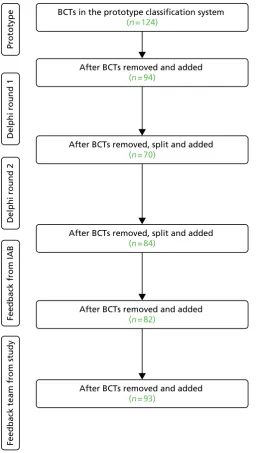
Demographic information about the experts involved is summarised in Michieet al.40Of the 124 BCTs in the prototype classification system, 31 were removed: five composite BCTs and 26 BCTs overlapping with others, which were rated to have better definitions. One additional BCT was identified by the study team, given a label and definition and added to the system. This produced a list of 94 BCTs.
Step 2: Delphi exercise first round
The means, modes and frequencies of responses to the Delphi exercise first-round questions are shown in Michieet al.40On the basis of these scores, 21 BCTs were judged to be‘satisfactory’and 73‘requiring further consideration’. Of the 73 reconsidered BCTs, four were removed, four were divided and one BCT was added, giving 74 BCTs. During this process, one reason for overlap became evident: there was a hierarchical structure meaning that deleting overlapping BCTs would end up with only the superordinate BCT and a loss of specific variation (e.g. adopting the higher order BCT‘consequences’would have deleted‘reward’).
Step 3: Delphi exercise second round
The means, modes and frequencies of responses to the five Delphi exercise second round questions are shown in Michieet al.40On the basis of these scores, 38 BCTs were judged to be‘satisfactory’and
32‘requiring further consideration’. Of the 70 BCTs reconsidered, seven labels were amended, 35 definitions were rephrased and seven BCTs were removed, giving 63 BCTs. Together with the 21 BCTs judged to be
‘satisfactory’in the first round, there were 84 BCTs at the end of the Delphi exercise. Some further standardisation of wording across all BCTs was made by study team members (e.g. specifying‘unwanted’ or‘wanted’behaviours rather than the more generic‘target’behaviours and ensuring that all definitions included active verbs).
Step 4: feedback from the International Advisory Board
The IAB members made two general recommendations: first, to make the taxonomy more usable by empirically grouping the BCTs and second, to consider publishing a sequence of versions of the taxonomy (with each version clearly labelled) that would achieve a balance between stability/usability and change/ evolution. Feedback from members led to the addition of two and the removal of four BCTs.
Step 5: feedback from study team members
Discussion
An extensive list of 93 distinct, non-redundant BCTs was developed with labels and definitions refined to capture the smallest components compatible with retaining the proposed active ingredients with the minimum of overlap: BCTTv1 (seeAppendix 2,Table 19). Development comprised a series of consensus exercises involving 35 experts in delivering and/or designing BCIs. These experts were drawn from a variety of disciplines including psychology, behavioural medicine and health promotion, and from seven countries (the USA, Canada, Australia, UK, the Netherlands, Finland and Germany). Therefore, the resulting BCTs have relevance among experts from varied behavioural domains, disciplines and countries, and potential relevance to the populations from which they were drawn. Evidence is already emerging to suggest that some BCTs from BCTTv1 occur more frequently than others in descriptions of BCIs.40These BCTs are marked with an asterisk inTable 19(seeAppendix 2).
Prototype
Delphi round 1
Delphi round 2
Feedback from IAB
Feedback team from study
After BCTs removed and added
(n = 82)
After BCTs removed and added
(n = 93)
BCTs in the prototype classification system
(n = 124)
After BCTs removed and added
(n = 94)
After BCTs removed, split and added
(n = 70)
After BCTs removed, split and added
[image:39.595.182.447.69.523.2](n = 84)
FIGURE 1 Preferred Reporting Items for Systematic Reviews and Meta-Analyses flow diagram to show evolution of
The extent to which BCTTv1 is applicable without adaptation across behaviours, disciplines and countries is an important question for future monitoring and research. The process of building a shareable consensus language and methodology is necessarily collaborative and will be an ongoing cumulative and iterative process, involving an international network of advisors and collaborators.50The balance of stability to allow accumulation of knowledge and development to incorporate significant bodies of new knowledge and experience means that classificatory systems are updated at strategic intervals.37Examples where this has happened are Linnaeus’s classification of plants and systems based on consensus such as theDiagnostic and
Statistical Manual of Mental Disorders-Fourth Edition54or theInternational Classification of Diseases and
Related Health Problems, Tenth Edition.55
There was no prior agreed methodology for this work and there are limitations to the methods we have used. The purpose of the Delphi exercise was to develop a prototype taxonomy on which to build. It was the first in a series of exercises adapted to develop the taxonomy. Our Delphi-type methods involved 14 individuals, an appropriate number for these methods,51but a number that makes the choice of participants important. We attempted to ensure adequate coverage of behaviour change experts. Although we had some diversity of expertise, we acknowledge the predominance of European experts from a psychological background within our sample. At various stages we made arbitrary decisions such as the cut-offs for amending BCT labels and descriptions. In the absence of agreed standards for such decisions, we were guided by the urgent need to develop an initial taxonomy that was fit for purpose and would therefore form a basis for future development. Our amendments of the BCT labels and definitions also depend on the expertise available and, therefore, we based our amendments on a wide range of inputs–the data we collected from Delphi participants and coders, expert modification, international advice and lay user improvements.
The BCTTv1 encompasses a greater number of BCTs than previous taxonomies. Therefore, it requires structure to facilitate recall and access to the BCTs, and thus increase speed and accuracy of use. A true, that is hierarchically structured, taxonomy provides the advantage of making it more coherent to, and useable by, those applying it.37As the number of identified BCTs has increased, so also has the need for such a structure, to improve the usability of the taxonomy.
Chapter 3
Behaviour Change Technique
Taxonomy version 1 with hierarchical structure
(study 2)
Abstract
Objectives:To enhance understanding and use of BCTs by investigating the hierarchical structure of BCTTv1.
Methods:Participants grouped BCTs according to similarity of active ingredients in an open-sort task. This structure was examined for higher-order groupings using a dendrogram derived from hierarchical cluster analysis. This‘bottom-up’sort method was compared with a theory-based‘top-down’method in which 18 experts sorted BCTs into 14 theoretical domains in a closed-sort task. Discriminant content validity (DCV) was used to identify groupings and chi-squared tests, and Pearson’s residual values were used to examine the overlap between groupings.
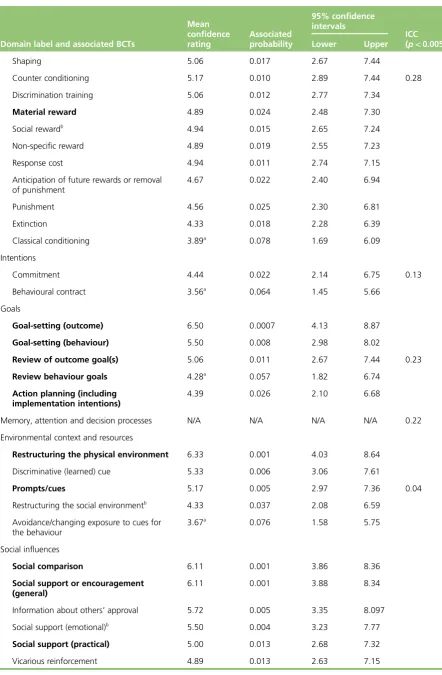
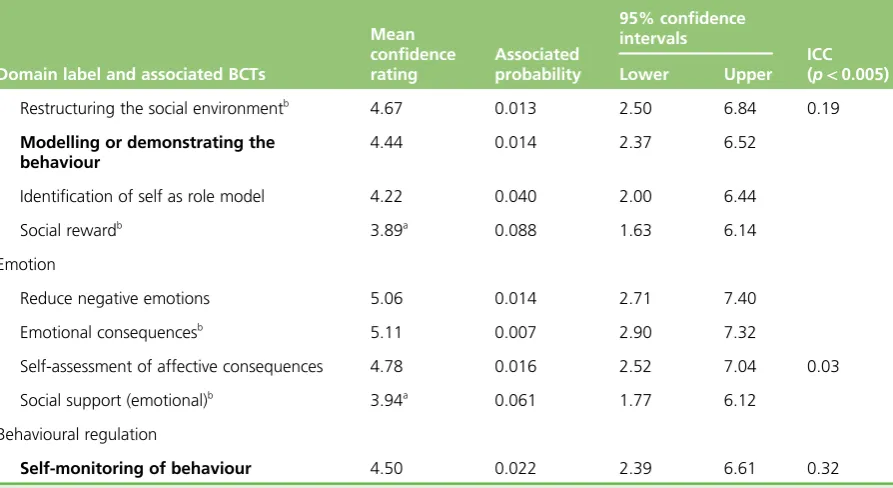
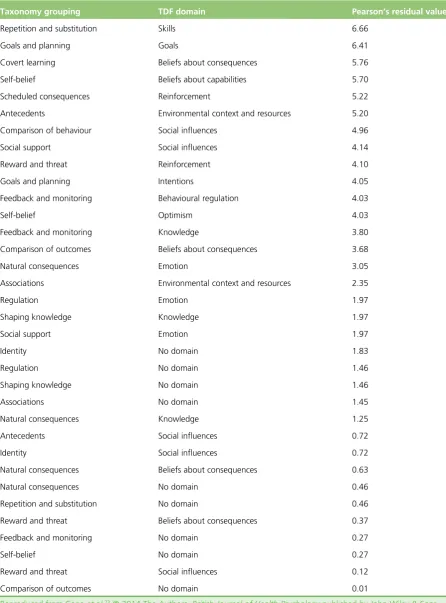
Results:Participants created an average of 15.11 groupings (SD=6.11 groupings, range 5–24 groupings). BCTs relating to‘Reward and Punishment’and‘Cues and Cue Responses’were perceived as markedly different from other BCTs. Fifty nine of the BCTs were reliably allocated to 12 of the 14 theoretical domains; 47 were significant and 12 were of borderline significance. Two domains had no BCTs significantly assigned to them. An additional grouping of‘No Domain’was included to represent these cases. There was a significant association between the 16‘bottom-up’groupings and the 13‘top-down’ groupings (χ2=437.80;p<0.001). Thirty-six of the 208‘bottom-up’בtop–down’pairings (i.e. 16 × 13) showed greater overlap than expected by chance. However, only six combinations achieved satisfactory evidence of similarity.
Conclusions:The moderate overlap between the groupings indicates some tendency to implicitly
conceptualise BCTs in terms of the same theoretical domains. Understanding the nature of the overlap will aid the conceptualisation of BCTs in terms of theory and application. Further research into different methods of developing a hierarchical taxonomic structure of BCTs for international, interdisciplinary work is now required.
Introduction
Study 1 presented the synthesis of existing BCT taxonomies into a single comprehensive, cross-context, overarching BCT taxonomy: BCTTv1.8,17,40Previous BCTs groupings have been based on judgements made by the study author.20,27,32,33Given the 93 items of BCTTv1, it is necessary to group the BCTs to make the taxonomy more memorable and useable. To achieve this, we need an agreed method for identifying links between particular BCTs and theoretical constructs.