White Rose Research Online URL for this paper: http://eprints.whiterose.ac.uk/136027/
Version: Accepted Version
Article:
Bindl, UK, Hardin, KL orcid.org/0000-0002-0826-7565, Gibson, CB et al. (1 more author) (2019) Job Crafting Revisited: Implications of an Extended Framework for Active Changes at Work. Journal of Applied Psychology, 104 (5). pp. 605-628. ISSN 0021-9010
https://doi.org/10.1037/apl0000362
© 2018, American Psychological Association. This paper is not the copy of record and may not exactly replicate the final, authoritative version of the article. Please do not copy or cite without authors' permission. The final article will be available, upon publication, via its DOI: 10.1037/apl0000362
[email protected] https://eprints.whiterose.ac.uk/
Reuse
Items deposited in White Rose Research Online are protected by copyright, with all rights reserved unless indicated otherwise. They may be downloaded and/or printed for private study, or other acts as permitted by national copyright laws. The publisher or other rights holders may allow further reproduction and re-use of the full text version. This is indicated by the licence information on the White Rose Research Online record for the item.
Takedown
If you consider content in White Rose Research Online to be in breach of UK law, please notify us by
1
Job Crafting Revisited: Implications of an extended framework for active changes at work
Uta K. Bindl
The London School of Economics and Political Science
Kerrie L. Unsworth University of Leeds
Cristina B. Gibson
Pepperdine University and University of Western Australia
Christopher B. Stride University of Sheffield
Journal of Applied Psychology, in press
Abstract: Employees often self-initiate changes to their jobs, a process referred to as job crafting, yet we know little about why and how they initiate such changes. In this paper, we introduce and test an extended framework for job crafting, incorporating individuals’ needs and regulatory focus. Our theoretical model posits that individual needs provide employees with the motivation to engage in distinct job-crafting strategies—task,
relationship, skill, and cognitive crafting—and that work-related regulatory focus will be associated with promotion- or prevention-oriented forms of these strategies. Across three independent studies and using distinct research designs (Study 1: N=421 employees; Study 2: N=144, using experience sampling data; Study 3: N=388, using a lagged study design), our findings suggest that distinct job-crafting strategies, and their promotion- and prevention-oriented forms, can be meaningfully distinguished and that individual needs (for autonomy, competence, and relatedness) at work differentially shape job-crafting strategies. We also find that promotion- and prevention-oriented forms of job-crafting vary in their relationship with innovative work performance; and we find partial support for work-related regulatory foci strengthening the indirect effect of individual needs on innovative work performance via corresponding forms of job crafting. Our findings suggest that both individual needs and work-related regulatory foci are related to why and how employees will choose to craft their jobs, as well as to the consequences job crafting will have in organizations.
Keywords: Job crafting; regulatory focus theory; individual needs; innovative work performance; proactivity
© 2018, American Psychological Association. This paper is not the copy of record and may not exactly replicate the final, authoritative version of the article. Please do not copy or cite without authors' permission. The final article will be available, upon publication, via its DOI:
2
Employees often take initiative to change their existing jobs in idiosyncratic ways
(Frese & Fay, 2001; Grant & Parker, 2009; Wrzesniewski & Dutton, 2001). Such job-crafting
efforts, defined as “the actions employees take to shape, mold, and redefine their jobs”
(Wrzesniewski & Dutton, 2001, p. 180), are a subset of proactive behaviors that are initiated
by the employee, rather than externally rewarded by the organization (Parker, Bindl, &
Strauss, 2010; Strauss & Parker, 2014). Research suggests job crafting occurs across jobs and
industries (Nielsen & Abildgaard, 2012) as well as across hierarchical ranks (Berg,
Wrzesniewski, & Dutton, 2010) and can promote important outcomes, such as increased
organizational commitment (Leana, Appelbaum, & Shevchuk, 2009), work engagement
(Bakker, Tims, & Derks, 2012; Bruning & Campion, in press), and meaningfulness
(Wrzesniewski, LoBuglio, Dutton, & Berg, 2013), as well as improved performance at work
(Petrou, Demerouti, & Schaufeli, 2015; Bruning & Campion, in press; also see meta-analytic
evidence by Rudolph, Katz, Lavigne, & Zacher, 2017). This literature has established the
existence of various types of job crafting, such as those directed toward changing task, skill,
or relational aspects of the job. Further, research has explored the possibility that proactive
changes may either add to or reduce aspects of one’s job (Bruning & Campion, in press;
Spychala & Sonnentag, 2011). However, scholars have placed less emphasis on why and how
employees may engage in these different strategies of job crafting. This is our focus here.
With regard to why employees engage in different job-crafting strategies, original
theorizing on job crafting (Wrzesniewski & Dutton, 2001; Niessen, Weseler, & Kostova,
2016; Slemp & Vella-Brodrick, 2014) argued that individual needs serve as internal driving
forces providing motivation for job crafting. However, this work has remained relatively
silent on distinguishing exactly which individual needs may lead to specific job-crafting
behaviors. To develop a more precise understanding of the effects of individual needs on
3
individual needs function similarly may obscure the existence of important differential
relationships (e.g., Van den Broeck, Ferris, Chang, & Rosen, 2016). In particular,
self-determination theory (Deci & Ryan, 1985) has established the importance of three core needs
as drivers of behavior, namely, a need for relatedness (the need to feel close and connected to
significant others), autonomy (the need to decide by oneself which activities to complete),
and competence (the need to effectively bring about desired effects and outcomes; Gagné &
Deci, 2005). Overwhelming evidence of the importance of fulfilling these core needs in order
to realize important well-being, attitudinal, and behavioral outcomes at work (e.g., Van den
Broeck et al., 2016; Wrzesniewski & Dutton, 2001) leads us to theorize that the drive to fulfil
different needs at work will be positively associated with different directions for job crafting,
that is, whether employees choose to engage in task, skill, relationship, or cognitive crafting.
With regard to how, drawing on regulatory focus theory (Higgins, 1997), we propose
that depending on their regulatory focus, individuals may choose to either add to their
existing jobs in explorative ways to maximize their gains (i.e., engage in “promotion
-oriented” forms of job crafting), or to diminish aspects of their jobs in safety-oriented ways to
avoid losses (i.e., engage in “prevention-oriented” forms of job crafting). Previous research
has focused on the former; we understand much less about the prevention-oriented forms of
job crafting and, as we will argue, they may represent meaningful ways of crafting one’s job.
In sum, we argue that the strength of individual needs drives why individuals engage in
different types of job crafting (task, relationship, skill, or cognitive crafting) and that
individuals’ work-related regulatory focus shapes how individuals engage in job crafting, in
terms of either promotion- or prevention-oriented forms of overall task, relationship, skill, or
cognitive crafting. Developing a new framework of job crafting, we argue that both forms of
job crafting, promotion- and prevention-oriented, represent deliberate strategies toward
4
Our research offers several contributions to the existing literature. The first key
contribution is a comprehensive delineation of the nature of job crafting. Although
researchers have previously noted the possibility that job crafting consists of not only
expansive but also limiting forms (Wrzesniewski & Dutton, 2001; Bruning & Campion, in
press), most research has deliberately considered and focused its theorizing only on the
expansive, or promotion-oriented, form. By contrast, we establish a conceptual framework
and empirically test the premise that limiting, or prevention-oriented, activities to one’s job
are prevalent, too, and matter for organizational outcomes. Understanding why and how
particular job-crafting strategies will occur is indeed of practical significance, because they
may result in different outcomes (Demerouti, Bakker, & Halbesleben, 2015; Wrzesniewski &
Dutton, 2001; Spychala & Sonnentag, 2011; Bruning & Campion, in press). Our current
study thus takes a much-needed step toward understanding and substantiating a revisited,
comprehensive framework for promotion- versus prevention-oriented job crafting that more
fully reflects the spectrum of job-crafting strategies that employees engage in at work.
Second, very little research has examined why and how employees might engage in
distinct job-crafting strategies at work. Our revised framework of job crafting provides an
integrative perspective of individual needs theories with regulatory focus theory, to address
this issue. Although calls have been made to jointly investigate regulatory focus theory with
other psychological perspectives (Lanaj, Chang, & Johnson, 2012), individual needs and
regulatory focus perspectives at work have predominantly been considered separately. We
argue that both individual needs and regulatory focus have important and complementary
roles in motivating job crafting. In particular, in our revised framework of job crafting, we
advance insights into the way individual needs provide the overall goal for job crafting, that
is, why individuals engage in job crafting, whereas regulatory focus shapes the form, i.e., how
5
theoretical perspectives of purposeful work behavior (Barrick, Mount, & Li, 2013) that
conceive of work behaviors as influenced by individuals’ goals, personality, and context.
The final theoretical contribution is more general for proactivity research. Job crafting
is a specific type of proactive behavior (Grant & Parker, 2009); thus, our model offers
wide-ranging implications for investigating types and forms of self-initiated change at work and,
importantly, further distinguishes between promotion- and prevention-oriented forms of
employee proactivity. In doing so, our research helps clarify and advance insights into the
role of regulatory focus for proactivity, in particular the role of prevention-oriented forms of
proactivity, in addition to promotion-oriented ones that have, implicitly, been the primary
focus of proactivity research to date (Bindl & Parker, 2017). In this context, we substantiate
and extend initial research in this domain (Liang et al., 2012; Spychala & Sonnentag, 2011;
Bruning & Campion, in press) to show that prevention focus will likely shape how and not
whether employees will engage in proactivity at work, by prompting individuals’ engagement
in prevention-oriented forms of job crafting. We introduce our job-crafting framework, next.
A Revised Framework for Job Crafting in the Workplace
Job-design research has documented how management can design enriched jobs
through top-down processes (Hackman & Oldham, 1976; Parker, Morgeson, & Johns, 2017).
A drawback of top-down job design is that the characteristics addressed in such an approach
often do not capture idiosyncratic work situations. With a focus on the workplace as a whole,
individual needs of employees are often outside the scope of what management can consider
(Rousseau, Ho, & Greenberg, 2006). In other words, one size does not fit all. Instead, to meet
their own individual needs, employees may be required to redesign their jobs under their own
initiative (Wrzesniewski & Dutton, 2001) by changing the task itself, the way they think
6
First, employees engage in task crafting to the extent that they actively change “the
number, scope, or type of job tasks done at work” in comparison to their prescribed formal
job (Wrzesniewski & Dutton, 2001; p. 185). Employees engage in relationship crafting by
making changes in how they interact with others at work (Wrzesniewski & Dutton, 2001).
More recently, skill crafting has been developed as an additional, important type of job
crafting, and represents employees’ self-initiated efforts to change their skills at work to
better carry out their own jobs (Wrzesniewski et al., 2012). Finally, employees engage in
cognitive crafting when they view their jobs in a different way, namely, by undergoing a set
of internal rather than behavioral changes (Wrzesniewski & Dutton, 2001). Overall, research
supports these four distinct types of job crafting (e.g., Berg, Grant, & Johnson, 2010; Berg,
Wrzesniewski, & Dutton, 2010) and suggests they are the likely outcome of needs-driven,
motivational processes, given they constitute employees’ self-initiated changes to their core
work roles, as opposed to largely efficiency-focused changes in resources at work (Bruning &
Campion, in press).
Although the foundational work acknowledges the possibility of both expansive and
limiting job crafting (Wrzesniewski & Dutton, 2001), the expansive (or promotion-oriented)
forms have received the most attention in the literature. In turn, where the limiting forms
have been mentioned, they have primarily been positioned with negative connotations
(Bruning & Campion, in press). Overall, theory that differentiates promotion- and
prevention-oriented forms of job crafting, and empirical support for this distinction, is still nascent in the
literature, despite the recognition that individuals may have different regulatory foci at work,
and that forms of job crafting may differentially relate to outcomes (Demerouti et al., 2015).
Theories of regulatory focus propose that “although both promotion ... and prevention
… involve a motivation to approach or attain a new task goal, they differ in their orientations
7
employees choose to pursue their goal-directed activities (i.e., their engagement in different
types of job-crafting strategies) may differ. First, individuals with a promotion focus are
inclined to see goals as hopes and aspirations (Crowe & Higgins, 1997), and to strive for
gains while not making errors of omission or lacking in accomplishments (Higgins, 1997).
Analogously, we argue that promotion-oriented job crafting represents a “gains” approach
whereby the employee adds to and extends existing job aspects. For instance, a
promotion-oriented form of relationship crafting involves approaching a wider range of colleagues at
work to advance meaningful contact and to promote networking with people one did not
already know. Promotion-oriented task crafting might represent efforts to seek out new
projects and gains in one’s job, such as adding complexity to tasks and increasing the scope
of decisions made in the job. Promotion-oriented skill crafting might involve gaining a wide
range of skills, for instance, by seeking out training opportunities and immersing oneself in
stretch assignments. Similarly, individuals who engage in the promotion-oriented form of
cognitive crafting will seek to gain new ways of viewing their overall job and will branch out
to make links with how their job contributes to the broader organizational context.
By contrast, individuals with a prevention focus are “strategically inclined to avoid
mismatches to desired end-states, [and] should be vigilant to insure safety and nonlosses”
(Higgins, 1997, p. 1285). With a prevention focus, people see goals as duties and obligations,
and when engaging with these goals, individuals strive to minimize possible obstacles or
negative outcomes (Higgins, 1997). We argue that prevention-oriented job crafting represents
active changes to one’s job that will prevent negative outcomes from occurring. Yet note that
in our formulation, prevention-oriented job crafting is not synonymous with withdrawal at
work, and still constitutes a form of proactive behavior. For instance, a prevention-oriented
form of relationship crafting might be to make one’s relationships with others safer by
8
colleagues. A prevention-oriented form of task crafting might involve reducing stress by
decreasing “multitasking” and ensuring that productivity is not lost by putting effort into
those aspects of the job that are deemed most important. Similarly, prevention-oriented skill
crafting entails minimizing failure by focusing on what one does best and optimizing one’s
performance in that area of expertise. Finally, a prevention-oriented form of cognitive
crafting might entail focusing one’s mind on the best parts of a job, including those about
which one feels safe and comfortable.
Proactivity research more generally has focused on the notion of adding to the scope
of one’s work, rather than on limiting work (e.g., Parker & Collins, 2010; Bindl & Parker,
2017). However, some research has previously acknowledged that proactivity may not
always entail such additive changes. For instance, researchers in the proactive-voice literature
have identified a distinction between promotive versus prohibitive voice (Liang et al., 2012;
p.75), whereby prohibitive voice is understood to “prevent problematic initiatives from taking
place”, rather than develop new ideas for changes at work. Similarly, Spychala and
Sonnentag (2011, p.656) distinguished between promotion- and prevention-oriented
initiative, whereby promotion-oriented initiative represents “discretionary behaviour that
aims at taking control” and prevention-oriented initiative represents “discretionary behaviour
that aims at preventing the reoccurrence of obstacles and stressors at work.” This research
found that promotion-oriented proactivity led to increased task conflict in teams, whereas
prevention-oriented proactivity reduced task conflict. These findings imply that a distinction
between different forms of proactivity is meaningful, and that, in some circumstances,
prevention-oriented proactivity may indeed be more adaptive than promotion-oriented
proactivity.
Because task, skill, relational, and cognitive job crafting entail changing one’s own
9
proposed such changes are strongly driven by individual needs, with a view to enhance
meaning in one’s job (Wrzesniewski & Dutton, 2001), which makes these activities
substantially distinct from taking initiative (Spychala & Sonnentag, 2011) or voicing
concerns at work (Liang, Farh, & Farh, 2012). The emphasis on internal motivational
processes in job crafting also suggests one’s regulatory focus (i.e., promotion or prevention)
may importantly relate to how one engages in task, relational, skill, or cognitive job crafting.
In turn, our conceptual extension of prior work (e.g., Bruning & Campion, in press) addresses
the questions of why and how individuals engage in the different strategies of job crafting. In
addition, we allow for the possibility that both promotion- and prevention-oriented job
crafting may be functional, given that both regulatory foci have been linked in differential
ways to a wide range of important performance outcomes, such as in-role and safety
performance, organizational citizenship behaviors (OCB), and innovation (see meta-analytic
evidence by Lanaj et al., 2012). Thus, to integrate and extend existing theoretical perspectives
on job crafting, individual needs, and regulatory focus at work, we propose the following:
Hypothesis 1: There are two distinct forms of task, relationship, cognitive, and skill-related
job crafting: promotion- and prevention-oriented.
Motivation for Job-Crafting Strategies
Individuals have basic psychological needs they are motivated to fulfil (Latham &
Pinder, 2005). Some needs-based theories, such as motive acquisition theory (McClelland,
1985), have focused on how individual needs, such as the needs for achievement, affiliation,
or power, will drive different courses of actions in individuals. Other needs-based theories, in
particular, self-determination theory (Deci & Ryan, 1985), have focused more on the
consequences of the satisfaction of individual needs for differential growth-related outcomes,
10
optimal functioning, and well-being (Deci & Ryan, 2000; Gagné & Deci, 2005; Ryan & Deci,
2008; see Van den Broeck et al., 2016, for meta-analytic evidence).
Although not all needs-based theories discuss the strength of individual needs,
perspectives such as the theory of purposeful work behavior (Barrick et al., 2013) have
proposed that those actions that are relevant to one’s individual needs, or higher-order goals,
are particularly motivating to individuals. Researchers have also begun to meaningfully
integrate different needs-related perspectives to argue that individual needs drive
motive-congruent actions, which in turn predict greater levels of need satisfaction (Sheldon, 2011;
Sheldon & Schüler, 2011). In this vein, the more importance a person places on a particular
need, the stronger that need, and the more one will be motivated to satisfy it (Sheldon &
Gunz, 2009). Hence, individual needs should be particularly important for motivating the
engagement in job crafting (Wrzesniewski & Dutton, 2001), such that need strength drives
employees’ active change aspects of their work in ways that will satisfy those individual
needs. Along these lines, Niessen et al. (2016) found that a higher need for positive
self-image predicted subsequent job crafting, suggesting individual needs indeed play a role.
Here, we extend this initial evidence and argue that the strength of individual needs motivates
specific types of job crafting one engages in, by providing a direction for different
job-crafting activities, as well as by facilitating the intensity of and persistence in these activities
(e.g., Mitchell & Daniels, 2003). We outline our specific arguments next.
Individual needs and behavioral job crafting. Self-determination theory posits that
the needs for autonomy, relatedness, and competence are universal and thus generally
relevant to all individuals (Deci & Ryan, 1985). However, any one need may be more salient
than the others at a given point in time (e.g., Barrick et al., 2013; Sheldon & Filak, 2008). In
addition, a focus on each of the individual needs merits attention, so as to understand their
11
examining the influence of needs on job crafting more broadly may obscure important
differential relationships between individual needs and strategies that individuals choose for
crafting their jobs. Adding more precision to the basic argument that individual needs are key
motivators of job crafting (e.g., Wrzesniewski & Dutton, 2001), we propose that needs for
relatedness, autonomy, or competence will differentially motivate employees’ engagement in
those job-crafting strategies that most likely allow satisfaction of the corresponding need.
The need for relatedness captures the desire to feel connected to others (Deci & Ryan,
1985). We argue that individuals who have a strong need for relatedness at work will be
likely to engage in relationship crafting. Theoretically, to satisfy this need, individuals are
likely to engage in behaviors that bring them closer and make them feel more connected to
others. Some suggestive evidence of this effect exists. For instance, research has shown that
individuals who have a strong need for relatedness tend to have collectivist tendencies
(Baumeister & Leary, 1995) and help group members (Den Hartog, De Hoogh, & Keegan,
2007). Wrzesniewski and Dutton (2001, p. 185) define relationship crafting as “changing
either the quality or amount of interaction with others at work, or both,” such that employees
decide how frequently they wish to interact with others, and also determine the quality of
those interactions. A need for relatedness at work indicates a desire to be more connected,
and by changing the relational boundaries of their job through relationship crafting,
employees may optimize interactions with others to satisfy their need for relatedness. We
argue this drive might lead to either adding to one’s network (promotion-oriented relationship
crafting) or focusing on the most prized relationships while ridding oneself of harmful ones
(prevention-oriented relationship crafting).
The need for competence is characterized by an individual’s desire to feel masterful in
one’s behavior (Deci & Ryan, 1985), in order to produce desired outcomes (White, 1955).
12
demonstrating mastery (Elliot & Dweck, 2005). We argue that employees who have a strong
need for competence at work may in particular be motivated to self-initiate training
opportunities or information related to skills needed for the job, or to deliberately put
themselves in learning situations at work. The need for competence should thus drive
employees’ engagement in skill crafting, defined as exercising agency to engage in learning
and to pursue self-development opportunities (Maurer, Pierce, & Shore, 2002; Wrzesniewski
et al., 2012), whether that be exploring how to master new skills (promotion-oriented skill
crafting) or to focus on advanced training in core skills (prevention-oriented skill crafting).
Finally, individuals might experience a need for autonomy, that is, the need to
exercise control over one’s actions (Deci & Ryan, 1985) and be the causal agent of their
actions (Crant, 1995). Changing the tasks in which one is engaged at work, whether
completing more tasks, a focused set of tasks, or different tasks (i.e., task crafting,
Wrzesniewski & Dutton, 2001), provides a vehicle for this agency at work. Thus, if
individuals have a strong need for autonomy in a given work context, they are likely to
engage in task crafting. We argue that exercising control over one’s tasks could occur either
by adding tasks (promotion-oriented) or by focusing on a certain set of tasks
(prevention-oriented task crafting). In sum, although needs overall have a motivating potential for
behaviors at work, the strength of specific needs is likely to motivate and guide individuals to
bring about change in distinct domains of their jobs. Because job-crafting strategies represent
overarching goals to make changes to a particular area of one’s job, rather than how these
changes are enacted, we propose that needs will be positively related to both promotion- and
prevention-oriented forms of job-crafting strategies. Our theorizing results in the following
proposed relationships between individual needs and different job-crafting strategies:
Hypothesis 2: Individual needs at work are differentially related to engagement in
13
H2(a) the strength of relatedness needs is positively related to engagement in promotion- and prevention-oriented relationship crafting;
H2(b) the strength of competence needs is positively related to engagement in promotion- and prevention-oriented skill crafting; and
H2(c) the strength of autonomy needs is positively related to engagement in promotion- and prevention-oriented task crafting.
Individual needs and cognitive job crafting. Alongside task, relationship, and skill
crafting, employees may actively change how they think about their jobs (i.e., they engage in
cognitive crafting; Wrzesniewski & Dutton, 2001). Changing cognitive boundaries refers to
altering how one sees the job, for example, focusing on a specific part of the job that is
deemed most important, or by exploring how one’s job links and integrates with the broader
organizational context (Wrzesniewski & Dutton, 2001). Cognitive crafting differs from
relationship, skill, and task crafting to the extent that it is not behavioral, nor is it related to a
specific domain—employees can think about tasks differently, they can think about their
colleagues differently, and they can think about the match between their skills and the job
differently. Indeed, research on leadership (e.g., Houghton & Neck, 2002) and
self-concordance strategies (Unsworth & Mason, 2012; Unsworth & McNeill, 2017) has
demonstrated individuals may change how they think about various aspects of their work.
Hence, we propose that all individual needs will be positively related to both promotion- and
prevention-oriented cognitive job crafting. As such, we hypothesize the following:
H2(d): The strength of the needs for relatedness, competence, and autonomy is positively related to engagement in promotion- and prevention-oriented cognitive crafting.
Regulatory focus, forms of job crafting and innovative work performance. In line
with our core theorizing, we expect that individuals’ engagement in promotion- versus
prevention-oriented task, relationship, skill, and cognitive job crafting is shaped by
corresponding regulatory foci. In this vein, whereas individual needs should provide
14
domains (tasks, relationships, skills, and cognitive crafting), work-related regulatory foci will
activate the engagement in either promotion- or prevention-oriented forms of job crafting.
Further, these different forms of job crafting likely have differential effects on key workplace
outcomes. To understand these differential effects, we focus on an important outcome in
organizations that has been described as a core consequence of work-related regulatory focus
(Lanaj et al., 2012): innovative work performance.
Innovative work performance consists of the production or adoption of novel, yet
useful, ideas and their implementation (Scott & Bruce, 1994; Van de Ven, 1986). Innovative
work performance also forms an important outcome from a self-determination theoretical
perspective, because need satisfaction is positively associated with growth-related outcomes
at work, such as innovation at work (e.g., Van den Broeck et al., 2016). Although job crafting
has been linked to workplace outcomes such as core task performance and OCB (Rudolph et
al., 2017), investigations into a link to innovative work performance remain scarce. Here, we
argue that as employees craft their own jobs, they create scope to be more innovative at work
(e.g., incorporating work tasks that will prompt innovative thoughts; crafting relationships
with colleagues who can champion innovative ideas; focusing on skills that can be applied to
a creative outlook on new products and processes in the organization; and adopting a view of
one’s work role that will spur the engagement in innovation for the organization, overall).
Our rationale suggests that both promotion- and prevention-oriented job-crafting
forms (of task, relationship, skill, and cognitive crafting) will have a positive association with
innovative work performance, because both can enable greater attention to the activities that
constitute innovation. These activities include not only developing ideas that are novel, but
also determining what will be implementable and appropriate, which often means narrowing
a broad range of ideas down to a feasible set (DeDreu & West, 2001; Huang, Gibson,
15
novel ideas are not implementable (and likewise, implementation is impossible if novel ideas
have not been developed), thus the two sets of processes are intertwined and
non-substitutable, and both are foundational for innovation. Promotion-oriented job crafting is
likely to be particularly useful for the generation of novels ideas, given prior research shows
that a promotion focus encourages cognitive broadening (West, 1990; Fredrickson, 2001);
hence, we expect that the promotion-oriented forms of job crafting will have an overall
stronger positive relationship with innovative work performance than prevention-oriented
forms. For instance, employees might seek out broader and new relationships with other
individuals at work who have diverse expertise and could be sources of new ideas
(promotion-oriented relationship crafting), to explore a wider set of skills at work that could
extend one’s ability to innovate (promotion-oriented skill crafting), to add to a work situation
by enriching one’s tasks and trying new activities that could result in innovation (promotion
-oriented task crafting), or by thinking about one’s job from a wider, broadened perspective
so as to spark creative options (promotion-oriented cognitive crafting), which all could
increase innovation.
Although they entail a focusing of one’s effort, prevention-oriented forms of job
crafting may still enable innovation activities (Grant & Ashford, 2008; Parker et al., 2010).
Drawing on the regulatory focus research, individuals with a prevention focus are likely to
strive to minimize possible obstacles or negative outcomes (Higgins, 1997). Hence, when
engaging in job crafting to yield innovation with a prevention focus, active changes might be
made to prevent negative setbacks or wasted effort from occurring. For example, a
prevention-oriented form of relationship crafting that could yield innovation might involve
changing one’s relationships with others by focusing on a few trusted existing relationships
and deepening relationships with valued colleagues, who have innovation experience or
16
crafting that might be related to innovation could involve ensuring effort is put into aspects of
innovation that are deemed most important, or that have the greatest potential for
implementation. Similarly, prevention-oriented skill crafting that would be fruitful for
innovation might entail focusing one’s innovative efforts on what one does best and
optimizing one’s performance in that area of expertise. Finally, a prevention-oriented form of
cognitive crafting might entail focusing one’s mind on innovation opportunities at work that
are less risky, to avoid potential downfalls and obstructions. Indeed, research has shown that
a prevention focus can increase creativity through greater cognitive perseverance (DeDreu,
Baas, & Nijstad, 2008). Innovation entails focus and perseverance to determine not just the
most novel ideas, but also the feasible set which are implementable (DeDreu & West, 2001).
Thus, although the relationship may not be as strong, we do still expect prevention-oriented
forms of job crafting to be positively related to innovative work performance.
In sum, we expect a differential positive association between job crafting and
innovative work performance, such that the relationship is overall stronger for promotion-
rather than prevention-oriented, job crafting forms. In addition, earlier we argued that job
crafting is a means of fulfilling individual needs. Thus, rather than individual needs being
directly related to innovation, we anticipate an indirect effect of individual needs through job
crafting in predicting innovation. Further, we expect work-related promotion focus to
strengthen the links between individual needs and promotion-oriented job-crafting strategies
with innovative work performance. By contrast, we expect work-related prevention focus to
strengthen the links between individual needs and prevention-oriented job-crafting strategies
with innovation. Taken together, this logic suggests two final hypotheses:
Hypothesis 3: The positive association between job crafting and innovative work
performance will be stronger for promotion-oriented than for prevention-oriented forms of job crafting.
Hypothesis 4: Regulatory focus at work moderates the indirect effect of individual needs on
17
H4(a) the indirect effect of needs on innovation via promotion-oriented job-crafting strategies will be positive and will be enhanced as promotion focus at work increases; and
H4(b) the indirect effect of needs on innovation via prevention-oriented job-crafting strategies will be positive and will be enhanced as prevention focus at work increases.
---
Insert Figure 1 about here.
---
We tested our framework (see Figure 1) across three studies that build on and extend
one another. Study 1 involved an initial test of our revised framework of job crafting,
including the theorized distinction between promotion- and prevention-oriented forms of job
crafting (testing Hypothesis 1) as well as the differential relationship between promotion-
versus prevention-oriented forms of job crafting and innovative work performance (testing
Hypothesis 3), across a wide range of occupations and industries in the United States. In
Study 2, with a sample of employees across varied occupations and industries in the UK,
using a daily diary design with data collected at the start and end of each day over one
workweek to enhance measurement accuracy, we replicated our framework for job crafting
(Hypothesis 1) and tested Hypothesis 2 regarding individual needs as core motivators of job
crafting. Finally, in Study 3, surveying a panel of employees in the UK over time, we set out
to replicate our test of Hypothesis 1, before moving on to test our full conceptual moderated
mediation model (including Hypotheses 2, 3, and 4). This combination of studies and
methods provided a comprehensive and reliable means of testing the robustness of our model.
Pilot Studies for Measure Development
We developed our measure of job crafting based on our theorizing that distinguishes
between promotion- versus prevention-oriented forms for each of the types of job crafting
(task, relationship, skill, and cognitive). Following recommendations by Hinkin (1998) for
deductive scale development, we comprehensively researched and, where possible, drew on
existing items from past job-crafting measures (Laurence, 2010;Tims, Bakker, & Derks,
18
necessary to provide a balanced representation of the different dimensions of job crafting (see
Appendix).
In particular, although Slemp and Vella-Brodrick’s (2013) measure corresponded
most closely with our theoretical framework of needs-driven job crafting (Wrzesniewski &
Dutton, 2001) in that it differentiated between task, relationship, and cognitive crafting, it did
not account for differences in promotion- versus prevention-oriented forms of job crafting,
nor did it account for skill crafting (Wrzesniewski et al., 2012). Likewise, although
applicable, Tims and colleagues’ (2012) view draws on a demands-resources framework and
differentiates crafting of resources at work, with an approach- or avoidance-orientation. Such
a view–even when extended to the role and social elements (Bruning and Campion, in press)–
does not allow for sufficient differentiation of the wide variety of job-crafting strategies
(including task, relational, skill and cognitive crafting) which might occur as a result of
motivated, self-initiated change as proposed in Wrzesniewski and Dutton’s (2001) original
theorizing. Hence, in our current framework, we establish a comprehensive, motivational
framework of job crafting that includes different needs-driven job crafting strategies (task,
relationship, skill, and cognitive crafting) as well as regulatory focus-based notions of
promotion- versus prevention-oriented forms of each type of the job-crafting strategies.
We conducted two pilot studies through Mechanical Turk (MTurk; Amazon, 2017) to
test our theorized dimensions of job crafting, using complementary statistical methods and
soliciting expert feedback (colleagues in the field provided suggestions on further refining
our measure). Our first study (Bindl, Unsworth, & Gibson, 2014) involved a sample of 414
employees and included both exploratory and confirmatory factor analyses using two
random-split halves of the sample. Based on the results and advice from experts, we
subsequently refined the wording of several items, resulting in a 33-item, eight-dimensional
19
sample of 273 employees and conducted a series of confirmatory factor analyses using
Mplus, version 7.11, to test our proposed eight-factor model for the four types and two forms
of job crafting against other plausible alternatives. The initial fit of our hypothesized model
was satisfactory. However, to increase parsimony, we removed five additional items based on
factor loadings as well as theoretical considerations. We used this revised measure as a basis
for our Study 1.1
Study 1
In Study 1, we assessed the factor structure of our final job-crafting measure in a new,
independent sample (providing an initial test of Hypothesis 1) and tested the differential
association between promotion- versus prevention-oriented forms of job crafting and
innovative work performance (providing an initial test of Hypothesis 3).
Sample and Procedure
We recruited 600 employees across a wide variety of occupations and industries in the
United States to participate in our study via MTurk. They received $3 per completed survey2.
Data obtained via MTurk have psychometric properties similar to data obtained using other
convenience sampling methods (Buhrmester, Kwang, & Gosling, 2011) and are externally
valid to use for field studies (Mor, Morris, & Joh, 2013). We followed recommendations for
quality checks (Mason & Suri, 2012), including restricting participation to individuals who
had satisfactory past completion rates (95% or above), resided in the US, had a minimum
qualification of US high school graduation (to ensure basic English language skills), and who
were employed. In addition, we followed Buhrmester and colleagues’ (2011) advice to ensure
1 Additional information on detailed factor results of the pilot studies are available from the authors upon request. In addition, details on the origin of all items of our final measure are provided in the Appendix.
2
20
satisfactory data quality by obtaining multiple responses to prevent faking. Participants were
invited to complete two surveys, one week apart, and we asked them to indicate their main
job, at both time points. We asked them to respond to the measures with regard to the
particular job they had indicated. In the final analysis sample, we included only participants
who were still working in the same job when completing the second survey (removing 6
individuals). Finally, we included an attention-check item (a basic arithmetic question) and
removed those individuals from the analyses who failed to follow instructions based on this
item (10 individuals). We also removed incomplete and invalid responses (16 individuals).
The final sample size we used for analyses was n=421 (i.e., 70% of the initial sample)
and included matched respondents who had completed both surveys (survey 1 included all
demographic variables, and in survey 2, we asked participants to complete our job-crafting
questionnaire and the innovative-work-performance measure). The sample was mostly white
(82%) and predominantly female (55%), and participants ranged in age from 19 to 73 years
(mean of 39 years; SD = 11.61). A large majority of the participants were employed full-time
(88%), with their average workweek lasting 40 hours (SD = 8.49). Participants had been
working in their organization for an average of seven years (median = 4.83; SD = 6.58).
Measures
Job crafting. We asked respondents to what extent they had engaged in the different
job-crafting strategies over the past week, ranging from 1 (not at all) to 5 (a great deal; =
.70-.95). Sample items include “I tried to spend more time with a wide variety of people at
work” (promotion-oriented relationship crafting), “ I minimized my interactions with people
at work that I did not get along with” (prevention-oriented relationship crafting), “I actively
tried to develop wider capabilities in my job” (promotion-oriented skill crafting),“I channeled
my efforts at work towards maintaining a specific area of expertise,” (prevention-oriented
21
(promotion-oriented task crafting), “I tried to simplify some of the tasks that I worked on,”
(prevention-oriented task crafting), “I thought about new ways of viewing my overall job,”
(promotion-oriented cognitive crafting) and “I assessed the different elements of my job to
determine which parts were most meaningful” (prevention-oriented cognitive crafting). We
provide all job-crafting items and detailed information of their origins in the Appendix.
Innovative work performance. We measured innovative work performance over the
past week ( = .93; example item: “I searched out new technologies, processes, techniques,
and/or product ideas”), using the established six-item measure by Scott and Bruce (1994). We
asked respondents to indicate their agreement with each item, ranging from 1 (not at all) to 5
(a great deal).
Control variables. To account for possible confounding effects in line with previous
research on well-being and proactivity at work (e.g., Bindl, Parker, Totterdell, &
Hagger-Johnson, 2012; Sonnentag & Starzyk, 2015), we controlled for participants’ gender, age, and
their jobs’ hierarchical rank (as indicated by the number of reports individuals had).
Results
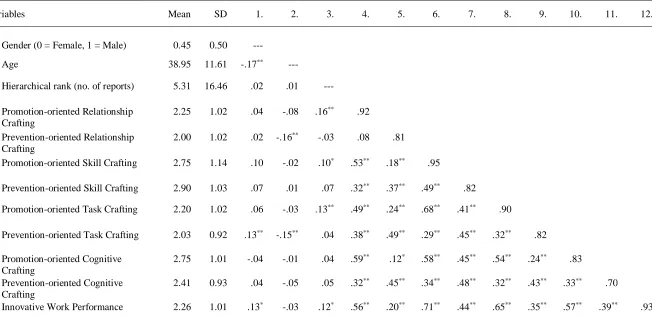
Table 1 shows the descriptive statistics, internal consistencies, and zero-order
correlations for the major variables. To provide an initial test of Hypothesis 1, on the
meaningful distinction between promotion- and prevention-oriented forms of job crafting, we
conducted exploratory factor analyses, using principal axis factoring extraction with an
oblimin rotation. We additionally provided an initial test of Hypothesis 3, using path
modeling to assess the differential association of promotion- versus prevention-oriented
job-crafting strategies for innovative work performance. Because all our hypotheses were
directional and theory-driven, we used one-tailed tests (e.g., Kimmel, 1957).
---
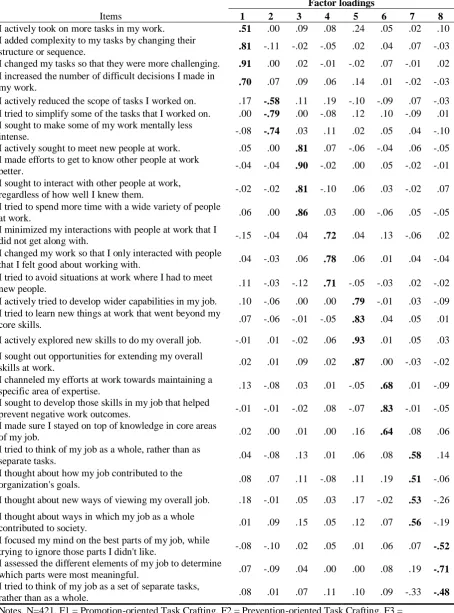
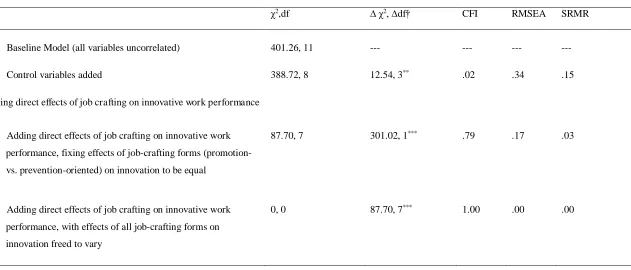
Insert Figure 2 and Tables 1, 2, & 3 about here.
22
Hypothesis 1 predicted that there are two distinct forms of job-crafting strategies
(task, relationship, cognitive, and skill crafting): promotion- and prevention-oriented. In
initial support of the hypothesized dimensionality of job crafting, exploratory factor analyses
showed that an eight-factor solution resulted in the cleanest factor structure (Osborne &
Costello, 2009), with no item cross-loadings greater than .4 on different factors (see Table 2).
We used path modeling, comparing a series of nested models, to test Hypothesis 3
(see Table 3). To keep parameters and sample size to a reasonable ratio, we assessed the
models using observed scale scores. Following from our baseline model (Model 1) and
Model 2 (in which we added control variables, only), in Models 3 and 4, we introduced direct
effects of job crafting strategies on innovative work performance. In Model 3, we first held
equal the relationship between all job-crafting strategies and innovative work performance. In
initial support of Hypothesis 3 regarding a differential association between promotion- versus
prevention-oriented forms of job crafting and innovative work performance, Model 4 (our
hypothesized model), in which we freed these parameters, had a significantly better fit to the
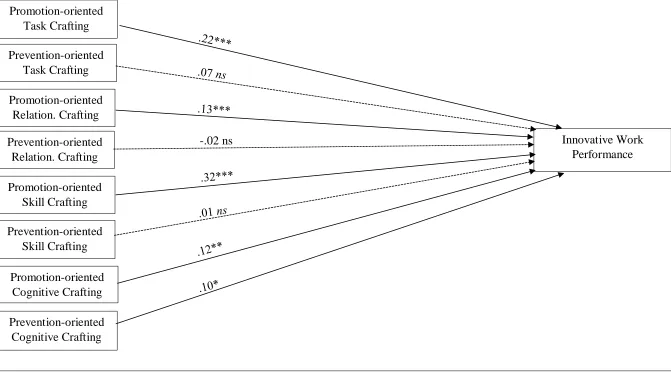
data than its nested comparison models. In our fully freed Model 4, the positive association
between promotion-oriented job-crafting forms and innovative work performance (for
promotion-oriented task crafting: B=.22, SE = .04; for relationship crafting: B=.13, SE = .04;
for skill crafting: B=.32, SE = .04, all p <.001; and for cognitive crafting: B=.12, SE = .04; p
<.01)were stronger than for the respective oriented forms (for
prevention-oriented task crafting: B=.07, SE = .04; relationship crafting: B= -.02, SE = .04; skill crafting:
B=.01, SE = .04, all ns; and for cognitive crafting: B=.10, SE = .04, p<.05; see Figure 2).
Together, individual needs explained 58.50% of the variance in innovative work performance
(beyond the effects of control variables on innovative work performance). In addition, a
direct test of the differential strength of association between promotion- versus
23
the average parameter size of promotion-oriented forms of job crafting to innovation links
(average B = .20, SE = .01; p <.001) was greater than the average parameter size of
prevention-oriented forms of job crafting with innovation (average B = .04, SE = .01; p <.01).
In support of Hypothesis 3, the difference between these parameters was statistically
significant (B = .16, SE = .02; p<.001).
Interim Discussion
Study 1 provides initial support for the distinct forms of promotion- and
oriented job crafting. First, in initial support of Hypothesis 1, promotion- and
prevention-oriented forms of the distinct job crafting strategies (task, relationship, skill, and cognitive
crafting) loaded onto their hypothesized factors. In addition, in support of Hypothesis 3,
promotion-oriented forms of job crafting were more strongly positively associated with
innovative work performance than were prevention-oriented forms of job crafting.
These initial results from Study 1 demonstrate that an understanding of why and how
individuals engage in different job-crafting strategies is important. Studies 2 and 3 build from
this foundation. In particular, the next two studies more rigorously assess the differentiation
of forms of job-crafting by using confirmatory factor analyses. Second, Studies 2 and 3
investigate individuals’ motivation for engaging in these different types and forms of job
crafting in the workplace. Finally, Study 3 replicates and extends the differential relationships
of job crafting forms with innovative work performance by showing lagged effects over time.
Study 2
Sample and Procedure
To recruit participants, we advertised our study among the laboratory participant pool
of a leading research university, based in a large metropolitan area in the UK, which included
24
university, we offered small financial incentives3. Since there is no consensus regarding the
time frame over which job crafting occurs (Bindl & Parker, 2017), although our hypotheses
were at the between-person level, we utilized an experience sampling method and captured
job crafting on a daily basis over the course of one workweek to ensure we did not miss
essential variance and to minimize retrospective biases (Reis & Gable, 2000). In addition, to
minimize common-method variance, we separately assessed individual-need strength at the
start of the workday, and daily job crafting at the end of the workday (Podsakoff, MacKenzie,
& Podsakoff, 2003).
The study began with an online baseline survey that collected demographic and
background data. In the subsequent workweek, from Monday to Friday, we asked employees
to complete two short online surveys per day, one at the start (30 minutes into the workday),
capturing motivation for job crafting by assessing morning individual needs, and one at the
end (30 minutes before the end) of their working day, capturing daily job crafting. We
provided employees with the survey links and asked them to set a personalized alarm clock to
remind them to access the survey links each day. In addition, we sent automated email
reminders to all participants at each time point, based on the average starting and ending time
of the workday they had indicated in their baseline-survey response.
Of 194 initial volunteers, 156 participants (80%) completed the baseline survey.
These participants then collectively completed a total of 731 morning surveys (93.7%) and
696 afternoon surveys (89.2%), for an overall daily survey response rate of 91.5% (i.e., 1427
out of 1560 possible responses). Excluding surveys that were completed at wrong times (e.g.,
morning surveys completed in the afternoon; morning and evening surveys completed within
3
25
a short period of time), and retaining only matched pairs of morning and afternoon surveys
from the same day, resulted in the removal of 12 participants from the final data set, giving us
617 days (i.e., complete start into the workday and end of workday survey responses) from
144 participants for use in our subsequent analyses.
Of these 144 participants, 67% were female, the mean age was 28 years (SD=6.67),
and the average organizational tenure was two years (median = 1.08; SD=3.39). Just over half
the participants (50.7%) held a leadership position. Average hours worked in a typical week
were 41 (SD = 8.44). Participants worked in a variety of industries, including education and
health services (35.7% of participants), professional and business services (19.4%), financial
services (13.2%), wholesale and retail (9.3%), government (3.9%), leisure and hospitality
(3.9%), as well as IT (3.1%). The remaining 11.5% were dispersed across a wide range of
industry sectors, including construction, manufacturing, transportation, agriculture, and
various other services industries.
Measures
Individual needs: competence, relatedness, autonomy. We measured individuals’
need strength for three types of needs with three items per type. Based on an established
measure by Sheldon and Hilpert (2012), we asked participants, “This morning, how
important is each of the following to you at work,” with response coding ranging from 1 (not
at all) to 5 (extremely). Example items were for need for competence, “to do well even at the
hard things”; for need for relatedness, “to feel a sense of contact with people who care for
me, and whom I care for”; and for need for autonomy “to really do what interests me.”
Job crafting. To reduce response fatigue of participants in this experience sampling
study, we assessed daily job crafting using a slightly shortened version (minus three items
26
in Study 1. The questions asked participants the extent to which (“Today, to what extent…”)
they agreed with the corresponding statements (1 = not at all, 5 = a great deal).
Control variables. We used the same control variables (controlling for participants’
gender, age, and their jobs’ hierarchical rank) as in Study 1. In addition, on the daily level of
analysis, we controlled for day, to account for systematic changes across the week.
Results
With our key study measures collected on a daily basis, we inherently have a
multilevel data structure. As such, we first conducted separate multilevel confirmatory factor
analyses (MCFA) of the proposed factor structure of job crafting and of individual needs. The
hypothesized factor structure was the best fitting at both the daily level and the
between-person level for both individual needs (measured in the morning) and job crafting (measured
in the afternoon), and temporal measurement invariance was achieved for all measures.
In particular, in support of Hypothesis 1, the fit of the hypothesized eight-factor
solution of job crafting was superior to competing four-factor (types of job crafting only),
two-factor (forms of job crafting only) and one-factor (overall job crafting) alternatives (Hu
& Bentler, 1999)4 (chi-square = 827.80 on 448 df, CFI = .94, RMSEA = .04, SRMR within =
.04, SRMR between = .06). Details of all MCFA analyses are available upon request.
Internal-consistency reliabilities for all scales were satisfactory: need for autonomy,
across the five days, ranging from = .80 –.88; need for relatedness, = .88 – .95; need for
competence, = .86 – .92; promotion-oriented relationship crafting, = .86 – .92;
prevention-oriented relationship crafting, = .71 – .81; promotion-oriented skill crafting, =
.89 – .93; prevention-oriented skill crafting, = .80 – .84; promotion-oriented task, = .87 –
90; prevention-oriented task crafting, = .79 – 89; promotion-oriented cognitive crafting, =
.83 – .88; and prevention-oriented cognitive crafting, = .64 – .75. As in Study 1, because all
27
our hypotheses were directional and theory-driven, we used one-tailed tests (e.g., Kimmel,
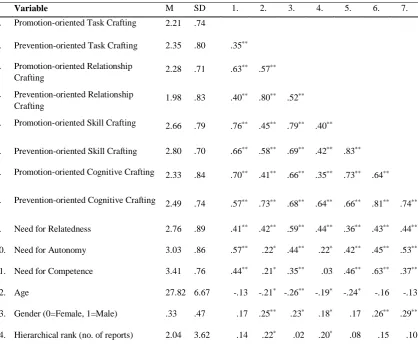
1957). Table 4 displays the descriptives for all study variables.
---
Insert Table 4 about here.
---
To test Hypothesis 2 while accounting for non-independence of the data, we
conducted a multilevel path analysis (Hox, 2010) whereby the day-level model mirrored the
person-level model. We used person mean-centered versions of the variables at the day level,
with person mean (i.e., aggregate weekly) scores at the person level. For Model 1, an
unconditional multilevel model, the ICC(1) exceeded .50 for each outcome, supporting the
need to account for the nested nature of the data, and thus to test our between-person
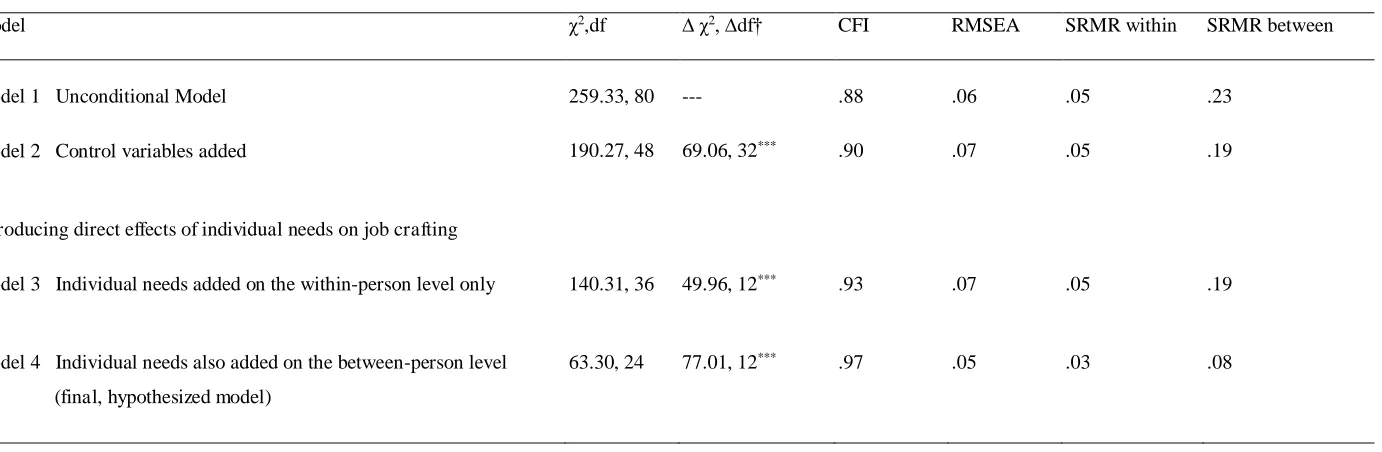
hypotheses using multilevel modeling. In Model 2, we added our control variables at each
level. At the within-person level, given the longitudinal nature of our data collection, we
controlled for the day of the week. At the between-person level, and in line with previous
research on job crafting, we controlled for age, gender, and hierarchical rank. In Models 3
and 4, we added the hypothesized effects of individual needs on job crafting on the
within-person (Model 3), as well as the between-within-person level (our final, hypothesized Model 4).
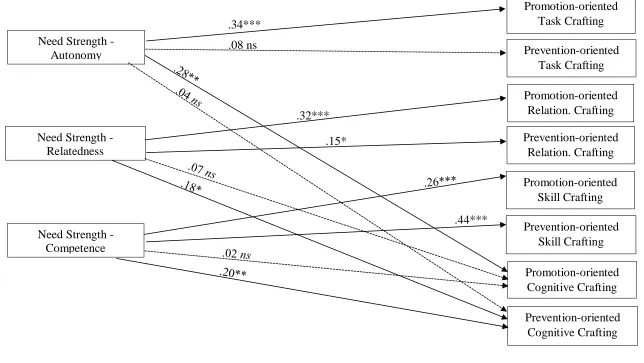
The estimated path coefficients of our final, hypothesized model (Model 4), which
had a significantly better fit than any of the comparison models (see Table 5) and an overall
excellent fit to the data (CFI = .97, RMSEA = .05, SRMR within = .03, SRMR between =
.08, ratio of chi-square to degrees of freedom = 2.64), are shown in Figure 3.
---
Insert Table 5 and Figure 3 about here.
---
As hypothesized, we found that individuals who experienced a stronger need for
relatedness were more likely to engage in both promotion and prevention-oriented
28
Hypothesis 2a. Need for relatedness explained 30.34% of the between-person variance in
promotion-oriented relationship crafting and 8.70% in prevention-oriented relationship
crafting, respectively, beyond the effects of control variables.
Likewise, in support of Hypothesis 2b, the strength of competence needs predicted
engagement in both promotion- and prevention-oriented skill crafting (B = .26, SE = .08; p
<.001; B = .44, SE = .07; p <.001). Competence needs explained 23.13% of the
between-person variance in promotion-oriented skill crafting and 37.30% of the between-between-person
variance in prevention-oriented skill crafting, beyond controls.
The strength of autonomy needs positively predicted promotion-oriented task crafting
(B = .34, SE = .07; p <.001) but not prevention-oriented task crafting (B = .08, SE = .08; ns),
thus partially supporting Hypothesis 2c. Autonomy needs explained 29.81% of the
between-person variance in promotion-oriented task crafting and 1.77% of the between-between-person
variance in prevention-oriented task crafting, beyond controls.
Finally we found that a strong need for autonomy positively predicted
promotion-oriented cognitive crafting (B = .28, SE = .10; p <.01), whereas a need for relatedness and a
need for competence predicted prevention-oriented cognitive crafting (B = .18, SE = .08; p
<.05; B = .20, SE = .08; p <.01). Together, individual needs explained 26.36% of the
between-person variance in promotion-oriented cognitive crafting and 27.53% of the
between-person variance in prevention-oriented cognitive crafting, all beyond the effects of
control variables. These findings lend partial support to Hypothesis 2d such that some, albeit
not all, individual needs positively related to cognitive job crafting (see Figure 3).
Additional analyses. We conducted additional checks of our data to ensure
robustness of the findings. We followed McCabe and colleagues’ (2012) recommendation to
use a completion rate of more than 20% of possible responses as a cut-off, using a slightly
29
meaningfully analyzed. The advantage of using as low a cut-off as possible is to ensure
generalizability, such that our sample included participants with a wider range of work
experiences. Nonetheless, we conducted another check with n≥3 days (which resulted in a
sample size of n=134 individuals and n=598 observations), which replicated the patterns of
findings of our main analyses, indicating results were robust across varying observation and
sample sizes.
Interim Discussion
Complementing the results of Study 1, Study 2 provided further support for the
distinctiveness of different job-crafting strategies (Hypothesis 1). Moreover, it highlighted the
differential importance of individual needs as predictors of particular job-crafting strategies
providing support for most, albeit not all, aspects of Hypothesis 2. In the next study, we built
on these findings to examine how work-related regulatory foci differentially strengthen these
distinct effects of individual needs on promotion- versus prevention-oriented job crafting. We
thus set out to replicate and extend our findings in a separate, temporally lagged, study where
we tested our full, theorized model, including predictors as well as outcomes of job crafting.
Study 3
Sample and Procedure
To recruit study participants, we again advertised our study among the laboratory
participant pool of a leading UK research university, as well as of a survey panel provider
that contains working participants from a wide range of industries across the UK and
provided the opportunity to access a larger sample of employees.5 In accordance with the
ethical procedures of the first author’s organization that provided ethics approval for this
30
study, we offered small financial incentives6. To minimize common-method variance
(Podsakoff et al., 2003), we collected temporally lagged data, where trait measures
(regulatory focus at work) and control variables were collected at time 1 (T1), independent
variables (individual needs and job crafting, which we hypothesized to be occurring at the
same time) were assessed at time 2 (T2; two weeks later), and the dependent variable,
innovative work performance, was collected at time 3 (T3; three weeks after time 1) 7. In line
with our measurement of job crafting in Studies 1 and 2, we focused our hypothesis testing of
job crafting on between-person processes that occurred over the course of one working week.
We initially invited 987 employed participants to complete the baseline survey at T1.
Of these, 838 (84.9%) fully completed the baseline survey, including providing a valid job
title of their current job. Only participants who had completed previous time points were
invited to complete subsequent surveys: at T2, 509 participants responded (60.7%), and at
T3, 451 participants completed the survey (88.6%). We added attention-check items at T2
and T3 and removed from the analyses those participants who did not complete this check
correctly (22 participants at T2, and 13 at T3). We also removed participants who took less
than five minutes to complete either of the three surveys based on preceding pilot tests with
undergraduate research assistants, or who provided incomplete responses (28 participants),
which resulted in a final sample of 388 individuals who had fully matched responses across
all three time points (at an overall response rate of 39.3%).
Of these 388 participants, 39% were male, the average age was 44 years (SD=11.91),
and the mean organizational tenure was eight years (median = 5.46; SD=8.26). Just over a
third of the participants (36.9%) held a leadership position. Average hours worked in a
6
The content and design of this study did not raise any significant concern with the institutional research ethics committee. It was fully compliant with the rules and regulations for conducting research at the institution of the first author, where the research was conducted.
7
31
typical week were 35 (SD = 10.42). Participants worked in a variety of industries, including
education and health services (27.1 %), professional and business services (9.8%), wholesale
and retail (9.8%), government (8.2%), leisure and hospitality (6.2%), manufacturing (5.7%),
IT (3.9%) and construction (3.6%). The remaining 25.7% were dispersed across a wide range
of industry sectors (e.g., finances and agriculture).
Measures
Work-related regulatory focus. We measured regulatory focus at work with the full
12-item measure by Ferris et al. (2013). Six items were used to measure promotion focus
(example item for promotion focus: “My goal at work is to fulfill my potential to the fullest
in my job”; = .86) as well as prevention focus (example item: “I am focused on failure
experiences that occur while working”; = .83; 1 = strongly disagree, 5 = strongly agree).
Individual needs: competence, relatedness, autonomy. We measured the strength
of individuals’ needs over the course of a workweek, using the same adapted measure by
Sheldon and Hilpert (2012) as in Study 2 ( = .85-.91, across the three individual needs).
Job crafting. We assessed job crafting over the course of a workweek, using the full,
final version of our job-crafting questionnaire, asking participants about the extent to which
(“This week, to what extent…”) they agreed with the corresponding statements (1 = not at
all, 5 = a great deal; =.68-.95; see Appendix for all job crafting items).
Innovative work performance. We measured innovative work performance using
the same, established six-item measure by Scott and Bruce (1994) as in Study 1 ( = .92).
Control variables. We used the same control variables (controlling for participants’
gender, age, and their jobs’ hierarchical rank) as in Studies 1 and 2.
Results
To provide an independent test of Hypothesis 1, we conducted a confirmatory factor
32
crafting. We then compared this model with viable alternatives in which the job crafting
items were loaded onto a smaller number of factors representing four overall types of job
crafting (task, relationship, skill, cognitive), two overall forms (promotion vs. prevention), or
one overarching job-crafting measure, respectively. We also ran separate CFAs for our other
study constructs of regulatory foci, individual needs, and innovative work performance.
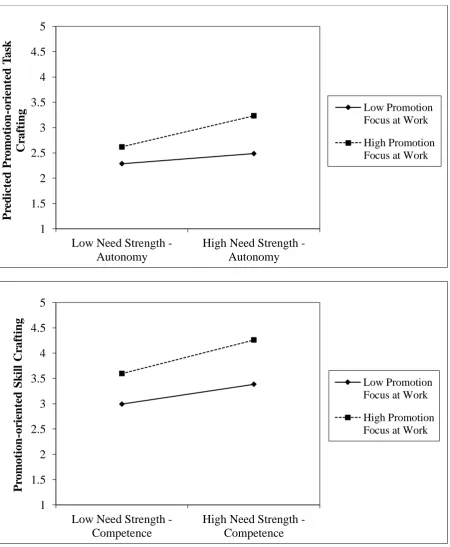
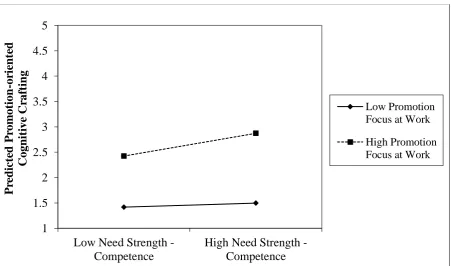
We then conducted a series of path analyses to test Hypotheses 2 through 4, which
formed a moderated mediation or “conditional process”-type model (Hayes, 2017).
Specifically, we hypothesized that any indirect effects of individuals’ needs (for each of
autonomy, relatedness, and competence) on innovative work performance operate
differentially via the different forms and types of job-crafting strategies, and that the effects
of individual needs on job crafting are moderated by work-related regulatory foci (see Figure
1). To represent our constructs, we computed scale mean scores and used them in our path
modeling rather than the latent variables themselves (given the large number of items used in
measuring these constructs, combining our measurement models for job crafting, individual
needs, regulatory foci, and innovative work performance would have given an unacceptably
low parameter-to-sample-size ratio). We also computed the six possible interactions between
each of the regulatory foci (promotion vs. prevention) and the three individual needs.
Starting from a baseline or independence model (Model 1), in which we assumed all
measures were unrelated, followed by a control-variables-added-only model (Model 2), in
Model 3 we added the hypothesized paths from our antecedents (individual needs) and
moderators (regulatory foci) to our mediators (job-crafting strategies) and outcome
(innovative work performance), and from our mediators to the outcome variable—but held
the eight mediator-to-outcome relationships (i.e. from each of the distinct job crafting
strategies to innovative work performance) equal, and fixed the effects of the individual