1
EUSA Biennial Conference: “The EU After the Crisis: Phoenix or Albatross?”
(Boston, March 5-7, 2015)
Panel on “Provocative Perspectives on the EU and EU Studies”
Stephan Keukeleire (University of Leuven / College of Europe) Daan Fonck (University of Leuven) Floor Keuleers (University of Leuven) Contact: [email protected]
The study of the EU as an international actor: Bringing the outside back in.
Examples from EU-China relations.
1[draft – please do not quote without first contacting the authors]
Abstract. Concerns on EU-centrism in EU foreign policy analysis have become more frequent in recent years. In contrast to the mature debate in International Relations, however, a systematic toolbox for diagnosing and remedying this problem is still lacking. This article’s contribution is twofold. First, it proposes a new typology of five approaches to foreign policy analysis, giving conceptual body and nuance to the debate on EU-centrism. It draws on publications on EU-China relations to further illustrate the proposed categories. This typology can be used for scrutinizing existing analyses, as well as for shaping new research projects. The second part of the article applies this typology in a meta-analysis of post-Lisbon EU foreign policy scholarship. To this end, it analyses a built-for-purpose dataset of 482 articles, which covers all work on EU foreign policy published in 2010-2014 in seven key journals. It finds, first, that academic work on EU foreign policy is indeed rife with EU-centric approaches. Moreover, this is the case irrespective of the policy area under study and of the focus of the journal. Second, while non-western authors form a small minority within the dataset, their work on EU foreign policy holds promise for a move away from EU-centrism. The article concludes by proposing research strategies that aim to assist the EU foreign policy analyst in adopting an outside-in perspective, both in terms of his analytical competences (linguistic outside-in, disciplinary and methodological outside-in) as well as well as concerning the acquisition of knowledge on the context of the region, country or society that is the subject, target, recipient, beneficiary or victim of EU’s external policies (material ‘outside-in’, polity ‘outside-in’, normative ‘outside-in’). These various dimensions of an outside-in perspective are illustrated through the example of EU-China relations. This analytical framework can not only be used to analyse the EU’s foreign policy, but can also contribute to the strengthening of the analysis of foreign policy in general.
Key words
Foreign policy, foreign policy analysis, EU foreign policy, EU-centrism, outside-in approach
2
Introduction
Over the last years, an increasing number of academics have come to point out the ‘excessively Eurocentric perspective’ of existing research on European Union (EU) foreign policy, which is seen to undermine the relevance of scholarship on the topic (Lucarelli, 2014: 11) (Adriaensen et al., 2013; Mayer and Zielonka, 2012; Mayer, 2009; Keukeleire, 2014). Discontent with this (perceived) state of affairs has sparked calls for ‘a paradigm shift that decentres the study and practice of Europe’s international relations’ (Fisher Onar and Nicolaïdis, 2013: 283). It has also inspired the development of new sets of literature, of which the external perceptions literature might be the most established example (Chaban and Holland, 2008; Lucarelli and Fioramonti, 2010; Elgström, 2007). Others have attempted to connect such new research agendas to more long-standing concerns within the study of EU foreign policy, such as EU effectiveness (Torney, 2014) and Normative Power Europe (Larsen, 2014). The underlying premise of EU-centrism, however, remains both conceptually vague and unsubstantiated empirically. What exactly constitutes an EU-centric approach to the study of EU foreign policy? What might an alternative look like? And is it true that the existing literature is characterised by a dominance of EU-centric work?
The objective of this article is twofold. First, it introduces a typology of approaches to the study of EU foreign policy which revolves around their degree of EU-centrism. The five types or approaches – inward-oriented, inside-out, balanced, outside-in, and outward-oriented- are delineated in terms of their main aims, key research questions and dominant concepts. Publications on EU-China relations are drawn upon to further illustrate the proposed categories. Going beyond the crude distinction between ‘EU-centric’ and ‘non-EU-centric’, this typology aims to offer a more systematic and fine-grained conceptual tool. The second objective of the article is to provide a systematic mapping of existing research on EU foreign policy, in order to check whether there is indeed a problematic overrepresentation of EU-centric work. To this effect, it analyses an original, built-for-purpose dataset containing nearly 500 articles on EU foreign policy published in the post-Lisbon period (2010-2014) by seven prominent journals with an explicit EU focus. The third objective is to develop an analytical framework to assist scholars in adopting an outside-in perspective, both in function of what knowledge is to be acquired (‘material outside-in’, ‘polity outside-in’, ‘normative ‘outside-in’ and ‘linguistic outside in’) and how this knowledge can be acquired (‘linguistic outside in’ and ‘disciplinary and methodological outside in’).
3
International Relations, western-centrism and Eurocentrism
The aim of this article, to substantiate and address EU-centrism in the study of EU foreign policy, is closely linked to the broader debate on Eurocentrism and western-centrism in the field of IR, and to the calls for decentring this discipline.
Within IR, calls for a decentring of ‘the West’ already date back to observations by Hoffmann (1977) and Holsti (1985), who argued that this field of study is dominated by Anglo-American or western worldviews. The subsequent rise of a ‘non-western IR’ strand of literature since the beginning of the 2000s has gained considerable attention. Mostly coming from post-positivist approaches such as feminism, subaltern studies, post-colonialism, neo-Gramscian approaches, post-structuralism and post-modernism, these authors lament that IR privileges Eurocentric approaches over others and is in fact a parochial discipline (Tickner, 2003; Tickner and Blaney, 2012b; Tickner and Blaney, 2013; Tickner and Wæver, 2009; Inayatullah and Blaney, 2004; Acharya and Buzan, 2010; Buzan, 2010; Acharya and Buzan, 2007; Wæver, 1998; Crawford and Jarvis, 2000; Smith, 2002; Tickner, 2013; Kayaoglu, 2010). Eurocentrism refers to ‘the notion that the West properly deserves to occupy the centre stage of progressive world history, both past and present’ (Hobson, 2004: 2).2
It implies that the European perspective on and reading of the world represents the universal one. As such, Europe or the West elevates itself into a position where it can make universal claims and judgements about global affairs, issues and interactions – whereas in fact the knowledge, values, norms, and frames of reference on which such judgements are based are ‘the local product of a particular geo-epistemological perspective’ (Tickner and Wæver, 2009: 2).
As a response, several authors have tried to hold up a mirror to IR scholarship by applying a so-called ‘sociology of sciences’ approach, which considers IR as a social institution of knowledge (Wæver, 1998). IR is seen to be under the influence of both inherent and external factors that determine the content and direction of the discipline. As these authors aim to expose what they consider hegemonic practices, they perform content analysis on IR publications and examine the influence of the external social environment, in order to map the genealogy of the discipline and to render explicit its ordering mechanisms (Wæver, 1998; Friedrichs and Wæver, 2009; Biersteker, 2009; Büger and Gadinger, 2007; Acharya and Buzan, 2007; Tickner and Blaney, 2012a; Agnew, 2007; Cox and Nossal, 2009; Breuning et al., 2005; Aydinli and Mathews, 2000). Other contributions, in turn, have actively sought to decentre or ‘provincialise’ (Chakrabarty, 2007) the West in the IR discipline. This is done by providing insights from non-western perspectives on IR (the so-called ‘national schools of IR’3) or by providing alternative readings of core concepts such as democracy, security and sovereignty (see for instance Acharya and Buzan, 2010; Tickner and Wæver, 2009; Tickner and Blaney, 2012b; Tickner and Blaney, 2013; Morozov, 2013; Nayak and Selbin, 2010).
2 While Hobson appears to equate western-centrism and Eurocentrism, this article follows Fisher Onar and Nicolaïdis (2013: 284) in that it understands Eurocentrism to be embedded in a broader western-centrism. Both are occurrences of privileging particular histories, values, culture, ideas, concerns at the expense of others. Eurocentrism, American centrism or EU-centrism are in other words more specific renderings of the same phenomenon. It follows that ‘not all western-centrism is [necessarily] Eurocentric’ and that ‘some forms of Eurocentrism (…) challenge American-centrism’. Similarly, EU-centric and Eurocentric narratives should be properly distinguished, as the former apply specifically to the analysis and politics of the EU and do not always reflect or overlap with Eurocentric narratives, framings or assumptions of its constituent member-states.
4
Whereas the decentring or provincializing debate has managed to gain considerable visibility in IR, this call for a paradigm shift has been much less present in the field of EU studies (Bhambram, 2009: 70; Fisher Onar and Nicolaïdis, 2013: 284; Bailey, 2011: 42; Mayer, 2009: 9). A critical enquiry into the way EU foreign policy is studied is, nevertheless, very much needed, as EU or European studies are almost by definition parochial disciplines. Fisher Onar and Nicolaïdis (2013) are among the few authors who have systematically conceptualised the problem of Eurocentrism, present in both the analysis and the politics of EU foreign policy (see also Jørgensen, 2004: 35, who makes the same distinction).
Similar criticism about a Eurocentric and normative bias has been voiced in a more fragmented way within a number of specific sets of literature dealing with European foreign policy. The first and most prominent example is the scholarship based on Ian Manners’ pioneering concept of Normative Power Europe (NPE) (2002). The NPE literature has sparked a considerable amount of critical reactions, which have accused the concept of being a form of cultural imperialism and have pointed to the allegedly civilisationist and Eurocentric implications and narratives that it invokes (Diez, 2005; Sjursen, 2006; Merlingen, 2007; Parker and Rosamond, 2013; Cebeci, 2012; Harpaz and Shamis, 2010; Juncos, 2007). A second set of literature consists of accounts focusing on europeanization, external governance and EU norm diffusion, all of which study the ways in which the EU seeks to replicate or promote its own values, norms, rules or models outside its borders. This type of research has sparked similar criticism towards the -often implicit- Eurocentric, unidirectional or minimalist and top-down interpretations of these analytical models, as well as of the EU policies under consideration (see for example Flockhart, 2010; Flockhart, 2006; Haastrup, 2013; Morozov and Rumelili, 2012; Bicchi, 2006; Dimitrovova, 2012; Korosteleva, 2012: 40-60). Third, and on a more empirical level, the recent but growing ‘external perceptions’ literature aims to contrast the self-representation of the EU with the way outsiders perceive and evaluate the Union as an international player (Chaban and Holland, 2013; Mayer and Zielonka, 2012; Lucarelli and Fioramonti, 2010). One recurrent theme within this literature has been to challenge European narratives on Normative Power Europe (Larsen, 2014; Bacon and Kato, 2013; Jain and Pandey, 2013; Harpaz and Shamis, 2010).
In sum, what all three sets of literature have in common is the conviction that insufficient light is being shed on the ‘outside’ in the evaluation and appreciation of the EU’s external action. Critics point to the potentially exclusionary practices and performative drawbacks linked to imposing Eurocentric or EU-centric paradigms in EU foreign policy. This applies both when such paradigms are invoked by EU agents and when they inspire the analysts studying that very international action. It is to the latter aspect that we turn in the next section, in which a conceptual framework is proposed that renders explicit the various perspectives in the study of EU foreign policy.
A typology of approaches to the study of EU foreign policy
5
present in EU foreign policy analysis. On the other hand, this typology can also be seen as a tool for designing and focusing future research, as it points towards the wide range of research questions that can be asked for a particular policy area or region. In the latter sense, it builds upon existing work that underlines the impact of conceptual lenses on ‘what is observed and howit is observed’ in analysing (European) foreign policy (Jørgensen, 2004: 35) (see also Ruggie, 1989: 32; Kaiser, 1965; Keohane and Nye, 1977). In essence, therefore, this section seeks to offer a systematic yet practical and ready-to-use tool, complementary to more theoretical takes on the topic of EU-centrism.
Our typology starts from the wide variety of perspectives found in existing analyses of EU foreign policy. At one extreme, there are studies focused purely on institutional dynamics within the EU itself. At the other extreme, there is research that is very close to area studies, in that it mainly studies the partner country or region of the EU. The typology presented here further categorises the space in between these two extremes. It does so by differentiating between five approaches to the study of EU foreign policy: inward-oriented, inside-out, balanced, outside-in, and outward-oriented. The following paragraphs characterise each approach and provide an overview of the research questions that are at its core. To further clarify the distinctive perspective of each of the five approaches, cases of EU-China relations have been selected from the database. They not only aim to yield a better illustration of what each approach looks like in a concrete study, it also serves to demonstrate that each approach tends to bring up particular kind of questions and leave others untouched.
Firstly, an inward-oriented approach, is fully centred upon the actor projecting its foreign policy onto the outside world. The research questions within this approach are essentially variations on the following core questions: How are foreign policy decisions in field X made? What is the role and influence of institution Y or member state Z within this decision-making process, and how can this be explained? Why was policy instrument X opted for in tackling a particular situation? Is there coherence between various parts of the EU’s foreign policy, and how can this coherence be improved? What do the developments in foreign policy field Y tell us about the dynamics of EU
integration? Indeed, this approach tends to shed more light on the internal making of foreign policy
itself, rather than making an evaluation of its actual implementation.
Regarding the specific case of EU-China relations, a clear example of such an inward-oriented approach can be found in the research of Sophie Meunier (2014). She studies the transfer of foreign investment competences from the EU member-states to the European Commission, and in that context looks to how the increased presence of Chinese foreign direct investment activities in Europe is able to shape the contours of this new EU policy. The author thus provides an in-depth study of an institutional matter related to the EU’s foreign policy, namely the transition of a national competence to an exclusive EU external competence. The case of China is only dragged in to study the extent to which its presence is able to co-determine the final outlook of this policy.
Secondly, the inside-out approach assesses the actual content and results of a particular foreign policy, but purely from the point of view of the foreign policy actor. Core questions are: What are the EU’s goals in foreign policy field X? To what extent has it been able to attain these goals? Is the EU presenting itself as a norm setter in field Y? Which features of the EU can explain its influence or lack
thereof? Does policy instrument X contribute to attaining goal Y?To what extent does the EU possess
6
In his article, De Cock (2011) studies the ability of the EU to socialise China in the domain of climate policy. Examining the bilateral dialogue between the EU and China on energy and environmental issues, the author argues that the EU was able to steer and influence the Chinese climate change policy by providing the right arguments, expertise and assistance. This type of study, investigating the socialisation practices of a foreign actor through EU norm promotion, typically adopts an inside-out approach: it asks how or to what extent the EU is able to project its norms to the outside world. The third approach in our typology is a balanced approach, since it devotes equal attention to the various actors under consideration. Work taking this approach is often mainly descriptive in nature, revolving around the following essential questions: What is the state of the relations between the EU and actor(s) X in domain Y? Do these relations amount to what they are claimed to be (e.g. a ‘strategic partnership’)? How have these relations evolved over period Z? Which major agreements and policy documents form the framework for these relations, and which central aims do they put forward? What are the interests, preferences and sensitivities of the EU on the one hand and of the other actor(s) on the other, and where do these converge or clash?
In the database, many articles on EU-China relations adopt a balanced approach. A typical example is Holslag’s (2011) analysis of the EU-China Strategic Partnership. In his contribution, the author asks himself whether the EU-China Strategic Partnership can rightfully be labelled as ‘strategic’. He therefore formulates a checklist of criteria which he subsequently applies to the self-proclaimed priorities of the partnership between both actors, both in terms of declarations as well as in terms of actual behaviour of both actors.
Fourthly, an outside-in approach entails that a foreign policy is examined from the perspective of the country or region that it is targeted at. Core questions include: What are the consequences of the EU’s policy for the elites or population within the country? What is the relevance and impact of the EU’s policy regarding the challenges facing the country? What is the domestic context within which EU policies interfere or within which negotiations with the EU take place? How does this context affect the implementation of EU policies? What is the perception or legitimacy of the EU in the eyes of various domestic groups, and do they support EU-promoted reforms? How do audiences within the country understand relevant concepts (e.g. sovereignty, human rights, legitimacy)? 4
An example of an outside-in approach to EU-China relations can be found in Diarmund Torney’s (2014) work. He investigates to what extent the EU’s diplomatic apparatus is able to determine and understand the domestic environment and preferences of China in the domain of climate policy. In so doing, Torney shifts perspective from the EU to China in the evaluation of EU’s foreign policy. Torney also points out that his approach yields different questions than those traditionally formulated by the literature. Being predominantly coped with inward looking research questions such as the ability of the EU to be coherent and to speak with one voice on the international scene, he argues that
4 Another core research question that frequently recurs within the EU foreign policy literature is that of What
7
‘scholarly research has failed adequately to conceptualize and theorize the external context of EU external relations, and variation in the EU’s ability to engage with and respond to that external context’ (2014: 133).
For reasons of completeness and symmetry, the typology includes a fifth approach: the outward-oriented approach. Within this approach, the analyst no longer examines the foreign policy of a particular actor, but is primarily interested in a third country, region or issue area. The potential implications for an actor’s foreign policy only emerge in the very last stage of the research. This approach is hence no longer directly focused upon the analysis of foreign policy, but instead closely linked to the field of area studies and to the study of specific international phenomena. It should be noted, however, that an outward-oriented approach can provide relevant research questions and insights for the analysis of an actor’s foreign policy.
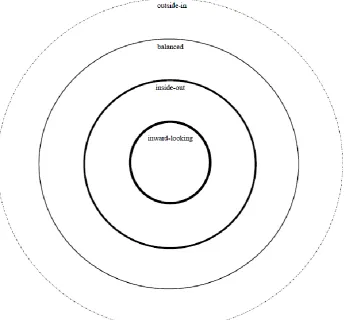
[image:7.595.112.457.481.801.2]The approaches described above are not mutually exclusive. Rather, they can be understood as a set of concentric circles, as depicted in Figure 1. At the heart is the inward-oriented approach, given that most research on EU foreign policy dedicates at least some attention to internal power relations and decision making. A subset of research goes beyond this to include an inside-out focus, looking at EU foreign policy goals and goal attainment. In some cases, this is further complemented by a similar analysis of the EU’s partner(s), resulting in a balanced approach. An even broader scope is obtained in an outside-in approach, where the study of the EU’s policy is embedded in a thorough analysis of the local context it is targeted at. Such a concentric relationship between the four approaches thus entails that an article employing an outside-in approach will often also devote some attention to inward-oriented and inside-out research questions. This is reflected in the trigger-coding strategy used in the construction of the dataset, which will be explained in more detail in the following section.
8
EU-centrism in EU foreign policy analysis: a mapping exercise
Methodology
The empirical component of this article provides a mapping of contemporary scholarship on EU foreign policy, on the basis of the typology presented in the previous section. It is to be situated in what Jensen and Kristensen have recently termed the ‘quantitative meta-EU literature’ (2013: 2). While still limited at present, this strand of literature is steadily gaining traction, with several prominent examples providing useful methodological foundations for this paper to build upon (Exadaktylos and Radaelli, 2009; Jupille, 2006; Jensen and Kristensen, 2013; Franchino, 2005; Keeler, 2005; Bunea and Baumgartner, 2014). The core of the quantitative meta-EU literature is ‘to take articles as units, code the properties of the units via a protocol (so that a quantitative treatment becomes possible) and then analyse the data’ […] ‘to investigate and describe the pattern of findings’ (Exadaktylos and Radaelli, 2009: 509). In the context of this article, such an approach allows for considering each article in some depth before categorising it, while at the same time making it possible to systematically analyse and visually present a large volume of data.
The contours of the dataset are based upon two important choices. To begin with, it was decided to cover the five-year period 2010-2014, in order to capture patterns in scholarship on EU foreign policy in the post-Lisbon era. Subsequently, publications needed to be selected for inclusion in the dataset. Following Bunea and Baumgartner (2014), a focus on journals only was deemed preferable. The justification for this choice is threefold. First, given the labour intensity of the coding by hand, this approach kept the scope of the dataset manageable and clearly delineated. Second, it can be argued that journal publications have a broader outreach and are hence more influential in knowledge accumulation than other types of publications (books, conference papers, dissertations). Third, there is considerable overlap between the authors represented in journals and in books, as research projects leading to influential books usually also result in journal publications.
Rosamond’s overview of ‘journals that self-identify as outlets for the discussion of EU politics/European integration’ served as the starting point for the selection of journals (2007: 11). This resulted in the inclusion of the Journal of Common Market Studies, Journal of European Public
Policy, Journal of European Integration, European Integration Online Papers, and European Foreign
Affairs Review. The sixth journal on Rosamond’s list, European Union Politics, was excluded after having established the very low number of articles focusing on EU foreign policy.5 Conversely,
European Security and Cooperation and Conflict were added to the selection. The primary focus of
these two journals is thematic rather than regional, but both their mission statements6 and their actual
5
Similar observations informed the decision not to select West European Politics, European Journal of International Relations, and International Organization, three other journals that have been included in meta-analyses of EU literature Jensen MD and Kristensen PM. (2013) The elephant in the room: mapping the latent communication pattern in European Union studies. Journal of European Public Policy 20: 1-20, Jupille J. (2006) Knowing Europe: metatheory and methodology in European Union studies. In: Cini M and Bourne AK (eds) European Union Studies. Basingstoke: Palgrave Macmillan, 209-232..
9
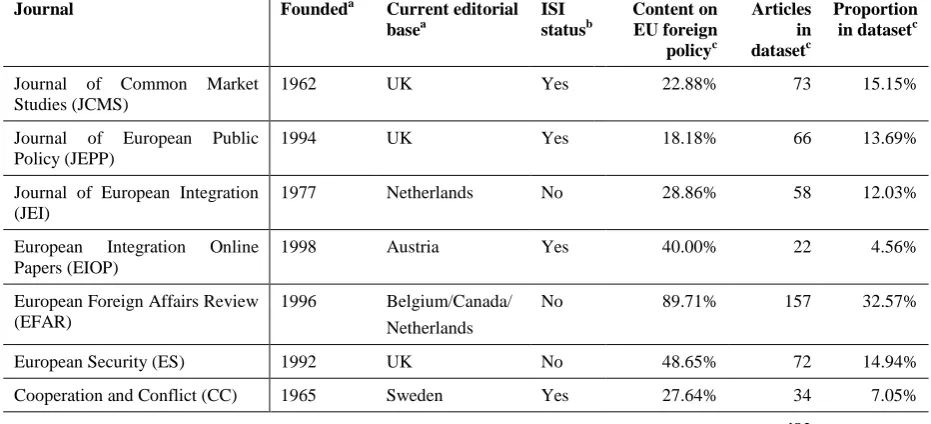
[image:9.595.65.531.227.439.2]content (see Table 1) indicate that this is combined with a strong European and EU focus. The decision to include these two journals was inspired by Keeler’s argument on the relevance of a broader set of journals for scholarship on the EU, which holds particular sway when assessing work on (alternative approaches to) EU foreign policy (Keeler, 2005). As is clear from the overview in Table 1, the resulting list of journals is varied in terms of editorial base, ISI accreditation, and the extent to which the EU’s and/or its international role form the main focus.
Table 1. Overview of journals included in the dataset.
Journal Foundeda Current editorial
basea
ISI statusb
Content on EU foreign policyc
Articles in datasetc
Proportion in datasetc
Journal of Common Market Studies (JCMS)
1962 UK Yes 22.88% 73 15.15%
Journal of European Public Policy (JEPP)
1994 UK Yes 18.18% 66 13.69%
Journal of European Integration (JEI)
1977 Netherlands No 28.86% 58 12.03%
European Integration Online Papers (EIOP)
1998 Austria Yes 40.00% 22 4.56%
European Foreign Affairs Review (EFAR)
1996 Belgium/Canada/ Netherlands
No 89.71% 157 32.57%
European Security (ES) 1992 UK No 48.65% 72 14.94%
Cooperation and Conflict (CC) 1965 Sweden Yes 27.64% 34 7.05%
a
Source: journal websites.
482
b Source: Journal Citation Reports on ISI Web of Science website c
Source: authors’ own calculations
For these seven journals and the time period under consideration (2010-2014), all regular original articles dealing with EU foreign policy were entered into the dataset. The selection of articles was based upon Hill’s broad definition of foreign policy as ‘the sum of official external relations’ (Hill, 2003: 3). For the specific case of the EU, this implies that not only articles on the Common Foreign and Security Policy (CFSP) and the Common Security and Defense Policy (CSDP) were included, but also work on trade, development, enlargement and external environmental policy (Keukeleire and Delreux, 2014: 1). Texts other than regular articles, such as editorials, book reviews and review essays, introductions to special issues, annual reviews, and policy or research agendas were not included. The total number of articles covered by the dataset is 482, dispersed quite evenly over the five years.7
http://www.tandfonline.com/action/journalInformation?show=aimsScope&journalCode=feus20#.VDuR1Baumz k..
10
Although it is recognised that special issues might have some influence on the distribution of articles within the categories, it is nevertheless argued that the publication of special issues should not be assigned a different (thus lower) weight. First of all, special issues revolve around key issues, cases or questions that deserve special attention according to their authors. For example, in the case of EU-China relations, a special issue published in European Foreign Affairs Review focuses on the state of affairs of EU-China relations and diplomacy (Men, 2014). It is argued that the decision to particularly focus on an issue or aspect should be taken into account as such and not be scaled down. Second, although one might expect that special issues tend to adopt only one perspective throughout one issue, the dataset suggests that this is not necessarily the case. In the same special issue on EU-China relations (Men, 2014), the articles cover a variety of approaches to investigate the same topic of EU-China diplomacy.
For each of the articles, the following properties were coded: journal, year, approach, region, policy area, and residence of author8. The coding process was carried out by two researchers. At the start of the process, a test phase was held in which both researchers coded the same subset of the articles, in order to check and increase inter-coder reliability. The rest of the material was divided among the two coders; ambiguous cases were jointly discussed and settled by consensus. A coding list of regions and policy areas was obtained inductively in a first round of coding, to follow as closely as possible the relevant distinctions found in the material itself. The approach of each article was coded using the fivefold typology presented above.
In coding the approach of each article, the coders started by looking at the title and abstract, but took into account the whole text of the article where necessary. The coding decision was not based upon the mere presence of certain concepts, as a single term can be conceptualised and applied in very different ways.9 Instead, it was based upon the central research question(s) underlying each article. These research questions were sometimes explicitly formulated by the author, but more often remained implicit. Where applicable, the data collection method of the author was also taken into account, with interviews carried out in and documents collected from the target country considered an indication of an outside-in perspective.
While authors often combine several approaches within one article, only one approach could be linked to each article in the dataset. This difficulty was resolved by using the ‘trigger coding strategy’ described by Jupille in his meta-analysis of methodology in European Studies (2006: 223-224). In the present article, a trigger coding strategy entails that each article is by default coded as inward-looking, until a substantive focus in the article on, for instance, the effectiveness of international action triggers coding as inside-out. Similarly, an inside-out coding changes to an outside-in coding when substantive attention is paid to the local context of EU foreign policy, its impact or legitimacy. The hierarchy of approaches that is implicit in this strategy reflects the fact that while almost all work on EU foreign
8 This article opts for a focus on residence of author rather than on the highly ambiguous concept of origin of author, echoing Wæver’s approach in his seminal article on the sociology of the IR discipline Wæver O. (1998) The Sociology of a Not So International Discipline: American and European Developments in International Relations. International Organization 52: 687-727..
11
policy devotes some space to the institutional underpinnings of certain policies, only some articles supplement this with an assessment of EU effectiveness, and even fewer look at the actual impact or reception on the ground. This implicit hierarchy follows from the concentric relationship between the five approaches that was discussed in the previous section.
Results
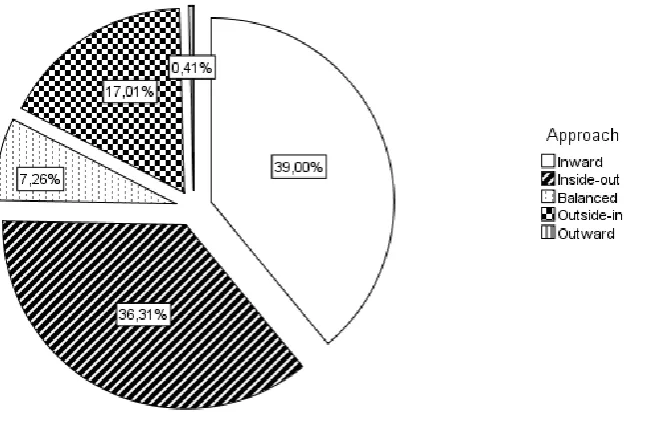
[image:11.595.81.417.401.617.2]The key question this empirical section seeks to answer is whether EU-centric (i.e. inward-oriented and inside-out) approaches do indeed pervade current scholarship on EU foreign policy, a concern that has repeatedly been expressed over the last years. Figure 2, which presents the general distribution of approaches within the entire dataset, shows that this indeed appears to be the case. No less than 75.31 per cent of articles look at the EU’s foreign policy from an inward-oriented or inside-out perspective. Only 17.01 per cent of articles, i.e. one inside-out of every six articles written on EU foreign policy, pay attention to the impact, relevance or evaluation of the EU’s policy in the targeted state or region. The difference in proportion between inward-oriented and outside-in approaches is especially striking. For every article that looks at the local effect or context of EU external action, 2.3 articles appear that focus purely on the EU’s internal dynamics, changes, and turf battles in the field of foreign policy.
Figure 2: Occurrence of the five approaches in seven selected journals (2010-2014)
12
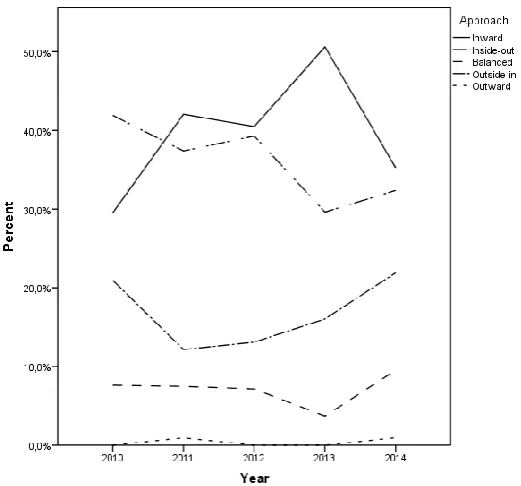
Figure 3: Occurrence of the five approaches throughout time
Such an overrepresentation of EU-centric approaches in the entire dataset may, however, be masking a more nuanced underlying picture. This is related to the variety of foreign policy domains and journals included in the dataset, not all of which may be equally conducive to an outside-in approach. It is hence useful to deconstruct the general picture a bit more along these lines.
First, it seems intuitively clear that an outside-in approach is more crucial in some areas of foreign policy than in others. It could be argued that the need for an outside-in approach co-varies with two characteristics of a foreign policy area.10 On the one hand, outside-in approaches are more important for established areas of EU foreign policy, where the EU has clear competences and substantial resources. In policy areas that are only starting to be tackled by the EU, it is to be expected that major academic attention will be devoted to the internal workings and integration dynamics of the EU. On the other hand, outside-in approaches are particularly indispensable when the EU’s primary goal is to sustainably build or change structures in a partner country. In such policy areas, an in-depth assessment of the EU’s policy and its results is only possible when taking into account the partner country context (Keukeleire and Delreux, 2014: 28-31). In areas where the EU is more directly pursuing its own strategic or economic interests, the added value of an outside-in approach might be more moderate. It does, however, have relevance in those cases as well, as it can shed light on the sensitivities and domestic context of the EU’s counterparts in international interactions, which shape the EU’s room for maneuver.
Combining these two dimensions, it is possible to indicate the policy areas for which outside-in approaches are the most relevant. Figure 4 applies this reasoning to the dataset, by presenting the results for a subset of articles. The articles in this subset cover foreign policy areas in which the EU has clear competences and significant resources, and where its goal is primarily to sustainably alter
13
[image:13.595.136.452.189.423.2]structures within the partner countries and regions. Specifically, it includes the 181 articles dealing with the following policy domains: enlargement, external governance and policy diffusion, democracy promotion, CSDP missions11, conflict management and peace building, development policy, the development-trade nexus, and the development-security nexus.
Figure 4: Occurrence of the five approaches in subset of articles
As shown by Figure 4, the high relevance of outside-in approaches for these issue areas is not reflected in the existing literature. Inward-oriented and inside-out approaches make up 73.48 per cent of the articles in the subset, which is remarkably close to the 75.31 per cent in the dataset as a whole (see Figure 2). EU-centrism therefore appears to a pervasive feature of the literature, rather than a phenomenon that reflects the specificities of different policy areas.
A second possible explanation for the overrepresentation of EU-centric approaches found in the overall dataset, is the fact that it combines articles from very different journals. While all of the included journals publish work on EU foreign policy, each has its own (sub-)disciplinary background and scope. Some have an explicitly inward-oriented scope, which may distort the overall numbers. Table 2 therefore presents a breakdown of the approaches present in each of the journals.
14
Table 2. Occurrence of the five approaches in the different journals (per cent).
Journal Inward Inside-out Balanced Outside-in Outward EU-centrica
Journal of Common Market Studies (JCMS)
43.8 32.9 5.5 16.4 1.4 76.7
Journal of European Public Policy (JEPP)
40.9 53.0 3.0 3.0 0.0 93.9
Journal of European Integration (JEI) 34.5 39.7 1.7 24.1 0.0 74.2
European Integration Online Papers (EIOP)
77.3 18.2 0.0 4.5 0.0 95.5
European Foreign Affairs Review (EFAR)
29.9 35.0 12.7 22.3 0.0 64.9
European Security (ES) 33.3 37.5 9.7 18.1 1.4 70.8
Cooperation and Conflict (CC) 61.8 20.6 2.9 14.7 0.0 82.4
a
The proportion of EU-centric articles equals the sum of inward-oriented and inside-out articles.
In line with expectations, Table 2 shows that journals focusing primarily on the dynamics of European integration, such as Journal of European Public Policy and European Integration online Papers, indeed have a very large share of EU-centric publications. What is remarkable, however, is the almost similarly Eurocentric focus of journals who are claiming to offer an alternative point of view. European Security, for instance, explicitly presents itself as ‘interested in non-European perspectives on Europe in a global context’ (European Security, 2014). Yet over the last five years, less than one out of every five articles in this journal employed an outside-in perspective. More generally, Table 2 shows that there is relatively little variation between journals, with EU-centric accounts constituting at least two thirds of articles on the EU’s international relations in every journal analysed. It appears that the presence of EU-centrism does not merely mirror the traditional ‘division of labour’ between the different journals. Indeed, readers interested in context-aware and critical analyses of EU relations with specific countries and regions may be hard put to find a journal catering to their needs.
15
Figure 5: Articles by residence of authors (a) and approaches according to residence (b)*
a) b)
* Mixed articles are articles written by several authors, with one or more authors residing in Europe or North America and one or more authors residing in other parts of the world.
It should be stressed that this paper does not argue that individual articles have less merit because they employ an inward-oriented or inside-out perspective. Each approach has value in its own right, as it can provide key insights into EU foreign policy. What is problematic, however, is the imbalance that exists within scholarship on this topic as a whole. Periods of institutional reform such as the Maastricht and Lisbon treaties ‘can explain, but [they] cannot justify, such self-centredness’ (Mayer, 2009: 10). This imbalance entails that only certain research questions are habitually asked, while others are neglected. This is problematic on three levels. First, on a purely analytical level, it results in incomplete analyses and a one-sided accumulation of knowledge. Second, from a policy-oriented point of view, it leads to partial and distorted policy evaluations and recommendations. This may decrease the relevance of scholarship for policy-makers. At the same time, such partial analyses may reinforce the cycle described by Cebeci, in which ‘European foreign policy research feeds into the discourse of EU practitioners’ and ‘in turn, the new knowledge produced by EU practitioners is used by the researchers to prove and enhance their arguments’ (2012: 564). Third, from a normative perspective, ignoring the point of view of the EU’s counterparts is problematic, as they are major stakeholders of the EU policies and the international relations within which these are embedded.
The way forward: towards an ‘outside-in’ research agenda
16
country or region. Such a thorough knowledge is essential in order to contextualize the EU’s foreign policy and to avoid the EU’s policy being analyzed and evaluated only or mainly on the basis of EU or Western paradigms and conceptualizations. Analyzing EU foreign policy from the perspective and context of the third country or region provides data and criteria to assess the nature, effectiveness and relevance of the EU’s foreign policy. And at least as important: it also can lead to different kinds of research topics, research questions and approaches needed to answer these questions.
However, what constitutes an ‘outside-in’ perspective? What does it mean to construct knowledge from the perspective of and within the context of another society, country or region? In order to develop an outside-in perspective for analyzing the foreign policy of the EU (or of other actors) we subdivide this outside-in perspective in various sub-dimensions, proceeding in several steps in order to elaborate an outside-in perspective in a systematic way. A first set of ‘outside-in’ perspectives points to what kind of knowledge is to be acquired and explains why this knowledge can be of crucial importance, whereas a second set of ‘outside-in’ perspectives focuses on the way this knowledge can be acquired. Whereas the first steps are rather related to ontological questions and inquire in what kind of knowledge is to be generated, the latter focus on more epistemological and methodological question, inquiring into how this knowledge is to be generated (see Hay 2001).
A preliminary step is to adopt a ‘material outside-inperspective’ and gain insight in basic features of a third country, society or region which can be of direct or indirect significance for the foreign policy that is examined. Next, several immaterial dimensions are looked at, by adopting a ‘polity outside-in perspective’, a ‘normative outside-in perspective’ and a ‘linguistic outside-in perspective’.12 The linguistic outside-in perspective is also related to the question of how relevant knowledge can be acquired, which leads to the ‘disciplinary and methodological outside-in perspective’ in order to widen the possibility of knowledge accumulation beyond what is feasible with the currently predominant approaches.
In each ‘outside-in’ perspective, the challenge for scholars is situated on various levels: the sheer awareness of the existence of an outside-in perspective; the generation of knowledge through this outside-in perspective; the understanding of the knowledge that is generated; and the understanding
of the relevance of this knowledge for the analysis of (EU) foreign policy. Whereas scholars have to
assess how they can make use of this outside-in perspective (in their research, teaching and interaction with scholars from other regions), policy-makers or policy-advisors are challenged to assess how an outside-in perspective can be mirrored in their policy-making and in their interaction with actors from other regions.
A material outside-in perspective
As a preliminary step, a ‘material outside-in’ perspective aims to generate a thorough knowledge of the wide range of material features of a third country, society or region that is the subject of a foreign policy and of the implications of these features for both conducting and analyzing a foreign policy towards that society, country or region. These material features can be detected through basic data with regard to geography (surface area, nature of the terrain, borders, etc.), economics (macro- and micro-economic features, including GNP, employment, external trade, etc.), societal features (ethnicity, religion, languages, etc.), population and human development (demography, health,
17
education, literacy rate, gender, violence rate, etc.), infrastructure (roads, access to water and energy sources, etc.), public sector (including public administration, judicial sector, public finance), in addition to basic facts on the political system, external trade, foreign policy, security, etc.
Looking at these material features may seem rather self-evident, but they are often neglected in both the analysis and conduct of foreign policy. This is particularly problematic when foreign policy initiatives have the objective to influence the internal situation and structures in a country and where taking into account this material context is often of crucial importance to understand the potential effectivity and relevance of these initiatives.13 The geographic and demographic dimensions can serve to illustrate this. When assessing the EU’s policy towards China and the European demands for democratization in China, to what extent are the challenges to be taken into account related to democratizing a country with the size of China and with a population of 1.4 billion people – particularly when other objectives or ‘values’ may also be at stake such as stability and territorial unity (see below)? In other words, key material features might not allow for a trajectory of societal and political development as promoted by the EU, given the different circumstances in which such reform processes are to be implemented.
Two other cases related to territory and demography can further illustrate this point. To what extent do analysts, when evaluating the EU’s CSDP missions in DRCongo, take into account that security sector reform is a daunting challenge in a country that is half the size of the European continent (but without the basis infrastructure that exists in Europe) and that is situated at the very bottom of the various demographic and human development statistics, which is directly impacting upon the situation of the soldiers or police that are the subject of the EU’s policies (see Justaert and Keukeleire 2010; UNDP 2014)? And when establishing and assessing the ‘EU Integrated Border Assistance Mission in Libya’ (EUBAM Libya), to what extent is it taken into account that Libya has a borderline of 4350 km and a coastline of 1770km, that is surrounded by several other fragile countries or countries in crises, and that these borders are not easily inaccessible in view of the Sahara desert?
A polity outside-in perspective
A polity outside-in perspective focuses on the conditions, rules and organizing principles that determine the political community a certain population lives in. Western foreign policy analysts as well as Western/European foreign policy actors are mainly interested in political structures on the national, regional, international and global levels (with the regional and global level considered as consisting predominantly of state actors). They rarely pay attention to polities which do not fit within Western or ‘modern’ conceptualizations, nor do they show interest in the underlying organizing principles which govern interpersonal relations in a society. However, these polities and principles can be important as they connect and organize the relationship between people and groups of people in a persistent way, on the basis of ethnicity or religion or on the basis of kinship or other systems of legitimacy to organize large or smaller groups of people (such as kingdoms, chiefdoms, tribes, clans, neighborhoods or extended families). In terms of effectiveness, legitimacy and identity, these polities can be complementary or superior to those at the state level (see Clunan and Trinkunas 2010; Fukuyama 2011; Midal 2001; Risse 2011).
18
Applied to EU-China relations, most attention goes to the different views with regard to democracy, to the different nature of the political systems in China and Europe, and to the consequences of the divergent views and systems on EU-China relations. Applying an outside-in perspective would entail that there is also a critical reflection on the various views Chinese leaders and Chinese scholars express on democracy, including their views on what they label as the ‘multifaceted democracy with Chinese characteristics’, the demand for more ‘international democracy’ within the Western-dominated international organizations, or the Chinese doubts about the democratic character of ‘gunpoint democracy’ or democracy imposed through coercion (Ding 2012; Lokongo 2012; Weil and Jing 2012).
Looking at the more fundamental underlying organizing principles, a ‘polity outside-in perspective’ would also inquire into the impact of Confucianism on the Chinese views on organizing society and politics, as well as on how this influences the dominant views related to hierarchy, leadership, legitimacy, loyalty, responsibility and justice (see Bell 2010). Equally important in this context is the Confucian concept of ‘guanxi’ (‘relationships’ or ‘connections’) which is explained further in the next section. Adopting such a ‘polity outside-in perspective’ can contribute to better understanding the Chinese positions and views and the potential impact and relevance of EU foreign policy stances with regard to democratization, human rights or rule of law promotion.
A normative outside-in perspective
Partially related to the polity outside-in perspective is the normative outside-in perspective. This points to the importance of analysing other regions – and the EU’s policies towards these regions – not only on the basis of the EU’s or the West’s value system, but also on the basis of norms that are important – and sometimes even much more important - for people in those regions. EU foreign policy as well as its analysis are strongly focused on values that are predominant in the EU’s discourse and that are also mirrored in the conceptualization of the EU as a ‘normative power’, including democracy, human rights, rule of law, good governance, gender related rights, etc. (see Manners 2002; Whitman 2011). And this focus is often mirrored in the absence of a sensibility for and knowledge and understanding of values that are essential in other parts of the world.
The discussion and analysis of norms in the EU-China relationship is in this respect very revealing. Academic analysis focuses on the Chinese failure to respect human rights, rule of law and other values, on the relationship between norms and interests in European foreign policy towards China, and on the impact this has on EU-China relations. Adopting a ‘normative outside-in perspective’ allows one to also pay attention to values that are important in China but less known in the West - and thus also largely disregarded in scholarly work by EU foreign policy analysts.
19
More fundamentally, an outside-in perspective contributes to understanding how different views with regard to human rights not only mirror the perspectives of the dominant elites in China but also reflect different orientations in Chinese society which traditionally focuses more on the group than on the individual. It points to a societal context in which ‘obligations’ are morally higher than ‘rights’ and in which individual ‘rights’ are not evident to claim: people are in the first place required to fulfill their obligations towards the group they belong to (Zhang C. 2012: 85-88).
The emphasis on obligations towards the group one belongs to is also related to the Confucian notion ‘guanxi’ (‘relationships’ or ‘connections’, 关系) which is deeply embedded in all realms of Chinese culture, society and politics. At the core of guanxi is also the idea of concentric circles of relations, which implies that one’s rights and obligations towards another person depend in the first place on the kind of relationship one has with that person. This runs directly counter to the universality of rights and obligations that underlies the Western notion of human rights, with all relations between people being essentially based upon the same rules regardless of the precise nature of the relationship(see Qin 2009, 2012)
The notion of Quanxi is also connected to another essential notion and core value in Chinese society: ‘mianzi’ or ‘face’ (related to concepts as respect, recognition, honor and esteem) which means that it is paramount that no parties lose face, in interpersonal relations as well as in politics and in international relations. However, ‘face’ as an essential value is not really used by Western practitioners and scholars as a criteria to shape and evaluate foreign policy, just as they do not assess the potential consequences for foreign policy and international relations when parties are ‘losing face’ (or, conversely, are ‘giving face’ or are being given ‘face’) as a result of EU or Western policy initiatives or behavior.
Finally, a normative outside-in perspective can also be applied to the norms that are to be respected in international relations, implying that practitioners and analysts of EU foreign policy take the Chinese interpretations more serious – without therefore having to agree with them. Various chapters in the book Conceptual gaps in China-EU relations (Pan 2012) adopt such an outside-in perspective, explaining, for example, why sovereignty, non-aggression and non-interference in each other’s internal affairs are considered in China (and other countries in the ‘Global South’) as important values. Interestingly, whereas Europeans often depict China’s principled choice for non-intervention and against political conditionality as an unwillingness to take up responsibility and uphold universal values (for instance in relations with African countries), this choice is precisely considered presented by China as a ‘value’ and as a sign that China respects its partner countries and treats them as equals (see Li and Liu 2013; Wu 2012) - although it is obvious that also China can be accused for its ‘double standards’ (cf. its silence after the annexation of the Crimea by Russia).
A linguistic outside-in perspective
20
Starting with the first dimension: the sections on the normative and polity outside-in perspectives already underlined the importance of a knowledge of and openness towards concepts, words and ideas that are of less or no importance in the European or Western discourse, that may have a different meaning and connotation, or that may simply not exist in European languages and may also be difficult or impossible to translate. The challenge is not only to know these concepts, but also to try and understand which meaning and emotion they convey within the context of that society, country or region(seeChabal and Daloz 2006). More in general, a linguistic outside-in perspective is necessary as ‘any language by its structure, its metaphors and its vocabulary imposes a pattern of thought which reflects its parent culture’ (Groom, 2005: 169-170) and which also can have an impact on the conduct of foreign policy.
On a more fundamental level, the question is whether, to what extent and how language is aimed at conveying realities, intentions and sentiments; which words are and can be used, and which ideas are and can be expressed and how (see also Waever 1998: 694-695). A simple but rather fundamental question can illustrate the latter dimensions (and is also of relevance in the context of EU-China relations): to what extent are European politicians, diplomats, civil servants and scholars sufficiently conscious that the word “no” (which is very frequently used in all European languages) is rarely used by Asian interlocutors? To what extent do they sufficiently consider what this means for the dialogue between European and Asian partners and for understanding what the Asian partners really mean? Looking further into the example of EU-China relations, the previous sections already pointed to several notions that are not only difficult to translate, but where it is even more challenging to understand why and how these notions are of cardinal importance and why these can also be important in the context of foreign policy and foreign policy analysis (cf. the examples of ’quanxi’ or ‘relationship’ and ‘mianzi’ or ‘face’). This is also true for other core concepts in Chinese foreign policy, which are often difficult to interpret due to their often rather symbolic and vague nature.14 The second dimension of the ‘linguistic outside-in perspective’ is related to the question how relevant knowledge can be generated – and why an outside-in perspective is needed. In addition to the disciplining impact of the domination of English as the lingua franca of IR and foreign policy analysis (see Waever 1998), the analysis of EU foreign policy toward other areas in the world is seriously constrained by the limited knowledge of non-European languages by EU foreign policy scholars. Only a limited number of EU foreign policy scholars are able to understand and read primary and secondary sources in non-European languages and conduct interviews in these languages (such as Arabic, Farsi and indeed also Mandarin). This explains why the ‘outside’ and the ‘foreign’ are often missing in the analysis of foreign policy. Potentially relevant documents and data cannot be consulted. Interviews with potentially relevant people are more difficult to conduct. And information, approaches, ideas, and concerns that are foreign to the scholars’ conceptual lenses and cognitive world are often lacking in the analysis, even though they may be key to understanding the context,
14 One exempla is the set of core ideas from the early 1990s on how China should behave on the international scene, with the current debate dealing with the question to what extent these ideas should still be upheld: China should observe calmly (冷静观察), stand one’s ground (稳住阵脚)and respond calmly (沉着应付); and it should bide its time, hide its brightness (韬光养晦), not seek leadership (不当头), but do some things (有所作
21
outcome and effect of foreign policy. This points to the need for a linguistic outside-in approach, implying that more primary and secondary resources written in other languages have to be incorporated in the research. And this points to the necessity to work more closely together with non-Europeans or with non-Europeans with a sound knowledge of the relevant language. In view of the homogenising impact of IR, it is however useful to be aware that non-European scholars often adopt Western terminology.
Looking at the EU-China relationship, this is a subject where there is at least a considerable interaction between European and Chinese scholars, leading too to common publications (see, for instance, Men 2014; Men and Barton 2011; Pan 2012; Wouters 2012). However, two caveats can be formulated. Firstly, with the partial exception of the contributions in the book of Pan, European or Western scholars largely remain imprisoned within the Western conceptualizations and rarely use primary or secondary Chinese resources. This reflects the limited number of European and Western scholars specialized in EU-China relations with a sound or even basic knowledge of Mandarin. Secondly, even in the book of Pan, which explicitly focusses on conceptual gaps, also the Chinese authors analyse more to different interpretations of well-known concepts (such as human rights or sovereignty) rather than explaining concepts which are unknown to a Western audience. This homogenizing or disciplining effect of Western-dominated IR and foreign policy analysis does also appear in debates and discussions with Chinese scholars who often insert themselves in the dominant Western discourse.
A disciplinary and methodological outside-in perspective
A good understanding of EU foreign policy requires the incorporation of knowledge, analytical frameworks and methodologies from other academic disciplines. Firstly, it is obvious that an outside-in perspective requires a close outside-interaction with and outside-input from specialized ‘areas studies’, such as Middle-East Studies, Central Asia Studies, Persian/Iran Studies, Western Africa Studies and – indeed – Sinology or China Studies. The interrelationships between the various dimensions of an outside-in perspective also underline the importance of all-encompassing area-studies which adopt a broad interdisciplinary approach, rather than adopting a narrow view on area-studies constrained within one discipline (such as political science or international relations). Also the opposite is true: area studies which mainly study language, culture and history may not be able to assess the implications for the analysis of foreign policy and of the relations between the EU and that region or country.
22
Journal of International Politics (published by Oxford University Press, with the editorial board based in the Institute of International Studies of Tsinghua University, Beijing).
Secondly, in view of the multidimensional nature of most foreign policy challenges, there is a need to more systematically rely on the analysis provided by other disciplines such as anthropology, philosophy, development studies, democracy studies, etc. The analyst can also borrow from methodological approaches and research techniques used in other disciplines in order to overcome what Hudson described as the ‘deep and growing methodological discontent’ in Foreign Policy Analysis, with many scholars continuing to use ‘inappropriate methods, by employing simplifying assumptions that evade the complexity with which the methods cannot cope’ (2007: 188). A major obstacle in this regard is related to data collection and data analysis, as research, fieldwork and interviews outside Europe involves specific methodological but also linguistic, financial and other practical challenges.
Perhaps even more fundamental: a major obstacle of current academic research of (EU) foreign policy may be one of the basic features of serious academic research, that is that it takes research questions as a point of departure. However, in view of the often limited preliminary knowledge of the ‘outside’ and the rather limited attention for the outside in the EU foreign policy literature (see the first sections of this paper), the requirement to start with research questions may unavoidable lead to a predominance of ‘inside-looking’, ‘inside-out’ or ‘balanced’ perspectives in research on foreign policy. For this reason, it may be worth examining whether the traditional French approach of ‘problematiques’ may in some cases not be more useful than the predominant system of research questions. But this may be the subject of further debate within the EUSA Panel which is precisely devoted to “Provocative Perspectives on the EU and EU Studies”.
Conclusions
Mirroring recent work on western-centrism within the discipline of IR, there appears to be a steady rise of claims on the EU-centric character of work on EU foreign policy. In contrast to the mature debate within IR, however, these critiques have mainly been formulated on an ad hoc and fragmentary basis, responding to specific strands of research on European foreign policy. Moreover, their arguments are mainly founded on normative or conceptual grounds, but they lack empirical backing. This paper has therefore sought to do two things. First, it introduced a fivefold typology of approaches to the study of EU foreign policy, attempting to bring more nuance and depth to the discussion of EU-centric versus ‘other’ approaches as well as offer a concrete tool to researchers. Second, it applied this typology to a built-for-purpose dataset of 482 articles in seven major journals, in order to map patterns of EU-centrism in post-Lisbon scholarship (2010-2014) on EU foreign policy. The results indicated that a very large majority of recent work on EU foreign policy focuses on the institutional underpinnings and intentions of EU external action, whereas only a very small share of articles is focused on the impact, relevance or perception of the EU’s policy in a particular state or region. This is, moreover, also the case for policy fields and journals for which such an outside-in approach seems especially pertinent.
23
of what knowledge is to be acquired (‘material outside-in’, ‘polity outside-in’, ‘normative ‘outside-in’ and ‘linguistic outside in’) and how this knowledge can be acquired (with the ‘linguistic outside in’ being complemented by a ‘disciplinary and methodological outside in perspective’). The example of the analysis of EU-China relations and of the EU’s foreign policy towards China is used to illuminate these various dimensions of an outside-in perspective.
Future research will allow us to further refine the fivefold typology of approaches to the study of EU foreign policy, to refine and specify the various dimensions of the outside-in perspective, to apply the ‘outside-in’ perspective on the analysis of other cases of EU foreign policy (such as the EU policy towards the Middle East and Northern Africa (MENA) region or towards specific countries such as the DR Congo), and to further embed this analytical framework within the broader IR literature.
Bibliography
Acharya A and Buzan B. (2007) Why is there no non-Western international relations theory? An introduction. International Relations of the Asia-Pacific 7: 287-312.
Acharya A and Buzan B. (2010) Non-Western International Relations Theory, Abingdon: Routledge. Adriaensen J, Smeets N and Reykers Y. (2013) Learning to Talk the Talk: ReAppraising the External
Perspective in the EU’s Foreign Policy. CEU Political Science Journal 8: 296-322.
Agnew J. (2007) Know-Where: Geographies of Knowledge of World Politics. International Political Sociology 1: 138-148.
Aybet G. (2006) Turkey and the EU After the First Year of Negotiations: Reconciling Internal and External Policy Challenges. Security Dialogue 37: 529-549.
Aydinli E and Mathews J. (2000) Are the Core and Periphery Irreconcilable? The Curious World of Publishing in Contemporary International Relations. International Studies Perspectives 1: 289-303.
Bacon P and Kato E. (2013) Potential Still Untapped: Japanese Perceptions of the European Union as an Economic and Normative Power. Baltic Journal of European Studies 3: 59-84.
Bailey DJ. (2011) The European Union in the world: Critical theories. In: Wuderlich J-U and Bailey DJ (eds) The European Union and Global Governance. London: Routledge.
Bell, D.A., China's (2010) New Confucianism: Politics and Everyday Life in a Changing Society. New Jersey: Princeton University Press.
Bhambram GK. (2009) Postcolonial Europe: Or, Understanding Europe in Times of the Post-Colonial. In: Rumford C (ed) The SAGE Handbook of European Studies. Thousand Oaks: Sage.
Bicchi F. (2006) ‘Our size fits all’: normative power Europe and the Mediterranean. Journal of
European Public Policy 13: 286-303.
Biersteker TJ. (2009) The parochialism of hegemony: challenges for "American" International Relations. In: Tickner AB and Wæver O (eds) International Relations Scholarship around the
World. Abingdon: Routledge, 308-327.
Breuning M, Bredehoft J and Walton E. (2005) Promise and Performance: An Evaluation of Journals in International Relations. International Studies Perspectives 6: 447-461.
Büger C and Gadinger F. (2007) Reassembling and Dissecting: International Relations Practice from a Science Studies Perspective. International Studies Perspectives 8: 90-110.
Bunea A and Baumgartner FR. (2014) The state of the discipline: authorship, research designs, and citation patterns in studies of EU interest groups and lobbying. Journal of European Public Policy 21: 1412-1434.
Bürgin A. (2013) Salience, path dependency and the coalition between the European Commission and the Danish Council Presidency: Why the EU opened a visa liberalisation process with Turkey.