Rochester Institute of Technology
RIT Scholar Works
Theses
Thesis/Dissertation Collections
5-1-1985
The Creative Imagination
Dorothy Sholtis
Follow this and additional works at:
http://scholarworks.rit.edu/theses
This Thesis is brought to you for free and open access by the Thesis/Dissertation Collections at RIT Scholar Works. It has been accepted for inclusion in Theses by an authorized administrator of RIT Scholar Works. For more information, please [email protected].
Recommended Citation
ROCHESTER INSTITUTE OF TECHNOLOGY
A Thesis Submitted to the Faculty of
The College of Fine and Applied Arts
in
Candidacy
for the Degree ofMASTER OF FINE ARTS
THE CREATINE IMAGINATION
By
Dorothy A . Sho 11is
A P P
R.[It')A L S
Fred Meyer
Adviser:Fred Meyer
,
~Dat
e : _ _ _ _ _ _ _ _
--:::
~
~
0
-
/z
__r_3
~
1
'
;/
A~.:.o
cia t
e Ad'
.
.!i
:
·
er :
.:...;;R..::::.c • .:..:.n--=-F'.::.3.::d'-..:lg~h.::a::..:;m"--_ _ _ _ _ _ _ _ _ _ __
Ronald E. Padgham
7>
~ ~//,.,
,
/
(/1'-Date: ____
~~~~~~__
~o~ v _ _ _ _ _ _ _ _ _ _ _ _ _ _ _Associate Adviser:Ed Miller
~~~~~---
Ed Miller
Assistant to the Dean
for Graduate Affairs
De
.
3n, College of
Fine
&
Applied Arts:
Date: _______________________ __
D
·
3te:
Dr. Robert H. Johnston Ph. D.
Date:
?\
\'O\gJ
\
I ,
the
-:-__ D
__ o_r_o_t_h....;.y_A_. -:-S--:h_o_l_t_i
S_---:::--:~
.
,
her
eb~}
'::I
r an t pel- m
i -:;
.'
:' i
c
.
n
t
0Wallace Memorial Librar
y
of
RIT.
to reproduce my thesis
in
whole
or in part.
An
y
reproduction will not be for
commercial
l.Jse or prof it.
Dorothv A. Sholtis
Da
te :
_...,
7
~-'-
;e;
:.::;;;.
:{
--'
I
-'-
9c
:;:...
lf
J
__
-
_ _ _ _
_
TABLE OF CONTENTS
Page
LI ST OF I LLUSTRATI ONS iv
ACKNOWLEDGMENTS y
THE CREATIVE IMAGINATI ON 1
I LLUSTRAT I ONS ..16
FOOTNOTES 22
SELECTED BI BLI OGRAPHY 23
LIST OF ILLUSTRAT I ONS
h'aqe
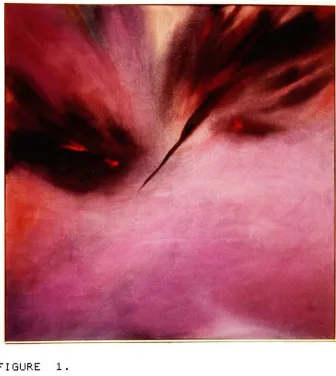
Figure 1 . Untitled IS
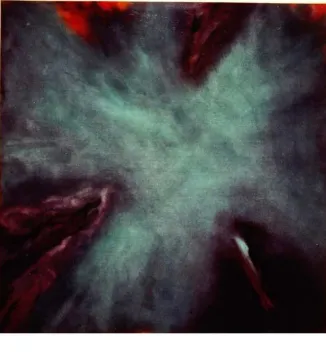
Figure 2. From Dream to
Watching
From Desire to Act 17
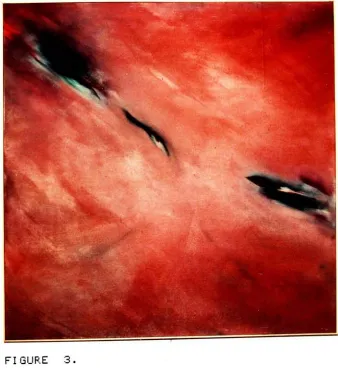
Fi gure 3. The Hand of Day . 18
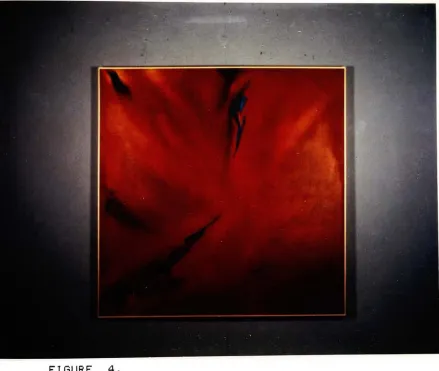
Figure 4. Ages of Fire and of Air 19
Figure 5. Untitled 20
Fiqure 6. Only the Mi st is Real 21
ACKNOWLEDGMENTS
My deepest loye and appreciation to Paul
Frazier,
for hispatience, understanding and whose
loving
encouragement made thisdream possible.
In
Loving
Appreciation to My Parents"Home is where one starts from"
-T. S. Eliot
"That is why he is called a poet. And his responsibility, which
is also his
joy
and his strength and his life, is to defeat alllabels and complicate all battles
by
insisting
on the humanriddle, to bear witness as
long
as breath is in him to thatmighty, unnarneable, transfiguring force which live in the soul of
man, and to aspire to do his work so well that when the breath
has left him the people all people! who search in the rubble
for a sign or a witness will be able to find him there."
"The history of the
living
world can be summarized as th>elaboration of the ever-perfeet eyes within a cosmos in which
there is always something more to be seen."
THE CREATIVE IMAGINATION
The purpose of this thesis was to explore, through the
source of mythology and its imagery, the process of the creative
imagination. In al1 due respect , there exists mill enniurns of
world mythology and
imagery
which would be impractical for mypurposes, as a painter, to attempt to research thoroughly. I do
remain in complete awe and deeply appreciate the vast resources
which exist in this area. My purpose,
however,
was to use thisvast collection of material as a source of information for my
own creativity and thought processes.
For me it was the direct impact of primitive art as
communication that led to the research of the creative
imagination. This direct impact of the
imagery
intertwined withthe my tho 1ogy co nveyed the v 1su al
beg
i n nin gs of mank inds''
interpretations of thoughts, beliefs, fears, and purposes for
existence. It seemed reasonable that if we are to comprehend the
internal motivational factors and drives as contemporary artists,
i t wo u1 d be pr act ical to vi ew the extrerne
beg
i n ni n gs ofcr eativi t y which emerged in pr ehistory .
What is evident is the clarity of power and dynamic energy
which one experiences in primitive art. Centuries later
co ntempo r ary society is still experi en cing the power of i ts
impact. It is only through our imagination that we can estimate
it was
initially
created. There is this awareness not only ofthe effects that such images could serve in prehistoric culture,
but also the marvelous capacity of the human mind which created
these visual feasts.
The primitive mind was n ot so diverted, but who se very
presence and existence was centered around mere survival. These
fears were what drove their pure instinctive and intuitive nature
to create a world of magic. Their world was composed of a
co n scio u s awar en ess of a u n iv er se full of u ncertainty and
mystery .
A mythology evolved which fulfilled man's basic desire to
comprehend and control the natural phenomena of his physical
worid. It is not n ecessari 1y the ind ivi dual my tho 1ogy whi ch was
of total importance in this research, but the basic source which
pushed this mythology into the forefront of human consciousness.
For the primitives this primary source seemed to lie in their
fears. Here their depiction of the magic of the
hunt,
forexample, served their consciousness as a power or control over
the ir en v ironment the primi tive shaman , thro u gh r itu als and
bold paintings on confined cave walls, captured and controlled
their fears through physical realities. The substance of fear
seemed to lie in the unconscious, and took shape in the
con scio u sn ess as my th ical or drearnlike imagery . "It ser v ed to
establish a connection between the two realities which split man
in two, the physical reality which his
body
perceived and theimmaterial reality in which his soul resided."
The visible
world filled the emptiness of the unknown completing the union
human con scio u sn ess est ablished not o n1 y a mag i c but a religion,
"an instinctive choice, accepted with all one's
being
and it wascompounded more of faith than reasoning."^
what the primitive
mind had orchestrated was a melange of expressive elements. The
visual
imagery
was merely one component. What it had createdwas a microcosm of creation through myths, ceremonies, and
rituals.
According
to contemporary standards, the primitives haddeveloped an uncommon capacity to perceive and recognize
invisible presences or premonitions. Perhaps some of these
perceptive abilities were the results of the self-induced states
of hallucinations cau sed
by
the physical 1 imi tatio n to wi thstandthe
intense,
brutal and exhaustive disciplines of the rituals.Aga in , it was not the perceptions whi ch intri gu ed, but the
forms of expression which gave life to these dreamlike images of
hallucinatory figures. It was the simple elegance which primitive
art displayed. The raw beauty of form, gesture, and humanity
behind the creation of such objects renewed our interest and
inspired our own creative resources. These art forms were not an
individual endeavor.
Instead,
they were individual elements orsyrnboIs participating in the ar r angement of a r
hy
thmic who1e . Inmost ceremonial or ritual activities, they incorporated the use
of frenetic dances to draw on eternal energies and strengths
needed for survival. These also served as symbols of the cosmic
rhythm of the universe. This process mobilized and joined entire
qr o ups or fami 1 ies syrnbo1 izing a man ageabl e cornpr ehen sio n of
rnankind'
s place in the created world. It was a culmination of
materials. The importance of the perfected form as symbol, which
was essential to elicit the correct response to meet the cultural
reinforcement for continued social conduct.
My
objective was not to paint like a primitive, but toextract the essence of excitement, commitment, and belief in the
obvious. The obvious was the internal resource which had
motivated creative man for millenniums. Each individual had to
cultivate this internal resource. When viewing the paintings of
the
cave-temples, one can see the magnification of power which
was rendered through the mastering of technical skills, to
ernp has iz e the drarna visual1 y portrayed. I t was this abi 1 i ty to
he ighten one' s sen ses through visu al syrnbo1 and cornmun ica11 on
which en ticed me toward primitive art . There was a vi tal l ty ,
directness, and simplicity in approach which attracted the eye to
the essence of the form. This
bare,
essential and raw beautv which was present in primitive art evoked my interest.The current thesis work developed out of an intense interest
in symbolism. It was through a lengthy involvement and study of
symbolism, which led me to expand beyond the immediate concrete
object to the idea of symbol through time. This research stooped
at primitive art and mythology. At this point, the focus of
attention was on the my thical f igu r es and the dynamic art which
interpreted them. "Myths are sets of symbols. They are the
oldest and most fundamental expression of the experience of
ultimate reality."-^
30 the study was not just that of symbol but
sets of syrnbo1s . The my ths , cer erno nies , and rituals which
embody the proliferation of the myth through symbols gave
vital function but were only a small part of the ceremonies. In
reality the images were then combined with all the arts creating
a figurative dramatization. Each of the elements participated
within the framework or structure of a rhythmic whole. The
individual image carried no real significance but was merely
potentially expressive.
Only
in context with the entire ceremonyof dance, image, disguise, and mu sical instrument did the syrnbo1
convey its true potentials of force and impact. The symbol acted
as a vehicle. It served to shock and "to shake viewers out of
habitual ways of seeing and thinking, to prepare them for the
acceptance of further strangeness."^
With this in mind, it was with a new perspective that I
looked at primitive art and the mythologies whi ch wer e so
interrelated. In so doing, I was not committing myself to a
world of symbols, but to images which conveyed a bold and dynamic
impact on the viewer. The challenge was in translating the
information of my research and images into the realm of the
twentieth century without
imitating
orfashioning
my artdirectly from primitive art. I was searching in the realm of
direct and spontaneous interaction between my thoughts and the
paints with which I express those thoughts. The only premise was
that I wanted no constraints or parameters to bind the creative
process which took place.
Or iqin al1y , it was the si mp 1 ici ty of prirni t iv e ar t wh 1 ch
inspired the use of minimal line and color. After reviewing my
pr evio u s wo rk and
breaking
the vi sual cornporients of the syrnbo1s [image:12.541.39.505.52.694.2]basicly
composed of lyrical or poetical ar r an qements of line andcolor areas. All the emotions which emanated from these works
were nothing more than harmonies of abstract bits of information
placed on the canvas. Since the compositions appeared very
lyrical, the symbols began to be read like tiny poems
being
strung along the studio walls. Here I beqan to relate more to
their abstract qualities. The image of semi-reali sti c appearance
was brought together out of context and then into
being
throughanother medium. They began to play or toy with the senses as
parodies, metaphors, or simply to delight the emotions. The
questions which aroused my curiosity were two-fold: were these
paintings
being
read merely as literal translations of symbols orwas it the elemental components of color combinations and line
variations which stimulated the emotional connections to the
image? I realized that my symbols and objects were not
necessarily meaningful to others; therefore,
"knowing
that theinterpretation of dreams, myths, and acts is always to some
degree an i nd ivi dual ma1 1er . No matt er what point of
dep
artureone uses, symbols
inevitably
have both a shared and an individualcomponent. No two people ever use the same word in exactly the
same way, and the more abstract the symbol, the greater the
1 i kel ihood of a sizeable i ndiv idual co npo n en t .
"5
j t was at th i
.-point that I became involved in the entire creative process.
In what manner did the images appear or evolve? After the
initial idea had formulated, what was the procedure which made
these ideas take shape? Here began the observation of the method
which would contribute to
bringing
that concept into reality.through creativity. It also became a journey throuqh the
expansion of thought and emotional commitment. The comprehension
that the most important tool for any artist was the artist
himself and that "through constant practice is faith in his
ability to produce miracles when they are needed."6
j\-l(=l j.,=,,..,,=,1
0f
realization changed, making evident the self-imposed limitations
of remaining enthralled with the semi-abstracted symbols of
reality. I was
limiting
my growth as an artist and anindividual if I only pursued the symbols as a means of
communication. It was necessary not only to comprehend the
importance of the symbol as communication, but to the other
possibilities which the symbol itself was
directing
me as anartist .
It was at this point that I mentally had moved beyond the
physical form of the symbol and could not continue to pursue the
symbols of my past work. The transformative process began
by
leaving
the objects or manrnade forms for the more organic shapes.I t was the lyrical and r
hy
thm ic quali ties 0f 0r ganic pa1 1ernswhich had evoked the freedom of line and gesture. The first
appearance of this freedom of expression was evident in the
drawings. They were extremely calligraphic, primitive, or
basic,
but they displayed the spontaneity of gestural line and color.
They were quick, simple, and impulsive serving as excellent
sources to explore and search form through line and color.
Another
intriguing
element to consider was the magical useof space which permeated each composition. The symbolic forms
which constantly moved about as positive and
neqative space.
This ethereal or dreamlike quality gave the impression of
ambiguous spaces. Here the objects and figures actually beqan to
dissolve into the space. It created a rhythmic sense where form
became space only to reenact as line into form. The movement of
space through the active use of color created the importance of
the line; thus, the line
defining
objects, figures, or thesuggestion of form was the connecting link between total
abstraction and the concrete forms of our physical reality.
There existed this continuum of basic elements
interweaving
andinterpenetrating
each other. It became a matter of substancetransforming into light and light into space.
Once arriving at that conclusion, other concepts began to
flower. It was not the subject which mattered, but the
inspiration which emanated from the suggestion or essence of the
form. The work which had been vacillating between solid and
vaporous began to transform. The paintings became a transition
of concrete physical elements of reality into the simplification
of space and light.
Painting
became a delight in the experiencewhich evaded reality and moved into the realm of playful
imagination. This drew from a vocabulary of visually tangible
objects and playfully reconstructed their essence. Perhaps
realizinq that this essence or life force of the form was best
interpreted as energy. This form as energy, pulsating, vibrant,
and vital,
functioning
un inhibi tedly .Therefore,
the life of theform could not be created or destroyed but merely allowed to
chanqe form or transform. This transformation became more
the objective was to break through old perceptions; so, thought
patterns, emotions, and perceptions began to chanqe.
I began a new approach to my work which evolved throuqh a
reinterpretation of what was important to me as an artist and my
need for communication. Needless to say, the work chanqed. The
object as symbol began to serve only as a reference point which
evoked the thoughts to move beyond the limited perspective
allowed to the eyes.
Being
a painter who loves the opportunityto delight the senses with color, I relied heavily on my ability
to visualize both the form and color. In
fact,
I reached a pointwhere the memory took over to avoid the errors the eyes would
make. The mind intuitively knew what the form should
be,
whilethe eyes sometimes got in the way of what was there. The mental
process of translating the ideas became manifested through the
art. This magic of the internal conscious formulation of
thoughts and ideas released through the external properties as
the materials and media transformed the imagination into the
visible .
Painting
is a magical and lengthy process and even with themost diligent effort there are many failures and occasionally
h igh moments of insight and inspiration. The entire pro cess is
as a ritual in which the artist constantly interacts with the
medium which he choses. It points to the basic and elemental
substance of the artist centering with the basic properties of
the medium of expression. It is a ceremony in which the artist
prepares in totality. The mental, physical, emotional, and
coheren ce in the imagery . The act of drawin
g or
initiating
thesurface of the paper or canvas can become quite ceremonial. The
color or texture of the surface can dictate the possible contour
of the line or establish the character and mood of the
initializing
process. At times it can be extremely spontaneousand other times it can be more meditative and carefully
ap pr o ached . There is this realization that, when drawi ng
, o n ce
the line is introduced it cannot be removed. There is a
permanence which exists. Unlike painting which can go through
many stages of
development,
thedrawing
tends to stand on its own fr om the initial mo ment of concep ti o n . Drawinq is spo ntaneo usand direct. It carries all of the energy and force in the
immediate. Characteristic of a complete ritual, it is the
instrument of the spontaneous creative act. The line carries the
rhythm and determines the mood,
being
charged with energy itbecomes the expressive element encompassing the concept of dance
and music. If successful it is a rhythmic whole. "The dance is
the incarnation of eternal energy. Every dance is a pantomime of
rnetamorphsi s, which seeks to change the dancer into a god, a
demon or some other chosen form of
The lines can be explained in a number of ways, but the most
basic of those explanations would be to say they represent the
artist. They are representative of myself, moving though
stationary, synonymous with my signature as my connection to
reality, my life's energy. They stand as an index to my inner
nature announcing either the freedom and nobility or the meanness
and limitations of that nature.
They
can be interpreted as anyor all, but there is one thing in which I am certain, they are
expressiv e.
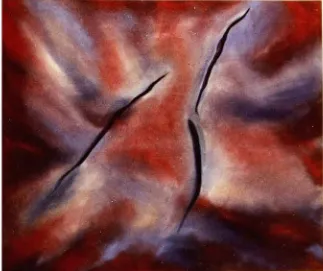
In the paintings I wi 1 fu1 1 y mo v ed into a no nf i qurati ve
expression of line,
form,
and color. It was the symbolreconstructed in a purely abstract manner giving freedom to work
with the concept of space and time independent of objects or
environments. Now the ambiguous projections of f iqu re/ground
finally
broke apart. The symbols disintegrated into the spacewith which they continuously struggled, and the line became
form. As the painting process continued the line as form could
be seen to also be struggling with the illusion of space which
engulfed it.
"Space,
and space again, is the infinitedeity
whichsurrounds us and in which we are ourselves contained."'1' ^ 'times
the lines appeared to be
floating
on the surface suspended inspace. At other times the line appeared to be slicing through or
piercing the space. The process continued to evolve as the line
did not remain pure, but dissolved into the space or fragmented
into splashes of color. The microcosm/macrocosm concept of space
created through color, struggled, undulated, and rhythmically
moved
defining
the uncertainty of whether the line was containedwithin the space or if the line as form was allowed to exist in
space,
therefore,
in time. The work which had transpired might bedescribed as relating more
totally
to space. "Japanese 'ji-ji-mu-ge '
thing
and thing: no division: no separation betweenthings. The analogy suggested is of a net of gems, the universe
as a great spread-out net with at every joint a gem, and each gem
9
not only reflecting all the others but itself reflected in all."
Although the paintings have approached a minimal nature,
there exists under the immediate surface a substantial amount of
activity. This effect was achieved through a
layering
or glazingprocess of innumerable colors. Once there was a sufficient
number of layers built up, a final color was applied to the
surface in a semi-opaque, translucent layer
producing an
interesting
illusion of depth. Here the color became themajor emphasis and the properties which were adherent to the
medium were displayed.
They
approached the senses as extremelyatmospheric and suggested that
they
extend beyond the frame. Itwas a process not only as an expressive medium where the
imaginative thought and emotive states were revealed, but also in
the search and exploration of perfecting technique of the
medium. In these paintings, the color appeared to have served in
a multiple capacity as sensation, expression, symbol, and also as
structure upon which the entire composition was built.
One of the responses on
initially
viewing one of the thesispaintings was that it appeared extremely sensuous, but at the
same time
disturbingly
violent. Later refecting on what was saidabout a nonintentional creative result, I reviewed a number of
different rituals and myths and the answer seemed quite apparent.
Primitive art which perpetuated the myths was a spontaneous
creative act. We have no direct knowledge of how
long
thegestation period was which created their
forms;
yet, theirrituals were extremely sensuous and violent. In primitive
cultures the Earth was portrayed in various forms as the Mother
of all and was venerated as such. From time
immemorial,
therituals and ceremonies of all cultures in one way or another
animated her movements in rhythmic ecstasies or in violent
assaults. It seemed only natural then that our art should not be
exempt from that same flow or rhythm of nature when the same
internal drives surfaced in the consciousness as the creative
imagination.
"Underlying
these individualcharacteristics, a common world-language of form was apparent in them all; through
the working of instinctive sculptural sensibility, the same
shapes and form relationships were used to express similiar ideas
1 0
at widely different places and periods in history.
Although I have just verbally interpreted what had
transpired visually in the thesis paintings, there are other
important aspects of the creative imagination on which we must
reflect. It is the nonverbal experience which allows the
imagination to take over. I am referring to such action or
movement which supplies the artist with a vast amount of
information. While
they
stimulate and elevate theimagination,
there is an internal response which flashes and releases the
creative reactions. There seems to exist an internal mechanism or creative self which lives independent of our control. This
creative or separate self which contains the information that we
consciously seek, thrusts us into realms in which we appear
unprepared.
There is a cyclic event which takes place in the creative
process. It is a constant state of internal struggle, a metamorphsis which drives us relentlessly. On many occasions it is necessary to either ignore or refuse to submit to these
constant internal eruptions and fluctuations of emotive forces.
Nevertheless,
they
do not go away in spite of the negation oracknowledgement. The desire of our innermost thoughts and
being
struggles to find expression and
finally
surfaces. Attimes,
there are dormant states or periods of rest when the conscious is
unaware of the inner
turmoil,
but that is rare. The act ofbeing
creative can be analogous to the consumptive properties of fire.
It seems to be an individual self which controls our decisions.
It is an internal flame that engulfs the spirit,
driving
thephysical
body
beyond all limitations. Once touchedby
the energyof these
flames,
we begin an incredible journey. This thrusttranscends beyond the physical realm into various dimensions of
time and space. Here we lose ourselves searching for the source
of expression that drives us so. It becomes obsessive, this
searching in the abyss of the
burning
flames. There are no easyresults from this process, for as we search for expression, we
begin to find our images. It pushes, prods, and antagonizes
until the images within are released. Now the process of
conveying these images becomes just as engulfing. The force
behind these images compels us on towards completion. Just as we
reach one plateau, we find we are driven towards another. The
cycle continues the developmental process enabling the merger of
form and concept. Here the reality of the physical takes place
as the concept begins to materialize.
"This work of art is not merely transmitted or
derived... that it is like a plant which is
not a mere product of the soil; but a
living
creative process centered in
itself,
theessence of which has nothing to do with the
character of the soil;
that,
in short, thework of art must be regarded a creative
formation,
freely
making use of every precondition. "11
It is to some degree a releasing valve which clears the mind
of excessive
imagery
and makes possible a more selective searchof form and expression. This internal flux drives the artist
in search of the perfected form just as in primitive societies
in which the importance of the perfected form was essential. The
criteria may have changed, but the necessity to search and
overcome is still basic to all human functions. It is only
through continuous immersion and saturation in the creative
process that this perfection of form reveals itself. In this
context the artist appears as an instrument or medium through
which the creative process reaches fruition as the imagination is
freed from our subconscious mind.
It is an individual drama which unfolds with each new
transitional period. Here we find fulfillment and excitement in
the visible form of the concept. The reality of our desire for
expression is
finally
released.Yet,
the struggle for expressionis a human endeavor, from which we cannot escape.
FIGURE 1
[image:23.541.104.440.218.594.2]FIGURE 2.
[image:24.541.117.443.222.576.2]FIGURE 3.
[image:25.541.104.442.225.595.2]FIGURE 4
[image:26.541.51.490.217.588.2]FIGURE
[image:27.541.67.475.210.588.2]FIGURE 6.
[image:28.541.130.453.253.524.2]Footnotes
1
Huyghe,
Rene,
gen. ed.,Larousse Encyclopedia ofPrehistoric and Ancient Art(New York: Promethus
Press,
1962),
p.2
Pierre
Grimal,
ed. , Larousse World Mvtholoov(Paris:Hamlyn
Publishing
Group
Limited,
1969;
reprinted., Secaucus, New
Jersey: Chartwell
Books,
Inc.,
1976),
p. 13.3
Diane
Apostolos-Cappadona,
ed., Art, Creativity, & the
Sacred (New York: Crossroad
Publishing
Co.,
1984),
p. 222.4
John E.
Pfeiffer,
The Creative Explosion (New York:Harper-Row,
1982),
p. 175.5
Edward T.
Hall,
Beyond Culture (New York: AnchorPress/DoubleDay
&Co.,
Inc.,
1976),
p. 10.Graham
Collier,
Art and the Creative Consciousness(Englewood
Cliffs,
New Jersey:Prentice-Hall,
Inc.,
1972),
p. 40.7
J. E.
Cirlot,
A Dictionary of Symbols,Trans,
JackSage,
(New York: Philosophical
Library,
Inc.,
1962),
p. 73.Q
Robert L.
Herbert,
ed., Modern Artists On Art (EnglewoodCliffs,
New Jersey: Prentice-HallInc.,
1964),
p. 132.9
-Joseph
Campbell,
Myths to Live By (New York: TheViking
Press,
Inc.,
1972),
p. 144.10
Robert L.
Herbert,
ed. , Modern Artists On Art (EnglewoodCliffs,
New Jersey: Prentice-HallInc.,
1964),
p. 148. 11Herbert
Read,
The Forms of Things Unknown (New York:"Selected Bibliography"
1.
Apostolos-Cappadona,
Diane ed. Art,Creativity,
& theSacred. New York: Crossroad
Publishing
Co.,
1984.2.
Arguelles,
Jose A. TheTransformative
Vision. Boulder &
London:
Shambhala,
1975.3.
Campbell,
Joseph. The Hero With A Thousand Faces. 'Princeton:
Princeton
University
Press,
1973.4- The Masks of God, vol.2: Oriental Mythology. New
York:
Viking
Pres,
1959.~
5- The Masks of God, vol.1: Primitive Mythology. New
York:
Viking Press,
1959.6. . The Mythic Image. Princeton: Princeton
University
Press,
1974.Myths To Live By. New York: The
Viking
Press,Inc. , 1972
8.
Cirlot,
J. E. A Dictionary of Symbols, Translatedby
JackSage. New York: Philosophical
Library,
Inc.,
1962.9.
Collier,
Graham. Art and the Creative Consciousness.Englewood
Cliffs,
New Jersey:Prentice-Hall,
Inc.,
1972.
10.
Eliade,
Mircea. The Sacred and The Profane. Translatedby
Willard R. Trask . New York: A Harvest Book
Harcourt,
Brace,
&World,
Inc. 1959.11.
Ferguson,
Marilyn. The Aguarian Conspiracy. Los Angeles:J. P.
Tarcher,
Inc.,
1980.12.
Grimal,
Pierre,
ed. Larousse World Mythology. Paris:Hamlyn
Publishing Group Limited,
1969;
reprint ed. ,Secaucus,
New Jersey: ChartwellBooks,
Inc.,
1976.13.
Hall,
Edward T. Beyond Culture. New York: AnchorPress/DoubleDay
&Co.,
Inc.,
1976.14.
Herbert,
RobertL.,
ed. Modern Artists On Art. EnglewoodCliffs,
New Jersey: Prentice-Hall,Inc.,
1964.15.
Huyghe,
Rene,
gen. ed. Larousse Encyclopedia ofPrehistoric & Ancient Art. New York: Prometheus
Press,
1962.16.
Levi-Strauss,
Claude. Myth and Meaning. New York:Schocken
Books,
1979.17. The Nelson A. Rockefeller Collection. Masterpieces of
Primitive Art. Text
by
Douglas Newton. New York Alfred A.Knopf,
1978.18.
Pfeiffer,
John E. The Creative Explosion. Mew York:Harper &
Row,
1982.19.
Read,
Herbert. The Forms of Things Unknown. New York:Meridian
Books,
1950.20.
Rosenfeld,
Andrea,
andUcko,
Peter J. Palaeolithic CaveArt. New York: McGraw-Hill Book
Company,
1967.21.
Waley,
Arthur. The Way and Its Power. New York: GrovePress,
Inc. , 1982.22.
Wentick,
Charles. Modern and Primitive Art. Oxford:Phaidon Press
Limited,
1978.