This is a repository copy of Effects of Dry and Wet Sieving of Soil on Identification and Interpretation of Microbial Community Composition.
White Rose Research Online URL for this paper: http://eprints.whiterose.ac.uk/115313/
Version: Accepted Version
Article:
Blaud, A., Menon, M. orcid.org/0000-0001-5665-7464, van der Zaan, B. et al. (2 more authors) (2016) Effects of Dry and Wet Sieving of Soil on Identification and Interpretation of Microbial Community Composition. Advances in Agronomy, 142. pp. 119-142. ISSN 0065-2113
https://doi.org/10.1016/bs.agron.2016.10.006
Article available under the terms of the CC-BY-NC-ND licence (https://creativecommons.org/licenses/by-nc-nd/4.0/)
[email protected] https://eprints.whiterose.ac.uk/
Reuse
This article is distributed under the terms of the Creative Commons Attribution-NonCommercial-NoDerivs (CC BY-NC-ND) licence. This licence only allows you to download this work and share it with others as long as you credit the authors, but you can’t change the article in any way or use it commercially. More
information and the full terms of the licence here: https://creativecommons.org/licenses/
Takedown
If you consider content in White Rose Research Online to be in breach of UK law, please notify us by
1
Effects of dry- and wet-sieving of soil on identification and interpretation of
1
microbial community composition
2
Aimeric Blauda, 1*, Manoj Menon,a, 2, Bas van der Zaanb, Georg J. Lairc , d, Steve Banwarta, 3
3
4
a
Department of Civil and Structural Engineering, Kroto Research Institute, The University of
5
Sheffield, Broad Lane, Sheffield S3 7HQ, United Kingdom.
6
b
Deltares, Subsurface and Groundwater Systems, Princetonlaan 6-8, 3508 Al Utrecht, the
7
Netherlands.
8
c
University of Natural Resources and Life Sciences (BOKU), Institute of Soil Research,
9
Vienna, Peter-Jordan-Str. 82, 1190 Vienna, Austria.
10
d
University of Innsbruck, Institute of Ecology, Sternwartestr. 15, 6020 Innsbruck, Austria.
11
12
*Corresponding Author.
13
E-mail address: [email protected]
14
15
1
Current address: Agroecology Department, Rothamsted Research, Harpenden, Hertfordshire
16
AL5 2JQ, UK.
17
2
Current address: Department of Geography, The University of Sheffield, Sheffield, S10
18
2TN, UK.
19
3
Current address: School of Earth and Environment, University of Leeds, Leeds, LS2 9JT,
20
UK.
2
Abstract
22
Soil aggregates are microhabitats for microorganisms, and directly influence
23
microorganisms that live within and are influenced by microorganisms in return. Two
24
methods are used to isolate soil aggregates by their size: dry- (sieving air dried soil) or
wet-25
sieving (sieving soil in water). Wet-sieving methods are generally considered to represent
26
separation of aggregate classes that are stable to physical dis-aggregation in water, a
27
condition considered favourable for protecting soil structure over time. However, little is
28
known about the effect of sieving methods on microbial abundance, diversity and functions,
29
hindering the understanding of the relationship between soil structure and soil aggregates as
30
habitat and soil microorganisms. In this study, the effect of dry- and wet-sieving on bacterial
31
diversity, and abundance of microorganisms involved in N fixation (nifH gene), nitrification
32
(amoA bacteria and archaea) and denitrification (narG, nirS and nosZ genes), were
33
determined for 4 sizes of soil aggregates from a cropland and grassland. Quantitative-PCR
34
(Q-PCR) showed little differences in relative gene abundance between size fractions of soil
35
aggregates, but wet-sieving method significantly increased gene abundance for amoA
36
bacteria, nirS and nosZ genes. When the N functional genes were expressed as percentage of
37
the bacterial 16S rRNA genes, the wet sieving resulted in significantly higher genes
38
percentage for all the genes (except for narG gene), and significant differences between soil
39
aggregate size fractions at the grassland site. The different sieving methods resulted in
40
different bacterial community compositions, but only the wet-sieving method was able to
41
reveal significant differences in bacterial community composition between soil fractions in
42
grassland. The results demonstrate significantly different quantitative and qualitative
43
interpretation of soil microbial community depending on whether aggregate samples were
44
obtained from wet- or dry-sieving, highlighting the importance in the choice of the sieving
45
method.
3 47
Keywords: Quantitative-PCR, Amplicon sequencing, nitrogen fixation, nitrification,
48
denitrification, soil aggregates, grassland, cropland
49
1. Introduction
50
Soil is an extremely complex and heterogeneous environment, due to the complexity
51
of its structure (i.e. 3-D architecture of pores and particles), the large vertical spatial
52
heterogeneity across the different horizons of soil profiles, and a huge and largely unknown
53
microbial genetic diversity. Soil aggregates, composed of soil mineral fragments, decaying
54
biomass, gases, water and solutes, and living organisms bound together as porous particles,
55
represent the complexity of the soil structure and also the microhabitats for the
56
microorganisms. Both the soil structure and soil microorganisms are central soil features that
57
determine many key functions such as soil water retention and transmission, C, N, P, K
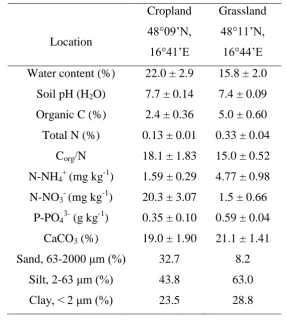
58
sequestration, and nutrient transformations that ultimately sustain soil fertility. Different sizes
59
of soil aggregates was shown to harbour different bacterial community structure, (Blaud et
60
al., 2012; Fall et al., 2004; Helgason et al., 2010; Kandeler et al., 2000; Sessitsch et al., 2001;
61
Vaisanen et al., 2005), different bacterial diversity (Davinic et al., 2012; Kravchenko et al.,
62
2014; Sessitsch et al., 2001), bacterial abundance and biomass (Helgason et al., 2010;
63
Mendes et al., 1999; Sainju, 2006; Schutter and Dick, 2002) and microbial activity (Bach and
64
Hofmockel, 2014; Lensi et al., 1995; Sey et al., 2008). These differences are linked to the
65
specific environmental conditions which exert biological selection pressures and are highly
66
variable within aggregates.
67
To study soil aggregates, sieving methods are used to isolate different size classes of
68
soil aggregates. The separation of soil aggregates is mainly done by dry- or wet- sieving
69
methods. The wet-sieving method, first described by Yoder (1936), is the most commonly
4
used method to study microbial communities in soil aggregates and involves immersing soil
71
for several minutes in water to break down aggregates. This occurs by increasing the
72
surrounding static water pressure on the air trapped inside immersed particle pores, followed
73
by vertical strokes in water to create shear forces to separate the soil particles that are initially
74
placed on the top of a nest of subsequently immersed sieves. Dry-sieving involves shaking
75
usually air-dried soil, on top of a nest of sieves. Thus, the energy applied to the soil differs
76
greatly between dry- and wet-sieving which affects directly the amount of stable soil
77
aggregates that are obtained. Furthermore, wet-sieving affects the aqueous colloidal forces at
78
particle surfaces that can enhance or diminish the cohesive forces between aggregated
79
particles. Thus, these two methods are expected to have direct effect on microbial
80
communities due to the different sizes of soil aggregates which are isolated, i.e. the
81
“washing” effect during wet sieving coupled with potential cross contamination between soil
82
fractions, the effect of drying soil before dry-sieving, and the different mechanical and
83
physical-chemical forces applied on soil aggregates.
84
Only few studies have investigated the impact of dry- and wet-sieving to separate soil
85
aggregates. Most of these studies focused on the effects of sieving methods on the
physico-86
chemical characteristics of soil aggregates. Dry-sieving maintains large soil aggregates sizes
87
(> 2 mm) but is usually limited to the size fractions > 250 µm. In contrast, wet-sieving can
88
separate soil aggregates from various size classes and in particular smaller sizes (< 250 µm).
89
The proportion of soil aggregates with size < 2 mm mainly increase with wet-sieving while
90
soil aggregates > 2 mm decrease due to the breakdown of the macroaggregates into smaller
91
aggregates, and inversely for dry-sieving (Beauchamp and Seech, 1990; Sainju, 2006; Bach
92
and Hofmockel, 2014). Wet-sieving leads to a loss of total C or total N, especially for soil
93
fractions < 250 µm, although no change or sometimes an increase in C content (for either >
94
250 and < 250 µm soil fractions) were found for wet-sieving in comparison to dry-sieving
5
(Sainju, 2006). Seech and Beauchamp (1988) concluded that wet-sieving methods result in
96
underestimating C and N pools.
97
The impact of aggregate fractionation procedures on microbial communities is not
98
well studied. Sainju et al. (2006) showed that the wet-sieving method decreases the nitrogen
99
microbial biomass in comparison to dry-sieving. In contrast, the carbon microbial biomass
100
can decrease or increase depending on the soil type (Sainju, 2006). However the C or N
101
microbial biomass is a gross indicator of microbial biomass, and no study has investigated the
102
effect of sieving methods on microbial abundance, community structure or diversity using
103
DNA-based approaches (e.g. Q-PCR, next generation sequencing). A recent study comparing
104
the effect of dry- and wet-sieving on microbial enzymatic activity showed that wet-sieving
105
overestimated the potential microbial enzymatic activity in comparison to dry-sieving (Bach
106
and Hofmockel, 2014). However, only the enzymatic activity differed between sizes of soil
107
aggregates with wet-sieving and not with dry sieving. This study also showed that drying the
108
samples at 4 °C to reach 10-20% of soil gravimetric water content did not affect the
109
enzymatic activities before dry-sieving.
110
The effect of sieving methods on microbial communities and resulting microbial
111
characterisation data and their interpretation remains largely unknown. This gap in
112
understanding may represent a major factor influencing the results of any study investigating
113
microbial communities in soil aggregates, and is limiting the understanding of the
114
relationship between soil structure, soil functions and microbial diversity. Thus, the objective
115
of this study was to determine the effect of dry- and wet-sieving on microbial community
116
abundance and diversity within different size classes of soil aggregates. Four sizes of soil
117
aggregates from a cropland and grassland were obtained by dry- and wet-sieving. Then, the
118
abundance of bacteria, fungi and microbial communities involved in N fixation, nitrification
6
and denitrification, and bacterial diversity were determined by quantitative PCR and
120
amplicon sequencing respectively, for each size class of soil aggregates and for the bulk soil.
121
122
2. Material and methods
123
2.1 Study sites and soil sampling
124
The study sites, a cropland and grassland are located east of Vienna, Austria, in the
125
National Park ‘‘Donau-Auen’’ on a floodplain of the Danube River. The cropland site was a
126
grassland since 1781 and was converted to intensive cropland in the first half of the 20th
127
century. The grassland site was converted from forest to grassland (presently Onobrychido
128
viciifoliae-Brometum) between 1809 and 1859 and is currently cut twice a year. The topsoil
129
(0-10 cm) age is approx. 250-350 years since deposition of fluvial sediments as parent
130
material forming a terrace above the down cutting river channel (Lair et al., 2009). The soils
131
are classified as Mollic Fluvisols (IUSS Working Group WRB, 2014). The soil characteristics
132
for cropland and grassland are shown in Table 1. Both sites were sampled on the 27th of
133
September 2013. Three distinct soil samples (500 g) were sampled at each site (grassland and
134
cropland sites) from 5-10 cm depth and store at 4 °C until soil fractionation.
135
136
2.2 Soil fractionation
137
The soil samples were sieved at 2 mm before dry- or wet-sieving to homogenise the
138
samples and to remove large roots and stones. Dry- and wet- sieving were performed on all
139
the replicate samples for each site. Twenty grams of soil were used for each soil fractionation
140
by size, recovered from the sieves of specific screen sizes. Henceforth, the term “soil
141
fraction” is preferred to“soil aggregates” because this study did not separate soil aggregates
142
from mineral particles.
143
7
2.2.1 Dry-sieving
145
Prior to dry-sieving, the 2 mm sieved soils were air-dried at 4 °C for 7 days until they
146
reached a gravimetric water content of ~80 g kg-1 (Sainju et al., 2003). The air-drying was
147
required to obtain the soil fraction < 53 m from grassland soil and any soil fractions < 250
148
m from cropland soil. The dry sieving protocol consisted of shaking by hand the soil
149
samples placed on top of a nest of sieves (1000, 250 and 53 m; 10 cm Ø) for 3 min at ~200
150
rotation min-1 (Sainju et al., 2003; Sainju, 2006). Soil retained on the 1000, 250 and 53 m
151
sieves were considered as 1000-2000 m, 250-1000 m and 53-250 m soil fractions,
152
respectively. The soil collected in the cup under the 53 msieve was the < 53 m soil
153
fraction. Soil aliquots were taken directly from each sieve for DNA extraction and stored at
-154
20 °C, and the rest of the soil fractions were dried at 55 °C and used to measure soil
155
fractions’ mass distributions.
156
157
2.2.2 Wet-sieving
158
The wet-sieving fractionation method was adapted from Yoder (1936) and Blaud et
159
al., (2012). Fresh soil samples were place on top of a nest of sieves (1000, 250 and 53 m; 10
160
cm Ø) and immersed in ~1.3 l ultra-pure sterile water (4 °C) tank for 5 min. Then, the sieves
161
were raised and lowered during 10 min (stroke length ~30 mm, frequency 30 cycles min-1).
162
Soil retained on the 1000, 250 and 53 m sieves were considered as 1000-2000 m, 250-1000
163
m and 53-250 m soil fractions, respectively. The water and soil left in the tank were
164
centrifuged at 4500 G for 10 min. The centrifugation was repeated to reduce the volume of
165
water as much as possible and collect the soil particles, which represented the soil fraction <
166
53 m. Two soil aliquots were taken directly in each sieve: one for DNA extraction placed at
167
-20 °C, and one for soil water content measurement dried at 55 °C. The rest of the soil
8
fractions for each sieve were washed in tubes and dried at 55 °C and used to measure soil
169
fractions’ mass distributions.
170
The pore liquid collected after each round of centrifugation was filtered at 0.22 m
171
(47 mm Ø GTTP filter, Wathman) in order to collect and quantify the microorganisms
172
washed from soil fractions during the sieving method. For each sample, 5 filters were
173
required to filter the entire volume of water (due to clogging of the filter), except for two
174
replicates of cropland that required 6 and 7 filters. The filters were kept at -20 °C before
175
DNA extraction.
176
177
2.3 DNA extraction
178
DNA was extracted from 0.25 g of fresh soil for each soil fraction and bulk soil (i.e. 2
179
mm sieved soil) using the PowerSoil® DNA Isolation Kit (Mo-Bio laboratories, Carlsbad,
180
CA, USA) according to manufacturer’s instruction, except for the final step where the nucleic
181
acids were eluted in 100 l of sterile nuclease-free water.
182
DNA was extracted from the water used for wet-sieving (after centrifugation to obtain
183
< 53 µm soil fraction) to determine the relative abundance of microorganisms lost during wet
184
sieving. The same amount of water without soil was also filtered and used as control to
185
ensure that the result obtained came from the wet-sieving and not from contamination of the
186
water or filter. The water for each sample was filtered and DNA was extracted from the filter
187
using the PowerWater® DNA isolation kit (Mo-Bio laboratories, Carlsbad, CA, USA)
188
according to manufacturer’s instruction, except for the final step where the nucleic acids were
189
eluted in 100 l of sterile nuclease free water. DNA was extracted for each filter (i.e. 33
190
filters in total) and the DNA extracts were pooled for each sample.
191
2.4 Quantitative-PCR
9
Variation in microbial gene abundance was determined by Quantitative-PCR
(Q-193
PCR) targeting specific genes or genetic regions. Bacterial community was targeted via the
194
16S rRNA gene while the fungal community abundance was investigated by targeting the
195
ITS region. The different communities involved in most steps of the N-cycle were
196
investigated: the nitrogen fixing microorganisms were quantified based on the nifH gene;
197
nitrification was investigated by targeting the ammonia oxidising bacteria (AOB) and archaea
198
(AOA) via the amoA gene, and denitrifiers were targeted via the narG gene coding for the
199
nitrate reductase, the nirS gene coding for the nitrite reductase and the nosZ gene coding for
200
the nitrous oxide reductase. The details of the primers used to amplify the different amplicons
201
are given in Table S1.
202
Q-PCR standards for each molecular target were obtained using a 10-fold serial
203
dilution of plasmids carrying a single cloned target gene, constructed by cloning PCR product
204
of environmental samples (pCR2.1 TOPO vector), isolating cloned inserts (Qiagen Plasmid
205
mini Kit), and checking for the presence of gene of interest by sequence-analysis. Standard
206
curves and the no template control were amplified in triplicate in the same plate as the
207
environmental samples. Q-PCR amplifications were performed in 25 µl volumes containing
208
12.5 µl of iQ™ SYBR® Green Supermix (Bio-Rad, Hemel Hempstead, UK), 8.5 µl of
209
nuclease-free water (Ambion, Warrington, UK), 1.25 µl of each primer (10 µM) and 1 µl of
210
template DNA using a CFX96™ Real-Time System (Bio-Rad, Hemel Hempstead, UK).
211
Standard amplification was used for all Q-PCR assays except AOA, starting with an initial
212
denaturation at 95 °C for 3 min, followed by 40 cycles of 30 s at 95 °C, 0.5 to 1 min of
213
annealing (annealing temperature and time for each primers pairs are given in Table S1), and
214
30 s at 72 °C (Tsiknia et al., 2013). The fluorescence was measured at the end of each
215
synthesis step (i.e. at 81 °C for AOA and at 72 °C for all other genes).
10
Threshold cycle (Ct) values and amplicon numbers were determined automatically
217
using the Bio-Rad CFX Manager™ software. The efficiency of the Q-PCR assays varied
218
between 70-98%. The r2 were > 0.99 for all the genes, except for nifH gene (0.984). The
219
presence of Q-PCR inhibitors was tested for bacterial 16S rRNA gene, by running a Q-PCR
220
with DNA extracts 10 times diluted or mixed with a known amount of the standard. No
221
inhibition was detected.
222
The specificity of the Q-PCR was assessed via a melting curve analysis (increase of
223
temperature from annealing temperature to 95 °C by 0.5 °C per step of 0.05 s) at the end of
224
each Q-PCR amplification (Ririe et al., 1997). The melting curves for the bacterial 16S
225
rRNA, nifH, amoA, narG, nirS, and nosZ genes Q-PCR assays showed specificity for the
226
amplified targeted genes (i.e. single peak). As expected, the melting curve of the Q-PCR for
227
fungal ITS showed the amplification of products of different lengths, due to the variability in
228
length of ITS regions between different fungal taxa (Manter and Vivanco, 2007).
229
230
2.5 Amplicon sequencing
231
The bacterial diversity of the different soil fractions obtained by dry- and wet-sieving,
232
bulk soil and microbial suspension from water of the wet-sieving, for the cropland and
233
grassland was determined using the Ion Torrent® platform. The bacterial 16S rRNA gene V4
234
variable region was amplified using the primers 515F (5
-GTGCCAGCMGCCGCGGTAA-235
3 ) and 806R (5-GGACTACHVGGGTWTCTAAT-3 ) (Caporaso et al., 2011) in a
single-236
step 30 cycle PCR using the HotStarTaq Plus Master Mix Kit (Qiagen, USA) and the
237
following conditions: 94°C for 3 min, followed by 28 cycles (5 cycles used on PCR products)
238
of 94°C for 30 s, 53°C for 40 s and 72°C for 1 min, followed by a final elongation step at
239
72°C for 5 min. Amplicon sequencing was performed at MR DNA (www.mrdnalab.com,
240
Shallowater, TX, USA) on an Ion Torrent PGM following the manufacturer’s guidelines.
11
The PGM data were analysed following the pipeline developed by Pylro et al (2014)
242
that uses UPARSE (Edgar, 2013) and QIIME (Caporaso et al., 2010). Briefly, strip barcode,
243
quality filtering, dereplication, abundance sort and discard singletons were done using
244
USEARCH 1.8. Chimera filtering was done using the rdp_gold.fa dataset. Then, taxonomy
245
was assigned to operational taxonomic unit (OTU) using uclust method on QIIME 1.8 and
246
Greengenes data base (13_8) as a reference. The number of bacterial sequences per sample
247
was on average 9183 ± 1443. Few archaeal sequences were found with on average 174 ± 99
248
per sample.
249
250
2.6 Statistical analysis
251
To determine differences in the means of aggregate distribution, microbial gene
252
abundance or bacterial phylum relative abundance, ANOVA tests were performed with sites,
253
sieving methods and soil fractions as factors. The normality of the model residuals and the
254
homoscedasticity of the variances were checked before statistical analysis. Log
255
transformations of the Q-PCR data were applied to meet these criteria, except for narG gene
256
abundance. When significant differences were found by ANOVA, the post-hoc test of
257
Newman-Keuls was performed to reveal the significance differences between class pairs. To
258
test the differences between sites of the loss of genes in the wet-sieving water, the Student
259
test was used.
260
The bacterial community composition was visualised by Principal Coordinate
261
Analysis (PCoA) based on the relative abundance of the OTU and generated using
Bray-262
Curtis distance. ANOSIM (Analysis of SIMilarity; 10,000 maximum permutations) was used
263
to investigate potential differences between bacterial community composition due to
sieving-264
method, site or soil fractions (Clarke and Green, 1988). Two-way ANOSIM was used to
265
compare one factor against the other factors and one-way ANOSIM to investigate the
12
influence of an individual factor. ANOSIM analysis yields an R value, whereby ANOSIM
267
values close to R = 1 indicate a high separation between groups (e.g. between soil fractions),
268
whilst ANOSIM values close to R = 0 indicate a low group separation.
269
ANOVA and PCoA were performed using R v3.2.1 (R Development Core Team,
270
2015) and the package Phylosea for PCoA (McMurdie and Holmes, 2013), while the
271
ANOSIM tests were performed using PRIMER software (v6, PRIMER-E Ltd, Plymouth,
272
UK).
273
3. Results
274
3.1 Aggregates distribution
275
The soil fractionation procedure resulted in mean mass recovery ~100% of the
276
original unfractionated soil. The aggregates mass distribution showed similar pattern within
277
both sites. The soil fractions > 250 µm represented 35-50 % of the aggregate distribution,
278
while the soil fractions < 250 µm were significantly lower and represented 2-20% (Fig 1;
279
Table S2). In contrast, the aggregate distribution from the cropland obtained by wet sieving
280
showed the opposite distribution compared to any other distribution, with an increase in the
281
mass of soil fractions with decreasing size of soil factions. The soil fraction 1000-2000 µm
282
was significantly lower than < 53 µm fraction (~16% and ~35% of the aggregate distribution,
283
respectively). The mass distribution of each soil fraction for cropland was significantly
284
different between sieving methods, except for the 250-1000 soil fraction. The aggregate
285
distribution for cropland obtained by wet-sieving showed large standard errors in comparison
286
to any other aggregate distribution. The sieving methods had also some effect for the
287
grassland, with an increase by ~10% of the 250-1000 µm fraction with dry-sieving, and a
288
significant increase by ~10% with wet-sieving to obtain the < 53 µm fraction.
289
290
3.2 Microbial gene abundance
13
Microbial gene abundance showed significant differences (P < 0.01) between sites for
292
all the genes except for narG gene (Fig. 2, Table S3). The genes abundance were higher in
293
the grassland site for bacterial 16S rRNA gene, fungal ITS amplicon, nifH, nirS and nosZ
294
genes. In contrast, amoA bacteria (AOB) gene showed higher abundance in cropland, while
295
amoA archaea (AOA) showed slightly higher abundance in grassland. Only the bacterial 16S
296
rRNA gene showed significant differences (P = 0.027; Table S3) between soil fractions, and
297
the Post-hoc test revealed significant differences in grassland and dry-sieving between
1000-298
2000 µm and the fractions 250-1000 and 53-250 µm (Fig. 2). A significant effect (P < 0.001)
299
of the sieving methods was found for the relative abundance of AOB, nirS and nosZ, with
300
higher relative genes abundance found in fractions obtained by wet-sieving in grassland (Fig.
301
2; Table S3). However, the Post-hoc test did not reveal significant pair-wise differences.
302
The proportion of microbial gene, expressed as percentage of bacterial 16S rRNA
303
gene copies, was significantly (P < 0.001) different between sites, with higher nifH gene
304
proportion found in grassland than cropland, while higher proportions for AOB and narG
305
genes were found in cropland (Fig. 3; Table S4). Significant difference between soil fractions
306
and sieving methods were found for all the genes except for narG gene. The Post-hoc test
307
revealed a similar trend between soil fractions for grassland obtained by dry-sieving, with the
308
1000-2000 µm fraction showing significantly (P < 0.05) higher proportion of microbial genes
309
in comparison to most soil fractions and bulk soil (Fig. 3). The soil fractions from grassland
310
obtained by wet-sieving showed higher proportions of AOB, nirS and nosZ genes than bulk
311
soil, but no significant differences between soil fractions were found. The effect of sieving
312
methods, showed higher genes proportions with wet-sieving by ~0.5%, except for the
1000-313
2000 µm fraction for grassland that showed higher proportion of nifH, AOB, nirS and nosZ
314
gene with dry-sieving by 0.5% to 2%. The Post-hoc test revealed significant (P < 0.05)
14
differences in gene proportions between sieving methods for nifH, nirS and nosZ genes for
316
grassland, and nirS gene for cropland (Fig. 3).
317
The microbial genes abundance lost in the water during wet-sieving were expressed as
318
percentage of the same gene present in 1 g of bulk soil. The proportion of microbial genes
319
found in the sieving water varied between 0.3 to 2.3% (Table 2). Only narG gene showed
320
~7% of gene copies lost in sieving water for grassland, and was also the only gene with a
321
significant (P = 0.0075) difference between sites. The microbial gene abundance in the
322
sieving water was consistently higher in grassland than cropland and significant (P < 0.05)
323
for bacteria, fungi, nifH, narG and nosZ, and marginally significant for AOA and AOB (P =
324
0.06 and 0.053, respectively; Fig. S1).
325
326
3.3 Bacterial diversity
327
The PCoA showed that the bacterial community composition from the water of
wet-328
sieving differed greatly in comparison to any other samples (Fig. 4). The PCoA and
329
ANOSIM also showed that the bacterial composition differed significantly (R = 0.45, P =
330
0.0001) between dry- and wet- sieving although some samples were mixed within each
331
group. Then, significant differences between cropland and grassland were found, showing
332
similar ANOSIM values compared to those reflecting the effect of the sieving methods (R =
333
0.45, P = 0.0007). The ANOSIM also revealed significant differences between soil fractions,
334
bulk soil and water fractions but with a lower R value than those obtained for sieving
335
methods and sites (R = 0.32, P = 0.0001).
336
The PCoA and ANOSIM were also performed on soil fractions and bulk soil for each
337
site to reveal how the sieving methods affected the bacterial community composition between
338
soil fractions at each site, which was not visible on the global analysis (Fig. 5). Significant
339
differences between sieving methods and between soil fractions were found for grassland
15
(sieving: R = 0.82, P = 0.0001; fractions: R = 0.56, P = 0.0001) but not for cropland (P >
341
0.2). The ANOSIM analysis performed on grassland for each sieving-method revealed
342
significant differences between soil fractions or bulk soil with both sieving methods
(dry-343
sieving: R = 0.57, P = 0.0001; fractions: R = 0.58, P = 0.0001). The bulk soil showed clear
344
differences with the soil fractions especially for sieving. Interestingly, bulk soil from
dry-345
sieving grouped closely to bulk soil from wet-sieving and soil fractions. However, the PCoA
346
revealed differences between soil fractions with the wet-sieving method, and high variation
347
between replicates with dry-sieving (Fig. 5). This was confirmed when the ANOSIM was
348
performed without the bulk soil, showing only significant and relatively strong differences
349
between soil fractions when obtained by wet-sieving (R = 0.44, P = 0.0001) and no
350
difference with dry-sieving (R = 0.1, P = 0.108).
351
The relative abundances of most of the dominant phyla were strongly affected by the
352
sieving methods with a decrease with wet-sieving for most of them except for Actinobacteria,
353
Cyanobacteria and Verrucomicrobia that increased with wet-sieving (Fig. 6; Table S5). The
354
different sizes of soil fractions also affected the relative abundance of most phyla. The
355
differences between sieving methods and soil fractions size were more visible and
356
statistically significant for the grassland than cropland. The differences between cropland and
357
grassland were related to only few of the dominant phyla, with Chloroflexi, and
358
Planctomycetes that were higher in cropland, while Nitrospirae, and Proteobacteria were
359
higher in grassland (Fig. 6; Table S5). The water from wet-sieving in grassland showed a
360
significant decrease in Actinobacteria and Planctomycetes in comparison to the soil fractions,
361
while Proteobacteria increased.
362
PCoA were also performed on the archaeal community composition, showing strong
363
differences between the water from wet-sieving and the rest of the samples although water
364
samples from grassland grouped with the soil fractions (Fig. S2, S3). Then strong differences
16
in archaeal community composition were also found between sieving methods but not
366
between soil fractions.
367
368
4. Discussion
369
The study of the distribution of microbial communities diversity, abundance and
370
activities between different sizes of soil aggregates size classes started more than two decades
371
ago (Chotte et al., 1993; Gupta and Germida, 1988; Jocteur Monrozier et al., 1991; Kanazawa
372
and Filip, 1986; Lensi et al., 1995). The study of microbial distribution in soil aggregates
373
starts from the premise that the vast variation in the size of aggregates, as well as their
374
physico-chemical properties, provides a huge diversity of microhabitats for microorganisms
375
influencing carbon and nutrients dynamics within the soil. Subsequently, it implies that each
376
soil aggregate size class harbours specific microbial communities and activities. However,
377
little is known about the effects of size fractionation methods such as sieving on the isolation
378
and interpretation of microbial community data from soil aggregates. The current study
379
clearly shows that dry- or wet-sieving methods affect the acquisition and interpretation of
380
microbial data from different soil aggregates. Furthermore, the effects of sieving methods
381
vary with the site/soil studied, and also which component of the microbial community was
382
studied (i.e. diversity vs. abundance).
383
Differences in bacterial community composition between sizes of soil aggregates
384
were only revealed in grassland and only when using wet-sieving. Dry-sieving method
385
resulted in high variation between replicates, hindering potential differentiation between
386
sizes. The higher disruption energy and washing effect provided during wet-sieving in
387
comparison to dry-sieving are likely to be the main factors explaining such differences in the
388
results obtained by both sieving methods (Cambardella and Elliott, 1993; Chotte et al., 1993).
389
This result implies that the different spatial domains of microbial diversity within soil are
17
distinguished by patterns in the adhesive forces within soil that bind organisms, minerals and
391
fluids together. This suggests that some factors that are important in the spatial variation in
392
particle binding to form aggregates are also important as selective pressures to establish
393
differences in microbial diversity. Similar results were found with the potential enzyme
394
activity, with only the wet-sieving method that revealed significant differences between soil
395
aggregate sizes in comparison to two dry-sieving methods (i.e. soil either air-dry or dry to
10-396
15% of soil gravimetric water content) (Bach and Hofmockel, 2014). These results highlight
397
the fact that wet-sieving might be a better method over dry-sieving to isolate the different
398
microbial communities within each size fraction, and is relevant for different microbial
399
characteristics: diversity and activity. The bacterial gene abundances showed overall less
400
clear variation between soil aggregates sizes regardless of the sieving methods, although
wet-401
sieving resulted showed more variation in genes abundance between sizes than dry-sieving.
402
The washing of soil aggregates during wet-sieving did not result in significant cross
403
contamination between aggregate sizes, at least for grassland where significant differences
404
were found. In contrast, dry-sieving and its rubbing effect on the outer part of aggregates may
405
result in stronger cross contamination due to the absence of water carrying the soil particles
406
into the soil fraction > 53 µm, which represent a patchwork of the different soil fractions, and
407
its mass is directly affected by the disruption strength energy (Chotte et al., 1993). This was
408
supported by the high variation between soil fractions replicates for cropland. Relatively low
409
percentages of bacterial genes, often below 1%, were lost in the wet-sieving water, although
410
this percentage was likely to be underestimated. Interestingly, high narG gene percentage and
411
relative abundance of Proteobacteria in water from grassland may indicate that this gene and
412
phylum might be located in the outer part of the aggregates or inter-aggregates space, where
413
the washing effect was higher. In contrast, Actinobacteria and Planctomycetes decreased in
414
relative abundance, indicating a location within aggregates or high adhesion to soil particles.
18
Thus, water from wet-sieving might give some indication on the location of some bacterial
416
community.
417
In cropland no differences in bacterial diversity between aggregate size fractions were
418
found regardless of the sieving method, highlighting that differences between soil aggregates
419
sizes are not always expected but clearly depend on the soil type and land use. Previous
420
studies also showed no difference between microbial community in different size fractions
421
from cropland, likely due to the high turnover of soil aggregates because of anthropogenic
422
activities (e.g. soil tillage, plant harvest) leading to high physical instability of the
423
microenvironment hindering the differentiation of the microhabitats and microbial
424
communities (Blaud et al., 2014). Thus, the absence of difference in microbial diversity
425
between aggregate sizes at a site could potentially be used as an indicator of the instability of
426
the systems and soil health.
427
Wet-sieving extracted higher gene abundance than dry-sieving. Wetting dry soil was
428
shown to increase the amount of DNA extracted from soil (Clark and Hirsch, 2008), and a
429
physical effect rather than biological might explain the difference for wet-sieving within the
430
~30 min that the fractionation last. The same trend was found for potential enzyme activity,
431
with four fold greater activity found with wet-sieving in comparison to dry-sieving (Bach and
432
Hofmockel, 2014). This can either reflect an overestimation of the measured variable due to
433
wetting effect (i.e. biological), or accessing a hidden microbial community protected within
434
the pores of the aggregates. In contrast, dry-sieving could lead to under-estimating the
435
microbial gene abundance. Bach and Hofmockel (2014) suggested that wetting the soil leads
436
to over-estimation of potential enzyme activity due to contact between microorganisms and
437
soluble C compounds and the potential short-term microbial metabolic changes. However,
438
there is also a large number of slow growing microorganisms in soil, and most studies
439
showing rapid response of microbial community to changes in moisture (< 30 min), were
19
done only on a few microbial strains in optimal laboratory conditions far from in situ
441
conditions (Halverson et al., 2000; Lamarre et al., 2008). Nevertheless, the biological effect
442
of wetting on microorganisms cannot be discarded.
443
Chotte et al. (2002) suggested that studying the microbial community within soil
444
aggregates gives access to changes in microbial community that would not be visible in the
445
bulk soil, and a greater diversity of Azospirillum. Most studies assessing microbial
446
community composition within soil aggregates found significant differences with the bulk
447
soil (Blaud et al., 2012; Chotte et al., 2002; Davinic et al., 2012; Ranjard et al., 2000).
448
Despite no higher bacterial diversity found in each soil aggregates size in comparison to the
449
bulk soil in the study using next generation sequencing (Davinic et al., 2012) and in the
450
current study, taken all together, the different soil aggregates harbour a greater bacterial
451
diversity than the bulk soil. It remains unclear if pooling the same number of DNA
452
extractions from bulk soil as the number of those from soil fractions plus replicates (e.g. 12
453
DNA extract in the current study) would lead to an increase in bacterial diversity harvested in
454
the bulk soil. This issue could be partly a methodological constraint, as DNA extraction
455
usually uses an extremely small amount of soil; 0.25 g is commonly used, which reduces the
456
representation of the different soil aggregate sizes within the extraction. The recent study
457
from Penton et al. (2016) showed that higher bacterial diversity was found when 10 g of soil
458
was used, which could be related to higher representation of the different soil aggregates
459
sizes and in general the heterogeneous structure of the soil. Similar issue could also be
460
relevant when studying microbial activity that uses often only 1 g of soil (Bach and
461
Hofmockel, 2014)
462
Overall, it should not be expected that the bulk soil provides a summary of the
463
different soil fractions when working on small amounts of soil. Furthermore, isolated soil
464
fractions are likely to behave in a different way to those in situ because of exposure for
20
example to oxygen and high concentration of soil fractions in comparison to their dispersion
466
within a soil horizon. These characteristics could be major limitations when trying to link
467
microbial diversity, abundance and activity between bulk soil and soil fractions, or to model
468
these variables taking into consideration the soil structure.
469
470
5. Conclusions
471
Sieving methods clearly affect the resulting observed bacterial diversity and
472
abundance found in soil aggregates, and there is a need to carefully choose the methods used
473
prior to their study. Wet-sieving was potentially the most adapted method to study microbial
474
community diversity and abundance in soil aggregates in comparison to dry-sieving, although
475
it the most time consuming and difficult to perform. Further, studies are needed to assess if
476
wet-sieving is the relevant method across a larger number of land use and soil types, and also
477
to assess if is relevant for the measure of other microbial variables (e.g. RNA). Aggregates
478
isolated with sieving methods are the products of sieving and it might be difficult to relate the
479
microbial results to in situ reality. However, aggregates are real units of greater cohesion in
480
the soil formed by biogeochemical processes. Overall, this study raises the question on how
481
to consider soil structure in the study of soil microbial communities, in order to address
482
important question such as the biological mechanisms controlling soil fertility.
483
484
Acknowledgments
485
This work is supported by the European Commission 7th Framework Programme as a Large
486
Integrating Project, SoilTrEC (www.soiltrec.eu), Grant Agreement No. 244118.
487
488
References
21
Bach, E.M., Hofmockel, K.S., 2014. Soil aggregate isolation method affects measures of
490
intra-aggregate extracellular enzyme activity. Soil Biology and Biochemistry 69, 54–
491
62. doi:10.1016/j.soilbio.2013.10.033
492
Beauchamp, E.G., Seech, A.G., 1990. Denitrification with different sizes of soil aggregates
493
obtained from dry-sieving and from sieving with water. Biology and Fertility of Soils
494
10, 188–193. doi:10.1007/BF00336134
495
Blaud, A., Chevallier, T., Virto, I., Pablo, A.-L., Chenu, C., Brauman, A., 2014. Bacterial
496
community structure in soil microaggregates and on particulate organic matter
497
fractions located outside or inside soil macroaggregates. Pedobiologia 57, 191–194.
498
doi:10.1016/j.pedobi.2014.03.005
499
Blaud, A., Lerch, T.Z., Chevallier, T., Nunan, N., Chenu, C., Brauman, A., 2012. Dynamics
500
of bacterial communities in relation to soil aggregate formation during the
501
decomposition of 13C-labelled rice straw. Applied Soil Ecology 53, 1–9.
502
doi:10.1016/j.apsoil.2011.11.005
503
Cambardella, C.A., Elliott, E.T., 1993. Methods for physical separation and characterization
504
of soil organic matter fractions. Geoderma 56, 449–457.
doi:10.1016/0016-505
7061(93)90126-6
506
Caporaso, J.G., Kuczynski, J., Stombaugh, J., Bittinger, K., Bushman, F.D., Costello, E.K.,
507
Fierer, N., Peña, A.G., Goodrich, J.K., Gordon, J.I., Huttley, G.A., Kelley, S.T.,
508
Knights, D., Koenig, J.E., Ley, R.E., Lozupone, C.A., McDonald, D., Muegge, B.D.,
509
Pirrung, M., Reeder, J., Sevinsky, J.R., Turnbaugh, P.J., Walters, W.A., Widmann, J.,
510
Yatsunenko, T., Zaneveld, J., Knight, R., 2010. QIIME allows analysis of
high-511
throughput community sequencing data. Nature Methods 7, 335–336.
512
doi:10.1038/nmeth.f.303
22
Caporaso, J.G., Lauber, C.L., Walters, W.A., Berg-Lyons, D., Lozupone, C.A., Turnbaugh,
514
P.J., Fierer, N., Knight, R., 2011. Global patterns of 16S rRNA diversity at a depth of
515
millions of sequences per sample. Proceedings of the National Academy of Sciences
516
108, 4516–4522. doi:10.1073/pnas.1000080107
517
Chotte, J.-L., Jocteur Monrozier, L., Villemin, G., Albrecht, A., Mulongoy, K., Merckx, R.,
518
1993. Soil microhabitats and the importance of the fractionation method, in: Soil
519
Organic Matter Dynamics and Sustainability of Tropical Agriculture. IITA, Ibadan,
520
pp. 39–45.
521
Chotte, J.L., Schwartzmann, A., Bally, R., Jocteur Monrozier, L., 2002. Changes in bacterial
522
communities and Azospirillum diversity in soil fractions of a tropical soil under 3 or
523
19 years of natural fallow. Soil Biology and Biochemistry 34, 1083–1092.
524
doi:10.1016/S0038-0717(02)00041-X
525
Clark, I.M., Hirsch, P.R., 2008. Survival of bacterial DNA and culturable bacteria in archived
526
soils from the Rothamsted Broadbalk experiment. Soil Biology and Biochemistry 40,
527
1090–1102. doi:10.1016/j.soilbio.2007.11.021
528
Clarke, K.R., Green, R.H., 1988. Statistical design and analysis for a “biological effects”
529
study. Marine Ecology-Progress Series 46, 213–226.
530
Davinic, M., Fultz, L.M., Acosta-Martinez, V., Calderón, F.J., Cox, S.B., Dowd, S.E., Allen,
531
V.G., Zak, J.C., Moore-Kucera, J., 2012. Pyrosequencing and mid-infrared
532
spectroscopy reveal distinct aggregate stratification of soil bacterial communities and
533
organic matter composition. Soil Biology and Biochemistry 46, 63–72.
534
doi:10.1016/j.soilbio.2011.11.012
535
Edgar, R.C., 2013. UPARSE: highly accurate OTU sequences from microbial amplicon
536
reads. Nature Methods 10, 996–998. doi:10.1038/nmeth.2604
23
Fall, S., Nazaret, S., Chotte, J.L., Brauman, A., 2004. Bacterial density and community
538
structure associated with aggregate size fractions of soil-feeding termite mounds.
539
Microbial Ecology 48, 191–199. doi:10.1007/s00248-003-1047-2
540
Gupta, V.V.S.R., Germida, J.J., 1988. Distribution of microbial biomass and its activity in
541
different soil aggregate size classes as affected by cultivation. Soil Biology and
542
Biochemistry 20, 777–786. doi:10.1016/0038-0717(88)90082-X
543
Halverson, L.J., Jones, T.M., Firestone, M.K., 2000. Release of Intracellular Solutes by Four
544
Soil Bacteria Exposed to Dilution Stress. Soil Science Society of America Journal 64,
545
1630. doi:10.2136/sssaj2000.6451630x
546
Helgason, B.L., Walley, F.L., Germida, J.J., 2010. No-till soil management increases
547
microbial biomass and alters community profiles in soil aggregates. Applied Soil
548
Ecology 46, 390–397. doi:10.1016/j.apsoil.2010.10.002
549
IUSS Working Group WRB, 2006. World reference base for soil resources 2006, World soil
550
resources rep 103. ed. FAO, Rome.
551
Jocteur Monrozier, L., Ladd, J.N., Fitzpatrick, R.W., Foster, R.C., Rapauch, M., 1991.
552
Components and microbial biomass content of size fractions in soils of contrasting
553
aggregation. Geoderma 50, 37–62. doi:10.1016/0016-7061(91)90025-O
554
Kanazawa, S., Filip, Z., 1986. Distribution of microorganisms, total biomass, and enzyme
555
activities in different particles of brown soil. Microbial Ecology 12, 205–215.
556
doi:10.1007/BF02011205
557
Kandeler, E., Tscherko, D., Bruce, K.D., Stemmer, M., Hobbs, P.J., Bardgett, R.D.,
558
Amelung, W., 2000. Structure and function of the soil microbial community in
559
microhabitats of a heavy metal polluted soil. Biology and Fertility of Soils 32, 390–
560
400. doi:10.1007/s003740000268
24
Kravchenko, A.N., Negassa, W.C., Guber, A.K., Hildebrandt, B., Marsh, T.L., Rivers, M.L.,
562
2014. Intra-aggregate pore structure influences phylogenetic composition of bacterial
563
community in macroaggregates. Soil Science Society of America Journal 78, 1924.
564
doi:10.2136/sssaj2014.07.0308
565
Lair, G.J., Zehetner, F., Hrachowitz, M., Franz, N., Maringer, F.-J., Gerzabek, M.H., 2009.
566
Dating of soil layers in a young floodplain using iron oxide crystallinity. Quaternary
567
Geochronology 4, 260–266. doi:10.1016/j.quageo.2008.11.003
568
Lamarre, C., Sokol, S., Debeaupuis, J.-P., Henry, C., Lacroix, C., Glaser, P., Coppée, J.-Y.,
569
François, J.-M., Latgé, J.-P., 2008. Transcriptomic analysis of the exit from dormancy
570
of Aspergillus fumigatus conidia. BMC Genomics 9, 417.
doi:10.1186/1471-2164-9-571
417
572
Lensi, R., Clays-Josser, A., Jocteur Monrozier, L., 1995. Denitrifiers and denitrifying activity
573
in size fractions of a mollisol under permanent pasture and continuous cultivation.
574
Soil Biology and Biochemistry 27, 61–69. doi:10.1016/0038-0717(94)00132-K
575
Manter, D.K., Vivanco, J.M., 2007. Use of the ITS primers, ITS1F and ITS4, to characterize
576
fungal abundance and diversity in mixed-template samples by qPCR and length
577
heterogeneity analysis. Journal of Microbiological Methods 71, 7–14.
578
doi:10.1016/j.mimet.2007.06.016
579
McMurdie, P.J., Holmes, S., 2013. phyloseq: An R package for reproducible Interactive
580
analysis and graphics of microbiome census data. PLoS ONE 8, e61217.
581
doi:10.1371/journal.pone.0061217
582
Mendes, I.C., Bandick, A.K., Dick, R.P., Bottomley, P.J., 1999. Microbial biomass and
583
activities in soil aggregates affected by winter cover crops. Soil Science Society of
584
America Journal 63, 873. doi:10.2136/sssaj1999.634873x
25
Penton, C.R., Vadakattu, V.S.R.G., Yu, J., Tiedje, J.M., 2016. Size Matters: Assessing
586
Optimum Soil Sample Size for Fungal and Bacterial Community Structure Analyses
587
Using High Throughput Sequencing of rRNA Gene Amplicons. Frontiers in
588
Microbiology 7, 824. doi:10.3389/fmicb.2016.00824
589
Pylro, V.S., Roesch, L.F.W., Morais, D.K., Clark, I.M., Hirsch, P.R., Tótola, M.R., 2014.
590
Data analysis for 16S microbial profiling from different benchtop sequencing
591
platforms. Journal of Microbiological Methods 107, 30–37.
592
doi:10.1016/j.mimet.2014.08.018
593
R Development Core Team, 2014. R: a language and environment for statistical computing.
594
Ranjard, L., Nazaret, S., Gourbiere, F., Thioulouse, J., Linet, P., Richaume, A., 2000. A soil
595
microscale study to reveal the heterogeneity of Hg(II) impact on indigenous bacteria
596
by quantification of adapted phenotypes and analysis of community DNA
597
fingerprints. FEMS Microbiology Ecology 31, 107–115.
doi:10.1111/j.1574-598
6941.2000.tb00676.x
599
Ririe, K.M., Rasmussen, R.P., Wittwer, C.T., 1997. Product differentiation by analysis of
600
DNA melting curves during the polymerase chain reaction. Analytical Biochemistry
601
245, 154–160. doi:10.1006/abio.1996.9916
602
Sainju, U.M., 2006. Carbon and nitrogen pools in aoil aggregates seperated by dry and wet
603
sieving methods. Soil Science 171, 937–949. doi:10.1097/01.ss0000228062.30958.5a
604
Sainju, U.M., Terrill, T.H., Gelaye, S., Singh, B.P., 2003. Soil aggregation and carbon and
605
nitrogen pools under Rhizoma peanut and perennial weeds. Soil Science Society of
606
America Journal 67, 146–155.
607
Schutter, M.E., Dick, R.P., 2002. Microbial community profiles and activities among
608
aggregates of winter fallow and cover-cropped soil. Soil Science Society of America
609
Journal 66, 142–153.
26
Sessitsch, A., Weilharter, A., Gerzabek, M.H., Kirchmann, H., Kandeler, E., 2001. Microbial
611
population structures in soil particle size fractions of a long-term fertilizer field
612
experiment. Applied and Environmental Microbiology 67, 4215–4224.
613
doi:10.1128/AEM.67.9.4215-4224.2001
614
Sey, B.K., Manceur, A.M., Whalen, J.K., Gregorich, E.G., Rochette, P., 2008. Small-scale
615
heterogeneity in carbon dioxide, nitrous oxide and methane production from
616
aggregates of a cultivated sandy-loam soil. Soil Biology and Biochemistry 40, 2468–
617
2473. doi:10.1016/j.soilbio.2008.05.012
618
Tsiknia, M., Tzanakakis, V.A., Paranychianakis, N.V., 2013. Insights on the role of
619
vegetation on nitrogen cycling in effluent irrigated lands. Applied Soil Ecology 64,
620
104–111. doi:10.1016/j.apsoil.2012.10.010
621
Vaisanen, R.K., Roberts, M.S., Garl, J.L., Frey, S.D., Dawson, L.A., 2005. Physiological and
622
molecular characterisation of microbial communities associated with different
water-623
stable aggregate size classes. Soil Biology and Biochemistry 37, 2007–2016.
624
doi:10.1016/j.soilbio.2005.02.037
625
Yoder, R.E., 1936. A direct method of aggregate analysis of soils and a study of the physical
626
nature of erosion losses. Journal of American Society of Agronomy 28, 337–351.
627
628
629
630
631
632
633
27
Table 1. Soil characteristics of bulk soil samples on a dry mass basis. Mean value ± one
635
standard deviation (n = 3) are shown.
636
Cropland Grassland
Location 48°09’N,
16°41’E
48°11’N, 16°44’E
Water content (%) 22.0 ± 2.9 15.8 ± 2.0
Soil pH (H2O) 7.7 ± 0.14 7.4 ± 0.09
Organic C (%) 2.4 ± 0.36 5.0 ± 0.60
Total N (%) 0.13 ± 0.01 0.33 ± 0.04
Corg/N 18.1 ± 1.83 15.0 ± 0.52
N-NH4+ (mg kg-1) 1.59 ± 0.29 4.77 ± 0.98
N-NO3- (mg kg-1) 20.3 ± 3.07 1.5 ± 0.66
P-PO43- (g kg-1) 0.35 ± 0.10 0.59 ± 0.04
CaCO3 (%) 19.0 ± 1.90 21.1 ± 1.41
Sand, 63-2000 m (%) 32.7 8.2
Silt, 2-63 m (%) 43.8 63.0
Clay, < 2 m (%) 23.5 28.8
637
638
639
640
641
642
643
644
645
646
647
28
Table 2. Proportion of genes (%) lost in the water during soil fractionation using wet-sieving.
649
The loss of gene number in the water is express as a percentage of the number of the same
650
gene present in 1 g of bulk soil. Mean value ± one standard error (n = 3) are shown. Different
651
letter indicate significant (P < 0.01) differences between cropland and grassland for a specific
652
gene.
653
Gene Cropland Grassland
Bacterial 16s rRNA 1.55 ± 0.43 0.75 ± 0.30
Fungal ITS 0.48 ± 0.11 0.71 ± 0.52
nifH 2.31 ± 0.84 1.90 ± 0.85
amoA bacteria 0.33 ± 0.12 2.14 ± 0.63
amoA archaea 0.83 ± 0.09 1.83 ± 0.60
narG 1.16 ± 0.41 A 6.97 ± 0.80 B
nirS 0.85 ± 0.31 0.57 ± 0.17
nosZ 0.45 ± 0.14 0.60 ± 0.18
654
655
Figures captions
656
657
Fig. 1. Weight distribution of soil fractions (g 100 g-1 dry soil) obtained by dry- or
wet-658
sieving method of soils from cropland and grassland. Means values ± standard error (n = 3)
659
are shown. * indicates significant (P < 0.05) difference between dry- and wet-sieving for a
660
specific soil fraction and site. Different letters indicate significant (P < 0.05) difference
661
between soil fractions for a specific sieving method and site.
662
663
Fig. 2. Variation in gene abundance of bacteria (16S rRNA gene), fungi (ITS amplicon), N
664
fixating (nifH gene), ammonia oxidizing bacteria and archaea (amoA gene), nitrate reductase
665
(narG gene), nitrite reductase (nirS gene) and nitrous oxide reductase (nosZ gene) between
29
four soil fractions obtained by dry- or wet-sieving methods from cropland and grassland. All
667
abundances are expressed on the basis of 1 g of dry mass of soil fraction or bulk soil. Means
668
values ± standard error (n = 3) are shown. * indicates significant (P < 0.05) different between
669
dry- and wet-sieving for a specific soil fraction and site. Different letters indicate significant
670
(P < 0.05) difference between soil fractions for a specific sieving method and site.
671
672
Fig. 3. Variation in N functional gene/bacterial 16S rRNA (%), of the N fixating (nifH gene),
673
ammonia oxidizing bacteria (amoA gene), nitrate reductase (narG gene), nitrite reductase
674
(nirS gene) and nitrous oxide reductase (nosZ gene) between four soil fractions obtained by
675
dry- or wet-sieving methods from cropland and grassland. Means values ± standard error (n =
676
3) are shown. * indicates significant (P < 0.05) different between dry- and wet-sieving for a
677
specific soil fraction and site. Different letters indicate significant (P < 0.05) difference
678
between soil fractions for a specific sieving method and site.
679
680
Fig. 4 PCoA of bacterial community of four soil fractions obtained by dry- or wet-sieving
681
method and bulk soil from cropland and grassland. The PCoA was based on relative
682
abundance of OTU and generated using Bray-Curtis distance. The six samples isolated from
683
the rest of the samples correspond to water from the wet-sieving.
684
685
Fig. 5 PCoA of bacterial community of four soil fractions obtained by dry- or wet-sieving
686
method and bulk soil from cropland (top) and grassland (bottom). The PCoA were based on
687
relative abundance of OTU and generated using Bray-Curtis distance.
688
30
Fig. 6. Relative abundance (%) of bacterial phyla of four soil fractions obtained by dry- or
690
wet-sieving method, bulk soil and water from wet-sieving from cropland and grassland.
691
Means values (n = 3) are shown. Only the dominant phyla (~ > 0.2%) are shown.