INTERNATIONAL CONFERENCE ON ENGINEERING AND PRODUCT DESIGN EDUCATION 4 & 5 SEPTEMBER 2008, UNIVERSITAT POLITECNICA DE CATALUNYA, BARCELONA, SPAIN
DISTRIBUTED DESIGN INFORMATION &
KNOWLEDGE: STORAGE AND STRATEGY
Hilary GRIERSON and William ION
Department of Design, Manufacture and Engineering Management [DMEM], University of Strathclyde, Glasgow
ABSTRACT
Building on previous work [1] this paper examines and presents the findings of a study into the information stored by 2 distributed student teams taking part in the Global Design Project, at the University of Strathclyde, Glasgow, UK, and Stanford University, California, USA. Through both quantitative and qualitative research methods, the paper addresses the key research question - “How do students store design information and knowledge in a distributed design context?” i.e. what is stored, where, when, how and why? The findings are discussed addressing the requirements of an archive or repository around the issues of information storing; systems; information storing patterns; and the development of a distributed design project information strategy.
Keywords: storing, distributed design information, information management, archive
1 INTRODUCTION
With the increase in the practice of design being carried out by geographically dispersed design teams across different time zones keeping track of and being aware of project and team information is becoming ever more problematic. To support distributed design collaboration it is crucial to provide an archive or repository that functions as a collective memory [2]. Designing such a memory necessitates an understanding of distributed team information storing processes.
2 STUDY CONTEXT AND AIM
This study analyses the project information stored by 2 student teams undertaking the Global Design Project, a 3 week project set in the context of the 5th year Global Design Class at Strathclyde University and the Distributed Design with Digital Libraries class at Stanford University. The class ran for the first time in 2006/2007, over a period of 8 weeks. Distributed teams were made up of UK and USA students working together to design a coffee cup holder. Team 1 comprised 3 UK 5th year product design engineering students and 2 USA PhD engineering students. Team 2 comprised an additional USA PhD engineering student. Each team was assigned a UK and USA coach. The project gave students experience of distributed design; let them understand the problems that can arise; gain exposure to cultural differences; and interact with different collaborative tools, including video conferencing, shared workspaces and digital repositories.
archived project information in file repositories, wiki pages and emails, and the examination of system logs. The need for a rich and deeper understanding of how and why phenomenon occur, and how student information storing processes may be improved, also requires the use of qualitative research methods, such as a questionnaire, examination of student reflective reports and student interviews.
3 FINDINGS
The different types of stored information are examined: formal (i.e. factual) and informal (e.g. the more procedural and organisational aspects); and, the different information content e.g. market research, materials, concepts, information about design decisions, the team, etc. Where and when information was stored and the formats (media types) used by the teams are also presented.
3.1 Where was Project Information and Knowledge stored?
Teams were advised to record and share design information during the project choosing information storing and communication tools from a given list or selecting their own. There were 3 main places where shared project information was stored: in their email systems (Team 1, 39 emails; Team 2, 41 emails); and in file galleries (Team 1, 69 files; Team 2, 41 files) and interlinked wiki pages (Team 1, 31 wiki pages; Team 2, 10 wiki pages) of the LauLima shared workspace and digital repository [3], developed at the University of Strathclyde, Glasgow, as part of the DIDET project, digital libraries for global distributed innovative design education and teamwork [4]. The latter proved problematic due to the unequal familiarity of the tool across UK/USA sides. This resulted in the USA-side of Team 2 using another preferred system – SocialText, midway through the project. Having two systems to store information caused frustration across Team 2: information couldn’t be found and team cohesion weakened. Team 1 and 2 used YouTube to store short videos and USA-side of team 1 used Flickr to store project images. These were linked to their wiki pages. In reflective reports and at interviews students noted that they were far more familiar with these tools and found them faster to share and store visual information.
Communications technologies were used to share information: PolyCom video conferencing; Skype and FlashMeeting desktop conferencing; MSN Messenger; and, mobile/cell phones. These were either not recorded or retained and as such did not form part of the study. However, students noted that key points of project information discussed using these technologies were minuted and stored either on wiki pages or within stored text documents. Both teams stored information on paper and personal computers/laptops but this was discounted in the study for two reasons; firstly, this information couldn’t be easily shared across a distributed environment; and secondly, it was often scanned and then uploaded to file galleries or embedded in wiki pages.
3.2 What Project Information and Knowledge was stored?
occurrence of information content at sentence or keyword level, e.g. of market research,
[image:3.468.58.409.105.193.2]rationale, etc. Of the informal information they stored students found recording design rationale most beneficial and felt social information (about team members) in the form of video or photographs helped build team cohesion prior to project kick-off.
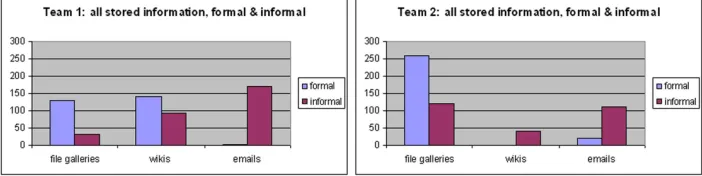
Figure 1 Information stored by both teams across file galleries, wiki pages and emails.
Greater amounts of formal information were stored by both teams in files in the file galleries. Storing of project deliverables here contributed to this. The most common occurrence of formal information types was materials information and functional information, in the top three of both teams. Team 1 also stored high instances of
developed concept information and Team 2, high instances of information on
product/user requirements. Of the lesser amounts of stored informal information in the file galleries, both teams stored greatest instances of contextual information and design rationale, in their top three. Team 1 also recorded social information (e.g. pictures of team, daily pleasantries, etc.); and Team 2, organisational informationon the team.
There was an increase in the percentage of informal information (against formal information) stored on the wiki pages compared with the file galleries by both teams. Team 2’s wikis contained mainly informal information: contextual information, social information and organisational information on task being the top three. Team 1 used wiki pages to store and share work. They had both formal (61%) and informal (39%) information on wiki pages with materials information, concepts and developed concepts
being the top three formal information types and design rationale, contextual information and communications information being the top three informal types.
The study included an analysis of emails. Each team shared and stored their emails and at interview discussed the value of information contained within emails. The teams stored high percentages of informal information (Team 1, 98%; Team 2, 85%) in their emails. Of their top three most stored information content in emails, both teams stored
actions & decisions (what they had done and why) and information on
problems/issues/questions. These constitute some of the more important informal aspects of a design project that very often do not get stored.
3.3 How was Project Information and Knowledge stored?
products, sizes; actions & decisions, discussions, concepts and developed concepts, problems, issues and questions, design rationale, procedural and functional information.
Information content stored in the file galleries by Team 1 was richest as images (68 image files; 1 text file). They reported the quickest recording method was sketching and writing which they then scanned or photographed; uploaded and shared. Team 1 noted also that, “Photos and videos of sketches and models made for good evidence...…a good snapshot of what happened.” However, video was found to be timing consuming to store and hard to extract the information from later on. Meeting minutes, stored on wiki pages, recorded key outputs of both formal and informal information. Team 2 stored 27 image files; 8 text files; 1 PPT file and 5 video files in the file galleries. Word documents, meeting minutes, reports, a presentation, scanned sketches, photos and videos were the different formats used by Team 2. Concept work was stored in meeting minutes, wiki logs and reports; and the final solution was captured as text, sketches and photos of physical models and stored in a report. Key points, questions and issues arising from meetings were minuted and stored in Word documents and uploaded to their shared workspace. Like Team 1 they noted that video was a good way of storing and sharing information but it was a time consuming activity; they preferred to use PowerPoint presentations to share both text and images.
3.4 When was Project Information and Knowledge stored?
File uploading peaked mainly around the weekly deliverables, as would be expected in a student project. High percentages of formal information were stored at the beginning of the project (40% Team 1; 82% Team 2) on e.g. market research and user requirements; and at the end (87% Team 1; 82% Team 2) on e.g. materials, components & assembly,
testing of developed concepts and the final solution. Information was stored more consistently throughout the project by UK and USA sides of Team 1 on the wiki pages, with students writing to wikis nearly every day. UK-side of Team 2 however, stored information on the wiki pages mainly at the weekly deliverables times. Email was used regularly at the beginning and heavily at the end of the project by both teams.
4 DISCUSSION
The findings are discussed below addressing the requirements of an archive or repository around the issues of information storing; systems; information storing patterns; and the development of a distributed design project information strategy.
4.1 Information storing
The information stored by the teams shows only a partial and often fragmented picture. Team 2 reported that on reflection, “…not enough information had been stored on the actual path to get to the concepts and product.” Students noted via the questionnaire that they stored less informal information than they generated, as this was time consuming to store. Opportunities to increase instances of informal information e.g.
high percentage of informal information stored in communications technologies to give added meaning and context; reduce misunderstanding and to save time locating information.
4.2 Information storing systems
Students found that there was a need for a unified central archive rather than information in several places and that not enough consideration had been given to the choice of tools to be used. They suggested tools should be established prior to the project start and selected by all team members, based on previous experience of use. Both teams noted that tools had to be simple and quick to use and that both sides of a team ought to be able to use the tools at equal skill levels. Date analysis of both file uploads and wiki interactions showed that the USA students spent considerable time familiarising themselves with the LauLima system prior to project kick-off and their lack of expertise in its use compared with UK students was apparent in the lesser amounts files and wiki interactions they stored. The teams also reported that using communication technologies alongside information storing systems worked well. They helped clarify the information stored in the repository.
4.3 Information storing patterns
Students stored files around weekly project deliverables, and information throughout the project more consistently on wiki pages. They felt they should have recorded events as they happened as information & knowledge recorded sporadically disadvantaged team decisions. However, this took time away from other design activities. Analysis of logged data evidenced asynchronous working patterns caused by a minus 8-hour time difference. The UK-side of the distributed team seemed to lead and USA-side to follow.
4.4 Developing a Distributed Project Information Strategy
The nature of design necessitates the use of a wide range of information types and content across many media types; added to this, ‘remoteness’ makes the management of distributed information even more complex. During the project both teams experienced times when information couldn’t be located as it was stored in several places; leading to confusion, duplication and difficulties in sharing. With another tool added midway, Team 2, in particular, felt they should have recorded rules for storing project information and that an information strategy at the beginning of the project would have helped clarify issues and make the project run more smoothly. A distributed project information strategy needs to outline what information to store, where, when and how.
Locational information was also crucial in identifying where information had been placed and could be found by others. Instances of this type of information were low contributing to uncertainty where information was stored. It was typically located in emails. Previous work of the author [6] and studies in industry [7] have shown the importance of structuring project information. Indeed Team 1 recognised the need for organisation and structure and its establishment early on in the project, as organised information can be turned around more effectively and efficiently. It was essential to turn around information quickly to allow others to work based on decisions made.
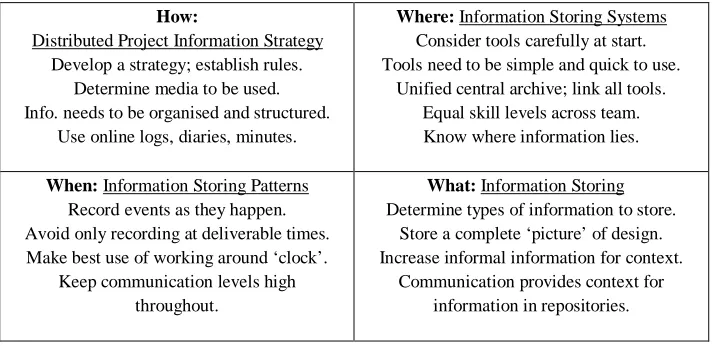
Table 1 Requirements for distributed project information
How: Distributed Project Information Strategy
Develop a strategy; establish rules. Determine media to be used. Info. needs to be organised and structured.
Use online logs, diaries, minutes.
Where: Information Storing Systems
Consider tools carefully at start. Tools need to be simple and quick to use.
Unified central archive; link all tools. Equal skill levels across team. Know where information lies.
When: Information Storing Patterns
Record events as they happen. Avoid only recording at deliverable times. Make best use of working around ‘clock’.
Keep communication levels high throughout.
What: Information Storing
Determine types of information to store. Store a complete ‘picture’ of design. Increase informal information for context.
Communication provides context for information in repositories.
5 FUTURE WORK
This study is part of educational research into the development of a framework and process model for a digital ‘Project Memory’ to support distributed student team-based project work. By examining how design engineering students store information in distributed teams the research will develop a ‘Project Memory’ to support distributed project work to promote deeper learning and better prepare students for industry.
REFERENCES
[1] Grierson, H., Ion, W., Juster, N., Project Memories: Documentation and more for Global Team Design. E&PDE conference proceedings, pp397-402, Salzburg University, 2006. [2] Gross et al, Collaboration and Coordination in Architectural Design, TeamCAD
Symposium on collaborative CAD, pp17-24, University of Washington, Seattle, 1997. [3] Available at http://onlinelearning.dmem.strath.ac.uk/laulima [Accessed 12 February 2008] [4] http://www.didet.ac.uk [Accessed 12 February 2008]
[5] Perry, M., Fruchter, R., Rosenberg, D., Co-ordinating Distributed Knowledge: an
investigation into the use of an Organisational Memory, Cognition, Technology and Work, 1999, 142-152.
[6] Grierson, H., Nicol, D., Littlejohn, A. & Wodehouse, A. Structuring and sharing information resources to support concept development and design learning. In Network Learning Conference proceedings, pp. 572–579, Lancaster University, 2004.
[7] Davies, J.G., Subrahmanian, E., Konda, S., Granger, H., Collins, M., Westerberg, A.W., Creating shared information spaces to support collaborative design work, Institute for Complex Engineered Systems, 2001.
Hilary GRIERSON DMEM
University of Strathclyde James Weir Building 75 Montrose Street Glasgow
G1 1XJ