IMPROVEMENT IN THERMAL PRINTER LINE PRODUCTION BY
USING KAIZEN METHOD.
This report submitted in accordance with requirement of the Universiti Teknikal Malaysia Melaka (UTeM) for the Bachelor Degree of Manufacturing Engineering.
by
SALEHAH BINTI SHAMSURIJAN B051410182
950119045054
DECLARATION
I hereby, declared this report entitled “Improvement in Thermal Printer Line by using Kaizen Method” is the results of my own research except as cited in reference.
Signature :
APPROVAL
This report is submitted to the Faculty of Manufacturing Engineering of Universiti Teknikal Malaysia Melaka as a partial fulfillment of the requirements for the degree of Bachelor of
Manufacturing Engineering
The members of the supervisory committee are as follow:
i
ABSTRAK
ii
ABSTRACT
iii
DEDICATION
TO MY BELOVED FAMILY,
My mom Aisah Binti Md Daud, my brothers Shaharudin, Syazwan, Nizam, my little brother Roshidi
For their support in my whole life through moral and financial.
TO MY HONOURED SUPERVISOR,
Dr Zulkeflee Bin Abdullah
For his advices, support, motivation and patience during completion of this project
TO ALL ALPS ELECTRIC ENGINEERS & STAFFS,
Miss Aminah, Mr Ishibashi, Mr Pauzi & Mr Saiful
For their cooperation and advices to complete this project
AND TO ALL MY COLLEAGUE,
Dr Ayu, Shahida, Azimah, Fatin Amira, Adila, Sofiya, Syaza, Zalikha, Ampuan, Izzuddin, Fazrin, Radhiah, Hairee, Suriatiey, Najwa Munirah, Syafikah, Nadira Najwa, Puteri Nadiah
For their encouragement, moral support, cooperation and effort in this study.
iv
ACKNOWLEDGEMENT
In the name of Allah, the most gracious and merciful God, I would like to express my grateful as I manage to complete my undergraduate project for Bachelor Degree of Manufacturing Engineering with in the time given. All thanks to Allah as only He give permission for me to complete this project.
My deep hearted appreciation goes to my supervisor Dr Zulkeflee Bin Abdullah for all his guidance, ideas, thoughts and encouragement throughout the course of this study. Grateful appreciation to all Universiti Teknikal Malaysia Melaka Grateful appreciation to all engineers and staffs at ALPS Electric Sdn Bhd for their cooperation with me through the period of time.
v
TABLE OF CONTENT
Abstrak i
Abstract ii
Dedication iii
Acknowledgement iv
Table of Content v-vii
List of Tables viii-ix
List of Figures x-xi
List of Abbreviation xii
CHAPTER 1 1
INTRODUCTION 1
1.1 Research Background. 1-2
1.2 Problem Statement 3-4
1.3 Objectives 4-5
1.4 Scopes of Research. 5
1.5 Rational Research 5
1.6 Research Methodology 6
1.7 Thesis Organization 6
1.8 Conclusion 7
CHAPTER 2 8
LITERATURE REVIEW 8
2.1 Kaizen 7-8
2.1.1 Shewhart Cycle 8-9
2.1.2 Kaizen Format 10-12
2.1.3 Benefits implementation of Kaizen. 12-13
2.1.3.1 Benefit of Kaizen mostly created in working environment. 12
2.1.3.2 Implementing Kaizen in industry or production 13
vi
2.2.1 Introduction to Additive Manufacturing. 13-14
2.2.2 General Additive Manufacturing 14-16
2.2.3Advantages and disadvantages of the additive manufacturing 17 2.2.4 Additive manufacturing industries benefit. 18
2.3 Conclusion 19
CHAPTER 3 20
METHODOLOGY 20
3.1 Introduction 20
3.2.1 Implementation of Kaizen in Designing Product. 21
3.2 Flowchart 21
3.3 Proposed Design 23
3.3.1 Tray. 22
3.3.1.1 Quality Functional Deployment (QFD) for tray 22-25 3.3.1.2 House of Quality (HoQ) for tray 26-27 3.3.1.3 Analytical Hierarchy Process (AHP) for tray. 28-31
3.3.2 Slider. 31
3.3.2.1 Quality Functional Deployment (QFD) for slider 31-34
3.3.2.2: House of Quality (HoQ) for slider 34-35
3.3.2.3: Analytical Hierarchy Process (AHP) for slider 36-39
3.4 Conclusion 40
CHAPTER 4 41
RESULT AND DISCUSSION 41
4.1 Cycle time result after installation of new tray and new motor slider. 41 4.2 Figure before and after installation 47
4.3 Conclusion 48
CHAPTER 5 49
CONCLUSION AND RECOMMENDATION 49
5.1 Conclusion 49
vii
REFERENCES 51-54
APPENDICES
viii
LIST OF TABLES
Table 2.1: Example problem identify (Resource from ALPS Electric Sdn Bhd). 12 Table 2.2: Therblig symbols (google 12 Table 2.3: 5W and 1H (ALPS Electric Sdn Bhd) 13 Table 2.4: Compare cycle time each of process (ALPS Electric Sdn Bhd) 13 Table 2.5: Advantages (Ford, 2016) and disadvantages (Seepersad, 2012) 18 Table 2.6: Benefits of AM in industries 19
ix
Table 3.20: Features and benefits for operators’ requirements. 31 Table 3.21: Classification the criterion 33 Table 3.22: Sum up of criterion’s quality number 33 Table 3.23: Priority Factor (PF) for criterion 34 Table 3.24: PF for operators’ requirement 34 Table 3.25: Important weight of operators’ requirement 35 Table 3.26: Proposed two conceptual slider design 37 Table 3.27: PF for A store motor safely 38 Table 3.28: Sum and PF for A criterion. 38 Table 3.29: PF for B Reduce fingertips 38 Table 3.30: Sum and PF for B criterion. 38 Table 3.31: PF for C Easily pick up motor 39 Table 3.32: Sum and PF for C criterion 39 Table 3.33: PF for D Motor slider properly 39 Table 3.34: Sum and PF for D criterion 39 Table 3.35: PF for E Good appearance 39 Table 3.36: Sum and PF for E criterion 39 Table 3.37: PF for all criterion of conceptual slider 40 Table 3.38: Total PF of Criterion and PF from operators’ requirements 40
x
LIST OF FIGURES
Figure 1.1: Additive Manufacturing worldwide revenue 2 Figure 1.2: Initial research model 3
Figure 2.1: Shewhart Cycle 9
Figure 2.2: Example graph cycle time vs assembly 10 Figure 2.3: General overview of current research materials in the 4.0 era. 14 Figure 2.4 : Eight generic steps of AM process. 15
Figure 3.1: Flowchart of FYP 1 and FYP 2 21
Figure 3.2: Weight Marking 26
Figure 3.3: HoQ for conceptual tray 28 Figure 3.4: Conceptual Design 1 (CD 1) 29 Figure 3.5: Conceptual Design 2 (CD 2) 29 Figure 3.6: Selection best conceptual design of tray by using AHP. 30
Figure 3.7: Weight Marking 34
Figure 3.8: HoQ for conceptual slider 36 Figure 3.9: Conceptual design 1 (CD 1) 37 Figure 3.10: Conceptual Design 2 (CD 2) 37 Figure 3.11: Selection best conceptual design of tray by using AHP. 38
Figure 4.1: Cycle time thermal printer line for latest month (March to April 42 Figure 4.2: Original tray with no part. 44
Figure 4.3: Original tray 44
xi
xii
LIST OF ABBREVIATION
SME Small Enterprise Manufacturing AM Additive Manufacturing
3D Three Dimensional RP Rapid Prototyping CAD Computer Aided Design FYP 1 Final Year Project One QFD Quality Function Deployment HoQ House of Quality
AHP Analytical Hierarchy Process FYP 2 Final Year Project Two STL Stereolithographic
CI Continuous Improvement’ CNC Computer Numerical Control
ASCII American Standard Code for Information Interchange Assy 3 Assembly Three
Assy 4 Assembly Four Assy 5 Assembly Five PLA Polylactic Acid PF Priority Factor
CD 1 Conceptual Design One CD 2 Conceptual Design Two TCT Target Cycle Time LCT Longest Cycle Time
1
CHAPTER 1
INTRODUCTION
Continuous improvement on production line based on Kaizen method is no longer a new thing to industry of manufacturing. The worldwide take this opportunity to improve the productivity in the company and gain profit. Besides that, Kaizen is one of an approach to reduce all the waste and losses of production.
1.1 Research Background.
Nowadays, most of manufacturing industry more focus on improving the production performance in the term of productivity output in order to survive in a competitive market (Azizi, 2015). A case study is conduct of a company in Pahang, Malaysia start on 10 February 2018. The company is a Japanese company, but is led by a local director. This company manufactures semiconductor products and supply in all around the world. This company wants to improve the productivity of the thermal printer line. The production of thermal printer line production has remained the same for past three years. Therefore, this company wants to improve the production line by applying the Kaizen method.
2
best solution for better improvement in the standard way of work through benchmarking. (Maarof & Mahmud, 2016)
[image:17.612.120.506.420.682.2]Additive Manufacturing (AM) is also known 3D (three dimensional) or Rapid Prototyping (RP) is used to conduct this case study. The term of AM is referring to the advanced technology or an additive process depicts the growing of AM recently. RP also is known as a quick process to create a model or prototype and mostly have a very good surface finish. This finish good create a lot of benefit to all manufactures industry. It prevents the repetitive work and save a lot of cost and time. For the last few years, most of the manufacturing industry embraces this AM technologies to enjoy a lot of benefits from the investment of buying the RP machine and install into the company. By comparing this technology to the traditional manufacturing one, this AM have advantages because the old one create a lot of inventory and waste a lot of time. By rework. Approachable of this AM growing robustly the business market in manufacture industry (Attaran, 2017).
3 1.2 Problem Statement
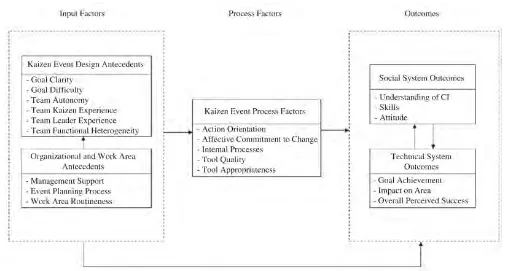
[image:18.612.66.572.335.606.2]According to (Maarof & Mahmud, 2016), there are a limited number of study and implementation of Kaizen in Malaysian industry. A study had found that, there’s a lot of challenges to implement Kaizen such as confusion in order to maintain the continuous improvement and dealing with immature worker. Several organizations faced failure during implement the Kaizen especially to motivate the worker to involve and participate in Kaizen activity. In addition, Kaizen activity provides a tiny reward or compensation. Lack of training in the proper way and lack of good understanding about Kaizen are the biggest challenge to implement Kaizen in certain industries.
Figure 1.2: Initial research model (Farris, Aken, Doolen, & Worley, 2009).
4
began to realize that by implementing Kaizen a lot of advantages can be gained if the worker really work with endless effort in an organization (Boca, 2011). Most of SME in developing country start too aware about Kaizen because the economist had recognized the managerial capital is one of the factor associate with the enterprise productivity, development, growth and longevity. (Fujishima, Mori, Nishimura, & Ohno, 2017).
Alps Electric Sdn Bhd in Jengka Pahang Malaysia has requested to design a new finger friendly, tray and motor slider since the original tray and motor cases has a lot of problem with storing the production line of thermal printer components. The major purpose of designing a new tray and new motor slider is to prevent operators’ take more than one part and fingertips stuck respectively. Besides, to improve the comfortability in the working environment of operator at once. The original tray did not have the criteria of finger friendly. The operator always mistaken to take more than one component at one time to assemble process of thermal printer. The operator has to put the excess part back to the original tray. That’s the main problem which it’s led to waste time by increasing the cycle time. Other than that, operators in thermal printer have multitasking work. Sometimes replacement the other operator work whenever the other operator an off day or have a break time. The operator has different size of fingertips. In order to help the other operator, stuck up fingertips on the original motor cases during process of assemble occur. Hence, the company takes an approach by request a new design of motor sliding.
1.3 Objectives
The objectives of this study are as follow:
i. To study the implementation of the Kaizen method in Malaysia industry. ii. To apply the Kaizen method to improve the thermal printer production line.
5
iv. To design a new motor slider that help solve operator’s problem regarding fingertips access.
1.4 Scopes of Research.
The scopes of this research as follows.
i. Applying key selection techniques and method that related to concurrent engineering process in Kaizen.
ii. Design the conceptual tray and design in Computer Aided Design (CAD) via Solidwork software.
iii. Produce the new design of tray and new design of motor slider prototype using 3D printer model ANCUBIC 13 MEGA.
1.5 Rational Research
The rational of this research is as follows.
i. There are a limited number of studies of the implementation Kaizen method in Malaysia industry. The purpose this research is to multiply the number of studies about the implementation Kaizen method in Malaysia industry.
ii. Specific information and deep understanding about the additive manufacturing such as 3D printing or Rapid Prototyping. Gather all the useful information about additive manufacturing.
iii. Key selection techniques related to concurrent engineering process to choose the best conceptual design. Counted every demand criterion by operators.
6 1.6 Research Methodology
In Final Year Project One (FYP 1) the research have 5 parts. The first part are finding and collecting data about Kaizen method and Additive Manufacturing (AM) in literature review. The second part is proposing two conceptual design that meet the demand of operators. Third part is analyzing both conceptual design in Quality Function Deployment (QFD), House of Quality (HoQ) and Analytical Hierarchy Process (AHP). The fourth part is selecting the best conceptual design that fulfilled operators demand criterion. Finally start writing the report for FYP 1.
In Final Year Project Two (FYP 2), the research have 7 parts. The first part is designing the best selected design in Solidwork. The second part is converting from CAD software to stereolithographic (STL) file and print the design by using 3D printer. The third part is do the finishing to ensure the prototype have a good surface finish. The fourth part is installing the pat into the production line. The fifth part is recording the cycle time of assembly process and obtain the data. The sixth part is analyzing the result, discuss and compare to the previous cycle time. Finally start to write the report for FYP 2.
1.7 Thesis Organization
7 1.8 Conclusion
8
CHAPTER 2
LITERATURE REVIEWThis chapter has mainly described the theory and research which have been defined and done by different researchers in previous years. Related information of previous studies are extracted as references and discussion based on their exploration about Kaizen in production of industries.
2.1 Kaizen
Kaizen is popular among Western and Asian companies. It is a compound word involving two concepts: Kai (change) and Zen (for the better). The Japanese terms come from Gemba Kaizen meaning ‘Continuous Improvement’ (CI). Kaizen philosophy is broadly used by large industrial companies for the excellent of the production. It’s an endless effort for improvement and makes everyone in the organization involved. (Singh & Singh, 2009).
9
Mostly company can be a constraint bankrupt by forceful contenders who have found an outside potential and abused this as a characteristic shortcoming in its objective organization. Plainly, survival and development also depends on how CI is coordinated towards essential business elements as the outside dangers and conceivable outcomes. Even if CI has been widely recognized for decades, CI still face many challenges. Even several of them still remain stable over years. (Hoem & Lodgaard, 2016).
In Malaysia economy, implementation among Small Company Enterprise (SME) is one of the major contribution development. The majority business entity in Malaysia was contributed by SME. According to (Maarof & Mahmud, 2016), average from 2010 to 2013 SMEs, more than 55 percent job opportunity was provided to Malaysian workforce. This condition shows a promising development of openings for work to be offered by the SMEs in Malaysia that could enable the Malaysian government to decrease the joblessness to rate in the nation. The implementation of Kaizen can be done through a cycle of Kaizen activity, also known as Shewhart Cycle.
2.1.1 Shewhart Cycle