This is a repository copy of
Regulatory Challenges of Nuclear Decommissioning projects
and programmes from the viewpoint of project management
.
White Rose Research Online URL for this paper:
http://eprints.whiterose.ac.uk/141868/
Version: Accepted Version
Proceedings Paper:
Invernizzi, DC orcid.org/0000-0001-8178-9557, Asahara, A, Locatelli, G
orcid.org/0000-0001-9986-2249 et al. (1 more author) (2019) Regulatory Challenges of
Nuclear Decommissioning projects and programmes from the viewpoint of project
management. In: Proceedings of ICONE27. 27th International Conference on Nuclear
Engineering (ICONE27), 19-24 May 2019, Tsukuba, Japan. Japan Society of Mechanical
Engineers .
© 2019, Japan Society of Mechanical Engineers. This is an author produced version of a
conference paper published in Proceedings of ICONE27. Uploaded in accordance with the
publisher's self-archiving policy.
[email protected] https://eprints.whiterose.ac.uk/ Reuse
Items deposited in White Rose Research Online are protected by copyright, with all rights reserved unless indicated otherwise. They may be downloaded and/or printed for private study, or other acts as permitted by national copyright laws. The publisher or other rights holders may allow further reproduction and re-use of the full text version. This is indicated by the licence information on the White Rose Research Online record for the item.
Takedown
If you consider content in White Rose Research Online to be in breach of UK law, please notify us by
Copyright © 2018-2019 by JSME
Proceedings of ICONE-27 27th International Conference on Nuclear Engineering May 19-24, 2019, Ibaraki, Japan
ICONE27-1827(DRAFT)
REGULATORY CHALLENGES OF NUCLEAR DECOMMISSIONING PROJECTS AND
PROGRAMMES FROM THE VIEWPOINT OF PROJECT MANAGEMENT
Diletta Colette Invernizzi
University of Leeds, School of Civil Engineering Leeds, United Kingdom
Akira Asahara
University of Fukui, Graduate School of Engineering, Fukui, Japan
Dr Giorgio Locatelli
University of Leeds, School of Civil Engineering Leeds, United Kingdom
Prof Satoshi Yanagihara
University of Fukui, Research Institute of Nuclear Engineering, Fukui, Japan
Keywords: Nuclear decommissioning; Regulatory Challenges; Joint Convention; Asbestos; Project Management
ABSTRACT
Nuclear Decommissioning Projects and Programmes (NDPs) are a growing, multidisciplinary challenge. NDPs often suffer from cost overruns, and there is a limited understanding of why such overrun happens. Moreover, there is a limited investigation on NDPs from the project management perspective. Previous studies identified that the challenges related to laws and regulations are relevant factors affecting the NDP performance in terms of cost and time. Therefore, this paper aims to investigate the NDP regulatory-related challenges from the project management perspective. Hence, firstly, the NDP characteristics that affect NDP performance according to experienced practitioners are collected through semi-structured interviews and analysed through content analysis. Then, thematic analysis is performed to investigate and classify the regulation-related challenges of NDPs. Finally, as an example, this paper focuses on the
challenge of asbestos in NDPs, discussing the interviewees’
answers on this topic, as well as systematically
cross-comparing the national reports for the “Joint Convention on
the Safety of Spent Fuel Management and on the Safety of
Radioactive Waste Management” review meetings.
1. INTRODUCTION
Historically, the nuclear sector has mostly focused on the planning, design and construction of nuclear facilities. However, globally, more and more nuclear facilities are reaching the end-of-life and will soon need to be
1
Site area: “geographical area that contains an authorized facility, authorized activity or source, and within which the management of the authorized facility or authorized activity may directly initiate emergency actions […] (IAEA 2006, p.22)
decommissioned.
Nuclear decommissioning is defined by the International Atomic Energy Agency (IAEA 2006, p.31-32) as the
“Administrative and technical actions taken to allow the removal of some or all of the regulatory controls from a facility (except for a repository or for certain nuclear facilities used for the disposal of residues from the mining and processing of
radioactive material, which are ‘closed’ and not ‘decommissioned’) […]”.
In this research, the unit of analysis is European Nuclear Decommissioning Projects and Programmes (NDPs), intended as site-level endeavours to remove the regulatory control from a site area1 where nuclear facilities2 lay.
This unit of analysis is selected because of the number, availability, and reliability of public information about NDPs released at a site-level. So, for example, the evolution of the estimates at completion for several ongoing European NDPs are provided at a site level by the UK Nuclear Decommissioning Authority (NDA 2017)(NDA 2016)(NDA 2015) and the French Court of Audit (CdC 2014)(CdC 2012).
Moreover, this research is restricted to commercial European NDPs, i.e. it excludes military and research facilities, limiting the geographical boundaries to Europe because of the greater homogeneity in the regulations governing nuclear (for instance, compared to US NDPs).
NDPs are often complex, long and expensive endeavours characterized by multidisciplinary activities and several interrelated challenges. These challenges include:
2 Facilities and activities: “A general term encompassing nuclear
Copyright © 2018-2019 by JSME
Technical challenges, for instance related to the management of radioactive material that arise during decommissioning and the high volumes to be lifted and transported;
Economic and financial challenges, as decommissioning cost can be high and keep increasing, and often the funding allocated is not sufficient (see for example the case of Lithuania, Bulgaria and Slovakia (European Court of Auditors 2016));
Social and ethical challenges, for example during the transition between operations and decommissioning, as the employees take part in the “removal” of their own source of jobs, but also because NDPs rises intergenerational concerns as long-term liabilities have to be dealt with, while the benefits provided by the nuclear infrastructure were exploited by past generations (Invernizzi et al. 2017; Taebi et al. 2012);
Environmental challenges, especially when the NDP includes the restorations to previous conditions of the site. This condition is sometimes hard to reach, especially in cases where the accidental release of radioactive materials into the environment occurred;
Regulatory-related challenges, as regulations might become stricter with time, and are sometimes still misunderstood or misinterpreted by operators.
These challenges have to be managed to ultimately achieve the reduction or removal of the regulatory controls of a facility during its decommissioning.
Not only NDPs are complex, long and expensive, but for several of these projects, the cost estimates keep increasing and there is only a limited understanding of the reasons why this happens.
One exemplary case of these cost increase (often loosely
termed “cost overruns” (Invernizzi et al. 2018)) is Sellafield
NDP, in the UK. Sellafield is a 6 site that hosts around 1,400 buildings, of which 240 are nuclear facilities (NAO 2015, 2018). Sellafield currently includes two operational nuclear fuel reprocessing plants, waste treatment and storage plants, legacy storage ponds and silos for nuclear waste material (NAO 2015, 2018). Sellafield was also the site of the worst nuclear accident in UK history (ranked in severity at level 5 of the7-point on the International Nuclear Event Scale (INES), which occurred in 1957, where the three-day fire ended up contaminating the interior of the Windscale Pile 1 (Ervin 2008) and still raises discussions (Wakeford 2007). Sellafield is currently owned by the NDA, whose purpose is to deliver the decommissioning and clean-up of the UK’s civil nuclear
legacy. The NDA published the UK “discounted nuclear
provisions” in 2005 (NDA 2006, p.72-73), estimating
Sellafield’s decommissioning costs to be £14.9bn, while
current “decommissioning and clean-up costs” currently reach
more than £160bn (NDA 2018, p.6). Similarly, many other NDPs are suffering from cost increase (sometimes loosely termed “cost overruns”), as exemplified in (Invernizzi et al. 2019).
The limited understanding of what causes these cost increase might be because the number of completed NDPs is still extremely small compared to the construction of new nuclear infrastructure, and therefore the knowledge in building and operating nuclear facilities has been developed for decades, while decommissioning is a more recent challenge. Indeed,
only 16 of the nearly 150 civilian nuclear power reactors that have ceased operation have undergone complete decommissioning (OECD/NEA 2016, p.3). This is a negligible number, especially if compared to the 454 nuclear power reactors currently in operations (IAEA 2018a). Hence, more and more nuclear facilities will have to be decommissioned in the near future for a range of reasons (including safety, security, ethical, moral and regulatory-related ones). So, there is an urgent need to understand why cost estimates keep increasing.
Nevertheless, most of the scientific research on “nuclear decommissioning” focuses on the “hard” science, (e.g.
investigating chemical and radiological aspects), while the scientific research on project management aspects is still very limited. Additionally, even though laws and regulations are relevant to project management, NDP regulatory-related aspects are also underinvestigated (see section 2). However, the nuclear sector is strongly regulated and previous studies on NDPs highlighted the challenges related to laws and regulations during decommissioning are relevant factors affecting the NDP performance.
Hence, acknowledging the increasing importance of investigating NDPs from the project management perspective, this paper aims to:
i. Identify the NDP characteristics that impact on the NDP cost and time performance from the project management perspective;
ii. Classify the challenges faced by NDPs related to regulations;
iii. As a meaningful example, discuss one regulatory-related challenge that affects the NDP performance, i.e. the case of asbestos.
To achieve these aims, section 2 illustrates the theoretical background of this research, while section 3 describes the research methodology, both in terms of data collection and analysis. Findings are then discussed in light of previous knowledge in section 4, which also elaborates on future research. Finally, section 5 concludes the paper.
2. REVIEW OF THE LITERATURE
This paper bridges the gap between the world of “project management” and the world of “laws and regulations” in the industrial sector of “nuclear decommissioning”. Therefore,
authors surveyed the literature by searching relevant keywords in Scopus (www.scopus.com).
The keywords of this research are: “nuclear
decommissioning”, “project management”, “law”,
“regulation” and “cost”. Moreover, the keyword “asbestos” is
included in the search, as this is the emerging regulatory-related NDP challenge that this research focuses on.
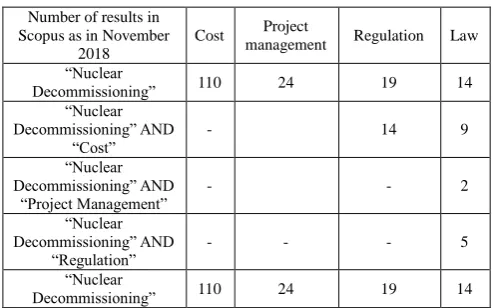
Table 1 is to be read connecting the words in the first column with the ones in the other columns, so for example:
“Nuclear decommissioning” AND “cost” provide 110 results, while “nuclear decommissioning” AND “cost” AND “project
management” highlight 14 results. Table 1, reporting the
number of results in Scopus as in November 2018, shows that there has been only very limited attempt to consolidate the abovementioned topics, and that for the case of “nuclear
decommissioning” and “asbestos” no results are available at
Copyright © 2018-2019 by JSME
2.1 Nuclear decommissioning and project management
The search of the literature using Scopus showed the limited attention posed by academics on nuclear decommissioning and project management of NDPs. In fact, the search in Scopus of scientific papers on the topic of nuclear decommissioning reveals 445 publications (as in November 2018), but the number drops to 24 when the key word “project management” is added. This bibliometric analysis highlights the limited attention that has been put on NDP by the project management academic community.
Outside the documents indexed by Scopus there are relevant practitioners and policy-based publications in which some data and information about project management NDPs are also available. These include reports published by international organizations, such as the International Atomic Energy Agency (IAEA/OCED-NEA 2017; IAEA 2011), the OECD/Nuclear Energy Agency (NEA) (OECD/NEA 2012, 2015, 2016), the European Commission (EC 2018), the European Court of Auditors reports (2016; 2011) and others (such as the Öko-Institut report (2013), the reports by the UK National Audit Office (NAO 2012, 2015, 2018), etc.). These practitioners and policy-based publications on nuclear decommissioning have been recently flourishing and consist of some of the most relevant sources of information to understand the NDP context and the NDP characteristics that affect the NDP performance.
2.2 Nuclear decommissioning, nuclear laws and regulations
Nuclear law refers to “the body of special legal norms
created to regulate the conduct of legal or natural persons engaged in activities related to fissionable materials, ionizing radiation and exposure to natural sources of radiation” (IAEA 2003, p.4). Nuclear law fits in the legal hierarchy of most States of several levels (IAEA 2003, p.3-4):
The constitutional level, which establishes the basic institutional and legal structure governing all relationships in the State;
the statutory level, at which specific laws are enacted by a parliament in order to establish other necessary bodies and to adopt measures relating to activities affecting national interests;
regulations, which are often highly technical rules to control or regulate activities and are typically developed by regulatory authorities, which are empowered to oversee specific areas of national interest (in accordance with the national legal framework);
non-mandatory guidance instruments, which contain recommendations designed to assist persons and organizations in meeting the legal requirements. Similarly to the case of nuclear decommissioning and project management, the scientific literature that addresses nuclear decommissioning laws and regulations is extremely limited. This is valid not only when focusing on nuclear facilities, but also for generic energy infrastructure (Heffron 2018, p.189). Heffron (2018, p.189) also explains that this is due to the fact that never before society had to face the
problem of “redundant infrastructure”, i.e. energy
infrastructure that has reached its end of life and needs to be decommissioned. At the same time, it is also necessary for energy law to have frameworks, systems and theories for how an energy law academic or professional should think (Heffron
and Talus 2016).
Decommissioning is a new, global, growing challenge that needs to be urgently dealt with, also from the regulatory-perspective. Indeed, even though the nuclear sector is more advanced than others to what concern the regulatory framework on decommissioning (Heffron 2018, p.191), there is still only limited scientific interest and contribution to this areas (see Table 1), and only limited and very recent publications explore regulatory-related aspects of nuclear decommissioning (Handrlica 2018; Mauger 2018; Paim and Yang 2018).
Concerning non-scientific publications on nuclear decommissioning, the number and length and complexity of the available regulatory-related publications can be overwhelming, especially for non-specialists. For instance,
the IAEA gives access to the “Compendium of Legal Instrument”, which embraces a very long list of publications
on topics that range from nuclear safety, security, safeguard, etc. (IAEA 2018b). In this list, more than one publication discusses nuclear decommissioning and waste management, without any of these documents having “decommissioning” specifically in their title. The only document specifically referring to spent fuel and radioactive waste is the Joint Convention on the Safety of Spent Fuel Management and on the Safety of Radioactive Waste Management (JC).
The JC is the first IAEA international treaty that specifically addresses radioactive waste management on a global scale, and it entered in force in 2001. Article 29-37 of the JC discuss the meetings of the contracting parties. Until now, six review meetings have already been held, respectively in 2003, 2006, 2009, 2012, 2015, and 2018, the national summary reports are available on the IAEA official website (IAEA 2018c). Moreover, three extraordinary meetings held in 2005, 2014 and 2017 (Drillat 2018, p.22). A summary report is produced for each review meeting and it is available online (IAEA 2018c). In addition, numerous contracting parties made public their national reports, which need to address the measures taken to implement each of the obligations of the JC. Hence, this documentation is fundamental to achieve the third aim of this research.
2.3 Nuclear decommissioning and asbestos
Asbestos is the name of a family of naturally occurring minerals. Although its use has been banned since the early nineties for its impact on human health, that consist of silicates and varying amounts of aluminium, calcium, iron, magnesium, manganese, potassium and sodium (IAEA 2006b, p.38-39). Asbestos “is only a concern when the fibres become airborne, because it is only when the fibres are present in the air that people can inhale them”, which can cause asbestosis, lung cancer, mesothelioma and other cancers (IAEA 2006b, p.40). Asbestos was used in many nuclear and non-nuclear facilities dating built in the 1960s or earlier, and for these facilities, is a commonly identified problem (IAEA 2016a, p.17). For example, reactor pressure vessels and containment buildings were insulated with material containing asbestos (IAEA 2006b, p.39).
Similar to “project management” and “laws and
regulations”, “asbestos” has also received limited attention by
academics. In fact, Table 1 highlights that no scientific
Copyright © 2018-2019 by JSME
management” AND “asbestos”3, underlines the dearth of
literature on these topics, as only one publication emerge. This publication discusses a system which detects the level and nature of radioactivity as well as the presence of hazardous material, including asbestos, which significantly influence whether the waste can be reused (Wareing 2011).
Conversely, some practitioners and policy-based international publications also pointed out the challenges of
asbestos. One example is the IAEA publication “Management
of Problematic Waste and Material Generated during the
Decommissioning of Nuclear Facilities”, which dedicates a
sub-chapter to asbestos in the context of decommissioning highlighting the typical hazards related to asbestos and specifying that there is no possibility for recovery or reuse of asbestos (IAEA 2006b, p.40). Another example is the IAEA
report “Managing the Unexpected in Decommissioning”
(IAEA 2016) which briefly introduces a case of material that was not checked for asbestos before cutting (IAEA 2016a, p.66), a case of incorrectly documented asbestos wrapping (IAEA 2016a, p.67) and asbestos found in unexpected places such as at off-site facilities and in seals and insulation (IAEA 2016a, p.74).
In 2005, Downey & Timmons (2005) focused on the UK legacy asbestos and explained that a number of legislative changes have been introduced in Europe which have resulted
in landfill disposal being “increasingly unavailable for some
types of waste and more expensive for the wastes which re still accepted” (Downey & Timmons 2005, p.2). Specifically referring to asbestos, Downey & Timmons (2005) list four
main “legislative event”, i.e. the EU Directive 96/61, the EU
Directive 99/31, the Pollution and Prevention and Control Act 1999 and Landfill (England and Wales) Regulations 2002 (i.e. a set of regulations implementing EU Directive 99/31 which came into effect in 2004). Moreover, the authors state that “as a result of EU Directive 99/31, a number of EU tats have introduced legislation which paves the way for landfilling of
asbestos to be banned […]”(Downey & Timmons 2005, p.2).
These authors continue by explaining that, as a consequence of the EU Directive 99/31, the number of UK landfills that accepted asbestos waste reduced from around 270 to less than 20, which caused the cost of disposal of such waste to
“literally double overnight” (Downey & Timmons 2005, p.3).
In the UK, the Control of Asbestos Regulations came into force in April 2012, updating previous asbestos regulations in
order to “take account of the European Commission's view
that the UK had not fully implemented the EU Directive on exposure to asbestos (Directive 2009/148/EC)” (HSE 2018). The UK official Health and Safety Executive (HSE) website also explains changes that occurred in asbestos regulations in 2012, highlighting that the main changes referred to additional requirements for some types of non-licensed work with asbestos. The UK Health & Safety Laboratory also
prepared “The Great Britain Asbestos Survey 1971-2005”,
discussing the “Mortality of workers listed on the Great
Britain Asbestosis or Mesothelioma Registers” (Harding
2010), without specifically focusing on the nuclear industry. This is extremely interesting as it suggests that challenges might emerge in the presence of overlapping regulations, such as the ones related to safety, environment and nuclear laws
3 Exact query in Scopus (as in November 2018): “nuclear waste management” AND “asbestos”
and regulations.
Concerning the nuclear decommissioning effort in the UK, Sellafield is, once again, an exemplary case. Indeed, major asbestos removal projects have been completed or are ongoing in Sellafield. For example, in May 2010, a major asbestos removal project was completed and, in five years, 2300 tonnes of asbestos cladding was removed (PE 2015), while in 2017 (Sellafield Ltd 2017, p.21) reported the beginning of another asbestos removal project, that is expected to remove 250 tonnes of asbestos from two buildings. This might raise the question regarding whether also other NDPs suffer from similar asbestos-related challenges.
Discussion on challenges of asbestos-containing waste can be found outside nuclear industry. For instance, Paglietti et al. (2016) proposed a classification for asbestos-containing products, starting from the identification of the physical state of these products. Paglietti et al. (2016) also emphasize that changes in the regulations about asbestos occurred in 2001 and 2006, and, focusing on the Italian case, the authors stress
the “legislative gaps that are making it difficult to manage
related risks especially in the operative phase during remediation activities” (2016, p.40). Li et al. (2014) focus on the Asian-Pacific region and select 13 countries that consumed more than half of the global quantity of asbestos in 2011 alone, predict the amount of asbestos containing waste that would be generated until 2022, while also introducing regulatory-related challenges. Li et al. (2014, p.224) also call for better information exchange and multilateral cooperation.
In summary, the literature review highlighted only limited research on asbestos-related challenges in NDPs. Therefore, in order to clarify such challenges, the primary data and information are collected from semi-structured interviews (see section 4.2). At the same time, the authors investigate the awareness of the international community concerning such challenges and discuss why limited attention has been paid to them.
3. METHODOLOGY
The methodological approach for this study needs to cope with the challenges of research in the nuclear decommissioning sector. Hence, the data collection started with a literature review of secondary data and information (i.e. existing data and information not collected by the authors, such as the ones summarized in section 2). The secondary data and information were complemented with primary ones to make explicit the knowledge of experienced practitioners, as explained in section 3.1. Then, the author conducted thematic analysis on the interviewees’ answers concerning laws and regulations that affect NDPs, in order to shed light on and provide classification of regulatory related challenges (see section 3.2). Finally, based on the above, an investigation of the awareness of the international community concerning the challenge of asbestos in NDPs is performed (as explained in section 3.3).
3.1 Step 1 – data collection
Copyright © 2018-2019 by JSME management perspective (i.e. the first aim of this research),
consists of a systematic literature review. However, this body of literature has the following limitations, including:
The predominant emphasis on the cost-related aspects, while limited attention is put to the time-related performance (e.g. see (OECD/NEA 2016)), although time and cost performance are often closely related;
The effort put on cost estimation, i.e. a “prediction” of the
future costs, rather than a reflective analysis on actual
performance (e.g. the question “why are NDPs so often suffering from cost overruns?” is often overlooked);
To tackle these limitations, the author decided to collect primary data and information using semi-structured interviews with experienced practitioners, as explained in the following sections.
3.1.1 Collection of primary data and information
Semi-structured interviews were selected as data collection technique because of the richness of the information they provide and were based on a questionnaire built specifically for this purpose. The questionnaire contained both open and closed questions. The only open question anticipated all the
others and read as follows: “In your opinion, which NDP
characteristics mostly impact on the NDP performance in term of cost and time?”. This first question was asked to let the tacit knowledge of practitioners emerge, without suggesting any preconceived answer. The closed-questions followed the open-question.
The combination of open and closed questions, and the subsequent application of directed content analysis allows gaining direct information from participants. Moreover, it also allows to purposely interrogating the participants of the study on topics emerging in pre-existing beliefs and theories (Hsieh and Shannon 2005). Indeed, as in other comparable studies (such as (Ahiaga-dagbui et al. 2017)), the authors asked follow-up questions to clarify the interviewees’ comments during the interviews.
Purposive sampling was used to select the interviewees (Palinkas et al. 2015). (Invernizzi et al. 2019) presents 29 ongoing European NDP, where the information on the evolution of the estimate at completion is publically available from reliable sources, and therefore the assessment of the NDP performance in terms of cost is transparent, and there is no need to ask the interviewees’ on the NDP cost performance (which they would feel is a commercially sensitive information4). Hence, interviewees were selected primarily
according to their involvement on at least one of the selected NDPs, and at least one person with experience on one of the NDP was interviewed. Moreover, NDP experts from Sweden, Finland, Switzerland and the Netherlands were also interviewed for completeness. All the interviewees were selected according to their seniority and their role in the organization, i.e. interviewees in managerial positions were preferred: 82 % of the interviewees had more than 10 years in the industry; 12% covered various roles in different organizations in the industry (i.e. not only managerial roles). Ultimately, interviewees included senior project and
4 Information about NDP time performance are unfortunately virtually absent and not even international publication that discuss
programme managers, programme enablers, head of projects, project leaders, managing directors, one head of prospective and international development, and one senior auditor of the European Court of Auditors. In total, a number of 35 interviews have been performed, covering the following countries: UK, France, Italy, Spain, Germany, Lithuania, Bulgaria, Slovakia, Sweden, Finland, Switzerland and the Netherlands.
The questionnaire was sent to the respondents at the same time of the invitation to participate in the research. The respondents were not required to answer the questions in a written form, but they were given the possibility to read the questions in advance. In this way, the interviewees were given time to decide if they wanted to participate in the study or not. Of the 35 respondents, three preferred to email the completed questionnaire before the oral conversation, and in two of these cases a follow-up conversation was arranged to comment the answers orally. Two conversations took place in person, while the remaining conversations took place via phone or Skype. One of the authors is fluent in 3 languages: English, French and Italian, so the interviewees were given the possibility to choose one of these languages. Ultimately, two interviews were performed in French, four interviews in Italian, and the rest in English. All the interviewees were granted anonymization. When permission for recording was granted, the interviews were recorded, and the conversation was transcribed. Extensive notes were also taken by the interviewee during the interviews, which resulted fundamental especially when the permission to record was not granted by the interviewee (only one case). The interviews were forecasted to last 30 to 40 minutes, but eight interviews lasted more than one hour, which was due to the eagerness of some of the interviewees to provide more detailed answers. The average duration of the interviews was 45 minutes.
3.1.2 Content analysis on primary data and information
All the interviews were transcribed by the interviewee (i.e. one of the authors). Transcriptions are theoretical constructs
and not necessarily “holistic” representations of data and that there is a need to reconcile “how” data are constructed with
“what” topics are being discussed (Roulston 2010). This is
addressed in an initial systematic categorization of the information provided by the interviewees in NVIVO11, a data analysis software that supports qualitative and mixed methods research. The initial categorization was then refined in several iterations to finalize the coding for the data analysis (as described below), following (Olawale and Sun 2015).
Dixon-Woods et al. (2005) provide a critical overview of possible methods to synthesize qualitative and quantitative evidence. One is content analysis (Dixon-Woods et al. 2005, p.49). Qualitative content analysis aims to preserve the advantages of quantitative content analysis applying, and, at the same time, a more qualitative text interpretation (Kohlbacher 2006). According to Hsieh & Shannon (2005),the qualitative content analysis is further clustered into three different main approaches: the conventional, the directed and the summative approach. In the analysis of the semi-structured
Copyright © 2018-2019 by JSME interviews, directed content analysis (Dixon-Woods et al. 2005,
p.49-50) is selected and applied, and the final coding is achieved through an iterative and inductive process of analysing the information collected, broadly following the process described by (Elo and Kyngäs 2008). More specifically, the preparation and analysis of data followed the recommendation by (DiCicco-bloom and Crabtree 2006; Mclellan-Lemal and Macqueen 2003; Olawale and Sun 2015) and followed the seven steps below:
1. Browse through the transcripts 2. Note the first impression
3. Re-read the transcript and label relevant pieces 4. Preliminary coding based on the literature reviewed 5. Discussion with colleagues regarding the coding and its
hierarchy 6. Final coding
7. Analysis of the information collected and coded
Coding (in step 4, 5 and 6) can consist of data reduction and simplification, but also expansion, transformation and conceptualization (DeCuir-gu and Mcculloch 2011), so the discussion with colleagues was fundamental in the process of analysing the semi-structured interviews and operationalizing the codes. Empirical findings of the content analysis are presented in section 4.2.
3.2 Step 2 – thematic analysis on the answers of the interviewees related to regulations
The second step is the thematic analysis on the
interviewees’ answers and comments concerning laws and
regulations. Content analysis (of step 1) and thematic analysis (of step 2) are two approaches commonly used for the analysis of qualitative data, and these terms have been sometimes used interchangeably (Vaismoradi et al. 2013, p.398). There is considerable overlap between the two approaches as, for example, both methods require breaking the text in smaller units that need to be investigated in light of the research context, in a non-linear process, which is both deductive and inductive, which aims at both description and interpretation (Vaismoradi et al. 2013, p.399). Moreover, both content and thematic analysis are appropriate to answer questions like:
“which are the concerns of people about an event?”
(Vaismoradi et al. 2013, p.400). However, thematic analysis and content analysis are characterized by some important differences, including the counting of the frequency of coding, which has a predominant role in content analysis and the need of less description and more interpretation in thematic analysis than in content analysis (Vaismoradi et al. 2013, p.401-403). In this research, step 2 is a systematic review and analysis of the extracts of the interviews commenting on regulatory-related challenges that affect NDPs. The analysis of the extract is performed by generating initial codes, naming the emerging themes, discussion regarding the codes and the naming of the overarching themes, which can be both manifest or latent (Vaismoradi et al. 2013, p.401-402).
3.3 Step 3 – Systematic analysis of the JC review meetings
Step 3 is a systematic review of national reports of the JC Review Meetings (IAEA 2018c). More specifically, the author investigates the awareness of the challenge caused by asbestos in NDPs, which was highlighted during the interviews. The
national reports of the JC meeting are valuable material to investigate the approach of each country in respect to waste management. This is because the peer review mechanism is a strong communication and self-assessment tool. Indeed, joining the JC have multiple benefits, including (Drillat 2018, p.28):
Being a Contracting Party, which not only demonstrates the commitment of the country to nuclear safety but also helps to gain public support;
The need to prepare national reports, which is a self-assessment tool;
The possibility to participate in the peer review process, which promotes information exchange as well as sharing of lessons learned between countries;
Overall sharing knowledge on how to enhance spent fuel and radioactive waste management at an international level.
Hence, the peer review mechanism is a strong communication and self-assessment tool, and the country reports of the JC meeting are valuable material to investigate the approach of each country in respect to waste management. Drawing from the findings of the information collected and analysed in step 1 and 2, the review meetings of the JC are
systematically analysed, searching for the keyword “asbestos”.
Finding of this analysis and their discussion are presented in section 4.3.
4. RESULTS AND DISCUSSION
4.1 The NDP characteristics that affect the NDP cost and time performance
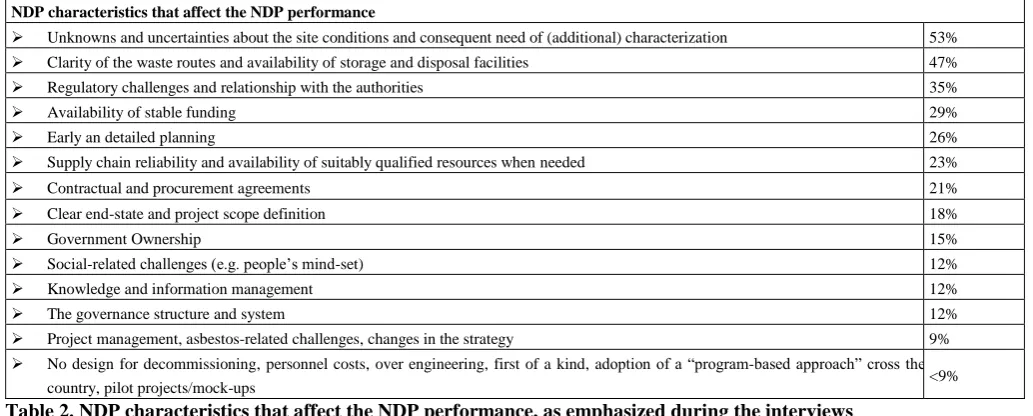
NDPs are complex projects that are affected by a number of interrelated challenges (see section 2). Table 3 lists the NDP characteristics that affect the NDP cost and time performance according to the interviewees (collected and analysed as described in section 3.1). The most quoted NDP characteristics are:
Unknowns and uncertainties about the site conditions and the consequent need of (additional) characterization
(53%), where “characterization” in the nuclear industry
refers to the determination of the nature and activity of radionuclides present in a specified place (IAEA 2006, p.18);
Clarity of the waste routes and availability of storage and disposal facilities (47%);
Regulatory challenges and relationship with the authorities (35%);
Availability of stable funding (29%);
Early and detailed planning (26%);
Supply chain reliability and availability of suitably qualified resources when needed (23%);
Contractual and procurement agreements (21%);
Clear end-state and project scope definition (18%);
Government Ownership (15%).
Copyright © 2018-2019 by JSME
4.2 Classification of regulatory challenges highlighted by thematic analysis applied to the interviewees’ answers
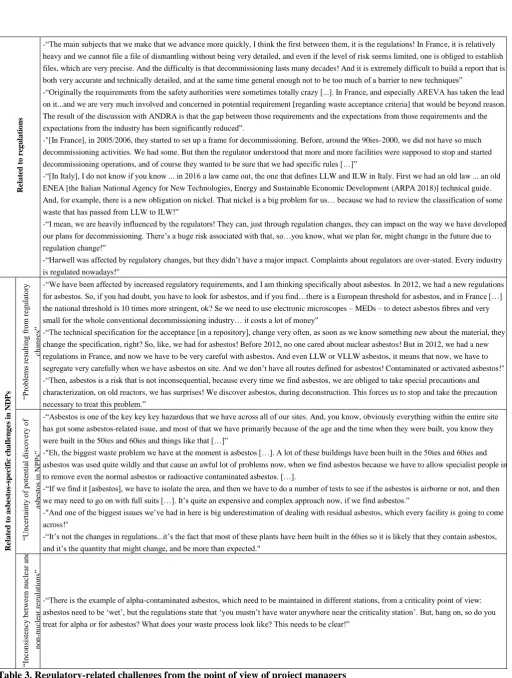
Table 3 is the result of the application of thematic analysis
on the interviewees’ answers on regulatory-related NDP
challenges that affect the NDP performance, which allows a better understanding of the main regulatory-related challenges that affect the NDP performance according to NDP practitioners. Hence, the interviewees’ answers have been clustered into the ones related to regulatory bodies, the ones related to regulations and the ones related to asbestos in NDPs. Concerning the regulators, the interviewees highlighted their concerns regarding the number of regulatory bodies (e.g. Italy) and the low number of staff, implicitly or explicitly highlighting, for example, the need of clear and efficient communication with the regulatory authority. More specifically, some interviewees suggested that this was due to the limited number of staff working for the regulatory authorities compared to other countries, while another interviewee commented on the need of the presence of regulators or site, which facilitates communication (see Table 3).
Challenges related to regulations are caused by several reasons, starting from the cognitive gaps and/or different approach of practitioners and regulators. Indeed, some practitioners highlighted that it is extremely difficult to build detailed plans since decommissioning activities last many decades, while regulators require such detailed, precise plans. Moreover, NDPs are affected by regulatory changes. Changes in regulations can be caused by several reasons, such as changes in soft laws that are then implemented into national law, or changes that follow an accident. Moreover, changes in regulations that affect NDPs can derive from both changes in nuclear law, as well as environmentallaw (Emmerechts 2018), or new health & safety regulations. The interviewees strongly emphasized the challenges caused by the changes in the regulations on asbestos (see Table 3). One interviewee for
example, explained “We have been affected by increased
regulatory requirements, and I am thinking specifically about asbestos. In 2012, we had new regulations for asbestos […]”
And also: “The technical specification for the acceptance [in
a repository], change very often, as soon as we know something new about the material, they change the specification, right?".
In France, one interviewee mentioned that new regulations for asbestos were introduced in 2012 and they require more stringent management of waste that contains asbestos. Due to the introduction of these new regulations, practitioners are now very careful about asbestos and forced to utilise expensive technologies to detect the very small amount of asbestos. This challenge is likely to be amplified by the uncertainty of potential discovery of the amount of asbestos in NPPs. Multiple practitioners mentioned the fact that a lot of buildings have been built in the 50ies and 60ies and asbestos was used quite wildly. For example, one interviewee commented:
“asbestos is a risk that is not inconsequential, because every time we find asbestos, we are obliged to take special precautions and characterization, on old reactors, we has surprises!”
Asbestos becomes even more problematic when there is limited understanding on how to tackle potential conflicts between nuclear and non-nuclear regulations, as highlighted by one interviewee, discussing the case of alpha-contaminated asbestos. The interviewee explained: “from a criticality point
of view: asbestos need to be ‘wet’, but the regulations state that ‘you mustn’t have water anywhere near the criticality station’. But, hang on, so do you treat for alpha or for
asbestos? What does your waste process look like?” This inconsistency might occur because asbestos hadn’t been considered as an issue in nuclear decommissioning until recently (see section 4.3).
4.3 Asbestos-related challenges and awareness of the international community
The investigation of the national reports of the JC Review Meetings revealed that not all national reports are available on (IAEA 2018c). This is due to the fact that Contracting Parties are simply encouraged to make public their national report. (However, some national reports are available on the website of their national regulatory authority (e.g. Italian ones)). Table 4 highlights:
which national report is not available on the IAEA website as in November 2018 (see “report not available”);
which report does not mention asbestos (“no”);
for the reports that mention “asbestos”, in which section
“asbestos” is discussed.
Findings from the analysis of the reports summarised in Table 4 promotes the following considerations:
Not all the countries discuss asbestos in their national report. This might be due to:
The fact that asbestos was not used in the construction of the nuclear facilities, and therefore it does not cause any issue during decommissioning;
Asbestos is not causing any concern during the NDP as there is the capability and the technology available to manage asbestos;
Asbestos is an emerging issue in nuclear decommissioning and not being considered as a relevant discussion point in many countries.
The majority of the countries that discuss asbestos in at least one review meeting. This might be because asbestos-related challenges start to emerge at a later stage of decommissioning, but since many countries have not reached that stage yet, challenges related to asbestos on a NDP have only more recently started to emerge.
Only one country in Table 4 has discussed asbestos from the first review meeting, and this is the case of France. France is also the only country in discussing asbestos as in the section “policy and practices” More specifically, the
6thnational report by France states: “At the end of 2013,
EDF submitted a file presenting its waste management strategy. It was reviewed by the Advisory Committee in
2015 with the main issues being as follows: […] the
management of waste for which there is no route (asbestos, lead, WEEE, etc.) according to its nature and quantity
[…]”(France 2017).
Copyright © 2018-2019 by JSME insufficient to handle a large amount of asbestos-containing
waste produced every year, (ii) management of ACW [Asbestos Containing Waste] in Italy has highlighted some significant inconsistencies between the European and national regulations and the actual implementation of those regulations. Therefore, it is reasonable to conclude that regulatory changes regarding asbestos in Italy might emerge, and this might also affect NDPs.
Regarding the UK, although the UK started mentioning
“asbestos” since their 4th review meeting report (in 2012),
asbestos removal activities had already done beforehand. One example is a five-year project (2005 – 2010) to strip asbestos cladding from the heat exchangers, turbine halls and associated plant as part of decommissioning the Calder Hall nuclear power station (PE 2015). This shows that asbestos regulations have been applied to multiple industrial sectors, including nuclear or non-nuclear sectors. That could be why one interviewee complained about alpha-contaminated asbestos and the challenges that emerge when managing NDPs where asbestos was used (see Table 3).
5. CONCLUSIONS
This paper is motivated by the fact that there is limited investigation on the NDP regulatory-related challenges from the project management perspective. As regulatory-related challenges affect NDPs, this papers aims to bridge the world of project management and the one of laws and regulations. This paper firstly investigates the NDP characteristics that affect the NDP performance conducting interviews with experienced practitioners. The interviews highlighted that regulatory-related challenges were one of the top concerns of project managers. Then, this paper focuses only on the interviewees’ comments that are related to regulations and thematic analysis is performed in order to provide a classification of these regulatory-related challenges. Additionally, this paper focuses on one emerging regulatory-related challenge, i.e. the case of asbestos in NDPs. To investigate this challenge, this paper reviews national reports for the JC review meetings. This review highlighted the extent to which the issue of asbestos has been discussed at the international level and how different countries raised their concerns regarding asbestos in NDPs.
This analysis showed how France started the discussion about asbestos from the very first national report, while other countries started mentioning asbestos only at a later Review Meeting (such as the UK and Italy), and other countries never mentioned asbestos in their Review Meetings (as is the case of Germany). This might be due to several reasons, including the fact that asbestos was not used in the construction of the nuclear facilities, or because asbestos-related challenges start to emerge at a later stage of decommissioning but this advanced stage has not been reached yet
Finally, the authors recognize great possibilities of several future research. First, it would be worth pursuing both the investigation on asbestos through in-depth research on single countries and cross-comparison among different countries. Secondly, research on nuclear regulatory changes and how to tackle regulatory-related risks, should also be developed. For example, an in-depth investigation of a regulatory-related
change (e.g. at which “level” of the nuclear pyramid), how the
change affect the NDP, and who bears the costs should be investigated. Lastly, the topic of overlapping regulations should also be further scrutinized.
ACKNOWLEDGMENTS
This research has been supported by the grant NNL/UA/002. The authors are extremely grateful to all the NDA and NNL experts for all the support received. The opinions in this paper represent only the point of view of the authors, and only the authors are responsible for any omission or mistake. This paper should not be taken to represent in any way the point of view of NDA, NNL or any other organization involved in the decommissioning process of nuclear facilities either in the UK or abroad.
REFERENCES
Ahiaga-dagbui, D. D., Ph, D., Love, P. E. D., Ph, D., Sc, D., Whyte, A., Ph, D., Boateng, P., and Ph, D. (2017).
“Costing and Technological Challenges of Offshore Oil and Gas Decommissioning in the U.K. North Sea.”
Journal of Construction Engineering and Management, 143(7).
ARPA. (2018). “ARPA Campania.” ARPA Campania official
website, <https://www.arpacampania.it/> (Nov. 1, 2018).
CdC. (2012). The costs of the nuclear power sector: summary of the Public Thematic Report - Courtes des Comptes. Paris.
CdC. (2014). Le coût de production de l’électricité nucléaire - actualisation 2014. Paris, 13 rue Cambon 75100. DeCuir-gu, J. T., and Mcculloch, A. W. (2011). “Developing
and Using a Codebook for the Analysis of Interview Data: An Example from a Professional Developing and Using a Codebook for the Analysis of Interview
Research Project.” Field Methods, 23(2), 136–155.
DiCicco-bloom, B., and Crabtree, B. F. (2006). “The
qualitative research interview.” Medical Education, 40,
314–321.
Dixon-Woods, M., Agarwal, S., Jones, D., Young, B., and
Sutton, A. (2005). “Synthesising qualitative and
quantitative evidence: a review of possible methods.” Journal of Health Services Research & Policy, 10(1).
Downey, A., and Timmons, D. M. (2005). “Study into the
Applicability of Thermochemical Conversion
Technology To Legacy Asbestos Wastes in the Uk.”
WM’05 Conference, Tucson, AZ.
Drillat, C. (2018). “The Joint Convention on the Safety of
Spent Fuel Management & on the Safety of Radioactive Waste Management - power point presentation at the
International School of Nuclear Law.” Montpellier,
France.
EC. (2018). “Decommissioning of nuclear facilities.”
European Commission Official Website,
<https://ec.europa.eu/energy/en/topics/nuclear-energy/decommissioning-nuclear-facilities> (Oct. 18, 2018).
Elo, S., and Kyngäs, H. (2008). “The qualitative content
analysis process.” Journal of Advanced Nursing, 62(1),
107–115.
Copyright © 2018-2019 by JSME importance for nuclear - power point presentation at the
International School of Nuclear Law.” Montpellier,
France.
Ervin, P. F. (2008). “Characterisation Progress at the
Windscale Pile Reactors: Challenges and Results WM2008 Conference, 24-28 February 2008, Phoenix
Arizona.” WM2008 Conference, 24-28 February 2008,
Phoenix, Arizona, US.
European Court of Auditors. (2011). EU financial assistance for the decommissioning of nuclear plants in Bulgaria, Lithuania and Slovakia: achievements and future challenges.
European Court of Auditors. (2016). EU nuclear decommissioning assistance programmes in Lithuania, Bulgaria and Slovakia: some progress made since 2011, but critical challenges ahead.
France. (2017). Sixth National Report on Compliance with the Joint Convention Obligations - France. IAEA official website.
Handrlica, J. (2018). “Nuclear liability conventions and
decommissioning: exclusion provisions revisited.” The Journal of World Energy Law & Business, 11(3), 196– 208.
Harding, A.-H. (2010). The Great Britain Asbestos Survey 1971-2005 - Mortality of workers listed on the Great Britain Asbestosis or Mesothelioma Registers - Prepared by the Health and Safety Laboratory for the Health and Safety Executive 2010.
Heffron, R. J. (2018). “Energy law for decommissioning in
the energy sector in the 21st century.” Journal of World
Energy Law and Business, 11(3), 189–195.
Heffron, R. J., and Talus, K. (2016). “The evolution of energy law and energy jurisprudence: Insights for energy
analysts and researchers.” Energy Research and Social
Science, Elsevier Ltd, 19, 1–10.
HSE. (2018). “Control of Asbestos Regulations 2012.”
Health and Safety Executive Official Website, <http://www.hse.gov.uk/asbestos/regulations.htm>.
Hsieh, H. F., and Shannon, S. E. (2005). “Three Approaches
to Qualitative Content Analysis.” Qualitative Health
Research, 15(9), 1277–1288.
IAEA/OCED-NEA. (2017). Addressing Uncertainties in Cost Estimates for Decommissioning Nuclear Facilities. IAEA. (2003). Handbook on Nuclear Law.
IAEA. (2006a). IAEA Safety Glossary - terminology used in Nuclear, Radiation, Radioactive Waste and Transport Safety. Vienna, Austria.
IAEA. (2006b). “Management of problematic waste and
material generated during the decommissioning of
nuclear facilities.”
IAEA. (2011). Selection and Use of Performance Indicators in Decommissioning. Vienna.
IAEA. (2016). Managing the Unexpected in Decommissioning. IAEA official website.
IAEA. (2018a). “The Database on Nuclear Power Reactors -
Power Reactor Information System (PRIS).” IAEA
official website, <https://www.iaea.org/pris/> (Nov. 11, 2018).
IAEA. (2018b). “Compendium of Legal Instrument.” IAEA
Official Website,
<https://www.iaea.org/resources/treaties/compendium-of-legal-instruments> (Oct. 18, 2018).
IAEA. (2018c). “Joint Convention on the Safety of Spent Fuel
Management and on the Safety of Radioactive Waste
Management Documents.” IAEA Official Website,
<https://www.iaea.org/topics/nuclear-safety- conventions/joint-convention-safety-spent-fuel-
management-and-safety-radioactive-waste/documents?keywords&type=4797&language=A ll&field_extres_date_value%5Bvalue%5D%5Byear% 5D=&country=All> (Oct. 18, 2018).
Invernizzi, D. C., Locatelli, G., and Brookes, N. J. (2017).
“Managing social challenges in the nuclear
decommissioning industry: A responsible approach
towards better performance.” International Journal of
Project Management, 35(7), 1350–1364.
Invernizzi, D. C., Locatelli, G., and Brookes, N. J. (2018).
“Cost overruns - Helping to define what they really
mean.” Proceedings of the Institution of Civil
Engineers: Civil Engineering, 171(2).
Invernizzi, D. C., Locatelli, G., and Brookes, N. J. (2019).
“An exploration of the relationship between nuclear
decommissioning projects characteristics and cost
performance.” Progress in Nuclear Energy, Elsevier,
110(September 2018), 129–141.
ISPRA. (2018). “Italian National Institute for Environmental
Protection and Research (ISPRA).” ISPRA official website,
<http://www.isprambiente.gov.it/en/ISPRA/the-institute> (Nov. 1, 2018).
Kohlbacher, F. (2006). “The Use of Qualitative Content
Analysis in Case Study Research.” Forum: Qualitative
Social Research, 7(1), 1–30.
Li, J., Dong, Q., Yu, K., and Liu, L. (2014). “Asbestos and asbestos waste management in the Asian-Pacific
region: Trends, challenges and solutions.” Journal of
Cleaner Production, Elsevier Ltd, 81, 218–226.
Mauger, R. (2018). “Forced nuclear energy reactors shutdown
in France: The Energy Transition Act’s mechanisms.”
Journal of World Energy Law and Business, 11(3), 270– 281.
Mclellan-Lemal, E., and Macqueen, K. M. (2003). “Beyond the Qualitative Interview: Data Preparation and
Transcription Field Methods.” Field Methods, 15(1),
63–84.
NAO. (2012). Managing risk reduction at Sellafield.
NAO. (2015). Progress on the Sellafield site: an update - UK Natinal Audit Office.
NAO. (2018). The Nuclear Decommissioning Authority: progress with reducing risk at Sellafield Key facts - UK National Audit Office.
NDA. (2006). Annual Report & Account 2005/6 - Nulcear Decommissioning Authority.
NDA. (2015). Annual Report and Account 2014/2015 - Nuclear Decommissioning Authority.
NDA. (2016). Annual Report and Account 2015/2016 - Nuclear Decommissioning Authority.
NDA. (2017). Annual Report & Account 2016/17 - Nuclear Decommissioning Authority.
Copyright © 2018-2019 by JSME
Britain’s historic nuclear sites.” UK Government
official website,
<https://www.gov.uk/government/publications/nuclear -provision-explaining-the-cost-of-cleaning-up-britains- nuclear-legacy/nuclear-provision-explaining-the-cost-of-cleaning-up-britains-nuclear-legacy#contents> (Sep. 21, 2018).
NEI. (2017). “UK 6-billion-pound decom tender cuts
spending via unrealistic schedule - Nuclear Energy
Insider.” NEI Official Website,
<https://analysis.nuclearenergyinsider.com/uk-6- billion-pound-decom-tender-cuts-spending-unrealistic-schedule> (Oct. 21, 2017).
OECD/NEA. (2012). International Structure for Decommissioning Costing (ISDC) of Nuclear Installations.
OECD/NEA. (2015). The Practice of Cost Estimation for Decommissioning of Nuclear Facilities. Paris, France. OECD/NEA. (2016). Costs of Decommissioning Nuclear
Power Plants.
Öko-Institut. (2013). Nuclear Decommissioning: Management of Costs and Risks - Gerhard Schmidt, Veronika Ustohalova, Anne Minhans. Darmstadt.
Olawale, Y., and Sun, M. (2015). “Construction project
control in the UK: Current practice, existing problems
and recommendations for future improvement.”
International Journal of Project Management, Elsevier Ltd and IPMA, 33(3), 623–637.
Paglietti, F., Malinconico, S., della Staffa, B. C., Bellagamba,
S., and De Simone, P. (2016). “Classification and
management of asbestos-containing waste: European
legislation and the Italian experience.” Waste
Management, Elsevier Ltd, 50, 130–150.
Paim, M. A., and Yang, C. H. (2018). “Nuclear decommissioning in Brazil and China: Regulatory
development, incompleteness and future synergy.”
Journal of World Energy Law and Business, 11(3), 220– 236.
Palinkas, L. A., Horwitz, S. M., Green, C. A., Wisdom, J. P., Duan, N., and Hoagwood, K. (2015). “Purposeful Sampling for Qualitative Data Collection and Analysis in Mixed Method Implementation Research.” Adm.
Policy Ment. Health, 42(5), 533–544.
PE. (2015). “Major asbestos removal project at Sellafield -.”
Process Engineering (PE) official website, <http://processengineering.co.uk/article/2002132/majo r-asbestos-hazar> (Nov. 4, 2018).
Roulston, K. (2010). “Considering quality in qualitative
interviewing.” Qualitative Research, 10(2), 199–228.
Sellafield Ltd. (2017). Sellafield magazine - Issue 07.
Taebi, B., Roeser, S., and Poel, I. Van De. (2012). “The ethics
of nuclear power: Social experiments, intergenerational
justice, and emotions.” Energy Policy, Elsevier, 51,
202–206.
Vaismoradi, M., Turunen, H., and Bondas, T. (2013).
“Content analysis and thematic analysis: Implications
for conducting a qualitative descriptive study.” Nursing
and Health Sciences, 15(3), 398–405.
Wakeford, R. (2007). “The Windscale reactor accident - 50
Years on.” Journal of Radiological Protection, 27(3),
211–215.
Wareing, A. (2011). “Waste Management & Minimisation.”
Chemical Engineer, (837), 42–44.
APPENDIX
Number of results in Scopus as in November
2018
Cost Project
management Regulation Law
“Nuclear
Decommissioning” 110 24 19 14 “Nuclear
Decommissioning” AND
“Cost” - 14 9
“Nuclear Decommissioning” AND
“Project Management” - - 2 “Nuclear
Decommissioning” AND
“Regulation” - - - 5 “Nuclear
[image:11.595.307.554.377.531.2]Copyright © 2018-2019 by JSME
Table 2. NDP characteristics that affect the NDP performance, as emphasized during the interviews
Regulatory-related NDP challenge from the point of view of NDP experienced practitioners and extracts from the semi-structured interviews (on the right)
R
el
a
te
d
t
o
c
o
m
mun
ic
a
ti
o
n
w
it
h
r
eg
u
la
to
ry
b
o
d
ie
s
“N
um
be
r o
f s
ta
ff
in
th
e
re
gu
la
to
ry
b
od
ie
s” -“Good relationships with the regulatory body ... a relationship of, we could say, continuous “exchange” with the regulatory body [is important]. And then, concerning the relationship with the regulator, I would not only say the exchange of information, monthly or weekly, but also the
presence of the regulatory body on the site, which we unfortunately do not have… [is important]”
-“ISPRA [Italian Institute for Environmental Protection and Research (ISPRA 2018)] today is an institution with very little staff. This is to say that I am not guilty of ISPRA, but in fact, we await authorizations even years!”
-“According to our rules in France, we have a lot of delays with regulators! Because regulators, they are not thousands of people working for this administration and so few people are taking care of time, then of course we have long delays. For example, it takes a minimum of three years to get a decommissioning decree in France. From the time you send your files to the Nuclear Safety Authorities, you get it back three years after” -“…that is part of the delay also. It is caused by the authority! […] It means also that now, if you find a beautiful flower on the perimeter of your facility, that just exists close your facility, than you are in struggle! Eheh! […] you are in struggle because you have to find another place..to provide another place to this flower or this animal. The delay can take months or a year to solve this small problem! Due to new environmental laws now”
“N
um
be
r o
f r
eg
ul
at
or
y
bo
di
es
” -“And control, on the plant, is done by an incredible number of authorities, because obviously there are the IAEA authorities […], EURATOM
[…], they are obviously international ones. In Italy there is ISPRA. But not only! The regional ARPA, the ARPA [The Regional Environmental Protection Agency (ARPA 2018)] […].Garigliano [NPP] is on the river that separates Lazio from Campania. So, the control over Garigliano [NPP] is carried out by both ARPA Lazio and ARPA Campania. Also, for Garigliano, it has been established an Environmental Observatory, consisting of eight members, three from the Ministry of Environment, two from ISPRA, one from the Campania Region, one from the Province of Caserta and one from the municipality of Sessa Aurunca. The power plant is located in the municipality of Sessa Aurunca and every month they carry out a check, an inspection on the power plant and a meeting to verify if the activities are carried out in compliance with all the guidelines, all the laws that exist on the central activities”
-“ISPRA is not the only one! For example, even the ASL [Italian Local Health Care] intervenes heavily. The ASL is involved in asbestos. The legislation provides that everything that has to do with asbestos, even contaminated radiologically, see a surveillance by the ASL”
NDP characteristics that affect the NDP performance
Unknowns and uncertainties about the site conditions and consequent need of (additional) characterization 53%
Clarity of the waste routes and availability of storage and disposal facilities 47%
Regulatory challenges and relationship with the authorities 35%
Availability of stable funding 29%
Early an detailed planning 26%
Supply chain reliability and availability of suitably qualified resources when needed 23%
Contractual and procurement agreements 21%
Clear end-state and project scope definition 18%
Government Ownership 15%
Social-related challenges (e.g. people’s mind-set) 12%
Knowledge and information management 12%
The governance structure and system 12%
Project management, asbestos-related challenges, changes in the strategy 9%
No design for decommissioning, personnel costs, over engineering, first of a kind, adoption of a “program-based approach” cross the