Rochester Institute of Technology
RIT Scholar Works
Theses Thesis/Dissertation Collections
3-18-2013
Already gone
Manuel Fermin Hernandez Marquez
Follow this and additional works at:http://scholarworks.rit.edu/theses
This Thesis is brought to you for free and open access by the Thesis/Dissertation Collections at RIT Scholar Works. It has been accepted for inclusion in Theses by an authorized administrator of RIT Scholar Works. For more information, please [email protected].
Recommended Citation
R
I
T
ALREADY GONE
by
MANUEL FERMÍN HERNÁNDEZ MÁRQUEZ
THESIS
Submitted in Partial Fulfillment of the Requirements
for the Degree of Master of Fine Arts
in Imaging Arts
School of Photographic Arts and Sciences
College of Imaging Arts and Sciences
Rochester Institute of Technology
Rochester, NY
March 18, 2013
Approval:
Patricia Ambrogi Date
Committee Chair
William Osterman Date
Committee Member
Clarence Sheffield Date
Acknowledgements
I would like to thank Patricia Ambrogi, my committee chair, and committee
members Clarence Sheffield and William Osterman for their support and confidence
throughout my studies and the execution of my thesis project. Their advice, life
philosophy, and encouragement were pivotal for the completion of this project. I would
also like to thank all my professors at RIT for the grains of sand in the form of knowledge
and criticism that I received from them—especially Angela Kelly and Carla Williams,
my MFA advisors, and Therese Mulligan, CIAS Chair, with whom I worked closely at
SPAS Gallery.
I also would like to thank all my classmates, but especially Salah Ahmed,
Katherine Driscoll, Ben Gilberg, Sergio Gómez, Luke Shaw, Misha Tulek, and Nick
Marshall for their company, friendship, and support.
I would also like to thank the Fulbright program and Mexico’s National Council
of the Arts for the generous support they gave me so that I was able to fund my studies.
Finally, I would to thank my family for their support, and my beloved Sandra—the
cornerstone of my life—whose support and understanding assisted my journey, when she
ALREADY GONE
By
Manuel Fermín Hernández Márquez
ABSTRACT
Already Gone is a project that explores the relationship of the photographic medium to
the concepts of time and history, and the several temporal and historical layers contained
within any photographic image. It is heavily influenced by photo-conceptualist practices
that were introduced in the 1960s that often employed a de-skilled aesthetic, and
questioned photography’s intrinsic characteristics, possibilities, and limitations. Already
Gone is inspired by the ideas of artistic agency in a time where the end of history and the
beginning of post-history is proposed, and in the effects the demise of analog
photography might have in the indexical nature of the medium. This project is the
culmination of ideas about my uneasiness regarding the prevailing uncertainty in
contemporary photographic and artistic practice, and my adherence to an approach to
art-making based on the everyday as source of inspiration for the creation of work, where
awareness is exercised with the ulterior motivation of acquiring consciousness through an
TABLE OF CONTENTS
Acknowledgements ... ii
Abstract ... iii
List of Figures ... v
I. Time, History, and Photography ... 1
II. The Everyday ... 10
III. About the title Already Gone ... 14
IV. Influences ... 15
V. Explanation of Process and Work Exhibited ... 22
VI. Realization in the Gallery ... 39
VII. Closing Remarks ... 44
LIST OF FIGURES
Figure 1. Mexican Ten Pesos Coin, seen from the side depicting the Aztec calendar. ... 7
Figure 2. Untitled, from the series Incisions in History/Segments of Eternity,digital
chromogenic print (10 x 15cm), 2012. ... 9
Figure 3. Images from the series Incisions in History/Fragments of Eternity, digital chromogenic prints (each 10 x 15 cm) 2011- ongoing. ... 26
Figure 4. Installation View. Incisions in History/Segments of Eternity, 3446 digital
chromogenic prints (each 10 x 15 cm), 2012. ... 28
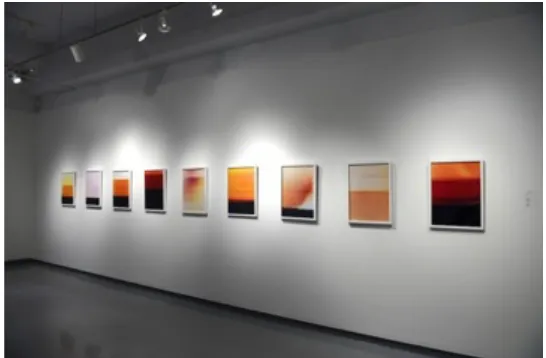
Figure 5. February 4, 2012, from the series Fiery Beginnings, analog chromogenic print (40 x 60 cm), 2012. ... 31
Figure 6. Borges Meets Flusser, book and black ink (15 x 21 x 4 cm), 2012, detail. ... 34
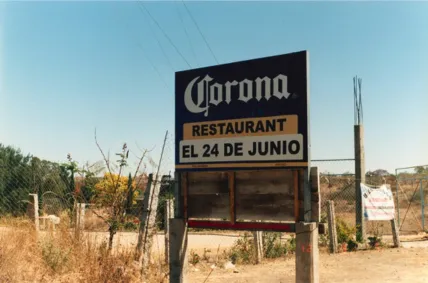
Figure 7. Untitled, from the series Time as Place, Place as Time: 24 de Junio, analog chromogenic print (20 x 33 cm), 2012. ... 35
Figure 8. 9:11. Lambda print (60 x 91cm), 2012. ... 38
Figure 9. Installation View, Already Gone, 2012. ... 40
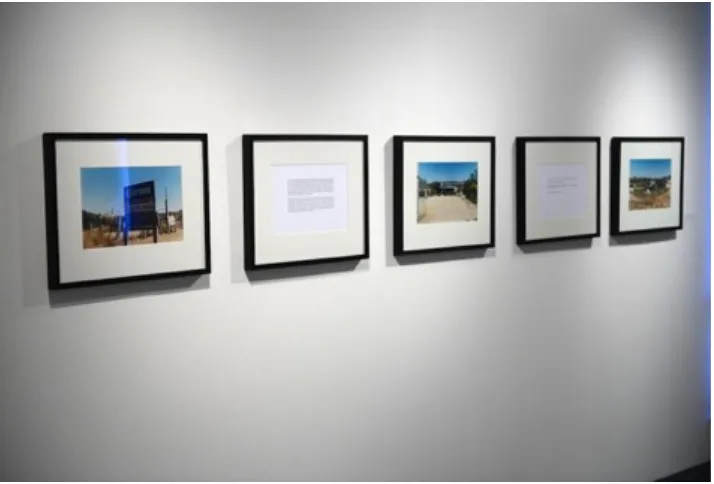
Figure 10. Installation View, Time as Place, Place as Time: 24 de Junio, analog
chromogenic prints, inkjet prints (each 40 x 50 cm), 2012. ... 42
I. Time, History, and Photography
…I remember the two days that mean a lot to me I remember the two days, where every hour was a day And every minute was a lifetime…1
– Curve, Blindfold
Already Gone is a project that reflects on how the concept of time is represented
in the camera arts. Time is an inescapable formal and conceptual element in any work of
art, and in some instances it is the subject of the artwork itself. Photography’s
relationship to time is pivotal since we could say photographs contain it. This relationship
works in several layers, and in any photograph we always deal with time in a physical,
psychological, social, and personal manner; hence, the concept of history becomes linked
with it. Photography always references the past and it serves as a record of previous
configurations of reality. Vilém Flusser proposes that photographs are “dams in the way
of the stream of history, jamming historical happenings. Thus, the photograph can be
considered the first post-historical image”2 This capability of marking and materializing
time and of defying history’s linearity is of great interest to me; the way we can objectify
time and contain it in what we call a photographic image is a magical act that reinforces
ancient traditions of both mark-making and time-marking.
It is necessary to clarify two pairs of terms that have helped me define the scope
of my ideas. On one hand we have the concepts of time and temporality, and on the other
the concepts of history and post-history. David Couzens Hoy’s study of the concept of
1Curve (Musical Group), Blindfold (New York: Charisma Records, 1992) Compact Disc.
2 Vilém Flusser. Into the Universe of Technical Images (Minneapolis: University of Minnesota Press,
time through a phenomenological approach proposes that time, or objective time, is an
element that serves as backdrop for every experience. It can be divided into categories
like natural, historical, or clock time; it is what Martin Heidegger defines as primordial
time or world time. One of its main features is that it is extraneous. It occurs
independently of our apperception of it, residing outside of our mental scenario. Then we
have the concept of temporality, a subjective element associated with what Couzens Hoy
calls lived time or “the time of our lives,”3 an internal time that includes all our inner
processes of perception, awareness, and consciousness. He makes this distinction to help
us create a conceptual divide of what happens around us and what happens in the realm
of our inner mental scenario. This raises the question of what kind of temporal element
we are capturing and representing through the photographic act. In any photograph,
especially in the ones we produce, it is almost impossible to draw the line between time
and temporality, since we are creating simultaneously a personal and a socio-historical
document, condensing both world time and our own temporality within it.
The other pair is composed by the concepts of history and post-history. According
to Flusser, history can be defined as a linear process or narrative that emerged from the
invention of linear writing. It is an account of what he calls historical happenings, a
description of events that has a strong narrative nature. For Flusser, then, post-history is
what happens when all narratives run out, when they are not part of history's linearity
anymore, and when, thanks to the entropic nature of history, we can no longer tell or
create stories in a linear fashion. Elizabeth Wilson and Andreas Ströhl note:
3 David Couzens Hoy. Time of Our Lives: A Critical History of Temporality (Cambridge: MIT Press,
Flusser believed that we have entered a transitional period between historical and post-historical thinking. Linear thinking—based on writing and essential to history—is about to be put aside by a new form of thinking that is much more complex, multi-dimensional and visual [emphasis added], based on algorithms, and inspired by systems theory and chaos theory.4
I believe this transition is actually taking place, altering our understanding of these
concepts, as well as our engagement with them. As image-makers, this shift in our
engagement with everything involving notions of time and history will affect our practice
in unpredictable ways. Flusser finalizes his thoughts by stating that the current dialectic
of history creates a condition where “images become more conceptual and texts more
imaginative.”5Already Gone is an experiment in addressing this new conceptual weight
of photographs in this transitional historical period.
Human behavior around photography embeds it with personal and historical
weight, and although I consider my work to have the unavoidable historical elements of
belonging to a tradition, discourse, and period, I also try to make work that is removed
from any pretense of gaining historical understanding through it. According to Flusser,
photographs are the first post-historical images because they defy history’s linearity. For
him the “temporality of reading photographs is an all-at-onceness, not a linear
progression.”6 Flusser concludes his research about photography’s limitations as a
historic tool by stating that in spite of being a reliable visual record of reality, “the image
4 Elizabeth Wilson and Andreas Ströhl, “On the Philosopher Vilém Flusser,” Weber Studies: An
Interdisciplinary Humanities Journal, 14 -1, Winter 1997, np, accessed December 15th, 2012,
http://www.altx.com/ebr/w(ebr)/essays/flusser.html.
5 Vilém Flusser, “Photography and History,” in Vilém Flusser: Writings (Minneapolis: University of
Minnesota Press, 2002), 166.
has remained an image. Structurally speaking, it is antihistorical.”7 In Rachel Moore’s
2006 book on Hollis Frampton’s (nostalgia) (1971), she also addresses this anti-historical
characteristic of photographs, by observing that although “photographs absorb and
contain time, photographs on their own don’t serve the demands of historical
representation, and neither will a chronological account of events.”8 This distrust in
photography’s worth as an accurate historical record fosters the argument that although
photography is a useful tool for marking time and for the creation of temporal bridges, it
is severely limited in the way history can be reconstructed from it. Frampton referred to
photographs as “Incisions in History/Segments of Eternity,”9 and this condition of any
photographic document is the most appealing for me. I find Frampton’s metaphor of
photograph-as-incision to be somewhat similar to Flusser’s idea of a historical dam. Both
descriptions propose that photographs upset the linear and steady flow of history, and we
could even go beyond this idea and claim they also disrupt our own temporality, our lived
life. One of the issues I try to address with my work is the dialectic between the historical
and the personal, by exploring how time and temporality reside and conflict in the
photographs we produce. My point of departure as an artist is the following: I give myself
the agency to act as a historical unit of measure, so all the images I produce become a
proof of lived experience as well as proof of all the social/historical and the
natural/cosmic spheres which they also belong to.
7 Flusser, “Photography and History,”128.
8 Rachel Moore, Hollis Frampton: (nostalgia) (London: Afterall Books, 2006), 16.
9Hollis Frampton, “Incisions in History/Segments of Eternity,” in On the Camera Arts and Consecutive
Matters: The Writings of Hollis Frampton, ed. Bruce Jenkins (Cambridge: MIT Press, 2009), 33. Frampton
During my undergraduate studies I became interested in the technical and optical
rendering of time in photosensitive surfaces (whether analog or digital) and I made
several image series that revolved around the idea of the accumulation of time in
photographs. Most of these series consisted of long-exposure imagery. In retrospect, I
think of that work as having been motivated by an interest in photography’s technical
capabilities, and it was a somewhat formal exploration of how time can be recorded and
rendered by photographs. However, during my first year in the MFA program at RIT, I
felt a certain freedom I had never experienced. I was being exposed to artwork and ideas
I had never seen or heard. I was looking at books and getting to know photographers and
artists using photography in challenging ways, and most importantly, seeing bodies of
work that dealt with creative and conceptual motivations that went beyond a discussion
of photographic technique and the modernist view of photographic aesthetic, a view that,
to some degree, prevailed over and influenced my formative years in Mexico (a country
known for a deep and well-established tradition of photojournalism and documentary
photography). It was at this point that new possibilities opened in relation to my
photographic practice. I would describe this defining moment in terms of the image of a
levee breaking and water running wildly in all directions. I realized that contemporary
artistic practice is flexible and fluid, so I started a process of merging all of my interests
into my body of work in order to integrate more aspects of my worldview within it,
including my interest in timekeeping, calendars, mysticism, and numerology. It was both
a liberating and a frightening moment, and the artistic process that this realization led to
Already Gone, although in more than one way, ironically, it feels more like the beginning
of something rather than the end.
My interest in timekeeping and calendars stems from a childhood fascination with
maps and numbers. I have long thought of calendars as temporal maps, powerful and
subtle numerical and abstract structures that can also be represented graphically.
Calendars divide and measure time, a weightless and fluid universal phenomenon, and
one of the most elusive of concepts; defining what time is has been a task that has
challenged and baffled thinkers and scientists for millennia. Growing up in Mexico, I was
taught from an early age about pre-Hispanic cultures, and I absorbed the remnants of
their worldview and knowledge in a diluted and sometimes distorted way. The concept of
time was an obsession in pre-Hispanic Mexico, where pyramids, sculptures, and whole
cities were built with temporal concerns in mind. These elements are present in everyday
culture in subtle ways. The Mexican ten pesos coin has the national emblem on one side,
an eagle devouring a snake, and a representation of the Aztec calendar on the other. So
even though a very important aspect of Aztec culture is used as a decorative element in a
piece of currency, it remains an example of how ancient cosmogony still permeates the
present. Among the calendar systems employed by pre-Hispanic civilizations, the Mayan
calendar attracted a great deal of attention in Western culture due to the fact that a
fifty-two-thousand-year cycle came to an end in December 2012. New Age thinker José
Argüelles proposed this cycle, and a smaller one consisting of 5,200 years, to correspond
to the historic period of human evolution.10 This echoes Flusser’s idea of a shift and our
passage into the uncharted realm of post-history. These connections, although not
scientific or verifiable, create a narrative that has influenced my artistic practice. Ideas of
endings and beginnings, of cycles and repetition, days and years, and their influence on
[image:13.612.229.366.157.283.2]everyday life, have become the backdrop against which my work rests.
Figure 1. Mexican Ten Pesos Coin, seen from the side depicting the Aztec calendar.
A generation of visual artists active in the 1960s had a deep interest in the concept
of time that resembled the pre-Hispanic obsession with it. Pamela Lee studied this
phenomenon in her book Chronophobia: On Time in the art of the 1960s (2004), in
which she proposes that several artists active in that decade showed
a pervasive anxiety I describe as chronophobic: as registering an almost
obsessional uneasiness with time and its measure. Cutting across movements, and genres, the chronophobic impulse suggests an insistent struggle with time, the will of both artists and critics either to master its passage, to still its acceleration, or to give form to its changing condition.11
My admiration for the art of that decade became the common denominator for all the
work I presented in Already Gone. My work represents a revision as well as a homage to
creative strategies employed by conceptual artists in the 1960s, while expressing an
interest in the role photography has had in this transition to a post-historical period. The
strategy I employed to achieve this was that of placing the utmost importance in
photography’s temporal aspect, where a photographic image serves as a mark in a
calendar, hence becoming an indexical record of a day in history as well as a day of my
lived life. This approach is a free interpretation of the Barthesian premise of photographic
indexicality, my focus being on what I would call a temporal indexicality rather than a
physical one. Traditional photographic genres would place this impulse in the category of
a visual journal or visual diary, but in my case, the creation of this journal has a
conceptual motivation rather than a personal one. I started to use artistic strategies from
the 1960s and 1970s, a period where photoconceptualism emerged and the use of
photography shifted in the art world. For Jeff Wall, “photoconceptualism was able to
bring new energies from the other fine arts into the problematic of
art-photojournalism.”12 One of the most important features of this line of work was that of
the amateurization of creative photographic production, which led to “experimentation
with the anti-aesthetic, with the look of non-art ... and with the loss of the visual.”13 This
led to the emergence of a deadpan style that has indifference and detachment as its main
motivation. In my opinion, this indifference is a result of an attitude towards
image-making that is engendered by post-historical thinking and by the fullness of photographic
history. Puerto Rican multi-disciplinary artist and scholar Ernesto Pujol has put it
beautifully by stating that at this point in history “there is enough art [in the world],” and
noting that “[I am] feeling no pressure to create more art, so that what excites me is to
12 Jeff Wall, “Marks of Indifference: Aspects of Photography in, or as, Conceptual Art,”in Douglas Fogle,
The Last Picture Show: Artists using Photography, 1962 - 1982 (Minneapolis: Walker Art Center, 2003),
35.
create something ambiguous, something liminal, that has the effect of art, regardless of its
[image:15.612.92.522.152.442.2]final label.”14
Figure 2. Untitled, from the series Incisions in History/Segments of Eternity, digital chromogenic print (10 x 15cm), 2012.
14 Ernesto Pujol, “Our Barefoot Practice”,in Learning Mind: Experience into Art, eds. Mary Jane Jacob and
II. The Everyday
The fullness and the ambiguity Pujol reflects on plays an important part in
art-making nowadays, where banal or everyday gestures or moments are elevated to the
category of art. That is why the everyday is also an important element in Already Gone.
First and foremost, the everyday deals with the process of fragmentation, progression,
and accumulation of time (seconds, minutes, weeks, months, seasons, years, centuries). It
also deals with our temporality, our lived time, and it has become a subject of concern for
contemporary artistic practice that includes approaches that range from obsession to fear.
Henri Lefebvre claims that the “everyday is the most universal and the most unique
condition, the most social and the most individuated, the most obvious and the best
hidden.”15 One of the problems that immediately arise by making work based on
everyday life is repetition and flatness. Temporally, Lefebvre suggests the everyday is
“situated at the intersection of two modes of repetition: the cyclical, which dominates in
nature, and the linear, which dominates in processes known as ‘rational.’”16 The everyday
deals with “cycles, night and day, seasons and harvests, activity and rest, hunger and
satisfaction, desire and its fulfillment, life and death, and it implies on the other hand the
repetitive gestures of work and consumption.”17 Several schools of thought and societies
put different values on the notion of “day” and propose different concepts about its
definition and purpose. Views range from defining it as a 24-hour physical measure or a
calendrical historical unit, to a mystical opportunity for the acquisition of consciousness.
15 Henri Lefebvre, “Everyday and Everydayness,” in The Architecture of the Everyday, eds. Steven Harris
and Deborah Berke (New York: Princeton Architectural Press, 1997), Kindle Edition,location 777.
The tradition of the Fourth Way18 puts the everyday as the battleground where we fight
for achieving higher degrees of consciousness and knowledge, since it is within the
confines of the everyday that we can engage in activities of self-observation, meditation,
change, and awareness. It is the realm where we experience all our personal victories and
defeats.
To expand on the idea of the everyday as a source for creative production and
how we deal with it both on a personal and on an artistic level, Lefebvre’s thoughts on
the contradictory nature of the concept of the everyday are helpful. According to him
The days follow one after another and resemble one another, and yet—here lies the contradiction of the everyday—everything changes. But this change is
programmed: obsolescence is planned. Production produces change in such a way as to superimpose the impression of speed onto that of monotony. Some people cry out against the acceleration of time, others cry out against stagnation. They’re both right.19
Martin Heidegger also describes the everyday by defining the term “average
everydayness.”20 Michael Inwood insists that for Heidegger “our condition of average
everydayness is one of fallenness and ambiguity.”21 Heidegger believed that “Falling
prey to the “world” means being absorbed in being-with-another, guided by idle talk,
curiosity and ambiguity.”22 It is in essence, the opposite of the spectacular, the relevant,
and the newsworthy, which is what we are used to look for or trained to photograph.
However, the territory of average everydayness is also where we are able to be conscious,
18 Piotr Diemanov Ouspensky, The Fourth Way (London: Vintage Books, 1971). The Fourth Way refers to
a concept used by G.I. Gurdjieff to describe an approach to self-development that combined what he saw as three established traditional “ways,” or “schools” into a fourth way. These three ways were of the body, mind and emotions.
19 Lefebvre, “Everyday and Everydayness,” location 803.
20 Martin Heidegger, Being and Time (Albany: State University of New York Press, 1996), 170.
to engage in what he refers to as moments of vision, intermittent moments where we hear
the call of consciousness. Heidegger uses the term Augenblick23—literally “eye-glance”
in German—to refer to these significant moments, defining them as the “moments of
vision in which resolute Dasein24 assesses the possibilities implicit in its situation and
makes decisive choices.”25 The decisive choices I choose to make in the course of my
average everydayness are mostly aesthetic, and they take the form of photographs. For
Heidegger, everydayness is “after all, precisely the being ‘between’ birth and death,”26
where we are situated in “average modes of existing.”27
The everyday is a source for making art inspired by the gesture of “drawing from
the vast reservoir of normally unnoticed, trivial, and repetitive actions comprising the
common ground of daily life”.28 It stems from a desire to “bring these uneventful and
overlooked aspects of lived experience into visibility.”29 Several contemporary artists
[Sam Hsieh, Adrian Piper, Shomei Tomatsu, and Tacita Dean, to name a few] have
engaged in a practice inspired by the banality of everyday life, instead of pursuing more
spectacular sources of inspiration. This type of work focuses on blurring the dividing line
between art and life. At this point, as a visual artist, I am adhering to this aesthetic
discourse and its history. This approach inspired me to make art based on that daily
struggle for agency, awareness, and creativity amidst the regular course of life, effected
23 Ibid.,338.
24 “Dasein: To be there (in non-Heideggerian German: to exist); being there, human being. Heidegger uses
Dasein to refer both to the (concrete) human being and to its (abstract) being human. Dasein usually refers to an entity, the human being.” Michael J. Inwood, Heidegger: A Short Introduction. Kindle edition, loc. 2233.
25 Inwood, Heidegger, 82.
26 Heidegger, Being and Time, 170. 27 Heidegger, Being and Time, 338.
and conditioned by my activities in graduate school, living in the United States, and by
the very intense personal experiences derived from being out of my comfort zone, far
III. About the title Already Gone
The title Already Gone reflects on this issue, on a yearning for wasted, lost, and
lived time; and on the mood surrounding the inevitably finite nature of my stay in the
U.S. that was embedded in each of my days. It is both a personal and a formal comment.
Personally, it addresses the fact that I am presenting a body of work in a country in which
I don’t live anymore (I returned to Mexico in summer 2012); and formally, it refers to the
fact that in every photograph or film/video frame, the represented moment has already
been lost and incorporated into the category of lost but recorded time. Any record we
look at, whether it is a video, an audio recording, a photograph, or a text, belongs to the
past. They are what George Kubler refers to as relayed signals, vessels of information
that get temporally dislocated as time progresses given that “the nature of a signal is that
its message is neither here nor now, but there and then.”30
Already Gone is also a verbal construction that does not have an easy translation
into Spanish. This fact interested me, and it represents how different languages can assist
us to articulate thoughts differently. This project was conceived in English and somehow
with an American mindset, during a period when I was talking about it in English at the
same time as I was being mentored and critiqued in an American context. I was also
interested in the several possible meanings of the word “gone,” since in English it might
refer to a condition of absence, or to an idea of completion, termination, or death.
30 George Kubler, The Shape of Time: Remarks on the History of Things (New Haven: Yale University
IV. Influences
The inspiration for adhering to a photoconceptualist artistic practice came from
visual artists working in the 1960s: specifically, On Kawara, John Baldessari, and
Douglas Huebler; from influential writer/artists such as Jeff Wall, Robert Smithson, and
Hollis Frampton; from authors like Flusser and Italo Calvino; and most profoundly, from
the Mexican visual artist Gabriel Orozco. Orozco has been a pivotal inspiration for my
work, in part, for being an example of a successful Mexican contemporary artist, one of
the first to be accepted into the international art scene and who applies a sophisticated
aesthetic discourse without losing connection with his Mexicanicity. This is an inspiration
and a model for art-making to which I can relate and want to contribute. Orozco’s main
themes are gravity and time, with an approach based on the exploration of the readymade,
installation, and photographic work. It shows a clear interest for the three-dimensional
sculptural nature of materials. We can see this concern for the corporeal in his
photographic work, which is often used as a tool to document his sculptural interests.
With respect to photography, he considers it an “excuse to look at things,” and he
believes “the camera is a way of awareness.”31 Orozco’s practice is based on a
photographic exploration of the everyday with its temporal intricacies in mind. He notes
that
the division between work and everyday life is very strong, in Mexico its the same, and that space between work and life is the space that is very hard to negotiate for everybody: leisure time, pleasure time, knowledge time or research time, that space that is a leftover because the important thing is to work and then to sustain your life or something, but then all the spaces in between are a bit lost,
31 PBS, Art 21, “Segment Gabriel Orozco,” in Loss & Desire, 10/09/2003, accessed April 20, 2012,
so every citizen has to fight for those spaces. When you live and you work in the same place, everything is part of the work, every furniture is important, every little thing, even the trash.32
Regarding his use of photography, Orozco explains:
For me, photography is like a shoebox; it is a container I use to transport what I pick up in my interactions. I am not specially drawn to photographic
compositions; the object of my interest is almost always in the middle ground or in the totality…. I value the plane of the photograph in its description of the three-dimensional and its possible space for storing time.33
The previous statement clearly demonstrates Orozco’s interest both in an implied
three-dimensionality in photography and in its temporal dimension. It was only recently that I
realized that I have been employing a somewhat similar strategy of using photography as
a time-storage device, and that my work has confronted this issue head on. However, I
am also interested in the historical dimension of photography, a dimension that has been
explored by other visual artists such as Frampton, Smithson, and Kawara.
The Japanese painter On Kawara is another strong influence and inspiration. I
regard his work as a treatise on time and meditation. He has established a creative method
founded on the ironic use of text, materialized in paintings, photographs, readymades,
and books. He employs these objects as vessels of information into which he compresses
time through record-keeping gestures; deliberately inserting dates in his work,
encompassing unusual time-spans that make the viewer question notions of the present,
of duration, and of the temporality that objects might represent. He has been working on
his Today Series (1964-ongoing) for nearly fifty years. The way Kawara compresses
32 Ibid.
33 Gabriel Orozco and Yve-Alain Bois, Gabriel Orozco: The October Files (Cambridge: MIT Press, 2009),
time into an object is well defined in his ten-book series One Million Years (1969), in
which he typed in chronological order a million years into the past. In this work, every
page contains a list of one thousand years, and every book a hundred thousand years,
literary compressing one million years in history in a thousand pages.
All of Kawara’s works refer to a certain point in Western history (a year, a date,
or a time of the day, according the Gregorian calendar), hence becoming doubly temporal
objects. They have the temporality that every work of art has as such, while at the same
time, they always refer to specific dates, years, or times of the day. This detached way of
marking time is devoid of any nostalgic or personal element; this effacement of the
author represents Kawara’s unequivocal style, since he is always using the impersonal
and objective vocabulary of Heidegger’s world time, moving away from his own
temporality. His temporality(or in Couzens Hoy’s words, his lived life)is only implied in
the fact that he is alive and making work; yet, ironically, he is almost always absent from
his art openings and he adamantly refuses to be photographed. His rigorous indexical
approach is flawless and unique, but the more personal narratives created by other artists
like Frampton bring to the table of the art world the author’s temporality, which also
interests me.
Frampton developed a body of work that examines photography and film’s
relation to time, and he theorized about their own temporality. He is another major
influence. Unlike Kawara, Frampton wasn’t interested in the numerical or calendrical
connected the camera arts to the concepts of narrative and history. His film (nostalgia)
(1971)deeply moved me, and I consider his conceptual approach to the subject of time in
the camera arts (as exhibited in this film) unparalleled in the history of both photography
and film. In (nostalgia) we see a series of photographs burn slowly while a narrator (the
Canadian artist Michael Snow) describes the content of the next photograph to appear on
the film (the first photograph on screen in never described). Frampton then establishes a
dialectic of confusion between still photography, the moving image, and speech—and he
addresses the temporality of these three mediums by deconstructing it. Moore declares
that (nostalgia) “digs deeply into the affinity of time with consciousness.”34 This gesture
is executed with very modest means and in a very calm, almost surgical manner. As a
photographer and writer, Frampton was concerned with the concepts of time and history,
and his insights about the documentary, narrative, and historical nature of the camera arts
became a model and a starting point for my artistic practice.
Another artist who became an important influence is Douglas Huebler. As is the
case for several artists active in the 1960s, time is also central for him, especially in his
Duration Pieces (1964-1997) and in his several written statements. He employed a
strategy of setting parameters from which the creation of the visual work depended (as is
the case in my series entitled 9:11). This established him as one of the founding fathers of
photoconceptualism. I share with him an interest in the indexical nature of photography.
His work “referred to past events via a combination of indexical traces (photographs) and
printed matter (written language).”35 Huebler “used random spatial and temporal rules for
34 Moore, Hollis Frampton: (nostalgia), 5.
the production of his photographic documentation … in order to avoid ‘aesthetic’
composition of scenes”36 .
Huebler’s views regarding the use of text in the production of visual work made
me comfortable with the inclusion of text in my work. He stated, “People deny words
have anything to do with art. I don’t accept that. They do. Art is a source of
information.”37 Thanks to Huebler, I stopped considering text as an element that
somehow compensated for something lacking in my photographic images. Generally
speaking, in works of art that are composed of a linguistic element in conjunction with
images, we find that “…their linguistic expression confers a participatory dimension to
the work, requiring its audience to ‘complete it’.... Such open-ended imaginative
completion both clinches the conceptual character of the work and challenges the
modernist conception of the artwork as an autonomous or self-sufficient entity.”38 I find
this approach increasingly interesting at this point in my practice, since now I don’t see a
clear differentiation in the type of work I want to produce. All my work falls in the
category of art-as-information that Huebler proposes.
Lastly, among the several other artists I admire and reference in my work, Robert
Smithson deserves to be mentioned in more depth as an inspiration for Already Gone.
Like in the case of Frampton, Smithson’s influence is two-fold, since I feel indebted to
his visual work and his writing in different but significant degrees. First, time was one
36 Ibid., 30.
37 Douglas Huebler, “Statement (1969: Douglas Huebler)”.UbuWeb Papers, accessed December 20, 2012,
http://ww.ubu.com/papers/huebler_statements.html.
Smithson’s main subjects, and he made work and wrote about the temporal and entropic
aspects intrinsic to works of art, materials, museums, and sites. Regarding his use of
photography in his series Monuments of the Passaic (1967), Peter Osborne suggests
“Smithson’s Monuments exhibits an extraordinary capacity to refigure everyday
experience, endowing it with artistic meaning, via the strategic deployment or
refunctioning of the photojournalistic form.”39 I admire the way he employed
photography to articulate his insights upon the nature of the monumental. Nicholas
Muellner proposes photographs and monuments share some qualities by interpreting
Smithson’s work. In his view, photographs also have a monumental quality as they
memorialize events, places, or people in a way similar to actual monuments. For
Muellner, photographs and monuments “are both attempts to stop, or restore, that racing
away of meaning from subject, place and time.”40 He also reflects on how in the 1960s
several artists, including Smithson, questioned the necessity of art to be expressed in an
object, and suggests these artists tried to “remove the object entirely,” and attempted to
transform works of art “into something temporal, linguistic or imaginary.”41 He later
considers that the images in Smithson’s Monuments of the Passaic (1967) show the
“powerful way the photograph enacts the tug between always meaning something and
meaning nothing at all.”42
I consider every photograph taken for my project as a sort of monument to the day
it was taken, and most of my work tries to evoke ideas about the concepts of time and
39 Ibid., 36.
40 Nicholas Muellner, The Photograph Commands Indifference (Ithaca: A-Jump Books, 2008), vi. 41 Ibid., 1.
photography by transferring the monumental qualities of photography from its physical
element to its temporal one, making them memorials to the day the images are made.
Smithson’s influence is particularly felt in my series entitled Time as Place, Place as
Time: 24 de Junio, in which I present photographic images from a roadside restaurant in
Oaxaca, Mexico, using photography as a tool for documentation of a site from which a
narrative will be developed. The images are accompanied by a text that addresses the
monumental aspect of the photographic medium. This strategy is similar to what
V. Explanation of Process and Work Exhibited
DELIRIUM: Um, What’s the name for the word for things not being the same always? You know. I’m sure there IS one, Isn’t there? There must be a word for it…. the thing that lets you know TIME is happening. Is there a word? RUBY: Beats me, Hon.
DREAM: Change.
DELIRIUM: Oh. I was afraid of that.43
–Neil Gaiman. Sandman: Brief Lives
In Already Gone I employed photography as a source for art-making that dealt
with no specific subject, but that talked about the medium itself. All the work in the
project has a conceptual motivation and meaning, and most of my work has a literary
element as well. In Already Gone I compiled my views in regards to the temporal and
indexical nature of the photographic medium, and connected them to my personal history
and to the creation of narratives that dealt with the subjects of time, temporality, history,
and the everyday.
Aesthetically, the de-skilled aesthetic adopted by that 1960s generation of
photoconceptualist artists suits my predilection while taking pictures. This style helps me
to realize that the aesthetic value of a photograph lies in the mere fact of being a
photograph and not in the qualities for which photographs are normally valued. There is
also an interest in the use of multiple images to point out visual or thematic patterns, from
which narratives emerge. I am achieving this by building a personal archive instead of
approaching other resources for image acquisition for my project, moving away from
contemporary strategies of appropriation. There is an Atgetian44 motif in the content of
my images as well. Walter Benjamin discusses Eugène Atget photographed “the
forgotten and forsaken, and hence such pictures are directed against the exotic,
ostentatious, and the romantic; they suck the aura out of reality like water from a sinking
ship,”45 initiating “the liberation of the object from the aura, which is the most
incontestable achievement of the recent school of photography.”46 My documentation of
early twenty-first century America and the creation of a photographic document of urban
and human spaces is motivated by a similar interest in the overlooked and by the
inevitability of the change or disappearance of everything we encounter in our everyday
life.
In the absence of a single body of work that gathers all my ideas, I began to
produce modular works that address different ways of perceiving the passage of time in
daily life and about photographic time. What follows is a brief description of the works I
presented and an explanation of their intention, motivation, and meaning.
Incisions in History/Segments of Eternity
Incisions in History/Segments of Eternity is a project of documentation and accumulation
of images that suggests the construction of an archive with certain parameters in mind.
Inspired by the idea that the historical period in human history is ending in synchrony
44 This term is derived from photographer Eugène Atget, who made a photographic record of the changing
urban configuration of XIXth Century Paris.
45 Walter Benjamin, A Short History of Photography, trans. Stanley Mitchell, 2011, Kindle Edition,
location 289.
46 In the following paragraph, Benjamin defines aura as “a peculiar web of space and time: the unique
with the Mayan calendar cycle and by Frampton’s (1974) essay with the same title,47 I
set out to shoot pictures with a 35mm film camera to create an indexical record of every
lived day since January 1, 2011. My installation is a celebration of the end of the Mayan
calendrical cycle, an ending that did not come with enthusiasm or anticipation, since even
the apocalyptic reading of the Mayan end date eventually diluted into hearsay and
popular misinterpretation. This commemoration spans merely a year and a half of these
52,000 years, and the banality of the images hints that in a way, the end doesn’t feel near
at all. Even if the transition to post-history is taking place, this process is subtle and
subjective, and its effects will take time to be recognized. In this work I question
photography’s rendering of the relevant, of the newsworthy, and its required correlation
to an event. I engage in this questioning by representing places and instances where
nothing seems to be happening. The images in the project have an outdated aesthetic
reminiscent of the snapshot photographs of American urban landscapes from the 1960s
and 1970s. The images were shot with a 35mm film camera choosing the date imprint
option. In this way, every image has a visual element that grounds the image to the date it
was created, making it a fragmentary representation of the day itself, forming a temporal
bridge at the same time that the purity of the photographic image is problematized. This
formal decision reveals photography’s artificiality, its status as representation and its
industrial nature.
As discussed in chapter one, photographs are always temporally indeterminate,
the visual record they present lacks temporal specificity and puts all photographic images
outside the realm of history. Pointing out the date becomes both important and irrelevant
at the same time; it grounds the image indexically to a point in history, but it reveals
nothing from which we can gain a historical understanding. The temporal element
intrinsic in any photograph has the highest relevance here, displacing the importance of
the photograph’s content. These photographs of places and objects are an excuse to
record time; they are a portrait of the U.S. and Mexico in this historical moment, as well a
proof of my temporality. Recording seemingly random iterations of reality from the
repetitive realm of everyday experience disconnects my photographic production from
notions of subject and genre. They become mere marks of time’s passage. Every image
shot becomes like a throw of the dice, or like the use of an oracle—an encoded remnant
that has a link to the moment the consultation (invocation) was made, the validity of this
remnant can be as brief as the image’s exposure time. Any revisitation of the
photographic image becomes an act of revisiting an instance of reality that is already
gone, an image that is slowly losing its potency, and that might only serve to the
origination of a nostalgic feeling or to an illusion of historical agency.
Michelangelo Antonioni’s film L’eclisse (1962)48has, in its final sequence, a
series of shots of a Roman neighborhood. The two main characters agree to meet there at
a certain time, but neither of them goes to the rendezvous; only the camera arrives at the
designated meeting place on time, depicting seven-and-a-half minutes of life in that
specific spot in Rome (life on earth). It is the representation of what did not happen (the
meeting), and the strength of this anticlimactic sequence lies in its uneventfulness. It is a
disappointing replacement of an event that should or could have been, but never came to
48 Victor Burgin, “The Eclipse of Time,” in Time and Photography, eds.Jan Baetens, Alexander
be. I think of my images in Incisions in History/Segments of Eternity in a similar vein.
Too late in history to record meaningful events, and well beyond the notion of
photographs as useful objects, photographs become a representation of what is not
happening, of inactivity or omission, responding to a need for recording as purely as
[image:32.612.126.451.203.538.2]possible the passage of time.
Figure 3. Images from the series Incisions in History/Fragments of Eternity, digital chromogenic prints (each 10 x 15 cm), 2011- ongoing.
The images in Incisions in History/Segments of Eternity represent a mark in the
wall of a historical and photographic prison. They strive to become ahistorical images
when they finally become old photographs. Siegfried Kracauer argues that when a
creates a spatial continuum that carries no meaning and, effacing history, records only remnants of nature. This facility to record empirical nature is not ‘nature in a positive sense’, i.e. the immediacy of physis, but rather nature as the negation of history. When photography records history it simultaneously annihilates every historical context.49
As the project evolved, I realized that my pictures often involve solitude. They are never
descriptive of specific activities or events. They are a testimony to our trajectory through
space and time, usually defined by purposeless mobility or by in-between moments that
represent the gaps in my daily activities.
Choosing a strategy of presenting more than three thousand images came from a
mix between what we could call collection art and conceptual art’s predilection for the
use of multiple images. Nancy Foote explains that
an important, if obvious difference between traditional photography and art comprised of or documented by photos is the use of several pictures rather than a single image...[This] immediately alters the sort of content possible within the overall work, offering a chance for a conceptual complexity rarely found in a single picture…Photos can be serial, sequential, in suites; they can be narrative, documentary, even components of abstractions. Usually any given group of photos serves these functions simultaneously. 50
All the work produced for Already Gone falls within the lines described by Foote. I chose
to display this series on a tall table, stacking images, inviting the viewer to browse
through them, but with the obvious impossibility of looking at all the images at once. I
also wanted to convey the idea that a year and a half of lived life represented in
photographs could actually occupy a very small physical area. An important inspiration
for this display decision is Orozco’s interest in disappointment as a strategy to engage the
49 Moore, Hollis Frampton: (nostalgia), 43.
50 Nancy Foote, “The Anti-Photographers,” in Douglas Fogle, The Last Picture Show: Artists Using
viewer. This process of acceptance of disappointment is facilitated when artists take a
position where they are
expecting anything, by not being spectators, but realizers of accidents…Art cannot be spectacular, since reality is not spectacular, except by accident or because the individual decides that that (sic) reality is spectacular. Intentional spectacles are made for an expectant public, and the artist is not working for that public.51
My installation intended to make the viewers think beyond photographic art. It is an
invitation to engage photography’s objecthood directly, as well as its puzzling
[image:34.612.102.518.304.585.2]anti-historical nature.
Figure 4. Installation View. Incisions in History/Segments of Eternity, 3446 digital chromogenic prints (each 10 x 15 cm), 2012.
Fiery Beginnings
These images are programmed for an eternal return of the same; they were invented for this specific purpose: to bring an end to linearity, to reactivate the magic circle and a memory that eternally turns, bringing everything into the present. Not some series of catastrophes but rather technical images themselves are apocalyptic.52
– Vilém Flusser, Into the Universe of Technical Images.
This series consists of nine analog chromogenic prints of the very beginning of a roll of
35mm film. These images correspond to the threshold area of shadow and extreme
fogging that is created while loading film into the camera. It does not belong to any kind
of photographic narrative. They are pre-narrative images, where an entropic game of
shadow/light creates an area of photographic activity. These abstract images are
reminiscent of landscapes, and in consideration of Flusser’s thoughts on endings,
disasters, or catastrophic events, they hint at apocalyptic landscapes, with yellow and red
skies. The motivation behind this series came from a feeling of disappointment in the
exposures that belong to the photographic narrative that compose Incisions in History,
and in most cases, I consider these images more beautiful than the ones that are created
through the lens by the process of controlling exposure, framing, and content. They are
pictures that aspire to be informative images.53 Of all the work presented, they are the
only images that I wanted to print in an aesthetically pleasing way, in order to suggest
that these non-narrative, non-informative images, ironically, might have a higher
52
Flusser. Into the Universe of Technical Images, 60.
53 Vilém Flusser, Towards a Philosophy of Photography (London: Reaktion, 2000), 26. Flusser’s basic
aesthetic value than the images I shot consciously when I was in control of the camera
settings.
The images in this series, in my opinion, are on the verge of extinction. They
remind me of Tacita Dean’s work, especially her installation Film (2011) at Tate
Modern’s Turbine Hall, in which there is a nostalgic feeling about the preciousness
inherent in film and all the characteristics that define it, including all the mishaps,
scratches, textures, and “accidents” the material might present. It is possible that in the
future we won’t be able to produce this kind of chemistry-based color photographs. Dean
comments that analog film and digital are “simply different mediums” and that she needs
“the time of film, the atmosphere of film.”54 The concept of film having a particular time
goes hand-in-hand with my thinking, especially with my thoughts on film’s temporal
indexicality. Dean’s installation is more concerned with the cinematographic branch of
the medium’s materiality, but the same logic applies to still photography. Presently, there
several contemporary artists work in the color darkroom as a response to analog
photography’s looming obsolescence. American photographer Bryan Graf is an example
of this trend, presenting a series of color photograms where he exploits the colorful
palette that the RA-4 process can render, showing the qualities of a technology that is
falling into obsolescence.
54 Tate Modern, “Tacita Dean on Film: Interview,” Tate Modern Unilever Series 2011: Tacita Dean,
Figure 5. February 4, 2012, from the series Fiery Beginnings, analog chromogenic print (40 x 60 cm), 2012.
The concept of the Event Horizon is also important for the reading of these
images. It suggests the spatial line where, according to theoretical physics, light
encounters the edge of a black hole before it is consumed by it, entering an unknown
realm, out of time, where the visible ceases to exist. The idea of the temporal and the
visible being complementary greatly interests me. I consider these images as being out of
time, out of the regular standard photographic time controlled by accurate fractions of
seconds and frozen figurative instants. These analog chromogenic prints were made in
the color darkroom, since printing them via digital technology would have not matched
Borges meets Flusser
One of my most intense moments as a photographer was when I first read Jorge Luis
Borges’ short story On Exactitude in Science, excerpted here:
… In that Empire, the Art of Cartography attained such Perfection that the map of a single Province occupied the entirety of a City, and the map of the Empire, the entirety of a Province. In time, those Unconscionable Maps no longer satisfied, and the Cartographers Guilds struck a Map of the Empire whose size was that of the Empire, and which coincided point for point with it. The following
Generations, who were not so fond of the Study of Cartography as their Forebears had been, saw that that vast Map was Useless, and not without some Pitilessness was it, that they delivered it up to the Inclemencies of Sun and Winters. In the Deserts of the West, still today, there are Tattered Ruins of that Map, inhabited by Animals and Beggars; in all the Land there is no other Relic of the Disciplines of Geography.
–Suárez Miranda55, Viajes de varones prudentes, Libro IV,Cap. XLV, Lerida, 165856
When I first read this, discomfort gripped me. I realized I had chosen a
profession whose omnipresence is creating a certain kind of devaluation. Borges’ short
story made me wonder about the pertinence of photographic production in the current
historical moment, where redundancy is the absolute norm. Kubler addresses recurrent
situations in the history of art in which “… At one extreme the practitioners feel
oppressed by the fullness of the record.”57 Borges’ short story proposes indifference as
one of the possible outcomes the fullness of the photographic record might engender on
the practitioners of the photographic disciplines. It feels premonitory in respect to the
ultimate fate of the photographic medium’s future evolution as a tool for recording useful
information. This work is embodied by the crossing and subsequent substitution of the
55 In a style reminiscent of Miguel de Cervantes in The Ingenious Gentleman Don Quixote of La Mancha,
Borges claimed another author wrote this short story; in this case the fictitious author is Baron Suárez Miranda.
word Cartography in the text for the word Photography. The concept of the Borgesian
Map, a map as big as the territory it represents,relates to Flusser’s ideas, especially his
concept of the Photographic Universe,58 which consists of the totality of photographs
ever taken, and with photography’s omnipresence in the world. The concern regarding an
ever-increasing accumulation of objects, and nowadays, of information, can also be
appreciated in Douglas Huebler’s famous statement: “The world is full of objects, more
or less interesting, I do not wish to add anymore. I prefer, simply, to state the existence of
things in terms of time and place.”59 This book-piece is not a creation, but an intervention
to an object that already existed in the world as a book, so it wasn’t added to the myriad
of objects in the world. It is an already existing object that has been simply altered. This
work exists as an intervened object, a pseudo-readymade, which has a connection to the
rest of the work in Already Gone, especially with the installation Incisions in
History/Segments of Eternity, composed of more than three thousand prints. My
installation was displayed in the gallery space as if left behind, a work that has been
metaphorically “delivered to the Inclemencies of Sun and Winters.”60 The intervened
Borges’ book was displayed in front on the table where all those prints were stacked.
58 Flusser, Towards a Philosophy of Photography, 29.
59 Douglas Huebler, “January 5-31, 1969: Exhibition Catalog, Seth Siegelaub Gallery,” UbuWeb Papers,
accessed September 25, 2012, http://www.ubu.com/papers/huebler_statements.html.
Figure 6. Borges Meets Flusser, book and black ink (15 x 21 x 4 cm), 2012, detail.
Time as Place, Place as Time: 24 de Junio
In this work I refer to a day in the Gregorian calendar, represented by pictures of a
roadside restaurant in southern Mexico called El 24 de Junio (The 24th of June). I was
attracted by this gesture of naming a physical place with a name that references time, an
immaterial entity. The date is also unusual, since it is not important in the context of
Mexican history (more common in urban areas), but it is important in Catholicism as
Saint John the Baptist’s day, or in pagan tradition, el Día de los Desencantos (The Day of
Unenchantments), a day in which any sorcery, witchcraft, or bad energy directed towards
cleansing performed by a shaman or healer. It is a magical day that has a physical
representation, a sort of spatial monument to time, somewhere along the Oaxacan
[image:41.612.91.519.166.449.2]highway to the coast.
Figure 7. Untitled, from the series Time as Place, Place as Time: 24 de Junio, analog chromogenic print (20 x 33 cm), 2012.
A brief note needs to be added here explaining the use of text in several of the
works in Already Gone. The creation of work that consisted of both text and image was
inspired by the conceptual practice of artists like Douglas Huebler, Robert Smithson,
Joseph Kosuth, and Robert Barry, where photographs and text serve as complementary
elements in the work; elements that cannot be considered separate entities. Benjamin
proposes that the use of captions and text in conjunction with photographs creates “a
construction would remain stuck in the approximate.”61 This applies directly to the ideas I
want to express. Henceforth, text became an indispensible element in most of my work,
since it makes all my statements more precise, moving away from the notion of the
approximate Benjamin points out. Even if text is only used in the title of the work
presented, it is a clue to the motivation behind it and it addresses the conceptual
referential frame that I want the viewer to be in when they encounter the work. As a
closing remark on my use of text, I want to point out that no image in Already Gone is
captionless, given the fact that all the still images I shot display a date stamp-imprinted
on the film at the moment of exposure creating a numerical legend on every single image.
9:11
Digital clocks and watches really show me that there’s a new time on my hand. And it’s sort of frightening. Somebody has thought of a new way to show time,so I guess we won't be saying one "o'clock" too much longer, because that's "of the clock" or "by the clock" and there won't be any more clocks: it'll be "one time" instead of "one o'clock" and "three-thirty time" and "four-forty-five time." 62
–Andy Warhol
This series explores the idea of recording a recurrent encounter with a time of the day.
While in the U.S., I experienced a strange phenomenon: very frequently the hour
displayed on the clock when I looked at it read 9:11 (AM or PM). I found that strange
since it was only after I moved to the U.S. that I had started to use the MM/DD/YYYY
date format, as opposed to the European and henceforth the Mexican date format of
DD/MM/YYYY. It was intriguing that this recurring time of the day found me while in
61 Benjamin, A Short History of Photography, location 407-408.
62 Andy Warhol, The Philosophy of Andy Warhol: From A to B and Back Again (New York: Harcourt,
the U.S., where those dramatic attacks happened, and where people usually refer to that
event by the expression “nine-eleven.” I believe this numerical configuration has lost its
innocence, and that my encounters were triggered by the fact that millions of people have
those numbers in their minds regularly. They recur in conversations and are now part of
not only U.S. but also world history, referencing an event whose political ripples still
resonate. In accordance with Rupert Sheldrake’s theory of the morphogenetic fields, I
began to think of this as an occurrence similar to the ones we experience in our daily life
when we turn back and see someone staring at us, or when we think of someone and then
the phone rings and the person we were thinking about is the one calling. 63 Shortly after
noticing this occurrence, I started to photograph these encounters, suggesting that they
were not merely random or coincidental. I was able to record thirteen of them in nine
months, and these images compose the series. It was an exercise in photographic
swiftness, and sometimes I wasn’t fast enough to make the picture before 9:12 erased the
encounter. As of this writing I have spent more than five months in Mexico, with no
encounter with 9:11 in my home country yet. It became a phenomenon exclusive to the
U.S., and sadly, it engenders in me, in a lot of other people, thoughts of disaster and
emergency.
63 Rupert Sheldrake, The Presence of the Past (New York: Times Books, 1988). Sheldrake’s
VI. Realization in the Gallery
The decision-making process once in the gallery space was defined by the
modular nature of the imagery I was presenting in Already Gone. Given the fact I was
working on several images, and not on a single series, I had to define the use of space in a
way that the delimitation of space for every work was considered. I had a general idea of
how my exhibition layout was going to be, and I had to negotiate the use of space with a
classmate with whom I was sharing the gallery for our MFA thesis exhibitions. The most
important challenge was to make a sequence and an arrangement of the work that
generated a sense of unity for the show as a whole, and that succeeded in the creation of a
dialog and a feeling of cohesiveness between them. Since they varied in terms of format,
content, scale, and formal execution, I entered the gallery space with great concern,
especially because I had never seen all the elements that comprised my project together in
a gallery space.
According to Ute Meta Bauer, exhibitions are “opportunities to test situations and
combinations, and to explore thoughts.”64 They produce “a space for communication
through artistic and intellectual means.”65 I entered the gallery space with this idea in
mind, trying to create what she calls a zone of activity. To do so,
An exhibition has to clarify what questions are being raised and share this process with the audience, rather than condescend with them. Such a ‘zone of activity’ repays the effort it takes to create a discursive field. As curators, we must generate
64 Ute Meta Bauer, “Zones of Activity: From the Gallery to the Classroom,”in Learning Mind: Experience
Into Art, eds. Mary Jane Jacob and Jacqueline Baas (Chicago: School of the Art Institute of Chicago, 2009),
139.