Rochester Institute of Technology
RIT Scholar Works
Theses
Thesis/Dissertation Collections
5-9-1983
Nightstands
Charles Costantino
Follow this and additional works at:
http://scholarworks.rit.edu/theses
This Thesis is brought to you for free and open access by the Thesis/Dissertation Collections at RIT Scholar Works. It has been accepted for inclusion
in Theses by an authorized administrator of RIT Scholar Works. For more information, please contact
Recommended Citation
ROCHESTER
INSTITUTE
OF
TECHNOLOGY
A
Thesis
Submitted
to
the
Faculty
ofThe
College
ofFine
andApplied
Arts
in
Candidacy
for
the
Degree
ofMASTER
OF
FINE
ARTS
NIGHTSTANDS
BY
Charles
Costantino
~PPROVALS
Adviser:
Lawrence M. Williams
Date:
Associate Adviser:
nate:
Associate
Adviser~_
David C. Dickinson
Date:
~
Assistant to the Dean
for Graduate Affairs
Fred Meyer
Date:
Dean, College of
Fine
&
Applied Arts:
Robert H. Johnston Ph.D
Date:
&
Ii!
(/~;
_
r j /
I, Charles Costantino, hereby grant permission to the
Wallace Memorial Library of RIT, to reproduce my thesis
in whole or in part.
Any reproduction will not be for
commercial use or profit.
Charles Costantino
INTRODUCTION
A
great
deal
of uninterruptedthought
passesthrough
our minds
during
the
quiet momentsbefore
we enterthe
stages of sleep.
The
following
sets of writings whichmake
up
the
body
ofthis
report weretaken
from
abedside
journal
designed
to
capturethese
thoughts
asthey
emerged.The
important
passages ofreoccuring
thought
have
been
selected and researchedacting
asthe
main points of
discussion.
In
an attemptto
exhibit aplayful combination
between
worddefinition
andmy
ownstream of conscious
thought,
I
have
included
blocks
ofword
information.
These
blocks
are usedto
describe
aswell as
define
key
points ofinterest.
Most
ofthe
writings were usedin
adirect
mannerin
an attemptto
retain afeeling
for
freshness
andspontaneity.
While
reviewing
the
originalmanuscripts,
I
became
interested
in
the
various changesin
mood whichtook
place astime
elapsed.In
orderto
visually
emphasizethis
shiftin
time,
I
have
electedto
use variationsin
type
face.
These
variationsdo
not correspondto
acohesive
format.
Taking
the
writings out of chronologicalorder,
I
have
added as well as edited partsin
orderto
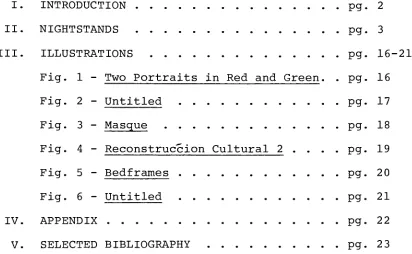
CONTENTS
I.
INTRODUCTION
pg.2
II.
NIGHTSTANDS
pg.3
III.
ILLUSTRATIONS
pg.16-21
Fig.
1
-Two
Portraits
in
Red
andGreen.
. pg.16
Fig.
2
-Untitled
pg.17
Fig.
3
-Masque
pg.18
Fig.
4
-Reconstruction
Cultural
2
.... pg.19
Fig.
5
-Bedf
rames pg.20
Fig.
6
-Untitled
pg.21
IV.
APPENDIX
pg.22
[image:5.521.56.468.168.422.2]LIGHTDARKSIMPLECOMPLEXDEEPSHALLOWSPACEPUSHPULLIN
FRONTINBACKTIMECONTAINMENTESCAPELOOSETIGHTPRESENT
PASTPORTRAITSREDRAWMUTEGREENUNIFICATIONISOLATION
Equilibrium:
A
state
of
balance
between
two
or
moreforces
acting
upona
body
such
that
there
is
nochange
in
the
state of rest or motion ofthe
body.
Dr
awing
together
commonlinks
in
my
imagery,
I
have
uncovered
astrong
concern
for
the
term
equilibrium.This
equilibrium
is
comprised oftwo
majorforces;
simplicity
and
complexity-My
interest
wasin
fusing
the
reductive
singularity
of anon-objective
colorfield
space,
with amulti-layered,
eclectic,
and personal pictoriallanguage.
The
primary
purpose
ofthis
synthesis
wasto
achieve
abalanced
orchestration oflanguage,
in
support
of a common or universalsingularity
in
terms
of expression.SIMPLICITY
REDUCTION
WORD
COMPLEXITY
SINGULAR
SUBTLETY
(sim'pel)
1.
CONSISTING
OF
ONE
THING:
SINGLE:
UNCOMBINED
COMPLICATED
INVOLVED
FEAR
n.A
WHOLE
MADE
UP
OF
INTERWOVEN
OR
CONNECTED
PARTS
DIFFICULTY
ESSENCE
RECONSTRUCTION
PURE
5.
OF
HUMBLE
RANK;
LOWLEY
MARKS
TRUTH
HONESTY
(kom'pleks)
PUSH
COMPLICATED
STRUCTURE
INVOLVED
INTRICATE
PULL
OBSESSION
ONE
TWIST
COMPOSITE
FOCUS
PUSH
BELIEF
PUSH
CONSCIOUSNESS
EDGES
2.
A
GROUP
OF
INTERRELATED
FEELINGS
DESIRES
MEMORIES
IDEAS
REACH
FUNCTION
REPRESSION
UNIT
FAITH.
I
have
often seenthe
complexitiesin
my
imagery
as
a
representation ofintellect,
or asymbolic
culmination
of all
that
I
have
learned
as anacademic
artist.
In
this
light,
simplicity
canbe
seento
represent
avision of
the
innate,
ayearning
for
the
primitive,
orart
and
so-called
life.
Through
my
image-making
process,
I
have
discovered
two
fundamental
levels
of operation.These
levels
further
support
my
thoughts
concerning
equilibrium.
The
first
level
encompasses
the
tools
of
academia.
These
tools
are
combined
withlessons
in
order
andlogic,
producing
systems
from
whichto
build
andconstruct
avisual
world.
The
secondlevel
deals
with a moreinnate
or subconscious system ofoperation.
Its
illusive
lack
of structurebecame
very
interesting
to
me.Though
I
leaned
toward
this
interest,
I
found
that
both
levels
stayedin
fundamental
balance,
reinforcing
equilibrium.
This
balance
allowsme
to
usewhat
I
have
learned
coupled with anintrinsic
orless
systemized
tract
of
innate
knowledge,
resulting
in
aholistic
balance
ofpicture-making
attitudesconcerning
the
simple
andthe
complex.Modern
manhas become
programmedto
think
logically.
From
the
beginning
ofhis
education,
he
is
taught
to
systemizehis
thought
processes,
reinforcing
order andlogic.
It
is
my belief
that
ourdecisions
do
not always correspondto
an orderedlogic.
We
allhave
"thought
clouds".These
"clouds" arethoughts
whichare not a
logical
succession of acts arrangedin
perfect sequence.For
example,
the
things
wehave
experiencedin
adream
orfrom
points
in
time
that
remainunfixed,
are as real andimportant
to
us now as our most current experiences.
Ralph Waldo
Emerson
stated
that
dreams
possess poeticintegrity
andtruth.
He
believed
that
in
adream
we are not obligatedto
deal
with pre-set systemsof order and
logic.
We
are giventhe
freedom
to
experienceanything
surface unencumbered
from
the
confines ofeveryday
control.I
became
interested
in
this
absence of chronologicaltime
andbegan
exploring
its
timeless
universefrom
the
point of view oftruth.
Truth:
1.
The
state
orcharacter
ofbeing
true
in
relation
to
being,
knowledge
or
speech.2.
conformity
to
fact
orreality.
3.
that
whichis
true,
astatement
orbelief
that
corresponds
to
the
reality.We
meetmany
irrational
and ambiguous real situationsin
ourlives.
What
is
amusing
to
meis
that
people often complain whenconfronted with
these
same situationsin
a work of art.They
seemto
be using
the
premisethat
the
work was madein
orderto
explainor reassure man about
the
world.I
do
notbelieve
artis
madein
orderto
explain or reassure.A
work of artis
akind
ofconsciousness.
Just
asin
life,
the
world would not exist at allwithout
the
consciousness which perceivesit.
The
sameis
true
about a work of art.
The
things
told
aboutdo
nottruly
existoutside
the
tale.
The
reality
of a work of artis
dictated
by
its
creator.The
truths
investigated
are relativeto
areality
that
is
perceivedby
the
artist.I
aminterested
in
the
idea
ofa
fundamental
truth.
A
truth
commonto
an enigmatical universewhich exists
beneath
the
surface ofreality,
as perceivedby
natural vision.
Anytime
I
presupposesomething,
I
create adistance
from
the
truth.
"2Robert
Rauschenberg.
Barbara
Hodik.
Man
andHis
Symbols;
Information
citedRochester
New
York,
Rochester
Institute
ofTechnology,
April
12,
1983.
2
As
I
continuedmy
explorations,
I
began
developing
my
ownattitudes about working.
I
found
working
direct
and with greaterspontaneity
would evoke anhonesty
that
wascoming
closerto
what
I
felt
to
be
true.
I
began gathering
found
information
whichthrough
an evolutionbecame
very
selective.These
more selectivepieces of subject matter
bagan
to
surface as akind
ofquote,
helping
to
reinforce conceptby
means of repetition(babies,
fish,
star
motif,
figs.
1-6).
These
elements were chosen and usedinitially
for
their
visual excitement.At
the
sametime
they
possessed an oblique and
timeless
quality
that
wasslowly
becoming
an obsessive
interest.
Metaphysics
:The
division
ofphilosophy
whichincludes
ontology,
orthe
science ofbeing.
My
preoccupation
with
the
feeling
of
timelessness,
developed
into
an
interest
in
metaphysics
and
surrealism.
I
always
shy away
from the
term surrealism,
due to
scars
left
by
the blunders
of
the
official
Surrealist
movement
(primarily
the
painting discipline).
Surrealism in
painting,
amounted
to
nothing
more
than
a
collection
of
witty
fantasies,
wet
dreams,
and
agoraphobic
nightmares
from
a
3
meagerly
stocked
dream
world.
Its only
merit
was
its
subsequent
influence
on
younger
artists
such
as
Jackson
Pollock.
"Only
when
its liberitarian
rhetoric
helped to
nudge
Pollock
and
others
into
a
new
kind
of
irreverent
abstraction,
did
the
Surrealist
mandate
for
painters
seemto
make
wide
creative
sense."
Susan
Sontag.
On
Photography;
New
York,
New
York,
Dell
Publishing
Company,
Inc.,
1979,
p.51.
The
painters
of
the
Surrealist
movement
held
a
prudent
distance from Surrealism's
contentious
ideas
of
blurring
the
lines
between
the
intended
and
the
unintended.
Their
technical
virtuosity
endorsed
craftsmenship,
while
limiting
the
chance
of
happy
accidents.
"Surrealism
has
always
courted
accidents,
welcomedthe
uninvited,
and
flattered
disorderly
presenses."My
link
to Surrealism
was
not
with
the
manner
and
style
from
which
they
executed
their
beliefs,
but
rather
with
an
indigenous
mood
or
atmosphere
exhibited
in
their
work.
I
was
of
the
mind
to
believe that Surrealism held
a
spiritual
link
with
the
ambiguous
universe
I
was
so
desperately
in
search
of.
"The
artsin
whichSurrealism
has
comeinto
its
own
are
prosefiction
(as
contentmainly,
but
much more abundant and
more
complexthematically
than
that
claimedby
painting)
,theater,
the
artsfi
of
Assemblage,
and mosttriumphantly
photography. "While
most
of
the
pedigreed
Surrealist
candidates
(painting,
prose,
and
poetry)
have
all
but dropped
out
of
the
race,
photography,
by
its
nature
will
continue
to
be
a
prime
contender.
Apparently,
photography is
the only
artform
that
is natively
surreal.
"Surrealism
lies
at
the
heart
of
the
photographic
enterprise:in
the
very
creation
of
a
duplicate
world,
of
a
reality
in the
second
degree,
narrower
but
more
dramatic
than
the
one
perceived
by
natural vision."Susan
Sontag.
On
Photography;
New
York,
New
York,
Dell
Publishing
Company,
Inc.,
1979,
p.52.
Susan
Sontag.
p.51.
It
was
this
interest
in
photography's
native
surreal
ity
that turned
me
toward the utility
and
accessibility
of
photography.
I
began analyzing its
effect
on
my
imagery.
I
soon
discovered
that
a
large
portion
of
my
visual
language
had been
acquired
by
means
of
photovision.
"Photographs
seem,
in
a
world
littered
with
photographicrelics,
to
have
the
status
of
found
objectsunpremeditated
slices
of
the
world.
Thus, they
trade simultaneously
on
the
prestige
of
Q
art
and
the
magic
of
the
real."LOOK
1.
THE
POWER
OF
PERSONS
OR
THINGS
TO
PRODUCE
EFFECTS
ON
OTHERS
FUSE
4.
A
RESULT
(AFEK'TID)
2.
MOVED
EMOTIONALLY
POWER
APPLY
DISREGARD
TIME
POWER
RESULTING
FROM
POSITION
(IN'FLOO-ENS)
ACTIONS
OR
THOUGHTS
NOTES
WORKING
FANCY
3.
TO
ATTACK
OR
ATTAIN
AS
PART
OF
THE
BODY
GROWTH
(AF'IKS)
DISEASE
MENTAL
IMPRESSION
OF
THAT
WHICH
PRODUCES
IT
(E-FEKT')
CAUSE
CHEMISTRY
SOUL
REALIZATION
UNDERSTANDING.
As
I
began
further
investigation
ofmy
interests
in
the
notions oftimelessness
,I
began
to
study
the
workof other artists who exhibited similar concerns.
In
doing
so
I
drew
from
the
energy
oftwo
artists who served asgreat
inspiration
for my
creative search.Susan
Sontag.
On
Photography;
New
York,
New
York,
Dell
Joseph
Cornell
(1903-1972)
"Joseph
Cornell's
artis
adiagram
ofthe
organicuniverse,
endlessly
allusive,
joining
in
a
single emotional9
tone
the
distant
andthe
dissimilar."My
primary
link
withCornell
was
his
concernfor
the
extractionof
time.
His
extended
fugue
ontime
wasdirected
by
his
attitudestoward
the
preservation
of culture.History
was a great
influence
to
him.
His
primary
interest
in
history
wasn'tjust
on
its
sequencedevelopment
andprocess.
Cornell
was
searching
for
away
in
whichthe
continuity
ofthe
past couldbe
mapped out and sufficientconnections
orlinkages
couldbe
established.His
attempts
to
reinstateculture,
by
the
association ofobjects
werevery
similarto
my
interests
in
the
idea
ofa common
truth.
His
fusion
of artifactsfrom
past andpresent
cultures,
were a greatinfluence
on me.I
began
investigating
the
juxtaposition
of varied elements withthe
intent
ofreaching
a similarfeeling
of associationand emotional continuity-
(fig.
3-5)
.In
giving
newlife
to
objectsfrom
time
past,
Cornell
shares with mean
interest
in
the
timeless.
I
admirehis
successin
objectifying
the
past.Cornell
treated
the
past
notas
a
history
of stylesfrom
whichto
makeconnections,
but
rather as a complextreasure
chest of subjectsfrom
which
to
abstract.Brian
O'Doherty.
American Masters Voice
andthe
Myth;
New
York,
New
York,
Random
House,
Inc.
, p.280.
10
10
Mark
Rothko
(1903-1970)
"Mark
Rothko's art
voices
an
absolute spokenin
terms
of
eternity,
and asensation
often spoken ofin
11
terms
of time."My
link
withMark
Rothko
is
his
treatment
ofspace
andhis
reductive
means ofachieving
mood
and
emotion.
His
color
fields
were an attemptto
refine
dialogue
to
asingle
word.Though
reductiveand
singular,
Rothko
's
worktakes
on anintrinsic
plurality.The
viewer
is
given
immense
possibilities ofmood,
without
the
confinement
of a set context.His
painting
utters
asingle
wordinsistantly-
When
it
is
viewed,
everyone
hears
it
differently.
I
share
withRothko
the
idea
of conflict andbalance
The
persistant
repetition ofhis
interest
in
light
andcolor,
stretched outfor
overthirty
years.Kierkegaard
describes
true
repetition as eternity-In
this
light,
Rothko'
s
repetition of concept parallelsmy
interest
in
the
extraction oftime.
The
idea
of aneternity
createdby
the
infinite
repetition of a conceptionleads
us
to
an escape
from
time.
This
pursuitis
then
balanced
by
conflicting
changesin
mood.The
moods causedby
light
and color change
from
canvasto
canvas,
finding
away
to
destroy
repetition,
and reinstatethe
notion oftime
asrecollection.
This
affirmation of varied moodsexalts
notions of
time
anddestroys
any
dreams
oftimelessness
12
Brian
O'Doherty.
American Masters
Voice
andthe
Myth;
New
York,
New
York,
Random
House,
Inc.,
p.165.
12
153-187-11
"I
became
apainter
because
I
wantedto
raisepainting
to
the
level
of
poignancy
ofmusic
and
poetry. "13
One
of
my
most
important
connections
with
Mark
Rothko
is
his
yearning
for
another
place
in
time.
He
was
not
acolorist
in
the
sense
that
he
wasdetained
by
its
immediate
properties.
His
color
is
aftersomething
else.
I
share
with
him,
abelief
in
anotherlevel
ofreality;
areality
that
encompasses
a commonsingularity
in
terms
oftruth.
Rothko
recognized
the
possibilitiesof a
light
and colorthat
wouldsurvive
the
destruction
of
painting,
opening
the
way
into
a universein
whichthe
individual
mind
reveals
andrecognizes
itself.
My
interests
in
Cornell
andRothko
may
appearto
be
a visualdichotomy
in
regardto
manner andform.
This
dichotomy
returnsme
to
the
idea
of equilibrium.Cornell's
influence
mightbe
best
representedin
my
development
ofan
eclectic
visuallanguage.
This
influence
restsin
support
ofmy
interest
in
the
complex.Mark
Rothko
's
work
influenced
my
investigations
of a commontruth,
supporting
my
compulsionfor
reduction and simplicity.Though
Rothko
andCornell's
investigations
were channeledthrough
different
avenues ofapproach,
I
discovered
that
I
shared withthem
a number of commoninterests.
Both
artists shared aninterest
in
the
idea
of auniversal
truth.
Cornell's
complexassociation
ofobjects
joined
together
the
distant
andthe
dissimilar,
in
anattempt
to
exhibit cultural continuity.Rothko
's
interest
in
a universaltruth
was portrayedby
his
devout
faith
in
light
and color.Cited
in
O'Doherty,
p.153.
Diane
Waldman.
Mark
Rothko,
A
Retrospective;
New York
12
I
share
with
Rothko
and
Cornell
alink
to
Surrealism.
The
organization
of
Cornell's
Pictorial
language
takes
on
the
tradition
ofcollage
asaltered
by
the
Surrealists.
"His
images
exhibit
psychological
scenarios whosesubject
and
object
is
enigma,
whose
syntaxis
dislocation
1
5
and
whose
temporal
context
is
dream."To
Rothko,
the
Surrealist
tradition
ofthe
"poetic
picture"became
significant
in
dissolving
Cubist
structure with atmosphere.Sharing
the
influences
ofSurrealism,
Rothko' ssensitizing
of
the
total
surface
gives
his
workintense
metaphoricalpotential.
In
its
alloverness,
his
atmosphere acknowledges1
fi
the
surface
asflat
yet makes aninfinite
depth
accessible.Process:
1.
A
detailed
method ofdoing
something.2
.A
series ofmeasures
or changes.3
.A
progressive
course.Stones
aim smoothtalking
to
me and water will wipe offage
find
registrationtoo
bad
for
compensation scraperbars woodenleather
render ourthoughts
heartful
core mistakenprocessing
transition
rubup
buff
down
counteretchtransition
dial
abrew
butt heads
pressure settwo
lumps
rocking
horse
lithotine
too
long
too
shorttransition
gulp
and severalbutchers
apronstie
KU
leather
proof newsprintimage
aftermathfelt
deletions
commonto
applesoranges
snakeslip
fountain
colored setsjazz
expressochemistry
pushDaniel
Smith
toward
help
light
graintransition
saints open
heavy
pallet notack
modify
greaseGriffen
powerup
full
impression
re-etch places ragtime arches overbedframes
refinishedrunning
for
the
mustardbreak
ribbonslike
the
holding
drawers
too
full
completion contemplationdeducting
punchestransition
glint.Brian
O'Doherty.
American
Masters
Voice
andthe
Myth;
New
York,
New
York,
Random
House,
Inc.,
p.274.
1 fci
Diane Waldman.
Mark
Rothko,
A
Retrospective;
New York
13
The
evaluation
of
an
artist's
achievement
seems
to
depend
to
some
extent
on
a
comparison
between
the
work
of
art
and
nature."
This
comparison
can
be
traced
historically
to two
major
points
of
view.
One
is
that the
artist
deserves
praise
for
faithfully
copying
nature
in
his
work.
Evidence
of
this
can
be
traced
back
to
as
early
as
the
sixth
century B.C.
Greek
myth
regards
Daedalus
as
the
creator
of
works
which
were
endowed
not
just
with
movement,
but
also
with
speech.
The
second
point
of
view
is
based
in
accordance
with
Plato's
theory
that
art
should
surpass
the
model
of
nature
(my
interest
rests
here).
Plato
believed that
by
improving
on
the
model
of
nature,
an
artist
succeeds
in realizing
an
"ideal"beauty
in his
work.
The term
ideal
is defined
as
that
which
exists
only
as
a
concept
of
the mind;
a
standard
of
supreme
perfection.
This
unequivocal
standard
rests
magically in the
subjective
mind
of
its beholder.
"Magic
:1.
The
art or pretence ofseeking
to
control events
by
the
use ofspell,
charms,
etc.2.
An
unexplainableinfluence;
enchantment.In my
opinion,
the
stronger
the
belief in
the
"magical
"function
of
an
image,
the
less
important
is
the
nature
of
that
image.
For
example,
in
a
certain
phase
in
the
development
of
children's
play,
the
child
has
little interest in the intrinsic
properties
of
a
toy.
The
effectsof
imagination
are
so
great
that
a
stick
becomes
a
hobbyhorse,
a
box is
turned
into
a
ship,
or
a
broom
into
a
gun.
The
same
magical
transformations
are
applicable
to
a
work
of
art.
17
Ernst
Kris
andOtto
Kurz.
Legend, Myth,
andMagic
in
the
Image
ofthe
Artist;
New Haven
andLondon,
Yale
University
Press,
1979,
p.61.
18
61-67-14
In my
development
of
Reconstruction
Cultural
2,
my
emphasis
was
on
taking
objects
out
of
context
and
reinstating their function
to fit my
pictorial
needs.
(Example,
baby
inside
fish,
figure
4).
It
is
my
belief
that
when
a
high
degree
of
magic
power
is
attributed
to
an
object,
its
resemblance
to
nature
is
rarely
of
19
decisive
importance.
The
understanding
of
this
magical
transformation
is greatly
affected
by
man's
inclination
to
equate
the
picture
and
the
original
it depicts.
The
artist's
development
of
his
own
symbolic
language
may
bridge
a
gap
between
the
viewer's
perception
of
the
picture
and
the
depicted.
As
stated
earlier,
man's
reliance
on
order
and
logic
often
inhibits his
will
to
understand
things
which
are
not
readily
accessible
to
his
preestablished
systems
of
understanding.
It
is
my belief that the understanding
of
an
artist's
true
intent
is
not
always
necessary in the
appreciation
of
the
work
of
art.
However,
I
do feel
it is
important for the
viewer
to
be
educated
to the language
of
art
in
order
to
better
understand
and
judge
artistic
achievement.
"A
picture
lives
by
companionship,
expanding
and
quickening the
eyes
of
the
observer.
It
dies
by
the
same
token.
It
is
therefore
a
risky
act
to
send
it
out
into
the
world.
How
often
it
must
be impaired
by
the
eyes
of
the unfeeling
and
the cruelty
of
the
impotent,
who
extend
their
affliction
n ..20
universally.
Ernst
Kris
andOtto Kurz.
Legend,
Myth,
andMagic
in
the
Image
ofthe
Artist;
New Haven
andLondon,
Yale
University
Press,
1979,
p.77-Diane Waldman.
Mark
Rothko,
A
Retrospective;
New
York,
15
THE
AMERICAN
SUBLIME
How
does
one
stand
To
behold
the
sublime,
To
confront
the
mockers,
The mickey
mockers
And
plated
pairs?
When General
Jackson
Posed
for
his
statue
He
knew how
one
feels.
Shall
a
man
go
barefoot
Blinking
and
blank?
But
how does
one
feel?
One
grows
used
to the weather,
The landscape
and
that;
And the
sublime
comes
down
To
the
spirit
itself,
The
spirit
and
space,
The empty
spirit
In
vacant
space.
What
wine
does
one
drink?
What bread does
one
eat?
16
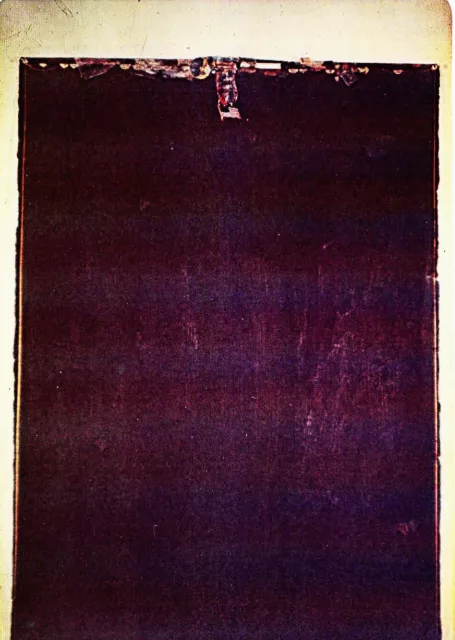
Fig.
1
Two
Portraits
in Red
andGreen
-29"x 42"
[image:19.521.30.486.20.661.2]17
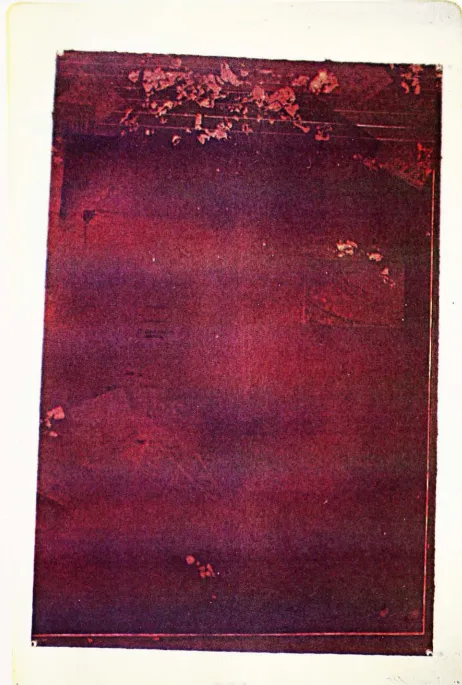
Fig.
2
Untitled
-22"
x 33" -
1983
[image:20.521.26.478.31.708.2]18
n
X
00 H
CTi TD
rH C
QJ
1
P-PH
r <;
en
<n c
H
X
TJ
z QJ
C\l 4-1
Csl W
H
1 rH
QJ cd
3 H
a*
T3
w Q)
cfl
s
s
en
0*">,
,H.i|ii"i'-J'"i'i'W. ..iiwiwiiiMipg!
19
*
i .
\
'
\\
0
>e*%
O0
CTi
CO n
CNl
e-Nl
CO )-l
3 CJ
C
O H
3
Sm
4-1
w
c
O
a CD
'., i x#
... . .
20
<n
oo
CTi .TH* rH X
H
1 TO
c
-QJ CO a. cn a
<
X
a
~H <f ** TO
QJ
1 4-J
CO CO H
<D .
1 S3
cd cd
u H
cw TO TO QJ QJ
S
m
21
Fig.
6
Untitled
- 22"x
33"
-
1983
[image:24.521.27.490.27.713.2]22
APPENDIX
List
ofMedia:
1.
Figure
1
2
.Figure
2
3.
Figure
3
4.
Figure
4
5.
Figure
5
6
.Figure
6
Acrylic
paint,
found
objectson
paper.
Color
xeroxtransfer
material,
found
objects,
serigraphy
onpaper.
Color
xeroxtransfer
material,
found
objects,
lithography,
prisma
color,
rice paper withpolyurethane,
serigraphy
on
paper.
Color
xeroxtransfer
material,
found
objects,
lithography,
prisma
color,
rice
paper
withpolyurethane,
serigraphy
onpaper.
Acrylic
paint,
Acrylic
enamelspray
paint,
color xeroxtransfer
material,
found
objects,
goldleaf,
lithography,
prisma
color,
rice paper with
polyurethane,
serigraphy
on
paper.Acrylic
paint,
Acrylic
enamelspray
paint,
color xeroxtransfer
material,
found
objects,
gold
leaf,
lithography,
prisma
23
SELECTED
BIBLIOGRAPHY
Blackwood,
Michael.
Robert
Rauchenberg,
A
Retrospective
(A
45
minute
documentary
on
the
artist)
;
New
York,
New
York,
Blackwood
Productions,
1979.
Cage,
John.
M
;
Middletown,
Connecticut,
Wesleyan
University
Press,
1974.
Hartigan,
Lynda
Roscoe.
Joseph
Cornell;
New
York,
New
York,
The
Arts
Publisher,
1980.
Hodik,
Barbara.
Man
andHis
Symbols;
Information
citedRochester,
New
York,
Rochester
Institute
ofTechnology,
April
12,
1983.
Kris,
Ernst
andKurz,
Otto.
Legend,
Myth,
andMagic
in
the
Image
ofthe
Artist;
New
Haven
andLondon,
Yale
University
Press,
1979.
O'Doherty,
Brian.
American
Masters
Voice
andthe
Myth;
New
York,
New
York,
Random
House,
Inc.
Sontag,
Susan.
On
Photography;
New
York,
New
York,
Dell
Publishing
Company,
Inc.,
1979.
Waldman,
Diane.
Mark
Rothko:
A
Retrospective;
New
York,