
Art and ephemera post-structuralist perspective: visual art, ephemera and environment
141
0
0
Full text
(2) Part One. Context.
(3) Plate 1.1 Wolfgang Laib 2005 Pollen from Pine Art Gallery of New South Wales [photograph Lord]. Plate 1.2 Rirkrit Tiravanija (1998 ongoing project) the land. Plate 1.3 left Gustav Metzger 1965 Auto-destructive Art Acid Nylon Technique [photograph, Henri 1974] Plate 1.4 right Gustav Metzger 2007 Aquivalenz Shattered Stones Muenster Sculpture Project [photograph Muenster Sculpture Project Catalogue]. Chapter 1. 3. Anne Lord.
(4) Preface The contested terrain of post-structuralist theory and ‘agentic positioning’ informs this study. My position as a North Queensland regional woman artist is foregrounded in this research, as one of the participants with a vested interest in how ephemera can contribute through issue-based art to visual arts discourse. Visual arts processes involving ephemera led to asking how the canon can be rewritten. I challenged certain adopted practice and asked how it could be reviewed, and this inquiry forms my thesis ‘art and ephemera’. Participants were chosen for their interest in visual arts as a way to communicate issues of our time. Two mentors who helped to explicate this role are Wolfgang Laib and Gustav Metzger. My work is incorporated to define how I will use art and ephemera in and beyond the thesis. Thus the words artist and researcher are used interchangeably in my autobiographical voice.. Art and ephemera can bring attention to the state of the natural environment, and bring awareness to the issues that I wish to address in my work: shortage of water; threats to natural environment; global warming; overdevelopment in places where this could be re-considered; and our throw-away attitude in a society of consumerism and abundance of manufactured consumable objects.. Contemporary artist Rirkrit Tiravanija is significant for his sustainable work on site and Mierle Laderman Ukeles provides maintenance as art. Primary data includes correspondence with mentors and models in contemporary art and their practice. Secondary data includes publications about models from the late twentieth century. Precursor models were established as a key to understanding the aesthetics of art and ephemera and include surviving art icons from 600 and 1300 in East and West, in states of disrepair or aged appearance. These are discussed as ‘aged icons’ and demonstrate art in states of erosion, for instance carvings and images on cliffs and in caves, specifically in the Buddhist Yungang Caves, Northwest China.. Chapter 1. 4. Anne Lord.
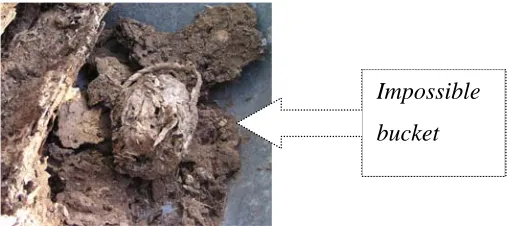
(5) The capacity for art to show disintegration and change as a process meshed with the issue-driven aspects that facilitated my investigation. In pursuing an area of art that resonated with my conceptual rationale for making art, the field of study offered creative and practical regenerative options. Eroding materials that would be considered of grave concern to a curator of Fine Art, as art material, contribute to art and ephemera. For instance, burnt incense, delicate pollen, burnt paper and humus, are prominent in the thesis. The enquiry for ‘art and ephemera’ leads to adopting digital and pedagogical strategies.. Plate 1.5 Sheela Gowda 2007 Collateral incense on stainless steel [photograph Lord] Plate 1.6 Wolfgang Laib 1992 sieving hazelnut pollen for installation Centre Pompidou Paris 1992 [photograph Fondation Beyeler Basel 2005]. Plate 1.7 left Chia Ming Cheng 2005 Burnt Joss Papers joss papers in bowl [photograph Lord] Plate 1.8 right Anne Lord 2005 Impossible Bucket tree humus and glue. Chapter 1. 5. Anne Lord.
(6) Chapter One. 1.0 Ephemera in Art, Culture and Society. Introduction In this chapter I introduce and place my topic in a visual arts context. In order to re-contextualise aspects of visual art and introduce ephemera as an area of art praxis that has not been privileged or considered of great significance I challenge an existing canon in the arts industry, that of preserving art at great cost. Though many artworks should be preserved, an area such as ‘art and ephemera’ has in its nature the capacity to engender new ways of thinking about art.. My conceptual rationale for creating instability in artwork developed in tandem with a dialogue for change in attitude about detritus and ephemera in contemporary society. Visual art in concert with ephemera calls for acceptance of the beauty ˚ 1 in old, worn and decaying objects. The study ‘art and ephemera’ speaks ˚ for a heightened appreciation of the natural processes that contribute to sustainable practices such as recycling of material in the broader environment. In this sense artworks showing responsibility for the product and the environment were intricately linked with Bourriaud’s (2002) ‘relational aesthetics.’. 1. The symbol ˚ signifies the word is discussed in the Glossary in relation to art and ephemera.. Chapter 1. 6. Anne Lord.
(7) In discussing new options for visual art, Buskirk (2005) calls ‘attention’: … to how characteristics and methods associated with movements that originated in the 1960s and 1970s have subsequently become part of a far less sharply differentiated series of options taken up and recombined by succeeding generations of artists (Buskirk 2005, 16).. These options blur the boundaries between art praxis and natural environment and invite potential for the study, ‘art and ephemera’. Language, such as Butler’s ‘performative object’ ˚ (2005 Pers. Comm. 2) as opposed to the ‘performative body,’ is discussed as an aid to theoretical positioning and as the signpost of theoretical discourse. Chapter Two incorporates language and key terms from post-structuralist ˚ and visual arts theorists.. My approach to discussing sustainability of place shares a sense of aesthetics in relation to environmental wellbeing investigated in cultures in and beyond Australia. The lessons of long-surviving cultures are crucial to our understanding of the environment and the lifestyle/s we choose. Hawkins’ (2006) investigation of ideas in connection with choice and lifestyle offers an understanding about a new sense of living with and taking responsibility for our products and discards.. Background and Context of the Study Ephemera as a term applied to visual art consists of theme, concept and aligned practice. The theme involves theoretical considerations of ephemera as a process of change and contributes to the focus of this research project. Various backgrounds to types of ephemeral art enabled an investigation into artists’ concepts in relation to key issues driven by processes of change in art material. Some of this art as creative process can epitomize environmental concerns through metaphor, where the art project is proposed as a minor parallel experience for global processes of ephemera. Subtle art processes can mirror,. 2. While accessing the NGA research library for this study I explained my interest in the way artists used their art as ephemera. Butler responded that I was interested in the “performative object” as opposed to the “performative body”. Butler’s phrase is attributed throughout the thesis.. Chapter 1. 7. Anne Lord.
(8) on a small scale, occurrences in climate change and reflect subsequent catastrophic effects of physical change in the natural environment.. This research includes contingent occurrences impacting on humans and animals and how these occurrences assist an appreciation of natural environment and change in visual art. The study involving icons of change proceeded with investigations of the processes of material change over long deep time 3. This change is shown in rusting implements found in the earth (Plates 1.12 and 3.3). In Table 1.1 columns for art industry archives ˚ and artist’s tools clarify the context for archive and ephemera in art. The table assists in highlighting binaries or opposites and an investigation of possible tools for the research project.. Table 1.1 Art Industry archives and the researcher ~ artist’s tools Art industry archives. The artist’s tools for ephemera. Objects / icons distinct from the. Objects / icons indistinguishable from. natural environment and their. the natural environment - potential. potential as a commodity or artefact. waste icons returning to earth. Artwork in museums (archived). Artwork on sites (ephemeral). Valuable icons. Icons as anti-commodity statement. Icons not affected by ephemera. Icons undergoing ephemeral change. (archive or accumulated waste). (recycled waste – icon – change). Paintbrush, the printed page (high. Rusted tins, the tool, mattock, tools of. impact environmental footprint). change (low impact footprint). My study aims to empower the artist as recycler and agent ˚ to explicate concepts and practices involving art and ephemera. I confirm the value of old and preserved art and move to a new area of proposed acceptance for alternative art praxis.. 3. A term applied by Ross Gibson in discussion about the work involving slow processes of art and ephemera. This term is referred to throughout the thesis.. Chapter 1. 8. Anne Lord.
(9) Accepted Histories Australia’s geographic position, sharing longitude with the Orient, facilitates a post-colonial re-visiting of the way that colonial history was positioned primarily as Occidental. Both readings impact on this study. In Chinese landscape painting a human figure was often small and seemingly insignificant as it was placed at the bottom of a gigantic cliff or almost imperceptible amongst the winter snow or showering leaves. The placement and scale were commonplace in recognising the impact of nature on humans and how they would be perceived in culture. Similarly in Northern Flemish painting, Pieter Brueghel the Elder allowed his figures to be consumed by nature, notably so in The Fall of Icarus. Giorgione a fifteenth century European artist painted the landscape without need to establish the importance of a sitter in the landscape. In other words the earth emerged as the main scope: as the landscape of painting. In ‘art and ephemera’ I value the earth and natural environment as integral to my praxis and move from earlier imaging of the land to revised approaches to the topic (Appendix I, Background - Landscape to Ephemera).. Our cultural perception of the importance of land and place, and how dependent humans are on these for their wellbeing in physical, spiritual and mental health, relates to our understanding and knowledge of the world we live in. These changing concepts are interpreted visually in Appendix I, as accepted history, a chronological overview of art since the 1700s aligned with landscape and environment to contemporary visual art. Mitchell (1994) and Schama (1995) have each contributed to an appreciation of landscape in history and interchangeable economic and social causes and effects of human interaction with the natural environment.. Communication with a global community is significant for facilitating change of attitude, and I identify post-1990s contemporary art as a significant part of this communication. Since the 1980s, artists and communities all over the world recognise that global climate change is of concern to humanity (Stern 2007). Artists ask, as if it might be too late already, ‘What is it we could do for our environment?’ The hesitance / resistance of our questions bring with it. Chapter 1. 9. Anne Lord.
(10) alarm in response to our growing awareness of what has already happened: though the air looks clear, it might not be what it seems. The art we make to represent and interpret our culture and society can reflect the idea, that we have reached a stage where we know that human pollution is endemic in the environment. The potential paradigm shift in acknowledging art and ephemera might assist deeper understanding of environmental fragility and change.. Art practices referencing and alerting attention to environmental issues through natural ephemeral processes have emerged since 1960s art genres, such as Environmental Art (Denes 1993), Land Art (Tiberghien 1995), Eco-Art (Matilsky 1992) and ‘new genre public art’ (Lacy 1995). The Land Art movement (1970s - 1980s) instigated projects of reclamation ˚ and often aspired to comment on environmental threat. In addition 1970s to 1980s art included more problematic instances of degradation (Lippard 1994, 1984; Matilsky 1992). Those artists investigating issues, such as waste through recycling programs and water shortage through management, in order to create art, provide relevant models for this study. There are aspects of Arte Povera ˚ and Fluxus ˚ arguably ongoing that are relevant in the twenty-first century, even though major issues have changed since their inception. Christov-Bakargiev (2002) states Arte Povera originated during 1967 - 1970s, and Kirker (1993) places the Fluxus movement from late 1960s to early 1970s. The materials used in Arte Povera provide a background for art and ephemera, as do some used in Fluxus, though the aims of the two groups were very different from that proposed here. I refer to accepted concepts and practice as precursors to art and ephemera.. Immateriality The material and immaterial ˚ become significant aspects of artwork and are identified and theorised for possible links with art and ephemera. Lillemose (2006) returns to the term dematerial defined by Chandler (cited in Lippard 1973). Lillemose and Krysa (2006) discuss the term immaterial as a concept in relation to digital communication systems, and provide consideration of digital Chapter 1. 10. Anne Lord.
(11) as ephemera. This has implications for new media processes with art and ephemera.. There is a metaphorical message and conceptual reason for producing the work I am investigating and for being able to let an artwork slip away. Issues of environment are evident through catastrophic change such as global warming, tsunami and drought with inherent concerns for humanity, as well as flora and fauna. Thus I correlate precursors of ephemeral art practice with the development of recent visual artists’ interpretation of change. Identification of key artworks relevant to ephemeral practice links contemporary visual arts contributions with my research focus. My art practice adopted methods from these key findings to investigate an awareness of the contemporary environmental situation through a focus on ephemeral time-based change.. In contemporary art, pluralist perspectives enrich responses to environment and the practice adopted by many artists resists any umbrella for categorisation of art. Rather, recent art has revealed a predominantly eclectic response to ephemera and change, through visual artists’ idiosyncratic methods to produce art. Issues of economic concern, environment, identity, health, and conflict, emerge in art and ephemera, or art with a planned short lifetime, thus artists could make use of art and ephemera as a metaphor for many ideas.. This thesis comes to terms with ‘position’ ˚ used by artists, writers and curators who have worked with the subject of change and ecology, through concepts and practice aligned with art and ephemera. An early strategy to find artists for this study was to ask some formative questions, such as, ‘Is there a point in artists’ careers when they would attempt to create work with no economic or archival base but would maintain a succinct focus on ephemera as a metaphor for the cyclical nature of being, natural environment, and / or spiritual significance of place? To what extent would these artists commit to art and ephemera as practice driven research?’ Do these artists focus on the catastrophic nature of the environment and the role human beings have played in this?. Chapter 1. 11. Anne Lord.
(12) I explored the emphasis on certain works of art and the manner in which they were used as an anti-commodity statement and accepted that most published high profile artists of relevance for this study would often have two streams of practice. One would be an archival stream including the traditional arts practice of preserved and saleable work. The second could be an ephemeral practice that might be documented but existed briefly as an ephemeral stance in art. This ephemeral work would contribute, through the ability of the work to play a role in memory ˚, as a key to preserving the idea of the work.. Contemporary Issues of Natural Environment Multiple issues were raised in relation to the synergies between ephemeral art and the contemporary issues of environment and change. Could art and ephemera contribute to a better understanding of climate change, anticommodity issues and valuing waste? Similarly ‘anti-commodity’ in art challenges the art market as a viable place for creative expression. Many artists realise, in their work and lives, that they can recycle for art, as well as keep and appreciate old and worn icons. In valuing waste, artists are often contributors to efficient recycling and ownership of this problem. Marketing in an age of commodity-driven advertising may be rife and could operate against my quest to contribute to valuing waste. My research interrogates what environmental message my practice could communicate. In the documentation of this, I address how digital imagery plays a part in reducing waste.. Preserving objects and artefacts involves a symptom of a society that is bent on the creation of the new, and also preserves many things at great cost to the environment. My study challenges the culture of consumption and the escalation of want, and what preservation practice stands for. In doing so I have had to ask how I will distinguish between the preserved and valuable object, and the object not to be preserved, as a lesson for sustainability. And then, there is artwork that is less important as an archive and more important as an ephemeral object that we can let go. This became my example through my art practice.. Chapter 1. 12. Anne Lord.
(13) Researcher’s Prior Knowledge Art curators, critics and directors often seek artwork or conceptual links to an artist’s complete work through searching for something that is identified as the epitome of an artist’s work. In this manner a long-standing theoretical premise can be considered an important aspect of an artist’s work. My identification of new categories in earlier research (1996) was based on existing genres 4 and I argue that my position as artist ~ researcher through earlier identification of ‘ecologically oriented art’ (Lord 1996) is of critical importance as prior knowledge for the emergence of this study.. Everything can be regenerated eventually but to recognise ways to assist the process is a practice that I can contribute to. The art objects identified for this research involve materials that enable the art object or icon to be a performative object, or ephemeron. This writing parallels my art practice (2001 - 2008), specifically new work since 2004, created and reviewed in the context of Australia’s problematic water consumption and related environmental concerns. My study and my practice show that we need to do something now about the facilitation of this practice. The challenge arose in how to empower the ephemeral as a way forward in the current ecological debates about climate change and usage of water. Initially I was identifying what kinds of questions an artist needs to consider in the usage of natural resources, such as the earth and water and how these questions would assist in the development of the study into art and ephemera. Questions could be asked of management and how people address resources as commodities. Though there might be enough to go around there are also some who will not allow the equitable sharing of such a resource, and some miss out (Gross 1997). My study contributes to a questioning of contemporary human ethics and a consideration of loss towards place, and in this way is based on spiritual questioning of human ambitions and goals.. 4. New Genre Public Art (Lacy 1995), Environmental Art (Matilsky 1992), Eco Art (Adams 1992, Adcock 1992, Bourriaud 1992, Riviere 1985) and Land Art (Tiberghien 1995).. Chapter 1. 13. Anne Lord.
(14) Research Questions A post-structuralist perspective facilitates questioning across previously discrete areas of art, natural environment and ecology. As a part of my questioning, I value pluralist responses to issues, which provide potential for the adoption of art and ephemera in environmental responses. This enables me as the researcher to cross national boundaries, to see how global environmental influences in today’s societies contribute to artists’ concepts of change. Thus poststructuralist re-positioning and challenges to ascendant aspects of binaries facilitate this investigation into older sustained cultures and their relationship with environment and change. In light of these, my study addresses aspects of current global change and aims to illuminate ˚ issues of common concern in local and global contexts, through visual art. My research questions became:. 1. What artistic means could illuminate environmental fragility?. 2. How might ‘art and ephemera’ assist in deeper understanding of environmental fragility and change?. 3. How can a post-structuralist theoretical perspective with attention to discourse analysis illuminate the juxtaposition of art, ephemera and ecology, in the early part of the twenty-first century?. 4. What does my praxis, and study of art and ephemera reveal about my commitment to the issue of environmental crisis?. 5. How might this research inform artistic directions and cross-disciplinary considerations, and inspire further research in this topic?. Reaching these questions coincided with construction of the methodology. I continued to search for the ways practice-based research could sanction ephemeral change in art for broader issues. My study contributed to insights about this art and involved the issue of what to use and throw away. For my own practice I asked where to place, how to place and when to place, an object. Chapter 1. 14. Anne Lord.
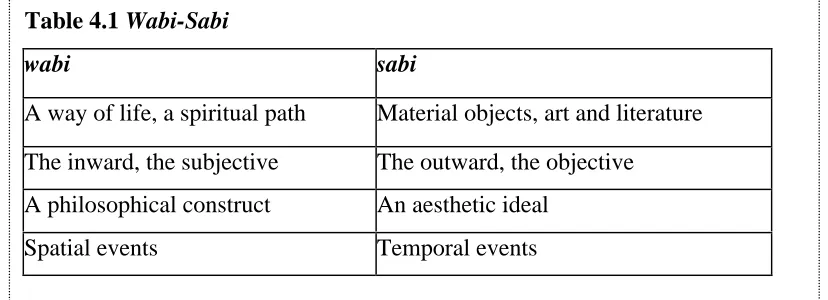
(15) or refuse (Hawkins 2006). My desire to advocate for art and ephemera has become a key area for my practice-driven research.. This study also relates to aesthetics in art through my focus on studying the old and an appreciation of the decaying, unravelling, or eroded object over time. The idea surfaces in the Japanese notion of ‘wabi-sabi’ ˚ 5 (Koren 1994), a concept the Japanese declare difficult to explain through its intricacies: one that shares aesthetic and philosophical principles with the worn and imperfect.. In addition to the concept of beauty in change over time is the capacity for practice-based research, for artists and researchers from various fields, to share a perspective about our sustainable future. Changing attitudes to disposal and removal of waste or disintegrating items underpin much scientific and humanities research and art practice (Boyle 2006, Hawkins 2006, Laderman Ukeles 1994 - ongoing). In common with their methodology is my artist ~ researcher’s reappraisal of responsibility for waste products. Fifteenth century images exist of people throwing waste and excrement out of windows to a street below. Scientists in the following centuries unravelled the mysteries of contamination in drinking water, and the correlation of bacteria and waste. The appreciation of these associations has been at the basis of many cultures’ sustained and healthy lifestyles. Now in the 2000s, humans are currently faced with threats from our acceptance of acquisition and consumption as a cultural and lifestyle goal. The threat is to the survival of the very cultures and environments that created the understanding and knowledge in the first place. This leads to my search for how art, including my practice might learn from and respond to these cultures and places. In the twentieth century we became increasingly aware of problems from effluent being sent freely into oceans, and to understand how behaviour in whales and other ocean life was being disrupted. In the twenty-first century the potential exists to take responsibility for the recycling of all waste through specialised places and ecologies. The business of recycling has the potential to. 5. ˚ Introduced on p. vii option K is a symbol that indicates the word is in the Glossary.. Chapter 1. 15. Anne Lord.
(16) produce an integration of potential nutrient for formerly barren or industrialised waste sites. Artists who investigate these issues in cross-disciplinary groups and with non-archival means are discussed in the analysis, Part Two.. New industries emerge for the reintroduction of previously ignored products, to create an extension of a cycle that has been conveniently overlooked by industrialised societies of the last two hundred years. Some visual artists have challenged the culture of consumption and neglect of the natural environment and not only accept new ways to look at problems but fabricate ways and means to address these. In some cases artists adopt art practices that do not distinguish between art, life and land: they adopt approaches, which benefit the natural environment. These artists are often my mentors.. Mentors ˚ and Models ˚ Mentors for this study are key artists predominantly post-1990s. These artists working with recognition of ephemera in their artwork as a political lever provide, through the rationale for their work, key insights into the manner in which art can contribute. They do this by asking questions about and providing answers for human interaction with the natural environment. Internationally known artists who show this concern include Tue Greenfort (2007), Rirkrit Tiravanija (1998 - ongoing) and Wolfgang Laib (1992, 2003, 2005), (Plates 1.1, 1.9, 1.10).. Chapter 1. 16. Anne Lord.
(17) Plate 1.9 Wolfgang Laib sieving hazelnut pollen for installation Centre Pompidou Paris 1992 [Photograph Fondation Beyeler Basel 2005]. Plate 1.10 Wolfgang Laib (2005), Pollen from Pine AGNSW [Photograph Lord 2005]. Chapter 1. 17. Anne Lord.
(18) Artists, such as Laib have enacted art practice about art and ecology and provide contextual background for the study through publications and communication via email. These artists are mentors for art and ephemera, and through their artworks they provide models. Models are the artworks I refer to that suggest practical considerations for art and ephemera. Key models are selected from different periods of visual art and culture. Precursor models are discussed in earlier artworks from pre-1990s and provide foundational examples.. In Australia, artists of interest include Bonita Ely (1980), Joan Grounds (1974) Jill Orr (1979) and Lyndal Milani (1985), as precursors in art and environment. Eugene Carchesio (2000), Robert Owen (1987), Andrew Arnaoutopoulos (2002) and John Wolseley (2005) contribute through their philosophical approaches to ephemera. Those artists who solely produce archival art to reference ephemera are outside the main focus of this study.. International artists, Hans Haacke (1984, 1993); Joseph Beuys (1970); Mierle Laderman Ukeles (1971 - ongoing) and Agnes Denes (1968 - ongoing) produced pertinent models for art and ephemera. Yves Klein, Anselm Kiefer, Jannis Kounellis and Claes Oldenberg have at some stage also developed work about ephemera and change. From the 1960s to 1980s Allan Kaprow, Claes Oldenberg, Robert Morris and Robert Smithson raised important concepts about our relationship to place and or site through temporary art. In the twenty-first century the influences from their art projects and ideas have mutated to form new art practices: some with significant common goals with the earlier eco-art and environmental art. These artists provide data concerning the natural environment for revised issues relative to art and ephemera.. Ephemera as a Concept in Art My topic ‘art and ephemera’ includes work intentionally developed and executed with fragile and ephemeral material and with no longevity in the usual sense of historical pieces, artwork or artefacts. Additionally, it may implode or disintegrate during the course of the exhibition, or installation. The icon or object intended to disintegrate in a short period of time may be a found item that Chapter 1. 18. Anne Lord.
(19) is already disintegrating. In whichever state, the artist has seen the potential in the ‘performative object’ (Butler 2005) similar to an identification of the objet trouvé, but different in that any desire for archiving is absent. In my study the identification and documentation of gradual transient states are important. Those artworks that use explosive, radically ephemeral elements provide comparison in Chapter Nine.. Key publications such as Baas and Jacob’s (2004) Buddha Mind in Contemporary Art and Buskirk’s (2005) The Contingent Object in Contemporary Art provide references to contemporary artists who create art with ephemeral aspects. Lumley (2000, 2004), Christov-Bakargiev (1999, 2002), Lacy (1995, 2004) and Lippard (1984, 2006) aided my cognisance of the de-material and poor material in art. Within Australia, Bond’s (2005a) writing on Laib and contemporary issues of conservation practice, Kirker’s (1993) references to Fluxus and Arte Povera, and Alexander’s (1988) references to artists who made significant use of change in concepts, provide data for my analysis.. Models from the 1960s to the 1980s re-emerge in Eco-art (Gablik 1995) and in publications, such as Matilsky’s (1992) Fragile Ecologies, Tiberghien’s (1995) Land Art, Lacy’s (1995) New Genre Public-art, and Lippard’s (1973) The Dematerialization of the Art Object. Connections between environmental concerns and social issues were accepted as key focal areas of art publication. In many of these writings a holistic view incorporated the combination of spiritual and environmental health. My study sought to redress a lesser visual arts concentration on environment and change in art publications since 2000 than was obvious in the later decades of the twentieth century. This changing state of artists working with environmental concern over the last few decades provided a gap for my investigation.. Place Though much has been created in the area of art and social change this project seeks those changes apparent in the natural environment to be used as creative Chapter 1. 19. Anne Lord.
(20) metaphors in visual art. Influential places for my own work are the environments of North and Northwest Queensland. Records from these locations and photographic archives and diaries contribute to my praxis. People in these specific locations, through attitudes and actions, have emerged as mentors for part of this investigation relating to place.. The environmental condition that I have responded to as a research artist was initially perceived and developed from frequent interaction with the dry tropics, mostly in drought-stricken natural environments. My considered response to that interaction led to deliberation over and visual interpretation of locale. Blackburn (1994) relates environment and ethics and prompted my new work as an artist concerned with environment: Most ethics deal with problems of human desires and needs: the achievement of happiness, or the distribution of goods. The central problem specific to thinking about the environment is the independent value to place on such things as preservation of species, or protection of the wilderness. Such protection can be supported as a means to ordinary human ends, for instance when animals are regarded as future sources of medicines or other benefits. But many would want to claim a non-utilitarian, absolute value for the existence of wild things and wild places; it is in their very independence of human lives that their value consists. They put us in our proper place, and failure to appreciate this value is not only an aesthetic failure but also one of due humility and reverence, a moral disability. The problem is one of expressing this value, and mobilizing it against utilitarian arguments for developing natural areas and exterminating species more or less at will (Blackburn 1994, 121).. The value of the environment and threat to it identified by Blackburn (1994) strengthened my commitment to contribute to an awareness of environmental issues. My interest in the sustainability of the natural environment and lessons to be learnt from deterioration and regeneration assisted in addressing these issues in my artwork, and identifying this in other artists’ works.. Chapter 1. 20. Anne Lord.
(21) Plate 1.11 Anne Lord (2005) metal spike drawing on paper 21 x 27 cm. Researchers have often looked at sustainability as belonging to the sciences. My study combines this with visual art through iconography that demonstrates the elements of change in environment and the gradual incorporation of the art object back into the environment. The research employs my ability as an artist to create an installation from the processes of change evident in disintegration, in primarily rural environments and literally in the earth (Plate 1.11). Key environments I worked with are predominantly deprived of water with the exception of monsoonal flooding. Extreme environmental experiences have much to do with my appreciation of ephemera, erosion and instability of elements. I investigated artists’ concepts about the physical processes of change and the capacity of their art to impact on an audience to alter their attitude to over-consumption. A significant aspect of the research is my demonstration of art to influence public beliefs about the individual’s capacity to contribute to sustainability in the natural environment.. Development of a new perspective on visual art with a focus on ephemera has led my praxis in a dialogue with contemporary visual arts. Re-interpretation of previously discrete traditional disciplines corresponds with this argument, for instance, Kaye (2000) identifies ‘spaces or places defined in fluid, shifting and transient acts and relationships, [and] reveals further ties between approaches to Chapter 1. 21. Anne Lord.
(22) site through visual art and theatre’ (Kaye 2000, 7). Similarly, the relationship I establish between the performative object and time-based change is significant as an overarching theoretical concept, as it assists in linking an individual’s perspective with global concerns. My research project on ephemeral artwork and ‘performative’ objects explicates the contribution of artists working in this area.. A context of art and ephemera beyond contemporary practices provoked questions about artists’ use of fragmentation, ephemera, corrosion or erosion in practice. Chapter Seven provides appreciation of mentors from the last two decades, leading to variant readings of ephemera. Mentors assisted in recognising layers of meaning or metaphors for issues about change in the natural environment. Selected methods, to work with concepts of disintegration, were relevant for my study and artwork as a female artist 1,000 km from the nearest metropolitan art centre.. Personal Perspective and Rationale for the Thesis Northwest Queensland contributed to the development of my sense of aesthetics and my adoption of ephemera in art. Dramatic or radical Australian seasons, the monsoon, thunderstorms, drought, floods, grasslands and bush-fires provide valuable lessons for observing change. Subtle colours in grasses, native trees, ‘black soil’ earth and flat horizons add to my knowledge of a place. Thus rural environments create a strong awareness of cycles of growth and death and this resonates with Bourriaud’s (2002) ‘relational aesthetics’.. Lippard’s (1997) references to ‘local’ places contribute to the development of my research concerning ‘Kilterry’ in Northwest Queensland and Townsville, North Queensland. Any natural environment could provide lessons for understanding ephemeral practice, though I identify with Bachelard’s (1994) references to “known places”, and lived environments. Similarly, for many years I have treasured the fragility in archived photographs from this region. These aged photographs provide further clues to the changing environment and people and a reconsideration of history ˚ and knowledge passed from one Chapter 1. 22. Anne Lord.
(23) generation to another. Fragile records, diaries and handiwork contributed to another version of the ephemeral in art (Lord 2007 An 1890s portrait 6 Appendix XIII). The glitches that one artist might see as a technical interruption / inferiority can identify the ephemeral nature of the image. One example of the ephemeral impacting on the present is through deteriorating records. A message can be exposed in the change process rather than in the archiving. In some cases the self-destructing nature of art can be seductive and inviting to artist and viewer. There are also aspects of culture and history that can be appreciated in images or visual texts ˚, that cannot be replicated as well, in verbal texts referencing places and times.. My practical work from 2001 to 2008 involved material to represent and feature change. Projects between 1994 and 2000 provide a background to this research through an emerging focus on art and ephemera. Whereas my preceding work relied on recycled paper for disintegration, later projects required decaying wood or humus ˚ as a more effective material for icons of change. The capacity of natural materials to degenerate and regenerate showed potential to encourage artistic development. Thus, recognition of aged rusting objects and their proximity to earthiness contributed to my sense of aesthetic, developed through place, time and art. Many of our current environmental problems may be related to our non-acceptance of decay as a part of the beauty of the natural environment and an aspect of contributing to a sustainable place might be to see value in ephemera.. 6. Lessons in History Vol. 1 an exhibition at Grahame Galleries and Editions, 1. Fernberg Road, Milton Queensland, March 2007.. Chapter 1. 23. Anne Lord.
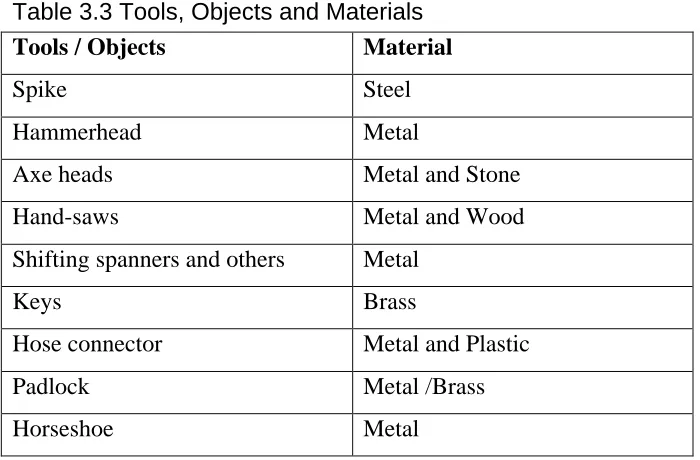
(24) Plate 1.12 Anne Lord (2005) hose connector eroded metal from studio garden, digital photograph. The broken hose connector was drawn, photographed and printed on a large format plan copier. This light copy paper had carborundum grit added to the surface as another element of ephemera and the beauty in the disintegrating object is related to the concept that we, in developed countries, often have too much of the newly made material. This work in Tools of Change (2007) is discussed in Chapter Eleven. Over consumption was identified as the ‘material of the problem’ (Lord 1996) and is developed further in Chapter Six where my analysis links the Buddhist philosophy of change and ‘letting go’ with less ownership, and archiving.. Ephemera as Site-work Audience response to art on site and the potential ephemeral nature of art became important to link my research to the capacity of the ephemeral object to impact on a broad community beyond an academic population. Further audiences were sought in the arts industry, as well as local and regional communities, to gain responses to the work on site. These responses are discussed in Chapter Eight.. Natural surfaces of sand, steel, linoleum, earth, grass, cement, carpet or glass could be used to locate / position an object in an environment where it breaks down. In this way, my chosen art material is distressed and ephemeral in a location other than an archival white cube ˚ gallery. Humidity-controlled. Chapter 1. 24. Anne Lord.
(25) galleries as environments for archive are positioned as areas of comfort. Variant substrates, such as paper and humus, respectively provide a locality for art through integral states of stress and anti-archive. More significantly for this research, the humidity-controlled environment of the gallery (archived), or the desert / beach environment (ephemeral) for art and ephemera, are locations for displaying ephemeral states of the performative object. The place or ground and the object are conceptual pointers to the issue of change and degeneration in an environment. Therefore I investigate not just the object but the object or figure identified in relation to place. The art object in these environments starts to take on the surrounding environment through time-based change; osmosis, erosion, disintegration and oxidation, rather than having its own separate identity. These processes are central to this study.. A number of issues arise for art and ephemera. The art object becomes secondary as art. What is of primary importance is the way this object is released back to the environment. The opposite happens to the archived object as it is apprehended or archived as art. The artist’s act of letting go of the performative object epitomises the act of art and ephemera. In the emergent study I considered art degenerating into something or becoming a part of something else. My initial query was to search for stages where the change process could be arrested in order to make a visual statement about the environment through a work in progress. This was based on the idea that something had to be recorded. The visual document could present a metaphor for a greater statement about sustainability.. The environment under threat has been discussed increasingly in art and news media, though recent mainstream art has favoured other topical biological issues as significant themes. The gap in knowledge about artists working with issues and environmental disasters, in an era of increasing environmental disasters in the twenty-first century, contributes to the rationale for my investigation of artists working with concepts of change. The research parameters are defined through my quest to celebrate artists’ ephemeral work and connections to environmental change.. Chapter 1. 25. Anne Lord.
(26) What has not yet been done is research with a focus on artists working with concepts of change where the material of their practice is consistently ephemeral. In relation to my current research topic, and reflection on the earlier ‘material of the problem’ (Lord 1996), recent art practice with emphasis on material change reflects growing global issues. These cross-disciplinary concerns are discussed in Chapter Ten.. North Queensland’s proximity to neighbouring countries and the Asia Pacific region enables a significant exchange of culture and trade. This aligns with the third aim of James Cook University’s research strength, People Identity Place, (PIP): To contribute to the development and evaluation of services, policies and interventions that enhance the quality of life of people in northern Queensland and the Asia-Pacific region; http://www.jcu.edu.au/research/ars/pip/JCUDEV_001879.html. This assists my identification of key visual art for the study in remote locations, compared with contemporary art practice in larger centres. These close locations and those further afield include Australia and the Asia Pacific region, China and key international exhibitions in Europe.. Cultural Diversity and Concepts for Ephemera Inquiry into cultural diversity assisted my search for theory of, and practice incorporating, ephemera. Altered perspectives obtained through travel are often points of departure for art practitioners. My creative rationale for visual art pursued examples from culturally diverse mentors, in conjunction with the investigation, selection and documentation of found figurative elements. Metaphors for the change process were exhibited in a number of installations and are discussed in my themed analysis, Part Two and referred to in the Appendices III to VII, IX, X, XVI, XVII, XVIII and XX.. In 2003 I developed a series of archival drawings and lithographs titled Survivor Trees to take to China. These related to environmental change concepts, such as drought, erosion and survival. The survival of native trees led to my further. Chapter 1. 26. Anne Lord.
(27) reflection on environmental issues. Subsequent concepts post-2003 about change for the research practice were absence, drought, erosion and death. This research was the basis of my 2004 installation titled Absence. My exposure to Chinese cultural heritage and spiritual diversity assisted in developing increased awareness of connections between shared concepts of spirituality and environmental health. This awareness impacts on change processes in my installations. Re-evaluation of my installation Absence (2004) was pivotal for ongoing work. This drove my creative concepts and visual interpretation of change in relation to concerns for natural environment.. My 2005 projects utilising natural materials such as decomposing wood fibre were triggered by thoughts during and after an artists’ camp and workshop, Leave no trace in Wallaman Falls National Park, North Queensland (Chapter Eight).. Plate 1.13 Anne Lord (2005) Discussion at Wallaman pixels from monitor 31 x 42 cm. My response to the place at Wallaman Falls was to make a conscious effort to allow creative work to disintegrate during a specified time. Thus the idea of the ‘performative object’ (Butler 2005 conversation) became primary and relevant. Schisms between artists’ use of the performative object and the nonperformative object are significant for the study. These were identified during Leave no trace and are discussed in Chapter Eight.. Chapter 1. 27. Anne Lord.
(28) Visual art praxis demonstrates the reciprocal development of concept and image. My new work relates to aesthetic icons that show significant change processes. Thus imagery is based on iconography of transformation and degradation. Arresting the image at a crucial visual point of change or disintegration into the surrounding environment was significant for developing new work in 2006 and confirmed the direction for the work.. Aims for this Study My aims to advance this thesis, in concert with my research questions on page fourteen, were to 1. Investigate various visual artists’ concepts involving strategies for art and ephemera, to find how these and my work provide metaphors for environmental issues 2. Explicate autobiographical voices and textual literacy to intersect artists’ concepts, and find schisms ˚ about ephemera 3. Develop a Glossary for art and ephemera to strengthen visual arts discourse in this area 4. Create ephemeral objects as metaphors for regenerative processes in the natural environment 5. Present the work through installations, exhibitions, off-site venues, and electronic and minimal print publications.. These aims assisted identification of change over long deep time as opposed to explosive actions. The visual icons of art and ephemera were refined as metaphors for environmental change and my art related to change in a number of locations, along with human impact on environment.. Digital art and new media, as well as the idea of online ethereal recording are attractive for reasons of low impact on ecology. Although concern for place and ecology underpins the work, the thesis is not about the photographic documentation of art and ephemera. The performance and sacrifice of the art object from a material state to one elevated in memory ˚ identifies objects and ideas that impact on memory as significant in art and ephemera. Chapter 1. 28. Anne Lord.
(29) The Visual Artist and Cross-disciplinary Issues Visual artists align with disciplines, such as ecology and environment and in doing so they provide broad contributions to the concept of change for art and ephemera. Since the early works of environmental and eco-art in the 1970s multi-disciplinary combinations include: art, environment, ecology and geography (Helen & Newton Harrison 1971 - ongoing); art, ecology and suburban living, (Agnes Denes 1982 and 2000); water treatment plants and river systems (Dominique Mazeaud 1987 - ongoing), (Betsy Damon 1993 - ongoing); and art, sewerage management and community healing (Mierle Laderman Ukeles 1978 - ongoing), and Susan Leibovitz Steinman (1994-5 - ongoing). Artists working with similar relevant topics for this study, but relating more to the ‘performative object’ than the natural environment, include Allan Kaprow (1966), Allan Sonfist (1969 and 1979) and Betty Beaumont (1978 - 1980) who were often associated with ‘Assemblage’ and ‘Environments and Happenings’ (Henri 1974).. In the process of empowering the ephemeral and developing a visual artist’s practice to link environmental issues, I acknowledge that most artists have a profound interest in and sense of global issues. That is, the natural environment is important to them personally and in their work. In the 1970s and 1980s artists rallied to intervene against the destruction of rainforests and the building of dams perceived to be detrimental to the environment. However in the 1990s and the first decade of the second millennium the plight of the environment, for example, deforestation and global warming, has not been taken up to the same extent that it was in the 70s and 80s. Exceptions occur, such as the artist Not Vital who has, since the 1990s, worked with impoverished communities to assist them against famine and in this aspect of his oeuvre has adopted an ephemeral practice that complements his archival practice.. Chapter 1. 29. Anne Lord.
(30) Introduction to Perspective and Methodology In this study the compilation of names and works is selective and I adopt strategies to look beyond the art historical accounts of specific art genres and styles (Buskirk 2005, Lippard 2002, Augé 1995, Bourriaud 2002, Kaye 2000). The methodology accommodates shifts in contemporary art praxis as I adopt the blurring of disciplines and genres. These new areas are outlined as themes in the analysis. A methodological strategy is to re-investigate site, performance, land, earth, installation, Arte Povera and site-specific art to consider potential for art and ephemera.. Tucker (2002) discusses visual literacy whereas Ashton (1999) and Davies (1996) contribute to textual literacy and these provide a basis for my poststructuralist perspective. The relationship of these methods and neo-narrative voices provided models from contemporary art. Thus neo-narrative voices in post-structuralist discourse contribute to my themed analysis about art and ephemera.. I investigate the potential for artists to engage with the debate about climate change where key artists’ ethical approaches to bringing attention to the natural environment are important. Artists’ statements about disintegration, anticommodity and ‘performative objects’ were sought. My new work embodies concepts of the sacrificial and ephemeral in tandem with tracing and rediscovering the practice that allows change to happen during an installation. Whereas my archival work is executed and presented through traditional processes on archive quality media, my ephemeral work is created using waste to interpret issues of change in the natural environment. Thus my practice in ‘art and ephemera’ is developed and executed with fragile and disintegrating materials expected to show change during the course of an installation. The temporary work is intended as a basis for testing ideas, whereas archival artworks, drawing, painting, printmaking and printed digital imagery are instrumental as starting points for subsequent projects. This study includes artwork and writing from three major exhibitions / installations as well as a series of smaller exhibitions over the course of the candidacy.. Chapter 1. 30. Anne Lord.
(31) My target audiences include the contemporary visual arts industry, the university and academic realm, and the broader community including the Northern Australian region. The regional communities of Townsville and Northwest Queensland are included for interaction with known place. Additionally, audiences from various disciplines have been addressed through papers detailing the theoretical background, and the manner in which the information and practice was processed.. It is my concern that as an artist I address people outside the visual arts in some capacity. The artist may not be able to change anything substantially, however the challenge to expose concerns to a broad audience is a major motivational factor in the production of ephemeral art work. My investigation of the object as the basis of performance and change, in the context of art installation for ephemera, enables a new reading of ephemera as a strategy to elicit attitudinal change in an audience. This potential for public interaction is of significance for the research.. My 2005-2009 visual arts practice involved arresting visual ephemeral material in the evolving process of recycling, for a short time, and then allowing it to return to the natural environment. Art and nature became the same thing through loss of boundary ˚ when I placed old survey pegs on disintegrating surfaces in order to draw and photograph objects and ground as ephemeral (Plate 1.14).. Eroded survey peg on giant log. Plate 1.14 Anne Lord (2005) Eroding Peg on fallen tree, artists’ workshop Leave no trace [Digital image - photograph Lord]. Chapter 1. 31. Anne Lord.
(32) This act was a relocation of the obsolete (decaying) survey peg for reflection on environment and change. Old survey pegs and re-placement are discussed in Chapter Eleven. Artworks made from a number of materials, all ephemeral in some way instigate inquiry about place and our position in that place. This work could have the capacity to refer to what we do in relation to sustainable living and comment on this.. Scope of the Research Artists, who produce work with a low environmental impact, have an awareness of environmental crisis in the second millennium, and their place in the world defines the edges of the study. I identify impermanent ˚ artwork and creation of art that facilitates reflection and better understanding of contemporary issues for the scope of this research. I exclude decorative art about the environment that is, scenic reproduction and surface decoration not in some way questioning our position and our ecological footprint via the work. Though many artists persisted after the 1990s with art and environment, there are many decorative art practices about environment that do not belong to the realm of this study. Rather, investigation and response to issues is a common methodology for contemporary artists’ extrapolation of a research project, in line with their practice-led research. I adopted this approach and expand on this in Chapter Three, Methodology and in Chapter Four, Section 4.3 A Premise for Analysis.. In the production of work with an environmental theme, I sought integrity in the work by relating the concept through topic and theme to compassion and wisdom in Chapter Six. Baas and Jacob (2004) addressed these ideas in correspondence with artist and former Catholic monk Ernesto Pujol who stated ‘We stand at a crossroads between old and new faith approaches to the planet’s issues’ (Pujol August 9, 2003 cited in Baas 2004, 11). Baas and Jacob (2004) acknowledge a corollary goal having to do with changing institutional practice.. Chapter 1. 32. Anne Lord.
(33) My ideas resonate with the aesthetic of “aged icons” from Tang Chinese art and European medieval art as these reflect their cultures’ beliefs. I concur with Anderson (1996) that: All traditional societies that have succeeded in managing resources well, over time, have done it in part through religious or ritual representation of resource management (Anderson 1996 cited in Tucker and Grim, 1997, xviii).. In addition to combining traditional cultural belief and ecology, significant publications about art and ecology emerge from within the arts industry. Andrews (2006) includes substantial facts and figures about ecology and artists working in this capacity. A change over three decades in publications about land, ecology and art is significant for the collaboration of artists and scientists contributing to the issues of natural environment, through collectives and organizations specifically seeking solutions to climate change. Artists Laderman Ukeles and Tiravanija continue their art for ecology and social interaction. The visual statement can be a metaphor for a grander statement and Tiravanija’s ‘the land’ project is where both artists and projects provide access to new ideas about art and environment http://www.thelandfoundation.org/calendar/calendar.php. These artists communicate issues through the manifesto ˚ and web-based communication strategies and are linked with art and ephemera throughout the thesis.. Issues in my study include the manner in which artists might use their work, closely aligned with an ecological statement, by allowing the ecology to be part of the artwork. Similarly an object referencing sustainability disintegrates in order to regenerate. The contra-argument is that digital art, and art that is ephemeral, will still have an impact on the environment and have an ecological footprint. While accepting that this is the case, the thesis makes reference to art that is not tied to lasting concerns of archiving and storage in a museum, or storage-based situations. Rather it takes on a temporary existence through the artist’s awareness of, and interest in, reducing impact on environment.. This chapter forecasts themes taken up in the analysis where locality and the ability to take ownership of the problem through local action are synonymous Chapter 1. 33. Anne Lord.
(34) with artists who take responsibility for issues chosen as themes or topics in their work. Addressing the centre ~ periphery binary is significant for artists working in a region or locality away from capital cities. In relation to a contemporary context for art and ephemera, questions surface as to how other artists used fragmentation, ephemera, corrosion or erosion in practice to create layers of meaning or metaphors for issues in the natural environment.. In concluding this chapter, I refer to my first two research questions ‘What artistic means could illuminate environmental fragility?’ and ‘How might “art and ephemera” assist in deeper understanding of environmental fragility and change?’ This reference is made in order to refine the study and emergent issues in the subsequent chapters. I interrogate the accidental and intentional models of art and ephemera to bring attention to the twenty-first century contemporary situation. My questions focus on issues of regeneration and the reciprocal interplay of art and ephemera.. My investigation of art and ephemera promotes the capacity that artists have to activate shifts in public attitude. The study relies on the theoretical perspective in the next chapter to instigate language as crucial in the argument for art and ephemera. These theorists assist in the process to show how we can be agentic ˚ for change and act as exemplars for how art creates awareness of methods to reduce the size of our (human) environmental footprint.. Chapter 1. 34. Anne Lord.
(35) Chapter Two 2.0 Perspective: Post-structuralist Positioning for Art and Ephemera. A Premise - Theories of Place, Time and Change In this chapter I provide an account of key theorists and arguments that have given shape both to my artistic practice and historical and theoretical possibilities concerning art and ephemera. The research project, ‘art and ephemera’, investigates theoretical principles and visual arts discourse that inform artistic practices. The use of ephemera in visual art highlights the artist’s capacity to create, without desire to preserve or archive, and thereby has potential to provide new definitions of valid artistic practice in a society that is struggling to understand and counteract climate change.. The ephemeron can be a visual metaphor for many issues. But how to analyse its usefulness to artistic practice? As I will demonstrate throughout this thesis, post-structuralist discourse assisted timely agentic re-positioning for visual artists who choose to work with material that cannot be archived. The creation of ephemeral art provided a challenge for me as a visual artist due to disintegration or loss of the creative product. This ephemeral process also provides unusual relief from the requirements of conservation and archiving, such as presenting work behind glass, dealing with measures for humidity and temperature control or careful storage of archival 1 paper. Artists discussed here intentionally incorporate ephemeral elements and remove the necessity for archival materials, that is, preservation or maintenance of an acid-free art product. 1. Archival paper is produced from cotton or plant fibre, and then processed to become neutral Ph, or acid-free.. Chapter 2. 35. Anne Lord.
(36) In this way, ephemeral art calls into question many of the standard precepts of curatorial practice and artistic evaluation. Post-structuralism’s recognition of binaries assisted my challenge to existing canons of archived art. For instance, the dichotomy of preserved, ‘sterile’ products and ephemeral, ‘dirty’ art objects forms a strong aspect of the theoretical perspective. In empowering ephemeral art and art that disintegrates at the will of the artist/s, the portrayal of art in a traditional gallery system was seldom relevant for this study.. The notion of the canon has been a topic of serious discussion in art history and theory over the past few decades. In order to formulate the perspective for my thesis on art and ephemera, I draw on the work of authors who reshape the canon of the art industry. Pollock (2003) referred to accepted canons in the art industry and notions of difference that can be due to race, gender or colonial history. A difference I adopted in my discussion of art and ephemera was to probe the longstanding commodity-driven culture of collecting and archiving art. One binary exists; those who collect art acknowledge that it is worthy of archiving and has some value, as a creative work and perhaps as a financial asset; however ephemeral art is often considered of no value or holds no significance for a collector or investor. Further to art and ephemera, art as anticommodity resonated with the ensuing thesis. Therefore questioning archive as the status quo became a key attribute for the theoretical perspective.. I addressed the binary focus through post-structuralist theory in order to promote art and ephemera to an ascendant majority. As Ashton (1999) states: … binaries are particularly difficult for those located in the ascendant half of the binary pair to see. They take their category membership to be normal, and normative, and those located in the other category to be marked by their difference (Ashton 1999, 98).. My critique of the structure of canonical paradigms of archive contributes to my questioning of a conservative practice and textual accounts of accepted history. Similarly, the ideologies that art institutions ˚ maintain could be challenged in contexts of visual arts practice. Attention to these inherent binary terms became relevant for my research for, as Amy Tucker (2002) states,. Chapter 2. 36. Anne Lord.
(37) Meanings of words and images are shown to be inherently unstable and dependent on context…Traditionally defined categories of meaning such as male / female, subject / object, become blurred (Tucker 2002, 253).. Tucker (2002) strengthened my appreciation of the potential to collapse binaries. Textual and visual literacy ˚ converge in art and ephemera where this investigation contributes to discourse. Atkinson (1995) communicates these connections: Enquiry into discourse suggests that the discourse creates the objects of which it speaks. Key signifiers (words and concepts) form our understanding which is constructed through the specific terms of the discourse (Atkinson 1995, 261).. My contribution through this thesis, including responses to the research aims, and my practice are embedded in a visual arts discourse. Investigation of the literature and visual art practice involving transient art assisted my search for ‘What artistic means could illuminate environmental fragility?’ Through curators, art writers, and art installations, I explore artwork, such as that by Wolfgang Laib, and access discussions about his humble practice to show Laib’s encompassing perspective of the world. Laib’s sensitive use of material and Metzger’s auto-destructive art assisted my recognition of an art practice, one that did not have to remain in a museum, and much less to be archived. This in turn led to my recognition that I could challenge the status quo through nonarchival artwork.. In my case, I investigate the topic of ephemera in order to interrogate the category of ‘archivable versus non-archivable’ and thereby generate new knowledge concerning cyclical re-occurrences such as growth and decay or seasonal repetition. My investigation of alternative readings for previous art categorisations is pursued in subsequent chapters.. Late twentieth-century art occurrences also contribute to formulation of this perspective. Marsh (1993) discussed the experimental art of the 1970s and its association with post-modern reaction against late modernism in her critique of Greenberg’s idea that each new style surpassed the preceding one. For Marsh pluralist valuing of cross-disciplinary approaches to the visual arts is philosophically committed to a critique of ‘progress for its own sake’ (Marsh Chapter 2. 37. Anne Lord.
(38) 1993, 93). This view and those of Buskirk (2005) and Lippard (2006) concur with my identification of multiple strands of reading and practice for art and ephemera.. The artist is often recognised as belonging to one of the first communities to respond to concerns of irretrievable ‘progress,’ and a consideration of pluralism is critical for an appreciation of the diversity possible in art and ephemera. Thus art and ephemera is multi-layered and evidenced in past practices over millennia, in models and in recent mentors. In my study, mentors in the twentyfirst century adopting an intentional practice of art with ephemeral means have been chosen for conceptual reasons similar to those identified in my practice. These artists recognise the urgency to respond to human impact in the natural environment, though their methods are varied.. Challenge to the Status Quo The construction of this study supports an under-rated area of the art industry that is not required to archive and much less to enter into commercial constraints. In this case, entering a discourse of difference was paramount in order to find the basis of what potentially drives anti-archive and ephemera, conceptually. A motivational strategy for artists is to challenge a prior area of accepted practice in order to make a statement that has currency and can be empowered in discourse that supports their new strategies. Mentored by a critique of ‘commonsense justification of dominant and dominated positioning’ (Ashton 1999, 98), this study addresses through discourse analysis a critical look at ‘archive at any cost’. Thus where Duncum (1988) discussed an ideological seepage where ‘Ideology masquerades as commonsense’ it became evident that through ‘such taken-forgrantedness, ideology secures consent’ (Duncum 1988, 9). I suggest that in visual arts, archive is not taken for granted. In this context, art and ephemera can upset the balance of archive as the dominant visual arts position.. Potential to upset the dominant positioning of an abundance of archived art offers an alternative to the accepted place of the archive. My study does not find that the archive is totally replaceable, but argues for some forms of art that have less need Chapter 2. 38. Anne Lord.
(39) to stay housed in pristine and sterile environments or white cubes ˚. The natural environment provides just such an alternative as a site where art can be in close proximity with earth. This is particularly so with my art involving ephemera.. Acceptance of archive in art solely for the sake of preservation can be problematic. Merewether (2006) addresses the topic ‘archive’ with a compilation of authors who provide some dichotomies. Foucault (1969) references the impossibilities of archiving everything in a person’s contemporary situation. Merewether includes Warhol’s (1975) questioning of the ability to archive ‘everyday things’ each day and these are questions that impact on my investigation of what is to be relegated to a process such as art and ephemera, through adopting regeneration. My argument is for the acknowledgment and empowering of visual art that encompasses ideas about and through its own collapse; art practices that support crucial contemporary issues of change fundamental to the thesis. These ideas are linked to how art practice and theory resound with environmental issues in the second millennium (Andrews 2006). Positioning art and ephemera with cross-disciplinary contemporary issues informs the subsequent analysis and theorising.. Pollock’s critique of the art canon advances recognition of artists marginalised by ‘market and museum’ or the art industry, and resonates with my position as a regional visual artist. Pollock (2003) demonstrates that hierarchy and privileged positioning are bestowed upon certain contemporary artists and that often the privileges are there for those who perpetuate dominant (archival) practices: As an active element of contemporary hegemonies, the canon polices the entry to the pantheon of art by contemporary artists. Writing about living artists exposes its selectivity, exclusivity, partisanship. Working to difference the canon involves questioning divisions between the historically proven, or those validated by the market and museum, and artists whose work demands attention, the criteria for which are generated elsewhere, but without betraying their claim for being considered artists (Pollock 2003, 170-171).. I question these divisions between proven or validated practices, and argue that potential for display and selection to enter the arena requires critical reconsideration of criteria for including artists who work with art and ephemera. In this thesis I adopt the agentic position to advance artists who develop work. Chapter 2. 39. Anne Lord.
(40) from the descendent position of art and ephemera. This is often produced as part of regional practice. Working to difference the canon requires a discourse that can assist empowerment and acceptance of the ephemeral art object in order to present this type of artwork and to have that work publicised.. Pollock’s exposure of existing selectivity, exclusivity and partisanship invites the alternative, that is, the practitioner adopts art and ephemera as a process, to investigate, expose and present concepts inherent in signs of decomposition and disintegration. The empowering of such practice is supported by Sullivan’s (2005) claim that the capacity for the visual arts to contribute through practicebased research lies in the artist’s contribution to debate and to investigate difference: The agendas, definitions, and theories that inform research methodologies in the social sciences and human sciences are not so much “embraced” but “embattled” as important similarities and differences in approaches to inquiry are contested and conceptualised. This provides a basis for arguing that the visual arts have an important contribution to make in the quest to know more, but that approach to this shared goal follows a different path (Sullivan 2005, 28).. Sullivan’s reference to methods of inquiry assists my research as I identify challenges and “embattled” zones to expose how some visual artists have chosen to take a different path through an anti-archival and anti-commodity stance in their practice. This path is for me part of a creative and practical area that grew in tandem with gaining knowledge about many aspects of survival in the art-industry. For this inquiry, my journey was enriched through broadening and contextualising existing knowledge of environment, culture, history and location.. Thus I signal discourse used by artists who work with ephemera and how this references their knowledge in art praxis. Baas (2004) identifies Ann Hamilton’s “reading” and visual art where textual literacy enriches and brings with it significant contributions to areas of contemporary visual arts and beyond. Similar strategies for writing, such as the autobiographic and neo-narrative are discussed by Flood (2005), who actualised artists’ narratives by listening and recounting them, to ‘realise their desires of artistic identity…while creating her own narrative’ (Flood 2005, 36). These strategies are discussed in the next chapter. Chapter 2. 40. Anne Lord.
(41) Further to this, Augé’s (2002) concept of non-place contributed to current changing perspectives about place and also broadened my methodological options. The exploration specifically aligned art practice with academic research and extended art concepts to theory and practice in contemporary culture and life. Much of my writing shows that, irrespective of genre or a new title, contemporary art is made by the artist, as a person who has been able to maintain a fresh and creative outlook to create the potentially useful image, as a current way of thinking about their locality and context. Augé’s (2002) ideas of supermodernity assisted my understanding of being in an age of super-postmodernity (my term). For my thesis on art and ephemera we (artists), need to reflect this in our practice. Bourriaud’s (2009) altermodernity advances this idea where ‘increased communication, travel and migration are affecting the way we live,’ http://tate.org.uk/britain/exhibitions/altermodern/manifesto.shtm.. Writing of discourse, Fairclough (1989) states, ‘emphasis should be on language use, but language use conceived of as socially determined…language as a form of social practice’ (Fairclough 1989, 22). In constructing discourse, ‘known place’2, how my visual art related to, or was driven by, notions and perceptions of a particular place, became important in establishing understanding and knowledge about both. Bachelard (1994) refers to the phenomenology of roundness, a visual clue, and relates Rilke’s poetry about a tree touching the dome of the sky. The environment and place were responsible for my adoption of a practice of ephemera and my aspiration to create new understanding of the issues inherent in location, also referenced by Lippard (1997).. My adoption of people in place resonates with Gibson’s (2002, 1992) references to place in Queensland. This aligns with my own experiences of place, where ‘workforce on the grasslands, the mining sites and the fisheries’ form the ‘three dominant frontiers of racial contact’ in tropical Queensland (Gibson 2002, 105). Familiar through my witnessing in Northwest Queensland is a ‘culture of short-. 2. ‘Known place’ was a term I adopted (2001) for a series of photographic screen prints portraits of people in their known, familiar environments.. Chapter 2. 41. Anne Lord.
Figure

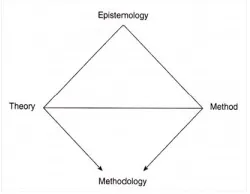
![Figure 3.2 [Centre] Nagy Hesse-Biber and Leavy (2006) Methodology. Defining terms are from Encarta (2003)](https://thumb-us.123doks.com/thumbv2/123dok_us/182024.52069/69.595.101.545.215.674/figure-centre-hesse-biber-leavy-methodology-defining-encarta.webp)
+5
Outline
A Premise Theories of Place, Time and Change
Challenge to the Status Quo
Post-structuralist Perspective and Theorising
Natural Environment
Art Research and Discourse
Introduction
Mentors and Eco-systems ~ Environments
Glossary for Art and Ephemera
Locality Inland and Trees
Kaza’s (1997) ecosystem cultures
Related documents