TEACHING PROGRAMME ON KNOWLEDGE AND
PRACTICE OF MOTHERS REGARDING CARE
OF CHILDREN WITH SEIZURE DISORDER
IN VILANKURICHI, COIMBATORE
By
Reg. No: 301416101
A DISSERTATION SUBMITTED TO THE TAMIL NADU
Dr. M. G. R. MEDICAL UNIVERSITY, CHENNAI IN
PARTIAL FULFILLMENT OF REQUIREMENT
FOR THE DEGREE OF MASTER OF
SCIENCE IN NURSING
TEACHING PROGRAMME ON KNOWLEDGE AND
PRACTICE OF MOTHERS REGARDING CARE
OF CHILDREN WITH SEIZURE DISORDER
IN VILANKURICHI, COIMBATORE
By
Reg. No: 301416101
Approved by
_______________
_______________
EXTERNAL
INTERNAL
A DISSERTATION SUBMITTED TO THE TAMIL NADU
Dr. M. G. R. MEDICAL UNIVERSITY, CHENNAI IN
PARTIAL FULFILLMENT OF REQUIREMENT
FOR THE DEGREE OF MASTER OF
SCIENCE IN NURSING
TEACHING PROGRAMME ON KNOWLEDGE AND
PRACTICE OF MOTHERS REGARDING CARE
OF CHILDREN WITH SEIZURE DISORDER
IN VILANKURICHI, COIMBATORE
CERTIFIED THAT THIS IS THE BONAFIDE WORK OF
Reg. No: 301416101
PPG College of Nursing
Coimbatore
SIGNATURE :
________________________ COLLEGE SEAL
Dr. P. MUTHULAKSHMI, M.Sc(N)., M.Phil., Ph.D.,
Principal,
PPG College of Nursing,
Coimbatore - 35.
A DISSERTATION SUBMITTED TO THE TAMIL NADU
Dr. M. G. R. MEDICAL UNIVERSITY, CHENNAI IN
PARTIAL FULFILLMENT OF REQUIREMENT
FOR THE DEGREE OF MASTER OF
SCIENCE IN NURSING
TEACHING PROGRAMME ON KNOWLEDGE AND
PRACTICE OF MOTHERS REGARDING CARE
OF CHILDREN WITH SEIZURE DISORDER
IN VILANKURICHI, COIMBATORE
APPROVED BY THE DISSERTATION COMMITTEE ON MARCH 2015
RESEARCH GUIDE :
Dr. P. MUTHULAKSHMI, M.Sc(N)., M.Phil, Ph.D., Principal,
PPG College of Nursing, Coimbatore.
SUBJECT GUIDE :
Dr. K. JEYABARATHI, M.Sc (N)., Ph.D.,
HOD,Department of Child Health Nursing,
PPG College of Nursing, Coimbatore-35.
MEDICAL GUIDE :
Dr. RAJENDRAN, MD., D.Ch., Consultant Pediatrician,
Ashwin Hospital, Coimbatore - 12.
A DISSERTATION SUBMITTED TO THE TAMIL NADU
Dr. M. G. R. MEDICAL UNIVERSITY, CHENNAI IN
PARTIAL FULFILLMENT OF REQUIREMENT
FOR THE DEGREE OF MASTER OF
Dedicated to
Almighty God,
Husband,
Lovable Parents,
Brother
Glory to Almighty God for giving me special graces, love compassion and immense showers of blessing bestowed on me. This gave me the strength and courage to overcome all difficulties and enables me to achieve this target peacefully.
I am greatly indebted to my husband Mr. Jason Jacob, family and friends for their love, support, prayer, encouragement and help throughout my study.
I am grateful to Dr. L.P. Thangavalu, M.S., F.R.C.S, Chairman and Mrs. Shanthi Thangavelu, M.A., Correspondent of P.P.G Memorial charitable Trust, Coimbatore for their encouragement and providing the source of success for the study.
It is my long felt desire to express my profound gratitude and exclusive thanks to Dr. P. Muthulakshmi, M.Sc (N)., M.Phil., Ph.D., Principal, P.P.G college of nursing. It is a matter of fact that without her esteemed suggestions, highly scholarly touch and piercing insight from the inception till the completion of the study, this work could not have been presented in the manner it has been made. Her timely encouragement support me a lot throughout my study, which is truly immeasurable and also express my gratitude for her valuable guidance and help in the statistical analysis of the data which is the core of the study
encouragement, guidance, valuable suggestions and constructive evaluations which have enabled me to shape this research as a worthy contribution.
I extent my sincere thanks Mrs. Blessly Pramila, M.Sc (N)., Department of child health Nursing for their esteemed suggestions, constant support, timely help and guidance till the completion of my study.
I expressed my respect and tribute to Prof. L. Kalaivani, M.Sc (N)., (Ph.D) (Obstetrics and Gynecological Nursing) and all other Faculty Members of P.P.G College of Nursing for their valuable suggestions, co-operation and timely support throughout the endeavour.
I express my sincere my gratitude to Prof. Venugopal, Statistician for the expert guidance and suggestions in the statistical analysis of the data.
I take this opportunity to thank the Experts who have done the content validity and valuable suggestions in the modifications of the tool.
I extend my thanks to the Dissertation Committee Members for their healthy criticism, supportive suggestions which moulded the research.
Comtech Solutions, Saravanampatti for his patience, dedication and timely cooperation in typing this manuscript.
I duly acknowledge all the Participants in the study for their esteemed presence and co-operation without which I could not have completed the work successfully.
CHAPTER CONTENTS PAGE No.
I INTRODUCTION
Need for the Study
Statement of the Problem
Objectives Hypothesis Operational Definitions Assumptions 1 6 10 11 11 11 13
II REVIEW OF LITERATURE
Conceptual Framework
14
27
III METHODOLOGY
Research Approach
Research Design
Setting of the Study
Variables
Population
Sample Size
Sampling Technique
Criteria for Selection of Samples
Description of the Tool
Testing of the Tool
Pilot Study
Data Collection Procedure
Plan for Data Analysis
CHAPTER CONTENTS PAGE No.
IV DATA ANALYSIS AND INTERPRETATION 38
V RESULTS AND DISCUSSION 59
VI SUMMARY, CONCLUSION,
NURSING IMPLICATIONS, LIMITATIONS AND
RECOMMENDATIONS
63
REFERENCES
ABSTRACT
S.No. CONTENT PAGE No.
1. Distribution of Demographic Variables of Mothers 39
2. Distribution of Statistical Value of Pretest and Post Test
Knowledge Scores of Mothers with Regard to Care of
Children with Seizure Disorder
50
3. Distribution of Statistical Value of Pretest and Post Test
Practice Scores of Mothers with Regard to the Care of
Children with Seizure Disorder
52
4. Correlation Between Pretest Knowledge and Practice Scores
of Mothers Regarding Care of Children with Seizure Disorder
54
5. Correlation Between Post Test Knowledge and Practice
Scores of Mothers Regarding Care of Children with Seizure
Disorder
54
6. Association of Selected Demographic Variables with Level of
Knowledge of Mothers Regarding the Care of Children with
Seizure Disorder in Post Test Score
55
7. Association of Selected Demographic Variables with Level of
Practice of Mothers Regarding the Care of Children with
Seizure Disorder in Post Test Score
S.No. CONTENTS PAGE No.
1. Modified Conceptual Framework Based on Hochbaum, Beker
and Rosenstock Health Belief Model (1950)
30
2. The Schematic Representation of the Research Design 31
3. The Schematic Representation of the Variables 32
4. The Overall View of Research Methodology 37
5. Distribution of Demographic Variable According to the Age
of Mother
42
6. Distribution of Demographic Variables According to the Type
of Family
43
7. Distribution of Demographic Variables According the
Education Status of Mother
44
8. Distribution of Demographic Variables According to the
Occupation of Mother
45
9. Distribution of Demographic Variables According to the
Source of Health Information
46
10. Distribution of Demographic Variables According to the Sex
of Child
47
11. Distribution of Demographic Variables According to the Age
of Child
48
12. Distribution of Demographic Variables According to the
Monthly Family Income
49
13. Comparison of Mean Score of Pretest and Post test
Knowledge Score Regarding the Care of Child with Seizure
Disorders
51
14. Comparison of Mean Score of Pretest and Post test Practice
Score Regarding the Care of Child with Seizure Disorders
APPENDIX
TITLE
1. Letter seeking permission for conducting the study
2. Letter seeking permission from Experts for content validity of the
tool
3. Format for the content validity
4. List of experts for content validity
5. Questionnaire
English
Tamil
6. Teaching Module
English
CHAPTER - I
Introduction
The greatest wealth is Health
- Virgil
Children comprise one third of our population and all of our future and their health is our foundation. The childhood period is also a vital period because many of the health problems will arise from this period and most of the studies reveal that many children are suffering from one or the other disease. Our responsibility is to maintain certain specific biological and psychological needs to ensure the survival and healthy development of the child, future adult and also to maintain optimum health of the children to enjoy their childhood. But unfortunately children are at risk of diseases, the reason may be many. One of such disease is seizure disorder which threatens life of the child.
Seizure disorder is a common neurological problem in children. Many seizures disorders have their origin in childhood. Nearly two-third of seizure disorder can be treated easily by them without the need for the specialist. In ancient times convulsions are considered as curse of evils. Today also people with seizure disorders are facing superstitions to this disease, this attitude can be changed once the scientific cause of this condition is defined and the public is aware through education (WHO 2012).
movements, changes in perception, behaviours, sensation and posture. A diagnosis of epilepsy is made when a person has three or more seizures. A seizure is behaviorally characterized by an abrupt unconscious change in behaviour, movement, autonomic function, or sensation (Dutta, 2009).
There are three types of epileptic seizures: partial seizures, generalized seizures, and unclassified seizures. Partial seizures are initiated in a cerebral hemisphere of the brain and are further classified based on whether or not consciousness is lost in the individual. A simple partial seizure involves no loss of consciousness but may involve motor symptoms, sensory symptoms, and autonomic or psychic symptoms. Complex partial seizures may begin as a simple partial seizure and progress to a complex partial seizure. Complex partial seizures involve a loss of consciousness and may involve some behavioral automatisms (unconscious repetitive motor actions). It is currently thought that simple partial seizures usually have unilateral hemispherical involvement, while complex partial seizures usually have bilateral hemispherical involvement (Hocken Berry and Willson, 2005).
Epilepsy management techniques include the use of deep brain stimulators and vagus nerve stimulators. Deep brain stimulators are implanted within the brain and send impulses to the cerebellum to increase seizure control by stimulating deep brain structures, while vagus nerve stimulators are implanted near the clavicle and send an electrical impulse to stimulate the vagus nerve in the neck (Hocken Berry and Wilson, 2005)
Another treatment option for epilepsy is surgical removal of the brain tissue where the seizures originate (i.e., temporal lobectomy) but this technique is not often used in children. Another possible preventive measure for epilepsy in children is avoidance of triggers for seizures. Many children with epilepsy have triggers for seizures such as foods, scents, or other environmental factors. If these triggers can be identified, seizures may be more easily controlled. When used in some combination, all of these treatment methods have shown effectiveness, however, there are few treatments that keep individuals entirely seizure free (Wongs, 2007).
Henry (2010) stated that Seizures are the most common pediatric neurologic disorder. Four per cent to ten per cent of children suffer at least one seizure in the first 16 years of life. The incidence is highest in children less than 3 years of age, with a decreasing frequency in older children.
a study the life time prevalence of febrile convulsion was 32/1000 population, approximately 60% of case reported febrile convulsion as the presumptive cause (National Survey, 2011).
A cross sectional study in Andhra Pradesh showed that the prevalence rate of epilepsy as 6.2/1000 population, where as in Kerala it is 4.9/1000population.School age children are most affected with a slight male preponderance. In America 300,000 people have a first convulsion each year and 120,000 of them are under the age of eighteen (Manikam K, 2011).
Seizures associated with fever occur in one in every 30-50 children, and those unassociated with fever occur in about 1/200 children. About 5% of children experience one or more seizures before they reach adulthood. Seizures activity often involves the diagnosis of potential for injury, both physical& psychosocial. A potential for injury can be minimized with first aid measures. Thus school teachers should possess skills in observational assessment and first aid.
WHO report suggested that even though the epileptic disorders are managed with the help of technology in present era people who are staying at rural and remote areas of developing countries are not accessible or approachable to them. People in the developing countries like India, Pakistan and Bangladesh believe that epilepsy is one of the diseases caused due to mistakes done in the past life. It is also concluded from various studies that, false belief have major implication regarding epilepsy in illiterate as well as in the minds of the people from these countries.
Two community based studies in India (both rural and urban) showed that the prevalence rate of epilepsy stands around 5/1000 population (at this rate present estimate of total epileptics in this country is about 5 million) and incidence rate varies from 38 to 49.3 per 100,000 population per year. Treatment gap, which is a measure of per cent of patient populations not receiving the treatment, was estimated to be up to 73.7% to 78% in India. In 2/3 of cases etiology was unknown. Hot water epilepsy is unique in South India and single solitary ring enhancing lesion in brain imaging is a common feature in Indian subcontinent (Dr. Bhattia, 2007)
The disease enrobed in superstition, discrimination, and stigma. There is a clear cut lack of information programmes in the developing world about seizure and its management. The seizure has an impact on many aspects of a child’s development and functioning. As a result many of these children are at risk for unsuccessful school experiences, difficulties in social engagement with peers, inadequate social skills and poor self-esteem.
resulting in rejection. Sometimes, the social discrimination against these persons with epilepsy may be more devastating than the disease itself. Children with epilepsy may be rejected from their classes because of frequent seizures which makes their teachers and fellow students uncomfortable with their presence in class. Also, some children are not allowed in schools once the school authority become aware that the child has epilepsy (Child Welfare Report, 2011).
Many of the parents were not familiar with the initial procedures in attending a person during seizure. The initial procedures adopted by some parents were inappropriate, like to pulling the tongue or to putting objects in the child's mouth. Some of these wrong procedures, which are potentially harmful, are mainly related to mythical concepts. As the parents are always in touch with epileptic children, public enlightenment program on health issues especially recognition and management of epilepsy must be created in order to ensure that people have sufficient knowledge about this disease. This will helps to improve the quality of life of children with epilepsy.
Need for the Study
The worldwide prevalence of active epilepsy is between four and ten per thousand populations. Epidemiologic studies of epilepsy have done much to define the frequency of seizures and seizure disorders in the population and to provide a far more accurate understanding of prognosis. Although the majority of individuals with epilepsy do very well with respect to seizure control, they still face many challenges in everyday life. A recent meta-analysis of published and unpublished studies puts the overall prevalence rate of epilepsy in India as 5.59 per 1,000 populations, with no statistically different rates between men and women or urban and rural residence. Based on the total projected population of India in 2001 the estimated number of people with epilepsy is 5.5 million (Becker, 2009).
The article on advances in epilepsy states that the prevalence rate of epilepsy in countries of Asia was (4.4), Japan (1.7), Pakistan (4.7), Kashmir in India (2.4), Srilanka (9.0) and Guan (4.9) million. This prevalence rate indicates that prevalence of epilepsy in Asian countries is comparatively higher than the prevalence in the world (Journal of Pediatrics, 2012)
Seizure disorders are more common among children between 6 months of age and 15 years and in new-born period. It has been estimated that about 4 to 6% of all children will have fits during their lifetime and 90% of convulsive disorders have their onset in early life. One in 15 or 20 children admitted in hospitals give a history of convulsion (Daisy, 2012).
A population based cohort study was conducted to examine the effect of pregnancy and neonatal factors on the subsequent development of childhood epilepsy in Nova Scotia, Canada were followed up to December 2001. Data on pregnancy and neonatal events and on diagnosis of childhood epilepsy were obtained through record linkage of 2 population based databases; the Nova Scotia Atlee Perinatal Database and the Canadian Epilepsy Database and Registry. Factors analysed included events during the prenatal, labor and delivery, and neonatal time periods. Cox proportional hazards regression models were used to estimate relative risks at 95 per cent confidence interval. There were 648 new cases of epilepsy diagnosed among 124,207 live births, for an overall rate of 63 per 100,000 persons. Incidence rates were highest among children <1 year of age (Midhun Lal, 2011).
independently associated with indices of infective illness and mother’s education. Epilepsy developed in (2.7%) of children with febrile seizures (Bahadhoor, 2011).
Many parents still have a negative attitude about epilepsy. Some of them feel it is contagious. Hence during the episodes of seizures the children are not given any assistance or care. The availability of antiepileptic drugs and the prolonged medical care needed by children with epilepsy justify the careful planning of a social program or this public health problem.
It is also found that society’s misconceptions have a major impact on peoples view towards epilepsy and its management in rural areas in various parts of the country. Parental fear of convulsion is the major problem with serious negative consequences in their daily life. In early times people believed epilepsy as a divine origin and were called the sacred disease because someone with epilepsy was thought to be “seized”. Majority of mothers have false belief about epilepsy and they have different knowledge, attitude and practices especially in low socio-economic families. Global campaign against epilepsy in Senegal, Zimbabwe and Argentina showed that the training and education programmes of parents of children suffering with epilepsy effective and disseminating the knowledge regarding epilepsy.
talks to other parents at the local level. As she learns more about the epilepsy, it becomes much easier to adjust with the idea of having a child with seizure disorder.
Epileptic children express anxiety and embarrassment and see themselves as being different and inferior. A thorough evaluation of the patient’s attitude and expectations concerning health maintenance is essential. The attitude and expectations of family members should also be evaluated since their understanding and support is crucial to the patient’s ability to adjust to his condition. It is important for the nurse to be aware of potential prejudices which may be encountered by the client and his family.
During the clinical posting the investigator noticed that during the year of 2015 there were 184 admissions of children with seizure disorders, 253 cases of febrile seizures and 63 cases of convulsions of new-born. The mothers of children were anxious about the disease condition and also they had many doubts regarding the etiology, risk factors and both medical and home management of children with seizure disorder. It is very important to adhere with therapeutic regimen and the care giver should reinforce to avoid skipping of antiepileptic drugs. It is also important to give attention to the emotional aspect of the child. So it is found that a structured Teaching Programme will be a guide for mothers regarding management of seizure disorder at home.
Statement of the Problem
Objectives of the Study
To assess the knowledge and practice of mothers regarding care of children with seizure disorder.
To deliver structured teaching programme on knowledge and practice regarding care of children with seizure disorder.
To evaluate the effectiveness of structured Teaching programme on Knowledge and Practice of mothers regarding care of children with seizure disorder.
To find out the correlation between knowledge and practice of mothers regarding care of children with seizure disorder.
To find out the association between knowledge and practice of mothers regarding care of seizure disorder children with selected demographic variables.
Hypothesis
H1 : There is a significant difference in the knowledge and practice of mothers regarding care of children with seizure disorder in pre-test and post test score.
Operational Definitions
Assess
Effectiveness
It refers to the desired change in knowledge and practice of mothers regarding Care of children with seizure disorder after structured teaching programme.
Structured Teaching Programme
It refers to the written and verbal instructions systematically developed and designed for a selected group of mothers in Vilankurichi to provide information on care of children with seizure disorder.
Knowledge
It refers to the state of awareness of mothers regarding prevention, compliance with therapeutic regimen, and management of children with seizure disorder as measured by a structured knowledge test.
Practice
It refers to the activities reported by mothers of children with seizure disorder in relation to prevention, compliance with therapeutic regimen, and management of child with seizure disorder as measured by rating scale.
Mothers
Seizure Disorder
It refers to seizure disorder includes recurrence of generalized seizures, absence seizures, atopic seizures, simple and complex partial seizures.
Assumptions
Mother may not have adequate knowledge on care of child with seizure disorder.
CHAPTER - II
Review of Literature
Researchers conduct their studies within the context of an existing knowledge base. A literature review surveys scholarly articles, book and other sources relevant to a particular issue, area of research or theory, and by doing so, providing a description, summary and critical evaluation of these works. Literature review are designed to provide an overview of source which have explored which researching a particular topic and demonstrate to readers, how the research fits into larger field of study (Labaree, 2013)
The Review of Literature is Discussed Under the Following Headings
i. Literature related to prevalence of seizure disorder.
ii. Literature related to Mother’s knowledge and practice on seizure disorder. iii. Literature related to Effectiveness of teaching programme on knowledge of
parents regarding seizure disorder.
Literature Related to Prevalence of Seizure Disorder
epilepsy. The study concluded that Urban men and women had a higher prevalence of epilepsy compared with rural ones.
Gopinath. G (2012) conducted a study to determine the incidence rate of epilepsy in a rural community of West Bengal, India. The study was done through house to house survey by a dedicated team of neurologists, who carried out the survey cum case detection over 5 years. A total of 38 cases were detected during the survey period in a population of 20,966. This rate was higher than many developed countries, but lower than the developing countries. An increasing trend of incidence of epilepsy has been observed over the years during the period of the study.
Savitha. K, et.al, (2014) conducted a descriptive survey to assess the prevalence and pattern of epilepsy and to characterize and quantify knowledge, attitude, and practice toward epilepsy among the people of the state of Kerala. A door to door survey done by covering the entire population of 238,102 people residing in 43,681 households in a semi urban area of central Kerala. Through a three-phased survey, they ascertained 1,175 cases (616 males and 559 females) with active epilepsy, providing a crude point prevalence ratio of 4.9 cases per 1000 people and an age-adjusted prevalence ratio of 4.7 cases per 1,000 populations. The highest age specific prevalence rate of 6.5 per 1,000 occurred in the 10-19 years old age group. About 40 per cent of the respondents felt that individuals with epilepsy could not be properly educated or employed. Eleven per cent would object to their children having contact with epileptic children.
seizure disorder. Data collected from the National Survey of children’s Health. Samples consisted of 977 children aged from birth to twelve years with seizure disorder. The results depicts that estimated lifetime prevalence of seizure disorder was 10.2/1000 and of current reported seizure disorder was 6.3/1000. Prevalence was higher in lower-income families and in older, male children. They had greater risk of limitation in ability to do things, repeating a school grade, poorer social competence and greater parent aggravation, and were at increased risk of having unmet medical and mental health needs.
Barrel. G. J (2013) conducted a cross sectional study to determine the frequency and distribution of epilepsy in under-five children living in a deprived community of rural and urban areas of poor municipality in southern Brazil. A probability sample of 487 children aged 5 were assessed. Three subsequent instruments of the screening questionnaire for epileptic seizures, Neurological Diagnostic Interview for Epilepsy and the Electro Encephalography for Epilepsy were used for data collection. The multivariate Poisson regression was used for analysing the data. The results of study indicated that diagnosis of Epileptic Seizures was confirmed in 22 children and prevalence of epilepsy was 45.2/1000. The study concludes that prevalence of seizure in this deprived population is extremely high and related to socio-economic conditions.
11.1, and 11.2 per thousand. Prevalence of active epilepsy rates for females, males, and total study population were found 4.5, 7.0 and 5.6 per thousand. This study concluded that the prevalence of epilepsy is higher in school age children in Izmir province.
Khuraigam. R (2011) conducted a comparative study to analyse the relative frequencies of various epileptic seizures and to study the age of onset of different seizures types in Nepalese children at Katmandu, Nepal. A sample size of 50 children diagnosed as epilepsy excluding neonatal and febrile seizures was studied. The results revealed that generalized seizures (78%) were 3.54 times commoner than partial seizures (22%). In 40% of the cases the first seizure occurred when aged between 2-5years. In partial seizures, peak age of onset was observed below 6 years while, primary generalized seizures was most frequent in age group 2-10years.
Muttan. J (2010) conducted a prospective cohort study to investigate early predictors of refractory epilepsy. All 334 consecutive children less than 14 years with two or more unprovoked seizures 24 hour apart are included in the study. Results revealed that Mean age at diagnosis was 4.8 years. Mean follow-up period was 76.2 months. Risk of developing refractory epilepsy was 8% at 6 years. Study concluded that the risk of developing refractory epilepsy is very low in idiopathic syndromes.
Age-specific prevalence was found to be 6-10 years and 15-18 years. Higher prevalence was observed in children from government run educational institutions. Generalized tonic-clonic seizures (73.5%) were the commonest type of seizure observed.
Dona. M (2011) a meta-analysis of data obtained from 20 community-based prevalence studies on epilepsy in India derived a prevalence rate of 5.3 per 1,000 person years. The samples are collected by probability method. Through a three-phase survey (screening, diagnostic and confirmation phases), conducted in a semi urban area of southern India, this group obtained an age-adjusted prevalence rate of 4.7 per 1,000 person per years. On the basis of a prevalence rate of 5 per 1,000 person-years and an incidence rate of 50 per 100,000 person-years, it is estimated that at any given time, India, with its population of over one billion inhabitants, will have at least 5 million people with active epilepsy, to which nearly 500,000 people are added annually.
Literature Related to Mother’s Knowledge and Practice on Seizure Disorder
necessary measures in case of recurrence. This study concluded that parental fear of febrile convulsion is the major problem, with serious negative consequences affecting daily familial life.
Martin. C (2014) descriptive study was conducted to assess knowledge and attitude among parents of children with epilepsy in Ethiopia. Sample consisted of 300 parents of children with epilepsy. A structured knowledge questionnaire and attitude rating scale was used to collect data. The results showed that majority of parents (77%) had a positive attitude towards epilepsy and had complete seizure control after treatment. Delay in treatment and poor compliance due to false religious beliefs, ignorance and superstitious was observed in 33%. Eighty percentage (80%) cases felt that religion had helped them in coping with epilepsy.
Zaker. A (2014) conducted a cross sectional study to evaluate knowledge, perceptions, and attitudes of families toward epilepsy and then to correlate knowledge with quality of life and stigmatization of children with epilepsy. Specific questionnaires were administered to children aged 8 to 17 with epilepsy and their parents. Poor school performance, less social support, less self-esteem, higher anxiety, greater stigmatization, and more depressive symptoms were documented in children who were less knowledgeable. Parents were found to be more knowledgeable about the antiepileptic drugs used, understanding both the effects and the side effects of the medications. Knowledge about epilepsy is associated with less perceived stigmatization and social isolation, as well as fewer depressive symptoms and misperceptions.
Misle. K. et.al., (2012) anthropological study was conducted to analyse current parental perceptions of seizures in order to improve the quality of management, care, and explanations provided to families at paediatric emergency unit. Investigators analysed 28 interviews of 37 parents whose child was admitted to the paediatric emergency unit due to a first seizure. The parental experience of the crisis was marked by upsetting memories of a "scary"-looking body and the perception of imminent death. The meaning attributed by parents to the word "seizure" and "epilepsy" usually referred to an exact clinical description of the phenomenon, but many admitted being unfamiliar with the term or at least its origin. Understanding and integrating these parental interpretations seems essential to improving care for families who first experience this symptom.
factors to negative attitudes conducted among parents attending the paediatric neurology clinics of king Abdul-Aziz university Hospital, Jeddah, Saudi Arabia. A structured 40-item questionnaire was designed to examine their demographics, knowledge, and attitudes. A total of 117 parents were interviewed, 57% were mothers. The level of knowledge among parents of epileptic children needs improvement. Many have significant misconceptions, negative attitudes, and poor parenting practices. Increased awareness and educational programme are needed to improve the quality of life of this family.
Ninan. N (2013) conducted a descriptive survey to assess the knowledge and practices regarding febrile convulsions among parents of children below 5 years admitted in the emergency service unit of Behcetz Children Hospital, Turkey. Sixty three parents whose children a febrile convulsion had for the first time included in first group and fifty nine parents whose children had recurrent febrile convulsions included in second group. The study concludes that there is an efficacy of parental first aid practices regarding epilepsy can improve the knowledge and practices of parents of children who is suffering from convulsive disorder.
its causes, clinical manifestation, approach to managing a convulsing child, and its outcome and periodic medical campaigns aimed at educating the public about epilepsy through the media could go a long way in reducing the morbidity and mortality associated with this disorder.
Mohith. P (2014) conducted a study to evaluate the efficacy of the modular educational program for children with epilepsy and their parent. This program was developed by an interdisciplinary project group to improve knowledge, coping, and treatment outcome, emotional and practical adaptation to the condition. A prospective, controlled, multi-centre, pre-post study design was used to examine the efficacy of the program in the treatment group compared to the control group. Parents of the treatment group showed significant enhancement in knowledge regarding epilepsy, attitude towards epilepsy, management of epileptic seizures and significant reduction of fear and restrictions of their child with epilepsy.
Literature Related to Effectiveness of Teaching Programme on Knowledge of
Parents Regarding Seizure Disorder
Questionnaire and an Opinionnaire. The study concludes that the information booklet on epilepsy care and home management and reinforced teaching was an effective strategy for enhancing the knowledge of the mothers of epileptic children regarding care and rehabilitation of their children.
Romen. L. P (2013) conducted a randomized, controlled trial in Santiago, Chile to test the impact of a child-centered, family-focused educational program for children aged 7-14 years with epilepsy and for their parents. The objectives of the program developed and pilot-tested in Los Angeles, California were to increase the children's knowledge, perceptions of competency, and skills related to dealing with seizures. All participants were pretested and then retested 5 months after completion of the educational intervention. The study concluded that Children in the experimental group without serious behavioural problems also reported significantly better behaviour after the intervention than the control children.
to 15 years, who participated in the groups at HC/Unicamp. There was a presentation of an educational video, discussion and application of the post-test 1. After six months, the post-test 2 was applied. The study concluded that the demystification of beliefs supplied from the groups influenced the family positively, prevented behaviour alterations and guaranteed effective care in the attendance to the child with epilepsy.
Lovera. D (2011) conducted a cross sectional study to determine the knowledge, attitudes and practices of parents and guardians of children with epilepsy regarding the illness conducted in Paediatric Neurology Clinic at Kenyatta National Hospital revealed that more than 77% of the parents/guardians had some knowledge on the type of illness their children were suffering from, the features of a convulsion, the alerting features before convulsions, the type of antiepileptic drug treatment their children were receiving and the potential hazards to an epileptic child during a convulsion. Samples consisted of 116 parents and guardians and they were interviewed using a semi-structured questionnaire. Focused group discussions were also carried out on 42 other parents and guardians. The study concluded that higher level of formal education of the Parent/Guardian had a positive influence on their Knowledge and practice towards epilepsy.
obtain the socio demographic characteristics, medical history of children and their families and mothers practice questionnaire sheet were used to assess mothers' practices regarding care of epileptic children. Seizure severity scale is used to assess severity of epileptic fits and Ped's quality of life inventory version 4.0 TM is used to assess children quality of life. Results of the study revealed that, the educational program showed significant improvement of mothers' practices and improved children quality of life. Correlation between quality of life of the epileptic children and mothers' practice score and seizure severity scores was statistical significant correlation between mothers 'practices score and quality of life of epileptic children immediately and three months after the program.
Magnil. L (2010) conducted a quasi-experimental study to assess the impact of health education on knowledge and home management of febrile convulsion amongst mothers in a rural community in North Western Nigeria. A one in three samples of fifty mothers that met the eligibility criteria where selected using systematic random sampling. Interviewer administered same structured questionnaire with close and open-ended questions to obtain data during pre and post-test. The study concluded that the use of effective educational intervention programmes and parental support groups will go a long way in reducing the incidence of febrile convulsions among children in our communities.
Conceptual Framework
A framework is the overall conceptual underpinnings of a study. Every research study has a framework. A conceptual framework is a theoretical approach to the problems that is scientifically based and emphasizes the selection, arrangement and classification of its concepts.
The conceptual framework used in this study is based on health belief model. It is one of the most widely used models to explain why people do or do not take preventive health actions. The model was first developed in early 1950 by Hochbaum (1958), Becker, Rosens stock (1974,1977), later modified the model to include the influence of health motivation.
The Model Consist of Three Primary Components
i. Individual perceptions ii. Modifying factors
iii. Factors affecting likelihood of initiating or engaging In action
i. Individual Perceptions
Perceived Susceptibility
An individual’s estimated probability is encountering the specific health problem. In this study it is inadequate knowledge, poor management and preventive measures, susceptible for complication
Perceived Seriousness
seriousness referred to the willingness to take preventive measures, minimizing the episodes of seizure attacks and complication.
Perceived Threat
The combined impact of perceived susceptibility and perceived seriousness referred to the problem perceived by the mothers of children with seizure disorder. In the present study perceived threat refers to episodes of seizure attacks and complication arising out of poor management measures. To identify the perceived threat of mothers, assess their knowledge and practice through a pre-test instrument that is a knowledge assessment questionnaire and practice rating scale developed for the study.
ii. Modifying Factors
Include a variety of selective demographic socio-psychological and structural factors that predispose the above factors of the mother. In this study age of mother, type of family, educational status, occupation, source of health information sex of the child, age of the child and monthly family income are factors that contribute to trigger health action.
Cues to Action
iii. The Likelihood of Action
It is positive difference between perceived benefits and perceived barriers. In this study perceived benefit is belief about effectiveness of recommended action such as adequate knowledge about seizure disorder, correct practice regarding care of children with seizure disorder. Perceived barriers include poor knowledge and practice of mothers regarding care of children with seizure disorder.
Likelihood of Taking Recommendations
In this study it is the development and administration of a structured teaching programme to mothers on care of children with seizure disorder.
Feed Back
INDIVIDUAL PERCEPTION LIKELIHOOD OF ACTION MODIFYING FACTORS
Perceived Susceptibility
Inadequate knowledge
Poor management and preventive measures
Susceptible for complication.
Perceived Seriousness
Willingness to take preventive measures
Minimizing the episodes of seizures and complication
Selected Variables
Age of mothers
Type of family
Educational status
Occupation
Source of health information
Sex of child
Age of child
Family monthly income
Perceived Threat
Episodes of seizure disorder
Complications due to poor practices
Cues to action Health personnel, TV, Radio, friends, magazines, advice from friends.
Nurse Action
Assessment of knowledge and practice of mothers regarding care of children with seizure disorder.
Structured Teaching Programme on seizure disorder
Recommendation for Action Investigator organized a structured Teaching Programme
on seizure disorder Perceived Barriers
Ignorance
Unfavorable attitude
Family background
Culture, belief, myths Perceived Benefits
Mothers knowledge regarding seizure disorder
[image:43.595.60.787.66.495.2] Favorable practice towards management of seizure disorder
Figure. 1
CHAPTER- III
Methodology
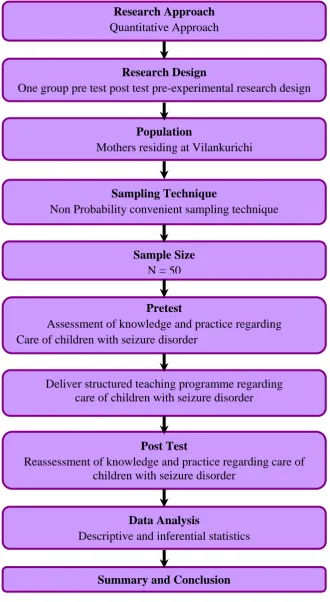
Methodology is the way to solve the problem systematically, that includes steps of procedure and strategies of the data. In this section the researcher discusses the research approach, research design, setting of the study, population, sample size, sampling technique, criteria for the selection of sample. Description of tool, content validity, reliability, data collection procedure and plan for data analysis.
Research Approach
Present study is to assess the effectiveness of a structured teaching programme on knowledge of mothers regarding care of children with seizure disorder. As the effectiveness is to be scientifically determined, a quantitative research approach is used for the study.
Research Design
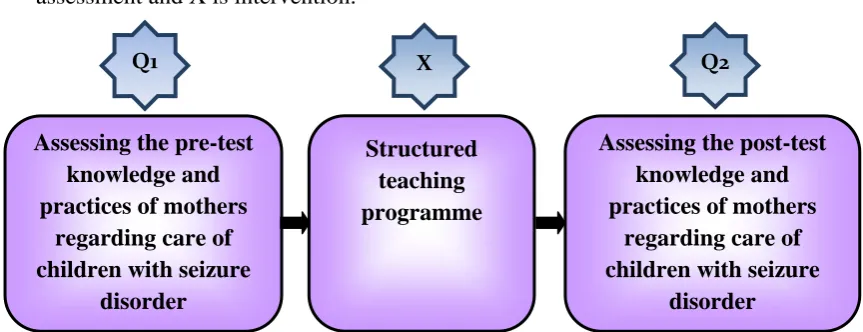
The research design provides an overall plan for conducting the study. One group pre-test post-test experimental design. Q1 is pre-test assessment, Q2 is post-test assessment and X is intervention.
Q1
Assessing the pre-test knowledge and practices of mothers
regarding care of children with seizure
disorder
Structured teaching programme
Assessing the post-test knowledge and practices of mothers
regarding care of children with seizure
disorder
[image:44.595.90.522.578.744.2]X Q2
Setting of the Study
The study was conducted at Vilankurichi Village, Coimbatore, which is situated 5kms away from the college.
Variables
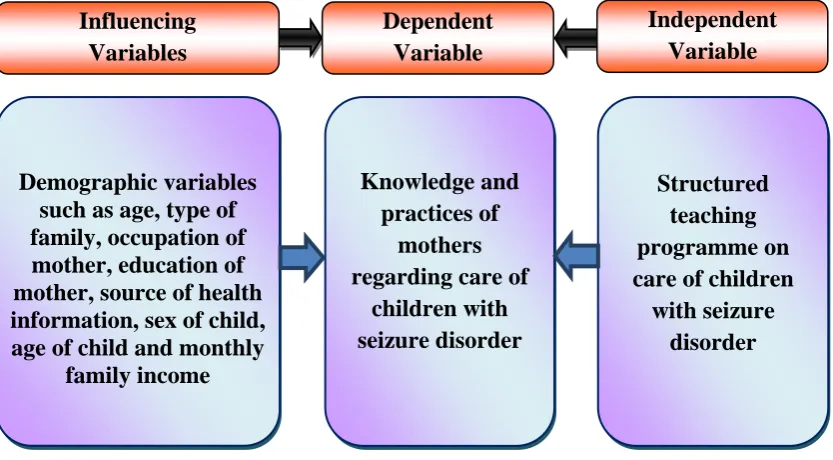
Independent variable was structured teaching programme on care of children with seizure disorder. The dependent variable was knowledge and practices of mothers regarding the care of children with seizure disorder. Influencing variables were demographic variables.
Influencing Variables Dependent Variable Independent Variable Demographic variables such as age, type of family, occupation of mother, education of mother, source of health information, sex of child, age of child and monthly
family income
Knowledge and practices of
mothers regarding care of
children with seizure disorder Structured teaching programme on care of children
with seizure disorder
[image:45.595.110.527.323.553.2]
Figure. 3 The Schematic Representation of the Variables
Population
The population of the study includes mothers in Vilankurichi, Coimbatore.
Sample Size
Sampling Technique
Non probability convenient sampling technique was used for selecting the samples.
Criteria for Selection of Samples
Inclusive Criteria
Mothers at Vilankurichi, Coimbatore.
Mothers of Children who are diagnosed to have seizure disorder with at least two previous episodes.
Mothers who are willing to participate in the study.
Mothers who are able to communicate freely in Tamil/English
Exclusive Criteria
Children with other neurological disorders
Mothers who are not willing or unable to participate in this study
Mothers who are medical/nursing profession
Description of the Tool
The researcher has developed a structured questionnaire after reviewing the literature and considering the opinion of paediatric nursing experts, to assess the knowledge and practice regarding selected aspects on care of children with seizure disorder.
Selection - 1 Description of Demographic Variables
occupation of mother, education of mother, source of health information, age of child, sex of child and family monthly income.
Section - 2 Knowledge Questionnaire
Structured knowledge questionnaire to assess the knowledge of mothers regarding care of children with seizure disorder consisted of 25 questions regarding seizure disorder, management during seizure attacks and antiepileptic drugs. Total score is 25. Each favorable response carries one mark and unfavorable response carries zero mark. Total score was categorized as Good (20 -25), Average: (14 -19), Poor: (0 -13)
Section - 3 Practice Questionnaire
It consists of 20 statements to assess the practice of seizure care among mothers. Both positive and negative questions are formed based on observational check list.
Testing of the Tool
Content Validity
Reliability
The reliability of the tool was found by spearman brown split half technique showing for knowledge of r=+0.79 for practice +0.83 the reliability of the tool was satisfactory.
Pilot Study
In order to test the relevance and practicability of the study, the pilot study was conducted among 5 mothers at Vilankurichi. The knowledge and practices regarding care of children with seizure disorder were assessed with the prepared questionnaire. The structured teaching programme was given with the help of power point presentation. The result of the pilot study showed that inadequate knowledge and practices regarding care of seizure disorder in pre test and gain knowledge and good practice in post test.
Data Collection Procedure
knowledge and practices regarding care of children with seizure disorder by using the same questionnaire.
Plan for Data analysis
Research Design
One group pre test post test pre-experimental research design
Population
Mothers residing at Vilankurichi
Sampling Technique
Non Probability convenient sampling technique
Sample Size
N = 50
Pretest
Assessment of knowledge and practice regarding Care of children with seizure disorder
Deliver structured teaching programme regarding care of children with seizure disorder
Post Test
Reassessment of knowledge and practice regarding care of children with seizure disorder
Data Analysis
Descriptive and inferential statistics
Summary and Conclusion Research Approach
[image:50.595.151.482.99.702.2]Quantitative Approach
CHAPTER - IV
Data Analysis and Interpretation
This chapter deals with the analysis and interpretation of data, collected from 50 mothers, through structured questionnaire. The data collected are tabulated, analyse and interpreted by using descriptive and inferential statistics.
The Analysis and Interpretation of Data Were Presented Under 4 Sections
Section – I Distribution of demographic variables.
Section – II Description about the knowledge and practice of mothers regarding care of children with seizure disorder.
Section - III Distribution of correlation between knowledge and practice of mothers regarding care of children with seizure disorder.
SECTION - I
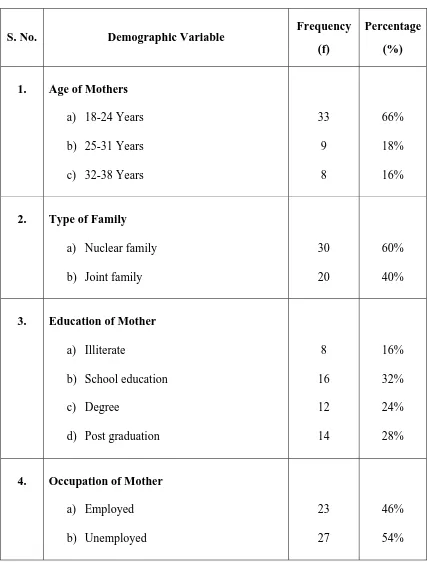
Table.1 Distribution of Demographic Variables of Mothers
(N = 50)
S. No. Demographic Variable
Frequency
(f)
Percentage
(%)
1. Age of Mothers
a) 18-24 Years b) 25-31 Years c) 32-38 Years
33 9 8 66% 18% 16%
2. Type of Family
a) Nuclear family b) Joint family
30 20
60% 40%
3. Education of Mother
a) Illiterate
b) School education c) Degree
d) Post graduation
8 16 12 14 16% 32% 24% 28%
4. Occupation of Mother
(Table 1 continued)
S. No. Demographic Variable
Frequency
(f)
Percentage
(%)
5. Source of Health Information
a) Health professional b) Mass media
c) Friends 24 4 22 48% 8% 44%
6. Sex of Child
a) Male b) Female 29 21 58% 42%
7. Age of Child
a) Below 1 year b) 1-3 years c) 3-6 years d) 6-12 years
14 22 9 5 28% 44% 18% 10%
8. Family Monthly Income
a) Less than `. 5000/- month b) ` 5001/- to `.10000
c) `. 10001/- to `.15000/- month d) More than `. 15000/- month
Table.1 shows the Distribution of Demographic Variables of mothers with seizure disorder child.
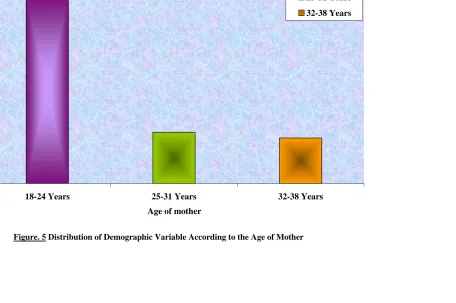
Regarding the age of mother 33(66%) were aged between 18 -24 years, 9 (18%) were aged between 25-31 years, 8 (16%) were aged between 32– 38.
Regarding the type of family 30 (60%) were belongs to nuclear family, were 20 (40%) belongs to joint family.
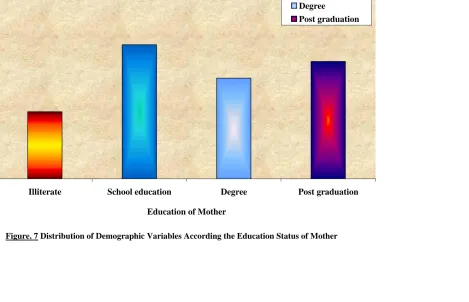
Regarding education 08 (16%) were illiterate, 16 (32%) had school education, 12 (24%) were graduates and 14 (28%) post graduates.
Regarding the occupation of mother 23 (46%) were employed and 27 (54%) were unemployed
With regards to the source of information 24 (48%) got information through health professionals, 4 (8%) through mass media and 22 (44%) through friends.
With regards to sex of child 29 (58%) are male and 21 (42%) were female child.
With regards to the age of child 14(28%) are less than 1 year, 22(44%) were between 1-3 years, 9 (18%) were between 3-6 years and 5(10%) were between 6-12 years.
0 15 30 45 60 75
18-24 Years 25-31 Years 32-38 Years
Age of mother
Percentage (%)
18-24 Years
25-31 Years
[image:55.595.139.716.118.475.2]32-38 Years
Nuclear family
[image:56.595.92.757.96.475.2]Joint family
0 5 10 15 20 25 30 35 40 45 50
Illiterate School education Degree Post graduation
Education of Mother
P
ercentage (%)
Illiterate
School education Degree
[image:57.595.126.720.119.464.2]Post graduation
0 10 20 30 40 50 60 70
Employed Unemployed
Occupation of Mother
P
ercentage (%
)
Employed
[image:58.595.125.730.128.462.2]Unemployed
0 10 20 30 40 50 60 70
Health professional Mass media Friends
Source of Health Information
P
e
rcentage (%)
Health professional
[image:59.595.133.711.120.471.2]Mass media Friends
0 10 20 30 40 50 60 70
Male Female
Sex of Child
P
ercentage (%)
Male
[image:60.595.131.714.121.472.2]Female
0 5 10 15 20 25 30 35 40 45 50
Below 1 year 1-3 years 3-6 years 6-12 years
Age of Child
P
ercentage (%)
Below 1 year
1-3 years
3-6 years
[image:61.595.125.727.120.479.2]6-12 years
0 5 10 15 20 25 30 35 40 45 50
Less than `. 5000/-month
` 5001/- to `.10000 `. 10001/- to `.15000/-month
More than `. 15000/-month
Family Monthly Income
P
e
rcentage (%)
Less than `. 5000/- month ` 5001/- to `.10000
`. 10001/- to `.15000/- month More than `. 15000/- month`.
[image:62.595.123.725.132.475.2]`. `. `. `. `. `. `. `. `. `. `.
SECTION – II
Table. 2 Distribution of Statistical Value of Pretest and Post Test Knowledge Scores of Mothers with Regard to Care of Children with Seizure Disorder
(N = 50)
S. No. Knowledge Mean S.D ‘t’ value
1. Pretest 14.5 3.76 2. Post test 20 1.4
15.5* *significant at 0.05 level
14.5
20
0 5 10 15 20
Pretest Post test
Knowledge
Mean
25
Pretest
[image:64.595.136.712.93.443.2]Post test
Figure. 13 Comparison of Mean Score of Pretest and Post test Knowledge Score Regarding the
Table. 3 Distribution of Statistical Value of Pretest and Post Test Practice Scores of Mothers with Regard to the Care of Children with Seizure Disorder
(N = 50)
S. No. Practice Mean S.D ‘t’ value
1. Pretest 10.7 2.4 2. Post test 13 1.5
16.0* *significant at 0.05 level
10.7
13
0 2 4 6 8 10 12
Pretest Post test
Practice
Mea
n
14
[image:66.595.134.707.98.440.2]Pretest Post test
Figure. 14 Comparison of Mean Score of Pretest and Post test Practice Score Regarding the
SECTION – III
Table. 4 Correlation Between Pretest Knowledge and Practice Scores of Mothers Regarding Care of Children with Seizure Disorder
(N = 50)
S. No. Pretest Mean S.D ‘r’ value
1. Knowledge 14.5 3.7 2. Practice 10.7 2.4
[image:67.595.101.530.206.319.2]+0.4* Table 4 shows that there was a positive correlation between the knowledge and practice in pre test.
Table. 5 Correlation Between Post Test Knowledge and Practice Scores of Mothers Regarding Care of Children with Seizure Disorder
(N = 50)
S. No. Post test Mean S.D ‘r’ value
1. Knowledge 20 1.4 2. Practice 13 1.5
[image:67.595.102.530.502.616.2]SECTION – IV
Table. 6 Association of Selected Demographic Variables with Level of Knowledge of Mothers Regarding the Care of Children with Seizure Disorder in Post Test Score
(N = 50)
S.No. Demographic Variables Above Mean
Below
Mean
2
1. Age of Mothers
a) 18-24 years b) 25-31years c) 32-38 years
13 5 4 20 4 4 3.98
2. Type of Family
a) Nuclear family b) Joint family
22 5
8 15
2.93
3. Education of Mother
a) Illiterate
b) School education c) Degree
d) Post graduation
5 10 8 5 3 6 4 9 4.7
4. Occupation of Mother
a) Employed b) Unemployed 9 18 3 20 2.80
5. Source of Health Information
a) Health professional b) Mass media
(Table 6 continued)
S.No. Demographic Variables Above Mean
Below
Mean
2
6. Sex of Child
a) Male b) Female 15 9 14 12 2.55
7. Age of Child
a) Below 1 year b) 1-3 years c) 3-6 years d) 6-12 years
9 12 4 4 5 10 5 1 12.36*
8. Family Monthly Income
a) Less than `. 5000/- month b) `. 5001/- to `. 10000
c) `. 10001/- to `. 15000/- month d) More than `. 15000/- month
[image:69.595.102.528.94.482.2]6 8 9 2 4 8 10 3 5.3
Table. 7 Association of Selected Demographic Variables with Level of Practice of Mothers Regarding the Care of Children with Seizure Disorder in Post Test Score
(N = 50)
S. No. Demographic Variable Above Mean
Below
Mean
2
1. Age of Mothers
a) 18-24 years b) 25-31 years c) 32-38 years
15 5 4 18 4 4 3.98
2. Type of Family
a) Nuclear family b) Joint family
20 7
10 13
2.32
3. Education of Mother
a) Illiterate
b) School education c) Degree
d) Post graduation
4 7 5 8 4 9 7 6 3.68
4. Occupation of Mother
a) Employed b) Unemployed 12 16 9 13 2.53
5. Source of Health Information
a) Health professional b) Mass media
(Table 7 continued)
S. No. Demographic Variable Above Mean
Below
Mean
2
6. Sex of Child
a) Male b) Female 15 9 14 12 2.55
7. Age of Child
a) Below 1 year b) 1-3 years c) 3-6 years d) 6-12 years
4 9 4 1 10 13 5 4 5.36
8. Family Monthly Income
a) Less than `. 5000/- month b) `. 5001/- to `.10000
c) `. 10001/- to `. 15000/- month d) More than `. 15000/- month
CHAPTER - V
Results and Discussion
The aim of the study was to assess the Effectiveness of structured teaching programme on knowledge and practice of mothers regarding care of children with seizure disorder. The data were analyzed by using descriptive and inferential statistics. The result of the study was discussed according to the objective.
The First Objective of the Study was to Assess the Knowledge and Practice of
Mothers Regarding Care of Children with Seizure Disorder
Structured questionnaire was used to assess the knowledge. The pre test mean score of knowledge was 14.5. The practice mean score in pre test was 10.7. It implies that mothers having inadequate knowledge and practice regarding care of child with seizure disorder in pre test.
A study was conducted by Tazloc (2012) over 100 samples showed that 80% of the mothers having inadequate knowledge and practice among the care of seizure disorder child. The pre and post treatment scores were recorded. The pre test score of knowledge was 12, and the post test mean score was 26.
The Second Objective of the Study was to Deliver Structured Teaching
Programme on Knowledge and Practice Regarding Care of Children with
Seizure Disorder
regarding the care of child with seizure disorder among mothers with the help of power point. The duration of the programme was 45 minutes and it was found to be effective and they communicated and clarified their doubts related to care of seizure child.
A similar study conducted by Margret Wilson (2012) to evaluate the effectiveness of structured teaching programme for the care of seizure child. Post test was conducted after a week. It revealed that the teaching programme was effective in improving the knowledge and practice level.
The Third Objective of the Study was to Assess the Effectiveness of Structured
Teaching Programme on the Level of Knowledge and Practice Regarding the
Care of Child with Seizure Disorder
The pre test mean score for the knowledge was 10.7 and post test mean score was 13. There by the ‘t’ value of knowledge was 15.5. The pre test mean score for practice was 10.7 and post test mean score was 13. There by the ‘t’ value for practice was 16.0.
Both the ‘t’ value obtained for knowledge and practice were higher than the table value at 0.05 level of significant. This reveals that there was a significant improvement in knowledge and practice about care of seizure child among mothers. This in turn reveals that the structured teaching programme was effective.
mothers at rural area. The study result showed that there was a significant improvement in knowledge and practice after teaching programme. The study results concluded that structured educational intervention was effective in improving knowledge and practice of mother.
The Fourth Objective of the Study was Distribution of Correlation Between
Knowledge and Practice of Mothers Regarding Care of Children with Seizure
Disorder
The Karl Pearson’s Correlation Coefficient ‘r’ was used to find out the relationship between knowledge and practice of mother regarding care of child with seizure disorder. The ‘r’ value of pre test is + 0.4 and post test is + 0.5. It reveals that there is improvement in knowledge which significantly influence the practice of the mother with regards to the care of child with seizure disorder.
Michel. L (2011) conducted a study to evaluate effectiveness of teaching programme on care of seizure child among mothers. The study result shows that mothers knowledge is increase when the practice is increased.
The Fifth Objective of the Study was Association of Selected Demographic
Variables with Level of Knowledge and Practice of Mothers Regarding Care of
Children with Seizure Disorder
The demographic variables like age of mother, type of family, educational status, occupation and source of information, age of child, sex of child and monthly family income shows no significant association with the practice level of mother regarding care of seizure child.
CHAPTER – VI
Summary, Conclusion, Nursing Implications,
Limitations and recommendations
Summary
Seizure disorder is a major health problem. There are more than 20 different epileptic disorders and it is a common childhood disorder. So the education of mothers among seizure care is important.
The purpose of the study was to assess the effectiveness of structured teaching programme on knowledge and practice of mothers regarding care of children with seizure disorder.
The Following Objectives were Set for the Study
To assess the knowledge and practice of mothers regarding care of children With seizure disorder.
To deliver structured teaching programme on knowledge and practice regarding care of children with seizure disorder.
To evaluate the effectiveness of structured Teaching Programme on Knowledge and Practice of mothers regarding care of children with seizure disorder.
To find out the correlation between knowledge and practice of mothers regarding care of children with seizure disorder.
Hypothesis Set for the Study
There is a significant difference in the knowledge and practice level of mothers regarding care of children with seizure disorder in pre-test and post test scores.
Major Findings of the Study were as Follows
The pretest mean score of knowledge was 14.5 and post test score of knowledge was 20 among mothers of seizure disorder child.
The pretest for practice was 10.7 and the post test score of practice was 13.
The obtained ‘t’ value for comparison of knowledge score at 49 (df) p<0.05 level was 15.5.
The obtained ‘t’ value for comparison of practice score at 49 (df) p<0.05 level was 16.
The correlation between knowledge and practice in pretest regarding care of child wit