“A STUDY TO EVALUATE THE EFFECTIVENESS OF STRUCTURED TEACHING PROGRAMME ON KNOWLEDGE REGARDING PREVENTION OF “TORCH” INFECTIONS DURING
PREGNANCY AMONG ANTENATAL MOTHERS IN A SELECTED HOSPITAL AT ERODE DISTRICT”
By
301321551
Dissertation submitted to
THE TAMILNADU DR M.G.R. MEDICAL UNIVERSITY
Chennai, Tamil Nadu
In partial fulfillment
of the requirements for the degree of
MASTER OF SCIENCE IN
OBSTETRICAL AND GYNAECOLOGICAL NURSING
Sri Adichunchanagiri Shakshana Trust
Dharmarathnakara Dr.Mahalingam Institute of
Paramedical Sciences and Research,
Sakthi Nagar, Bhavani (T.k), Erode (Dist).
“A STUDY TO EVALUATE THE EFFECTIVENESS OF STRUCTURED TEACHING PROGRAMME ON KNOWLEDGE REGARDING PREVENTION OF TORCH INFECTIONS DURING PREGNANCY AMONG ANTENATAL MOTHERS IN A SELECTED HOSPITAL AT ERODE DISTRICT.”
Approved by DMIPSR college research committee
Principal: ………
PROF.MRS.K.KALAIVANI, M.SC., (NURSING), PROFESSOR IN COMMUNITY HEALTH NURSING, PRINCIPAL DMIPSR COLLEGE OF NURSING, SAKTHI NAGAR, BHAVANI, ERODE-638315.
Research guide: ……….. MRS.JANAKI, M.SC., (NURSING),
VICE PRINCIPAL
HOD IN OBSTETRIC AND GYNECOLOGICAL NURSING, DMIPSR COLLEGE OF NURSING,
SAKTHI NAGAR, BHAVANI, ERODE-638315.
Medical guide: ………..
DR.P.SELVAN MS (GEN.SURGEON), REG.NO:72323,
RAGHAV HOSPITAL,
APPAKKUDAL, BHAVANI, ERODE-638315.
A dissertation submitted to
The Tamilnadu DR.M.G.R. medical university, Chennai In partial fulfillment of the requirement for
Degree of Master of Science in nursing
VIVA VOCE:
1. INTERNAL EXAMINER: ………
ENDORSEMENT HEAD OF THE INSTITUTION
This is to certify that the dissertation entitled “A STUDY TO EVALUATE THE EFFECTIVENESS OF STRUCTURED TEACHING PROGRAMME ON KNOWLEDGE REGARDING PREVENTION OF TORCH INFECTIONS DURING PREGNANCY AMONG ANTENATAL MOTHERS IN A SELECTED HOSPITAL AT ERODE DISTRICT.” is a bonafide research work done by Mrs. DRAUBATHAI M., under the guidance of Mrs. JANAKI, M.sc., (N), Reader Cum HOD of Obstetric and Gynecological Nursing Department, Dharmarathnakara Dr.Mahalingam Institute of Paramedical Sciences and Research, Sakthinagar, Bhavani Taluk, Erode..
Signature of the Principal
Prof.Mrs.K.Kalaivani, M.Sc (Nursing),
Professor in Community Health Nursing,
Principal, DMIPSR College of Nursing,
Sakthi Nagar, Bhavani, Erode – 6383153
Date:
Place: Sakthi Nagar
ENDORSEMENT BY THE RESEARCH GUIDE
This is to certify that the dissertation entitled “A STUDY TO EVALUATE THE EFFECTIVENESS OF STRUCTURED TEACHING PROGRAMME ON
KNOWLEDGE REGARDING PREVENTION OF TORCH INFECTIONS DURING PREGNANCY AMONG ANTENATAL MOTHERS IN A SELECTED HOSPITAL AT ERODE DISTRICT.” is a bonafide research work done by Mrs. DRAUBATHAI M., in partial fulfillment of the requirement for the Degree of Master of Science in Obstetrical and Gynaecological Nursing.
Signature of the Research Guide
MRS.JANAKI, M.SC., (NURSING),
VICE PRINCIPAL
HOD IN OBSTETRIC AND GYNECOLOGICAL NURSING,
DMIPSR COLLEGE OF NURSING,
SAKTHI NAGAR, BHAVANI, ERODE-638315.
Date :
ACKNOWLEDGEMENT
First and foremost, I thank and praise the “Lord almighty.” for giving me all the wisdom, knowledge, strength and guidance for the successful completion of my study.
I am immensely grateful thanks to Sri Sri Bhataraikya Sri Balagadharanatha Mahaswamiji and Chairman Dr. Mahalingam, chairman sakthi sugars limited for giving me an opportunity to undertake the course at Dharmarathnakara Dr. Mahalingam and Institute Of Paramedical Sciences and Research Sakthinagar.
I extend my sincere thanks to the most honourable Secretary and Correspondent of our college our Dharmarathnakara Dr. Mahalingam Institute Of Paramedical Sciences And Research Sakthinagar, for giving me an opportunity to undertake the course at Dharmarathnakara Dr. Mahalingam Institute Of Paramedical Sciences And Research Sakthinagar.
I wish to express my sincere grateful thanks and gratitude to Prof. Mrs. K. Kalaivani M.Sc (N) Principal Dharmarathnakara Dr. Mahalingam Institute Of Paramedical Sciences And Research Sakthinagar, for the encouragement inspiration, support as well as for providing all facilities for successful completions of this study.
My sincere gratitude and heartfelt thanks to my guide Mrs. M. Janaki,Vice Principal HOD of Obstetric and gynecology nursing, and my class.co-ordinator, Dharmarathnakara Dr. Mahalingam Institute Of Paramedical Science And Research Sakthinagar, for her able guidance highly instructive suggestions, precious advice and encouragement at each and every step of this study.
It is my heart felt desire in expressing profound gratitude to Mrs. Hemalatha M.Sc(N) for her valuable guidance and thought provoking stimulation to present this study.
I extend my sincere gratitude to Mrs. Tamzhil selvi M.Sc(N) Lecturer of Psychiatric department, for her valuable guidance to do this study.
My sincere gratitude with exclusive thanks to Mrs. Srideepa M.Sc(N) HOD of Community Health Nursing for her valuable guidance to do this study.
I would like to thank profoundly Mrs. Saranya M.Sc(N) Lecturer of medical surgical nursing, for her valuable guidance to do this study.
I would like to thank profoundly Mrs. Radha M.Sc(N) Lecturer of Community Health Nursing, for her valuable guidance to do this study.
I would like to thank profoundly Mrs. Logeshwari M.Sc(N) Lecturer of obstetric and gynecology nursing, for her valuable guidance to do this study.
Grateful acknowledgement is extended to Mr. Dhanapal Lecturer in statistics for his valuable guidance in statistical analysis of this study.
I extend my sincere gratitude to Mrs. Sumithra devi.T.S MA. M.phil for editing the dissertation.
I also accord my respect and gratitude to the all faculties of Dharmarathnakara Dr. Mahalingam Institute Of Paramedical Science And Research for their timely assistance, co-operation and support throughout the period.
I am truly grateful to thank to all the participants who formed the core and basis of this study with their whole hearted co-operation.
I am thankful to the Mr.Kumar and Mrs.Dhanalakshmi Librarian of Dharmarathnakara Dr. Mahalingam Institute Of Paramedical Science And Research for helping me with literature work & for extending library facilities throughout the study.
I am very much grateful to thank my beloved parents, my brother, my father and mother in law, my brother and sister in law there is no word to express the priceless patience, encouragement & for the continued support. I owe a great deal to them.
Words are beyond expression for the case with fervent prayers and faith of my beloved husband Mr. R. Guru for nurturing my cherished dream into a reality through his continuous challenging encouragement, Moral and financial support.
I would like to thank all my friends for their help and support.
TABLE OF CONTENTS
S.NO. CHAPTER PAGE
NO.
I INTRODUCTION 1
II REVIEW OF LITERATURE 14
III METHODOLOGY 22
IV DATA ANALYSIS AND INTERPRETATION 29
V DISCUSSION 62
VI SUMMARY, CONCLUISON, RECOMMENDATION 65
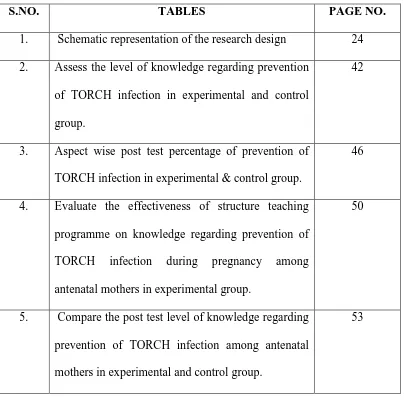
LIST OF TABLES
S.NO. TABLES PAGE NO.
1. Schematic representation of the research design 24 2. Assess the level of knowledge regarding prevention
of TORCH infection in experimental and control group.
42
3. Aspect wise post test percentage of prevention of TORCH infection in experimental & control group.
46
4. Evaluate the effectiveness of structure teaching programme on knowledge regarding prevention of TORCH infection during pregnancy among antenatal mothers in experimental group.
50
5. Compare the post test level of knowledge regarding prevention of TORCH infection among antenatal mothers in experimental and control group.
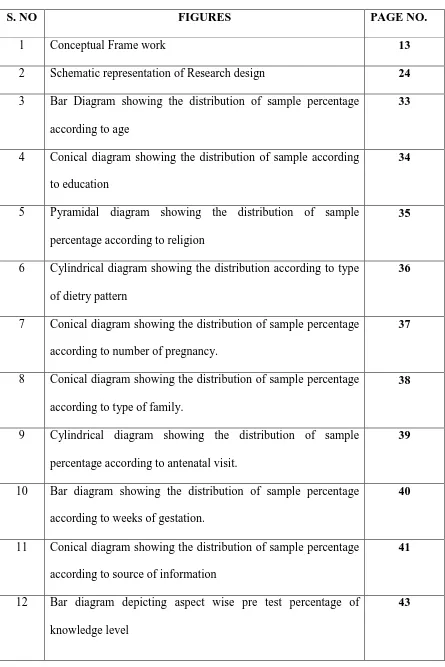
[image:12.595.98.502.144.549.2]LIST OF FIGURES
S. NO FIGURES PAGE NO.
1 Conceptual Frame work 13
2 Schematic representation of Research design 24 3 Bar Diagram showing the distribution of sample percentage
according to age
33
4 Conical diagram showing the distribution of sample according to education
34
5 Pyramidal diagram showing the distribution of sample percentage according to religion
35
6 Cylindrical diagram showing the distribution according to type of dietry pattern
36
7 Conical diagram showing the distribution of sample percentage according to number of pregnancy.
37
8 Conical diagram showing the distribution of sample percentage according to type of family.
38
9 Cylindrical diagram showing the distribution of sample percentage according to antenatal visit.
39
10 Bar diagram showing the distribution of sample percentage according to weeks of gestation.
40
11 Conical diagram showing the distribution of sample percentage according to source of information
41
12 Bar diagram depicting aspect wise pre test percentage of knowledge level
[image:13.595.76.521.90.757.2]13 Cylindrical diagram depicting over all pre test percentage of knowledge level
45
14 Bar diagram depicting aspect wise post test percentage of knowledge level
47
15 Cyliderical diagram depicting overall post test percentage of prevention of torch infection among antenatal mothers in experimental and control group.
49
16 Conical diagram depicting aspect wise comparison of mean score between pre test and post test level of knowledge among antenatal mothers in experimental group.
51
17 Conical diagram depicting over all comparison of mean score between pre test and post test level of knowledge in prevention of torch infection among antenatal mothers in experimental group.
52
18 Bar diagram depicting aspect wise comparison of post test level of knowledge score.
54
19 Cylindrical diagram depicting over all means score between post test level of knowledge.
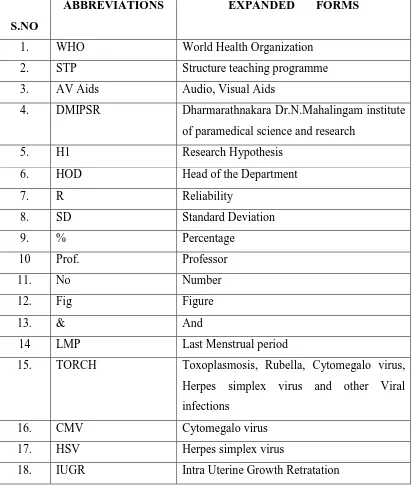
LIST OF ABBREVIATIONS
S.NO
ABBREVIATIONS EXPANDED FORMS
1. WHO World Health Organization
2. STP Structure teaching programme 3. AV Aids Audio, Visual Aids
4. DMIPSR Dharmarathnakara Dr.N.Mahalingam institute of paramedical science and research
5. H1 Research Hypothesis
6. HOD Head of the Department
7. R Reliability
8. SD Standard Deviation
9. % Percentage
10 Prof. Professor
11. No Number
12. Fig Figure
13. & And
14 LMP Last Menstrual period
15. TORCH Toxoplasmosis, Rubella, Cytomegalo virus, Herpes simplex virus and other Viral infections
16. CMV Cytomegalo virus
17. HSV Herpes simplex virus
[image:15.595.93.505.139.625.2]ABSTRACT
TITLE OF THE STUDY
A study to evaluate the effectiveness of structured teaching programme on knowledge regarding prevention of “TORCH” infections during pregnancy among antenatal mothers in a selected hospital at Erode District.
OBJECTIVES OF THE STUDY
To assess the level of knowledge regarding prevention of TORCH infection during pregnancy antenatal mothers in experimental and control group.
To evaluate the effectiveness of structured teaching programme on knowledge regarding prevention of TORCH infection during pregnancy among antenatal mothers in experimental group.
To find out the post test knowledge regarding prevention of TORCH infection during pregnancy among antenatal mothers with their selected demographic variable.
HYPOTHESIS
H1-There will be a significant differences between the pre and post test knowledge regarding prevention of TORCH infection during pregnancy among antenatal mothers in experience and control group.
H2-There will be a significant differences between post test level of knowledge regarding prevention of TORCH infection with the experimental and control group.
CONCEPTUAL FRAME WORK
The conceptual frame work adopted for this study based on the general system theory (modified). “Ludwing Von Bertalaneffy‟s model (1968).
Research Methods
The research design adopted for this study was true experimental design and research approach adopted for this was to evaluative the educative approach. The size was 60 months. In this 30 months were selected for experimental group and 30 for control group by convenient sampling method. Mothers were selected in selected hospitals in Erode District.
RESULTS
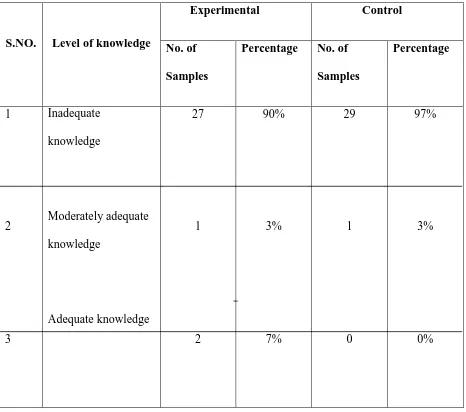
The findings of the experimental group of mother‟s pre test knowledge score was 27 (90%) level of knowledge was inadequate. 1 (3%) level of knowledge was Moderately adequate knowledge. 2(7%) level of knowledge was adequate in experimental group.
Now the level of knowledge score was adequate in experimental group.
Hence the evaluate the effectiveness of STP on post test knowledge in experimental group was 34.0% , pre test % was 4.8.
Comparison in post test percentage of knowledge in experimental group the knowledge score was 34.17 whereas in control group the knowledge score was 3.79.
The overall mean post test knowledge score of mothers in the experimental group was significantly higher than the pre test knowledge score of mothers the paired t test value was t = 25 for knowledge.
INTERPRETATION AND CONCLUSION
The findings of this study was the need of obstetric nurse to conduct training programme to the mothers coming to the antenatal visit to increase the knowledge of mother regarding prevention of TORCH infection.
This study has proved that mothers gained their knowledge regarding prevention of TORCH infection the level remarkably when compared to their previous knowledge prior to the administration of STP.
CHAPTER-I
INTRODUCTION
“ Pregnancy is special , let make it as safe .”
- WHO theme.
“Feeling fat lasts nine months but the joy of becoming a mom lasts forever.”
- Attributed to Nikki Dalton
Pregnancy is the most fascinating and delicate experience for a women. Not only the health
of the baby in the womb but also the woman's health is of equal importance to all her friends’ well
wishers and family members. Every pregnancy is unique experience for the women experiences will
be new and uniquely different.
The state of carrying a developing embryo or fetus within the female body. This condition can be indicated by positive results on an over-the-counter urine test, and confirmed through a blood test, ultrasound, detection of fetal heartbeat, or an X-ray. Pregnancy lasts for about nine months, measured from the date of the woman's last menstrual period (LMP). It is conventionally divided into three trimesters, each roughly three months long.
Reproduction though considered to be an usual process in the life of a women, is stressful
and can lead to the threats in reproductive age group women unless, appropriate measures are
taken in time, it may reach its peak and endanger the life of mothers. Some infections are more
common than usual but all of them need to be prevented at best or at worst nipped in the bud for
sure. The primary infections includes TORCH infections an acronym of Toxoplasma, Other infections
(like varicella, syphilis, hepatitis, etc…) Rubella , Cytomegalovirus and Herpes. The impact and
diagnosis of the disease just mentioned have been touched upon as well as the vaccination
strategies to prevent them have been important.
As everyone waits with bated breath for the new arrival, any signs of illness in the mother
can throw a spanner in the celebrations. So it is Imperative that all care is taken to avoid anything
untoward from happening and prime concern is to avoid infection at any cost. However much may
aborn them, we cannot deny that infections have become part of our normal life. But pregnancy and
infections not a great combo by any standards! Infections during this period can pose a risk not only
to the mother but the child too and infants may also pose a great risk to the pregnancy itself.
Maternal infections are now being increased and recognized as a major cause of birth
defects in newborn babies. In pregnant women the virus can cross placenta and result in fetal
infections.
TORCH is common in all socio-economic groups but congenital infections with significant
impairment is seen at highest rate in population in which women in child bearing age have highest
risk of acquiring primary infections. In addition to placental route, TORCH can be transmitted at
delivery via the maternal genital tract, during the post partum period in breast milk and transfused
blood products.
All of the TORCH infections can affect people of any age or sex. However, the term TORCH is
only used when it applies to pregnant women and their unborn or newborn children. As a group,
TORCH infections represent a common cause of birth defects. They can cause still births in the
delivery of a dead baby.
Recurrent pregnancy loss is defined as three or more consecutive spontaneous losses of
pregnancy. Despite the tremendous scientific and technological advances it has remained a
dilemma. It’s still remains a diagnostic challenge and frustrating therapeutic experience to most
obstetricians. It is a highly frustrating experience for the patient. Despite great advances made by
the modern science and cutting edge technology, the large number of cases, almost 43% are still
classified as due to unknown etiology. Known etiological factors include anatomical defects in
Mullerian tract, TORCH infections, immunological problems. Many modern therapies, which are in
current use, do not lead to a successful pregnancy outcome, resulting in great frustration to
the patient and also to the obstetrician.
Immunology plays a significant role in the pregnancy. There are many placenta-mediated
mechanisms that prevent the immune response of the mother against the fetus, which is foreign
body. In normal pregnancy, asymmetrical antibodies develop resulting in T helpers’ cell 2 type
responses. It is associated with good progesterone secretion from the placental tissue resulting in a
successful outcome of pregnancy. The immunological response from the mother is blocked by
progesterone and if this progesterone –blocking factor is suppressed, it lead to unsuccessful
pregnancy out come.
Good hygiene, antenatal screening, antiviral therapies, development and introduction of
good vaccine may achieve the goal of controlling TORCH infections in mother and its related
congenital defects in newborn. The importance may primarily be given to introduction of antenatal
screening for TORCH infections in the developing countries like India as has been implemented
against HIV. Data generated will help the health authorities to make policy against congenital TORCH
infections prevailing in the country. Children affected by one of the TORCH infections need close
monitoring.
The pregnant woman by gaining a teaching finds it useful and get to realize the importance
of being aware of the health implications especially during as delicate period as pregnancy.
NEED FOR THE STUDY
Pregnancy is a period of great anabolic activity, when the most rapid rate of growth takes
place. It is a condition in which the fetal growth is accompanied by extensive changes in the
maternal body composition and metabolism.
Mother and children not only constitute a large group, but they are also a “vulnerable” or
special risk group, the risk is connected with Childbearing in the case of women.
Certain infections collectively called TORCH infections can produce Stillbirths, congenital
anomalies, abortions, blindness, severe deafness and mental retardation in the offspring’s. That may
be acquired in utero or during the birth process causing heavy morbidity to both mother and child.
The first trimester is usually the most dangerous time for the mother to catch these
infections quite a great risk of the fetus also being affected during this stage. The risk to baby
depends on the particular stage of pregnancy and for each infections it varies e.g. first trimester for
rubella or at delivery for herpes simplex virus etc, with such a serious implications it becomes
important to diagnose TORCH infections so as to treat as well as help to decide about termination of
pregnancy. The onus is therefore not only to detect the maternal infections but once detected it is
important to know whether the fetus is also infected or not.
A pilot study was conducted on TORCH infections among antenatal mothers to analyze
TORCH infections in mothers are transmissible to fetus in the womb or during the birth and cause a
cluster of symptomatic birth defects.
A study was conducted on Primary TORCH infections in the mother can lead to severe fetal
anomalies or even fetal loss. A prospective study was designed to detect the seroprevalence of IgM
antibodies to Toxoplasma gondii, rubella virus and cytomegalovirus and IgG antibodies to Herpes
simplex virus type 1 and 2. one hundred and twenty pregnant woman presenting to the antenatal
clinic of a tertiary health center were included in this study. Out of these 120 women, 112 (93.4%)
had evidence of one or more infections. Prevalence pf IgG antibodies to HSV was 70% seroposivities
for toxoplasmosis, rubella and CMV respectively were 11.6, 8.3 and 20.8%. Our data demonstrating
high frequency of primary infections during pregnancy support the conclusion that routine prenatal
TORCH screening is justified.
In a study the researcher says that primary infections caused by TORCH can lead to serious
complications in pregnant women and suggested that consequently, because of high seropositivity
of TORCH in pregnant women, the country’s health authorities should be alerted, and preventive
measures should be taken.
All of the TORCH infections can be spread to other persons. The infections usually cause few,
if any symptoms in the pregnant women. On the other hand, babies risk serious birth defects if they
catch one of these infections during pregnancy or delivery. Babies are usually most severely affected
when the mother gets the infection in the first trimester, or first
three months of pregnancy. This is the time of pregnancy when the baby’s organs are first starting to
form .
TORCH can cause serious, permanent birth defects. They can leave a child with severe
communication, behavioral, or learning disorders. Some children appear normal at birth, only to
have behavioral, emotional, or learning problems arise later in life. Hepatitis B can cause severe
ongoing liver cancer.
A study was conducted on perinatal viral infections among the TORCH agents , occurrence
of rubella and human T-lymphotropic virus type 1 (HTLV-1) were studied. Rubella epidemics
occurred throughout. These conditions could be explained by the lower rate of rubella H1 antibiotics
in the female population.
All TORCH infections have been associated with varying degrees of pregnancy loss. The
magnitude of the risk is somewhat related to the severity of the maternal illness.
In an Article regarding TORCH infections it states the prenatal infections accounts for 2% to
3% of all congenital anomalies. TORCH are some of the most common infections associated with
congenital anomalies.
Most of TORCH infections causes’ mild maternal morbidity but has serious fetal
consequences and treatment of maternal infections frequently has no impact on fetal outcome.
Therefore, recognition of maternal disease and fetal monitoring once disease is recognized
are
important for all clinicians. Knowledge of these disease will help the clinician appropriately
counsel mothers on preventive measures to avoid these infections, and will aid in counseling parents
on the potential for adverse fetal outcomes when these infections are present .
The healthy mother brings forth the healthy child. TORCH infections can be screened and
prevented during pregnancy. Even non-pregnant woman and adolescent girls can get TORCH tests
done so they can be well treated in advance and can enjoy a TORCH infections- free pregnancy.
Investigator in her own experience found that the Antenatal mothers have inadequate
knowledge regarding remedial measures for screening and prevention of TORCH infections during
pregnancy. So the researcher is interested in providing teaching programme for all antenatal
mothers regarding prevention of TORCH infections during pregnancy.
STATISTICAL MORTALITY RATES REGARDING TORCH INFECTIONS DURING
PREGNANCY
A number of infectious diseases can be transmitted to pregnant women and passed on to their babies, increasing the risk of miscarriage, birth defects, and developmental problems. These infections, collectively referred to as
TORCH infections, include toxoplasmosis, other (e.g., syphilis, HIV), rubella, cytomegalovirus (CMV), and herpes simplex virus.
It is important to educate women about these diseases and their risks, optimally prior to pregnancy. Vaccination is available for some of the diseases, and taking precautions to avoid exposure, such as frequent hand washing, can also aid in disease prevention. The best way for a woman to protect her unborn child from congenital diseases is to protect herself.
Worldwide, congenital HIV infection is a major cause of infant and childhood morbidity and mortality, responsible for an estimated 4 million deaths since the start of the HIV pandemic.
CMV is the most common virus known to be transmitted during pregnancy, affecting approximately 0.5–1.5% of births. approximately 40% of maternal CMV infections during pregnancy result in congenital infection.
In pregnant women with untreated early syphilis, 25% of pregnancies result in stillbirth and 14% in neonatal death, an overall perinatal mortality rate of about 40%.
Summary of Cases Reviewed in 2010
This report includes reviews conducted by the Maternal and Perinatal Death Review Committee in 2010. Cases reviewed may involve deaths that occurred in previous years.
Total number of cases reviewed: 41 Total number of recommendations: 83
Number of maternal cases reviewed: 11
Number of maternal cases noted for statistical purposes only*: 6
Total number of maternal deaths: 17
Number of recommendations from the maternal deaths reviewed: 12
Number of neonatal cases reviewed: 19
Number of recommendations from the neonatal deaths: 48
Number of stillborn cases reviewed: 11
Number of recommendations from the stillborn cases: 20
* The Maternal and Perinatal Death Review Committee reviews the deaths of all women who died “during pregnancy and following pregnancy in circumstances that could reasonably be attributed to pregnancy.” Deaths involving women who are pregnant, but where the pregnancy did not attribute to the death, are noted for statistical purposes only and a formal review is not conducted.
STATEMENT OF THE PROBLEM
A study to evaluate the effectiveness of structured teaching programmed on knowledge
regarding Prevention of TORCH infections during pregnancy among Antenatal mothers in a selected
hospital at Erode district.
OBJECTIVES OF THE STUDY
To assess the level of knowledge regarding prevention of TORCH infection during pregnancy
antenatal mothers in experimental and control group.
To evaluate the effectiveness of structured teaching programmed on knowledge regarding
prevention of TORCH infection during pregnancy among antenatal mothers in experimental group.
To Compare the post test level of knowledge regarding prevention of TORCH infection
among antenatal mothers in experimental and control group.
To find out the post test knowledge regarding prevention of TORCH infection during
pregnancy among antenatal mothers with their selected demographic variable.
HYPOTHESIS
H1-There will be a significant differences between the pre and post test knowledge
regarding prevention of TORCH infection during pregnancy among antenatal mothers in experience
and control group.
H2-There will be a significant differences between post test level of knowledge regarding
prevention of TORCH infection with the experimental and control group.
H3-There will be a significant associations in knowledge regarding TORCH infection with the
demographic variable.
ASSUMPTIONS
STP will improve knowledge of TORCH infection among antenatal mothers regarding
prevention of TORCH infection.
LIMITATION OF THE STUDY
Only 60 samples were used
30 for experimental group
30 for control group.
The study was limited only to antenatal mothers who are all attending the antenatal
OPD in selected hospitals in erode district.
The study was limited for the assessment of the knowledge and practice regarding
TORCH infection.
OPERATIONAL DEFINITIONS
Evaluate: In this study it refers to the determined outcome of structure teaching programme
regarding prevention of TORCH infections during pregnancy among Antenatal mothers with their
existing knowledge.
Effectiveness: It refers to desired changes brought by structured teaching programme by
post-test score.
Structured Teaching programme: It refers to a system of planned instructional teaching to
impart information in order to bring a change in knowledge regarding prevention of TORCH
infections during pregnancy among Antenatal mothers.
Prevention: It refers to precautionary a measure which is taken by the antenatal mothers
to prevent TORCH infections during pregnancy.
TORCH: It refers to infections which occurs during pregnancy includes
Toxoplasmosis, Rubella, Cytomegalovirus, Herpes simplex virus, and others (e.g. syphilis, hepatitis,
varicella virus).
Pregnancy: It refers to the period from conception to the delivery of the fetus.
Antenatal mothers: It refers to pregnant mothers who are in I, II, and III trimester.
CONCEPTUAL FRAME WORK
Conceptual frame work means – interrelated concepts or abstractions that are
assembled together in some rationale scheme by virtue of their relevance to a common theme.
- Polit and Hungler (2010)
The conceptual frame work adopted for this study was derived from “General System
Theory” formulated by Ludwig Von Bertalaneffy (1968). According to General System theory,
a system is a set of component or units interacting with in the boundary that filter the kind
and rate of flow of input and output from the system.
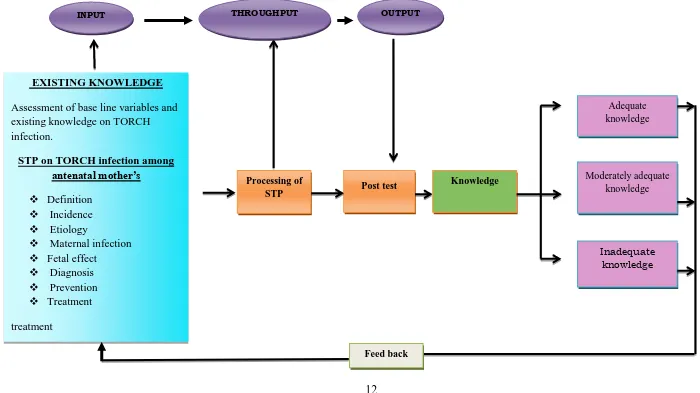
The main concept of General system theory is input, throughput and output. Input
refers to the student’s energy and information that enters into system through its boundary.
Throughput refers to processing where system transformation the energy to students and
information. Output refers to matter, energy and information that are processed through the
system.
The aim of the study was to increase the knowledge and knowledge on practice of
students regarding selected drugs used in obstetrics. Ludwig von Bertalaneffy’s (1968) explained
that any system has four major aspects such as input, throughput, output and feed-back.
Input
The input was assessing the knowledge and imparting knowledge about TORCH
infection in structured teaching programme on various aspects of TORCH infection such as
definition incidence, etiology, maternal infection, fetal effect, diagnosis, prevention and treatment.
Throughput
Throughput was the processing of input.
Output
The output was gain in the knowledge among the antenatal mother after structured
teaching programme on TORCH Infection.
Feed back
The feed-back was the environment’s response to the system. Feed-back may be positive
(or) negative (or) neutral. In this study the feed-back emphasizes to strengthen the input and
throughput. It is necessary, if the result shows any inadequate knowledge regarding TORCH
infection. The structured teaching programme may need to be repeated.
FIG: 1 CONCEPTUAL FRAMEWORK BASED ON GENERAL SYSTEM THEORY (MODIFIED) “LUDWIG VON BERTALANEFFY’S MODEL” (1968)
12 EXISTING KNOWLEDGE
Assessment of base line variables and existing knowledge on TORCH infection.
STP on TORCH infection among antenatal mother’s
Definition Incidence Etiology
Maternal infection Fetal effect
Diagnosis Prevention Treatment
treatment
Adverse reactions Precautions
Dosage and routes of administrations
Nurses‟ responsibilities.
Processing of
STP Post test
Adequate knowledge Moderately adequate knowledge Inadequate knowledge Knowledge
INPUT THROUGHPUT OUTPUT
CHAPTER – II
Review of literature
Review of literature is a key step in research process. It is defined as a broad comprehensive, in depth systematic and critical review of scholarly publications unpublished scholarly print materials, audio – visual materials and personal communication.
Review of literature is an essential activity of scientific research project, help to familiarize with the practical issues related to avoid unintentional duplication of studies. The related literate has been organized and presented under the following;
Section - I
Literature related to TORCH infection during pregnancy.
Section - II
Literature related to screening of TORCH infections during pregnancy.
Section - III
Literature related to prevention and treatment of TORCH infections.
SECTION-I
LITERATURE RELATED TO TORCH INFECTION DURING PREGNANCY
Mangala Gowri et al (2013) A study was conducted on awareness about TORCH infection. Among nurses working in a hospital and in general hospital in delhi India .A pre test questionnaire survey was performed on 2013 nurses the study showed that the a substantial number of nurses have in adequate knowledge regarding causative factors the Importance of lab test only 40.2% of TORCH infection nurses had satisfactory level of awareness there was no effect of increasing age or years of experience on the level of awareness.
Karen E Johnson (2011) A study was conducted to assess the effectiveness of structured teaching programme on knowledge and of TORCH infections and its problem among mothers and fetal in vani villas hospital Bangalore the descriptive evaluation study was conducted on 20 antenatal mother data collection done using a structured interview schedule and observational checklist analysis of data revealed that 50% of mothers had satisfactory level of knowledge about the advantages of to know about the TORCH infection. The desirable mothers and child relationship before was 15% and after instruction was 50% significant at less than 0.05 levels.
Janat skees dnp (2010) A study was conducted to evaluate the effectiveness of Structured teaching on standard precautions for caring blood borne Bio-Hazard diseases by one group pre-test post-test design, 60 samples were selected by sample free technique. In pre-test majority of the participants (55%) had moderately adequate knowledge, 43% of participants have inadequate knowledge and only 2% participants have adequate knowledge.
In the post-test 90% of the participants gained adequate knowledge, 10% of participants had moderately adequate knowledge and none of them had inadequate knowledge.
Francaca CM (2004) During gestation, many microorganisms can infect the fetus, causing severe birth defects. Such organisms and the resulting clinical syndromes have been categorized as TORCH infections, a useful acronym referring to Toxoplasma gondii, other microorganisms (like syphilis), rubella virus, cytomegalovirus, and herpes viruses. Since dental patients typically report pregnancy or previous infections as part of their health history, and TORCH infections can manifest oral symptoms, the dentist is in a position to act as an educator and screener for these infections. This article reviews TORCH agents for dentists to help the clinician in educating pregnant patients about the risks these infections pose to the fetus. The authors also note oral symptoms related to these infections.
Med j aust (2002) Some infections are more serious in pregnant than non-pregnant women because of the potential for vertical transmission to the fetus or infant (e.g. varicella, rubella, cytomegalovirus infection, toxoplasmosis and listeriosis). Pre-pregnancy or routine antenatal screening for presence of, or susceptibility to, some of these infections and appropriate management can prevent adverse fetal or perinatal outcomes; screening should include rubella IgG, hepatitis B surface antigen, serological tests for syphilis and HIV antibody. If certain other vertically transmissible infections are suspected because of a positive antenatal test result, confirmatory tests for maternal and, if indicated, fetal infection are essential before intervention is considered (e.g. cytomegalovirus infection). For some vertically transmissible infections that are not readily preventable, appropriate management of maternal infection can reduce fetal damage (eg, toxoplasmosis).
LITERATURE RELATED TO SCREENING OF TORCH INFECTION
DURING PREGNANCY.
Andiappan et al (2014) the study was conducted with in the pregnant women attending the antenatal clinic At Songklana Garind hospital hat yai, ongkhla province, Thailand. The sera of a total of 760 consecutive pregnant women were screened using standard commercial ELISA kits for detection of anti- toxoplasma IgG and IGM antibodies were also assessed. The pregnant women‟s socio- demographic, obstetrics and risk factors associated with toxoplasma sero positivity data were analyzed using univariable and multivariable analyses. were reviewed for identifying maternal illnesses and placental causes associated with IUGR.
J Clin Diagn Res. (2012) The acute infections which are caused by Toxoplasma gondii, Rubella virus, Cytomegalovirus (CMV) and the Herpes Simplex Virus (HSV-2) during pregnancy are often associated with adverse fetal outcomes and reproductive failures. In the Indian context, the exact seroprevalence of these infections is not known due to unavailability of baseline data. The present study was undertaken to determine the serological evidence of the acute TORCH infections in women who were in the first trimesters of their pregnancies in and around Varanasi, north India. The study population involved pregnant women with bad obstetric histories, who were in the first trimester of their pregnancy. AND The specific IgM antibodies were found to be positive in 74(19.4%) cases for toxoplasmosis, in 126 (30.4%) cases for the Rubella virus, in 130 (34.7%) cases for CMV and in 151 samples (33.5%) for the HSV-2 infections. The study showed a high prevalence of the infections which were caused by the TORCH complex amongst pregnant women with bad obstetric histories. Therefore, all the antenatal cases should be routinely screened for the TORCH infections, for carrying out early interventions to prevent fetal loss.
J Obstet Gynaecol Res. (2012) The objective of this study was to evaluate the significance of maternal toxoplasmosis, rubella, cytomegalovirus (CMV) and herpes simplex virus (TORCH) screening in cases of fetal growth restriction (FGR). The medical records of women carrying fetuses with FGR who underwent TORCH screening over a 10year period were retrospectively reviewed for maternal and congenital TORCH infection. Women carrying fetuses with FGR routinely underwent serologic TORCH tests and systematic ultrasound evaluation for congenital abnormalities. In 319 patients, no cases of maternal or congenital infection with toxoplasma, rubella, or herpes simplex virus were found. Conversely, six cases (1.8%) were diagnosed with congenital CMV infection, two of which had no structural abnormalities other than FGR. A complete maternal TORCH screening for cases of FGR appears to be unnecessary. Although a maternal CMV test can be considered, the incidence of congenital CMV infection was found to be low in FGR cases.
Renu Dutta (2011) This pilot case-control study at a tertiary-care hospital over a four-month period was aimed at evaluating the possible usefulness of screening of TORCH
(Toxoplasma gondii, rubella virus, cytomegalovirus, and Herpes simplex virus) in females
with bad obstetric history. The study included 12 women with bad obstetric history and a similar number of matched controls with previous normal pregnancies. A serological evaluation of TORCH infections was carried out by detecting IgG and IgM antibodies against these infections by ELISA test-kit.
Alves RC et al (2006) a study shows that knowledge and practice of university day care center workers relative to torch infection in antenatal period given the increasing frequency of TORCH infections in day care centers, the objective of this work was to identify knowledge and practices of day care center workers relative to the prevention, precocious detection and management of these illness. Consider education and care complementary in
antenatal attendance revealing the need for better preparation for caring have in daily activities the source of their knowledge.
Kauchali S et al (2004) conducted a study to assess maternal ability to recognize TORCH infection and to identify local beliefs and practices around TORCH infection in selected hospital. Mothers were asked to describe perceived types, signs and symptoms, causes of actions and taken for each infection.
Bhattacharyya K et al (2000) A study shows that the reduction of maternal and fetal mortality from TORCH infections depends upon a management strategy which encourages the decision to seek treatment. This approach views treatment decisions as a result not only of local conceptual models of illness, but also of the specific circumstances of illness episodes involving different types of social relationship and control over resources.
LITERATURE RELATED TO PREVENTION AND TREATMENT OF
TORCH INFECTIONS
.
Congenit Anom Kyoto (2014) state the acquisition of cytomegalovirus, Toxoplasma gondii, or parvovirus B19 was significantly lower than To reduce the incidence of infants with congenital infections, women should be aware of and know prevention measures against maternal infection with mother-to-child infections during pregnancy. Our objective was to assess the awareness of and knowledge about mother-to-child infections in Japanese pregnant women. A survey of 343 Japanese pregnant women was completed. Awareness of 13 pathogens capable of mother-to-child transmission was surveyed.
Knowledge about the transmission route, the most susceptible time of infection that may cause severe fetal disease during pregnancy, and methods to prevent maternal infection were investigated for four major pathogens (cytomegalovirus, rubella virus, Toxoplasma gondii, and parvovirus B19) and results were compared between these pathogens.
The proportion of women aware of pathogens concerning TORCH syndrome was the following: rubella virus 76%, Treponema pallidum 69%, and Toxoplasma gondii 58%, parvovirus B19 28%, herpes simplex virus 27%, and cytomegalovirus 18%. Only 8% knew how cytomegalovirus is transmitted, and only 12% knew how parvovirus B19 is transmitted; both were significantly lower than those who knew transmission routes for rubella virus or Toxoplasma gondii.
Zhoghua shiyan (2011) describe the serum IgM specific for TORCH were detected in 2.83% of 1307 pregnant women for toxoplasma,2.37% for rubella virus 0.46% for CMV,2.45% for herpes simplex virus.the total positive rate of serum IgM specific for TORCH was 1.45%.the serum IgG specific for TORCH were detected in 3.98% of 1307 pregnant women for toxoplasma 72.3% for rubella virus 97.78% for CMV 80.34% for herpes simplex virus. The total positive rate of serum IgG specific for TORCH was 63.60% there was no significant difference among the women with different pregnant situation in terms of the serum IgM and IgG specific for TORCH.
Inshaque et al (2011) states that a total of 25 studies were included in the review a random effects meta analysis of observational studies of detection and treatment of syphilis during pregnancy showed a significant 80% reduction in still births relative risk (RR)=0.20,95% confidence interval (CI)0.12-0.34 that is recommended for inclusion in the list model. our meta analysis showed the malaria prevention intervention i.e. intermittent
preventive treatment and insecticide-treated mosquito nets can reduce still births by 22% however result were not statistically significant.
Curr women’s health rep (2002) states that Perinatal infections account for 2% to 3% of all congenital anomalies. TORCH, which includes Toxoplasmosis, Other (syphilis, varicella-zoster, parvovirus B19), Rubella, Cytomegalovirus (CMV), and Herpes infections, are some of the most common infections associated with congenital anomalies. Most of the TORCH infections cause mild maternal morbidity, but have serious fetal consequences, and treatment of maternal infection frequently has no impact on fetal outcome. Therefore, recognition of maternal disease and fetal monitoring once disease is recognized are important for all clinicians. Knowledge of these diseases will help the clinician appropriately counsel mothers on preventive measures to avoid these infections, and will aid in counseling parents on the potential for adverse fetal outcomes when these infections are present.
Amer j perinatal (2000) states that many infants with intrauterine growth retardation (IUGR) are screened for TORCH infections. The yield and costs of such a practice may not be justifiable. Medical charts of infants with IUGR who had a workup for toxoplasmosis, other (infections), rubella, cytomegalovirus (infection), and herpes (simplex) (titer) (TORCH) infections were reviewed for the presence of clinical findings, laboratory and head ultrasound abnormalities associated with intrauterine infections. Maternal charts and reports of placental pathology were reviewed for identifying maternal illnesses and placental causes associated with IUGR.
CHAPTER-III
METHODOLOGY
Methodology is the most important part of research study which enables the researcher to
project blue print for the research under taken. Research methodology is a systematic way to
problem. It may be under stood as a scientific any of doing research.
This chapter explains the research methodology adopted for the study which include the
research design ,variables ,setting ,population, ethical consideration, sampling technique, inclusion
and exclusion criteria sample size, development and description of instrument, validity and pilot
study report, reliability, data collection, procedure and plan for analysis.
RESEARH APPROACH
The Educative and Evaluative approach was used to assess the effectiveness of structured
teaching programme on knowledge regarding TORCH infection among antenatal mother’s in
selected hospital at Erode district.
RESEARCH DESIGN
Polit (2008) stated that the research design is the researcher’s overall plan for obtaining
answers to the research question. The research design of this study was the true experimental
research design. One group was served with experimental group and the other with control group.
Experimental group
Control group
Experimental group
Pretest post test
Control group
Pre test post test
DIAGRAMMATIC REPRESNTATION
Q=observation
Q1, Q3-pre-test
Q2, Q4-post –test
22 Assessing knowledge
on TORCH infection among antenatal
mother
Imparting knowledge by STP on TORCH infection
Assessment of knowledge on TORCH infection
Assessing knowledge on
TORCH infection
No intervention
Assessment of knowledge on TORCH
SCHEMATIC RE PRESENTATION OF THE RESEARCH DESIGN
Planned Instrument (Administrated STP)
No Planned Intervention
Expected out case and analysis of the collection of data. Data was analyzed to find out the level of statistical significance
Research approach
Quantitative approach
Research design
true experimental design
Setting of the study
Selected hospitals in Erode district
Target population
Antenatal mother’s
Accessible population
Who are all attending the antenatal visit and hospitalization.
Sampling technique (Simple Random sampling)
Sample size (60)
Group-I (n=30) Group II (n=30)
Experimental Group
Control Group Pretest
VARIABLES IN THE STUDY
Independent variable
a. STP on TORCH infection.
b. Method of teaching lecture method.
Dependent variable
Knowledge of mother’s on TORCH infection.
Extraneous variable
The extraneous variable are the interest, health condition, fetal condition, environment of
mother’s in learning during teaching.
SETTING OF THE STUDY
Selected hospital at Erode district.
POPULATION
All Mothers who are attending antenatal visit and hospitalization.
SAMPLE
Antenatal mothers in selected hospital at Erode district.
SAMPLE SIZE
The sample uses for this study is 60 antenatal mothers.
Sampling is the process of selecting a group of people, events, behavior or other elements
with which to conduct a study.
Sample is a subset of population selected to participate in a research study.
The samples for the present study were 60 antenatal mothers of selected hospital at erode
district.
SAMPLING TECHNIQUE
Simple Random sampling technique in that Lottery method was done.
CRITERIA FOR SAMPLE SELECTION
Inclusion criteria;
Antenatal mothers;
Who are in 1st, 2nd, 3rd, trimester.
Who are primigravida, multigravida, elderly primi, grand multi Para mothers.
Who are attending antenatal visit and hospitalization.
Who are given consent.
Who are willing to participate and present during the period of data collection.
Who can understand English or Tamil.
Exclusion criteria;
Who are undergone any training programme or health information.
Who are taking any steroid drugs.
Who are having any complication like pregnancy induced hypertension, diabetes, HIV etc.,
DESCRIPTION OF DATA COLLECTION INSTRUMENT
Development of the tool;
The data collection instrument was developed after having consultation with the experts in
the concerned topic and after reviewing the various literatures and research studies.
Description of the tool;
Self administered questionnaire was prepared in the form of open ended questionnaire. The
instrument consisted of two parts.
Section A; mother’s profile (demographic data);
It includes the variables including name, age, religion, educational status, dietary pattern, no
of pregnancy, previous knowledge regarding TORCH infection among antenatal mother’s and mark
percentage.
Section B; Knowledge Regarding TORCH infection;
It consists of 37 multiple choices Question related to TORCH infection, Toxoplasmosis,
Rubella, Cytomegalovirus, Herpes simplex virus, other viral infections.
SCORING KEY
The knowledge part consist of 37 multiple choice questions.
Each correct multiple choice response to carries ‘1’mark
Wrong response carries ‘0’ marks.
The total score was 37.
SCORE INTERPRETATION
1. Inadequate knowledge --- <50%
2. Moderately adequate knowledge --- 51-75%
3. Adequate knowledge --- >75%
CHAPTER - IV
ANALYSIS AND INTERPRETATION
Analysis is the process of categorizing organizing, manipulating and summarizing the data to obtain answers to research questions. The purpose of analysis to reduce data to
intelligible and interpretable form which the relations of research problem can be studied and tested. -Polit (2004)
STATISTICAL ANALYSIS
The data obtained was classified tabulated and the following analysis was
performed in fulfilling the objectives of the study. The data analysis involves the translation of the information collected during the course of the research project into interpretable convenient and descriptive terms to draw inference from the using statistical method. The purpose of analysis is to summarize compare and test the proposed relationships and inferential findings.
TOPIC
“A study to evaluate the effectiveness of structured teaching programme on
knowledge regarding prevention of “TORCH” Infection during pregnancy among antenatal mothers in a selected hospital at Erode district.”
OBJECTIVES OF THE STUDY
To assess the level of knowledge regarding prevention of TORCH infection during pregnancy antenatal mothers in experimental and control group.
To evaluate the effectiveness of structured teaching programme on knowledge regarding prevention of TORCH infection during pregnancy among antenatal mothers in experimental group.
To Compare the post test level of knowledge regarding prevention of TORCH infection
among antenatal mothers in experimental and control group.
To find out the post test knowledge regarding prevention of TORCH infection during pregnancy among antenatal mothers with their selected demographic variable.
HYPOTHESIS
H1-There will be a significant differences between the pre and post test knowledge regarding prevention of TORCH infection during pregnancy among antenatal mothers in experience and control group.
H2-There will be a significant differences between post test level of knowledge regarding prevention of TORCH infection with the experimental and control group.
H3-There will be a significant associations in knowledge regarding TORCH infection with the demographic variable.
ORGANIZATION OF FINDINGS
Section-I Distribution of demographic variables of responds. Section-II
Assess the level of knowledge regarding prevention of TORCH infection in experimental and control group.
Section-III
Evaluate the effectiveness of structured teaching programme on
knowledge regarding prevention of TORCH infection during pregnancy among antenatal mothers in experimental and control group.
Section-IV
Compare the post test level of knowledge regarding prevention of TORCH infection among antenatal mothers in experimental and control group.
Section-V
Find out the association between level of knowledge regarding prevention of TORCH infection among antenatal mothers with their demographic variables.
SECTION-I: DISTRIBUTION OF SAMPLES ACCORDING TO SELECTED VARIABLES FREQUENCY AND PERCENTAGE DISTRIBUTION OF SAMPLE ON DEMOGRAPHIC VARIABLES
Demographic Variables Control group (n=30)
Experimental group (n=30)
Frequency Percentage Frequency Percentage
Age
Below 20 7 23% 2 7%
21-25 16 53% 14 47%
26-30 7 23% 11 37%
Above 30 0 0% 3 10%
Education
Non-formal 2 7% 0 0
1-5 2 7% 1 3%
6-10 4 13% 8 27%
11-12 8 27% 6 20%
UG 6 20% 11 37%
PG 8 27% 4 13%
Religion
Hindu 28 93% 29 97%
Christian 1 3% 1 3%
Mushlim 1 3% 0 0
Others 0 0 0 0
Hindu 28 93% 29 97%
Dietry Pattern
Veg 15 50% 11 37%
Non-veg 15 50% 19 68%
No.of pregenancy
Primi mother 18 60% 18 60%
Multi mother 12 40% 10 33%
Elderly multi 0 0% 1 3%
Grand multi 0 0% 1 3%
Type of family
Nuclear family 17 57% 13 43%
Joint family 13 43% 17 57%
ANC Visit
Regular 28 93% 28 93%
Irregular 2 7% 2 7%
Weeks of Gestation
12-20 wks 13 43% 6 20%
22-30 wks 5 17% 13 43%
30-34 wks 4 13% 4 13%
36-38 wks 8 27% 7 23%
Source of information
TV 0 0% 1 3%
CHN 0 0% 3 10%
Others 0 0% 0 0
BAR DIAGRAM SHOWING THE DISTRIBUTION OF SAMPLE
PERCENTAGE ACCORDING TO AGE
The data presented in the above diagram is according to age of patients in
experimental group of, 2(7%), of the samples are in the age group of below 20 years, 14(47%) of the samples are in the age group of 21-25 years,11(37%) of the samples are in the age group of 26-30 years , 3(10%) of the samples are in the age group of above 30 years.
Similarly in Control group, 7(23%) of the samples are in the age group of below 20 years 16(53%) the samples are in the age group of 21-25 year s, 7(23%) of the samples are in the age group of 26-30 years, 0(0%) of the samples are in the age group of above 30 years.
31 7%
47%
37%
10% 23%
53%
23%
0% 0%
10% 20% 30% 40% 50% 60%
Below 20 years 21-25 years 26-30 years Above 30 years
CONICAL DIAGRAM SHOWING THE DISTRIBUTION OF SAMPLE
ACCORDING TO EDUCATION
The above diagram represents educational status of the mothers in experimental group 0% Of the samples are in non-formal education 2(7%) of the samples are in the 1-5 std, 8(27%) of the samples are in the 6-10 std, 6(20%) of the samples are in the 11-12 std, 11(37%) of the samples are in the UG and 4(13%) of the samples are in the PG.
Similarly in control group 2(7%) of the samples are in the Non – formal education, 2(7%) of the samples are in the 1-5 std, 4(13%) of the samples are in the 6-10std,4(13%) of the samples are in the 6 - 10 std, 8(27%) of the samples are in the 11-12 std, 6(20%)of the samples are in the UG,and 8(27%) of the samples are in the PG.
32 0% 5% 10% 15% 20% 25% 30% 35% 40%
Non- formal education1-5 std
6-10 std
11-12 std UG
PG 0% 3% 27% 20% 37% 13% 7% 7% 13% 27% 20% 27%
PYRAMIDAL DIAGRAM SHOWING THE DISTRIBUTION OF SAMPLE
PERCENTAGE ACCORDING TO RELIGION
It is observed that according to the Religion of the mothers. In experimental group 29(97%) of the samples are in the hindu,1(3%) of the samples are in the Christian, 0(0%) of the samples are in the Muslim,and 0(0%) of the samples are in the others.
Similarly in control group 28(93%) of the samples are in the Hindu, 1(3%) of the samples are in the Christian, 1(3%) of the samples are in the Muslim and 0(0%) of the samples are in the others.
33
0% 10% 20% 30% 40% 50% 60% 70% 80% 90% 100%
Hindu Christian Muslim Others 97%
3% 0% 0%
93%
3% 3% 0%
CYLINDRICAL DIAGRAM SHOWING THE DISTRIBUTION ACCORDING
TO TYPE OF DIETRY PATTERN
The above diagram represents type of dietry pattern in experimental group 11(37%) of the samples are in the Vegetarian,and 19(63%) of the samples are in the Non – vegetarian.
Similarly in control group 15(50%) of the samples are in the vegetarian,and 15(50%) of the samples are in the Non- vegetarian.
34 0%
10% 20% 30% 40% 50% 60% 70%
Vegetarian Non-Vegetarian 37%
63%
50% 50%
EXPERIMENTAL GROUPS
CONICAL DIAGRAM SHOWING THE DISTRIBUTION OF SAMPLE
PERCENTAGE ACCORDING TO NUMBER OF PREGNANCY.
The above diagram represents No of pregnancy of the mothers in experimental 18(60%) of the samples are in the primi mother, 10(33%) of the samples are in the multi mother, 1(3%) of the samples are in the elderly multi mother,and 1(3%) of the samples are in the grand multi mothers.
Similarly in control group 18 (60%) of the samples are in the primi, 12(40%) of the samples are in the multi mother, 0(0%) of the samples are in the elderly multi mother,and 0(0%) of the samples are in the grand multi mother.
35 0%
10% 20% 30% 40% 50% 60% 70%
Primi Multi Elderly multi Grand multi 60%
33%
3%
0% 60%
40%
0% 0%
EXPERIMENTAL GROUP
CONICAL DIAGRAM SHOWING THE DISTRIBUTION OF SAMPLE
PERCENTAGE ACCORDING TO TYPE OF FAMILY.
The above diagram represents the type of family in experimental group 13(43%) of the samples are in the nuclear family,and 17(57%) of the samples are in the joint family.
Similarly in control group 17(57%) of the samples are in the nuclear family and 13(43%) of the samples are the joint family.
36 0%
10% 20% 30% 40% 50% 60%
Nuclear family Joint family 43%
57% 57%
48%
EXPERIMENTAL GROUP
YLINDRICAL DIAGRAM SHOWING THE DISTRIBUTION OF SAMPLE
PERCENTAGE ACCORDING TO ANTENATAL VISIT.
The above diagram represents the attending antenatal visit of the mothers in
experimental group 28(93%) of the samples are attending regular antenatal visit,and 2(7%) of the samples are attending irregular antenatal visit.
Similarly in control group 28(75%) of the samples are attending regular antenatal visit and 2(7%) of the samples are attending irregular antenatal visit.
37 0%
10% 20% 30% 40% 50% 60% 70% 80% 90% 100%
Regular visit Irregular visit 98%
93%
7% 7%
EXPERIMENTAL GROUP
BAR DIAGRAM SHOWING THE DISTRIBUTION OF SAMPLE
PERCENTAGE ACCORDING TO WEEKS OF GESTATION.
The data presented in the above diagram is according to weeks of gestation in experimental group 6(20%) of the samples are in the 12 -20 weeks of gestation, 13(43%) of the samples are in the 22 -30 weeks of gestation, 4(13%) of then samples are in the 32 – 34 weeks of gestation,and 7(23%) of the samples are in the 36 – 38 weeks of gestation.
Similarly in control group 13(43%) of the samples are in the 12 – 20weeks of
gestation, 5(17%) of the samples are in the 22 -30 weeks of gestation, 4(13%) of the samples are in the 32 -34 weeks of gestation,and 8(27%) of the samples are in the 36 – 38 weeks of gestation. 38 20% 43% 13% 23% 43% 17% 13% 27% 0% 5% 10% 15% 20% 25% 30% 35% 40% 45% 50%
12-20 weeks 22-30 weeks 32-34 weeks 36-38 weeks
EXPERIMENTAL GROUP
CONICAL DIAGRAM SHOWING THE DISTRIBUTION OF SAMPLE
PERCENTAGE ACCORDING TO SOURCE OF INFORMATION
The above diagram represents the source of information in experimental groups 1(3%) of the samples are in the getting information from the TV, 2(10%) of the samples are in the getting information from then CHN, 0(0%) of the samples are in the getting
information from other source, and 26(87%) of the samples are in the getting information from the non - of the above.
Similarly in control group- 0(0%) of the samples are in the getting information from TV, 0(0%) of the samples are in the getting information from CHN, 0(0%) of the samples are in the getting information from other sources,and 30(100%) of the samples are in the getting information from non – of the above.
39 0% 10% 20% 30% 40% 50% 60% 70% 80% 90% 100%
TV CHN Other sources Non-of the above 3% 10% 0% 87%
0% 0% 0%
100%
EXPERIMENTAL GROUP
SECTION-II
ASSESS THE LEVEL OF KNOWLEDGE REGARDING PREVENTION OF
TORCH INFECTION IN EXPERIMENTAL AND CONTROL GROUP.
ASPECT WISE PRE TEST PERCENTAGE OF LEVEL OF KNOWLEDGE
REGARDING PREVENTION OF TORCH INFECTION AMONG
ANTENATAL MOTHERS IN EXPERIMENTAL AND CONTROL GROUP.
S.NO. Aspect No. of Questions
Min Max score
Level of knowledge Experiment control Mean
score
Mean % Mean score
Mean %
1 TORCH 5 0-5 1.3 26% 0.96 19%
2 Toxoplasmosis 7 0-7 0.63 9% 0.53 8%
3 Rubella 7 0-7 0.7 10% 0.46 7%
4 cytomegalo virus
6 0-6 0.76 13% 0.3 5%
5 Herpes simplex virus
5 0-5 0.3 6% 0.26 5%
BAR DIAGRAM DEPICTING ASPECT WISE PRE TEST PERCENTAGE OF
KNOWLEDGE LEVEL
The Pre-test knowledge score of the mothers in experimental group related to TORCH 26%, Toxoplasmosis 9%, Rubella 10%,cytomegalo virus 13% Herpes simplex virus 6% and other viral infection 17%
Similarly in control group related to TORCH 19%, Toxoplasmosis 8%, Rubella 7%, Cytomegalo virus 5% herpes simplex virus 5% and other viral infection 17%.
41
26%
9% 10%
13%
6%
17% 19%
8%
7%
5% 5%
17%
0% 5% 10% 15% 20% 25% 30%
TORCH Rubella Herpes simplex virus
EXPERIMENTAL GROUP
TABLE-4
OVER ALL PRE TEST PERCENTAGE OF LEVEL OF KNOWLEDGE
REGARDING PREVENTION OF TORCH INFECTION AMONG
ANTENATAL MOTHERS IN EXPERIMENTAL AND CONTROL GROUP
S.NO. Level of knowledge
Experimental Control <