Place: Madurai
Date:
CERTIFICATE
This is to certify that the Dissertation entitled
“NOVEL APPROACHES ON THE DESIGN AND EVLUATION
OF FLOATING DRUG DELIVERY SYSTEMS OF GLIPIZIDE”
submitted by D. RAMYA DEVI, in partial fulfillment of the
requirement for the award of degree of Master of Pharmacy in
Pharmaceutics is a bonafide work carried out by her, under my
guidance and supervision during the academic year 2007-2008 in
the Department of Pharmaceutics, Madurai Medical College,
Madurai - 625 020, affiliated to the The Tamil Nadu
Dr. M.G.R. Medical University, Chennai.
Counter Signed by
Prof. M. Sekar babu, M.Pharm, Mr. A. Abdul Hasan Sathali, M.Pharm, Professor and Head, Assistant Reader in Pharmaceutics,
Department of Pharmaceutics, Madurai Medical College, Madurai Medical College, Madurai – 625 020.
motivated me in the successful completion of each and every stage of my
project work.
With whole hearted gladness I wish to thank Mr. K. Arun, M.Pharm,
Assistant Reader, Department of Pharmaceutics for his moral support and
valuable suggestions for my project work.
I convey my sincere thanks to Dr. A. Maheswaran, M.V.Sc.,
Veterinary Asst. Surgeon, Central Animal House, Madurai Medical College
for his earnest co-operation, valuable suggestions and support to perform
the in-vivo X-Ray studies of my formulations.
I express my heartful thanks to Mr. V. K. Manoharan, M.Sc., Lab
Supervisor, Department of Pharmaceutics, for his timely moral support.
I also extend my thanks to our department staff Mrs. J. Evelyn, B.Sc.,
B.Ed., Lab Supervisor. I wish to convey my thanks to Mrs. Geetha,
D.M.L.T., and Mrs. H. Mumtaj, D.M.L.T., Lab Technicians for their
contribution and kind co-operation throughout my project work.
I also thank Mr. G. Sasitharan, Luscar, Department of
Mr. D. Senthil Kumar and my life partner Mr. N. Arun Kumar for their
encouragement, financial support, care and affection offered during this
work.
I am happy to express my sincere thanks to my friends in Arasan Lab
for their timely help during the X-Ray studies.
I thank the staff members of The Web, The Venus Computers, Star
Xerox and Penguin Xerox for their kind co-operation in making my
dissertation work a complete book.
CHAPTER – I
INTRODUCTION
For many decades treatment of an acute disease or a chronic illness
has been mostly accomplished by delivery of drugs to patients using
various pharmaceutical dosage forms including tablets, capsules,
suppositories, creams, ointments, aerosols, injectables etc. But historically,
oral drug administration has been the predominant route of
administration for drug delivery. (1, 85)
Conventional drug delivery systems are the primary pharmaceutical
products commonly seen in the prescription and over the counter drug
market. But, conventional drug delivery system achieves as well as
maintains the drug concentration within the therapeutically effective range
needed for treatment only when taken several times a day. This results in a
significant fluctuation in drug levels.
There are several terms used interchangeably viz. controlled release,
programmed release, sustained release, prolonged release, timed release,
slow release, extended release and other such dosage forms. However,
least aseptic constraints and flexibility in the design of the dosage form.
The fate of drug after oral administration is shown in Fig 2: (4)
Fig 2: Model of Oral Dosage Form Performance
The objective of any drug delivery system is to release promptly a
therapeutic amount of drug at the site of administration, and then to
maintain the desired therapeutic drug concentration at the site of action that
elicits the desired pharmacological action, also it minimizes the incidence
and the severity of unwanted adverse effects. An appropriately designed
for extended / sustained release dosage form can be a major advancement in
[image:5.612.94.483.158.418.2]Therapeutic advantages of Extended Release dosage forms include,
‐ reduction in the frequency of drug administration
‐ improved patient compliance
‐ maintenance of drug level in blood without oscillations
‐ reduction in total amount of drug administered
‐ maximum availability with minimum dose
‐ improved treatment of many chronic illness
‐ reduction in health care costs through improved therapy, shorter
treatment period, less frequency of dosing and reduction in personnel
time to dispense, administer and monitor patients.
During past two decades, numerous oral delivery systems have been
developed to act as drug reservoirs from which the active substance can be
released over a defined period of time at a predetermined and controlled
rate. From a pharmacokinetic point of view, the ideal sustained and
controlled release dosage form should be comparable with an intravenous
infusion, which supplies continuously the amount of drug needed to
4. Ion‐exchange resin‐drug complexes
5. Slow dissolving salts and complexes
6. pH dependent formulations
7. Osmotic pressure controlled systems
8. Hydrodynamic pressure controlled systems
B. Delayed Transit and Continuous Release Systems: These systems
are designed to prolong their residence in the GIT along with their
release. Often, the dosage form is fabricated to detain the stomach
and hence the drug present therein should be stable to gastric pH.
Systems included in this category are:
1. Altered density systems
2. Muco‐adhesive systems
3. Size‐based systems
C. Delayed Release Systems: The design of such systems involve
release of drug only at a specific site in the GIT. The drugs
contained such a system are those that are destroyed in the stomach
or by intestinal enzymes, or known to cause gastric distress, or
absorption. Bioadhesive, super porous hydrogel, floating and expanding
systems shows the most promising potential for achieving the goal of
gastric retention. (7) From the formulation and technological point of view,
the floating drug delivery system is considerably easy and logical
approach. (8)
Gastric retentive dosage forms have been investigated to provide
controlled release therapy for drugs with reduced absorption in the lower
gastro intestinal (GI) tract or for local treatment of diseases of the stomach
or upper GI tract. Gastric retentive dosage forms rely on either natural GI
physiology, such as floating or large tablets that depend on delayed
emptying from the fed stomach, or those dosage forms that are designed to
fight the physiology and avoid emptying in the fasted state through
dosage forms of larger sizes with or without flotation or bioadhesion. (9)
Oral administration of a medication by means of controlled drug
delivery systems should ideally enable to obtain the required plasma
concentration and to maintain the steady state level for a prolonged period
of time.
they can float on the gastric juice in the stomach and release the drug in
sustained manner.
• the use of passage‐delaying excipients (for example triethanolamine
myristate)
• the utilization of specially designed dosage forms such as ‘heavy pellets’
and large single‐unit delivery systems
• bioadhesive or mucoadhesive systems containing bio/mucoadhesive
agents, enabling the device to adhere to the stomach (or other GI) walls,
thus resisting gastric emptying
• epichlorohydrin cross‐linked pectins used as colon specific drug delivery
carriers to prolong the residence time.
• omeprazole magnesium as multiple‐unit pellet systems (MUPS).
Several difficulties are faced in designing controlled release systems
for better absorption and enhanced bioavailability. One of such difficulties
is the inability to confine the dosage form in the desired area of the
gastrointestinal tract. Drug absorption from the gastrointestinal tract is a
complex procedure and is subject to many variables. It is widely
CHAPTER – II
FLOATING DRUG DELIVERY SYSTEMS – A REVIEW
Floating drug delivery systems are the dosage forms that remain
buoyant upon the gastric contents for a prolonged period of time and to
consequently enhance the bioavailability of all drugs which are well‐
absorbed from the proximal gastrointestinal tract. The lasting intra gastric
buoyancy of a controlled release dosage form also provides a suitable
manner to constantly deliver a drug locally into the stomach and hence
achieve a sustained site‐specific therapeutic action. (12)
A floating drug delivery system with prolonged residence time in the
stomach is of particular interest for drugs that: (13)
i) are locally active in the stomach
ii) have an absorption window in the stomach or in the upper part
of the small intestine
iii) are unstable in the intestinal or colonic environment
iv) exhibit low solubility at high pH values.
v) have better dissolution in weak bases (14)
vi) are degraded in the colon (15)
produced in order to prevent the drawbacks of unforeseeable intragastric
buoyancy capability variations.
RW or F = F buoyancy ‐ F gravity
= (Df ‐ Ds) gV,
where RW = total vertical force, Df = fluid density, Ds = object density,
V = volume and g = acceleration due to gravity.
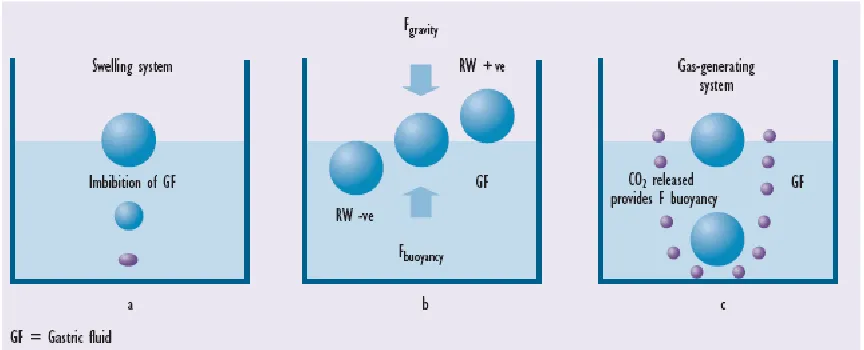
In case of gas generating systems, carbon dioxide is released,
causing the beads to float in the stomach (Fig. 4c). And in case of non‐
effervescent systems, the air trapped by the swollen polymer confers
buoyancy to these dosage forms (Fig. 4a).
Fig 4: Mechanism of Floating systems
[image:11.612.89.521.422.597.2]The anatomy of the GI tract is shown in the Fig. 5.
Fig 5: Anatomy of Gastro Intestinal Tract
Gastric emptying occurs during fasting as well as fed states. The
pattern of motility is however distinct in the 2 states. During the fasting
state an interdigestive series of electrical events take place, which cycle
both through stomach and intestine every 2 to 3 hours. This is called the
interdigestive myloelectric cycle or migrating myloelectric cycle (MMC),
which is further divided into following 4 phases:
[image:12.612.214.428.110.427.2]Scintigraphic studies determining gastric emptying rates revealed
that orally administered controlled release dosage forms are subjected to
basically two complications,
short gastric residence time
unpredictable gastric emptying rate
REQUIREMENTS OF A DOSAGE FORM FOR
GASTRIC RETENTION: (15)
The physiological factors of the stomach show that, to achieve
gastric retention, the dosage form must satisfy certain requirements. One
of the key issues is that the dosage form must be able to withstand the
forces caused by peristaltic waves in the stomach and the constant
contractions and grinding and churning mechanisms. To function as a
gastric retention device, it must resist premature gastric emptying.
Furthermore, once its purpose has been served, the device should be
removed from the stomach with ease.
The floating dosage form needs to be in the upper part of the small
intestine. The position of floating and non floating dosage forms in the
Studies have revealed that gastric emptying of a dosage form in the
fed state can also be influenced by its size. Small‐size tablets leave the
stomach during the digestive phase while the large‐size tablets are
emptied during the housekeeping waves.
The effect of size of floating and nonfloating dosage forms on gastric
emptying was studied and concluded that the floating units remained
buoyant on gastric fluids. These are less likely to be expelled from the
stomach compared with the nonfloating units, which lie in the antrum
region and are propelled by the peristaltic waves.
• Shape of dosage form – Tetrahedron and ringshaped devices with a
flexural modulus of 48 and 22.5 kilopounds per square inch (KSI) are
reported to have better GRT ≈ 90% to 100% retention at 24 hours compared
with other shapes. The diameter of the dosage unit is also equally
important as a formulation parameter.
• Single or multiple unit formulation – Several formulation parameters
can affect the gastric residence time. More reliable gastric emptying
patterns are observed for multiparticulate formulations as compared with
partially opened pylorus. Indigestible solids larger than the pyloric
opening are propelled back and several phases of myoelectric activity take
place when the pyloric opening increases in size during the housekeeping
wave and allows the sweeping of the indigestible solids. Studies have
shown that the gastric residence time (GRT) can be significantly increased
under the fed conditions since the MMC is delayed.
• pH (Hydrogen Ion Concentration) – (18) The mean pH (+ S.D.) along the
G.I. Tract in normal subjects are given by:
Region Mean pH
Stomach 1.8 + 0.6
Proximal Small Intestine 6.6 + 0.5
Mid Small Intestine 7.4 + 0.4
Distal Small Intestine 7.5 + 0.5
Right Colon 6.3 + 0.6
Mid Colon 6.6 + 0.8
Left Colon 7.1 + 0.7
The pH of the stomach in fasting state is ~1.5 to 2.0 and in fed state is
2.0 to 6.0. A large volume of water administered with an oral dosage form
raises the pH of stomach contents to 6.0 to 9.0. Stomach doesn’t get time to
was fed with a succession of meals given at normal time intervals. It was
concluded that as meals were given at the time when the previous
digestive phase had not completed, the floating form which is buoyant in
the stomach could retain its position for another digestive phase as it was
carried by the peristaltic waves in the upper part of the stomach.
• Nature of meal – It does not make any difference whether the meal has
high protein, fat, or carbohydrate content as long as the caloric content is
the same. But, feeding of indigestible polymers or fatty acid salts can
change the motility pattern of the stomach to a fed state, thus decreasing
the gastric emptying rate and prolonging drug release.
• Volume of the meal – The resting volume of the stomach is 25 to 50 mL.
Volume of liquids administered affects the gastric emptying time. When
volume is large, the emptying is faster. Fluids taken at body temperature
leave the stomach faster than colder or warmer fluids.
• Caloric content – An increase in acidity and caloric value slows down
gastric emptying time. But GRT can be increased by four to 10 hours with
a meal that is high in proteins and fats.
CLASSIFICATION OF FLOATING DRUG DELIVERY SYSTEMS: (17) Floating drug delivery systems are classified depending on the use of 2
formulation variables:
Effervescent systems Non‐effervescent systems Effervescent Floating Dosage Forms
These are matrix types of systems prepared with the help of
swellable polymers such as methyl cellulose and chitosan and various
effervescent compounds, eg, sodium bicarbonate, tartaric acid, and citric
acid or chambers containing a liquid that gasifies at body temperature. The
optimal stoichiometric ratio of citric acid and sodium bicarbonate for gas
generation is reported to be 0.76:1. They are formulated in such a way that
when in contact with the acidic gastric contents, carbon dioxide is liberated
and gets entrapped in swollen hydrocolloids, which provides buoyancy to
the dosage forms. The common approach for preparing these systems
involves resin beads loaded with bicarbonate and coated with
ethylcellulose. The coating, which is insoluble but permeable, allows
permeation of water. Thus, carbon dioxide is released, causing the beads to
One of the formulation methods of such dosage forms involves the
mixing of drug with a gel, which swells in contact with gastric fluid after
oral administration and maintains a relative integrity of shape and a bulk
density of less than one within the outer gelatinous barrier. It also
maintains a relative integrity of shape. The air trapped by the swollen
polymer confers buoyancy to these dosage forms. The gel structure acts as
a reservoir for sustained drug release since the drug is slowly released by a
controlled diffusion through the gelatinous barrier.
Other formulation methods reported are hydrodynamically
balanced systems which contain a mixture of drug and hydrocolloids,
sustained release capsules containing cellulose derivatives like starch and
a higher fatty alcohol or fatty acid glyceride, bilayer compressed capsules,
multilayered flexible sheet‐like medicament devices, hollow microspheres
of acrylic resins, polystyrene floatable shells, single and multiple unit
devices with floatation chambers and microporous compartments and
buoyant controlled release powder formulations, etc.
Recent developments include use of superporous hydrogels that
coated shells popcorn, poprice, and polystyrol have been exploited as drug
carriers. Sugar polymeric materials such as methacrylic polymer and
cellulose acetate phthalate have been used to undercoat these shells. These
are further coated with a drug‐polymer mixture. The polymer of choice
can be either ethylcellulose or hydroxypropyl cellulose depending on the
type of release desired. Finally, the product floats on the gastric fluid while
releasing the drug gradually over a prolonged duration.
2. High‐density approach:
Here, the density of the pellets must exceed that of normal stomach
and should be at least 1.40. In preparing such formulations, drug can be
coated on a heavy core or mixed with heavy inert materials such as barium
sulfate, titanium dioxide, iron powder and oxide. These materials increase
density by up to 1.5–2.4g/cm. The weighed pellet can then be covered with
a diffusion‐controlled membrane.
The use of dosage forms of high density that might remain in the
stomach longer when positioned in the lower part of the antrum has been
proposed as a means to increase the GI transit duration. The effectiveness
stratified medicated polymer sheets or swelling balloon hydrogels are
examples of such delivery systems. Erodible gastric retention devices
fabricated from various polymeric blends were examined for assessment of
their gastric retention potential. There are some drawbacks associated with
this approach. Permanent retention of rigid large‐sized single‐unit forms
can cause bowel obstruction, intestinal adhesion and gastroplasty. (16)
4. Fluid‐ filled floating chamber:
This type of dosage forms includes incorporation of a gas‐filled
floatation chamber into a microporous component that houses a drug
reservoir. Apertures or openings are present along the top and bottom
walls through which the gastrointestinal tract fluid enters to dissolve the
drug. The other two walls in contact with the fluid are sealed so that the
undissolved drug remains therein. The fluid present could be air, under
partial vacuum or any other suitable gas, liquid, or solid having an
appropriate specific gravity and an inert behavior. The device is of
swallowable size, remains afloat within the stomach for a prolonged time,
and after the complete release the shell disintegrates, passes off to the
dependent solubility, a narrow window of absorption, and are absorbed
by active transport from either the proximal or distal portion of the small
intestine. But the single‐unit forms have problems such as sticking
together or being obstructed in the gastrointestinal tract, which may have a
potential danger of producing irritation.
Multiple‐Unit Dosage Forms
The purpose of designing multiple‐unit dosage form is to develop a
reliable formulation that has all the advantages of a single‐unit form and
also is devoid of any of the above mentioned disadvantages of single‐unit
formulations. In pursuit of this endeavor many multiple‐unit floatable
dosage forms have been designed.
Microspheres have high loading capacity and many polymers have
been used such as albumin, gelatin, starch, polymethacrylate,
polyacrylamine, and polyalkylcyanoacrylate. Microspheres have a
characteristic internal hollow structure and show an excellent in vitro
floatability.
Spherical polymeric microsponges, also referred to as
MULTIFARIOUS ADVANTAGES OF FDDS: (16)
FDDS extend significantly the period of time over which the drugs
may be released. Thus, they not only prolong dosing intervals, but also
increase patient compliance beyond the level of existing controlled release
dosage forms. This application is especially effective in delivery of
sparingly soluble and insoluble drugs. It is known that, as the solubility of
a drug decreases, the time available for drug dissolution becomes less
adequate and thus the transit time becomes a significant factor affecting
drug absorption. To address this, oral administration of sparingly soluble
drugs is carried out frequently, several times per day. As a mechanism to
override this problem, erodible, gastroretentive dosage forms have been
developed that provide continuous, controlled administration of these
drugs at the absorption site. In addition, these dosage forms are useful for
delivering drugs incorporated into vesicles such as liposomes,
nanoparticles, proteinoid microspheres and pharmacosomes, etc.
Compared with other applications, the frequency of dosing may be the
same, but the gastro retentive dosage forms will alter beneficially the
drug absorption throughout the alimentary canal.
There are certain situations where gastric retention is not desirable.
Aspirin and non‐steroidal anti‐inflammatory drugs are known to cause
gastric lesions, and slow release of such drugs in the stomach is unwanted.
Thus, drugs that may irritate the stomach lining or are unstable in its
acidic environment should not be formulated in gastro retentive systems.
Furthermore, other drugs, such as isosorbide dinitrate, that are absorbed
equally well throughout the GI tract will not benefit from incorporation
into a gastric retention system. (15)
The use of large single‐unit dosage forms sometimes poses a
problem of permanent retention of rigid large‐sized single‐unit forms
especially in patients with bowel obstruction, intestinal adhesion,
gastropathy, or a narrow pyloric opening (mean resting pyloric diameter
12.8 ± 7.0 mm). Floating dosage form should not be given to a patient just
before going to bed as the gastric emptying of such a dosage form occurs
randomly when the subject is in supine posture.
One drawback of hydrodynamically balanced systems is that this
CHAPTER – III
LITERATURE REVIEW
Brijesh Dave et.al., reported a gastro retentive drug delivery of
Ranitidine Hydrochloride tablets using guar gum, xanthum gum &
hydroxyl propyl methyl cellulose and evaluated its gel forming properties
and in‐vitro drug release profile. (24)
Dasharath Patel et.al., designed a gastro retentive drug delivery
system of Carbamazepine by simple lattice design optimization method,
using bees wax, hydroxyl propyl methyl cellulose, ethyl cellulose and
sodium bicarbonate. (25)
Narendra et.al., optimized a bi‐layer floating tablet of metoprolol
tartrate for gastric retention. The regression analysis, numerical
optimization and release kinetics were studied for all the formulations. (26)
Viral Patel & Natavarlal Patel developed an intra gastric floating
drug delivery system of Cefuroxime Axetil using different grades of
HPMC (polymer blend) and employed the 32 full factorial design to
evaluate the contribution of sodium lauryl sulphate on drug release from
dissolution rate, in‐vivo plasma drug concentration by HPLC and the plots
of in‐vitro in‐vivo correlation. (32)
Paradkar et.al., attempted to formulate floating bilayer tablet of
Cefuroxime Axetil. The bimodal tablets was formulated by direct
compression i.e. type A with immediate release layer and floating matrix
layer and type B with immediate release layer and floating press coated
layer. Tablets were evaluated for buoyancy lag time, total floating time,
in‐vitro release, gastro retentive properties by gamma scintigraphy. (33)
Nagar Senker et.al., designed gastro retentive system for
Cinnarizine to achieve prolonged therapeutic effect with improved patient
compliance. Sodium glycine carbonate (SGC) was used as basic
effervescent ingredient & citro glycine as acidic effervescent ingredient.
Tablets with SGC reduced in size after 12 hours, due to erosion or
disintegration, but it is not seen with tablets containing sodium
bicarbonate. (34)
Kamble et.al., developed a hydro dynamically balanced haematinic
formulation of Ferrous Sulphate & evaluated for its performance of
showing the drug release to be non‐fickian diffusion mechanism. (38)
Khattar et.al., formulated hydro dynamically balanced systems as
SR dosage form for Propranolol HCl and evaluated its in‐vitro release
profile. Data to support the mechanism of drug release from the hydro
dynamically balanced system capsule was presented & the floating
behaviour of the capsule has also been seen in vivo with the help of
endoscopy. (39)
Arora et.al., studied the development & evaluation of FDDS for
Celecoxib, as a single unit capsules, formulated with different low density
floating polymers such as PEO, HPMC, sodium alginate and Eudragits.
The in vitro release studies were carried out for 8 hours and based on the
buoyancy behaviour and in‐vitro release studies, the formulation
containing PEO WSR 60 K and Eudragit RL 100 was found to be the
optimized formulation. (40)
Ziyaur Rahman et.al., worked for the design and evaluation of bi
layer floating tablets of Captopril using HPMC K15 M, PVPK 30 and
Carbopol 934p. The floating behaviour and in‐vitro dissolution studies
examined with Mercury Porosimetry and Scanning Electron Microscopy.
The results of these studies indicate that CaCO3 is superior to NaHCO3 as a
gas forming agent in alginate bead preparations. (43)
John Collett et.al., prepared floating beads of Amoxycillin, using
sodium alginate solution containing the drug either in dissolved or
suspended form. Drug release studies showed that beads prepared with
the drug in solution provided some sustained release characteristics and
that these could be improved by addition of amylose. (44)
Forni et.al., studied the effect of matrix composition and process
conditions on Casein‐gelatin beads floating properties. The beads were
prepared by emulsification extraction method and evaluated for its
porosity, loading capacity, drug release rate etc. and finally concluded that
casein as a material suitable for formation of an air reservoir floating
systems. (45)
Freddy et.al., explained the sustained release of hydrophobic and
hydrophilic drugs from floating dosage form. Multi‐unit floating gel bead
was synthesized using calcium alginate and sun flower oil. Three kinds of
method showed good in‐vitro in‐vivo correlation. (49)
Pramod et.al., evaluated the comparative assessment of different
dissolution apparatus for floating drug delivery systems, taking
Cefuroxime Axetil as model drug. USP type 2 apparatus, mesh designed
apparatus, wire helix apparatus and the modified beaker apparatus were
compared in construction and release profile features. Statistical analysis
of the data was performed by similarity factor assessment. The modified
beaker apparatus was more rationally accepted as a substitute for in‐vivo
dissolution since it more closely simulates the in‐vivo conditions. (50)
Asha Patel et.al., studied the in‐vitro evaluation & optimization of
controlled release floating drug delivery system of Metformin HCl. The
floating microspheres were prepared by non‐aqueous emulsification
solvent evaporation technique and its in‐vitro performance was evaluated.
This formulation can be used in clinic for prolonged drug release in
stomach for > 8 hours, thereby improving the bioavailability and patient
compliance. (51)
Gibaly explained the development and in‐vitro evaluation of novel
buoyancy in the stomach. (54)
Gupta et.al., formulated the floating microspheres of Rosiglitazone
maleate and evaluated its in‐vitro drug release rate. The shape and surface
morphology of microspheres were studies by Optical Microscopy and
Scanning Electron Microscopy, respectively. The floating microspheres of
Rosiglitazone maleate prepared with suitable ratio of Eudragit S–100 to
RS–PO provides a convenient dosage form for good floating ability, high
encapsulation efficiency and sustained drug release over several hours. (55)
Sokar et.al., prepared floating micro particles of Ketoprofen by
emulsion solvent diffusion technique, using four different ratios of
Eudragit S‐100 (ES) and Eudragit RL (ERL). Scanning Electron
Microscopy, particle size analysis, differential scanning calorimetry,
floating ability and the release rates was evaluated. The formulation
containing ES:ERL 1:1 exhibited high percentage of floating particles. (56)
Govinda Rajan et.al., formulated floating hollow microspheres of
Lansoprazole by solvent diffusion method using PVA 1 % as cross linking
agent and different ratios of HPMC, methyl cellulose and Chitosan as
tablets of 5‐Flroro Uracil. The release of 5 – FU from the tablets is
sustained by occurrence of plasma induced cross link reaction on the outer
layer of tablet and the release rate can be well controlled by plasma
operational conditions. (60)
Timmermans et.al., proposed a bilayer floating capsule of
Misoprostol, as a stomach directed drug delivery system. The parameters
influencing the drug release profile are described. Gamma scintigraphic
studies were performed to visualize cohesion of two layers in‐vivo and to
determine gastric residence time as a function of meal regimen. (61)
Mahadik et.al., prepared floating granules of Residronate sodium –
Gelucire 43/01 by Melt Granulation method and evaluated in‐vivo, in‐vitro
floating ability, drug content and drug release. Ageing effect on the
granules was studied using Hot stage Polarizing Microscopy (HSPM),
Differential Scanning Calorimetry, Scanning Electron Microscopy and in‐
vitro drug release. This study shows phase transformation of gelucire,
which is responsible for increase in drug release. (62)
Ambika et.al., formulated the floating drug delivery system using
CHAPTER – IV
AIM OF THE WORK
Diabetes mellitus is a progressive and complex disorder that is
difficult to treat effectively in the long term. There is an extensive range of
oral anti‐diabetic drugs, indicated for the treatment of type II (non‐insulin
dependent) diabetes mellitus which may be used as mono therapy or in
combination with others. (88)
Glipizide is a second generation sulphonyl urea used as an oral anti
diabetic medication in the treatment of type 2 diabetes. It controls blood
sugar level by stimulating the pancreas to secrete more insulin.
Even though Glipizide is readily absorbed after oral administration,
it is metabolized by hydroxylation to form a number of inactive
metabolites and the plasma half life is only 2 to 4 hours. Its short
biological half life necessitates that it be administered in 2 or 3 doses of 2.5
– 10 mg / day. Thus the development of sustained release dosage form
would be clearly advantageous. (65, 66, 67)
According to bio‐pharmaceutic classification system (BCS), Glipizide
PLAN OF THE WORK
The plan of the present study was to carry out the following:
Part – I
• Calibration curve for Glipizide
Part – II
1. Formulation of Glipizide Floating Matrix tablets as non‐effervescent
and effervescent types by wet granulation method.
2. Selection of best ratio of the different polymers and gas forming
agents from the formulations.
3. Evaluation of the following physico‐chemical parameters.
a) Hardness and Friability
b) Weight Variation and Drug content estimation
c) Thickness and Diameter
d) Buoyancy determination
Buoyancy Lag Time
Duration of Buoyancy
e) In‐vitro Drug Release
e) Drug content analysis
f) In‐vitro Drug Release
g) Kinetics of drug release
h) Differential Scanning Calorimetry
i) Stability Studies
4. In vivo X‐Ray Studies
5. To find out the significant ratio of Polymer : Gas forming agent for
floating beads with sustained release and good buoyancy properties.
6. Comparison of release characteristics of selected formulation with
the Marketed Product.
Acetone ‐ Omega Laboratory Chemicals
Hydrochloric acid ‐ Nice Chemicals
Potassium Chloride ‐ Merck
All other chemicals were of Analytical Grade.
INSTRUMENTS:
Electronic Weighing Balance ‐ A & D Company HR 200,
Japan
Single Punch Tablet Compression Machine ‐ Cadmach
UV Visible Spectrophotometer ‐ Shimadzhu
Digital Tablet Dissolution Test Apparatus ‐ Disso 2000, Lab India
Friability Test Apparatus ‐ Indian Equipment Corporation
Incubator ‐ Tempo Industrial Corporation
Hot air oven ‐ Sico
Tablets hardness tester (Monsanto) ‐ Secor India
Vernier Caliper ‐ Linker
X‐ray machine ‐ Stallion 20,
Elpro International Ltd.
Differential Scanning Calorimeter ‐ DSC 60 Shimadzu
Scanning Electron Microscope ‐ JEOL JSM‐6360
Molecular mass: 445.536 g/mol
Description:
It is a white or almost white crystalline powder. The structure on
the R2 group is a much larger cyclo or aromatic group compared to the 1st
generation sulfonylureas. This leads to a once a day dosing that is much
less than the first generation, about 100 fold.
CHEMICAL PROPERTIES:
Solubility:
It is practically insoluble in water, soluble in methylene chloride,
chloroform, dimethyl formamide, sparingly soluble in acetone, practically
insoluble in alcohol. It dissolves in dilute solutions of alkali hydroxides.
Partition coefficient: (66)
Log P (octanol/water) 1.9
Dissociation Constant: (68)
pKa 5.9
Loss on drying:
Metabolism:
Glipizide is metabolized in the liver by hydroxylation to form a
number of inactive metabolites, principally the 4‐trans‐hydroxy cyclo
hexyl and 3‐cis‐hydroxy cyclo hexyl derivatives.
Dosages may need to be lowered in patients with liver or kidney
dysfunction.
Excretion:
About 65 to 85 % of a dose is excreted in urine in 24 hr. with about 3
to 10 % as unchanged drug, up to 80 % as hydroxylated metabolites,
mainly the 4‐trans‐hydroxy cyclo hexyl derivative and about 1 to 2 % as an
N‐acetamido metabolite, about 11 % of a dose is eliminated in the faeces.
Plasma Half Life: (68)
2 to 4 hours
Bioavailability:
100 % ‐ Immediate release formulation
90 % ‐ Extended release formulation
days. Doses > 15 mg be given in 2 divided doses before meals. Max dose:
40 mg daily.
Dosage of Glipizide must be based on blood and urine Glucose
determination and must be carefully individualized to obtain optimum
therapeutic effect.
Drug Interactions:
All sulfonylureas can cause low blood sugar (hypoglycemia).
Therefore, glipizide must be used cautiously in patients who have other
potential reasons for having low blood sugars such as patients with kidney
or liver problems, poor food intake, using alcohol or participating in heavy
exercise, as well as in patients taking other glucose‐lowering drugs.
Drug interactions causing hypoglycemia can occur with
nonsteroidal anti‐ inflammatory drugs (for example, ibuprofen), sulfa
drugs, coumadin, miconazole, fluconazole, and beta‐blocking drugs. High
glucose reactions (hyperglycemia) can occur with thiazide diuretics,
corticosteroids, thyroid medicines, estrogens, niacin, dilantin, and calcium
channel blocking drugs.
Generic Available: Immediate‐release tablets, Sustained‐release tablets
Preparations:
Immediate release tablets – 2.5 mg, 5 mg, 10 mg.
Sustained release tablets – 5 mg, 10 mg.
Brand names: (67)
GLUCOTROL, GLYNASE, GLIPY, GLUCOLIP, GLEZ, GLIDE, GLYTOP,
TRANASE, DIACON, DIAGLIP, DIBIZIDE, GLIBETIC, GLYLIN.
Storage:
Glipizide should be stored at room temperature in a tight container.
Some Viscosity grades of Methocel commercially available and their Typical Viscosity values for 2 % (w/v) aqueous solutions at 20’C: Methocel K100M Premium ‐ 100 000
Methocel K15M Premium ‐ 15 000
Methocel K4M Premium ‐ 4000
Methocel K30 Premium ‐ 30
Methocel K15 Premium ‐ 15
Methocel E5 Premium LV ‐ 5
Methocel E3 Premium LV ‐ 3
CARBOXY METHYL CELLULOSE SODIUM:
Synonym: Cellulose gum, Sodium cellulose glycolate
Empirical formula: Sodium salt of poly carboxy methyl ether of cellulose (USP 28)
Molecular weight: 90 000 – 700 000
Description: White to almost white, odorless, granular powder.
Solubility: Practically insoluble in acetone, ethanol (95 %), ether and
Functional Category: Bulk laxative (5.0 – 30.0 %), Emulsifying agent (1.0– 5.0 %), Tablet binder (1.0 – 5.0 %), Tablet Coating (0.5 ‐5.0 %), Tablet and
capsule disintegrant (2.0 – 10.0 %).
SODIUM ALGINATE:
Synonym: Algin, alginic acid, Sodium polumannuronate.
Description: An ororless and tasteless, white to pale yellowish‐brown
colored powder.
Empirical formula: Mixture of poly uronic acids composed of residues of
D‐mannuronic acid and L‐guluronic acid.
Solubility: Practically insoluble in ethanol (95 %), ether, chloroform;
slowly soluble in water, forming a viscous colloidal solution.
Functional Category: Stabilizing agent (1‐3 %), Suspending agent (1‐5 %),
Tablet and capsule disintegrant (2.5‐ 10 %), Tablet binder (1‐3 %),
Viscosity increasing agent.
Functional Category: Alkalising agent.
POTASSIUM BICARBONATE:
Synonym: Carbonic acid mono potassium salt, potassium acid carbonate,
potassium hydrogen carbonate
Description: Colourless, transparent crystals or as a white granular or crystalline powder, odourless with a saline or weakly alkaline taste.
Empirical formula: KHCO3 Molecular weight: 100.11
Solubility: Soluble in water, practically insoluble in ethanol (95 %)
Functional Category: Alkalizing agent, therapeutic agent.
POTASSIUM CARBONATE:
Description: Colourless, odorless white granular powder.
Empirical formula: K2CO3 Molecular weight : 99.11
Functional Category: Adsorbent, antacid, tablet and capsule diluent.
LACTOSE:
Synonym: Lactopress Anhydrous, Lactosum, Milk sugar.
Description: White to off‐white crystalline particles or powder.
Empirical formula: C12H22O11 Molecular weight: 342.30
Solubility: Soluble in water, sparingly soluble in ethanol (95 %) and
ether.
Functional Category: Binding agent, directly compressible tableting
excipient, lyopholization aid, tablet and capsule filler.
CITRIC ACID:
Synonym: 2‐hydroxypropane 1,2,3‐tricarboxylic acid monohydrate
Description: Colourless or translucent crystals, or as white crystalline,
efflorescence powder, odorless and has a strong acidic taste.
TALC:
Synonym: Purified French chalk, Purtalc, Soapstone
Empirical formula: Mg(SiO5)4 (OH)4
Description: Very fine, white to grayish‐white, odorless, impalpable
unctuous, crystalline powder.
Solubility: Practically insoluble in dilute acids and alkalis, organic
solvents and water.
Functional Category: Anti‐caking agent, glidant, tablet and capsule
diluent (5‐30 %), tablet and capsule lubricant (1‐10 %)
MAGENSIUM STEARATE:
Synonym: Magnesium octadeconoate, Octadecanoic acid
Empirical formula: C36H70MgO4 Molecular weight: 591.34
Description: Very fine, light white, precipitated or milled, impalpable
powder of low bulk density, having a faint odor of stearic acid and a
characteristic taste. The powder is greasy to touch and readily adheres to
CHAPTER – VIII
EXPERIMENTAL DETAILS
PREPARATION OF DISSOLUTION MEDIUM: (76)
Hydrochloric Acid Buffer pH 1.2:
50 ml of 0.2 M Potassium chloride was placed in a 200 ml volumetric
flask. 85 ml of 0.2 M Hydrochloric acid was added and made up to the
volume with distilled water.
0.2 M Potassium Chloride:
14.911 g of Potassium chloride was dissolved with distilled water
and the volume was made up to 1000 ml.
0.2 M Hydrochloric acid:
7.292 g of Hydrochloric acid was diluted to 1000 ml with the
distilled water.
PREPARATION OF CALIBRATION CURVE FOR GLIPIZIDE:
100 mg of Glipizide was accurately weighed and transferred to a
bulk volume. Apparent bulk density was determined by pouring the
weighed granules into a graduated cylinder via funnel and measuring the
volume. Density was calculated using the formula,
Mass of the powder W
Bulk Density = ‐‐‐‐‐‐‐‐‐‐‐‐‐‐‐‐‐‐‐‐‐‐‐‐‐‐‐‐‐‐‐‐‐‐‐‐‐ = ‐‐‐‐‐ Bulk volume of the powder V0
Tapped Density: (g/ml)
Tapped density is the ratio between a given mass of powder and the
constant or final volume of powder after tapping. It was determined by
tapping a graduated cylinder containing a known mass of granules for a
fix number of taps until the powder volume has reached minimum. The
tapped density was computed using the formula,
Mass of the powder W
Tapped Density = ‐‐‐‐‐‐‐‐‐‐‐‐‐‐‐‐‐‐‐‐‐‐‐‐‐‐‐‐‐‐‐‐‐‐‐‐‐‐‐‐‐‐‐‐‐‐‐‐‐‐‐‐‐‐‐‐ = ‐‐‐‐‐‐ Minimum (tapped) volume of the powder Vf
Assessment of flow properties: Compressibility Index: ( I )
Compressibility is an important measure that can be obtained from
Values of θ:
‐ rarely less than 200
‐ Values of 200 ‐ 400 indicate reasonable flow potential
‐ Values above 500 indicate that powder flows with great
difficulty
Percentage Yield:
The granules obtained during the formulation process was
accurately weighed and the percentage yield was calculated from the
expected theoretical yield, using the formula
Practical Yield of granules
% Yield of granules = ‐‐‐‐‐‐‐‐‐‐‐‐‐‐‐‐‐‐‐‐‐‐‐‐‐‐‐‐‐‐‐‐‐‐‐‐‐‐‐‐‐‐‐ x 100 Expected theoretical yield
Drug Content Analysis for granules: (69)
To a quantity of the powder containing 15 mg equivalent of
Glipizide, 30 ml of methanol was added and heated gently on a water bath
whilst shaking, cooled and sufficient methanol was added to produce 50
ml volume. It was filtered and 5 ml of the filtrate was diluted to 50 ml
with methanol. The absorbance of the resulting solution was measured at
Table 2: Composition of Non Effervescent Floating Matrix Tablet of
Glipizide
Quantity (mg) for 1 tablet
Ingredients Trial I Trial II Trial III Trial IV Trial V Trial VI Glipizide 10 10 10 10 10 10
HPMC K100 M /
HPMC K4 M /
HPMC K30 /
HPMC K15 /
Sodium CMC /
Methyl Cellulose
20 30 40 50 60 70
PVPK 30 5 5 5 5 5 5
Lactose 63 53 43 33 23 13
Talc 1 1 1 1 1 1
Magnesium
Stearate
1 1 1 1 1 1
Iso propyl alcohol Q.S. Q.S. Q.S. Q.S. Q.S. Q.S.
The drug, polymer and lactose were passed through 40 # mesh
separately and blended thoroughly.
The granulating fluid was prepared by dissolving PVPK 30 in
iso propyl alcohol.
The blend was granulated with PVPK 30 solution to form a coherent
[image:47.612.97.517.141.474.2]adjusted so that the average hardness of the tablets was around
4 – 5 kg / cm2.
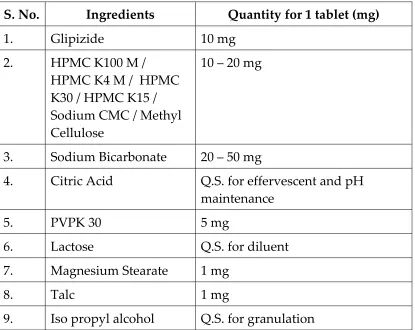
Effervescent Floating Matrix Tablets: (24, 25, 27)
The effervescent matrix floating tablets were formulated with lesser
amount of polymer concentration and at specific ratio of the polymer : gas
forming agents, as given in Table 3.
Table 3: Composition of Effervescent Floating Matrix Tablet of
Glipizide
S. No. Ingredients Quantity for 1 tablet (mg)
1. Glipizide 10 mg
2. HPMC K100 M /
HPMC K4 M / HPMC
K30 / HPMC K15 /
Sodium CMC / Methyl
Cellulose
10 – 20 mg
3. Sodium Bicarbonate 20 – 50 mg
4. Citric Acid Q.S. for effervescent and pH
maintenance
5. PVPK 30 5 mg
6. Lactose Q.S. for diluent
7. Magnesium Stearate 1 mg
8. Talc 1 mg
[image:48.612.110.525.351.681.2]packaging and shipping operations. So determination of hardness of the
tablets is made to assure the need for pressure adjustments on the tableting
machine.
Hardness of the tablets were determined using Monsanto Hardness
tester. The tablet was placed horizontally in contact with the lower
plunger of the Monsanto hardness tester and zero reading was taken. The
tablet was then compressed by forcing the upper plunger until the tablet
breaks. This force was noted.
Friability:
Fraibility is a tablet property that evaluates the ability of the tablet to
withstand abrasion in packaging, handling and shipping. Twenty tablets
were weighed and placed in the Roche Friabilator where they are exposed
to rolling and repeated shocks resulting from free falls within the
apparatus. After 100 revolutions the tablets were dusted and weighed and
the loss in weight indicates the ability of the tablets to withstand this type
of wear.
Initial weight – Final weight
Percentage friability = ‐‐‐‐‐‐‐‐‐‐‐‐‐‐‐‐‐‐‐‐‐‐‐‐‐‐‐‐‐‐‐‐‐‐‐‐‐‐‐ x 100 Initial weight
Average weight of the tablet Percentage Deviation 80 mg or less 10
More than 80 mg but less than 250 mg 7.5
250 mg or more 5
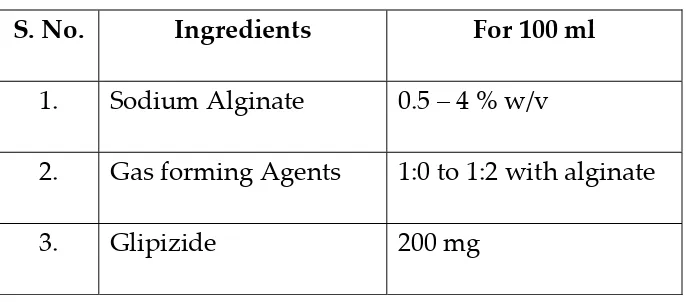
FORMULATION OF FLOATING BEADS: (43, 44)
Floating beads were prepared by dropwise addition of Sodium
Alginate solution containing drug and different gas forming agents, into
Calcium chloride solution (0.5 – 2.0 % w/v) in glacial acetic acid (10 %).
Table 4: Composition of Floating Beads
S. No. Ingredients For 100 ml
1. Sodium Alginate 0.5 – 4 % w/v
2. Gas forming Agents 1:0 to 1:2 with alginate
3. Glipizide 200 mg
The final formula for the preparation of beads was decided after
evaluating the quality of beads obtained in each trial formulations. For the
[image:50.612.136.479.418.569.2]beads, large beads were prepared by replacing 21 G syringe needle with 1
ml pipette, and the hardness of the large beads was tested by Pfizer tester
or Monsanto tester.
Morphological Analysis:
The surface and cross sectional morphologies of the beads were
examined using Scanning Electron Microscope.
The samples were placed on a metal grids using double side backed
adhesive tape. The mounted samples were sputter coated for 5 – 10 min
with gold‐paladium using fine coat ion sputter in an argon atmosphere
and examined under Scanning Electron Microscope.
EVALUATION OF DRUG CONTENT FOR TABLETS / BEADS: (69)
To a quantity of the powdered formulation containing 15 mg
equivalent of Glipizide, 30 ml of methanol was added and heated gently
on a water bath whilst shaking, cooled and sufficient methanol was added
to produce 50 ml volume. It was filtered and 5 ml of the filtrate was
diluted to 50 ml with methanol. The absorbance of the resulting solution
USP Method: (70)
Medium ‐ 900 ml of Hydrochloric acid buffer pH 1.2
Rotation ‐ 50 rpm
Temperature ‐ 37 + 10C
10 ml of samples were withdrawn at every 30 minutes time intervals
for upto 8 hours. The sample volume of fresh dissolution medium was
replaced after every withdrawal. The withdrawn samples were analysed
by UV‐visible spectrophotometer at 275 nm.
Fig 8: USP Dissolution Test Apparatus – 8 basket model
[image:52.612.181.431.387.587.2]KINETICS OF DRUG RELEASE: (92‐98)
The mechanism of drug release from the floating matrix tablets can
be described by studying the release profile data, fitted to various kinetic
models.
The release rate of drug from the matrix system depends upon
several factors such as the type of matrix, characteristics of polymers and
incorporated drug substances, additives, and other technological variables.
The cumulative percentage release of Glipizide from floating tablets (n=3)
in the dissolution medium was investigated and curve fitting & statistical
significance were tested.
The data obtained from the cumulative percentage release of
Glipizide from the floating tablets at periodic intervals was fitted to zero
order, first order, Higuchi, Hixon crowell, Korsemeyer & Peppas model
kinetics, to find out whether the drug release from the formulations is
providing a constant drug release.
Curve Fitting: (96)
Fitting of release profiles to linear equations was assessed by
Release Data Modelling: (93, 95, 98)
Drug release from swellable water‐soluble polymer systems is
typically described in terms of two simultaneously operating mechanisms.
They are fickian diffusion through the hydrated outer layers of the matrix
and matrix relaxation / erosion.
The data were evaluated according to the following equations:
Zero Order ‐ Qt = Q0 + K0.t
First Order ‐ In Qt = In Q0 + K0.t
Hixson‐Crowell ‐ Q01/3 ‐ Qt1/3 + K.t
Higuchi ‐ Q = KH. t1/2
Korsmeyer ‐ Peppas ‐ Mt / M0 = a.tn
Characterization of Release Profiles:
Some methods to compare drug release profiles were recently
proposed and classified into several types:
‐ Statistical methods based in the analysis of variance or in t‐student tests • Single time point dissolution
• Multiple time point dissolution ‐ Model independent methods
Healthy rabbits weighing about 2 kg were selected and after over
night fasting (water was available ad libitum) a tablet / beads containing
BaSO4 (20 %) instead of Glipizide was administered orally. This amount of
BaSO4 was determined experminetally to allow x‐ray visibility but not to
shun floatation of the tablet. 60 ml of 5 % Dextrose was administered to the
animal through the stomach intubation tube (No: 12 French Catheter)
periodically.
Gastric radiography was done at 2, 4, 8, 12 and 24 hours using x‐ray
machine (Stallion 20, Elpro International Ltd.) at 20 mA selected, 60 Kv for
0.25 secs exposure.
DIFFERENTIAL SCANNING CALORIMETRY: (89)
The presence of any interaction between the pure drug and
excipients was investigated by Differential Scanning Calorimetry.
The DSC thermograms of the pure drug and the selected
formulations (tablets / beads) were recorded.
The powdered formulations were accurately weighed into
CHAPTER ‐ IX
RESULTS AND DISCUSSION
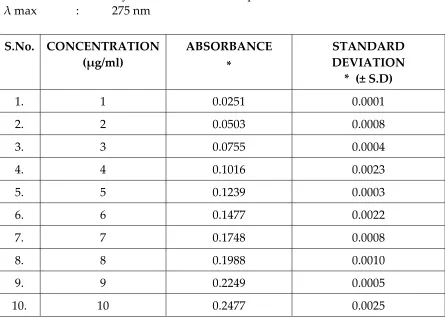
CALIBRATION OF GLIPIZIDE: (77)
Solutions of different concentrations of Glipizide were measured in
UV spectrophotometer at the λmax of 275 nm. A linear relation in the
concentration of 1 to 10 μg/ml was observed. The correlation coefficient
value was found to be r = 0.999908543. The results are given in Table 5 and
the standard calibration graph of Glipizide is shown in Fig: 10.
FORMULATION OF NON‐EFFERVESCENT AND EFFERVESCENT
FLOATING TABLETS: (20, 24, 25, 27)
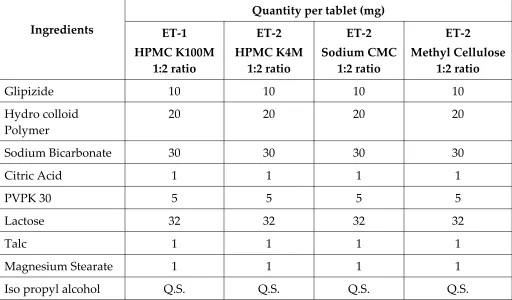
From the trial studies, the formulations showing good floating
behaviour were found out and the optimized formula for non‐effervescent
and effervescent floating tablets is given in the Table 6 and 7.
The non‐effervescent tablets show good floating property at the
concentration of 20‐75 % of the polymer. (20) HPMC grades and Sodium
EVALUATION OF TABLETS: (24, 25, 27, 69, 76, 78)
The compressed matrix tablets were evaluated for various physico
chemical parameters such as Appearance, Hardness, Friability, Thickness,
Weight variation, Drug content analysis, Buoyancy determination.
Appearance:
The formulated tablets were white colour, flat, round shaped
without any scoring on any sides. All tablets were elegant in appearance.
Hardness, Thickness, Friability:
Hardness of all the formulation was found to be in the range of
4 – 4.5 Kg/ cm2. A thickness of 3.4 mm and 2.5 mm was observed for the
non‐effervescent and effervescent tablets respectively.
Weight Variation and Percentage Drug Content:
The average weight ranges 100 mg approximately and the
individual weight variation lies within the limit of + 7.5 % as per I.P. The
percentage drug content of all the formulations lies within the prescribed
limits of 90 – 110 % as per B.P. and U.S.P.
Buoyancy Determination:
results that the tablet float is significantly reduced.
So, a decrease in hardness of the tablets reduces the floating lag
time. This effect was observed in both non‐effervescent and effervescent
tablets. The results are shown in the Table 12.
FORMULATION OF FLOATING BEADS:
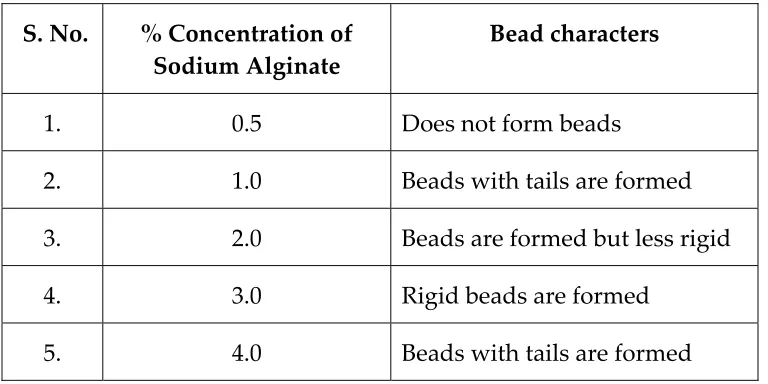
From the trial studies, it has been found that the Sodium Alginate
solution of 3 % w/v and 1 % w/v Calcium Chloride in 10 % acetic acid was
able to form uniform rigid beads. The needle size of 21 G produced big
size, rigid, uniform and porous beads. Hence this composition was used
for further production of beads with different gas forming agents.
The results are shown in Table 13, 14 and 15.
Effect of Gas forming agents oh physical nature of beads:
Different gas forming agents such as Calcium Carbonate (FB‐1),
Magnesium Carbonate (FB‐2), Sodium Bicarbonate (FB‐3), Sodium
Carbonate (FB‐4), Potassium Bicarbonate (FB‐5) and Potassium Carbonate
(FB‐6) were used in the ratio of 1:1 with sodium alginate. The formula is