An advanced systemic lesson learned knowledge model for
project organisations
A Thesis submitted by
Stephen Mark Duffield
For the award of
Doctor of Philosophy
ABSTRACT
The research study described in this thesis was inspired by many years as a project manager, watching the failure of organisation projects, and the lessons learned. This led to the research idea of how can the lessons learned enable organisations to learn from past project experiences to drive continuous improvement.
The thesis is based on five published publications that collectively make a significant contribution to knowledge of the development of the Systemic Lessons Learned Knowledge (Syllk) model (Paper One) and application of the Syllk model (Papers Two, Three and Four) and the research methodology (Paper Five). I have applied an action research study which addressed the dual imperatives of both the research and problem solving by using a series of action research cycles on three separate projects.
The research method consisted of multiple spiral action research cycles. I have demonstrated how to apply the Syllk model to enable the organisations to disseminate and apply knowledge/lessons learned. The initial planning stage consisted of interviews, followed by focus groups, to identify the facilitators and barriers that impact upon the initial design of the Syllk model within the
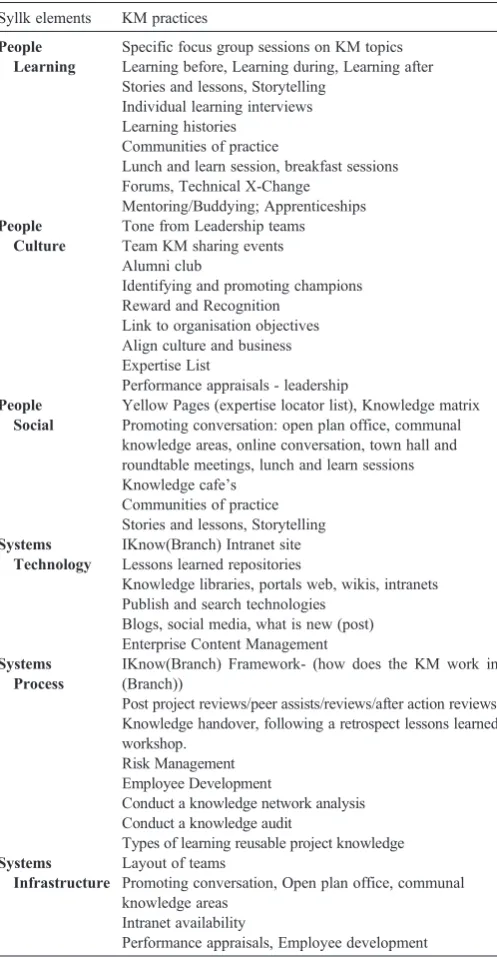
organisation. Established knowledge management practices were aligned with each of the Syllk elements to address the identified barriers and facilitate learning as the action cycles progressed. Initiatives were implemented, and actions were observed, monitored, and then evaluated after a period of reflection using an after-action review process. The results from this research showed how knowledge capability can be wired (distributed) across organisational systems (capability networked) and how the Syllk model can be used to conceptually facilitate this.
The research study described in this thesis provides insights into how an organisation learns and how it can be effectively wired to acquire and accumulate knowledge, including from lessons learned. The thesis highlights that the variables of the Syllk model (learning, culture, social, technology, process and infrastructure) were found to be the most dynamic and influential for the organisation participating in the action research. The action research outcomes showed that an organisation is not a simple structure, but rather, a complex interweaving and coupling (capability network) of the Syllk elements of people and systems. Processes in the organisation need to align with the elements of the Syllk model. Using action research is one possible way forward. One needs to understand how the organisation is wired for knowledge and lessons learned.
The findings from this research form a sound structure for future research studies based on the application of the Syllk model. This research supports the premise that to successfully manage projects and day-to-day business activities, the learning process is challenged by many barriers. The thesis demonstrates that action research can benefit project management and knowledge management researchers and practitioners.
Keywords: Project management; Knowledge management; Lessons learned;
CERTIFICATION OF THESIS
This thesis is entirely the work of Stephen Mark Duffield except where otherwise acknowledged. The work is original and has not previously been submitted for any other award, except where acknowledged.
"Those that fail to learn from history are doomed to repeat it."
To my family and close friends
Robyn, Shawn, Kitty, Elise and others
for their unconditional love, care and support.
ACKNOWLEDGEMENTS
My deepest and most genuine gratitude are owed to Associate Professor Jon Whitty, my Principal Supervisor, for his limitless guidance, support, encouragement and insight throughout the duration of my studies. Words just cannot truly express the extent of my appreciation with the level of commitment shown by Jon supporting both my masters and doctoral research activities over the last seven years. It has been a privilege to have been mentored by such a dedicated academic and to know such a trustworthy and light-humoured person. Thanks to Jon, I have gained a good deal of knowledge from this academic experience. I would also like to express my gratitude to Associate Professor Barrie Todhunter for accepting the role as my Associate Supervisor and providing support during the critical early days of the doctoral journey. I also acknowledge the editorial work by Libby Collett.
A special heartfelt thank you to my friend, Dr Robyn Young, who sadly passed away in February 2015. I first met Robyn when she was my emotional
intelligence life coach in 2008. Robyn changed my life; we became good friends and someone I could talk to about anything. We spent many hours on Skype, on the phone and coffee chats at her favourite shops. I will miss those special moments we had laughing about research, study, work, life stress and the people in our lives, so many special moments. I recall the early trials of uBalancer (a life balance tool). I still have Young’s Priority Management System action chart on my office wall as it helps me to remain focused on my daily activities of family, work and doctoral research. Robyn was one of the major influences on my doctoral journey. I miss not being able to update her with my many challenges and taking on her advice. Rob was one very special amazing kind person, and it was good to see her in December 2014, another memory I will hold close to my heart.
I would also like to express my sincere gratitude to the staff in the
government departments and agencies who participated in the study. The honest and open feedback and participation in the action research reflection workshops added a great deal of value to the research and project activities.
Moreover, finally to my girlfriend and wife, Robyn, whose endless support enabled me to maximise the time I could devote to research activities. Your understanding, patience, and love provided the ideal platform to chase my aspirations.
Towards the end of the research journey, I was diagnosed with Parkinson’s. The support I received from everyone helped to maintain a focus on completing the work. A special thank you to my wife Robyn who helped me transition into a life of living with Parkinson’s while she was also dealing with the daily struggles of the chronic autoimmune disease of Lupus.
PUBLICATIONS CONTAINED IN THIS THESIS
Journal articles
Duffield, S., Whitty, S.J., (2015b). Developing a systemic lessons learned
knowledge model for organisational learning through projects. International Journal of Project Management, vol. 33, no. 2, pp. 311-324.
Duffield, S., Whitty, S.J., (2016a). How to apply the Systemic Lessons Learned Knowledge model to wire an organisation for the capability of storytelling. International Journal of Project Management, vol. 34, no. 3, pp. 429-443.
Duffield, S., (2016). Application of the Syllk model wiring an organisation for the capability of an online Community of Practice. VINE Journal of Information and Knowledge Management Systems, vol. 46, no. 2, pp. 267-294.
Duffield, S., Whitty, S.J., (2016b). Application of the Systemic Lessons Learned Knowledge model for Organisational Learning through Projects. International Journal of Project Management, vol. 34, no. 7, pp. 1280-1293
Duffield, S., (Forthcoming, 2017). Using Action Research in Practice: Useful Insights and Outcomes. ALAR: Action Learning and Action Research Journal, vol. 23, no. 1.
Book chapters
Duffield, S., (Forthcoming, 2017). Knowledge Management and Lessons Learned, in RA Group. & L Bowman (eds), Project Controls Drumbeat, First, Taylor and Francis Group, United Kingdom, ch 12.
Conference Papers
Duffield, S., Whitty, S.J., (2012). A systemic lessons learned and captured
knowledge (SLLCK) model for project organizations., in: PMglobal (Ed.), 9th Project Management Australia Conference (PMOz 2012), Melbourne, Australia.
van der Hoorn, B, Duffield, S & Whitty, SJ (forthcoming, 2016). 'A 'lived experienced’ tool for managing and building project delivery capability ', in ANZAM proceedings of
PUBLICATIONS AND PRESENTATIONS
ARISING FROM THIS THESIS
Since this research began, and as journal articles and conference Papers were published, the Syllk model has become recognised and acknowledged in various media formats and citations. To follow are lists of those to date:
Conference Papers
Duffield, S., (2015b). Application of a Systemic Lessons Learned Knowledge Model for Organisational Learning through Projects, Australian Institute of Project
Management National 2015 Conference. AIPM, 978-0-646-93699-4, Hobart
Conference/Congress/Symposium presentations
Duffield, S., (2015a). Application of a Systemic Lessons Learned Knowledge model for organisational learning through projects, Knowledge Management Australia 2015. Ark Group, Melbourne, 4-6 August 2015.
Duffield, S., (2015b). Application of a Systemic Lessons Learned Knowledge Model for Organisational Learning through Projects, Australian Institute of Project
Management National 2015 Conference. AIPM, 978-0-646-93699-4, Hobart.
Poster presentations
Duffield, S., (2013). An advanced systemic lesson learned and captured knowledge model for project organisations. Poster presented at the USQ Research Colloquia and Showcase conference, conducted 12-13 June 2013, Springfield, Qld, Australia.
Duffield, S., Whitty, S., (2015a). Organisations - Wiring for Capability (Poster presentation), AIPM 2015, Hobart.
Application and impact of the Syllk model
PM Lessons Learned Blog: A research blog on Project Management Lessons Learned and Knowledge Management: The home of the Systemic Lessons Learned Knowledge (Syllk) model.
www.pmlessonslearned.info www.syllk.info
Whitty (2015): Executive Insights - Powering up your capability with the Syllk Model
https://www.youtube.com/watch?v=snlStqmXVPY
The Syllk Model: Wiring Organisations for Capability (know-how)
Truly Reconceptualising Project Knowledge Management
https://www.youtube.com/watch?v=6cGg7rKCuSE
Managing knowledge in project environments; 5th December 2012 (UK APM Knowledge SIG)
TABLE OF CONTENTS
ABSTRACT ... ii
CERTIFICATION OF THESIS ... iii
ACKNOWLEDGEMENTS ... vi
PUBLICATIONS CONTAINED IN THIS THESIS ... vii
PUBLICATIONS AND PRESENTATIONS ARISING FROM THIS THESIS ... viii
TABLE OF CONTENTS ... x
LIST OF FIGURES ...xiv
LIST OF TABLES ... xv
LIST OF ABBREVIATIONS ...xvi
1. INTRODUCTION ... 1
1.1. Background to the research ... 1
1.2. Scope and research setting ... 1
1.3. Research problem ... 3
1.3.1. General trend in failing to learn from projects ... 3
1.3.2. Not for the want of opinions, guides, and models on lessons learned ... 4
1.3.3. People factors – both a problem and solution to lessons learned ... 7
1.3.4. Project organisations require a new paradigm for organisational learning through projects ... 8
1.3.5. Capability networks ... 9
1.4. Selection of Research Methodology ... 9
1.5. Ethical considerations ... 10
1.6. Limitations and delimitations ... 10
1.7. Thesis outline ... 11
2. LITERATURE REVIEW ... 15
2.1. Literature review (Paper One) ... 15
2.2. Extended literature review ... 15
2.2.1. Knowledge ... 16
2.2.2. Knowledge Management (KM) ... 16
2.2.3. Knowledge Conversion ... 18
2.2.4. Learning and Organisational Learning ... 20
2.2.5. Lessons Learned ... 23
2.2.6. Culture ... 25
2.3. Gaps in Literature ... 26
2.4. A Systemic Lessons Learned Knowledge (Syllk) model ... 26
2.4.1. Syllk model – initial conceptual iterations ... 26
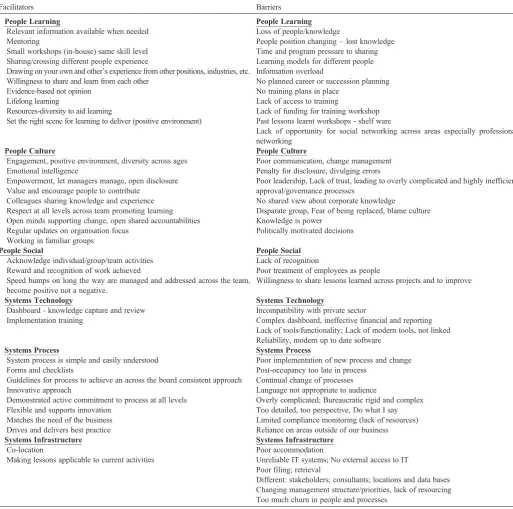
2.4.2. Syllk model barriers and facilitators ... 28
2.5. Where does the Syllk model fit within the theory and literature? ... 33
2.5.1. Comparative analysis of the Syllk model ... 36
2.6. Bibliography ... 43
2.6.1. 2015 and 2016 literature aligned with both the research question and the Syllk model 43 2.7. Paper One: Statement of authorship ... 45
3. RESEARCH QUESTIONS ...60
4. RESEARCH METHODOLOGY ...62
4.1. Research paradigm ... 62
4.2. Action research defined ... 63
4.3. The action research methodology ... 64
4.4. Action research suitability to this research ... 64
4.5. The action research approach... 65
4.6. Action research using mixed method procedures ... 67
4.7. Data collection ... 67
4.8. Data analysis ... 68
4.9. Role of the researcher ... 69
4.9.1. Conducting research within one’s own organisation ... 71
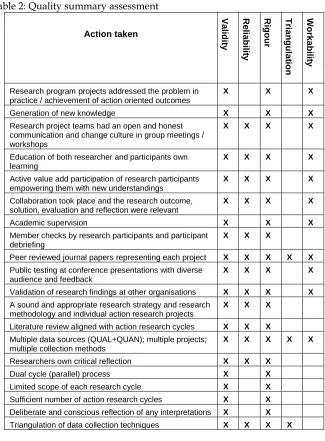
4.10. Assessing the quality of the research ... 72
4.11. Researcher bias... 75
4.12. Action research reports ... 76
4.13. Using action research in practice ... 76
4.14. Paper Five: Statement of authorship ... 78
5. PROJECT A ... 137
5.1. Project background ... 137
5.2. Knowledge flow opportunity with ISO 9001:2015(E) ... 138
5.3. Project A data extracts ... 139
5.4. Paper Two: Statement of authorship ... 141
6. PROJECT B ... 156
6.1. Project background ... 156
6.2. Project B data extracts ... 156
6.3. Paper Three: Statement of authorship ... 158
7. PROJECT C ... 174
7.2. Extended literature review ... 175
7.3. Project C data extracts ... 175
7.4. Paper Four: Statement of authorship ... 176
8. DISCUSSION ... 205
8.1. Chapter summary ... 205
8.2. Addressing the research questions ... 206
8.3. Systemic lessons learned knowledge [model] capability ... 208
8.3.1. Syllk capability network diagram... 209
8.3.2. Implementing the Syllk model in organisations ... 210
9. CONCLUSION ... 213
9.1. Contributions to Theory ... 213
9.2. Contributions to Methodology ... 214
9.3. Contributions to Practice ... 215
9.4. Contributions to Policy ... 217
9.5. Further research ... 217
10. REFERENCES ... 219
11. APPENDICES... 239
11.1. Appendix A: A Systemic lessons learned and captured knowledge (SLLCK) model ... 240
11.1.1. Conceptual model iterations ... 240
11.1.2. A Systemic lessons learned and captured knowledge (SLLCK) model for project organizations ... 243
11.2. Appendix B: Example of participant information sheet... 254
11.3. Appendix C: Example of consent form ... 256
11.4. Appendix D: Proof of publication ... 257
11.4.1. Developing a systemic lessons learned knowledge model for organisational learning through projects. ... 257
11.4.2. How to apply the Systemic Lessons Learned Knowledge model to wire an organisation for the capability of storytelling. ... 258
11.4.3. Application of the Syllk model wiring an organisation for the capability of an online Community of Practice. ... 259
11.4.4. Application of the Systemic Lessons Learned Knowledge model for organisational learning through projects. ... 262
11.4.5. Using action research in practice: useful insights and outcomes. ... 263
11.5. Appendix E: Project A data extracts ... 264
11.5.1. IKnow(Branch) framework ... 264
11.5.2. We really need to talk about (sub-Branch)CK and Lessons Learned ... 272
11.5.3. KM Practice (independent variable/interventions) ... 273
11.5.4. KM benefits integrated KM mind map incorporating the Syllk model ... 276
11.6.1. Project B NVivo example of category nodes and coding ... 277
11.6.2. Project B original data set in support of Paper Three table 4 ... 277
11.6.3. Project B original data set in support of Paper Three table 5 ... 278
11.6.4. Project B original data set in support of Paper Three table 6 ... 279
11.6.5. Project B original data set in support of Paper Three table 7 ... 282
11.6.6. Project B impact of Syllk model application – Research interest ... 283
11.6.7. Project B storytelling Syllk independent (KM practices) and dependent (measures) variables (working template) ... 285
11.7. Appendix G: Project C data extracts ... 287
11.7.1. Sample interview sheets ... 287
11.7.2. Collaboration tool data metrics ... 288
11.7.3. Project C Syllk online CoP variables/interventions - KM practices and measures (working template) ... 289
11.8. Appendix H: Project Controls Drumbeat – Manage Project Knowledge and Lessons Learned (Book chapter) ... 290
11.9. Appendix I: KM Australia congress 2015 ... 300
11.10. Appendix J: AIPM Poster – Wiring organisations for capability ... 302
11.11. Appendix K: ANZAM Paper submission ... 304
11.12. Appendix L: Syllk model journal and conference papers status ... 325
LIST OF FIGURES
Figure 1-1 Thesis outline ... 14
Figure 2-1 SECI model ... 18
Figure 2-2 Spiral of organisational knowledge creation ... 19
Figure 2-3 Five-phase model of the organisational knowledge – creation process ... 19
Figure 2-4 Influence diagram of a decision process ... 21
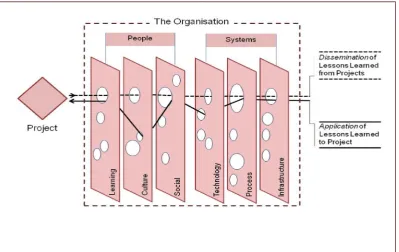
Figure 2-5 The Systemic Lessons Learned Knowledge Model ... 27
Figure 2-6 The Swiss cheese model of defences ... 28
Figure 3-1 Relationship of research questions and research projects ... 60
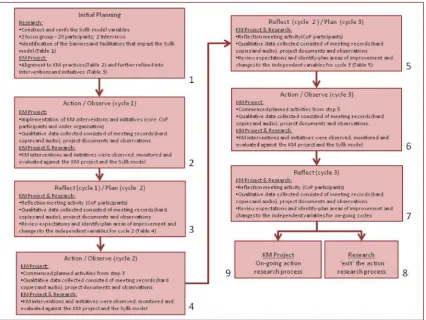
Figure 4-1 Adapted action research cycle ... 65
Figure 4-2 The dual imperatives of action research ... 66
Figure 4-3 Concurrent transformative approach ... 67
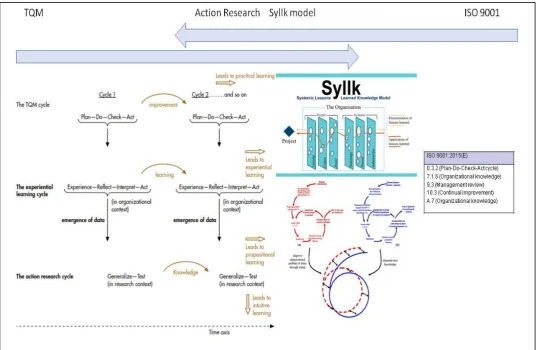
Figure 5-1 Three way interface TQM(AR) - Syllk(AR) - ISO9001 ... 140
Figure 8-1 Combined capability network diagnosis of Projects A, B and C ... 210
Figure 8-2 Syllk model implementation process ... 212
Figure 9-1 The conclusion of the thesis ... 213
Figure A-1 Early model iteration v1 ... 240
Figure A-2 Early model iteration v2 ... 240
Figure A-3 Early model iteration v3 ... 240
Figure A-4 Early model iteration v4 ... 241
Figure A-5 Early model iteration v5 ... 241
Figure A-6 Preliminary lessons learned model ... 242
Figure A-7 Systemic lessons learned and captured knowledge (SLLCK) model .... 242
Figure E-1 We really need to talk about (sub-Branch) Community of Knowledge and Lessons Learned ... 272
Figure E-3 Integrated KM mind map incorporating the Syllk model ... 276
Figure F-1 Project B Syllk storytelling variables - KM practices and measures (working template) ... 285
Figure F-2 Project B Syllk capability network diagram (working template) ... 286
Figure G-2 User activities on online CoP pages ... 288
Figure G-3 User activities per week ... 288
LIST OF TABLES
Table 1-1 PMBOK® Guide lessons learned analysis ... 5
Table 1-2 Lists of journal papers ... 13
Table 2-1 Theory of action (model I and II) ... 21
Table 2-2 Supporting literature for the SLLCK and Syllk models ... 29
Table 2-3 Additional supporting literature for the Syllk model (2013-2015) ... 32
Table 2-4 Adequacy of KM models to KM Implementation Requirements ... 35
Table 2-5 Syllk model compliance to the KM Implementation requirements ... 36
Table 2-6 2015-16 literature aligned with the research problem and the Syllk model ... 43
Table 4-1 Assumption of the main research paradigms ... 63
Table 4-2 Working definition of action research ... 64
Table 4-3 Data collection ... 68
Table 4-4 Role of the Researcher Categories ... 70
Table 4-5 Role of the researcher in the research projects ... 71
Table 4-6 Quality assessment... 72
Table 4-7 Action research validity criteria linked to action research goals ... 73
Table 4-8 Action taken to address researcher bias ... 76
Table 5-1 Syllk model aligned with the ISO 9001:2015(E) requirements... 138
Table 7-1 Comparison between a CoP with other organisational structures. ... 175
Table 8-1 Syllk model implementation process steps ... 211
Table F-1 Original data set of Paper Three table 4 ... 277
Table F-2 Original data set of Paper Three table 5 ... 278
Table F-3 Original data set of Paper Three table 6 ... 279
Table F-4 Original data set of Paper Three table 7 ... 282
Table F-5 Syllk model – coded matrix ... 284
Table F-6 Project B variable coding outputs... 285
LIST OF ABBREVIATIONS
AAR After Action Reviews
ALARA Action Learning Action Research Association ALARj Action Learning Action Research Journal
AM Asset Management
APM Association for Project Management [UK] APQC American Productivity and Quality Center
BP British Petroleum
BPE Building Performance Evaluation CHAMPS Champions of Change team
CMMI Capability Maturity Model Integration
CF Consent Form
CP Capital Projects
CoP Community of Practice
DARPA Defense Advanced Research Projects Agency DIKW Data, Information, Knowledge and Wisdom model ERA Excellence in Research for Australia
EQ Emotional Intelligence
FBC [NASA] Faster, Better, Cheaper project
HR Human Resources
ICT Information and Communications Technology ISO International Organization for Standardization
IT Information Technology
KLC Knowledge Life Cycle
KM Knowledge Management
LL Lessons Learned
LLIS [NASA] Lesson Learned Information System
LT Leadership Team
NASA National Aeronautics and Space Administration NHS National Health Service [England]
NVivo NVivo is software that supports qualitative and mixed methods research
OGC Office of the Government Commerce OLM Organisational Learning Mechanisms
P3M3 Portfolio, Program & Project Management Maturity PADS Performance Appraisal and Development
PDCA Plan-Do-Check-Act
PC People Culture [Syllk model] PIS Participant Information Sheet PL People Learning [Syllk model]
PMO Project Management Office
PRINCE2 Projects In Controlled Environments, version 2 PS People Social [Syllk model]
P.S. Positivist approach to Science
QUAL Qualitative
QUAN Quantitative
RQ Research Question
SECI Socialization, Externalization, Combination, Internalization model of knowledge dimensions
SI Systems Infrastructure [Syllk model] SIG Special Interest Group
SLLCK Systemic lessons learned and captured knowledge model SP Systems Process [Syllk model]
Syllk Systemic Lessons Learned Knowledge model TNKM The New Knowledge Management
TQM Total Quality Management
USQ University of Southern Queensland
1. INTRODUCTION
This thesis proposes that there is a need for a conceptual model for project organisations that clearly articulates how lessons from past project experiences can be embedded in organisational artefacts, processes, practices, and culture.
Governments and businesses need to successfully manage projects and day-to-day business activities, to learn from success and failure, and to capture, disseminate and apply lessons learned (Burr 2009; Li 2002, p. 585; Ministry of Defence 2010; Office of Inspector General 2012; Shergold 2015). In practice, organisational learning from projects rarely happens, and when it does it fails to deliver the intended results
(Atkinson, Crawford & Ward 2006; Kerzner 2009; Klakegg et al. 2010; Milton 2010; Schindler & Eppler 2003; Shergold 2015; Williams 2008).
1.1. Background to the research
The inspiration for this thesis came about through many years as a project manager watching the failure to capture and apply lessons learned by organisations and from projects. There were some good and bad experiences, however, they were rarely captured and used by others. We often repeated the same task or behaviour without making use of the existing organisational knowledge to make improvements. For organisations to manage their knowledge and learn from lessons, we need to find a better way.
The early phase of the research commenced as part of a Master of Project Management with the University of Southern Queensland. The outcomes of the initial pre-doctoral research project identified and derived a systemic lessons learned and captured knowledge (SLLCK) model (Duffield & Whitty 2012) (Appendix A - 11.1.3).
1.2. Scope and research setting
This thesis demonstrates the development and application of a conceptual model, hereafter referred to as the Systemic Lessons Learned Knowledge model or Syllk (pronounced Silk) model, which is a variation of Reasons (1997, 2000) Swiss cheese model (Duffield & Whitty 2012; Duffield & Whitty 2015b). Whereas the Swiss cheese model appropriately fits accident causation, the Syllk model is better suited to the organisation managing projects and day to day business activities. Put simply; in aviation, the Swiss cheese model enables lessons learned data to be collected from aviation events so that the aviation industry can improve the safety of how planes fly tomorrow. For organisations, the Syllk model will enable lessons learned to be disseminated and applied so that the organisation can improve its future projects and day to day business delivery performance (Duffield & Whitty 2015b).
as Project A, Project B and Project C. Alias names for the organisations will be used in this thesis to protect the confidentiality of the participants (Walker & Haslett 2005).
Project A took place at a Branch of a large division of an Australian government organisation. The Branch is responsible for leading and coordinating state-wide infrastructure planning and delivery while ensuring that the life of built assets is optimised to deliver the infrastructure investment program. The Branch consists of the designing and building of infrastructure, asset and property services, and portfolio and investment units, and has approximately 160 staff. The Branch manages a sizable number of projects. The most significant and complex are
approximately 200 capital projects with project budgets ranging from approximately A$1 million to A$1.7 billion. Currently, there is no consistent knowledge
management (KM) framework utilised to manage the knowledge gathered during the planning, design, and delivery of these capital projects, including lessons learned. This lack of a consistent framework extends across all Branch projects. Following a P3M3 (Portfolio, Program and Project Management Maturity) assessment, the Branch leadership team acknowledged a need to develop a KM framework. The KM framework would provide support to their officers managing projects, utilise the knowledge gathered from experience and included lessons learned to improve their project processes and outcomes. The business improvement director of the Branch approached me to apply the Syllk model and assist the Branch (through research) in the implementation of a KM project to develop and implement a KM framework. The ‘(Branch) KM project’ was endorsed by executive management in June 2013. The overall duration of the research and KM project was two years and four months (February 2013 to June 2015). The publications that came directly out of this research project are Duffield and Whitty (2016b), Duffield (2015b) and Duffield (Forthcoming, 2017).
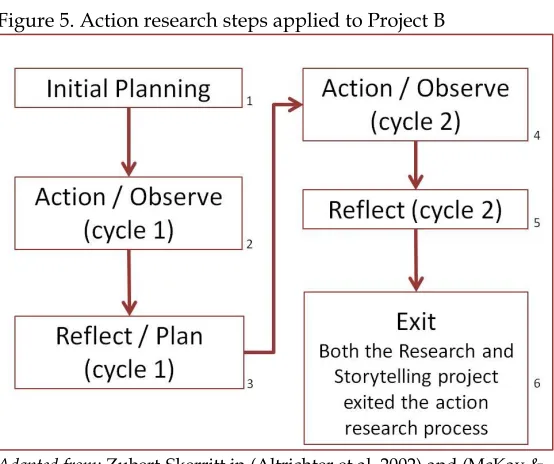
Project B took place at a large division of an Australian government organisation. The division identified a commitment plan to develop productive partnerships, share learnings and project knowledge. A change management program (Champions of Change program) was implemented with a focus on storytelling, embracing improvement, while thinking laterally and trialling new methods. The division identified that the intervention and implementation of the Syllk model would benefit the organisation, and consequently, the action research study was endorsed by executive management in September 2013. The storytelling project duration was for 12 months. The publications that came directly out of this research project are Duffield and Whitty (2016a) and Duffield (Forthcoming, 2017).
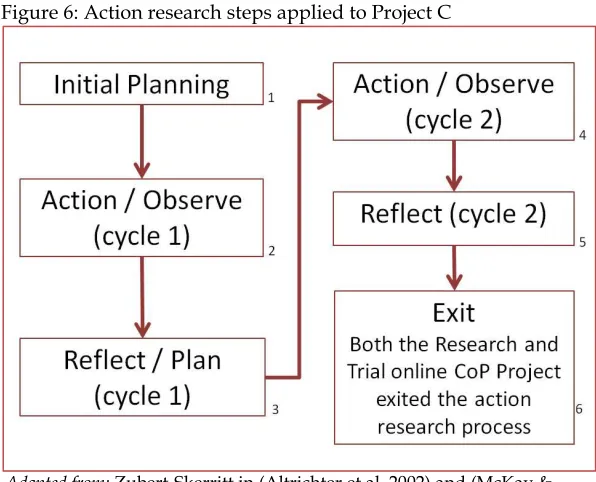
Project C took place in an Australian government organisation. The
online CoP project duration was for nine months. The publications that came directly out of this research project are Duffield (2016) and Duffield (Forthcoming, 2017).
1.3. Research problem
There is a general trend of project organisations failing to learn from their past experiences, while at the same time, being surrounded by lessons learned models and guides, and opinions on how to apply them (Brouwer 2011; Schindler & Eppler 2003; Shergold 2015). There has been significant spending on knowledge management (KM) initiatives (Ajmal, Helo & Kekäle 2010). However, many organisations lack the expertise and fail to learn from past projects and often are found to be reinventing the wheel (Ajmal, Helo & Kekäle 2010).
Cultural and social factors can be both a problem and solution to
organisational learning (Duhon & Elias 2008). We have a need for a new paradigm for organisational learning that conceptualises and articulates how organisational capability (know-how) about successful project delivery is in practice distributed across and networked or interconnected to areas of the organisation (Duhon & Elias 2008; Wideman 2011). There is a need for a model (Syllk capability network diagrams) to show management the wiring (distributing capability (know-how)) of an organisation for the capability of KM and lessons learned.
1.3.1. General trend in failing to learn from projects
Milton (2010) highlights a significant dissatisfaction with project lessons learned processes. Lessons from projects might be identified, but not many are learned when it comes to picking up on early warning signs in problem projects (Klakegg et al. 2010). Out of 74 organisations that attempted lessons learned processes, 60 per cent were dissatisfied (Milton 2010). In another study, 62 percent of 522 project practitioners responded that they had a process for learning lessons, and of that only 11.7 per cent followed the process (Williams 2007). Furthermore, while the lessons learned process is popular, it fails to deliver the intended results as lessons are identified and are often not followed through and integrated into the organisation (O'Dell & Hubert 2011).
The problem of KM and the importance of capturing lessons learned and applying those learnings to drive continuous improvement, is growing with the increase in organisational complexity and the quantity of information and data that flows within and between these organisations (de Vasconcelos & Rocha 2016). Large institutions such as NASA have issues with the capturing and application of lessons learned from projects (Office of Inspector General 2012). Following reviews in 2000 of NASA’s Mars Program, the Space Shuttle wiring problems, and the implementation of NASAs Faster, Better, Cheaper (FBC) project, NASA
Other renowned institutions have similar issues with the capture and application of lessons learned. A review of the BP Deepwater Horizon accident investigation revealed how lessons learned from previous “well controlled event incidents” and “lines of communication” were not acknowledged or addressed and this was a contributing cause of the failure (BP 2010; Cleveland 2011). NASA today uses the BP Deepwater Horizon incident as a ‘lessons learned’ case study, paying particular attention to communication deficiencies around government oversight, disregarding of data, testing, changes to the process, safety culture and lessons learned from previous incidents (NASA 2011a).
There are also few signs that lessons are being learned from public sector projects. For example, the Australian State Victorian Government Ombudsman examined ten major ICT business transformation projects during 2011 and “identified that despite the extensive guidance, reports and literature available, agencies are still making the same mistakes around planning, governance, project management and procurement” (Brouwer 2011, p. 3). The Queensland Health Payroll System Commission of Inquiry highlighted that problems from the Queensland Health payroll project (the worst failure of public administration in Australia) “were known to be ones not uncommon in large government projects of this kind. The neglect of them, in this case, is cause to think it is likely the lessons will again be ignored” (Chesterman 2013, p. 219). Recently the Australian
Government delivered a learning from failure report highlighting why large government policy initiatives have gone so badly wrong in the past and how the chances of success in the future can be improved (Shergold 2015).
1.3.2. Not for the want of opinions, guides, and models on lessons learned Generally speaking, there are many opinions and guides, but little practical advice regarding workable processes that effectively enable the organisation to learn from past project experiences. The importance of capturing and applying lessons learned is highlighted in various project management guides, standards,
methodologies and maturity models. Lindner and Wald (2011) note a gap in project management practice, identifying a need for more research in understanding the role knowledge management has in lessons learned.
Reich and Wee (2006) report an extensive review of how knowledge
management practices are embedded within the 3rd edition PMBOK® Guide (Project Management Institute 2004). Table 1-1 highlights the changes over the last 30 years of how the term lessons learned has been referenced and used with all versions (up to 6th edition) of the PMBOK® Guide. The PMBOK® Guide 4th edition is focused on process improvement as a result of lessons learned (Project Management Institute 2008a). However, in the PMBOK® Guide 4th and 5th editions (2008b, 2013) the ‘lessons learned’ process is not discussed anywhere except for a glossary description and both versions refer to a different description of what is a lesson learned.
PMBOK® Guide 5th Edition (2013) has an additional twenty-two lesson learned references (mainly due to a new knowledge area – Stakeholder Management) and remains focussed on project closure lesson learned activities. The PMBOK® Guide 5th edition also aligns with the KM Data, Information, Knowledge and
Wisdom (DIKW) model. However, the DIKW model which is based on the work of Ackoff (1989) has been challenged by the KM community as “unsound and
Up until the PMBOK® Guide 6th edition, there has been a disregard to KM processes and lessons learned methods. The exposure draft version of PMBOK® Guide 6th edition is proposing a new process “Manage Project Knowledge” (Project Management Institute 2016, p. line reference 1213):
Manage Project Knowledge is the process of using existing knowledge and creating new knowledge to achieve the project’s objectives and contribute to organizational learning. The key benefit of this process is that existing knowledge and new knowledge are used in the project and knowledge created by the project is available to support organizational operations and future projects or phases.
I have provided review comments to the PMI (some have been accepted with modification), and my initial observation of this new process is that this would appear to be a significant step in the right direction as KM is more than lessons learned.
Table 1-1 PMBOK® Guide lessons learned analysis
Title Year Edition Results
The Project Management Body of Knowledge
1987 1987 Wideman sets out the criteria for a PMBOK (Wideman, 1995). Discussion on establishing legislated or de facto standards. The guide is essentially a glossary of terms.
A Guide to the Project
Management Body of Knowledge (PMBOK Guide)
1996 1996 (21 results of Lesson Learned) The term lessons learned is reference in the knowledge areas of Integration (Communications), Scope, Schedule and Cost. The use of lessons learned is focused on the cause of variances and other lessons learned and that they should be documented in a historical database for both the current project and other projects within the organisation. The guide also notes that the objective of a quality audit is to identify lessons learned.
A Guide to the Project
Management Body of Knowledge (PMBOK Guide)
2000 2000 (29 results of Lessons Learned) Added the term “lessons learnt” to its glossary and now includes lessons learned in Risk Management.
A Guide to the Project
Management Body of Knowledge (PMBOK Guide)
2004 3rd Edition
(62 results of Lessons Learned) A focus on Organizational corporate knowledge base. Significant change in the way the Guide dealt with the concept of Project-based Learning through the use of the Lessons Learned object. The Guide has placed importance on collecting and using Lessons Learned throughout the life cycle of the project (Reich and Wee, 2006). Glossary includes "lessons learned", since it appears as an output of the work of each knowledge area (Wideman, 2005).
A Guide to the Project
Management Body of Knowledge (PMBOK Guide)
2008 4th Edition
(54 results of Lessons Learned) Additional focus on process improvement as a result of lessons learned.
A Guide to the Project
Management Body of Knowledge (PMBOK Guide)
2013 5th Edition
(78 results of Lessons Learned) Additional 22 references (mainly due to a new knowledge area – Stakeholder Management) and remains focussed on project closure lesson learned activities. The 5th edition also aligns with the Data, Information, Knowledge and Wisdom (DIKW) model.
A Guide to the Project Management Body of Knowledge (PMBOK Guide) TBA 2017 6th Edition
New process Manage Project Knowledge is part of the Executing Process Group and Project Integration Management knowledge area.
“Manage Project Knowledge is the process of using existing knowledge and creating new knowledge to achieve the project’s objectives and contribute to organizational learning.
The inputs and outputs of this process are depicted below.”
Reich and Wee (2006) suggest that the PMBOK® Guide is an explicit knowledge
document with a focus on creating and using explicit knowledge. The PMBOK® Guide is process focused on “what” and “how” to do the process, and silent on the
“why” to do a process. Reich and Wee (2006) also provide alignment of the
PMBOK® Guide with the Nonaka SECI model and note that there is a strong
emphasis on externalisation and combination elements. Reich and Wee (2006, p. 24) recommend that “the PMBOK® Guide becomes transformed into a true knowledge guide - both imparting and recognizing the knowledge needed to complete projects successfully”.
Jugdev (2012) states that the PMBOK® Guide uses lessons learned terminologies, such as audits; best practices; organisational process assets; and lessons learned. Jugdev (2012, p. 19) recommends that “practitioners should not accept the PMBOK® Guide at face value. The guide has value as just that, a systematic guide”.
Jugdev (2012, p. 19) argues that it be “incumbent on both researchers and practitioners to understand lessons learned as ways of mobilizing (constructing and sharing) valuable project knowledge in more than concrete ways (such as through meetings)”. The PMBOK® Guide is very “mechanistic and rigid when, in essence,
lessons learned, learning and knowledge are more organic and fluid. Knowledge changes and it circulates. Knowledge goes beyond being transmitted or transferred” and is also about workplace learning, situated learning as applied to KM and lessons learned (Jugdev 2012, p. 19).
Organisations are also not to be found wanting for lessons learned models and methods. The Project Management Institutes’ OPM3 Organizational Project
Management Maturity Model (Project Management Institute 2008b) references lessons learned. However, there is less guidance than that provided in the PMBOK® Guide. The Association for Project Management (APM) Body of Knowledge 6th Edition (Association for Project Management 2012) refers to knowledge
management as the governance process rather than identification of the specific process around lessons learned. The APM Body of Knowledge 6th Edition highlights the importance of people skills (communities of practice, learning and development) and delivery of information management (Association for Project Management 2012). The Office of Government Commerce PRINCE2® project methodology encourages project teams to “...learn from previous experience: lessons are sought, recorded and acted upon throughout the life of the project” (OGC 2009, p. 12). PRINCE2® has a single process (a lessons learned log) for recording lessons learned and reporting on them (lessons learned report) (OGC 2009).
The Capability Maturity Model Integration (CMMI) model which provides for best practice organisational process improvement (Chrissis, Konrad & Shrum 2003) highlights that process improvement proposals and process lessons learned are key work products and sub-processes. Midha (2005) has discussed the benefits of CMMI and identifies the classic approach of collecting and translating key lessons into processes. In addition, Von Zedtwitz (2002) has developed a capability model for post-project reviews based on the standard five-stage capability model.
The last guide to consider would be the recent changes to the ISO
With the release of ISO 9001:2015(E) there is now a global requirement, for quality management on organisational knowledge (ISO 2015 p. 7):
7.1.6 Organizational knowledge
The organization shall determine the knowledge necessary for the operation of its processes and to achieve conformity of products and services.
This knowledge shall be maintained and be made available to the extent necessary. When addressing changing needs and trends, the organization shall consider its current knowledge and determine how to acquire or access any necessary additional knowledge and required updates.
NOTE 1 Organizational knowledge is knowledge specific to the organization; it is generally gained by experience. It is information that is used and shared to achieve the organization’s objectives.
NOTE 2 Organizational knowledge can be based on:
a) internal sources (e.g. intellectual property; knowledge gained from
experience; lessons learned from failures and successful projects; capturing and sharing undocumented knowledge and experience; the results of improvements in processes, products and services);
b) ex ternal sources (e.g. st andards; academia; conferences; gathering knowledge from customers or ex ternal prov iders).
The focus of the ISO Standard is to manage the knowledge maintained by an organisation. The Standard identifies that an organisation needs to safeguard for loss of knowledge (through staff turnover, failure to capture and share knowledge), and to ensure an organisation acquires knowledge (learning from experience, mentoring and benchmarking) (ISO 2015).
However, whilst there are many models and methods to choose from, much of the literature re-enforces the point that people factors influence the success of the lessons learned process. A learning organisation culture is critical to successful dissemination of lessons learned (Andriessen & Fahlbruch 2004; Fernie et al. 2003; Leistner 2010; Sense 2007).
1.3.3. People factors – both a problem and solution to lessons learned
There is no doubt major challenges exist to get employees to participate, access, and re-use the captured knowledge (Milton 2005; O'Dell, Grayson & Essaides 1998; O'Dell & Hubert 2011). Duhon and Elias (2008) reports that failure of learning valuable lessons from projects can be connected to the learning, cultural, and social people factors (Hartmann & Dorée 2015). Learning in organisations is very much a social, not a solitary, phenomenon (Hartmann & Dorée 2015; Simon 1991). What an individual learns in an organisation is very much dependent on what is already known to (or believed by) other members of the organisation and what kinds of information are present in the organisational environment. Knowledge is also affected by social and intellectual credibility (Blackman & Henderson 2001). However, what causes the problem is that project managers are “people-oriented, free-thinkers, passionate, autocratic, conservative and pragmatic” and in most cases, these behaviours can hinder organisational cross-project sharing of lessons learned and knowledge integration (Pemsel & Wiewiora 2013, p. 41).
project (Duhon & Elias 2008). When a problem is recognised, teams are biased in favour of learning the least-threatening lessons. Duhon and Elias (2008) argue that all in an industry sector should be learning from the mistakes of others and that we typically view others as substandard to us and do not believe we can learn from them. Therefore, it is often hard to obtain correct and relevant information on what went wrong.
Social and cultural factors also provide solutions to organisational learning. Of the number of methods used to disseminate lessons learned, two are of particular interest: namely; process-based methods and social-based methods. Process-based methods are those lessons learned where the knowledge is reflected in an
organisations policies, processes, and procedures (Garon 2006; Keegan & Turner 2001; Midha 2005; O'Dell & Grayson 1997; Schindler & Eppler 2003; Williams 2007). Moreover, social based methodologies are those lessons learned that are not easy to break up and transfer knowledge from one person to another (Bresnen et al. 2003; Fernie et al. 2003). As Fernie et al. (2003) points out, knowledge sharing is best performed through the communication of individuals. Two clearly identifiable social-based processes that appear successful are networking and mentoring (Bresnen et al. 2003; Huang & Newell 2003).
1.3.4. Project organisations require a new paradigm for organisational learning through projects
The dissemination and application of lessons learned through projects are critical to organisational programs and projects achieving success (Disterer 2002). Lindner and Wald (2011) point out a gap in project management practice and suggest there is a need for more research in understanding the role KM plays in project management methodologies. Neef (2005) identifies an integrated knowledge and risk management approach where organisations need to capture knowledge as in lessons learned and then apply the knowledge learned using risk management and decisions support system techniques to avoid the mistakes of the past and improve the
performance of projects and the organisation. Williams (2008, p. 262 emphasis added) also argues that there be a need for “wider research into how lessons [from projects] can be disseminated throughout an organization and incorporated into organizational practice”. Moreover, as Wideman (2011, p. 1) puts it:
Why is it that we do not usually make a good job of capturing lessons learned and past experiences, to say nothing of project management wisdom generally from our elders? I suggest that we have two major challenges: First is that in spite of all the technology that is available to us today, we have not yet found a presentation format that captures the essence of this wisdom in a way that is relevant to future usage, readily searchable and easy to store. That is to say, we need an archive that is user-friendly and commonly accepted.
Let's face it, didn't we too behave the same way when we started? And this in spite of the fact that the elements of project management were evident at the time of building the great pyramids of Egypt and, for all we know, in building Stone Henge also.
And so, until these two things change, we are probably condemned to continue to throw away the valuable resources that you describe, just as today's society happily discards its recreational toys and gadgets long before they are worn out. Indeed, if it were not so, that could mean that there were a lot fewer projects and our economy in even worse shape than it is now.
1.3.5. Capability networks
The term capability can be best described as project work that is dependent on an individual’s or organisation’s ability to undertake the activity (van der Hoorn & Whitty 2015). The individual or organisation may lack the capability and will seek a distributed and systemic network to provide the integrated capability.
The term network is used to describe how the component parts of an emergent useful phenomenon are connected together. Two key examples of what are described as complex adaptive networks that are associated with knowledge distribution are human cultures and the human brain (Gabora 1997; Whitty & Maylor 2009). That is to say that knowledge is not to be found stored in some way in one spot, but rather it is distributed across a network of interconnected component parts.
Projects and organisations are often described as complex adaptive systems which evolve through adaptive exploration and the transformation of information (Cooke-Davies et al. 2007; Gabora 1997; Harkema 2003; Williams 1999). Gabora (1997) and Whitty (2005; 2009) both describe the connection of biological structures and cultural ideas and practices and how they evolve through selection and
transmission, and the implications for human behaviour within complex adaptive systems such as an organisation.
Kaeshavarz et al. (2010) and Holland (1996) further describe such social complex adaptive systems as comprising individuals and organisations, and as having a distributed network of control rather than a central point of control. Furthermore, Holland (1992, p25) point out how complex adaptive systems rely on “parallelism, competition and recombination” to adapt to new information within a system. Moreover, Bullmore and Sporns (2009) describe the structural and functional makeup of complex networks such as the human brain to comprise nodes, clusters, hubs and module parameters. Human knowledge, therefore, which extends beyond the human brain, is not only stored as interconnected cells within the brain (Bullmore & Sporns 2009; Whitty 2009), but it is also stored across, for example, organisational cultural artefacts, rituals, and practices (Walsh & Ungson 1991), that are also
interconnected, or for want of another term – capability networked.
1.4. Selection of Research Methodology
Marshall (2001) to identify how cycles of problem-solving activity can be incorporated into the research interest. This dual cycle approach highlighted the significant contributions that action research has had on information systems, people, and organisations. Action research supports conducting research within a complex learning social organisation and will benefit both the organisation and the project management body of knowledge (Baskerville 1999; Baskerville & Wood-Harper 1996; Raelin 1998; Susman & Evered 1978; Zuber-Skerritt & Perry 2002).
I have been careful when working with terms like; Participatory action research, Practitioner research, Industrial action research, Action science, Action learning, Soft systems approaches, Participatory research, Collaborative action research, Classroom action research, Problem resolving action research and, Critical participatory action research (Kemmis, McTaggart & Nixon 2014, p.8-12). I have chosen to use the term action research for this research program as a general used term, which then allows an interface with the traditional research approach (McNiff & Whitehead 2011).
1.5. Ethical considerations
This research program was conducted with ethics approval obtained from the University of Southern Queensland Human Research Ethics Committee on 18 March 2013 with the approval number H13REA038. The ethics approval was granted for three years, resulting in an expiry date for this approval of 11 March 2016. A requirement of the ethics approval granted is that participants are provided with a Participant Information Sheet (PIS) describing the nature and objectives of the research, as well as the process of data collection, and a Consent Form (CF) which is to be signed by the participant in agreement to the terms stated in the PIS. Samples of a PIS and CF used for this research program are included in Appendix B and C, respectively.
1.6. Limitations and delimitations
The research limitations and challenges are documented in each of the five published journal papers. This research program is considered to have two main delimitations. Firstly, the research was limited to sampling of problem-solving projects that comprised of three public sector projects conducted by Australian state and federal government departments and agencies from late 2012 through too late 2015. As previously mentioned, I came close to working with three private
organisations. Unfortunately, the timing of the research became an issue for all three organisations. There is now an opportunity to further the research in repeating the research study with private sector projects.
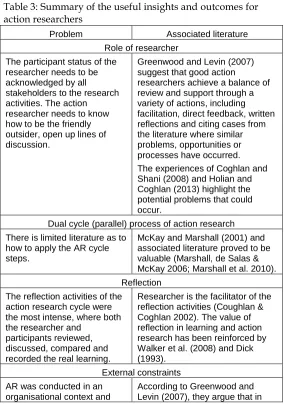
The second delimitation is related to action research. Action research is often criticised as merely being consulting rather than research and that it lacks rigour (Baskerville and Wood-Harper, 1996; Coughlan and Coghlan, 2002). To address the second delimitation, the dual cycle (parallel) process of action research proposed by McKay and Marshall (2001) was applied.
control over their situations” (Greenwood and Levin, 2007, p. 63). For each of the research projects, action research was conducted in an organisational context and was occasionally met with external constraints that impacted on the ability to resolve some of the problems being addressed. Issues with the allocation of project resources and organisational changes were experienced in all three projects. According to Greenwood and Levin (2007), they argue that in such a situation it would be harsh to conclude the action research project lacked credibility or validity if it is shown that learning had taken place in some form and that stakeholders were willing to accept and act on the collectively arrived at results.
1.7. Thesis outline
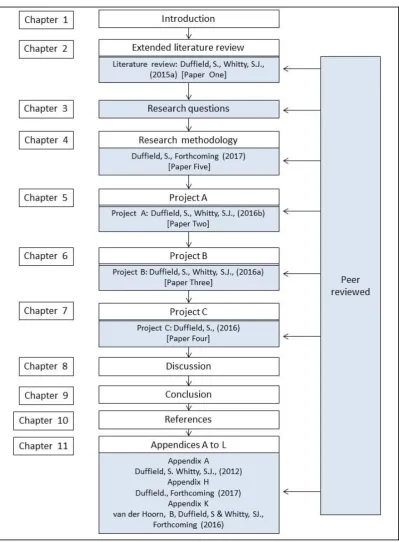
The combination of the published journal papers of this thesis (Table 1-2) addresses the primary research problems and associated research questions of the thesis. A statement of authorship and proof of publication (Appendix D) is provided for each paper. Figure 1.1 provides an outline of the thesis. The chapters are a combination of supporting discussion and papers that, at the time of writing, four papers (Papers One, Two, Three and Four) have been published in internationally recognised journals and Paper Five is under review and scheduled for publication in 2017 in an internationally recognised journal.
The thesis consists of 11 chapters:
• The current chapter is the introduction (Chapter 1).
• Chapter 2 presents the literature review supported by a published paper (Paper One). The literature review continues in Papers Two, Three and Four. Chapter 2 also presents an extended literature review ensuring an in-depth understanding of the main existing theories related to the research problem. At the end of chapter 2 is a section on the Syllk model which is also the key outcome of Paper One.
• Chapter 3 presents the thesis research questions.
• Chapter 4 presents the research methodology and the results of
managing the action research projects. Chapter 4 is supported by Paper Five, and this includes a summary discussion of the useful insights and implications for action researchers.
Chapters 5, 6, and 7 comprise the body of the thesis and support the results and discussions of published Papers Two, Three and Four (respectively). Each of the following chapters briefly describes the project background and highlights any extended literature review and supporting data contained in the associated appendix:
• Chapter 5 has a focus on the application of the Syllk model for organisational learning through projects (Paper Two, Appendix E). • Chapter 6 has a focus on the application of the Syllk model for
storytelling (Paper Three, Appendix F).
Given that the thesis consists of multiple papers focused on the application of the Syllk model, there is an unavoidable repetition of some of the
• Chapter 7 has a focus on the application of the Syllk model for an online community of practice (Paper Four, Appendix G).
Chapter 8 summarises the overall discussion of the research findings and discussion of the research questions followed by the implications for research and practice.
Chapter 9 provides the conclusions from the research and also presents the academic contribution, the significance of research and a discussion on further research.
Table 1-2 Lists of journal papers
Paper # Citation Publication details
Paper One Duffield, S., Whitty, S.J.,
(2015b). Developing a systemic lessons learned knowledge model for
organisational learning through projects. International Journal of Project Management, vol. 33, no. 2, pp. 311-324.
Published in proceedings
Peer reviewed
DOI: 10.1016/j.ijproman.2014.07.004
2013 ERA Ranking: A
2014 SCImago Journal Rank (SJR):1.508
SNIP: 2.736
Impact Factor: 2.436
Supporting Literature Review
Paper Two Duffield, S., Whitty, S.J., (2016b). Application of the Systemic Lessons Learned Knowledge model for Organisational Learning through Projects. International Journal of Project
Management, vol. 34, no. 7, pp. 1280-1293.
Published in proceedings
Peer reviewed
http://dx.doi.org/10.1016/j.ijproman.2016.07.001
2013 ERA Ranking: A
2014 SCImago Journal Rank (SJR):1.508
SNIP: 2.736
Impact Factor: 2.436
Supporting Project A
Paper Three Duffield, S., Whitty, S.J., (2016a). How to apply the Systemic Lessons Learned Knowledge model to wire an organisation for the capability of storytelling. International Journal of Project
Management, vol. 34, no. 3, pp. 429-443.
Published in proceedings
Peer reviewed
doi:10.1016/j.ijproman.2015.11.004
2013 ERA Ranking: A
2014 SCImago Journal Rank (SJR):1.508
SNIP: 2.736
Impact Factor: 2.436
Supporting Project B
Paper Four Duffield, S., (2016).
Application of the Syllk model wiring an organisation for the capability of an online Community of Practice. VINE Journal of Information and Knowledge Management Systems, vol. 46, no. 2, pp. 267-294
Published in proceedings
Peer reviewed
doi/abs/10.1108/VJIKMS-09-2015-0052
2013 ERA Ranking: B
Supporting Project C
Paper Five Duffield, S., (Forthcoming, 2017). Using Action Research in Practice: Useful Insights and Outcomes. ALAR: Action Learning and Action Research Journal, vol. 23, no. 1.
Peer review completed, revised paper with ALARj editor, scheduled for publication in Volume 23, Issue 1.
http://journal.alara.net.au/index.php/alarj http://www.alara.net.au/
2013 ERA Ranking: C
Supporting Projects, A, B & C
2. LITERATURE REVIEW
The beginning of this chapter explores the scope of the research literature review and further supplements the body of the chapter as detailed in the attached Paper One “Developing a systemic lessons learned knowledge model for
organisational learning through projects” (Duffield & Whitty 2015b). The literature review continued throughout the research program, as relevant literature is defined by the data collected in each action research cycle (Dick 1993). The literature was often used to assist with the action research problem-solving challenges. As a result, the literature review is expanded in the following chapter papers:
• Paper Two (refer to Chapter 5 - Project A): The scope of the literature review is contained to what is known about organisational learning and the Syllk model.
• Paper Three (refer to Chapter 6 - Project B): The scope of the literature review is contained to what is known about storytelling and the Syllk model. • Paper Four (refer to Chapter 7 - Project C): The scope of the literature review
is contained to what is known about CoP mechanisms and the Syllk model.
2.1. Literature review (Paper One)
The body of literature concerned with the problem as stated in Chapter 1 is broad as it embraces organisational knowledge, the ‘lessons learned mechanisms’ by which organisations can gain knowledge from past experiences, and how some organisations successfully adapt to their changing environment by inculcating learning through a conceptual model. Moreover, this literature is discussed because the organisation is a complex adaptive system, and learning is achieved by
distributing capability (know-how) across its various interconnected or networked functions. Paper One reviews the following areas with enough depth to show the limitations the literature currently has in practically addressing the research problem:
• Organisational knowledge and lessons learned
• How complex adaptive systems learn (embed capability (know-how)) • Projects are a means of adapting and therefore learning
• Some organisations already enhance their capacity to adapt and learn
• Reasons Swiss cheese Model as a concept and structure to enhance learning.
2.2. Extended literature review
2.2.1. Knowledge
“What is knowledge?” represents a question that humankind has grappled with for centuries at least back to Plato and Aristotle (Hislop 2005; O'Dell, Grayson & Essaides 1998). The current day knowledge exploration is attributed to Drucker (1993) (knowledge as management resource and power), Wiig (1997) (knowledge as a form of belief), Polanyi (1958) and Polanyi (2009) (distinction between tacit and explicit knowledge) and Davenport and Prusak (1998, p. 5):
Knowledge is a fluid mix of framed experience, values, contextual information, and expert insight that provides a framework for evaluating and incorporating new experiences and information. It originates in and is applied in the minds of
knowers. In organizations, it often becomes embedded not only in documents or repositories but also in organizational routines, processes, practices, and norms.
Tacit knowledge is subjective, environment-specific and personal. Tacit knowledge is difficult to communicate, whereas explicit or codified knowledge is objective, easily communicated and transferred without in-depth experience (Nonaka & Takeuchi 1995). Polanyi (2009, p. 4) stated “...we can know more than we can tell” and contends that human beings create knowledge by involving themselves with objects through a process Polanyi calls “indwelling”. Nonaka and Takeuchi propose that tacit knowledge consists of cognitive and technical elements. The cognitive element is based on Johnson-Lairds (1983) “mental models” (schemata, paradigms, perspectives, beliefs and viewpoints) where humans create working models of the world in their minds. The technical element is the existing capability (know-how) and skills. The cognitive elements are important as they form the mobilisation process in creating new knowledge. An understanding of people elements in the lessons learned knowledge process requires further work as Duhon and Elias (2008) reports that failure of learning valuable lessons from projects can be connected to a number of cultural, social and cognitive factors (Bresnen et al. 2003; Fernie et al. 2003; Hartmann & Dorée 2015; Holste & Fields 2010).
2.2.2. Knowledge Management (KM)
During the 1980s, individuals and organisations began to value the role of knowledge in competitive business and industrial environments. A number of reports emerged during the late 1980s in the public domain. They focussed on how to
manage knowledge explicitly (Wiig 1997). During the 1990s, various KM journals and conferences started to appear with exponential growth, and the knowledge focus started to drive the development of KM frameworks and literature (Hasan & Handzic 2003; Hislop 2005; Wiig 1997). Some of the major approaches to KM frameworks were identified by Nonaka and Takeuchi (1995) (knowledge processes), Nonaka and Kono (1998) (enablers framework), and Alavi and Leidner (2001) (six knowledge perspectives and ten knowledge areas). O’Dell et al. (1998, p. 6) from the American Productivity and Quality Center (APQC) describes KM as “...a conscious strategy of getting the right knowledge to the right people at the right time and helping people share and put information into action in ways that strive to improve organizational performance”.
Edwards et al. (2003, p. 60) further conclude that the single most important challenge to KM is “...to produce a coherent and cohesive body of theory, based on empirical evidence”.
In Australia, KM became very active early in 2001 when Standards Australia formed a technical writing committee to develop the Australian Knowledge
Management Standard. The first edition of the Standard was released in 2003 (Standards Australia 2005) and provided clear KM definitions. The Australian KM Standard (2005, p. 2) defines knowledge as “A body of understanding and skills that is constructed by people and increased through interaction with other people and with information”. Burford and Ferguson (2011) researched Australian government organisations and found that most participants had not heard of the Australian KM Standard and identified a significant gap between KM practice and the Standard. An observation of the Australian KM Standard on lessons learned is that the Standard does not reference the lessons learned process. This opens up a potential problem as the Standard differs from current PM knowledge sources.
Many avoid defining KM as there is a general feeling that a KM definition is difficult to achieve (Firestone & McElroy 2003). Firestone and McElroy identified a KM definition ‘specification gap’ and they prefer the term knowledge life cycle (KLC) as the new approach to KM, and are critical of many KM definitions by influential authors. Firestone and McElroy also conclude that publishing standards for KM is premature as most of the KM literature fails to make the distinction between KM and knowledge processing.
Across the globe, many organisations in public and private sectors are now recognising KM as being of central importance to advanced economies and organisational performance (Burr 2009; Hislop 2005). Nousala et al. (2009) report that it is difficult to implement KM process in organisations that are project-based, as setting up activities across stovepipe organisations (preventing cross-organisational communication) and profit cost centres are challenging. However, it is clear that KM in project-based organisations is critical to maintain the competitive advantage (Ajmal, Kekäle & Takala 2009; Love, Edum-Fotwe & Irani 2003; Nousala et al. 2009).
Prusak (2011) suggests that the knowledge management principles developed in the mid-1990s and early-2000s were developed with information in mind and not knowledge, and that is one of the key reasons that knowledge management efforts have run into problems. Prusak (2011, p. xii) further states that we now know different things about working with knowledge:
Knowledge is better understood as a flow. It is highly dynamic, non-linear, and difficult to measure or even manage. Working with it entails new techniques that we are still learning about. Although technology surely has its place, working with knowledge is primarily a human activity needing human organization and
understanding. Knowledge in organizations is profoundly social and best managed in groups, networks, communities, and practices.
demographics and dynamics; mobile devices and video (O'Dell & Hubert 2011). O’Dell and Hubert state that a KM program needs to include the teachable moment (when a person is most open to learning) and the management of knowledge above and in the flow of work (which is focused on making KM part of the work process).
Snowden (2002) submits that we are getting to the end of the second generation of KM (SECI model of Nonaka and Takeuchi). Snowden (2002, p. 2) further submitted that the third generation of KM “requires the clear separation of context, narrative and content management and challenges the orthodoxy of scientific management”. Wiig et al. (1997) identified the lessons learned process as a key KM practice. The KM life cycle, when applied, describes the lessons learned cycle. By understanding the KM theories we further develop our understanding of the lessons learned process around the areas of knowledge flow, people, organisation structure, and technology.
2.2.3. Knowledge Conversion
A key element of KM is the knowledge conversion process. Nonaka and Takeuchi (1995) developed four modes of knowledge conversion based on cognitive psychology known as the SECI model (socialization – tacit to tacit / externalization – tacit to explicit / combination – explicit to explicit / internalization – explicit to tacit) (Figure 2-1). Nonaka and Takeuchi (1995) also state that the knowledge
transformation is interactive and spiral-based. They further note that an organisation’s knowledge is produced in an active and continuous interaction between explicit and tacit knowledge (Figure 2-2). When consideration is given to the enabling conditions of the modes of knowledge, Nonaka and Takeuchi (1995) derived an integrated five phase model of an organisational knowledge conversion process (Figure 2-3). The difficulty of transferring tacit to explicit knowledge on projects is frequently discussed and most authors refer to the importance of the externalisation mode of the SECI model (Bresnen et al. 2003; Fernie et al. 2003; Holste & Fields 2010; Keen & Tan 2007; Nonaka 2007; Nousala, Hall & John 2007; Reich & Wee 2006).
Figure 2-1 SECI model
Figure 2-2 Spiral of organisational knowledge creation Source: (Nonaka & Takeuchi 1995, p. 73)
Bratianu (2010) concludes that the SECI model (Nonaka & Takeuchi 1995) represents the Japanese culture and organisational behavior and there are limitations in applying the model within different cultural environments. Then, considering the whole cycle, the fact that a “good part of the flowing knowledge passes several times through the spiral channels, raises the question of reusable knowledge”, which expands “the two dimensional knowledge dynamic model into a three dimensional one” (Bratianu (2010, p. 198).
Firestone and McElroy (2003) indicate that the SECI model (Nonaka & Takeuchi 1995) may be incomplete. The oversight is that the SECI model neglects to consider ‘implicit’ knowledge. Firestone and McElroy (2003) maintain that tacit knowledge is inexpressible, and there can be no conversion from tacit to explicit whereas implicit knowledge can be converted to explicit. Keen and Tan (2007, p. 4) refer to implicit knowledge as “...what we take for granted, rarely think about and are surprised to find that others do not share”. Srikantaiah et al. (2010, p. ix) refer to implicit knowledge as “...knowledge that is not captured in documentary form but in practice could be”. Polanyi (1958) makes reference to implicit knowledge, so it is interesting to note that Nonaka and Takeuchi (1995) made no provision for implicit knowledge. Wilson (2002), Keen and Tan (2007) and Srikantaiah et al. (2010) propose to include implicit knowledge as the link between explicit and tacit knowledge. Additionally, Day (2005) states that implicit and tacit knowledge are often synonymous terms, and he attempts to clear up the implications for KM. The challenge with knowledge conversion and the lessons learned process is the ability to capture and transfer/disseminate the tacit/implicit knowledge subject as the KM project management process is primarily explicit in nature.
2.2.4. Learning and Organisational Learning
This part of the literature review will focus on the learning component of the lessons learned process. Maqsood (2006), Maqsood et al. (2004) and Duhon and Elias (2008) all highlight the need to understand cognitiv