AAA AND NETWORK
AAA AND
NETWORK
SECURITY FOR
MOBILE ACCESS
RADIUS, DIAMETER, EAP, PKI
AND IP MOBILITY
Madjid Nakhjiri
Motorola Labs, USA
and
Mahsa Nakhjiri
Copyright © 2005 John Wiley & Sons Ltd, The Atrium, Southern Gate, Chichester, West Sussex PO19 8SQ, England
Telephone (+44) 1243 779777
Email (for orders and customer service enquiries): [email protected] Visit our Home Page on www.wiley.com
All Rights Reserved. No part of this publication may be reproduced, stored in a retrieval system or transmitted in any form or by any means, electronic, mechanical, photocopying, recording, scanning or otherwise, except under the terms of the Copyright, Designs and Patents Act 1988 or under the terms of a licence issued by the Copyright Licensing Agency Ltd, 90 Tottenham Court Road, London W1T 4LP, UK, without the permission in writing of the Publisher. Requests to the Publisher should be addressed to the Permissions Department, John Wiley & Sons Ltd, The Atrium, Southern Gate, Chichester, West Sussex PO19 8SQ, England, or emailed to [email protected], or faxed to (+44) 1243 770571.
This publication is designed to provide accurate and authoritative information in regard to the subject matter covered. It is sold on the understanding that the Publisher is not engaged in rendering professional services. If professional advice or other expert assistance is required, the services of a competent professional should be sought.
Other Wiley Editorial Offices
John Wiley & Sons Inc., 111 River Street, Hoboken, NJ 07030, USA
Jossey-Bass, 989 Market Street, San Francisco, CA 94103-1741, USA Wiley-VCH Verlag GmbH, Boschstr. 12, D-69469 Weinheim, Germany
John Wiley & Sons Australia Ltd, 42 McDougall Street, Milton, Queensland 4064, Australia John Wiley & Sons (Asia) Pte Ltd, 2 Clementi Loop #02-01, Jin Xing Distripark, Singapore 129809
John Wiley & Sons Canada Ltd, 22 Worcester Road, Etobicoke, Ontario, Canada M9W 1L1
Library of Congress Cataloging in Publication Data
AAA and network security for mobile access : radius, diameter, EAP, PKI, and IP mobility / Madjid Nakhjiri, Mahsa Nakhjiri.
p. cm.
Includes bibliographical references and index. ISBN 0-470-01194-7 (cloth : alk.paper)
1. Wireless Internet—Security measures. 2. Mobile computing—Security measures. I. Nakhjiri, Mahsa. II. Title
TK5103.4885.N35 2005 005.8—dc22
2005016320
British Library Cataloguing in Publication Data
A catalogue record for this book is available from the British Library ISBN-13 978-0-470-01194-2
ISBN-10 0-470-01194-7
Typeset in 10/12pt Times by Integra Software Services Pvt. Ltd, Pondicherry, India Printed and bound in Great Britain by Antony Rowe Ltd, Chippenham, Whiltshire
Contents
Foreword xv
Preface xvii
About the Author xxi
Chapter 1 The 3 “A”s: Authentication, Authorization, Accounting 1
1.1 Authentication Concepts 1
1.1.1 Client Authentication 2
1.1.2 Message Authentication 4
1.1.3 Mutual Authentication 5
1.1.4 Models for Authentication Messaging 6
1.1.4.1 Two-Party Authentication Model 6
1.1.4.2 Three-Party Authentication Model 6
1.1.5 AAA Protocols for Authentication Messaging 7
1.1.5.1 User–AAA Server 7
1.1.5.2 NAS–AAA Server Communications 7
1.1.5.3 Supplicant (User)–NAS Communications 8
1.2 Authorization 8
1.2.1 How is it Different from Authentication? 8
1.2.2 Administration Domain and Relationships
with the User 9
1.2.3 Standardization of Authorization Procedures 10
1.2.3.1 Authorization Messaging 12
1.2.3.2 Policy Framework and Authorization 12
1.3 Accounting 13
1.3.1 Accounting Management Architecture 13
1.3.1.1 Accounting Across Administrative Domains 14
1.3.2 Models for Collection of Accounting Data 15
1.3.2.1 Polling Models for Accounting 15
1.3.2.2 Event-Driven Models for Accounting 15
1.3.3 Accounting Security 17
1.3.4 Accounting Reliability 17
1.3.4.1 Interim Accounting 18
1.3.4.2 Transport Protocols 18
1.3.4.3 Fail-Over Mechanisms 18
1.3.5 Prepaid Service: Authorization and Accounting in Harmony 19
1.4 Generic AAA Architecture 19
1.5 Conclusions and Further Resources 23
1.6 References 23
Chapter 2 Authentication 25
2.1 Examples of Authentication Mechanisms 25
2.1.1 User Authentication Mechanisms 26
2.1.1.1 Basic PPP User Authentication Mechanisms 27
2.1.1.2 Shortcoming of PPP Authentication Methods 29
2.1.1.3 Extensible Authentication Protocol (EAP) as Extension to PPP 30
2.1.1.4 SIM-Based Authentication 30
2.1.2 Example of Device Authentication Mechanisms 31
2.1.2.1 Public Key Certificate-Based Authentication 32
2.1.2.2 Basics of Certificate-Based Authentication 32
2.1.3 Examples of Message Authentication Mechanisms 33
2.1.3.1 HMAC-MD5 34
2.2 Classes of Authentication Mechanisms 36
2.2.1 Generic Authentication Mechanisms 41
2.2.1.1 Extensible Authentication Protocol (EAP) 41
2.2.1.2 EAP Messaging 42
2.3 Further Resources 44
2.4 References 45
Chapter 3 Key Management Methods 47
3.1 Key Management Taxonomy 47
3.1.1 Key Management Terminology 47
3.1.2 Types of Cryptographic Algorithms 49
3.1.3 Key Management Functions 50
3.1.4 Key Establishment Methods 51
3.1.4.1 Key Transport 51
3.1.4.2 Key Agreement 52
3.1.4.3 Manual Key Establishment 53
3.2 Management of Symmetric Keys 54
3.2.1 EAP Key Management Methods 54
3.2.2 Diffie–Hellman Key Agreement for Symmetric Key Generation 58
3.2.2.1 Problems with Diffie–Hellman 60
3.2.3 Internet Key Exchange for Symmetric Key Agreement 61
3.2.4 Kerberos and Single Sign On 62
3.2.4.1 Kerberos Issues 65
3.2.5 Kerberized Internet Negotiation of Keys (KINK) 66
3.3 Management of Public Keys and PKIs 67
3.4 Further Resources 68
3.5 References 69
Chapter 4 Internet Security and Key Exchange Basics 71
4.1 Introduction: Issues with Link Layer-Only Security 71
4.2 Internet Protocol Security 73
4.2.1 Authentication Header 74
4.2.2 Encapsulating Security Payload 74
4.2.3 IPsec Modes 75
4.2.3.1 Transport Mode 76
4.2.4 Security Associations and Policies 77
4.2.5 IPsec Databases 78
4.2.6 IPsec Processing 78
4.2.6.1 Outbound Processing 78
4.2.6.2 Inbound Processing 79
4.3 Internet Key Exchange for IPsec 79
4.3.1 IKE Specifications 79
4.3.2 IKE Conversations 81
4.3.2.1 IKE Phase 1 81
4.3.2.2 IKE Phase 2 82
4.3.2.3 Round Trip Optimizations 82
4.3.3 ISAKMP: The Backstage Protocol for IKE 83
4.3.3.1 ISAKMP Message Format 83
4.3.3.2 ISAKMP Payloads in IKE Conversations 86
4.3.4 The Gory Details of IKE 86
4.3.4.1 Derivation of ISAKMP Short-Term Keys 86
4.3.4.2 IKE Authentication Alternatives 88
4.3.4.3 IKE Deployment Issues 90
4.4 Transport Layer Security 91
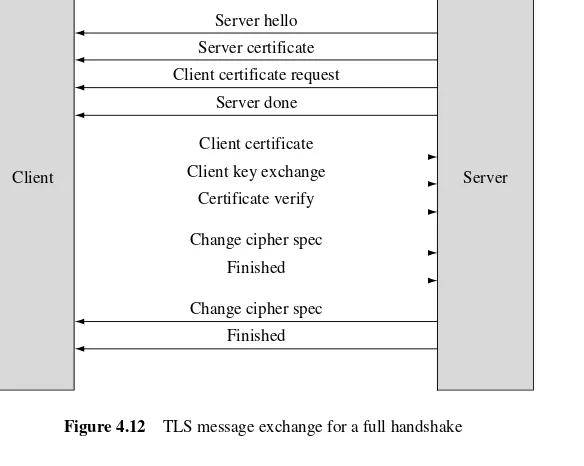
4.4.1 TLS Handshake for Key Exchange 93
4.4.2 TLS Record Protocol 95
4.4.2.1 TLS Alert Protocol 95
4.4.3 Issues with TLS 96
4.4.4 Wireless Transport Layer Security 96
4.5 Further Resources 96
4.6 References 97
Chapter 5 Introduction on Internet Mobility Protocols 99
5.1 Mobile IP 99
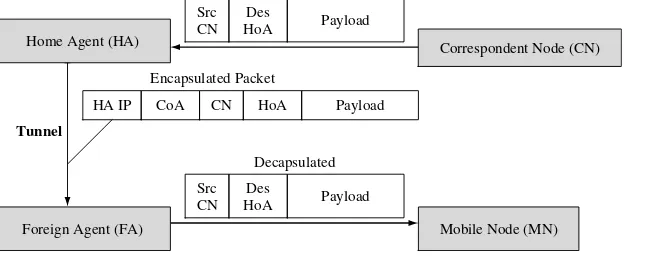
5.1.1 Mobile IP Functional Overview 102
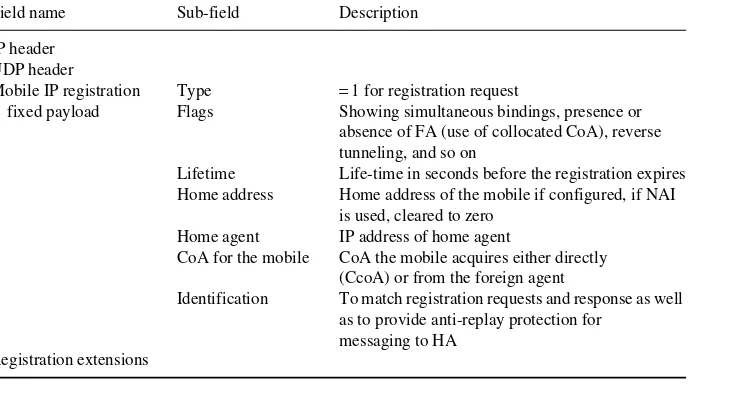
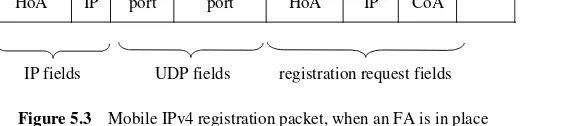
5.1.1.1 Mobile IP Registration 103
5.1.1.2 Mobile IP Reverse Tunneling 106
5.1.2 Mobile IP Messaging Security 107
5.1.2.1 Caveat: Key Establishment 109
5.2 Shortcomings of Mobile IP Base Specification 109
5.2.1 Mobile IP Bootstrapping Issues 110
5.2.1.1 Dynamic Home Address Assignment 111
5.2.1.2 Dynamic Home Agent Assignment 111
5.2.1.3 Dynamic Key Establishment 113
5.2.2 Mobile IP Handovers and Their Shortcomings 113
5.2.2.1 Layer-2 Triggers and Fast Handovers 114
5.2.2.2 Candidate Router Discovery Issues 115
5.2.2.3 Delay and Disruption Tolerance by Applications 116
5.2.2.4 Establishment of Network Services 116
5.3 Seamless Mobility Procedures 117
5.3.1 Candidate Access Router Discovery 118
5.3.2 Context Transfer 120
5.3.2.1 Design Considerations 122
5.3.2.2 Messaging Overview 124
5.4 Further Resources 125
Chapter 6 Remote Access Dial-In User Service (RADIUS) 127
6.1 RADIUS Basics 127
6.2 RADIUS Messaging 128
6.2.1 Message Format 129
6.2.2 RADIUS Extensibility 130
6.2.3 Transport Reliability for RADIUS 130
6.2.4 RADIUS and Security 131
6.2.4.1 RADIUS Message Integrity Protection 131
6.2.4.2 Attribute Hiding 132
6.2.4.3 Security Vulnerabilities of RADIUS 134
6.2.4.4 RADIUS over IPsec 135
6.3 RADIUS Operation Examples 135
6.3.1 RADIUS Support for PAP 135
6.3.2 RADIUS Support for CHAP 136
6.3.3 RADIUS Interaction with EAP 138
6.3.4 RADIUS Accounting 139
6.3.4.1 Basic Operation 139
6.3.4.2 Security and Reliability of RADIUS Accounting 140
6.4 RADIUS Support for Roaming and Mobility 141
6.4.1 RADIUS Support for Proxy Chaining 142
6.4.1.1 Roaming Concepts 142
6.4.1.2 Proxy Chaining Operation 143
6.4.1.3 Issues with Proxy Chaining 143
6.5 RADIUS Issues 143
6.6 Further Resources 144
6.6.1 Commercial RADIUS Resources 144
6.6.2 Free Open Source Material 145
6.7 References 145
Chapter 7 Diameter: Twice the RADIUS? 147
7.1 Election for the Next AAA Protocol 147
7.1.1 The Web of Diameter Specifications 148
7.1.1.1 Diameter Base Specification 148
7.1.1.2 Security Specifications 149
7.1.1.3 Diameter Transport Profile 150
7.1.1.4 Diameter NAS Application 150
7.1.2 Diameter Applications 151
7.1.3 Diameter Node Types and their Roles 152
7.2 Diameter Protocol 153
7.2.1 Diameter Messages 153
7.2.1.1 Diameter Message Format 154
7.2.1.2 Diameter Command Code (Message Types) 154
7.2.1.3 Attribute-Value Pair (AVP) Format 155
7.2.1.4 Examples of Diameter Base Specification AVPs 156
7.2.2 Diameter Transport and Routing Concepts 157
7.2.2.1 Diameter Transport Concepts 157
7.2.2.2 Diameter Routing Concepts 158
7.2.2.3 Diameter Message Routing and Forwarding 159
7.2.4 Diameter Security Requirements 160
7.2.4.1 Use of IPsec or TLS for Diameter 161
7.2.4.2 Path Authorization: Impact of Security on Authorization and Accounting 161
7.3 Details of Diameter Applications 162
7.3.1 Accounting Message Exchange Example 162
7.3.2 Diameter-Based Authentication, NASREQ 163
7.3.2.1 Commands Introduced by NASREQ 164
7.3.2.2 NASREQ AVPs 164
7.3.2.3 Diameter NAS Messaging 165
7.3.3 Diameter Mobile IP Application 167
7.3.4 Diameter EAP Support 167
7.4 Diameter Versus RADIUS: A Factor 2? 168
7.4.1 Advantages of Diameter over RADIUS 168
7.4.1.1 Fail-Over 168
7.4.1.2 Server-initiated Messages 169
7.4.1.3 Reliable Transport 169
7.4.1.4 Capability Negotiation 169
7.4.1.5 Security and Audibility Issues 169
7.4.1.6 Diameter Support for Agents and Inter-Domain
Roaming 170
7.4.1.7 Peer Discovery and Configuration 170
7.4.1.8 Backward Compatibility with RADIUS 170
7.4.2 Issues with Use of Diameter 170
7.4.3 Diameter-RADIUS Interactions (Translation Agents) 171
7.5 Further Resources 172
7.6 References 172
Chapter 8 AAA and Security for Mobile IP 175
8.1 Architecture and Trust Model 177
8.1.1 Timing Characteristics of Security Associations 178
8.1.1.1 Pre-established SAs (PSA) 178
8.1.1.2 Mobility Security Associations (MSA) 179
8.1.1.3 AAASA 179
8.1.1.4 Lifetimes 180
8.1.1.5 Security Parameter Index (SPI) 180
8.1.2 Key Delivery Mechanisms 181
8.1.3 Overview of Use of Mobile IP-AAA in Key Generation 182
8.2 Mobile IPv4 Extensions for Interaction with AAA 184
8.2.1 MN-AAA Authentication Extension 184
8.2.2 Key Generation Extensions (IETF work in progress) 186
8.2.3 Keys to Mobile IP Agents? 187
8.3 AAA Extensions for Interaction with Mobile IP 187
8.3.1 Diameter Mobile IPv4 Application 188
8.3.1.1 Diameter Model for Mobile IP Support 188
8.3.1.2 New Diameter AVPs for Mobile IP Support 190
8.3.1.3 Diameter Mobile IP Messaging Overview 193
8.3.2 Radius and Mobile IP Interaction: A CDMA2000 Example 196
8.3.2.1 Mobile IP Support Within CDMA2000 196
8.3.2.2 RADIUS Support, or Not! 197
8.4 Conclusion and Further Resources 200
8.5 References 201
Chapter 9 PKI: Public Key Infrastructure: Fundamentals and Support for
IPsec and Mobility 203
9.1 Public Key Infrastructures: Concepts and Elements 204
9.1.1 Certificates 204
9.1.2 Certificate Management Concepts 205
9.1.3 PKI Elements 209
9.1.4 PKI Management Basic Functions 210
9.1.4.1 Basic PKI Transactions 211
9.1.4.2 Enrollment and Authentication 211
9.1.5 Comparison of Existing PKI Management Protocols 212
9.1.5.1 PKCS #10 213
9.1.5.2 SSL Protection for PKCS #10 214
9.1.5.3 PKCS #7 Protection for PKCS #10 215
9.1.5.4 IETF Certificate Management Protocol (CMP) 219
9.1.5.5 Certificate Management Using CMS (CMC) 221
9.1.5.6 Simple Certificate Enrollment Protocol (SCEP) 221
9.1.6 PKI Operation Protocols 221
9.1.6.1 PKI Certificate Discovery and Validation Protocols 222
9.2 PKI for Mobility Support 222
9.2.1 Identity Management for Mobile Clients: No IP Addresses! 222
9.2.1.1 Certificate Subjects for Mobile Devices 223
9.2.1.2 Certificate Subjects for Human Users 224
9.2.2 Certification and Distribution Issues 225
9.2.2.1 Validity Checking and CRL Distribution 225
9.2.2.2 Roaming and Certification 226
9.2.2.3 Device Certificates 226
9.2.2.4 User Certificates 226
9.3 Using Certificates in IKE 227
9.3.1 Exchange of Certificates within IKE 229
9.3.1.1 Certificate Data Type Profiling for ISAKMP 229
9.3.1.2 In-Band Versus Out-of-Band Exchanges 230
9.3.1.3 Certificate Authority and Certificate Chains 230
9.3.2 Identity Management for ISAKMP: No IP Address, Please! 231
9.4 Further Resources 232
9.5 References 232
9.6 Appendix A PKCS Documents 233
Chapter 10 Latest Authentication Mechanisms, EAP Flavors 235
10.1 Introduction 235
10.1.1 EAP Transport Mechanisms 237
10.1.2 EAP over LAN (EAPOL) 237
10.1.3 EAP over AAA Protocols 238
10.2 Protocol Overview 239
10.3 EAP-XXX 242
10.3.1 EAP-TLS (TLS over EAP) 244
10.3.1.1 EAP-TLS Architecture and Message Format 244
10.3.1.2 Protocol Overview 246
10.3.2 EAP-TTLS 248
10.3.2.1 EAP-TTLS Functional Elements 250
10.3.2.2 Messaging Overview 252
10.3.2.3 Protocol Overview 253
10.3.2.4 Session Resumption: EAP-TTLS Support for Mobility 254
10.3.2.5 Example: CHAP Over EAP-TTLS 255
10.3.3 EAP-SIM 257
10.4 Use of EAP in 802 Networks 259
10.4.1 802.1X Port-Based Authentication 259
10.4.1.1 EAPOL in 802.1X and Interaction with RADIUS 260
10.4.1.2 Security Flaws of 802.1X, WPA/RSN and 802.1aa 260 10.4.2 Lightweight Extensible Authentication Protocol (LEAP) 260
10.4.3 PEAP 262
10.5 Further Resources 262
10.6 References 263
Chapter 11 AAA and Identity Management for Mobile Access: The World of
Operator Co-Existence 265
11.1 Operator Co-existence and Agreements 265
11.1.1 Implications for the User 266
11.1.2 Implications for the Operators 267
11.1.3 Bilateral Billing and Trust Agreements and AAA Issues 269
11.1.3.1 Identity Management and Security Issues 271
11.1.4 Brokered Billing and Trust Agreements 272
11.1.5 Billing and Trust Management through an Alliance 274
11.2 A Practical Example: Liberty Alliance 275
11.2.1 Building the Trust Network: Identity Federation 276
11.2.1.1 Identity Services 276
11.2.1.2 Circle of Trust 278
11.2.1.3 Building the Circle of Trust 278
11.2.2 Support for Authentication/Sign On/Sign Off 279
11.2.2.1 Enabling Protocols 281
11.2.3 Advantages and Limitations of the Liberty Alliance 282
11.3 IETF Procedures 283
11.4 Further Resources 285
11.5 References 285
Foreword
The market for mobile computers and commmunication devices continues to grow, which means that every year there are more and more of them. This is creating numerous opportunities for network providers and operators of all sorts, because many of these devices derive their usefulness from their ability to get access to the Internet. Recently, within the IETF, there has been a surge of interest in creating new protocols and protocol interfaces to better enable operators to take advantage of these opportunities. These new protocols, taken as a whole, bring about a new kind of operator operation known as “AAA services”, thus the title of the book. Madjid, one of the two authors of this book, is known to me as a regular in several IETF working groups, and his work is well represented within this book.
There is no doubt that AAA services are already of tremendous importance in today’s Internet, given that much of the access control is mediated already by RADIUS servers and associated protocols. Even so, I think that the true value of AAA services is still in the process of emerging, as we transition from laptop computing to wireless mobile communications in the future. As we begin to store more of our credentials on our wireless gadgets, and as the needs for user authentication continue to expand, it seems very natural that today’s AAA practice will adapt to the needs of the new wireless technologies. These needs include higher performance, improved roaming facilities, and interface to a multiplicity of security technologies. Already, my experience is that I have to carry around a bag of strange connectors, security cards, credit cards, and telephone numbers in order to be mobile. It seems that when traveling, leaving any of these behind is much worse than forgetting to pack a toothbrush, soap, or even shirts or socks. After all, I can usually find a place to buy those latter items.
Within the book, we can see the first glimmerings of how this new wireless mobile world will look to the user desiring to make use of local Internet connectivity. Several recent speci-fications have been finally approved and are dutifully described in this book. In particular, the ideas of seamless mobility and context transfer provide great hope for the desired user productivity and the experience of well-engineered convenience. Clearly, there is a big gap separating the barebones specification and widespread deployment. It is to fill just these gaps that books such as this one are needed. But filling known gaps is only the beginning. Once the basic hurdles are cleared, I am confident that many new applications will soon be imagined and built to use the simplified access models provided by the new AAA services.
Preface
In today’s world, where computer viruses and security threats are common themes in anything from Hollywood movies and TV advertisements to political discussions, it seems unthinkable to ignore security considerations in the design and implementation of any network. However, it is only in the past 4–5 years that talkative security experts have been invited to the design table from the start. The common thinking only 5 years ago was either: this is somebody else’s problem or let us design the major functionalities first, then bring in a cryptographer to secure it! This treatment of security as an add-on feature typically led either to design delays, overheads and extra costs when the “feature” had to be included, or to ignored security provisioning when the “feature” was not a must. The problem, of course, stemmed from the fact that security “features” have rarely been revenue-makers. As we all know, many political, social and economic events in the last half decade have forced the designers, regulators and businessmen to adjust their attitudes towards security consider-ations. People realized that although security measures are not revenue-makers, their lack is indeed a deal breaker, to say the least, or has catastrophic aftermaths, at worst.
The Internet Engineering Task Force (IETF) has also played an important role in estab-lishing the aforementioned trend by making a few bold moves. The rejection of some very high profile specifications due to the lack of proper security considerations was a message to the industry that security is not to be taken lightly. This was done in a dot.com era where the Internet and its applications seemed to have no boundaries and security provisioning seemed to be only a barrier rather than an enabler.
a base RADIUS protocol only provides authentication-based access control. A few service types are also included in the authorization signaling. RADIUS was later augmented with accounting procedures. Diameter as a newer protocol was only standardized less than 2 years ago. Both RADIUS and Diameter are still evolving at the time of writing. This evolution is to enable AAA mechanisms and protocols to provide powerful functions to manage many complicated tasks ranging from what is described above to managing resources and mobility functions based on a variety of policies. In the near future the networks need to allow the user through a variety of interfaces, devices and technologies to gain access to the network. The user will require to be mobile and yet connected. The provision of the connection may at times have to be aided by third parties. The interaction between AAA and security proce-dures with entities providing mobility and roaming capabilities is a very complicated one and is still not completely understood. Despite this complexity, there seem to be very few books on the market that discuss more than a single topic (either security, or mobility or wireless technology). The topic of AAA is largely untouched. Very little text in the way of published literature is available on AAA protocols, let alone describing the interaction of these protocols with security, mobility and key management protocols.
The idea for writing this book started from an innocent joke by the IETF operation and management area director during an IETF lunch break a few years ago. When we asked about the relations between the use of EAP for authentication and Mobile IP-AAA signaling, the answer was “Maybe you should write a book about the subject”. Even though this was considered a joke at a time, as we started to work on deploying AAA infrastructure for Mobile IP and EAP support, the need for easy-to-understand overview material was felt so strongly that the joke now sounded like black humor. We had to write a book on AAA as a community service!
The book is geared towards people who have a basic understanding of Internet Protocol (IP) and TCP/IP stack layering concepts. Except for the above, most of the other IP-related concepts are explained in the text. Thus, the book is suitable for managers, engineers, researchers and students who are interested in the topic of network security and AAA but do not possess in-depth IP routing and security knowledge. We aimed at providing an overview of IP mobility (Mobile IP) and security (IPsec) to help the reader who is not familiar with these concepts so that the rest of the material in the book can be understood. However, the reader may feel that the material quickly jumps from a simple overview of Mobile IP or IPsec to sophisticated topics such as bootstrapping for IP mobility or key exchange for IP security. Our reasoning here was that we felt that there are a number of excellently written books on the topics of Mobile IP and IPsec, to which the reader may refer, so it would not be fair to fill this book with redundant information. Instead, the book provides just enough material on those topics to quickly guide the reader into the topics that are more relevant to the rest of the material in this book. The book may also serve as a reference or introduction depending on the reader’s need and background, but it is not intended as a complete implementation reference book. The tables listing the protocol attributes are intentionally not exhaustive to avoid distractions. Most of the time, only subsets that pertain to the discussions within the related text are provided to enable the reader to understand the principles behind the design of these attributes. At the same time, references to full standards specifications are provided for readers interested in implementation of the complete feature sets.
accounting, compared to authentication, has received far less attention in the research and standards community due to its operator-specific nature. Due to the enormous amount of research done on authentication, we devote Chapter 2 entirely to authentication concepts and mechanisms and also provide a rather unique classification (from IAB) of authentication mechanisms in that chapter. We will come back to the topic of authentication and describe more sophisticated EAP-based authentications in Chapter 10, but after Chapter 2, we go through the concepts of key management in Chapter 3 to lay the groundwork for most of the security and key management discussions in Chapter 4 and the rest of the book. Chapter 4 discusses IPsec and TLS briefly, but provides a thorough discussion on IKE as an important example of a key management and security association negotiation protocol. As mentioned earlier, the aim of that chapter is not to describe IPsec or TLS thoroughly. Both these proto-cols are provided for completeness and to provide the background for the later discussion of security topics. Chapter 5 discusses mobility protocols for IP networks. It describes basic Mobile IP procedures and quickly goes through the latest complementary work in IETF, such as bootstrapping. This chapter also describes two IETF seamless mobility protocols, context transfer and candidate access router discovery, which may be required to achieve seamless handovers. This chapter also describes the security procedures for Mobile IPv4 and lays the groundwork for Mobile IP-AAA discussions in Chapter 8. Chapters 6 and 7 describe the two most important AAA protocols, namely RADIUS and Diameter and their applications for authentication and accounting. Many of the specifications that are considered work in progress in IETF are covered here.
Chapter 8 finally covers the topic discussed in the IETF joke we mentioned earlier: Mobile IP-AAA signaling to provide authentication and key management for Mobile IP signaling.
Chapter 9 goes on to provide a description of public key infrastructures (PKI) and the issues and concerns with management of PKIs, certificates and their revocation.
Chapter 10 describes the EAP authentication framework, EAP signaling transport and the structure for a generic EAP-XXX mechanism. It also provides overviews of a variety of EAP authentication methods, such as EAP-TLS, EAP-TTLS, EAP-SIM, and so on.
Finally, Chapter 11 makes a humble attempt at describing the overall problem of AAA and identity management in a multi-operator environment and discusses various architectural models to tackle the problem. This chapter also provides an overview of the Liberty Alliance.
We wish the readers a joyful read.
Acknowledgements
providing open standards and specifications, without which the material for this book would have been very hard to find. We would also like to thank the Liberty Alliance for accommo-dations they made in the process of writing Chapter 11.
About the Author
Madjid Nakhjiri is currently a researcher and network architect with Motorola Labs. He has been involved in the wireless communications industry since 1994. Over the years, Madjid has participated in the development of many cellular and public safety mission-critical projects, ranging from cellular location detection receiver design and voice modeling simulations to the design of architecture and protocols for QoS-based admission, call control, mobile VPN access and AAA procedures for emergency response networks. Madjid has been active in the standardization of mobility and security procedures in IETF, 3G and IEEE since 2000 and is a coauthor of a few IETF RFCs. Madjid has also authored many IEEE papers, chaired several IEEE conference sessions and has many patent applications in process.
AAA and Network Security for Mobile Access: Radius, Diameter, EAP, PKI and IP Mobility
Madjid Nakhjiri and Mahsa Nakhjiri © 2005 John Wiley & Sons, Ltd
1
The 3 “A”s: Authentication,
Authorization, Accounting
For the road travelers in the United States, especially the parents who take their children in the family car on the long road trips, the letters AAA stand for a peace of mind. They feel that any time their car breaks down, they can call the number for the American Automobile Association and ask for roadside assistance. Even though this book is not about that sort of AAA, the 3 “A”s that we talk about here, when designed properly, can bring the same peace of mind to the network operator and its customers. Authentication, authorization, and accounting are three important blocks used in the construction of a network architecture that helps protect the network operator and its customers from fraud, attacks, inappropriate resource management, and loss of revenue.
In this chapter, we describe each of the “A”s in the AAA first as a separate topic, and then as a piece that interacts with the other “A”s in an effort to justify why all the 3 “A”s should be treated by the same framework and servers. At the end of the chapter, we provide a model for a generic AAA architecture.
1.1 Authentication Concepts
According to the dictionary, the word “authentic” refers to something that is not false, or a fake imitation, but is worthy of acceptance as a truth or a fact. From the times of early civili-zations, where people have run 26 miles only to deliver a message and then fall over and die, to today, when information can travel across the globe in fractions of a minute with a mouse click, proof of authenticity is the first thing the receiver of a message checks.
break the seal, read the letter, start an attack or collect taxes accordingly. In the days of digital information delivery, delivering proof of authenticity is equally important but poses its own chal-lenges, as we will see.
The message delivery example above presents one type of authentication problem where authenticity of the information is important, while the identity of the messenger is not. However, in most of the cases, the identity of a person we are dealing with is an important factor in how we handle that interaction. When we go to a bank or through customs into a new country, we have to show identification to prove our identity. At first, the problem of identification does not seem to be related to the authentication. However, when one thinks about the possibility of a person lying about her identity or privileges, verification of authen-ticity of the provided identity becomes an authentication problem as well. Stating a name is typically not enough for identification, while showing a sort of identification issued by a trusted authority typically is. The acts of providing proof and verifying the authenticity of the identification presented are again the two acts of authentication.
Today, the two mentioned forms of authentications, i.e. providing information integrity and identity verification, are among the most fundamental security mechanisms required for providing access to network users and clients. In this introductory section, we provide a rela-tively short overview of various authentication concepts to allow the reader to understand the distinction between the constantly confused types of authentication. In Chapter 2, we will delve into more details of various authentication procedures.
1.1.1 Client Authentication
Client authentication means that a client wishing to gain access and connect to the network presents its identity along with a set of credentials. As proof of authencity for the presented identity. The credentials are then used by the network to verify that the identity actually belongs to the client.
We intentionally used the term client, since it can be interpreted both as a device as well as a human user, who is a consumer of a network service. For that reason, the client authentication needs to be further refined into two categories: user authentication and device authentication. Until recently, very few network security designs made a visible distinction between user authentication and device authentication. In the following we will explain the reason. Tradi-tional architectures dealing with network access control could be divided into two categories:
● Architectures accommodating users that arrive at a fixed location, such as a local area network with fixed devices, such as data terminals, already connected to an infrastructure. The user needs to use its personal credentials to log into the network through a device (terminal), which itself typically resides in a computer room and is trusted through its wired connections. A good old world college campus terminal room scenario! The student simply trusts the network set up by the campus, as long as the college is an accredited one and the terminal is not asking for credit card numbers as login credentials! In this basic scenario, the distinction between device and user authentication although very clear for a human, is not important. The device is not authenticated at all. The user credential with a central server is the main criterion for allowing network access to the user.
with a cellular service provider and purchases a cellular phone that works with operator’s network. The operator creates a set of credentials specific for the user. The cellular phone, that the user carries, is then programmed with such credentials to access the network. Many times, the user is unaware of these credentials and the actual process of authentica-tion during connecauthentica-tion establishment. The device is the entity that interacts with the network and presents the credentials needed to perform authentication. The idea is: since the user always carries the same cellular phone (as long as she is loyal to her service provider) no distinction between the user and device credentials has to be made. The downside is that if the device was lost, stolen, or even cloned, the rouge or unintended user could use the device to gain access to the network without having her real identity exposed, and this could go on until the legitimate user would report a lost or stolen phone or illegitimate entries in her monthly statement from the service provider.
With the proliferation of public local network providers, such as wireless hot spots serving passing customers, many sorts of vulnerabilities will appear at various corners of the architecture:
● The long-term customer–operator business and legal relationship no longer exists, which means the network operator and the user cannot trust each other as.
● The one-to-one mapping of user–device does not exist. Even if the operator could trust a user, the operator would not know what device the user may use every time they try to access the network. In other cases, such as in service organizations, government agencies, or police department, users that belong to a team can share their devices with each other.
Such refinements require more precise definition of the network usage and security policies that in turn means the architecture must be designed more carefully. The network operator may need to make sure that both device and user are authentic, possibly using separate proc-esses. In some cases, the device may have to even be manufactured and configured with credentials for access to the network. (For instance, cable modems for cable Internet Service Provider (ISP) networks are produced this way.) In such cases, proper protection must be in place, so that the credentials on the device can not be tampered with. The network operator also needs to make sure the user presents accurate identity and proper credentials that can identify her at the time of use, so that the various users can be distinguished even when they are using a shared device.
It should be noted that the security architecture may require both device authentication as well as user authentication in various steps of a network access process. An example would be the case of IP networks: in order to communicate to the IP network, the device needs to acquire an IP address. The IP address is not only an important resource for the network, but also allows the user to gain access to many other network services. Further-more, the IP address can be used as a backdoor to launch active or passive attacks. Hence, IP address acquisition should be tightly controlled. From a security standpoint, it means a device needs to first authenticate itself to the network before being able to gain an IP address from the network. Once the device is authenticated, has gained IP address from the network, and is registered with various agents, it allows the user to present her credentials to the network and gain access to the services to which she is entitled. The latter brings another point and that is the user credentials may be used to determine authorization levels for the users based on their pre-configured service profile. We will discuss the topic of authorization later on.
1.1.2 Message Authentication
Device or user authentications deal with ensuring that the end points of the communications are legitimate and who they claim they are. Message authentication, on the other hand, ensures and verifies the integrity of the data at hand (remember the example of sealed letter from the emperor). When message authentication is performed, the receiver of the message can be sure that the information included in the message has been produced by a legitimate source and not been altered by other parties in transit. This is why message authentication is usually considered as a data integrity protection mechanism. Unlike device or user authenti-cations that are typically performed at the beginning of a session and require their own messaging mechanism, message authentication may have to be done quite often during the session and for a variety of traffic, such as control messaging, important data packets, and sometimes even data session.
Note that the goal of data integrity protection is to prevent malicious and intended corrup-tion of data by the so-called men in the middle (MITM), trying to tamper with the message contents. This is different from the information-theoretical codes and cyclic redundancy checks designed to mitigate the random and natural data corruptions caused by physical communications media imperfections. Aside from the cause of corruption being different, calculations required for message authentication for security protection is also different from its signal processing counter parts; an attacker can always alter the data and re-calculate the information-theoretical checks to lure the receiver, while the attacker cannot re-calculate the message authentication data added to the message, since message authentication is typically performed on the basis of knowledge of a shared secret.
secrets are used, it is possible for an attacker to change the packet in flight and re-calculate a new digest and then to replace both the original packet and digest with the altered packet and the new digest. In order to prevent the MITM from running the same algorithm over an altered version of the message, the sender uses a secret when creating the hash. The secret is only known to the sender and the receiver. This process is often referred to as running a secret hash algorithm, even though the algorithm itself is usually known. Once the receiver receives the message, it runs the same hash algorithm over the same portion of the data and compares the result of its calculation with the hash provided by the sender and if there is a match, the receiver considers the data authentic, otherwise the receiver needs to discard the data.
The secret hash algorithms are examples of symmetric key authentication methods. Another method of providing message authentication is to create the so-called digital signa-tures. Digital signatures are typically based on public key cryptography. We will go through the details of these procedures in Chapters 2 and 3.
1.1.3 Mutual Authentication
We finalize the description of various authentication concepts with a short note on mutual authentication. Client authentication that was explained earlier is a unilateral authentication, where only one end of a communications channel proves that the identity it has presented to the other end is authentic. It would make sense that when establishing communications both ends authenticate to each other. However, the reason this type of unilateral authentication is so widespread is that in many cases, the client simply trusted the network. So the network does not have to prove to the client that it is also authentic. In the earlier cellular phone example, due to the large expense involved with setting up a cellular network, it would be hard to imagine that attackers will go through the trouble of setting up a whole network and its high towers simply to hijack a cellular phone subscription. For those reasons until very recently, neither the device nor the user required any authentication from the network.
With a proliferation of large number of access providers competing for customers, a user may be confronted with a number of competing networks with which she does not have any business or trust relationships. Take a mom and pop coffee shop for example: a customer entering the coffee shop does not know whether the mom and pop that own a coffee shop actually know how to operate a wireless local access network (WLAN) access point (AP) or how to protect their access points from being loaded with viruses and Trojan horses. For all a user knows, another customer may have found the WLAN AP behind the coffee grinder machine, disconnected it and simply installed another AP to re-route all the traffic in the shop to some place else, or simply passively copy traffic to a server. Imagine, if the customer was planning to do some Internet shopping while sipping coffee and was entering her credit card number at an e-commerce web site not using proper encryption methods. In this case, it makes sense for the coffee shop AP to authenticate itself to the user’s device as well. As we can see the unilateral client authentication is not sufficient and has to be upgraded to a mutual authentication where the server also authenticates to the client.
1.1.4 Models for Authentication Messaging
1.1.4.1 Two-Party Authentication Model
This model is used when the two peers interact with each other through a direct line of communication without the involvement of any middle nodes such as gateways or proxies. In such cases, the two entities directly authenticate to each other. The most prominent example is a direct client–server interaction, during which the client has to authenticate unilaterally to the server to gain access to service. However, mutual authentication can also be performed in direct two-party manner. As we will see later on, many key exchange mechanisms, such as Internet Key Exchange (IKE), require a direct two-party authenti-cation exchange.
1.1.4.2 Three-Party Authentication Model
With the increase in size of networks and number of users wishing to access the network and its services, the networks have started to deploy specific points of presence (POP), which are low-cost unsophisticated devices without large processing power or database capabilities. The POPs typically interact directly with the users, but refer to central internal servers for many tasks and decisions regarding interactions with users. One such task is authentication. The POPs are typically incapable of authentication processing. Therefore, the two-party authentication model has been expanded to include three parties:
1. The supplicant, the user trying to gain access. In case of dialup networks, the user is configured with a phone number for the ISP modem pool and is given a password. The user dials the number of the modem pool and reaches one of the modems.
2. Authenticator, at edge interacting with user. In case of dialup, the authenticator is at the modem pool. The authenticator has no authority by itself, and is like the security guard at the door of a corporate building. When a visitor, who has no badge, walks in, the guard needs to call the authorities to ask whether it should let the visitor in or not. As we will see later on, in the AAA model, this entity is called the network access server (NAS), which acts as a AAA client.
3. Authentication server, who has the real authority and the necessary information database (e.g. a list of who is authorized, user names, and passwords) to make decisions regarding granting access to the user. In the security guard analogy, this is the boss upstairs that the guard calls to and the one who makes the ultimate decision. The AAA server in the AAA model is shown in Figure 1.1.
Access link protocol
Service provider network
AAA server AAA client/
NAS User/supplicant/
end client
AAA protocol
1.1.5 AAA Protocols for Authentication Messaging
In small networks, an authentication server could be configured by the system administrator at the authenticator, so the authenticator and authentication server are co-located. However, as we mentioned earlier, in large networks or multi-domain networks, this is not practical, and many network points of presence, acting as NASs are deployed and the authentication must happen according to the three-party model. Naturally, the end-to-end authentication exchange needs to happen between the supplicant and the AAA server, but the NAS is also involved in the exchange of authentication-related messaging. Since the NAS controls communications into and out of the private network, it needs to intercept messaging between the supplicant and AAA server. Furthermore, the NAS typically acts as a protocol dividing point, since the communications to the AAA server side of the NAS typically happens over a private and typically wired and trusted part of the network, while the communications on supplicant-side of the NAS is over an untrusted and many times wireless medium. In order to provide interoperability between various network equipments, protocols for various segments of the three-party model have been standardized. The protocols for communications between the NAS and the supplicant typically depend on the type of access technology that the network provider offers and many times are at a lower layer (link layer). However, the NAS communicates with the central authentication server over standard UDP/IP or TCP/IP protocols and can use a standard protocol for carrying authentication messages on behalf of the supplicant and the server. As we will see later on, experience has shown that the authenti-cation server can be co-located with entities performing authorizations and accounting as well (a AAA server). For that reason, the protocol between NAS and the authentication server is now a AAA protocol as follows.
1.1.5.1 User–AAA Server
As mentioned earlier, there is no direct communication between user and AAA server. The most prominent AAA protocol today, RADIUS (stands for remote access dial in user service), was designed to allow a NAS forward a user’s request and its credentials to the server, and then carry the server’s response back to the user. The Access-Request, Access-Challenge message structure in RADIUS shows that it was designed to accommodate password-based authentication methods, so that NAS can forward an authentication request message from the user to the authentication server and issue eventual challenges created by the network and present to the user.
1.1.5.2 NAS–AAA Server Communications
1.1.5.3 Supplicant (User)–NAS Communications
This communication is typically over a single-hop link called access link, since it is part of an access network. The access link provides a physical channel and a link layer protocol. The physical channel only provides the coding and modulation of information bits into electrical signals. Neither the earlier phone line dialup connections nor the later cellular systems provided layer-2 services, such as packet formatting, framing, and multiple-access mechanisms, and required specific layer-2 protocols such as point-to-point protocol (described in Chapter 2) for this purpose. The new wireless access technologies such as 802.11 WLAN have their own framing mechanisms and do not need additional protocols such as PPP for carrying layer-2 level messaging. However, the main point is that as we mentioned before, the IP-level service should be established after the initial authentication and hence, the user–NAS exchange of authentication messages need to run directly over an access technology-specific layer-2 protocol.
1.2 Authorization
Authorization is defined as the act of determining whether a particular privilege can be granted to the presenter of a particular credential. The privilege can be right of access to a resource, such as a communications link, an information database, a computing machine, or many other things owned by a network or service provider. The presenter of the credential can be either a device or a user.
1.2.1 How is it Different from Authentication?
The problem of authorization and its distinctions from the problem of authentication can be easily explained with the following example. Let us assume that a person, holding a personal handheld device such as a wireless-link enabled PDA, has subscribed with a high-priced network operator. This person requests to see some movie clips on his personal device. She uses her personal device to connect to a wireless network, and based on the credentials that the network provider has given to her at the time of subscription, she can authenticate through her PDA and connect to the network. In many of the networks today, this authentication would be enough for her to access the movie clips from a server located inside the operator’s network. However, imagine if the network provider would charge different prices for different movies or download speeds. A lower paying user is allowed to download the clips at a much slower speed. The user may request a higher quality of service (QoS) by agreeing to pay a one-time premium. In this case, a mere verification of user identity would not be enough for granting the service requested by the user. The network must somehow access the user profile, consult entities controlling the amount of available bandwidth, and then make a decision on whether or not to authorize the user to access the service.
Another commercial example where authorization is important is networks that provide service to users that have purchased pre-paid cards. A cellular phone user buys a pre-paid card that is supposed to allow her to make phone calls for three hours. Every time such user requests to make a phone call, the network must check to see whether there is any credit left on the user’s card before allowing the user to connect.
military, and security applications, the consequences may be more severe. A low ranking officer should not be authorized to join a conference call held between army generals. Public safety responders may have special units dealing with specific emergencies, such as high-rise building fires. Dispatch calls or conversations within the unit need to remain private within the group, both for privacy issues and to save bandwidth. A fire fighter who is not part of a special unit should not be allowed to join the channel reserved for that special unit. In such a case, once the fire fighter and his device is authenticated to the network, the network must pursue with the act of authorization, i.e. check his profile against what is required to authorize an agent to join specific calls on specific channels.
Historically, a private enterprise owning the computer or radio networks simply authorized its employees or affiliates for use of its resource as long as they could prove their affiliation to the enterprise. The credentials for proof of affiliation were the authentication credentials that were given to the user at the time of initiation with the enterprise (as described in section 1.1 before). Once the user was authenticated, she was also authorized for service, in other words not only the authorization was equated with authentication, but also the credentials presented for authentication were also used for authorization. This model still exists in many enterprise networks: the second A (authorization) is coupled with the first A (authentication) in AAA. In commercial networks, authorization is based on acquisition of revenue, i.e. if the network provider knows it can collect payment from the user of the service, the user will be authorized for service. Here the second A is coupled with the third A (accounting). The user subscribes for a service and agrees to pay a fee for the service and the network provider agrees to provide the user with the service. However, even though we said that authorization is coupled with accounting and billing, this is only in theory (business agreement paper work). In practice, the network operator implements this agreement by giving the user the authentication credentials and again bases authorization on authentication.
Now that we have established that there is a difference between authentication and author-ization, let us discuss another extreme example from real life, where authorization is actually more important than authentication. When we want to go see a movie at a movie theatre, we will pay the cashier and buy a ticket. Let us assume we pay cash and we are adults that are not bound by the viewing rating; once we receive the ticket, that ticket alone is all that we need to go to a hall and see the movie. The ticket is the credential needed to authorize us to see the movie and hence is a perfect example of authorization credentials. The movie ticket cannot be used instead of a passport to get onto an international flight. In other words, it is completely worthless as authentication credential (to verify our identity).
The networking counterpart of the movie ticket is the pre-paid calling card that is becoming popular. The pre-paid card allows the card holder to make a phone call through a network provider’s infrastructure and the provider does not care who the user is as long as there is still credit left on the card.
1.2.2 Administration Domain and Relationships with the User
ruled by the same network policies. When a user affiliates with a private network or subscribes with a commercial network provider, it is said to belong to the administrative domain. The AAA server within the domain is said to act as the user’s home AAA server (AAAH or HAAA). The user’s information and credentials are then stored at that AAA server and the user is said to have a trust relationship (and business relationship for commercial networks) with the administrative domain and its AAA server.
In a more general case, a user may roam to a network that is not part of its home adminis-trative domain. The user may request services from this visited domain, which does not have any trust relationship with the user. In this general case, the service equipment, providing the service to the user, is part of a different administrative domain than the user’s home domain and the visited network cannot grant any services to the user unless it has some relationship with the user’s home domain. Two kinds of relationships exist between the user and the network (or between networks):
1. Contractual relationships: The user must have a contractual relationship with the service domain it is trying to connect to. The contractual relationship of the user is not with a specific network entity, but the entire domain. The authorization to obtain bandwidth or QoS is always processed on the basis of existing contractual relationship.
2. Trust relationship: The trust relationship is required for authentication or securing the communications between any two entities. In contrast to contractual relationship, the trust relationship is between the user and a specific component of the network not just with the entire domain. The trust relationship is usually instantiated in the form of a security asso-ciation, which defined a set of pre-defined security algorithms and related keys to use to provide communications security.
Note that a contractual relationship is independent of trust relationship.
1.2.3 Standardization of Authorization Procedures
One can safely say that the second “A” (authorization) of the three “A”s within “AAA” is the one to which the least attention is paid in the standards developing organizations, such as Internet Engineering Task Force (IETF). Lack of attention may be something that most middle siblings in a large family of children complain about. Authorization has received its share of hand-me-downs from its bigger sibling, authentication: as we mentioned before, most of the time authorization is performed on the basis of same credentials as those used for authentication.
and authorization and their credentials is becoming an issue, the IETF steering group (IESG) has recently urged network and AAA procedure designer within the engineering teams to start decoupling the authentication and authorization procedures through using a variety of tools such as separating authentication and authorization credentials. We have yet to see any significant progress in this area, but feel that it is important to recite the more important results of the IRTF documentations in the following.
A simplified architecture for systems implementing authorization mechanisms is shown in Figure 1.2. Upon receiving the request for a service or a resource, the service provider network first consults an authorization server that holds user profiles and can then make a determination on whether the user is authorized to use the service it has requested or not. The IETF authorization model reasonably assumes that authorization requests are only processed for authenticated users. In other words, we do not need to perform authorization in case we have not been able to successfully verify the end party’s identity with certainty. Still, it would make sense that the same server performs both authentication and authorization, even though this server may fetch authentication credentials and user profile information from different databases. As we will see later on, since an accounting server also collects user’s resource usage information, accounting is typically also performed by the same server, namely the AAA server: authentication, authorization, accounting server. The model also includes an entity that provides the actual service and is called the service equipment. The service can be something that the user considers as a service or something that provides some functionality within the network. Example of the first type of service is a music stream or a conference call, supported by an application server. In this case, the service equipment is the application server. Network functionality types of service are usually transparent to the user. For instance, a mobility agent is a service equipment that provides mobility services for the user’s traffic.
The model shown here assumes that service equipment is administered by the same service provider network as the one that the user is subscribed to. In a simple case, typically called single administrative domain case, the service equipment is also part of the home administra-tive domain and can directly interact with the home AAA server of the user. In more general cases, the service equipment and the service provider network may be different from user’s home domain.
User
Service equipment/ resource manager Service provider network
AAA server
1.2.3.1 Authorization Messaging
Authorization of the user for service is accomplished on the basis of interaction between the user, the AAA server, and the service equipment. Three major scenarios are recognized for this interaction, each of which leads to a different sequence for the order in which the oper-ations are performed:
● Agent sequence: This sequence is used for scenarios where the user contacts an entity in the AAA infrastructure first. The contact point is typically an edge entity that is also an AAA client. The user sends its service request, which can be seen as authorization request, towards the AAA server. The AAA server authorizes the user based on the information it has on the user or after consulting other entities such as a policy server or a resource manager, such as a bandwidth manager. After the authorization is successful, the AAA server sends the authorization possibly along with other configuration information to the service equipment. The service equipment prepares itself (e.g. sets up states and so on) for providing the service and possibly acknowledges to the AAA server that it has completed the configuration procedure. The AAA server replies to the user that authorization is complete and service is set up. Here, the AAA server acts as an agent for the user, and hence the sequence of events is called agent sequence.
● Pull sequence: In this scenario, the user sends the request directly to the service equip-ment. One example is, as we will see later on, when a user requests to use the services of a Mobile IP agent for support of her mobility. The service equipment forwards the request to domain’s AAA server. Note that, in case, the user belongs to a different administrative domain, this AAA server is a local AAA server that must contact the user’s home AAA server. The home AAA server evaluates the request and returns a response that eventually gets back to the service equipment. The service equipment accepts or rejects the service based on the AAA server response and notifies the user accordingly.
● Push sequence: This model is the one most similar to the movie theatre ticket. The user gets a ticket or certificate from the service provider AAA server. Anytime the user requests a service from the service equipment, the user presents the ticket to the service equipment as a way to show that it has been authorized by the AAA server to access that service.
1.2.3.2 Policy Framework and Authorization
The policy framework also defines the processes for managing and sharing the policy information with other entities in the network. We do not go into the details of the policy framework and refer the reader to the work done by the Policy Framework working group in IETF. However, it is important to know that the AAA server may need to interact with entities, that we simply call policy servers in order to make appropriate authorization decisions. This interaction must allow the AAA server to retrieve the policy and enforce it during the authorization process.
1.3 Accounting
The final “A” in “AAA” is for Accounting. Even though a majority of engineers believe the terms accounting and billing have the same meaning, accounting involves more than tracking a user’s total number of phone call minutes or data packets. A variety of applications are defined for accounting:
● Auditing: The act of verifying the correctness of an invoice submitted by a service provider, or the conformance to usage policy, security guidelines, and so on.
● Cost allocation: With the convergence of telephony and data communications, there is increasing interest in understanding the cost structure associated to each of the telephony and data portions.
● Trend analysis: Typically used in forecasting future usage for the purpose of capacity planning.
Each of the applications above may be processed at a different logic management entity. But in general, accounting is concerned with collection of information on resource consumption at all or specific parts of the network. This information is generally referred to as accounting data or accounting metrics. Typically, the network device providing services to a user collects information about user’s resource consumption according to the accounting application’s needs.
The accounting data collected by the network device is then carried by the accounting protocols over to the management entities responsible for each accounting application. As will be explained later on, each of these different accounting applications may have varying security and reliability requirements from accounting protocols; thus it is difficult to devise a single accounting protocol that meets the needs of every application. The goal of accounting management is to provide a set of tools that can be used to meet the requirements of each application. In the following sections, we go through the details of accounting management architecture.
1.3.1 Accounting Management Architecture
● Accounting metrics: The data collected by the network device and transferred to the accounting server via the accounting protocol.
● Charging: Charging derives non-monetary costs for accounting data based on service and customer-specific tariff parameters. Different cost metrics may be applied to the same accounting records.
● Accounting server: The entity that is responsible for processing the accounting data received from the network device. This processing may include summarization of fractions of accounting information (called interim accounting), elimination of duplicate data, or generation of session records. In order to reduce the volume of accounting data and the bandwidth required to accomplish the transfer, the processed accounting data can be submitted to a billing server. Such session records may be batched and compressed by the accounting server prior to submission to the billing server.
● Billing: Billing translates costs calculated by the charging into monetary units and gener-ates a final bill for the customer. Billing policies define among others the type of bill, e.g. invoice or credit card charge, the form of the bill, e.g. itemized or not, and the times for the bills, e.g. weekly, monthly.
● Billing server: The entity that handles rating and invoice generation, but may also carry out auditing, cost allocation, trend analysis, or capacity planning functions.
● Accounting proxy: The entity that acts as both a client and a server. When a request is received from a client, the proxy acts as an AAA server. When the same request needs to be forwarded to another AAA entity, the proxy acts as an AAA client.
● Local proxy: A AAA server that satisfies the definition of a proxy and exists within the same administrative domain as the network device (e.g., NAS) that issued the AAA request. Typically, a local proxy will enforce local policies prior to forwarding responses to the network devices, and are generally used to multiplex AAA message from a large number of network devices.
1.3.1.1 Accounting Across Administrative Domains
In networks with a large amount of users, large geographical footprint or in cases where users roam between networks owned by different service providers, the administration of each network can be managed by a separate accounting and billing server.
● Intra-domain accounting involves the collection of information on resource usage and it’s processing within one administrative domain. In intra-domain accounting, accounting packets and session records typically do not cross administrative boundaries.
● Inter-domain accounting involves the collection of information on resource usage within an administrative domain, for use within another administrative domain. In inter-domain accounting, accounting packets and session records will typically cross administrative boundaries.
the data need to be routed to. If the domain portion is absent or corresponds to the local domain, then the session record is treated as an intra-domain accounting event. Intra-domain accounting events are typically routed to the local billing server, while inter-domain accounting events will be routed to accounting servers operating within other administrative domains.
1.3.2 Models for Collection of Accounting Data
Several accounting data collection methods are implemented in the industry. Examples are the polling model and the event-driven model. In the following sections we provide a short description for a few of these models.
1.3.2.1 Polling Models for Accounting
In the polling model, an accounting manager will poll devices for accounting information at regular intervals. In order to ensure against loss of data, the polling interval will need to be shorter than the maximum time that accounting data can be stored on the polled device.
Without non-volatile storage, the polling model may result in loss of accounting data in case the device reboots. The polling model performs poorly in implementation of roaming applications, i.e. in scenarios where the accounting data may be collected at multiple network devices due to user’s roaming. For example, if a roaming user is receiving services in a network other than its home domain, to allow issuance of a single bill to the customer, the foreign domain needs to have roaming agreement with the user’s home domain and send the accounting data collected for the user to the user’s home domain for processing. In order to retrieve accounting data for the user within a given domain, the accounting manager would need to periodically poll all devices in all domains, which would add a processing delay to the billing process, not to mention the routing problems that can arise.
1.3.2.2 Event-Driven Models for Accounting
In an event-driven model, a device will contact the accounting server when it is ready to transfer accounting data. Most event-driven accounting systems, such as RADIUS-based
Network device
Inter-domain accounting protocol
Domain A billing server
Domain A accounting
server Accounting
protocol
Intra-domain transfer protocol
Domain B accounting
server
Domain B billing server