R E S E A R C H A R T I C L E
Open Access
Supporting carers of stroke survivors to
reduce carer burden: development of the
Preparing is Caring intervention using
Intervention Mapping
Jessica F. Hall
1,2*, Thomas F. Crocker
1,2, David J. Clarke
1,2and Anne Forster
1,2Abstract
Background:Burden is well documented among carers of stroke survivors, yet current evidence is insufficient to determine if any strategies reduce this negative outcome. Existing interventions for carers of stroke survivors typically involve supporting carers according to their individual needs through face-to-face interactions and provision of information including workbooks or educational guides. To date, no interventions have been
developed using a method which systematically incorporates evidence, behaviour change theories, and stakeholder involvement to change the behaviours of carers and relevant individuals who support carers. This study aimed to develop a programme plan for a theory and evidence-based intervention to reduce burden in carers of stroke survivors.
Methods:Informed by evidence from two systematic reviews and 33 qualitative interviews, the first four stages of Intervention Mapping were used to guide the intervention development process: 1) needs assessment; 2)
identifying outcomes and objectives; 3) selecting theoretical methods and practical applications; and 4) creating a programme plan. Structured and facilitated involvement from stakeholders, including carers, researchers, and professionals from health and community services was integral to the intervention development process.
Stakeholders helped to prioritise the focus of the intervention, develop the goals, outcomes and objectives for the programme, and generate and refine intervention ideas.
Results:Stakeholders prioritised the need for carers to feel prepared before and during the transition from hospital to home as key to reducing burden. The proposed intervention‘Preparing is Caring’targets this need and involves providing and signposting carers to relevant information and support for practical and emotional needs. This is to be delivered before, during, and immediately after the stroke survivor’s transition from hospital to home by a person taking on a single point of contact role. It is comprised of multiple theory-based components including: training packages for information and support providers working with carers and wider staff teams, plus elements to support carers to feel prepared.
Conclusions:We have developed a comprehensive programme plan for a multiple-component, theory and evidence informed behaviour change intervention aimed at preparing carers before and during the transition from hospital to home. Future work is required to refine, implement and evaluate the Preparing is Caring intervention.
Keywords:Carer, Stroke, Burden, Intervention Mapping, Behaviour change, Intervention development, Carer needs, Qualitative, Systematic reviews
© The Author(s). 2019Open AccessThis article is distributed under the terms of the Creative Commons Attribution 4.0 International License (http://creativecommons.org/licenses/by/4.0/), which permits unrestricted use, distribution, and reproduction in any medium, provided you give appropriate credit to the original author(s) and the source, provide a link to the Creative Commons license, and indicate if changes were made. The Creative Commons Public Domain Dedication waiver (http://creativecommons.org/publicdomain/zero/1.0/) applies to the data made available in this article, unless otherwise stated.
* Correspondence:[email protected];[email protected] 1Academic Unit of Elderly Care and Rehabilitation, Bradford Teaching
Hospitals NHS Foundation Trust, Bradford, UK
2Academic Unit of Elderly Care and Rehabilitation, Leeds Institute of Health
Background
Stroke remains a major illness, occurring more than 100,000 times a year in the UK [1] . Four out of 10 stroke survivors in the UK leave hospital requiring informal, non-professional care from relatives and friends [1]. These relatives and friends providing unpaid care are referred to as carers throughout this paper. Carers are most commonly female spouses [2] however, it is not uncommon for male spouses, parents and children to undertake the caring role [1].
The caring role typically involves assistance with daily activities, including physical care, and provision of emo-tional support [3,4]. Providing care for stroke survivors is particularly demanding, due to the lack of preparation for managing the unexpected and often complex nature of the stroke sequelae [5,6]. Consequences of caring include health, emotional and social difficulties [7, 8] as well as disrupted relationships, changes in roles, loss of autonomy and independence [9,10]. There are also financial implica-tions of caring, considering many carers struggle to re-main in work [11]; the estimated loss of earnings per year per carer is over £11,000, amounting to an annual loss of £5.3 billion to the UK economy [12]. This is inefficient from an economic perspective and leaves carers at risk of experiencing poverty and exclusion [13].
Unsurprisingly, the burden of caring has become a sig-nificant health concern [14, 15]. Burden is a term com-monly utilised in the healthcare literature since the early 1960s, however there is no single, agreed definition. As it takes in to account the multifaceted nature of burden and its associated factors, the following definition was adopted for this research:‘the physical, psychological, emotional, so-cial, and financial stresses that individuals experience due to providing care’(George and Gwyther, 1986, pg. 253).
Studies have indicated 25–46% of carers experience substantial burden within the first 6 months of caring after stroke [16, 17]. Severity of burden experienced by carers in this early period is associated with numerous factors including carer and stroke survivor characteris-tics. Examples include greater stroke survivor disability; emotional difficulties among stroke survivors and carers, including feelings of stress, anxiety and depression; and increased time spent caring [15,18]. Prolonged tiredness and deprivation of personal needs may lead to increased burden for some carers [19, 20]. Developing strategies that effectively address all these aspects of burden in carers of stroke survivors remains challenging.
A Cochrane review of non-pharmacological interven-tions for carers of stroke-survivors found insufficient evi-dence to conclude that the identified types of intervention (support and information, teaching procedural knowledge, psycho-educational) reduce negative outcomes such as carer burden [21]. The London Stroke Carer Training Course (LSCTC), a structured in-patient carer training programme, was identified as the intervention with the
most potential [22]. However, a multicentre cluster rando-mised pragmatic trial of the LSCTC (n= 928) reported that this training programme did not reduce carer burden or increase patients’functional independence [23]. A par-allel process evaluation reported the training programme was difficult to deliver at this point in the stroke care path-way, as it competed with other priorities for stroke unit staff, and carers were experiencing stress related to their relative’s stroke [24]. A systematic review of trials pub-lished since the review by Legg et al. [21] highlighted that there is insufficient evidence to conclude that any existing intervention reduces negative outcomes in carers of stroke survivors [25].
Many existing carer support interventions involve sup-porting carers according to their individual needs through face to face interactions and provision of supplementary in-formation including workbooks or educational guides. Ex-amples include the Stroke Association Family support [26]; the Discharge Preparation Programme (DPP) [27] and the Timing it Right Stroke Family Support Programme (TIRSFSP) [28]. However, in addition to finding no clear evidence of effectiveness, the review highlighted that many interventions have been developed without theory and evi-dence based understanding of a problem before formulat-ing a solution. Where theory has been incorporated, descriptions of how theoretical components relate to inter-vention components are often inadequate [25].
Furthermore, no existing interventions have been devel-oped using an approach which guides the selection of existing theory and evidence to focus on changing the be-haviour of professionals who support carers to reduce negative outcomes in carers of stroke survivors in the transition from hospital to home. As we report later, it is likely that the behaviours of carers and professionals need to change to reduce negative outcomes among carers.
Using an Intervention Mapping approach [29] to de-velop a multi-component intervention, incorporating theoretical methods and practical applications to target the behaviours of both carers and professionals could potentially reduce and manage carer burden. In this paper we describe how this approach was applied as part of a doctoral study to develop a detailed programme plan for an intervention designed to reduce burden by ensuring carers of stroke survivors are more prepared before and during the transition from hospital to home.
Methods
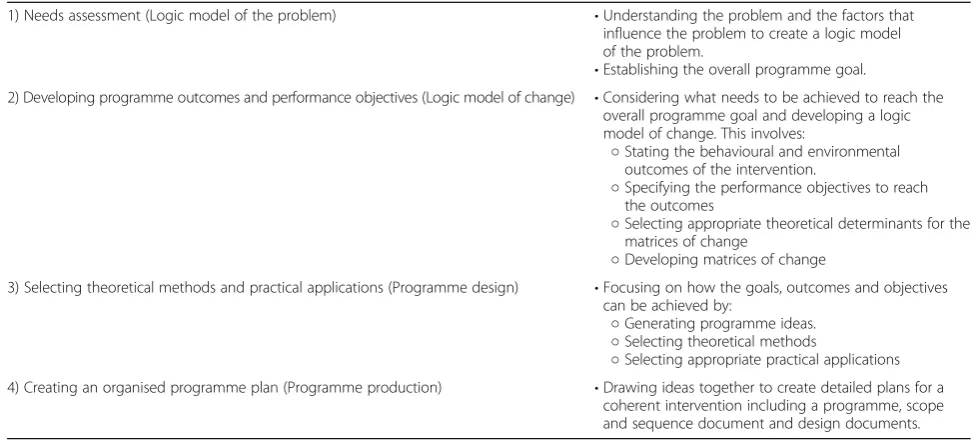
In this study, stages one to four of Intervention Mapping [29]1 (Table 2) were used to develop the intervention. Stages five and six (implementation and evaluation) will be incorporated in a future research project.
Intervention Mapping was chosen because it is a well-established framework for developing interven-tions which fulfils Medical Research Council (MRC) recommendations for developing complex interven-tions [31]. It provides structure for integrating theor-ies and evidence and encourages clear documentation of the causal assumptions on which the intervention is based. Underpinned by the socioecological model [32], the approach also acknowledges that human be-haviours and interventions to address bebe-haviours are part of a complex system that can be influenced by factors at multiple levels [33]. Use of Intervention Mapping ensures the behaviours of individuals beyond carers such as family, friends, professionals, and ser-vice providers are considered in the management of carer burden. These factors, together with involve-ment from stakeholders provided the potential to ad-dress the complexities attached to caring, and helped
to ensure that an intervention to reduce burden is grounded in the experiences and needs of carers.
Stakeholder involvement
In this study, a stakeholder group was formed as an integral part of the intervention development process. Six carers were recruited in total. Five carers were approached at a local carers group; four agreed to participate, and one declined due to ill health. Twenty invitations were sent to potential carers via stroke survivors through a research register stored at the Academic Unit of Elderly Care and Rehabilitation (AUECR), Bradford Teaching Hospitals NHS Founda-tion Trust. Two carers identified from this register agreed to participate. A range of professionals from health and social care services and researchers were also approached and invited to participate. Three health professionals working in NHS settings, and three researchers working at the AUECR were known to the research team. They were therefore approached based on their knowledge and experience in support-ing carers in the acute phase of care. Two profes-sionals from carers’ support services were selected and approached via their organisations to gain a dif-fering perspective on supporting carers at difdif-fering phases in the care trajectory. Table 3 provides further details about their roles and relevant experience.
Figure 1 provides an overview of the process and timelines, including when stakeholders were involved in the Intervention Mapping process, and the three components of work that contributed to the needs
1
This doctoral research was conducted using the third and most current edition of the guidance available when the research
commenced in 2014 [29]. During the intervention development
[image:3.595.57.541.97.345.2]process, a fourth edition of the guidance was introduced by Bartholomew Elderedge et al. [30]. The research continued based on the third edition; however the authors were mindful of any new material in the recent edition which could have a substantial impact on the research and content of this manuscript.
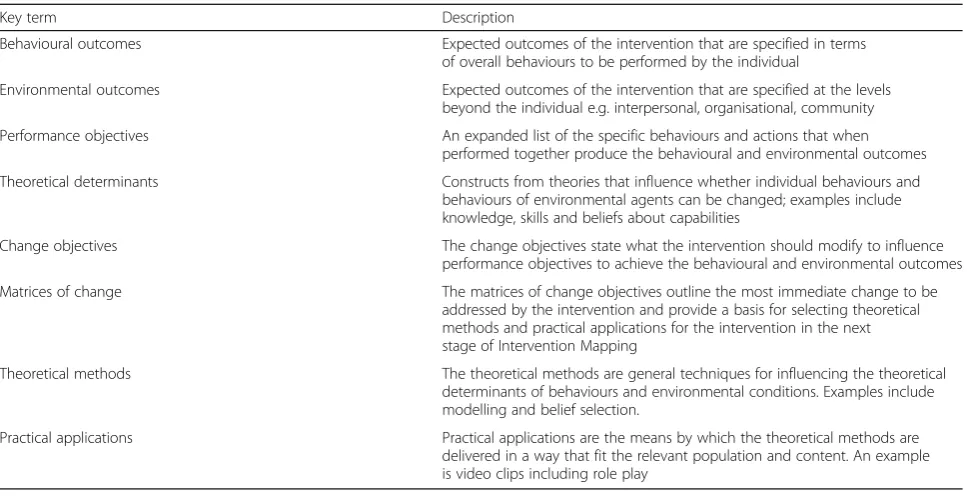
Table 1Key Intervention Mapping terms
Key term Description
Behavioural outcomes Expected outcomes of the intervention that are specified in terms
of overall behaviours to be performed by the individual
Environmental outcomes Expected outcomes of the intervention that are specified at the levels beyond the individual e.g. interpersonal, organisational, community
Performance objectives An expanded list of the specific behaviours and actions that when performed together produce the behavioural and environmental outcomes
Theoretical determinants Constructs from theories that influence whether individual behaviours and behaviours of environmental agents can be changed; examples include knowledge, skills and beliefs about capabilities
Change objectives The change objectives state what the intervention should modify to influence
performance objectives to achieve the behavioural and environmental outcomes
Matrices of change The matrices of change objectives outline the most immediate change to be
addressed by the intervention and provide a basis for selecting theoretical methods and practical applications for the intervention in the next stage of Intervention Mapping
Theoretical methods The theoretical methods are general techniques for influencing the theoretical determinants of behaviours and environmental conditions. Examples include modelling and belief selection.
assessment (stage 1). These components outlined in the sections that follow.
The lead author convened and led five stakeholder meetings over a 9 month period. In all meetings, stakeholders were split into smaller groups to complete tasks and provided feedback to the wider group. Interactions in small groups and feedback were audio-recorded and documented on worksheets spe-cifically designed for each task. In meetings with the stakeholders, use of technical terminology associated with Intervention Mapping such as determinants, matrices, and performance objectives was avoided. However, using carefully designed stakeholder mate-rials meant stakeholders contributed to key decisions and their ideas could be integrated into the develop-ment work carried out away from the groups. Devel-opment work was facilitated by ad-hoc meetings aside
from the groups with other researchers with expertise in developing interventions using behaviour change approaches.
The following sections provide a summary of how the first four stages of the Intervention Mapping process were applied to the problem of carer burden, resulting in a detailed programme plan for the intervention.
Stage 1: needs assessment: logic model of the problem
The process began with an in-depth needs assessment to understand more about the problem, carer burden. This involved two key steps:
Gathering the evidence and developing the logic model of the problem (referred to in this study as the logic model of burden)
Establishing intervention priorities and developing the programme goal
Both are discussed in more detail in the sub-sections that follow.
Gathering the evidence and developing the logic model of burden
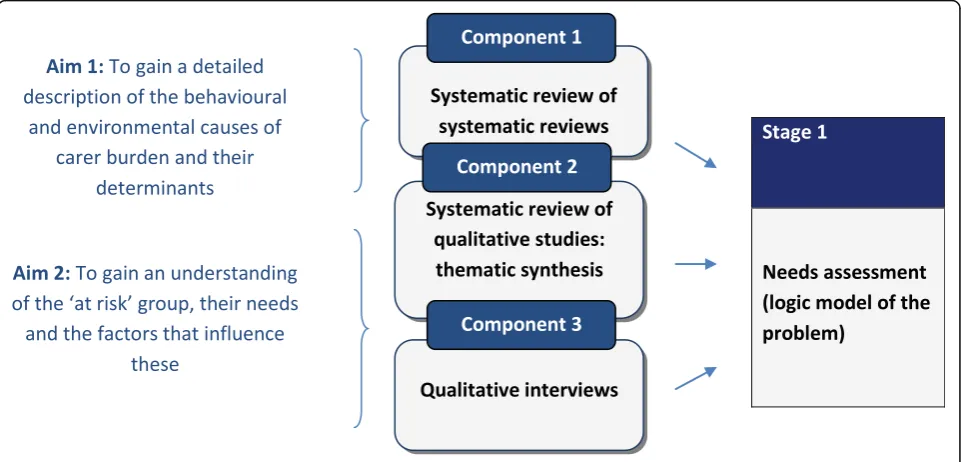
[image:4.595.53.542.98.320.2]Evidence for informing a logic model of burden was gathered in three components of work contributing to the needs assessment that sought to address two main aims [29] outlined in Fig. 2. The components are sum-marised in this section with attention to how these in-formed the logic model of burden (Additional file1with supporting key in Additional file2).
Table 2Intervention Mapping stages 1–4 based on Bartholomew et al. [19]
1) Needs assessment (Logic model of the problem) •Understanding the problem and the factors that influence the problem to create a logic model of the problem.
•Establishing the overall programme goal.
2) Developing programme outcomes and performance objectives (Logic model of change) •Considering what needs to be achieved to reach the overall programme goal and developing a logic model of change. This involves:
○Stating the behavioural and environmental outcomes of the intervention.
○Specifying the performance objectives to reach the outcomes
○Selecting appropriate theoretical determinants for the matrices of change
○Developing matrices of change
3) Selecting theoretical methods and practical applications (Programme design) •Focusing on how the goals, outcomes and objectives can be achieved by:
○Generating programme ideas.
○Selecting theoretical methods
○Selecting appropriate practical applications 4) Creating an organised programme plan (Programme production) •Drawing ideas together to create detailed plans for a
coherent intervention including a programme, scope and sequence document and design documents.
Table 3Stakeholders included in the Intervention Mapping process
Stakeholders
•Six carers, all female and providing care for between 1 and 10 years (four attended all groups, two withdrew due to personal circumstances after two groups)
•A PhD student and two senior researchers with experiences of developing interventions for stroke survivors or carers using behaviour change frameworks and models including Intervention Mapping and the Behaviour Change Wheel
•Three National Health Service health professionals including a therapy co-ordinator, physiotherapist and a stroke nurse specialist
[image:4.595.57.291.589.729.2]Component 1: systematic review of systematic reviews
A systematic review of reviews was conducted using a com-prehensive search strategy in seven databases between 2010 and 2015, to establish the factors that influence burden in carers of stroke survivors and other longer- term conditions.
More specifically, this sought to identify the behavioural and environmental conditions associated with carer burden and their determinants, together with carer and patient charac-teristics that influence carer burden. These factors were organised into the logic model of burden.
Fig. 1An overview of how stakeholders were involved in the Intervention Mapping process
[image:5.595.58.541.88.358.2] [image:5.595.58.539.486.717.2]This work informed the decision to review existing evidence and conduct further qualitative research which addressed the second needs assessment aim and continued to inform the logic model of burden; adding to the behavioural and environmental factors and their determinants, necessary for intervention development.
Component 2: systematic review of qualitative studies: thematic synthesis
The second component was an update of a systematic review [5]. A comprehensive search strategy was used to identify studies from eight databases between 2005 and 2015. The review sought to establish carers’needs, how they change over time, and the barriers and facilitators to addressing needs. Barriers and facilitators were identi-fied in accordance with different levels of the socio-ecological model [32].
Findings from the thematic synthesis built upon the evidence presented in the systematic review of system-atic reviews (component 1), added to the logic model of burden and provided a more in-depth understanding of the caring experience in carers of stroke survivors. More specifically, the identified needs provided a contextual understanding of experience and a potential basis for prioritising the intervention focus in later stages of Inter-vention Mapping. In the third component there was more focus on how needs and the barriers and facilita-tors to addressing needs changed over time.
Component 3: qualitative semi-structured interview study
A thematic analysis of 33 semi-structured interviews in two groups of carers was conducted by the first author to extend the review evidence by adding to understandings about how needs, barriers and facilitators change over time. In group one, carers were recruited in inpatient stroke units (acute and rehabilitation) in a local teaching hospitals trust; they took part in three semi-structured interviews. The first inter-views took place within the first 4 weeks after the stroke sur-vivors’ discharge from hospital (topic guide available in Additional file3), the second and third were each separated by 3 months (topic guide available in Additional file4). In group two, carers who had been providing care between nine and 36 months were recruited via an established re-search register and a local carers group. They took part in a single interview (Additional file3). In both groups of carers, written consent was obtained prior to conducting the interviews.
Behavioural and environmental barriers identified in this empirical study informed the overall logic model of bur-den. The facilitators provided more potential solutions to be considered later in the intervention development. The logic model of burden presents a range of behavioural and environmental factors, and their determinants that could
lead to carer burden, related to numerous and varied carer needs (Additional file1).
Establishing intervention priorities and developing the programme goal
The next step involved establishing intervention prior-ities. Bartholomew et al. [29] specified that this should be achieved by identifying groups at greater risk of the health problem, or considering the magnitude between
‘what is and what could be’ ( [19], p., 226). This and more recent guidance [30] is abstract and provides little indication for how to do this, particularly with involve-ment from stakeholders.
The intervention focus was prioritised through a series of tasks involving stakeholders. The first task was designed to elicit stakeholders’ thoughts on carer burden. Stake-holders were presented with a mind-map of factors that contribute to burden in carers of stroke survivors and other longer-term conditions, based on the systematic re-view of systematic rere-views evidence (component 1). They were asked to provide feedback to establish whether these findings accorded with their own experiences.
Stakeholders were then asked to prioritise carer needs based on their importance for reducing carer burden. They were presented with 11 cards, each including a dif-ferent‘carer need’based on evidence from the thematic synthesis and qualitative interviews (components 2 and 3). Through discussions in small groups and as a whole, the stakeholders prioritised one need: ‘Carers need to feel prepared before, and during, the transition from hospital to home’.
To re-build the logic model of burden so that it was more specific to the prioritised need, rather than burden as a whole, it was important to understand more about this unaddressed need from a problem perspective. This was achieved through providing stakeholders with two further tasks. Firstly, stakeholders were asked to discuss specific examples of being or feeling unprepared before and during the transition from hospital to home. Secondly they discussed and wrote down the factors that resulted in being and feeling unprepared before and during the tran-sition from hospital to home. The outputs of these tasks informed the logic model of the prioritised problem and the overall programme goal:‘Ensuring carers feel and are prepared, before, during, and following the transition from hospital to home’(Additional file5with supporting key in Additional file2).
Stage 2: developing programme outcomes and performance objectives (logic model of change)
the problem [34]. Four steps were included in developing the logic model of change. Firstly, behavioural and environmen-tal outcomes were established; secondly, performance objec-tives were created for each outcome; thirdly, appropriate theoretical determinants were selected for the matrices of change; lastly, the matrices of change were developed which included numerous change objectives (refer to Table 1 for definitions of these key terms).
Establishing behavioural and environmental outcomes
The programme goal and the logic model of the priori-tised problem guided the development of behavioural and environmental outcomes that were informed by relevant levels of the socioecological model [32] e.g. indi-vidual, interpersonal, organisational.
Developing performance objectives
Performance objectives were generated based input from stakeholders and other evidence. Stakeholders were asked to record on a worksheet what different individ-uals and services (e.g. carers, professionals, family, friends, and peers) could do to reach the programme goal and outcomes. The worksheet provided a frame-work of responses informed by the socio-ecological model [32]. Other evidence included:
Behavioural and environmental factors included in the logic model of the prioritised problem
Facilitators that were identified in components two and three and previous similar work focused on developing longer-term support stroke survivors and their carers (LoTS2Care) [35]
Theories of information seeking [36,37] identified through rapid scoping of the literature.
The performance objectives contributed to the matri-ces of change created during this stage.
Selecting theoretical determinants
To create the matrices of change objectives, theoretical determinants from the logic model of the problem (in this case the prioritised problem) are mapped against the performance objectives. The determinants in the logic model of the prioritised problem were largely a-theoretical. They were either based on discussions with stakeholders, or findings from studies where theories were not applied to understand carers’experiences. They did not map directly onto a single, unifying behaviour change theory but many determinants mapped on to the 14 domains in the Theoretical Domains Framework (TDF) [38], hence this framework was chosen.
Developing matrices of change objectives
Matrices of change objectives were created for each be-havioural and environmental outcome. Each change ob-jective states the most immediate change to be made by the intervention to achieve performance objectives and behavioural and environmental outcomes. They provide a basis for selecting theoretical methods and practical applications for the intervention in the next stage of Intervention Mapping.
Developing the logic model of change
The results of this stage were captured in the logic model of change (Additional file 6) which includes the programme goal, behavioural and environmental out-comes, performance objectives, determinants of behav-iours, and change objectives.
Stage 3: selecting theoretical methods and practical applications (programme design)
Stage three of the Intervention Mapping process involves two key steps: Generating programme ideas, then select-ing theoretical methods and appropriate practical applications.
Stakeholders helped to generate programme ideas through their involvement in two tasks. Prior to en-gaging in the tasks, stakeholders were presented with a flow diagram (Fig.3) to update them on the project pro-gress in a manageable, understandable way since their last contributions to the performance objectives. The diagram included six steps based on consolidated per-formance objectives, which outlined the behaviours that must be carried out by different individuals (carers and professionals) to achieve the overall goal.
In the first task stakeholders were asked a series of questions related to the contextual factors of the behav-iour change intervention (e.g. where, how, who, what and when). In the next task, stakeholders were asked to note ideas on another worksheet about the design and content, delivery preferences, and resources and mate-rials. These tasks provided a structured approach to gen-erating intervention ideas without constraining their creativity. The theoretical methods underpinning the re-quired change i.e. the ‘active ingredients’ were yet to be established, hence the importance of the next steps.
Fig. 3Flow diagram based on consolidated performance objectives which outlines the behaviours carried out by different individuals (carers and professionals) to achieve the programme goal
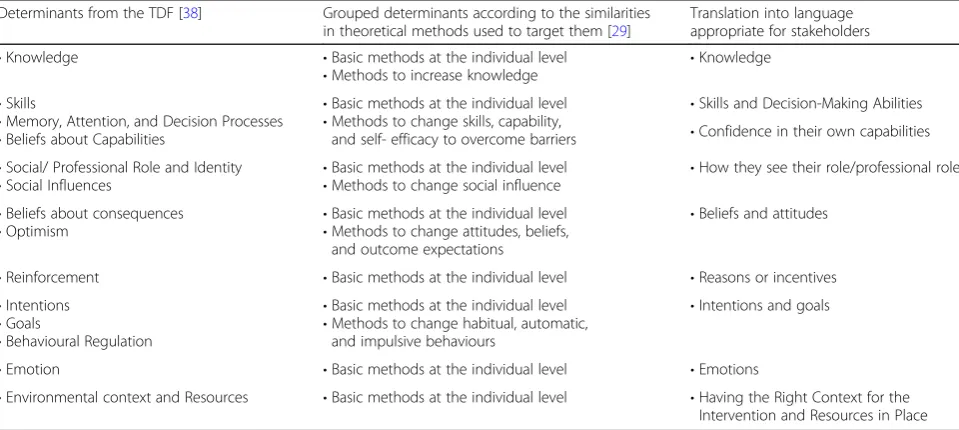
Table 4Theoretical determinants and theoretical methods
Determinants from the TDF [38] Grouped determinants according to the similarities in theoretical methods used to target them [29]
Translation into language appropriate for stakeholders
•Knowledge •Basic methods at the individual level
•Methods to increase knowledge
•Knowledge
•Skills
•Memory, Attention, and Decision Processes •Beliefs about Capabilities
•Basic methods at the individual level •Methods to change skills, capability,
and self- efficacy to overcome barriers
•Skills and Decision-Making Abilities •Confidence in their own capabilities
•Social/ Professional Role and Identity
•Social Influences •
Basic methods at the individual level
•Methods to change social influence •
How they see their role/professional role
•Beliefs about consequences •Optimism
•Basic methods at the individual level •Methods to change attitudes, beliefs,
and outcome expectations
•Beliefs and attitudes
•Reinforcement •Basic methods at the individual level •Reasons or incentives
•Intentions •Goals
•Behavioural Regulation
•Basic methods at the individual level •Methods to change habitual, automatic,
and impulsive behaviours
•Intentions and goals
•Emotion •Basic methods at the individual level •Emotions
[image:8.595.58.538.516.731.2]Then a further condensed grouping of determinants was created in a language that would be appropriate for dis-cussion with stakeholders (column 3).
Stakeholders were presented with cards outlining the determinants in column 3 and discussed which could potentially be targeted in the intervention. Their feed-back in addition to evidence from theories and the logic model of the prioritised problem was considered when choosing which domains of the TDF would be selected to map the theoretical methods and practical applications.
To document the theoretical methods and practical ap-plications, a series of seven tables (one for each group of determinants) were created. Based on relevant guidance [39], each table included columns for the determinants, change objectives, theoretical methods, parameters, prac-tical applications and how population, context and param-eters were considered throughout all these decisions.
This part of the process was adapted to make it more manageable. Instead of listing every change objective from the matrices of change, these were consolidated using the flow diagram as a structure for these tables (Fig. 3). In each table, change objectives were listed under the relevant step in the flow diagram (based on consolidated performance objectives) and theoretical methods were matched to each change objective. By considering the parameters, the conditions under which methods are shown to be effective were kept in mind during the translation from methods to applications through to overall programme ideas.
Stage 4: creating an organised programme plan (programme production)
Having selected the theoretical methods and practical ap-plications, and gained feedback from stakeholders a programme plan of the intervention was produced. This included a document outlining the scope and sequence of the intervention, and design documents which provided a detailed outline of the proposed intervention components.
Results
This section focuses on outputs from stages one to four of the Intervention Mapping process that were described within the methods section.
Stage 1: needs assessment: logic model of the problem Evidence and the logic model of burden
This section provides the results from the three compo-nents of work that informed the logic model of burden and shaped the overall programme goal.
Component 1: systematic review of systematic reviews
Fourteen systematic reviews (n= 612 studies, some of which were included in more than one review) were identified from seven databases and included in the
review. A range of behavioural and environmental condi-tions and their determinants, and patient and carer char-acteristics were identified. Findings suggested that interventions may need to target both behavioural and environmental factors, because carers’ experiences are influenced by their own behaviours and the external en-vironment, including the behaviours of others respon-sible for the provision of support.
The determinants of behavioural and environmental factors also had implications for intervention develop-ment. Carers’perceptions and degree of satisfaction with support influence carer burden, suggesting the import-ance of ensuring support meets their needs. Evidence for different coping types that reduce burden was mixed and based on carers of people with dementia. However, this suggested the possibility of carers protecting them-selves from experiencing burden by developing coping strategies, if encouraged with the appropriate support.
All of the identified behavioural and environmental conditions associated with carer burden, and their deter-minants, together with carer and patient characteristics that influence carer burden were organised into the logic model of burden (Additional file1).
Component 2: systematic review of qualitative studies: thematic synthesis
Forty eight studies published since the original review were identified from eight databases and included in a thematic synthesis where nine descriptive themes and nine analytical themes were identified. Findings indi-cated that carers have varied needs relating to different aspects of care, confirming experiences and needs re-ported in previous reviews [5,40,41].
The review outlined barriers and facilitators at different levels of the socio-ecological model [32] that were instru-mental in how carers addressed different needs. The review findings suggested a tailored intervention, targeting mul-tiple levels of the socio-ecological model could be appropri-ate for addressing carers’ needs; in addition to gaining a balance between promoting a proactive carer and ensuring that appropriate support and information is available.
Component 3: qualitative semi-structured interview study
Twenty carers took part in 33 interviews across the two groups. In group one the number of identified needs differed with time (time 1 = 9, time 2 = 8, and time 3 = 6). In group two, nine needs were identified, all of which related to differ-ent aspects of caring. Findings from group one provided a nuanced understanding of how needs change over time in the same group of carers, highlighting when some needs should be addressed. Group two findings provided insight into how needs and the barriers and facilitators to address-ing needs compare in the later care experience.
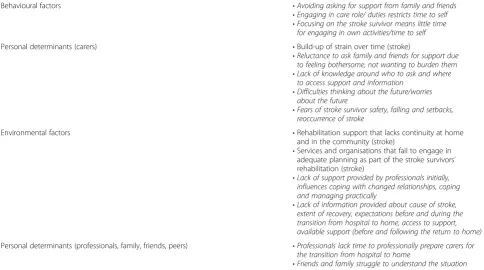
Behavioural and environmental barriers identified in this empirical study informed the overall logic model of burden. Examples included‘providing practical care without prepar-ation’, and‘professionals do not always provide initial guid-ance to reassure carers.’ The facilitators provided more potential solutions to be considered later in the intervention development such as encouraging carers to actively seek support. Additional file 1 includes the full logic model of burden, Table 5 summarises some of the key behavioural and environmental factors and determinants that were ei-ther specific to stroke in the review of reviews (stroke in brackets in Additional file1 and in the table) or were evi-dent in both the thematic synthesis and qualitative inter-views (bold and italic in Additional file1and in the table).
Intervention priorities and the programme goal
In the first task presented to stakeholders which was de-signed to elicit stakeholders’ thoughts on carer burden,
they largely agreed with the factors presented in the mind-map. They also provided additional insights into these fac-tors in a stroke specific context. In the second task which involved prioritising 11 needs, through discussions in small groups and as a whole, the stakeholders prioritised one need:‘Carers need to feel prepared before, and during, the transition from hospital to home’.
In a further task, stakeholders discussed examples of be-ing prepared before and durbe-ing the transition from hos-pital. Key findings included practical and emotional struggles, feeling uncertain, and unaware that things would be different. Carers emphasised feeling emotionally unprepared, which they found harder to manage than the physical aspects of care. Where carers faced practical struggles, these included: managing medications, and physically getting the stroke survivor up the stairs or mov-ing in and out of bed. Uncertainty around expectations was attached to changes in the stroke survivors and result-ant impacts on relationships and roles around the home. Without adequate preparation carers often returned home without the realisation that their lives, sense of normality and independence would be different.
[image:10.595.56.541.460.730.2]Stakeholders then discussed and wrote down the fac-tors that resulted in being and feeling unprepared before and during the transition from hospital to home. Factors broadly related to information and support e.g. lack of follow up support from professionals, not getting enough information unless signposted to charities, reluctance to approach staff for information, and not being in the
Table 5Summary of key behavioural and environmental factors and determinants that influence carer burden
Behavioural factors •Avoiding asking for support from family and friends
•Engaging in care role/ duties restricts time to self
•Focusing on the stroke survivor means little time for engaging in own activities/time to self
Personal determinants (carers) •Build-up of strain over time (stroke)
•Reluctance to ask family and friends for support due to feeling bothersome, not wanting to burden them
•Lack of knowledge around who to ask and where to access support and information
•Difficulties thinking about the future/worries about the future
•Fears of stroke survivor safety, falling and setbacks, reoccurrence of stroke
Environmental factors •Rehabilitation support that lacks continuity at home
and in the community (stroke)
•Services and organisations that fail to engage in adequate planning as part of the stroke survivors’ rehabilitation (stroke)
•Lack of support provided by professionals initially, influences coping with changed relationships, coping and managing practically
•Lack of information provided about cause of stroke, extent of recovery, expectations before and during the transition from hospital to home, access to support, available support (before and following the return to home)
Personal determinants (professionals, family, friends, peers) •Professionals lack time to professionally prepare carers for the transition from hospital to home
right frame of mind to take in information. These find-ings were important for establishing the nature of an intervention, for example, whether it would involve both emotional and practical preparation.
Discussions with stakeholders during these tasks also indicated that for carers to feel prepared may require intervention beyond the initial transition to home, to the time shortly following this. During this time, carers re-ported they were still engaging in practical preparation and realised that they were still emotionally unprepared. This was taken into account in the development of the overall programme goal: ‘Ensuring carers feel and are prepared, before, during, and following the transition from hospital to home;’ and the logic model of the prioritised problem (Additional file5).
Stage 2: programme outcomes and performance objectives (logic model of change)
Behavioural and environmental outcomes
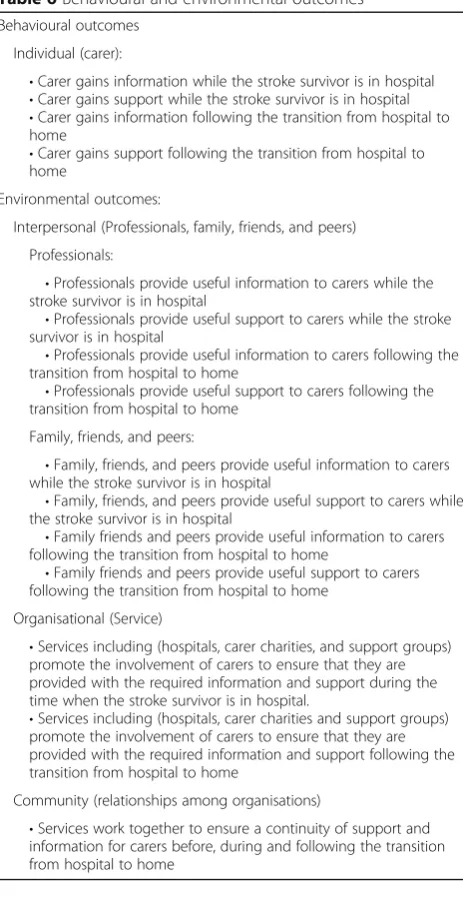
The programme goal and the logic model of the priori-tised problem guided the development of 15 behavioural and environmental outcomes that were informed by relevant levels of the socio-ecological model [32] e.g. in-dividual, interpersonal, organisational (Table6).
Contributions from stakeholders and findings from the needs assessment indicated that ensuring carers gain support and information is important for their prepar-ation. This is reflected in the behavioural and environ-mental outcomes.
Performance objectives
Stakeholders were influential in developing 168 perform-ance objectives across the 15 behavioural and environ-mental outcomes.
Theoretical determinants
The determinants in the logic model of the prioritised problem mapped onto nine of the 14 domains of the TDF [38] hence, this was chosen. The matrices of change were developed with all 14 domains to ensure that the five domains that did not map onto the evi-dence in the logic model of the prioritised problem were not discarded prematurely. The five domains included reinforcement, intentions, goals, behavioural regulation, memory, attention, and decision-making processes.
Matrices of change objectives
Fifteen matrices of change were created (one for each behavioural and environmental outcome). These pro-vided a basis for selecting theoretical methods and prac-tical applications in the next stage of the process.
Logic model of change
The results of this stage of Intervention Mapping are pre-sented in the logic model of change (Additional file6).
Stage 3: methods and practical applications (Programme design)
[image:11.595.306.538.291.742.2]As part of generating the programme ideas, stakeholders answered a series of questions to clarify contextual factors of the behaviour change intervention (e.g. where, how, who, what and when). Stakeholders agreed when, how and where carers would benefit from help to gain the support and in-formation required to feel prepared. They suggested this should be during the carers’ time in hospital, continuing across the transition from hospital to home, in face-to-face discussions at hospital, then either in the carers’own homes
Table 6Behavioural and environmental outcomes
Behavioural outcomes
Individual (carer):
•Carer gains information while the stroke survivor is in hospital •Carer gains support while the stroke survivor is in hospital •Carer gains information following the transition from hospital to home
•Carer gains support following the transition from hospital to home
Environmental outcomes:
Interpersonal (Professionals, family, friends, and peers)
Professionals:
•Professionals provide useful information to carers while the stroke survivor is in hospital
•Professionals provide useful support to carers while the stroke survivor is in hospital
•Professionals provide useful information to carers following the transition from hospital to home
•Professionals provide useful support to carers following the transition from hospital to home
Family, friends, and peers:
•Family, friends, and peers provide useful information to carers while the stroke survivor is in hospital
•Family, friends, and peers provide useful support to carers while the stroke survivor is in hospital
•Family friends and peers provide useful information to carers following the transition from hospital to home
•Family friends and peers provide useful support to carers following the transition from hospital to home
Organisational (Service)
•Services including (hospitals, carer charities, and support groups) promote the involvement of carers to ensure that they are provided with the required information and support during the time when the stroke survivor is in hospital.
•Services including (hospitals, carer charities and support groups) promote the involvement of carers to ensure that they are provided with the required information and support following the transition from hospital to home
Community (relationships among organisations)
or GP surgeries. It was less clear who should take on the role of the information and support provider. Stakeholders suggested someone in the stroke ward, community-based staff, GPs, or an additional role. Stakeholders’.
ideas about‘what’carers could be given during discus-sions with the information and support provider to fa-cilitate preparation included: a log of contacts on either a key ring or credit-card-sized card; access to a helpline; an ‘in case of’ plan to guide carers through scenarios (e.g. if I struggle, I will do x, y, and z).
In the next task, stakeholders noted ideas on another worksheet about the design and content, delivery prefer-ences, and resources and materials. Preferences for the programme design and content were: a training package in-cluding modules with interactive and written content for
‘information and support providers’and a session for staff in the wider teams. Delivery preferences included face to face training and supervision sessions where staff members meet competencies. Ideas about resources and materials in-cluded appropriate funding, training package materials and resources for materials provided to carers e.G.keyrings.
Using the cards provided, stakeholders discussed which determinants could potentially be targeted in the interven-tion. They focused on determinants related to the informa-tion and support providers, these included: beliefs about capabilities; social and professional role identity; social influ-ences; emotion; knowledge; skills; memory, attention and de-cision processes; and environmental context and resources.
As part of the process where theoretical methods and practical applications are selected, stakeholders engaged in a task which involved selecting determinants that could potentially be targeted in the intervention. They focused on determinants related to the information and support providers, these included: beliefs about capabilities; social and professional role identity; social influences; emotion; knowledge; skills; memory, attention and decision pro-cesses; and environmental context and resources.
Considering the feedback from stakeholders, as well as evidence from theories and the logic model of the priori-tised problem, all 14 determinants of the TDF [38] seemed relevant to some extent. A lack of theory-based evidence for these behaviours compared to other typical health behaviours such as physical activity meant it was difficult to prioritise some over others. Therefore, all de-terminants were considered when the theoretical methods and practical applications were selected.
As described in the methods section, a series of tables were produced to document the selection of theoretical methods and practical applications.
Stage 4: organised programme plan (Programme production)
Following the process outlined in the methods, a final plan including the scope and sequence of the intervention and
a series of design documents were produced. This section provides an overview of the proposed intervention named
‘Preparing is Caring’and a summary of what is included in the documents.
Preparing is Caring is comprised of various intervention components incorporating theoretical methods. These in-clude: A training package for information and support providers working with carers (including an induction plus five key modules and on-going supervision sessions); an additional training session for the wider staff team. Ele-ments to support carers to feel prepared include brief written information to introduce the information and sup-port provider; ongoing face to face discussions; an‘in case of’plan for carers, including relevant contact numbers for practical and emotional needs; key rings or cards of key contacts; and access to a helpline.
The training package for the information and support provider is to equip them to support carers to feel pre-pared before, during and following the transition from hospital to home. This targets multiple determinants in-cluding skills, knowledge, and beliefs about capabilities across five modules. The module content is based on multiple different theoretical methods (e.g. modelling, persuasive communication) and practical applications (e.g. role plays, discussions following video clips). This can be made available for face-to-face delivery and/ or as an online resource.
The supervision sessions focus on meeting competen-cies. This idea was favoured by the stakeholders as an op-portunity for ongoing learning and to provide evidence for the impacts of working with carers. These sessions aim to target multiple determinants including beliefs about cap-abilities and skills. The additional training for the wider staff team is intended to promote a culture of supporting carers in addition to stroke survivors.
The information and support providers will provide carers with additional elements to assist preparation be-fore, during and following the transition from hospital to home. As with the training package, each element is based on varied theoretical methods that target numer-ous determinants including knowledge, beliefs about consequences, and reinforcement.
goals, and design features (including interpersonal features e.g. conversations, teaching approaches). The design docu-ment for the eledocu-ments to support carers to feel prepared includes a description for each element, detailed outline of content and their impact.
Discussion
This paper describes the process of using Intervention Mapping to develop a programme plan for the‘Preparing is Caring’ intervention. To our knowledge, ‘Preparing is Caring’ is the first proposed complex intervention aimed at reducing burden in carers of stroke survivors that has been developed using Intervention Mapping. The Inter-vention Mapping process, incorporating evidence from empirical research, review data, behaviour change theories and collaboration with a stakeholder group is consistent with MRC framework guidance [31] and has the potential to provide a valuable contribution to the development of interventions for carers of stroke survivors.. This contribu-tion is important, given that current evidence from rando-mised controlled trials is insufficient for determining which interventions are most effective for reducing bur-den in carers of stroke survivors.
The ‘needs assessment’stage provided more clarity on how needs were determined compared to existing inter-ventions aimed at carers of stroke survivors where it is unclear what evidence was used to determine carers’ needs or how intervention materials sought to address needs [26,27,42–44]. Involving stakeholders in prioritis-ing the focus of the intervention meant that intervention materials were designed with a more specific purpose and focus to address one key need.
Preparing is Caring differs from all existing interven-tions for carers of stroke survivors due to the focus on changing how professionals support carers in the transi-tion from hospital to home. This can be traced to the use of Intervention Mapping which acknowledges that behaviours and interactions are part of a complex sys-tem, influenced by multiple levels [33]. Other similar in-terventions have provided opportunities to interact with professionals (e.g. Stroke Association Family support [26]; Discharge Preparation Programme (DPP) [27] and Timing it Right Stroke Family Support Programme (TIRSFSP) [28]), rather than seeking to change the way professionals support carers. The multiple components included in Preparing is Caring also differ from materials provided in existing interventions because they are based on theoretical methods and practical applications that target both information and support provider and carer behaviours.
Strengths and limitations
The emphasis on working from a problem towards a so-lution avoided skipping to soso-lutions that were based on
little evidence. Furthermore, using the socio-ecological model to frame outcomes, objectives and matrices, highlighted the importance of identifying opportunities for behaviour change beyond the individual i.e. carers of stroke survivors. This provided a more complete picture of the changes required to address the complex problem of carer burden, highlighting that interventions should consider the nature of interactions between professionals and carers and acknowledge wider environmental influ-ences on behaviours.
It is possible that a different group of stakeholders (e.g. carers with more varied characteristics and other professionals e.g. clinical psychologists, stroke physi-cians, and occupational psychologists) would have a dif-ferent influence on the intervention that has been produced. However, the intervention development process was not solely based on input from stakeholders. It was also based on a large body of evidence contribut-ing to the needs assessment, gathered uscontribut-ing rigorous methods. Collaboration with this stakeholder group in fact exemplified the importance of developing an inter-vention that is grounded in how they understand and experience burden. This was an important contribution, given that a previous qualitative review [5] and qualita-tive evidence from the needs assessment indicated that carers rarely use the term ‘burden’ in their narratives about their care experiences. The management of stake-holder involvement throughout the process is also a strength of this research. This also provides an import-ant example given that there is little published guidance on how to involve them in decisions throughout the Intervention Mapping process, and how much weighting should be given to their perspectives in comparison with evidence, theory and researcher judgements.
Using Intervention Mapping ensured the components are clearly based on theory and evidence overcomes criti-cisms regarding inadequate theory use in interventions for carers of stroke survivors [45]. Intervention Mapping uses a clearly defined and structured process to guide adequate theory and application, enhancing the likelihood of an ef-fective intervention [31], and explicit links are made be-tween intervention change objectives, determinants, theoretical methods, and intervention components, which are used to articulate the causal assumptions underpin-ning an intervention [46]. More can be learned about in-terventions developed using Intervention Mapping, beyond just a measure of effectiveness and interventions can be refined where necessary following evaluations.
often presented as an unproblematic process, guiding re-searchers from a problem towards a solution, with reference to matrices, a stakeholder group and occasional recourse to the literature. The way the process is described suggests that there is always a volume of relevant literature, including relevant theories or that it is feasible to conduct new empir-ical research at numerous times throughout the process [29]. Where the development does not concern a specific behaviour in well-researched areas such as physical activity or smoking, this may not be feasible within time limited pro-ject and funding structures. Although the process was con-ducted according to plan, the nature of the process and the unexpected turns means that additional time, or strategies for saving time and resources could always be beneficial. In the more recent edition of guidance suggestions are pro-vided regarding how to save time; including conducting a rapid needs assessment and choosing a more focused ques-tion from the outset [30]. Other researchers could benefit from considering these suggestions before embarking on the process.
Selecting a theory to establish the determinants to underpin the intervention proved challenging, as evidence in the logic model did not map on to a single behaviour change theory. Furthermore, the target behaviours (gain-ing or provid(gain-ing information and support) are not heavily theorised like well-researched health behaviours. This meant drawing upon limited literature about information and support seeker and provider behaviours [36,37]. With more time, a more comprehensive search could be con-ducted. However, Intervention Mapping guidance does not state how the literature should be reviewed i.e. whether this should be done systematically or whether scoping is sufficient [29,30].
The Theoretical Domains Framework [38] was used to overcome these challenges. This is a widely-used frame-work for mapping the factors that influence behaviour change as part of intervention development and has been used previously in the context of Intervention Mapping [47, 48]. Using this framework meant that theory-based determinants were relevant to evidence from the needs as-sessment. However, including all 14 domains as determi-nants across 15 matrices of change led to an overwhelming amount of work for the subsequent stages of intervention development. The developed intervention components target multiple determinants and include multiple theoretical methods.
To enhance and manage the intervention develop-ment, adaptations were made to the Intervention Map-ping process. For example stage three where theoretical methods and practical applications are selected based on change objectives outlined in the matrices of change. Multiple matrices of change, including determinants at different levels (e.g. individual, interpersonal, and organ-isational) were created for mapping required behaviour
change. However, as others have argued [49], this is likely to impede linkages in how behaviours interact across levels. To acknowledge the interaction required between individuals (carers and providers) to achieve the programme goal, a flow diagram based on consolidated performance objectives from different matrices was de-veloped. This provided a basis for generating interven-tion ideas and a structure for the alternative tables created to map theoretical methods and practical appli-cations. Although this deviated from the traditional process where matrices would be considered separately, the principles for selecting the theoretical methods were maintained. These were still matched to change objec-tives for different determinants and practical applica-tions were still selected with consideration of parameters for effectiveness. This adaptation to the process was also advantageous as the context of this‘interaction’was con-sidered, which was influential in the emergent ideas.
This example illustrates how Intervention Mapping can be used flexibly for overcoming difficulties or man-aging the extensive work that is created at each stage. However, as other authors have claimed, Intervention Mapping is as much an art as a science, given that‘best solutions’ are not always available and are highly dependent on available evidence, expertise, knowledge and instincts [50]. Following thorough engagement with Intervention Mapping, we would agree with this notion and other researchers planning to use this process would benefit from being mindful of this.
Implications and future directions
Further research is required to examine the feasibility of delivering this complex intervention in health services in the UK, then eventually other cultures and geographical settings. This will involve working with services to explore adherence to the training programme; the barriers and en-ablers for implementing staff training in these settings; and the level of system change needed to integrate the intervention into existing health services. If this type of intervention is to be implemented within hospitals and then in the community once stroke survivors and carers return home, policymakers, professionals and researchers need to work together in their approaches to implementa-tion. We need to ensure that lessons are learned about supporting carers in addition to stroke survivors, to ensure the impacts of this work are realised.
Conclusions
support and prepare carers before, during, and following the transition from hospital to home. On reflection, we consider Intervention Mapping to be useful. However implementing this approach following training and guid-ance proved challenging at various stages. We recom-mend that others learn from the experiences presented in this paper and the need for flexibility and creativity in the application of this approach.
Supplementary information
Supplementary informationaccompanies this paper athttps://doi.org/10. 1186/s12889-019-7615-2.
Additional file 1.Logic model of burden. The logic model of burden presents a range of behavioural and environmental factors, and their determinants that could lead to carer burden.
Additional file 2.Key for Additional file1and Additional file5. Key to support readers to understand Additional file1and Additional file5.
Additional file 3.Initial interview topic guide. Interview guide used in the initial interviews in group 1 and the single interviews in group 2.
Additional file 4.Follow up interview topic guide. Interview guide used in the second and third interviews in group 1.
Additional file 5.Logic model of the prioritised problem. The logic model of the prioritised problem presents a range of behavioural and environmental factors, and their determinants that could lead to carer burden associated with needing to feel prepared before during and following the transition from hospital to home.
Additional file 6.Logic model of change. The logic model of change outlines the pathway of intended programme effects rather than pathways to identify causes of a problem.
Abbreviations
DPP:Discharge Preparation Programme; LoTS2Care: Longer-term support
stroke survivors and their carers; LSCTC: London Stroke Carer Training Course; MRC: Medical Research Council; TDF: Theoretical Domains Framework; TIRSFSP: Timing it Right Stroke Family Support Programme
Acknowledgements
The authors would like to thank all members of the stakeholder groups and organisations for their participation in this research. We would also like to thank Josie Dickerson, Rosie McEachan and Kara Gray- Burrows for providing valuable expertise and guidance during the Intervention Mapping process.
Authors’contributions
JFH, TFC, DJC, and AF conceived of the idea and design of the study. The study was conducted by lead author JFH with guidance from all authors. JFH drafted the manuscript with help from all other authors who revised it critically. All authors read and approved the final manuscript.
Funding
This work was undertaken by the first author as part of a PhD project funded by a University of Leeds 110 Anniversary Research Scholarship.
Availability of data and materials
The datasets used and/or analysed during the current study are available from the corresponding author on reasonable request.
Ethics approval and consent to participate
This research was undertaken as part of a wider PhD project. A qualitative interview study conducted as part of the needs assessment for this doctoral
research was granted ethical approval by the Yorkshire and Humber–
Bradford Leeds Research Ethics Committee (Ref No: 15/YH/0073). Written consent was obtained from all participants prior to undertaking the interviews. A substantial amendment was made to recruit carers to stakeholder groups from the research register. The ethics committee
regarded stakeholder involvement as consultation work, therefore no additional approval was required to conduct groups and use audio-recorders.
Consent for publication
Not applicable.
Competing interests
The authors declare that they have no competing interests.
Received: 19 February 2019 Accepted: 12 September 2019
References
1. Stroke Association. State of the Nation - Stroke Statistics. 1st ed. London: London Stroke Association; 2018.
2. Greenwood N, Mackenzie A, Cloud GC, Wilson NJD. Informal carers of stroke
survivors–factors influencing carers: a systematic review of quantitative studies. Disabil Rehabil. 2008;30(18):1329–49.
3. Plank A, Mazzoni V, Cavada L. Becoming a caregiver: new family carers’ experience during the transition from hospital to home. J Clin Nurs. 2012; 21:2072–82.
4. Silva-Smith AL. Restructuring life: preparing for and beginning a new caregiving role. J Fam Nurs. 2007;13:99–116.
5. Greenwood N, Mackenzie A, Cloud GC, Wilson N. Informal primary carers of stroke survivors living at home–challenges, satisfactions and coping: a systematic review of qualitative studies. Disabil Rehabil. 2009;31:337–51. 6. Saban KL, Hogan NS. Female caregivers of stroke survivors: coping and
adapting to a life that once was. J Neurosci Nurs. 2012;44:2–14.
7. Hamilton MG, Adamson E. Bounded agency in young carers'
lifecourse-stage domains and transitions. J Youth Stud. 2013;16:101–17.
8. Larkin M, Richardson EL, Tabreman J. New partnerships in health and social care for an era of public spending cuts. Health Soc Care Community. 2012; 20:199–207.
9. Greenwood N, Mackenzie A. Informal caring for stroke survivors: meta-ethnographic review of qualitative literature. Maturitas. 2010;66:268–76. 10. Quinn K, Murray C, Malone C. Spousal experiences of coping with and
adapting to caregiving for a partner who has a stroke: a meta-synthesis of qualitative research. Disabil Rehabil. 2014;36:185–98.
11. Milne A, Larkin M. Knowledge generation about care-giving in the UK: a critical review of research paradigms. Health Soc Care Community. 2015; 23(1):4–13.
12. King D, Pickard L. When is a carer’s employment at risk? Longitudinal analysis of unpaid care and employment in midlife in England. Health Soc Care Community. 2013;21(3):303–14.
13. Larkin M, Milne A. Carers and empowerment in the UK: a critical reflection. Soc Policy Soc. 2014;13(1):25–38.
14. Bastawrous M. Caregiver burden-a critical discussion. Int J Nurs Stud. 2013; 50:431–41.
15. Rigby H, Gubitz G, Phillips S. A systematic review of caregiver burden following stroke. Int J Stroke. 2009;4:285–92.
16. Hung J-W, Huang Y-C, Chen J-H, Liao L-N, Lin C-J, Chuo C-Y, et al. Factors associated with strain in informal caregivers of stroke patients. Chang Gung Med J. 2012;35(5):392–401.
17. Tooth L, McKenna K, Barnett A, Prescott C, Murphy S. Caregiver burden, time spent caring and health status in the first 12 months following stroke. Brain Inj. 2005;19(12):963–74.
18. Byun E, Evans LK. Concept analysis of burden in caregivers of stroke survivors during the early poststroke period. Clin Nurs Res. 2015;24(5):468–86.
19. Adelman RD, Tmanova LL, Delgado D, Dion S, Lachs M. Caregiver burden: a
clinical review. JAMA. 2014;311(10):1052–60.
20. Kamel AA, Bond AE, Froelicher ES. Depression and caregiver burden experienced by caregivers of Jordanian patients with stroke. Int J Nurs Pract. 2012;18(2):147–54.
21. Legg LA, Quinn TJ, Mahmood F, Weir CJ, Tierney J, Stott DJ, et al. Non-pharmacological interventions for caregivers of stroke survivors. Cochrane Database Syst Rev. 2011.https://doi.org/10.1002/146518582011.
22. Kalra L, Evans A, Perez I, Melbourn A, Patel A, Knapp M, et al. Training carers of stroke patients: randomised controlled trial. BMJ. 2004;328:1099. 23. Forster A, Dickerson J, Young J, Patel A, Kalra L, Nixon J, et al. A cluster
training programme for caregivers of inpatients after stroke: the TRACS trial. Health Technol Assess. 2013;17:1.
24. Clarke DJ, Hawkins R, Sadler E, Harding G, McKevitt C, Godfrey M, et al. Introducing structured caregiver training in stroke care: findings from the TRACS process evaluation study. BMJ Open. 2014;4:e004473.
25. Hall J. The development of an intervention for carers of stroke survivors using an Intervention Mapping approach. Unpublished doctoral thesis. UK: University of Leeds; 2017.
26. Mant J, Carter J, Wade DT, Winner S. Family support for stroke: a randomised controlled trial. Lancet. 2000;356:808–13.
27. Shyu YIL, Kuo LM, Chen MC, Chen ST. A clinical trial of an individualised intervention programme for family caregivers of older stroke victims in Taiwan. J Clin Nurs. 2010;19:1675–85.
28. Cameron JI, Naglie G, Green TL, Gignac MA, Bayley M, Huijbregts M, et al. A feasibility and pilot randomized controlled trial of the“timing it right stroke family support program”. Clin Rehabil. 2015;29:1129–40.
29. Bartholomew LK, Parcel GS, Kok G, Gottlieb NH. Planning health promotion programs: an intervention mapping approach. 3rd ed. San Francisco: Wiley; 2011.
30. Bartholomew Elderedge KL, Markham CM, Ruiter RA, Kok G, Fernandez ME,
Parcel GS. Planning health promotion programs: an intervention mapping approach. 4th ed. San Francisco: Wiley; 2016.
31. Craig P, Petticrew M. Developing and evaluating complex interventions: reflections on the 2008 MRC guidance. Int J Nurs Stud. 2013;50:585–7. 32. McLeroy KR, Bibeau D, Steckler A, Glanz K. An ecological perspective on
health promotion programs. Health Educ Q. 1988;15:351–77. 33. Kok G, Bartholomew LK, Parcel GS, Gottlieb NH, Fernández ME. Finding
theory-and evidence-based alternatives to fear appeals: intervention mapping. Int J Psychol. 2014;49:98–107.
34. Bartholomew LK, Mullen PD. Five roles for using theory and evidence in the design and testing of behavior change interventions. J Public Health Dent. 2011;71:20–S33.
35. Forster A, Hartley S, Barnard L, Ozer S, Hardicre N, Crocker T, et al. An intervention to support stroke survivors and their carers in the longer term (LoTS2Care): study protocol for a cluster randomised controlled feasibility trial. Trials. 2018;19:317.
36. Gorman P. Information needs of physicians. J Am Soc. 1995;46:729–36. 37. Wilson T. Exploring models of information behaviour: the
‘uncertainty’project. Inf Process Manag. 1999;35:839–49.
38. Cane J, O’Connor D, Michie S. Validation of the theoretical domains framework for use in behaviour change and implementation research. Implement Sci. 2012;7:37.
39. Kok G, Gottlieb NH, Peters G-JY, Mullen PD, Parcel GS, Ruiter RA, et al. A taxonomy of behaviour change methods: an intervention mapping approach. Health Psychol Rev. 2016;10:297–312.
40. Camak DJ. Addressing the burden of stroke caregivers: a literature review. J Clin Nurs. 2015;24:2376–82.
41. Pringle J, Hendry C, McLafferty E. A review of the early discharge experiences of stroke survivors and their carers. J Clin Nurs. 2008;17:2384–97.
42. Bakas T, Farran CJ, Austin JK, Given BA, Johnson EA, Williams LS. Stroke caregiver outcomes from the telephone assessment and skill-building kit (TASK). Top Stroke Rehabil. 2009;16:105–21.
43. Pierce LL, Steiner V, Govoni AL, Hicks B, Thompson TLC, Friedemann ML. Internet-based support for rural caregivers of persons with stroke shows promise. Rehabil Nurs. 2004;29:95–9.
44. Pierce LL, Steiner VL, Khuder SA, Govoni AL, Horn LJ. The effect of a web-based stroke intervention on carers' well-being and survivors' use of healthcare services. Disabil Rehabil. 2009;31:1676–84.
45. George LK, Gwyther LP. Caregiver weil-being: a multidimensional examination of family caregivers of demented adults. The Gerontologist. 1986;26(3):253–9. 46. Schaalma H, Kok G. Decoding health education interventions: the times are
a-changin. Psychol Health. 2009;24:5–9.
47. Gray-Burrows K, Day P, Marshman Z, Aliakbari E, Prady S, McEachan R. Using intervention mapping to develop a home-based parental-supervised toothbrushing intervention for young children. Implement Sci. 2015;11:61. 48. Taylor NJ, Sahota P, Sargent J, Barber S, Loach J, Louch G, et al. Using
intervention mapping to develop a culturally appropriate intervention to prevent childhood obesity: the HAPPY (healthy and active parenting Programme for early years) study. Int J Behav Nutr Phys Act. 2013;10:142.
49. Heaney CA. Intervention mapping and the new health promotion. Health
Educ Behav. 1998;25:564–8.
50. Greaves CJ, Wingham J, Deighan C, Doherty P, Elliott J, Armitage W, et al. Optimising self-care support for people with heart failure and their caregivers: development of the rehabilitation enablement in chronic heart failure (REACH-HF) intervention using intervention mapping. Pilot Feasibility Stud. 2016;2:37.
Publisher’s Note