City, University of London Institutional Repository
Citation
: Lomas, T., Edginton, T., Cartwright, T. & Ridge, D. (2014). Men Developing
Emotional Intelligence Through Meditation? Integrating Narrative, Cognitive andElectroencephalography (EEG) Evidence. Psychology of Men and Masculinity, 15(2), pp. 213-224. doi: 10.1037/a0032191
This is the accepted version of the paper.
This version of the publication may differ from the final published
version.
Permanent repository link:
http://openaccess.city.ac.uk/18132/Link to published version
: http://dx.doi.org/10.1037/a0032191
Copyright and reuse:
City Research Online aims to make research
outputs of City, University of London available to a wider audience.
Copyright and Moral Rights remain with the author(s) and/or copyright
holders. URLs from City Research Online may be freely distributed and
linked to.
City Research Online: http://openaccess.city.ac.uk/ [email protected]
Men developing emotional intelligence through meditation? Integrating narrative, EEG, and
cognitive evidence
Tim Lomas1,2*†, Trudi Edginton3, Tina Cartwright3, and Damien Ridge1.
1 School of Life Sciences, 115 New Cavendish St., University of Westminster, London,
W1W, 6UW.
2 Department of Psychology, Stratford Campus, University of East London, E15 4LZ.
3 Department of Psychology, 309 Regent St., University of Westminster, London, W1B
2UW.
* Research was undertaken at the University of Westminster.
† Author responsible for correspondence:
Email: [email protected]
Address: University of East London, Department of Psychology, Stratford Campus,
E15 4LZ
Submitted: 20th Sept 2012
Resubmitted: 15th November 2012
Resubmitted: 7th January 2013
Resubmitted: 18th January 2013
Final submission: 25th January 2013
Acknowledgments:
The authors would like to thank the participants in the study who generously gave of their
time and enthusiasm, and the anonymous reviewers whose constructive comments helped to
strengthen the paper. We also extend our gratitude to Mark Wetherell at Northumbria
University, UK, who designed the Defined Intensity Stressor Simulation (DISS) task used in
Abstract
Traditional masculine norms around emotions (e.g., inexpressiveness) can mean men have
difficulties managing their emotions, contributing to potential mental health problems.
However, it is recognized that men and masculinities are diverse, and that some men can
positively self-manage their mental health, although this has received little attention in the
literature. Uniquely, we sought to find men who had discovered ways to engage
constructively with their emotions, in this case through meditation. Thirty male meditators,
recruited using a maximum variation sampling strategy, participated in a longitudinal
mixed-method study in the UK. Participants undertook two cognitive neuroscience sessions –
approximately one year apart – comprising cognitive assessments of attention, in combination
with EEG measurement during task performance and meditation. In-depth narrative
interviews exploring men’s experiences of meditation were also conducted at both
time-points, analyzed using a modified constant comparison approach. Taken together, the
quantitative and qualitative results suggested men developed attention skills through
meditation, although there were variations according to previous meditation experience (e.g.,
a sharper longitudinal increase in theta amplitude under meditation for novice practitioners).
Moreover, development of attention appeared to enhance men’s emotional intelligence,
which in turn could be conducive to wellbeing. The paper has implications for psychologists
working with men, pointing to the potential for teaching men about better regulating their
emotions for improved wellbeing.
Men and Distress
It is commonly asserted that women are more prone to mental health disorders like
depression (McManus, Meltzer, Brugha, Bebbington, & Jenkins, 2009). However, there is
concern that men may express distress (mental suffering that falls short of clinical diagnoses
for specific disorders) in less recognized ways (Addis, 2008). Whilst women are seen as more
likely to ‘internalize’ distress, men are thought more likely to ‘externalize’ distress through
risk-taking, substance use, and anger (Pollack, 1998), contributing to men being more likely
to commit suicide than women (Office for National Statistics, 2011). Such externalization has
been linked to ‘traditional’ forms of masculinity, to the extent that masculinity is frequently
portrayed as a ‘risk factor’ for health in the media (Gough, 2006) and academic literature
(Mac an Ghaill & Haywood, 2012), with men constructed as “damaged and damage doing”
(p.483). Theorists seeking to account for links between masculinity and destructive
‘externalizing’ behaviors highlight the way emotionality is often feminized, whereas
traditional forms of masculinity valorize suppression of emotional vulnerability. For example,
Levant (1992) formulated the concept of ‘normative male alexithymia’ to describe how
gender socialization can contribute to a pattern of ‘restrictive emotionality’ in men. Boys may
be discouraged from, even punished for, expressing emotions (e.g., fear), leading to
constrained emotional recognition and vocabulary.
Restrictive emotionality can contribute to mental health problems in men. Addis
(2008) outlines various frameworks for conceptualizing masculinity, distress, and depression.
The ‘masked depression framework’ (Pollack, 1998) suggests that although men may
experience ‘prototypic’ depression (corresponding to conventional diagnostic criteria), this
depression may be hidden from men themselves (due to inability to recognize it, reflecting
emotions). Conversely, the ‘masculine depression framework’ (Pleck, 1995) views
externalizing behaviors as a male-specific ‘phenotypic variant’ of depression, linked to
masculine norms which encourage action and discourage introspection. Addis’ own
‘gendered responding framework’ proposes that gendered socialization encourages men to
adopt ‘maladaptive’ stances toward emotions generally, e.g., suppressing negative feelings.
Addis suggests such suppression contributes to mental health problems by engendering poor
emotional management skills, a suggestion reinforced by work implicating emotional
dysregulation as a trans-diagnostic factor underlying diverse psychiatric disorders (Aldao,
Nolen-Hoeksema, & Schweizer, 2010).
However, as Addis (2008) acknowledges, recent theorizing in gender has led to
recognition of variability within and across men, with more nuanced conceptions of relations
between masculinity and emotionality. For example, studies show some men are willing to
engage with and express emotions, including older males caring for spouses (Bennett, 2007).
However, these men did not resist traditional norms, instead incorporating emotionality
within more conventional masculine constructions, stressing the importance of control and
responsibility. Researchers have also found men are able to find more constructive ways of
relating to distress and disorder. For example, among Canadian men with depression,
whereas many sought to alleviate emotional pain through emotional numbing, some
negotiated a more useful response by repositioning help seeking as a rational way of
regaining self-control (Oliffe et al., 2010).
Intriguingly, studies suggest emotional engagement can be developed in men. One
prominent theory of such engagement is Mayer and Salovey's (1997) hierarchical model of
emotional intelligence (EI), comprising four ‘branches:’ (i) emotional awareness/expression;
(ii) emotional facilitation of thought (skill in generating emotions); (iii) understanding
emotions). Crombie, Lombard, and Noakes (2011) randomly assigned 24 South African
cricketers to an EI intervention or a control group. The intervention consisted of ten 3-hour
workshop sessions, which included introductions to EI theory, and experiential case studies.
There was a significant post-test intervention increase of 14.5% on the
Meyer-Salovey-Caruso Emotional Intelligence Test (Mayer, Meyer-Salovey-Caruso, & Salovey, 2000). Although such results
are encouraging, the mechanisms by which EI may be developed are little understood. Men
have long been overlooked and undertheorized in mental health research (Riska, 2009); there
is scarce research examining men’s strategies for engaging constructively with their
emotions. However, men who meditate may be among those who have found ways to manage
emotions more effectively (Lomas, Cartwright, Edginton, & Ridge, 2012). The present paper
explores the possibility that meditation may help men with emotional intelligence – thus
facilitating better mental health – by training attention and giving men more choice in how
they approach their emotions.
Meditation, Attention, and Emotional Intelligence
Meditation is linked to positive outcomes on numerous mental health indicators,
including depression and anxiety (Mars & Abbey, 2010). Although men have not been the
specific focus of such research, men have been part of mixed-sex samples which have
responded positively to meditation programs. For example, clinical interventions based on
encouraging ‘mindfulness’ – a form of meditation involving non-judgmental awareness of
present-moment experience – have successfully prevented relapse in recurrently depressed
individuals (Teasdale et al., 2000). It is theorized that such positive mental health outcomes
are linked to the development of attentional skills, which are central to contemporary
definitions of meditation. Walsh and Shapiro (2006), for example, define meditation as “a
family of self-regulation practices that focus on training attention and awareness in order to
well-being” (pp.228-229). Such attention development has been analyzed on various levels.
In cognitive terms, attention is theorized as comprising interrelated subcomponents controlled
by executive processes (Norman & Shallice, 1986). One prominent framework of attention
proposes three overlapping, functionally distinct neural networks: Sustained attention
(ongoing readiness for processing stimuli), selective attention (allocation of resources to
specific stimuli), and executive attention (monitoring/selecting from competing stimuli)
(Posner & Petersen, 1990). Randomized control-group studies link meditation to
improvements in all three networks (Chiesa, Calati, & Serretti, 2011).
Attentional processing and meditative states can also be captured on a
neurophysiological level with electroencephalography (EEG), a non-invasive technique that
analyzes spatio-temporal aspects of underlying brain activity in terms of various parameters,
particularly frequency and amplitude (Kaiser, 2005). Frequency is the number of oscillatory
cycles per second, and is divided into bands: Delta (1-4 Hz); Theta (4-8 Hz); Alpha (8-13
Hz); Beta (13–30 Hz); and Gamma (36-44 Hz). Amplitude reflects the level of synchronized
activity within each bandwidth, expressed in terms of microvolts. Much of the EEG research
on attention has focused on theta activity, with increased amplitude linked to executive and
selective attention (Dietl et al., 1999), and the processing of new/unknown information
(Grunwald et al., 1999). Meditation is linked to increased theta amplitude, signifying a state
of increased attentiveness (Josipovic, 2010). Particular attention has been paid to FM theta,
oscillations originating in frontal-midline brain regions implicated in attention networks and
higher level cognitive activities (e.g. planning and volition). Activation of these regions may
constitute the neural basis for meditation, a contention suggested in theoretical models
(Newberg & Iversen, 2003), and explored empirically using EEG (Aftanas & Golocheikine,
The significance of attention development with regard to wellbeing is that by training
practitioners to attend to their interior world, meditation may help them increase emotional
awareness, and develop emotional management skills (Chu, 2009). For example, meditation
encourages a type of emotional awareness known as ‘decentering’ – a detached perspective
towards one’s thoughts/feelings – which may help alter patterns of emotional responding, as
people learn to refrain from reacting to negative qualia in unhelpful ways, e.g., suppression.
Thus, meditation may facilitate emotional awareness, understanding, and management, which
comprise three branches of Mayer and Salovey's (1997) EI model. Indeed, using both a
cross-sectional and an experimental design, Chu (2009) found meditators had higher levels of EI
than non-meditators, and also that participants on a mindfulness intervention significantly
increased EI (including emotional appraisal, and mood regulation) from pre- to post-test
compared to a control group, with corresponding improvements in mental health.
Given that Addis’ (2008) frameworks connected mental health problems in men to
dysfunctional patterns of emotional management, the possibility that meditation enhances
emotional intelligence in men specifically is worth investigating. However, this possibility
has not been examined empirically. Thus, the current study explores three
theoretically-driven, interrelated questions: (i) can meditation facilitate the development of attention skills
in men?; (ii) can such skills enhance men’s emotional management capabilities?; and (iii)
might such capabilities promote wellbeing? Although scholars have suggested that meditation
may enhance wellbeing by improving EI (Schutte & Malouff, 2011), ours is the first study to
explore this possibility specifically in men. Moreover, as far as we are aware, our study is the
first to combine cognitive neuroscience with narrative data in studying men’s mental health.
Methods
We employed a longitudinal mixed methods design. Thirty male meditators were
recruited using a maximum variation sampling strategy. Twenty-nine of the participants
completed a cognitive neuroscience test session on entry to the study (T1), and again after a
year (T2), comprising EEG measurement across a battery of cognitive tasks and during
meditation. (One participant declined to undertake the test sessions, only taking part in (both)
interviews.) Semi-structured narrative interviews were also conducted at both time points
with all participants to explore men’s experiences of meditation. The project was approved by
the University of Westminster Research Ethics Committee, and an ethics protocol was in
place to ensure participants’ wellbeing.
Participants
Inclusion criteria were that men must be over 18 and currently practicing meditation
in some capacity, though not as part of a clinical intervention. Recruitment was mainly
through a meditation center in London, UK, and also at other events in London attended by
meditators, e.g., Buddhist talks. A purposive maximum variation sampling design was used,
aiming for the widest practical range of life experiences, socio-demographic backgrounds and
meditation experience (Marshall 1996). Recruitment ended once saturation was reached
(additional interviews did not generate any new themes of interest). Sampling occurred
concurrently with initial stages of qualitative data analysis, with the emerging analysis
suggesting the inclusion of certain men to increase the robustness of the analysis (Cutcliffe,
2005), e.g., men unaffiliated with a particular meditation center. A diverse sample of
participants was obtained, all of whom lived and/or worked in London. A table showing the
demographic characteristics of the participants is available in the online version of this paper.
Experimental Session
An experimental session was used at two time points, about a year apart, to examine
cognitive level, the Defined Intensity Stressor Simulation (DISS; www.stress-sim.co.uk)
gauged executive attention. The session also featured an EI measure (Reading the Mind in the
Eyes Test; RMET; Baron-Cohen, Wheelwright, Hill, Raste, & Plumb, 2001), and an index of
intellectual functioning to contextualize task performance (National Adult Reading Test;
NART; Nelson & Willison, 1991). Attention was also gauged by recording EEG signals
during task performance, and during a 10-minute meditation (the ‘mindfulness of breathing,’
a concentrative exercise focusing on the breath). The experimental session lasted
approximately an hour, involving the same sequence of tasks at both T1 and T2: RMET,
DISS, NART (only examined at T2), and meditation.
Experimental tasks.
The RMET is used operationally to index EI (emotional perception/awareness; Harrison, Sullivan, Tchanturia, & Treasure, 2009) and alexithymia (inability to
recognize/verbalize emotions; Honkalampi, Hintikka, Tanskanen, Lehtonen, & Viinamäki,
2000). The task features a sequence of 36 black and white photographs of the eye-region of
actors and actresses. Participants were required to identify the emotion in the picture,
selecting from four forced-choice response options, comprising the target word, plus three
foil words of comparable emotional valence. The task possesses good internal reliability
consistency (cronbach’s alpha = .719) and test-retest reliability (intraclass correlation
coefficient = .833) (Vellante et al., 2012). The dependent variable was the number of correct
answers.
The DISS assesses executive attention and broader executive function (Kennedy, Little, & Scholey, 2004). The DISS involves four cognitive and psychomotor tasks, visually
presented on a split-screen computer monitor, completed simultaneously, with responses
made using a mouse. Details of these tasks, and their scoring protocols, are included in the
lasting five minutes. The dependent variable was the overall score (all tasks combined),
calculated by the program.
The NART (Nelson & Willison, 1991) examines pronunciation of 50 short irregular English words of graded difficulty. It has high test-retest reliability (r = .98) and construct validity as a measure of IQ (Crawford, Parker, Stewart, Besson, & De Lacey, 1989). The
dependent variable was the number of errors (incorrectly pronounced words), converted into
an IQ score using the test conversion table.
Finally, to facilitate between-participants analyses, participants were divided into two
almost-equal groups (29 participants undertook the session) according to years of meditation
experience. Division into categorical groups on the basis of a continuous variable, separated
by the mean, is an established procedure in neurophysiological literature (Barry, Clarke,
McCarthy, & Selikowitz, 2002). Here, the sample mean was 10.8 years. Those meditating for
less than 10.8 years were categorized as ‘novices’ (n = 14), those meditating for longer were
categorized as ‘elders’ (n = 15).
EEG recording.
Electrodes were placed at F3 and F4 (International 10-20 system), referenced to
linked-mastoids (M1 and M2), and a ground electrode placed behind the left ear. The choice
of F3 and F4 frontal leads was based on Newberg & Iversen's (2003) model suggesting that
activation of frontal areas was the neural basis for meditation. EEG signals were acquired
using a NeXus™ EEG amplifier with a 24 bit AD converter (see appendix for technical
specification). Following activation of the recording, participants were instructed to remain
inactive for five minutes to establish an EEG baseline. In the subsequent analysis, to ensure
the sampled data were not contaminated by artifacts possibly caused by facial movement,
then segmented into the session components. The RMET segment was not analyzed, as this
invariably exceeded the 33% contamination threshold. The analysis focused on three
segments: Baseline (five minutes); DISS (five minutes); and meditation (ten minutes). For
each of these segments, mean theta amplitude was calculated for each group (novices and
elders). Producing these mean values involved a number of steps, involving the sequential
calculation of: mean peak-to-peak amplitude for each channel (left and right) across each
segment, for each participant separately; mean trans-hemispheric amplitude for each segment,
for each participant separately; and group means for each segment.
Qualitative Data Collection and Analysis
Men were interviewed twice, extensively at T1, with a follow-up at T2. Interviews
were conducted by the first author, and lasted approximately two hours at T1, and one hour at
T2. Men were interviewed in their own homes, at the University, or at the meditation center.
A T1 interview guide was devised to elicit narratives concerning experiences of meditation.
Narratives order events in time and reflect how people represent meanings about themselves
and their lives (White, 1987). The first part of the interview focused on narratives regarding
life leading up to, and following on from, engagement with meditation. The second part
focused on specific areas of interest, including wellbeing, stress, coping, and masculinity.
The T1 guide began with a set opening request: “Tell me a bit about life before meditation.”
The guide also featured general probes to elicit relevant narratives, as outlined in a table
available in the online version of this paper. T2 interviews were unstructured, apart from a set
opening request: “Tell me a bit about how this year has been.”
Interviews were professionally transcribed, and identifying details redacted.
Transcripts were sent to participants for approval, which all granted. NVivo software was
used to help organize, search and analyze the data. The data were explored using a ‘modified’
1990). Modified constant comparison follows the steps of modified grounded theory, and also
involves linking back to existing literature to clarify the emerging analysis (Cutcliffe, 2005).
However, constant comparison falls short of developing a theoretical framework, aiming
more to articulate inter-relations between key themes.
In an initial coding phase, the first six T1 transcripts were examined line by line to
identify emergent themes, producing 80 codes. The research term read a sample transcript
and debated the codes, deeming them sufficiently exhaustive to account for the data in the
transcript. Over subsequent months, the lead author – guided by ongoing discussions with the
research term – searched incoming transcripts (from T1 and T2) paragraph by paragraph for
additional codes, with a final figure of 105. Using NVivo, every segment of transcript
relating to a particular code was moved into a data file. This paper concentrates on data
pertaining to participants’ experiences of meditation. Twenty codes were identified relating
directly to meditation, including ‘objectifying experience,’ and ‘moving attention around the
body.’ The next stage involved generation of a tentative conceptual framework: Codes were
compared with each other, and grouped into four overarching categories according to
conceptual similarity. For example, the segments for the theme mentioned above both
contained ideas around men becoming skilled at managing mental activities; thus, these two
themes were grouped under a category of ‘working with the mind.’ The other categories
were: Developing awareness, cultivating helpful attitudes, and applying skills in life.
Results Participant Descriptive Statistics
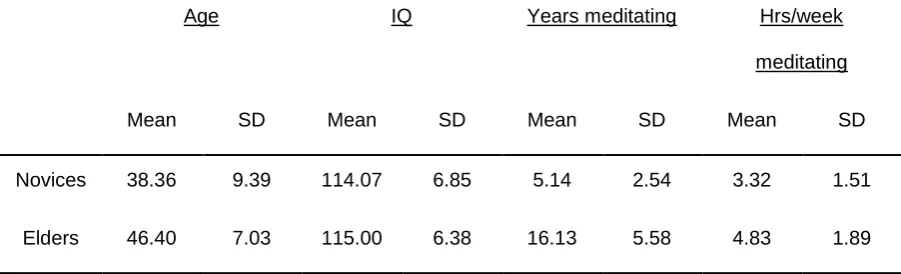
Differences between the two groups in terms of age, IQ, and meditation experience,
are shown in table 1.
Independent T-tests analyzed whether the groups differed in terms of age, IQ and
meditation practice. Elders were older than novices, t(27) = -2.62, p = .014, and spent more hours per week meditating, t(27) = -2.37, p = .025. There was no difference in IQ between the groups, t(27) = -0.38, p = .70.
RMET
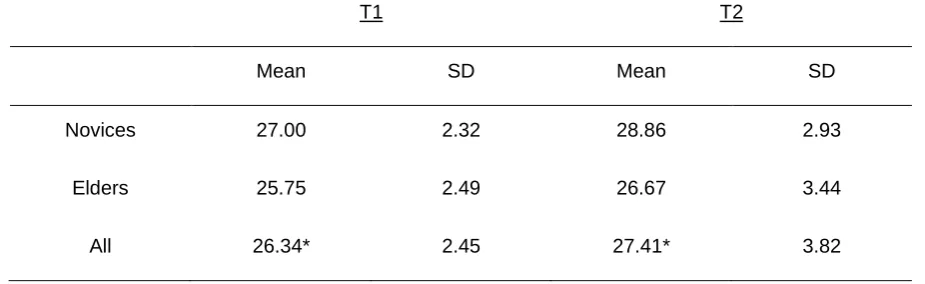
Performance on the RMET improved from T1 to T2, as shown in table 2. A review of
the S-W test indicated that normality was a reasonable assumption.
[Insert table 2 about here]
A mixed-factorial ANOVA was conducted with a within-participants factor of time
(T1, T2), a between-participants factor of experience (novices, elders), and RMET score as
the DV. There was a main effect for time, F(1, 27) = 4.26, p = .049, d = .79, with higher scores at T2. There was no main effect for experience, F(1, 27) = 1.94, p = .17, d = .54, and no interaction, F(1, 27) = 0.16, p = .69, d = .15. Post-hoc power analyses were conducted using the program G*Power 3 (Faul, Erdfelder, Lang, & Buchner, 1996). Small, medium, and
large values of d are considered to be 0.2, 0.5, and 0.8 respectively (Cohen, 1988). With an alpha level of 0.05 and a sample size of 29, this test had a power of 98% to detect a large
effect of .79, and a power of 36% to detect a medium effect of .54.
DISS
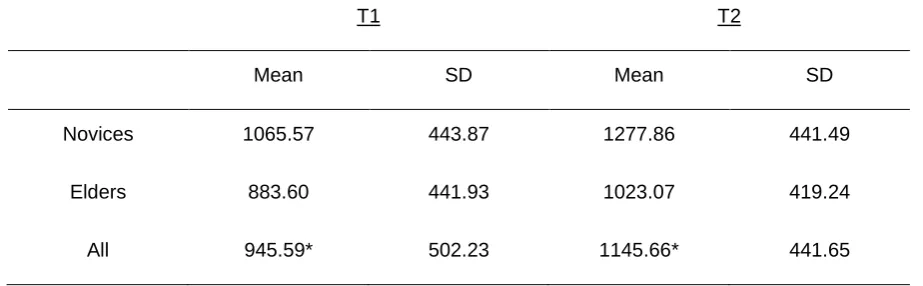
Performance on the DISS improved from T1 to T2, as shown in table 3. A review of
the S-W test indicated that normality was a reasonable assumption.
[Insert table 3 about here]
A mixed factorial ANOVA was conducted, with a within-participants factor of time
(T1, T2), a between-participants factor of experience (novices, elders), and score as the DV.
interaction, F(1, 27) = 0.021, p = .89, d = 0.06. Post-hoc power analysis indicated that the test had a power of 99% to detect a large effect of 1.02, and a power of 44% to detect a medium
effect of 0.60.
EEG Analysis
The analysis focused on theta amplitude, as this is regarded as a ‘signature’ of
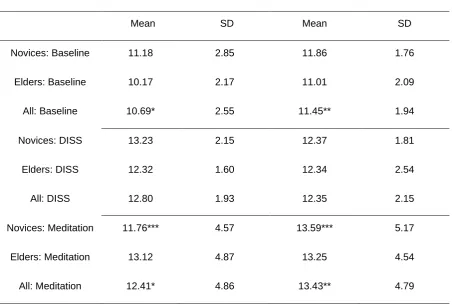
meditation (Josipovic, 2010). For elders, at both T1 and T2, amplitude was higher for
meditation than for baseline or the DISS. For novices, at T1, amplitude for meditation was
higher than for baseline, but lower than for the DISS; at T2, amplitude for meditation was
higher than for both baseline and DISS. Mean theta amplitude levels are shown in the table
and line graphs below. A review of the S-W test indicated that normality was a reasonable
assumption.
[Insert table 4 about here]
[Insert figure 1 about here]
Two mixed factorial ANOVAs were conducted – one for T1, one for T2 – comparing
meditation against baseline; each had a within-participants factor of segment (baseline,
meditation), a between-participants factor of experience (novices, elders), and mean theta
amplitude as the DV. The first ANOVA examined T1. There was a main effect for segment,
F(1, 27) = 7.14, p = .013, d = 1.03, with higher amplitude under meditation. There was no main effect for experience, F(1, 27) = 0.019, p = .89, d = 0.06, and no interaction, F(1, 27) = 0.31, p = .084, d = 0.68. Post-hoc power analyses indicated that this test had a power of 99% to detect a large effect of 1.03, and a power of 94% to detect a medium effect of 0.68. The
second ANOVA analyzed T2. There was a main effect for segment, F(1, 27) = 5.74, p = .024,
d = 0.92, with higher amplitude under meditation. There was no main effect for experience,
Post-hoc power analyses indicated that this test had a power of 99% to detect a large effect of
0.92, and a power of 10% to detect a small effect of 0.21.
Two further mixed factorial ANOVAs were conducted – one for T1, one for T2 –
comparing meditation against DISS. Both ANOVAs had a within-participants factor of
segment (DISS, meditation), a between-participants factor of experience (novices, elders),
and mean theta amplitude as the DV. These ANOVAs produced no significant results.
Additionally, dependent T-tests (split by groups) analyzed changes in amplitude from T1 to
T2. For both baseline and DISS there were no increases for either novices or elders. For
meditation, elders remained constant over time, t(27) = -0.18, p = .86, whereas novices had an increase in amplitude, t(27) = -1.72, p = .050, one-tailed, d = .375. Post-hoc power analysis indicated that this test had a power of 38% to detect a medium effect of .375.
Cognitive neuroscience interaction.
To explore the interaction of longitudinal changes in the cognitive and neuroscientific
variables, a differential was produced for each variable by subtracting T1 scores from the T2
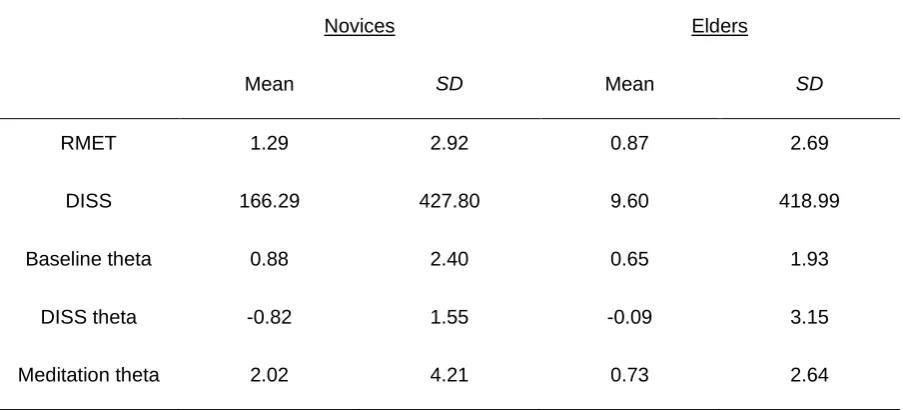
scores. There were positive differentials (i.e. longitudinal increases) for the RMET, DISS,
baseline theta, and meditation theta, but a negative differential for DISS theta, as shown in
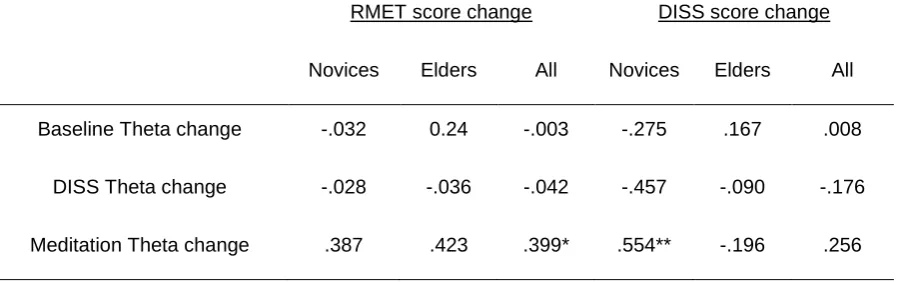
table 5. Table 6 shows correlations between these differentials.
[Insert table 5 about here]
[Insert table 6 about here]
Qualitative Results
One overarching theme emerged from our analysis: Through practicing meditation,
men reported learning to engage more constructively with their thoughts and feelings, which
in turn helped facilitate wellbeing (this sequence cannot be substantiated in any causal
experimental sense; however, participants made such links in their narratives). Under this
[Insert table 7 about here]
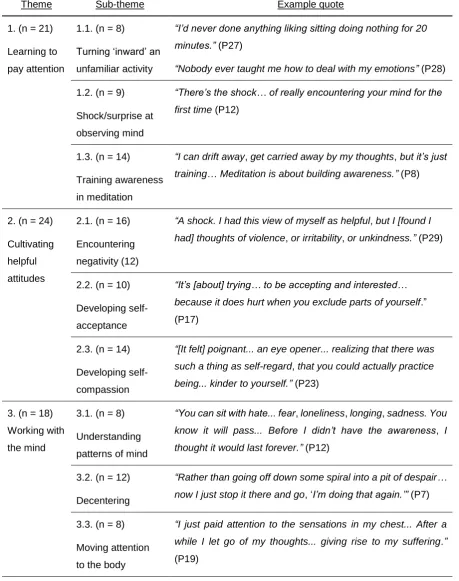
To simplify a complex picture, the themes and sub-themes are connected as follows
(with numerical labels for subthemes, detailed in table 7, in parentheses). Before turning to
meditation, participants described learning to suppress or distract themselves from difficult
feelings (e.g., blunting with alcohol). Thus deliberately engaging with their mind through
meditation was a radical shift (1.1.): ‘observing’ the mind was experienced as an unusual
activity (1.2), and men often (especially initially) had difficulties paying attention (1.3).
Turning attention inwards, men encountered troubling thoughts/feelings they had not
necessarily realized they harbored (2.1). However, gradually, participants cultivated qualities
to help moderate negative qualia, like acceptance (2.2), and compassion (2.3). As men
became better at meditation, they began to develop some understanding of the dynamics of
their mind (3.1), and acquired ‘tools’ to help manage difficult content, including decentering
(3.2.), refocusing attention (3.3.), and reappraising problems (3.4.). Most men also reported
deploying skills and qualities cultivated in meditation, e.g., mindfulness, in everyday life
(4.1.). Consequently, men were better able to manage their problems through enhanced
self-control in difficult situations (4.2.), a greater sense of freedom/choice (4.3.), and a capacity to
choose from diverse coping strategies (4.4.).
Discussion
The results indicate meditation is a way men can explore their internal world and
ameliorate dysfunctional patterns of emotional management, which are linked to mental
health problems in men (Addis, 2008). The contention that meditation facilitated wellbeing
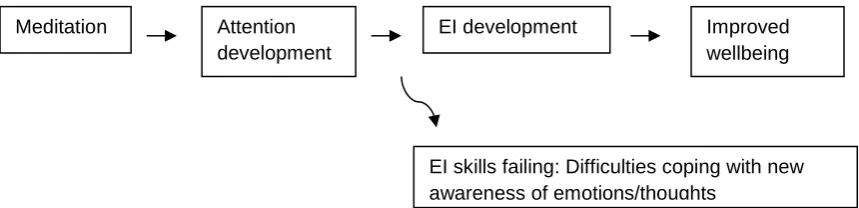
by helping men better manage their emotions rests upon a three-part argument: (1) meditation
helped men improve attention; (2) enhanced attentiveness to their inner world generated EI;
(3) improved EI in turn engendered wellbeing. This argument can be articulated as a
corroborate any of the assumptions of causality implied by the model; nevertheless, it is a
useful way of tentatively accounting for patterns in all data collected.
[Insert figure 2 about here]
This model does not imply that this route (via attention, and subsequent EI) is the only
way meditation can facilitate/impair wellbeing; for example, men suggested meditation could
‘spontaneously’ generate feelings of positive well-being, seemingly unrelated to the
development of attention skills. Nor should the model suggest a linear progression,
inexorably followed by all meditators, or even by all participants in our study. Although there
was suggestive evidence here for the development of attention, EI, and wellbeing, these three
strands of evidence were not connected experimentally. The methodological design did not
allow any temporal relatedness between the strands to be ascertained, where change in one
variable could be said to produce changes in another. That said, the sequentiality implied in
the model was suggested by the qualitative data: In the narrative, themes around training
attention tended to precede themes of EI development, which in turn usually preceded themes
around ability to better manage wellbeing (e.g., men first described working on awareness,
then subsequently feeling a greater sense of emotional control). Moreover, the model has
credibility on the basis of previous research; for example, using regression analyses, Schutte
and Malouff (2011) reported that EI ‘mediated’ the relationship between mindfulness and
subjective wellbeing.
Attention Development
First, there was evidence for attention development, with longitudinal improvements
in executive attention as indexed by the DISS. Without a control group, these improvements
cannot be definitively attributed to meditation. However, using the principle of benchmarking
(comparing effect sizes to previous trials; Minami, Serlin, Wampold, Kircher, & Brown,
attention, Heeren, van Broeck, and Philippot (2009) found a mindfulness intervention had a
large post-test effect size (d = .88), comparable to the present study, while matched controls had no such increase (d = .02). That said, there were no between-subjects differences on cognitive measures – in fact, novices scored non-significantly higher – seemingly
contradicting the idea of meditation-related cognitive improvement. However, as aging is
linked to cognitive decline (Singh-Manoux et al., 2012), elders’ greater meditation experience
possibly prevented a worse task performance (relative to novices), which might have been
expected given their greater age. Supporting this argument are studies showing that compared
to age-matched controls, meditators have greater cortical thickness in areas responsible for
attention processing, suggesting meditation may ameliorate age-related cortical thinning and
cognitive decline (Pagnoni & Cekic, 2007).
Evidence for meditation facilitating cognitive development becomes strengthened, yet
more complicated, when the EEG results are considered. Elevated theta amplitude,
particularly over frontal regions, signifies attention processing, and reflects an attentive
meditative state (Josipovic, 2010). Here, theta amplitude was higher during meditation
compared to baseline. However, there were interesting longitudinal trends. Elders showed
greater amplitude than novices during meditation at T1. However, this differential reduced
over time: Elders remained constant, whereas novices ‘caught up,’ suggesting an
improvement gradient leveling off with experience. Comparable studies assessing
longitudinal EEG change in healthy adults are rare – most assess cognitive decline associated
with aging or psychiatric disorders. However, the idea of an improvement gradient accords
with studies showing novice meditators improving attention abilities after just five days
training (Tang et al., 2007). With such increases over a short period, it is unrealistic to expect
However, intriguing patterns in the data mean caution is needed in simply viewing
theta as a marker of attentiveness. As theta synchronizes with increasing task demand
(Grunwald et al., 1999), it may be better to interpret theta as indicating mental effort. Our
study is unique in comparing meditation-related EEG profiles with profiles accompanying
performances on cognitive tasks. For novices, at T1, theta levels were higher under the DISS
than meditation, but at T2 this was reversed. However, while novices’ amplitude under the
DISS decreased longitudinally, their task score increased. It must be noted that this decline in
amplitude under DISS over time was not significant, and so one must be cautious about
attributing meaning to this finding. That said, when correlating changes over time in
amplitude under DISS with changes in task score (table 6), the result was significant. Thus, it
is possible that while novices managed a better task performance at T2, paradoxically they
required less mental effort to do so. In contrast, longitudinal increases in amplitude under
meditation suggest novices were more engaged during meditation at T2 than T1. This
longitudinal pattern in novices – greater ‘efficiency’ during task performance (less task
demand yet higher scores), but increased effort during meditation (greater task demand) –
may reflect the type of neurological changes experienced by those newer to meditation. In
contrast, elders’ theta levels under DISS and meditation were stable over time.
As such, both novices and elders improved their performance on cognitive and
affective tasks, but only for novices did these changes appear to be a function of altered
patterns of theta amplitude. We reiterate that any interpretations of causality are speculative:
Our design does not permit us to make causal links; moreover, some results underpinning
these interpretations were non-significant. Nevertheless, one might conjecture that novices’
improved task performance may have been linked to enhanced ability to sustain cognitive
‘effort’ in meditation, reflected in a positive correlation between changes task performance
under both DISS and meditation for elders suggests that any critical period of alterations in
theta activity took place earlier point in their meditation careers. Nevertheless, their ability to
sustain cognitive effort in meditation – stable longitudinally – still enabled elders’ to improve
on cognitive tasks, as if reaping ongoing benefits in cognitive development from prior efforts
in meditation. Future research on meditation with multiple longitudinal measurement points
may help to explore this issue further.
EI Development and Wellbeing
The second strand of the argument linking meditation to wellbeing was that attention
development enhanced EI. Here, the evidence is mainly qualitative: Emergent themes
mapped onto Mayer and Salovey's (1997) hierarchical EI model. (This correspondence had
not been predicted apriori.) First, learning to attend to their inner world, men developed
awareness of emotional experience (first branch). Then, as men encountered negative
thoughts/feelings, they cultivated attitudinal qualities to manage these, reflecting the second
branch (skill in generating emotions). With repeated meditation, men gained understanding of
mental patterns (third branch). Finally, men acquired tools to work with the mind, like
‘decentering,’ using these skills to defuse/alter negative emotions, reflecting the highest
branch (emotional management). Narratives of EI development were mirrored in longitudinal
increases on the RMET, which indexes the EI emotion recognition branch (Harrison et al.,
2009). Thus, apropos recent debates, results suggest that rather than a stable trait (e.g.
Petrides & Furnham, 2003), EI is an ability amenable to training (Mayer, Salovey, & Caruso,
2008), in this case through meditation. Although lack of a control group in our study means
caution is required in making such assessments, this accords with recent control-group
studies linking meditation to EI development (Chu, 2009).
Finally, the third strand of the central argument is that improved EI facilitated
constructively ‘work’ with their emotions, men could deal more effectively with distress, and
were less likely to respond in maladaptive ways. Furthermore, EI skills learned in meditation
extended beyond the practice session. Men deployed these skills to help cope with negative
feelings ‘in-situ,’ like trying to decenter during an argument. Furthermore, men described being able to relieve their distress and manage their emotions through various strategies –
whether cognitive (e.g., decentering), behavioral (e.g., exercising), or interpersonal (e.g.,
talking with companions). This strategic management indicates self-regulatory competence,
and further demonstrates the development of the fourth EI branch.
Given constructions of men as relatively emotionally restricted, the development of EI
skills in men is noteworthy. Our study suggests men can address, and even ameliorate, the
kind of normative male alexithymia which Levant (1992) suggests is common among men.
As such, the present study aligns with an emergent vein of work acknowledging adaptability
in men, and in how they engage with their emotions and broader wellbeing. However, our
study extends this work. Although recent studies show men challenging traditional masculine
norms around emotion – e.g., that men should be tough – this challenge often seems limited
to men being willing/able to simply express emotion (Bennett, 2007), or admit to emotional
problems and seek help (Oliffe et al., 2010). However, we go further in highlighting the
development of complex emotional management skills in men, showing men as emotionally
capable in ways hitherto not uncovered in depth. Through meditation, participants suggested
they had become less susceptible to pitfalls covered by Addis’ (2008) frameworks: Men were
better able to recognize negative emotions (cf. the masked depression framework) and
respond to distress in helpful ways (cf. the gendered responding framework), and were less
likely to enact harmful ‘externalizing’ behaviors (cf. the masculine depression framework).
outcomes (Aldao et al., 2010), our findings have important implications for men’s well-being.
Future work could explore ways to further understand and encourage EI development in men.
Limitations and Implications for Psychologists
Limitations of the study design means caution is needed in interpreting the results.
Aside from the lack of controls, it is possible that men’s improved performance over time on
the cognitive tasks was due to practice effects; however, a meta-analysis of practice effects in
cognitive testing suggested that a test-retest interval of a year – as here – was sufficient for
effects to be minimal (Hausknecht, Halpert, Di Paulo, & Gerrard, 2007). Regarding EEG, its
measurement poses challenges in terms of trying to analyze the functioning of a
three-dimensional brain from a two-three-dimensional topographical representation generated by
comparatively faint scalp potentials (Kaiser, 2005). Nevertheless, Kaiser argues that EEG can
still reliably assess psychological conditions and states. Finally, reflexivity requires an
acknowledgement that narratives produced in interviews are, to some extent, a performance,
and research interactions can represent an opportunity for men to perform masculinity as they
engage in ‘identity work’ (Allen, 2005). From this perspective, it could be asserted that men’s
narratives about acquiring emotional management skills were not indicative of cognitive
change, but reflected modes of discourse common to men in meditation circles. However,
without ignoring the potential for accounts to be influenced by discourses, the convergence of
the narrative and cognitive neuroscience results suggests these accounts are not merely
constructions, but reflect developments in men’s inner lives. Findings here are likely to be of
interest to psychologists exploring how men can be encouraged to do masculinity in ways
more conducive to mental health. We found that there is a greater degree of flexibility in the
way men can learn to manage their emotions than hitherto discussed in the literature.
Meditation may be one way men can ameliorate unhelpful patterns of restrictive
References
Addis, M. A. (2008). Gender and depression in men. Clinical Psychology: Science and Practice, 15(3), 153-168. doi:10.1111/j.1468-2850.2008.00125.x
Aftanas, L. I., & Golocheikine, S. A. (2001). Human anterior and frontal midline theta and
lower alpha reflect emotionally positive state and internalized attention:
High-resolution EEG investigation of meditation. Neuroscience Letters, 310(1), 57-60. Aldao, A., Nolen-Hoeksema, S. & Schweizer, S. (2010). Emotion-regulation strategies across
psychopathology: A meta-analytic review. Clinical Psychology Review, 30(2), 217-237. doi.org/10.1016/j.cpr.2009.11.004
Allen, L. (2005). Managing masculinity: Young men's identity work in focus groups. Qualitative Research, 5(1), 35-57. doi:10.1177/1468794105048650
Baron-Cohen, S., Wheelwright, S., Hill, J., Raste, Y., & Plumb, I. (2001). The ‘reading the
mind in the eyes’ test revised version: A study with normal adults, and adults with
Asperger Syndrome or High-Functioning Autism. Journal of Child Psychiatry and Psychiatry, 42, 241-252. doi:10.1111/1469-7610.00715
Barry, R. J., Clarke, A. R., McCarthy, R., & Selikowitz, M. (2002). EEG coherence in
attention-deficit/hyperactivity disorder: A comparative study of two DSM-IV types.
Clinical Neurophysiology, 113(4), 579-585. doi.org/10.1016/S1388-2457(02)00036-6 Bennett, K. M. (2007). "No sissy stuff": Towards a theory of masculinity and emotional
expression in older widowed men. Journal of Aging Studies, 21(4), 347-356. doi.org/10.1016/j.jaging.2007.05.002
Chiesa, A., Calati, R., & Serretti, A. (2011). Does mindfulness training improve cognitive
abilities? A systematic review of neuropsychological findings. Clinical Psychology Review,31(3), 449-464. doi.org/10.1016/j.cpr.2010.11.003
stress and negative mental health. Stress and Health, 26(2), 169-180. doi:10.1002/smi.1289
Cohen, J. (1988). Statistical Power Analysis for the Behavioral Sciences (2nd ed.). Hillsdale, NJ: Erlbaum.
Crawford, J. R., Parker, D. M., Stewart, L. E., Besson, J. A. O., & De Lacey, G. (1989).
Prediction of WAIS IQ with the National Adult Reading Test: Cross-validation and
extension. British Journal of Clinical Psychology, 28, 267-273. doi:10.1111/j.2044-8260.1989.tb01376.x
Crombie, D., Lombard, C., & Noakes, T. (2011). Increasing emotional intelligence in
cricketers: An intervention study. International Journal of Sports Science and Coaching, 6(1), 69-86. doi:10.1260/1747-9541.6.1.69
Cutcliffe, J. R. (2005). Adapt or adopt: Developing and transgressing the methodological
boundaries of grounded theory. Journal of Advanced Nursing, 51(4), 421-428. doi:10.1111/j.1365-2648.2005.03514.x
Dietl, T., Dirlich, G., Vogl, L., Lechner, C., & Strian, F. (1999). Orienting response and
frontal midline theta activity: a somatosensory spectral perturbation study. Clinical Neurophysiology,110(7), 1204-1209.
Faul, F., Erdfelder, E., Lang, A.-G., & Buchner, A. (2007). G*Power 3: A flexible statistical
power analysis program for the social, behavioral, and biomedical sciences. Behavior Research Methods, 39, 175-191. doi:10.3758/BF03193146
Gough, B. (2006). Try to be healthy, but don’t forgo your masculinity: Deconstructing men's
health discourse in the media. Social Science and Medicine, 63(9), 2476-2488. doi.org/10.1016/j.socscimed.2006.06.004
Grunwald, M., Weiss, T., Krause, W., Beyer, L., Rost, R., Gutberlet, I., & Gertz, H. J. (1999).
information. Neuroscience Letters,260(3), 189-192. doi.org/10.1016/S0304-3940 (98)00990-2
Harrison, A., Sullivan, S., Tchanturia, K., & Treasure, J. (2009). Emotion recognition and
regulation in anorexia nervosa. Clinical Psychology and Psychotherapy, 16(4): 348- 356. doi:10.1002/cpp.628
Hausknecht, J. P., Halpert, J. A., Di Paulo, N. T., & Gerrard, M. O. M. (2007). Retesting in
selection: A meta-analysis of practice effects for tests of cognitive ability. Journal of Applied Psychology, 92(2), 373-385.doi:10.1037/0021-9010.92.2.373
Heeren, A., Van Broeck, N., & Philippot, P. (2009). The effects of mindfulness on executive
processes and autobiographical memory specificity. Behaviour Research and Therapy,47(5), 403-409. doi:10.1016/j.brat.2009.01.017
Honkalampi, K., Hintikka, J., Tanskanen, A., Lehtonen, J., & Viinamäki, H. (2000).
Depression is strongly associated with alexithymia in the general population. Journal of Psychosomatic Research,48(1), 99-104. doi.org/10.1016/S0022-3999(99)00083-5 Josipovic, Z. (2010). Duality and nonduality in meditation research. Consciousness and
Cognition, 19(4), 1119-1121. doi.org/10.1016/j.concog.2010.03.016
Kaiser, D. A. (2005). Basic principles of quantitative EEG. Journal of Adult Development, 12(2/3), 99-104. doi:10.1007/s10804-005-7025-9
Kennedy, D., Little, W., & Scholey, A. B. (2004). Attenuation of laboratory-induced stress in
humans after acute administration of melissa officinalis (Lemon Balm).
Psychosomatic Medicine,66, 607-613. doi:10.1097/01.psy.0000132877.72833.71 Levant, R. F. (1992). Toward the reconstruction of masculinity. Journal of Family
Psychology, 5, 379-402. doi:10.1037/0893-3200.5.3-4.379
Lomas, T., Cartwright, T., Edginton, T., & Ridge, D. (2012). ‘I was so done in that I just
distress and turning to meditation. Health. Advance online publication. doi: 10.1177/1363459312451178
Mac an Ghaill, M., & Haywood, C. (2012). Understanding boys’: Thinking through boys,
masculinity and suicide. Social Science and Medicine, 74(4), 482-289. Mars, T. S., & Abbey, H. (2010). Mindfulness meditation practise as a healthcare
intervention: A systematic review. International Journal of Osteopathic Medicine, 13(2), 56-66. doi.org/10.1016/j.ijosm.2009.07.005
Marshall, M. (1996). Sampling for qualitative research. Family Practice, 13(6), 522-525. doi:10.1093/fampra/13.6.522
Mayer, J.D., Caruso, D.R., & Salovey, P. (2000). Selecting a Measure of Emotional
Intelligence: The Case for Ability Scales. In R. Bar-On, J. D. A. Parker (Eds.),
Handbook of Emotional Intelligence (pp.240-242). Jossey-Bass, New York.
Mayer, J. D., & Salovey, P. (1997). What is emotional intelligence? In P. Salovey and D. J.
Sluyter (Eds.), Emotional Development and Emotional Intelligence (pp.3-31). New York: Basic Books.
Mayer, J. D., Salovey, P., & Caruso, D. (2008). Emotional intelligence: New ability or
eclectic traits? American Psychologist, 63(6), 503-517. doi:10.1037/0003-066X.63.6.503 McManus, S., Meltzer, H., Brugha, T., Bebbington, P., & Jenkins, R. (2009). Adult
psychiatric morbidity in England, 2007. London: National Centre for Social Research. Minami, T., Serlin, R. C., Wampold, B. E., Kircher, J. C., & Brown, G. S. (2008). Using
clinical trials to benchmark effects produced in clinical practice. Quality & Quantity, 42(4), 513-525. doi:10.1007/s11135-006-9057-z
Nelson, H. R., & Willison, J. R. (1991). National Adult Reading Test (NART): Test Manual (part II). Windsor, UK: NFER-Nelson.
meditation: Neurotransmitter and neurochemical considerations. Medical Hypotheses, 61(2), 282-291. doi:10.1016/S0306-9877(03)00175-0
Norman, W., & Shallice, T. (1986). Attention to action. In: R. J. Davidson, G. E. Schwartz,
& D. Shapiro (Eds.), Consciousness and Self Regulation: Advances in Research and Theory, Vol. 4 (pp.1-18). New York: Plenum.
Office for National Statistics (2011). Health: Suicides. Retrieved from http://www.statistics. gov.uk/cci/nugget.asp?id=1092.
Oliffe, J. L., Kelly, M. T., Johnson, J. L., Bottorff, J. L., Gray, R. E., Ogrodniczuk, J. S., &
Galdas, P. M. (2010). Masculinities and college men's depression: Recursive
relationships. Health Sociology Review, 19(4), 465-477.
Pagnoni, G., & Cekic, M. (2007). Age effects on gray matter volume and attentional
performance in Zen meditation. Neurobiology of Aging, 28(10), 1623-1627. doi.org/10.1016/j.neurobiolaging.2007.06.008
Petrides, K. V., & Furnham, A. (2003). Trait emotional intelligence: Behavioural validation
in two studies of emotion recognition and reactivity to mood induction. European Journal of Personality, 17, 39-57. doi:10.1002/per.466
Pollack, W. S. (1998). Mourning, melancholia, and masculinity: Recognizing and treating
depression in men. In W. S. Pollack & R. F. Levant (Eds.), New Psychotherapy for Men (pp.147-166). Hoboken, NJ: John Wiley and Sons.
Posner, M. I., & Petersen, S. E. (1990). The attention system of the human brain. Annual Review of Neuroscience, 13, 25-42. doi:10.1146/annurev.ne.13.030190.000325 Pleck, J. H. (1995). The gender role strain paradigm: An update. In R. F. Levant & W. S.
Pollack (Eds.), A New Psychology of Men (pp.11-32). New York: Basic Books. Riska, E. (2009). Men's mental health. In A. Broom & P. Tovey (Eds.), Men's Health: Body,
Schutte, N. S., & Malouff, J. M. (2011). Emotional intelligence mediates the relationship
between mindfulness and subjective well-being. Personality and Individual Differences, 50(7), 1116-1119. doi.org/10.1016/j.paid.2011.01.037
Singh-Manoux, A., Kivimaki, M., Glymour, M., Elbaz, A., Berr, C., Ebmeier, K., …
Dugravot, A. (2012). Timing of onset of cognitive decline: Results from Whitehall II
prospective cohort study. British Medical Journal, 344, d7622. Advance online publication. doi:10.1136/bmj.d7622.
Strauss, A., & Corbin, J. (1998). Basics of qualitative research: Techniques and procedures for developing grounded theory. Thousand Oaks, CA: Sage
Tang, Y., Ma, Y., Wang, J., Fan, Y., Feng, S., Lu, Q., … Posner, M. I. (2007). Short-term
meditation training improves attention and self-regulation. Proceedings of the
National Academy of Sciences,104(43), 17152-17156. doi:10.1073/pnas.0707678104 Teasdale, J. D., Segal, Z. V., Williams, J. M. G., Ridgeway, V. A., Soulsby, J. M., & Lau, M.
A. (2000). Prevention of relapse/recurrence in major depression by mindfulness-based
cognitive therapy, Journal of Consulting and Clinical Psychology, 68(4), 615-623. doi:10.1037/0022-006X.68.4.615
Vellante, M., Baron-Cohen, M., Melis, M., Marrone, M., Petrotto, D. R., Masala, C., & Preti,
A. (2012). The “Reading the mind in the eyes” test: Systematic review of
psychometric properties and a validation study in Italy. Cognitive Neuropsychiatry.
Advance online publication.doi:10.1080/13546805.2012.721728
Walsh, R., & Shapiro, S. L. (2006). The meeting of meditative disciplines and western
psychology: A mutually enriching dialogue. American Psychologist, 61(3), 227-239. doi:10.1037/0003-066X.61.3.227
Appendices
EEG recording
EEG signals were acquired using a NeXus™ EEG amplifier with 24 bit AD converter
(Mind Media BV), a wireless two-channel recording system for bilateral monitoring,
connected via bluetooth to a laptop (Acer Aspire; 5920G; 2GHz Processor; 4GB RAM),
where signals were recorded, processed in real-time, and analyzed using BioTrace+ software.
Oscillations were registered by Blue Disc Electrodes attached to the scalp. Participants’ skin
at the electrode sites was scrubbed with ‘NuPrep skin prepping gel,’ and Ten20 conductive
paste applied to the electrode sites. Electrodes were connected to the bluetooth unit through
the NeXus EXG sensor, a dual channel sensor using high-grade connectors (brushed
aluminum with carbon coated cables and active shielding). Raw EEG signals were amplified,
with band limits of .01 and 64 Hz, and stop-band filtering (48-52 Hz) used to eliminate mains
interference. Amplified signals were sampled at a rate of 1024 per second; from this EEG
channels were sampled at 256 samples per second, digitally filtered with a IIR Butterworth
Bandpass 3rd order filter, and root mean squared in 1/8 second epochs in frequency bands:
Theta (4-8Hz); Alpha (8-12Hz); SMR (12–15 Hz); Beta (15–21 Hz) and Gamma (34–45Hz).
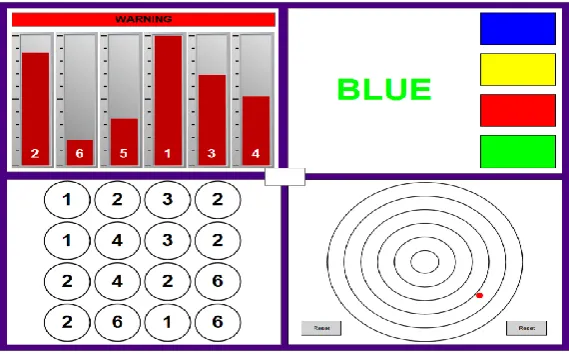
DISS tasks
The details of the four tasks used, as shown in figure 3, are detailed below.
[Insert figure 3 about here]
• Visual warning (top left): Six bars rise up at different speeds; when one reaches the
top, numbers appear on the bars reflecting relative position. Participants were required
to click the bars in height order, tallest to shortest. Ten points awarded for successful
de-activation (numbers clicked in correct order).
• ‘Stroop’(top right): Participants were required to identify the font of the color-name
(e.g., for ‘BLUE’ written in green font, as above, the correct answer is green). Ten
points awarded for correct responses. Ten points subtracted for incorrect responses,
and for failure to respond within 20 seconds.
• Number tap(bottom left): Each grid presentation features a different configuration of
numbers. Participants were required to click on all the instances of the highest digit on
any given configuration. Ten points awarded for grid completion. Ten points deducted
for failure to respond within 40 seconds.
• Visual monitoring(bottom right): A dot travels outward from the center. Participants
were required to press reset before the dot left the outer-most circle, letting it travel as
far as possible before doing so. Two points awarded for every circle passed through.
Ten points deducted for every 0.5 second delay in pressing reset after the dot had left
Table 1
Demographic descriptive statistics of the sample of meditators
Age IQ Years meditating Hrs/week
meditating
Mean SD Mean SD Mean SD Mean SD
Novices 38.36 9.39 114.07 6.85 5.14 2.54 3.32 1.51
Table 2
RMET task scores: Normality tests and mean +/- SD (novices and elders at T1 and T2)
T1 T2
Mean SD Mean SD
Novices 27.00 2.32 28.86 2.93
Elders
All
25.75
26.34*
2.49
2.45
26.67
27.41*
3.44
3.82
Note. RMET=Reading the Mind in the Eyes task. DV is the number of correct identifications of
emotions in a series of 36 photos.
Table 3
DISS task scores: Normality tests and mean +/- SD (novices and elders at T1 and T2)
T1 T2
Mean SD Mean SD
Novices 1065.57 443.87 1277.86 441.49
Elders
All
883.60
945.59*
441.93
502.23
1023.07
1145.66*
419.24
441.65
Note. DISS=Defined Intensity Stressor Simulation. DV is calculated by the program, based on an
aggregation of rewards and penalties accumulated across all four concurrent tasks.
Table 4
Theta amplitude: Normality and mean +/- SD during baseline, DISS and meditation (novices and
elders at T1 and T2)
T1 T2
Mean SD Mean SD
Novices: Baseline 11.18 2.85 11.86 1.76
Elders: Baseline
All: Baseline
10.17
10.69*
2.17
2.55
11.01
11.45**
2.09
1.94
Novices: DISS 13.23 2.15 12.37 1.81
Elders: DISS 12.32 1.60 12.34 2.54
All: DISS 12.80 1.93 12.35 2.15
Novices: Meditation 11.76*** 4.57 13.59*** 5.17
Elders: Meditation 13.12 4.87 13.25 4.54
All: Meditation 12.41* 4.86 13.43** 4.79
* T1 ANOVA main effect for segment (baseline, meditation), p = .013
** T2 ANOVA main effect for segment (baseline, meditation), p = .024
Table 5
Mean +/- SD of the longitudinal differential for the RMET, DISS, baseline theta, DISS theta and
meditation theta (novices and elders)
Novices Elders
Mean SD Mean SD
RMET 1.29 2.92 0.87 2.69
DISS 166.29 427.80 9.60 418.99
Baseline theta 0.88 2.40 0.65 1.93
DISS theta -0.82 1.55 -0.09 3.15
Meditation theta 2.02 4.21 0.73 2.64
Note. The longitudinal differential was calculated by subtracting T1 measurements from T2
Table 6
Pearson’s product moment correlation of the change over time in cognitive task scores (T2 scores –
T1 scores) and in theta amplitude (T2 amplitude – T1 amplitude) (all participants together, and split by
group)
RMET score change DISS score change
Novices Elders All Novices Elders All
Baseline Theta change -.032 0.24 -.003 -.275 .167 .008
DISS Theta change -.028 -.036 -.042 -.457 -.090 -.176
Meditation Theta change .387 .423 .399* .554** -.196 .256
* p = .032
Table 7
Qualitative themes (with number of participants endorsing theme in brackets)
Theme Sub-theme Example quote
1. (n = 21)
Learning to
pay attention
1.1. (n = 8)
Turning ‘inward’ an
unfamiliar activity
“I’d never done anything liking sitting doing nothing for 20 minutes.” (P27)
“Nobody ever taught me how to deal with my emotions” (P28)
1.2. (n = 9)
Shock/surprise at
observing mind
“There’s the shock… of really encountering your mind for the
first time (P12)
1.3. (n = 14)
Training awareness
in meditation
“I can drift away, get carried away by my thoughts, but it’s just training… Meditation is about building awareness.” (P8)
2. (n = 24)
Cultivating
helpful
attitudes
2.1. (n = 16)
Encountering
negativity (12)
“A shock. I had this view of myself as helpful, but I [found I had] thoughts of violence, or irritability, or unkindness.” (P29)
2.2. (n = 10)
Developing
self-acceptance
“It’s [about] trying… to be accepting and interested… because it does hurt when you exclude parts of yourself.”
(P17)
2.3. (n = 14)
Developing
self-compassion
“[It felt] poignant... an eye opener... realizing that there was such a thing as self-regard, that you could actually practice
being... kinder to yourself.” (P23)
3. (n = 18)
Working with
the mind
3.1. (n = 8)
Understanding
patterns of mind
“You can sit with hate... fear, loneliness, longing, sadness. You know it will pass... Before I didn’t have the awareness, I thought it would last forever.” (P12)
3.2. (n = 12)
Decentering
“Rather than going off down some spiral into a pit of despair… now I just stop it there and go, ‘I’m doing that again.’” (P7)
3.3. (n = 8)
Moving attention
to the body
“I just paid attention to the sensations in my chest... After a while I let go of my thoughts... giving rise to my suffering.”
3.4. (n = 7)
Contextualizing
difficulties
“I try to [keep] a sense of proportion… You’re just another dot in the universe.” (P4)
4. (n = 22)
Managing
wellbeing
through
mindfulness ‘in action’
4.1. (n = 17)
Awareness in
general life
“Driving is good practice. Can you be compassionate with other road users?... Meditation is all the time” (P12)
4.2. (n = 9)
Self-control
“I used to shout a lot. [Then] I started getting this thinking pause where I’d think, ‘Last time… it didn’t do any good, so I won't shout.” (P27)
4.3. (n = 7)
Freedom of
choice
“[I have] more choice to act and behave in certain ways. I can make lifestyle choices which have an impact on my
health…habits that lead me away from well-being [are] less impulsive.” (P17)
4.4. (n = 6)
Meta-coping
ability
Figure 1
Mean +/- SD theta amplitude during baseline, DISS and meditation (novices and elders at T1 and T2) 0
2 4 6 8 10 12 14 16 18 20 Mean
trans-hemispheric theta amplitude (µV) -Group mean for each segment
T1 segment T2 segment
Novices
Figure 2
Model linking meditation and wellbeing
Improved wellbeing Attention
development
EI development Meditation
Figure 3
Online Table 1
Sociodemographic characteristics of the sample of 30 male meditators
Age
Years
Participants
20 – 30
n = 4
30 – 40
7
40 – 50
14
50 – 60
4
60 +
1
Meditation experience
No. of years
Participants
0 – 5
7
5 – 10
8
10 – 15
7
15 – 20
Online Table 2
Main interview probes
Example question clause Narrative prompts
e.g. “Say something about…”
“Can I ask you about…”
“…life before meditation?” (set opening request)
“…why you decided to begin meditating?”
“…your first experience of meditation?”
“… subsequent experiences of practicing meditation?”
“…positive experiences in meditation?”
“…negative experiences in meditation?”
“…where do you see yourself going with meditation in the future?”
Note. These main prompts were often followed up by further prompts designed to draw out narratives,