White Rose Research Online URL for this paper:
http://eprints.whiterose.ac.uk/136551/
Version: Published Version
Article:
Alfirevic, Zarko, Keeney, Edna, Dowswell, Therese et al. (6 more authors) (2016) Which
method is best for the induction of labour?: A systematic review, network meta-analysis
and cost-effectiveness analysis. Health technology assessment. ISSN 2046-4924
https://doi.org/10.3310/hta20650
[email protected] https://eprints.whiterose.ac.uk/
Reuse
Items deposited in White Rose Research Online are protected by copyright, with all rights reserved unless indicated otherwise. They may be downloaded and/or printed for private study, or other acts as permitted by national copyright laws. The publisher or other rights holders may allow further reproduction and re-use of the full text version. This is indicated by the licence information on the White Rose Research Online record for the item.
Takedown
If you consider content in White Rose Research Online to be in breach of UK law, please notify us by
VOLUME 20 ISSUE 65 AUGUST 2016 ISSN 1366-5278
Which method is best for the induction of labour?
A systematic review, network meta-analysis and
cost-effectiveness analysis
Zarko Alfirevic, Edna Keeney, Therese Dowswell, Nicky J Welton,
Nancy Medley, Sofia Dias, Leanne V Jones, Gillian Gyte
of labour? A systematic review,
network meta-analysis and
cost-effectiveness analysis
Zarko Alfirevic,
1
* Edna Keeney,
2
Therese Dowswell,
1
Nicky J Welton,
2
Nancy Medley,
1
Sofia Dias,
2
Leanne V Jones,
1
Gillian Gyte
1
and
Deborah M Caldwell
2
1
Centre for Women
’
s Health Research, University of Liverpool and Liverpool
Women
’
s Hospital, Liverpool, UK
2
School of Social and Community Medicine, University of Bristol, Bristol, UK
*Corresponding author
Declared competing interests of authors:Sofia Dias reports grants from Novartis and Pfizer, outside the
submitted work. Nicky J Welton reports grants from Pfizer, outside the submitted work. Zarko Alfirevic reports being an author on some of the trials included in the review (but was not involved in assessing these trials for eligibility or risk or bias). He is a member of the Health Technology Assessment
commissioning board.
Published August 2016
DOI: 10.3310/hta20650This report should be referenced as follows:
Alfirevic Z, Keeney E, Dowswell T, Welton NJ, Medley N, Dias S,et al. Which method is best for the induction of labour? A systematic review, network meta-analysis and cost-effectiveness analysis.Health Technol Assess2016;20(65).
ISSN 1366-5278 (Print)
ISSN 2046-4924 (Online)
Impact factor: 4.058
Health Technology Assessmentis indexed in MEDLINE, CINAHL, EMBASE, The Cochrane Library and the ISI Science Citation Index.
This journal is a member of and subscribes to the principles of the Committee on Publication Ethics (COPE) (www.publicationethics.org/).
Editorial contact: [email protected]
The full HTA archive is freely available to view online at www.journalslibrary.nihr.ac.uk/hta. Print-on-demand copies can be purchased from the report pages of the NIHR Journals Library website: www.journalslibrary.nihr.ac.uk
Criteria for inclusion in theHealth Technology Assessmentjournal
Reports are published inHealth Technology Assessment(HTA) if (1) they have resulted from work for the HTA programme, and (2) they are of a sufficiently high scientific quality as assessed by the reviewers and editors.
Reviews inHealth Technology Assessmentare termed‘systematic’when the account of the search appraisal and synthesis methods (to minimise biases and random errors) would, in theory, permit the replication of the review by others.
HTA programme
The HTA programme, part of the National Institute for Health Research (NIHR), was set up in 1993. It produces high-quality research information on the effectiveness, costs and broader impact of health technologies for those who use, manage and provide care in the NHS.
‘Health technologies’are broadly defined as all interventions used to promote health, prevent and treat disease, and improve rehabilitation and long-term care.
The journal is indexed in NHS Evidence via its abstracts included in MEDLINE and its Technology Assessment Reports inform National Institute for Health and Care Excellence (NICE) guidance. HTA research is also an important source of evidence for National Screening Committee (NSC) policy decisions.
For more information about the HTA programme please visit the website: http://www.nets.nihr.ac.uk/programmes/hta
This report
The research reported in this issue of the journal was funded by the HTA programme as project number 12/126/17. The contractual start date was in September 2013. The draft report began editorial review in March 2015 and was accepted for publication in October 2015. The authors have been wholly responsible for all data collection, analysis and interpretation, and for writing up their work. The HTA editors and publisher have tried to ensure the accuracy of the authors’report and would like to thank the reviewers for their constructive comments on the draft document. However, they do not accept liability for damages or losses arising from material published in this report.
This report presents independent research funded by the National Institute for Health Research (NIHR). The views and opinions expressed by authors in this publication are those of the authors and do not necessarily reflect those of the NHS, the NIHR, NETSCC, the HTA programme or the Department of Health. If there are verbatim quotations included in this publication the views and opinions expressed by the
interviewees are those of the interviewees and do not necessarily reflect those of the authors, those of the NHS, the NIHR, NETSCC, the HTA programme or the Department of Health.
© Queen’s Printer and Controller of HMSO 2016. This work was produced by Alfirevicet al. under the terms of a commissioning contract issued by the Secretary of State for Health. This issue may be freely reproduced for the purposes of private research and study and extracts (or indeed, the full report) may be included in professional journals provided that suitable acknowledgement is made and the reproduction is not associated with any form of advertising. Applications for commercial reproduction should be addressed to: NIHR Journals Library, National Institute for Health Research, Evaluation, Trials and Studies Coordinating Centre, Alpha House, University of Southampton Science Park, Southampton SO16 7NS, UK.
Editor-in-Chief
NIHR Journals Library
Professor Tom Walley Director, NIHR Evaluation, Trials and Studies and Director of the EME Programme, UK
NIHR Journals Library Editors
Professor Ken Stein Chair of HTA Editorial Board and Professor of Public Health, University of Exeter Medical School, UK
Professor Andree Le May Chair of NIHR Journals Library Editorial Group (EME, HS&DR, PGfAR, PHR journals)
Dr Martin Ashton-Key Consultant in Public Health Medicine/Consultant Advisor, NETSCC, UK
Professor Matthias Beck Chair in Public Sector Management and Subject Leader (Management Group), Queen’s University Management School, Queen’s University Belfast, UK
Professor Aileen Clarke Professor of Public Health and Health Services Research, Warwick Medical School, University of Warwick, UK
Dr Tessa Crilly Director, Crystal Blue Consulting Ltd, UK
Ms Tara Lamont Scientific Advisor, NETSCC, UK
Professor Elaine McColl Director, Newcastle Clinical Trials Unit, Institute of Health and Society, Newcastle University, UK
Professor William McGuire Professor of Child Health, Hull York Medical School, University of York, UK
Professor John Norrie Health Services Research Unit, University of Aberdeen, UK
Professor John Powell Consultant Clinical Adviser, National Institute for Health and Care Excellence (NICE), UK
Professor James Raftery Professor of Health Technology Assessment, Wessex Institute, Faculty of Medicine, University of Southampton, UK
Dr Rob Riemsma Reviews Manager, Kleijnen Systematic Reviews Ltd, UK
Professor Helen Roberts Professor of Child Health Research, UCL Institute of Child Health, UK
Professor Helen Snooks Professor of Health Services Research, Institute of Life Science, College of Medicine, Swansea University, UK
Professor Jim Thornton Professor of Obstetrics and Gynaecology, Faculty of Medicine and Health Sciences, University of Nottingham, UK
Please visit the website for a list of members of the NIHR Journals Library Board: www.journalslibrary.nihr.ac.uk/about/editors
Editorial contact: [email protected]
Professor Geoffrey Meads Professor of Health Sciences Research, Health and Wellbeing Research and Development Group, University of Winchester, UK
Professor Hywel Williams Director, HTA Programme, UK and Foundation Professor and Co-Director of the Centre of Evidence-Based Dermatology, University of Nottingham, UK
Professor Jonathan Ross Professor of Sexual Health and HIV, University Hospital Birmingham, UK
Dr Eugenia Cronin Senior Scientific Advisor, Wessex Institute, UK
Abstract
Which method is best for the induction of labour?
A systematic review, network meta-analysis and
cost-effectiveness analysis
Zarko Alfirevic,
1* Edna Keeney,
2Therese Dowswell,
1Nicky J Welton,
2Nancy Medley,
1Sofia Dias,
2Leanne V Jones,
1Gillian Gyte
1and Deborah M Caldwell
21Centre for Women’s Health Research, University of Liverpool and Liverpool Women’s Hospital,
Liverpool, UK
2School of Social and Community Medicine, University of Bristol, Bristol, UK
*Corresponding author [email protected]
Background:More than 150,000 pregnant women in England and Wales have their labour induced each year. Multiple pharmacological, mechanical and complementary methods are available to induce labour.
Objective:To assess the relative effectiveness, safety and cost-effectiveness of labour induction methods and, data permitting, effects in different clinical subgroups.
Methods:We carried out a systematic review using Cochrane methods. The Cochrane Pregnancy and Childbirth Group’s Trials Register was searched (March 2014). This contains over 22,000 reports of
controlled trials (published from 1923 onwards) retrieved from weekly searches of OVID MEDLINE (1966 to current); Cochrane Central Register of Controlled Trials (The Cochrane Library); EMBASE (1982 to current); Cumulative Index to Nursing and Allied Health Literature (1984 to current); ClinicalTrials.gov; the World Health Organization International Clinical Trials Registry Portal; and hand-searching of relevant conference proceedings and journals. We included randomised controlled trials examining interventions to induce labour compared with placebo, no treatment or other interventions in women eligible for third-trimester induction. We included outcomes relating to efficacy, safety and acceptability to women. In addition, for the economic analysis we searched the Database of Abstracts of Reviews of Effects, and Economic Evaluations Databases, NHS Economic Evaluation Database and the Health Technology Assessment database. We carried out a network meta-analysis (NMA) using all of the available evidence, both direct and indirect, to produce estimates of the relative effects of each treatment compared with others in a network. We developed a de novo decision tree model to estimate the cost-effectiveness of various methods. The costs included were the intervention and other hospital costs incurred (price year 2012–13). We reviewed the literature to identify preference-based utilities for the health-related outcomes in the model. We calculated incremental cost-effectiveness ratios, expected costs, utilities and net benefit. We represent uncertainty in the optimal intervention using cost-effectiveness acceptability curves.
insufficient data or there was too much uncertainty to identify which treatments performed‘best’. Few studies collected information on women’s views. Owing to incomplete reporting of the VD within 24 hours outcome, the cost-effectiveness analysis could compare only 20 interventions. The analysis
suggested that most interventions have similar utility and differ mainly in cost. With a caveat of considerable uncertainty, titrated (low-dose) misoprostol solution and buccal/sublingual misoprostol had the highest likelihood of being cost-effective.
Limitations:There was considerable uncertainty in findings and there were insufficient data for some planned subgroup analyses.
Conclusions:Overall, misoprostol and oxytocin with amniotomy (for women with favourable cervix) is more successful than other agents in achieving VD within 24 hours. The ranking according to safety of different methods was less clear. The cost-effectiveness analysis suggested that titrated (low-dose) oral misoprostol solution resulted in the highest utility, whereas buccal/sublingual misoprostol had the lowest cost. There was a high degree of uncertainty as to the most cost-effective intervention.
Future work:Future trials should be powered to detect a method that is more cost-effective than misoprostol solution and report outcomes included in this NMA.
Study registration:This study is registered as PROSPERO CRD42013005116.
Contents
List of tables xi
List of figures xv
List of boxes xvii
Glossary xix
List of abbreviations xxiii
Plain English summary xxv
Scientific summary xxvii
Chapter 1Introduction 1
Description of the health problem 1
Description of available interventions and current service provision/policy 2
Pharmacological methods for the induction of labour 2
Mechanical and physical methods for induction of labour 4
Complementary and alternative methods for induction of labour 5 Overall aims and objectives of assessment 6 Specification of the PICO research question 6 Definition of the decision problem for the economic evaluation 6
Stakeholder involvement in project 6
Overview of report 7
Chapter 2Methods for assessment of clinical effectiveness 9
Methods for reviewing clinical effectiveness 9
Identification of studies 9
Inclusion and exclusion criteria 9
Data extraction and risk-of-bias assessment 10
Methods of evidence synthesis 11
Network meta-analysis 11
Pairwise meta-analyses 13
Chapter 3Results for assessment of clinical effectiveness 15
Results of the systematic review 15
Characteristics of women participating in included trials 18
Other trial characteristics 19 Results: network and pairwise meta-analysis 19
Vaginal delivery not achieved within 24 hours 23
Caesarean section 29
Instrumental delivery 41
Uterine hyperstimulation with fetal heart rate changes 41
Neonatal and maternal mortality and severe morbidity 45
Neonatal intensive care unit admission 47
Complementary methods 60
Subgroup analyses 60
Subgroup analysis for intact membranes compared with ruptured membranes 60
Subgroup analysis for women with low Bishop score (<6) or higher Bishop score (≥6) 71
Summary 72
Chapter 4Assessment of cost-effectiveness 77
Introduction 77
Decision question 77
Population 77
Interventions 77
Outcomes 77
Previous economic evaluations 79
Health-economic model 79
Inputs to economic model 80
Effectiveness inputs 80
Cost inputs 82
Utility inputs 87
Methods of economic evaluation 91
Results 92
Base-case results 92
Sensitivity analysis to assumed utilities 96
Subgroup analysis (i): women with intact membranes only 96
Subgroup analysis (ii): women with an unfavourable cervix only 98
Value-of-information analysis 101
Limitations 102
Conclusions 102
Chapter 5Discussion 105
Statement of overall/principal findings 105
Key findings of the systematic review and network meta-analysis 105
Key findings of the cost-effectiveness analysis 106
Strengths 106
Limitations 107
Systematic review and network meta-analysis 107
Cost-effectiveness analysis 108 Discussion of the clinical implications of findings 109 Recommendations for future research 110
Acknowledgements 113
References 115
Appendix 1Project steering group 179
Appendix 2Search strategy: Cochrane Pregnancy and Childbirth Group 181
Appendix 3Reference list for excluded studies 193
Appendix 4Characteristics of excluded studies 231
Appendix 6Characteristics of included studies 305
Appendix 7Characteristics of study participants 371
Appendix 8Example OpenBUGS code 391
Appendix 9Details of priors and convergence checks 393
Appendix 10Total number of arms in trials 395
Appendix 11Model fit and heterogeneity 397
Appendix 12Results of active versus active comparisons from network
meta-analysis 399
Appendix 13Sensitivity analysis excluding trials at high risk of bias 485
Appendix 14Data files for all outcomes considered in network meta-analysis 489
Appendix 15Subgroup analysis for intact membranes compared with
ruptured membranes 559
Appendix 16Joint estimation of intervention efficacy for use in economic model 569
Appendix 17Review of economic evidence 573
List of tables
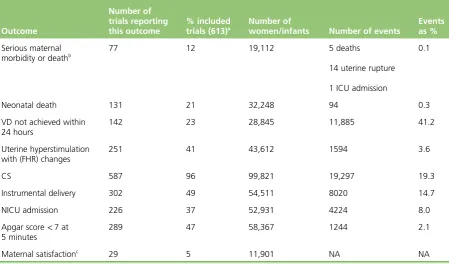
TABLE 1 Outcome data reported 16
TABLE 2 Number of included clinical trials reporting participant characteristics 18
TABLE 3 Odds ratios and 95% CrI for failure to achieve VD within 24 hours for
every intervention compared with placebo 23
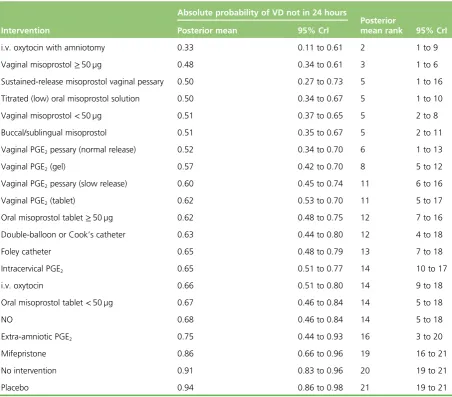
TABLE 4 Absolute probability of VD not occurring within 24 hours of induction for all 19 interventions and placebo/no intervention included in the NMA.
Posterior mean rank and 95% CrIs 29
TABLE 5 Odds ratios and 95% CrI for CS for every intervention compared
with placebo 30
TABLE 6 Absolute probability of CS all 31 interventions and placebo/no
intervention included in the NMA 31
TABLE 7 Odds ratios and 95% CrI for instrumental delivery for every
intervention compared with placebo 42
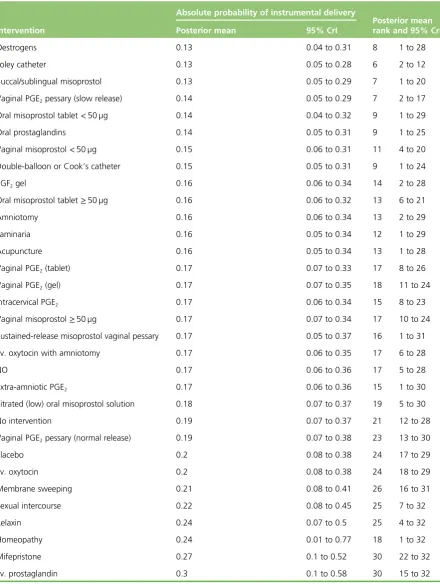
TABLE 8 Absolute probability of instrumental delivery across all 30 interventions and placebo/no intervention included in the NMA. Posterior mean rank and
95% CrIs 43
TABLE 9 Odds ratios and 95% CrI for uterine hyperstimulation for every
intervention compared with placebo 44
TABLE 10 Absolute probability of uterine hyperstimulation across all
19 interventions and placebo/no intervention included in the NMA. Posterior
mean rank and 95% CrIs 45
TABLE 11 Odds ratios and 95% CrI for NICU admission for every intervention
compared with placebo 48
TABLE 12 Absolute probability of NICU admission across all 27 interventions and
placebo/no intervention included in the NMA 49
TABLE 13 Odds ratios and 95% CrI for Apgar score<7 at 5 minutes for every
intervention compared with placebo 58
TABLE 14 Absolute probability of Apgar score<7 at 5 minutes across all
26 interventions and placebo/no intervention included in the NMA 59
TABLE 15 Maternal satisfaction with the method of induction 61
TABLE 17 Odds ratios and 95% CrI for failure to achieve VD within 24 hours for every intervention compared with vaginal PGE2(1) in all studies; (2) for women
with intact membranes only; and (3) for women with ruptured membranes only 67
TABLE 18 Odds ratios and 95% CrI for CS for every intervention compared with placebo (1) in all studies; (2) for women with intact membranes only;
and (3) for women with ruptured membranes only 69
TABLE 19 Trials recruiting women with unfavourable and favourable cervix for
selected interventions 72
TABLE 20 Odds ratios and 95% CrI for CS. All treatments vs. placebo (1) in all
studies and (2) for women with a Bishop score<6 73
TABLE 21 Summary of rankings (point estimates only) 75
TABLE 22 Probabilities of events on reference treatment (PGE2tablet) 81
TABLE 23 Absolute probabilities of achieving VD within 24 hours 82
TABLE 24 Absolute probabilities of achieving VD after 24 hours 83
TABLE 25 Absolute probabilities of CS 84
TABLE 26 Absolute probabilities of NICU admission 85
TABLE 27 The NHS reference costs 2012–13 for method of delivery and neonatal
critical care admission 85
TABLE 28 Costs of methods of induction 86
TABLE 29 Number of studies retrieved in each search 87
TABLE 30 Included studies 89
TABLE 31 Sets of utility estimates varied in sensitivity analysis 89
TABLE 32 Utility estimates used in model 91
TABLE 33 Base case: expected total costs, expected total utilities, ICERs and
expected net benefit at a £20,000 willingness-to-pay threshold 93
TABLE 34 Subgroup analysis: women with intact membranes only, excluding
vaginal PGE2pessary (normal release) 97
TABLE 35 Subgroup analysis: women with an unfavourable cervix only 99
TABLE 36 Expected value of perfect information and EVPPI for various subsets of model parameters, at a £20,000 willingness-to-pay value per unit of utility 101
TABLE 37 Characteristics of excluded studies 231
TABLE 39 Vaginal delivery (%) not achieved within 24 hours of induction 372
TABLE 40 Caesarean section (%) 374
TABLE 41 Instrumental delivery (%) 378
TABLE 42 Apgar score<7 at 5 minutes (%) 382
TABLE 43 Neonatal intensive care unit admission (%) 386
TABLE 44 Vaginal delivery not achieved within 24 hours 397
TABLE 45 Caesarean section 397
TABLE 46 Instrumental delivery 397
TABLE 47 Uterine hyperstimulation with FHR changes 398
TABLE 48 Apgar score<7 at 5 minutes 398
TABLE 49 Neonatal intensive care unit admission 398
TABLE 50 Vaginal delivery not achieved within 24 hours 399
TABLE 51 Caesarean section 406
TABLE 52 Instrumental delivery 424
TABLE 53 Hyperstimulation with fetal heart changes 440
TABLE 54 Apgar score<7 at 5 minutes 448
TABLE 55 Neonatal intensive care unit admission 469
TABLE 56 Vaginal delivery not achieved within 24 hours 485
TABLE 57 Uterine hyperstimulation 486
TABLE 58 Neonatal intensive care unit admission (excluding trials at high risk
of bias) 487
TABLE 59 Instrumental delivery (excluding trials at high risk of bias) 488
TABLE 60 Data file for OpenBUGS analysis of failure to achieve vaginal delivery
within 24 hours 490
TABLE 61 Data file for OpenBUGS analysis of caesarean section 497
TABLE 62 Data file for OpenBUGS analysis of instrumental delivery 511
TABLE 63 Data file for OpenBUGS analysis of hyperstimulation with fetal heart
TABLE 64 Data file for OpenBUGS analysis of neonatal mortality and
serious morbidity 534
TABLE 65 Data file for OpenBUGS analysis of maternal mortality and
serious morbidity 537
TABLE 66 Data file for OpenBUGS analysis of NICU admission 539
TABLE 67 Data file for OpenBUGS analysis of Apgar score<7 at 5 minutes 549
TABLE 68 Model fit and heterogeneity for intact membranes: VD 24 hours 559
TABLE 69 Model fit and heterogeneity for ruptured membranes: VD 24 hours 560
TABLE 70 Model fit and heterogeneity for intact membranes: CS 561
TABLE 71 Model fit and heterogeneity for ruptured membranes: CS 562
TABLE 72 Model fit and heterogeneity for intact membranes: Apgar score<7
at 5 minutes 563
TABLE 73 Model fit and heterogeneity for unfavourable cervix: VD not achieved
in 24 hours 564
TABLE 74 Model fit and heterogeneity for unfavourable cervix: CS 565
TABLE 75 Favourable cervix only 566
TABLE 76 Excluded studies from the review of utility studies 575
TABLE 77 Derivation of the utilities for each health state as functions of the estimated utility from the VAS questionnaire (numbered 1–9 as indicated in
Figure 37). Each state is a sum of the utility from the mother’s perspective and
List of figures
FIGURE 1 A PRISMA study flow diagram for the systematic review 15
FIGURE 2 Failure to achieve VD in 24 hours 20
FIGURE 3 Caesarean section 20
FIGURE 4 Instrumental delivery 21
FIGURE 5 Hyperstimulation with FHR changes 21
FIGURE 6 Neonatal intensive care unit admission 22
FIGURE 7 Apgar score<7 at 5 minutes 22
FIGURE 8 Rankograms for each of the 20 induction interventions for
hyperstimulation and VD not achieved within 24 hours 24
FIGURE 9 Rankograms for each of the 33 induction interventions for CS and
instrumental delivery 32
FIGURE 10 Neonatal mortality 46
FIGURE 11 Maternal mortality and serious morbidity 46
FIGURE 12 Rankograms for each of the 29 induction interventions for Apgar
score<7 at 5 minutes and NICU admission 50
FIGURE 13 Decision tree for comparison of different methods of induction 80
FIGURE 14 Flow chart summarising the review process 88
FIGURE 15 Example question from questionnaire on different health states 90
FIGURE 16 Base case: cost-effectiveness efficiency frontier 94
FIGURE 17 Base-case CEAC 95
FIGURE 18 Base case: incremental cost-effectiveness plane 95
FIGURE 19 Cost-effectiveness acceptability curve for subgroup analysis (i):
women with intact membranes only 98
FIGURE 20 Incremental cost-effectiveness plane for subgroup analysis (i):
women with intact membranes only 98
FIGURE 21 Cost-effectiveness acceptability curve for subgroup analysis (ii):
FIGURE 22 Incremental cost-effectiveness plane for subgroup analysis (ii):
women with an unfavourable cervix only 100
FIGURE 23 Network for intact membranes only 559
FIGURE 24 Network for ruptured membranes only 560
FIGURE 25 Network for intact membranes only 561
FIGURE 26 Network for ruptured membranes only 562
FIGURE 27 Network for intact membranes only 563
FIGURE 28 Network for unfavourable cervix only 564
FIGURE 29 Network for favourable cervix only 565
FIGURE 30 Network for unfavourable cervix only 565
FIGURE 31 Network for favourable cervix only 566
FIGURE 32 Network for unfavourable cervix only 567
FIGURE 33 Network for favourable cervix only 567
FIGURE 34 Vaginal delivery within 24 hours, given no CS 570
FIGURE 35 Subgroup analysis (i): women with intact membranes only 570
FIGURE 36 Subgroup analysis (ii): women with an unfavourable cervix only 571
List of boxes
BOX 1 List of outcomes 10
BOX 2 Studies included and excluded from the NMA analysis for each outcome 17
Glossary
Amniotomy Surgical rupture of the amniotic membranes.
Apgar score A scoring system (0–10) to describe the condition of the newborn. A score>7 at
5 minutes after the birth suggests that the infant is in a good condition.
Bishop score A scoring system to measure changes in the cervix (cervical length and dilatation); a Bishop score<6 is often referred to as an unripe cervix (unfavourable), whereas≥6 is referred to as a ripe cervix (favourable).
Catheter A length of rubberised tubing with an inflatable balloon to anchor the tubing in place. Urinary catheters are used to drain urine from the bladder (a Foley catheter is a type of urinary catheter). A catheter can be passed through the cervical canal and small balloon(s) is (are) inflated with sterile
solution to hold the catheter in place. Catheters used for the induction of labour may have a single balloon (e.g. Foley catheter) or specially designed catheters with two balloons can be used.
Cluster randomised trial A type of randomised trial in which groups rather than individual participants are randomised to intervention or control.
Cochrane Collaboration International not-for-profit organisation preparing, maintaining and promoting
the accessibility of systematic reviews of the effects of health-care interventions.
Consistency The fundamental assumption underpinning a network meta-analysis. The assumption is also
known as transitivity and states that (the benefit of A over B) is equal to (the benefit of A over C) minus (the benefit of B over C). Consistency suggests that the sets of studies used to obtain the indirect comparison are sufficiently similar in characteristics that potentially moderate the intervention effect.
Direct comparison A comparison of two or more interventions made within a study.
Direct evidence Evidence on the relative effects of interventions derived entirely from direct comparisons.
Expectant management Care that involves a period of observation rather than immediate intervention.
In the context of planned induction of labour, this would give time to allow for the spontaneous onset of labour.
Gestational age The length of the pregnancy from the date of the last menstrual period; gestational age
is usually recorded in weeks plus days.
Indirect comparison A comparison of two interventions via one or more common comparator. For
example, the combination of intervention effects from AB and intervention effects from BC studies may (in some situations) be used to learn about the intervention effect AC.
Indirect evidence Evidence on the relative effectiveness of two interventions derived entirely from indirect comparisons. Indirect evidence may be available via more than one intermediate comparator.
Induction of labour Interventions (pharmacological, mechanical, complementary or alternative) to
artificially stimulate the start of labour.
Laminaria Devices that can be introduced into the cervical canal, which expand to stimulate cervical dilatation.
Membrane sweep Membrane sweeping or stripping involves the midwife or doctor detaching the
amniotic membranes from the lower section of the uterus by a circular movement of an examining finger; this has been used to stimulate labour.
Meta-analysis Synthesis (pooling) of data from more than one study to estimate an overall result.
Network diagram A graphical depiction of how each intervention is connected to the others through
direct comparisons. Each line, or edge, depicts a direct comparison between two intervention nodes.
Network meta-analysis The simultaneous comparison of multiple competing treatments in a single
statistical analysis (also known as a mixed-treatment comparison). The method uses both direct and indirect evidence to estimate the relative effects of each treatment compared with all others in the network, even though some treatments may not have been directly compared with each other in trials.
Nitric oxide donors Chemicals produced by the body that have a role in many functions. Commercially
produced nitric oxide donors are used to stimulate changes in the cervix as part of induction of labour. Types of nitric oxide donors include isosorbide mononitrate, isosorbide dinitrate, nitroglycerin and sodium nitroprusside.
Oxytocin A hormone produced by the body that has an important role in childbirth. Commercially
manufactured oxytocin is used in the induction of labour to stimulate cervical dilatation and uterine contractions.
Parity Relates to the number of times a woman has given birth. A nulliparous woman has not given birth
before; a multiparous woman has given birth at least once before.
Post term A pregnancy continuing beyond 41+0weeks (also known as post dates).
Preterm birth Birth before 37+0weeks of pregnancy.
Prostaglandin E1 A type of Q4 prostaglandin (misoprostol is a synthetic analogue of PGE1used in the
induction of labour).
Prostaglandin E2 A type of prostaglandin used in the induction of labour (dinoprostone). Prostaglandin F2 A type of prostaglandin used in the induction of labour.
Prostaglandin F2alpha A naturally occurring prostaglandin, pharmaceutically termeddinoprost,
used in medicine to induce labour and as an abortifacient.
Prostaglandins Hormones produced by the body, which are important in the onset of labour;
synthetically manufactured prostaglandins can be used to start labour.
Rankogram A two-dimensional treatment-specific plot, presenting on the horizontal axis the possible
ranks of the treatment and on the vertical axis the probability for the treatment to assume each of the possible ranks according to a specific outcome.
Systematic review A review of literature focused on a research question that uses prespecified methods
Transitivity SeeConsistency.
Uterine hyperstimulation Contractions of the uterus that are too strong, too long or too frequent.
Uterine hyperstimulation can result in changes in the fetal heart rate (uterine hyperstimulation syndrome).
Uterine hypersystole Uterine contractions that are too strong.
List of abbreviations
CCT clinical controlled trial
CEAC cost-effectiveness acceptability curve
CENTRAL Cochrane Central Register of Controlled Trials
CPCG Cochrane Pregnancy and Childbirth Group
CrI credible interval CS caesarean section
DIC deviance information criterion EQ-5D™ European Quality of Life-5
Dimensions
EVPI expected value of perfect information
EVPPI expected value of partial perfect information FHR fetal heart rate
HIV human immunodeficiency virus HTA Health Technology Assessment ICER incremental cost-effectiveness ratio ICU intensive care unit
ISMN isosorbide mononitrate i.v. intravenous
MCMC Markov chain Monte Carlo
NHS EED NHS Economic Evaluation Database
NICE National Institute for Health and Care Excellence
NICU neonatal intensive care unit NMA network meta-analysis NO nitric oxide
OR odds ratio PGE1 prostaglandin E1 PGE2 prostaglandin E2 PGF2 prostaglandin F2 PGF2α prostaglandin F2alpha
PICO population, intervention and relevant comparators, outcomes PRISMA Preferred Reporting Items for
Systematic Reviews and Meta-Analyses
PROM prelabour rupture of the amniotic membranes QALY quality-adjusted life-year RCT randomised controlled trial RE random effect
SD standard deviation VAS visual analogue scale VD vaginal delivery
Plain English summary
M
ore than 150,000 pregnant women in England and Wales have their labours induced each year. Multiple pharmacological, non-pharmacological, mechanical and complementary methods are available to induce labour. As the number of women facing induction increases, and as new evidence from trials emerges, it has become urgent to address questions about which methods of inducing labour are most effective, cost-effective, safe and acceptable to women.We carried out a systematic review, network meta-analysis (NMA) and cost-effectiveness analysis to look at all the evidence on different methods for inducing labour. NMA produces estimates for each treatment compared with every other in a network, even though some pairs may not have been directly compared. We included 611 trials in the review. Results suggest that oxytocin with amniotomy and misoprostol are more successful than other methods in achieving vaginal delivery within 24 hours. The safety profile of different methods in terms of risk of caesarean section, instrumental delivery, too-strong uterine contractions, admission to neonatal care unit and Apgar score<7 at 5 minutes was less clear.
Scientific summary
Background
More than 150,000 pregnant women in England and Wales will have their labours induced each year. There are multiple pharmacological, non-pharmacological, mechanical and complementary methods available to induce labour. Different induction methods have advantages and disadvantages; they vary in effectiveness, safety and cost. We carried out a systematic review, network meta-analysis (NMA) and cost-effectiveness analysis to identify the best method for induction of labour. Findings have implications for women, clinicians and the UK NHS.
Objectives
To assess the effectiveness and safety of a range of induction methods to determine which method (or methods) achieves the best outcomes by providing a quantitative summary of the evidence on the relative effects of different methods; to develop a decision model to evaluate the cost-effectiveness of the different methods for induction; and if evidence is available, to explore effectiveness and cost-effectiveness in different clinical subgroups [with intact or ruptured membranes, at different gestational ages, in women following a previous caesarean section (CS) and with low (<6) or higher Bishop scores].
Methods
We carried out a systematic review using Cochrane methods. The search was carried out by an information specialist using a predefined strategy. The final search date was March 2014. Two reviewers independently assessed all reports identified by the search for eligibility for inclusion. Studies were included if they were randomised controlled trials (RCTs) examining interventions to induce labour compared with placebo, no treatment or other interventions. Participants were women who were eligible for third-trimester induction of labour. We focused on key outcomes relating to efficacy, safety and acceptability of the method to women: vaginal delivery (VD) not achieved within 24 hours; uterine hyperstimulation with fetal heart rate (FHR) changes; CS; serious neonatal morbidity or death; serious maternal morbidity or death; instrumental delivery; maternal satisfaction with the method used; neonatal intensive care unit admission; Apgar score
<7 at 5 minutes.
We extracted data on the type of intervention and, when appropriate, dose and route of administration. We assessed risk of bias as high, low or unclear, based on the method used to conceal allocation. We noted whether or not the method was used in hospital (inpatient) or outpatient settings. We recorded information on characteristics of participants, including gestational age, parity, previous CS, state of amniotic membranes and Bishop score.
We developed a de novo decision tree model to estimate the cost-effectiveness of various methods for the induction of labour using the data obtained from the systematic review and NMA. We adapted the NMA to account for multiple outcomes to inform probabilities for all of the outcomes and interventions in the model. This was done using Bayesian Markov chain Monte Carlo simulation, so that all correlations and uncertainties were fully reflected in the estimates. The costs included in the economic analysis were the intervention costs, costs of method of delivery, and length of neonatal stay in level I, II or III units. The price year was 2012–13. We attributed a utility score to each of the outcomes in our model, which represents the strength of preferences for a set of health-related outcomes, where utility scores take values of between 0 and 1, with‘1’representing perfect health. We reviewed the literature to identify preference-based utilities for the health-related outcomes in the model. We performed a probabilistic cost-effectiveness analysis, conceptualised as a hypothetical cohort of patients who vary in their probabilities, utilities and costs, and who experience the consequences of each induction strategy.
Total utilities and costs are then averaged over this cohort to obtain the expected total utility and expected total cost for each induction strategy. We conducted a fully incremental analysis, reporting incremental cost-effectiveness ratios, interpreted as the additional expected cost per additional unit gain in utility for an intervention compared with the previous non-dominated intervention, and cost-efficiency frontiers, which plot expected cost against expected utility for each intervention. We report expected costs, expected utilities and expected net benefit (the difference between expected utilities and costs, for which utilities are monetaried by multiplying by the willingness-to-pay per unit increase in utility). We prefer the intervention that maximises expected net benefit. We represent uncertainty in the optimal intervention using
cost-effectiveness acceptability curves and the cost-effectiveness plane.
Results
A total of 1508 reports corresponding to 1190 separate studies were identified.
Thirty-four active treatment types/regimens were included in our review, including different dose regimes and routes of administration. Overall, the search identified>1000 studies and, after eligibility assessment
using our PICO criteria (population, intervention and relevant comparators, outcomes), 579 studies were excluded and 611 trials were included in the review. Together, the included trials reported findings for
>100,000 women who were randomised to different methods for third-trimester induction of labour.
The active interventions most likely to achieve VD within 24 hours were intravenous (i.v.) oxytocin with amniotomy (mainly tested in trials recruiting women with favourable cervix), higher-dose≥50 µg of vaginal misoprostol and vaginal prostaglandin E2(PGE2; a type of prostaglandin used in the induction of labour) pessary (normal release). Titrated (low-dose) oral misoprostol solution and sustained-release misoprostol vaginal pessary also performed well; however, there was greater uncertainty around the effect of these interventions for this outcome.
Compared with placebo, several treatments showed statistically significant reduction in the odds of CS: titrated low-dose misoprostol, vaginal misoprostol at both≥50 µg and<50 µg, vaginal PGE2gel,
intracervical PGE2, oral misoprostol tablet (≥50 µg), Foley catheter, membrane sweeping and buccal/ sublingual misoprostol. In this group, titrated oral misoprostol achieved the lowest odds of an eventual CS but there was still considerable uncertainty in this finding, as observed by the posterior mean rank order of sixth (out of 33) and 95% credible interval from second to thirteenth (out of 33). There was little to distinguish between the other interventions and, again, we observed considerable uncertainty in treatment rankings.
Uterine hyperstimulation with FHR changes was one of the key safety outcomes. Here, double-balloon catheter had the highest probability of being among the best three treatments, whereas vaginal
For other safety outcomes there were insufficient data or there was too much uncertainty around estimates to identify which treatments performed‘best’.
Very few studies collected information on women’s views. On the whole, women tended to have positive views, or at least accepted the induction process, but there was insufficient information to determine whether or not some methods were preferred over others.
There was considerable uncertainty of our cost-effectiveness estimates, with the majority of the interventions having very similar utility values, and mainly differing in total costs. The cost-effectiveness analysis suggested that all of the methods of induction were cost-saving compared with no treatment, and titrated (low-dose) misoprostol solution and buccal/sublingual misoprostol had the highest probability of being cost-effective, although this was very uncertain.
Only two subgroup analyses were possible with the data available, and these were based on a small number of studies and so should be interpreted as hypothesis generating. In the subgroup of women with intact membranes, and limiting to interventions feasible on the NHS, i.v. oxytocin with amniotomy was identified as the intervention most likely to be most cost-effective. In the subgroup of women with an unfavourable cervix, titrated low-dose oral misoprostol solution and buccal/sublingual misoprostol were found to be the interventions that were most likely to be most cost-effective.
Conclusions
Our NMA suggested that oxytocin with amniotomy and higher-dose (≥50 µg) vaginal misoprostol were more successful than other agents in achieving VD within 24 hours, although the former was tested in trials predominantly recruiting women with favourable cervix. The safety profile of different methods was less clear. The cost-effectiveness analysis suggested that titrated (low-dose) oral misoprostol solution is the intervention with the highest utility for mothers and babies, whereas buccal/sublingual misoprostol has the lowest cost to the NHS. Both of these interventions had the highest chance of being most cost-effective. However, the considerable uncertainty in our findings points the way for further research. When induction of labour is clinically indicated, placebo or no-intervention arms may not be feasible or even ethical. Therefore, rather than restrict RCTs to low-risk women, we suggest that titrated oral misoprostol solution should be used as a comparator, particularly in the NHS setting. Future RCTs should be powered to detect a method that is more cost-effective that misoprostol solution. We urge all triallists to report 11 outcomes included in this NMA in all future RCTs. There is also an urgent need to explore women’s views of the process as part of any future trial, and measure utilities from the perspective of the mother and baby, preferably using the European Quality of Life-5 Dimensions instrument.
Study registration
This study is registered as PROSPERO CRD42013005116.
Funding
Chapter 1
Introduction
Description of the health problem
There were 698,512 live births in England and Wales in 2013.1More than one in five births followed labour induction; this represents>150,000 pregnant women in England2and Wales3per year. There is
evidence that the number of labour inductions has been steadily increasing over the past two decades. NHS England maternity statistics for 2010 noted that 21.3% of births followed induction of labour, and by 2012–13 this figure had increased to 23.3%.4
Induction of labour is carried out for a number of clinical indications.5,6The most common reasons include post-term pregnancy (defined as 41+0weeks’gestation), prelabour rupture of the amniotic membranes (PROM) or when the well-being of the woman or baby may be compromised by prolonging the pregnancy (e.g. in cases of fetal growth restriction or pre-eclampsia).
There is a broad range of methods available for induction of labour. The choice of method may depend on national guidelines and local protocol, as well as individual clinical factors. The advantages and disadvantages of different methods vary, and the choice of method has implications for women and the UK NHS.
From a clinical perspective, the decision about which method to use for induction of labour can be influenced by the woman’s readiness for labour, for example whether or not membranes have ruptured spontaneously or whether or not the cervix remains undilated at the start of the induction process. Different methods used for inducing labour have different mechanisms of action, and vary in terms of how quickly birth is achieved and the likelihood of causing complications in women with different clinical characteristics. Thus, the choice of method will take into account the reason for induction and its
urgency. The woman’s obstetric and medical history is also considered. For example, there is evidence that women may be more sensitive to drugs that stimulate the uterus if they have had a previous birth, and women who have a scar from a previous caesarean birth are at increased risk of uterine rupture, which can result in hysterectomy and fetal death.7
Different methods also have different direct costs, and some methods require continuous monitoring of the woman throughout labour. Consequently, the choice of induction method may have significant implications for NHS resources, especially if the method is known to increase the risk of complications requiring a caesarean section (CS).
Description of available interventions and current service
provision/policy
In the NHS context, choice of induction method is typically between prostaglandins and oxytocin combined with artificial rupture of membranes. UK clinical guidelines published in 20089identified vaginal
prostaglandin E2(PGE2) as‘the preferred method of induction’. We note that this recommendation was not based on a quantitative overview of the evidence of the effects and safety of all available methods, or from the synthesis and analysis of data from a range of comparisons. Furthermore, this guideline9did not recommend any particular type (gel, tablet or pessary) or dose of PGE2because trial evidence has rarely compared different PGE2preparations. Potential updating of the current guidance is awaiting the
publication of this report.10
Despite its importance, the question of resource use for the NHS has been relatively under-studied, and uncertainty remains about the costs that are associated with induction of labour. There is evidence that inducing labour in women with complications is associated with lower health-service costs than costs associated with expectant management.11–13However, there is little evidence on the costs associated with specific methods of induction compared with others. Randomised trials in which one method of induction has been compared with another have only rarely included economic analyses.14
A broad range of pharmacological, mechanical, complementary and alternative methods have been used to induce labour. In the remaining sections of this chapter, we describe all of the pharmacological and mechanical methods for third-trimester induction of labour or cervical ripening which have been used in clinical practice and that have been examined in randomised trials. Complementary or alternative methods have been less commonly used in NHS settings but have been used in comparable settings in other countries. Complementary and alternative methods are included here, as information on the effects and safety of such methods may be important for women who prefer a less medicalised birth.
Pharmacological methods for the induction of labour
Prostaglandins: prostaglandin E2and prostaglandin F2alpha
Prostaglandins are hormones produced naturally by the body that are important in the onset of labour. Synthetically manufactured prostaglandins have been used in clinical practice since the 1960s to ripen the cervix and induce uterine contractions. They are more frequently used in women when the cervix is unripe (i.e. with a Bishop score<6). Prostaglandins promote cervical ripening and encourage the onset of labour
by acting on cervical collagen so as to encourage the cervix to soften and stretch in preparation for childbirth. Prostaglandins may also stimulate uterine contractions.
Despite the widespread use of prostaglandins as part of labour induction, they can cause a number of side effects, including nausea, vomiting, diarrhoea and fever. In addition, because of their effect on the uterus, prostaglandins can cause contractions that last too long, or are too frequent or are too strong. Excessive uterine activity, or hyperstimulation, may be associated with fetal distress, and in a small number of cases can lead to uterine rupture, especially in those women who have uterine scarring from surgery or a previous caesarean birth.
A large number of prostaglandin preparations have been available for labour induction, including
prostaglandin F2alpha (PGF2α, dinoprost), prostaglandin E2(PGE2), prostaglandin E (PGE1) and misoprostol
(a synthetic analogue of PGE1, which is described separately: seeMisoprostol). In the past, PGF2αwas
frequently used in clinical practice but, more recently, PGE2(dinoprostone) has become the most commonly used formulation. Commercially produced PGE2analogues are expensive and require refrigeration. These factors have limited use in low-resource settings.
Vaginal and intracervical administration
Prostaglandin preparations for vaginal and intracervical administration include gels, lactose-based vaginal tablets, suppositories, pessaries or inserts.15,16Dosages of prostaglandins (mainly PGE2) vary, depending on route and local protocol (frequently 0.5 mg for intracervical use, 2–3 mg for intravaginal use and 10 mg for sustained-release pessaries). There is also variation in terms of the number of applications and time intervals between repeated doses. Sustained-release vaginal pessaries have been developed to reduce the number of applications and vaginal examinations that are needed during induction of labour. Vaginal and intracervical administration are the most common forms of administration in current practice.
In the meta-analysis we have treated different types of vaginal and intracervical PGE2as different interventions as different preparations may vary in terms of rate of absorption, safety and cost. We have therefore included as separate interventions:
l PGE2vaginal tablets (lactose based).
l PGE2vaginal pessaries normal release (also sometimes referred to as suppositories), manufactured
using various base materials, including wax and glycerine. [Note that this intervention includes a heterogeneous group of vaginal PGE2preparations of varying composition. The base material used was not always clear, and pessaries were frequently produced in local pharmacies (i.e. not commercially available). We included this group of interventions in the network meta-analysis (NMA) and the cost analysis for completeness, even though they are not generally reproducible or available in the UK NHS.]
l PGE2vaginal pessaries sustained release (10- to 12-mg pessaries, single application). l PGE2gel introduced via vaginal applicator.
l PGE2for intracervical administration.
Extra-amniotic administration
The administration of extra-amniotic prostaglandin gel was first carried out in the early 1970s. The gel is administered via a Foley catheter inserted through the cervix into the extra-amniotic space. The catheter is frequently left in place with the balloon inflated, and light traction may also be applied by taping the catheter to the woman’s leg. Extra-amniotic administration is no longer common in current practice.17 Intravenous administration
Intravenous (i.v.) prostaglandins are associated with increased rates of maternal vomiting and diarrhoea and are rarely used in current practice.18
Oral administration
Oral PGE2and PGF2αhave been available since the early 1970s. Oral administration is associated with
gastrointestinal side effects and is seldom used nowadays.19
Misoprostol
hypersystole/hypertonus (a contraction lasting≥2 minutes) and/or uterine hyperstimulation syndrome [uterine tachysystole or hypersystole with fetal heart rate (FHR) changes such as persistent decelerations]. A meta-analysis examining the use of vaginal misoprostol suggested that despite excess uterine activity, misoprostol was not associated with adverse fetal outcomes especially at a lower dose (<25 µg).23
Oxytocin
Oxytocin is a hormone that is produced naturally by the body, and which has a range of functions, including the stimulation of uterine contractions in the second and third stages of labour. Oxytocin analogues, administered intravenously, are the commonest induction agents used worldwide. Oxytocin is frequently administered when the cervix is dilated (or favourable) and may be combined with artificial rupture of the amniotic membranes (amniotomy). Oxytocin may cause excess uterine activity, especially in settings where equipment is not available to titrate doses accurately and monitor contractions.
Current i.v. oxytocin regimens usually involve incremental increases in dosage. Lower-dose regimens typically involve 0.5–2.0 milliunits (mU)/minute starting doses, with incremental increases of 1.0–2.0 mU/ minute every 15–60 minutes. Higher-dose regimens have starting doses up to 6.0 mU/minute, with incremental increases of 2.0–6.0 mU/minute every 15–40 minutes. There are advantages and
disadvantages of high- or low-dose regimens; higher doses may lead to a shorter period to delivery, but may increase the risk of hyperstimulation, whereas lower doses may increase risk of infection if labour is prolonged.24–27
Nitric oxide donors
Nitric oxide (NO) is thought to be involved in cervical ripening, and in recent years NO donors [isosorbide mononitrate (ISMN), isosorbide dinitrate, nitroglycerin and sodium nitroprusside] have been used to promote cervical ripening. NO is administered as a vaginal tablet.28
Mifepristone
Mifepristone is a progesterone antagonist that has been used in the past in combination with
prostaglandins in first trimester and early second trimester pregnancy terminations. Mifepristone has been proposed as a method to induce labour because it acts to increase uterine contractions. Mifepristone is administered as an oral tablet.29
Oestrogens, corticosteroids, relaxin and hyaluronidase
Oestrogens have a role in promoting cervical ripening and, historically, have been administered intravenously or into the extra-amniotic space. There are no commercially available preparations for use in cervical ripening or induction of labour, and the two included trials of this agent date back to 196730and 1981.31
The role of corticosteroids in the process of labour is not well understood, and they are currently not used in clinical practice for the induction of labour.32
Relaxin is a hormone that is thought to encourage cervical ripening, which has been tested in a very small number of trials.33Similarly, hyaluronidase is also thought to be implicated in cervical ripening.34Both agents have been administered in vaginal or intracervical gel, but neither is common in current practice. Mechanical and physical methods for induction of labour
Catheters
Foley urinary catheters have been used for the induction of labour, as have double-balloon and other catheters that are specifically designed for use in induction of labour (e.g. Cook catheter). The catheter is introduced into the extra-amniotic space, and then the balloon(s) is (are) inflated to keep the catheter in place. Traction may be applied by taping the catheter to the woman’s leg. Catheters are usually left in situ until they are expelled. In some cases a saline infusion is introduced into the extra-amniotic space via the catheter.
Laminaria tents
Laminaria tents are made from sterile seaweed or synthetic materials. These devices are introduced into the cervical canal and expand to gradually stretch the cervix.
Membrane sweep
Stripping or sweeping of the membranes has been used for many years to induce labour, and continues to be carried out in many clinical settings. Membrane sweeping involves the clinician detaching the membranes from the lower uterine segment by a circular movement of the examining finger. Membrane sweeping is thought to lead to an increased production of prostaglandins. When the cervix is closed, a cervical massage may be carried out instead of a membrane sweep to stimulate the production of prostaglandins.36
Amniotomy
During labour the amniotic membranes usually rupture spontaneously as the cervix dilates and stretches in preparation for the descent of the fetus. Amniotomy refers to rupture of the membranes using a plastic hooked instrument or, occasionally, surgical forceps.
Amniotomy may be carried out alone or in combination with oxytocin or prostaglandins to induce labour. It can be carried out only if the amniotic membranes are accessible to the midwife or doctor, and this may not happen until the cervix has started to dilate.
Amniotomy may cause some potentially serious adverse effects, including cord prolapse. The procedure may introduce infection. For women known to be human immunodeficiency virus (HIV) positive the procedure is avoided because it may increase the risk of mother-to-child transmission of HIV.25
Breast stimulation
Manual breast stimulation has been used in the past to stimulate uterine contractions.37It is thought that it may trigger the release of oxytocin.
Sexual intercourse
Sexual intercourse at term has been thought to lead to the onset of labour.38The hypothesised mechanism of action here is the prostaglandin contained within semen.
Complementary and alternative methods for induction of labour
Castor oil
Castor oil is derived from the bean of the castor plant, and has been used in oral form as a method of stimulating labour.39Castor oil has laxative properties, stimulating the intestines and bowel. It is this stimulation that is hypothesised to initiate uterine contractions and labour as a secondary effect.
Acupuncture
Homeopathy
Homoeopathy involves the use of highly diluted solutions that contain tiny amounts of the original substance. Homeopathic preparations are popular and are available over the counter in pharmacies and health food shops. Some homeopathic preparations have been recommended to promote the onset of labour.41
Overall aims and objectives of assessment
Given the broad range of methods used to induce labour, the main research question addressed by this review is‘what is the best method for induction of labour?‘. The specific objectives were to:
1. assess the effectiveness and safety of a range of induction methods to determine which method or methods achieves the best outcomes
2. provide a quantitative summary of the evidence on the relative effects of a broad range of induction methods to identify which method works best
3. develop a decision model to evaluate the cost-effectiveness of the different methods for induction 4. explore, if sufficient evidence is available, the effect of different clinical subgroups [with intact or
ruptured membranes, at different gestational ages, in women following a previous CS and with low (<6) or higher Bishop scores] on effectiveness and cost-effectiveness.
Specification of the PICO research question
Population Pregnant women carrying a viable fetus and who are eligible for any method of third-trimester cervical ripening or labour induction.
Intervention and relevant comparators No treatment, placebo, all pharmacological (all routes and doses), mechanical and complementary methods used for the induction of labour.
Outcomes Our primary effectiveness outcome was (1) vaginal delivery (VD) not achieved within 24 hours, and our primary measures of safety were (2) uterine hyperstimulation with FHR changes and (3) CS. Our secondary outcomes for serious adverse events were (4) serious neonatal morbidity or perinatal death and (5) serious maternal morbidity or death. Other outcomes included were (6) maternal satisfaction with the induction method used, and, for use in the economic model, (7) cost, resource use and utilities.
Definition of the decision problem for the economic evaluation
Our aim was to answer the following question: what is the most cost-effective method (from the
interventions described above), for third-trimester cervical ripening or labour induction? Outputs from the economic evaluation include expected costs, expected benefits, incremental cost-effectiveness ratios (ICERs), expected net benefit and cost-effectiveness acceptability curves (CEACs).
Stakeholder involvement in project
The steering group (listed inAppendix 1) and project team included a consumer representative, a health economist, a midwife and an obstetrician engaged in clinical practice.
representative co-ordinated the involvement of members of the CPCG (Cochrane Pregnancy and Childbirth Group) consumer panel, National Childbirth Trust and the Association for Improvements in Maternity Services (AIMS) who expressed an interest in participating. Members of these groups were asked for comments to inform steering group meetings, to determine the final outcomes, to aid in the interpretation of the findings and to shape the papers to be published. The authors of this report include a consumer representative (GG).
The steering group commented on the study design, selection of outcomes, methods for the cost-effectiveness analysis and dissemination strategies.
Overview of report
Chapter 2
Methods for assessment of
clinical effectiveness
Methods for reviewing clinical effectiveness
Identification of studies
We worked with an Information Specialist to identify trials for inclusion in the NMA. We searched the CPCG’s Specialist Register [which incorporates pregnancy and postpartum searches of the Cochrane Central Register of Controlled Trials (CENTRAL), MEDLINE, EMBASE, the NHS Economic Evaluation Database (NHS EED), relevant journals and conference proceedings]. The search strategy was finalised as part of the early consultative stages of the project, and the final search on which this report is based was carried out at the end of March 2014. The search strategy is set out inAppendix 2. A full-text copy of every relevant trial report was obtained and assigned to a topic, depending on the intervention before adding to the database. We then screened all reports that were assigned to the induction of labour topic. Many of the trials identified by the search have already been included in published Cochrane reviews, but further searches identified more recent trials which, when eligible, have been included in the analysis. Inclusion and exclusion criteria
Interventions
All randomised controlled trials (RCTs) of induction interventions as identified inChapter 1of this report were evaluated. Eligible trials compared any method of third-trimester cervical ripening or labour induction with an alternative intervention, placebo or no treatment. For prespecified treatments we also included trials that compared different means of administration (e.g. vaginal misoprostol vs. oral misoprostol) or different doses [e.g. low-dose misoprostol (<50 µg) vs. high-dose (≥50 µg) misoprostol]. We included studies recruiting women with a viable fetus, but had no other restrictions relating to the indication for labour induction, language or date of publication.
Trials in which women were randomised to receive a combination of interventions were not eligible, except for a small number of prespecified combinations in common use (e.g. amniotomy with oxytocin). We made the decision to exclude lesser-used combinations as the network was already large, and such combinations are rarely used clinically and mainly reported in single trials.
We included all interventions for the induction of labour examined in trials even if such treatments are not used in the NHS. Treatments no longer used may not have been abandoned for evidence-based reasons, and their inclusion adds statistical power to the entire network.
We planned to include multiarm trials and cluster randomised trials with any necessary adjustments to account for cluster design effect (if triallists had not already carried out appropriate adjustment).
Participants
We included trials that recruited pregnant women for third-trimester induction of labour, carrying a viable fetus, with a range of obstetric characteristics, undergoing labour induction for varied reasons.
Outcomes
however, in consultation with the steering group we extracted data on neonatal intensive care unit (NICU) admission and Apgar score, as proxies for serious neonatal morbidity (as serious neonatal morbidity was poorly reported and inconsistently defined in trials) (Box 1).
Exclusions
We excluded trials that did not reportanyof our key outcomes or evaluated combined interventions. The full list of references for excluded studies and the reasons for exclusion are documented inAppendices 3 and4,Table 37.
Data extraction and risk-of-bias assessment
We obtained full-text copies of all reports identified by the search. A minimum of two investigators independently assessed all reports to determine whether or not trials used random allocation to groups, included one or more of the selected interventions and comparisons, recruited women undergoing third-trimester induction of labour, and included data on at least one of our primary outcomes. Trials meeting all of the eligibility criteria were included in the systematic review.
Data extraction was carried out by one investigator and checked by a second. Preliminary statistical analyses also highlighted some discrepancies in the extracted data, which were then doubled checked by the reviewers, and corrected if appropriate. For all included trials, we extracted data on trial and patient characteristics, and this is summarised in tables of included studies (seeAppendix 5,Reference list for included studies, andAppendix 6,Table of included studies characteristics,Table 38).11,14,30,31,43–936 Study quality was assessed using the methods described in the Cochrane Handbook.937For use in a prespecified sensitivity analysis, we assigned a judgement relating to risk of bias (low, high, unclear), based on the allocation concealment domain. We based this decision on meta-epidemiological evidence
indicating the importance of this domain as a source of bias938and on the design of obstetric trials, which often precludes blinding of participants and personnel (although not, of course, of outcome assessors). Information on study setting (country and whether or not the study was carried out in an inpatient or outpatient setting), method and the type of intervention(s) (dose, mode of administration, type of preparation, e.g. slow-release pessary vs. gel, regimen and any cointerventions) was extracted. We
extracted details on comparison arms (e.g. another active treatment, placebo or‘usual care/no treatment’). Treatment arms were categorised according to the initial randomised allocation, although subsequent
BOX 1 List of outcomes
Prespecified outcomes
1. VD not achieved within 24 hours (or period specified by trial authors). 2. Uterine hyperstimulation with FHR changes.
3. CS.
4. Serious neonatal morbidity or death. 5. Serious maternal morbidity or death. 6. Instrumental delivery.
7. Maternal satisfaction with the method used.
Post hoc defined outcomes
8. NICU admission (proxy outcome for serious neonatal morbidity).